You vs. The World | DISCOVER Your Path in 18 Minutes
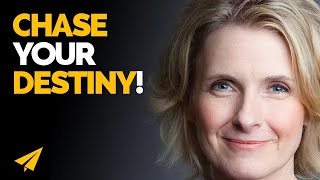
Elizabeth Gilbert, Tech N9ne, and others share how they left conventional paths for creative work. Gilbert describes passion as a "shit sandwich" of repeated rejection. Tech N9ne rose from homelessness to a Forbes-listed music career. The message: criticism is inevitable when you deviate from what society expects.
Chapters
Stay on your own path.
You're on the right path.
My path.
Find their own path.
You must find your own path.
Hello, Believe Nation! Today we're gonna talk about how you can find your path. And as always, as people are talking, if they say something that really resonates with you, please leave it down in the comments below and put quotes around it so other people can be inspired as well. Enjoy!
I had a yoga teacher who said to me, "Always stay on your own yoga mat because sometimes if you're in headstand and you're too busy looking at the person on the other mat, you could literally break your neck." And I feel like that's a really good metaphor for life. To stay on your own path, do what's right for you. You can't compare your insides with somebody else's outsides because you never know what's going on for somebody else, really.
Every pursuit, no matter how glamorous it may seem, no matter how exciting you are— it feels to you, no matter how much you feel like you were born to do it, comes with a shit sandwich. And so the question is not, "What do I love?" The question is, "What do I love so much that I don't mind eating the shit sandwich that comes along with that thing?" So for me in my life, writing is the thing that I love and the shit sandwich was the 7 years that I was not getting published and that I was coming home from my job as a diner waitress, as a bartender, as an au pair, as a— somebody who worked in flea markets, as a cook. And I was coming home tired and smelling like other people's french fries and sitting down and doing my real job, which was to write and then to go to the mailbox the next day and get another rejection letter and then say, "Do I still wanna do this? 'Cause this shit sandwich sucks." Am I ready to take another bite?
Right. You know?
And I did still wanna do it. And now even as somebody who makes their living as a writer, there's no end to the shit sandwiches. It's like, oh. Hello, horrible review in prominent newspaper. That's your shit sandwich today, Liz. You still wanna do this work?
Yep.
Yeah, I still do. Still worth it. Like, hello, awful comment on social media from somebody who thinks you're a pile of dog shit, you know, and just has, like, chosen every possible way that they can just cannot get it out of their system fast enough how much disregard they have for your entire life.
Yep.
Still wanna do this thing? Yeah, I still wanna do it. You know, so that's the question because if the first time you encounter the shit sandwich you're like, "well, this isn't worth it," then that's not the thing you're supposed to be doing. And there are plenty of things in life that I have run into the shit sandwich and I've been like, "So not worth it. So not worth it. Like, this is not— I don't wanna do this. Like, whatever the alleged benefits of this thing might be, no." Not down for this. SoulCycle, no.
You know?
Like, I know it's probably really good for me, but I feel like throwing up right now because this is too hard.
I'm out.
You'll not be seeing me here again. You know, like, and I love my sisters at SoulCycle, I just don't like feeling like I'm gonna throw up when I exercise. So it's not for me, you know? And so that's the question. So if you go into this thing thinking, "If I follow my bliss and I live my dream and I stand in my truth, then everything will be great," it doesn't mean everything will be great. It just means at the end of the day when you check in with yourself and you go, "Am in the end, on the balance, is this still better than not doing it? And the answer is still, yeah, this thing is still better than not doing it, then you're on the right path.
My whole family is funny. I have a really funny, funny fam. Like, we're— the whole family can tell jokes and do the dozens and all that. So we're always really funny around the house. And when I realized I wanted to be a comedian was Richard Pryor. That's who was like, "Oh, that's who— that's what I want to be." In 1976, I think it was, the album he put out called "That Nigga's Crazy." And I remember just sitting and listening to it over and over and over and over and over and over. And that was kind of where it started. That's where I realized what I was and what I wanted to do.
My first gig out of college was on Wall Street on the New York Stock Exchange.
Pre—
this is pre-everything. This is like just out of college, 21 years old, and I knew one of my drives, I wanted to be really successful, but not just to like get shoes. I knew I wanted to make money because I wanted to make a difference. I wanted to be able to take care of my family. I wanted to be able to contribute to causes that I believe in. And so I knew in order to do that, in my own mind, I was like, well, I want to make a lot of money and make this stuff happen. But when I was on Wall Street, even though so many people that I worked with, multi, multi-millionaires, I mean, the money was ridiculous, while they were financially rich, they were spiritually bankrupt. And I felt like there was a part of me that was dying inside, and I said, "This is not my path. I don't know what my path is, but I need to leave this because I feel sick." And so I think many people feel like that. You can find yourself in job and job and job, and you wanna do a really You want to do great work in the world, you're giving it your best, but some little voice inside is saying, "This isn't me. This isn't me." And I kept having that voice until finally I left the corporate world and started my own business.
I think it's important for people to understand that anytime you step out of what's normal in society, you're going to have criticism. So many people follow the traditional plan with no thought whatsoever as to what they really want to do in life. You know, they go to school, they go to high school, they go to college, they get a degree, they get married, they have kids, and then they wake up at 40 years old wondering what the fuck happened and where did my life go. And when I think about those things, I think about how much criticism we got when we started our first company when we were only 19 years old to do all the things that you're supposed to do in society. You know, all the people that used to tell us, "You guys are wasting your time. You need to get a degree. You need to get a real job. You need to quit, you know, wasting your time with this hobby." And those are the same people now that, you know, they're telling us how good of a fucking job we did and how proud we are. And I just, I think about that a lot. And I think people don't realize that the same criticism that they get for doing anything outside of what's considered normal, that goes for anybody that tries anything outside of what's normal. And I think people need to realize that people are gonna talk shit. They're gonna criticize. But what's more important? What's more important is that you do what it is you think you need to do instead of changing your path for everybody else's happiness. Because the reality is, the people who judge you on doing anything different are the same people who can't fucking do it themselves. And I feel like so many people get so wrapped up into what other people think that they ruin their entire lives living a life that they don't even want to live. Everybody's got to find their own path, and you have to realize that when you get on that path, you're gonna fuck up. You're gonna make mistakes. You're gonna have bad fuck-ups, like really bad. But as long as you're willing to learn and you're willing to take those as lessons about— and you're smart enough to not make those same mistakes over and over and over again, there's really nothing that you can't do.
And Lola Morris asked me, "Won't you write something and rap instead of spitting on everybody?" And I wrote it and everybody liked it, and I started doing it more, and then I finally won a contest. First thing I've ever won in my life. The thing I won fell on my graduation day, so I chose to open up for EPMD and Kwame and all those people at Kemper Arena in Kansas City, Missouri, rather than walk across the stage right up the street where all my partners were graduating. And that's when I knew what I was going to do for the rest of my life. You know, your graduation day, you get your diploma and you choose something else, and then you end up doing what you do— what you planned on doing, and you're young, and it's not written in blood that you're going to make it. And you move from house to house because you ran away from home at 17. You move from place to place with family members and friends and everything trying to do music. And then you end up doing it. Then you end up on the Forbes list and working with all the people that inspired you, like Ice Cube and the Doors and Roger Troutman. And, you know, it's wonderful. You know what I'm saying? That was the most monumental to me.
While traditional paths may seem harder to find, that also means that you may learn sooner than most generations the hard lesson that you must always make the path for yourself. There is no secret society out there that will tap you on the shoulder one night and show you the way, because the true secret is your life will not be defined by the society that we have left you. To paraphrase Robert Bolt, "Society has no more idea of what you are than you do, because ultimately it has only your brains to think with." Every generation must define itself and so make the world that suits itself. So if you must find your own path, and we have left you no easy path, Then decide now to choose the hard path that leads to the life and the world that you want.
And I know about your school, and I know about a certain lady that I'd like you to tell us about who inspired you and encouraged you to do your music. Can you tell us a bit about her?
Well, that's Lena McGlynn, like my second mother, and she's a pastor and everything. My music teacher in high school. In high school, my freshman year, I was starting on Kenwood's basketball team, which is the name of my high school. And, but I happened to have a music class. At that point in time, I wasn't, I think I was about 16, 17. I was not interested in music. I was really trying to be the next Michael Jordan, of course. And she told me that I would sing, you know, I would, you're going to be the next Stevie Wonder or superstar, Michael Jackson or something like that. And I laughed at her like she was crazy. You know, I was— I couldn't see it. And everything I am today, she could see it, my mother could see it. And she would tell me that I was going to be where I'm at today and even further. So— and it just happened. She put me in a talent show, and I did the talent show. And the girls were screaming and everything. And I was like, man, I don't get this kind of love on the court, you know. And of course I'm going to choose that over basketball. And I did. And I've been doing it ever since.
So would you say that was your big break, or was there a stage a little further down the line that was the significant break for your music?
I would say my big break is that point in time I learned that Stevie Wonder, uh, riff. That was one of the steps, because I felt like, man, if I learned that, I can learn anything, because that guy was going pretty fast. But as far as crowd-wise and what nailed it, I would say my first talent show pretty much is what bit me in a way, like Peter Parker got bit by the spider and became Spider-Man, you know, that was the bit for me, you know, when the women and everybody was showing me so much love at the talent show and I won, and I was like, wow, it was overwhelming.
When did you know that you wanted to be a comedian?
Like, were you really young or were you a little older?
I was young. I was in high school when I knew I wasn't going to college because I barely got out of high school. I said, I better find something right quick. I said, what am I good at? You know, I was making people laugh and I was like, why y'all laughing? And it was like, you funny, you remind me of Eddie Murphy. So I said, let me try this out. And I host my talent show in high school and I got my first laugh and I got an epiphany and I was like, I'm gonna do this.
Yeah.
You know, 'cause it's fun and I'm already, you know, so that's when I found out I hosted my first talent show. I hosted a talent show in high school and I said, that's what I wanna do.
The alarm clock would go off very early every single morning. I'd wake up, I'd check my phone immediately for any emails that had come in. And then it'd be shower, shave, dress in my full suit, and jump in a car. And that car to me represented my first kind of drudgery task for the day. It made me feel trapped because I had done all the right things. I had gone to college, I had been an officer in the Army for 8 years, I had gone to corporate finance, I had worked with John Hancock, I had done commercial real estate. I had done all the right things, and now here I was stuck on this hamster wheel going nowhere, inspiring nobody, especially not myself, and just feeling like I was trapped in this world that I had created. And it was a sinking pit in my stomach, and, and I just was wondering why, why have I not found what I'm looking for when I've done everything that I was told I was supposed to do? Here I am years later on the same hamster wheel feeling like I've even further behind where I thought I was 5 years ago. And this sinking, mundane feeling would just not go away. It was ever-present with me, and I just wanted freedom. And I just wanted freedom. I just wanted to do work that I was inspired by, and I just wanted to do work that inspired others. So there I was, stuck in traffic again, but at least I had my podcast, or so I thought. Then before I knew it, poof, my last podcast had ended and I scrolled through my iPod and there was nothing left. And I thought to myself, man, I have to sit here for another 45 minutes in traffic with nothing but the radio. I was devastated. But at that moment, at that devastation moment, that is truly when my aha moment happened. That's when the light bulb went off. I said, what? There's not a 7-day-a-week podcast. There should be a podcast that comes out every single day of the week that interviews inspiring and successful entrepreneurs. And that's when I had my light bulb moment. I said, there should be someone that creates it. Why not me? I know all these great entrepreneurs who are host their own shows. I could be just like them. I can do this. So I had all of these thoughts swirling in my head. Am I going to fail? Am I going to look like a fool in front of my friends and family who up to this point had only seen me as a success? And these were real fears. I used to wake up sweating in the middle of the night saying, what am I doing? This is insane. And the only way that I would be able to go back to sleep was by convincing myself when I woke up in the morning, I was gonna give it all up and go crawling back to my job in commercial real estate. But luckily for me, I would wake up in the morning, the sun would be shining, and I'd say, you know what, I'm gonna give it one more day. One more day. I'm gonna sit down, I'm gonna learn what it takes to upload a media file, I'm gonna learn how to create great audio, I'm gonna learn what it takes to be an interviewer, a host of a show. And every single day, I would get shot down. I would struggle. I would come up against another wall that would knock me down, but I kept getting up. I kept taking one step forward for every half step that I was taking back. And slowly but surely, I saw myself turning into a podcaster right before my very own eyes. And it was a slow process, but it did come, and I was able to continue to move forward until the launch of Entrepreneur on Fire on September 22nd, because at that point there was no turning back. Fire Nation, look what we've created. Look at the inspiration we spread throughout this world. A podcast 7 days a week interviewing the most inspiring and successful entrepreneurs in the world. Seth Godin, Guy Kawasaki, Tim Ferriss, Gary Vaynerchuk, We are listened to in over 145 countries, millions and millions of unique downloads. Fire Nation, look at what we've created, look at what we've done, and we've just started.
Thank you guys so much for watching. I'd love to know what did you think? What clip had the biggest impact on you that you're going to immediately apply to your life, your business? Also, cheers to about how you found your path or any struggles that you are finding along the journey of finding your path, leave it in the comments below and I'm super curious to figure out what you guys have on your mind. Finally, I wanna give a quick shout out to Kaylee and Bradley. Thank you so much for picking up a copy of my book, Your One Word, and for taking that awesome picture with your believe tattoo. I love it, thank you so much for sharing that as well. So thank you guys again for watching. I believe in you. I hope you continue to believe in yourself and whatever your one word is. Much love. I'll see you soon.
More from Evan


How the Biggest Mistake in History Created A Trillion-Dollar Empire | Sergey Brin



9 Machiavelli Principles That Force People To Respect You | Machiavellian Philosophy



The First 10 Words That Instantly Ruin A Sales Conversation | Vanessa Van Edwards

The Top 1% Mindset Behind The First $5 Trillion Company | Jensen Huang (Nvidia)

