Your Business is Failing (and You Don’t Even Know It)
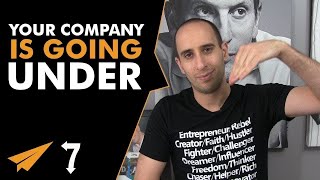
Evan Carmichael identifies seven warning signs that a startup is failing: lack of differentiation, poor customer retention, insufficient referrals, underpricing, blame culture, lost momentum, and absent passion. Most entrepreneurs miss these signals until it's too late.
Chapters
Hello, Believe Nation! Today we're going to talk about the 7 signs that your company is going under. So most entrepreneurs fail. If you look at any of the stats about entrepreneurship, you'll see that most companies that start never succeed. They never get really that traction momentum that they need. And so I really want you to be on the other side of that. I want you to have success. I want you to turn that idea that you have and make it something amazing, fantastic, that makes you a lot of money, has a big impact on the world. And hopefully you can avoid these 7 things and make sure that your company is on the fast track to success. So the number 1 sign that your company is going under is that there's nothing unique about you. You have to have a point of differentiation. You have to be doing something different, otherwise you're not going to stand out. If I can buy from any company, why would I pick you? Now maybe I'm your friend and maybe I know you and like you and so there's an easy way in there, but how are you going to move beyond your circle of friends? What's different about you? A lot of people, a lot of entrepreneurs starting up, they don't have anything that's different. And so when you're competing against people in an industry that have a track record, have a history, have a reputation, why would I ever buy from you? And what ends up happening is people end up cutting down their prices. And we'll touch on that a little bit later, but that's the last thing that you want to do. So you need to figure out, how can I charge more, or how can I charge the same amount or more as my competition and get people to come to me because I am different? And at the start of a business, maybe you're emulating people, maybe you're just copying what other people are doing, and that's your first entry in. But you'll never have the big success if all you're doing is copying somebody else. You'll never have the big success just being a cover band, right? At some point you have to figure out your style, come up with unique music, and put it out there. Covering songs is a great way to launch your career, but if you want sustainability, you want to do something amazing, then you have to put your own stamp on it. So you need to find something unique about the way you do business, the product you sell, service that you offer, something has to be unique and different. The number 2 sign that your company is going under is that your customers aren't coming back. This is one of the most important metrics to look at for a company. How much do your customers come back and use your product or service again and again and again? So many people are so focused on how do I get new people in the door, right? Marketing, marketing, marketing. How do we get more people coming in? How do I get more people to hear about my name? Where the people that you do have, they don't love your stuff. Where any entrepreneur, if you want to have success, you need word-of-mouth marketing to happen for you. You need it. You don't have budget. You're not going to go out and buy a Super Bowl commercial, right? You don't have tons of ad dollars burning a hole in your pocket. You can't see my pocket. Burning a hole in your pocket, right? You've got to go out there and create something that people want to talk about. And if your customers are not using it consistently, then Then before you worry, this again, I get this a lot, like people who want to start apps, right? Before you worry about getting more people to use your app, worry about the people who have already downloaded it and haven't come back to it in a month, right? That person, how do you get them to use it every single day? That's what's important. And you may not be in the business where they can use it every day. You know, if you're a real estate agent or you're, you know, you're selling insurance, it's not something that they're going to buy every day, a new house, right? But are you getting people coming back? Are you getting people talking about you? Are you getting momentum from your current customers? You're not doing a bad job. It's not something that they hate. You're not making water and selling to them and it tastes like crap, right? It's not like really eggy water or whatever, right? You're not giving them that, but it's not great either. It's just okay. And if you want to stand out, if you want them to come back consistently, you want them to tell their friends about you, then you have to Go the next step. You got to give them such a great experience, such a great product, such a great service that it breaks through the clutter and the noise that they want to go and tell their friends about you. How do you create such an amazing product or service or experience that every time they leave you, your product, whatever it is, they want to go tell somebody about what you're doing? That's what you need to get to. That's what you need to work on. So the number 3 sign that your company is going under is tied to it. You're not getting referrals. You're not getting enough referrals. You're not getting enough people spreading the message for you. And so it starts with providing that amazing experience, providing amazing product, amazing service, right? But then are your customers walking away from you and saying, I can't wait to go tell my friends about this? Because there are some that I talk about, right? Think, think about your own experience. Think about the last companies that you recommended. What was so good about them? Think about all of the products or services that you have bought over the past, let's say, month. How many of them have you passed on to friends? Or if you're in a live chat, or if you're at a meeting, or if you overhear somebody at a coffee shop, how many of them have you, of those people that you've bought from in the past month, then referred on to somebody else? Probably a really small portion. And it's not that those other products sucked, it's just they didn't wow you enough. They didn't break through 'cause you're a busy person. But understand that your customers and the people around you have opportunities every single day, every single day, to refer you business. They're meeting other people, your customers are meeting other people every single day and they could be referring you, but they're not. And it's not just asking for a referral. I want them to want to tell their friends about me. So you're not doing a good enough job in creating such an amazing experience that they want to share it. You gotta step up your game. The number 4 sign that your company is going under is that you don't charge what you're worth. I see so many entrepreneurs just undercharge. So many entrepreneurs feel like they're not valuable enough, that they can't go out and charge that amount of money, that they're not worth it, they can't justify it, they don't know how. They feel bad that they have to charge a client more money. And the thing is, unless you get to that point, unless you start charging what you're worth, you're never going to be able to do anything big, right? You're always going to be struggling on your own trying to build this thing up, and maybe it never even becomes a full-time job for you. Because you keep undercutting yourself. You don't believe that you're worth more money. There are some people who charge too much and they're not worth it, right? You know, you think you're worth so much, but then you can't actually provide that value to your client. But that's a more rare situation. Much more common is the entrepreneur who can provide a ton of value and charges a way too cheap a price. And it comes back to the first point about finding something unique about yourself If I can't tell the difference between you and a competitor, who am I going to choose? You, who may have just started this company that I know nothing about, or your competitor who has a track record and history and customers and testimonials and media? You know, of course I'm going to go with the competition unless you charge less. If you're the same price and I can't tell the difference, then I'm going to go with the one that has reputation Unless somebody is charging way less, then it makes me think, okay, am I going to pay a 30% premium for that reputation? Maybe, maybe not. So your job is to raise your prices so that you're at the same level if you can provide the same value, or more if you can provide more value, and explain to me how you're different. A lot of entrepreneurs do a terrible job of it, and the reason they go under isn't that they didn't have a great product or service, they couldn't communicate it well. They couldn't pass on that belief and passion they have for it to others. And I go to your website and it looks like every other website, and so I'm not going to sign up with you. Give me a reason. The number 5 sign that your company is going under is you blame and complain. Blaming and complaining are the qualities of losers who never make it. People who lose blame and complain. They'll never get there because what you do when you blame somebody else or complain about something is you push the responsibility. It's not my fault that I lost. It's that guy's fault. It's the government's fault. It's the president's fault. You know, it's the competition's fault. Oh, if it was set up like this, I would have won. As long as you tell yourself that, you're never going to win. You will never win. Your company will always fail. And you don't want to hang around other people who are blaming and complaining because that seeps into you. Take responsibility for the situation you're in, for the results that happen, and for your life. It's nobody's fault but your own. Now maybe if you're super young, you know, maybe through your childhood and, you know, early teens, okay, you know, you're dependent on your parents. To kind of raise you. But once you're an adult, you know, you can't keep blaming your parents for everything that's wrong in your life. Maybe they loved you, maybe they didn't, maybe they set you up, maybe they didn't. It doesn't matter. You know, at some point, this is your life. You need to take charge. It's nobody else's fault. And when you start accepting that responsibility, one, it sucks. One, it's like, man, that, you know, it was so easy when I could blame somebody else. Now it's on me. But two, it's incredibly powerful because recognizing that it's your fault also means that it's— you have the control to change it. You can go off in that direction. You can fix it. You can solve the problem. And so stop blaming and complaining. Don't hire anybody who blames and complains. Stop hanging around people who blame and complain. You don't want that in your environment. You're responsible for your own life. You're responsible for making it great, and you can. The number 6 sign that your company is going under is that you don't have momentum. You need momentum. You need to do something consistently. One of the biggest reasons why companies fail and shut down is that they just lost momentum for what they were doing. It's that you have this great idea, but it just, it stays here. And you take a little bit of action, and then you pull back, and life gets in the way, and you find some excuse. Use and whatever, and then the next week or the next month you do a little bit more and say, I can never get it going. You got to put the momentum in. You need time every single day to work on this thing, work on this dream that you have, to turn it into something that's just not stuck in your head but it's out there in the world having an impact, touching people's lives. It's important. The big things in life you have to schedule in and make time for. And so 30 to 60 minutes every every single day working on your big picture, working on your big dream, taking some kind of action, some kind of momentum. You need to build the momentum because it's so hard to get back on the horse afterwards too. If you're working really hard for a week and, you know, you start getting a little bit of interest and then you stop, getting back to where you were is hard. It's so much easier to do it consistently. Like if you're working out and you stop working out for a month and then get back to it, it's a lot harder. The muscles are hurting. Like, oh, I was, I was making way more progress than I am right now. You have to put it in daily. Stop making excuses. Put in your calendar. Make it important. 30 to 60 minutes every single day on your big picture. And the number 7 last sign that your company is going under is that you've lost the passion for your business, or you never actually even had it in the first place. A lot of people start a business for the wrong reasons. They just see an opportunity to make money. Somebody tells them they're going to be rich doing this thing. They read an article on a magazine or website and say, I'm going to go into that. I'm going to go into real estate, or I'm going to go into forex, or I'm going to go and launch my own bakery, or whatever it is. All of those things All things can make money, but you have to love it. So most people go in, I would say most people go into being an entrepreneur with the wrong intention. They're just trying to make money because that's their only goal. They don't enjoy the process. As soon as life starts to get hard, they stop, they quit, they move on. And you should, you should. Don't stay in a business that you don't love. Don't be in a relationship that you don't love. Why would you want to spend the rest of your life doing this if you don't love it? It's crazy. But also common is entrepreneurs who start something for a reason, for a passion, and then they lose it. They just, they don't like it anymore. They move on. And you kind of check out and you start to coast. You start to tinker in other opportunities. You start to say, how do I make this passive income for myself? I'll just make this business passive and I'll go off and do something else. It's gonna happen. If you don't love the business, if you've lost the love for your company, then you have two options. One, sell it to somebody else right now while there's still some momentum and still some value, because it's gonna be worth a lot less in 3 years or in 5 years. Or two, just shut it down and go do something else. And maybe that's over a period of a year where you're— you don't know what you're gonna do next, so you have a little bit of income coming in here you're gonna move on and start exploring. But if you just let the company struggle along, think it's gonna be this passive side thing for you, it's going to go under. And if you lost the passion for your business or never had it in the first place, then that's okay. Recognize that. It's a great step. That awareness is amazing. Go off and do something else that makes you come alive, because when you are alive, when you are passionate about something, you get so much more work done, you're so much more productive, you're so much more creative, you're so much more valuable, you feel so much better, you create so much more amazing things, that that's where you want to live. So stop wasting your time on this crap that you hate. It's important. So those are my 7 signs that your company is going under. I'd love to know what did you think? What point do you resonate most with? Am I missing an 8, 9, and 10 that you want to add to the list? Leave it in the comments below. I'm going to join in the discussion. Thank you guys so much for watching. I believe in you. I hope you continue to believe in yourself and whatever your one word is. Much love. I'll see you soon.
More from Evan


How the Biggest Mistake in History Created A Trillion-Dollar Empire | Sergey Brin



9 Machiavelli Principles That Force People To Respect You | Machiavellian Philosophy



The First 10 Words That Instantly Ruin A Sales Conversation | Vanessa Van Edwards

The Top 1% Mindset Behind The First $5 Trillion Company | Jensen Huang (Nvidia)

