Your Mindset Determines Your Success - Denis Waitley's "The Secret"
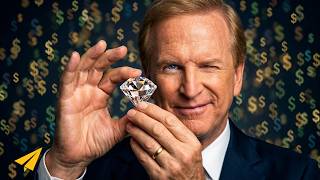
Denis Waitley argues success comes from mindset and daily habits, not circumstances. He uses the "Acres of Diamonds" story to show everyone has untapped potential, and outlines concrete practices: wake early, make an ABC priority list, use positive self-talk, maintain eye contact. True leadership means lifting others and helping them discover what they need to know about themselves.
Chapters
If you want to build a company of giants, you have to start by lifting up the people around you. Dennis Whateley explains that real leaders do not just tell you what you want to hear. Real leaders help you find out what you need to know to respect yourself. They build daily habits like waking up early, planning with an ABC list, and talking to themselves with respect. Your mindset and your habits determine your success, not the weather or the morning news. When you change how you sign on and sign off your day, you change your entire life. A special thanks to the Whitley family for partnering with us to release this video exclusively here on my YouTube channel. To learn more about Dennis Whitley Global, check the first link in the description below.
You know, I love the concept and the story of Acres of Diamonds. When you stop to think of it, Acres of Diamonds is a story of everyone looking for success in all the wrong places. Ali Hafed was a Persian farmer. And he saw a diamond and he knew that if he had one of those, he'd be very powerful. And if he could find many, he'd be really rich. So he left his family and left his farm looking for diamonds and never found any. And he actually committed suicide because he was so despondent that he lived his whole life seeking something he could not find. And yet the person that took over his farm found in the backyard, in the stream, acres and acres of diamonds. In fact, it was the largest man-found diamond mine in the whole world. True story. The Golconda Mine. And to this day, those diamonds are the most precious in the world, and they're never sold. They're passed on through generations. What's the moral of the story? When you leave where you are and believe you're getting outside of yourself to find riches, you've forgotten the most important thing of all is that the acres of diamonds are within you in your, in your own backyard. Each of us is given a priceless gemstone of potential inside ourselves. It's as if we have acres of diamonds inside ourselves. And if we'll cut and polish those diamonds of potential with knowledge, skills, and habits and role models, we'll have a priceless external material reward rather than looking for it by some luck happenstance that we're going to meet somebody who's going to give it to us. I've always said then that Acres of Diamonds means you'll find that happiness lies right inside your eyes, right in the own backyard of your mind. There is a diamond mine in your diamond mind. I think self-esteem is the most misunderstood, over-promoted concept in the world. It's true that self-esteem is a deep-down, inside-the-soul feeling of your own worth, regardless of your age or ethnicity, your gender and what you've done. And there's the problem. We tend to relate self-esteem with performance. And we believe that unless you perform, you're not worth anything. The problem is you can't perform unless you think you're worth the effort. So in order to perform, you have to feel deserving of the performance. If you don't feel you deserve to win, you won't put in the effort, you won't gain the education, you won't put in the work, you won't take the risk. So I think that performance is a reflection of value, not a measure of it. So winners deserve to win in advance, and there never was a winner who wasn't a beginner. And when you begin anything at all new and get out of your comfort zone, you're awkward, you're not good at what you do, and you tend to get discouraged because you're not as good as the high performers. But you must realize that every high performer was once a beginner, and they have to risk being a fool in the eyes of other people in order to take a risk. So I think that we've exaggerated self-esteem to be an arena mentality. And what has happened in sports and in celebrity is that every play that you make, you tend to run around and beat your chest and say, look what I've done. And the problem with that is we're not all going to be world-class champions, and to have to, if you will, demonstrate and applaud yourself for everything you do, you're sending the wrong message to children. Because children now believe that, "Hey, look at me! Let me get in your face!" Children tend to think that if they're aggressive, loud, address in a certain way, and make a statement, that it's skin deep. And I think it all started with Muhammad Ali. And I say that in order to beat someone unconsciously into unconsciousness, you have to intimidate them into feeling that you're more powerful than they are. So you really do say, I'm gonna beat you in the third round and I'm gonna tear you apart. And you act this way because you're a gladiator. The gladiators have ego. Because they're doing something that is physically dominating somebody else. Authentic self-esteem involves humility because you've got so much going for you, you can afford to be gracious and humble. The greatest superstars in every arena of life are engaging, open, warm, approachable. Why? Because they've got so much value. And they're so anxious and eager to share it with you. And they know that the fans have made them possible. So they sign more autographs, they stay longer, they help children, they set a good example in their lives. Authentic self-esteem is saying, "I'm as good as the best, not necessarily better than the rest." And in fact, I've never met a person more successful than another, nor not better than another. A taxi driver to me is a transportation executive. A waitress is a food manager. And what everyone does, you know, a garbage collector is a maintenance of the cleanliness. Without a schoolteacher, we'd all be dumb. Without a janitor, there'd be a pile of trash. You know, without an astronaut, we wouldn't explore. Everyone has a magnificent role. And it's really the fact there are no small parts. Only small actors who think that they're not playing the part of a celebrity. So I think the problem is this: if you have to show off, you're hiding a lightly valued self. If you have to show that you're rich, if you have to be loud and obnoxious and overly aggressive, you're really hiding the frightened child inside. But if you're open and warm and engaging and humble, You have every right to be that way because you've got so much going for you. You're just sharing it without giving up anything because you can never lose the value that you've got by sharing it with others. Well, it's been incredible in the past where you've got powerful leaders and they understand the secret that, you know, like attracts like and that those who have the knowledge have the power. And therefore, throughout history, there've been the power brokers and the constituents. And the constituents have been given just enough skills to earn their bread, but not enough knowledge and skills for them to run businesses, own businesses, be entrepreneurs, feel worthy of the best. And I think, you know, you see some of the great people in the past, even like Michelangelo. Michelangelo had to see the David inside that flawed block of marble. He had to see it before he sculpted it, and then it manifested itself from this block of marble, but it was there in the beginning. And I think people don't understand that you have to see where you want to go. Now leaders know that because leaders have a clear vision of the future they want to create. And the reason people follow leaders is because the leaders seem to know better where they want to go than the people following them do. So people follow the leader's vision. You know, knowledge is like money. When you get knowledge, what good does it do you to have it unless you share it? Do you die with it? It's like a book on a shelf that nobody reads. If you have knowledge, by sharing it, you haven't lost anything. You haven't given it up. When you earn a lot of money, what good does it do to collect it Money should be utilized during your own lifetime to build more success for as many people as possible, and that is the good use of money. I've always wondered about the pharaohs in Egypt. They spent millenniums building monuments to their progress called the pyramids that could be seen from everywhere. And then, as selfish as they were, giving up thousands of lives who spent their entire life carving blocks of stone to build this monument to the pharaohs. The pharaohs then died and buried their slaves, their animals, and all their material wealth in this pyramid so that no one would get it so they could use it in the next life. But the joke was on them because you don't take material things forward. Material things should be utilized and spread during your lifetime. And what happened is the grave robbers got all the material things And the pyramids still stand, but they're not monuments to the pharaohs. They're just monuments to the thousands of people who built them for a false secret, which was the edification of a monarch, when it should be for the edification of people. You know, I have a real good take on leadership too. A promoter will tell you what you want to hear. A leader will help you find out what you need to know. A promoter will want you to love and respect them. A leader will want you to love and respect yourself. And a promoter will tell you what he or she's going to do for you, so you'll vote for them. And a real leader will tell you what you must do for yourself in order to actualize. And that's why it's so important that self-esteem truly is the non-material value that you internalize. We know anger, if you know, all the speakers use anger because it's one letter short of danger. So if you put a D in front of anger, you have danger. And anger is threatened value. When you're angry, it's you're threatened. You're threatened by something that somebody's gonna do, something that somebody said. And so angry people are upset because their values have been threatened. But what if your values are so internalized What if they're so full of abundance and joy that what people say doesn't have that big of an impact on you? So in the programs that I teach, I say, what if someone comes up to you and says, 'You're a rotten, stinking, loud, obnoxious, hook-nosed, beaver teeth, buzzard beak, turtle breath. I hate your religion. I hate your mother. I hate your country. I hate everything you stand for.' What do you think of that? And I say, "Hmm, it's an interesting opinion. Considering where it's coming from, I'll accept it as a compliment, and I'm into a self-improvement program and need lots of encouragement, so I thank you very much for the feedback." And they say, "Well, I didn't mean it as a compliment." You say, "I know, but I took it that way anyway, because, you know, it doesn't make so much difference what happens to you in life. It's how you take it and what you make of it that counts." No one has the authority to take away your self-esteem. No one has the right to take away your feeling about yourself. So if you allow them to do that by an angry statement, or if you will, a criticism— and I've always found that people who have the most problems are the most critical because they see you as being elevated above them and they want to cut your legs off. And make you as small as they possibly can in your presence. You always find people then who find fault, are desperately trying to knock you off a pedestal that they've put you on. And this happens all the time in the media. You know, if you see somebody who's successful, immediately you're trying to find out what's wrong with them so you can feel comfortable that you weren't as successful as they were. So we do tend to criticize people in high places because that way it makes us feel better. If we know something bad about them. Well, I have my own take on happiness. You know, I've been around for quite a while, and I figure that happiness is not something you can acquire. It's not something you can travel to or buy or live in or drive. Happiness is not a result. It's a way of traveling. And if the experience of happiness is not felt in the present tense now, it'll probably never be experienced in the future. Because happiness does not come as a result of something. If it did, then something else would happen to make you unhappy because life is a series of roller coaster events and you can't predict events. But happiness is like brushing your teeth or tying your shoe or learning how to drive. Once you get it, you just keep reinforcing it and it doesn't happen if you make money when the kids are grown, when we finish school, when the economy changes, when terrorism doesn't exist anymore. How can you be happy if there's terrorism? Well, you must be happy all the time because the happiness itself drives you toward your goals, keeps you healthy, and attracts to you the same kind of people who are happy. That's why optimists hang around together and pessimists do as well. Well, just being alive is one of the greatest things of all, because to be given the gift of life is the greatest experience of all. Happy that I have my eyes, happy that I can walk, happy that I love the aroma of good food, happy that I love flowers, that I can hear music. Happiness for all the abundance, and I think and thank every day. And every time I get unhappy in the slightest, I visit a burn ward, a children's leukemia hospital, I go to an Alzheimer's ward. I'm able to either see people who have so many other problems than mine, greater, that it makes me very happy, or else I watch children playing, flying kites and laughing and giggling like I did when I was a child, and I said, "Wow, look how happy they are," because they haven't believed the evening news enough. They haven't wallowed in the bad news. You know, bad news sells, and the fire that burns another warms the general population in the fact they're glad they weren't the victim of the day. So people pass on bad news because then it justifies their own lack of productivity. Well, I think it's really important for any leader or any manager to have private meetings, and I know it seems difficult, but the more time you spend with people Think about it. When you spend time with somebody, it shows them you care about them. In your own life, the time you spend with people is what they remember, not the money you spend on them. So spend as much time as you can asking other people what they're interested in, and then listen. What they want in life, what their passions are, and then listen. And by listening in and showing interest, in what other people want and care about, you've just bought a friend for life. You've hoarded goodwill. And think about your own life. Think about the people who have impressed you. They've been the ones who seem to have your own interests at heart rather than just their own. You know, in a world where there's no job security, in a world where you can't promise anyone tenure or time in rank doesn't mean anything, when we're moving in fast forward, when the competition is globally, when you've got hungry immigrants with digital assistance, people are are willing to do anything necessary to earn. You have to have passionate people who believe that you care about them at such a personal level that you really are part of a family. And I know it seems very difficult, but you must treat the people that work for you as equal team players, and you must ask them what they're going to do for the company. What kind of responsibilities do you see yourself having? What more would you like to do? Where do you see yourself going in the organization? Tell me about your own dreams. Because you can't give people assignments anymore, it's moving too fast. You can't come top-down, you really have to come from the bottom-up because the people closest to the customer are the lowest paid. So the problem-solving is going to come at a level where the employees who are not making the most money are perhaps making the greatest contribution because they're closest to the problems that are occurring. So if you go to McDonald's, for example, you sit around on Friday and you call it the Big Bad Idea. All right, we're going to have a Big Bad Idea meeting. Now, if you were running this business, what would you do? Well, the first thing I'd do is give us all headsets and earphones so we can see what's being ordered. Then we put a digital clock in so we could keep people moving faster from ordering to— we'd find out who's doing what on what shift. This is what I'd do if I were running it, but of course I'm not. And you say, that's what I want to hear. I want to hear what you would do if you were in our position without fear of recrimination or being stepped on. There is no such thing as a stupid question or a stupid comment. So what you want is to seek the advice by looking up to those beneath you. Look up to those beneath you and you'll create a company of giants. Look down on people, you'll create a company of dwarves. So you must raise the people underneath up to a giant level so they feel that they're important cogs in the wheel. Well, I guess a typical day in my life would be, first thing I do is wake up early because I know that the early bird gets the worm, but I like to wake up early and then I say, whew, safe again, let's go. So I like to wake up and I wake up happy because I always wake up happy and my kids say, Dad, just eat your cereal. I said, "No, it's another great day. Are you kidding? I'm really fortunate to be alive and it's gonna be—" And they say, "Well, look at the weather." And I said, "The weather does not determine the day. The day is determined by the sign-on that you have and the sign-off that you have." So I sign on the day with upbeat music, feeling good about life and myself, and I say, "What am I gonna do today to get closer to my own goals and help people get closer to theirs? What can I make of this day? And thanks for another one." And then of course I try to eat things that will extend my life rather than shorten it. When you stop to think about it, why would you deliberately do anything that would shorten your life if you have good self-esteem? If you don't have good self-esteem, just do anything, hurt yourself if you want. But if you have good self-esteem, so I watch what I eat in the morning. I work out a little bit because I like to get the juices flowing a little bit. So usually I, I do a little workout in the morning. And then I have either written down the night before, or if I didn't write it down the night before, I usually plan the day the day before, and I plan the week the week before, and I write down in one place all the things that I plan on doing. And I do have my to-do list: to do today, to do as soon as possible, to do later, and I put them down in A, B, and C. A, action. B, before tomorrow. And C, can wait. So I do an ABC list of what I'm gonna do, and I try to check it off, realizing that something's gonna come up for me to be a fireman solving a problem of the day rather than always keeping on my list. But I always go back to the list of things that I want to do with this day that are very important, because I think it's important to write down what you really want to accomplish because there are so many distractions in life. And then I get into my upbeat. Everyone I meet, I say good morning. I always, in an elevator, I always stand and look at everyone rather than the numbers. And rather than watch the floors come down, I look at them and say, hi, what's happening? How's everyone? They go, oh no, you know, he just got fired or, you know, What does he want? And I say good morning to everyone and I smile at everyone and they either think that something's wrong with me or they think that they know me or they say, do I know you? So I act as if I almost know everybody and I'm saying good morning. I find I get a better response when I'm nice and engaging with everyone. The other thing I do is I usually now plan for contingencies, which means that I never want to arrive at an appointment making an excuse. So what I always do is if I am going to be late, I will always call before and say, "I am going to be late. There's a traffic jam, the road's out, the traffic lights are out, there's a long freight train, we didn't allow quite enough time, and I'm going to be late." That way I don't have to walk in and say, I am sorry I'm late. I never want to make excuses after the fact. I want to project myself as someone who is prepared. When things start to go wrong in my life, I begin to talk to myself. And I know everyone does that, but when I talk to myself, it's not with profanities anymore. I talk to myself with all due respect, because when the mind talks, the body listens and acts accordingly. So I'm my best coach and friend and cheerleader. So when things aren't going right, I say, "Come on, Dennis, let's get on it now. You're better than that. You're better than that action now. Bad seed, stop right now. Stop. I know what you're thinking. I know what's beginning to creep into your mentality, but you're not like this and you know better. So let's get moving. Let's get going. Let's get back on track." I'm always saying that to myself, back on track. Let's go. That's better. Now you're getting somewhere. As if I were coaching a new Olympian or somebody just trying out for a part, I'm coaching myself into that. I try to go into meetings always not with my own agenda, but with immediately trying to establish and find out what the other person's agenda is, and then hopefully being able to help that person accomplish what they came to the meeting for. Reasoning: if I help them get what they want, I know that they'll be more likely to give me what I want. So I usually always try to help people get what they want before I go for what I want in every phone call. The other thing I've learned to do is I always, in every telephone call, give my own name immediately before I ask for anyone I want to speak to. That establishes the fact that I know who I am that I'm offering you some value and that should register with you because I'm tired of being screened out by people who say, who's calling? Because if you don't say who you are, then they know you're not important enough to have stated it up front. I'm always the first to introduce myself and I'm learning how to extend my hand and my eyes directly into theirs and look at them when I'm talking and look at them when they're speaking to establish an exchange of value. I'm learning how to sit up front in meetings. After all, don't I want to have the best seat in the house? And don't I want to ask a question if the speaker is there? Don't I want to be the one to learn? If I sit in the back, it's like being in school or church. I can sneak out of the sermon if it's too monotonous. I sit up front and I always dress my best, not necessarily designer, but I really believe that you project immediately The first impression. That's why the eyes, the handshake, the smile, the light, the friendliness, the offering and extension of your name, the repeating of the other person's name when you meet them. And always on the telephone, as I say, even at home, I answer the phone with my own name. My children think I'm absolutely crazy. I say, "Hello, Dennis Waitley." They say, "We know, Dad, just want to see if you still live here. Why do you answer with your name?" I said, because I want them to know that I'm there available for service, and I want them to know that it's me and not say, excuse me, who is this? So you give your name and you project yourself. And I think cleanliness is very important too. If you say a typical day for me, I believe in dressing for the part. So I like to, even if I'm not going to business, I may wear casual clothes, but they'll be, clean and fresh and I'll be ready. And I usually believe in dressing a little better than I might be expected to, because I've learned if I'm ever going to give a talk, I should be the one dressed rather than wearing shorts and a shirt. Even on a cruise ship, I wear my suit and they say, "You're really weird. Why wouldn't you dress in shorts?" And I said, "No, you're the ones on vacation. I'm the one that's supposed to be— that you're looking to for for value and wisdom here, so I want to be expecting, sort of like Bob Hope in a way, having the persona of somebody in authority. It happens that I begin to get the feeling of being upset, begin to get the feeling, I stop it almost immediately. And I do that by listening to beautiful music, by either listening to CDs or cassettes that are very upbeat in nature, and I always listen to upbeat and positive music. I rarely in the morning listen to the negative news because I don't want to get the wrong start in the day. And probably the most important thing is in addition to signing on the day, I really have learned how to sign off. When I sign off the day, no matter what has happened to me, I always thank and am grateful for the privilege of having this day, and I find something good to sleep on. I've learned to go to sleep not sad, not upset, not unhappy, but to go to sleep happy because it helps me. And I control my dreams too, believe it or not. When I have a nightmare and I wake up, I say, "You know, that's not like you. Let's rewrite that scenario." And as we go back to sleep, let's have it turn out differently. And unbelievably, I have found that I've been able to implant into my subconscious a better dream than I was just having. And that's why when I go to sleep at night, I say, thanks for the great day. I'm going to have a great night's sleep. And by the way, I love you.
And congratulations, you're one video closer to who you're meant to be. Believe. For some more incredible Dennis Waitley motivation, check the video right there next to me. I think you'll love it. Continue to believe, and we'll see you there.
Well, you know, when I was a little boy, I was in a dysfunctional family. My father was an alcoholic, and my mother and father argued all the time about money. I put my pillow over my head and sort of cried myself to sleep.
More from Evan


How the Biggest Mistake in History Created A Trillion-Dollar Empire | Sergey Brin



9 Machiavelli Principles That Force People To Respect You | Machiavellian Philosophy



The First 10 Words That Instantly Ruin A Sales Conversation | Vanessa Van Edwards

The Top 1% Mindset Behind The First $5 Trillion Company | Jensen Huang (Nvidia)

