#82 | Felix Lee | Empowering the next generation of creative leaders
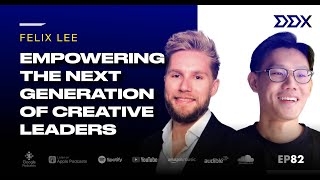
Conversation between Felix Lee (founder/CEO) and Sebastian Gier about Felix's journey from engineer → designer → founder and the creation of ADP List. Felix describes growing up in Singapore in a working-class, entrepreneurial family; launching and selling an earlier startup (acquired in 2018 when he was ~20); a formative month in San Francisco; two years of mandatory military service; and founding ADP List during COVID by seeding a Google spreadsheet ("Amazing Design People list"). The discussion covers how ADP List scaled (co-founder James built the first website remotely), product strategy (start small, iterate fast, community-first), the designer-founder mindset (balance user experience with business metrics), team culture, current product priorities (system performance, improving core onboarding/login experiences, and building asynchronous learning features), and advice for designers moving into startups.
Chapters
The problem that people don't realize is that, you know, if you don't start designing for business and understanding what the business needs and you always think about the perfect experience and you don't think about the business, I think you end up not having a job because people will not be able to justify for you. Like, are you just here to beautify things? So a designer's responsibility is both to all the stakeholders, it's both to the people using the product and helping them get what they need, the value out of your product. And second is to get the business metrics right. And I think a lot of people do the first one, but they don't try to think about the second one which is getting the business metrics right.
All right, super nice to have you Fiddex. Thank you so much for taking the time.
Thank you so much for having me here.
So yeah, I'm really looking forward to talk with you about, yeah, I think your personal journey also from design to entrepreneur, founding your own startup of APD List. I think many in the audience are going to know that because it's very much connected to the design community in its roots. And I have many friends who are also mentor on the platform or part of that platform and always heard really good things about it. So has been made in quite a splash. And well, you yourself a designer by background and moved into entrepreneurship and all of that I think is going to be interesting to discuss. So I'm looking forward to that.
Sounds good, Sebastian, Happy to dive into it.
Yeah, sure. But I think it would be interesting maybe for the audience to know a little bit more about you. Like how did it started out for you? I mean like you're coming from design and then went into starting your own startups. Maybe you can tell the audience a bit about that journey.
Of course, Sebastian. So you know, to begin with, I'd love to share a story about, you know, just growing up and the perspective that I have on the world and why ADP is so important. So I grew up, I was born and raised and I grew up in Singapore. So Singapore is a very small country, obviously a very small state and city as well. Yeah. And I was born and raised in Singapore to a working class family where my dad is a baker and my mom, you know, she used to teach the preschool students and then she left a job to support my dad in his bakery business. So I, I grew up really sort of like in a very entrepreneurial family where, you know, I was constantly helping and supporting my grandparents and my parents as well. I was just all around that environment and that atmosphere of serving people and, you know, just talking to customers. And I really grew up enjoying that. You know, I had a very different childhood from a lot of my friends just being here in Singapore where on the weekends I, I, you know, instead of going to the playgrounds, I spent it, you know, spending time with my grandparents at the bakery itself. And so just growing up as a kid, you had a very different exposure. And couple of years ago I started my first company and you know, I was actually an engineering student, so I wasn't a designer yet. So I started my first company. You know, we had no designers, so that was the first time where I picked up design. Obviously I love design and I, you know, I met a lot of amazing people who were willing to teach me design as well during that time because I was an engineering student. And so, you know that the startup eventually got acquired three years in, that was built with, together with my brother. So it was acquired by the time it was 2018. I was 20 years old back then. And so so many lessons learned. At age of 20, I, you know, I book a one way one month flight ticket to San Francisco. So my family never had the money or resources to travel to the US because it's really expensive going from Asia to the US and so after the acquisition of the company, I had some savings in my bank account and I booked a one month flight ticket to San Francisco, Silicon Valley to really learn about how people design products for the world. But more importantly, I think how do we build big and important products for humanity? And so I booked a one month flight there. You know, I was on a budget trip, so I was literally staying in a hostel and sharing one bedroom with three other people. And obviously three of them are now amazing friends of mine. But back then it was, you know, just like scrapping off. And my goal in San Francisco, for that one single month, I had no friends or family. I was a complete stranger. And my goal was that every single day I'm going to make three new friends in tech, right? I'm going to ask them what they do, why they do what they do and what is their motivation, right? What is like their, their purpose in the world and, and what, what they were doing. And in that one month I was exposed to a lot of amazing, amazing conversations that would then change my life. And I flew back to Singapore a month later and I had to join the military service for two years. So I spent two years in the army. But throughout that time, you know, the experience that I got from San Francisco started to really marinate in me, right. It got into me like, you know, what was it that they were able to do that maybe here in Asia we have not been able to do yet? And I think that big idea for me and the big breakthrough was that, you know, the people in Silicon Valley, at least the people that I've met, they were willing to dream bigger. Right. They weren't willing to stop at just okay, I'm going to create something, you know, big or a valuable company. No, I think they wanted to change the world. And that was something that was truly inspiring. And so after my army, in two years, two years finishing my army, I joined a startup and Covid happened. Obviously I was still in a startup because it did really well, but I eventually left my job to find, to found ADP list because it really brought me back to the days in San Francisco where what if a kid from a very humble background like myself, anywhere around the world, you know, could learn from the experts in Silicon Valley or in anywhere around the world, like what if we could connect that conversation and democratize access to those conversations that make you a better human being? And so that is the purpose of ADP List and that's why, you know, I decided to leave my job and co found it about two years ago.
So interesting. I mean. Yeah. And that, you know, I think you, you went to Silicon Valley, made these experiences and then that's so important in the early times to build these connections. I think if what would be interesting to disc discuss a little bit further to like how does that startup. I mean this is your second startup, right? You had packed that too, but specifically maybe with APD list. How did you started in the very beginning with the. Well, how did you met like your, your co founder and like how did you started out with that idea and how much did it help you that you were designer by training as far as like your first steps and how did that whole initial exploration of AP Datalist worked out?
Yeah, of course, you know, one of the things about any place is that it's probably the most unexpected thing that I've done in my life because during the COVID obviously everyone was very unsure of their jobs. You know, no one wanted to quit their jobs. But here I am, you know, making a, a big and bold move. But I think the main sort of like main sort of motivation, at least for me was that, you know, we, I really saw an opportunity where for once, you know, we could truly democratize, you know, amazing and great knowledge and Conversations. So during the pandemic when people are losing their jobs, I actually started this thing called the Amazing Design People list. Well obviously if you kind of make it in the acronym, you'll be called ADP List. So I started this thing called the Amazing Design People list on a Google spreadsheet. And I say if you're looking for a job, you can put your names in there. Or if you're looking to help someone, you can put your name in there as well. Now lo and behold, that spreadsheet has started to spread within the design community and it had started to spread across the us, India, the uk, many different countries around the world, including here in Singapore. And a few weeks later I was so busy with trying to get all of these things together because there are so many people on the Excel spreadsheet, the Google spreadsheet, they were saying, can I have this feature? Can I have that feature? I was like, man, I don't know how to manage a Google spreadsheet. And that was when James, my co founder, who is based in Africa, I've never met him in person before even to today, he reached out to me on LinkedIn and he said, look, this Google spreadsheet is taking off. Why not let me build a website for you? And my first reaction was that, wow, this stranger, is he trying to sell me a website building service? And so my first question to him was like, yeah, sure, but is it free? And he said, yeah, it's free of charge. You know, I'm just going to do it for you. I was like, okay. So we hop on a call and over the weekends, you know, their website came out and we continue to, to maintain the website and you know, a couple of months in then we decided that hey, this was the right thing to do. We wanted to put in more effort and that was when we left our, our full time jobs to pursue this.
So interesting. And you said like you have never met him to this date?
No, yeah, I have not met him in person yet.
Oh wow. Because I mean like you then the next step, I think if I remember right, you got funding for your, for your startup, right? So you got an investment which is not something that's easy to do. So congratulations on, on that. And you got the traction, everything and yeah, how did it, how did it, I mean like it's, it's such a great example of like, you know, the startup start lean, you know, like you started with a Google sheet, you know, like the low cost mvp, you know, and that's actually, that's so Beautiful, because that's how it should be.
Right?
But if you're working on that, so oftentimes if you work on a startup, like it's not even good enough to go in front of the door unless like every pixel is perfect and like all of it. And that's actually you need to start, just need to get the traction, you know, and work with something, you know, as quick as possible. And then like it's not product and then marketing, like no, it's like directly community from the start. Actually I've been in a lot of discussions with startups and I've been mentioned the example of APT list quite often as an example of how do you build it up from the community, like bottom up product development, right? Yeah, you can basically you can launch in a day. You guys, you launched it a day. The Google sheet was ready. Are you sure? It was less than a day. And then you start to build traction from there and then you make something out of it and the first version of the product, the second version of the product, third version of the product. And it's not that you have to.
Do.
Two years of prototyping and like so on and without like that market validation. I think that's so beautiful about the story of APGs, I personally find, I think most startups should do it like that.
Yeah, 100%. I've always believed like, you know, I think a lot of designers fall into the mistake and the trap of let's make things, let's make things beautiful, you know, let's try to make a perfect experience and you know, make just things, you know, just look good and perfect. Overall, I think that is a very common mistake and it's a very legitimate temptation to want to make things perfect. But we often forget that, you know, perfection is always built on mistakes. Right. And that's what I fundamentally believe because from what I know is that my first version is not going to look like my third and my fourth version. So why do I wait for the time to pass? Months and months and months. Because every month that you are waiting and every single day that you're waiting, the customers, they don't get the benefit of what you're building. And so even in today at adplace, you know, everything that we build, there might be some mistakes here and there. It might not be the best sort of like, you know, first time experience or whatnot sometimes, but people naturally notice that we care about experience and it improves really, really fast. And you know, the improvements. If I should say, if I should wrap this up the improvements should actually be as fast as you launch. So you can't launch fast if you cannot improve fast. So it has to come together.
Yeah, 100%. I totally agree. And as a designer, of course it's tempting to think about the importance. Well, one thing I learned is that like, I think being a designer can tremendously help a startup. And we have a designer in the team in the startup, you know, but at the same time that, that shouldn't mean that you need to over perfectionize everything. You just need to be better materialized ideas in a rapid way, you know, in the, in the very beginning and then, you know, find a better match between like the audience and what you're offering. And I think that's what designer can create. That doesn't mean like your product has to be a product like pixel perfect and you know, before you launch. That doesn't mean that. So I think that's really important to understand. Like you said, it's a temptation because, you know, designers are perfectionists oftentimes, like it's never good enough. And it's always we always our own harshest critic.
So.
And I think like, we of course, like, have high expectations as far as like the, the product experience. But in the end it's about like you know, being, you know, and it's, it's, it's not a nice word to say, but in some way like sales driven. Not really that. You know, when I say sales, this can also be a community. This can also be like marketing. Then you can replace it with different words, but like being focused on that market, you know, and like the interaction with the market from the very beginning, instead of building something, a vacuum, and then put it in front of the door and then think people buy it. Not like you start from the very beginning, like you could have been there like two months ago right from the beginning and like start. People start to talk about it with people. But yeah, and it differs of course a bit on the product you're working on, but in general terms, um, and yeah, so what are you. If you think about like, like maybe the APD list from the very beginning and like maybe the goals that you set yourself now, because I think you started with design and that's another interesting thing is like you started very focused, you know, like it was design, but I think now you're doing more than design, right? You. But that's important thing as well because it's easy to. In the beginning you said like, well, we could do all of these things, so why are we doing not all of these things, because I think what you did very well and aptitude is like you, you had one community and then you focus on this one community and deliver to them. If you hit this one, you can't go to other communities like afterwards. Right? But that's another temptation to fall into like that you're focusing on too many, too many, too many potential audiences from the beginning because it's just functionally possible, but it's not the smartest move. So we'll be curious about your thoughts on that. And then also as far as, like, you know, how do you see it, like, things moving forward on apt test your next goals?
I think that's a, that's an, that's a really fine question. It's a, it's a brilliant question. To be honest, Sebastian, I think there are so many things that we can actually learn from this strategy, right, of starting small. I think one of the things is that we often think about dreaming big, right? As founders or as designers. I think we always look at, hey, you know, what is the dream state? And I think that is a huge, huge mistake and a big trap, right? Yet again, similarly to perfection, right? And let me talk a little bit about this in terms of like, how designers really mess that one up really badly sometimes. So, and especially this is especially if you work in a startup, right? So we always imagine things to be big. We always imagine things to be like a perfect dream state. And I think what ends up happening is that we over design things, right? We over design things, you know, a feature that could be just done in like a few simple things. You know, you end up creating pages and pages of things just for one simple function. Now the consequence of that is that the engineers have to put in more work, more time needed to code, and more time needed to deliver. It complicates the user experience and more than likely not, you know, you kind of like, I guess you spend too much time on all these things that you don't, you know, you. The time that you get the result is really, really slow, right? And so it's no longer an MVP by then because you, you would have built such a big thing just to test out the simple hypothesis, which I think is a big problem, right? And, and this goes back to the fact that, look, I think we can dream big, but we always need to know where to start. And we need to start somewhere that is small and is strategic. And what I mean is that, you know, when we started ADP list, we started off with designers, right? We started off with designers. And that's because James and I are both designers. Right. He's a no code developer and I'm a designer. So we somewhat share a very close community in design. And so when we launched it was obvious to us that we should launch to the people around us first. Right. And so we started to grow from there. You know, it's now about two years in into ADP going to free now. We're now in probably like six different major categories including product management, engineering, software engineering, marketing, sales, so on and so forth. But design is still our biggest, you know, industry and we have not finished even expanding inside. I'm pretty sure like there's still some people who doesn't know ADPC yet. So I think starting small has really helped us to create this focus but also understand like what could be replicated in a different industry. So what have we learned from design that we can replicate to product managers, engineers, marketers, so on and so forth.
100 and like, I guess like all of these verticals need their own sort of approach towards marketing. These are all individual marketing and go to marketing activities. You know, you need to understand, okay, like how you can get more product managers to come to the platform. Right. You need to get into other communities for that, you know, potentially. And yeah, I think it's, it's, it's really interesting. I mean you also started doing a time. I think the timing was another thing about, you know, APd this because you said it was Covid people tend to work remote. So it was international. So for you, like it wasn't even important that it was someone locally you directly. And the people I know on the platform, I know they, they were like in different parts of the world and they love the chance to connect to someone that is further away. You know and I think that's another important component like the timing, perspective, you know.
If.
Yeah, but I think like what if you're thinking a little bit more about the topic of design entrepreneurship, what other learnings do you have as far as like how designers can move into entrepreneurship and some of the challenges you see in that context?
Yeah, you know, I think that's a really great question especially for folks who are designers listening to our podcast today. I think one of the things about being a design founder is that you tend to look at things from a user experience perspective and not just ui because I think everyone appreciates great user interface and maybe like great looks of a product. Right. Look and feel. But I think being a design founder you tend to appreciate the process that goes behind creating an experience a lot more. And what happens is that when the founder CEO who is sort of like driven by design thinking and sort of like a very designed approach process, the company skews towards problem solving. The company skews towards talking to customers, being super obsessed with, you know, understanding humans and understanding the users of the community. And I think that that itself is something that we have seen at ADP List. You know, our, our entire team is every single, all hands, which is every single week and, and the team leads meeting. You know, the leaders would really just bring up what they've heard from the community. The leaders would share about their ideas, the team as well would share about what they have heard from the community. And we just make sure that, you know, it doesn't matter whether you're an engineer or a designer or a marketing person, you get the same information that helps you to inform what the users want. Right. And then we go and design, build for it and we kind of problem solve around that. So I think that that kind of culture is because it was translated down by James and myself who are both designers at SKU and by training and by heart. And so I think that is a big benefit. Obviously I think the challenge can sometimes be that when people get into a mindset of being a designer, I think it's also a big thing. If you're able to balance how you behave in a startup, which is fast and scrappy and just do things and hustle versus a designer mindset, I think you win. But the problem is that if you're not able to balance that, I think you start to overthink a lot of things. And we have seen that happening with some of our team members as well. When information is given to them, instead of just piecing things together and jumping into certain quick conclusion, quick wins or quick hypothesis, some of them ends up going weeks and weeks into a certain hypothesis, which is clearly overthinking. I think it goes back to the mantra of, look, let's just kind of solve what people want and if it doesn't solve it, let's change it as soon as possible. But if you're going to overthink it, I think hesitation is not going to lead to any results and I think there needs to be a good balance between being a designer and being a designer in a startup mentality.
Yeah, this is true. Because, you know, this goes against intuition sometimes as designers. Right. Like I think some of the things you mentioned, you know, to having that, to being very practical with some of the things. Yeah. So how do you, how do you see it with startups? Do you think like more and more designers? You know, I think, I think that you think like overall that is something that the startup community more and more understands, the role of design or what do designers have to change about themselves to be more helpful for more for early stage startups, I'm going to say.
Something like really, I think that designers need to listen and I think we need to understand that as designers we need to really speak business. We need to really know what the business is looking for. I think because a lot of designers ends up thinking that if I start building for my business and the business metrics, I have to end up sacrificing my users. I don't think so. You know, it's not a trade off. If you think about it, right, you could have a great user experience, you could have a great UI and great user experience that benefits the users in getting what they want and also benefit the, you know, sort of like the marketplace, right or the business that you're serving. And so to be honest, I think the, the problem that designers think this way is tainted by the people at Facebook and that meta, right? Like if you think about historically like meta and Facebook, which is Facebook, like just, you know, makes a lot of people distrust, right? Like the way that algorithms are being designed, the way that certain apps are being designed to be so addictive that it destroys your life and maybe your perception of being competitive on social media and getting sort of like mentally ill just because, you know, you are always comparing yourself on social media. I think there is very dark side and dark UX where it could go there. But you know, the problem that people don't realize is that, you know, if you don't start designing for business and understanding what the business needs and you always think about the perfect experience and you don't think about the business, I think you end up not having a job because people will not be able to justify for you, like, are you just here to beautify things? So a designer's responsibility is both to all the stakeholders, is both to the people using the product and helping them get what they need, the value out of your product. And second is to get the business metrics right. And I think a lot of people do the first one, but they don't try to think about the second one which is getting the business metrics right.
Well, what would be the best? I totally agree by the way, and I can further also elaborate on that. What do you think are the best ways for designers to Understand what the, you know, to get more, to provide more value to the company you're in and if they start to speak, you know, that language, but it's still the question like exactly like how you're formalizing it and etc.
Yeah, I think the best approach is to really sit in a room with your CEO and with the executives or if you're not able to get there, you know, try to sit in, in cross stakeholder meetings where product manager exists, business manager are there, the growth person. I would say that the easiest way is to sit in these meetings. And the best way, the most ideal, but not everyone could get access is that you want to sit in growth team meetings. Right? Just sit into growth team meetings where the designer is designing for growth as well. Just sit in those meetings. Everything that they talk about leads back to how is your design going to drive a certain business metrics. And that is the most exciting job because you wouldn't want to be a designer designing a button or like a quick text change for the next three months of your life. And if you walk away from the job, you know, all you can put on your, put on your resume is that hey, I helped design, you know, the circle of the Instagram stories. But the question is this, like you know, did that drive retention? Did that drive like acquisition? Did that drive more click through or whatnot? Like you know, if you're not speaking in these languages, as a designer it's so hard for you to convey to people what you have actually done. So sitting in into growth team meetings, listening to business reports and the metrics, I think is the best way for a designer to kind of like get into speaking these languages.
100%. And I think yeah, it starts off with listening and understanding what the audience, what the, what the company cares about like in its, in its really decision making. And I think like getting understanding about like what are the big business challenges as well. Right. So and this is actually nothing that is only applying to designers if, and I don't know how you see it, but I think like it's something that actually is important for everyone who wants to grow within a company is really to understand what the company cares about. You know, so what is the leadership hearing about? What are they talking about? Like what is like what is the most important to this company right now, what challenges they are facing economically, social, etc. Then offer your help towards solving these problems because people are going to start to listen to you because you are, your work is connecting back to the biggest problem the company has, you know, and everything that is contributing to that is going to get attention and value. They give you get valued. So which also just creates more impact for your work because the likelihood of things getting implemented or getting resources for further development I think is more increased, you know, than if you work on something that maybe the organization doesn't see as so important and if it's something that you think is important, you know, that doesn't get enough attention and maybe, you know, you have to build out, you know, bottom up communities and like, you know, educate people.
Of course, 100%. Like you said it right, you said it right. You know, just because people need to understand like where your work maps back to the business and exactly what you see.
Yeah, yeah. And it's easy to forget about that because sometimes you work in isolated team that all you see is like your own, like your own preferences. You know, even though you're an organization, you are kind of in your own room and you have painted the walls in a color, you wanted to paint them. But like actually it's not what the, it's not how the organization actually works or what is relevant for them. And that's a conscious act. It's a conscious act because it doesn't come natural. So you need to keep that in mind and work towards it. If you're thinking about design, innovation, digital innovation for you right now at apd, it is in your state you have as a startup. How do you see it right now? Are you more focusing on sales and marketing right now? Are you more focusing on or you're also focusing on product and innovation, design? How is it, how is it for you?
Yeah, you know, so we're focusing on two different things. And if I were to count the engineers then I would say three different things as well, which are clearly all connected. But I'll talk a little bit. I'll start one, start with the one where the only the engineers are involved obviously because we can't code, which is optimizing the system. Right. So when we think about scale, when we think about a building of a great product, we need to first have a great infrastructure from a technical perspective, from a coding perspective. And so I'm not going to dive too deep into this, but the engineers at ad, please, when we think about innovation and scale, these two words, the engineers have such a big part to play about it because what they're really thinking is that how can we design an architecture and a system and an infrastructure that allows ADPs to scale but at the same time the experience would still be consistently grid. You know, the latency, the loading speed, you know, all of these things would still be consistently grid as the platform scales. So the first thing is optimizing our system performance. That is one thing we think about when it comes to innovation and scale. So innovation isn't always something that is what we can see, but it's something that you can feel as, as users as well when it comes to engineering. Now the second thing that we're really focusing on is, you know, how can we retain people a lot more on ADP list and not just for one to one calls? Because we realize that, look, the time is limited, right? You can only do so many calls. And we also realize that, you know, you don't need to call someone every single month. And so we want to create much more frequent use cases where people can learn and exchange knowledge. And that is really at the heart of what we do, right? So right now, at this very moment, Sebastian, we're innovating and really creating ways where people can, whether synchronously or asynchronously, share knowledge and skill sets without just being on the call, which is what we have today. So that's the second one. I think the third one is not so much on innovation, but the third one is more of like what I would say, asking permission from your users. And what I mean is that, you know, we have designed quite a bit of things over the past two years and when we really reflect and kind of take a lot of feedback every single week, we realize that, look, before we really start jumping in and innovating crazy things around AI and whatnot, I think the question is, do we have our core product done right? You know, is a login experience great? You know, it's a sign up experience. Great. Is the onboarding experience great as well? You know, are people actually understanding why they're here, right, beyond just introducing features and features and innovations. So what we're really doing right now, and at least over the next two, one to two quarters, we're really cleaning up a lot of things, right? We're really relooking at certain experiences and trying to innovate in that experience, right? Trying to make it improve that experience. So to sum it up, three things I think. One is system performance. Second is, you know, asking permission from the users by improving the core and basic experiences. And then the third one finally, which is innovating on new features that allow people to kind of, you know, be on the platform, often without needing to be on the call.
Makes sense, makes sense. And if you're thinking about the, and I think like the challenges kind of change, of course, in the stage you are as a startup, right? I mean like in the beginning you had different, different issues. Now you're looking into like improving retention or conversion, all of these things you mentioned right? Now, as far as the flows, if you're thinking about the role of this, the role of a, like a designer, how would it change between like maybe the first, first day at the startup, like in your first day phone and a company and now and like, you know, moving forward from there? How do you see like, you know, like, do you need a generalist in the very beginning or like, you know, how does it, how does it, how does it map forward as far as like the world of design in a company sort of through the fundraising process in the different stages of a startup?
Yeah, you know, I think a designer plays a big, big role in terms of, when it comes to fundraising or just like, you know, growing through a certain phase of a company. But it's going to be so obvious. But maybe some people haven't been in startups before. In a startup, everyone, and especially a designer is a generalist. And that means that you will be doing things from the research, from ideation to coordinating the PM to maybe sometimes even doing the PM job and coordinating with the engineers across the companies to, to get the design delivered and to get the product delivered. So in many ways designers will always, in a startup context, by the way, be naturally, they will naturally always be a generalist. But I think how it really involves, and, and this is what I've seen from my previous experience as well, including, you know, just being in startups, is that, you know, a designer, generally the first designer was who is in a startup. And if you stick long enough and if the startup becomes successful, you don't usually get promoted as normal as everyone else into sort of like a senior product designer, you know, in sort of like a default big company. So you don't go through that route unless you specifically requested to, which I haven't really seen a lot of people done that. But immediately you would almost become the head of design, like the next day. And, and that's exactly kind of like the growth trajectory of a, of a, of a startup designer. You know, you, you're not there to, to really just become a, just another designer. Right. I think you're betting big on the startups in the early days. And the reward is that if it's successful and you're the first designer or the first few Designers, you know, it's very likely that you'll be leading a certain department in the next three to four years that pertains to design. And that's at least kind of like what I've been seeing in a startup world. Because founders and CEOs who continue to run the company see the value in early employees. Because founders know how important it is that someone have an early day perspective and bring it into the product and the team culture continuously.
It's very true. Right, because I mean, yeah, the people you have right at the very beginning, they, they know about the whole journey, they've been, they've been collecting all learnings, they understand the mission from day one. And you know, I've been iterating with you on that. So I, I totally agree that. And also on the flexibility as a designer that you maybe need to educate yourself in your fields to get new opportunities. If we are getting to the end here, Phoenix, what would be your recommendation to, to, you know, the creative community specifically looking at the market we're having right now, because it's not so easy for people to start things, you know, considering, you know, overall economic situation. So how do you, what would be your recommendation towards designers, you know, strategists, data innovators towards launching their startup and in current times and how to approach it?
Well, that's always a big question. I think if I were to give a piece of sort of like wisdom or something that I've learned is that we have to be, as much as we want to be successful in our careers and our design, I think the fundamental principle here is that we have to be also be willing to be obsessed about the entire game in the entirety itself. And, and by that I mean that you can be obsessed with success, with fundraising or whatever that definition is, but you have to also be obsessed with the fact that you're going to make mistakes and that failures are going to be a part of the journey. I think that is a big barrier for a lot of people because everyone thinks about success, but a moment when something really hard hits them, they either like walk away or they break down or they just like, you know, don't do anything. And because they have not acknowledged the fact that that should be a part of the journey. And so I think it's important to recognize that good things and the not so good things, they come and go. And I'll give a personal example. A couple of months ago I was in India and I was staying at one of our employees house and I was sleeping in her room. And so she was kind enough to host me in India while I was there on a work trip. And so on that trip itself, we actually went out for a team dinner and I was notified that I was awarded Forbes 30 under 30. So I think anyone would be extremely happy. I was happy in that very moment. But I think the mindset was that I didn't take it to heart. You know, I didn't feel like, oh, I'm the new like 4:30 and 30. No, what happened was that she witnessed this and she could, she, she tells this story over and over again. You know, I went home and the first thing I did was to turn on my laptop and continue working. And the next moment, I mean, the next morning, wake up, I continued my routine. I head on to the gym at, you know, 7 6am early in the morning. And so I think it's important to not let success get to your head and failures get to your heart. And it's to recognize that both are going to be there at every part of your journey. And your job is to think about learning more so about less so about success or failures and whatnot. So that is what I would say.
Yeah. Supernal. Thank you so much, Felix, for saying that. Because that's important, you know, to always do my odd and look at the, the game like you said, like in its totality, you know, and about understanding it's going to be up and downs but you have to stick to it, right? Otherwise you're letting things fall apart and it's for nothing, you know, and understanding it's about like a process and focus on the learnings and that you, you're going to accumulate value over time, you know, but it, it's not always going to be good, you know, it's like there's going to be no moments where it's not so good, but you have to zoom out and then get excited about the game and its totality. So thank you so much, Feliz, for highlighting that and I think love to continue talking to you, but I think we have to wrap it up here as far as the episode. So thank you so much.
Thank you so much for having me, Sebastian.
All right, that was the episode. Thank you so much for tuning in. If you enjoyed the episode thought, make sure you give it a thumbs up and let me know in the comments about your thoughts and biggest learnings from the episode. I'm always super curious about that. You can also tag me in a post about your biggest takeaway and share your insight with others to pass on your learnings. If the episode provided you a lot of value, make sure to follow, subscribe and share it with friends and colleagues so they also have the chance to learn and grow. Until next time. Cheers.
More from Felix

Design is about Understanding Different Complexities - Felix Lee - S1 - Episode #1