The CEO mentoring 20M people. | Felix Lee, CEO of ADPList Interview
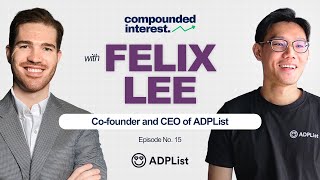
Podcast interview (Compounded Interest) with Felix Lee, co-founder & CEO of ADPList. Felix recounts founding ADPList during the COVID-19 pandemic from a Google Sheet to a mentorship platform, describes fundraising (a $1.3M pre-seed round), growth metrics (tens of thousands of mentors, 100s of millions of mentorship minutes, presence in 140+ countries), and shares personal background (raised in a bakery family, sold an earlier startup, two years Singapore military service, competitive sport background). He also discusses building influence via LinkedIn, the importance of persistence/ preparation, and calls listeners to follow him and join ADPList.
Questions this video answers
2021
Over 35,000 verified mentors
About 140 countries
Over 150 million minutes of sessions
Raised $1.3 million in 2021 from Sequoia Capital India and Goodwater Capital (guest referenced a $1.3M first round)
Chapters
Hello everyone and welcome back to my podcast series Compounded Interest where I sit down and chat with founders, investors and business leaders making an impact in this world. Today's guest is Felix Lee who joins me from across the world in Singapore. Felix is the Co founder and CEO of ADP List. Founded in 2021, Adplist is now the world's go to platform for high quality trusted mentorship. With 25,000 plus mentors from companies like Netflix, Airbnb and Google, it hosts over 100 million minutes of sessions on topics such as product design, product management and coding in over 140 countries. As a designer, Felix has embedded his creative roots in ADP List culture, product and community. Felix has been featured on Forbes 30 under 30 Asia and Tatler's Generation T Future Leader list in 2023. In 2021, ADP list raised $1.3 million from Sequoia Capital India and Goodwater Capital. Felix also has over 130,000 followers on LinkedIn where he shares insights from his entrepreneurial journey building ADP list. Felix is on a mission to unlock humanity's potential and I could not be more excited to share this conversation with you. Enjoy. All right, Felix, thank you so much for joining us here today. I'm really excited to dive into the questions that we have, but before that, just wanted to ask you, who is Felix Lee? Give us your best kind of one minute rundown of your background and, you know, what you're doing today.
Well, thanks for having me, Cameron. The way I would say Felix Lee is as a person is that, you know, I am a boy that is born and raised in the bakery. And the reason why I say that is because my parents actually run a small bakery here in Singapore where I'm, you know, where I grew up. And just growing up, you know, I really appreciated sort of the hustle culture of, of, you know, running a small bakery where you got to, you know, wake up early in the morning and, you know, make deliveries and whatnot. So I've seen that, you know, through my parents, you know, I was involved in some of it. Obviously not as much as them, but I think that that makes up a big part of me. And today I'm the co founder and CEO at adplist, the world largest mentorship platform for professionals in tech and you know, generally early career folks as well.
Yeah, fantastic. And the funny thing you mentioned about the bakeries is, yeah, here in the US it's like a commonly known thing that the bakers have to wake up so early to get the bread Ready and like just all of the process that goes into the final product that probably the consumer isn't fully aware of. So I think you having that exposure to that, it also gives you a better understanding of just regardless of the bakery or not just knowing there's so much that goes into the final product that, you know, often gets overlooked by the consumer 100%. So yeah, tell me a little bit more about ADP List. Tell me where the idea came from. You know, what kind of inspired that. Was it a white space that you saw in the market? Just tell me kind of about the origin there.
You know, ADP List was really born out of a very simple yet altruistic way of thinking of how I can help the world. And it was during the pandemic, you know, COVID 19 pandemic, when you know, I was seeing a lot of friends were getting their offer rescinded to full time jobs. You know, a lot of people were getting laid off as well. And frankly I was in a good job, I was in a really well paying job. It was growing, but I felt like I could have done something to help these people. And so what I did was that, look, I'm a designer and I don't know how to code. There was no sort of AI tools in 2021 that was like booming up. And so what I did was that I created a Google spreadsheet. And, and the idea of this Google spreadsheet was simple, was that if you are looking for a job, you could put your name on that Google spreadsheet. And every Friday I will send that spreadsheet to recruiters and hiring managers that I know. So, so that, that was the first version of what I call Amazing Design People List. So yeah, now ADP List is really just an acronym of Amazing Design People List now. So a couple of days later a lot of people were messaging me and said, hey, look, I love what you're doing. I want to join your course. How can I help? I was scratching my head. I said, look, this is just a side project for me. It's not meant to be serious. I don't know how you can help. And one of them suggested, why not? I can be a mentor for those people who might need my help during this time. Could help them with portfolio review, I could help them with, you know, resume review or even an interview prep. And so his name was Stephen Gates. He's our first advisor. Stephen is based out of New York, you know, at that time and now he's in Pittsburgh. And so, you know, I I said, look, Stephen, I've not met you in person, but I trust you. So come on board, you know, come on board, help these people out. So he was the first guy. And few days later, you know, a couple of sort of our mutual friends and acquaintances joined, and we have about 10 mentors to begin with. And long story short, you know, it's been three years now. You know, we have over 35,000 verified mentors on Adplist globally in 140 countries. We have crossed over 150 million minutes of sessions, you know, successfully conducted around the world. And so it's been quite a journey. That's the story.
Yeah. No, that's super interesting. And it's funny because one of my other podcast guests, Jack Boudreau, his business, and he just raised a million or so dollars in seed fundraising. His business also started in a Google sheet. He was helping connect families to financial advisors, kind of just as a side project to make some income. And it got a ton of traction. And now he's built out habits, he has a big team, and he's building that into an amazing startup. So it's just, it's interesting to see kind of how something that you start on the side can, can blossom into something that of course becomes your, your, your life mission. So on a related note to that, what's been the most rewarding experience so far in the last few years with building ADP List?
You know, I think genuinely the. And, and I do mean this, you know, because I, I think it's sometimes it's a little bit hard for people to enjoy the journey. But, you know, I remember the very moment when we raised our first pre seed round. You know, we raised $1.3 million. And, and that was our first round ever. It was like three years ago. Right. Look, I, I did not come from a family where I have even seen a hundred thousand dollars. Not even, not even $50,000. I've not seen that. Right. And so for us, when we raised $1.3 million, when the money hit our bank account, look, I, I just felt like, you know, it's. It, you know, like the work just began. But, you know, the truth was that when you get, when we got to the $1.3 million in the first round of funding, the happiness wasn't in exactly getting the money. Now guess what? The happiness was when people start accepting your ideas, they understand what you're building, you know, they want to be a part of it. I think that, to me, has been the most rewarding. And I just do. And I don't mean just investors, you know, understanding you and just being aligned with you and just wanting to be part of it. I mean, your family, your friends, your loved ones, and most importantly, our community of users. Right? These are folks who, who saw what we see and say that, look, I want to be a part of it. You know, I know where you're going. I'm with you. And to me, that has been the most priceless man, because, you know, 99.9% of startups fail. And, and, you know, the truth is this, I don't know where this is going to go. I don't know where this is going to go. I'm not going to, you know, say that our statistics of our probability of, you know, success is much higher than anyone else. I don't think so. In fact, it's probably a little bit lesser than everyone else because I did not come from a, you know, I don't even have a college degree. And so frankly, I mean, like, you know, where, wherever it goes, I think, you know, successful or not, I think the most rewarding part has just really been that journey itself. To, to be able to learn and just be able to feel that people are on your team. And it's very rare. Look, it's extremely rare even in workplaces to have that genuine feeling that, look, people are on your team.
Yeah, no, that's an interesting anecdote there and something I haven't heard too much, just about kind of when you get that capital, it is a confirmation of your idea. It's a confirmation of the work that you've done. It, of course, provides a lot of credibility and that you're. You're working on a business that can scale and grow. Because as you know, VC investors, they don't just want a 2x return on their money, they want a 100x. So if you raise the $1 million, it means it's a huge idea at that. And so that's got to be a great feeling and a totally different situation. But for myself, I felt something similar when I reached 10,000 subscribers on YouTube. That's a very different milestone. But for me, for whatever reason, that just felt like a big kind of stamp of approval. It gave me some credibility. It allowed me to kind of Talk about the YouTube channel and the content in a more professional setting just because, you know, as you can imagine, you spend a lot of time working on this and so you want people to kind of appreciate it, but sometimes it's hard for them to appreciate it without fully understanding the context, and so really relate to some of that. But tell me a little bit more kind of just about that fundraising experience. It was 2021, so was that still very remote with, with COVID What did that look like? Were you in person pitching investors? What did you learn through that whole experience?
Yeah, you know, I, you know, I, I kind of grew up in, in a country and if you kind of, you know, heard a lot about Singapore, I know of Singaporeans. You one, you know that the Americans, I mean, you would know that the Singaporeans in America, they are all pretty privileged, you know, like 80% of them, right? So to be able to go from Singapore to America, you must be pretty privileged to a certain extent. And, and, and I did not have that privilege growing up. You know, I had not visited the US and, and everything else. And I'll share a little bit of this story before, you know, like that relates into the fundraising thing. And so, so I, I grew up with parents, my parents fighting about money, you know, financial stuff every other week, you know, not have money and whatever. And, and you just kind of grew to this. You know, I wouldn't say it's like, it's almost this form of like, phobia of like, hey, you know, I got to be sure of every single dollar that I'm spending here, right? I'm not going to spend $10,000 and be like, hey, I'm Warren Buffett and you know, this $10,000 is going to make me a million in like a few years time. Like when, when you're in sort of like a war fighting mode, you don't, you don't have that luxury to think long term, right? That when, when you're just trying to feed your kids and we're just trying to struggle to survive, like, you don't have that luxury to think long term. And so, you know, I grew up in an environment like that and you know, I sort of post serving two years in the military service here in Singapore, you know, I decided, you know, everyone else was going to college and university. I decided that, look, that wasn't for me. I wasn't going to go to university. I was going to immediately start working, right, Because I wanted that experience. I knew that was more important to me. I knew that I needed to start making some money. And, you know, I was very lucky in a way to have met amazing mentors and bosses that, you know, I, I worked with and given me the opportunity. And so when I first raised funding for ADP Laser first round, you know, truth to be Told, I mean, like, there were a lot of doors that were closed on me in my very own country. In my very own country. I mean, we don't have the, quote unquote, the American dream. We have what we call the Singapore dream. And the Singapore dream. The Singapore dream is a very simple ideology that you just need to have a car, you just need to have a credit card, and you just need to have a condo and you need to have children. So four seats, right? There's four Cs. And so as long as you have four seats, you're pretty much set as a Singaporean. Now, look, a lot of doors were closed on me when I was first fundraising was, frankly, because I was a 20 year old, 21 year old kid with, you know, with no college degree, no university degree. And this, this entire system in Singapore, by the way, it's built upon the fact that you got to probably, you got to have a degree in order to get a job. And so, you know, it's an Asian country. And so I did not have that. I was at a disadvantage. And wherever I go with people are like, you know, this kid, you know, we don't know his parents. I, I, you know, like came from nothing. And so look, I think the reality is this, right when I was fundraising was that, was that I wasn't supposed to be here in certain way, but I was determined not to be a part of, you know, not, not to be a part of a certain stereotype. I was determined that I wasn't cut from the same cloth as everyone. And so, you know, when I fundraise, you know, I had hundreds of conversations and a few of them eventually went through, you know, and it took one person to start believing in you, you know, in that room. And when you have that hope, you have that momentum, it brings on to the next one. And that, that to me was really the journey. And with that one person who believed in me, I mean, his name is Yuri. He's the, he's the CEO of this company called Carousel here in Singapore. He's the first guy who believed in me. Took me on to the second guy, third guy, fourth guy, and within two weeks, the round was closed after that. Right. But all it took was one person to believe in you. That's why it goes all the way back to the point that we were mentioning, is that, you know, that journey of having people on your team, that to me is the biggest reward. And that to me is the lesson from fundraising as well.
Yeah, it's a great reminder that regardless of how many conversations you have and how many no's you might get. All you need is that one person, that one yes. And that can, can change your life. And so, yeah, super motivating there, kind of transitioning off of one thing you said, just with respect to kind of maybe lack of, kind of that credibility that a lot of Singapore funds might be looking for with the college degree and, and all of that. At what point did you start building your personal brand on LinkedIn? Because that's something now that I've seen that for better or worse, sometimes if you have a huge platform, which you do now, that can kind of trump some of those, those stereotypes about, oh, he needs to have a certain degree, his parents need to be certain people, all of that. And it kind of gives you that credibility that would come from kind of the traditional background. So at what point did you start building your personal brand on LinkedIn? And did you see that playing any role kind of in this process or did that come later?
So I'm trying to get a question. So your question is that it's about building influence and having a platform?
Yeah, I guess, yeah. To reword it, I mean, because there's been plenty of situations now that we've seen creators. I mean, of course it's a different scale, but you know, Jake Paul, he didn't go to college, but he built a big audience. And so he's been able to raise with better his one sports betting app, all of his other endeavors. There's been a lot of smaller examples too, where maybe the person didn't have the traditional finance or engineering degree and background, but because they had built an audience online, it gave them that credibility that maybe investors were looking for in other places. So it was just curious kind of how that, how that, how building your personal brand on LinkedIn helped you in this process.
So, you know, I think that LinkedIn in many ways has helped me. But I'll tell you why. I first even started on LinkedIn, which is an interesting story, when I was 19, maybe backwards a little bit, when I was 17, I started my first company with my brother. And it was a simple travel itinerary app kind of idea. And by the time I was 19 and he was 20, we had sold that company to a conglomerate. It's like a family office, right. And so we have sold that product for $250,000 to that company. It wasn't a lot of money, but for, for two very young kids, that didn't come from much. It was a lot of money. And so, but Guess what, guess what. We, we did not get the money, you know, we, we did not, we didn't, we did not get what we were promised. And so at that point I started questioning myself, how do you not be a pushover? How do you not, how do you have power? The question is simple, how do you have power? And, and it was a 19 year old kid asking himself this question because of life circumstances. How do you have power? And you know, I, I, I stumble upon a few ideas here and there, you know, like, money can buy you power, money can buy you everything. But that one thing that stuck with me was that money comes and go, you know, was that everyone could have money. I could have a million dollars, you could have two, you know, I could have 10, you could have, you know, 20. There's no end to that, right? There's no end to that. Unless you're Elon Musk. Right, but that's a separate topic. So, so it's interesting because what I realized is that money isn't power. Well, I think money accelerates power. Money does amplify power, money does buy tools and accessories that add on to power. But power is this reality distortion ability that you're almost able to have people on your side. You are almost able to have people on your team and follow you. Look, let's give an example. Jesus Christ, right? I'm not religious, by the way, I'm not religious at all. But Jesus Christ or Buddha, you know, the, you know, Buddha or Prophet Muhammad, like this figures that, you know, does not come with money, but they have a lot of followers and they have a lot of power. They have a lot of power. And so when I realized that, I said, look, I don't need tons of money at this time of my life, but I think what will attract more money for me is to be able to have influence, is to be able to be in front of people and have people follow. And so that was when, and all this came from a very dark obviously situation, right? And so, so, so that was when I realized that if I build a great LinkedIn personal identity, no one's going to take that away from me. And let's just say I get in that room again, you know, I'll be less of a pushover. Why? Because you know, because you know that if you push this guy over, he's going to have 200,000, maybe a few million people screw you over, right? They could boycott, they could boycott your business or whatever it cost, right? He could just write a tweet like Taylor Swift Maybe putting out posts or whatever. So to me, when I saw that, I knew that I had to build that on LinkedIn. And so I wasn't building it for any like, oh, I love content creation or whatever. No, not, frankly, not really for any job purpose. I was building it because I was bullied and I wanted to, for the first time, you know, not, not get bullied. And, and I think, you know, find a way out. And this was the biggest lesson that I learned.
Yeah, well, I, I appreciate the transparency there and I think it's, it's a really good example. I mean, it is true if you have an audience and you see this on Tick Tock and everywhere else where, you know, if a contract goes bad or it's not honored, like if you are a creator, you can make that known and there is a lot of power in that. And then of course, as you said, just your followers, your audience, they'll take action based off of what happens. And I think that's the interesting thing now with the community you've built with adplist, there's so many young ambitious people and that's similar to kind of my audience on YouTube where, sure, yes, right now everyone may be in the early stages of their career, they may be in junior roles, all of that, but these are the most ambitious people in the world. Where are they going to be 10, 15, 20 years from now? These are going to be, you know, the CEOs, the executives, the investors. And so it's really interesting to see kind of how that'll all evolve. And so getting them on your side is a major asset.
Dude, 100%, man, I love what you just say. And you know, one of the things that I learned recently from a podcast, and I don't know which podcast is that, but you know, one of the, you know, what do you think, and this is a question for you. I love to hear a perspective. What do you think makes someone really popular in school? Right. A researcher once went to a school and, and did a research and then found out, trying to find out what makes a person really popular. What do you think, Cameron know makes a person really popular in school? It's.
Yeah, I'm trying to think about it from the lens of a researcher. But of course the ability to, to talk to people and have probably a variety of interests, relatively funny and doesn't hold themselves at too high of a standard. But I think at the end of the day, just like understanding that everybody's a person and everybody has value. And I think if you approach every conversation. A lot of people will kind of gravitate to, towards that and you know, want to be your friend. So maybe that's a little bit too altruistic, but that's what I would hope is the situation for how to be popular in High School. That's probably a different, that's a different podcast.
Well, you know, I, you're, you're somewhat there, you're somewhat there and you're not too far off. But the real answer was that, you know, the researcher found out that the most popular kids consistently was that they, they are likable. And not because they are funny, not because they are good looking, not because they're in basketball and they're in, you know, sports or whatever, but it's because they're likable. And how do you be likable? So, you know, they went on the rabbit hole and say, how do this guy and girl or girl be likable? And what they found out was that in order to be likable, you got to first like other people. And so, you know, those popular kids, if you realize they're always liking other people, they don't, they don't hate, they don't tease people or whatever, they just like, they like someone else. And, and it's, they do it so often enough that it almost becomes like, you know, people now like them and everyone is like, hey, you know, I know Felix, I, I, you know, what so and so forth. So like the, like what you say, I mean, back to the point of like, you know, the friends that you're making now, they might still be young, they might still be out of, you know, the fresh graduates, but you know, 10, 15 years from now, you, you know, you don't know who they become and you know, you just want to stay light and also, you know, you know, have them like you, but have you like them as well. Because if you, if you won, it's always a both way thing. And so when I, when I walk out the door, you know, my, my rule to myself is that, you know, I want to like people, right? I want to be interested in you. I want to be interested in you. Right? And that to me has always been sort of like a big mantra, you know, when it comes to building influence comes with like, you know, carry smile and just talking to people as well.
Yeah, I think that's a great mindset and I totally agree with you there. As someone who goes to a lot of networking events and I feel like I'm constantly meeting people who are much more accomplished and Just senior than myself. I think the biggest key, and this is what I always say to others when they're going through that process, is just be interested in others, and then that in turn will make them interested in you. And so that's just served me so well. And that's also why I've started this podcast. I mean, having these conversations, being interested in what you have to say, the journey, the story, all of that goes a really long way. And so totally just connect with. With everything there. And yeah, it's also one of those, like, laws of psychology where if you're talking to someone and you're asking questions and they're talking about themselves more, at the end of the day, when they think back on that conversation, the more that they talk in a conversation, the. The better in their mind it's viewed. That's like, that's something that stuck with me all the time from Dale Carnegie's how to Win Friends and Influence People. So I try to implement that whenever I can. Just ask, ask questions, ask away, and see where that goes.
Love it. Love it. You know, I actually just bought that book a couple of days ago. I know a lot of people have been talking about that, that book, win friends and, you know, win influence or whatnot. So I am definitely going to dive into that this weekend.
Yeah, well, it's funny, I probably read it, like, at this point eight years ago, a lot of things have still stuck with me. I then read it again, like, four years ago. It's one of those books that you got to just keep coming back to because every time you read it, there will be a different takeaway that you can implement in your life. So you'll have to let me know how that goes. But another thing, too. I mean, you alluded to it earlier, but you spent two years in the Singapore military. That's, of course, a different system than what we have in the US but we've seen it kind of done successfully in Israel and some other places where it really does breed a good amount of innovation, you know, camaraderie, all of that. But at the same time, you know, it's two years of your life at a very pivotal time. So just curious, kind of what that experience was like for you, and then also maybe how that inspired you to then go more of the entrepreneurial route instead of the traditional path, like you said, with going to college and just following kind of the typical path.
Yeah, I mean, the. The military service for me has been, if I were to be full, blunt, honest, and I think I've always been to my friends and everyone else that listens here is that I didn't have a pretty good time actually in the Army. I think everyone has a different experience, but mine just wasn't particularly special or happy, if I'll be honest. In that sense. Right. I was picked on a lot. I was bullied on a lot. And the reason for that was because I was just a very different kid who wanted to do his own things. I did not want to participate. I'm not going to sit here and like, you know, I'm a guy who was bullied for whatever, but, like, look, I just wasn't interested. I just wasn't interested in participating because I had so much going on in my mind. You know, I, I just came out of the whole, you know, the business, you know, deal, didn't go through kind of thing, and I was thrown in the military. So I just wasn't present. I just wasn't involved. And so because of that, you know, guess what? In, in the military, when you don't, when you're not present, when you're not involved, you're not interested or whatever, you don't get punished alone. Everyone else gets punished, you know, with you. And so, you know, when, when you have folks getting punished just because you're not interested in doing things, I mean, it creates a lot of, like, tension and sort of like, you know, bad blood. So I had a lot of that. You know, I. And so I had very few friends walking out of there, but the biggest thing that I took away was from the military was just, frankly that, you know, you can be alone and you can be strong alone. I think that's, that's, that's, that's fair. I mean, you know, it's a statement that I, that I, that I kept for a very long time. I mean, I do a lot of meditation and, and it helps. And so I think that's, that's a big one. And so after military, you know, a lot of people chose to go to university and college. I did not. You know, I, I think it's probably the one thing that I'll forever be very proud of. And I'll be honest, because many people around me been through the system and, you know, they come out great, and some of them have still friends. I think there's something to be said when you take a different path, when you create a different story. And my genuine hope is that when you create a different story, you inspire someone else to do that. You inspire someone else to do the same. And for Me, when I take tough decisions like that and when I make decisions that goes against the grain, I always feel proud because, you know, it happens. And I'm someone who loves running into the chaos. And there's this saying that I tell my friends, I said I love running into chaos. I love it. Right. I say that genuinely because the opportunity for growth is exactly in the midst of the chaos. I think a lot of people, they don't run into it, they don't want to run into it. But I love it, you know, I welcome it and I want to endure that.
Yeah. Though again, appreciate kind of the honesty and the transparency there about your experience. And I think sometimes going through things like that, sometimes it's more helpful to know what you don't want to do in life, to have a super clear idea of what you do want to do. And so of course, some people can thrive in military settings where they love the structure and just, you know, the bureaucracy and all of that. I certainly have had friends on that end of the spectrum. But then of course there's others who just, they want to be able to do their own thing. They want to kind of guide their own life and strategy. And so it's interesting just how that kind of fostered that, that strong ambition in you. And so the follow up question there, as I understand at that time, that's when you're also kind of upskilling yourself by, by watching YouTube videos and courses to kind of just gain a lot of skills. What was that process like? And I guess what would your advice be to other young people who may be in a role right now that they're not super passionate about and don't see themselves in for the long term, but still want to kind of, you know, ready themselves that when the opportunity presents itself, they can take that leap into the area that they're more interested in?
Well, you know, I think the thing that I like to say is that opportunity presents itself to the people who are prepared. Right. And, and if you're not going to prepare, then the opportunity might not be there. And so, or maybe the you have prepared, but, you know, like, maybe it's not your time yet. And, and I think that there is, there is always, I like to believe there's always a time and place for everything. I, I think the amount of small decisions and big decisions that goes into one's success is tremendously underrated. It's tremendously underrated. Right. Like there's so much, I think people who have made it, they like to think that they made it on their own merit, but I don't think so. Right? I don't think so. If you read this book called Thinking in Beds by Any Duke, it's probably one of the best book that I've read. You know, it talks about skills and luck, right? And. And look, I. I think that there's luck to a lot of things, right? Like, just tons of things. And so for me. For me, it's like, you know, just being able to recognize that. Just being able to show up and do your best and. And let the rest kind of play out by itself. But I can tell you that certain things are controllable as long as you work hard, and you have to work hard for an irrational amount of time period. And, you know, I think a lot of people don't have the patience, but I. I do hope that you have that patience to go through that. Right. That's my advice. And I, I think it's like, you know, that's probably the most important thing because, you know, people usually give up, you know, soon, and, and, and hopefully, if you're patient enough, you know, you can see the light of day.
Yeah, well, there's a famous quote by Thomas Jefferson, who is one of the founding fathers of the US Saying, the harder I work, the luckier I get. And so I think that's a good observation. Where, of course, just sometimes being in the right place at the right time, you know, not just with respect to actual location, but just time in history, can play such a pivotal role kind of in. In your. Your journey. But then also, like you said, when you actually prepare and you put in the work ahead of time, that's where you can actually grasp that opportunity.
So love.
Love that. Another kind of similar thing, too, and correct me if I'm wrong, but something you mentioned in one of the other interviews I heard is you were a competitive speed skier or speed skater in your earlier life. So tell me a little bit more about that and kind of what did you. What. What kind of skills and habits from that kind of carried over into your role now as a founder and CEO?
Well, you know, I think the simple answer to that is that it is that background of mine, you know, being in competitive sport and playing on the national level and international level as well. The. The biggest learning for that and the takeaway, you know, is the competitiveness, the drive, the willingness to go the extra 10 to 100 miles beyond just the finish line. And I don't say, like, go the extra mile. You got to go to 10 to 100 extra miles. And that will always be my moat, you know, like business mode. That will always be my mode in every business that I join in everything that I do. Because I know that I'm willing to suffer 10 miles and 100 miles more. I know I'm willing to win at any price. I know I was ready to sacrifice everything and do it. And very few people do because very few people can compete with folks like us. Because frankly, a lot of people won't do work, do the work without any guarantees. There's no guarantee win. I'm not going to do it. If there's no guarantee success or there's no guaranteed salary, I'm not going to do it. So just with that mindset alone, frankly, I mean, you know, it takes you far, very, very far. And I just kind of once remembered this thing, this quote, which, which is, you know, said by this F1 driver and I couldn't remember who is probably, you know, Fernando Alonso or something. And. And this F1 driver basically said this, right? There was this very dangerous turn in the F1 circuit, and this is a pretty infamous turn where you could get into accident if you don't slow down. And so it was the last final lap, competing with two of the best races, you know, and they were just turning that, that lap. And with, with all, as with all races, would know they would slow down at that very corner. Now, what this guy did next, you know, would go on and make history, right? He did not only not slow down, he sped up. And you know, long story short, he did not die. He, he, he, he, he, he warned he did not get into an accident or anything. And the interviewer later asked him, said, look, that's a very infamous turn. Why did you decide that you will go fast? And he said, look, because in times like that, I am reminded that my competitor, his competitor's name is Michael. That Michael has two kids at home. And I think that says a lot. That statement says a lot. I mean, he has kids as well, but that statement says a lot about the mentality of how far you're willing to go, even if society is good, is to call you irresponsible, selfish. But it just goes to show how far you want to be successful and to be a winner. I mean, the best example will be this. And another example would be like, Tom Brady, right? Tom Brady. It's one of the most underrated guys, work extremely hard, get to where he is today. Tons of sacrifice, right? Like that is the exact mindset. I think as an athlete, I had the privilege to be able to take that and bring it to a different game.
Yeah, no, I love that. And of course, huge fan of, of Tom Brady. And I know you're a big basketball guy yourself, so Kobe, and there's plenty of examples there. But also just what you said about kind of taking those risks and all of that, I think those calculated risks, you know, it's not that the, the racer sped up at, you know, a different time. He, he realized this is where me taking this leap, this is where everyone else is going slow, so I'm gonna go fast. And so really that also comes from just having that experience and, and kind of getting the reps in, getting the miles in to understand where that comes from. And I, I think that also what you were saying of just about the, the work ethic, that's why on Wall street it's kind of a known thing that a lot of athletes kind of get those roles. And so sometimes if you don't go to a top tier school, but you were an athlete elsewhere, you know, that kind of gives you an advantage just because, you know, employers understand that, you know, if you played at a college Sport at a D1 level, like you are used to the grind, you are used to going that extra mile, you know, into pushing yourself. And also just the team aspect is, is huge too. But yeah, no, love that, that story kind of shifting gears here before we wrap up, but I know when you, you, you moved to San Francisco for about a month or so, is that right before joining the military. And so you had a pretty, just pivotal experience here. And that kind of helped give you an idea of what you wanted to do the rest of your life. But tell me a little bit more kind of about that, that scrappy time moving to San Francisco for a short period.
Well, you know, that was my first time in San Francisco, man. And you just brought me all the way back to 2018. And you know, when I first traveled to San Francisco, I mean, this has a lot to do with the life that I hope to create. And also I think the, the story that I hope that when I'm gone, you know, my kids will get to be reminded of. You know, when I, when I first went to San Francisco in 2018, you know, it was after my sort of high school graduation of sort. I, I was scared. You know, I was scared, but I was extremely, extremely hungry and curious for a kid whose parents and friends had not even stepped foot into America. So I had, I knew no one. Literally no one. Right. Like, the only news that I know Was like, look, there's racism, there's like gun violence or whatever. Like those are those quite literally the news, right? And so you could imagine the parents, right, Just being concerned of a. I think back then I was like 19, right? Like a 19 year old kid, like traveling, you know, alone to the US where they have never been before, their friends have never been before because it's too expensive. And so I decided that I was gonna make a one month trip there to San Francisco alone. And my goal in that three months, I mean in that one month was to have three cups of coffee with random strangers who are working in tech, who are building something. Every single day I was gonna meet at least three person, right? And I have the diary. I still have the diary. I kept it somewhere. It's right here. And, and every single day I would go down from my hostel, by the way. I stayed in a really cheap hostel. I was staying with two other females in the room. It wasn't even a house, man, it was a room, right? So, yeah, so I was paying like what, $300 per month or maybe $400 per month. And it was a lot, right? And so I remember like so clearly every single morning I would go down to the bakery downstairs and I would just write my journal and write my reflection. What did I learn from yesterday? What did I learn from those three conversations? And every single day I wrote. And, and then the bigger realization, the bigger goal that I was trying to go after, that sort of like this realization was that, you know, I was trying to figure out why was it that the Americans like yourself, you know, are able to create really, really global companies that change the world. And why is it that we have not been able to do it here from Singapore or even just from Southeast Asia? And I was trying to figure out that reason. You know, look, if you, if you kind of read, I mean, I mean, you know, coming from Wall street, you should probably notice Singapore is one of the world's richest country, if not, if not, probably the first two richest country by GDP per capita. And, and so we, we do not have a money problem when it comes to investing in the companies. We do not have a money problem. Now we have one of the world's highest IQ for, for individuals, right? If not, if I remember correctly, we probably have the highest IQ per individual. And so we have probably also the best education system with great universities on par with the American standards or, or even the Chinese standards. And so we do not lack intellectual talents and capabilities. So, right, we got, we got the intellect we got the money. Now the question is, why have we not been able to build a company like Apple or open AI? So my 30 days, frankly, that was a big, big question I was trying to answer for myself. And this is the answer. This is a question that I, you know, kept for a very long time, since a very young age. And. And I came back, and I'll tell you that my conclusion was. And I'm still forming up that conclusion, but my conclusion was that, you know, I think Americans are like cowboys. You know, Americans like yourself love, you know, just cowboying it through. It's like a wild. It's. It's called the wild, Wild west for a reason, right? Like, people just. Just go, you know, just go. They don't care. It's. It's a very New Yorker kind of attitude in certain. Certain extent. And so in San Francisco was a little bit different. I mean, it's a little bit more of a New Yorker attitude, but in. In the way that they innovate things. And so I. I appreciated that they did not care about failure. Now when you come back to Asia, When I came back to Asia, I realized, look, we got everything, but we do not have the balls to fail. We do not have the guts to fail. And I tell you, that, boy did that pissed me off. Boy, did that piss me off, because that pissed me off. But also it ignited a fire in me because I knew. I knew that someone had to be on the global stage and show how it's done. And when. I mean show how it's done, I don't mean, like, be an immediate success. I don't. I genuinely don't mean that. I don't mean that. Today, ADP list is big globally. I'm showing Singaporeans. No, that's. That's not what I meant. But what I meant is that this is just the day one for me. But I imagine that to show Singaporeans what it means to have balls, it means to fail in front of them. It means to fall and then rise back up. It means. It means that your success and your win is not in this win, it's in your comeback. So. So to me, someone's got to put their body in front, if I put it bluntly, right? And so. So I want to be that guy. I want to tell that story to my next generation. I want to, not just my kids, but just, you know, the people of my country and say that, look, someone who didn't sort of quote unquote, went through the system, has done this and shown the country that can be done. I think it, it, it can change, you know, perceptions. It could change a lot of things for the people, younger generations. And my hope is that, you know, it's just every of these people deserve a shot in their dreams. And if they are limited by what they think they can do, I think it's our job to help to unlimit that in a certain way. Even if it means throwing yourself in front and be the first guy to show that. And so, like, you know, that, that to me has, you know, like the whole San Francisco trip for the first month, for that very first time, was to find that answer to that question. And then it sparked something in me that would go on to drive me for so many years, even today, that I have to do it. I have to do it because this is bigger than me. You know, it's not about the money, it's not about the fame, it's not about all of these things, but it's bigger than me, you know, because if I make opens up the floodgate for many, many people and many generations after me, that's genuinely what I, what I'm here for.
Wow. No, I mean, that's super inspiring and because, yeah, I mean, as someone born in the US and of course still here today, we, we see everything just, you know, this is our life, this is what we're used to. But to hear the perspectives of someone from across the world and how different it is, it, it changes kind of our perspective. And I think also this is something that we're constantly talking about and trying to evolve here in the US with underrepresented groups and stuff is just the value of seeing someone who looks like you go in and do these things. And so I think that's the great thing about America is like there's a million examples of people who have pulled themselves up from the bootstraps and created billion dollar companies from nothing and totally changed their life. So for us, this is a debate that some people want to have, but the American dream is still very real and it certainly is possible. And I think that's why we're willing to fail. Because we know, hey, it actually has worked for plenty of people, so why can't it work for me? And so maybe for Singapore, like you said, you're being that person, you're being that person who can put themselves out there, who can win, who can fail in public and kind of inspire the next generation. And like we said earlier, we're both still so young and it'll be exciting to see kind of the impacts and the ripple effects, you know, for the next couple of generations.
I love the energy, man. I love the energy. Keep it going, keep it going. I love that.
Yeah, well, wrapping up kind of. Felix, just tell us where, you know, people can connect with you. Tell us what the goal is for the rest of 2025 with ADP list, with yourself personally. This is the time to kind of sell yourself to everybody. And I'm sure after this conversation, a lot of people are going to want to support you in your mission.
All right, thank you. So I got three call to actions. The first one is, you know, follow me on Twitter. I love writing things there, you know, knowledgeable stuff, things that I learned. So follow me on Twitter. Felix Lee Zachd, Z for Zebra and D for Doc. So Felix Lee zachd. And then second call to action. Follow me on LinkedIn, Felix Lee. And then last but not least, create an account, create an account on ADP list and talk to mentors for free. Talk to mentors on our platform for free, free of charge. You know, just expand your knowledge, expand your network. It's worth it. You know, there's a lot of ripple effect in meeting great people, having great conversations. So, you know, go for that. It's adplist.org right? Just go for it. So those are the three things and then you know what I'm excited about in 2025 for the company, AEP list. I mean we have got lots of places plan, you know, to improve our product with AI and you know, if drive even further, sort of give even more value. So you know, stay tuned. I mean you can follow me and, and I'll, I'll be sharing all the updates. Exciting stuff. So that's for the company, the, on a personal basis look, you know, I strive for consistency so I look forward genuinely to just showing up every single day. Right. Like I, I, I have no New year resolution in that sense. You know, I have no new resolutions because to me it's been said, you know, I want to be 1% better every single day. I'm going to show up and that's what I look forward to. I look forward to tomorrow morning, 7am, my alarm is going to ring, I'm going to go to the gym. And you know, I love that.
That's perfect. And the name of this podcast is Compounded Interest. And so understanding that at 1% better every day, it might not seem like much in the moment, but that stuff adds up over time. And so Felix Lee, appreciate you coming on the podcast. This was a pleasure I learned a lot. I'm super motivated and. Yeah, just look forward to staying in touch.
Thanks so much, man. Appreciate it. Cameron.
Yeah.
More from Felix
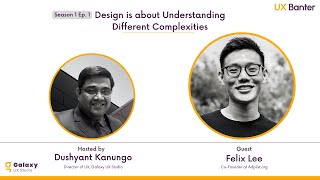
Design is about Understanding Different Complexities - Felix Lee - S1 - Episode #1