#56: Massive Running Improvements, 3:34 to 2:27 Marathon Gareth King | MAF Training
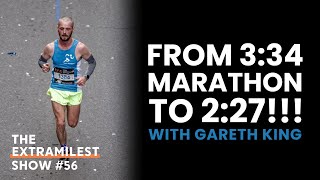
Garrett King cut his marathon time from 3:34 to 2:27 using MAF training, a low-heart-rate method he credits with building aerobic fitness. He finished 9th at the 2022 World Championships despite pre-race panic, then ran 2:27:50 at London Marathon by racing by feel instead of watching his heart rate. King says the key for any runner is scaling back to easy aerobic pace, staying consistent, and letting recovery guide volume.
Chapters
Understanding your current fitness level is massive, and there's nothing that'll tell you that more than running aerobically at a MAF heart rate, you know. And like, if you're down to a 10.5-11-minute mile, that's where it is, and you've really just got to start building from there. And there's no other way around it, because if you run hard, you mean like your aerobic pace or your MAF pace is at 10:30, and you're going out and you're running hard sessions, I mean, how high is your heart rate? How hard is it to recover from that? So just really scale it all back and just start building from your current fitness level and just lose the ego, be consistent. And if you're training in that way, you should be able to go out every day and just build it up from low mileage and just gradually just build it and build it and build it. You know, as long as you're handling training well, as long as you feel fresh to get out the door the next day. A good indicator as well is like if you do a run and you get back and you used to be able to say to yourself, I could do that again, you know, it's a good sign that you've run easy enough.
Today my guest is Garrett King. He is a 42-year-old ultra endurance athlete from Northern Ireland. He's a father of four and he has improved significantly in his running. For example, his marathon times have come down from a 3:34 for his first marathon in 2010 down to a 2:27 at the 2022 London marathon. We first connected in 2019 where Garrett was an active member of our Extramileist Facebook group, and he shared very positive experiences that he has had with meth low heart rate training. He wrote a blog about that on the Extramileist website in 2019 too. That was all talking about slowing down to improve and become a faster runner. Some of Garrett's running personal bests are a 5K in 15:33, half marathon in 1:09:57, marathon in 2:27:10, 50K in 2:55, and 100K in 6 hours 32 minutes. He represented Northern Ireland in the 100K World Championships, and we discussed the lessons that he has learned over the years in low heart rate training but also with high heart rate training, and I really enjoyed this conversation. This episode is brought to you by PATH Projects running apparel. This is the only running apparel that I run in, from shorts and baseliners to the shirts and headwear. The shorts have a lot of pocket space for my phones, my gels, my keys, etc. This multi-purpose clothing also works very well to wear outside of running, and so when I work, I wear it on my daily— actually wear it as well. I actually got rid of all of my underwear and t-shirts, and this is all that I wear. You You can find out more at pathprojects.com. For this episode, I'm giving away more than $1,000 in prizes, from gift cards to pathprojects.com, running headwear from Path Projects, and lifetime memberships to my Personal Best Running coaching program. All you have to do is go to pathprojects.com/flow. That is p-a-t-h-projects.com/f-l-o. I hope you enjoy my conversation with Garrett King. Hello, hello, Garrett. Welcome on the Extra Mileage Show, round number 2.
Very nice to see you here. Thank you, Floris. Thank you.
Absolutely. So for those listening here at home, Garrett and I recorded 6 months ago, but we had some serious audio glitches and we never had a chance to re-record until now. And in the last 6 months, so much has already happened again, from like crushing it at the London Marathon and at the 100K. So we're basically just gonna take a deep dive into this conversation. And, uh, yeah, really looking forward to this, Garrett. Um, maybe we can start out with your initial running journey over here because basically I want to read a quote from 2019, which is really fun, in the Extra Mile Facebook group. This was, and it said, after 7 months of meth training, I've taken my half marathon time down from last year 1:29 to today 1:20. This is a big improvement and I feel my aerobic base is nowhere near where I want it to be. So on goes the MAF training. I'm really enjoying it. #trainslowtorunfast. So tell me a little bit more about your early stages of running. When did you first get into running? When did you run your first marathon and how was your training like for that?
Okay. So the first marathon was on the— and sorry. 2011. Um, I don't know, it was just a run for charity. Um, it was actually for my son who was in hospital, um, with a condition called CDH. And, uh, the idea of that was just to raise money for the hospital that, um, done the surgery on him. And, uh, yeah, so that was it. Um, and I'd done that I think my first marathon time was like, uh, 3:36 maybe, which, you know, I was, I was well pleased with, you know. And I didn't really know how to train or anything about an aerobic system. It was just getting out the door and trying to get some mileage in and trying to build the long run. But I was probably doing everything too fast. Um, recovery was an issue. Uh, I wasn't able to train every day because I was running too hard, and then recovery the next day, just legs felt tired. And, and eventually, um, I did get a training block together, um, and run the marathon in 3:36.
Yeah, that is a very respectable time. That's like more than, more than half an hour faster also than my first marathon.
Yeah, yeah. I mean, I was well pleased, and that was kind of the the sort of what got me drawn into the running, you know. I just enjoyed the whole experience, and raising the money for the charity was, was excellent. Um, and I basically only done one marathon a year, um, from then right up till like 2015. And I stopped running, um, and got into cycling for a year, um, and then sort of found that too time-consuming, um You know, like, you're going out on the bike, it's, it's 2 or 3 hours at a time, and maybe a long cycle on a Sunday which could maybe take up to 6 hours. And I saw it was just too much. Um, so I went to the gym and I'd done a few different things, and in the gym, just on the treadmill, a few weights and things like that. Um, and then got back into running in 2018. In August, I started the MAF training and yeah, it's gone from strength to strength then from that.
I want to hear more about that. So early stages of MAF training, and for those listening, maybe you want to high level just mention some of the changes that you went through in your training, what you started noticing in those early stages.
Yeah, so I started— I was just looking into the MAF side of things. Actually, a friend of mine who mentioned it to me. And, um, so yeah, we started looking at the MAF. I was obviously watching, um, content of your— of yourself there on YouTube and, um, just reading into the whole MAF, Phil Maffetone stuff, and, and, um, the diet and all that. And I just thought, you know, I'll give it a go. And, um, so like there was the 2-week test, you know, where you just change the diet, drop the carbohydrates down, and, and go through this slow running process. And it's, you know, I, when I started, it was like 10.5-minute miles and walking hills and, you know, the same old story. But, um, yeah, it's just after, like, after the second week, I started to notice like, uh changes in my pace to the heart rate. It wasn't massive, but that was enough, you know, because I felt like after the first week, it just felt like packing it in and just stopping it, you know, because it was frustrating to be running like 7-minute miles in training to now running 10.5-minute miles. But the pace started to improve after the second week, and, um, and I was sticking to the diet recommended. And, uh, yeah, and I just thought I'll give it another week, and I've seen slight more, more improvements. And, and within 8 weeks, um, like I said, I was running like 10.5-minute miles in week 1, and I was down to like 9-minute miles and 8.5-minute miles within 8 weeks. But I'd actually lost 13 kilos as well.
Wow, that is a huge transformation right there.
Yeah. And I think that was, you know, I just felt better within myself. At 76 kilos, I wasn't heavy, but with that, that drop, I just felt so more efficient. My running felt so much better. I could— I was enjoying getting out the door. I could train every day, and it just felt like this was right, you know. And running an 8.5-minute mile before I started that would have felt so much more difficult, but now it was feeling easy, and that was it really. Um, there was a few things along the way, you know, that when I started adding speed work in on the low-carb diet, it was just— it just wasn't working. And so I had to mix around with that a wee bit and add carbohydrates in to suit the, the training and the faster sessions. But it wasn't really— I mean, I'd done I think it was like 18 months of math training only, and, and I'd hit the plateau, as they call it. Um, uh, I think that was around like 7:50 or 7:40 a mile. I couldn't get any faster. But it was when I started adding like the, the higher heart rate at 80% twice a week, I just, it just rocketed everything. I'd never seen heart rate like it, you know, to pace. Like, I was running like 6:50, 6:40 a mile., you know, with an aerobic heart rate with 140 heart rate. And I had never seen that before. So again, that was feeling incredible. Um, so yeah, and that was it.
That was just— that is, that is an interesting one indeed, because I see quite a few people starting out with MAF training, having to slow down significantly. And yes, it's challenging, but once you start seeing that little glimpse of like, ah, there's some improvement, let's, let's stick with this for a bit because there is definitely the frustrations at the of running several minutes per mile, per kilometer slower. And like, it's a bit of a blow to the ego. You're getting passed left and right, all of these different things. Yet once things start to click a bit and you see some of those improvements, it's almost like that aha moment and little improvements continue going, but then there's, there's definitely that plateau as well. We'll talk about the plateau and overcoming that in a minute. I do want to hear a little bit more about your nutrition before you started with this MAF, low heart rate training approach, and then how that changed. Once you started getting more into this?
Yeah, it was just, um, my diet, Flores, was just, you know, I didn't even think about diet before. I just ate whatever, um, you know, whether it was, you know, refined carbohydrates or if it was a salad or any— I just had anything. I didn't even think about it. Um, but really, I think basically diet in itself, you know, no matter if you follow like a Mediterranean diet or ketogenic or whatever it is you do it's basically just cutting out junk, um, you know, and that's it. You know, every diet has no junk in it. Um, so, you know, if you're cutting out your, your sugary things and your, you know, your refined processed carbs, processed meats, things like that, fizzy drinks and cakes, pasta, bread fillers like that, you know, if you cut that all back, um, really concentrate on whole foods and, and, and things like that, um and clean the diet up, it really stands by you, you know, and it makes sense. The cleaner the fuel, the better the performance, and that takes time, you know, just to clear everything out and to get into a routine. And when you talk about running routine, I think there has to be a nutritional routine, there has to be a sleep routine, there has to be— and there's a load of different things and factors that come into play. Um, but yeah, it's, um, you know, my diet was probably horrendous before I started MAF, you know, and then just the fact that I had cleaned up— whether, you know, there is obviously benefit to low carbohydrate when you're running aerobically, um, to help fat burning and all that, but, um, and, and there is a process of, of going through that, I believe, to fire things up. But you've got to be careful with it too, because, um, you know, once the speed work comes in and the faster running comes in, I mean, that can really put you on your back. Um, so it's, uh, it's, it's, um, it's just something you've got to be careful with. And I think the harder that you work in your training and the faster things get, I think the carbohydrates are essential, um, in that. And, um, But yeah, it definitely, um, worked for me. I think the, the whole process of just building that aerobic efficiency and fat burning, um, and then it just kicks everything else off.
Then it is quite interesting how once you start looking at how everything is connected, it's not just that running component once again, right? Here, all of a sudden you become more aware of the nutrition you would put in your body, the impact of the sleep, the impact of recovery, all of these different things. And maybe previously you would just have not noticed that you would have felt quite shitty after some of this food or bloated or, or whatnot. And now all of a sudden you become aware of it and it impacts your running the next day, or you might notice your resting heart rate is elevated or your, your running heart rate or any of these things.
Yeah, absolutely. I mean, you know, I think, um, you know, sometimes, you know, in a training block, you know, you may have, you know, there might be times where you've got to grab something quick to eat, and I think we're all guilty of it from time to time where we sort of, you know, step off the wagon a wee bit, and maybe for a day, and that can actually be— it's really, it affects you mentally, you know, you say, oh my goodness, you know, like, I've gone there, you know, I've been good for 2 weeks, you know, and all of a sudden, you know, and then I've had some like sweets or chocolate or something like that, and But I don't think that's really a big issue. I mean, the more consistent you are with it, the better. But there is going to be hurdles and there is going to be times where you're, you know, you're rushed for time and you have to grab something quick. But yeah, so I mean, you know, once in a, you know, or twice in a training block of 16 weeks isn't going to be a big thing, you know. And I think we can sort of beat ourselves up a wee bit about that too much, you know, if we do something like that or make a slip. But to me, I'm sort of, as I go on and as I'm learning, you know, I think these, it's not worth worrying about, you know, just get back on it the next day and keep going.
Yeah, I think that's a good approach indeed if you take it day by day, because sometimes, you know, that's like once you slip off once and then the second day, like, it becomes easier to keep slipping off, right? Yeah, yeah. Bring the train back on the rails. Rails again, then it's like just resetting after a day.
Yeah.
It's not just all about power.
Absolutely.
Yeah. So what are some of the things that you have noticed once you cut back the carbs significantly, but you have to do a speed work session or a harder workout? Because there is a fine line indeed where you need some of the carbs as well for, for optimal performance.
So what have you noticed there? So, um, so basically I, I started to do some speed work. Um, and I'd actually— there's a trail, uh, it's about 2 miles from my home here, and, um, it's actually about, about 2 miles, just over 2 miles long. And I, I was doing my long run around there, um, and I was like sort of putting some extra work into the hills and stuff in there. And, um, yeah, I was actually very low carb at the stage, um, I was fueling on like a trail mix of like mixed nuts and things like that. And I felt great on the run, everything was going well, and it wasn't until I got home, I was stood in the shower, come out of the shower and I just started to feel like horrible, no energy, just felt really flat, and it just progressively got worse, you know, like I was on the floor with dizziness and stuff. Yeah, and then I just thought, oh, you know, I just felt— I felt horrible. And, um, we were actually going to my wife's, um, nan's for lunch. And, uh, yeah, I got up there. I didn't feel great driving the car up either. And, uh, I got— I got up there and I came through the door and everyone was like, oh my goodness, like, you look horrible. And, uh, I said, I don't feel good here at all. And I had a slice of pavlova and a bottle of Lucozade, and like, I was right around, and within a couple of minutes. And I think it was like a sugar issue, you know, where I had just depleted so much. So that was really the first sort of learning curve for me, you know, where I needed something extra in my diet to support those workouts because what I was doing just wasn't working. Um, and it was when I started adding carbohydrates into the, you know, so I would basically, I would have carbs to support my faster workouts, and then just on the easy days, then I was just back to sort of, you know, like, like lower carbohydrate. And I tried to work it like that, and it seemed to work, um, so much better.
So talk to me a bit more about that. Would you take it in the 24 hours leading up to it? Would you take it after the workout? Or, because typically I think you're doing if you do 2 speed sessions a week, you would spread those out a little bit more because I don't typically see you do back-to-back speed sessions, right?
No, no. Um, so they're usually on a Tuesday and Friday, uh, where I do my faster work. Um, and yeah, so I would have like carbohydrates on the Monday night to support Tuesday morning's workout, and the same again on the Thursday for the Friday. And then I would also have like a banana and peanut butter milkshake after the workouts with some salt in there. Um, and that's, that's basically it. Um, everything else is pretty low carb. Um, well, I tried it to be like, you know, just for the— just for easy running. Um, yeah, I would drop my carbohydrates down on, on those. And, uh, yeah, it seems to work. Um, you know, I do sort of vary it, but sometimes I switch workouts around as well, you know, to Um, just to suit how I'm feeling. If I don't feel up for a workout or my body feels tired, you know, I may switch the morning workout to the evening and things like that. So, um, or switch days, whatever is needed. But, uh, yeah, I guess that's, that's the other thing too.
You're a father of how many is it?
4 children? 4 children.
Yeah, exactly. So you're, you're quite busy with that as well. So I can only imagine that you have to be flexible with your training schedule and you have to like be able to adapt there too.
So yeah, I think it's better, um, you know, for me if I can get out. I normally train in the mornings when I get my training going in the morning, which is some— I'm sort of struggling with that at the minute, um, but yeah, and in the AM if I'm out for 5 in the morning, I get my run done before work. That's perfect because everybody else is still sleeping at that stage. And yeah, so it works really well, but Yeah, I've sort of had some downtime from, from London, and, um, I'm just getting my training going again, and I've just been struggling with morning. I just, I just can't face it at the minute, you know. But yeah, I'm gonna have to change that around and get that going because, um, yeah, it's better to have the bulk of it done in the AM and then like a 30-minute recovery run in the evening. Is it— it's a perfect way to do it. Um, I just need to get my head around that at the minute.
I feel it's also that we just had the time change It's still like 5 o'clock in the morning. I don't know in Ireland, but over here in LA, it's still quite dark at that time. So bringing a headlamp and just to start with the headlamp and being able to finish at least when the sun is still coming up is nice, like when the sun is coming through. But yeah, I totally can relate to that one.
Yeah. I actually just, I was out there tonight. Um, I'd done just a bit of a workout there tonight and, um, Yeah, it was like, there's something really special about running on a real cold frosty night as well. And, you know, and it's like, it's so clear as well. I've just seen a shooting star tonight, you know, and I'm looking up, it's just fantastic, you know. Um, so I like that too, but really, time-wise, um, it's better for me to do things in the AM and, uh, and get it, get it done.
You want to hear one secret that works for me really well these last, like, the last 10 days? In the morning it's starting to get colder, right? It's now— it was 8 degrees Celsius this morning, whatever, in the 40s somewhere. So what I do is I go downstairs, I have my shorts on, headlamp on, and everything ready to go. And then I take my shirt off and go outside. And so I'm basically running shirtless, but it's quite cold at the beginning, but it really wakes you up and it almost gets me excited to get going. To a point that— not that I would want to run fast, but I still— the heart rate stays relatively low, and it's like this, this really refreshing kind of way of running.
Yeah, yeah. I think, I think just in, in general, it's just getting into a routine. I mean, I know if I can put a week together of AM running, that's me. I, I'm, I'm pretty much, you know, back, back at it. But it's getting through a week at the minute. And it's because I'm just coming out of a— I basically had 2 weeks off from London, and then, you know, I was kind of just eating whatever I wanted, um, again. And that's a struggle to get back on to routine again. So that's basically it, you know. I'm just, I'm just finding my way. Um, I'm still being consistent in my training. I'm training every day. I'm back— I'm up now to— well, I've been running around 60 miles a week, but I'm up to like 75 now. And just, just a slow build. And I'm enjoying getting out, but it's just, I've just got to get the morning thing going. Yeah, for sure.
I want to circle back for a little bit. So we talked about 18 months improvement with MAF and mostly low heart rate training, and then after 18 months you started adding in twice a week speed work. Can you talk a bit more about what type of speed work that was, what you started noticing at that point And also, how did that correlate to some of your race times that you started seeing at that point too, in the half marathon or the marathon?
Yeah, so basically math without any speed work really. I mean, I think, you know, there was maybe like a couple of times where I'd run like a 5K test, you know, and I actually, I basically ran my first sub-3 on no speed work. At all. Um, and then, but yeah, when I started adding the, the faster sessions in, um, they were just time to 80% of max heart rate. Um, it wasn't like intervals or anything. It was maybe like 60 minutes of steady running at 80%. And, uh, that's what I said when it went— when it— after like, I think it was like after 2 weeks, I I'd just gone from, from my MAF heart rate, which was like 142 or 141 at this time, um, to like— I was running, um, from 7:40, 7:50 pace, which I, as I said to you before, was like a plateau. I couldn't get any faster. And all of a sudden, like within 2 weeks, I'm running 6:40 at that heart rate. And that was just adding those 2 workouts in, in the week. And they sort of ranged from like 60 minutes to 90 minutes. And over time, like at 80% of max heart rate, um, in an hour, like I was covering 10 miles and things like that. Um, you know, it's fantastic, you know, just, just, just 2 runs in the week and it was no more fatiguing, you know. I was recovering really well, the heart rate was good, the diet was good, everything was working. I was sleeping well. Yeah, just everything seemed to be clicking and running, like, just, it just felt so easy. And that was just, just by adding in 2 extra sessions. It's kind of, I don't know if you've heard the HAD approach? Yeah, so HAD is, is basically what I was doing. So running between my aerobic heart rate at 140, some runs at 150, And then obviously a 160 heart rate at 80%. And then I was like, as, as paces got faster, like, I was able to drop down the heart rate then, you know. So I was dropping down to like what would have been 130, I was dropping, or 140, I would have dropped to 130. And, you know, and still got really good quality working, um, but working less, which was improving recovery again. And yeah, so it was that, um just that whole process, uh, of just— I just— my dog's just jumped up here. He wants to say hi too. Yeah, Lottie, Lottie, there you go. Come on, come on up. We'll say hello. There we go. Here's Lottie.
Ah, there you go.
Ah, hello.
Looks very familiar from your Instagram as well.
Oh yes, yes. Oh yeah, um, So yeah, no, um, but that's it, that's it, Floris. That was, uh, basically it was just adding that, that type of work in, that intensity, which wasn't all out, um, it was nice and steady and controlled, uh, and just controlling the heart rate, um, throughout the run. And, uh, yeah, it made a huge difference. And, and then, um I, I would sort of like start adding in like threshold work then, and that was like, it's just the icing on the cake, really, you know, after a big block of that type of training. And then when you start adding in like work at 170 heart rate, I just felt brilliant, you know, it was like I was ready to go. Um, and that was, yeah, that's basically how I do it.
It's, it's Sometimes I see quite a few people getting into low heart rate training and at the beginning they have to slow down a lot, yet then that becomes their normal pace, right? And they start to improve from there. But at some point indeed, that speed work is needed to get to that next level. I think sometimes people are almost afraid of adding in speed work, and I can understand it if you're really injury prone and you want to be careful with some of it. You, you want to ease into some of the speed work, but on the other hand, the speed work will make you a better runner in the long term as well. It makes you race faster too. It's just a combination of the two. Too many people right away jump into only doing speed work, never recover well. That's why people go for the extreme of only doing base building. Base building will get you so far, but at one point you have to start adding in some of that speed.
You do. I think the base, the base is so important. Look, it's, it's, it's the most important part of the training, you know, is building those foundations for everything else. Um, because your recovery is just going to be so much better. And I think that's the general idea of it, is just build everything up first of all, the aerobic system, and then everything else follows after that. Recovery is so much better. And like you say, getting into that sort of faster running straight away, it just doesn't work. I've done it, I never really got on well with it at all. Lots of niggles and injuries and things, but now it's, you know, I just— my body seems to be able to handle training really well, and I think it's just down to that whole process of rebuilding everything and gradually just lifting everything up. And, um, yeah, it's, um—
how did your race times start to improve from there? So Before Math, you were 3— what was it, 3:20, 3:36? And from there on, how did it start coming down from there over the coming years?
I think just consistency, Floris. You know, I, I obviously, the more you do it, the better you get. You know, the more volume you put in, um, the more the body develops and strengthens for, for running. Um, I think it's just being consistent, uh, and enjoying it, enjoying the process. And I think every year, you know, if you can remain consistent and you keep your training at the right levels, you know, you're just going to develop fitness year on year. Like some people have said to me about, you know, could— when they see my marathon times and they may say, you know, could you do like a program for me or something like that, you know, to like a training program for a marathon. But like what I say is, where I'm at now wasn't a 16-week training block, but it's taken 4 years, you know, to build that up, um, from, from running 10 and a half minute miles, you know, to now being far more efficient. And that's taken 4 years, uh, so I know Now the fitness level I have now, I'm building on that again year on year. So every year you get stronger if you can remain consistent. You're just going to build stronger and stronger and stronger. And obviously there's going to come a point where you just can't get any faster, you know. Like, I'm never going to run a sub-13-minute 5K. I have like a 15:33 at the minute, so I'm not lightning quick. When it comes to 5K running. And, you know, we're— so I'm not, I'm not that blessed with speed, but what I do have, I seem to be able to carry it well. Um, and that's, that's it, you know. So how much faster I can get in the marathon, I, I don't know. Uh, there may be— you're coming to a point now where I run a 2:27 marathon. Can I get the 2:20? I don't know. I might not just be fast enough for that. I don't know if I'll develop enough to do that. I've got 100K road things going on there too, which has been good to me.
Let's talk about that one a little bit more because the training volume in combination with race distances and all of those kind of things and intensities, I want to dive in a bit further. In 2019, you wrote a guest blog for the Extra Mile blog And at that point, when we're talking about volume, you were talking about, I'm running 30 miles a week, 40 miles a week. And then as I'm following your running journey over the years, that started increasing further and further. And then at one point you had some type of challenge where you're putting in monster training volume. That's what was that challenge. And because I just remember sending a message at one point that I was like, how in the world is Garrett running this many miles? And I almost, a sign of like a message of caution of like, mate, are you all right over there? So tell me a bit more about that challenge.
Yeah, so that was called the Finn McCool Challenge, and it was basically a virtual challenge that happened when COVID, you know, had sort of kicked off. And yeah, it was basically, um, there's like 32 counties here. And, um, you know, the, the distance was like 1,650 kilometers or 1,350 kilometers. Uh, it was a 16-week challenge. And, um, I actually started that challenge off— I'd done a 5-mile run that morning. And then on the Saturday, I think it was— that was the Friday— and then the Saturday, I was actually doing a charity event for a girl I know. Um, and it was like a, basically like a backyard ultra type thing. And, uh, so that, that sort of— there was 4 guys, 4 of us ended up staying to run 100 miles in the, in the 24 hours. And then, um, that was off to a great start in this challenge then. So I felt pretty good after the 100 miles. Um, I just done some easy running for the next couple of days, and then I started like lifting things again. And I think I ran like 200 miles in the first week, um, and felt okay, you know. And a lot of it was like slow running, you know, we're talking like 10-minute miling and, and just being out for lots of time, uh, but I kind of sort of got it into my head then, could I like finish it in the calendar month, you know, like it was a 4-month challenge and I thought, can I do it? And can I do it in the month, you know? So I just, I just went for it. Uh, so I was basically running like over 200 miles a week for, for 4 weeks.
Um, that's insane. That is so high training volume. You're like spending in— spending a lot of hours running there, especially when you were running a bit lower intensity too.
Yeah, it was, it was lots of time. Um, but I enjoyed it, you know. I was like I was sort of running in places that, because I was taking like, you know, it was like doing 30 and 40-mile runs, and I just went into places that I'd never gone before, you know, and sort of done a bit of exploring. And, um, yeah, like I was taking on routes there that were, you know, 30 and 40 miles long, sort of going like Tandraghee, Banbridge, and, you know, and Points Pass, all these sort of places. And just monster runs, lots of hills in them and stuff as well. And But I just, I just enjoyed it so much. Uh, it was catching up with me a bit at the end. Um, you know, I was just, I was just ready for a break, but I knew I could finish it in, in the calendar month then. I thought, just, just go for it. And I actually did then. It took me 30 days or something to, to do that. So I was well pleased. Like, um, like I said, I was, it wasn't like, it was just a virtual thing. Just to keep us going and keep us focused over, over this sort of COVID thing. And yeah, I really enjoyed that. So I did. And just, I'd never run miles like that before, so it was an eye-opener. But I think that set me up really well then, you know, sort of going on to the rest of the year.
So how did the rest of the year unfold? Because that was somewhat in the early days of COVID And then I just saw you starting to run high training volume. I saw your race times improve significantly, not just in the marathon but in different races as well.
Yeah, so what actually happened was I, um, two of my kids had tested positive, um, for the virus, and, uh, they were, they were fine, um, no issues, but I had to isolate for both cases as they did, but what actually happened the way it was here was that when the first child tested positive, Lucy, she— I had to isolate for 14 days and then I had, what, Sam had tested I think it was like 7 days after Lucy, so I had to do another 14 days and so I was like 3 weeks of like forced rest. I, you know, I couldn't run, I couldn't leave the house and things like that. So, but, uh, that was really positive, um, and I enjoyed the time off. I had some things that, you know, I shouldn't have had. I put a bit of weight on during that time. I had no treadmill here or anything like that, but I wasn't worried about it. I had a good time, um, and just enjoyed the time in the house with the kids and And yeah, it was great. And once that I was able to get out again, um, you know, to train, I just thought, right, I had like 20 weeks, uh, for, for a spring marathon. I thought, right, I'm just gonna go and put in a solid training block for 20 weeks and see what shape I can get into and see if I can get a marathon, um, and, you know, sort of the following April. And, uh, I had planned to do a marathon, a local marathon, uh, in the home— my hometown, um, which was cancelled, um, and that was April, uh, '21. It was cancelled, and so I had no race. I put this training block together, um, and I had no race. So just by chance Um, I had done like a half marathon time trial in March. I think I ran like 71 minutes and for the half marathon. And a couple of guys that I know had sort of said to me, you know, there was a race, um, it was called the Wrexham Elite Marathon, but you had to have a qualifying time for that, um, which is like under 2:40, and I didn't have it and I couldn't get a race to do that. So I got in touch with the race director and just sort of sent them over some of my training stuff and sent them my half marathon time trial Strava details. Uh, I had got a place on the marathon, but I needed just to confirm that I had no qualifying time and would this do. So he said, look, no problem, come ahead on over and do it. So that was in Pulford in Cheshire. Um, the marathon was actually moved from Wrexham in Wales over to— over the border, uh, into Pulford in Cheshire because Wales hadn't lifted the restrictions at this time. And, uh, so yeah, I got to do that and I think I ran 2:33 there. Um, you know, I told the guy I definitely felt I was in 2:40 shape, so it was nice to go over there and prove that. Um, and then on, on the back of that, then I was due to do— that was in April— I was due to do the Northern Ireland, um, ultra running championships 100K. But I decided just after running that marathon that I would just, um, drop down to the 50, uh, the 50K. Uh, I ended up running like 3:01 in that 50K. I came second.
And, um, crushed it on that because what was the average pace for that?
Yeah, it was like 5:55 or something, um, for the 50K. So yeah, so I— that, that then got me sort of like— they approached me then to, to apply to run for Northern Ireland and the, the ACP, which is the Anglo-Celtic Plate 100K, um, which was in Ireland in Mondello.. And I thought, yeah, well, I'll apply for it. I didn't think I'd stand a chance, but, um, I just applied. And when I got the application and I read through it, like, I'd sort of like ticking all the boxes. I'd done ultra distance, I'd done looped events, I'd ran my marathon times, was checking out my 50K time, was good enough. And I thought, yeah, why not? And I got the spot then, and that was the start of the 100K road journey then. Um, that's that first race in Mondello, uh, I ran, I broke the Northern Ireland record by 22 minutes. I just thought this, I just, it was just amazing. Uh, I won the Irish Open race there. It's just the feeling from that was just like there was all these things were coming at me, every records, and I'd won the Irish Open race and it's just like, you know, you know, and yeah, it was just a brilliant day. And then Yeah, that was this, like I said, the start of the 100K journey, um, which has got even better.
Yeah. So, so how did that training— how was that training different than your marathon road training for like the 50K and 100K?
So it wasn't really any different. Uh, basically it's just a marathon training block, but what I do, um, just to get the time on feet, uh, within sort of like Maybe about 4 weeks out from taper, I start like increasing my long run. Um, so I'll jump from like, say, maybe 26, 28 miles, and then I'll do maybe 35, and then I'll jump into 40 miles. I usually arrange for like 40, 45 miles, you know, where I, I'm just maybe getting like 5 to 6 hours running and that. And, um, it's, it's basically like the work's done, you know, the speed work's done, the fitness is there. It's just getting the time on the feet and getting the body used to sort of moving. For that length of time. And that's really all it is. It's not a race effort or anything, and that's kind of how I do that. So I know that come race day, you know, I'm able to run at a faster effort for that duration. So yeah, and that's it, and it seems to work pretty well for me.
One of the Strava workouts that stood out to me was when I was going through Like, ah, let's have another look through some of the things that you've been doing. And then I saw that I'm just going to do a screen share because I like this one and I'll, I'll talk through it as well for those actually listening, but here was a screen share from one of your workouts. This was in the month of July. You ran 530 miles. So whatever that is, 800K or something. And the last day of the month, you ran 28 miles and you said, I went and left my nutrition at home, like a plonker. So I dropped the heart rate down and went with no fuel or water on a 12-hour fast. The heart rate creeping up the last few miles with the heat, but all felt good. 147 beats per minute average. So yeah, your, your training volume was definitely on there, but like, like if you're doing like these heart rates, 147, are you doing much fueling on these? Like obviously this workout you didn't, didn't do anything, but what do you typically take in for fueling and some of these longer training runs and on race day as well?
What works for you? You there? No, so normally what I do is on those longer endurance runs, you know, is where I'll sort of like test nutrition and what I'm going to use on race day, which is usually Tailwind. I use Tailwind. I like the fluid over the solids. If things are getting a bit slushy with the fluids, I'll take in some bars or a gel or something like that. But generally, I don't eat a lot of solid food. I think the Tailwind is good with my stomach. It supports me well. There's the salts in there as well, you know, and it's a good combination, a great drink. I seem to perform really well with that. But on training runs in general, you know, in the AM, I don't fuel at all on them. I run fasted. In the mornings. Um, and whatever the session is, uh, you know, if it's a 20-mile long run on a Sunday or 22 or 23 miles, whatever it is, I'm fasted and I have no fuel or water on that run. And I think, you know, for anybody like listening to that, you know, that's not advisable, uh, unless you really train your body to do that. Um, you know, which is going through the whole process of aerobic building and fat burning and things like that. If you go and do something like that straight away, you know, where you're not really that efficient you're gonna, you're gonna suffer. Um, so it's just really getting the body adapted to do— to doing that, you know. I have no problems running on empty, uh, for that length of time or distance and, and being able to recover the next day. So that's taken 4 years of training, um, that's not going to happen overnight, you know. So you've got to, like I said, just build that whole process up and get that fat burning going. Eventually you'll be able to handle runs like that.
So glad you bring that up because indeed sometimes you see people want to take on the world right away at day one. And I'm going to start doing meth low heart rate training and I'm going to do keto and I'm going to do this. And it's like, just focus on one thing. Just focus on getting some low intensity running in, keep your intensity under control, run consistent. And then eat clean, like you were saying earlier, but that whole part of going too extreme stream with all of these different things, it's setting yourself up for failure.
And it is, it is. I, you know, it becomes then, you know, where it's not enjoyable, you know. If you're, if you're sort of not enjoying doing what you're doing— I think the thing with, with MAF was initially I didn't enjoy it, you know. Like, the first week was horrendous, you know, having to run so slow. And I thought, you know, I couldn't— I don't want this. But just giving it another week and then seeing those slight adaptations, you know, and things. Um, yeah, I just, it just, I just become sort of like engrossed in it, and I was really enjoying what I was doing, which is the most important thing, you know. You've got to enjoy what, what you're doing. Um, and if it's not, if you're not enjoying it, then you're doing something wrong, you know. And yeah, so it's just sometimes it's hard to go through the initial process and, and building up, you know, because it's a complete change. But, uh, yeah, once you get going and, you know, things start, you know, looking up and you start seeing sort of positive signs, you know, then you can sort of say, right, this is great, you know, I'll give it another week. And then more development and more development, and, and that's really it. It's just giving it a chance and being patient and, you know, and just letting things, you know, take their time and, and develop. And yeah, every— everything else comes after that.
Yeah. So well said. Sometimes we want all progress so rapidly, but it's not sustainable in that way. It's like, yeah, yeah. Thinking longer term, thinking 12 months, 24 months, 36 months out indeed.
Yeah.
How do you make sure that you get enough calories when you're running 100-mile weeks, when you're running high training volume? Because I've seen, like we've, we've talked about training volume increases. You, you've gone from the low, low end of 20, 30 miles a week to 200+ miles a week and everything in between. Between, but your calorie intake or your calorie needs change as well. Like, how do you make sure that you get enough calories?
Like, how do you go about that? I don't, I don't, I don't pay too much attention to it, to be honest. Um, you know, I just ate, uh, you know, once, once I train, uh, I normally, if I'm training easy in the morning, I have eggs. Uh, I, I'll just sort of explain my diet at the minute. So it's basically eggs in the morning. I run fasted and then I have eggs in the morning and then sort of like 10, half 10, I have whole grain oats with half a banana and some peanut butter in there. Um, and lunch will be like a chicken salad. And then in the evening there I'll have like some meat and vegetables and stuff. That's basically it. I snack on some like nuts and things like that. Um, that just seems to sustain me, you know. I never feel— I think because I probably— because I burn fat well and I'm more sustained through, through my fat stores, um, I don't really need as much. Um, but what I do take, you know, it seems to just sustain me. My weight's pretty steady. Um, you know, I keep an eye on weight, probably would be my biggest thing, um, from time to time, you know, just to see if I'm dropping too much. If I'm dropping a bit, you know, I'll just increase a wee bit more food and things like that. But like, as for weighing things out and, and, you know, sort of diving into that end of it, I don't really have time to sort of do that, you know, between, you know, the amount of running that I do. I just eat, you know, I, I eat, you know, if I'm, and if I'm hungry, you know, I'll have a snack. I try and keep it healthy and you know, um, and that's, that's it. I, I don't, uh, it's just keeping the diet clean and eating. If I have like 3 good meals a day and then a couple of snacks in between that, maybe some Greek yogurt and blueberries or something like that, um, yeah, it's, it's, it's enough. And I've kind of just worked that out myself on how I feel, um, but yeah, I could, like, nutrition I struggle with nutrition, like, after a break, you know, like, if— like, after London, uh, I sort of down tools just to switch off mentally. Um, not really like the physical end of it, but more mental, because you're just focused on diet and running all the time, and it's just nice to have a break. And but during that break, I'll just like eat whatever And then, so basically then what happens is, um, yeah, I end up then struggling to get back on the wagon, uh, as such, you know, because I've just broke that routine. But I think that's needed also, um, you know, just to give yourself a breather from it. So yeah, it's— yeah, nutrition-wise, I just try and keep it clean. I eat enough food to sustain me, um, And what I do seems to work. I don't feel drained or sluggish much. Um, you know, I've always got plenty of energy to put into the running and the workouts. And so yeah, that's, that's pretty much it. And everybody's different, you know, like there's no point in someone like, you know, if someone listens to this now and say, look, I'm gonna have eggs in the morning, I'm gonna have whole grain oats, and I'm gonna have a chicken salad and they'll be on the floor because they're maybe not well adapted enough and things. Everybody's different, um, you know. And, you know, I was all wrapped up initially in the whole like keto thing and dropping carbohydrates down, and then realizing as I went on how important the carbs are. And, you know, when— whenever the training increases and the speed work comes in. And so I don't really like now to talk about diet too much. I think Um, obviously a lower carb diet suits aerobic training where you're not— you're running easy, um, where you can get your fat burning going. Fat burning is important and all that, but you know, it's— as a guy said to me before, food is fuel. Um, I don't necessarily agree with that because, you know, that can sort of lead people into thinking, well, you can eat anything. And you can if you want, but I think to get the fat burning going and things, you know, that whole keto or that low-carb type diet, uh, and fasted running is a good way of getting that going. And then it's, yeah, just keeping it clean then after that.
Yeah, I think it's very well said, the part too that everyone is different and what works for one person doesn't necessarily work for another, and experimenting with that And I, and it sounds like you have found a good way to listen at least to what the body needs to in certain periods. You'll be eating more or like increasing the carbohydrate more before a harder workout or before a race and going in and out of that. Even when talking with Zach Bitter, he had a similar approach too. Like before he was doing certain harder days, like he would increase his carbohydrate and even in the recovery a bit more, and then like kind of going in and out of certain cycles.
Yeah, yeah, it's like, I actually, I've actually seen that interview of Zach's, um, where he spoke on that. And, uh, it's like periodization of, of your diet, you know, to suit your training. I think that's brilliant, you know, it really is. Um, you know, just giving the body what it needs for certain days, you know. If it's a hard day, up the, up the carbohydrates. Uh, if it's easy days, drop them down. And that's kind of how I work myself.
Yeah, for sure. What are common mistakes that you see runners make, especially those wanting to experiment with Mafflow heart rate training, or even people who have not? Like, what are some of the common things that you see happening amongst runners?
I think patience is a, you know, is something that is a real sort of downpoint, you know, when it comes to marathon training. You know, people want, people want results quickly. Um, you know, they want to be running. They see people, you know, running, you know, sub-3-hour marathons or sub-2:30 marathons, whatever it is, and say, I want to do that, and how do I get there? And it's like, you just can't wait, you know. But it takes time, you know. These things, like those developments I've made from like 3:36 to 2:27, has taken 4 years.. And it's just having the patience to, to know that, you know, the training works and that the slowing down and the, you know, and just like building the aerobic system is all important. It's all— it's a necessity to, to build everything else. And that's just understanding that and being patient. And I just see lots of people, you know, that ask about this approach and, you know, they get a week in and it's like they just sack it because, you know, they're not developing and 'Of course you're not, you've only been doing it a week, you know, and just keep going,' you know. And that's— yeah, but I think that's the thing, you know, people want things sort of too quickly. Um, but like, if you're prepared to put in the groundwork and you can be patient, you know, it really does— like, you know, here I am running like a 2:27 marathon. I never ever thought I would do that. I, I've just ran 100K at the World Championships in 6 hours 14 or 6, 6:14 in May, uh, 6 hours 32. Like, it's just mad where it's gone, um, and it's all come off the back of just being patient and building and building and building over 4 years.
Yeah. When, when you wrote on the, on the ExtraMilers blog, I asked you what are your current PBs, and at the time you wrote 5K 17:16. 10K 35, half marathon 120, and marathon 308. So yeah, it is, it has really been eye-opening to see how that has gone. But indeed, it's taken years to improve and gradually shave off. I see some people saying, I want to qualify for the Boston Marathon on my first marathon. It's like, take some stepping stones, see what it's like to get to mile 15, get to mile 20, mile the finish line of a first marathon. Everyone will always remember that first marathon, and from there on you can improve and learn things.
Yeah, well, that's it. I mean, you've gotta, you've gotta make running easier. I mean, if you're just starting out, I mean, running's gonna be hard, you know. Like, if you, you know, if you haven't ran in 4 or 5 years and you want to start running, and you know, and you go for that first run and you get, you know, a mile out the road and your tongue's hanging out and you're just like, you know like, but that's just— you're just not fit and you're not aerobically sound and things. You just gotta build that up, um, and just give it a chance, you know. Like, nobody's going to be able to do these things straight off the bat of doing nothing, you know. It's going to take time, and it's just having, like I say, just patience and, and just, you know, being consistent, finding a way to train where you can train every day and, and and, you know, remain healthy. And, and that takes, you know, maybe 80% of 90% easy running, maybe all easy running initially, uh, and just getting that efficiency going, the consistency. And, and it, you know, it all, it all sort of comes together, as I say. And but yeah, it's just being patient initially is, is the key.
What are some other things that you do to stay healthy?
Like, what about sleep or other activities that you're doing, like, from a health perspective? Yeah, so I just, I try to get, uh, I try to get, you know, 7-8 hours sleep a night. I usually, the more I ramp up my volume, the better I sleep. Um, but yeah, I've actually struggled, like, before I went to Germany and ran the World Championships, um, It was, yeah, I, I, I done a race, like a half marathon, uh, um, it was like 2 weeks out. I ran a PB, um, 60, 69 minutes 50 something, um, and so I felt good. I knew I was in good shape, um, all was good. And then like I just started getting, you know, that 2 weeks into the, you know, in the taper and just felt horrendous. I, I, like, all these things were going on mentally, you know, and I was like fretting a bit, you know, with the challenge of running for Great Britain. And, you know, I knew the team around me were really strong and some really super athletes in there, and I sort of felt out of my depth a wee bit, um, you know. And yeah, it's just like, oh my, you know, I was just— it was all sort of starting to hit me. And then I was going to bed at night and like like a million things were running through my head. So it was just horrendous. Uh, the thoughts that were running through my head were completely crazy. Um, you know, just self-doubt and things like that. I basically never slept for the 2 weeks in the lead-in to the, the World Championships, and I thought this is going to fall apart, uh, you know, because mentally I, I just, I was so detached I, I got to the stage, it got that bad, I was like, I just didn't even want to go, um, because I just wanted to switch off and forget about it because I couldn't sleep. And my sleep had been great up until then, uh, so I got over there and I'm sort of panicking about my, my race plan and my race nutrition plan and all this sort of stuff. And, you know, when I got there that morning, uh, and we got into the tent Um, it's just like I was ready to go because I knew everything was in place. I knew I'd trained the best I could. Um, I knew I'd given it everything. And when I seen all the athletes there and, you know, at the start line and there was a real electric atmosphere, I was like, yeah, I'm ready to go. I'm happy. Um, everything's in place. I, I just had the race of my life. And I was like week. Yeah, it was fantastic. And all that worry and all that doubt was for nothing. And it's, it's easy, you can look back at that and say, you know, what was that all about? You know, why did I do that? I knew I could run these distances well, but, you know, I was just, I was just panicked over nothing. Um, and I ended up actually sort of came in first in the GB team I finished 9th in the world. Incredible. Just mad. It's just absolutely mad. And, uh, yeah, a real confidence booster, uh, you know, going forward now. I know that I can mix it up at that distance. And, um, yeah, so hopefully in the future now we can settle a bit more and, and, and, uh, yeah, and sort of go into that and a better sort of frame of mind.
Just going back for a minute over here, because even when I'm thinking back about when I ran my first marathon, I was so nervous, but I didn't realize it was race nerves, that I was feeling on like a big unease in the days leading into it. At one point, I have a hard time even breathing in, like I was just so tight that it felt like someone was jabbing a knife in my back. And I was like, like my back started hurting. I started getting all tense. I started getting all tight. And I was like, there's no way I can run tomorrow. There's no way, but it's just a connection between mind and body. And like, so after that experience and like you, you've done some other races ever since, do you have any other ways of how you go now about things mentally? Or do you have any advice to other people that are experiencing race nerves leading up to a big race?
For them? Yeah, well, I think, I think, Flores, you know, the, the bigger the event, you know, it's going to bring that on. I mean, running for Great Britain was just— it was mind-blowing. Like, this has happened in 4 years. A lot has come. I've had sort of 2 international vests for Northern Ireland just before that, um, you know, and then to go and run for Great Britain, just the, the as an international debut was, is massive, and the experience of it was overwhelming. Um, but then I went and ran London, which was my first major, but like, there was no pressure on that. This was just a personal goal. Um, and actually, I, I was actually considering run— running London easy just for the experience. And when I got there, I was like, I've just got to give it a go. And like, if it doesn't go well, I, I was still being happy because I ran like 2:27:50 at Belfast earlier in the year. So I just, I didn't expect to PB at London, um, but I went into London so relaxed. Um, I actually met Jonathan Walton, um, over there as well. I was, I was speaking to Jonathan and I just wanted to go and have a good go at London and just enjoy the experience of it. And I thought, look, if I crush up or I pull up at 18 miles, then so be it, you know. I'll just make my way back to the hotel and it's done and that's it. And we can have a, you know, a good weekend and that's it. But London went perfect, you know, to run another 40-second PB, it's just incredible and a really, really nice way to finish off a great year. But I think, you know, just, just, um, I think sometimes it's hard to settle, you know, um, in a situation like that, you know. Um, to be running for Great Britain, it's just— it was enormous for me. And, um, I knew, of course, you know, it was a— it was going to be nerve-wracking and sort of exciting, and, you know, an adrenaline rush and all this stuff would have been going on. But I think it was just the self-doubt, uh, that was like really crushing me, um, to the point where I didn't want to go, um, you know. And I knew deep down I could run 100K really well. I got been to Perth for the, for the British Championships. That's where I qualified for, for the Worlds. And I'd ran like 6:40 something there, so I like, I finished 4th, I qualified to run for Gripen. So I knew I was good enough but yet I still started doubting myself, you know. Um, madness. But yeah, it was just really lovely. It was lovely just to get through that how I did. Um, and yeah, so, and then like I said, once that was done, I went to London, um, and I didn't even give it a thought. I just enjoyed it. Got there, got to the hotel, got checked in at the expo, and just enjoyed the build-up to that, went and done the race, ran a PB, enjoyed the weekend, had a few beers after that, and it was, it was brilliant, you know.
It is really nice sometimes though to race and not have that pressure on it. Yeah. All right, I'm gonna go out here, do the best I can, I've done the training. And yet in certain situations, it's like when you have a real specific goal— I want to run a sub-4-hour marathon, I want to run a sub-3-hour marathon, whatever, right? Then it's really like you either make it or you break it. Like there's no in-between kind of thing. But at the other hand, sometimes if you go out there of like, I'm going to run the best race I can on race day, sometimes just being able to run relaxed can get you a better time than when you would be going very specific.
Yeah, it's, it's definitely more enjoyable, but I think, you know, like if you put a, you know, a 16-week block together or whatever it is, and you've trained hard and you train well, and you go and you run a race, and of course you want to try and run a PB. You've put the work in, you know, you've, you've, you've, those, those mornings where you've been up early, you're running in the cold. And like here, you know, I remember training for that, for the 100K, and I'm running up the hills in Tandragee, and like the, the wind and the hailstones were coming, and I'm running with my hand because it's coming sideways. My jaws are sore. Like, when I get to the top of the hill and my my hands are full of ice. And like, it's going out and doing those things, you know, and then the work and the time and the effort and the commitment that you put in. And it's nice to go to a race and deliver, and sometimes it's not going to happen, you know. And that's— it could be any number of factors or different things that go on. But, um, yeah, it's— so there is a challenge in yourself always to try and do better. Than you did before. Sometimes you can go to a race for enjoyment and just sit back. Like, I have a race coming up on the 20th of December. It's a, it's a short sort of like, uh, multi-terrain race that, that we do, and I do it with, uh, my club. And, uh, it's like you do it in pairs. You have to run together. Uh, you can run on as an individual, but then you wait on your partner coming through, and so it's just, it's a bit of fun. And a nice way to sort of close things up. And yeah, I'm looking forward to that. And, uh, yeah, it's— that's, that's it. So it's— yeah, I think you've got to enjoy doing what you're doing, but sometimes when, when the, the challenges become at international level, there is a wee bit of sort of more intense and more intensity there. Um, but yeah, hopefully that experience of going through all that will develop me then going into next year, and things will be much smoother.
Yeah, a few last questions over here. What goes through your mind when you're running? Do you have a mantra you're repeating? Are you— do you— is your mind quite calm? Are you just focusing on the task on hand? Like, what— like, if you're, for example, the London Marathon that you just ran at, what was going through your mind there?
Yeah, I think, you know, London was you know, when I was in the start pen and we're warming up and things, and I just thought, you know, I'm just gonna go and have a go at this and enjoy it. And that's exactly what I'd done. I just embraced— I was running hard, you know, um, but I was enjoying it. I was enjoying the atmosphere. The crowds were amazing in London, uh, you know, when I first come around the Cutty Sark and I seen that just when you break the corner and the crowds, like, they were unreal, and the noise and it just— I just loved every step of it, and the landmarks and everything, um, it's just brilliant. And I don't know, I just— I got in with a few sort of groups and things, and, you know, a couple of guys from Northern Ireland here that were running as well, and I sort of chatted to them a bit, um, you know, as we were going. Um, so no, I didn't really I don't really think about too much, but like when I'm racing, I'm trying to just go by feel. I don't go by heart rate, I don't wear a heart rate, I just concentrate on how I feel. If I feel like it's too much, I'll cut back or whatever, and that seems to work really well. I think when you train so much by heart rate, You know, when you train so much, you know, like 16 weeks or whatever it is, 20 weeks, and you're constantly looking at your data on your watch when you're running and checking heart rate, and it's just nice to get it off. And just the heart rate strap, everything, I don't look at anything, um, and I just focus on what I'm, I'm there to do. I mean, if I want to run 2:27 or if I want to run 2:25, I know what paces I need to be hitting. That's all I need to know. Um, and like, if I'm having a bad day or things aren't going to work, then so be it. I mean, if I'm going for a PB, there's no point in me looking at heart rate. If heart rate's higher, I'm not having a good day, then it's not going to happen. That's just how I see it, you know.
So yeah, that's it. Well said. Last question over here. There's quite some listeners on the podcast who are non-elite recreational runners looking to improve. Do you have any recommendations, closing thoughts here on ways to become a stronger, healthier, and happier athlete?
I think understanding your current fitness level is, is massive, um, and there's nothing that'll tell you that more than running aerobically, uh, at a MAF heart rate, um, you know. And like, if you're down to a 10.5, 11-minute mile, that's where it is. And you've really just got to start building from there. Um, and there's no other way around it, uh, because if you run hard and you, you mean like your aerobic pace or your MAF pace is at 10:30 and you're going out and you're running hard sessions, I mean, how high is your heart rate? How hard is it to recover from that? So just really scale it all back, uh, and just start building from your current fitness level and just lose the ego. Be consistent. And if you're training in that way, you should be able to go out every day and just build it up from low mileage and just gradually just build it and build it and build it. And, you know, as long as you're handling training well, as long as you feel fresh to get out the door the next day— a good indicator as well is like if you do a run and you get back and you should be able to say to yourself, I could do that again. You know, is a good sign that you've run easy enough. Um, and that's it. Just, just be patient. Uh, try clean up the diet and, um, it will, it will happen. You know, things will come. Just, just give it time. And like I say, as everything sort of develops there, you know, you do get stronger, you do become happier because things are developing. You start to embrace it. And it just—
everything sort of clicks then. Garrett, so well said. Where, uh, where can people find out more about you? You're active on Strava, Instagram, any other channel, any other channels?
So Instagram, Facebook, and I don't— I'm not on Twitter or TikTok or anything like that. Um, you know, so Instagram, um, Strava, and Facebook. Um, and so all the details are on there for for everything anyway. Um, and yeah, so I'm just trying to get like— I've been trying to get like followers on, on this Instagram thing. I've changed my setup there and yeah, so hopefully, um, there you go.
So let's give Garrett a follow. No, yeah, yeah, it's good, it's good to see because you really are posting things about your training in there. You're posting not just things about your own but also like it's helpful for the everyday runner as well. So I enjoy looking over there and can highly encourage a lot of people to take a look too.
I sort of maybe planned on doing a few, um, a few more things on Instagram, you know, like daily posts and things on what I'm doing and what way I'm training and that. And more so that, yes, people can get something from it or, or whatever, but just to keep me kind of focused as well. It's great to do maybe something like that and you know, where you put up your workout or what you're, what you're eating and things like that. And yeah, um, yeah, so hopefully when I get this block, um, sort of well and truly underway, I'll hopefully maybe get some content up then on Instagram for sure. What is your next race? I had sort of maybe planned Seville Marathon in February as a, as like a tune-up thing for, for the, for the 100Ks. Then we've got the Anglo-Celtic Plate in, in April here in Northern Ireland this year. Um, so there's that. That's the 2nd of April, I think. So probably leaning— I sort of toyed with the idea of like concentrating on the marathon time and trying to get that down, but I think 100K is where it's at for me. You know, it's, it's, uh, it's given me so much and so many sort of good opportunities, you know, and I really want to try and develop that as well. So My marathon times hopefully will improve, uh, going into 2023, um, if I can get my training right and things go well. But that will be based on just trying to develop my 100K, which is the sort of the ultimate goal then. Um, you know, if I take, if I take 20 minutes out of my 100K time, I'm mixing it with the top athletes in the world. Um, so yeah, Uh, that would be probably a more realistic target than to try and hit like super times in the marathon.
So, um, it'll be an exciting one to follow your, your running journey in the marathons and in the ultras in the coming years over here. Absolutely. And I will say you still have 5 world majors, including 3 here in the US. So if you end up making it to the US, make sure to swing by Los Angeles as well. We'll go for a nice trail or road run out here too.
Absolutely, that would be awesome. Jump in the ice after. Yeah, yeah. So like, the, the, the majors are another thing. Um, you know, I, I've done my first one. Um, you know, I would love to do the 6, uh, before I finish running. So I don't know how long that'll be or how long the body will cope, but so far so good. And hopefully we get a chance then to, to do them all.
Absolutely, that'll be good. Garrett, thank you so much for sharing all of this, and we'll be in touch.
We'll talk more soon. Thanks very much, Floris. All right, bye-bye.
Bye now. Bye. What was your favorite lesson, quote, or takeaway from this episode? Please let me know in the comments, and this becomes a really nice compilation of takeaways. For this episode, I'm giving away more than $1,000 in prizes, and this is a a variety of prizes. For example, gift cards from pathprojects.com, running headwear from Path Projects, and lifetime memberships to my running coaching program at pbprogram.com. All you have to do is go to pathprojects.com/flow. That is P-A-T-H projects altogether dot com slash flow, F-L-O. Thank you for listening. And have fun out there on your runs.
Bye now!
More from Floris


Ryan Hall 2.0 on Strength Training For Runners, Lifting Heavy & Trail Running




You’re Doing Zone 2 Wrong (Even If You Think You’re Not) | Scott Johnston Round 2


How to Build an Unstoppable Aerobic Engine (Even If Starting From Zero) | Scott Johnston


Stress Is Killing Your Running (The Relax Fix You’re Missing) with Dr Kasim Al-Mashat

When things get hard, say this, it (works in any race) #jeffpelletier #running #ultrarunning