Boston Marathon: Stories and Training Tips For Runners
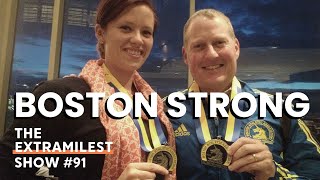
Brent Cunningham ran the 2013 Boston Marathon, gave his medal to a distressed stranger, and the act went viral. He later dropped 24 pounds in 21 months, cut his easy-pace mile time from 12 minutes to 8:48 using the MAF method, and credits strength work and daily habits for the transformation.
Chapters
Wouldn't it be amazing if you knew your life mission? Because that affects what you say yes to and what you say no to in your life. Give yourself freedom to dream in the different areas of your life. Set some crazy goals and be weird and have fun on the journey and invite others into it. Set a goal and then go slow. You don't have to sprint. Like, walk. Start making baby steps. Go for it.
Welcome to the Extra Mile Show. Recently, Brent Cunningham posted a message in our Personal Best program in the Facebook group, and he shared the progress that he had made over a 21-month period, and he improved significantly. About 21 months ago, he was running 12 minutes per mile, so that's about 7 minutes 22 seconds per kilometer, at his MAF low heart rate, so at his top of his Zone 2. Fast forward, he was gradually able to drop this, and recently at the same heart rate, he was able to run an 8:48 minute per mile. So that is 5 minutes 28 seconds per kilometer. Also, his weight came down significantly over that period of time. He was able to drop from 175 pounds, so 79 kilograms, to now 151 pounds, so 68 kilograms. A significant drop in weight which also helped with some of his running improvement times. In this conversation, we discuss his learnings over the years with low heart rate training and also some of the strategies that he has applied for race day as well. He also shares the 2013 bombing of the Boston Marathon he ran that year, and he had some crazy experiences that you just have to hear of what he went through on that day, some of the people that encountered, and some of the stories that came out of that. If you would like to learn more about the Personal Best program that Brent is a part of, check out pbprogram.com. This is for runners of all ages. We have runners in their 20s all the way up to in their 80s, from beginner to advanced, men and women. So yeah, if you would like some additional guidance in your training, check out pbprogram.com. Path Projects is the sponsor of today's podcast. It is the only apparel that I wear before and during and after my runs. It is super highly comfortable. Breathable and super functional. Is what I wear pretty much recording every single podcast. It's what I'm wearing right now. 3 of my favorite items here are the Lamont hoodie, which is a mid-weight item that is great for like some of the colder winter months. It is the Graves PX jacket. It is a shell jacket for running in the colder weather, and I use this on the daily too. And then it is the Killam PX pant. This is a running pant with 5 pockets, plenty of pockets for storage. Super comfortable. You can check out more at pathprojects.com/flow, and you can receive a 10% discount over there too. That is pathprojects.com/flow. I hope you enjoy my conversation with Brent Cunningham.
I love the jacket. First of all, you are dressed for the occasion, the Boston Marathon jacket.
Yeah, I don't know if anyone will ever see this video, but it's pretty fun for me to 2 things with my Boston Marathon jacket. 1, find it. And 2, does it still fit? And I'm proud to say, 1, I found it. And 2, it's actually a teeny bit large on me, which that's part of this whole story too. So it is.
There's so many different directions we're gonna go into with this conversation. Like, one of it being, like, you are very rigorous with data tracking, and you have recently shared, like, in the PB program group, you send over like, hey, here's my meth test from the last 18 months. Here's my pace. Here's my weight. We're gonna take a deep dive into that. But one of the—
Yeah.
That stood out was that over the years, you had definitely lost some weight. So I can see that the jacket might be fitting a little bit larger because you ran the last Boston Marathon in 2015, and that was the exact same date that I actually ran it. So, yeah, she had that one there too. So Let's start out by talking about the Boston Marathon, in particular, the 2013 Boston Marathon when the bombing happened.
Yeah.
There's definitely a few stories that you have to tell around that. And for those who might not be that familiar with it, this was a year that impacted many runners around the world when there were two different bombings. At the finish line of the Boston Marathon that impacted a lot of people that day.
Yep.
The race ended up getting canceled mid-race. Tell us a little bit more about your experience, how that day unfolded for you. And that was both before, but even after the bombing happened.
Yeah. Well, buckle up. This is kind of an interesting story as it relates to that April day in 2013. My running journey actually began just a little bit before that, a few years before that in 2008. I had 12 weeks off from my job in a little thing called a sabbatical. And it was 2008, I started getting in good shape. I had time to bike and run and actually went on a run in the fall of 2008 with some friends and I was doing great and they're like, hey, we're doing a marathon in about a week. And I'm like, well, I can't, I'm not ready to do a marathon in a week, but I signed up for one in early 2009. So I ran Carlsbad 2009, San Diego.
That's not too far from here. That's a nice one. Right.
Just north of you. No, south of you. And ran the marathon, had a great time and finished in like 3 hours, 45 minutes.
And different marathon. Yeah.
First marathon and just thought, okay, that, I mean, you know, I had little things I did every mile. I would pray for a different person every mile, and I just enjoyed the whole experience. You know, the last 6 to 8 miles, of course, were challenging as always, but gosh, I loved it. And then one of the first questions, I'd never even thought about this. Wait, the Boston Marathon. I wonder what time you have to run to qualify for Boston. Looked it up and went, oh my, I've got to run this thing 20 minutes faster.
What was your age at the time?
42.
Okay.
And the journey began. And I'm kind of obsessive about things, which has its pros and cons. Ask my wife. She always goes, hey, where do I fit into your obsessions? I'm like, honey, you're always near the top most of the time. Anyway, that's a whole other story. But so I start training for another marathon and at the same time got introduced to triathlons. And this journey began of getting in good physical shape, started doing Ironman triathlons, 70.3 and the full, and running marathons and began this journey and loved all of it and ran a marathon, did not qualify for Boston. And so I, this obsession began, let's just say it was 2012-ish. Qualified. I ran the Seattle Marathon and made it by like 90 seconds. And oh my gosh, I'm going to run the Boston Marathon. So we—
and this was, this was when 90 seconds was still enough, because those—
correct, there was none of this nonsense of I hope you get in with your time. Like, if you made it, you made it. And then it changed not long after that. But so we arrive in 2013, first stop Boston Marathon. And I'm there with my wife and one of my daughters from Alaska. We were living in Alaska at the time. Gosh, we run the Boston Marathon. Here's what stood out. A few things before we get to the actual part related to the tragedy of the bombing. Someone said, oh, Brent, put your name like in big letters on your shirt because there are people the entire marathon and watch what happens. So I get duct tape out the night before. I'm wearing a yellow shirt and Brent in big letters. Well, here's what was fascinating, and most marathons do not have people lined up the whole thing, but Boston pretty much does. Mm-hmm. We start the Boston Marathon and I'm not 5 seconds into it and people from the sides who are cheering you on are like, go Brent, you got this, Brent, Brent, you go. And that this journey began of someone saying my name at least every 30 seconds. And it got to the point as the marathon went on that people were like, wait, why are they not yelling for— people were starting to run with me because they wanted to. They just— wait, they're yelling for him.
And so anyway, learned you're like a celebrity and it keeps giving you a boost of energy every time.
And I— yes. And I'm just like, oh my gosh. One of the takeaways of that day is just the power of someone's name. And that really confirmed and began this journey of really the way you care for people is just be intentional about remembering names. So, man, that whole race, that's all it was, was, go Brent, you got this, Brent, go Brent. And you realize the importance of encouragement and what a beautiful tool that is. So I run the race, finish in about, gosh, I'm guessing 3 hours 45 minutes. I was not trying to qualify again, so I wasn't in a in good enough shape to run a qualifying time to do it again. And meet up with my family, meet up with my wife and daughter. And about 30 minutes after I finished, we've gotten our medal, I've got my medal, and we're a ways away, and we're now trying to figure out how we're going to get back to our hotel. And then we hear what sounds like two cannons about 30 seconds apart going off, just this bang, and then this other bang. And it was just this weird, like, what was that? And then within a minute, the sirens begin. Instantly I say to my wife, this feels like 9/11-ish, like something. And then within 10 minutes, our cell phones start blowing up with people from around the country that knew we were running Boston, started going, are you okay? And then it started to become apparent to us that there'd been something tragic that had happened. And through text messages, we found out that there'd been a bomb, two bombs actually, near the finish. So as this story grew nationally and, and globally, we started to hear about it through just people communicating with us.
How far away from Yeah.
Mind bombing, were you? I'm guessing we're a mile away.
Okay.
More towards the Boston Commons, if any of you who are listening familiar with Boston and its geography. But we're trying to make our way back to the complete other side where our hotel is. So wait, now things are blocked off. We start making our way around and back and this is where things get interesting. So as we're trying to make our way back to our hotel, And sirens are going off everywhere. We're getting text messages, responding to those text messages that we're okay. Oh gosh. So let's just say now it's an hour later and we're getting closer to our hotel. And for the first time, I notice people who have race bibs, but they don't have two things. They don't have a medal and they don't have that little foil blanket thing that they give you. And I instantly, it hit me, oh my gosh, there were people who did not get to finish the Boston Marathon due to what happened at the finish line. And so here's where this story really begins. And for some reason, I started thinking, oh my gosh, people didn't finish. Wait, they don't have a medal.. And then I start having a conversation that I will classify was either with myself or being a deeply spiritual person. My spirituality is very important in my relationship with God. I feel like I started to have a very interesting conversation with God, and I started the conversation and I said, no, no, I love my metal. Like, I love my medal. And then all the races I'd done previous, whether it was an Ironman or half Ironman or marathons, my medal, I would wear it to dinner. My kids were embarrassed. The server often thought, oh my gosh, did you win the race? They're not aware that everyone gets a medal. And it just— my medals, they're all up on my wall. And I'm like, no, that— this is my Boston Marathon medal. Like, I'm not going to give my Boston Marathon medal away to someone. And then this Bible verse came to my mind. Matthew 6:19 says, don't store for yourselves treasures on earth where moth and rust destroy and where thieves kill and steal, but store for yourselves treasures in heaven. And I'm like, no, no. So I'm at, now my wife's next to me, my daughter's next to me, we're walking, they have no idea that I'm having this internal conversation. Well, and then I thought, where will my medal be in 100 years? You know, it's going to be in my great-granddaughter's box in a garage. So I'm having this conversation and then out of nowhere, my wife, so this is typical for us. She usually doesn't get the credit, but she's often the source. So she notices a wonderful gal sitting on a bench with her head in her hands and her head down. And my wife goes right up to her and kind of gets low and looks right up at her and says, are you okay? And the gal, her hands came down from her eyes. She'd been crying and she looks like she'd just hung up with her cell phone. And my wife goes, are you okay? And I'm all of a sudden noticed that my wife is engaging with this gal. And the gal says to my wife, I am okay. And my wife says, do you know where your family is? So my wife's a nurse. So she goes, do you know where your family is? And the gal goes, I do know where my family is. They're right at the finish line, but I just found out they're okay. Oh, wow. My wife then takes off this little foil blanket thing. Again, my wife notices physical needs, the whole thing. She takes it off me, wraps it around the gal. So my wife and this gal are having this moment. And then I'm, I then get down. And I look right into this gal's eyes. I'm like, did you finish? And she said, she just shakes her head. No, I didn't finish. And then just this happened very quickly. I take off my medal again with the conversation that I'd just previously been having with God or myself, however you want to look at it. And I put it around her neck and I look right in her eyes. I go, you're a finisher. She gets emotional. I get emotional. And then I do not want any— we're not exchanging numbers. We're getting out of there. Like, that was for you. And so I immediately start walking away. My wife follows. She's right next to me and my daughter. And as we're walking away, my wife looks at me. And she says, forgive me for imitating my wife's voice, this is just part of the story, "Oh my gosh, that was the nicest thing you've done in your whole life." And she knows what medals mean to me. And I go, "I know, that was my medal." And I'm instantly going, "Wait, I just gave away my medal." And I'm honestly going, What just happened? And we walk away, and then my wife and I begin to have this conversation. I'm like, no, she needed it way more than I needed it. And that was that. We thought the story was over, but it wasn't.
Before we go to part 2 of the story, those listening, there's quite some people who know the importance of the Boston Marathon or the significance of that marathon. But can you just high-level back up and just explain why that medal means so much for most people?
I think the medal— this is why those of us who do marathons or any event where you get a medal, why it's a big deal, is because, gosh darn it, I had to get up at 4:30 in the morning one day and go for a run. I mean, you got to pay the price. Like, you earn— there's 100 days where you're getting your feet on the floor, out of bed, and you're making— you choose to do hard things. So there's this sense of pride, and I don't mean pride in the arrogant side of pride. I mean, like, I earned this. Like, I paid the price, which is one of the most beautiful things about doing these kind of events, is that you set a goal and you work it. It's all about the journey, but you work it and you love the journey. And then the day of the race is a You're nervous. It's a celebration. You're, you're risking failure, whatever that, you know, however you define success, but it's all of that. You're in the arena, like you're in a game that you don't even know how it's going to go. And then when you finish and you paid the price and you're, you're proud of yourself. And so the medal is a, just a little physical symbol of No, I did something hard and I love, I mean, they're awesome. You know, it's really fun. Like, it's not free. That's why I say to people all the time, this isn't free. Like, you got to pay the price.
So the interesting thing is too, it's like, yeah, the medal plays a big significance, but it's also like the journey leading up to it. Like you're saying, like you're putting in consistent efforts for months and months and months. Oh, this is like, this is almost like a physical part of it.
It is, it's a physical sign of something that you did that you should be really proud of yourself. And Boston even more so because it, I mean, it took me years to qualify and, and multiple marathons. And, you know, you just don't— any marathon is a big deal, by the way. Boston though is Boston. It's just, it's got this little, so if you get a Boston Marathon medal, you're like, no, it's my Boston Marathon medal.
So let's continue over there. You and your wife walk away from that scene. So the woman stays behind, you guys go over to your hotel and then what happened?
Oh gosh. Okay. This is where it gets crazy. We're, I've moved, we're moving on in our life. We've just, you know, we, No regrets. Like, it was the right thing to do. Well, unbeknownst to me, this gal had an experience in her life where her dad had done a race and someone had really helped him in the end of a race, and he always regrets not thanking this person who really helped him late in a race that he had done. And this gal knew this related to her father. So as she was trying to figure out What do I do with— I have this medal and it was so meaningful. She decides to try to find these mysterious people. Well, social media had been invented, so she decides to post a picture on Facebook of the medal and tell the story and kind of cries out to the world, help me find this, the, the guy who gave me the medal. Fast forward 24 hours, unbeknownst to me, she's posted this on social media and I'm not on Facebook much. And, um, and somehow we were already back in Alaska and someone took a screenshot of this story, sent it to me, like texted it to me. Bottom line is I read it and went, oh no. Oh no, we've been found out. So I then get on Facebook, private message this gal. We've connected, word gets out that it's me. By the next morning, so, you know, this is Wednesday morning, probably a day and a half, 2 days after the race, I wake up. So I private message this gal. I don't know where she lives on earth. Come to find out she lives in Boston. And by the next day, an Anchorage news station, and then ABC, and then all these crazy craziness begins. ABC calls, they would like to talk to me. I'm like, ABC, you mean like ABC, like ABC, ABC? Sure. This is foreign ground for me. Well, they want to hear my story. They're like, okay, we've got to— so I tell them the story and they're like, okay, we have a great idea. Friday night on 20/20, the show, uh, we'd like to do a live reunion with you and this gal because she's looking for you, but we would like to surprise her. So don't talk to her anymore. And we've messaged a few times, but that's it. And so they fly me back to Boston.
All the way from Anchorage?
Yeah. Yeah. We live in Sitka, but I was actually in Anchorage for work and they fly me Anchorage to Seattle to Boston first class. Great. Wonderful. I land in Boston and near the airport, there's a hotel by the water. They get me there. Now it's Friday. And then I begin this interview with Byron Pitts, who at that time was the anchor, the host for 2020. They interview me, all of this stuff, and then they mic me up and take me down to the waterfront, and there's going to be a reunion with this gal. So it all happens. So the interview happens. I remember near the end of the interview, he asked me, some would say evil won today.
Some would say on Monday, evil won.
And there was this theme in the interview of like, well, why would you do that? Why would you give your medal away? And then there was also this, this sense of, hey, evil, maybe evil won today, but what are your thoughts on that? And I kind of got this perplexed look and I remember looking at Byron, no, evil didn't win today. That isn't, I mean, they might have won the battle, but they don't win the war. Like love wins. Game over. Like I, love is way more powerful than evil. So the show ends and then I get to go meet this gal. And so we're on the waterfront and she walks up and this is just my personality. Oh my gosh, we both lose it. Like emotionally, it's an emotional reunion. We hug. I tell her I love her. I've never met her, but of course, and this is right on cue for me. And then, and it was a wonderful reunion. And then we go, can we, have dinner together. And so she, her boyfriend at the time, and her parents, uh, and her brother, I think, and me, we have dinner that night. And this is where it gets fun too. So we have dinner at a restaurant near where I was staying. Well, unbeknownst to me, the Boston Athletic Association shows up, right? And they present both of us with medals.
No way.
And I'm like, wait a minute, I get a medal? Like, okay, so they present both of us medals. And then at the end of dinner, Laura, her name's Laura Wellington, she reaches into her pocket and pulls out a medal and she slides it across the table. And I'm like, Laura, nope, that medal is yours. I gave it to you. I don't want it back. She goes, oh no, no, no. I'm never giving you back the medal you gave to me. But when I went back to the bus, they gave all of us who didn't finish, they gave us medals. So I want you to have my medal. Wow. And I'm like, wait a minute. Now you're giving me your medal? And I'm like, so I have two? Wow. So I went home with two. And I went, hmm, isn't this interesting how this works? You know, and you don't give away a medal with the expectation that you'd never do that. You do it because it was the right thing to do to just help a person in need at the time. But look what happens when you do that.
I mean, it just comes back and it always does. And And you and I had a conversation before we set up this recording that how I've been so pleasantly surprised by how many good people there are in the running community. Like, not— well, yeah, to some extent surprised that even when I look at the Extra Mileless podcast guests, there's many times that I just get drawn to certain people that I need to have a conversation with. And that was exactly the same when I heard about your story.
Yeah.
You're in it with the right intentions. And I feel like there's a lot of people with the right intentions and there's so much good in the world.
Yep.
Dr. Rangan and I, Dr. Rangan Chatterjee and I, had a conversation recently that we recorded. And he brought up the topic of when you look online, it looks like there's so much negativity, so much hate towards each other. So much polarization, yet there's so much good in the world. And in particular, like in person like this, just another perfect example. So I'm curious to hear from you after this whole experience, like what were some of your lessons, some of your takeaways from this entire Boston experience for you?
Oh, absolutely. And the story even got better, by the way. This gal, Laura, and I stayed in touch. She had one quality about her that was challenging for me, and that is she was in New England. Patrons fan, and I'm a Seahawks fan. Now, the Seahawks won the Super Bowl over the Denver Broncos in 2013, 2014. She called me the second the game was over and congratulated me. She also called me a year later when the Seahawks threw the interception on the 1-yard line and lost to her Patriots. That was hilarious. But she called me not only as it relates to football, But she goes, hey, Brent, I'd love for you to be in my wedding. And so Karen and I got to be a part— my wife and I got to be a part of her wonderful wedding in 2015. And I mean, come on. And it was on Cape Cod and got to be with her family. And it was just a wonderful, wonderful event and opportunity. So there are a few takeaways as I think of what happened that day in Boston. Number one, the power of the name. Had the name. I mean, the power of a person's name. I even listened to an episode on The Extra Mile List. Notice people. Really, life is about noticing people, not about being noticed, but about noticing others. So that's a takeaway, that this wouldn't have happened with Laura unless my beautiful and wonderful wife noticed Laura. Okay, but it's one thing to notice But it starts with get your eyes up. Just get your eyes up. Notice people. Call them by name. If you don't know their name, ask them their name. You know, and this could be a server at a restaurant or anywhere, but just take an interest in others. You'll find that life takes on a whole— it's way better when it's not about you. Okay, so notice people.
Before you dive into it, I just want to— I 100% agree with what you just said over there. And I also think it's right now there's so many people who are just by default plugged into their phone and they kind of zone out on everything that happens around them. And I feel even just that part of like being deliberate with your phone use and like just from time to time just put it away and being present with what's happening around you. And that part alone, like all of a sudden you see the world entirely differently and how beautiful everything is. And like when you slow down, when you're present.
Well, you notice people, they're real, they're beautiful people. Everyone's created by God. Like they're amazing. So, you know, I have a group of people that I meet with regularly in person, some high school students. When we get together around a table, there might be 12 of us. We take our phones and stack them in the middle of the table. And we've made a commitment when we're together in a group, let's be known and know each other. We'll get back to our phones. Trust me, they'll be there. And they don't fight it at all. So there is something about noticing and being known.
Totally. And so it's like seeing others, but also seeing yourself.
Notice yourself. Absolutely. And you have to get away from your phone sometimes. This is why running, this is a, could be a whole other thing. This is why running or exercise or going for a walk without your technology to just be and listen and have it be a, whether it's your mental health or spiritual health or your physical health, like notice, listen. Listen to the things you're thinking about. What do you want in your life? What do you want in your marriage? What do you want in key relationships? What do you want physically for yourself? What do you want spiritually? What do you want for your— when you come alive in your job? Like, when are you alive? But we don't think about this stuff if we're just consumed with our phones or the things right in front of us. And so it kind of ties back to the lesson of the Boston Marathon. Again, my wife noticed Laura. Do you understand how if she wouldn't have noticed her, how I would not have this story? You know, so it starts with noticing. Number 2 was give away something of value in your life because people are of great value. So when we think of our relationships with others, give something away of great value to you as it relates to that person. Could be your time. Matter of fact, usually it is your time. Could be your words of affection. Could be resources you have. But watch what happens when you give something of value to others. Watch what happens within it. Well, it's love. So, it really is noticing people, love others, or give something of great value away.. And that's what the medal was. Why was that such a significant moment? Probably because it cost me something. Like, that wasn't free either. Like, I didn't just— by the way, I didn't just do it instantly. Remember, I had an argument. I was having a deep conversation with God, and I was like, mm-mm, mm-mm. You know, but there was this internal spirit nudge. But then came the moment where you have to make a decision., and I had an opportunity to either give my medal away or not. By the way, my normal natural tendency is to, to keep stuff for myself. So this is not natural, by the way. But then, but then you look, wait, look what happened. Like, it— and by the way, it was already great before I got other medals back and all the things, but it was just the right thing to do. So Notice people, give something of great value away because people are of great value. And then the last one, be willing to stay with people for the long haul. So Laura and I are still friends. That was 11 years ago. And I mean, we're not in touch every week or every month. Be committed to some people for the long haul in your life. Like, just stay with people, walk with people, like walk with them in life and be committed to a few. We all need each other. We need community. We don't want to do this alone. And so those are just a few of the lessons I've learned.
I love that story in particular. So it wasn't you who posted the selfie of like, look what I did. It was her actually going at it. But how many times did that story end up getting shared?
Oh, this is what— well, I didn't know what viral meant, but I've been told I'm viral, but I don't think it was a compliment. That was a joke. Well, it had been shared by the time it got to me and became 200,000 times. Oh, wow. And then like 200,000, whatever that means. I mean, I was like, so then whenever when I post something on Facebook, you know, it gets like 8 times or something. And I'm like, wait, why do I even care if it's liked? But I do. I should. So yeah, by the time it got to me, a couple hundred thousand, I'm like, maybe that's what they mean by viral.
I don't know. There you go. There you go. All right. Let's pivot to your own running journey. Yeah. Because I think there's a lot of different things. Tell me a little bit more. I want to in particular talk about your low heart rate journey. Recently, you had shared that from about the last 18 months or close to whatever, 20 months, all of your different MEF tests over time with your weight, with your pace. Yep. Tell us more about this, like some of your running improvements and some of the things you've learned here.
2008 or '09, I got healthy, started doing, started moving my body a lot and did triathlons and marathons and did that for about, gosh, 8 or 9 or 10 years. And then through a job change, got promoted in the Christian organization that I was working in. Still am in that organization, but things changed. We left Alaska where we'd been for 17 years. And got promoted in, in this job. And I went on this, I would say, 5, 5 and a half year journey where I tried to, tried to stay physically active. But I would say because of the stress of the job, I think my eating habits started to, to be transparent. I still was moving my body quite a bit, but became more difficult in the stress of this new job. And then I just turned to food to comfort me in the midst of really challenging times vocationally and ended up resigning from that job about 5, 6 years later and had gained 30 pounds. Wow. And here's what I've learned about diet. You cannot exercise your way out of a bad diet. And I was— I mean, I was moving my body, but boy, did I love sugar and processed foods and about a year and a half ago, as I'm not— we're living in the Northwest and I've discovered trail running. So I'm running mountains and running out there. Oh, it's the best. It just— I discovered the love of being on trails, but I'm also noticing I'm not getting that much faster. But there was no real organization to my running other than, you know what, the way you get faster is you just go hard all the time. So And I'm not getting that much faster. I'm also 30 pounds heavier than I was. Anyway, I was at an event and I met this guy and he was a trail runner. And then once you meet someone who's also a trail runner, there's this connection. And he goes, yeah, I'm doing the Leadville 100 in like 4 months. And I'm like, you're kidding me. I would never want to do a 100-mile. Anyway, this, this conversation happened and I had not done an ultra yet. And he goes, well, yeah, yeah, I'm doing the MAF method. And I'm like, what did you say? He goes, the MAF method. I'm like, spell it out for me. He goes, MAF method. I'm like, okay, now tell me what this is. And he begins to describe to me what the MAF method is, and I'm like, what?
Well, maybe you could, for those—
yeah, I will, I will. So you go 180 minus your age, and you pretty much do all your training at this low heart rate. So I'm like, okay, I'm 180 minus 56 at the time. 124. Okay, you're telling me I got to do most of my training at 124. Well, this sends me down the MAF, the MAF trail, and I discover you. I mean, you're, you are everywhere when it comes to MAF. And who's this guy, Phil Maffetone, and all these things. And I'm like, wait, I gotta do a 5-mile test and do a run for 5 miles at my MAF heart rate and then do it again a month later. Okay. So I, I'll never forget going to the track for the first time with my new heart rate. And I run, I'm like, oh my gosh, I have to walk. Like, what is going on? And so I run for a bit. I'm like, oh, my heart rate's too high. And then I'd walk and it would come down anyway. So I do this test and my journey begins 18 months ago with math.
So what was that first math test? What were your paces?
Oh gosh. 12, 12, let's just say approximately 12 minutes per mile. And I'm like, 12 minutes per mile? There are dogs walking who are gonna pass me. Like, it's just almost embarrassing.
Right?
And so then I begin this journey of going, well, I'm gonna do almost all my training for a while here at, at MAF. And, and I discovered you and some of the things that you had been posting. And I got Phil, I think it was Phil Maffetone's book. And I'm just now becoming this MAF expert. Like, it's about nutrition. You know, the, your exercise and then your stress and all these things are going on. This journey begins. And what was crazy is I do it, I do another math test a month later and I'm running, let's just say 5 days a week. I'm not getting injured because I used to get injured because I'm doing speed work and all of a sudden I just pulled that muscle and, you know, I'm late 50s, mid to late 50s. I'm getting older. So I'm like, Wait, I should— it's starting to work. I do a math test a month later. I'm like, wait, I just shaved off 30 seconds per mile. And at first you're like, I'm not doing anything. Like, I'm just going slow all the time and I'm getting— and this journey began. Then I would say, gosh, a year into it. Now I still haven't signed up for a marathon. I'm now trying to figure out, wait, how does this math pace relate to marathon pace? And I'd done all this previous marathon stuff. Um, with Jeff Galloway and just all these things related to learning how a 1-mile time trial can relate to your marathon pace. So I'm trying to figure out how this relates to math and all this thing.
I—
and then about 6 months ago, I went on a health journey of going, wait, I need to change my nutrition, and joined this incredible group of people called Men— this is new, uh, well, new to me, probably be new to you, Flores. Men and Women of Discomfort, MWOD, M-W-O-D, started by a wonderful guy named Dane Sanders. And I became a, I became a part of a group, uh, and for 12 weeks you commit to doing these numerous things every day for about 12 weeks. Well, one of them was your nutrition, and I've never dialed in what I ate. I just eat.. And it was, hey, for your first, for your first 12 weeks in this program, you eat meat, fruit, vegetables, a cup of white rice, and sweet, and some sweet potatoes. And I'm like, what? No coffee creamer? Like, I can't do it. There's just no way I can give up coffee creamer and sugar and processed foods. I can't give up all— well, that's pretty much my diet. But I did it. Long story short, lost 30 pounds. So now I'm physically lighter. I'm even lighter, 5 to 7 pounds lighter than I was when I was in my best marathon shape. And I think I still have a ways to go. And I started introducing some cross-training, like CrossFit kind of things, but just push-ups, pull-ups, step-ups, sit-ups, all in my own house without weights kind of thing.. And then I keep doing math. So just did a math test last week and oh my gosh. So my math test was 8:48 per mile. And I've probably done, let's just say 15 of these in the last year and a half, approximately. And it didn't improve every month. Sometimes it would stay the same or get a little slower, but over time, running slow, doing your math tests, getting healthier physically, losing some weight. I did add some strength training. I do some WODs. As I call them. Well, I didn't make this up, workout of the day. So, I do at least 4 of these in the mornings early, first thing, run stairs, do push-ups, run stairs, do step-ups. So, that almost became my high HIIT workouts, high-level intensity, and I'm dripping sweat. And then, most of my run workouts are MAF, low heart rate. Once a week or once every 2 weeks, I might do a time trial on a mountain and I just go, okay, as fast as I can to the top of the mountain. But I don't do it multiple times. I had not done mountain time trials for about 3 or 4 months. I could not believe how much faster I was. All that to say, by the way, I think for those of you who are number geeks, and I know we've talked about this, Forrest, I think my marathon pace related to my MAF, this is me, I think, let's say my MAF time is 8:48. I bet my marathon pace is 15 to 30 seconds, maybe faster than that per mile. That's where I'm leaning, but I'm experimenting and I know my heart rate well enough. And I'm like, so I think if I do all the training, I could probably run a marathon at about 8:35 pace right now is my guess.
But we'll see. And obviously that will depend to some extent on the course profile.
Yeah, totally.
On the wind. Totally. All those things. It's nice when you do this for a few different races, you do a test beforehand and race time was, you can start seeing some of these correlations indeed.
Yeah. Yeah. Yeah. So there we go. There's my math story and my, this health journey. And, and I have learned the, the beauty of doing hard things. And that's some things I learned in Men and Women of Discomfort, MWOD. Internally, how I'm feeling when I voluntarily choose to do some hard things, whether it's cold showers or a variety of things. And one thing I've learned in MWOD is it really is you become strong and awake for love's sake. So, it's you do these hard things, but it really ties back into loving others. And I think the mental health, the mental health, mental wellness, emotional health side of all of these things is really helping me too.
So absolutely. There we go. And just high level, I have it pulled up in front of me over here. So your first math test was on March 12th, 2023. Yeah. You were weighing 175 pounds and it took you 5 miles in 59 minutes and 16 seconds. That was an average of about 12 minutes per mile. Yep. Then like going down, like it, it indeed, like, yes, you had like an initial drop where your pace improved. Yep. But the weight kind of stayed the same for at least about a year. Oh, absolutely. The MEF pace improved. Like, the time went from 59 minutes over 5 miles or 8K. Yep. To, like, about a year later, it was about 54 minutes. So you shaved off, like, 5 minutes at the same heart rate.
And, yeah, and that weight didn't change. Yeah.
I was still about mid-170s, probably. But then once, like, the weight— like, it went really rapid with that weight drop because in— Yes. End of May this year, you were like still 168 pounds, pretty much. Yep. And then like a few months later, you ended up dropping significant amount of weight. And you also see your math pace actually rapidly improving at that time.
And this makes perfect sense to me because I, I did two things. I started doing some HIIT workouts early, which was some strength training, you know, kind of things. And you lose weight, most of my runs were still really slow, except once a week I started introducing a little speed work.
Yeah, the weight makes a difference. It really is. It's one of those things where I think when you're very focused on, I need to lose weight, and like very obsessed with that, people like have different experiences with it. Whereas if you set yourself up, like you were saying, like gentle approach to training, but then be mindful of what you put in your body with nutrition.. Oh my God. And just being pretty disciplined with that in whatever way you do that, whether you do that on your own or whether you do it under guidance of a program or have some accountability partners. All of a sudden, you do notice, like, when you end up dropping a bit of unnecessary weight, the running can become a lot easier. Like, it's the same as if you go running with a 5-pound bag of sugar or flour., and all of a sudden you realize how hard it is to run with that, and then you put that away, all of a sudden it becomes easier. But you also wanna be cautious not to get overly obsessed with that part either. It has to be a natural way. That's right. We have to do what feels right to the body. We also see athletes who are underfueling, who are not getting enough calories in, who are like, their energy levels are low. They have higher hormone in this balance, higher injury rate. So it is this fine line of Setting yourself up for success with the right approach but not getting too obsessive with it either.
And that's hard to do, especially with my personality. But I stopped eating after 7:00 PM. Yeah. Oh gosh, that's never easy for me because at 8:00, I want to go to the pantry and just turn on the button on the back of my you know, and just start, here it comes. So it's still a journey. I'm not, I'm certainly not perfect at it. And, but if honestly, if you ask the question, and this is true in every area of our life, what do you want? I mean, like, what do you really want deep down? Whether that's spiritual, physical, relational, vocational, mental, emotional, or financial, those areas of your life. And start living intentionally. And if you do want to get healthier physically, if you, I mean, if you really do, what do you want? And then, okay, how do I get there? The challenge is you're going to have to start doing some hard things and make some changes. And it, but it depends how bad you want it.
And that's true in every area of our life. 100%. And I feel sometimes writing down some of your North Star goals, system habits, and actually writing it down and reviewing it on a weekly basis. Absolutely. And aligning through group discussions, like those things do become powerful. I think very often at the beginning of the year, people just set goals and within a few weeks they forget about it. Yeah, but it's, it's more the intention behind it and the consistency that, that will make a difference. What, what advice would you have to your younger self? Like you have experienced a lot of growth in your own running and health journey. What advice would you have to your younger self or to other runners in the earlier stages of their running journey?
The simple question, what do you want physically? I wanna run a half marathon. I wanna lose 10 pounds. I wanna get stronger. I wanna feel better about myself physically. I mean, again, there's a balance here, right? We don't wanna become obsessed with— I'm just speaking to the physical side, but I will say If you start becoming disciplined in your physical side, it will impact other areas of your life. You see, you can see some progress, whether it's setting up, whether it's a run of 5K or a 10K. Set a goal and then go slow. Like, the math method works. You don't have to sprint. Like, walk. Just. But if you're consistent, move your body every day, maybe take one day off a week, possibly, but just get out for a walk, move your body every day and slow down and just enjoy the journey. See what happens to you internally as you move your body outside. Gosh, just get healthy in every area of your life. Like, I think the way God designed life to be, this abundant life I believe in, it's possible for all of us. And that again, doesn't mean hard, bad things don't happen to us. They happen all the time. Involuntary discomfort. It, there's this, it's going on in our life all the time. So I think even asking the question, even whether you're 20 years old or 60, what do you want? What do you really want in these areas of your life? You know, my life mission. So this is interesting how I've gotten clarity on this. Wouldn't it be amazing if you knew your life mission? Because that affects what you say yes to and what you say no to in your life. And my life mission is to live an abundant life in every area of my life and walk with others to the same. Well, once I know that, gosh, it kind of changes everything. So I think, as I think of the different areas of my life, I'd say to anyone, I'd say it to you, I'd say it to me, say to people listening, what do you want in these areas of your life? And write it down and then share it with somebody. Share it with me. I don't know. I was going to say you can look me up on Facebook, but I'm rarely on there, but I'll, I'll check anyway. To my younger self, I would just say, think about the whole person, all the different parts of your life and what do you want, and then start making some incremental steps in different areas of your life to get healthier. In the different areas of your life and see what happens. And again, even as it goes back way back to our Boston story, as we started this, life at its best is when it's not just about you. So how does loving others and taking an interest in others and noticing others and walking with others, how does that all fit into this?
That's really well said. I like it.
Yeah.
It's interesting, like I'm 42 years old now and when I turned 40, for me it was one of those times in life, it was like a reflection point of like what have you been doing and all right, now we're going to the next decade. Yep. And that topic of conversation came up in my head as well and in my journal of like what is it that I'm doing, what am I passionate about, what am I meant to do over here. I think that, that for some people that can go hand in hand with their, like, their job, their profession. Yeah, other people, it might be much outside of that. That's right. And for me, funny enough, like what we're doing right now, this podcast, the whole part of it started maybe with myself, just a learning journey for my own. Over the years, it became really this thing of like sometimes hearing feedback of how it can make a positive impact on other people.
That's right.
Much beyond self. And then it becomes like this way of like, all right, now we have like a decade long of all of these conversations and there's different nuggets in it. So now, like, all right, let's put all of these nuggets together in like a book. And it's like, this is one of those things where for me that became this much beyond like self, but it was like I was meant to do this. Like for example, you and I were talking about spirituality and about spiritual journey that I've been on. Like you mentioned you have been religious for 40+ years.
Yeah.
As we talked about that before this call and what's interesting is with this podcast, I twice, oh, it's too busy. I can't do this anymore. I'm over it. Like, literally. And I made a vision board, and all I put on there was Elliot, Kipchoge, and Killian. And this was part of like a bigger vision board. And I hadn't made a podcast in 5 months. And this was like very busy period of time with the kids, with businesses, with a lot of other things going on. Within 6 weeks, both their teams reached out to me to get interviewed on the podcast. I'm like, Who am I? This little tiny podcast. Yet, like, Elliot Kipchoge came out with a new movie that he wanted to, like, his team wanted to promote and that way have a conversation with Kilian. Like, there was like a tie-in through our friends at KOROS. I was like, okay, ended up doing those conversations and it brought me new energy. From there on, it's like, okay, there's obviously a reason why I'm meant to do this. And I think from time to time, indeed, reflecting, like, stepping back and like going well beyond self and seeing like what positive vibes you can bring to the world. That's right. And it's not even that I'm expecting anything in return. It's just meant to happen. Yep. And like, just like how I felt you and I needed to have this conversation, like that tends to happen time and time again. Like when you put out good in the world, a lot of good comes back and it's like this thing. And like we were saying earlier, there's so much good in the world. And I think for us to focus on that part instead of getting so hyper obsessed about the polarization and the hate online and any of those kind of things.
So let's just keep focusing on good indeed. Well, and what you, what we choose to, I think life comes down to inputs and outputs and our inputs, what we've put our, what we think about, what we watch, what we see and what we put in our mouth fuel. So what goes into our mind and what goes into our mouth and our heart. I mean, all of what comes in influences what goes out. And in a world that is so polarized on so many things, you do have to make choices of what am I going to, what am I going to watch, listen to, read? And then what am I going to do with my time? And we do have choices related to that. And in a world that is polarized, there is another way. We don't have to focus on what separates us. How about we just, and you know these people when you get around them like, oh, I want to be around you more because you're not polarizing me right now. We're not talking. No, you, and yeah, and I, and I do think of, as people are thinking about purpose and mission in life and all these, these are really important questions. The running, moving your body alone at times gives you chances to think. And maybe it's, I would say to anyone, get time to think every day and learn and listen to what you read. Like, create some space in your life to think. And these kind of things. But I do think even in your case, Flores, what is so great about your podcast and what you're doing with all the things you've put on YouTube and related to math and your journey is I think the 3 questions are: what do I love doing? Like, what do I love doing? What am I good at? That's number 2. What am I good at? And then number 3, what— how does it contribute to the world? Like, how does it serve others in some capacity? Well, that's you. Look what you're doing. I mean, and you're combining all of that to do what you're doing now. And I would bet one of the most meaningful parts of what you do— of course you love running and being active— but helping others get success in their journey running probably brings more joy to you than anything, is my guess.
And 100%, like, it's instead of me chasing more PBs right now and trying to train 8, 10, 12 hours a week, I literally rather trade that for being able to put out consistent podcasts and like sharing a message well beyond myself from— that's right— guests out there as well. And even if it wouldn't for the podcast, I still enjoy these conversations that we're having right now, whether we do that like through Zoom or any of those kind of things.
So yeah, that's, that's awesome. Okay, I want to give you one free— this is free bonus for those of you who are still listening— an event that I've fallen in love with that I'm doing next October. Jesse Itzler, Oh yeah. Yeah. Oh my gosh. Gosh. This 29.0.29. Mm-hmm. Oh my gosh. I'm totally signed up. So, 29.0.29everestine.com. It's a hike to Mount Everest. I'm doing Stratton in 2025 with my daughter, a friend of hers, and a fr— another friend of mine who lives on an island in the middle of the Bering Sea in Alaska. So, that's kind of been a different take and I've learned so much from watching videos from Mark Hodelick, and he's one of the founders of 29029, and Jesse Itzler, and Colin O'Brady, and Chris Malt. Yeah, all these folks. So it's been so cool. That's a different event that is not timed. It's— we have 36 hours to complete it.
But anyway, that's been really, really fun too. So that's going to be such an adventure. Yeah, I've seen, I've seen some of the footage of that. Like, so you you try to climb 29,000 foot, like the height of Mount Everest in a day. And then you take the ski lift down again and then you go.
Correct. You take the gondola down, you have 36 hours and you climb up, gondola down for 36 hours and get to 29,029 feet.
And it's, it's, it's, it's a great journey. Adventures like that. It's not another road marathon.
It's doing something different active.
That's right. Yeah. I wanna be respectful of your time. Yeah. We have 2, 2 last questions. Yep. If you experience challenges in a race, let's say you're running the Boston Marathon, you're running CIM, you're running whatever race you run, how do you overcome those challenges if you experience them?
What, what goes through your mind at that point and how do you work through that? Well, welcome to training, by the way, and racing. If you don't, if you're not experiencing some really hard stuff at some point, I mean, you just will. How much of all of this is mental? And, and obviously when we're going through physically hard times, how do we, how do we make it? You know, if whether it's an ultra or a marathon or whatever, I think some of it is you have to ask the question, what occupies my mind during a race, an ultra? What do you think about? For me, it's running and triathlons, all this movement I get to do, whether it's my daily runs up mountains or walks up mountains or whatever I'm doing, is a spiritual experience. So for me, what I do when I'm— I simply have this— so weird how my brain— God made my brain. But I either meditate on some type of phrase or scripture, Bible verse, and then I also get to pray for people every couple minutes. So I have these— I'll carry cards with me and I'm like, okay, uh, mile 1 is Flores, mile 2 is my wife, whatever. But you see, the point is, is I, I'm thinking about others. Yeah, that has helped me when I start to physically struggle, because when you physically struggle in a race, all you start thinking about is I want the pain to go away, and then you just— you can spiral. So one, get your mind on try to create some things that you think about or meditate on when you, when you're in a race or exercise that aren't just on your pain. The other is you then, the other option that which is helpful is you just gotta break it down. And I hear this on your podcast all the time. And it like, do not, do not think about finishing because then you're like, oh gosh, it's so far. It's so far from now. I'm dying. Just break it down going, you know what? I'm gonna just think about, be where your feet are. Like, be where your feet are. I'm gonna get to the next aid station. I'm gonna— for this next half mile, I mean, you just gotta, you gotta— it's so much of this is mental. You just gotta change what you're thinking about. Easier said than done, but— and then the pain is temporary. I've not done an— I've done one ultra. I have not As I'm reading all these people who do ultras, they go to dark places in these. You did a 100 miler. You ran all the way from LA to San Diego. You're crazy. But I'm sure there were multiple times in this event or this journey that you went, what am I? This is awful. So you somehow have to go, okay, physically I've got to, or mentally I've got to, I can't be obsessed with this because I'm, it won't work. So then you got to break it down and eventually you'll come out of it. And you also got to change how you think about pain and suffering. At some point, you got to flip it and go, oh yeah, bring it. Like you somehow mentally got to, you know, David Goggins, you got to, you got to go bring it. Like, I'm alive. You know what I mean? You got to, so for me, when I hit that dark place and do hard things. I think this is where voluntary discomfort that I'm choosing every day, whether it's a 5-minute cold shower that I had today, it's become a spiritual experience. Like, I'm choosing to do hard things, and in the suffering, it becomes a—
like, something shifts mentally. So, so spot on. And to that point of the pain cave, that's what Walter's—
exactly.
Courtney. Yeah. Where she described that part of, like, at first she was somewhat afraid of it and she tried not to go in there. And then later on, once she switched it to, like, that's where the work happens, that's where I get to celebrate to get into that, how much of a difference that made for her.
But do you understand how different you have to change your mindset? Yeah. This goes back to creating space in your life to read, to listen. Started this program about 6 months ago called 75 Hard. And a guy named Andy Frisella. Again, I discover all this stuff when I start listening to your podcast or this other podcast or I read this book. You start— one of the things that Andy Frisella, if you do this thing for 75 days, one of them is you read 10 pages of a nonfiction book every day for 75 days in a row. Well, I couldn't believe the things I was learning when I started to do that and I became more alive. And whether it's Courtney DeWalter in the Pain Cave or all these things, you start learning things, you're like, oh my gosh, there's this whole other world out there. But you have to create space in your life to do some of these things. But then you ask the question, well, how much time in my life do I waste? And I don't try— I don't mean that judgmentally, just scrolling or watching this or doing this when you're like, we all have choices to make.
Absolutely, absolutely. I think one last one to add to that part that you were saying earlier about race day and mindset I have noticed how much blood sugar levels can impact to how you can think. Meaning, like, interesting. Well, previously, and I simply could not think clear anymore. I could not think straight. For example, on that 100 miler you were talking about earlier, as soon as I had a coffee, as soon as I had a Coke and some caffeine and some sugar, all of a sudden it was like within a 15-minute window, like, all of a sudden I had energy again. I could think clearly again. Like, fascinating. So sometimes it's, you can do all the positive thinking you want, but sometimes the mind simply doesn't want to do it anymore. And even looking at the nutritional component, or I think this is why they're all tied together. 100%. See, I'm learning. In closing, do you have any other thoughts you would like to share for, for, there's a lot of people listening wanting to become a stronger, healthier, happier athlete.
Any closing thoughts you would like to share here? Give yourself freedom to dream in the different areas of your life, but dream, like, have fun with that. Like, what do you dream about? Set a dream about something and then go for it. Like, come on, let's set big, have big dreams, set some crazy goals and be weird and have fun on the journey and invite others into it. We are capable of so much more more joy in our— I think you'll experience more love, more joy. Dream about these different areas of your life and start making baby steps. Baby steps. Good old movie, What About Bob? Just the journey to get there, but set a big goal. A lot of this I even learned from Jesse Itzler as I was watching, start watching his stuff and, you know, set a big goal that defines your year of 2025.
Go for it. So that's what I would do. So well said. I really like that. I watched one of Jesse's videos too, where he spoke about— he looks at the calendar year. Yep.
From there on, he decides what 4 or 6 adventures that I want to add in every 2 months.
I'm telling you, start watching this stuff, people. Yeah. And all those things, like, if you then look back at the year, and it doesn't have to be the craziest, biggest, most expensive thing. It can be like a local adventure, or it can be doing this or this or this. But if you go out of your regular way every 2 months, and I think he does it with his children.
He does it. Yes, I do it with my wife. We took a, we're taking a dance class. Like, I don't want to dance. Okay. But I do want to dance because my life, my wife loves to dance. We took a cooking, we went to a cooking class. I mean, again, but intentional living in the, all these different it's fun.
Like, yes, 100%. So well said, Brent. Thank you very much for sharing your experience. And next time I'm in Seattle, uh, we have family over there, so I'm gonna hit you up and we'll go for a nice trail run then. That'd be great. Thank you, Floris.
Awesome.
Thanks so much.
Have a good one. Thanks so much for listening. What was your favorite lesson, takeaway, or quote from this conversation? Please let me know in the comments below on YouTube. If you would like to receive a free PDF with a low heart rate training guide. You can receive that by going to extramilest.com/subscribe, and I'll make sure to link to that in the show notes as well. Many more podcasts in the works, can't wait to share more about that soon. Also, the book is making great progress too. I just finished version 1 of the book, which is the basically a summary of 10 years of podcasting. Can't wait to share that with you. And yeah, hopefully there's going to be a spring release at some point. Man, writing a book is so much work, but it's all good though. Anyways, have fun out there on your runs and we'll talk more soon.
Have a good one.
Later.
Bye.
More from Floris


Ryan Hall 2.0 on Strength Training For Runners, Lifting Heavy & Trail Running




You’re Doing Zone 2 Wrong (Even If You Think You’re Not) | Scott Johnston Round 2


How to Build an Unstoppable Aerobic Engine (Even If Starting From Zero) | Scott Johnston


Stress Is Killing Your Running (The Relax Fix You’re Missing) with Dr Kasim Al-Mashat

When things get hard, say this, it (works in any race) #jeffpelletier #running #ultrarunning