Dr Maffetone on Training Your Brain
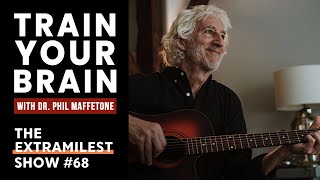
Dr. Phil Maffetone explains how the brain controls athletic performance and introduces the 5-minute power break: lie down, close your eyes, breathe deeply, and listen to music to trigger alpha brainwaves that improve cardiovascular function and recovery. He warns against junk music and digital overload, which he compares to unhealthy dietary fats that impair brain function.
Chapters
The brain is the most important part of the athlete's body. It runs the show. It keeps everything intact. It, it causes the body to adapt when we're tired, you know, in a competition when the effort level really gets high, the brain adapts. We want to let it happen. We want to build the brain as best we can to improve our overall performance. The 5-minute power break is a routine that you could use to get there. And all you're doing is you're, you're lying down, which starts to get you into alpha. You're closing your eyes, which starts getting you into alpha. You're listening to music, which drives you into alpha. And you're deep breathing, which gets you into alpha. And all of these things by themselves, and when you put them together, they improve body function in amazing, amazing ways, even in 5 minutes.
Hi there, my name is Floris Geerman. Welcome to another episode of The Extra Mileage Show. And today we have another conversation with Dr. Phil Maffetone. I've learned so much from him over the years about low heart rate training and about ways to optimize our health and fitness in a holistic way. Dr. Maffetone has been talking about the benefits of MEF low heart rate training for decades, and this was well before all of the mainstream awareness that's out there right now about zone 2 training. And yeah, it's really awesome to actually see how early he was with that, and I'm glad that I discovered him quite early in my athletic and health journey too. Dr. Maffetone is a physician, an athletic coach, and a best-selling health and fitness author. Here's a great quote famous music producer Rick Rubin. Phil is usually 30 years ahead of the curve. If he is singing the praises of the healing power of music today, I imagine in 2053 it will be accepted mainstream care. And I thought that that was so spot on. We'll talk more about Rick Rubin and how him and Dr. Phil Mephedone worked together and helped each other further on in this conversation. This episode was brought to you by PATH Project's running apparel, and this is the only apparel that I use every day for training, racing, and daily life. Some of my favorite items here for the hot weather months: I love running in the Air Dot t-shirt or the tank. Recently we collaborated with Believe in the Run on a limited PATH Project Believe in the Run collab shirt as well, and we're really excited to see how that turned out. My favorite running short is the Graves PX Short in 7-inch, and this has 4 pockets to carry my phone, my gels, my keys, and even things like my GoPro without things bouncing around. And below these shorts, I wear a separate baseliner, the Lynx 5-inch baseliner. And this separate short from baseliner, it really eliminates all chafing, and it is truly a game changer for long-distance running too. For a limited time only, you can get 10% off your order of Path Projects gear at pathprojects.com/flow. That is p-a-t-h-projects.com/flow, and I'll make sure to link in the description as well. This episode is also brought to you by LMNT, which is a delicious electrolyte drink that has everything you need and nothing that you don't. That means plenty of salt, potassium, and magnesium, and no sugar. Increasing my electrolyte intake has made a significant difference in my energy levels, in my quality of sleep, and no more brain fog or headaches. It really can make that much of a difference. I typically start my day with drinking a large glass of water of about 500 milliliters—
that's half a liter—
and I mix in one package of LMNT. It helps rehydrate and allows me to maintain my focus and physical performance. And I actually really like their packaging. You can decide how much water you want to put in, and that's salty it actually becomes.
And you will notice you can make it quite salty or you can dilute it, but it tastes delicious.
Go to drinkelementi.com/flow to get a free sample pack of 8 flavors with your first box. That is drinkelementi.com/flow.
F-L-O.
See also the link in the description. Hope you enjoyed this conversation with Dr. Phil Maffetone.
Welcome to the Extra Mileage Show. Very happy to have you back over here.
Thanks, Floris. It's really great to be here again.
Yes, definitely. And I see several guitars set up in the background over there. Are you in your studio at this point? Where are you at?
No, my studio is wherever I am. And I'm in a temporary location, yet another one with this housing crisis that we have. And these are my three everyday guitars that are always within reach.
There you go.
You and I have spoken several times already. This is our 4th recording of the Extra Mileage Show.
So I'm honored.
Absolutely. Same here. I'm honored that you wanted to have another conversation. You recently came out with a book that fascinated me, and this was around the topic of music, and the book title is called B Sharp. And so the angle that I want to take with this conversation is more of an overall health health approach because we very often as athletes look at what can we do in our training to improve. Like, yes, we can train more, but there's a lot of other elements that come into play over here, from the right nutrition that you often talk about, sleep, recovery, stress management. And music actually plays a very important role in a direct and indirect way. And so maybe we can start over there. What made you decide to want to write this book, and how did this, how did this come about?
Well, the holistic concept, that idea of many things participating in our world of exercise and sports and competition is one I've always had. It's always been a very important approach for me and a very important thing to Sometimes you have to convince athletes that there's more to training than training. There's more to racing than training and racing. And many other aspects of our life, of our universe, play a significant role in helping us get more out of training, more out of competition, more fun. And of course, ultimately, the goal is improving human performance. And that's the easy part when you first take a look at things holistically, because we're not just made for one thing. Our world is big, and the more we incorporate into our life, the better our life will be. And music is a good example. And it's not that I Yeah, I woke up one day as a songwriter, but I had music from early in life. And I think going back to my mid-teens, music was an integral part of me, of my being, of this holistic aspect that I embraced early on, even in high school. And so music was a valuable part. And then when I started studying things like Chinese medicine, music was a big part of that as well. They implemented perhaps one of the first written histories of music therapy. The Chinese did that thousands of years ago. So it's nothing new. The writing of it was new for me. But when we look at sports, when we look at human performance, there's not many things that humans had from the beginning, no matter when you think the beginning was. For me, I think, you know, humans have been around for a couple of million years. And if you think it's more than that or less than that, fine. But the bottom line is that we've always had two very important things that really are one, and that's music and movement. And music makes us move, and movement, you know, instills music in our brain, literally. And so if you want to perform better, you want to move better. And if you want to move better, you're going to rely on the music in your head, even in people who don't realize that even lying down, resting, and trying to be quiet, we've got music in our head. It may only be in our subconscious, but it most likely is in our conscious mind. And of course, even when we're sleeping, we're dreaming quite often in musical ways. So music is here and part of us, and the more we embrace it, the more we use it to our benefit, the more we can improve our human performance.
So for any athlete listening here, in what sort of way can they integrate music to improve their overall health, to potentially improve their athletic performance? Tell me a little bit more about that.
Well, there's many answers to that. One of them, the most obvious and the simplest, is to just listen. Listen to music. And that means avoiding the junk music, which is everywhere. It's in the malls, it's in the elevators on the hold button. But we hear it in commercials, we hear it in marketing, and we even hear it from the music industry, which writes songs by committee and writes songs using artificial intelligence, and this is junk music. So listening to music, we all have favorites. We all have oldies that bring us back to a time when we were younger and more vibrant than we are now. And these are wonderful things to listen to because it really— we can measure the changes in our brainwaves and even in our body that we get by listening to oldies. And another thing that's important is to listen to newbies. Listen, you know, give the brain some surprises because for the brain, a surprise stimulates, it lights up the brain. And we can get a surprise quite easily by listening to songs we've never heard before. You know, if you never heard, you know, a favorite band's last album, this is the time to have a listen. And so those are really simple things. Of course, playing music is important, but there's— in the book, I talk about a number of things associated with poor brain function, which I just, as a broad spectrum condition, I refer to it as a brain injury. We all have brain injuries. We've all fallen. We've all had too much alcohol to drink. We've all encountered pollution, air pollution and, you know, water and food pollution that impairs the brain. One of the things to do is to pick out these, these injuries and fix them because many of them can be fixed. And an example of one is the ability to keep a good beat, you know, rhythm. Do we have rhythm? Of course, running, swimming, biking. I mean, it doesn't get more obvious. Rhythm is such an important part of that. And if we're rhythmically really functional, our running gait will be better, our swim will be better, our bike will be better. Because we're instilling rhythm in the brain, especially the back of the cerebellum, which communicates to the motor cortex, and it sends messages to the muscle fibers telling them when to contract. And if we contract right on the beat, we function better. And so I have something, a therapy called marching, where you just get a metronome. We can get one now on our phone for free. And turn it on, maybe turn it on 80 beats a minute and just march along in place with the rhythm. And if that's easy, start walking and see if you can hit the ground with each foot right on the beat. It's amazing how many people are unable to do that. How many athletes are unable to do that? And if you can't do that, and I'd say it could be 30 to 40%, that's a lot, could be more. But if you cannot do that and maintain that beat, then try it with running. If you can't do it running, that's, that's a problem too. The simple remedy is to retrain your brain with the metronome by starting with a slower beat and walking in place and then walking forward, and then jogging slow. And then over the days, just experiment. See, see if you can have, you know, a really good cadence, a really good movement right on the beat, especially on different terrains. It could take a few days. It could take a few weeks in the difficult cases. But boy, this is one thing that will help your training. It'll help your racing. But it'll help your brain because those areas of that rhythmicity will not only be helped, but so will a lot of the surrounding areas. Because whenever we help one part of the brain, other areas jump on board and improve as well.
That is so interesting to hear because it almost reminds me of Danny Dreher's chi walking and chi running. And yes, at the beginning you might use a metronome as a tool. Yet after a while, it starts becoming very natural after this, like we have done it more and more and we just improve a certain skill there.
Yeah, and you're right, it is a natural thing. And again, we humans have done this from the beginning. And then somewhere along the way, a lot of brains became less musical, especially in the last 500 years. But in the last 50 years, There's been an explosion of brain injuries from various reasons. For one, we're in such a crazy society. You know, we're rushing. I mean, the stress that's out there is really hard on the brain. And when we disturb the brain, when we stress the brain physically, biochemically, mental, emotionally, we could get injured and it could affect different parts of the brain. And if it affects our rhythm, it affects our gait, it affects our body movement.
When you talked earlier about listening to music, were you talking about listening in your everyday as you are doing, like, you're going about your day, or were you specifically talking about listening while exercising? Because obviously there's a difference there as well.
There's a big difference, and that's a good question. If you have a favorite oldie, If you have a song that maybe you haven't even heard for a while, but it's a song that brings you back to when you first fell in love or when you first ran track in high school or whenever, and everybody has those. We want to listen to those songs front and center. It's like going to a movie theater. We want to go in with the intention of watching a movie. We want to sit down or lie down and close our eyes and listen to this song that we love. And if you don't have 5 minutes to do that, there's some bigger problems there. So I'm not talking about songs in the background. Songs in the background are okay. Certain people don't do that. I don't do that. Certain personalities do that. But they don't have the same effect as when we focus on a song and we allow our brain to wander off and get huge benefits. And in terms of the other part of your question, even more important is when should athletes listen to music? Well, anytime. In the middle of a day when it's stressful, if you can take 5 minutes and just de-stress with a song, and it only takes 5 minutes or less to do that, that's a wonderful thing to do. But if you're training and you want to prepare for your training, of course you warm up first. But even before the warm-up, a good thing to do is to sit and listen to that favorite song. 5 minutes is really all you need. And the physiological effects, the brain effects on, on that listening, that pre-warmup, if you want to call it that, is really wonderful. And then when you're done your workout, one of the things that's of course more important than the workout itself is the recovery. And people have heard me talk about how important recovery is and how many people don't get enough recovery. You know, it's where we build endurance. It's where we get strong. It's where it all happens. The training sets us up for that. But if we don't recover, we have a problem. So part of recovery is balancing the autonomic nervous system. So we've been out on the trail, we've been on our bike, we're doing this stuff, we've got a lot of sympathetic activity to get us going and get us through this workout. And now we want to relax. We want to rest. And another song at that point is a wonderful kickoff to recovery. And here comes the big answer to your question. When do we not listen to music as an athlete? We don't listen to music while we're working out. Why is it so popular? In part, it's the marketing of music by the big brother, by the industry. You know, and there's music everywhere. You go into a gym, it's blaring and blasting, and it's actually impairing us because typically the music is often too loud. But I've always said, maybe I've said it on one of our podcasts, that I'd prefer people listen to their body during training rather than listen to music. And a lot of people would say, well, isn't there good research that shows music helps us perform better? Well, there is. And what they show is that music can serve as a legal doping, in a sense. And the studies show that music revs us up. It gets us going. It helps us overcome the pain of working out. It helps us work out faster. That doesn't sound like me. That doesn't sound like something I'd recommend. I don't want somebody working out faster for the sake of working out faster. Or pushing through the pain. I mean, pain means you're doing something wrong. So all those studies, while good studies, and they do show that, yes, working out in a gym with all this loud music has certain benefits because you're going to push through things. Those are not healthy things. That's a no pain, no gain thing. So I'd like people to listen to their body. Because the brain is always trying to evaluate the body and adjust every moment along the way during your workout.
So many of the things that you talk about and the reasoning behind it, it is fascinating to me because I have noticed in my unconscious I've been doing some of these things and you're just explaining some of the reasoning behind it. For example, when I drive to the local mountains sometimes. You talked about listening to some music before you start your exercise, before you even do your warm-up. Sometimes I drive to the location where I want to go and I listen to some nice music and I get so excited to run. And I think that excitement of going out for a workout, that, that, that plays a big role in all of this as well. You just feel happy. You feel like you're going to do something fun and challenging and exciting. And music can play a role into that. And then while exercising, I don't listen to music. Like, I often listen to my own breathing and my own cadence, and I try to find a pattern in that. And like, recently I uploaded a video where I think the breathing, you can really put a lot of emphasis on that sometimes when I do a double breathe in and one hard breath out, like at the end of a race or the end of a long run, like double breath in And it just— you end up making your own rhythms and you start finding this pattern and it just calms you down. I literally notice my heart rate dropping when I find a pattern and you get into a certain alpha brainwave over there.
Yeah, those alpha waves are really— they're wonderful. And what you mentioned about the breathing pattern is very important too. And I've talked about this forever. This keeps things balanced in the big scheme of things. And that's especially important in a race when you're coming around to the final finish distances. You know, you want everything you can get. But those are the things we learn in training, and those are the things we learn by thinking and letting our brain do the workout. You know, it's— people have a hard time when I say the brain is the most important part of the athlete's body. It runs the show. It keeps everything intact. It causes the body to adapt when we're tired, when we, you know, in a competition, when the effort level really gets high. The brain adapts. So we want to let it, we want to let it happen. We want to build the brain as best we can to improve our overall performance.
Yes, this is, this is an exciting topic to talk about because there's so much to unpack here. I feel a lot of people when starting out with low heart rate training, they start to get a new sense of listening to their body. They have often done certain things and not realizing how it impacts their body and their brain. And all of a sudden, we start to get a better listening to our internal, like a voice in our head, our biofeedback. And this almost extends to to like listening to music, making music, but being able to truly listen, that is a skill that takes time to develop as well. And not many people, or what seems like a lot of people, have forgotten about that almost.
Well, that's the word, forget. We naturally do that from birth. We're letting our brain control the body and we're letting our body send messages to the brain saying, hey, this is what's happening here and this is what's happening there. Can you make it more efficient? The brain is always trying to make us more efficient. And if we don't listen, if we don't use our brain in a natural way to listen to the body, such as by listening to music or just talking a lot during a workout, Um, uh, you know, we're missing a great opportunity.
Yes, yes, yes. You have worked closely with Rick Rubin, and I'm a huge Rick Rubin fan. I love his new book, The Creative Act. I've read it multiple times. And can you tell me a little bit more, what were some of the things that you have learned from working with Rick Rubin? Because you helped him on his health journey, and he you on the music journey. So tell me a little bit more what you guys learned from each other.
Yeah, and, and I, I knew, I knew who Rick was, um, but with my listening world, my, my music listening world, uh, from an early age, um, I didn't, I didn't pay attention to, um producers or record companies or this or that. I knew who George Martin was because he was sort of the fifth Beatle, you know. He was the guy that, that took these kids and, uh, you know, shaped them into what, what they became. And, um, but when I became a songwriter one day about 20 years ago, um,. And I knew I had to, it was such an intense passion that I, I knew I couldn't follow that passion while still at this peak of my career in health and fitness. And so I, I decided I had to, I had to change. I didn't want to call it retiring. I didn't know what to call it. Just that I was leaving that part of what I was doing and I was going that way. And I didn't know how to do that. And I paced for a few days and then I get a call from Rick Rubin.
Who— what are the chances of that, by the way? This was 4 days after you had that moment of—
Yeah, I mean, we could talk about the statistics of that and how likely it is.
But then again, the universe has plans and it all connects.
The subconscious, you know, Carl Jung talked about the collective subconscious that we all have. And, you know, all this— anyway, Rick said he had read one of my books and he wanted to consult with me. And I said, I just became a songwriter and I don't do that anymore. And so, you know, we talked a bit and agreed that he would help me and I would help him. And we're still, we're still at it today. And so, um, Rick is, you know, when I, when I had this idea that I was gonna go to LA and learn to be a songwriter learn to play, learn to record. Eventually I would realize I had to do those things as well. Um, Rick was there and I thought, I thought, okay, somebody's going to show me how to write music. Somebody's going to show me how to write a chorus or write an introduction or an ending to a song, what keys are, you know, and I didn't know about any of that stuff, but Um, Rick didn't do any of that. He, he did something that was even more important, which was he let me figure it out. He let me, uh, use my brain and figure out what songwriting was for me. We're all, we're all different, we're all unique, and we all have, you know, different running patterns and, and cycling patterns. And, you know, you could— you can tell who that person is way far away just by looking at them because you can, you can see their gait and, you know, their gait, you know, that individuality was a very important thing and is a very important thing in, in, in songwriting. It's an expression of, of our creativity. And it's all— everybody has a unique version of that. And Rick allowed that to happen in me. And when I started meeting other people in the music world, I thought, oh, you know, this person is going to really be able to help me with my songwriting. But it was the same thing. It was— it was— we never talked about that. We just— we just talked, you know, a lot of it was music philosophy, you know, how does music make you feel? You know, all kinds of things like that. So, you know, I followed Rick around for a few years in his producing, and I became a pretty good producer as a result. I watched how he interacted with songwriters, and that was helpful. But again, his reaction, his interaction with songwriters was the same. I You know, I, I, I had played a new song for him one day, and, and I said, what do you think? And he said, well, the, the transition from the, the verse to the chorus is not, not quite right. And I said, what do you mean? He said, I don't know, but go figure it out and, you know, come back and play it when when you have it. And I thought, well, he, you know, he's, he's doing that for me because I guess he's not taking me serious, blah, blah, blah. And then I started seeing him do that with other, you know, famous musicians, and it often would stun them initially before they got to know what his style was. And his style was very hands-off. It's sort of the same style I have in sports. I don't give people training programs. I don't give them workouts, you know, do this, do that. I don't give people diets. You have to work it out. You have to let your brain figure out how to get from this point to that point. That's the finish line. Here's where you are now. Your brain knows how to do that. Let it happen. And that's what Rick did. He, he let it happen.
He really has this ability to get the most out of people by truly encouraging them to be their true self. And that's what I find fascinating there. And yeah, it really seems that initially sometimes people have this self-doubt or this ego, or yesterday I recorded a podcast conversation with a back-of-the-pack marathon runner. Who was never a marathoner and then like ended up being so embarrassed to start running that for the first, for the first while she only ran in her basement on a treadmill because she felt embarrassed to go outside and run. And eventually she started improving a little bit, feeling a bit more comfortable going outside and realizing that all the judgment of what other people would think about her They were all false. And she actually started getting encouraged by other people to do her thing. So sometimes it's that internal doubt that we have with ourselves that is our biggest point that is holding our back for people to live their true self.
Yeah, very much. That's a good story.
So yeah, you often talk about ways to get to a relaxed state, to get to dream, like daydreaming, the importance of that. Can you tell us a little bit more about the 5-minute power break, about ways to integrate music in that? Because I have a few examples from my own world, but I'm very curious to hear how you go about that.
Yeah, I talked earlier about sitting down and listening to a song, just one song, a few minutes, and how powerful that is for the brain and the brain's ability to control the body. Well, I developed many years ago something called the 5-minute power break. And in biofeedback, when I teach that to professionals, I call it respiratory biofeedback because it involves deep breathing, listening to music, relaxing. And the goal is to increase alpha waves in the brain. Alpha waves in the brain are the waves—
alpha waves.
Alpha is a specific state of consciousness. That we click into in the course of a day. Many people do without realizing it. We know we're in alpha during meditation, for example, although some people have a hard time getting there. But meditation is, you know, is something that people have been attracted to for thousands of years to get into that alpha state and the theta state, which is a deeper state. That children are in, but adults can get there. And that's a wonderful state to be in. And that state you can get into very quickly. And the 5-minute power break is a routine that you could use to get there. And all you're doing is you're lying down, which starts to get you into alpha. You're closing your eyes, which starts getting you into alpha. You're listening to music, which drives you into alpha. And you're deep breathing, which gets you into alpha. And all of these things by themselves, and when you put them together, they improve body function in amazing, amazing ways, even in 5 minutes. And people have a hard time understanding how could that work? How can we improve the cardiovascular system in 5 minutes? Well, there's been research, published research on that. How can we get into alpha so quickly? That's an easy one. There's been research on that as well. How can we improve muscle function? How can we improve our gait once we get up and start moving around again? How do all these wonderful things happen to our body, to the nervous system? How do we balance the autonomic system and reduce stress hormones in 5 minutes? You can look at the references. I have hundreds of them on my website. But that research has been done and I've been clinically doing it for decades. So Again, if you don't have 5 minutes, you're in trouble. And I know people who use the 5-minute power break sometimes several times a day because they feel they need it. You know, we accumulate stress from the beginning of the day, from sometimes during the night. We need to adapt and reduce that stress along the way. Otherwise, it just keeps building up, has an adverse effect on our brain. And human performance is significantly impaired as a result.
So two ways that I integrate that myself based on what you have just said here. One is typically every— like, I wake up pretty early, I go to bed early and I wake up pretty early and get a block of work done. And then typically around 11:00, 11:30, sometimes 12 o'clock, I would lay down on my bed purely for about 15 minutes and I listen to music on a good set of earphones, like with sound blocking, like, and I listen to Ludovico Einaudi, like an Italian pianist, like a composer. He's my favorite, one of my favorite musicians. And all I do there is I call it meta thinking sometimes because the brain goes all sorts of ways. It sometimes digests my thoughts from the morning. But sometimes it just starts wandering off. And I do set an alarm typically after 15 or 20 minutes just in case I fall asleep, which barely ever happens, but just in case. And I feel like when I wake up or no, not when I wake up, when I'm done with that, it almost feels like I'm a new human again and it feels like a 2.0 version as if it's like a second morning routine all over. And it's fascinating how that short 15 minutes can make such a difference.
Yeah, it is fascinating. You've expanded your mind and you are a new human, literally, with those physiological changes in the brain where we could make connections we've never made before, especially if you have a surprise, or especially if you're listening to this piano piece you've heard many times and suddenly there's a note or a chord that you said, "Oh, I haven't heard that before." And it's the brain improving its listening ability. Sometimes we don't realize that there's something in a recording until after. I remember listening years ago, this was, I was listening to Maxwell's Silver Hammer by the Beatles, and I'm thinking, oh, there's an organ, there's a little organ there. I never heard that before. This must be a different recording. And I got up and looked and I thought, "No, that's the recording I've been using all these years." And I realized that it was— my brain had made connections it had never made, and now it was capable of hearing things it never heard before. And so that's an example of expanding our mind when we talk about mind expansion and how that affects the brain and how that in turn affects the body, but you are a different person. And that's a good— it's a good way to put it. And 15 minutes certainly works. 5 minutes works. I often midday, I do the same thing sort of midday on most days, and I'll listen quite often to a whole album. So I, you know, I take 35 to 55 minutes, 60, 75 minutes, um, depending. And I, I listen to singer-songwriter albums typically because they are the expressions of the singer-songwriter in this period of their life. It's like going to a movie and, and, you know, seeing a movie about someone's life, part of their life. All these, all these songs on this album are different chapters in a book. Book, and they're all tied together even though the songs are different. But there's a lot of ways of doing it, and, and people can figure out that what, what's best for them.
I love that part that sometimes you indeed listen to the same song and you keep hearing different parts of it. And one song that comes to mind for me is Pink Floyd, Comfortably Numb. And I listen to that sometimes when I'm doing some breathwork, and even there, it's like, yeah, you hear it again and again and different parts that stand out to you. So how does different music impact the body differently? Because you were talking earlier about junk music and you were talking about music that can also help get you in a more calm state. Like, talk about that difference a little bit.
Yeah. I call it real music, the music written by a singer-songwriter versus a, you know, a music company has a bunch of songwriters that get together to write a song for one of the, one of the company's musicians, and they'll go into a conference room and spend a day given instructions, use these words, don't use those words, here's the range of the melody, and you have to get to the chorus in a minute and 36 seconds. Those are formulaic songs. Some of them are okay, but they're not real creative expressions. Carl Jung said, These artistic expressions we all have are expressions of our multiple personalities. And I'm interested in what other singer-songwriters have as a personality, especially an album in this period of their life. The junk music is a problem because it gets into our brain. And we know that because we all have these these memories of these earworms, they're called, with all these memories of jingles that we just hate, but we can't get rid of them. That's, you know, that's like eating bad fat and have it getting absorbed, getting into your brain. And now that fat is part of your brain. That bad fat is part of your brain and it affects your performance. It affects brain function. And, you know, until we avoid the junk and take in the healthy stuff, we eventually kick that out. But some of these earworms stay with us for years, literally. So we want to make a point of avoiding that. And it may mean that if we have to go to a mall to shop— how terrible that is— we could wear earbuds and listen to some of the music we choose. That's the key is is if we choose the music, we benefit more from it. If someone else chooses the music for us, we don't benefit quite as much. So we want to always be choosing. We can get recommendations and we may uncover some new songs that become oldies for us because we love them so much. But avoiding the junk, just like with food, and training, avoid the junk miles. That's such a bizarre concept. I still have a hard time with it. And, you know, choose the healthier songs. And the healthier songs are the ones you like or the ones you think you might like. So if you're a classical piano player and all you listen to is classical piano music, in the book, you'll see that I recommend in a way that expands your mind, reach out and start listening to other music you've never heard before. So that piano player could listen to Metallica, even one song. Talk about a surprise for a piano player. That would surprise, that would shock the piano player. But in doing so, you make these connections in the brain. These neurons connect with each other that have never been made before. That's an amazing thing.
Yeah, expanding our mind and being open to that, it's a big one for sure. One thing I noticed in the early stages of my low heart rate training journey, this was 2013 when I had first read your big yellow book of endurance training and racing. I started just experimenting. 180 minus my age at the time, 30, was 150. And I went to a track and I started running. And at the beginning, that was whatever, 8 30-minute miles. In one of those early sessions on the track, I also was running with music for a little bit. I didn't know a lot of these other things. And at one point, my music died. And my heart rate dropped by 5 beats at the same pace. And that was one of the most eye-opening, direct— like, I didn't plan it. It was just, I think my phone was empty or my headphones just died. And right away, 5 beats lower, like the heart rate at the same pace. And that was so fascinating. So this was one of the other examples. Then I've also noticed the state that you and I have previously talked about, that sometimes you're running or you used to ride your bike and you would get lost because you simply forget about a certain— like you run somewhat on autopilot, I would say, but you run so comfortable, so controlled that you completely forget about it. So all of these things, it ties back to the brainwaves and the state that we're in again. But music plays such a big role in that.
Yes, we can get into that alpha state very quickly and anytime we want. And we don't even have to want. We just often go there because that's what the brain wants to do. You're right, we go into what's called an autopilot, which is a network of brain areas that comes together to multitask. When we run, we don't have to think about, you know, flexing our hip to bring our leg forward and then hit the ground with our foot and then extend the other leg and move the, you know, the upper body. We've already done that when we were, you know, 1-year-olds or 2-year-olds, when we were coordinating all of that effort. And we do it when we drive a car. Most people, unfortunately, not everyone does, but we multitask because we've already learned about the gas pedal and the brake and the signals and the where the mirrors are and to look at the gas gauge and to look, you know, to see who's behind us and to look, you know, we don't have to think of each one of those separately. That's intentional focus. And intentional focus is something we do early on when we're learning, when we're learning to play the guitar or the piano, when we're learning how to swim or ride a bike, when we're learning how to drive a car. And at some point, the brain says, "Okay, I got it." And then it shifts from that intentional focus to autopilot. And that's why drivers many times who text put themselves in danger because now they come out of autopilot, they go into intentional focus, and now they don't coordinate properly. They have a hard time driving safely, essentially. So our brain is meant to multitask. We're doing it all the time, whether it's conscious or subconscious. We're doing it all the time when we're sleeping. And when we go into alpha, it works better because alpha, you know, it's sort of a relaxed awareness, that state of alpha. And many people think they just don't have time to go into alpha. Well, maybe you don't have time to take an hour-long meditation class. Maybe you don't have time after a long day of work to come home and get into a lotus position and meditate. But you have 5 minutes to do it and go into alpha. And the more you do that, The more your brain has that alpha state as a tool that it can get into any time, you know, rather than being online and being annoyed that the cashier is so inept or that the customer who's trying to check out is too dysfunctional and why are we waiting on this line so long, we can go into alpha. You know, and we don't come out of it until we hear, "Next, next." You know, and it's a wonderful state to be in because that 1-minute, 2-minute, 5-minute, that short 5-minute period is like a huge therapy. It does so many therapeutic things physically, and it helps the brain in so many ways.
And it does seem with today's entire mindset of always on, everyone gets a million messages, emails, people are switching between social media apps and whatnot, that less and less people seem to be getting to that daydreaming stage. And not just adults, but even kids. That kids are, oh, I'm bored. It's like, good, good that you're bored. You should be bored. That's where the magic happens.
Yeah, it's sad. Sometimes education instills some of those bad things. Adults daydream 50% of their waking hour. And if you say that to the average person, they say, "Well, I never daydream. I'm always doing something." And what that means is that when they've stopped doing one thing, instead of going into an alpha state and daydreaming, They go out of their way to find something to do. And often, if there's somebody else around, they'll start talking. And that's— talking is a beta state of consciousness. And that keeps you from getting into alpha, just like when you're meditating. If you're sitting there trying to meditate, you know, you start thinking of your shopping list or your You know, what are you going to do this evening? And you just can't not think about, you know, it's a difficulty for many people. And some people physically can't get into alpha because their stress hormones are too high, their blood sugar is too low, or they have some physical problems in the neck muscles and the jaw muscles in particular that are hardwired to the brain for some interesting reason. That prevents people from going into alpha.
In our running coaching program, we often actually talk about if you want to improve your overall running and you want to improve your health, then looking at your digital behavior plays a big role into that as well. And initially, sometimes responses come back of like, ah, this is hallelujah and all of that. But realistically, so many people are completely addicted to their phone without realizing it. And that makes it different.
Digital world. Yeah. You know, the digital revolution back, you know, which began, you know, a few decades ago, changed our world. It changed music. We went from analog to digital. And many say that was a problem. I don't like listening to digital recordings. It changed You know, socially it changed our world. And then social media, which was the real devil, really took over people's minds. I mean, talk about mind control. I, you know, I was, I was initially upset that Facebook took down my 3 pages I had because I was posting my research. And when I posted my research at a time when they were censoring information— this is with COVID— they were just tearing people apart, anybody who they, you know, I don't know. I don't know what exactly what happened, but it was like if you're not a government person, you know, making official statements, you must be spreading misinformation. So we're going to trash you. So it was really annoying. And then I realized, wow, this is, this is wonderful. I've come back to Facebook, but I, I, I don't use it. I don't have any friends except for you.
I know we became friends recently on Facebook.
That's right. Yeah. The same with Twitter. They didn't take my page down, but they censored me. And I, you know, I have a much bigger presence on Twitter than I did on Facebook. And their style of censoring was that, you know, if I wrote something or published something, most people on my list wouldn't see it. And so it's not just the The badness of social media for the obvious reasons is it's the Big Brother component. That's another reason to avoid it and spend time doing the 5-minute power break, spend time talking to your kids.
Yeah, one big takeaway for me was Digital Minimalism by Cal Newport. And he talked about setting intentions that if you do social media or your digital approach, just set intention. So if you want to go in there instead of mindlessly browsing every time you walk to the toilet, it's like, actually, all right, from this time to this time, I'm going to go in there and this is my reason of being there. Or, and whether that is to post something or check in on a few friends or whatever that might be, but then also have X amount of time, like getting out of it again. And for me, once I went a step further and I set up a second phone. So one phone, my main phone, doesn't have any social media on it, doesn't have my email on it, can just make phone calls. And then I have one phone that is in a separate room that if I end up going in, so you get much more out of that autopilot and you become more conscious of your behavior once again.
So yeah, very important. I mean, one of the things about the brain, unlike the body, when we're 30 years old, when we're 40 years old, we start feeling that our reaction times are slower. We're not as strong. We're not as flexible. We think we are. We want to be. But the reality is we're not. And then at 50 and 60, it's, you know, and we don't, you know, our body deteriorates over time. Our brain does not. Our brain can fix itself. It can repair itself. We can grow new brain cells. And we can be a new person by expanding our mind, right up until— including having great memory, right up until the day we die, if we choose to do that. And that's one of the reasons I wrote this book, because people have this image of age. Ageism is a really terrible thing. When you tell somebody your age, they have a certain image. You know, if they're not sitting right next to you, you know, someone who's 50, someone who's 60, someone who's 70, 80, 90, you know, we think of these people as being in a wheelchair or walking bent over with a cane. And it's sad. You know, those are the people who don't have a memory. They don't function well. Well, Willie Nelson at age 90 just played 2 Hollywood Bowl shows to celebrate his 90th birthday. Paul McCartney is still going strong. Paul Simon's new album, man, if you want to, if you want to expand your mind, listen to Paul Simon's new album at 81 years of age. He's still putting out breakthrough music. It's just amazing. And so we can use our brain in ways that we're using them better than ever in our life. That's how it's supposed to work with our brain.
As long as we keep stimulating it. And it's also how we look at ourselves, right? If we write ourselves off because, ah, I'm X amount of years old. I shouldn't be, couldn't be doing this anymore versus, oh, let's take a beginner's mind. And even at age 60 or 70, wherever, learning a new skill or picking up some of these new things, just having a new passion.
I mean, when we dream, we recognize our passions much easier. And when we dream, we think, oh, —That's an interesting thought. I wonder where that will go if I follow it. You know, I always wanted to learn Japanese, but I never thought I could learn Japanese. Well, I'm 85, and now I'm going to start studying Japanese. What a wonderful thing to do. You know, we forget about our passions so easily in a hectic world. And education doesn't emphasize passion. It emphasizes, you know, learning these things, rote memory, passing tests, getting a degree. You know, that's pretty worthless if we don't have a fully functional brain and we don't have passions.
Passion and having fun in the process is such an important one. Absolutely. I got a few last questions here. I want to respectful of your time. One is around the point, and probably some of the listeners can relate to this, is when athletes stand on a standing line or at a starting line of a race, there's some race nerves, and all of a sudden that one song starts to play before the race, and you're already nervous, and all of a sudden your heart rate rises like no tomorrow. I've literally looked down at my watch and I've seen a resting heart rate of like 130, 140, purely for being so excited. What are some things that people can do to reduce some of the race day nerves right there in that moment?
Yeah, that's a, that's a good question, important question, because people are using up their glycogen stores at the starting line, which is not a good thing to do, and they're shifting from sugar burning and away from fat burning. And in an endurance race, that's obviously not a good thing to do either. So what you do before you get to the starting line with your lifestyle is really what it's all about. So you want to prepare yourself for the starting line in a sense, just like you've prepared yourself for the race. So you want to eat well, you want to train well, you want to use your brain really well, use music to put it all together. And then when you get to the starting line, you'll be able to go into alpha and you'll sort of not hear the music like most people do at the starting line, which is obnoxious. It's really not meant for the athletes. It's meant for the spectators and the TV or whatever whatever is going on, the advertisers in particular. And I give the example of a baseball player in the book because it's such a good example. Baseball players typically in the locker room when they're preparing for the game, they're sort of focusing on their mind, they're focusing on nothing in particular. They're focusing on everything. They're letting their mind go on autopilot. And as a result, they may be listening to music so that people keep away from them. They don't want to— they want to just kind of be themselves. And then they come out into the dugout, and when they're ready to bat, they get up, Their name is announced over the loudspeaker, and there's always a favorite song they have that starts playing. But as they walk out toward the batter's box, the music stops, and now they go into autopilot. And in going into autopilot, they don't even hear the crowd screaming and yelling, whether they're screaming obscenities at them or cheering for them. They don't hear a word of it. It all stops. And so, you know, preparing yourself for those moments is a very important part in sports.
Absolutely. And even that 5-minute power break, the 5-minute, like, breathing and relaxing at that start line can play a big role into that one as well, to bring it full circle again.
Very much. Yeah. I mean, when you wake up on race morning, your heart rate is already higher. And, and again, if you don't have 5 minutes on race morning, there's some bigger issues at hand. But somewhere along the way, you know, you get up and somewhere you, you do your 5-minute power break. And that just reminds your brain that we're here now. We're, You know, here's the big picture. We know what we're doing. We're not gonna be swayed by all the junk music that's out there and all the babble we hear from other athletes. And, you know, I mean, it's amazing how many athletes, and this is true of professionals as well, how many athletes change what their whole approach to a race on race morning. Oh, I'm— you know, you're hearing somebody talk about this certain thing, you know, as you're walking to the transition area or whatever, and you think, gee, maybe I should do that. Now, you're— this is a performance, just like a music performance. You know, when I go out to perform, just like when I'm recording, which I treat as a performance, I've already done— and I learned this from Rick, who learned it from George Martin— I've already practiced. I already know how I'm going to perform this piece. I'm not going to second-guess myself. I perform it really well, uh, at home. I perform it, uh, the same way, uh, on stage or in the studio, and there's no question. I'm not second-guessing myself. And athletes should do the same thing. I've trained for this. Mentally, I've worked hard. I have the discipline to do this. And part of it is being prepared and getting to that starting line and not second-guessing yourself.
Yeah, indeed. Not trying new things in musical performance there, but not trying new things on race day either. And yeah, then it comes down to executing and making it happen.
Yeah, this, this is across the board in human performance. So if we're a teacher, a lecturer, if we're a writer, if we're parent, if we're a researcher, if we're whoever we are, if we even know who we are, or if we're not sure yet, we're trying to figure it out. That's all human performance. And the more our brain works, the more we expand our mind, we make room for more things in our brain. We have more ability, more capability, and better human performance across the board.
Yet at the later stages of a race, Sometimes when you're in a tough spot and you see a band perform on the sidelines or you hear some, some bongo-like crew standing there with a drum circle, whatever, I found a tremendous amount of energy out of that in certain stages of a race as well. It, it, it really kind of differentiates between situations there too. Yeah.
Sometimes when we're, when we're in a race, you know, high-stress situation where we're performing at our max, or we should be, not max heart rate, but max effort. Maybe things aren't going as well as we hoped, and there's some pain or there's some energy loss. We're not breathing. We don't— we feel like we're not getting enough oxygen. We sometimes look for some help. We sometimes look for a distraction. Even, and some of us can distract ourselves internally quite easily, but sometimes we need help. And so if we see something strange, or if we see anything, we can make something strange of it. Or if we hear something different, you know, quite often we don't hear any of that. We don't hear the crowd noise. We don't, you know, I I think that happened to me. I remember running the New York City Marathon and I was having a really hard time at around 18 miles and I was wondering what I was going to do. And there was this guy, this spectator in the middle of the road, and he was just, he was pretty high. I don't know what he was high on, but he was saying, you know, You're in Harlem, the heart of New York City. And he was dancing, or it was kind of cool, but I can't run into this guy. But it sort of gave me a momentary pause away from this vicious cycle I was stuck in. And it was actually helpful. And I think it was the only thing I remember in that race from when the starting line cannon shook me and everyone else on the bridge to the finale. When you cross the finish line, suddenly everything else comes into view again. So, yeah, you're right, that can sometimes happen. But I would recommend that people learn to do that on their own internally. Go somewhere inside you, in your brain. And the best way to do that is to do it during training.
That's the other main thing because concentration is trainable. And I think if we're always distracted, it's really hard to be focused for a long period of time. Same with meditation. At the beginning, it's quite challenging, yet the more we do it, the more it becomes easier to sit still for 10 minutes or 20 minutes.
Everything, yeah, everything from our brain is trainable. We can train ourselves to be a songwriter. Think of it. Songwriting is free association. And if you've heard that before, it's because it's used all the time in psychology and psychiatry. Sigmund Freud discussed free association a lot. He got it from his peers, so he didn't come up with it. But free association, if you've not seen it or experienced it, it's, you know, tell me what you're thinking now. Don't pre-evaluate, just let it come out. What's on your mind exactly? That's what songwriting is. I've got this song idea. Oh, it's flowing out now. And it's so intense. It's such a majestical moment. It's such an artistic, creative moment that Neil Young said that if we have a song starting to come out, we have to excuse ourselves from our social situation, because if you don't get it out, you lose it. It's like an idea. We have this idea, oh, I have a great idea, maybe I should write it down when I get home. And you get home and now you forgot what it was.
Yeah, the creative process is fascinating that way. One more important question, but before I do, where can people find out more about your book, about your music, about your writing? Tell us about the latest locations for this.
Well, the new book, B Sharp, is being born as we speak, as I've been saying. The ebook and the Kindle are now available. The paper book is gonna be available in the next few days, at least it'll be available for preorder before July 1st. July 1st was the release date, but it's gonna be before that. And if you're a member of my website at maffetone.com, you'll be notified as soon as that paperback book is released. And that's really the only active part of me these days is maffetone.com. When I write articles, I blast them out there., new, new songs, new albums, uh, my musings or whatever. So you can go there and get, get whatever information about me you, you, you want.
Great. And I'll make sure to link to that in the show notes as well. Then in closing, do you have any last thoughts, any advice for athletes looking to improve, and, and maybe some creative ways still to integrate music listening into that.
Just start doing it. Just start listening. Get off the merry-go-round because it's not about training. It's not even about racing. It's about having a high quality of life, having a wonderful brain until the end, as opposed to what we unfortunately see too often. People with cognitive dysfunction, memory loss, Alzheimer's, etc., etc. That's not normal. And that is all preventable. And we can, we can do that with our, with our lifestyle, being holistic in our lifestyle approach. You mentioned something earlier about training, and I didn't want to interrupt you, but, but I, I see this all the time is people want to train And then they want to train more and they think, oh, my competition is training more than I am. I should train more, blah, blah, blah. I have seen the most wonderful things in sports by cutting someone's training in all sports in half. Absolutely. And we don't need as much as we think. We don't need as much as we see others doing it. We don't need as much as the running book or the, you know, magazines, the triathlon magazines, and everybody talks about, we don't need as much training as they say. We can get by with a whole lot less. So that's part of this whole game of balance. We want to balance our life. And music plays a role as much as training, as much as a healthy diet.
We have to be able to adapt, to make the positive adaptations from our training load. And I'm, I'm really glad we had a conversation about different ways to integrate that. Dr. Maffetone, thank you so much. I look forward to listening to upcoming songs and, um, yeah, wishing you all the best over here in the coming years on your music career.
Thanks, Floris.
I appreciate it. Hope you enjoyed this video. I would love to hear from you. What was your favorite takeaway, lesson, or quote from this conversation, please let me know in the comments on YouTube. One thing I will be integrating more frequently throughout my training right now as well, leading up to the Berlin Marathon here, is I will be taking some more frequent shorter 5-minute breaks and truly focusing on the breathing, focusing on creating some more alpha waves to really lower the stress levels. And the interesting part is too, is when you do that throughout the day, it directly impacts your quality of sleep. Like, even when you wake up in the middle of the night, if your stress levels are lower throughout the day, it will be much easier to fall back asleep again as well. So everything is connected over there, and I'm going to be integrating that some more consistent to the shorter ones a bit more frequently over there. If you would like to find out more about my running coaching program, check out pbprogram.com. This is a great community of like-minded athletes. I coach here twice a week on Zoom. We jump on conversation active daily in the Facebook group and the Strava Crew, Strava Club. Um, so yeah, more info can be found at pbprogram.com. And as a last reminder, um, if you would like to get 10% off your order of PATH Projects running apparel, check out pathprojects.com/flow. Um, Berlin Shakeout Run, that's going to be coming up, uh, 2023 Berlin Marathon over here. There's going to be details that will be announced on my Strava, and I'll make sure to link to that actually as well. For any future events, I always announce them on on the Strava group and on the Extra Mile Facebook group as well. Thanks so much for listening. Have fun out there on your runs, and, um, I hope to see you in at the Berlin Marathon or any of these other races out there.
Bye now. We'll travel for love. If you show me the way and we go slow.
More from Floris


Ryan Hall 2.0 on Strength Training For Runners, Lifting Heavy & Trail Running




You’re Doing Zone 2 Wrong (Even If You Think You’re Not) | Scott Johnston Round 2


How to Build an Unstoppable Aerobic Engine (Even If Starting From Zero) | Scott Johnston


Stress Is Killing Your Running (The Relax Fix You’re Missing) with Dr Kasim Al-Mashat

When things get hard, say this, it (works in any race) #jeffpelletier #running #ultrarunning