Dr Phil Maffetone on MAF Training with Low Heart Rate, Low Carb, Intervals, Ketosis, Fasting & more
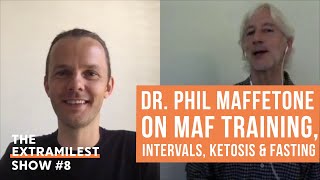
Dr. Phil Maffetone, author of over 20 books on endurance and nutrition, explains MAF training, why low-heart-rate work feels hard, and how refined carbs drive the global over-fat epidemic. He describes his 2-Week Test for eliminating junk food, shares his experience with long-term fasting and ketosis, and argues that well-trained athletes need far fewer carbohydrate gels than most believe.
Chapters
People sometimes say, "Oh, you're the slow training guy." Well, 6 minutes a mile, is that slow? You know, 5:30? I think this issue is connected with the carbohydrate issue. A lot of runners believe that because they run, they burn more calories, and then the diet therefore is not so important. Now, there's fat calories and there's sugar calories, and if you're burning a lot of sugar calories, you're not burning fat calories.
Hello everyone, my name is Floris Gierman. Welcome to another episode of the Extramilest podcast, and today we have a returning guest. His name is Dr. Phil Maffetone. Had him on the show here a few years ago and learned a lot of things across the board. There were several more topics to dive into, so excited to get him back onto the show. This episode is brought to you by Path Projects. It is a running apparel company that makes running shorts, running shirts, baseliners, and headwear. And I first came across this company late last year when they had just launched and I ordered some gear from their website. I absolutely love the high-quality fabrics and the premium designs that they used. This is also the first pair of running shorts that I've come across with enough pockets, so now I can run with my phone, my GoPro, my car keys, my credit card, insurance card, everything in my pockets without it bouncing around. I became friends with the founding team, Scott Bailey and Eric Frey, and recently actually joined the company. So I left the corporate world and I joined this startup, helping out with marketing and with the backend of the website as well. I truly believe in the product and think you will enjoy it as well. The gear is only available on the website pathprojects.com, and we've put together a little promo code FLOW10 for anyone who wants to try it out and get 10% off their first order. I will make sure to put a link link to the website in the show notes as well. Now on to our guest. I think everyone has a few key people that have made a significant difference in their life. For me, one of these key people has been Dr. Phil Maffetone. He has written more than 20 different books on the topics of endurance training, racing, health, and fitness, and I've probably read about half of those books. He clearly writes and talks about how to become a healthy and fit athletes from all different levels, all the way from beginner to advanced. I've previously interviewed him about heart rate training, nutrition, and rest and recovery. In today's episode, we're diving deep into several new topics that we previously didn't cover. Some of the contradictions in nutrition, healthy meats versus unhealthy meats, ketosis and intermittent fasting. We also discussed the importance of experiments with nutrition during your longer training runs. We talk about how to become a faster runner at a low heart rate and why so many athletes struggle with low heart rate training and how to deal with these struggles and how to overcome some of these frustrations. We also discuss the best type of interval training. We're scheduled to talk for 30 to 60 minutes and after 80 minutes I realized that time was definitely flying by. I hope you enjoy my conversation with Dr. Phil Maffetone.
Hey, Art.
Hello, Dr. Maffetone. How are you? How are you?
I'm good. How are you?
I'm doing good. It's been a few years since we spoke last.
Has it been that long? Time flies.
Yeah, it was—
As Einstein would say.
Yeah, right? It was early 2015 when I was looking back at our last conversation.
Oh, wow. That's too long.
Yeah, that definitely has been a while. And in the meantime, you have moved to Florida. Is that correct?
I have, yep. Just moved in this summer and still unpacking.
Nice. Are things coming along?
Things are good, yeah.
Good, good.
What have you been up to? Have you been doing podcasts and things?
Yeah, I've been doing podcasts. Last time we spoke, I had one little one, one daughter, and right now I have another one. So a 5-year-old and a 2-year-old. Thank you. So we've been busy with the family, been doing a lot of things, and she's— we're walking her to kindergarten every morning, and yeah, that's been a lot of fun.
Great.
That's good. And last time we spoke, you had 12 grandchildren, and you were spending quite a bit of time with them as well.
I have 13 now.
Wow, it keeps expanding.
I have to think about it, and sometimes I have to count, but you know, I think that's where I'm at.
Yeah, good, good, good. Yeah, I think it's interesting in the last 3 years years, a lot more has happened in the, in the health and nutritional space. And I think it is so awesome to see how much more awareness is, is coming into like the low heart rate training, the cutting out the, the sugars, the refined carbs. That must be quite exciting for you to follow that as well along.
Well, the carb thing has had a lot of attempted starts over my career. And looking back at some of the books and some of the research, it had a lot of starts that failed well back into the '40s and '50s. So for me to see it hang on like it is, is refreshing. Yeah. Are we recording?
Yeah, yeah, yeah. I'm sorry. From the beginning on, I already recorded it.
Because, you know, I was just reading something about George Martin and the Beatles. And when they decided that they were going to turn the tape on as soon as these guys started showing up in the studio, and some of the things that, you know, they captured are just over the years was just phenomenal. Yes. You know, just—
well, anyway, that's usually where the magic happens anyways, before or after.
Yeah, yeah, yeah. I was going to say two things. One is in relation to the sugar. When I published my paper on the prevalence of overfed adults and children in the US, which I think was the end of last year, when I was going through the review process where you— I don't know if you're familiar with that, but you send your study to the journal and the editors comb through it, and if they think it's okay, then they send it out to reviewers, which are usually kind of academics at, you know, at the university, usually well-known people or people of status. And some of them are— well, I'll say just some of them are good, but sometimes, you know, they really are blunt about things. And I was— in the original article, I was talking about sugar, added sugars, and refined carbohydrates as being a big factor associated with the over fat pandemic, I was referencing a lot of studies about this. One after, you know, you sort of have to convince everybody.
Yeah, that it actually has been going back for a while. Yeah, yeah.
Talking about it. And so I get the review back and this woman, I didn't know she was a woman, but this reviewer from Europe, I think she was in Sweden, she said, why are you talking, why are you referencing all this stuff? Why are you making the argument Everyone knows that sugar is the cause of the overfat pandemic. And I just thought, are we here now?
Well, and that, I think, even in the last 3 years, like, I've followed your work for 6 years now, but I've seen an acceleration of acceptance and more awareness with the general public, with different athletes, even with doctors and with media, that across the board it seems to be more accepted at this point.
So yeah, yeah, I started, I want to say in the '90s, but I was still being beat up in the '90s over this. But in the '90s, you know, especially in the later '90s, there was a little bit of a revolution from a research standpoint in nutrition. I would often say there's a consensus about this issue. There's a consensus that junk food is not healthy for anybody. And I still got people questioning me and I still got comments, negative comments from, from people like, did you ask everybody in the world if junk food was, was a bad, you know, and I think today we could say with confidence that there's a consensus that junk food is bad. There's no scientist except for the ones that work for the junk food companies. There's no scientist that says Yeah, junk food is okay as long as you take your vitamins, you know.
So, so why is it then that, all right, the consensus is there, yet 90% of the population in the US is overweight and a very high percentage international as well? Like, why is it that so many people have unhealthy lifestyle habits and how can some of these people change that? Because obviously there's a big disconnect there.
There's a huge disconnect and The paper I wrote on, on the overfat problem in the US was the most up-to-date published research, which the CDC put out. And those levels had jumped up significantly from the previous data release. I don't remember if it was 5 years earlier, 4 years earlier, maybe. The overfat levels and the obesity levels significantly increased. Children you know, and adults. And so it's, it's still increasing. And I think one of the reasons is that people are addicted to sugar and refined carbohydrates, which is really sugar. When we talk about sugar, we should include refined carbohydrates because as soon as we eat that roll or that cereal, that refined carbohydrate, the food quickly turns to sugar as if we ate sugar. So having a, you know, having a little cup of yogurt that has 6 or 7 or more teaspoons of sugar is basically the same as eating pure sugar.
Yeah. And so let's talk about that for a little bit because I think that addiction part doesn't necessarily get talked about too much. Like a lot of people would want to change, yet it's so easy to just fall back into the habits that, that you just keep eating what you've been eating and This is why I think even going back a few steps of when you go to a grocery store, that's where it all starts, right? If you end up doing the right shopping and you end up buying the right foods, it is virtually impossible to start eating bad if you come home and you don't have it laying around. It's frequently— sometimes it might not even be that you buy the stuff, but maybe your partner or someone else in the household buys it and you end up consuming it. Just because it is around?
Yeah, well, the junk food companies long ago, many years ago, started to do something that was very important for their model to make a lot of money, to sell a lot of junk food. Number one, they, they made junk food accessible. And so it was everywhere. Of course, your restaurants, not just your fast food restaurants, but all the others, even the fancy ones. You know, you sit down at a fancy candlelit dinner table, and there, there they come with these white rolls. So you see that. And then they also made junk food cheap. Yeah. So who, who can't afford it? We could even afford to send it to countries that are starving to death and have for 50 years or longer. And when we look at some of the things like the study we did in India, where we showed that up to 80% of adults in India were overfat. And that was very good research that we had. We had good data. It's astounding. You know, how could that, how could that be? Well, you can't go just back to the last 10, 20 years when all the junk food restaurants went into India. You have to go back to the, to the days when they got aid from, from all over the world. That aid was junk food. Yeah. And that began the process. So, if you're going to help people get off junk food, you've got to resolve the issue of accessibility and cost. You know, I should add that addiction technically may not be the correct word, but I've been through it. You may have been through it. You can't— you can't tell someone who can't stop eating cookies or drinking Coke that they're not addicted. It was very painful. So we can call it technically anything we want, but, but it's really an addiction.
But the good news is, is as soon as you cut it out and it gets out of your gut, which typically is within 24 or 48 hours, I believe, you start to already feel significantly different. And yes, at the beginning, there's sometimes for people who have been eating a lot of sugar Yeah, there might be that groggy feeling or that hungry growling or any of that, but I'm always surprised how quickly you can transition out of that purely by making that switch and making that conscious switch as well. It's just getting over that initial hump, I think.
Yeah, that's the step. When I was early on in practice, when I was trying to help people wean off junk food, the mistake I made was I was trying to help them wean off. Junk food, and that doesn't work. You're either going to do it or you're not. So I developed the 2-Week Test, and the 2-Week Test quickly moves someone from eating junk food to not eating junk food. And they, they usually feel the benefits fairly quick. Not that they don't miss their junk food. It haunts you for a while. And looking back, Of course, I always say that I had my first junk food as soon as I was born because I got sugar water. Yeah, I had a glucose solution. But, you know, I have to say that it probably was 10 to 15 years for me after giving up bad stuff that I was able to go to a banquet or walk down the street in Paris without being drawn by the smells or the sights of what I— of course, in France you've got some of the best stuff, but, you know, that stuff is, is always going to be around, and it's, it's, it's something that you have to deal with.
Yeah. So let's talk— let's switch over for a little bit about the good foods then, because obviously there are a lot of good food options, and you have a lot of different ideas and recipes on your website. Because nutrition really is everything. You are what you eat, and your energy levels are completely impacted by it throughout the day. So one topic I wanted to dive into a little bit more is meat, because there are different thoughts and different approaches on eating meat or vegetarian or vegan. Can you talk a little bit more over there? Because both you and I eat meat, and I'm just curious to hear your thoughts about the need for animal fats and proteins, or if there's alternatives that can replace it.
Well, there is a need, there's a very strong need for nutrition, specific nutrients that come from animals only. This is science. I'm not I'm not saying anything bad about— you know, I was a vegetarian for a while and I know what it was like to have to eat in a way that was healthy without eating animal products. And it was not easy. Certainly not easy. Vitamin A, for example. There's no vitamin A in fruits and vegetables. And that's sort of a freshman nutrition trick question. You know, there's no vitamin A in fruits and vegetables. There's a lot of beta-carotene, and we can convert some of that beta-carotene into vitamin A, but not a whole lot. Vitamin B12, EPA from, from fish, fish oil, EPA. Sure, it's an omega-3 fat. And if we consume flaxseed, we get omega-3 fats. But the conversion of flaxseed to EPA has to happen in order to benefit from that flaxseed. And that doesn't happen very effectively either. So there's, there's a number of nutrients that are very, very important. The bottom line is that if you're eating natural meats, healthy meats, I think that's a very important part of a healthy diet. Yeah. And it isn't just the meats, but it's the eggs, which are such an ideal food. I eat 6 or 7 a day.
That's quite a few. Definitely.
It's quite a few. Well, I begin in the morning with one in my, in my fat-burning coffee recipe, and then I have 4 as part of my breakfast, and then 1 or 2 in a smoothie later on. What really astounds me is that the emotion of red meat as a thing is still so prevalent. Chicken is the worst meat we could eat. Why don't people get upset with chicken? Well, it's because the chicken campaign, maybe in the late '60s or '70s, which was, you know, Chicken has less fat and it's not red meat. Well, geez, must be the best meat. People, it's still the top-selling meat out there, yet it's the worst from a nutrition standpoint. It's the worst meat available. It has the highest amount of arachidonic acid, which is the fatty acid that is essential, but too much of it will convert in the body to inflammatory chemicals so we can promote our inflammatory mechanisms with too much chicken. So, you know, we need to look at, again, like with the world cuisine, we have junk food and healthy food. In the world of meat, we have healthy meat and unhealthy meat. And the healthy meat is the real healthy food. The unhealthy meat, and where meat has gotten its bad name, has been from the junk food meat, cold cuts, you know, for example. Just look at the— first of all, why should a piece of meat have an ingredient list? But look at the ingredient lists on these packages of cold cuts and, you know, you wonder why, gee, why do they put sugar in there? Why are they putting starch? The studies that many people still relate to are old studies that never really were valuable because they incorporated the use of junk food meats, basically. And junk food meats, when you eat a lot of them, you're not going to be healthy.
So those are all the processed meats. And so when you're talking about the good meats, you're talking about the organic, the beef, like the red meats.
Yeah, certified organic is what I go for. The other option I have is to find a local farm who— a place where I can go and visit and literally inspect the place and see how the animals are raised, how they're slaughtered, whether they're certified organic or not. That's more important for me. And those options are available to almost everyone today, especially in the Western world. Go out of your way to buy those kinds of healthy meats, whether it's beef. Beef is particularly good because we can, and you can do this with other meat as well, but beef when it's rare, or medium rare, you're going to have a lot of amino acids like glutamine, and glutamine is a very important nutrient for the gut. You can't get that from vegetables and fruits or other foods. The different meats are perfectly acceptable. Pork and duck is one of my favorites. Whatever you enjoy eating and not be turned off emotionally, but if you're not attracted to beef, but you're attracted to pork, you know, then eat pork. When I became a meat eater after I was a vegetarian, I was craving meat for almost a year. And I, in particular, I was craving duck. And so one day I had some duck and I felt like, well, this is the best thing I've done in a long time. And then I started craving beef, and I ate beef for a while and felt even better. And I gradually branched out. But use your, you know, use the brain, the intuitive components that we're all born with, our instincts. You know, what do we— what does our body need? Don't say you're feeling like you want to eat junk food because that's your reptilian brain that's been that's been beat up by the junk food companies, and you have to get over that.
That's what, that's why the biofeedback of truly like listening to your body, not just during a workout, but even being able to truly feel how your body feels when you wake up in the morning or your energy levels in the afternoon or in whatever way, shape, or form like nutrients impact your body. It's, it's a very important one. And up until probably about 6 years ago, I was just eating a lot of different things and I wouldn't necessarily think about the impact that it would have and how you feel until I started diving into it much more and until I started combining it with heart rate training and other biomechanic measurements, biofeedback of resting heart rates and all sorts of other things. It really opened my eyes that way.
Yeah, yeah. People need to focus on how do I feel after I eat this meal? How do I feel in between meals? If I had breakfast at 7 o'clock, am I going to be able to make it to 12 o'clock lunchtime without being really hungry, craving sweets? And hunger is a good, a very good symptom because we really shouldn't be hungry. We shouldn't. And some people need to eat more frequently to avoid that. But hunger is a You know, if we're genuinely hungry for something, that's one thing. But if 2 hours after we had breakfast or lunch, we're ravenous, then, you know, we used to make fun of going to a Chinese restaurant because you'd be hungry an hour later. Well, gee, there's a lot of sugar and starch and pretty much not much else. And that's the reason. If we're getting that hunger effect an hour or two after our meal or right away, then what we ate is not, is not working for us and we've got to figure out why. Yeah.
So I'm always experimenting with different things to see, to see what works and what doesn't work for me. And I have recently been experimenting for like 15 to 30 days with ketosis to see like if I'm at different levels of ketosis, how that impacts my energy levels. My concentration, my focus. One other thing I've been experimenting with is intermittent fasting and actual fasting. And I, I was just listening to some of your other podcasts, and it sounds like when you went through medical school many, many years ago, you were experimenting with even several days of fasting where you, I believe, only drank water and for the rest didn't eat, just to see how your body impacted. Is that correct?
Yeah, yeah. I didn't go to medical school, but yeah, but it was before I went. I was in undergraduate school. I was, I think it might have been the summer, but I had studied about fasting and I decided to do a fast. I think I intended to do a week or 10 days and ended up doing 2 weeks and just water, true fasting. And it was the first time I experienced ketosis. I didn't know what it was. Yeah, I just thought I was like, man, this is wonderful. I mean, after the first 2 days, things were really good. For 2 days, I felt pretty horrible, and that's what the material that I had read said. I wrote something, an article that's on the website about fasting. Fasting is one of those things that has come and gone since I can remember. And people jump on the bandwagon and then the fad goes away. And I'm seeing the same thing now. And, you know, sometimes it's called something different. Intermittent fasting is, you know, one of the buzzwords. When I first started treating patients in 1977, I would give them dietary recommendations. I would do a diet analysis and a good history, and I'd give them specific recommendations. And one of them was almost always Have dinner relatively early, try not to eat anything after 6 or 7 PM. That means probably that you're gonna be fasting for 12 hours before your breakfast the next morning. That was a fast. And if we wanna call it intermittent fasting, okay, let's call it intermittent fasting, but why? It's fasting, it's natural fasting. And I've talked to people about this and They often say, well, I'm told that, you know, you have to fast for 14 hours, can't be 12, or has to be 16, it can't be 14, or, you know, and I said, well, what happens after 12 hours? Well, I don't feel good. I get shaky. I'm disoriented. I can't work. I have to drink more coffee. And I said, "Wait a minute. Intuition, instincts, what is your body telling you? You know, you shouldn't fast for 16 hours or 14 hours." And when people have stabilized their metabolism by getting rid of junk food, especially sugar, they're able to fast longer than they were before.
Because they don't have the cravings, you don't have the—
Yeah, their blood sugar is not stable and they may have to snack at 8:30 in the evening, and then as soon as they get up at 5:30, they have to go eat something because they're, they're weak and they're, and they're hungry. And it just shouldn't work that way. So I'm all for natural fasting, but let's just call it natural. Otherwise they start writing books and they start selling tapes, and I'm okay with that, but Yeah, personally, when I—
so I've done my last experiment with ketosis was I pretty much cut out all sugar and I even kind of went really minimal on the fruits and I increased my fat significantly to probably 70-75% and I started noticing after probably 3 days I got into a ketogenic state., and I have these strips that I can just pee on them and see what the levels are. And at that point it was from trace into small, and then I started getting into like moderate levels. At the beginning, the energy levels were going all over the place, all over the place. In some moments you have the clarity and the focus, and some other moments I definitely was very tired and could go to bed very early. After about 10 days, like, it started stabilizing a bit more, but that was not right for me when I combined that with my actual training of 30, 40, 50 miles a week. For me personally, it felt better when I started adding some more natural sugars again through fruits or some more carbs, whether that was through beans or through additional nuts or in whatever way, shape, or form. And I think that is where every athlete is different, and a lot of body types are different between people as well. That's why I think the whole experimenting is so important, that what works for one person might not necessarily work for another. And while some of these things like being vegetarian might work really well for some people, for other people it might really not.
Yeah, in my case it worked really well in the beginning, and then after a while it didn't. And, but, you know, so you transitioned into ketosis and it took you a couple of weeks. It could take 3 weeks, it could take 4 weeks, it could take 6 or 8 weeks. It just depends on the person. It depends on how strict you are. I think, you know, very, very individual. And, but clearly, while you're going through that adaptation, period of lowering your carbohydrates, you will not perform as well physically, biochemically, or mental-emotionally. And so people need to understand that. It may not be that noticeable for some people, and in others it could be very noticeable. It's hard to predict I just tell people, don't plan on running any big races or if you're a student, taking final exams when you're going through that period of adaptation because it's not going to be a great thing for you.
Yeah, I personally noticed my resting heart rate was quite a bit higher as well. I believe it was 6 or 8 beats higher. Although I know there's light at the end of the tunnel and you have to go through it, It's not easy and you have to be patient with that part as well.
Yeah, I think in sports research they did these studies, you know, a while back where they just flipped some group of athletes into a low carbohydrate diet and then they compared them with athletes who didn't make changes and they said, well, look, look how bad these athletes perform with a low carbohydrate diet, therefore low carbohydrate diets are bad. And we knew decades ago, I knew when I, when I gave up sugar, that adaptation was a very important thing. And you could see it in patients, you know, you explain the 2-week test, they're eating a diet that's 75% carbohydrate, almost all of it is refined. With a lot of sugar, and now they're going to go home and they're going to start eating different. Of course, they say, well, gee, what do I eat? Lots of, lots of good options, you know. And I used to say, call me if, if you have any trouble, which was always a mistake because they would always call. Sometimes it was a day later. Uh, I had a guy call me from the supermarket, you know. This was before cell phones. He, he had went to the counter and bought and called me, I can't find anything. You know, be aware that the adaptation process is sometimes a significant one.
Yeah, I have seen quite a few people in running and ultra running actually. I think there's two different types. The one person goes on a run, even if they go for an hour, and they take an energy bar and they start right away, like taking it or before they go or during, while others are trying to run and just use that body fat as they go through, through these runs. And obviously there as well, you can train your fat burning ability.
Exactly, that's the key. We have enough— even the leanest of us have enough energy to take us hundreds of miles on a run. And, um, so we, we want to tap into that incredible source of energy. If we drink, you know, if we drink some junk food sports drink before we work out, that's going to turn off or tone down quite a bit the fat-burning mechanism. So now we're going to be dependent on glucose more than fat, and we're going to start tapping into our glycogen stores, which are quite limited, and the result is not going to be a good one. So that fat max component of us, how much fat, what's the most amount of fat we can burn during this run, that's your fat max. And the more you encourage your metabolism to do that, the more you'll be able to tap into that fat storage depot and get more energy, and your fat max will get higher and higher. And that means cutting out the sugar from your regular food and snack. Now, in, in cases of competition, there's nothing wrong with consuming a carbohydrate beverage, for example, to get you energy. We don't make much, if any, insulin when we're competing or in training, so we don't have the same mechanisms going on when we consume a carbohydrate liquid, for example, during a a marathon. And, and so that's separate. That doesn't count as, as part of your carbohydrate intake. But in your meals and snacks, having a, you know, a junk food bar and so-called energy bar which zaps your energy, or a liquid version of that, is just not a sensible thing.
So for athletes out there training for a marathon whether it's just finishing a marathon or whether they have specific goal times like a sub-3-hour marathon or Boston qualifier, what do you think are some good things to take in during the actual race? Would it be the actual drinks from the aid stations or would you say take some gels with you or take some other items with you along for the run?
Well, when you're working with professional athletes, it's easier because they have their own products that will be usually, not always, available at certain aid stations. So we can, we can plan really well and we, and amateurs can do this too. We spend a lot of time experimenting, you know, do I need to consume something an hour into my training or 2 hours into my training? Do I need to consume something an hour into a race, say a marathon. And that's experimentation that you do before your big race. And you'll get to feel— the game is how long can I go and burn my own body fat and feel good? If you start, you know, if you're an hour and a half into your long run and you see your heart rate going up too much, which means you have to slow down more, too much and you're feeling weak or you're not feeling your gait is quite what it used to be, then you know you've gone over the line and you should have had some carbohydrate drink. I don't know when, 15 minutes before then. Yeah. And then, and so next time on your long run, that's what you do. And then you just keep experimenting. And the more you're able to burn fat, the longer you can go. I think with the right strategy, a great runner, for example, somebody seeking to break a 2-hour marathon, is not going to need a sports drink. I don't think he's going to need shoes either, but that's another topic. Because I think when you put something in your gut, even water, I don't think they'll need water either. They're going to dehydrate. They're not going to get so dehydrated that it's going to affect their performance, but they're going to get dehydrated enough to lose some weight, which will actually help their running economy. But, but when you put something in your gut like a sports drink, sure, if you need the glucose, it can help you. But now your gut is going to be a little stressed. The last thing your gut wants when you're in the middle of a marathon is to have food to deal with, you know, liquid or solid. And so it's a give and take. Sure, you're getting the glucose, but what are you doing to your gut, which then affects your muscles and your gait and potentially gives you some indigestion? And that's not going to help your, your race. So it's this game you have to play and it's called experimentation. And I've gone through that process with many athletes and it's, it's not hard to do. You just have to go through it and do, you know, prepare a strategy based on logic, based on instincts, and, uh, taking your time.
For me, that was always at least 3 to 5 long marathon training runs, like usually 20 miles or that's like 2.5 hours or 2 hours 15 minutes, and those were always good training runs purely to pretend it was a marathon. And you go through everything, the same evening routine, what do you eat the night before, what do you drink the night before, and what time do you get up in the morning, and everything kind of basically simulating to the same time in the morning you run and all of these kind of things. And I've had some horrific bonks and I've had some really good experiences that have taught me what works well during the long races.
So yeah, I'm amazed, and I'm amazed especially when I see it in a professional athlete, especially a runner before a big marathon. You know, you don't get to run a lot of marathons in the course of the year, so when it's marathon day, this is a big event. Yeah, I'm amazed at how many people at the last minute, oh, maybe I'll do that, or oh, maybe I'll, maybe I'll have breakfast. I usually don't. Or maybe I'll drink this stuff. I've never drunk it before, but my friend does, and it's supposed to be really, really great. Man, plan, plan your race. Life is too short and you don't want the race to be an unhealthy, bad experience.
And then if you have gone through the motions that many times, it almost becomes race day comes around, it reduces the stress levels because you've gone through it all before. Everything is already pre-planned and it's just execution on race day. And yeah, that definitely brings some calm over there as well.
Yeah, I mean, it's not— it's a brain thing and it's nothing more. It's just like learning a song or learning a piano part or guitar part that is beyond your, your, your level of of difficulty, and now you've got to connect your brain and your fingers. Once you practice it, now you've got it. It's no different in this topic. We need to practice. Vince Lombardi said, "Practice is not perfect. Perfect practice is perfect." And so we should get it down in training, and then when we go to the race, our brain knows what's going on. There's no stress over, uh, what are we going to eat, uh, you know, what are we going to have, um, you know, at mile 10, or maybe I should wait, or maybe I should have it early, you know.
Absolutely. And I think a lot of different people do it. I think the astronauts, for a long period of time before they fly up, they've gone through the routines. I think several successful business people, like, they wear the same outfit every day. They don't have to think about it anymore. So yeah, whatever we can kind of copy from some of these other—
yeah. Yeah. Well, the brain, the brain likes to do that. The brain likes to rehearse and it's a very, it's a very important part of what training is all about.
Yep. Absolutely. Talking about training, I do want to dive into the MAF flow heart rate training approach a little bit further. What I like about it a lot is that it can really work for athletes of all levels. From absolute beginner to like the pro level, like the Mark Allen, Larissa Dennis. So before we dive into this, maybe not all listeners are very familiar, but can you briefly summarize the benefits of low heart rate training?
There are many benefits. One is that it builds the aerobic system. In the '70s, you mentioned the aerobic system to a group of runners. I remember talking to a group of runners in New York City, you know, in the '70s, runners were, you know, give me information, you know, I want information. And the aerobic system was something that was foreign to them, even though Dr. Cooper had coined the word aerobics, wrote a book about it in 1968, and it was a big part of the running boom. It was one of the early running boom explosions that kept the momentum of the running boom, except he wasn't talking about the aerobic system, he was talking about the anaerobic system. So, he had a Cooper test where you run as hard as you can for 12 minutes and let's measure how far you can run. That's just not aerobic function, the aerobic system involves the the slow-twitch muscle fibers, which we're endowed with much more than the fast-twitch anaerobic muscles. The aerobic system is slow-twitch. They're, they're red muscle fibers that are iron-dependent. Good reason to eat meat. They're, they're muscle fibers that are associated with endurance. They not only allow us to run farther, but they allow us to sit at our desk without hurting our back, or they support our joints and other muscles and ligaments and tendons and cartilage and everything else in a way that the anaerobic fast-twitch muscle fibers cannot do. In fact, the aerobic muscle fibers support the anaerobic fibers and they feed the anaerobic fibers because The anaerobic fibers, which are called white, are void of circulation, and they really depend on the aerobic fibers, which are next door, to bring in blood and take away waste products through the lymph system and the vascular system. So that aerobic system is a, is a very important thing. And what I was finding was that people were not developing it Very well.
And so the aerobic system is more the basic foundation fundamental system. When I first came across your work, that was one of the biggest things that I'd noticed is I'd always been training at a heart rate that was much higher than my current fitness level. So I had to slow down significantly. You have the 100-180 formula, you have it on your website, I will link into that. Um, but Eventually, after you slow down your pace significantly, over time your fat burning improves and your aerobic base improves and you become much faster at the same heart rate. And what I've noticed over the last several years, because I've had good experience with it myself, I've talked about it on different podcasts, I've, I've written about it on my website, that a lot of people are experiencing success with it, yet a lot of people are also experiencing significant frustrations with it because it's so hard for them to start at the beginning, or they realize, normally I'm always training at 8 or 9-minute miles and now I have to walk part of the time or almost all of the time. So I want to talk about that a little bit more. I'm sure that you have experienced that as well. How do you— what would you say to someone experiencing that at the beginning and how can they overcome that?
This issue, it's very common. People sometimes say, "Oh, you're the slow training guy." Well, 6 minutes a mile, is that slow? 5:30, 7 minutes a mile? Oh, well, you know. I think this issue is connected with the carbohydrate issue very much, and so a lot of runners believe that because they run, they burn more calories, and then the diet therefore is not so important because they're burning whatever they take in. Well, when that topic comes up, I say calories of what? And then they get confused. Well, calories. Calories. Now, there's fat calories and there's sugar calories. And if you're burning a lot of sugar calories, you're not burning fat calories. And man, go to any marathon today, any 10K, any 5K, and look at how many overfat runners there are. And that, that has gone up, uh, in the last 40 years that I have witnessed. And coincidentally, what has also happened is that runners have gotten slower over that time period, and the population has become overfed. Back to your question, there's a lot of ego in slowing down, and I would try to get into that with an athlete, you know, what do you mean you're running slower and you don't feel good? Are you— is your gait bad? Is your— do your knees hurt? No, no, I just— what they really mean is that people are watching me run slow. And, you know, that's where I came up with the line, run at night. Yeah. When nobody can see you, or wear a ski mask. So, so no, oh, who is that runner that's running so slow? You know, I sit on the couch all day, but I'm looking at them running slow.
It's terrible. I can totally, I can totally relate to the social component there as well though. And I think it, it has accelerated with social media now more and more with everyone posting their runs on Strava or Nike Plus or wherever they post it. Yeah, they used to post certain times and now they're posting 11-minute miles or 13 or 15-minute miles. And it is funny, but through all of this, people are being programmed in a certain way that everyone is watching each other always and being so careful of being judged. And this is where I think that the short-term thinking versus long-term thinking— yeah, the short-term, you might sacrifice something or you might have to leave your ego at the door, but in the long term, when you can run 2 minutes faster than what you're actually training at a lower heart rate, it's so worth it.
And I think what a deal, what a deal. So, you know, I, I just, I can't help saying to people, if you're racing really well, if you're running some PRs, if your health is really good, if you're not injured, then keep doing what you're doing. Yeah, but Most people don't fall into that group. Most people have injuries, they haven't run a PR in a long time, the runners who've been at it for quite a while. People have health issues, back pain. Decide that you're going to be healthy and fit and then go about doing whatever you need to do to become healthier and more fit. It's really as simple as that. The information is there. There's no, you know, people get into, well, scientists don't really know what we should be eating or how we should be training. Well, you know, we do. Yeah. So the bottom line is it's up to you. And for me, I'm not going to give you the information because I don't really know it. I want you to learn how to individualize your health and individualize your training. So I want you to learn how best to train. I want you to learn how best to eat for your particular needs, and I'll help you with understanding the signs and symptoms. I'll help you with an app, with a heart monitor. I've always been about self-health management, you know, self-care. How do I take care of myself? I don't know, somewhere along the way we lost track. Humans were able to do that for a long, long time, and now You know, it's sort of like we have to read the newspaper to find out, you know, about nutrition research.
Yeah, it's, it's so true. One of the most common questions I'm getting on the website and on our Facebook group is, okay, you've, you've had success with, with the MAF approach and low heart rate and all of this. What is your training schedule? Can you, can you make me a training schedule for a marathon? I want to run under sub-3 qualify for Boston, what is the training schedule? And so I always answer somewhat in line with what you're saying, I think, as well, that it's all super individualized and it's all based on everyone's circumstances. That being said, I would like to go through a few of the fundamentals. For example, one of the answers that I give is first start out with at least 3 months of aerobic running, so very low heart rate, don't, don't do any speed work, and I think that's, that's exactly what you have mentioned there as well, correct?
Yeah, that's a good— it's a good place to start. And over that 3-month period, uh, if you've chosen the right training heart rate, and if you're doing what you should do, warming up and cooling down, and if your diet is pretty good, um, then in 3 months, um, in the first 3 weeks, you should see changes. Changes being you're able to run faster at the same training heart rate. And when you do an MAP test once every month or so, where you go to the track and warm up and then you run whatever, 3 miles, and you, you, you clock each mile, or with a GPS monitor, you have a relatively flat course You go out, it doesn't have to be the mile markers, but you see, oh, when I'm passing this big oak tree, I'm getting here a lot sooner than I was a week ago. Yeah. When you start seeing that, you realize that, well, gee, I'm also feeling better. My energy during the day is better and I'm sleeping better and my aches and pains are not what they used to be, or whatever. And after 3 months then, you know, people always have in the back of their mind, so to speak, this idea of doing intervals. And so they, you know, 3 weeks into it, oh, I'm going, I'm getting faster. Gee, I wonder when I'll be able to start intervals. 2 months later, I'm much faster now. 3 months later, wow, I'm a minute and a half a mile faster than I was 3 months ago, when can I start doing intervals? And I say, well, anytime you want, but understand that when you start doing intervals, you may lose your ability to progress. You may just hit a plateau. Um, it depends on the person. It varies a little bit. Intervals are great. High-intensity interval training is a very, very important part of training. The question is, do you have time for it? Can you recover from it? And have you built a really good aerobic system in which to put that high-intensity training on top of it? And if all that works out, then I encourage you to do that.
What kind— let's say someone has truly built a solid aerobic base and they're ready for intervals after 3, 4, or 5 months. What, what kind of speed work do you like there?
Uh, I was going to ramble through a workout as if here's the magic high-intensity interval training workout. Uh, there is none. Um, what, what I found over the years is that I would ask athletes what they enjoyed the most. You know, if you didn't like going to the track, don't go to the track. If you can't comprehend the idea of a fartlek workout, don't do fartlek workouts, which happen to be my favorite.
Yeah.
Because then you really train your brain. But what I found was whether it's short interval, you know, 100 meters, 400 meters, hill repeats, fartlek, workouts, telephone pole to telephone pole, it's all the same, you end up at the same place at the end. The benefits you're going to get from high-intensity training are going to be there at the end. I just, I haven't seen that a particular precise workout is magical for any particular person. So again, experiment, figure out what, what works for you. But begin by saying, what, what do I want to do? Just because all your, your training friends are out on the track doing these crazy workouts and competing, uh, doesn't mean you should be, you should be doing the same thing. And man, for an amateur athlete who's got a full-time job and a family and a house maybe, or whatever, where in the world are you going to find time to do a couple or 3 high-intensity workouts in the course of the week? It always brings me back to the study I did in my clinic in the early '80s where I took 229 experienced runners, changed their diet, and they agreed to do a 3 to 6 month aerobic period. No hard training at all. And virtually all of them got faster, some of them a lot more than others. And then at the end of their base period, they were going to run a local 5K. 76% of them ran a personal best. So, uh, without speed work, without any speed work. And so I, I've seen that, and I've seen it in professionals I've seen it in amateurs who have been racing for a long time and are well experienced. You just have to weigh all these things and break that traditional emotion that we've gotten from— we've really gotten a lot of that from track coaches that came into the running boom, you know, in the '70s because there were a lot of— there was a big need for coaches and track coaches didn't have anything to do after they stopped being track coaches and all of a sudden there was this great market and there's some really good ones out there. But the idea that we need speed to run our best races is just not true. Yeah. You know, recently I heard of a coach who was telling his team, when you— this is a high school team— when you're finished the race, you should be vomiting. You should be ready to pass out. Yeah, man, this is supposed to be fun. Yeah, yeah, yeah. We all want to do our best and we can, but it should also be fun. And if you take the fun out of it, you know, stay home and watch TV.
And once again, I think the whole, like, looking at all the different elements and, and the whole holistic approach of keeping the energy levels high, keeping the stress levels low, and, and I think if you're not having fun, you're doing it not the right way, and for the longevity of the sport as well.
It's a good point because we have, we have seen the mass of runners that are around the world. It's a very successful sport. We're talking about millions and millions of people have been running 5K, 10K, 20K, half marathons, marathons for decades, and the times are getting worse and worse. With the few exceptions, of course, a new runner who will often run a PR for the first year, but except for the lead pack pros who are breaking world records, everyone else is, as a whole, as a group, the times are getting slower. What are we— why aren't we paying attention to that? And the overfat pandemic has of course affected marathoners as well as 5K and 10K runners. Why aren't we paying attention to that? Why don't writers write about this?
I think one other factor in the last 10, 5 years has been the increase in cell phone usage. And I listened to an interesting podcast with you that you had with Scott and Don from Trail Runner Nation a few weeks ago. And it was all about daydreaming. And I thought it was, it was so interesting about now that everyone is on their phone, like, they're much less daydreaming. And I can see that as well, that the importance of letting your mind wander and getting to that alpha state, which then reduces the stress in your body again, which, which very much— it's a vicious cycle, right?
Yeah, we're talking about balancing muscles, improving the gait, taking the stress off your joints. Wouldn't you want to do that if you were a runner? And if all you had to do was train better and eat better and not be on your cell phone when you're running, you know, is that— if you can't do that, again, I don't know what to say. But yeah, that's a big issue. And I often say, you know, I'd rather you not listen to my music when you run, because a lot of people do that. I'd rather you listen to your body, which is really what it's all about.
Yeah, absolutely. One interesting one that I've noticed is a lot of people put their calendar full with different activities. They jump from one to the other, and one item that I started adding recently into my calendar is actually just a block of time for myself that I actually have to time to think. And it is interesting when you have a block of 1 or 2 hours where you actually get deeper thoughts and you don't get interrupted. You just turn off your Wi-Fi, you turn off your cell phone, and all of a sudden you can get to that state where everything kind of falls into place and your mind just reorganizes itself. And it really brings some more calm and structure to your mind as well.
Yeah, I think that was the idea of this runner's high. This unique thing that only runners experience. Of course, that was way back before cell phones, and you wouldn't see a person listening on headphones to anything back in those days. And it was a time where we can go out. For me, I lived in the country, which I've always done, and for me it was a time I could go out go for a run and just be away from the entire world. And I did that on my bike. In fact, I had to get rid of my road bike because I would get into this alpha state and I would end up out there for 3 hours instead of 2, which was not good because I would only have 2 hours of break from my— when I was working in my clinic. People weren't happy. You know, that idea of getting lost in your thoughts and maybe even lost on the trails is a, is a wonderful idea, and people are just not doing that. You're right, they're too busy with the things in their lives that quite often are stressful. Important things to think about, planning and understanding your life is important, but, but you've got to have that time, you know, wherever you, you can put it, uh, whether it's every morning on your run or whenever, is very important for your, for your health and fitness.
Absolutely. Just, just wrapping it up over here, like a few last questions, um, since, since I have you on the podcast anyways. Do you have any suggestions for lowering stress, any additional things? I know you have talked previously about the 5-minute Power Break, where you briefly breathe in and out. Are there any other things that work well for you? I know that you're very much into music.
Yeah, the 5-minute Power Break is a way to— it's basically a meditation. It's a way to get into that alpha state. And there's a link, or there's an article about it on my website. Listening to music is a really good way to get into the alpha state. Instead of watching TV or listening to the news, you might just, you know, when you get home from work or when you have time, you just put some headphones on or some earbuds and listen to A, music that you like, which is the best music for your body, and B, music you've never heard before. Good music, well-recorded, that you've never heard before, because the brain loves new stuff. You can go to my music site and hear a lot of music that many people have never heard. And so that's another way. But I think the big issue with stress is awareness. If we're not aware that sitting all day is a stress on the body, or if we're not aware that what we're doing in our career or part of our day is spent doing this and we really hate it. If we're not aware of that, it's like hitting ourselves with a hammer in the head. It's not a good thing. And so we need to be aware of our physical stresses, our shoes, our sitting position. We should be aware of our biochemical stresses. Diet is the main one. If we're on medications, do we really need to be on those medications? Do we really need to be on that dosage? Many times the answer is we can be taken off, we can really do quite well without them. You have to talk to your doctor about that. But nobody is aware of these potential stresses. And then, of course, the mental, emotional stresses that we're all aware of. We're working with these people, "God, I really hate those people. Every day I have to see them for 8—" Yeah, that negative energy. Drains you, absolutely. Yeah, and yeah, I'm not saying quit your job, although I've talked to people about this and that's exactly what they did, but I'm saying make a plan to get out of that bad stress, whatever, whatever that involves. And so the awareness of stress, and then of course we're always going to be exposed to stress. Humans have always been exposed to stress, and humans have developed an adaptation mechanism whereby they can cope with that stress really, really well. It's the brain affecting the body, the hypothalamic-pituitary-adrenal axis. If we're healthy, that mechanism works much, much better than if we're not healthy. In other words, when we're healthy, we adapt to stress much better than when we're unhealthy. So those are the things that, that are very important in relation to stress.
Very well said. There's so many different factors, and that's what I really like about your approach. And I want to real quick show two of your books over here. So this is one of my favorites, The Big Book of Health and Fitness, and then this one as well, The Big Book of Endurance Training and Racing.
And luckily they're color-coded. The yellow one is for athletes. That one for athletes, right? Is also for athletes but more for a general audience. It has a lot more about food and lifestyle stress and that kind of stuff.
Yeah, and that's the good part, that it really talks about all these different, different aspects. You can change all the nutrition in the world, but if you're training at a really high heart rate or you're still stressed out of your mind at work, like, it's not all put together.
That's the thing, you, you, you know, we, we have a society that's that thinks a pill for every ill, you know, a food for every symptom. But there's a hierarchy. Our brain and body, there's a hierarchy that we have to follow. And if we do something down the list in that hierarchy, you know, if we, if we say, well, I'm going to train slow but I'm still going to eat sugar, then you're distorting things and things are not going to work. So you have to start on the important things and and sugar is one of the more important things, and stress is one as well. You know, if you go to have talk therapy and you talk to somebody about how bad, you know, the people at work are, and you talk about how bad the people at work are for 6 months, you're not going to accomplish anything. Sorry, but that's not therapeutic. I think we need to start higher up. We need to make the brain healthy before we can make things like talk therapy valuable, which they can be.
Yeah, I do want to say one last one over here in closing is now that I'm a father, like a parent myself of two young kids, I picked up this book, Healthy Brains, Healthy Children, that you have also written, and I can absolutely highly recommend that one. Both my wife and I have read it and it just talks about the development of children and also there and the importance of nutrition and sleep and any of these kind of things.
So yeah, I mean, you know, this is, this is our future. Yeah. The children. It's sad to see kids out there with the shoes they wear, with, you know, with the cell phones they're using, with the snacks they're eating. You know, it makes it difficult to be out there and see this, but yeah, the children are, they're just so valuable.
Yeah, it really is. And my daughter is super getting into running now as well. Oh, great. So it's fun. I think we've run 1,500 miles together in the stroller already when she had, in her first few years, and now she can run on her own. So she comes with me to the trail sometimes. It's nice.
So that's great.
Where can people find more about you and where can they find your books?
Well, philnaffetone.com is my website and I write an article every week, a new article. And so there are hundreds of articles on there. It's all free. There's an app on there as well. That's free. The app, basically what I was trying to do was mimic what I did when I was in my clinic talking with a person one-on-one. And so you, you answer the same questions I would ask, and then your answers are driven to other questions. And it's a very interesting thing. And there's a, there's just, there's a lot there for everyone. You can get the books on Amazon.
I saw them at Barnes Noble as well.
Yeah, a lot of the bookstores have it, depending on, you know, if they get, if they get an order from somebody, then they stock a few. And if they get more You know, people buy them and they stock more. My music website is different. That's maffetownmusic.com, and you'll be able to play and download all of my 6 albums plus all of my singles for free.
You have created so much content over the years. I'm so impressed. Between 20 books, your 6 albums, and all of these hundreds of articles, I think the newsletter is a really good one to sign up for. I can highly recommend it. You come out with a new newsletter every week, you said, and always look forward to that, seeing the latest and greatest updates. So yeah, thanks. Absolutely. Thank you so much for, for the follow-up interview. I really enjoyed it.
Thanks for having me, Floris. It's always fun to talk to you, and let's, let's, let's do it again. And by the way, one of the articles I wrote was about your progression in your training comparing the MAF tests and the improvement of those tests with your marathon times. And it was a 2-year period and you only had 3 marathons, only, but you had 3 marathons and just to see the improvement in the MAF test and the corresponding improvement in the marathon mile paces is great in that nice graph that we have there.
So absolutely check that out. Awesome. And I will— and that's why I absolutely wanted to get you back on and just spread all the excitement. That's so great. Definitely. All right. Thank you.
Have a good rest of your day. Thanks, Floris.
You too. All right. Bye now. I hope you enjoyed this episode with Dr. Phil Maffetone. All of the show notes can be found on my website, extramilest.com. And as a reminder, the promo code for PATH Projects is FLO10, that is F-L-O with the numbers 10, for a 10% discount off your first order. And it's only available on the website pathprojects.com. If you have any questions after hearing this episode with Dr. Phil Mephedone, please let me know in the comments. Thank you for listening. I really appreciate it, and I look forward to connecting with you soon again.
Bye now. She got first prize at the TV show. Was taken for a ride, do you really wanna know?
More from Floris


Ryan Hall 2.0 on Strength Training For Runners, Lifting Heavy & Trail Running




You’re Doing Zone 2 Wrong (Even If You Think You’re Not) | Scott Johnston Round 2


How to Build an Unstoppable Aerobic Engine (Even If Starting From Zero) | Scott Johnston


Stress Is Killing Your Running (The Relax Fix You’re Missing) with Dr Kasim Al-Mashat

When things get hard, say this, it (works in any race) #jeffpelletier #running #ultrarunning