Dr. Phil Maffetone on stress management, running progress and running goals
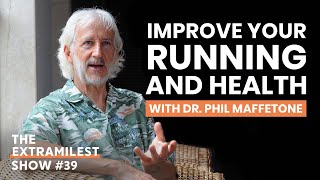
Dr. Phil Maffetone explains how stress impairs fat-burning and slows aerobic pace, and why a solid aerobic base matters before adding intensity. He uses the 180-Formula to set heart-rate zones and monitors biofeedback like resting HR and cardiac drift to adapt training when stress spikes.
Chapters
I want to say one very, very important thing, which is that we're in this for fun. We're in this to be happy. There's nothing greater than being healthy and fit. There's nothing that will bring happiness than being healthier and knowing how to become even healthier still. And also with fitness, you know, to see that we're now able to run at a faster pace at the same level of intensity at the same heart rate or generate more power. What a happy feeling that is. And being in a race and having fun, if your goal is to race, being able to have unlimited energy, being able to have a wonderful brain that is really sharp no matter what your age. These are the things that bring happiness and are fun. And we can't forget the fun part. In all that we're, we're doing.
Hello, my name is Floris Geurman from the Extra Mileage Show, and today we bring back our friend Dr. Phil Maffetone on the podcast. Many of the listeners of this podcast are already familiar with his work. He is a researcher, a clinician, and a coach, and he has written more than 20 different books in the field of nutrition, sport medicine, and biofeedback. He even wrote the first book on heart rate training in the 1980s. So definitely a lot of experience with heart rate training right there. Um, in today's podcast, we've taken a deeper dive into some of the topics that we previously haven't covered yet. If you're unfamiliar with some of the terminology that we use, such as MAF training or the 180 Formula, highly suggest you read the article MAF Training and 180 Formula on Dr. Phil Maffetone's website, and I will make sure to link to that in the show notes. Very excited to announce an actual giveaway that we're going to be doing with PATH Projects for 1 out of 3 running hooded shirts, and that's actually the shirt that I'm wearing right now. This is the Pyrenees hooded shirt. It comes with several great features such as a GPS watch slot, so you can actually be running outside in the cold and you can and just have your watch over there still showing your heart rate and your pace. It comes with hand covers to keep your hands warm. You can even tuck in your fingers if your fingers get cold. And then it comes with a running hoodie as well. This is actually a snorkel hood so that if you're running into the wind, it doesn't blow off. And even when you look sideways, it doesn't cover your face. You can also run with a beanie or a hat underneath it. And so yes, with a hat underneath your hooded shirt, it's actually a nice way to keep some of the rain or some of the water out of your face as well.
So this is actually what I use on some of my colder weather runs.
It's great for the temperature anywhere from 30 Fahrenheit, so around the freezing point, 0 Celsius, up until about 60 Fahrenheit, so about 15 Celsius. But you can also wear it at colder weather conditions if you wear a t-shirt under it or if you put a jacket over it. You can enter for a chance to win at pathprojects.com/flow. And yeah, 3 lucky winners going to be chosen there. Without further ado, I hope you enjoy my conversation with Dr. Phil Maffetone.
Welcome to the Extra Miles Show, Dr. Phil Maffetone. I'm very happy to have you back on here.
Thanks, Floris. It's really great to be here. It's been too long, but it's great to see you.
Yes, definitely. We've spoken several times over the last years. The first time I had you on the show was about 6 years ago. We covered a lot of different topics from heart rate monitor training to nutrition and stress management, the mindset. We have talked in another episode about 3 years ago about nutrition and a deep dive on that topic. And very happy to have you back over here because there's been so many follow-up questions and so many follow-up topics, even things that are happening right now in the world that I really want to get you back on the podcast. And also you've recently launched your very first MAF Fundamentals or MAF Foundation training course that I want to take a deep dive into. So, so let's start it off.
Sure, sounds great to me. Good.
So obviously 2020 and even 2021 are basically years that we haven't seen before. Like, this is— with the pandemic happening, a lot of athletes are experiencing quite higher stress levels in one way or another, whether that is financial stress, health stress, just insecurities about what's going on. So I've, I've noticed in many different athletes in my environment, and even with myself at certain stages during this pandemic, that some of the MAF times or some of the training times have actually slowed down a little bit. Can you talk a little bit more about that relationship between stress and aerobic running pace?
Sure. That's a, that's a very important issue. It's a, it's a great question because we are in the midst of we could call it a stress pandemic, whatever we, whatever we call it. The fact is so many people are, are under the stress of what's going on in the world. And that stress can come from all kinds of places. And stress affects us. It affects our brain, which then impairs fat burning. And so once we reduce the energy pipeline from fat, we can't perform as well, just the opposite of what happened in the beginning when we start using MAF and we start eating better and training better and so forth. And we build up our fat burning, that increased energy gives us the ability to run faster at the same heart rate. So in terms of stress, I always have to emphasize this because when we, when we bring up that word stress, it makes most people think of mental, emotional stress. And this certainly is the case, and in particular with what's going on today. But we also have physical stress and we also have biochemical stress, which is where nutrition and metabolism and in particular fat burning is discussed. So we look at stress in a very holistic way. That's been my approach from the beginning. And the bottom line, like I say, is that stress impairs fat burning and that reduces our pace at the same heart rate. It reduces our power. At the same heart rate. And just, just looking at it from a fat-burning standpoint, that's, that's really the reason. From a more general standpoint, stress, of course, because we stimulate that hypothalamic-pituitary-adrenal axis, we produce more cortisol and so forth. That's how fat burning gets diminished. But that overall also increases or also diminishes our health as well as fitness. So that stress factor is a big, a big issue.
Yeah. So when athletes are experiencing some of this higher stress and they still want to obviously be active, they want to go outside, they want to work out, but some of the races have been canceled or some races, like, we don't know what's going to happen with them. Do you have any suggestions as far as for how would you adjust your training? Like if, if you're truly experiencing high stress levels and you're truly feeling like, all right, my resting heart rate is higher, I notice possibly my Maff Pace slowing down a bit. What are some recommendations as far as for adjusting your, your training?
Well, it's, it's, it's interesting because, um, And all that is happening. People are getting slower because of the stress and they're getting stressed because races are canceled and they're not benefiting from, you know, that, that test of their fitness and so forth. But one of the great things about MAF is that your brain adapts to stress automatically. So we don't have to think, well, I feel stressed today, so maybe I'll, I'll train differently. Your, your heart rate's going to tell you that already. So you go out and now you're running slower and you clearly see that stress is affecting your performance. And the next question people need to ask themselves is, How am I going to deal with this? And the answer is that I'm stressed because I can't go to my favorite espresso bar or I—
First world issues, right?
Yes. My business is affected. I can't do my Sunday long run with all my friends. I can't go to the gym, I can't go to the pool, whatever. The fact is we are where we are. And, you know, the old idea of be here now, live in the moment is very important in this environment. And by doing that, we actually can remove some of that stress. And some people will notice, well, gee, if they really meditate on that type of mentality, which is a very healthy thing to do, they'll notice that they're actually able to run a little faster at the same heart rate. And that's just an example of removing some of that stress that we are able to remove. We can't get rid of the reports about infection rates or whatever. However, we can avoid listening to the news or reading newspapers because there's just so much hype there. There's so much false information. And I'm not talking about false rumors on social media. That's a big problem in itself. But we're talking about the you know, the mainstream news media transmitting information that's just not accurate. And it leads to panic. And the problem we have now with COVID to a large degree is the panic. And I'm well aware of how serious the infection rates are, the death rates. Of course, we know the vulnerabilities, which are for the most part preventable. And so being aware of all these things is, again, a way of eliminating some of the stress that we are capable of eliminating, and our brain then can better adapt to the stress that we may not be able to control.
Yeah, so, so well said. And even when I'm looking at some of the things you mentioned here about mindful running and being aware of your surroundings and being present, that alone, like, once you're running and you start to stop overthinking— and, and I noticed that quite a bit with people even with this math training approach, they would go out for a math test and they're almost over-stressing themselves that they perform worse at a math test, or all of a sudden They're trying to focus and on cadence and on stride length and on low heart rate and on all of these different things at once that it almost becomes not a flow state of running or relaxed running. And like once you can kind of remove yourself from some of those things that it all starts flowing much better.
What a great word. You used it twice, flow. What flow is really is the ability to allow our brain to control things. We should be able to go out and run naturally. And running naturally means our brain knows what to do. We don't have to overthink it. We don't even have to think it. We just go out and run. We don't have to say, let's say, I'm going to put my right foot forward now. Oh, now I'm going to shift. Obviously, it's a silly example, but it's what people often do. And we're in a society where we're bombarded with all that information from the running magazines, from the website blogs, from our colleagues, from our training partners. We talk about stride length. We talk about cadence. We talk about You know, what happens when we start running up a hill? What happens on the downhills? It's— I mean, we've all studied it. We all read about it. There's some fascinating scientific information that relates to all that. And but when we step out the door, it's time to turn all that off and flow. Go with the flow. Just run.
I love it.
Naturally. Yeah. I mean, it's that simple. And, you know, I often have to come back to that fact that humans get better naturally because their brain knows how to get better. And let your brain do it. Of course, you need a healthy brain. And it's particularly helpful when the body is healthy as well, and that fitness level will build automatically.
Yeah, yeah. And even on some of my own runs, when I've even done math tests, if I start to think a lot, I even like— at that point, you're talking about just a few beats difference, right? But once you've removed that thought, that you can see the pace increase again. It's It's fascinating.
Feedback mechanism that— it's biofeedback. We're getting back information from the heart monitor, wherever you have them, and that information gets into your brain and you say, oh, I see this is changing, therefore I'm going to make this change. And that's, that's what biofeedback is. And I would always, years ago, tell the story when I would go for a run at my lunch break from my clinic. And it was a route I had, a regular route, and it was a nice relaxing route, except there were two Dobermans at one at, you know, I'd pass this one house, there were two Dobermans and they'd usually be tied up, but sometimes they weren't. And whether they're tied up or not, as I approached that house, my heart rate would go up. So now here I am going by a house with two Dobermans who may not be tied up, and I want to get by that house as fast as I can. But now I have to slow down. Yeah. So it's biofeedback. And it's really what is a very important component of MAF.
The other good one is when you stand on the start line of a race and you actually look down on your watch and look at the difference between your normal resting heart rate and what the mindset can do at that point too.
Oh yeah. It's, you know, it's, Sure, it's important to measure our morning resting heart rate because it's such a nice indication over time. But a lot of people who first started wearing heart monitors, I would say to them, wear it all day long and pay attention to what your heart rate does. If you're commuting in your car in rush hour traffic, if you're on a train, if you're in your office, if you're going into a meeting, if you're having heated discussions with your boss or with whoever, and see how stress affects you through the day, how your heart rate goes up and down normally through the day. And it's a very important— it's a very important lesson for people. And I still recommend people do that because they don't realize how significant stress will affect them and how quickly it will affect them. And, and again, once we recognize stress, we usually can adapt to it better.
All about becoming more aware of the signals of the body, right? It truly is. So, so over the years, a lot more tools have come onto the market. Like we now see things like the Oura Ring, like measuring like heart rate variability. We see different sleep tracking devices. There's power meters for running. You have initially focused a lot on, on heart rate. Are you now looking at some of these other devices as well, or are you mostly still heart rate focused?
Well, heart rate is a, is an easy thing. And today everyone is aware that it's easy to measure and almost everybody has a device to measure their heart rate. In the beginning, none of that was possible.. And I had to explain as much about this heart monitor that I was using as what the person should be doing while, while running. And in the beginning, runners were the vast majority of the athletes I had because we were in the, you know, in the early stages of this running boom and there were hardly any cyclists. Triathlon was something from far away in California and Hawaii, and it hadn't gotten to the New York people yet, although I was aware of it early on. But, and when power meters came out, now we could actually measure power directly. And but I've worked with athletes in virtually all sports, so I've had to adapt to whatever their measurements are. And so we could take a soccer player, for example, and discuss how they can improve toward the end of the match in a way that their energy stays high, their aerobic function is still high because they're now burning still more fat, even though they've been through all these stresses. And but heart rate's still a great guide. You could use it for a soccer player in the when they're training, although soccer players, basketball players, everyone in team sports, I will often have them wear a heart monitor during training so they could see how much they fatigue over the period of the game or the match. And it's really a— talk about being aware, it's really a very important thing. And then over time, that fatigue is less and less. And so heart rate is still a good guide. And yeah, the technology is much improved. We now have the earbuds that measure heart rate, which are really quite amazing. And it's interesting, you know, when I first started using heart monitors, I thought this is a great stepping stone for athletes. I was doing that myself. I thought, okay, I'm going to wear this thing, this biofeedback device. And like all other biofeedback, the goal is to become aware of it, train your brain, and then eventually you can go without that training, without those devices, to be on your own because your brain now knows how to do it. And I thought, we'll do the same with this heart monitor. Athletes will wear it for a few weeks, maybe a couple of months, and then maybe every month or two they'll do an MAF test, but they'll train in between without it because now they know what a 140 heart rate feels like. They know what a 138 heart rate feels like. Well, that never happened.
I just wanted to say like that yesterday on my 2-hour run in 90 degrees, so 32 Celsius, at the beginning, the first 15 minutes, I was pretty accurate where my heart rate was. You had the cardiac drift happening after an hour and a half. I was 2 minutes slower towards the end at the same heart rate. And it's hard to estimate that.
Absolutely. It's, it's hard. Um, I've seen, I've seen athletes who can do it. Um, I haven't tried it lately, but for, for years I would, I would be able to go out and think, oh, I'm going to run at this heart rate. And I'd be running along and I'd look down and finally see, yeah, I am right there. Some people can't. A lot of people are unable to do that.
It is easier for me the first 45 minutes when I don't have any cardiac drift or the body doesn't like— when it's hotter or there's some elevations or hills or at altitude or wind, all these things definitely throw it off a little bit.
Lose that. Yeah, we lose that instinct, that intuition as we start adding more stress. Heat, wind in particular, because we're not acutely aware of that like we are if we're going to pass a house with two Dobermans. And you mentioned cardiac drift, and I've written an article about that. It's what it's called, but it's a real deception because it's not a cardiac drift. It's full body fatigue. And even though we're training aerobically, if we are, then we still fatigue aerobically. We have, we have aerobic fatigue and we have anaerobic fatigue, and of course we can have both. But aerobic fatigue would be just what you described. You got slower because the stress, the environmental stress factors fatigued your body. Fatigued your aerobic system. So now we run slower after an hour or two because of that fatigue. And the people who develop that aerobic system really well fatigue less and less. Not only do they get faster at the same heart rate, but they also fatigue less over that, say, hour or two. And so after an hour, they may they may slow down, uh, in their, uh, pace, um, just a small amount compared to what originally they did. And that's, that's, that's your submax power that is going to help you during— virtually all endurance races require that submax power. And, um, that's so that at the end of the race we're less fatigued than we, than we were before we had that great aerobic system.
Yeah. Yesterday, I will have to say though, it was a good eye-opener to me how much of an impact temperature can have, because probably 6 months ago I did an MAF test, and between the 1st mile and the 18th mile, there was only a drop-off of about 20 seconds because it was a low temperature. It was only like probably in the 50s or whatever that is, like 10 Celsius or something. Yet when doing it yesterday, in particular with some of the higher, higher temperatures, and I wasn't that heat acclimated yet, I haven't done that many of the long runs. Yeah, absolutely could see that difference. So there's a lot of different stresses on the body, right? We have talked about the mental stress. We've talked about some of the heat stress, temperature stress, but then I also see quite a few athletes who are trying to start out with a, with a MAF training approach to base building, yet they're still doing 5 days a week cross-training or like high interval training or CrossFit or any of, of these other sports that truly get the heart rate up high. Can you talk a bit more about how some of these stresses can block the progress as well and what's happening with the aerobic development at that point?
Yeah, and I'm all for the high-intensity training. I'm all for doing whatever someone wants to do. If they love doing CrossFit or if they love doing weightlifting, heavy weightlifting, if they love doing track workout or whatever, I'm all for that. You know, we're in this to have fun. So, however, if you really want to improve your aerobic system and become a healthier and more fit person because you're an endurance athlete, in particular, you need to establish a really great aerobic system, that aerobic base as Lydiard called it so many years ago. And in order to do that, we really, if we, if we stay with that stress model, we really have to eliminate as much stress as we can. And one big stress for the body is anaerobic training, we'll just call it anaerobic and refer to high-intensity training, heart rates that are higher than that submax, that MAF heart rate, or weight training where we lift weights to fatigue and it takes us 48 hours or 72 hours to recover. Likewise, a high-intensity training workout requires more recovery time. And part of the stress comes in because these high-intensity workouts produce things like lactic acid and induce stress, and cortisol comes into play, and, and that impairs fat burning potentially. When we're— when we have a great aerobic system, it's much less of a problem or not a problem initially. But the recovery factor is the other potential stress. If we say do a high-intensity training run or a track workout on Monday and then Tuesday we go for our 1-hour aerobic run, well, we're not recovered yet from the previous day's workout, and that lack of recovery, yet we're still training, is a source of stress. It's a significant stress because when we are in that fatigued state, in that recovery state, we are physically weak. Our muscles are weaker. Our metabolism is less able to, to function aerobically. Like I said, the fat burning is impaired. So technically we should be not training at all or going for a walk as part of the recovery process. And once we're recovered, then we can do our normal MAF run. And so that, that routine will not let you build the aerobic system. So that, that important feature of MAF is that you need to spend a period of time could be 3 months, 4, 5, 6 months, in some cases longer in people who have really been seriously injured or overtrained. That 3 to 6 month base building period is really vital. Then you can add literally anything you want and all along the way monitor yourself because if And I, I often say to people, do anything you want, but monitor your aerobic pace, monitor that MAF heart rate, um, on your MAF test or your submax test, because if your submax function starts diminishing, whatever you're doing isn't working. Whatever you're doing is unhealthy. And if you're willing to sacrifice your health for more fitness, that's a sad situation.
Yes, it really is. And I do see that some athletes indeed experience that right away where they start to implement higher intensity training and all of a sudden the next day they become a lot slower or they might have to go back to a walk pace. If they were able to run normally, then they do a high intensity and then that following day they might have to like take more walk breaks.
You could see it in their gait. I mean, there's so many measurable factors that you could say, oh, well, look at this, look what's happening here. And the gait is what, even the posture, even static posture, you could see because you're creating muscle weakness in some of the muscles during that, I call it the weakness window after the high-intensity training. And that is associated with muscle imbalance, which gives you the irregular posture, and as soon as you start running, the irregular gait and so forth.
Yeah. Yeah. And then sometimes though, at the other hand, if you do indeed train more consistently and you've been out there for like 6 months, 12 months of training, I have also noticed that all of a sudden you do a higher intensity workout and the next day you do feel pretty okay. Like, I think it also depends to some extent how hard you push yourself on those workouts, right? Because some people just go all out, no pain, no gain on those workouts, and they do them simply too long or too hard that the next day they're much more compromised than, than they would if they actually hold back slightly.
Yeah. Yeah, you're right. There's, there's two issues there. One is that when we have a really good aerobic foundation, we recover much faster from a high-intensity workout. Or a race or even a whole season of racing. But also, when we, when we do something that's high intensity, we need to really— I mean, the whole aerobic development process is individual. That's the whole idea of figuring out your MAF heart rate and being honest and accurate with the 180 formula. And monitoring your MAF test to make sure things are actually working. So there's that discipline, but we have to apply the same personalization to high-intensity training. If I could run a 10K in 40 minutes and I'm trying to get faster and I get on the track and I run whatever distance that equals a 5:30 pace, Obviously, that's way faster than I'm gonna be able to race, way faster. So we're inducing a lot more stress than we need to, and people have taken that crazy no pain, no gain concept of we have to, we have to train fast to race fast. Well, it doesn't— it's not, you know, it's not an open system. We can't just say, oh yes, If I do 100-meter sprints all out, I'll be able to run a faster 10K or marathon. It just doesn't work that way. So we need to personalize that high-intensity training, whether it's weights or track work or fartlek on the road, which is my favorite thing, because it's your brain allowing you to set the workout. Um, and when your brain does that, you typically don't go way beyond your goal pace for whatever your, your next race is going to be.
Yeah. I want to transition for a little bit to, to another topic here. Um, recently I saw that you and your team have been working really hard behind the scenes on developing a math foundation course. And very excited to see the program launch. Can you talk a little bit more about what the course entails and who do you think can benefit from this?
Sure, it's been very exciting. This is, of course, I've been lecturing my whole career, but this is really the first time that I've worked with a team, a very, very efficient team. Alicia has been spearheading this. My partner Phil Wing has been very involved. And we have people like Esther Galindo, who works with our Spanish-speaking audience, and Ivan Rivera, who's been with us, and Hal Walter, who's my editor, who has been working with me for, gosh, 3 years, 3 decades on and off now. And people know, know Hal as the guy who races burros. And, and so these people have all been very successful personally, and they've all been on board with us for quite some time now. And so they have all participated in the process as well. And so we now have our certified MAF coaches who are doing some of the teaching alongside of me. And it's just very exciting. And this is a 10-hour online course. You go as you please. And it's a course that would be useful for anyone who is going to help other people. So a coach, a trainer, a doctor, a health practitioner. Plus, it's important for serious athletes who really want to understand the MAF system at a higher level. But it's also, it's also great for for a beginner who's, you know, thinking about MAF and, you know, the MAF is really quite simple, but there's a lot of little pieces to it. And so some people who just start looking at what I've been doing and think, I need to finally get my health and fitness straight. They often say, well, where do I start? And this course will get you going in the right direction without the confusion that some people have, although it is really quite simple. The problem often is that we've heard so many other things about how to train, how to eat, how to manage stress. And a lot of those things are just wrong, especially because they don't build health and fitness at the same time and increase your ability to reach your athletic potential. So the MAF has it all built in, and this course presents that in a very organized way, very logical, high-quality way as an online course, which is appropriate now because, I mean, I've had lectures canceled and I see a lot of conferences that have been canceled. I did a conference the other day online, you know, they they scrambled and said, let's not do this conference. Oh, let's do it online. And it worked out really, really well. And so we've been planning this for months. I've been planning it for years. And to be honored with all these people that have learned MAF and are certified coaches is just a wonderful thing.
Yeah, there's definitely a big undertaking or a big shift shift in society towards online learning, which is very exciting to see. Very— Yes, it is. Many good, good online resources available right now. This must have been such a massive undertaking for you and your team to develop all of this.
It has been. It is a massive undertaking, and it's the first of many. And what's nice is it's even better than going to a conference. In not only the obvious ways, but it's a course you can take at your own pace. Yeah, you can do a little bit, then come back and relook at some of those issues and do it over a period of hours or days or weeks or months. So it's just It's got all the, all the things that I've ever wanted in one, in one course.
How exciting. I had a look and it looks very impressive. A lot of details on the website. Can you let us know what website people can find out more about this?
It's at my health and fitness website, philmaffetone.com. And if you get on there, you'll see, you'll see some, some links you can click to get to that page and read about it. And we're just— so we just announced it this week, I think. And so we'll have other announcements to our members who get their normal weekly articles and other updates. But anyone coming to the website will be able to get to that course page and see exactly what's going on with it.
I like the self-pacing of any program purely because something that you and I have talked about previously already, and I want to dive into this a little bit more, is every athlete is different. Some athletes have a lot of other things going on in their life. They have multiple kids that they have to take care of. They have a full-time job. They have other commitments in life. And other athletes just have much more time available in their, in their life. And so being able to adjust that accordingly is great. I want to talk briefly about the subject of like who works meth training for best, because sometimes I hear different comments and I'd rather have you address this because I have my own thoughts and I've shared some of them. But the topic of does meth training work better for men than for women or for younger athletes are much more easier and more successful with this than older athletes. Can you talk a bit more about this?
Sure. MAF works for everyone. I've seen it work for horses as well. But, but if you're human, it's going to work. And if it appears to not work, if you're not getting faster, after a couple of weeks or after a month or certainly after 2 months, it's not because it doesn't work and it's probably not because you're not human. It's because something is interfering with your progress. There are some health factors or some fitness factors that are interfering in that. That is often a dietary factor, but it could be that you've chosen the wrong MAF heart rate. So what I've always asked people to do is to think of themselves and be an active participant in this process, not be a passive participant where you read a diet. Okay, I'm going to follow these, I'm going to eat these foods and, you know, I'll lose weight. Well, we know that doesn't work. Likewise for training. Oh, here's a— here's the latest training program. I'm going to— it says I have to run 100 miles a week to run a better marathon. I guess I need to do that. Well, that can ruin your training life, as it has many, many people. So I'm asking people to participate actively in the process. So you you look at the 180 Formula and you plug in your specific health and fitness factors and you come up with a heart rate. If you, if you lie about your, your health, if you say, well, yeah, I'm on 3 medications, but they're not, they're not really affecting me. So I don't have to make the adjustment for medications. You're just fooling yourself. The important thing is that the MAF test, or the ability to get faster at the same heart rate, is such a powerful concept. Just let's look at it from a conceptual standpoint. That concept is so potent. In the beginning, I thought, oh, this is a great health guide. If you're getting healthy, you're going to be able to walk faster, run faster at the same heart rate. And I didn't think of it so much as an endurance sports training tool. And it does that, but it's turned into something that everyone can use. But You need to be an active participant and, and, and match your health and fitness needs with, with all that's being done. So the fact that you're told something is blocking your health, blocking your fitness, is such a significant feature of MAF because Most people guess. Most people wait until they do their first race only to realize this is not working. I've just wasted 10 weeks of training and I'm really no better off. So we, we want to, we want to measure. We want to be objective, as objective as we can be with the human body. We, we want to know for sure. We want to take the guesswork out out of training, take the guesswork out of food choices that are going to work best for us. And that idea that some people, you know, it doesn't work for some people just isn't true. Men and women. Yeah, I've heard the back and forth on that. Oh, it works for men better than women. Oh, it works for women better than men. We could rationalize how that can happen. Men have more muscle. Women are better fat burners.
But what, but what about factors like hormonal changes throughout the month or at certain ages? That would, would that, would that not impact meth to that extent?
It, long term, no, certainly not. Uh, short term it could, but again, just like we talked about with you and the heat our brain adapts to those hormonal changes. And if we go out for a run on a day when our hormones are naturally out of balance, and I say naturally because a lot of people have significant hormonal imbalance, which will correct itself in most cases when people get healthier. But if we go out on the wrong day, the wrong time, and certain hormones are doing their thing at those times in men or women, we have— we all have changes in hormones, then it will affect our pace for sure. But over a long term, it's not going to be significant.
Right on. I'm glad you shared that here.
Yeah. And, you know, the age thing is is another misconception. When we're younger, as we all know, we're, we're, we're, we're faster, we're stronger, we recover quickly, we can abuse ourselves and not notice it as much. And as we age, our reaction times slow down. We start losing muscle mass. We're not as quick. We recover a little slower, even when we're healthy. And so all these things have to be considered. But the fact is, whether we're 60, 70, or 80, or 18 or 20, 25, it's going to work the same. The rate of improvement may be a little different. It's something that we will see slow down as we age, which is not unusual. We may hit our peaks at different points, but the fact is age is not a factor. What's a factor is health. It's like the COVID thing. Being a 60 or 65 or 70-year-old does not increase our vulnerability to COVID infections. What increases our vulnerability is poor health, and people who are 60, 65, 70 are generally a lot more unhealthy, and so there's a larger number of 60-plus who are getting infections and dying. It's comorbidity. So, and then the other part is the body fat content. There are more Generally speaking, there are— as we get older, we, we increase body fat, and people who have excess body fat are mostly the ones who are getting sick and dying of, of another infections as well.
More insulin resistance as you age as well, as I've heard you previously.
Correct. That's a, that's a factor. And that's a, that's a good point because we do become more insulin resistant. More carbohydrate intolerant as we age, which in itself is not necessarily a problem if we adapt to it. And the only way we can adapt to rising rates of insulin resistance or carbohydrate intolerance is to eat less carbohydrate as we age. And so, people over time, should be eating lower and lower amounts of natural carbohydrates. The junk food carbohydrates, nobody should be eating. But then the question is, okay, what about natural carbs like fruits and lentils and beans? These things are fine, but you have to match, you have to individualize it, you have to match your needs. And if your need for lentils and beans, for example, or fruits is, is here, but your insulin resistance is higher, then you need to make an adjustment. Even though those are natural foods, you need to reduce some of them to a point where your, your metabolism is not affected by them.
That makes a lot of sense. Recently I had Matt Fitzgerald from 80/20 Running on the podcast,, and we had a great conversation about, uh, one of the latest books that he wrote that was Running the Dream, where he actually joined an elite running camp at altitude and to really see what the max of his performance was going to be. Because he still, even in his mid-40s, had some really big PR goals that he wanted to go after. And when yesterday I re-listened to some of our previous, uh, podcast conversations that you and I have had, and I heard you say that many athletes don't hit their aerobic peak until well well into their 40s. And me now, like, like getting into the late 30s, going into the 40s soon, it really got me excited. Both of these things, both of what Matt said and what you've been saying as well about aerobic peak not happening for many athletes until well into their 40s. Can you talk a little bit more about that part, about the aerobic peak and how that develops, like especially into the 40s as well?
Yeah, I think there's two ways to describe that. One is the sort of a generic approach with human physiology. And then we have to say, well, what do humans normally do? They normally progress. And when we start looking at race pace and submax training pace and physical abilities, we have to bring in strength and muscle function and all of that stuff and you put it all together and you seem to have a peak in the 40s. And we see, we see athletes who, you know, as they get past what people think of as their prime— Mark Allen winning the Ironman, you know, at a later age, beating a lot of those young, young guys who, you know, were incredible athletes. Mike Pigg, did the same thing. Priscilla Welch won the New York City Marathon at age 42. And I've had plenty of athletes who in their 40s were winning races and beating, you know, good, good runners who were 10, 15 years younger. So there's the clinical part, there's the physiological part that we can look at. But again, we have to look at individual circumstances. And so the big question is, okay, you peak in your 40s. The question is, when did you begin this development? That's such a good point. If you began at age 35 because you thought, okay, I'm going to— I got to get off the couch and start training. And you do. And now you're running better and better. And at 45, you run a PR for your 10K or your marathon or whatever. Well, there's a good chance you're going to run a PR at age 50 as well. And we're not talking about the category of 50s. We're talking about the open, you know, your overall event. It's conceivable you could run your best race and peak at age 55. So it depends, but there's always a limit. Because the human body has limits. And one of the nice things about age group performance is that you have another goal that you can say, hey, I've run my, my marathon PR at age 55. Now I'm going to run a— when I'm 60, I'm going to prepare for that 60 category. And now I'm racing against my peers. And it's, you know, it's a big part of the process. It's one of the fun things that people can do. And so that's, you know, I think the tradition of the peak is that we peak at age, you know, 25 or 30. That's a myth. And also, we peak every year and we can only see that peak after we've passed it. And I don't like peaks. I think we just get faster and faster in the course of a season and in the course of your, you know, your years, depending again on where you started.. And, and those, those are not myths. Those are real things. And the aerobic system is not dependent on sprint speed. You know, those, those dependencies have a big genetic feature. If you're a 100-meter racer, then those are factors. But most of us are not, not doing that, at least right now.
Well, that, that excites me. So much about this training approach though, seeing many athletes in their 40s, 50s, 60s all running PRs with this approach. It just seems more focused on becoming a healthier, stronger, happier runner this way, really. And, and this is where I also like— I'm so glad that I found this training approach when I did because I know it will like not beat me up to a point that I will get injured all over time, but I can continue running healthy for many years to follow.
So absolutely. Yeah, it's a, it's another, it's another given that people think, you know, we're going to be an athlete and we're going to compete at a high level for just a short period of time because athletic careers are short, right? Well, athletic careers are considered short because so many people are unhealthy and it's health that shortens their career. Not their fitness. And if we can get healthy, just the fact that we get healthier will lengthen our fitness career. And so wherever we're at, if we're a professional athlete, extending the career by being healthy is a wonderful thing to do, obviously. And then if we're an amateur, the same thing. We can work our way up the age groups and perform really well, and if we just want to be fit and, you know, do whatever workouts we want to do because it's most enjoyable to us, the same thing applies.
Yes. So we often talk about this holistic training approach with focusing on the running component, on stress management, on nutrition, and then there are also many other elements like the strength training, the mobility, flexibility, cross-training. You've previously mentioned to be careful with stretching. Can you clarify the reasoning, and do you suggest— what, what do you really suggest athletes to do to work on their mobility and flexibility?
Yeah, this is a, this is an ongoing issue. And in the beginning, as a clinician, what I noticed was that people who stretched were injured more than people who didn't stretch. Actually, way back, people who didn't stretch were embarrassed to say they didn't stretch because they thought, well, you had to do this. But intuitively they knew not to stretch. So I had enough people in both camps. I was also able to show clinically that if we stretch a muscle, if we stretch a ligament, it can affect muscle function quite quickly. And as the years went by, and I would recommend people not stretch, what I wanted them to do was improve their flexibility. And I discovered early on that a great aerobic system improved flexibility because the muscles that control joint movements to a large degree were those slow twitch red aerobic muscle fibers. And so building the aerobic system meant they had better flexibility if and only if they warm up properly before their run, because that warm-up is what develops flexibility quite well. It actually develops flexibility as much as stretching would if we just look at, well, stretching increases flexibility, well, aerobic function will do that as well, and they'll be equal. And now we have, okay, they're equal, but stretching now increases the risk for injury. So we wonder why we even bother stretching. If we did ballet, if we were gymnasts, if we were in sports that required that extreme range of motion, then I'm okay with doing— properly done— doing some stretching after, only after a warm-up is done. And still, those athletes tend to be very sensitive to injury. They are injured more even when they're seemingly doing everything right because they're always on the edge. Endurance athletes don't need to be on the edge. But what I was finding as the years went by is there were more and more studies showing that, number one, we don't know if stretching is important. We don't know if stretching is healthy or not. We know that in these studies, stretching was harmful. So I think today to say stretching should be avoided, people don't, people don't look at you funny like they used to. And so I think it's sort of stood the test of time, as they say. And the big question is, how much flexibility do you need? If you think you need a lot of flexibility, the fact is, the more flexible we are, the more risk we are at risk we are of getting injured, because joints, as they move far from their normal ranges of motion, increase that injury risk significantly. So those are more of the questions that should be asked. And, you know, a lot of people are in a hurry when they do their workout. They're all short for time, almost all of them. And so they rush. Everything, they don't warm up properly, and they— and now you're asking them to stretch, which is something that requires, properly done, very slow activity of a lot of different muscles. And most people don't have time to do that, so they rush and bounce and do all the things that they say not to do, and they do them anyway.
And so Right on. Yeah, the power of the warm-up can absolutely not be underestimated, and I've personally experienced that as well.
It's amazing. It's really, really amazing. I was, you know, it was one of the astonishing things I saw early in my career, how much of a physiological change we were able to measure in someone who starts their workout with a walk, they start walking faster, they start jogging, and then they start— then they reach their MAF heart rate. The physiological changes that occur are just amazing with increasing fat burning, increasing flexibility, increased oxygenation, lung capacity. And of course, the cooldown is important too because it's a It's the first stage of recovery, and we talked about how important recovery was, but cooling down is important too. And, you know, it's part of that MAF workout where you warm up, you reach your MAF heart rate, you stay there until about 12 to 15 minutes before you finish when you start cooling down.
Yeah, tell the body that the workout is over. Um, I want to be respectful of your time here. I have a few last questions, um, that I want to make sure I ask you. So there have been a few, or there have been several key people that have made a big impact in my life. If I have to mention a few, for example, Ryan Holiday from The Daily Dad, or Carl Newport from Digital Minimalism, or from Deep Work, or Tim Ferriss from The 4-Hour Workweek. But you have made a big impact in my life as well, and I just want to say thank you for that because the work that you have written and the work you have put out have truly made me a stronger, healthier, and happier athlete, but also played a big role in other areas of my life. I just want to ask you, do you have any heroes, any mentors, or anyone else who has made a big impact in your life?
Sure. And I want to just thank you for saying that. I think, you know, the greatest— for me, the greatest joy is to see someone, to see people respond to some of my suggestions. That was the purpose of me getting into all this to begin with. I had a passion to help people. And I wasn't sure exactly where I was going to go. All I knew was I want to help people. And when I can see that someone has been helped, I can't explain the joy that brings me. And so, so, so thank you for that. I've, you know, I don't know where to begin with with the people who have influenced me. I've written about some of them in articles and books, and many of them I don't know because they're researchers who did studies that confirmed a lot of things I saw clinically, which is another wonderful thing for a clinician to say, hey, This is what I'm finding in my practice. I don't care if it's scientific or not. I'm using it because it works. And then all of a sudden you read in a journal, hey, we tested these, these subjects and we found this. Oh, hey, that's what I was finding. But I didn't have the scientific explanations and that And that process has been going on and on throughout my career. And many of those researchers are the unsung heroes in my life. I remember some of the names, McGardle, who was the author on that famous exercise physiology textbook, one of the authors, Mountcastle, one of the famous physiologists that we all had to study in school. But along the way, people that I interacted with— Tim Noakes. I learned about Tim when he was just getting started in his career, and I didn't know who he was. I just read about his study, his very first study, I think, which was on marathon runners and heart disease. And it was, it was interesting because I was seeing all these athletes who were unhealthy and I didn't, I didn't have my health fitness paradigm quite yet. That hit me when I was running the New York City Marathon.. But Tim was saying, hey, marathon runners and heart problems in the same title. And it was just fascinating. And then I kind of followed up with him on his research that followed. And he, he was one of the few that talked about fat burning and that kind of stuff.
That was also one of the biggest books that I own as well, Tim Noakes's book.
It's like 1,500 pages or something like that. Yes, yes. And Tim and I have gotten to be great colleagues and we've not physically met yet, but we're getting there. We're almost there. Right on. Early on, George Sheehan, of course, the running guru, philosopher, however you know him. I know George as a a colleague and really friend in the early years of my career. And George wrote— he was just an amazing character. George wrote a foreword for one of my first books. And, you know, you ask people to write a foreword and sometimes they say, oh, yeah, sure, and they write some generic thing. Well, Not George. He wanted to, first of all, find out really what I was all about, and he did. And he had to instill the Xi'an philosophy into it. And he talked about things that I wasn't even talking about, this holistic concept. I talked about it, I knew about it. Myself, but I didn't talk about it because it was something that, you know, that's a little too much for people. You know, it's bad enough that they're hearing train slow to run fast and don't eat, you know, refined carbohydrates when you're a runner in the '70s. I mean, who did that? Who heard that? So George, you know, got philosophical and he went back to the Greeks and Plato. And it was such an amazing experience to read what George wrote and to talk philosophy with George. And so he was a big hero of mine as well. And, you know, I've become became friends with some of the researchers I only read about. Paul Larsen, who I often write papers with because Paul is, you know, he's a great physiologist and now he's starting to coach. And Dan Plews, who they used to work together, and Dan has been a you know, an MAF supporter for many years.
Dan has the Ironman record. I know his name keeps coming up. Even when talking to Triathlon Taren, he brought his name up as well.
Like, yeah, yeah, yeah. So Dan and Paul, among the MAF coaches I mentioned earlier, they're all founding MAF coaches. And they, you know, I look up, I look up to them in many ways. As well because they understand the physiology of this. And I'm understanding it better and better as the years go by. I wrote with Paul, I wrote the paper on MAF that came out earlier this year, which I've been wanting to write really my whole career. And I finally When I got out of practice 20 years ago, I finally decided I was going to do some of these scientific research projects. I did a textbook, you know, finally having time to do that. And finally just got to that MAF paper, which is, if you want to read the science of MAF, that paper has a lot of a lot of details.
And we'll, we'll make sure to link to that in the show notes as well. Yeah, definitely. Two, two last questions. Where can people find more about your work, your, your different books that you have written?
What would be the best resource for that? Well, the books, uh, you could see all the books that are out there if you do a simple search, but the, the big book of Endurance Training and Racing, the Big Yellow Book, as it's called, is, is one of the most comprehensive books for, for endurance athletes. And the Big Book of Health and Fitness, which is the Big Red Book, is a book for everyone else. The other books, a lot of them are getting outdated. All books are outdated once they hit the market. So the Big Yellow Book and the Big Red Book are outdated as well. But people can go to my website, website, philnaffatone.com, and there's probably over 400 articles. They're all free that they will see that I've written since those books came out, or I've, I've updated them since those books came out. So there's a lot of material there. Plus there's an interactive mechanism where people can say, okay, I'm going to start this MAF program, and they can go there and be guided through a process that individualizes their MAF program. So that's a very important component as well. And every week, like I alluded to earlier, every week I write a new article I haven't run out of things to write about yet.
And then the newsletter is a great way to stay up to date with the latest, right?
People, you know, if you're a member, which is also free, you'll get that in your mailbox every week and see what's going on.
So much covered over here in this conversation again and in our previous two conversations. Do you have any closing thoughts, any high-level suggestions for athletes looking to further improve and to become a stronger, healthier, and happier athlete?
You know, Floris, we could talk for hours about that issue, which we won't do now. But I want to say one very, very important thing, which is that we're in this for fun. We're in this to be happy. There's nothing greater than being healthy and fit. There's nothing that will bring happiness than being healthier and knowing how to become even healthier still. And also with fitness, you know, to see that we're now able to run at a faster pace, at the same level of intensity, at the same heart rate, or generate more power. What a, what a happy feeling that is. And, and being in a race and having fun, if your goal is to race Being able to have unlimited energy, being able to have a wonderful brain that, that is really sharp no matter what your age. These are, these are the things that, that bring happiness and are fun, and we can't forget the fun part in all that we're, we're doing.
So well said right there, Dr. Phil Maffetone. Thank you so much for your time. I really Appreciate you coming on the show again and look forward to continue the conversation again down the line. Thank you, Floris. All right, have a good one.
Bye now. Thank you so much for listening. Every time again, when I have a conversation with Dr. Phil Maffetone, there's several great takeaways again, and I would love to hear from you. What was one key takeaway or lesson or your favorite quote from today's podcast? Please let me know in the comments section. Also, as a reminder, there is an enter-to-win contest to win one of three Pyrenees hooded running shirts. And this is truly my favorite long sleeve running shirt, a shirt that I never really want to take off. I wear it for running, but I wear it after running as well, and I've even on colder days used it as a pajama. It comes with the actual GPS slot so you can look at your GPS watch In the opening of the shirt, it has the hand warmers and the snorkel hood as well. And we're giving away 3 of these hooded shirts at pathprojects.com/flow. So, um, yeah, 3 lucky winners will be chosen over there. Like Dr. Phil Maffetone said, it is all about having fun in your workouts, and I think that is such an important takeaway for myself as well. Once again, Just that reminder. So I want to say to each and every one of you out there, absolutely have fun and enjoy your workouts out there.
See you on the next podcast. Bye now.
More from Floris


Ryan Hall 2.0 on Strength Training For Runners, Lifting Heavy & Trail Running




You’re Doing Zone 2 Wrong (Even If You Think You’re Not) | Scott Johnston Round 2


How to Build an Unstoppable Aerobic Engine (Even If Starting From Zero) | Scott Johnston


Stress Is Killing Your Running (The Relax Fix You’re Missing) with Dr Kasim Al-Mashat

When things get hard, say this, it (works in any race) #jeffpelletier #running #ultrarunning