From 3:59 Marathon To 2:34, with Danny Huibregtse | Extramilest Show #49 about Sub 3 Hour Marathons
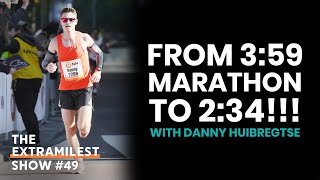
Dutch pilot Danny Huibregtse ran his first marathon in 3:59 and dropped it to 2:34 over thirteen years. He credits the Maffetone Method and Chi running for shifting to slower, sustainable training, then ramped volume from 35 km/week to over 120 km/week with speed work and longer runs. His advice: run slower, build joy, listen to your body.
Chapters
to kind of start dreaming like, oh yeah, would this be possible for me, this 3 hours? And, um, but I never really said to myself like, okay, this is my goal. But I just started training and I thought like, well, let's see how I progress and then we can set goals, um, in, in the future. And I think it was not necessarily maybe even the time because that's just a number, but the feel about how, how I accomplished it in the way that it was just, um, so relaxed until like 37, 38K when— and then you should start to feel your legs and it should start to hurt because otherwise I guess you're not running fast enough— that the energy was still there even after finishing. Okay, the legs were done, but energy level was still there. Like, you know, the brains were still working. And I think that was actually the thing that even surprised— like, the time surprised me maybe, but, um, the way I've done it, that made me the most happiest, I think.
Welcome to another episode of the Extremalist Show. This is already episode number 49. My name is Floris Geerman, and on this podcast I interview different guests about ways to become stronger, healthier and happier athlete. In today's episode, I'm interviewing Danny Hoebreggensen. I don't know how to pronounce that properly in English, but he's a fellow Dutchman and that's how we would say it in Dutch. Danny Hoebreggensen. Anyways, Danny improved from a 3:59 marathon time all the way down to a 2:34. And in his last marathon, he actually ran a 34-minute PB from a 3:08 all the way down to that 2:34. In this conversation, I want to bring him on the podcast and really talk through how did he improve so much over time, what were his learnings from his training and his racing, and what were some of the recommendations to other athletes looking to improve. Danny and I first connected in the summer of 2019 when he enrolled in our Personal Best Running coaching program. And this has been very fascinating to see his progress in training and racing. And really, my mind is just blown away by how much he has progressed when he wanted to run under sub-3 and actually was able to smash it all the way down to a 2:34. Our PB program is a running coaching program, and we often focus on low heart rate training, race day strategy, and so much more. If you'd like to find out more, check out pbprogram.com. That is the letterpbprogram.com. Without further ado, I hope you enjoy my conversation with Danny Hojbrecht.
Let's change, let's transfer from Dutch to English and actually start recording. Danny, welcome to the Extra Mile Show. Very happy to have you here.
Thank you very much, Floris. Yeah, it's an honor to be here.
Yeah, it's been absolutely fascinating to see your running journey. Especially the last transition that you have made, the last, last big progress, I would say in the 12, 18 months leading up to your recent race performance, you improved significantly. You want to run a sub-3-hour marathon and you ended up running not just a sub-3, but a 2:34. So I'm really excited to actually go through your training journey, to dive into your actual race day experience. But maybe we can start out with what was your first running experience like? When did you start running? What was your first marathon like? Kind of guide us through that.
Initially, my sports career started with playing football. Like, okay, in Europe football is like soccer in the States. So that was the first experience with sports. And along with the soccer, you automatically also get in touch with running. Like sometimes when the soccer field was not good enough for practice, you went out for a run with the teammates. Also during the summer breaks, you, to keep up your, your level of fitness, you would go for a few runs. So that was really the first experience I had. Plus my dad, he was quite into running as well. And also in playing football. So together we were either playing football or going for a run. So that basically progressed very slowly from like age 5 when you just play soccer to, um, I guess around the age of about 10 years old where you start going for some small runs together and some local competitions here in the area. And, um, yeah, but it was always, uh, together with, with the soccer. So it was never a structured, uh, training program or— yeah, like, structure was just non-existent. And whenever you went out for a run, it had to go as fast as possible, as far as possible. Uh, so there was no philosophy behind it.
It's fascinating. The last several podcast guests who have been in Europe, like whether it was Ash, whether it was Ben Itusai, and now it's you, all from a soccer background. And then even last time, Sally McRae, that was more US-based, but she came from a soccer background as well. And it's indeed a different type of approach to running, but there's still been plenty of running involved over there.
So yeah, plus also like soccer here in Europe, it's like American football in the States. It's, it's so big. So It's almost no questions asked for when people go to do their first sports. It's pretty much soccer because that's almost in every village. There's a team. So it's easy to, uh, to get a membership over there and start playing.
And then when did you start becoming serious about running and when did you sign up for your first marathon?
Uh, yeah. So I signed up for the first one. This was, um, in 2008, I ran the first one. Uh, so that was at the age of 18. Um, and, um, this was actually after my dad ran the first or the same marathon a year before. And, um, I wanted to do the same thing. Only the problem was that you had to be 18 years old. So I had to wait for another year. So actually he ran it in 2006.
Which one, which one was it?
It's a local marathon which passes, um, the village here. So it's, uh, in the area of the province of Zeeland. It runs along the coastline. So it's quite a heavy one with, uh, some dunes and a lot of beaches. So it's definitely not a fast one. Uh, there's always wind, of course. Um, most of the time it's a headwind, of course. And if the tide is wrong, then you have to run on the soft beach only. So it's, uh, it's pretty tough, or it could be really tough. Uh, sometimes it's much better. Um, but yeah, it all depends on the elements pretty much.
And what was that experience like for you?
Uh, yeah, the first one, it's, uh, it was of course absolutely no pressure. It was just like, okay, I'm gonna try this, um, I should be able to finish it, and, and that's it. Like, no I mean, I had a watch on, but it was nowhere, no really timing or anything. So it was just finishing the race and that's it.
Right on. Good.
So it was actually quite coincidental that it was just below this 4-hour mark. That was like, oh yeah, that was surprising me, but that was it.
Yeah. So what was the time? It was 3:59 for that one.
Yeah. 3:59:57.
Nailed it.
Exactly.
Yeah. That's good. So that was your first marathon, 2008. And then how did the progression go from there? What, what was after that?
Well, there was pretty much no progressions from there. Um, I mean, I was 18 years old and, um, started doing, uh, the education, which no time left for training really. And, um, also this 2008 one, there was pretty much no structure in it, um, in the training block. So it was just, okay. And I had, I knew I had to do this long run. So I was just going out and trying to make it to 30 kilometers. And that was it. Uh, it was like no specific spacing or I did some interval sessions, but it was all just, uh, by, by feel pretty much. And that. That's it. And then, so when I was, uh, studying, then there was pretty much no time for training either. So I was so now and then just out for a run, but you're talking about maybe one, you know, in a good week, two runs a week. Uh, but then it could also be that for two or three weeks I did not do anything. So there was really little or no progression because in like 2011, I did the same marathon again. Although it was very hot this year. So obviously it was pretty tough as well, but that was, uh, 6 minutes slower than the first one. So there was really no progression there.
So at that time you were a full-time student as well?
Um, yeah. So for 2 years only actually, but yeah.
Was that like the average Dutch student life of a lot of partying and drinking, or was it pretty strict? Like, like just I'm just kind of trying to get an understanding of what your life was like those days.
Uh, no, so I did the, uh, pilot training, which basically consists of 8 months, uh, studying a lot. So just studying the books, and afterwards it's, uh, only the practical side of it. So you're flying on smaller aircraft, uh, which for me meant that first I was half a year in Portugal And later on I moved for half a year to Phoenix, actually in the States. Oh wow. So as I wasn't 21 yet, uh, obviously there was not a lot of drinking involved in the States. So, uh, no, it was much busier than the average student, uh, in the Netherlands, um, or anywhere else. Uh, so of course we had So now and then a party where it was nothing outrageous or anything. Okay.
Right on. And then fast forward to the next marathon, because I know there was like a progression and then all of a sudden there was this massive leap forward. So what, what about the third marathon? Where do, where do we end up at that point?
Yeah. So this was 2018, uh, same marathon again, the local one. So. Courses-wise, it's all been the same. Um, I trained a bit better, I have to say. Uh, so made some more mileage, um, and with the goal of breaking 3:30. So still there was no real structure, no real, um, thinking behind the trainings that I'd done, but at least there were some more trainings and it was planned a little bit better. Uh, not like with the other signs that you— it's like, oh shit, we just have 2 months to go, let's start training now. So this was a bit more structured, but nothing compared to what it should have been for running a decent marathon, I would say. Um, and then obviously I missed the goal as well, as I finished in 3:38, so missed it with 8 minutes, and I think this was, for my feeling, the worst marathon I've ever done. Like, bonking really bad. That's, uh, already at, I think, somewhere between 25 and 30K in, uh, this was a disaster. Uh, really thinking about just quitting the race as well, because like 5 minutes, uh, sorry, 5K before the finish, or like 7K before the finish, we're passing the village that I live in. So it's so easy just to take a left turn and go home. Uh, luckily I didn't do this, but, um, yeah, so finished 3:38, but yeah, feeling really disappointed in it.
What, what year was that? The 3:38?
This was in, uh, 2018. So October 2018.
Okay. And so your training volume, you said was, it increased a bit, but it's still relative low.
It was pretty low, especially for running a marathon. I think I Yeah, I just looked it up as well. It was like around 35 kilometers a week, which mainly was then, uh, interval trainings, I guess. And I might've done like 2 or 3 long runs towards the 30 kilometers. That's, that's about it.
Yeah. And then, then how did it go after that? 3:38, bonked into marathon. What were the next steps from there?
And I met you, Flores.
I'm glad our paths crossed there.
Yeah, no, it was, uh, so as I said, I was really disappointed and you're looking for a reason why it didn't work out as, as you were planning on. So I started researching a little bit, uh, on the internet and then From one thing came another, and then eventually bumped into the YouTube movies from you. And well, the one thing which really struck me was that— I don't know exactly what movie it was, but you were, uh, telling about like, are you also this guy who cannot go for a run before breakfast and then has to digest the breakfast before running? And every training is going full blast and you were going on and on and on. I was like, oh yeah, that's me. That's me as well. And knowing what's going on, I was like, oh yeah, I think I should pay attention to this movie and enter the solution. So I, I was looking for all the, the movies and then eventually, as you were saying about, or telling about this meth, methadone training, um, gotten into that. So I really walked the whole, pretty much the whole line that you were walking as well with, uh, methadone. And then later on with the, uh, chi running as well, which I found very useful for myself. Um, I think that was, were definitely the two big changers for me, uh, the methadone methods and then in combination with the chi running, uh, where The training completely changed from, uh, very hard every, every day to actually very slow every day.
It was a completely different approach for what you had previously done. What were those initial stages like for you and your training? What was it like to all of a sudden have to slow down?
Um, actually it was, for me, it wasn't too bad. Um, I knew why I was doing it. And I think that was the, the most important thing, that you, you know why you're slowing down. Plus, as I was doing my runs pretty much all over the world because of the job, no, it wasn't really an issue of, uh, having friends and family seeing me run now 10 times slower as I used to. So I could kind of hide away, uh, from the people I know, which maybe is then a bit bit easier. I don't know. Um, but yeah, it all kind of, um, made sense then to slow down. And then, um, I was enjoying the runs more, so therefore I could go more often. But also, it, um, it was easy, uh, to actually protect yourself when you're fatigued in any way, like sleep deprivation or just fatigue from running the days before, you just protect yourself by keeping a slow pace. Yeah.
What, what were some of the things that you ended up noticing in those first few weeks, first few months, um, with MAF training?
I think I was quite lucky in a way that I saw the improvement pretty quick. Um, so it probably took only like 2, maybe 3 weeks where I could see some improvements, although minor. Uh, it was like, and maybe it was just that I was having less sleep deprivation or was fitter at that point, but at least I saw, um, the average pace of the training was already, uh, faster than, than when I was starting. So that was immediately a good sign and actually kick-started the whole thing, because then you see like, okay, I'm only 2 or 3 weeks in this and it's already paying off now. So, uh, you get really confident in, uh, in this training method. Yeah, yeah, it is, it is.
Like, for some people indeed, they start noticing faster progress or like progress rather quickly, like what you're experiencing there. Like in just a few weeks you start noticing slight progress and that gives you like, all right, something is going on over here. Whereas there's other people too who might need some more time or they might need some more training volume or yeah, it just takes a little bit longer indeed. So that, that was nice that you were in that category that you start noticing.
Yeah, yeah, I think that really helps of of course, when you straight away notice the changes. But yeah, anyway, it's either short or it takes you longer. Anyway, it will work out when you, when you stick with it.
Yeah. Well, but the funny thing is, right before you and I jumped on this, in this call, I was going through some of our earlier emails and some of our earlier messages because in when was it, in July 2019, you signed up for our running coaching program. And initially, like, that was like, yeah, that was nice progress. But then I also saw somewhere in mid-August, we started exchanging some messages about the topic of like, hey, I feel like I'm going backwards. Hey, I think like, and but there were also some other factors involved, whether that was nutrition, you working, night shifts, or like sometimes like overnight, um, as a pilot and different climates and whatnot. Can you talk about some of those challenges that you experienced and kind of how you overcame some of that?
Yeah, I think it's really diverse, of course, with the challenges I had there. So for bigger picture, I'm working as an airline pilot, so I work in night and day all around the world. So you have the jet lags, but like sometimes your body is so upside down that you don't even know where you are or what time zone you are. Uh, so, uh, fatigue plays a big role in that and also mitigating fatigue and trying to get your sleep. Um, so as I'm dealing with so many variables, it's also, or at least that's what I found out and later on after this conversation, email conversation we had about me not progressing that, um, that fast or not at all, actually, I was thinking like, yeah, maybe just this math tests are not really working for me because, um, you know, I have so many variables. When can I do a math test which is in the same environment and me in the same fitness as I've done the last time. So comparing those two is really difficult. I mean, I can, I cannot say like, oh, I go every Monday or at first Monday of the month I do this because I might be working, but I might also be home, but just returning from a long trip where it's for my body, it feels like doing a run in the night. So I just, after this conversation we had via email, I just decided Well, I saw that eventually the progress coming back again. So I got confident again in the, in the training method. And then I just decided, well, that's probably not going to work for me, this, this MEF test. So after I think August or September 2019, I haven't done any real MEF tests anymore, but I just monitor my training in a way that especially on the recovery runs I do. I nowadays I just stick to like 140, sometimes a bit higher, but definitely below 150 beats a minute. And I can still see then the progress in the pace I have. So it's not very linear anymore, but yeah, if you see what I'm doing now on recovery runs on the same average heart rate as I've done half a year ago. There's still an improvement. And that's where I'm looking at now, just the improvements for compared to a few months ago, because it will go up and down, uh, on a weekly basis, on a monthly basis, and even yearly basis. There are always these peaks and, and lows.
Yeah, well, and I think you make such a valid point that there are indeed so many of these different variables in the mix for you, like whether you're running in Dubai and like it's hot and humid, or like there you are in Seattle, or that like you're all over the place. And indeed, the, the sleep component alone plays such a massive role in that too. And indeed, if you have only slept X amount of hours, or, or like day of the time of the day that you're running, all of that can, can definitely make a difference.
So yeah, yeah, sure.
What about the nutritional component? Did you change anything in that area?
Yeah, as well, uh, just along with the advices I gotten from YouTube movies, plus the, the book, the yellow book of, uh, the big yellow book.
Yes.
So in the beginning, I, uh, when I started off with it, I took it quite serious. So, um, I think the first like 1 to 2 months I was, uh, quite onto it. And then it's just, I backed off a little bit. Um, it was working, uh, definitely actually, uh, it was working very good, but it was also like, okay, I'm, I just like to have some sweets as well from now and then. Um, so yeah, it's this balance where you have to look for, for, um, some enjoyment in life and, um, some enjoyment in training, I would say. So it's, uh, I think it's an important element, although, um, for some people they have to, or they might have to stick with it very strictly, some people not so much, uh, and anywhere in between. And I found when I'm enjoying life, so having some sweets now and then, um, still brings me some progress. So as long as I'm progressing, I'm quite happy with that.
Yeah, it is such a fine line indeed, because you can go way overboard with it, and you can find— like, you can also follow some of the basic fundamentals and, and still live life indeed. And I think there's— that has ways to combine it. Absolutely.
So I think at least the most important thing is that as, as long as you know what it does to you, so when you eat sugars or carbs, that you know what it does to your body. And, um, also now I, I notice it when I have had sugars or carbs that you can feel like, oh yeah, I'm feeling a bit sluggish. It's like, oh yeah, wait, I just had a big cake or whatever. Uh, so it's probably that. And then also if I have done a recovery run planned, I say like, okay, I'll wait like 1 or maybe 2 hours extra after having this cake, because otherwise I feel shitty on the run. So I think that's, that's the main thing that you at least know what you do to your body when you're eating it. And therefore automatically you cut down on it. So compared to like 3 years ago, I'm eating much less carbs and sugar. So it's already a big improvement, but, uh, cutting them out completely is just not, uh, not an option yet for me, maybe in the future. Yeah.
But then again, like, I think it's just very eye-opening and you make a valid, very valid point there that we just start to become more in tune with our bodies and how we respond to like, not just different workout intensities, but also what we put in our body. And some of it, like our bodies might respond well to, and some of it might, whether it's upset stomach or feeling sluggish or energy levels are down or spiking or yeah, that's, that's good to be more aware of where I guess it also comes with age.
Like at some point you just start to know your body better. And as well, if you experiment with things here and there that you actually feel your body changing or feel your mood changing, uh, like that 3 or even more like let's say 5 years ago, um, I didn't even know like having so many slices of bread would maybe in a way harmful for you and that there were better options maybe. Uh, so it's also a bit of education of course. And, um, yeah, I mean, we keep learning. So that comes with age as well.
I think it's also because we grew up in Holland, both you and I, and that's just such staple standard. Breakfast and lunch is just a sandwich with peanut butter or cheese or whatever it might be.
But yeah, yeah, yeah, exactly.
That's funny. All right, then on February 19, 2020, I get an email from you saying, or a message from you, I'm going to break my sub-3-hour goal. That's my next step. Tell me, how did it go from 3:38 to your next race right there?
This was in October 2018. That was the disappointing race of the 3:38. Uh, then there was some time off from running pretty much. Um, then I picked it up, uh, with the research I've done in February 2019. And that was actually And because a lot of your movies were about this sub-3-hour goal. So, um, automatically you start thinking about this as well. Plus, uh, the extra thing for me was that, uh, my dad's personal best is like 3 hours and I think 59 seconds or so. So he, he was just shy of the 3 hours. So that's of course an extra motivator for me.
Of course.
So then with watching the movies, you kind of start dreaming like, oh yeah, would this be possible for me, this 3 hours? And, um, but I never really said to myself, okay, this is my goal. But I just started training and I thought like, well, let's see how I progress and then we can set goals. Um, in, in the future. And as I see all myself progressing rather quickly, I was like, okay, maybe this is possible. So I, I think I gave myself then, uh, 2 years. So I thought like, okay, I'll do 2019 and 2020, I'll keep training. And I thought like, if I can just shave off every year like 15 minutes, then I'm getting close to the 3 hours, so I would have come to 3 hours and 8 minutes. And, um, as I was running as well always the local marathon here, which was not quick, I thought then I can enlist for a fast marathon and try to break the 3 hours. And so I started training in February 2019 with the Maffetone Method. So we were progressing then quite nicely, and I think I took like a solid 4 or 5 months, just, uh, low heart rate training and just to build the base. And, uh, I was coming then from like maybe 35 a week, uh, 40 kilometers a week before the marathon. And now I was doing without actually having a real goal, like a marathon, um, I was training like 50 to 60 kilometers a week already. Um, and it was just, it kept increasing because like, oh yeah, first was like twice a week, 3 times a week. And I was like, oh no, but I enjoy it. So, uh, let's see if I can squeeze in one more. And so it just kept on growing and the length per training kept growing and yeah, before you know it, you're, uh, you're training like 90 kilometers a week. Good.
And, and you are still able to handle the training volume. Were you doing any, when did you start integrating some speed work from there? You said 4 or 5 months base building.
Yeah. So, um, let's see, this was the race, I think end of June, uh, or beginning of July 2019. So I decided to register for a 10K race, uh, which I've run before as well. And I thought I'll just do this, uh, low heart rate training and see whether it really works then for the speed as well. Um, so I did this race, which was then already, um, I think my personal best before that on 10K was 38, 45, something like that. Here I ran, uh, without any speed work, uh, 37 low, I think. And while finishing as well, like, fitter than ever. And I actually— I think I actually decided to run home, actually another 5K. So just like a good, uh, cool down, I was running home as well, which before would have never been possible.
Yeah.
So the level of fitness was much higher, uh, back then. And as well, the next day I, I could go for a run already, which before was also— it was definitely not possible.
Yeah. And that's fascinating. That's without any speed work. And then after that, you started at some point integrating some speed work back into your training again too, right?
Yeah, correct. Because so with this race, I had my proof that it was working and that I was progressing. And as well that I recovered quickly from, in this occasion, a race. But I said, well, then I will recover quickly from interval training as well. So I went back to the track, then, uh, started just with one speed workout a week. So, um, That's where, where it started to, to train again, uh, with the group and progressed then nicely as well. And then I think it, the progression was even quicker than before. Uh, so, uh, yeah, the, the base was obviously very solid and, uh, with just adding some speed work, then it just kicked off.
And then, then the next marathon, how was that experience? Like for you after going through a solid base building period and some speed work integration?
Uh, yeah, it was, uh, that was a different world really. Yeah. So, um, I've done a half marathon then as well a few weeks before, uh, which is partially on the same course. And, uh, that one, was going very good as well with some energy left in the tank when finishing. And so then the marathon itself, uh, I started off a bit cautiously, um, where I was because I thought like, well, you know, I'm coming from 3:38, so 3:15 would be really good time already. And, um, Yeah, you know, I thought like maybe 3:10 if it's going really good, but, uh, I wasn't really expecting it to break the 3:10 or 3:15 even. Um, but yeah, as the race was progressing, it was like I was running first 10K and I was like, okay, yeah, you know, pace yourself. So not going too fast, but it felt even more easy than the first 10Ks, uh, the year before or any 10K I've done before. And so as it was progressing, I, I was kind of cautious with speeding up as I always had a pretty tough time around this 30 to 35K point. So I wanted to wait, but then at some point it was like, At 25Ks in, I guess I was like, okay, I'm still, uh, I'm still here being able to talk to everyone. And I guess I was still breathing through my nose as well. So I really did not start to having a workout yet. So then I finally picked up the pace as well. And then, um, uh, finishing with 3:08. Uh, that was of course much better than expected, but as well, I had a feeling that there was much more to be, uh, to reach as well. Yeah. Uh, again, of course your legs are tired after a marathon, no matter what pace you're running, but, uh, yeah, I really had a feeling that I could have done better on that one. Um, without too much effort.
And it was a 30-minute personal best right there. So if you shave off that much time in a race. You would think like, all right, there's probably more opportunity here if indeed I go at it again through another training cycle and with more race experience. So yeah.
And I think that that might've even been the limiting factor for me that, you know, you're coming from this 3:38. So you think like, whoa, 30 minutes to shave off in one year. That's a lot, but actually I guess it could have been even more.
Well, and then once you had 3:08, you're starting to get so close to your dad's goal and to your— to the sub-3 as well. So that brings us to the last training cycle, or like the last marathon that you just ran. What was the difference once again between what you were doing there and how you were able to to run a 3:34— oh, sorry, a 2:34, um, at this race just recently over here. What, what were like the main differences in, in training and racing approach here?
I think the biggest changes— I didn't change too much, actually. Um, it was just that I was kept becoming faster and faster. So with all the runs I've I did. So recovery runs, long runs, uh, interval sessions, and at some stage there was also a fartlek session integrated in the training program.
Yeah. And what, what was, what was your training volume at that point? Like, how, how high were you getting your training volume? Because I know you were still, and you were traveling for work quite a bit, you had your first child was born, so there were some, some other factors in the mix again too.
Uh, after this, uh, 3:08, uh, so this was in October, uh, then I decided like, okay, uh, we can do this shot at 3-hour limit a year earlier than expected. So I enlisted for the Rotterdam Marathon, which is traditionally run in April. So it would have been April 2020. Uh, of course we all know what then happened. That one was canceled, but I was lucky with, uh, as preparation for the marathon, uh, I enlisted for half marathon as well, which was run like a month before. And that was like the last big running event, which, uh, went through before Corona happened. Uh, there I ran, uh, 1:17 and a half. So that was already like, okay, we're well within the 3-hour range here. And, um, in that training block, actually leading towards the marathon, because it was canceled on, I guess it was like 3 weeks before or something like that. So it was very close to it. So you're fully prepared already. So I had my training block and there I was, I think I was hitting around, uh, 120K a week. So that was actually a bit more volume than, um, just before the marathon I just ran in, in October, but I had a bit more time. And, um, as well, there was no corona yet, so work-wise it was easier as well, where now I'm faced with sometimes being locked up in a hotel room, not being allowed to leave it. So there's no possible workout, or at least no running workout possible, uh, in those, uh, those destinations. Um, so yeah, but the biggest change was, I guess, that Fartlek was introduced as well. So at least one, let's call it, interval session a week extra. And, um, yeah, the, the volume, weekly volume kept growing as well, uh, plus the Long run, we did a bit faster as well. So, uh, on the long run, normally around just after halfway point, I was speeding up a little bit. And then, so for me, my heart rate, I usually keep below 150 and then I would let it go towards like 55, 160. Um, there was a bit more speed into it as well. Yeah.
Yeah, right on. What about race day strategy? So the marathon you were gonna race was eventually the Rotterdam Marathon in October 2021. You did your training block. Talk to me about your taper and then getting ready for race day.
Before the Rotterdam Marathon last October, then, uh, yeah, so I was hitting around the 100K to— I think my biggest week was 110. Um, but then as the volume was not as high as I would have liked, I had a bit more speed sessions in there as well. So, and then from, I think, 3 weeks before— nah, more like 2 weeks before. I think 3 weeks before I did still a long run for like 33 or 34 with like a faster finish. So that was a bit close to the marathon. I think I just had to do this for my own, uh, confidence in, in the pace I wanted to run, because back then I was still, you know, like aiming 2:45, maybe on a good day 2:40. Um, so yeah, then I just wanted to feel the pace for a bit longer than just 30 kilometers. So I wanted to get a long run in, and then I think I did from 30K or 31K, I did a few, uh, accelerations for just like 30 seconds, but on a much faster pace than marathon pace. See if I could still bring that up. And from that point on, actually, then I started to taper. So I, I'm pretty sure this was in 3 weeks before, uh, the marathon. And yeah, then I was just, uh, bringing volume down but still going pretty fast on the intervals and fartleks. So the, the long run was going down, and then as well I did Usually I do my recovery runs for like an hour or so. Um, but then I was just doing recovery runs for like 45 minutes or 50 minutes, just how I felt that day. So I kept slowly decreasing the, uh, the weekly mileage, but, uh, the intensity was still there.
What was your goal and plan kind of to go after on race day itself? What were you, what were you aiming for?
Yeah, well, that was, that's actually been a big question every race I listed for the last 2 years, because every time, you know, you register for a race and you go training and then, uh, you progress faster than expected. Uh, so actually by the time you start to race, it's like the goal is not really realistic anymore. It's like it's too low to go. Um, as I started for sub-3, uh, this was like, I cannot go out here to try and run the sub-3 now anymore. This is a bit, uh, too low. So I thought the beginning of the year, so beginning of 2021, I said, okay, let's try then 2:45. Um, and this at some stage in training, you could already notice as well that 2:45 should definitely be possible. And, um, I said, okay, let's also look up the splits I need to run for 2:40 then just to have them. And eventually I said like, okay, then 2:38 would be nice as well. And I progressed for 2 years, exactly 1 hour. Uh, so I looked those up as well. Um, so then I had the splits I had to run for per K and, uh, for 5Ks. And I just started off the race and I thought I'll just go and run the somewhere between 2:40, 2:45 pace and, and see if I can find a group or some people who are trying to run the same pace. And just stick with them as the first 10Ks were— I was like, weather was beautiful, but the little bit of wind there was, there was headwind for the first 10K. So I thought at least stick with them for the 10K. Um, and in Rotterdam you start on two different lanes. So it's, um, after about 3 or 4K. You—
let's take a look. Let me, let me do a little screenshot and share here. All right, so you start here in Rotterdam. Yeah.
Oh yeah, so this is in miles.
Oh yeah, yeah, it probably screws you a little bit because my setting is miles here.
Yeah, no, that's fine. Uh, yeah, so I guess in the first 2 miles that was running by myself, just finding the pace. And then as the two lanes were put together around 3 or 4K, so I guess that's, uh, 2 or 3 miles in the race, then there was quite a big group just running ahead of me, which I thought, okay, they're running a bit faster than I would normally go for, but at least it's a nice big group. So it might be worth going for that, which I've done then. So I speed it up a little bit and got into the group and this turned out to be perfect group for me to be running. Yeah. The heart rate is, uh, this is just on the watch. So that's, uh, very accurate. Right on. And so yeah, I got in the group and this was with pacers as well as this was the the first, uh, Dutch female in the race. And there were some other, uh, like professional female athletes in the group who used the pacers. And then a lot of guys got into the group as well, of course. So we— I think we had about 25 people in the group, which was apparently the first big group to, to run the race.
Nice. So when you look at your splits, you ended up running them very consistent here. Like, did this first part, it was all like, oh yeah, your, your time segment. So you're running 3:35 minute per kilometer, 3:40 minute per kilometer, so around 5:50 minute mile-ish, some a little bit faster, some a little bit slower. And then at what point did you think like, ah, this is is actually doable to maintain this because you even started picking up your pace at some point a bit further.
Yeah. So, uh, we, I stick with the group for quite a long time until I think it was about 27K. Uh, yeah, 26, 27. And then, um, I was actually picking up a bottle of water, uh, with the Morton gel in it. Well, uh, so I went in front of the group a little bit to pick up the bottle. And, um, as I was drinking from the bottle, I noticed that the group was not coming back to me. Uh, so without actually pushing for it, I accelerated. And, um, so then I was like, well, this feels right for me. Just stick with it. And I mean, we have 15K to go, like how bad can it be? So I just stick with the pace and then, uh, I kind of just waited for the legs to start really hurting, uh, which actually only happened about 37, 38, where I first noticed some, um, yeah, so I see 37 is quite a fast kilometer there.
3:24K. Uh, so 5:28 minute mile at 37K.
Yeah. Uh, so I think about 38K in the race that, uh, then I, I was not really hurting, but I just felt the legs that, uh, with one wrong step now and I completely cramp up. So I was getting a bit cautious, but, uh, that was the nice thing that I thought like, oh shit, now I have to slow down. Um, see what will happen, but actually looking at my pace, it wasn't too bad at all. Like the slowest K then was 3:47.
Yeah. So 6:05 minute mile is still fast.
Yeah, yeah, exactly. So that, that was what gave me some confidence as well. When I thought like, oh, I'm slowing down. I thought I was slowing down, but actually I wasn't too bad at all. So yeah, there was— this group was, was perfect. As first I thought it's a bit too fast, but apparently, yeah, I was fit enough to, to follow them. So, um, yeah, that, that, that was the big game changer in the, in the race itself. As I was— I only checked the splits at 3:38, uh, sorry, to finish at 2:38. So I had no idea where I'm aiming. I was aiming at, I just, I could only see that we were running faster than 2:38. So I still remember around, I think it was like 24K or so. I was running, um, at the head of the group as well, just alongside the pacers. It was hardly no wind anyway, so it was no big deal. Uh, so I was asking like, where are you guys aiming for actually? Where he looked at me like, don't you know? Uh, no, it's a bit faster than I anticipated. So, uh, so he said like, yeah, we were aiming for 2:36, but we're actually a bit ahead of schedule already, like 30 seconds or so, which of course made sense. Like the half marathon point equals 1:17:20 or so. Um, but that was of course on the watch, was a bit earlier than in the real race. So, but yeah, I knew we were about this 2:36, 2:35, um, time zone where then initially was like, oh shit, that's like different ball game. Maybe it's 2:35, or at least that started to cross my mind when we were cutting back into the city. I got 26K or so, I thought like, okay, might be 2:35, but I had no idea what the splits should be. So I had no idea whether I was gaining on the schedule or that I was losing on the schedule. So I was just running and I thought, well, we just see where, where we end up.
Were you getting nervous at all about blowing up or were you like feeling confident that you could hang on for dear life and maintain to some extent the pace?
Yeah, I don't know. Not really. I guess it was just how I felt that this pace was feeling okay. I was, uh, I was feeling relaxed, like I could, could relax the muscles in, uh, in my cadence. Um, so it was, it was not working at all. I mean, of course I felt that we were running, but, um, yeah, I noticed that I was sharp enough. I saw everything happening in the group as well. Um, so I just, everything was, was right. You just felt that. And then in the middle of the group, I was just cruising along. So then it was like, yeah, okay. It turns out today I can handle this speed at least. And, um, yeah, then of course when, when you're running and you see your splits, they're much faster than initially anticipated. But then again, it's like, okay, I should probably not really pay attention to the splits now and just run by feel and see what that, uh, that brings me for time-wise. And that was, I think, really a good call in this this occasion because at the end, I— the group that I was scared to run with initially, or scared, but that I thought like, is this the wise thing to do or not, uh, I decided to do it anyway. And eventually I ended up, uh, leaving the group, uh, and just going ahead of them. So yeah, it was the right call to do, and definitely What went through your mind when you ended up seeing the finish line?
You saw the finish clock and you saw your watch. What, what, what happened at that point?
Pure joy, I guess. It's like, yeah, it's, um, I mean, of course I would have been happy with 2:38 as well, even 2:40 probably. But then when you see, and I think it was not necessarily maybe even the time because that's just a number, but the feel about how, how I accomplished it and the way that it was just, um, so relaxed until like 37, 30K when— and then you should start to feel your legs and it should start to hurt because otherwise I guess you're not running fast enough. But, uh, and just that even then when it started to hurt and uh, when the legs were cramping up, that it's still— I could run at a decent pace and, um, that the energy was still there even after finishing. Okay, the legs were done, but the energy level was still there. Like, you know, the brains were still working. And I think that was actually the thing that even surprised— like, the time surprised me maybe, but, um, the way I've done it That makes me the most happiest.
I think it is so well said because it is very like mind-blowing how trashed your legs can feel if you race, race at a heart rate that's too high, or like at a, like where your lactate levels build up way too early in a race and you get to those later stages and you're hanging on for dear life, start cramping everywhere. And at that point, when you get to the finish line, it's a much different story than when you can run controlled, comfortable, yet still pushing it, but at least having enough energy left in the tank at the end of the race to, to finish strong there. Yeah, that was absolutely very well done over there. So congrats on running such a strong race out there.
Yeah, thanks. Yeah, it's, it's really this energy management pretty much throughout the whole, the whole race. But, um, and I think also, uh, as, as I mentioned, I didn't have the heart rate monitor on, so I did not watch my heart rate, which could also throw you off the game a little bit. If you would have your strap on and you see like, oh, it's maybe a bit high, you start worrying. But if, if the legs feel good, the body feels good, then you can stay relaxed into the race, then, um, yeah, you probably can race much faster than, than just by watching the watch all the time and you see what heart rate it is. And yeah, you can start worrying for nothing, maybe.
Yeah, it is. I'm glad you actually brought that up because sometimes we do notice indeed athletes, including myself, sometimes get glued to their watch and some of the data, whereas it's just one of the elements at the end of the day. Like, your feel is so important as well. You can often override some of these things as well. Like, yeah, it might be a signal in certain stages. However, like, being able to run comfortable and by feel, there's, there's an absolute important part there too.
So yeah. And it's also something, uh, we should keep practicing a little bit as well. Not just running by heart rate, but also sometimes just run by feel. Uh, or maybe you can keep your strap on and then just see the data when you get home. But, uh, if you go for a run, not looking at the watch, and then before you upload everything, anything, or before looking at your watch that you see like, okay, this felt like this in this space, and heart rate-wise maybe this and that, and then just compare it with what the actual values are. Yeah, just to get a bit more understanding of, uh, how fit you are at the moment.
Yeah, it's fascinating. I recently had a conversation with Dr. Stephen Seiler, and one of the topics that he is very excited about is the science and, uh, like diving further into the breathwork and breathing and how breathing patterns change at different paces and all sorts of different things. And we were talking through that for a bit. As I went out after that on my run too, I was doing some speed work. I was running around whatever, 155 heart rate, and I started just playing around for a little bit of like, all right, yeah, picking up the pace what is happening with your breathing, slowing down the pace, and truly paying attention to that. Like, not just from what is my heart rate doing, but also what is my breathing doing and how does it all sync in with each other and whatnot. And yeah, it's fascinating.
Even by, um, like listening to your own breathing, you can— you already know, like, okay, this is pushing it a little bit and it's not. And like, where you can still breathe through your nose is like, okay, this Easy pace and yeah, where you pick it up and eventually doing intervals where you sometimes feel getting difficulties breathing. It's like, okay, now pushing it a bit too much.
Now probably tell me more about the nasal breathing, because you said in some of your previous marathons, you even were breathing part of that through your nose. Did I hear that correct?
Uh, yeah, I, you had that as a topic as well once.
Yeah. Patrick McCown, we talked about nasal breathing.
Right. Yeah. I watched that and then I tried it as well. Uh, experimented a little bit with it. Um, and right, your recovery runs, your easy runs should be possible breathing through your nose, in my opinion. That's, and not necessarily straight away. Like if you do it for the first time, it might be a bit difficult, But, uh, give it a few weeks and try to run your recovery runs with nasal breathing. And then you will find out that eventually it should be possible or you're running too fast, I guess, but no, it should be possible. So I tried it as well. And, uh, eventually, uh, I think, yeah, like, uh, when I was talking about this half marathon, uh, in preparation for the, um, Rotterdam Marathon, which never happened in 2020. Um, I noticed that I was still running around 11 or 12K into the race, um, which is breathing through my nose. And as well, I, uh, I started not as fast as I could have run because it was just, um, I didn't even know how fast I could run a half marathon, but anyway. Um, so only after like passing halfway point, then I picked up the pace more where I had to breathe partially through the mouth as well. But, um, I think it's, uh, it helps you a lot with pacing, but also, um, yeah, as, as it was said in, uh, in your podcast and as well that it helps with, uh, saving, um, What the water, you don't have to drink as much as you would need when you're breathing just through your mouth. And so a lot of benefits come from it actually.
Yeah. Yeah. Oh, that's the part that just crosses my mind is when you're talking about, oh, my half marathon, I didn't really know how fast I could run it. Just, just the importance of dreaming big and actually thinking big. Because even now here, right, just looking back, some of our messaging where you were saying like, oh yeah, I really, really want to break sub-3. Here we are a year and a half later and you ran a 2:34, right? So I just have to ask you, what's next for you after this? Like, do you— obviously your goals of sub-3 have been accomplished now. You beat your dad. So what's next after this? I guess running retirement, I know, throw in the towel.
Exactly. No, no, I, of course, now we're already so close to the 2:30 mark. This isn't the, the easy, easy next step, or not easy, but, uh, easy to make a decision that that's the next step. Um, but yeah, there are, there's a lot of PRs still to be broken, actually, like 5K, 10K, half marathon as well. And usually, like, I started with this, um, uh, track season during the summer as well last year, which I quite enjoyed, like the 3,000 meters and 5,000 meters. Uh, so I would pick that up in the summer again, uh, actually, unless listed as well in February for the national championship on the 10K. Nice. Uh, so I just like to run a championship then, which, uh, yeah, I think is really good fun. And which course is not really fast, but still I should be able to set a PR on the course, uh, on the 10K, since I think my PR at 10K is now 34 or something. So it should be, but your 5K PR has been like a 15-something, right? Yeah. Which is also still not, uh, it should be faster. I would say, um, this is, I think 15:48. Uh, but this was like, I had like one race left because the marathon was coming up as well. So I had to transition. To marathon training more, and I still wanted to do a 5,000 meter because first I enlisted for, they were all, uh, canceled because of Corona still. Uh, then I finally got into one. I kid you not, like 2 hours before the race, like someone shot a hole in the cloud, I guess. And then it started pouring out and it didn't stop. So they canceled the race. Um, so that one didn't happen. I was basically left with one race, but this was, um, like, uh, level of participants was not very high, so I had to run the race by myself pretty much. But it was a bit windy as well, and I didn't get the pace right. So I think I crossed the 2000-meter mark in 6 minutes. So that would add up for a 15-minute 5K. Um, and then I just lost it as well, the pace. So I ended up 15:48, but the 3,000 meters, that's, uh, I was quite, quite happy with that. That's 8:40, uh, sorry, 8:55. Nice. So that's, uh, that was a nice PR indeed. And that was in a race as well where everything worked out pretty, pretty good. Like, someone took the lead, I could just follow, and then at, I think, 2 laps to go or so, uh, 2 or 3 guys overtook us, and then it was just everyone by himself. But then you still have, like, people in front of you that you could try to chase, so that helped a lot. Um, so yeah, next season, try to get some more PRs and yeah, see how that will work out.
That's a good goal to go after, or several different good goals there. So what, um, in closing here, I just want to ask you, there's, there's a lot of people listening to this, um, podcast and to the YouTube video that are looking to improve their running. So just curious, do you have any high-level thoughts on what recreational runners can do to improve their running and to become a stronger, healthier and happier athlete?
I think most important of all is that you make sure you have fun with it. So, um, and there it comes again down to slowing down in the first place. I think a lot of people, when they go out for runs, they, they don't really like it in the beginning because it's just too hard on their bodies and they make it too hard for themselves. So if you slow down and you make sure you actually are able to look around you, enjoy nature a little bit, um, enjoy the run and not coming home completely wasted, uh, it gives you much more joy of doing it. And as soon as you enjoy what you're doing, you want to do it more. And then you don't have to force yourself to increase your weekly mileage. Uh, it just automa— happens. And with that, your speed comes along as well. So you're going faster and faster and all the benefits come automatically with that.
Yeah. Very well said. That joy is such an important one to, yeah, get out of the door frequently, get out of the door and, and yeah, make it a relaxing activity versus like, I have to go on another run again.
Yeah. Yeah. That's it. I think that was for me, the biggest change that in the beginning, I not necessarily enjoyed running. I did it to stay fit and, um, to try to stay healthy, but then as long as I slowed down, it was like, even here in the area that I'm living, I was seeing things on runs that I'd never seen before while I've been living my whole life here. It's just that you have now time to look around you. And, and enjoy it. And, uh, especially in, in nature, but even if you run through a city, it's more enjoyable. But if you do it when you can still breathe normally, yeah, it's, it's a completely different mind shift indeed.
And compared to like 10 years ago, even like now wanting to go outside and enjoying a sunrise or a sunset run, or like just really almost needing that as part of your day, like versus, uh, the other way around of like, oh, I need to clock my mileage here.
So yeah, even the people around you can say when you're getting a bit grumpy or stressed, and they say like, maybe it's time for you to go on a run. I say, oh yeah, right. And it's that time again. So yeah, as soon as you hit that area that you actually need some, some running in, uh, to stay relaxed. And I guess you're in good shape as well.
Yeah, exactly. Where can people find more about you?
Uh, well, I'm not big on social media actually, but I do have Strava, uh, which you just pointed out. And, uh, everyone can link up, uh, with Strava. That's, that's no problem.
Cool. Sounds good. And then next time you're in LA for a big layover, Definitely got to get that run in because there's plenty of great routes to show you over here.
So yeah, I'm really looking forward for it, but as, as with most good layovers on good places, they're kept to quite a short time. So sometimes it's difficult. Plus, uh, we have a lot of changes always in the roster. So sometimes, you know, I could see it coming that I would have a layover in LA, but then just the day before it would disappear again. And then you end up being somewhere else, uh, in the world. So, but definitely, if whenever I land in LA and I know I have at least a day, I will send a message.
Totally. Just let me know, I'll drive up, we'll take you to the Santa Monica Mountains or to Mount Baldy or one of the other spots. There's plenty of great, great routes here.
So it's perfect.
Awesome, Danny. Thanks so much for sharing all your insights, and good luck with all the different PBs ahead.
Welcome and thank you very much. Thank you for all the information you shared with us.
Absolutely happy to do so. Thanks, mate. Later.
Bye. Cheers.
Bye. I'm blown away how much Danny has improved over time, and it's awesome to hear him talk too, not just about the fast race times but also about being able to race more controlled and having energy left at the end of a race. I think it also comes to show the importance of the power of the mind and really not holding back and setting big scary goals for ourselves because we can accomplish so much more than we think we can. And so yeah, I think even in this case now, this 2:34 is reality for Danny going a step further. And I think even for you listening here, it's like, yes, it's one thing to think about that next step, but maybe already start thinking a few bigger steps ahead. What does that longer time horizon look like? To learn more about the Personal Best Running Program with runners of all levels and goals, check out pbprogram.com. And yes, this includes athletes like Danny Haubrecht and many other fast men and women, but it also includes those who are looking to finish their first 10K, half marathon, or marathon, and those who would like some more guidance and training plans there. Twice a week, we jump on Zoom group coaching calls where anyone from the program can jump on there and ask different questions about their training, their racing, some of the challenges they might experience. That includes myself, some of our PB, other coaches, and several different members from the program as well. And also, we have a private community both in Facebook and Strava, where I'm active in that group daily, as well as many other members in our program and our other PB coaches as well. We talk about upcoming races, we talk about strategies, we talk about troubleshooting questions that come up in the community, and that's a great way to all learn from each other that way. If you would like to find out more, check out pbprogram.com. And if you have any questions, just shoot me a message and I'm happy to respond there. In the next episode of Extra Mileage Show number 50, I sit down with Dr. Stephen Seiler and we talk about running intensity, training volume, duration, breathing patterns, and so much more. Thanks so much for listening and have fun out there on your run.
Later.
More from Floris


Ryan Hall 2.0 on Strength Training For Runners, Lifting Heavy & Trail Running




You’re Doing Zone 2 Wrong (Even If You Think You’re Not) | Scott Johnston Round 2


How to Build an Unstoppable Aerobic Engine (Even If Starting From Zero) | Scott Johnston


Stress Is Killing Your Running (The Relax Fix You’re Missing) with Dr Kasim Al-Mashat

When things get hard, say this, it (works in any race) #jeffpelletier #running #ultrarunning