From Couch to Running Marathons After 50!
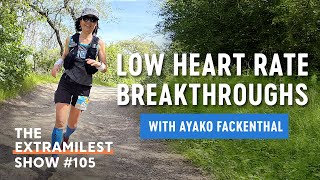
Ayako started running in her mid-50s after losing 35-40 pounds and went on to complete marathons and ultramarathons. She credits low-heart-rate zone 2 training, a supportive running community, and her border collie as key to her success. She emphasizes starting with a reason, finding your people, and keeping it fun over chasing speed.
Chapters
You think it's too late to start running or improving your running? Meet Ayako.
I had to lose weight. I think I lost like 35 to 40 pounds. That was a big motivator.
4 years later, at age 59, she went from 5K to half marathon to marathon and even ultras. And she is running stronger than ever.
I went straight to a marathon that same year because they said it could be done. And I thought, wow, They're older than me. I, I should be able to do this.
Her game changer, low heart rate training.
I didn't know anything about low heart rate training. I was just thinking I needed to go fast. And really it wasn't until I saw your Extra Mileage podcast and I started listening to that, that it started to make a lot of sense to me. And I thought, you know, I'm gonna really give this a try. And I think that was the real start of my long journey to being able to run a 50-miler.
She runs 6 days a week with her dog, no injuries, and she loves the process.
It can be done. If I did it, it can be done.
If you think you're too old or too slow to improve, this conversation will change your mind. This episode was brought to you by Element electrolyte drink mix. Recently, I paced my friend Jeff Pelletier at the Badwater 135-mile race. And I ran for about 40 miles. Temperatures went up to 45 Celsius, 115 Fahrenheit, and I was drinking plenty of electrolyte drink mix before I started, in the vehicle, while I was pacing, and afterwards as well. And it was phenomenal. It really has plenty of sodium, potassium, and magnesium. And because you're sweating that much in some of these extreme conditions, definitely had to up the dosage over there. If you'd like to try LMNT, they're giving away a free sample pack with every order. You can go to drinklmnt.com/flow to get a free sample pack with any order. That is drinklmnt.com/flow. And yeah, I can highly recommend it. Check it out. And I hope you enjoy my conversation today with Ayako. I've heard a lot of your running updates for the last 2 years, I would say. I'm always as to see from where you started in your 50s to seeing where you're at right now and having grown basically from couch to ultramarathon with several steps in between. So maybe we can start out over there. Like, what made you decide to pick up running in your mid-50s?
It's a simple, simple answer. I had to lose weight. Really, I lost— I mean, in my journey from that point on, I think I lost like 35 to 40 pounds. So that was a big motivator.
That is a big one. And so how did that go before then? Meaning, like, was it that you were doing other sports? Was it that you were not working out that much? How was your life before running and then after running?
So I was not— I was barely doing anything. So just, I was very busy. My kids were they were both, you know, national level athletes. So I was very busy, especially as they got into high school and all the competitions and swim meets. So one was a fencer and one was a swimmer. And so, you know, almost every weekend I was, you know, accompanying them, chauffeuring them, driving them all over the place. So I was very busy, didn't really have time to really think about my stuff because, you know, I, You know, I knew there were, for instance, running clubs, but those were mostly on the weekends. I was mostly gone on the weekends. And to be honest, at that point in my life, I did not like running at all. I just could not imagine enjoying running. But like I said, I watched my kids grow as athletes. I was very, interested, I guess, of what it takes to be an athlete. I read a lot as a parent of an athlete, of athletes. The, the whole process interested me in terms of their growth as an athlete. So, and then I was at one point in time a president of our swim team, so founding president. So again, I was very involved with USA Swimming from that angle too. So, you know, it's, you know, sports wasn't new to me from that angle, but I was more of an observer, not a participant, an active one. And before that, in my 20s and 30s, 40s, I was again, pretty much a desk potato. I did not do much. And in fact, before that I was, I was a trained as a classical pianist. So I was, pretty much sitting at the piano, whether it was practicing, it was rehearsals. You know, my, my life was very sedentary. Let's put it that way.
So what, what changed? Mid-50s turned around and then at some point you're like, okay, I want to start running.
Yes. So I had more time.
And how were those first few runs like for you?
Okay. Yeah. So Once they went off to college, I had a little bit more time, obviously. And, but even then they were involved in college athletics and they were on the team. So, you know, every season I'd go see them and whatnot. But because I had more time, especially on weekends, I thought I really had no excuse to not do something for myself. And like I said, over the years of accompanying the kids, like I said, almost every weekend on these outings, you know, I would eat with them. Like, we'd go to Smashburger. My daughter would be like, oh, let's have a, you know, whatever, ice cream shake. And, you know, I'm like, okay, me too. That was me in the '40s. So, so I thought, okay, I need to change my ways. And I also knew I was not good about, say, like joining a gym and then going because that just did not incentivize me. We already belonged to several gyms along the way when the girls played tennis, whatnot, swimming, and it didn't make me go and do things. So, but now that I had more time, I thought, you know what, I'm not gonna do I'm not going to spend a lot of money on this. I'm going to go slow. I'm going to start running because I think running is probably the most physical activity I could be doing. So that's how I started and kind of went from there. I did have a false start. I joined a local 5K training group, but I ended up getting— overdoing it because it wasn't really— I was, I didn't know what I was doing, you know, just running as fast as I can type of thing. So, you know, I ended up not super, not anything serious injury, but enough of a pain to say, okay, I'm not doing this anymore. So that was several years.
So, so what changed from that? Like, because eventually you ended up finding a joy for running, ended up running consistent, you ended up increasing your race distances. So what? Changed?
I did finally join a local, uh, running group. It was a great place to start. I met some people that really inspired me to, you know, go from a 5K literally to a half marathon. And then actually in, in speaking with people, I went straight to a marathon that same year cuz they said it could be done. And I thought, wow. They're older than me. I, I should be able to do this. So that's how I kind of started. And I remember those days, weekends, long runs, training for a half marathon, doing like a 10-mile, 11-mile. It just killed me. I mean, I just, but again, I didn't know anything about low heart rate training. I was just thinking I needed to go fast. Right. And even though our local group, the director, he was really good about placing us in the right groups, pace groups and whatnot, my thought process was you have to go fast to get better. And really it wasn't until I saw your Extra Mileage podcast and I started listening to that and then learned about Phil Mathatone's, the math, the, maximum aerobic, is it function? Function. Yes. That it started to make a lot of sense to me. And I thought, you know, I'm gonna really give this a try. And I think that was the real start of my long journey to being able to run a 50-miler, you know, marathon, then trying that 50K and then a 50-mile because That just forcing myself to slow down and look at the running training in a totally different way. You know, it wasn't about trying to get faster and faster. Also meeting a lot of people online through the PB program, that was also great for me because I realized, you know what? The reason why I wanna do running is because I wanna be in good health. I really love this idea. I think Maria Westergaard said, mentioned the running a marathon, you know, when she's 80. And I thought that is a great goal. I wanna do something like that too. You know, I may not be, get really fast. You know, I expect that it's gonna be a slow slogging process, I am not one of these people whose math tests improve by leaps and bounds. In fact, it's, I don't know, it's kind of flattish, but I've had results in my marathon races. So I know the process is working. I do also know that in, when I'm running, I'm very, try to be very in tune with my body. So I used to listen to, for instance, podcasts, or I still do listen to podcasts sometimes, but, you know, I used to listen to a lot of books while I'm running, and that was great. Got a lot of books read during that time. But I realized I really actually need to pay attention to what's really happening while I'm running. And so, you know, my breathing, how my heart feels, even if I'm running easy, how does it really feel to me, that type of thing. So nowadays, I actually do not listen to anything. While I'm running. And I'm very hyper-aware of how I feel day to day as I'm running. I'm pretty meticulous about studying my stats afterwards. But, and then I'm always just reading about things. I love to read about running. Something I learned while the girls were in their sports was that you have to be a student of your sport. So I believe in really learning and reading as much as possible, listening to others, learn from others. You know, again, I just find it great to be part of community and, you know, the PB community, even locally here, I'm in several different, for instance, trail running groups, ultra group, and just learning from other people I think is really important.
Yeah, it really does make a difference when you're surrounded by like-minded people. And same with seeing how you initially started doing road races like 5K, 10K, half marathon. Then you were able to shave down your time, but then you also meanwhile discover trail running and the joy of trail running and surrounding with different trail running groups that way. I think it's a way to get introduced to the trails because sometimes people get a bit intimidated by the trails.
Yes.
And other people, it's a great way to explore that as well.
It really is. Because, you know, when you're doing road running, which right now I'm in my training cycle, I'm pretty much focused on road running. There hasn't been a trail group. It's actually starting this week. So I'm very happy about that. But, you know, I live in Sacramento, so this is just Western Western States Country. I mean, the whole trail running thing is very big here. And we are very lucky to have, you know, be able to go up to Auburn in the foothills and run some of those Western States trails. It's great and it's beautiful, but it's not something you could go and do on your own. I would quickly probably get lost and I don't, it's not safe really to do that. So, And honestly, you know, everybody is very busy and I am too. So I like to do those trail runs like on the weekends or something like that, you know, set the time to do that. But, you know, during the week when I'm trying to get my runs in, I'm trying to get it done and move on to my next activity, you know, whatever I need to do. So, you know, it's pretty quick, as quick as I could do it. So yeah. Oh, the other thing about my running is I always run with my dog. I don't know if anybody knows that, but I have a very active border collie.
I knew sometimes, but I didn't know all of your runs.
Almost all my runs are with my dog.
I remember seeing you ran a half marathon and you ran a 16-second PB in that half marathon and your dog was running with you and you had 5 water stops and still were able to run a PB in that thing. So I was—
Yeah.
You ended up running a 2:06 half marathon, I believe, with your dog. With you the entire time.
Yes. And actually the dog was more of a stressor point. So yeah, I kind of wonder how I would've done if I didn't have him with me. But, um, you know, he's, he's such an active dog that I just would rather he run with me so that we both get our, um, you know, ener— you know, exercise, whatever you wanna call it, out. So, um, you know, you'll see me out on the bike trail and he's always with me. They know me by my dog.
Well, it's a nice way to get the energy out with a dog.
Yeah, exactly. Exactly.
That's good. So over the years, you have gradually shaved time off your marathons, and I want to talk through this a bit more. I find this interesting. So you ran your first marathon, then your second marathon, and you experienced some cramping, some bonking early on in some of those races.
Yes.
Later on, you started experimenting more with nutrition, with hydration, with pacing. Knowing what you know now, not just for the marathon, but for any type of race distance, what advice do you have to your younger self? Like, what advice do you have to someone at the earlier stages of their running journey?
Well, race specifically, don't go out too fast. Yes, the nutrition, you know, that's still nutrition and that's still something I continue to try to dial in. My goal with any of these races is not to bonk. That's my number one goal. And be able to come out enjoying it and be happy about it. So I am, you know, time is important. But it's kind of at this point, you know, like I said, I just really started this journey 4 years ago. So, you know, I really feel like I'm still at a stage where I'm trying to build my aerobic base. It's still very important. I feel like, you know, it's like a catch-up versus anybody who was very active athletically in their young years. So, I guess, you know, I try— I have to stay humble and just say, hey, you know what? If you could get this done and you're happy with it, then I think that's the best thing. You know, you should feel blessed about that. You should feel happy about that. And as, you know, people say, to be able to run like that is really a gift. And I really feel that, especially nowadays. So many people, you know, injuries, whatnot.. It's so to be healthy every day and to be able to do this, train consistently, I think I am thankful for, and I wanna be able to continue doing that. Like I said, into my 80s, that would be my goal.
This is where I do think a gentle training approach that like you build that base, you build that foundation, and then from there on you start adding speed work when the body is ready. You start adding in additional things. You can build training volume up gradually, right? It's really building it up from the ground up. And just that mindset shift, which you said earlier, that you thought back in the day that you had to run hard in order to become faster. Once you can spin that around and you can find that true joy in slowing down and then gradually seeing some improvements, whether that is in times, in training, or race times, or even how you feel with your energy levels throughout the day, or how your recovery is going, or lower chance of injuries. I think there's a lot of different things there.
Yes. And even on a day-to-day, if I'm not in the mood to go out, like maybe I feel really tired, but I just keep telling, I'll just tell myself, you could do this. You don't have to go out, you don't have to go fast, you know, just go out and do it. And just spend that first 5 minutes. And usually within 10 minutes I'm fine. You know, that's the battle, right? To get out there and run. So, But like you said, I do love adding that trail element to it too. And something I like doing is incorporating my runs with, say, vacation destination. So I've always— other than the CIM, which is very local, runs right next to my house, I've actually tried to find marathons or races that are very interesting, in interesting places.
And, uh, the Ogden one in Utah, right?
Yeah. The Ogden, that was beautiful. That was, uh, yeah. And Big Sur. Yeah. And, um, and then I got it in by lottery, by luck. I got into the Sydney, so I'll be going to Australia in August. Um, I'll be, um, I am. I know this is like too much this season, but I did sign up for the Marine Corps because some local people were doing it and, and it's their 50th anniversary. So I thought, wow, you know, that'll be really cool to be in DC and, and do that on their 50th anniversary. And then I could go visit my parents afterwards and, you know, it all kind of clicked together. So that's great. And, and then like next year I'm already thinking, okay, what can I do? That would be fun with running. And so I'm thinking about maybe going on one of these running vacations, you know, multi-day vacation type running things, expeditions. So, you know, I think for me, running is also a way for me to see and discover new places.
I love the sand.
Yeah, yeah. So I try to make it interesting.
Totally with you there. And I think Yes, there's something to be said about running a local race and being able to sleep in your own bed and having everything that you can control be under control. But sometimes if you have the opportunity to tie something into a vacation or to a destination— next year, I've always wanted to go ride my bike with my dad, so we're going to go to Iceland for a week.
Oh, wow.
Yeah. And I'm going to ride our bikes all the way through different places in Iceland. That's been on the bucket list for a long time.
Right. That sounds really exciting. Yeah, I've never been to Iceland either.
Beautiful as well. I think the importance of making not just your training fun, but even your racing fun and exciting. And so it's not only about, yes, the race is one of the highlights that you go to, but even some of the sightseeing around it. I think it's a wonderful way after you've done the race, you have a few days extra so you can walk around the city and flush out your legs and whatnot.
Yes. Yes. Yeah. So I think, you know, for me, the process, the daily process yields into these kind of fun things. So it's not just about the time for me, honestly, even though I am getting PBs, it's—
yeah. And then before you know it, you got into the ultra marathon distances. Tell me. How was that transition mentally to go from marathon to longer than a marathon? What, what, what was the reason you did that and how did that go?
So my, the same running group that I started with, um, uh, the director has, uh, he has a, uh, ultra group and it's been around for a long time and their focus is on a 50-mile race, local race here, actually the American River. Mm-hmm. I'm sure it actually. Um, so, um, You know, and he's always encouraging people to be doing not just the 25-mile, but the actual 50-mile. So, um, the first year I was just the trekker. I just hiked it because I was literally a little bit concerned about running on a trail. I didn't know what I was— what it was like. So I just— that year I just hiked it. And then the next year I did a 25. I My goal was the 25-mile race for this, the same American River. And then I thought, okay, following year, 50K and 50, you know, miles. So it was a progression, definitely a progression. It was great. You know, again, I think the training partners make a lot of difference. I, you know, I just had so much fun every weekend going on these long runs with the group. And so it was, it made it all very fun and of course different from my weekday road training. So yeah, very enjoyable. Oh, and then I did also the last year as part of my, part of my marathon training, I actually did a 3-day Trail Fest in Utah.
Oh, that's one. That's a beautiful one. I've been out there. I know.
Yeah. Yeah. And yeah, with Vacation Races and I just, I did, you know, the Zion and the Bryce and the Antelope Canyon. So again, that was fun. That was, that was, you know, a lot of fun doing that. And again, opportunity to see these places that I hadn't seen or haven't visited in decades.
So that's a beautiful way to run, come back to camp to spend time there with a bunch of different activities and then run a different park the next day again.
And yes. Yes, it was, it, it was a, a really fun, fun time. Met people. Yeah, it was great.
What advice do you have to anyone looking to go the distance up than what they have been, whether that's for people wanting to run their first 5K or 10K and then going to a half marathon, or for anyone wanting to do their first marathon or anyone wanting to do their first ultra marathon even. Do you have any advice?
Yes. It can be done. If I did it, it can be done because honestly, I was barely running a mile a few times a year type of thing, doing a 5K maybe on a Thanksgiving local run with the kids. But the whole process was just, I didn't understand running at all. Like I was, like I said, Why, you know? So I think what you need to do is think about, I, for me, I had reasons. I had like valid reasons. I wanted to lose weight, all this other things. But I think the best thing to say is, don't be afraid. I was hovering around that 5K max, 5K race max. Actually, I hadn't done it. I skipped from a 5K straight into a half marathon, never even did a 10K, went straight to a half marathon. And like I said, it was because I, you know, listened to people who said, you know, oh yeah, I, yeah, I went from nothing to a half marathon and, you know, or a marathon. And I thought, wow, you know, these, there are people who could do this. So if they could do it, I could do it too, you know? And so, and that's me saying, I don't know anything about running and I can't believe people run type of that mentality to thinking that way of, yeah, I could try this. So. And then same thing with a 50-mile. You know, it's like, it seemed very inconceivable at first, but well, the trail makes it friendly. I think the trail, you know, I kept saying to myself, listen, you don't have to be running the whole thing. You, you, you could be walking. And in fact, I really had to train myself to walk on like the uphills because my inclination as a roadrunner was to start running up the hills and for the 50-mile, I was like, you know what? No, I gotta learn to pace myself better on this. So that's, you know, to give yourself kind of that, I don't know what you wanna call it, grace, or just to say it's fine to slow down and do that. I think that was important. I don't know. I guess you get to this stage in your life too that you start thinking, well, I really should try something that I haven't done, you know? So, you know, sometimes I think, hmm, maybe 100K doesn't, you know, that's just only 11 more miles from a 50-mile, but it sounds super impressive. So maybe 100K someday, you know.
With Walter Linegar, one of our other PB members who at age 68, he ran his first 100K.
He, you know. 68, yeah. Yeah, see, when I hear about people like that, that inspires me, you know, I'm just like, yeah, see, it could be done.
Interesting thing. I want to just kind of back up a little bit of the message that I'm hearing over here for other people listening is the power of belief, the power of trying, the power of what is the worst thing that can really happen, right?
Right, exactly.
Things that you have under control during these races, and one is your pacing. You could walk the whole thing if you want to.
Yeah, you can.
Some races you might get timed out, but like, Then you time out. That's— you go back to an aid station and find a way back. The other thing is nutrition. As long as you take in enough calories on a consistent basis, nutrition and hydration, generally speaking, you're in a pretty decent spot if you get those 2, 3 things under control. Right. Like, with some races, it's going to be quite hot, and you want to be trained for that. You want to build your way up to it. But it's interesting, like, my sister, she lives in Amsterdam. 2 years older than me, and she has done several half marathons, and it never really crossed her mind too much to do a full marathon until, I believe it was one of her sons who said, oh, it would be really cool if you would run a full marathon, Mom. They went to watch the Amsterdam Marathon, and sure enough, she started thinking about it, and now she's training for her first full marathon. So yeah, I'm going out there in October. I'm going to like, I'm helping her for a little bit of how to get ready now for the marathon. And in October, I'm going to be helping her out on race day to kind of be there with her. But once again, it was the power of belief of like, okay, I see these other people doing it.
Uh-huh.
Maybe, just maybe I can do it. And then once you start training for it, you get your longer training runs in. All of a sudden you start to get these small wins along the way, and that builds confidence again for race day.
So I think so. And I think in the end it kind of builds confidence in yourself too. So I think that's, it's a win-win.
Yeah, it's, it's really nice to see that. And I think even earlier you were talking about how you were very involved in swim with your kids. Mm-hmm. I've seen a very similar thing in my kids right now too. Like they are going at summer swim meets and they're doing about a week. Yeah. Just the power of belief that they can shave off some of the times in the, in the weekly meets or that they're able to like show up consistently. I can get X amount of laps in X amount of time. It's the power of belief cannot be underestimated there.
Right, right. And then believing in the process too. Yeah, I think that's really important. Another thing too, as far as my younger self, you know, what I would say to my younger self is that, you know, I think my younger self was super competitive, super You know, I was like a real perfectionist. Something I didn't realize until I was, you know, I had my own kids. Not that they were perfectionists, but that's actually not a good thing is what I learned as a parent, being a perfectionist. I was reading this book about it and I was like, wow. Yeah, because it actually kind of limits you mentally when you put that kind of pressure on yourself. And I think I did a lot of that when I was young. I think in my younger, if my younger self would've been doing this, I probably would've been very caught up with my time, you know, everything, you know, just really just killing myself mentally about the improvements and whatnot. And I think with age, you kind of more knowledge, I guess, life experience, you just kind of start realizing that's not what it's all about, you know?
And so Could it also be that as you age, you care less what other people think about you?
Yeah. Although I don't know if I did things because of what other people thought. I just put so much pressure on me for everything. Yeah. It was an internal pressure. Even when I was a little kid, I was like that. So, you know, and then if you're not forgiving when you fail, that's, or do not succeed, um, and be so harsh on yourself, it's a way to just quit, you know. And so I was very easily, like, turned off if I didn't find success immediately. Um, something I learned through watching, um, and being a swim mom and kind of watching that process is that, um, success— you know, as people say, success isn't linear. There's a lot of ups and downs. Um, you know, watching that allowed me when I was, it was my turn to experience it, not get so caught up. So, you know, the math test, you know, okay, yeah, okay. I didn't go that well again, but oh well, you know, so, you know, the, maybe it was the weather or maybe it was this or that, but I feel better. I feel like I'm getting stronger. So I think I need to believe in that, you know? So even though I'm a very data-driven person, sometimes I just don't get so worked up about, my math test, for instance, I just, you know, and, and I don't even do it like the, the, the proper way with the racetrack. I mean, the, the track. I, I just find a, a flat place and, or I actually, I was on a bike trail. I was with my dog actually. The dog was with me too on the math test.
You're probably one of the few people who does a math test with their dog.
That's hilarious. I do. So like, you know, I, I can't even report, you know, online to say, oh, my math test wasn't good because I'm like, okay, but did you explain that you had a dog with you? And I just, so, you know, you kind of take it with a grain of salt too. Um, and I just say it's just one indicator. Um, you know, let's focus more on how I felt about it, how I was feeling.
Let's talk about race day mindset for a little bit. When things go according to plan, typically things will fall into place, but very often things don't always go according to plan.
Mm-hmm.
How do you work through challenges on race day when things don't work out the way they're supposed to at that point? Hmm. Or maybe they're supposed to work out that way, but if you encounter challenges, how do you go about it?
I think my mindset was very different between, say, my marathon and my 50K or 50-mile, for instance. So, which to me was more, the trail races were more of an exploration. So, but like, let's say going back to like road race, bonking, for instance, you know, again, usually when I'm running and something starts to like not feel great, I start thinking, okay, you know, just doing a lot of analysis in my head of, okay, what could I have done? I'm already self-analyzing the situation. I guess I keep telling myself that, hey, you know, you went through the training and you could get this done. And again, you might not get your best time. Usually when I'm running, I'm not even aware what my time is. I need to be more aware, but I've never had such a bad experience that it was, you know, it, it, it was crushing or anything like that. It was always like, okay, I don't feel great, but I'm gonna get through this. And even if that means I'm gonna crawl to the finish line, I'm gonna— I've never even felt that way. You know, it was just like, I'm just gonna get this done and learning for next time usually is how I look at it. Um, with my trail running, you know, my first, the 50K, It was my first time, you know, it was my first time pretty much on the trail, the first part of the course. And I went out too fast. I felt great and I went out too fast. And so by the time I got to the middle part, I was really hurting bad because my hip was just feeling really beat up because I had been running down hard these, you know, I was just like following along all these young people. And they're like running through that and I'm like running through it with them and I just start feeling it like I am not these, you know, 30-year-olds or, you know, whatever, 20, 30-year-olds, you know, running down that hill. I'm like, okay, so I got beat up and I learned from that. And then for the 50-mile, I was like, okay, I'm not doing that. I'm gonna really pace myself. The 50-mile was interesting because I really paced myself on that one and You know, it's such a long race and even though there are a lot of participants, a lot of times you end up kind of being on your own. So I got lost. I actually cramped up around mile 35 or something and I, as I was trying to jump over this swampy area and I literally just kind of fell backwards and tried to avoid the mud. And I, I was on my back over this log. I did kind of like almost like a, like a high jump or whatever the, you know, the pole vault, you know, I pole vaulted over this log and I was just landing there with my legs up and it was actually hysterical. And actually I did not, I just thought it was hysterical. I wasn't upset. I wasn't, I just thought, hmm, this is not a good situation. I was very calm for me. And luckily I was like, I hope there's somebody behind me. And luckily there was. And so he helped me up. But again, you know, it was just like, it didn't affect me too much and I just kind of kept going and, oh, there, when I got lost, I was a little concerned that I might've missed a part in, and I could get DQ'd. Um, but yeah, there was that fear at some point, but then I thought, okay, again, if I get DQ'd, okay, what can you do? So I just kept going. Um, it was fine. Um, I think that's a mindset thing. Not get so worked up, you know, just try not to be that perfectionist or whatever and, and enjoy the, enjoy the run. Just like, gosh, I'm out here doing this 50-mile, you know? So, and I had a great crew. I had a great crew. My, my friends who crewed and paced me were great too. So that made it all great and fun.
Yeah. It's, it takes a team sometimes, these longer events.
Sure. Oh yeah. It was, yeah, it really made a big difference. So, and again, you know, our, the Ultra team was, we were all running it. So at the end, you know, just cheering each other, that was great. Yeah.
Talk to me about some of the things you do outside of running to help set yourself up for running success, whether it's strength, mobility, sleep.
I would love to hear some of the things that have worked well for you. So I do cross-training. I do indoor bike cross-training. I take class, and a lot of that is because I get to see my old friends. A lot of my old friends are there in the class. And so, it's somewhat social for me. And, you know, even the instructor I've known for years. And so, I do that 3 or 4 times a week. You know, maybe that's a lot, but I do it. And then I, As you know, I'm trying to get a lot more of the strength training in. I do yoga classes a couple days a week. I have some, you know, favorite yoga instructors. And so, I do do that. So, those are pretty much it. I don't do— I do some mobility things like while I'm brushing my teeth and whatnot.
I don't— you're doing the yoga already.
Yeah, I, yeah, I do the yoga, um, you know, and I love to, um, that's— it's a great way to again kind of be in tune with your body and see how you, you're doing, um, you know, like just am I, am I tense, am I tight, you know, how am I feeling. So, so on a day-to-day basis, like I don't have any pains. I am very lucky. I don't have pain. I, I've never been injured. I've been very fortunate that way. I, I don't even really roll or things like that because I usually try to make sure I do my stretches. I have certain stretches that I do afterwards that I think really is important. But yeah, and then nutrition, as I've discovered a couple weeks ago, I realized looking at what I was eating that I wasn't eating enough protein. And I think that was partly to do— meat protein. And I think that was to do with the fact that after my Japan trip, I thought maybe I had gained some weight. And so maybe I started to unconsciously, subconsciously not eat as much. Or, and then somehow that kind of became, you know, eating mostly vegetarian, mostly, you know, fruits and vegetables. My protein source was just peanut butter pretty much, you know, and, and, and I realized that was making me very fatigued. I couldn't figure out, you know, week after week I was like, what, what is going on? What's going on with this training cycle? I feel so, so not fit. You know, even my slow runs, little short runs just felt, you know, tiring. And, um, so I started to incorporate, focus more on, okay, I need to eat more. I need to eat more of the protein. Source and make sure. Same thing with my sleep. I need to— I wake up, I'm woken up very early every day. So naturally, so, you know, I need to focus on going to bed earlier, you know. So yeah, and that makes a big difference because, you know, if I'm feeling tired, and it's not just the running be being tired during your running, but if it— you're tired during the rest of your day and you can't get things done, that just, it just stinks. You know, I just, it doesn't make it— I don't feel good about it. So I'm always, even outside of running, trying to figure out the right balance between all those aspects of, you know, the training and then the eating, the sleeping. All that, um, stress, you know, all that is very important.
The nutrition one is an interesting one because I do sometimes see athletes starting to train more, starting to run more volume, more intensity, so more training load.
Mm-hmm.
And on top of that, even in your case, you're doing strength training, you're doing yoga, you're doing spinning or cycling.
Mm-hmm.
So if you look at the amount of calories burned per day, but if we don't modify what we eat. Sometimes the calorie is just in a significant deficit without necessarily realizing it. And that can absolutely impact energy levels. And we have seen it various times where people start paying closer attention to it or even writing down for a few days, like, how many calories am I really taking in? And what is the breakdown of those calories? Right. There might be several hundred or more calories in the deficit every day. And then over time, that starts adding up. Indeed. I think sleep, absolutely. It's like a complete separate one, but that one also. And sometimes even when you don't take in enough calories, that might impact the quality of sleep as well, where you wake up more throughout the middle of the night. So it's all connected in one way or another too.
Right. And then another thing that I realized I wasn't doing well, and it's funny because when my kids were you know, doing their sports, I was a fanatic about, you know, did you hydrate? Did you replenish? The kids just laughed at me because I was like, did you replenish within your 30 minutes? You know, 30 minutes or 45 minutes of, you know, workout. And then here I am, I'm not doing it. Or it's not because, I'm being overtly negligent, but you just get busy with things, you know, or I, oh, I gotta go. And, you know, you just, and, and then when you do that, I, I find the impact of not taking in that protein and, you know, all that afterwards. I think it does impact me. Maybe it doesn't impact other people as much, but for me, I'm starting to realize, yeah, you know what? That's a big one. I need to be diligent about this.
One thing that has helped me quite a bit over the, over the years, whenever I go for a run and I drive somewhere, make sure that I put something in my car at least. So whether it's extra water, some, some food that I can, because when you drive out there, you might not be thinking about it, but after you finish, just having something available, I think it's credibility of it that you indeed, you get busier, you get caught up with the next thing. Yeah. Around, same with having a water bottle on your desk or something that is easy accessible that can definitely make a difference.
Yes. Yes. When I do my trail runs and I drive somewhere, I usually have my chocolate milk, my bananas. I'm actually pretty good about that. I think it's when I come home and then you get kind of distracted and then you start doing other things right away. So the resource, the kitchen is here, but I'm not utilizing it because I jump into something else that I have to do. So, you know, just being disciplined about that. Sometimes the most obvious, when things are accessible and obvious, you don't do it. So just, you know, be mindful of that, I think is really important too.
I know there's some people listening who are quite interested in low heart rate training or MEF training or zone 2, zone 1. How do you calculate what heart rate to run at? How do you, like, your, what's your current age right now?
Is it 59? 59.
59. How do you go about calculating your, your running heart rate?
So that's an interesting question because it's been, you know, I did not say, okay, well, I'm gonna take my 180 minus my age. And, and then I thought, well, okay, if I do that, then I won't be running. So, so I think the first season I really didn't actually, I did not do MAF. I, I was just more low heart rate zone 2. That's how I did it. And every season I try to go lower and lower is I, I think my approach. So, you know, my first year, I was doing like 1:40s in training at that because I'm like, okay, I cannot slow down because I'm in the middle of a marathon training season. And so, um, I better just kind of modify it. So again, I wasn't strict. The next training cycle I was like, okay, I'm gonna try, um, MAF plus, and I think I gave myself 5 plus 5 cuz I would, I was never I was over 55 and I was an injured. Although I've since read that it's only, it's not plus 10, it's only plus 5 with that. But anyway, I gave myself plus 10. And then, so I work with that and now I'm pretty much, I go more by, you know, like I said, this season I was like, okay, I'm gonna try to stick to 132. So I kind of moderate. I'm not super strict. And then we talked about, you know, okay, well, where do I feel comfortable? Well, so again, I monitor that as well. And so my goal has been to try to do like a 131, 132. That's my goal. If I could even get it lower, great. You know, so actually lately I've been running 127s and I feel like that's the, like the real super easy run for me. Since I pretty much run by myself, I can't do the conversation test, but I'm always kind of monitoring like how easy does it feel like the RPE, like the perceived effort too. So one thing I found through that journey is that a lot of times we think, oh, it's easy, but it's actually not, you know, you're like, so, you know, I used to be like in my one running at 140s and I'm like, Oh, but it's really easy. Hmm. Nowadays I'm like, no, that's not easy. I mean, it's doable. Yes. Yes. But I want my easy to be like super easy. Like I don't even feel like I'm running. That's my goal. Like when I'm out there, that is my goal is to be able to do these runs where it's like, it's like as if I'm walking, you know? And, um, that's kind of my aspiration day to day. And, and so I think that 1:31, 1:32 as a goal, like when I do my math test is probably like the right moderate goal for me. I think if I, and then like I said, my training runs, if I could go lower, that's great. That's always my goal to be even lower with my easy runs.
Yeah. Well, this might change on the day to day as well, right? And it depends on a lot of different variables. Like when someone is training 3 hours per week, week running at a heart rate of 140, in this case, will have enough time to recover if you spread it out far enough, most probably. Right. But if you're training 6, 8, 10 hours a week, that 140 is gonna be a lot more impactful, or it's gonna be much more challenging to recover from. Right. Obviously depending on where, like what age, what your max heart rate is, and a few different things over there. But I've, I've seen that for quite a few athletes in particular in their 50s, 60s, 70s, and beyond. Where 180 minus 8 just gives a number that is almost an instant walking. Yeah. Further modification. I'm not saying that walking is bad. There's quite a few people that will really benefit from a period of time during most, if not all of their workouts at a, at a walking pace. Right. That being said, there's also the joy component and finding that balance in between. Yeah.
Yeah, I think it is important to balance that out and not be so strict because, you know, if say again, like myself, you know, almost 60, like I want to be able to run marathons. And so, but I don't have all day to be training, you know? So, you know, you gotta find that right balance and then you've gotta be able to be willing to shift it as modulated as, as time goes on as well. I'm always shooting for that lower heart rate, you know, I'm always shooting for that. And again, the sustainability, like you said, the ability to be able to run day to day, every day, or, well, actually I take a break. I run 6 days a week, but, you know, a lot of times Yeah, it's, it, it's really important. That to me is that consistency and being able to train consistently injury-free is for me right now a big priority.
So. And then the sign is, are you able to recover? Did you enjoy doing it again the next day?
Exactly. Exactly. That mental side is important too, because if you are just fatigued even mentally to be like, no, I don't even wanna go out there again, that's not a good thing because half of the game is mental. So, Again, you have to make your daily training enjoyable enough, your daily runs, any runs, you know, enjoyable enough to say to yourself, yeah, I'm willing to go back out there again.
So, mm-hmm. I have one more important question, but before we do, where can people find more about you? Is there any social channels that you're active on?
Do you— Gosh, I'm, I'm not a I'm not a big social media person, but so the best place to find me is on Strava.
Yeah, Strava. Sounds good. I'll make sure to put a link in the, in the show notes too.
Okay.
There's quite a few people listening that are looking to improve in one way or another in their running and health journey. Uh-huh. Do you have any closing thoughts that you would like to share with them?
I do. I think, um, knowing what works for you, is really important. You know, if it's being out there, it'll— with friends, and that's gonna make you go run, you know, do that. Find people to run with. That's how I started. I knew I could not do this running on my own. Like, I had to run with other people. But as time went on, you get to a point, again, we talked about this, like, you know, The willingness to go out there and, and finding the joy of that micro, and I'm gonna call it micro because it is truly for me a micro improvement day to day, but, and enjoying that process and then having a more bigger long-term goal of not just to say, I'm gonna get my PB the next run, but not be so focused on that because not be so outcome focused, I guess. Results-oriented because that could set you up for disappointment and being— what's the right word— gratitude for being able to do this. I think running is a, you know, it's hard. It's not easy. You know, you've got to be able to make it fun. You know, it's not like a game of something. Running, swimming, some of these sports are, you know, very much It's not a game-oriented thing, so you gotta make it enjoyable for yourself. And knowing what works for you is, I think, the first step.
So well said. Ayako, thank you so much for sharing all of your insights over here. Okay. Next time I'm in Sacramento, I'll shoot you an email and would love to run the Western State Trail with you at some point.
Oh yeah, that would be great. Or maybe I see you running the Western State.
Like a way to get into the lottery first.
That's true. It's so hard to get in. I know, I know. Unless you happen to, you could volunteer and, but that even is a lot.
Yeah. But either way, we'll get a run in at some point sooner than later. So that would be great. Awesome. You have a good day, Ayako.
We'll talk. Thank you. Thank you very much.
Thanks so much for listening. Ayako is an inspiration to me and I know to many other members in our Personal Best program., and in the Extra Mileless community. If you'd like to learn more about the PB program, check out pbprogram.com. Ayako is an active member in there. So are several of the other podcast guests that we have had on in recent months and years. It's a very supportive community. We all learn from each other. We meet on Zoom whenever anyone has any questions. Twice a week, we have office hours. We have an an active Facebook group, an active Strava group. So yeah, if any questions, check out the FAQ in pbprogram.com. I would love to hear from you. Do you have one takeaway, lesson, or quote that stood out from this episode for you? Please let us know in the comments below on YouTube. Have fun out there on your runs. Bye now.
More from Floris


Ryan Hall 2.0 on Strength Training For Runners, Lifting Heavy & Trail Running




You’re Doing Zone 2 Wrong (Even If You Think You’re Not) | Scott Johnston Round 2


How to Build an Unstoppable Aerobic Engine (Even If Starting From Zero) | Scott Johnston


Stress Is Killing Your Running (The Relax Fix You’re Missing) with Dr Kasim Al-Mashat

When things get hard, say this, it (works in any race) #jeffpelletier #running #ultrarunning