From Paralyzed to Running a Fast Marathon, with Ash Lewis
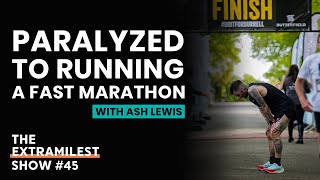
Ash Lewis, a tattoo artist from Jersey, was paralyzed from the waist down at 28 after a spinal abscess. He spent years relearning to walk, then run, and now races marathons under 3:40 using low-heart-rate training at around 144 bpm, with plans for a sub-3-hour London Marathon.
Chapters
I definitely had some weak moments. I definitely had— yeah, I definitely had some emotional moments and some— some— yeah, you do find some low points, but I don't think I ever gave up. I don't think I ever said to myself, I'm not going to do this or I won't do this. You find inspiration in really funny little ways. I remember seeing something on the TV about this ballet dancer. He was— he was a young kid. He was brilliant. And he had a really serious accident. At the same time as me, paralyzed from the waist down, he was on the news and showed him getting back to it. I've never heard anything about him again since, but it's just, yeah, I think little moments like that inspire you. And I think my just general personality, I think anyone actually, when you have adversity, you did get on with it. You see these people have all these injuries and, or they, you know, had accidents and you just find a way and And it is what it is.
Welcome to another episode of The Extra Mileage Show. My name is Floris Geurman, and on this podcast I talk with different guests about ways to become a stronger, healthier, and happier athlete. And it's been a little while. I'm excited to launch episode number 45 here with Ash Lewis. He's a 38-year-old runner from Jersey in the UK, and he has a very inspiring story to share. 9 years ago, when he was 28 years old, he experienced a spinal injury and he was paralyzed paralyzed from the waist down. He was in a wheelchair and he really had to learn how to walk again, and then from there had to learn how to run again. So in this episode, we talk through his running journey and his road to recovery, his experience with MAF low heart rate training, and all of the different things that he had learned and advice that he wants to share with other athletes going through challenging situations in training, racing, and in life. Before we dive in, I'm really excited to tell you about our new running coaching program called the Personal Best Program. And this is for beginner, intermediate, and advanced runners looking to reach their personal best in the 5K, 10K, or half marathon, in the full marathon distance, or even in the ultra marathon distance, anywhere from 50K to 100 miles or beyond. And this program doesn't only include the different training videos and different training schedules for the base building and the races, but it It also includes the overall community elements where we have weekly Zoom coaching calls. You can ask me questions, you can ask other coaches in the program questions, and you can also ask different members in the community questions and really learn from each other that way. More information can be found at pbprogram.com. And this is really a program we put a tremendous amount of effort into. This is the only running coaching program that I offer. And it has really the best video content and training schedules that I simply don't have anywhere else available. You can find out more at pbprogram.com. Without further ado, I hope you enjoy my conversation with Ash Lewis.
Hello, Ash. Welcome to The Extra Mile Show. I'm very happy that you're here.
Thank you for having me, Floris. It's lovely. It's lovely to be here.
Yeah, absolutely. And we're chatting for a little bit over here earlier because you have just finished your second marathon. And it's been really fun to actually see some of your running journey because it's still relatively new, actually, like the running component over there. So I think before we're going to dive into some of your running journey, I think it would be good to actually step back a little bit. Maybe you can tell us a little bit more, like how did you initially get into sports? Like what was your athletic background kind of growing up? Just so we have an understanding of what your base was like.
Sure, so I would say the majority of my sporting background would be playing football, soccer. So started that from a quite young age, wasn't very good until I got to about 13, 14. I was actually a goalkeeper, but I'm really small, I'm like 5'8", which is quite small. But yeah, I've always been into sports, so I was at school, I was always playing football, rugby, Um, so I was always really sporty, and, uh, but even though I was a goalkeeper, I was always quite fit. So I always kept myself quite fit. Um, I never, I never liked running. Running was just there to keep me fit. It wasn't something that I did. In fact, I can remember looking at people running and thinking, why would you run?
Well, at least, at least you're in a position with football that you had the position that you had the least amount of running, being a goalkeeper, probably.
Yeah. Yeah, that's true, that's true. But I still always like being the fittest, so I couldn't— it was strange. And if I think back, if I think back now to when I was younger, um, I still like the sand dune runs and, you know, all the preseason runs. And I was never the— I was never the, the best. Even, even at school when we did the athletics, I was, I was always kind of just like mediocre to good, but that was, that was enough. Right on.
And, and up until what age did you play soccer, and when did you start transitioning out of soccer?
Yeah, so I did, I did, I did quite well, um, playing soccer. I live, I live in Jersey, like a small island, um, in the UK. And I actually got to play, um, in London for a year for like a, like an academy over there. And then I was about 17 then, and then I actually managed to play in America for a further year, um, in Bridgeton, Maine. Um, I was getting to about 18, 19. I was always trying to make a professional— had a few trials of some clubs in England and stuff, but I kind of think by the time I got to 18, uh, it was, it was kind of coming to an end in the goalkeeping sort of scenario. And then when I came back home to Jersey, I just played for some local clubs over here, but I played outfield, so I actually started playing in the midfield because I could always play. And, um, and that was it. But I've played all my life. So I'm 37 now and I quit playing football last year completely. Yeah.
So, wow. Um, and I grew up in, in Europe myself. Like, I know it's funny because you are talking about football and soccer. Recently had a conversation with Ben Edousai, um, who also grew up playing soccer in the UK. And so it's funny, so many Europeans are so familiar with it. Yeah. Whereas here in America America where I live now, it's like whatever sport number 5, 6, or even there.
Yeah.
I do way other sports, but yeah. Um, so when you posted one of the messages in the Extra Mile Facebook group and I got to know you a little bit more, I found out about your background that it wasn't always smooth sailing and that you also had some, some health challenges. Can you share a little bit more about that?
Yeah, of course. So I was like, like I said, I was super sporty, um, and it was about 9 years ago, so it was kind of in my prime. I was about 28 years old and, uh, just experiencing, uh, a lot of back pain, a lot of back, back issues. Went to A&E a couple of times. They couldn't really put their finger on what it was. Um, I was getting really ill and I'd been with my, my wife— it wasn't my wife at the time— about a year at this time, so it was quite new in our relationship. But, um, yeah, I just got really sick and finally went into A&E. They took me in and, um, they thought I actually had a kidney infection, which is great. I thought this was brilliant because I knew that something was wrong with me, and, and they were saying, yeah, this is what's wrong with you. My knees had started swelling up as well because I've had a lot of problems with my knees, a lot of knee injuries, a lot of knee operations in the past, like a torn cruciate and all sorts. So it was— whatever it was was attacking my knees. So they said, well, what we'll do is we will keep you in overnight, we'll drain your knees and we'll just monitor you. So they had the operation on my knees and then that evening about 3 o'clock in the morning I woke up and I was paralyzed from about the waist down. I'd say higher, just zero feeling. So I was panicking and called the nurses in. They said it's fine, you just got pins and needles or something from the operation. And I was just like, this isn't right. So I rang my mum and I was panicking, and the doctor finally came around, did a few little, little tests, and he was— he said, yes, it's spinal. So he flew me over to London, airlifted me to London Neuro Hospital. It was— I remember it, but it is a little bit of a daze because at that point I think I was on some drugs by then. And what it ended up being was an abscess was on my spine and it actually— it burst and paralyzed me from the waist down. So they had to go in, operate on my spine, take a little bit of my spine out, uh, so they could get in there, free it all up, clean it all out, and then just wait. Yeah, just wait.
That must have been the scariest moment of your life right there.
Yeah, incredible. Yeah, just— and, and just being in, in that hospital, a specialist ward with so many people who had so many neurological problems from all different ages— kids, young kids, old men, and people like myself. And yeah, you, you feel sorry for yourself, but then you see other people who are even worse. So here's me not being out, not being able to walk from— it's gone, everything's gone, every movement. You might not ever walk again, all these things they're telling you. And you're looking across the room and there's someone worse, and it's just like, wow. Um, but yeah, that was, yeah, that was 9, 9 years ago now.
And what was the diagnosis? Did they say like, ah, it's going to come back again? Was it guaranteed?
They never, they never, um, truly understood what it was. Um, it was a staph infection, uh, that they don't know how it got there. Uh, it usually only occurs in, in elderly people who have like weak immune systems. And the only thing I could ever think of what it could have been was Years before, when I was traveling in Thailand, I caught dengue fever and I ended up in hospital in Bangkok and was not in good shape. And that stays with you. But I mean, I don't know, I couldn't tell you. They couldn't tell me, which is even more frustrating. But whatever it was, I was just left with whatever it was I was left with, and that was that.
How was that recovery journey from being in a wheelchair to being able to walk again and Pretty bad, I would say.
Tough mentally, had quite a large effect on, an impact on myself, my family, and everyone close to me. Because I was, I'm such a, I always felt like I was quite in tune with my body and listened to my body anyway, so not having the feelings, just simple things like, you know, having to learn how to walk again It's a real strange feeling, like when I see a child and they're with their mum, they're holding their arms up in the air, I can actually, I know what it feels like for that kid because everything's off, your proprioception, your balance, and it's quite embarrassing actually as well because you know you're not walking correctly and normal and yet I don't, I didn't tell anyone about it so they just would see me and be like, what is wrong with Ash? You know, and it's just a really long, yeah, it's a long, long journey, I would say. Tough one. A lot of physio, a lot of physio sessions, a lot of, yeah, just trying to do all the simple small things that we just take for granted that even, even now I still have to think about sometimes how I walk and, you know, balancing. And I'm quite— even, even yesterday when I went to a strength conditioning, we had to do some hopping. I was like, when was the last time I hopped? It's crazy, you know, I don't think I've hopped in years. Well, why would I?
But yeah, yeah, well, I think it's, it's spot on what you said, though. Even that part of you take so many of these things for granted until it is taken away, right? Until you don't have that anymore, and then all of a sudden, yeah, you look back of how good you actually had it and how good some of these things actually did work, right?
Yeah.
How long was it until you were able to like walk again somewhat normal, or when did you— were you able to start transitioning into jogging again?
Well, I was only in that neuro hospital for a couple of weeks, maybe a few weeks, before they kind of— they felt like I was in a position where I, I was, I was able to stand up and move and, and function properly and, and things. I was thinking about that today, actually, that I actually went into— I think I cycled first. Cycling, cycling was— I'm not, I'm not a big, I'm not, you know, a big massive fan of cycling, into it, but it was the, it was the one thing I could do that I, that didn't require me to, to balance, really. It was more force on my legs, so I could move my legs and exercise. But as it took, I think it took a long time. Like, I tried to go back and play football after maybe God, it's even a couple of years and I moved like a robot. It's been really slow. Um, I just think over time it's just, yeah, it's just repetition, repetition, and nervous system kind of gets stronger and stronger. And, you know, I did actually try and play football, um, the last couple of years and I played quite well. I got to, but it still wasn't me. But then I think, oh, is it because I'm, I'm old anyway, like older And would I be this slow and useless anyway if this hadn't happened? Do you know what I mean? You don't know. But it, um, I always felt like I was trapped. I always felt like I was trapped, like an old person's body. That's how I felt, like really frustrated all the time. Like my brain, like, come on, move, do this, do that. And the legs, like, no, we don't know what we're doing yet. And it was just, yeah, it was a long, long journey for sure. Yeah.
Did you ever think you would not be able to run? Like, did that go through your mind, that you would be?
Hmm, I don't think that's how I'm— I definitely had some weak moments. I definitely had, yeah, I definitely had some, um, emotional moments and some, some, yeah, you do find some low points, but I don't think I ever gave up. I don't think I ever said to myself, I'm not going to do this, or I won't do this. You find inspiration in really funny little ways. I remember seeing something on the TV about this ballet dancer. He was, he was a young kid, he was brilliant, and he had a really serious accident at the same time as me, paralyzed from the waist down. It was on the news and showed him getting back to it. I've never heard anything about him again since, but it's just, yeah, I think little moments like that inspire you. And I think my just general personality, I think anyone actually, when you, when you have adversity, you did get on with it. You see these people have all these injuries and, or they, you know, had accidents and you just find a way and it is what it is.
Yeah, no, 100%. And I think indeed your, your own approach of how you're looking at things and the mindset in a situation like that plays such a big role of that journey as well. Um, there's a book, You Are the Placebo, um, that I've read, and it talks also about how the mindset of people can sometimes very strongly determine the outcome, as well of, of if they truly believe, hey, it's gonna work, or it's gonna, I'm going to recover and I'm going to get over this, that, that positive momentum really helps guide you towards there as well. Where, for example, in 2007, I ran my first marathon in 2008. I really had some foot issues, went to the doctor and the doctor told me, you're never going to be running a marathon again. This was 14 years ago. Yeah. Well, and it, it, it almost comes down to like, I want to prove you wrong or like not saying don't listen to your doctor, but it's not, not, not always that when a doctor almost like writes you off or wants you to start doing a different sport, that there's not other approaches that you can try to in certain ways.
Yeah.
It's, uh, it's fascinating that way. So tell me about when you really started getting into running and when you decided to want to start running a half marathon or a marathon.
That was this— no, last year, April. I think it was in the middle of— we'd just been locked down. My wife is the one really who inspired me and just booted me out the door. She was training for the London Marathon, which never took place, and I just thought, well, I'll just go and do a 5K. And, uh, I just got up and did 5K. And I'll never forget, like, obviously pushed myself super hard. I just— I mean, I went, I went hell for leather, and I got back, I got back, I had a massive headache. I was even under the tap as well, just, it was just so hot. And I was like, wow, that was, that was painful. And Michael Ovens, funnily, the first thing he asked me was, what's your heart rate? I mean, I don't know, I didn't know at this point, I just went out and ran. But that was the first thing he asked. I said, I said to my wife, why do you— what does it matter about my heart rate? And, uh, and that's when it started. Yeah, last year, April.
All right. And so, so for those who are unfamiliar, Michael Evans, uh, your, your brother-in-law, he was a previous podcast guest. He had improved from a 5:30 marathon to, yeah, like very close to a sub-3-hour marathon.
Well, I didn't even know I didn't even know. Like, I knew Michael was into— I knew Michael was into running, but I, I obviously just didn't pay attention. And, uh, and he sent me the podcast. I thought, wow. Yeah.
And so how did that journey unfold for you, for going out like, like at a very high heart rate and training, training very intense, to like starting to pay attention to some of these other factors?
Yeah, I think Michael was a big, a big part of that because, like I said before, with my football, I picked up a lot of injuries. And you always hear about, um, how bad running is for your knees, and, and, um, and that was like a big concern of mine. And he was really just trying to tell me to slow down, um, and I listened. I listened because I know I've told a lot of people this, this, uh, information, and I could just see it go over their head, but if I could avoid getting injured, um, then that's what I was going to do. Uh, so me and my sister actually signed up for, um, the marathon over here, the Jersey Marathon. I mean, just dove straight into our— like, just got any old training program off the internet, uh, and we just got straight into it. At the, at the start, I wasn't really, um, keyed into, uh Maffetone training. I wasn't really— I was and I wasn't. As time's progressed, I've really started to understand it more, especially the last training block that I've done. Um, you know, me and my sister were kind of doing this, this program together, um, and I wasn't really understanding what it meant to, to run a low heart rate. Um, so I'd say from my last training blocks when I really started like understanding the 180 Formula Yeah.
So what, what heart rate were you training at once you started training with the 180 formula? Can you, can you just briefly explain? Was it 180 minus your age? Did you do any adjustments?
What? Yeah, yeah. So, uh, 180 minus my age, um, so it was a, it was, uh, 144. And basically I said from December, um, because I didn't really understand um, the kind of the base training, you know, getting good— a good 3 months under my belt. Because I felt like I— my first marathon I did a good— I did a good job on. So I thought I did a good job. My first marathon was, um, a 3:35, uh, with no taper. I ignored the taper and just kind of cracked on.
Very nice for your first marathon.
Yeah, but it wasn't— it was nice, but it wasn't, um, it didn't end as well. I definitely hit the wall at the end, and I just didn't know what was going on, and I didn't want that to happen again. Um, so the more I learned from, from your podcast and listening to your guests, it's really good to have this, this 3-month base building. I think that's what's made the difference. Um, a massive reset, and it was really frustrating at the start. I, I can't— especially December, January, February, those months were cold over here. Um, and, uh, so I started at the 144 and I was running about 9 minutes per mile and, um, a lot of walking, loads of walking. Like, I look back at my notes earlier and it's just walking and then running and then walking. And I made sure that I wrote down notes, not just having on my Strava, I actually physically wrote down in my book. Um, so yeah, that's, that's where it started, kind of in December, 3 months Yeah, what was, um, your training volume like in those, in those 3 months?
And like, how did you, like, where did you start and how did you ramp that up?
I think, um, I kind of probably went in a bit too hard as far as what's recommended. I would say I went, but it felt fine for me, but it isn't what was recommended. But I had a goal in my— you know what it's like when you start looking at YouTube channels and you start looking at like everyone's like thoughts and you read books. And so my— I want to get myself to 70 miles and kind of hold it. I actually had an idea of getting higher, but I just couldn't do it. So it was— I kind of climbed up to 70 miles and was just like that for, for a number of weeks, just held it there, really. 70 miles was good, was it was tiring, but because there was no speed work and it was just constant, um, low heart rate, I could just, I could just go the next day and go the next day, and it could— it was just amazing. And another thing I found was in my first training block, when I really didn't know what I was doing, my knees were a bit sore, my ankles felt a bit brittle and a bit weak. I think when I started doing this low heart rate training, I think weight slowly came off as well. Which helps. Not, not drastically, but just enough. And then my muscles started— I felt like my body was more in tune with what it was doing, and everything started adapting. Yeah, it just became, became not easy, but just more familiar.
Yeah. So the early, the early stages, you said there was a lot of walking and it was challenging. Yeah. How did you— what was it for you that make you decide to stick to it? And what, what was it that you felt like, all right, at what point did you have like an aha moment that things started to click?
Yeah, so I just had that really tough period through, uh, December, January, and February, uh, of just— it was, it was improving, it was getting better, a lot of walk running, um, and actually I started cutting out hills a little bit more. I was— the, the routes I was choosing were always quite hilly So I kind of made a little promise to myself that I would give myself a break and go a little bit flatter. Um, and that was kind of it really. It just drastically went from all of a sudden I was running 9-minute miles, and it was like one day it was like, um, almost like at 8:30, I was like, whoa. I actually thought it was a mistake, um, not the time but my heart rate. I just wasn't— I didn't trust it as much. And then it didn't— it just continued.
Yeah, nice. That was nice. And then how did it go getting ready for race day? At some point you started integrating some speed work in there.
Yeah.
Yeah. How was that?
Yeah, speed work, that was something I had to completely research as well because I don't know much about running. So I was obviously again doing as much research as I could on that. I felt that that was harder for me because of recovery. So obviously the load, um, had increased, but speed work I actually only really incorporated, um, maybe about 6 weeks or less, maybe like maybe 5 weeks before the actual marathon, and that's including taper. So it was— I did— I didn't do an awful lot of speed work. I just felt like I was getting quicker anyway. Like, I was, I was on my, my, I was working less and I was getting quicker, um, and my body was able to cope with it to the point where now I can't really run at my max anymore. I can't run at 1— if I was to run at 1:44 every single day, I wouldn't be able to run at 1:44. So now I actually have to dial it back to kind of like 1:37. 1:37 is good for me, or, you know, between 1:37 and 1:39, and that's it. That seems to be a nice pace that I can sit in. For a little while.
So it's so funny how you say that because indeed at the beginning I see that so often that people have a hard time even having to slow down that much to stay within their max training zone. Yet after a while as they develop more aerobically, like staying within that zone, especially as the training volume is up there and as they aerobically are more developed, becomes more and more challenging. And you find what that right heart rate is where it feels right for you.
Yeah, you just know. Yeah, you just become really in tune with it and I think that's really important at the start of this, of this whole, uh, if anyone's out there and they're starting this journey, of is be— try and be disciplined with it and maintain it. And also, also not give yourself a hard time as well. Like, you're gonna have— I always found sometimes having that data there is a hindrance because you, you're a person and you have ups and downs and you have good, good and bad days and you have no sleep and have a child who's crying and you know, in the nighttime. And, and sometimes you just have runs which just don't fit into what you were doing, but all of a sudden next day comes along and it's okay. And then the next day comes along and it's okay. And then you might get another bad one, but it's just maintaining that constant— it, it does 100% work. Like, I, I 100% testament that it is running at a low heart rate You do get quicker because you're getting fitter, you're not getting injured, but it is at the start when, you know, when people don't think it's working and they have to walk. Everyone's doing it, everyone's walked. Don't worry about what anyone's thinking when you're— which is tough actually when you're running, and especially in Jersey where people know you, you might get people who know you where you are and you see running slow, that's tough. And then Strava makes it tough because no one— you always want to say, hey, by the way guys, I'm running this slow because— but you know, just let you know, it's just, it's a strange thing. But, um, don't worry about any of that. I say don't worry about what anyone thinks, just keep to what you're doing and, and run your own sort of run. That's, that's honestly what I've done, and it's— and it works.
Yeah, tell me about— tell me about race day, because the second marathon you did, you obviously had the experience from the first marathon you knew what it was like to bonk in a race and to hit that wall around mile, whatever it was, 21, so 34K in, 34K into a race. So going into your second marathon, the one you ran 4 weeks ago here, tell me, tell me what was somewhat of your race strategy and how did the race day unfold?
I kind of had an idea of, of what, of what pace I wanted to run at, but also an idea of what heart rate I wanted to run at. Um, I would love to get— I'd love to have an experiment of just completely ignoring the pace and just running purely on a heart rate basis. But, um, but yeah, I just had a strategy of, of just even, even splits. I didn't want my heart rate to go anywhere really, especially for the first, uh, half, to go anywhere above maybe 1:55, 1:57. I kind of figured that it was a good— and also because of, of the, um, of the nerves and stuff, it's going to be a little bit, a little bit high. But, um, I didn't want it to creep any higher than that, and it really didn't. It didn't really until kind of the— if I look back at the later stages when I started pushing a bit more. Um, you know, taking into consideration the wind, I knew it was gonna be windy that day because it'd been windy for weeks and it just hadn't let off. So I knew the second half of that marathon was going to be so hard um, which it was, so I've prepared myself for it. But yeah, and listening to Michael, you know, and listening to myself and trusting in my heart rate, and, uh, yeah, that's it really.
And how did it feel when you came through like the, the mile 21 this time? What was the difference?
Difference is I probably fueled a bit better. Uh, I don't think I fueled correctly last time. Um, so that was definitely, uh, helpful. And I drank, I drank more fluids, and I just felt like I was in a better position to finish strong, to the point where actually when I did finish, uh, I thought I could have given that a little bit more. And then there was a point actually around 20, 21 miles, and I felt really good, like I felt amazing, like it was like, wow. And then like within, I don't know, I'm another mile, I was like, oh, I'm not feeling so good. It's incredible, the ups and the downs. I don't think unless you've run a marathon you can really explain. When you get to that 20-mile mark, there's something about it, that last 6 miles. Yeah, but that wasn't, that wasn't even a competitive marathon. It was, again, it was something we had to do because there was no races. So I'd love to see what it'd be like to run with other people in a marathon scenario. But my heart rate again was um, it was strong, like it was in the 160s, I would say, uh, towards the end, you know, like there was— it was only spiking on, on hills and maybe against that wind, but generally if you look back at the two different runs, it was— that actually, that's something as well, Floris. I remember, um, I did a half marathon actually at the very start of this whole process, and then when I was doing one of my training runs in this block I managed in a heart rate run to run to nearly— I could have beaten my all-out effort half marathon in a, in a, in an easy, relaxed sort of fashion. I was like, man, if I could just keep that, if I was meant to do 13-point, you know, whatever miles today, I would have, I would have beaten my PB with not even trying.
I think that is the best part, that all of a sudden you can start— like, it takes a while to get there, but if you can run that much at a lower intensity that it feels much more under control and you're still getting that pace in over time. Yeah. That's a very nice controlled way of racing. And so, but what you were saying earlier too, though, I thought that was so spot on that some mile you feel really good. And then all of a sudden the next mile you could feel really terrible. And like, just almost because sometimes I see people in the earlier stages of a race where they feel that good that they almost either want to pick up the pace or they want to start chatting or slapping a lot of high fives and using all this other energy, or energy versus like, all right, you're not there yet, celebrate once you're at the finish line, hold back a little bit.
And yeah, it's not knowing how much to hold back. Yeah, because you feel so good at the start, that's the thing. And you, you, and you even feel good 10, 30 miles, and you think, okay, you don't know really when to push it. But I, I feel just maintaining Well, the even splits for me was the key because I think maintaining that, you know, if you feel good 13, 14, 15, 16, I think you can say you can go for it. But if you do go off too quick, then yeah, you're gonna, you're gonna be in trouble for sure.
And this is why the more marathons you've raced, the more you get in tune too with what, what those 20 miles feel like. Because realistically, you've only been twice in a race situation where you're at mile 20. Yeah, if you do that like a few more times, you'll, you'll get more familiar.
Well, I did that race. I had, um, like a 13K race last week, but it was, it was an uphill race. I mean, the whole thing was. So I had no idea on heart rate where I would— I mean, I had an idea, but it goes out the window a little bit when you're, when you're attacking so many hills. But I think on the recovery, if you can get your heart rate down on those when you're not running uphill, any chance, and you can kind of have a quick see where you're at, okay, that's where I'm kind of at. So That's how I was gauging anyway.
Yeah. Yeah. Plus the shorter distances are like a whole nother animal again too, because yeah, yeah, you can get away with letting it shoot up higher, but where, where is that that you can hold it? Yeah. Yeah. Yeah. So, um, tell me a bit more about after your race, you and I have had some conversations about some post-race blues and this was a complete new experience as well. Tell me, how did you feel after the, after the race?
It's incredible because you, yeah, because you, you have this, this big focus. Your whole— well, my whole life became about running and this goal that I had and my heart rate and making sure I'm eating correctly and getting enough sleep. And then race day's coming and race day's coming and race day happens and it's amazing. And then all of a sudden that's it. And I just felt— I mean, it wasn't straight away. I was high after the race, I felt great. And it was a couple of days in, I just felt a real kind of low, like, oh, what now? Sort of thing. Well, what now is I go and look for another race and I sign up for that. That's what it was. But yeah, and I think I also actually, um, it really made me realize how much I love running. Because after the marathon I couldn't, I couldn't really run. Um, had some, like, some quite bad DOMS afterwards. But, um, just getting back out there and running was for not for anything. I was like, ah, felt like a nice relief, you know. Um, I don't have to worry about looking at my watch or anything. That's when I think when it really hit me that how much I enjoy running. I wasn't just running for a race, I was running because it's good for me. It's good for me to get out, it's good for me to have that that space. And I live right by the sea, so it's good in the mornings and there's no traffic around. That's when I really realized how much I love running. It's all great, well and good having a goal, and I think everyone should have goals and, and run races and things, but just getting out there anyway. Like, I've got a bit— I've got a plan. I haven't done it yet, but I really want to just take off my watch and heart rate strap and just run. I haven't done that yet for some reason, but I will, I will do that because I think that's important too.
Oh, absolutely. Absolutely. From time to time, just like, I think it is, it is really nice to have a tool to some extent to understand how your body is responding, responding. But like you said too, after a while you start to get, get to understand almost at what heart rate or at what intensity it feels nice. And so even if you were to leave your heart rate at home right now, or your heart rate monitor, you would just run without anything. You would probably still recognize those signals. Yeah, from the breathing patterns, the talkability, like any of these.
Definitely. So that, that's, that's, that's a really good point. I think that, um, that's why that, that base building is so important, because, uh, it gives you the ability to understand your body. Like, you, you know, like you could look down your watch, you just know. I bet that says 1:45. Yep, 1:45. You get to that point where you just know. And that's amazing. So if anything's come out of it, it's that for sure.
I found that part easier in the earlier parts of a run. If you're like 30 minutes in, 45 minutes in, once you start getting like over an hour or an hour and a half, or it's going to be hills or heat or humidity or altitude, then like sometimes my estimations are so far off. That's why I like on some of these longer adventures or like the hotter runs, like I do. Tend to enjoy looking down on it. Yeah, for sure.
Yeah, definitely.
So, so what's, what's next for you right now? You said you signed up for a few different races. Do you have any—
yeah, I've signed up, I've signed up for a few things, but not, not on purpose because, because of, um, the whole lockdown scenario, all the races got cancelled. Now all of a sudden they've just been like, it's literally one after the other. So I have, uh, my first ever trail half marathon on Sunday. I haven't even run a trail before. I mean, I've never, I've never even— I mean, I, I ran this morning with my, my vest on for the first time and these trail shoes, uh, and it's the— not in Jersey, we have to start the North Coast. It's, it's gonna be pretty, pretty brutal. And I know that I'm really early on, um, in my running sort of, uh, I don't know what it is, my running passion. So, um, I don't think the races will be coming this thick and fast as time goes on. But yeah, I really want to, um, well, I, I guess I have— I feel like I have personally achieved something. I'm able to run and, and, and things. But yeah, I want to really see how far I can take this. So my little goal is, uh, I have the London Marathon in October, and I'd love to run a sub-3.
Yes, that's such an exciting goal to go after, especially for the London Marathon as well.
Yeah. I'm— I think I can do it. I mean, bar all injury. And then I've just said that, I think actually holding, you know, a 6:52 minute pace for a whole 20— maybe I can't. So I don't know, we'll see how I am in a few months. But then my little goal is to, uh, as I get a little bit older, maybe into my 40s, to start moving into the ultras and doing some things like that, and just different types of races and all over the world, because I feel like because I started running in this lockdown period that I've not had the, um, ability to go anywhere and, and see any of these places that I see in America or wherever they may be. And now I can— now I can do that. Me and Sarah, my wife, we can do that. We can take our daughter, we can go on these adventures and incorporate running. And my wife loves it too.
So come over, run the LA Marathon, it's a nice race, and we can get some trail miles in here as well. That'd be awesome.
Oh, I'd absolutely love to. I always say, I say come over here and try our races as well, because Jersey— I mean, Jersey is such a, a lovely island and it's got some really nice, um, places to run. Um, so yeah, more than welcome to come over here as well and do one over here.
No, that'd be great. I'll be in Europe for a month, so I don't think we're gonna make it outside of Holland, but definitely wanna, wanna travel more with the family in your part of the world as well, which is super flat, right, in Holland? It is pancake flat. Yeah, as soon as I got here to to the US, especially LA with Los Angeles mountains, so many around here. Definitely took a little bit of adjusting, but it's, uh, it's nice to mix it up a little.
Looks beautiful where you are, for sure.
Yeah, it really is. And just going back to what you were saying earlier about wanting to go after sub-3 and not sure if you can do that, I'm 100% convinced you can run sub-3. And whether that is going to be this year or whether that's going to be down the line. Yeah, I think, I think the biggest thing is, is not to do anything stupid. It's not as far as for— I see too many people making mistakes where they end up getting injured or getting too fast, too, too, too much volume too fast, too far.
That might be me. Well, that might be me. And even this, even this weekend, I, I need to, um, you know, last weekend took a lot out of me as far as running was concerned, uh, and then I've got to be very wary that, you know, this Sunday is going to be a tough one, so I need to kind of rein it in a bit. It's— this is the thing, when you find something like this and it's so exciting, you do— you just, you get carried away with it. But that's something as well that I've learned with running. It's, um, I feel I'm quite an impatient person, but this has taught me to be super patient because it is so much about the long game. Like you're just not going to get quick overnight. You can't just blast out these runs and think I'm going to run a sub-3. It really is kind of like meticulous building blocks, building blocks. And that's something I've had to learn most definitely. And that's why I know that like if I don't do it in London this year, I'll have another crack next year. And I'm sure with all that, that aerobic base under my belt, that it will happen, you know. Whether I can run like you with a with a GoPro and talk to it and be running at that pace. I don't think so, but we'll see.
No, it's, it's all about stacking those miles, and that's the nice part. You can run with Michael Evans out there as well. You can run with your sister. You've got plenty of good running companies, so that's good. Um, a few, few last questions. I want to be respectful of your time here too. Um, is there anything that you do strength-wise, mobility-wise, recovery-wise Or have you just been focused mostly on running at this point?
Yeah, so, um, definitely I feel, um, because the high mileage I was, I was, I was doing, I couldn't really, um, find any— right, you can always find room, but I didn't feel personally I could find any room for strength and conditioning. Not because there wasn't enough time, but I was also concerned that if I added another element um, I might not be able to do the volume that I was doing. And I just, I just thought if I can just get this couple of months under my belt of pure running and then see how I get on, and then now try and— so I am actually— I started my first, uh, strength conditioning class, uh, yesterday, purely because I want it just to complement what I'm doing. I don't want to overdo it, um, and I don't need to by the looks of it, um, and That's a lot of, of, um, what my coach is saying who does the strength conditioning. It doesn't have to be crazy, it just has to complement your running. So if anything, it's going to help me, but we'll see because I'm going to see how it goes in this next training block with the strength and conditioning. Yeah, I'm not a gym guy. I don't go into the gym and do weights. Uh, if you could see me, yeah, you'd understand.
Same here, man. But there's, there's plenty of other creative ways that you to get integrated.
So I struggle with it, with the, with the strength and conditioning side. I see so many people do it and I always feel guilty that I'm not doing it. And I'm pretty— I'm even pretty bad at stretching and I'm pretty bad, um, coming back and foam rolling. That's something I've really had to pay attention to as well and just trying to keep myself in, in the best condition that I can. I, I want to take up other things. I want to take up more stretching, more yoga, but it's finding time. It really is, it's finding time Within the day.
And that's the other thing too, you have a 3-year-old daughter. Yeah. And you work, I'm pretty sure you're busy with the whole tattoo world as well. And by the way, I have to give you mad props over there. Like, I've seen your work and it's absolutely incredible. The amount of detail that you put in your artwork. I just have to ask you over here, how long How long does a piece like that take you? Something like that?
Oh man, it depends. It depends what piece. But, um, do you know, I used to work, um, from 10 to 11 at night, 12 at night, um, stupid hours, silly hours. And then, and honestly, uh, my daughter was born and that was kind of the game changer. Um, now I'm a lot more conservative in my time. I don't work those silly hours that I used to. Um, and I think— and definitely the running's helped. Tattooing was such a big part of my life because it was such a distraction from what had happened to me physically. Um, that helped— it helped me cope. But now I feel like I found a passion that's even— I'm gonna say more— I'm more— which is— this is crazy. I'm, I'm more passionate about running than I am my— and I love my job, by the way, but it is my job and this is now my passion. So it's great.
It is, it is so funny how you say that because like, yeah, there's, there's the whole tattoo world and you have been so into it for so many years, and then now this entire running world is opening to you again. And this, it's almost like you're coming into it all with a fresh set of eyes and it's this whole new learning experience.
It's incredible. I, I said, I said to my wife, I feel, um, that I've I wish I would have found running earlier. But then she said, well, you never know, you never know how it would have been. But like, it's funny that I've been tattooing 9 years and that accident happened 9 years ago, and it did, it consumed my life, it consumed my marriage, it consumed it, it took over absolutely everything. So having this is just, it's like a breath of fresh air. Um, and I think it's good for me, I think it's good for my daughter to see it as well. Like, it's good that she gets to see her dad come home And it's good that she gets to come to my, my, my race last weekend. And, or wait, you know, she asked me in the morning, you're going your run, Daddy? I'm going my run, Daddy. You know, she asks her mom, you're going your run, Mummy? Yes, I'm going my run. And I can tell that she wants to do it, which is great. And she might want to do tattooing. She can do tattooing if she wants, but yeah, running's funner.
That, that's incredible. Like, yeah, some of these— and even for you to start taking out your daughter in a running stroller, that's like the best strength training right there, man. Putting some hills in with a stroller, that's like— yeah, that's all the strength training for your legs, right?
Yeah, sure. There's some good strollers out there, isn't there? I've read about those speed ones.
Yeah, yeah, you're flying.
There's some guy, I don't know what his name is, he holds like the record. I think he's got a record for all 3 kids. Oh, I wish I remembered his name. I can't remember his name.
Yeah, yeah. Talk about mental training. It's one thing to run into the wind, but indeed running with a stroller, and then once you run without a stroller, all of a sudden it feels so easy again. It's, it's nice.
I bet.
Right on. Um, do you have any, like, there's obviously quite a few people listening here to the podcast who want to find ways to improve their running, that they want to either like run injury-free or improve their running times. Is that, do you have any other like overall thoughts for people looking to improve their running here?
Yeah, I would say, um, definitely slow down. Don't, don't get, um, too upset, um, even if for the first couple of weeks, months, it's not, it's not working. Um, it does take time, and it, it is frustrating, and everyone that's doing it is finding frustrating and swearing in the air. But it— I think if you just maintain that you're going to improve, you will, you will improve. Um, yeah, just don't beat yourself up so much. I always beat myself up all the time if, um, I had one bad run. You know, it doesn't matter, like, it's not the end of the world because tomorrow is a new day and you get to run again. So, um, and staying injury-free, again, it's, it's just not— it's not pushing it too much, not doing too much too soon. Um, yeah, that's, that's probably what I would say about It's difficult because there's so many, there's so many, there's so many things you could say. But I read a lot on your, on the Facebook page about, um, am I doing it, am I doing it right, am I doing it correct? And you are. You've just got to keep with it. Um, it doesn't— I guess it doesn't work for absolutely everyone, but I'm pretty sure that if, um, you were to run every single day at a very low heart rate, there's going to be improvements. There just has to be.
Yeah, very, very well said. Where can people find out more about you?
Um, well, I'm on Strava, just my name, Ash Lewis. Uh, I've got just a normal tattoo page, Ash Lewis Tattoo, but that's just boring tattoo stuff.
That's not boring. It's not boring, man.
It's pretty incredible. I've just set up a, um, a running page on Instagram. The Running Tattoo Artist. I've got like 12 followers. And, uh, yeah, I think what I'm going to do on there is just share my, my journey from, from now to London. And I'll link it to my Strava, I'll link it to, um, the spinal research as well, because that's what I'm running for, uh, for London Marathon, which I'm pretty excited about to be running for them. And, uh, yeah, that, that's really where you can find me, really.
That's incredible. Yeah, I'll make sure to link to that as well in the show notes. And then I, I really am excited that, that to see your running journey so far, and I know like this is just the beginning of it, so really looking forward to following that in the coming years here as well.
But how far can it go? How far can it go without— I mean, how old are you now, Floris?
I'm 38.
Okay, so you were similar ages.
Yeah.
And how do you Sorry, I'll just have to ask you, like, how do you, um, so you, you've done some amazing marathon times. Are you, you're not, um, do you have any goals to get any, are you, are you like solely want more marathon times to be quicker or you, or you kind of over that a little bit now?
So I'll share real brief. Um, so in 2013 I discovered like Mafflow heart rate training and I really got into Right. At that time, my math pace was about 100, like at 150 heart rate, it was about an 8:30 minute mile.
Right.
Took me about 18 months to get that down to about a 6:10 minute mile. So it became like, it was this constant journey of improving for about 18 months, but that was also like consistent training, consistent putting in the effort. At that time, like, yeah, I ran the Boston Marathon at 2:44 at that time. It started getting the marathon down for like 4:11 and then like ended up going down to like a 2:44. And at that time I simply, like, my daughter was born and there were a few other priorities at that time, but I was like, yes, I can keep trying to improve further and further. Or I can, can just go out and run and occasionally do a race here and there. And I did. And I had a lot of fun doing that. And I got so much joy out of actually helping other people on their running journey too. Like, this is where I started putting some more time in the podcast, into the Extremadura blog. I started launching the Personal Best Running Program and the Marathon PR Program. And through that, I got so much joy out of that part alone that I didn't necessarily prioritize my own racing. I would run 5 hours a week, 6 hours a week, and I would still feel like a lot of joy out of that. My aerobic pace would still be pretty reasonable. If I would want to, I could still go out and run a 20-miler or like last month, my friend wanted to run, like my friend Louis, the CEO or founder from Poros. He wanted to run like a marathon and he wanted to ask me if I could pace him. So I wanted to pace him for like 10 miles and I ended up running the whole thing with him. Oh, wow. This was like a last-minute thing, and I think it was 3 hours.
Just casually ran a marathon with him.
Yeah, so that was like 3 hours 17 minutes, and I was like, well, that felt good. And so at this time, I have like a few other priorities, but I will say like my 40-year birthday is coming up like in the next, whatever, year and a half here too, and I still have this desire to run like a 2:39 marathon. And I still have this desire to do like either another 100 miler or see how far can I run in 24 hours. So there are a few different race goals out there, but they're like, after some of these other priorities are in place and just like you were saying, like you have your daughter as well. And at that time it's like, all right, you have only so much time available between family, between work, between other projects and running. And at some point, running went from like one of the top priorities kind of to like it's still a really big priority, but there's some other priorities too.
Yeah. Oh wow. Well, I mean, everything you've done, everything you've done, the hard work is, is greatly appreciated because I don't think— of course I had Michael, but I listened to every single one of your podcasts. So all the, all the guests that you had on, all the information they had, always little, um, little nuggets, you know, of just these little— I feel that all added up and kept me where I needed to go. And I think that, um, it kept me consistent as well. I think that's another important thing about this whole, this whole running thing. It is consistency. I don't think you can— you can't, you can't, um, expect to, um, lower your heart rate and run quicker if you're just running, say, once a week. You know, it's great you run once a week, but I do feel there has to be an element of consistency to, to what, to what we're doing. And like I say, I was able to listen to all that hard work you've put in and, and all those things you, all those things you created with the Extra Mile group. And it is greatly appreciated, man. It's, it's outstanding. And the fact that you still love it and you're still doing it and you're still running is just a testament to you. It's brilliant.
No, like, and I really, really appreciate that. Really means a lot. And that's, that's kind of the thing, like, it's, it's seeing some of those Some of those breakthroughs that people are experiencing, that fuels me to do more of this as well. And it's been nice to not just have guests on there who are like, like, yeah, having a Dr. Phil Maffetone on the podcast is great, but I love hearing stories like yours of people who have started somewhere, who've experienced challenges along the way and who still found ways to improve.
So that I was, I was always looking for the, uh, the podcast with, um, people who were that little bit older. I was always like, how old are you? How old are they? Because if they're doing it there now, then that means I can do it. It was— that was always what I thought. I was always concerned that I'd left it too late. But if you love it, then you haven't left it too late. It just is what it is.
Oh, 100%. That's why I was so excited to have Walter Lineker on the podcast, who was 68 years old and who's still running like 100Ks and whatnot.
So yeah, barefooted.
Yeah, it's Incredible. So yeah, awesome. As— thanks so much for sharing all the insights, and no worries, we'll be in touch very soon again.
Oh, it was lovely. Thanks for, um, having me be a guest. It's actually an honor because to think that I can— I'm going to hear this back, it's just insane. And hopefully something I've said will, will ring true with a runner or somebody who's had an injury or, you know, whatever they're going through.
So yeah, absolutely. I know that you definitely share many good insights in it, so All right. We'll talk soon.
Have a good one. Thank you, mate. See you later.
Later.
Bye.
Hello, Floris here with a few closing thoughts. I hope you enjoyed this conversation with Ash Lewis. A link to support the charity for spinal research that Ash talked about over here. Make sure to check the show notes. Also, to learn more about the PB program, the Personal Best program, check out pbprogram.com. And this is all focused about reaching your personal best in training, racing, and life.
Thanks so much for making it all the way to the end, and have fun out there on your runs. Bye now.
More from Floris


Ryan Hall 2.0 on Strength Training For Runners, Lifting Heavy & Trail Running




You’re Doing Zone 2 Wrong (Even If You Think You’re Not) | Scott Johnston Round 2


How to Build an Unstoppable Aerobic Engine (Even If Starting From Zero) | Scott Johnston


Stress Is Killing Your Running (The Relax Fix You’re Missing) with Dr Kasim Al-Mashat

When things get hard, say this, it (works in any race) #jeffpelletier #running #ultrarunning