From Struggling Runner to Racing Success with Heidi Moreno
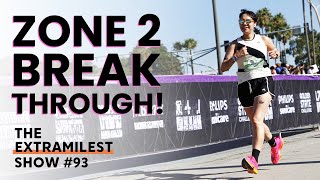
Illustrator Heidi Moreno went from casual runner to completing a marathon and 50K trail race. She credits zone 2 training, journaling to process emotions, and run clubs for building confidence. Slow runs also spark creativity for her illustration work.
Chapters
It was a new way of, like, kind of falling in love with running for the first time and not seeing it as, like, a chore or a punishment. It was being there with myself and learning more about myself in a way that I never thought was, like, accessible to me. And I think that once I started to let go of this impatientness of, oh, it's gonna give me this, or, like, what it owes me in a way, I started to enjoy it because you get a lot more out of it when you start to realize, like, it calms your mind. You're more like— you're in tune with yourself.
Welcome to The Extra Mile Show. On this podcast, I interview different elite athletes, non-elite athletes, so anywhere from beginner, intermediate, and advanced, to different fitness experts, health experts, running coaches, a whole variety of different guests. We often cover the topic of how to become a stronger, healthier, and happier athlete. Today I have a conversation with Heidi Marino. She is a relative newbie runner. She's done a few half marathons and I've recently decided to improve her running distance, or actually increase her running distance all the way to the marathon. She ran the Los Angeles Marathon this year in 6 hours and 8 minutes, and I'm so incredibly proud of her. After that, she decided to move up to the 50 K distance. So she did her first 50K race on the trails, and she's an absolute badass. She's super positive. Heidi is an incredibly talented illustrator, and my family and I love her artwork. She has also made several different books, and like, she even made some drawings and illustrations about running with low heart rate and running slow. So I'll make sure to include some of those links here as well. In this conversation, we talk about challenges with low heart rate training, the different learning obstacles that she went along the way. Yeah, I really enjoyed this conversation. Heidi is part of our Personal Best Running Coaching program. So I've had several different conversations with her over the last year and just seen the growth that she has experienced both in her running but also mentally. I think from a confidence standpoint, from like learning to become comfortable with some challenges, like the personal growth, the gaining some wins and growing through that whole process, it's been really eye-opening. And we talk about that in quite detail as well. If you'd like to learn more about the Personal Best Program, you can check out pbprogram.com. Hope you enjoy this conversation with Heidi Moreno.
Heidi, how are you doing today?
I'm good.
How are you doing, Floris?
I'm good. I'm so glad we're finally getting to hang out in person.
I know I bugged you so much on email, like, look what I did.
No, that's good. I like that. I like that. So today, conversation for the newbie runners and people looking to improve in their running, because you surely have some experience with that.
Yes, I do.
So let's start out with the beginning. I think it would be helpful. Yeah, we're going to take you through your running journey, several different things in training you learned, in racing you learned, things you would have done different, advice to your younger self. There's going to be a lot, but let's just start out. When did you first start running and how did that go and how did it kind of progress from there?
Okay, so Yeah, I've always kind of liked running. I noticed that even like as a kid, I went after the sports that had running. I noticed that I kind of had speed and I think it was 'cause I was like the shortest one in class, very light. And so I was really good at soccer, kickball, and like even basketball. And then yeah, like there was like a track meet and I did really well and I loved the attention. And I think I, I could tell that I was an ambitious person. And so leading to high school, I wanted to chase that, like sports, like where is this gonna go? I don't really know. And I tried out for cross-country in freshman year and I was like really crazy and determined and became varsity at the end of the season and kind of surprised myself and I didn't, 'cause I just tried it out knowing that I enjoyed running, but I didn't know what I could do with it. Like if I pushed myself more. And after that, I kind of let go of it. I didn't really care for the pressure. I guess like hand in hand with education, I was like, I think I'd rather just focus on education.
I was trying to be a cool kid and I was like, it's not me.
So I let go of it, but found myself going on runs, like in college, to relieve stress from like exams or like personal life, or, oh my God, he broke up with me, I'm going for a run, stuff like that. And then moving out from my parents, I would go out on runs too. And because that was like stressful for me too, and I found myself having a lot of fun and finding friends and actually met my husband that way. He worked, I worked at a coffee shop and he worked across the street at a running shoe store and he would always come in.
There you go.
And I was like, he's got access to shoes.
That's the hookup. He's the hookup husband for the free shoe discount. Well, that worked out.
Yeah, exactly. I was like, coffee, shoes, we'll switch it.
But yeah, so I became friends, which I'm still really good friends with a lot of the people from there and reconnected with, shout out to Snail's Page Shop. But yeah, from there I heard about races and I was like, oh, okay, this is a good way to, like have a more mindful training, not just like sporadically going on a run, which is fine too. But if you wanna try a race, you can go that route. And I had no idea what I was doing. I was, I did an 8K and I think I just like trained doing like 2 miles, 3 miles every now and then and no hills. And this course was like hilly for me.
I was like still a newbie.
And yeah, I was like, ah, I don't know if racing's for me. So I took a, took some time off from racing or, and I just like still ran. And then in 2020 I was running again 'cause I was like, you know, we were all cooped up in our homes and I was like, I just need to get out. And I started running again. And in 2021 we found out that one of our friends was an ambassador for the Long Beach Half Marathon. And she was like, you guys are always running, me and my sister. And she was like, you guys should try it out.
And I was like, I was like, yeah, oh my God, a whole half marathon. I don't know if I can do that. Like the 8K nearly killed me. So I was like, you know what, let's do it.
What else am I doing? And I'd like just Googled like half marathon plan and this plan was crazy and I was overwhelmed. There was just like, there's so much online right now and you don't know what's gonna fit you. And so I went with that and like I experienced injury like shin splints 'cause I went from like running sporadically 3 times a month to now you have to run according to this plan 5 days a week and I was not doing that.
Bit of a transition.
Yeah, a little bit.
And so I, I still managed to make it to the starting line, but like still completely like not knowing what I was doing, but had so much fun. And that finish line was like intoxicating. I was like, wow, this is what it feels like. And it made me feel like, wow, you were scared, but you were able to do this. So what else can I do? And, I was like, well, let's do this again next year. And so I, I tend to do that where I find this like comfort spot and I'll just do half marathons. And then yeah, I felt like at one point, or maybe like this might be for a different question, but basically like going back to, to this, I, I think I've, oh, it's always been in me. It's been something that kind of comes back to me or it looks for me when I'm under stress or like maybe feeling a little bit lost. Running kind of grounds me. And so I've always turned to it. Yeah.
So how did it go from half marathon to marathon? What was that decision like? How did training change? How did the approach to the distance change? Like, if a half marathon was already overwhelming, I can only imagine the distance of a full marathon.
Exactly. Yeah.
42K, 26 miles.
Yeah. I think There was a moment in my training, like a really pivotal moment in my training where, or just like running in general where I started to look at it differently and it just made me, even to this day it makes me look differently at like, you know, the bad runs. I had a bad race, like when I, so I had that really amazing first half marathon in Long Beach and I was like, well, I'm gonna go back and feel that again. And so 2022 I go back but I was kind of dealing with my own stress, like career-wise going through a transition and like personal life stuff. So I wasn't really in the right headspace for that training. And so when I showed up to the starting line, I was like dehydrated, just not feeling good and had a really bad race. So like mile 9, I'm like blacking out almost. I'm not feeling good. And so I remember finishing and it was the, like just the complete opposite feeling that I had from 2021 where I was like, you are a failure. Like, that's what my brain told me. And I think it's just my recovering perfectionist now. But then it was like, it wasn't perfect, so you are a failure. So I promised myself in that moment that I'm gonna come back and I'm gonna come back stronger. And when I was— but I still had no idea what I was doing. I knew that, okay, you're not feeling right. Your training is like, what is going on? You're just kind of like a chicken with its like head cut off. And I was trying to find a plan that would work for me. And I started to get more into like, like following running accounts on Instagram and like watching it on YouTube.
And I found you and I was like, who's this guy running a marathon casually on a track and holding a camera and talking about zone 2? And then you just did that.
And I was like, okay, this guy's onto something. And I looked more into it and I saw that you had this whole program And I was like, you know what, I'm gonna try it out. And then you, I liked that this was like a different approach 'cause most of the people it's like, what do you wanna do? Okay, here's the plan. And you were like, you don't get a plan yet. Like we're gonna talk about like, where are you at right now? Oh, it was almost like therapy. Like, which I liked. It was like, let's check in with you first and then we can go from there. And then also not so fast, you have to do your base. I, so going back to your question, I think it, the cur— finding the courage to let go of the ego and find what is, if you're, if you actually wanna do this and you wanna commit to it in the, for the long run, pun intended, then it means that you have to kind of get serious and really look in within yourself. Like, what are you doing? How much are you doing? And how much are you asking of running to like do for you? But what are you putting in also? And in your plan, like that. It, it talked about sleeping and eating and like your stress and journaling. And this was new to me with a sport. Like I've journaled for my mental health, like with therapy, but I've never journaled for sport. And so I started journaling when I was doing the base training, but it was like more like data. But then I started to use it for the bad runs. And started to really learn about myself. So with this courage that I'm gaining, I was seeing like, okay, I'm really putting in the work here to do longer distances. And I am very curious to do a marathon and I don't wanna die curious. Like I wanna try it. And I was looking for a marathon and I was like, I am gonna do LA, but I know it's hilly and I'm scared for first timers, but it's like, It's the city that I was born in, so I might as well. So that's how I did it. And I think it, it's just been like this snowball, uh, like effect of just, um, taking chances and going for it. And I'm noticing that it's the way to live.
It's like saying yes to adventure.
And yeah, it's been so much fun and I'm here for the ride and I love it. I'm like following all my curiosities and having so much fun.
So much fun.
That's the mo— that's the most important part of this all. And when I come across runners who are going through a transition phase like that and going through a self-discovery phase and discovering new heights, new joy that they didn't even know beyond their wildest dreams were possible, of like you going from running your first half marathon, multiple half marathons, running your first marathon to deciding to get into trail running and running a first 50K. And like just the growth, the wins along the way, like mentally, physically, all of this combined, that's beautiful. I think you touched on the journaling part and you mentioned like you used to do that in your personal life. It was tied into some of the therapy and then you have now started applying that into some of the running. Can you talk through some of the things that you would write down that might be helpful for some of the people listening? There's a lot of different ways that you can go about journaling. What have you found helpful in your own Journaling pad.
Yeah.
So I am someone that I'm like the queen of anxiety, so I can get in my head very easily. And so when I have these bad runs, I get in my head and I've noticed that the things that are like deep in your core, that's what shows up in the pain cave. And so for me, it's always been about like not belonging, like you don't belong here. And so I, that's been my, like what I wanna work through my pain cave. But so there was this particular run that happened this year on a particularly warm January, rare warm January. It was like 90 degrees.
Oh wow.
Yeah. And on the training block for LA Marathon, I had a 16 miler that day and I was like, okay, we're gonna do it. And I show up and I'm just not really feeling it. Like my body was not having it. And I was starting to get in my head and anyone that would pass me, even though like mind I've already done my base training and I already know like, hey, I got a tattoo of a snail on my leg.
I'm a slow runner and that's fine.
But on this day I was like, that person is passing me. I'm getting in my head like, oh, I'm just like, my body and my mind aren't connecting. And it didn't feel good. Like I just, it wasn't feeling great. And I remember the last, I was like mile 14 and I'm kind of limping, but not like injury. Because this is like the first training block where I'm discovering your feet are gonna hurt really bad when you're training for marathon.
Which is now looking back, it's like, that's what you're training for. You're like training to be comfortable with that discomfort.
And I've really learned to become comfortable with that, but also be mindful. Like if it's an injury, it's an injury, you'll know. But at that moment I was like, okay, it doesn't feel like an injury, but for sure, like, ouch, this hurts. And so I started to walk And I started to get in my head like, oh, you're walking now. And I was like, I don't think I'm gonna make it to 16. My husband comes up to me and he was already done. And I'm like, he's so fast. You're not even done. I'm like in my head. And he's like, oh, why don't you just stop it here? It's fine. And I'm like, no. I'm like, I'm gonna get 15 at least. And so I'm like limping, getting to 15. And once I finally finish it, like I, we were at his, uh, family's area. And so I go into their house and they're like, yay, Heidi, you finished.. And I was like, I'm not feeling this. Like, I'm not feeling yay. I'm feeling like a failure cuz I didn't do the 16 that were asked of me. And, um, I remember I went home and I was still ruminating and I was like, I need a journal. Like, I need to get this out of my head. And so I sat down and I journaled. As I'm journaling, I start to write and I was like, it was a really hot day. Like, and it's going to affect your run no matter what.
That's something that I learned this year for sure.
Like, the weather will affect it. And then And on top of that, I remembered that the week prior I had done the Rose Bowl Half Marathon as like the tune-up race leading to LA Marathon. This was the very first time in my life that I did a half marathon race and then you gotta return back to the training block. You can't be like, oh, let's eat Doritos and I'll get back to running whenever. I had to go back. On top of that, I was also my grandma was in the hospital and there was a lot of obviously like grief building up there and emotional stress. And so I'm looking at this now and I'm like, you just raced and you didn't empty the tank, but you, you used like a good amount of energy there. On top of that, there's emotional stuff going on in your life that you're trying to just push off to the side. And oh my God, the marathon. And it was a really hot day and you still want to perform like nothing is going on. And I figured all of this out through journaling. Which sounds silly 'cause you would think, but we do do that where we're like, everything else can wait. My 16-miler is happening today. And so through the journaling, now I start to realize some things and I'm able to kind of pause and look at what is affecting me at that moment. Whether sometimes it might be like this story that's like very obvious, but like as I continue to journal, it might be something like, oh yeah, didn't you just increase mileage? This is why, like you're getting in your head like, or you just added someone on Strava that's like, like a badass on there and you're comparing yourself.
And so you're getting in your head.
And so all these things, I find them when I actually take the time to sit down and process them and not push them off to the side because I have to do my training run. So that's where it's become like, like a crucial part of my training that I, I now like to write, like if I'm nervous about a big run, or like a mountain that I wanna take on. And then I make sure that I write about it afterwards, like that good feeling too. And, um, I think you mentioned it too, like you can always go back and read it. And even like one of my favorite things that you said was with, um, when I reached out to you and I was like, I'm so nervous about the marathon in January, knowing that it was coming up, you were like, focus on what you can control and focus on everything that you've done. And you said to even look back at your training, like the calendar and just everything that I had crossed out. And I was like, I did that. And this is like behind me, but it's also with me. And trust that process and just kind of learning gratitude and being present with yourself. So I love journaling. Yeah.
Because it helped a lot.
It is such a powerful tool.
It is.
It really, really is. And I often see journaling as a therapy session with self where it's just processing. It really is because indeed, like you were saying, at the moment you just look at the negatives and you get in that spiral. And then when you zoom out, it's almost like a zoomed out view. It's like, hi, it was a hot day, it was stressful, grandma in the hospital, like just raised a hot— like all these different things impacted, of course. And so then we can be kind to self and we can just be patient with it. And a 15-mile run, like, look how far you have come, right?
Like— And I was so focused on like the mileage, like getting the distance that I didn't actually take the moment to be like, you have the body right now to be able to do this. And I was not, yeah, practicing gratitude because I was just so in my head.
What else do you— do you follow a certain journaling structure? Do you do it on a weekly basis? Do you do it after certain runs? Do you do it more by feel? Are you writing on certain topics or just flow whatever comes to mind?
Tell me more. So like I'm probably journaling at least 1 to twice a week for my personal stuff. Um, I have like a separate journal for that. And for that I just use like a book that's like on setting boundaries and that's been helping me. And so I use topics for that, but for running, I use it a lot for when I know I'm getting in my head. Like I remember even, so I signed up for that 50K. And then I didn't really think about it.
It was like pub, pub run night. And so of course you're with the beer and you're like, I'm signing up, I can do this.
Let's go, let's go right now.
I can do that now.
Yeah.
So I did it and then you don't think about it and then you're running and then one race is done. And so now you're like, dun dun dun, like this is next. You have to be training for that.
And I was like, I need to book an Airbnb. And so the minute I booked the Airbnb for that 50K, it all hit. Like, this is actually going to happen. And I was like, I don't think I can do it. And I remember having stomach issues, like I'm going to the bathroom a lot. And I was like, what is happening? And so I was like, no, no, no, no, you are not gonna let your fear decide this for you. I remember saying this to myself. And so I grabbed my journal and I was like, sit right now and write down your why. Like, you think about it and you say it in your head, but you haven't actually like written it down. And I wrote it down. And then I had to tell someone, but it's still like pretty private, like nothing too intense, but like, I'm not gonna get all sappy here. But so I, I recorded it and also sent it to my siblings to hold myself accountable.
Like, hey, this girl wants to do this and I'm gonna tell you guys why.
And I recorded and sent it to them and it felt more like grounding myself. Like, yes, this is scary, but this is why we're doing it. Like, it felt not in a toxic way, in a way of like, I'm curious to do this and like, I don't wanna die not knowing and knowing that it was gonna be like the Mojave Desert, the sunrise. I've tackled that distance and I, this is gonna sound really crazy, but okay. At the LA Marathon, everyone had told me, like, I asked everyone for advice and they were like, conserve your energy, like respect the distance. So I was like, oh, I will. I was like, I'm setting my ego down. Marathon, you have me, like you have all of me. And so I really conserved energy. Mile 20 hits and I'm still like, okay, the wall can hit any moment. No wall's happening. And I'm like, okay. And so I keep going. And then I was like, I think I can send it now. And so I sent it and I have like negative splits my last 6 miles. And I am not kidding, even though like it did take me 6 hours and 8 minutes to finish, I do remember passing the finish line and thinking I have one more mile in me.
And that's when I knew like she's got ultra in her. I love that.
Yeah. So I knew that there maybe I'm learn— I do have like that skill of learning how to conserve, like even though I may not be that fast. So I wanted to see what I can do with it.
And yes, 50K is really hard, really, really hard.
But I, I love the mental game and that puzzle of like the problem solving part of running where you're like, how much food do you need? And what do you need? Because this person needs that much, but what do you need? That's been really fun too.
So much to learn.
Yeah, exactly.
Awesome. So I want to touch base on tough spots in a race. You've gone through your half marathons, your marathons, your 50K. How do you overcome tough spots? Or what do you do when you hit some of those places that you're like, I don't know how to go through here? You said in the marathon itself that you had some energy left towards the end. Yeah. In the 50K though, it's a whole different kind of approach again. So tell me more when you hit some of those low points.
Yeah, so I'm a huge fan of like the mantras. That's something that I've always been using. One of 'em that has stuck around for me, like even during the base training, like I would tell myself, I can and I will, and that really helped. And then I would make it like a song, like, I can, I will, and like with my cadence and it would help me. And it just kind of becomes this like meditative thing that I'm repeating. The other one that I discovered on Mount Wilson when I was going downhill, I, I just like I caught myself running all like lopsided, pained face, like, oh, this hurts so bad. And I was like, no, you, I think you talked about it where you're like, just imagine like a string is here and then you're like straightening up. So I did, I straightened up and I just kept saying, okay, okay, okay. And it reminded me of Courtney DeWalters.
She says, this is fine, or I'm fine. And so that helps me just saying, okay, okay.
Like this is okay. The newest thing that I discovered at the 50K was like just getting outta my head. And so there was this moment where I was definitely in the pain cave, like the first 8 miles I was in the pain cave and more like I don't wanna— That's pretty early. It is. Which I, it's, it hasn't happened to me before.
And I think I, I don't know if I just became really good at like distracting myself of like, it's just a 50K.
I don't know. But at the starting line, It hit me. I was like, oh my God, you're really gonna do it right now. And I like turned and looked at my husband and he was just like, and I was like, I'm scared. And I like actually cried. And he was like, no, you've got this. And so I was kind of already feeling like I'm not supposed to be here. You don't even know what you're doing.
You're in the dark in the desert right now. And there's not that many people here right now.
I was, yeah, not feeling so great in the beginning, which really sucks. Sucked because I wanted to be more, more present, but it was like survival at that point. But then the sunrise started to come up and then there was this really beautiful cactus and I got a photo of it and I stopped and I'm like, I don't care about my time. I, this cactus is really pretty. And I took a photo of it and I was thinking in that moment and I just kept walking and I was like, if that cactus can live here. With this extreme temperatures, like mega cold to super hot, I can survive a few hours here. I'm just here for a few hours. And so I was kind of looking into nature. I was like, this sounds funny, but there were these like really big rocks and they look like potatoes.
And like, please remember, this is my first race with no spectators.
Like, I'm so used to road races with like the press here for a boost and you got this, the funny signs and, like, people giving you fruit and stuff like that.
And there's no one here for several miles. Just these potato rocks.
Where are the press boost? I need energy.
I need a boost.
But yes, I see these rocks and I'm like, yeah, that's my family right there.
That's my husband and my two cats. And they were, like, cheering me on. Maybe I'm hallucinating at this point now. But I—
it was grounding me at that moment. There was also this really gorgeous peak that I felt like, like she was watching me every time I would turn. She was right there for a really long stretch, especially that last like 6 miles. And so it felt like, like it was grounding me, like bringing me back. Like you are one with nature.
I know it sounds funny, but it really did feel like that.
Like I, I'm gonna be able to survive this. I just need to get through the next aid station and doing it in little bits like that, that helped me. I'm also a nerd and it helps me to like plan ahead. So I, I wrote down on paper. This is the aid station. This is the mile marker. This is the cutoff time. And I just put like tape over it so like my sweaty hands wouldn't like smear it. And that really did help me, like knowing what was ahead. It didn't, it felt more like little bites that I could digest. And it wasn't this like, you have 27 miles ahead to think about it that way. But another recent, like going back to the mantras, one of them, my favorite mantras right now that my sister and I have been using is is from this Chilean artist. Her name is Mon Laferte, and she says like right before she goes on the stage with her band and her staff, they like get together and they say, "Con todo, si no, ¿para qué?" And that means like, give it everything that you got. If not, then why are you doing it? And so she made me a bracelet and I'm wearing it right now, and I wear it to my races, and I wore it to my 50K to remember like, just empty the tank, give it everything that you've got. You were curious, you have your why, and put it out there.
So even the bracelets help.
I love that. I really, really love that. Dr. Steven Seiler, he said that part about the cake where training is baking the cake and racing is eating the cake. And it really is like at that point, like just give it everything you got. And yeah, what a growth journey. What a growth over these races, over these training cycles. What advice do you have for beginners in the earlier stage of their training? You've come a long way. If you would be able to go back to that woman about to run her first half marathon, what advice do you have there?
I would say for me, one of the really big moments for me in running was showing up to run clubs. That was something that I, being an introvert, I was like, no way I'm gonna go. Like, they're gonna look at me.
And like, no one's looking at you. Nobody cares about you.
But this, these are the things that you're thinking about and like, oh, I'm gonna be too slow or this and that. And so I showed up one time and then I was like, okay, I did it. And then I would go sporadically and sometimes I would get a little bit discouraged 'cause I was like back of the pack. And so I'm running alone and you're like, why am I at a run club if I'm running alone? But if I, when I, once I started to go more consistently, you see the other regulars and I started to make friends with them and they truly have become like family for me now. I learned so much from them and I, I do tell them, I always tell them like, hey, you inspire me. Like, I want you to know that I didn't think I could do this 50K. It was because you believed in me and you said, Hey, I'm doing it too. Or they invite me to go on the trails. They're like, hey, this terrain is very similar to Ridgecrest. Like, let's go do that. And that feeling of someone else believing in you that is outside of your regular family or your regular friend group, it's just, yeah, it doesn't match anything. You start to learn about different snacks even that you may have never ran into because you're just so used to the What is the influencer doing?
Or what did you find at Sprouts or something? And I started to hear about like Sour Patch Kids and I was like, what? You can eat candy? This whole time I'm just eating gels.
So now I do like a combination of like potato chips with pretzels because my friend Daisy told me about it and you, and she adds Sour Patches and I do that now. Another friend, when I was in San Gorgonio, I could not stomach anything. And they're like, you have to eat. Food is fuel. I'm like, I don't wanna eat.
Like, I'm gonna throw up. This, like, altitude is getting me.
And she had these, like, Bobo, um, little muffins. And she was like, this is packed with good stuff. Just eat it, Heidi. And it took me, like, an hour to eat the tiniest little muffin, but a muffin that I never would've bought at the store cuz I don't pay attention to Bobos. But now that's what I fuel with. And these things that I've learned, new races, organizations, volunteering opportunities and all this stuff, which I have yet to volunteer, but I want to give back to the trail community because wow, I fell in love with them.
It's such a wholesome little community that, yeah, I love it so much.
So grateful for them. But yeah, go to run clubs.
You're missing out if you're not going, missing out big time.
It really is the people you surround yourself with make a big impact on your thinking about like even the part of connecting with people who have ran trails before or people who have done a marathon before. I literally didn't think it was possible to run more than 26.2 miles until I started surrounding myself with other runners. And then a 50K was very normal for them. I was like, how is this normal? And then you just get sucked into it in a good way. Like, obviously everyone can push themselves. It's not to say that you have to run a 50K or you have to do this or that, but just being surrounded by other people. And before we started recording, we went on a run and we were talking about the whole ego component, but also the part of sometimes we're afraid to put ourselves out there. Sometimes we're afraid to step into like, ah, it's intimidating to go out to a run club. It's intimidating to do this. People indeed, like they're all going to think this or that. No, people are too busy with thinking about their own thing. Exactly. And a Generally speaking, a lot of these run clubs are very positive and people open-armedly welcome you and are willing to support. Exactly. And so lean on that.
Exactly. That was one of the big, probably one of my favorite things that happened this year was finding out about the trail run club Chingonas on the Run and being too scared to go. I was like, these girls are badasses. There's no way I belong there. But I was curious. I liked hiking and I'm like, running that, those trails, that's crazy. And so I, I went and from day one it felt like family. And their motto is no chingona left behind. You are never left alone in the back. There's always someone there with you. And they were like, oh, you live there? I'll run with you. And it really has been like that. Oh, you're training for that? I'll go with you. And it's just so nice. To have like, you have your days where you can run on your own, but knowing that there's like on Wednesdays, chingonas meet, and if I have a, like a bad day, I know that I can go run with them and it's gonna be so nice to just recharge and fill your cup again with people who also wanna talk about shoes and, and also by your like races and how your race sucks and theirs is better or whatever.
And like just the nerdy stuff that we all like to talk about. But yeah, you're missing out. It's the best.
I really love it.
So, yeah.
It's so funny. So now you can talk about running shoes with your friends. Your husband has running shoe experience as well. So there's a lot of running shoe talk here.
Exactly.
Yes. So there you go. Good. Good. Good. What about the nutritional side of things? You just talked through that. Yeah. Has it been a learning curve for you? As in, like? Because sometimes I've come across athletes who at the beginning, they're underfuel. Later on, they decide to experiment with different things, even what you can take in on your road runs, which is typically on a bit of a higher intensity versus on the trails, lower intensity, hiking, standing still at aid stations. How was that learning curve for you?
I think because it worked out for me in the way that on the trails I'm like going a lot slower. So it kind of gave me more, but at the same time, you're, it's still, you're out there for a long time, especially like when I'm doing mountains and stuff like that, you're still gonna be out there. And so you have to make sure that you're fueled.
But I like the side of food, food, and like even hearing how some people bring potatoes with them, I'm like, wait, I, why am I not doing this?
But yeah, before I, like most people, I started like, I was not eating on runs. Like my first 2 marathons, no water. Okay. Just the aid station water and then no food.
And not even— Until you almost like—
Yeah, I was not feeling good. Yeah. And that's why I was like bonking and finishing feeling awful and not wanting to run because your body's still trying to recover.
I didn't know anything. Like, now I'm like drinking my element in the morning or at night and making sure like everything is working out.
Even for a really long time, I wasn't taking electrolytes during the run. I thought it was like a before and after thing, not during. And so, I talk to other friends and see like, what are you guys doing? Because once you get bored of one, you like, it's nice to try out something else. But yeah, I learned the hard way. Like, so I went from not, not having any fuel to overdoing it and feeling completely nauseous around the same mile marker, like mile 9 on my second marathon. And it was also really hot and like I didn't really heat train and all that stuff. But then I started to really take it seriously 'cause I'm like, wow, it really sucks that you have the, like, like you feel like you can mentally do this 'cause you've done it before, but the fueling side is really slowing you down and it's determining how you're going to feel.
And being kind of a control freak, I'm like, I wanna control this. I wanna learn how to like manage this.
And yeah, I started to learn like I can, you also talked about in one of your videos about gels with caffeine. I always used to take 'em a little bit later. And in one of your videos you mentioned like, You still have to make time for, like, sometimes it can take like an hour for the caffeine to hit.
And so I'm so glad I watched that video before my 50K, cuz I think I timed my, like, caffeinated gels at the right time.
But, uh, yeah, I think having that blend of doing trails and also road helped me figure out like what's gonna work best, um, in each.
And I think that's why I like trails, cuz I like the real food and you're able to slow down and eat it.
But I do have some friends that like, they don't wanna stop any eat.
I don't mind stopping and eating. I'm a snail. I want to enjoy the life there.
Yeah. All right. Well, I do want to hear your experiences with low heart rate training. Yes. You used to run at a certain pace. Yeah. And then how did it go from there when you discovered low heart rate training?
So I was running like 9-minute miles and that was, I remember remember so clearly how much I really hated doing 3 miles. Like it was just really hard.
And now looking back, it's like, oh, 'cause you were just like pushing it.
Like that's my pushing it, 9-minute miles. Or like I can like hold it, but it's tough. And, and then again, I wasn't eating, so I was like pushing it. And by mile 3, I was just like, just done. And I kept doing that. And so I was always suffering with shin splints. So that was always my thing. And I was like, maybe it's the shoes. And I would switch the shoes but I would notice that, yeah, it was just like nagging. And once I started to run slow, like, or just like, yeah, on zone 2, first of all, that took a lot of like ego also, like letting go of it. And I'll, and you talked about it. I was like, you talked about it, it's gonna happen, it's fine. But then when you're really out there and especially if there's people around there, like I run a lot in the Rose Bowl and there's a lot of people there. And they're passing you, it was really hard to ground yourself and be there in the moment. Now, over time, I've just, like, remind myself, like, there are so many people out here just either maybe someone broke up with them and they're like, I'm sending it today, and they're just gonna run fast. Or maybe it is a speed day for them, or who knows what it is, but it's like none of your business. And it really doesn't matter 'cause you're here for yourself. And that's one thing that really helped me. The other thing that I thought was so crazy that what you talked about was like, like no music.
That was new for me. I'm the queen of playlists.
It's fun.
Yeah.
And I think that's the other reason why my heart rate was so high also before.
And, and so I try to be like, I'll put like some slower stuff and see if that helps.
But it was still obviously like messing with my heart rate. So I was like, Okay, I'm just gonna run without music. And now it's not something that's crazy anymore. It's like I rarely actually run with my headphones on because now I actually appreciate the quietness, which is, if you know me outside of running, that's weird. Like I am a music girl.
I have the headphones and I'm always listening to music. Like literally have a playlist for just going to the market, like the 5-minute drive.
So I actually enjoy the no music and being like checking in with myself. I also noticed that my, just like my whole, I forget what it's called, but like your whole, is it running economy? Like all of it was changing. I was more mindful with how I was landing on my feet and what my hands were doing and my arms. It felt more like, like I was working with myself to, to a more, in a more natural state instead of forcing something because Katy Perry Firework is on right now.
Something like that. It felt more like this is gonna work out for me if I stick with this. And then you can have Katy Perry every now and then.
Mm-hmm.
But for your speed work days.
Exactly. Yes.
Yes. But I have noticed that it's something that it took a while for me to, to recognize and accept that this is gonna be my pace. And I know that you mentioned that a lot in like the Personal Best program. Like it was something that, that it's part of the, like, like acceptance. This is where you are and just kind of like get real with it. And which is something that is also talked about in like mental health too. Like if this is the emotion that you're feeling, just accept it and let's, let's feel this emotion instead of trying to escape it or do the other thing. And so I, once I started to do that, I, I, what helped me being a visual person and more like dedicated, I drew a snail one morning and I'm like, I'm gonna get it tattooed on my leg because I am slow and I'm gonna be proud of it. And it's okay to be slow cuz I can still tackle distances that I want and I can still finish it. 13 miles is 13 miles, 26 is 26. And it was a new way of like kind of falling in love with running for the first time and not seeing it as like a chore or a punishment. It was being there with myself and learning more about myself in a way that I never thought was like accessible to me. So I love it. And like I was telling you earlier, I do too much zone 2.
Like it's all that I do that I'm like, okay, I need to bring in some speed work in for sure. Because I would like to, yeah, just put some Katy Perry on there and see what happens.
I love hearing this though, because right now, over the last 6 years, we have seen quite a few people going through the experiences, like in the running coaching program, through the podcast, through the YouTube, like just through comments and conversations with different people. People discovering, all right, most people have run at a pretty high intensity, zone 3, zone 4, zone 5, discovering there's other ways you can run. You could actually slow down on your runs and it's okay. And you can actually improve and become faster by slowing down. At the beginning, for many people, that's challenging. That's frustrating. That's like, am I doing it right? I'm probably doing it wrong. I didn't calculate it right. There's all the lizard brain that's going to fire off, right? Most people listening have gone through several of those different emotions or they're in the middle of it and are still experiencing it. At some point, for some people this is after a few weeks, for some people this is after 3 months, for some people this is after longer than that. There's this— some people have a real aha moment, for other people this is more gradual.
Yeah, yeah, yeah.
But there becomes this appreciation of running. Slow, there becomes this appreciation of connecting to self. What you're talking about, not listening to music, but indeed tuning in with our own breathing, there's footsteps on the ground. All of a sudden you feel the wind on your skin. You actually notice the sun on your face. There's way more of a connection between body and mind. And all of a sudden it's like, you know what? This slowing down is actually very joyful. I want to go out and this pace perception of slowing down it's not a frustration anymore, but it's a joy. Exactly. To a point that people start to do most, if not all of their runs at that pace. That's me. And so what we then sometimes see, it's like, all right, I'm going to be running a race, but it's just a higher heart rate and I don't know how to run high heart rate. It's like, okay, there's a time and place for running at low intensity and many people will improve very well with that. Yet when your body can handle it and you have built somewhat of a base, adding in once or twice a week of that intensity, even if it's for a few weeks, just to get that pace perception changed, to get used to what is it like running faster, like develop the fast twitch muscle fibers, like all of these different things for race day will be beneficial. And the first few times it's going to be challenging. And it's like, whoa, this is so fast. And then after 3, 4, 5 sessions, that fast becomes somewhat normal again. You become comfortable with a bit of discomfort. And it becomes more real again. And so seeing that transition happening with you, but with many other people, you're definitely not alone in that. And it's nice when you're able to do some of that journaling and actually write down some of that thought process, because it's literally you changing your mindset throughout all of it with how you're looking at it. At it.
Yeah, no, that's true.
That's so true.
That is awesome though. Any advice to people in the early stages of the low heart rate journey?
I say stick with it and see, try to look beyond the, what you're trying to get out of it and just be kind of present. I think that once I started to let go of this impatientness of, oh, it's going to give me this, or like what it owes me in a way, I started to enjoy it because you get a lot more out of it when you start to realize like it calms your mind. You're more like, you're in tune with yourself, which like I, I was describing to it to you earlier where it feels like, like this intimate relationship with myself like that. I've never known like what I require and all that stuff. Like it was just something like sleeping and all that and how it does affect. And you were talking about stress also. And it was something that I just didn't check in with myself as often. So I, I do look back at my like base building time and I, I miss it. It was really nice cuz it's like the beginnings of a lot of stuff, right? You kind of enjoy that or you're not realizing that this is gonna be a really great time. This, like, I, I think you've mentioned it too, like embrace that like kind of student, this newness. About it, I think I went in fully like, okay, let's, let's, let's take this in and let's see what happens. And like, I know this sounds sappy, but like I, when I emailed you, it changed my life cuz you go from letting go of your ego and it, if you're, if you're really like in tune with yourself, it starts to give you this like new bravery of Okay, if I can let go of my ego at the Rose Bowl or at these places where everyone's going so fast, or I would do a lot of my base building also like on tracks, and that's where people do a lot of their speed work.
So I was like, it's fine, I'll go outside the lane and I'll just stick here.
It gave, it gives you this like courage of what else can I try? Which led me to run clubs, which led me to signing up for Bulldog for a 50K, for a marathon. It kind of, it reminds you of why you're actually here. Why are you doing this running thing? Is it really because of that Strava one-time run that no one's really gonna look at? Like, it's, you're here for the long run, you know, pun intended. Looking at it more, uh, like, what do you wanna do with this? That grounded me. Like, I, I wanna, I know for sure that I wanna keep doing this run. I like long distances, so I'm going to have to do zone 2.
So I gave in, let go of the ego. It took a while, but I did it.
So awesome. Heidi, you're an incredible artist. Like I've told you before this, actually, as we're recording this, my wife and my kids are on their way to the studio right now. They wanted to meet you. You have written or like you have illustrated several different books. And so even looking at your nails earlier, I'm like, look at this. Yeah.
And my tattoos on my characters.
Yeah. No, like it's incredibly inspiring to see your creative act. And like, I was wondering when you're doing some of your low intensity runs, does that help you in your creative process at all? Are you able to digest some of your thoughts or some of your creativity on, on your workouts as well?
Yes. I actually noticed when I started to run, like my zone 2 running and being more mindful and no headphones, I was kind of just letting my mind zone out. And like, that's usually when the ideas hit. And I actually did a comic, I'll send it to you, where I was just like running on a track and I was like, oh, Oh, that's a really good idea for a book, which I started to put together a proposal for with my agent. And it felt not forced. It felt so natural. Like, I'm tying these two things that are very natural to me and, like, primal, like just running and not running, like, like all hard and everything, like just being there present, running like maybe our ancestors did to get to somewhere. And then this thing that's natural to me that runs in my family are and coming together, it was just like so beautiful. It's like it's supposed to be there. And it just feels like it makes more space for me to— like, even like, like I get feedback maybe from an editor and I'm able to like process it when I run, if I want to make time for that, or if it just comes up. But it does feel a lot more like, yeah, a time for me to access that stuff or to process feedback or to process Um, like anything really, like, and especially in on the trails. As soon as I started doing that, I noticed like I always painted like, um, plants and cute trees. Like I really like that. But now being there with them, running with them, them watching me in like during the paint cave and all these moments, it made me feel more connected with it too. And so I started to draw even running stuff too. And it was resonating with some people. Like I even like did a funny comic of like the benefits of running slow.
Like, not only is it good for your heart, but like you get to hear the gossip of like people. 'Cause like I'll be running really slow. I'm like at the Rose Bowl and then I hear like someone's bad date because I'm running so slow. And if you zoom by, you're never gonna hear it. And so like, that's one of the things you notice, the cats on the windows watching you in someone's home.
So it's all these like, so I did that and like it resonated with people and it just made me feel more like, okay, this is where I'm supposed to be doing.
Like, I'm enjoying it. There's some good stuff about it. It's okay if I'm not that fast.
I'm enjoying this part. And it's also enriching my creativity and my— the art that I do. So it's nice.
Yeah. It's so—
it's a win-win.
It's, it's so nice when that comes naturally and it just, just comes, flows from within. Where can people find more about your work, your, your Instagram handle?
Yeah. Um, you can find me on Instagram. I'm under HeidiRue_R. And you, there's a lot of cats and cute drawings.
Um, I have two books out. One is called Working from Home with a Cat. And then the other one, love that title.
And it's Luna Oscura, which is a children's book. And yeah, I'm working on another one right now. So for an author, I'm illustrating it. But yeah, I'm mostly just on Instagram.
Super exciting. And I'll make sure to link to that in the, in the show notes as well. Wanna be respectful of your time over here. I have 2 last questions.
What's next for you? So I'm doing LA Marathon again. I loved it so much that literally once I crossed the finish line, a few days later, I was like, let's do it again.
So I signed up for it.
Nice. So I have LA Marathon coming up next, and then I'm looking for a fall marathon. So we'll see what I end up signing up for. I'll definitely do a 50K again though next year. Once I, like, build up and maybe get a little faster.
We'll see.
Yeah. LA is like that uphill finish at the end, whereas, like, if you're looking at fall, like, Long Beach might be a nice flat course right by the water over there.
Like, that's— and I do the half marathon all the time, so maybe upgrade.
Yeah.
Yeah.
There you go. Any closing thoughts? Like, there's quite a few people listening that are looking to become a stronger, healthier, happier athlete.
Yeah.
Do you have any closing thoughts you would like share?
Yes, I would say going back to run clubs, I think that as someone that has been like always, like I'm an introvert, but at the same time I get so much, like I fill my cup when I'm around people, like like-minded people or people, like I said, like wanna talk about shoes or you wanna talk about whatever. It's so nice to find people like that that are just down the block from you that you might not even know. You learn so much from them. And you get so much just camaraderie and community, which right now might, like, you hear that, right? You hear it on Instagram, you hear it all over the place.
But once you actually experience it, and I'm telling you, I wrote a book called Working From Home with a Cat. I am an introvert.
So I am telling you right now that if I can go to the run club, you guys can go too. And you should go and don't judge it by the first time. Just keep going and try different ones. I think it's so much fun. And especially even seeing like, oh my God, there's like, people like me that look like me at this run club. There's one that's all girls. Like, this is— it's so many things that, like, so many run clubs I didn't even know existed, and I love them. So I think you can gain so much from it, and I think it will enrich your journey like it did mine. Like, I wouldn't have signed up for a 50K if it weren't for that pub run night and my friends that believed in me and myself in my own journey getting here. It's all due to a lot of, a lot of people got me here and I'm very grateful to them.
That's awesome. Which, how, how do people go about finding a run club if they're not familiar with that?
So on Strava, I know that there's a lot on there and sometimes like I've seen it, like if a friend of yours like might join, like it'll be like, oh, they joined this run club. But if you're not on Strava, there's, there's also like on Instagram, there's a lot of run clubs there. But I find it more easier if you go to like a local running shop. There's gonna, there's for sure one there. Like they have their own and a lot of times they invite other run clubs or they collaborate with them. And this is how I found out about the Chingonas on the Run, the Trail Running Girls, and even my hometown Fullerton Run Club. I go to them too when I can, if I'm down there. And you, they, they have a lot of events where they, come together with like, oh, a Nike event or like Hoka. And it's really cool. Like I actually just went to one on Monday and they had like, I wanna say like 6 run clubs there.
And so I knew some people from other run clubs.
So this is how you can find, go to your local running shoe shop and you're supporting a local shop too, which is great. So win, win, win.
Everyone's winning.
That is awesome. Thanks so much for sharing this. Yeah, thank you. I, I really, really enjoyed this conversation. Yeah, seriously. It is so nice to have a variety of different guests on the podcast, from the most elite runners to beginner runners in different parts of their running journey to everywhere in between. And I think this is so relatable and it really resonates. And I truly appreciate you sharing your thoughts.
Thank you. I'm just trying.
And I feel like that's what we all have in common.
Exactly. Well, let's go for another run again at some point, either in LA. Yeah, we'll make it work. All right.
Thanks so much. Thank you.
Thank you for listening. I really love Heidi's positive attitude and pace and distance and time. They're all relative. Anyone who's joining a group run, anyone who's attempting to run a race is a winner in my book, regardless of whatever finish time you cross the line over there, whatever pace you're going to be running at a group run. Really, you're all winners in my book. If you would like some additional guidance in your training and with your race planning, please check out our Personal Best Running coaching program at pbprogram.com. A lot of resources available there, community, different coaches, and, um, yeah, and this is also where Heidi is often hanging out. So yeah, you can check out pbprogram.com.
Program.com.
I'm beyond excited for the new year. Several different podcast guests that we're having conversations with at this point. I can't share their names yet, but I promise you it's going to be good. A lot of different thoughts also for future YouTube videos. There's going to be some community events. We're going to be doing several things with the Personal Best community from an accountability standpoint. The best place to stay up to date with what's happening in my world, in the running world, is with my weekly newsletter, and that is at extramilest.com/subscribe. And I'll make sure to link to that in the show notes as well. Typically every Friday I send out a newsletter to that. And yeah, that's why I will include some of the group runs we're doing. January 1st group run. With PATH Projects and Billy Yang and myself in Los Angeles. Then there's going to be a group run January 18th in Salt Lake City. So there's a variety of different events that are planned.
So yeah, subscribe to the newsletter if you want to know the latest over there.
And then yeah, I should probably cut it off at this point. Have fun out there on your runs.
Bye now. Mm-hmm.
More from Floris


Ryan Hall 2.0 on Strength Training For Runners, Lifting Heavy & Trail Running




You’re Doing Zone 2 Wrong (Even If You Think You’re Not) | Scott Johnston Round 2


How to Build an Unstoppable Aerobic Engine (Even If Starting From Zero) | Scott Johnston


Stress Is Killing Your Running (The Relax Fix You’re Missing) with Dr Kasim Al-Mashat

When things get hard, say this, it (works in any race) #jeffpelletier #running #ultrarunning