GREATEST RUNNING LESSONS FOR 2020 AND 2021!!!
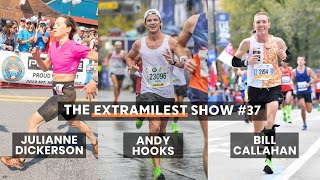
Floris Gierman talks with runners Julianne Dickerson, Bill Callahan, and Andy Hooks about how the pandemic reshaped their training and racing. Julianne fractured her humerus but directed a Boston-qualifier marathon in Anchorage. Bill lost his Tokyo and London marathon goals and learned to enjoy runs without chasing times. Andy spent three years fighting Achilles tendonitis with injections and high-mileage training.
Chapters
I will say since, uh, the arm break and taking a couple of weeks off of running, that's been a really good opportunity to dial in like sleep and nutrition. And I've started working some more back on like breathing exercises and nasal breathing again, because when you have time to do all of your run training, it's, it's hard to also nail all those basics. And so it, it's a good time to kind of set those foundations so that when you can really run well, those things are established in habits already.
But I think the one thing I'll leave for everybody is like a note. I mean, I'm not sure if we're going to get there or not, is the fact that if you can approach a race just totally not thinking about times or anything, just say, I'm going to enjoy the race, how much better that you perform.
Welcome to a new type of episode that we're going to be experimenting with today. And it's with 3 of my friends and actually past podcast guests. Julianne Dickerson, Andy Hooks, and Bill Callahan. We're sitting down for a conversation to talk about how some of our training and our racing has been adjusted. Obviously everyone's running schedule has been quite all over the place with the initial plans what we had and how things have actually turned out. So we're taking a deep dive into that. Juliane is also going to share what it's like to be a race director. She just race directed the Anchorage Marathon for those in Alaska wanting qualify for the Boston Marathon 2021. Bill Callaghan is going to be sharing some of his race adjustments. He was going to be running Tokyo and London this year. Obviously all those plans have changed significantly too, and he has found several creative ways to stay motivated and to still find different ways to get joy out of his runs. And then Andy Hooks takes a deep dive into some of the injuries he has experienced, how he's dealing with that, and also some of the experiments that he has been doing. Throughout this entire situation right now. Today's episode is brought to you by PATH Projects. These are the only shorts that I run in every single day. These are made of premium Japanese Toray fabrics, and they're the most comfortable running shorts that you will ever experience. All shorts have separate base liners, which eliminates chafing even on long adventure runs and on ultras. These shorts and liners are an absolute game changer. They come with plenty of pocket space, and my My favorite ones are the Psych Shorts with 3 pockets and the Grave Shorts with 4 pockets combined with the Tahoe Baseliner. You can find out more at pathprojects.com. Without further ado, I hope you enjoy my conversation with Julianne, Andy, and Bill.
I've honestly never done a Zoom recording like this for a podcast in any sort of way. So I figured I'm just going to get 3 friends in a room and it's more of like a chit-chat that way.
So are we your test dummies?
Is that what you're doing?
We're the guinea pigs. I like it.
Yeah, so I'm not even going to do an official introduction, but let's just, let's just get started. So, um, welcome, welcome to the show everyone. Nice to see you, Bill, Julianne, Andy. Nice, uh, nice to have you here.
Great to be here.
Thank you. Happy to be here.
Yeah, I think, I think it will be, will be interesting to kind of take a bit of a deep dive into— obviously 2020 has been quite a bit of a different running year for everyone. And so we all had different plans going into this year. I know some people were planning to run London, others were planning to run Tokyo, Boston Marathon, different ultras. All of those plans have changed pretty significantly. So maybe we can go through, like, what were you initially planning to do this year and how have some of those goals shifted and how has the training been? So maybe we can kick it off with you, Julianne, and give us a bit of a breakdown.
Um, let's see, my, I guess my original plan was kind of the same as every, every year. I love focusing. There's a really great mountain running series here in Alaska, and that's what I like to focus on during the summers. And I actually had a half Ironman that was scheduled for April that was just kind of to keep me motivated for training through the winter. And first that got canceled and then slowly each of the summer races got canceled. So I just feel like I rewrote my training plan for the summer, like every other week. So I was, I was following a plan pretty much the whole time, but what the— it didn't really feel like it. Cause what the plan was changed so constantly.
I saw you on the bike quite a bit, like in between, there was like a phase that you were up in the mountains riding your bike quite often there. And then it went back to like longer days in Alaska and you were running like 15 to 20 hours a week again, it seems like.
Yeah, we did a— right before everything shut down, this was in February, we had a chance to go and do a training camp with a triathlon group. Uh, so we went down to Arizona for a couple of days and did a lot of biking. And I'm really glad that we went and did that trip and got in some good training and some time with friends because that was sort of The last trip that we actually got to go on before everything kept getting canceled. Yeah.
How was that though? Like, have you, did you end up doing any races at all in the last 4 to 6 months?
Uh, virtual races. Uh, it's actually been sort of the, the summer of new little grassroots races popping up. Um, a. And a lot of, and then brand new races. Like a friend of mine did a virtual race up one of the mountains here, Wolverine, just outside of Anchorage. Another friend of mine, April, directed a race up in the Arctic Valley Mountains. And then I actually ended up directing a race as well, but a road race. But I really liked, Running virtual races up mountains that I wouldn't normally do, like a full hard effort. Like I might train on them, but like I never go time trial up Wolverine. So that was actually a lot of fun. And it was nice also that the comparison wasn't against something that I would normally have, uh, help from competition. It's a little bit harder to push yourself when it's just you by yourself doing a virtual race. So it was nice that there wasn't that comparison of like a standard race course.
Seeing some of the, how steep some of those mountains are outside of Anchorage, like you're pretty much like going up like 1,000 feet per mile, it seems, right?
Uh, yeah. Yeah. That's typical.
That's insane. That's good though. So tell us a little bit more about the actual race that you directed. How was that? Because this was, this was your first race that you directed, right?
This is the first time I've ever directed a race. I had no aspirations of ever becoming a race director or directing a race. But it, I don't know, nothing, I guess nothing about 2020 has been expected. And there was a, there was a need for it. Or I saw there as being a need. So where I met you at CIM, my friend Ryan and I had qualified for Boston there. And we came back to Alaska and we were like trying to talk all of our friends into like, hey, 2021 is going to be the year and we're going to have a great crew of Alaskans at Boston. This is going to be awesome. And there's two races typically here in Anchorage that are Boston qualifiers. And, but they're normally much larger and both of them were canceled because of— so all of a sudden all these friends that we've been talking into like, hey, you got to come get your Boston qualifier and come with us. Uh, their races were canceled and we're like, oh, that's awful. And so we're like, how hard could it be to put together like a mini following all of the health and safety protocols, get it, you know, check all the boxes and do like a mini Boston qualifier and like drag some of our friends with us next year. It turned out to be a lot harder than what we originally thought, but we did it and we got it. We got a course certified. We just used Anchorage, has a really wonderful system of bike paths, and so we didn't have to have any road closures or any traffic control. We were just able to use the bike path, and the regulations at the time allowed groups of 50 with social distancing. So we ended up with 80 people that ran between the marathon and the half marathon, and we divided it into 3 waves. So, and it was well, we were able to do it responsibly with social distancing and with smaller waves, and I was amazed the number of people I talked to. We had 16 Boston qualifiers, quite a few PRs. It ended up being like a gorgeous day. And I was amazed the number of people at the end of the race that I talked to who it was either their first marathon or their first half marathon that they had ever completed. And that was actually just as rewarding as the people who had qualified for Boston, getting to talk to the folks who like this was the first time they had ever done that type of a race.
And they'll all remember your race for the rest of their life.
Yeah. It's kind of an oddball. I think it'll be memorable for folks. I mean, 2020 is pretty memorable no matter anything. Yeah. I'm really, really glad that— I'm glad that it happened. It was, it was definitely worth, worth the effort.
What were some of the things that you learned from race directing? What were some of your takeaways there?
Oh, there's a lot more like little logistics. I had some really good, really good help. There's a guy here in Anchorage, Mark Iverson, that works with the local running store, and he would be like, oh, did you get this permit, or did you talk to Parks and Rec, or what's your navigation plan, or what's like, what are you doing for registration? Like, all there's all these like little parts to it that when you're just participating in a race, you don't realize that you have to like do all this stuff. And so I was glad that I had— there was a lot, I guess I learned there was a lot more parts and pieces to it than what I thought. And I was glad that I had help and advice from people who had already directed a lot of races or helped direct a lot of races.
Yeah.
Well, well done to you and Ryan and the crew, everyone pulling it off. That's incredible.
Yeah. So, um, if, um, so if, if Boston 2021 happens, we should have a good crew.
Nice.
Nice.
Nice.
What about you, Bill? You had wild plans this year for, uh, for racing. You were going to finish your 6th major in London. Tell us what was the plan and what ended up happening?
We started at the roller coaster and just kept going up and down, up and down, up and down. I mean, who's going to, who's going to know everything. So I'll, um, I'll backtrack into 2019 just a little bit to give some context to it, and I'll do this for two reasons. One, for people that are new to running. So people that have been experienced for a while, they always ask us like, what happens when you have something that's going well and then something breaks down? Like, how do you respond? Or even two, for the people that have been running for a while, what happens when you get a setback? What do others do? So going back into 2019, I was running well all year, broke a bunch of PRs. We're going into the fall Um, I had a lot of personal things that happened along the way. We had our third son being born in September. Everything was great. And I just got a lot in the training miles. I was running really well. And my friends, uh, we were doing long runs on the weekend. Everything was top-notch. And this September, one of my closest friends died unexpectedly. He was my age and it just hit me like a ton of bricks. And I go, gosh, this is it. And then all of a sudden you just kind of get depressed. And then running was my outlet. So I was training for New York City, which I was going to do in November. Um, but it was a good way to get out and just forget about everything that was going on in the world. And then we go into October and there was a race right near my buddy's house out in Albany. It was a special race, um, for myself. My wife has run as well. So I did a half marathon, just didn't think I was relaxed. I just ran and I PR'd by 4 minutes. I just did a 1:16. I was ecstatic. I go, this is great. We're going into New York City. Everything's great.
It's time to talk about, talk about a roller coaster, dad, with the highs and lows. And like, yeah, I remember seeing your PR coming through.
That was totally unexpected. But I think the one thing I'll leave for everybody is like a note. I mean, I'm not sure if we're going to get there or not, is the fact that if you can approach a race just totally not thinking about times or anything, to say I'm going to enjoy the race, how much better that you perform. Um, and that went on a little bit later with New York City as well. So going forward, later that week, my wife got me an unbelievable gift and said, hey, just go out and get like a massage day. So, I went, I told the woman, "Hey, in 2 and a half weeks I'm running New York City, take it easy on me." And she didn't mean to, but halfway during the massage she ended up doing something to my leg where I ended up screaming and did a bunch of damage. And I go, "Oh my gosh, it's 2 and a half weeks out from New York, I'm done." I couldn't even run. I went to a friend that's a chiropractor, I was 13 pounds off balance. And he goes, "I don't even know if you're going to be able to run, bud." And I go, "This can't be happening." So, I did everything I could. He aligned me the best he could. He got me to within 6 lbs. I just, and I was so stubborn. Flores knows the story. I go, I am just going to go and see what happens. I just went and I didn't, I took the armband off of what my anticipated time was going to be and I just ran and I ended up running for charity that was going to the GoFundMe for my buddy's family because they were trying to raise as much money for the family. I had a big singlet made with his name on it and everything. I go, I am just going to run for Joe. That's all I'm going to do is run for Joe. And I just went and it hurt like heck. And I still did a sub-3, which was great. And that's all I wanted to do, do the sub-3. So then I finished and then I couldn't, I couldn't run for a couple of weeks. I was hurt. I was all off balance and everything else. So then that depression starts getting in because you thought you're going to perform a certain way. You're hurt. I couldn't run. And I just started seeing some friends of mine, one, the chiropractor I mentioned earlier. And then I had another friend when I played soccer in high school, he's a pain specialist. He hooked me up with some trigger point injections. So what that is, you just get a shot with lidocaine right into the areas of your muscle. So my whole left leg all knotted up from that massage. And what he was able to do, it took a couple treatments, but he released all the tension that was in my leg, all those knots that were there, and just totally, um, but it took weeks, but he told me he got me back together. But during that whole time, I just got really depressed. I was thinking about my friend dying again and everything else, and it just It was just a bad November for me. So beginning December, I got good news. So based on my time from Boston in— I'm sorry, Berlin in 2018 and Boston in 2019, I was invited to compete in the Wanda World Championships. What they said on the bottom was the London Marathon. I, and I just freaked out. I said, you got to be kidding me, because I was also going to Tokyo. So I was going to finish my 6th medal, and I was going for all 6 under sub-3. And I go, this is amazing, but I had to go ask my wife. I go, can we do all this? Is everything going to be okay with all the kids and everything? And she's, she's the best. So Lindsay's the best. I know she's going to watch this later, and I thank her all the time, but like a lot of people are going to watch this, and if it wasn't for her, I wouldn't be in the position I'm in now because she supports everything that I do and allows me to train. She gets it. She was a runner before. She ran Boston, and it's just amazing what she's been able to do to support me. So I couldn't do it without her. And I said, it's going to be tight. It's like a 5-week window in between the 2 races or so, but I'm just going to do it. So then start training again. I was back to 8 and 9-minute miles and it's just almost felt like starting over. But one of my friends that commented on Strava, I go, this might take longer. Cause I'm freaking out a little bit. I go, I don't know if I can get ready for Tokyo by that time. And he goes, you didn't lose that much. Trust me. So Steve, Steven, thank you for that too. And I just started going by the time I got to Christmas. It started going again. So I go, 2020 is going to be my year. Here we go. We're training really well. Um, some friends and I, we have a huge race here. It's called the Heart Run. It's a 30K. A bunch of us took off together. We're just gonna, we were talking during it, but not racing, but trying to all be under 2 hours. So 6 of us did. We just had a blast and I go, everything's going to be great. And then next thing you know, Tokyo on February 17th, no, we're canceling it. It's only. I go, you gotta be kidding me. I just went through all this and got ready. Everything was good to go. And I still remember I took a picture. I was watching the marathon go on. I had my brand new shoes on our coffee table and I had a picture of a beer and I go, yep, I'm at Tokyo right now. Just do it. And I just put it out there. Just, you gotta be kidding me. This is, this isn't happening.
And you texted me a photo and you said like perfect race conditions. Yeah, we were going back and forth.
If I remember off the top of my head, it was high 40 degrees Fahrenheit. Very little wind. And I said, of course it's, it's, of course it's great. I'm not there. Cause usually when I'm there, like you were there with, um, in New York City, it was kind of cold. It was really windy, especially when you got up into the Bronx. I mean, I think it was 15, 20 mile an hour winds. So it just kind of hit you sometimes you go, oh geez, that's, that's slowed me down a little bit, but perfect race conditions. I couldn't believe it. But then I go, well, we don't know what's going to happen with London. And so. I kept training, kept training, waiting for word, waiting for word, eventually canceled. So looking at that now, I just said, I'm just going to kind of maintain everything. Because by that point, right around here, so I'm in central New York, the races started slowly but surely canceling, which we anticipated. There was no real reason to go out and try to do all these workouts and all these other things I was doing. So I kind of cut back a little bit. I was still trying to stay consistent, maybe doing 50 to 60 miles per week just to stay in shape. Because London had pushed back to October. Tokyo went back to 2021 and says, and said, now we're going to do it the same weekend we typically do. So I said, I'm just going to kind of prep. And then once I get into June, July, I'll start training for London. Then we kept going, kept going. They kept pushing back the announcement and I go, what do I do? So I just kept going forward and forward and forward. And then they eventually canceled it. And I just weaned back the miles a little bit, but I'm still trying to stay consistent. I know eventually things are going to go back to normal. So I just want to put in some weeks. I might put in 40-something miles. Some weeks I might put a 70-mile weekend just to kind of stay in shape. And so I don't have to really start over from the beginning again. But in between that, I said, I'm not really going to do as many workouts. So interval workouts or really anything that's going to stress the body out too much. Most of my runs have been aerobic. And then in— but I've had a blast doing other things. So like she was saying before, doing stuff with our club, we had some couple virtual races that we had some fun with our running group. We put on a scavenger hunt that went on the entire month. We had people going around town finding different items, posting them on there. It just made it a blast. We did another virtual series where you had to run either a 5K or 5 miles every single day or a course of a different couple parameters that we put out there. We raised a bunch of money for first responders for what they were doing for— so whether you're a doctor, nurse, you know, first responder, they came, we gave them breakfast, we fed up to 500 people with that. So it was a lot of fun doing that way. And there's been a whole host of things to do. My family and I, we've been spending so much time on the weekends hiking and going different places that we typically didn't do. So The interesting thing is running with all my friends. I can't say that I've missed racing that much. I never thought I would have said that, but I don't miss the pressure. I like having the weekends not being stressful and going through the whole race routines and running around. And then you run, say, a half marathon and then you're done for the day. And then your kids want to play with you and you're kind of hobbling outside. It's not, it hasn't been that big of a deal to me, honestly. I've enjoyed running more this year than I've enjoyed running before. And I've spent more time. So my wife and I, last Friday, we both took off the day from work and went hiking up in the Adirondacks. I had more fun hiking with her than I would have had at a half marathon that day. So those types of things I think have been more beneficial, but I needed something like this for me to see it. Because often too many times, I think a lot of people could say you get into something you get so hooked on it and you're not thinking about everything else that's going on because you're just thinking about one thing that the fact that these things were going on, I go, I'm totally reevaluating my racing season. I think going forward into 2021 or whenever we go back, I think one a month is more than enough at this point.
Yeah.
Well, the other, the other things are so much better in my opinion at this point.
No, absolutely. And there are so many other things outside of races as well that you can get a lot of joy out of. Right. And indeed, sometimes I think you have to always go through those different phases of first accepting, like, all right, I really was training so hard towards this race and now it's canceled. And it's natural to have some of those frustrations and some of those disappointments almost. Like last week I was talking to someone who actually works for the London Marathon and we were talking just through like what happens on the inside. And they were trying to do everything they could to make that race happen in whatever way, shape, or form capacity. And yes, they waited longer than most other races to cancel that race. But, and that's why they probably got a little bit more backlash than some of these other races did. But at the other hand, they really tried to go through all of the different motions. And then I think what you say right there is spot on. All of a sudden you open your eyes to so many other things that can bring a lot of joy as well in running. And even, even for myself too, like going outside to the trails and bringing the family or like just doing doing other things too. I go to some of these virtual races or adventure races. You see everyone and their mom going off to the fastest known times on different mountains and whatnot. It's, it's, it's been a really big pivot, but exciting to watch as well.
For sure. And I think one of the things that I've enjoyed the most this year is my oldest son. He's 6 now. For his PE class going through the spring and into the summer, we were just doing a half a mile loop around our neighborhood and it became like our race. And that became my favorite race because it was just he and I going around. And then when I've hit different milestones this year, um, when we hit 1,000, when I hit 1,000, he came with me. So I say we. And then when I hit 2,000 not that long ago, my 3-year-old also joined in like almost the last tenth of a mile. So I got to do those things with them. And I like those pictures much more than me finishing at some random race because they're with me and my wife's taking photos and it's awesome. It's more of a family thing than it would be at a race. I mean, they don't get to go to every race like I do, they come cheer me on, which I think is amazing, but they can't come to every single one of them. I've enjoyed those milestones a lot more.
Yeah, absolutely. It's funny to watch the pacing of the difference between your 3-year-old and your 6-year-old and running as well, I'm sure. Because my 3-year-old would go, go with us sometimes. And literally after 20 foot, like of an all-out sprint, it's like, I'm tired. While the 6-year-old or the 7-year-old can still kind of keep going. Yeah. It's, it's funny. I'm trying to teach a 3-year-old about low heart rate training. It's not happening. Not going to happen at all, but that's okay.
You set the foundation early and then they'll get it later on.
Exactly. Exactly. How about you, Andy? How's your world? I know you had big plans as well for the years and you had had a bit of a roller coaster as well with different—
Yeah, I would say to put in one word for my whole entire year has been nothing but experiments. And yes, actually, if you go all the way back to, uh, Berlin, so when I did the Berlin Marathon last year September, I've been dealing with an Achilles tendonitis issue for a little over 3 years now. And it's gotten to the point where getting up in the morning, it feels like I'm walking on stilts. More importantly, it's on the left side. So I had to see an orthopedic surgeon and we were trying all these different things and one was having to do a steroid injection. So I was going to have to be out for about a little over 4 weeks. So for the month of October, I was going to be off. And I was going to get ready for a January marathon in Houston. Well, we talked about this. There was a certain YouTuber that talked about math and said that— said some things about how they— with something about speed and everything else. And so, I mean, we talked about how it kind of irked us a little bit. And so I made a point just to prove him wrong. So for the month of October, I couldn't run. So I purposefully gained over 10 pounds for that month. And we talked about it. Remember I was eating nothing but junk food the whole entire time. And I would say that any experiment I've ever done, that is the worst. I mean, I thought eating junk food would be all right. No, it's horrible. I felt so miserable for the whole entire month and I was not going to do any speed work. So from Berlin up until January, just in that short period of time, I was just going to do nothing but long math runs the whole entire time. So I had that, make sure I document all on Strava that I was not going to do any speed work. So January did roll around and I improved my time by 5 minutes because it was 2:50 in Berlin and then 2:45 at Houston. So for just doing nothing but math running and long distance running, uh, improved by 5 minutes, but you did improve some of the nutrition intake at some point. Yeah. After that, I went back to straight. Uh, hardcore, just vegetables and meat and everything else and just lean. Everything was a perfect amount of protein, everything else. So I lost most of all that weight.
What was your training volume at that point? Like for you to be able to just run at low heart rate without doing any speed work, still run a 2:45.
It was roughly close to it. So in October it was around 70 or so miles per week. And then in November went up to around 90. And then in December, I know it was a little over 100. I know in the month of December, I had about over 400 miles with one of the weeks being 130+ one week. And that was the peak week. And so it was roughly around that time period. Luckily, the steroid injection helped throughout that time period. So it didn't feel as bad. So when I knew January rolled around, I knew I was going to be able to be pretty well ready for it, for the race. So yeah. And so, uh, it, it was actually perfect conditions. It was nothing like what it was at CIM, what you and Julie had to deal with with that humidity. It was actually dew point was like, uh, 30. So it was probably one of the best conditions you can have. And so for that, uh, worked pretty well, but I knew after that I had to stop with the marathons because one of the big things I was going to go for this year was the Bigfoot 200. So, so I did have some races set up. One, I did a 50-miler in February, um, did pretty well in that one. And then, uh, the next month I did 100K and I did well on that one.
Uh, you won that one, didn't you?
Yeah, I got third in third overall in the 50-miler and then I won the 100K.
That's awesome.
It was pretty good. Uh, I enjoyed it. And so I was feeling confident and getting ready for, for the race, uh, for Bigfoot and just doing the runs. But, um, Candace, who's the race director for all those, uh, notified us that most likely this was going to be canceled. And then, um, then late June or late July, she notified us that it was going to be canceled. So, which was, which was fine. I'm glad she did at the time that she did it. So, one of the things that I needed to do though was to get my Achilles fixed. So, that was actually the perfect time because I knew that I was going to have to sit out for at least— right now I'm on my 6th week right now. So, no running, absolutely. So, what we did was a PRP injection, which is basically taking my own platelets, my own plasma from my body and injected straight into the tendon. So, it was a unique experience to feel. So, and like Bill, I know that anytime you go like that, if you are going to be out for a while, that depression does set in where you just can't do anything. So, I made a point to do a challenge to myself to get my mind focused on something, something positive and have a goal in mind, and one was to do a fast. So, I have done fasts before, but I haven't gone a full week. So that was going to be my goal. So for one full week, I just, just fasted. And surprisingly, it wasn't that bad until the last hour. The last hour when I knew there was only one more hour to go, that's when my stomach was just churning and just wanting something. I was like, wow, the last hour, that's when it's at its worst.
So how did you go about this? Because I know that you have done 24 hours before, you've done 48 hours before. So what was your reason for doing it? And like, how did you like mentally go through that? Like, and how did you execute it? I'm just curious to hear.
Well, uh, the main reason was, is that I knew since I couldn't run, I wanted something that was going to be mentally taxing on me. And especially with some of these long races, these ultra runs, uh, it's not so much the physical that gets you. It's also the mental because you're out in the middle of nowhere, if you're doing these kind of, um, ultra runs that are more trail-based, you can get worn down mentally. And one of the things I thought where I could work on was to be mentally fit basically, and to, to get myself ready for also for anything. And, and I have done them before and I thought, well, this would be pretty cool just to try and do a record and just see how my body would be. During that time period. So I knew going into it, I knew I had to have everything kind of set up. So I basically just had a whole bunch of mineral water and some, uh, some of these, uh, electrolytes that I kind of mentioned to you, which is, uh, some of this One Brand Element that has like a full gram of sodium. So I knew if I take in multiples of those and then just have the water and then just the black coffee, that should be all right. And For any kind of a little bit of hunger, just mainly just trying to drink more water and try to drink more mineral water. And surprisingly, after the first 24 hours, it was really easy. You just become calm. Everything's in slow motion, sort of Zen-like, I would say. Uh, nothing, nothing stresses you out. Nothing kind of gets you anxious. You're just, I don't know, you're just kind of going by everything, which was actually really neat.
And so you were already in recovery. This was just post-surgery, right? So you were already in recovery mode at that point. Yeah. No, no workouts during that time.
Yeah. So no workouts. I was in a walking boot the whole entire time. So the only thing it could really do was, uh, just stretching or, uh, just walking around in a boot. And that was basically just about it. And actually, when I get out of the boot, I was able to walk a little bit. So I'm able to do more hikes, uh, and then try to go on some bike rides if I can. But yeah, so, but most of that, I couldn't do anything else. It would be too much stressful on the, on the Achilles. And one of the things I also wanted to do, also learn, was to do some more stretching and yoga poses. So that's one thing I've been trying to get in touch with. I didn't realize I have no hip flexors and I have no hamstrings. There's a drill where I guess little kids can do it where they can, you know, put their butt to the ground and be in that squatting position. And that's one of the things you would have, like, good hip flexors, good hamstrings. I realize I don't have it. I'm at least a foot— I can't go down.
Good luck trying to compare yourself with kids and their flexibility, by the way. You're never going to win that challenge.
No, but there's a lot of adults that are doing that. So, so that's one. So there's like all these sorts of things to learn. And so that's what mainly I've been trying to work on is gaining more flexibility in that sense, but also learning other things since I've taken up jiu-jitsu and, um, and that's been really helpful. Uh, I was surprised on, uh, how well that helps out with not only endurance, uh, with running, but also helps out with the mental focus. Because if you're in a tight situation and someone's on top of you trying to choke you out, you know, you have to be calm and you have to learn all these different techniques. And so it does kind of make you more relaxed and not tense up when anything comes to about. So yeah, it's been nothing but weird experiments. And right now I'm going on a 4-day fast right now, just to— yeah, so just to, just to see. I'm doing some other stuff right now with stretching and everything else, so just to see.
It's good to keep yourself busy that way though. At least you're constantly learning still from these other experiments.
Yeah, so it's been interesting to the very least. So yeah, I'm taking 2020 as nothing less than just having fun and just to experiment and see how far you can do things and how far you can push yourself.
Right on. Julianne, just curious to hear from your end. Has there been any other ways to keep your motivation going throughout, like, all of the— you were saying earlier, like, you're almost rewriting your training schedule every 2 weeks. Like, has there been any other ways for you to stay motivated out there?
Lots of trying, I guess, kind of what Bill was saying about trying to stay consistent and, uh, 'Cause you want to be able to get back and not start from zero. I've been doing a lot of adventuring. We've got like this mountain range just outside of Anchorage and so set a goal to try and hike all— there's depending on how you count them between 30 and 40 peaks in that like what they call the Front Range. So I decided to try. I've hiked most of them before but wanted to hike all of them this, this summer season. Um, I got pretty close. We've got about, um, 8 left and like other, other races had popped up that would normally never be on my, be on my radar. Um, there's, there's a 50K this weekend that I'm supposed to be racing tomorrow, but, um, Actually, I fell on my bike right before the road marathon that we were directing, and I actually fractured my, the head of my, the head of my humerus in my shoulder. So actually, that put a little bit of a pause to both the trail 50K and the peak bagging. So another, another adjustment to the training plan. I was planning to take some time off after the 50K just to reset before training for, for 2021. And I'm doing that, doing that now instead.
Are you in a sling or what do you have to do to recover?
Uh, I mean, yeah, I'm not wearing it at the moment, but I'm in a sling for 4 to 6 weeks. Uh, the bone is, the bone is in place, um, but I've been discouraged from running in the meantime so that the bone stays in place. So healing seems to be going well, but it's just another, uh, yeah, just changing, changing goals and enjoying, enjoying what I can. When it, when it wasn't races, came virtual races or directing a race, um, that turned into peak bagging. There's, there's some cool bridgelines and cool mountains that gotten to go and run with friends. We're doing a lot of like just longer adventure runs. It's still just because there's not— I agree with Bill also. Like, I don't miss, uh, I don't miss the races as much as I thought. Like, I kind of like, I agree also, like one a month seems like plenty or more than enough. Like maybe, maybe one a month is kind of what we've been doing with the virtual races, if, if that. And I feel I feel healthier. I don't feel as worn. Like I'm taking time off because it's kind of like the end of my traditional race season, but I almost, I don't feel like I need it the same way that I would in other years. And like, I'm kind of, even after I've only been, it's only like 2 weeks now since I broke my, broke my arm, but like I already feel like motivated and excited again to start running and start training and And it's been— 2020 has been a good, good experiment in enjoying the training a little bit more. We had our same training group this summer and it was a little bit less, less focused. We did a lot more just like social adventure runs, which was wonderful. Uh, a lot of like miscellaneous Strava segments. Which was kind of fun too. And it's, it's been good. So I'd say enjoying the training and enjoying being out in nature and staying consistent has been— it's been, it's been nice to have a little bit, a little bit less race focus this year.
I mean, how can you not? When I look at some of the photos that you post on Strava or on Instagram sometimes from all the beautiful mountains over there, And everything is still looking green. And I can imagine even just going into those mountains for a hike would already like re-energize you, even if you're not racing in any sort of way.
Yeah. I feel, I feel very, very blessed of places to have to socially distance. Uh, it, yeah, it's a, it's a good place to be. Yeah.
Good. How about you, Bill? Any other, any other motivators during this whole process, or even for anyone listening, any, any other thoughts about how people can, can deal with, with this specific times, some unknowns in the, in the racing?
What's interesting when we've been running together as a group. So the beginning part of this entire thing, I wasn't running with our groups that we usually, and it's only every other weekend, there would be anywhere from 4 to 8 guys typically that would run on our long runs, just the kind of make it a little bit easier on you. You have conversations, next thing you look down, you've already run 13 miles and it took like 10 minutes. But so until we got into the summer, no one knew what was really going on. Luckily, we haven't been hit hard where I'm at, so we could still now run but be socially distant, but still get out. But with talking with those guys, I— we, you know, we talk about different subjects, how we're dealing with everything. I think two things have kind of come out of this. Is if you've been consistently racing over the last several years, this has been your year to heal up. Because it always seems that people are running into a race and saying, I gotta run this because so-and-so dragged me. It's a club cup race. I need to qualify for something. It's my training run. I got to be here. And they go, but I'm at 80%. And so usually they'll go to the race and either not perform well, they even tweak something else or even exacerbate what they already have going on. And usually nobody wins in that way. If you're newer to running and maybe started MAF approach or did some other things, it's been your year to catch up to other people because there hasn't been any races going on. You can consistently run and not beat yourself to death and maintain that level of going up. So hopefully people have been doing that. The only thing that we fear is the fact that people either went above and beyond with some of these challenges they're signing up for. So they go, oh, I got to run 1,000 miles in 2 months. And they typically run 1,400 a year. Next thing you know, they're at 2,800 and I can't believe they're still walking. Or they just totally shut it down and said, well, I'm not going to run until a race comes. And then you totally have to start from zero. And we all know how that goes. But for me, for focusing, there's a— we talked about when I was on the last show with you before, was that there's a Boilermaker in July. A bunch of us said we're still going to run it, but we're going to run it a week before or within the time frame that the typical race runs. So we went out, there was a group of us, like 5 of us, just ran the 15K All we wanted to do was break an hour. We weren't killing ourselves and we just did that. Had a blast, even though it was raining. I've never run that course in the rain without the crowds and anything like that. It was weird, but it was there. So I trained a little bit for that and then London was going on. So it was going forward. Then once that canceled, I leaned back, but we're going to run the virtual Boston in a couple of weeks. So this morning a buddy and I ran 22 miles just because I wanted to get my last long run in before then, because I don't want to go 26. Without even attempting to go somewhat near there. And then, you know, walk around like hobbled for the next 2 days because I haven't run that far yet. In terms of that, that's been the only motivator. I know a lot of people have been doing the virtual races. I kind of got virtual'd out in the beginning, but I wanted to run at least one marathon virtual just to say I did a marathon this year from the distance perspective. Other than that, I just kind of been just using it as more of a an escape from what's really going on. I'm in sales, so I'm usually running around outside all day. For me to be in my house and trying to do stuff is not my norm. I need to be outside. That's where I'm most comfortable. That's where I have the most fun. So just for me during the day to go out for an hour and run, that's amazing. And I'm using it more from a mental perspective just to get some release and enjoy outside. The only trouble has been it's been extremely hot this year in the Northeast. Typically we get maybe 5 days a year above 90. We're, we're already in double digits when we were in July. So I don't know how many we've hit this far, but it's been really hot and dry. So I don't do well in that. So I've been trying to run early in the morning or at night, just working around their schedules that we have going on here. But I haven't, uh, I haven't experimented too much with a lot of different things because between fueling and how I dress and stuff like that for races, I pretty much had already had a lockdown, but I'm kind of using some time to try out some new gear. I've tried some new running shoes just to see if they would work and if they They didn't work. I got time to find something else. I'm just trying to just maintain consistency throughout the whole thing, because the more consistent you are, I think once you get going in terms of races, again, you're that much further you're going to be ahead.
Tell us more about the shoes. Do they have massive springs in them?
I did get the AlphaFlys yesterday. They're coming. So, uh, I will try them out and report back. I was lucky to get some. I went away from my Nike fix. I did get a pair of Adidas just to try them out because I needed a shoe that I would wear for tempo runs. So I got a pair of Adidas to try. Not bad, but I still am my, uh, I'm still a Nike homer. But, uh, I'm like I said before, I'm such a creature of habit. For me to keep going outside the norms, it's just not going to happen once I find something that works. But like we've been discussing before, Go out and find something else. The hiking part's been great. Just going out on walks.
We—
the nightly walks with my family after dinner, we just do like a half a mile to a mile. They're so much fun. My kids get going. My oldest will ride his bike once in a while. My youngest one, who knows what he's going to do. The baby's in there and my wife and I go back and forth between pushing. So it hasn't been a bad thing. It's all these little things that I I would get so focused on before of like, we got to get the kids ready and this and that because I got to go run tonight because I typically would run at night when everything was back, you know, pre-norm. But I'm not experimenting with that much else, so I'm staying motivated just to have— be mentally and physically able to go through everything we've been going through. And that's all I've been doing.
Awesome. How about you, Andy? Anything from your end on the motion? Anything in addition to what you've already talked about on the motivation end?
Oh, there's a lot. So right now, just more motivation is just for me. It's kind of— I want to keep trying to pull the string about what I can do. One of the things that I kind of mentioned to Bill about 2 months back was to do that rim to rim to rim over at the Grand Canyon. Unfortunately, it happened right at that time, so that was canceled. But hopefully when everything subsides in the Grand Canyon, I think it's I think it's back open. I'm not sure, but I think it is. It is? Because one thing I thought about was either October, November, somewhere around there where it's a little bit cooler but not icy, is to go back and maybe try it this year. See if I can. We'll see how that part works out, but it's okay if it doesn't. One of the other things I also want to do was, depending on how— because traveling is kind of iffy because some states you have to be self-quarantined and everything else, but if that were to pass I would like to try and do the highest peak in New Mexico, which is the border of Texas where I live, and also Colorado's highest peak. I think it's Mount Emmond or something of that nature, and try to do those on consecutive days if possible because they're within hours of one another. And I thought, well, if I can hit one peak and then try to hit another peak the next week— or the next day, I mean. So, but yeah, everything's— I'm trying to gear for, for a big year next year. So now it's just going to be more of staying focused and trying to stay motivated for that. But also, you know, see what's possible, see what you can do. And then I'm curious to see how far I could take my body and my mind.
Yeah, I'm pretty sure that you can push it quite far. I've seen that part. It's almost like finding where that border is, but indeed, listening well to the body there too.
Motivation and insanity, it's a very fine line.
Well, I will say Grand Canyon, like rim to rim to rim, that's on both of our bucket lists. And the other one was the Zion Traverse, which will be, I believe it's a 48-miler. It will be, will be a fun one.
I would love to do.
It's just a beautiful change of scenery there as well.
Zion Traverse was on, on our list. There was a group that we were going to go and do that in April, also canceled this year.
What we might do, actually, we might set up a photo shoot for PATH Projects there next month. And that will be a good way to actually get some miles in and get a photo shoot done over there. So it's like 2 in 1. So yeah, that will be one way to do it. What, um, what do you guys think of 2021 racing? Like, when do you feel like— and I'm curious to hear from any one of you three, like, what is racing going to look like? Obviously we've seen a few of the smaller races still happening. Or starting to happen again. Do you feel that's, that's going to at some point, like just start becoming gradually bigger? Do you feel like, how do you see the next Boston or New York or Tokyo or London, any of the bigger races happening? Just curious.
I think we'll get back. I just think it's a question of how long is it going to, how long will it take? It could be next year. I mean, Maybe it's a couple of years.
I think it depends on when therapeutics and vaccines come out and then how quickly we get them to people and then what countries are they going to first and then will things open up based on that. I mean, that's the million-dollar question, right? Flores, if you can predict that, then I want your advice on everything in life because that, that's the biggest thing and that's why everybody goes, I don't know what I'm doing right now in terms of running to get prepped for races because I have no idea when that's going to happen. I think local races have been going on here as well. They're going from 50-people waves and under for smaller things. That's not my thing. I want the whole experience with everybody being at the start line. You're getting the adrenaline, you want to go. So that's not for me. For other people, it's getting their fix because they miss racing so much. In terms of next year, I think to your point, I think it's going to be the smaller stuff locally that will start eventually opening up depending on where you are. The hard part is, like Andy was saying, I want to do things in different states or different countries. What's that going to look like? And that's the whole chaos that's going to ensue because the quarantine efforts, and depending on what everybody's levels are at that point, who knows. But hopefully— and that's the hard part, predicting these bigger marathons. So London's already put in for October of next year. Is Boston or Tokyo in the spring going to move to the fall to say it gives us a bigger window? And it's going to screw everybody up if they do go on the fall, because next thing you know, you have a major going back to back to back to back. I mean, we're sitting here complaining about it because what am I going to do? Think about the elites and these guys that do it for a career going, which one do I pick? What are my sponsors going to say? How do they divvy that whole thing up? Who knows? I mean, I don't think it's going to be back to what we deemed as normal until maybe 2022 to 2023.
Yeah, yeah, I agree. I think I'm Yeah, I'm pretty much on the same thing with Bill and Gillian that I think in 2021 will be kind of more gradual. Locally, I think everything will almost be back to normal, but anything beyond locally, it's not.
And some countries just seem to have a more different approach than other countries with that as well, right? Where they're allowing it to open up a bit further than other countries do. I will say I was watching, I was looking back at some footage from CIM from So that is pre— and actually looking at how everyone was standing in the start corral, and I shot a little video of like just around me, and you literally see like 10,000 people around me. It is so funny when you— or like, not funny, but it's so interesting when you see like pre-footage right now and like post— it's like complete opposite as far as for like the social distancing and people being cool with standing close to each other and whatnot. So yeah. I'm kind of on a similar page as well. I do expect, yeah, these larger races are going to happen again down the line. When that is, we don't know, but it is going to be an adjusted version in some way or another, whether that is the starting corrals are more spread out, the races might happen over multiple days in whatever way, shape, shape or form, or like, yeah, a smaller amount of entries at the same time.
So yeah.
And what do the expos look like? Can you imagine the packet pickups and things like that? Because they might have to drag those out for a couple of days. If you go— say you're going overseas to run one of these majors, you're lucky enough to get in if they do reduce it, you could be there for a week. I mean, who knows? I mean, you're just— it's— I wanted to book my plane tickets because there's all these sales right now for Tokyo next year. And I go, I have to buy one that I can cancel because more than likely something's going to happen. And I don't want to get stuck like I— it took me months to get back my refund from Tokyo this past year. So who knows? I think that has been the biggest learning lesson this past year too. If you're going to travel, because you just purchase tickets, hotel rooms, this and that, and everything usually happened. This is the first— I spent more time trying to fix and reroute things that I already booked for plane tickets and travel and hotels than I did for the race stuff. The race stuff was easiest. So all these majors that were putting things on, like kudos to your friend from London, they did a great job explaining everything. You can just divert. It took me 30 seconds to put towards next year. It took me all this time to do all the other stuff. So that was that was much harder than just the race part. So what's that all going to look like going forward as well?
Yeah, plenty of unknowns there, that's for sure. It'll, uh, it'll fall into place. There's a lot of local running we can still do in the meantime. But yeah, right on. Um, so I've, I've spoken to all three of you guys on the Extra Mileage Show in the past year, year and a half or so, and I know You guys have been doing much more running since we spoke last time, uh, a lot more low heart rate running, some higher intensity running. And we have seen more and more people around us starting to get into this kind of training approach as well. So I was just wondering, do you have like kind of in closing over here, like, do you have any closing thoughts on some of the things that you have seen work well for people coming into this or any, any suggestions or recommendations for other athletes looking to improve that you would like to share? And anyone who wants to jump in there, go for it.
I would just say for anyone going into it, it's just, what's the, you know, patience, persistence, and consistency. Look, we all talk, we have had our downs, we have had our ups. No one's gonna be Eliud Kipchoge, no one's gonna be Jim Walmsley at the very get-go. It's ridiculous to think that they just became what they became just over night. They've done this for all their whole entire lives. And the same thing with us, we're not going to be at that high level just going at it, just start running in 2 or 3 months, you're just going to be an elite athlete.
It doesn't work that way.
And that's the same thing with, with running. You have to go small, work your way up. And really, from what I've gone with math running, that it's the most easy to attain. And also your goals become greater and greater as you go along with it. Like I said, I'm curious to keep going with it, experimenting with the nasal breathing, and it's helped me a lot with going longer distances. So, yeah, for anyone going into this, yeah, you're not going to be a sub-3-hour marathoner just at the very get-go. It takes time. Just relax and just keep getting better.
Yeah, I agree. I'd say Patience is huge and those kind of, those kind of results and progress do take a lot of time, a lot of years. And it's fun to see the consistent improvement and it's been, I think the results sort of speak for themselves. You just have a lot of friends that want to keep training um, too inconsistently or too hard too often. And over, over time, I've had more and more friends that have like kind of started to have a better understanding of, um, how to train correctly that have reached out. And I've started to— it's been really cool to have conversations with them and start, um, seeing them learn and to start to train correctly. And it's not because I had to like beat them over the head with math running, just training consistently and being patient myself. Like the results speak for themselves and it's really wonderful to see my friends starting down that, that journey.
Well said. How about you, Bill?
Yeah. So to add on that, I think for me in the beginning, before I even step out the door, there was two things I think about. One, you'd have to have support. Because what we're doing is a lot of physical and mental challenges that we could run into. And to have support at home or through friends is amazing. It makes you a better runner and a better athlete overall. So I'm lucky to have both. My family's great. My friends are great in supporting everything I do. Second, you have to define what type of runner you're going to be. That should change every 6 months, every year, but pick a couple goals that are attainable and reasonable. For you to shoot for. Oftentimes you just see someone say, I'm going to qualify for the Boston Marathon this year. And like Andy was saying, well, you've been running for 6 months. That's probably not going to happen. And then you're going to go along and get frustrated and then you're going to go back. I think if you can pick some smaller goals to get you the consistency and the motivation to keep going and the progression, then you're more likely to hit it sooner rather than later. And I think it's going out with— we're all low heart rate trainers. We follow it. Everything is great. I think if you were going to pick and choose what kind of runs you want to do every week, don't miss the long runs. The long runs are the most important run, especially for the endurance piece of all of this. I've improved because I'll throw in before a marathon, 5 20 to 23-mile runs, you know, in the 2 months prior to that, which I think have been beneficial for me. Then play around with what works. It took me a couple of years to figure out which got me into the end of last year performing really well. Like, I see this on the Extra Mile site all the time. What do you guys do and how do you incorporate speed work? I'll tell you mine. It works for me. Try whatever you want to do. Monday is my minus 10 day. I just run super easy. Tuesday, I will do just under MAF, and then I'll add in a bunch of strides. Wednesday is my workout day, which would be repeats of 400s, 800s, mile repeats, what have you. It just depends on where I'm at in training. Thursday is super easy, minus 10 to 15 again. Friday, something small. And then the weekends I will do a long run or do some breakout intervals on a long run. It just works for me. It took multiple years for me to get there. So experiment, play around, especially now there's no races. Just go out and figure out what's going to work for you, no matter what level yet you're at. And then hopefully everything works out great. And if not, then you're not losing anything. You can just try something else. So you use it as best as possible just to to try to stay motivated. But I just think that if you're not experimenting right now, trying new things, and even if you're adding on things— one of the things I'm evaluating with, like Annie was saying, I'm not flexible at all. Obviously what happened last year when I got injured, she went this way and I can't do that. I'm not a ninja, you know. So you got to try different things. And I just went and bought a bike. I'm going to start biking because some friends I know that are really good runners, they've been CrossFitting. And then a couple of years ago, I was a member at the gym during the winters here when it gets really snowy. You can't run outside, I would run and then start weightlifting, very light weights, but doing it. And I haven't been doing it and I've noticed the difference. I'm going to start incorporating because it just took so long. My wife's like, you were gone for 2 hours. Like, well, I ran for an hour and then started working out and then you talk to people and I'm a gabber. So what happens? But then I just want to, I just want to add on just getting involved with some training and some band work and things like that just to make it so I'm healthier all over and not just in my legs. So the chance of me getting into some type of injury going forward is going to be minimized because of it.
Yeah, this is such a perfect time to do all the sorts of experimentations right there. And Andy and I have been talking much more about that too, about from strength training to flexibility to all sorts of other things. And I think when I look also in the extra mile group or other runners just experimenting with this training approach, I see a lot of runners always talking about the running component and only of like fixated about the heart rate to be running at here and there. But there are so many other components to this as well, right? What we talked about, flexibility, mobility, the strength, and then even the mindset or like some of the personal stress that you're experiencing in your life and actually adjusting some of your training accordingly to some of those factors that, that you encounter. Like I've been experimenting with sleep sometimes. And just seeing directly who's— how some of that impacts. There's a lot more different elements that you can experiment with there.
So yeah, because you know what's going to happen, to your point, Floris, everything starts going back to close to normal. So jobs are going to be getting more stressful, the kids are going to be back, so next thing you know it's going to be a chaos. And then races are going to open, you're like, oh gosh, I haven't raced in like a year, I got to get there. Next thing you know you're all stressed out and your heart rate goes up, and then everything that you're doing might go backwards because you're all stressed out and everything. So I think that if you experiment now and get into, you know, a routine— so we were all talking about consistency, routines— establish that now so when everything kind of opens back up that you're just ready to go and you're not running all over the place. And we know what happens when that occurs, unfortunately.
I will say since The arm break and taking a couple of weeks off of running, that's been a really good opportunity to dial in like sleep and nutrition. And I've started working some more back on like breathing exercises and nasal breathing again, because when you have time to do all of your run training, it's, it's hard to also nail all those basics. And so it's a good time to. Kind of set those foundations so that when you can really run well, those things are established and habits already.
That's the thing, right? Like, let's say I have 10 hours a week available to train. I'm so much focused often on, all right, I will be running for pretty much 10 hours at that point versus like, all right, I'll probably benefit more from 7 hours of running, hour and a half of strength, like some mobility work, like Yeah, I think that's a very valid point there that right now you're injured or you have a bit of a setback. So focusing on that is, is, is a good time right there.
I think, Flores, to add on to that, I think it's a self-evaluation to where you're at right now too. So we talked before about, you know, the use of Strava. I'm not endorsed by Strava. I paid for the plan so I can keep a log and go back and look at everything, but it's amazing what I found out when I go back. And all the trials and errors that I did before and what I learned from them based on my notes that I kept and where I was at, at a running level. I mean, I even went back and looked at some of my best racing and found out that, say for a marathon, about a month out, I would look and do a 10-mile pace run. So I'm 43. My math is usually like the low 140s. And I was looking at a month out, if I ran a 3-mile warmup and a 10-mile pace run, if I stayed around like low 150s, and did a 3-mile cooldown. That 10-mile pace run average is what I ran a month later at the marathon. It just— every single time it worked out. And I— so that's my go-to now when I look at things. So use all this time, if you've had some free time, to go back and look at notes, look at everything that you did before, and then reevaluate where you are now. Because you might find a little thing. I didn't find that out until like a couple weeks ago. I go, geez, I always wondered what race I was going to do and what the pace I was going to be at, and it was all sitting right there in front of me this entire time. I just didn't go back and look. Now you got I got some extra minutes. I did just find out what worked well and what didn't and just go back and see what did I learn from it. I think it's so important when you keep a manual log or a digital log, just go and spend the time to do it because you might find something that you can work on right now before racing starts again.
Julianne has got about 20 notebooks to go through.
That's okay. Just find the right year. That's all.
I want to be respectful of everyone's time. I know we've been talking for a while and everyone has got other projects going on too. So in closing here, where can people find out more about you? Julianne?
I'm on Strava, I'm on Instagram, I'm on Facebook, any of Julianne Dickerson or Jules Dickerson.
Cool.
How about you, Bill?
It's got to be something that has an alert because if it doesn't go off, I won't see it. So the easiest way to get a hold of me is on Strava under Bill Kellingham. I'm on Facebook too, but I don't post all the time. And Strava is the best way to hit me up if anybody wants any running advice or just to bounce things off and then we can kind of go from there.
Cool. How about you, Andy?
Uh, you can find me on Strava just for Andy Hooks and then also on Instagram, um, Andy Hooks as well, or AWHooks210. I think that's the username. So yeah, you just find me on any one of those, uh, just for any general questions and Trying to keep us busy, but yeah, those are the main spots if you want to see me.
Good, and I'll make sure to link to that. And Andy, I will say nice work on getting a stabilizer for your Instagram stories because it used to be really bouncy, the footage on the phone, but now I've noticed the difference now that you have the stabilizer. It's super stable footage right there.
Well, it's that since Yeah, since the 7, I was trying to experiment, and then I got the GoPro 8, so that, that stabilizer works really well on that one. So hopefully I'm gonna get back into running and trail running. I'll start using that one a whole lot more, especially if and when, if I'm able to do the Rim to Rim to Rim, if it's able to happen this year, definitely for sure, and Zion National.
Perfect. Well, I look forward to seeing everyone's adventures on Strava, and I'm sure that we'll talk very soon again, guys. Thank you very much. I appreciate it.
No problem.
Thanks, Lars.
Thanks, Lars. All right, thanks everyone.
Thank you so much for listening. I know many of us are impacted in one way or another with races getting canceled, getting postponed, training schedules needing to get updated and adjusted very frequently. I have really enjoyed sitting down with some of my running friends and talking through what they've been up to, and I would actually love to hear from you in the in the comments. What were some of the adjustments that you have made in your overall training and racing schedule? And also, what was some of the key takeaways, some of the things that you have learned from today's episode? Also, if you would like to support this podcast, it would mean the world to me if you could actually subscribe either on YouTube or on iTunes, or Apple Podcasts it's called right now, and actually hit the notification bell on YouTube and give it a thumbs up. This truly will help get the show in front of more viewers and listeners. Also, if you would like to see any of the show notes from today's episode, go to extramilester.com/podcast and you will find different time slot— time slots of all of the topics discussed over there. And I'll make sure to link to the full episodes of Julianne Bill Callahan and Andy over there as well. Thanks so much for listening and have fun out there on your runs.
Be safe, guys.
Later.
More from Floris


Ryan Hall 2.0 on Strength Training For Runners, Lifting Heavy & Trail Running




You’re Doing Zone 2 Wrong (Even If You Think You’re Not) | Scott Johnston Round 2


How to Build an Unstoppable Aerobic Engine (Even If Starting From Zero) | Scott Johnston


Stress Is Killing Your Running (The Relax Fix You’re Missing) with Dr Kasim Al-Mashat

When things get hard, say this, it (works in any race) #jeffpelletier #running #ultrarunning