He Started Running at 57 and Ran 22 marathons!
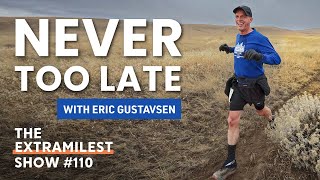
Dentist Eric Gustafsson started running at 57 and has completed 22 marathons, dropping his time from 4:04 to 3:04. He credits easy MAF miles, core work, the Myrtle Routine, and mental strategies like the 3 C's of pacing for his improvement.
Chapters
What if I told you that a 57-year-old, after a 40-year break from running, a dentist, he started running and he ran his first 5K, 10K, half marathon, and marathon?
And I went out a couple times and I ran around the block, which is maybe 400 yards, and I thought, no, this doesn't feel good.
Fast forward to today, Eric Gustafson is 62 years old with 105 races under his belt, including 22 marathons, 28 half marathons, 4 ultras, and an incredible 14 Boston qualifiers. His marathon times have improved by an hour, down to a 3 hours and 4 minutes with sub-3 in sight.
You need to structure it every day. You need to decide, okay, today I'm going to walk for 2 miles, just 10 minutes. If you don't want to go out, say to yourself, I'm just going out for 10 minutes, that's, that's all I'm going out for, and then see how you feel after 10 minutes.
From a casual turkey trot in 2017 to completing all 6 world major marathons marathons in just 18 months. It is pretty exciting to watch his progress.
I remind myself I'm there to do my best, not racing against somebody else. I'm just there to see what I can do personally.
Eric didn't just catch the running bug, he turned it into a late-life breakthrough that most people wouldn't believe possible.
Build your endurance, build your aerobic system, and don't get hurt along the way.
This is his story and his advice to other runners looking to improve. This episode was brought to you by Function Health. As runners, we often track our pace, our distance, our heart rate. What about the other things that are actually happening inside of our body? I choose Function Health because it gives me the data that most runners never see. Over 100 biomarkers, from hormones to heart health, inflammation, and recovery, all in one secure place. For me, for example, when my recovery felt slower and my energy levels were down, Function has previously showed that my vitamin D or my iron levels were low. Huge factors for fatigue and heavy legs. Markers like hs-CRP tell me if the inflammation is slowing progress, while hormone levels reveal how my body is adapting decade after decade. Function isn't just about chasing PRs today. It's about running healthy and strong for the long haul. This is why top health leaders like Dr. Andrew Huberman and Dr. Mark Hyman are behind it and why I believe in it too. Learn more and join using my link functionhealth.com/floris. Function is a near 360-degree view to see what's happening inside your body. Visit functionhealth.com/floris or use gift code FLORIS100 at signup to own your health. Hope you enjoy my conversation with Eric Gustafsson.
Well, let's dive in. Eric, welcome to the Extra Mileage Show. Thank you for jumping on here.
Well, I'm very happy to be here, and it's quite a privilege, I feel, for me to be able to relate my experiences and how the Extra Mile Show has helped me in my running progression and journey.
It's been incredible to watch your running journey over here, and I want to— this is going to be a fascinating conversation because you started running in your 50s, where you really got into running your first half marathon, running your marathons, and you've done quite a few different races over the last 5 years here. What I would like to start out with is maybe you can tell me more about in your 30s, 40s, 50s, what were you doing workout-wise or exercise-wise and what kind of inspired you to pick up running in your mid-50s?
The main form of workout or exercise that I was doing, we had two younger kids at that point in time. And so, I would walk in the morning before breakfast with my wife, and then we would walk after supper or after dinner for probably half an hour after dinner and maybe 15 minutes in the morning. And then, 2 or 3 times a week, I would go to the gym and I would do some weight training. But I hadn't really considered running until 2016. I ran in college a little bit. I, uh, when I was in college, I had a jogging class that I thought would be easy credit. So that's, um, kind of the end of my running, uh, until I turned, I guess, late 50s.
And then what made you decide to start running and like training for your first race?
I'd been thinking about it for years. Um, I had, I developed a bit of knee trouble from snow skiing. I was skiing in some deep powder and I felt this sharp pain in my left knee. And it turns out that I tore my meniscus.
Oh, wow.
And so that was probably about, well, at least 10 years ago. And I had meniscus surgery on that knee. And then about a year later, I had meniscus surgery on the other knee. And it felt better when I was walking. My surgeon said, yeah, you can run. That's no problem. He worked in Wisconsin, I believe, prior to coming to our community in Walla Walla. And he said he had an NBA basketball player that was playing within a few weeks after having meniscus surgery. So anyway, I kind of thought that maybe I should start running. And I went out a couple times and I ran around the block, which is maybe 400 yards. And I thought, no, this doesn't feel good. So, that's— I kind of backed off and I just continued walking. But the reason I started running is I have a good friend named Bruce, and he liked to cycle. And Bruce is a fairly Type A personality like I am. And he decided he wanted to do Olympic triathlon, but he didn't like to run. He said he hated running. Would I run the 10K portion? And so I hadn't run a 5K since high school and I'd never run farther than 5K. And so, um, I signed up for a 5K turkey trot and I completed that. And that was maybe about 6 months after meniscus surgery and my knee didn't hurt too bad. So I thought, well, maybe I can do a 10K. So that's kind of where I started running is through the encouragement encouragement of my friend Bruce, and then also the Turkey Trot a few months prior to that.
And what was your age? Like, what year was that? What was your age?
So 2017 was when I did a first official 5K that was timed. And so I was born in '62, so I guess I must have been 55-ish, something like that. And so Um, then in 2018, my friend Bruce, um, wanted me to run the 10K. And that was the beginning of the real learning experience for me. I found that after running, you know, 2 or 3 miles, my legs would be hurting, particularly my calves. Um, my back would be a bit sore and my feet would be really sore. Um, and so from there I started doing some searches on YouTube to try and find some advice. And I stumbled across your site. And I also watched a site called Triathlon Taren.
He was another podcast guest, actually.
Oh, really? Okay.
He's been on a podcast several years ago.
Yeah. So from you, I learned walk around in your bare feet. To toughen up your feet. So that was helpful just in being able to increase my mileage a little bit. Somewhere in there, I was having back pain and I went to the chiropractor and he said, "Oh, you'll never run." And so I thought, "Oh, that sounds like a challenge to me." So I started doing more exercises. I got connected with I would say, like an exercise stretching coach through one of my hygienists. And he came up from California and he was training her in different fascial stretches. And so that was about 2018, I would say. And doing those different stretches helped me with my running, helped me with my back. And as I got into running, my back actually strengthened. I think my core muscles, which support the back, strengthened, and I've been doing a lot better as far as that's concerned.
It is so mind-blowing to me where you're mentioning like your doctor told you, you should never be running again or you shouldn't be doing any races. After I ran my first marathon, my doctor told me the same thing. He's like, yeah, like he had some foot issues and he was like, yeah, you should never run another marathon again. And here we are, however many marathons later. Right. And so it is an interesting one. So tell me, tell me more about when did you decide to sign up for your first half marathon and then a marathon? And how did that go, that first training cycle?
I did the 10K with my friend Bruce, and I ran it like, I think, 61 minutes. And my calves were killing me for probably the next week or so. So that was 2018. I have two brothers and a sister. I'm the youngest in the family. My older brother developed a rare form of prostate cancer, and he was an athletic coach in Calgary. And once he was diagnosed, the disease went pretty quickly, and he passed away. And at his memorial service, one of his students James Lee, who also happens to be a PB member, gave a talk about running the Berlin Marathon. And he was talking about how my brother had taught him how to pace and how to run each mile separately and not be looking too far ahead. And I was sitting there, I thought, wow, I wonder if I could run a marathon. So from that point, I signed up for a half marathon because I knew I needed to see if I could run a half marathon first. And I did a half marathon north of Seattle on Whidbey Island. That went okay. I think I ran a 1:54. I was hoping to break 2 hours because that seemed to be what everybody said was a good time. But when I was done, I was sitting in—
1:54 is an incredible time for your first half marathon.
Well, I beat the 2-hour mark and that was what I was going for, but my calves were just, they were just jumping. I was sitting in the car and, you know, there were, there was like, they were being poked in multiple places. I thought, wow, that's weird. So anyway, that was in April of 2019. And then I thought, okay, Well, there's a local marathon coming up in October. I'll sign up for that and I'll see if I can complete a marathon. And my goal for the marathon was 4 hours. So, I didn't have a proper training plan, but I had listened to you talk about MAF training with Phil Maffetone, and I kind of got onto that. And so I was following that in terms of not trying to run too fast, not trying to get in shape too fast. I didn't have a proper watch to track my, track my heart rate or anything like that. But it sounded good to me that you could get better without using maximum effort every time you went out. So From that first marathon, what I learned in that first marathon is you can feel really good until about mile 20. And I was, I was, I think I was doing about an 8:15 or an 8:30 pace. And I remember there was a guy who had these running shoes. They had separate toes in them. Yeah. I was trying to keep up to that guy and I was doing really good. And my wife, who is a huge supporter, she met me at mile 20. She, she like, how are you doing? I said, I'm doing real good. I think this belt with my food in it is a little bit too heavy. I didn't know about gels at that point. So I gave her what I had in there. I had some, I think I had some dates and some stuff like that, which I saw in the podcast were good natural food. So I gave her that. I didn't have anything. And then about mile 24, I'm like, oh, what's wrong? I can't run anymore. And so I barely made it across the finish line. And then I made a huge mistake. I laid down and my wife was pretty concerned for my health and my legs were jumping and twitching and all the way from my waist all the way down to my feet, everything was I was just spasming. So, I told her, "Get me some Coke and we'll see if we can get some Coke down and then walk around a little bit." So, she brought me a cold Coca-Cola because I'd heard on one of the podcasts that Coca-Cola was a good thing to help get your blood sugar up. So, I took the Coca-Cola and I kind of leaned on her and I walked until the cramping quit. And then I thought, "I don't know if that was worth it." But, um, as these things go by the next day, I was thinking, well, maybe if I just learned a few different lessons, um, then I could run another one. So that's kind of how it all started.
And here we are, 2025, September that we're recording this, and you have ran 22 marathons, 28 half marathons, and 4 ultras.
Correct. Yeah.
You surely got the running bug. So, so what, what are like, first of all, massive congrats on your progress over time, on your dedication, on being out there and moving healthy and improving. High level, what would you say were some of your takeaways from running that first marathon in 4:04 to now your current marathon PB is 3:04. So you've shaved off an entire hour Your half marathon time went from 1:54 in 2019 to 1:26 in 2025. So what are some high-level learnings?
I think probably the biggest thing is you have to put in easy miles. At the beginning, I thought, well, do some of this math and then I'm going to throw in a little bit. I'm going to try and run fast and I kept hurting myself. So honestly, it took me probably 5 years before I could get out and do some speed work without hurting myself.
Once again, tell me more about that. Like, what was hurting? In what sort of way did you previously go about speed work? And how did that change? Was it only the base building, or did you approach speed work differently?
So, for me, it gets down to my back. That I think is the, the weak link in the chain. And so I started seeing a physical therapist every Friday who's very, very knowledgeable. And we started working with my back and with my piriformis on the left side, with the hamstrings and with calves on both sides, just getting those knots out. And I kept seeing the chiropractor. One of the things that has been most helpful is just building my core muscles up in terms of strengthening and supporting the lower back. For me, it comes at L5. And I know one specific half marathon that I was running along, I was about halfway through, I was feeling good. And I heard somebody behind me and I turned to my left. And immediately, I could feel something in my back and then hamstring just kind of went weak on me. So I think for me, that was a big— that was a big light bulb, big turning point, recognizing that my back was what needed some help.
The strengthening over there. And then what type of speed work did end up working well for you?
I think 2 years ago, Yeah, after the New York Marathon in 2023, I had a— what I felt was a disappointing finish. I had run the Berlin Marathon in '23 and run a, I believe, a 3:41, and then I was 6 minutes slower in New York. And so oftentimes when we have something that doesn't work out like we hope it does, Then we're like, okay, time to make some changes. So, I had been basically doing the MAP training and I'm trying to figure out, okay, what else can I do? And I came across a group called Run Doyin, and I started working with a gentleman there named Dave Burdan, and he is super, good coach. He won the Baltimore Marathon 2 times.
Wow.
And I think he's around a 2:20 or 2:21 marathoner, but really easy to work with. And so he helped me to kind of step up from doing MAV training into— we first started doing hill sprints. So short effort, minimal likelihood of damage. Then we worked on doing strides. And, um, then once I got a little bit confident with those, wasn't hurting myself, then we went to the track and we started doing some, um, 400 alternates and some 800 alternates. I would say I was doing at beginning working with him, I was doing 90/10, um, 90 easy and 10 hard. And now I'm probably about, um, 80/20, something like that.
There you go. The hill sprints is an interesting one. You're bringing that up because I personally love hill sprints as well. And even there, there's a variety of different ways you can go about it, from longer hill sprints to fartleks in the hills to, like, really short, intense bursts of hills. I know the Lydiard approach is a big fan of hill sprints as well. Tell me a bit more about how you approach that. And for anyone listening who wants to experiment with this as well, because you, you also wanna be careful with it because If you go about it too aggressive and you're injury prone, this could also be quite challenging on the body. So you, you want to ease into it. You want to warm up proper. You want to go about it the right way. So any high-level thoughts you want to share there?
Yeah. So as far as warming up, I will do like 4 or 5 miles at MAF. And for me, MAF, I try to keep it under 130. So generally 125 is going to be about the sweet spot, but it'll range anywhere from 105 to 130. But about 4 miles of warmup. And then I have a hill near my house. And so there's different ways of doing these, but what I do is I try and think of my feet as springs or my legs as springs. So shoulders back, head back, like you're going to do a 100-meter sprint, but you're going uphill, lifting your knees really high. And the idea is to retrain your mind or whatever part of your brain helps to improve your form, to retrain your yourself from going into a— from going from an ultra shuffle into more of a Kipchoge type of motion while you're running. That's the way I do the hill sprints. And I do anywhere from 5 to 10, and I do roughly 10 seconds. So, I have a specific distance that I do. And one of the things that Dave had me doing was walking backwards afterwards., for about 2 to 2 and a half minutes, back to the start line, get your heart rate way down. And walking backwards activates some of the fast twitch muscles that you wouldn't normally use. Plus it tends to stretch things out.
And plus it helps remind you of the posterior chain as well. This is also something Laurens van Lingen often talks about. Big fan of the backwards walking.
Absolutely. Yeah, I hope we get to talk a little bit about Lawrence later because let's do it.
Let's, let's talk about Lawrence. Lawrence is a good close friend. I had a long phone conversation with him yesterday again to catch up. So tell me more. What did you know that first of all, for those listening who might not know, Lawrence Van Lingen is a movement specialist. He has made a big impact in my own running, helped me run more with fluidity. Very natural movements through— like, he talks about the flow rope quite a bit, about backwards walking, tire pull, the awesomeizer, a variety of different topics there. He's been on the podcast before, and he has also shared several different great videos on his own Instagram and YouTube channel and on his website. But tell me a little bit more what your experience has been with Laurence's movement and how that has positively impacted your running.
Well, I would say just overall what I like about him is he's more of a guru than a hard kick-ass kind of coach, if you will. And he comes at it from a different side that I really appreciate. But one of the things in specific that I kind of picked up from him that I've incorporated with what Dave has been teaching me is If I'm doing a track workout to get my heart rate down, then I will pretend to do the flow rope as I'm walking backwards. And so I do that for 2, 2 and a half minutes to activate that posterior chain. And also it gets those two parts of your brain moving as well if you're moving your arms opposite the way you're moving your legs. So, Yeah, I would just say one of the things that when you asked me to do this, of course, initially you're like, oh, I don't want to screw up. I'm going to say something stupid. But then I thought of something that he said. He quoted a book by Marianne Williamson called Return to Love. And he said, who— or she said in that book, who are you not to shine? So I thought, okay, that's good advice. I enjoy Forrest's show. And I think I'm just going to take a chance and do this. And if something goes crazy, it goes crazy, whatever.
Yeah.
And that's the thing, right? Like once we live from our authentic self and we just explain or like share our story, it's just the truth you're sharing. Like, and then it comes from within and it's just two people having a conversation and you might be surprised what what you're sharing can just land at the right time, at the right place with someone, and it can make a positive difference in their running or health journey. So, yeah, really glad you're here.
So the other thing that I would say is I definitely do different exercises to open up the hips. And so at the ShakeOut run at New York last year, Todd was there, and I not sure how to pronounce his last name.
But, yeah, something along those lines.
Yeah. So there was a small group, but he led us through some of the hip opening exercises. And so I'd been doing something similar at home with my exercise routine, with my stretching routine, but that was really neat to see that. So those have been helpful. Yeah, I just really appreciate his approach.
I haven't done the tire drag yet, but there's always something, something else again to, to look forward here. And then like it's the happy hip hack and that there's, he is innovating and keeps progressing as well, which is awesome to see. So as far as the, the opening the hips, I think that's an That's a very fascinating one because many of us listening to this or working throughout the day or just sitting quite a bit, whether that is commuting, sitting in the car, whether that's sitting behind a desk, sitting in a dentist chair like you, these things do tend to make our hamstrings tight and our hips quite stiff. And indeed, some of these mobility exercises where just the movement of it itself, when you open the hips, it just makes your running so much more fluid.. And you can notice a difference when you do some of those things. It just comes down to doing it on a consistent basis, not just doing some of these exercises when you feel like the wheels are coming off and you're injured, but actually even during the, during the regular training cycles and just doing it on a consistent basis can, can make a big difference for sure.
One of the exercise videos that I found on our YouTube with the help of Dave, um, is, um, by Jay Johnson. It's called the Myrtle Routine, and it does a lot of those same moves and some extras that Lawrence does. Excellent. So I've incorporated that. I do those almost daily. Excellent.
And what would be very helpful for anyone listening over here, shoot me a link to that video. I'll make sure to put in the show notes. I'll put some links to Lawrence's materials as well. Yeah, I think it will just be helpful for some people listening here.
So, um, let me just expand a little bit on the back issue because a lot of older runners, probably just from years of wear and tear, have at least subclinical back issues. And one of the things that I found, this is both through the chiropractor and through my physical therapist is that L5, if there's some impedance in that nerve, then you can get, you can get symptoms all the way down your leg from your hip, piriformis, calves, hamstrings, and even your big toe. Now I saw, I've seen a number of posts from people that are having trouble with I think Kevin Erickson was having trouble with his big toe. And people are having trouble, you know, with their plantar. It's good to think about the electrical supply that's running down the leg and see if there is any impedance in the electrical supply. And for me, having a physical therapist work on that has been very helpful. Also having— I have a chiropractor who doesn't do the turn and crack. He has like a little pneumatic hammer that he finds spots where the muscles are tight and constriction is happening. And that seems to be very helpful for me. So, maybe that'll be helpful for somebody else. I know my cousin's husband who is an exceptional runner, he started having plantar fasciitis, couldn't get rid of it. Had injections, cortisone injections and so forth. Finally ended up having back surgery because guess what? It was coming from his back and affecting the plantar. So just, you know, something, something to think about.
Yeah, that's an interesting one, how everything is connected over there for sure. And I'm personally a big fan of working with a physical therapist to really identify what's going on. And you can do that in a variety of different ways once an injury occurs. But even preventative, like even though I'm not injured at this moment, I still go to a physical therapist once a month or once every 3 weeks just to kind of tune up the body there because the running can put quite a bit of wear and tear on the body, even if you do mostly low intensity with some high intensity. Still, I think there's something to be said over there. And yeah, strengthening, strengthen the feet, can indeed be done in a variety of different ways that you talk about there. One thing that came to mind with the back, I was really relistening to my conversation with Sally McRae, who is a big fan of strength training. And when I go back to the origins of that, when she was younger, she got in a pretty bad car accident and her back was really jacked up. She always had a sensitive back and it never— whatever she tried, it didn't help. Until she started doing plenty of strength training in the areas around it. So for her to really build up a core, to do consistent strength training, that made the back pain manageable and eventually go away. And it made it for her much easier to handle some of the running, especially towards the later stages of a run where you sometimes start losing your posture, you start leaning forward more and you just lose shape. So I thought that was quite an interesting one there too.
So just one of the other podcasts that I listen to semi-frequently is the Peter Attia podcast.
Yeah, absolutely.
The Drive. He had a guest on there named Stuart McGill, and they did a replay, I think, on August 31st, and where they talked specifically about back injuries. And there are 3 exercises that Stuart mentioned just in brief, and one is bird dogs. The second is side planks, and the third is Superman, where you lay on your stomach, but it's a modified where you're just lifting your legs. And so his theory is, is that you're strengthening your core and you're basically— the muscles that support the back and keep everything in line need to be really strong so that you don't have a disc that bulges on one side or the other.
So, yeah. And that's, that's the thing. It might not be the funnest exercise to do, but a few minutes a day, 3 times a week can already make a big difference right there.
So exactly. Yeah. And yeah, the core, like you were saying, is so critical towards those later stages of the race.
Yeah. And I think it is, every runner has different limitations or bottlenecks where, where things are going to start causing issues. For some people that is their back, for some people it might be their Achilles, for some people it might whether it just be their fitness level, whatever it might be. So I think indeed identifying what that is and finding specific ways to work through that. But yeah, strength training and mobility, especially as we age, it just becomes crucial at every stage there. So, so just wanna go back to your running journey a little bit more. For anyone listening over here, is there any advice that you would give either to your younger self or to someone in the earlier stages of their running journey, knowing what you know now after all these races and all these training cycles?
I would say probably the biggest thing— it depends on what your goal is. If your goal is to be healthy, then I think that, you know, you need to structure it. Every day you need to decide, okay, today I'm going to walk for 2 miles. Tomorrow I'm going to run for 2 miles. Day after, I'll walk for 2 miles. But you need to have a daily structure so that you know what you're going to do that day and how far you're going to go. Otherwise, if you don't have a plan, nothing happens. It's just good intentions. So, that would probably be the number one thing. One thing that I have done throughout my life is I've set New Year's goals. And setting those goals gives you something to shoot for. And then I have a daily journal that I go through where I talk about the, you know, I write down the things that I'm thankful for, and then I have future goals that I want to achieve. And so for the past 5 years, I've had these running goals that I've written down.. And so, I mean, my goal last year was I wanted to break 1:30 in the half marathon because we know that the closer you get to 1:25 in the half marathon, the closer you can get to a sub-3 in full marathon. So you have to break it down into manageable chunks and work on it that way. But I think goal setting is the real key, but you need to know what you want to achieve and maybe somebody wants to run a fast 5K, then they want to extend it to a 10K, then they want to go to a half marathon, and then eventually the marathon. So you have to kind of build your endurance, build your aerobic system, and don't get hurt along the way.
That's a big one, but not to get hurt along the way. I think that in particular, the joy of running keeping the train on the rails and yeah, not get, not get hurt. I think that one on its own. And it sounds like you've found ways to work through that, like just looking at how consistent you've been able to race, how consistent you've been able to improve. So, so that's, that's great. What has been some of your favorite races that you have run? Is there one race in particular that stands out to you?
Well, just kind of bouncing back on favorite races. I saw you run the Tunnel Mountain Marathon, and I thought, I'm going to sign up for that one. So I signed up for the Jack and Jill in 2021, but they canceled it because of COVID So I ran it anyway. But I went back and I watched that one probably 3 weeks ago before I ran the Jack and Jill again. And I would say as far as just pure enjoyment for a race, that one beats them all. It beats New York. It beats London. It beats Tokyo just because you're out there and the flowers beside the trail, the trees, the river running underneath the trestle. It's the most enjoyable race. I like the other races for different reasons. But that's my most, uh, that's the race that I enjoy the most.
And you go through a big long tunnel that's quite dark and then you come out and yeah, it, it's a wild race, but yeah, that's a, that's a special one for sure.
It is. Yeah. Yeah. Yeah.
The tunnel is really neat. Yeah. That's definitely, there's a reason why they, yeah, there's a few different names for that race, Tunnel Vision and the Jack and Jill, but Yeah. And that's, that's a good one. Let's talk about race day strategy and nutrition for a little bit. Anything in particular that has improved over the years and any advice you have for other runners there?
I think the, the big advice that people have is try out gels before you get to race day. So one of the worst experiences I had was doing an ultra on a warm day with food that I hadn't tried before. So I watched a video with Kilian Jornet, and he was running in the mountains in Norway, and he's like, yeah, I'm just going to take 4 Snickers bars. And so I thought, okay, well, that works for Kilian. I'll take 4 Snickers bars on this ultra. And then my brother said, well, why don't you do jelly beans? I do jelly beans. I had Snickers bars, I had jelly beans, and I was a little disorganized getting going and I didn't have breakfast. So about 2 miles in, I started on a Snickers bar and I was running with my friend Bruce, who is the triathlon fellow. And we got about 10 miles in, I started feeling ill and he said, oh, you need a salt pill. It wasn't one that you could swallow. It was one that you put in your mouth and it dissolves. And from that point on, I felt nauseous. And so I had cleaned out, you know, I had a vest that had these bladders in it for water. And I had cleaned it out with a light bleach solution, but I hadn't rinsed it enough. And so I could taste just a little bit of bleach in my water. And so I was really feeling sick. So somehow I finished that race. Bruce was kind enough to stop and help me probably about, uh, I would say around the, um, 40, 45 kilometer, um, area. So I could, so I could end up finishing. Otherwise I probably wouldn't have finished if he hadn't been kind enough to stop and help me. But that was a huge mistake. So what I learned from that is, um, if you're going to try a goo gel, If you're going to try Martin, try it on a long run. Don't try it on race day. Um, and just by experimenting, I found that the Martin gel works best for me. So that was probably my biggest takeaway. Um, I used to carry a water bottle with me. Um, but, um, I found after a few runs, uh, with the water bottle, then I started just getting water at the water stations, and that seemed to, to work better. There's certain things that we kind of hang on to like a security blanket.
It is so well said, and I see it quite common that people start running with running belts, with water bottles, with, uh, hydration vest with multiple water bottles. And most of these races have an aid station every 3 miles, 5K, and if you end up not running on an exceptionally hot day and, and there, when there's enough support out there, just not having to carry that additional weight can make a big difference there. So yeah, I see the same thing. I see quite a few runners taking it as a safety blanket, but my general advice is to like, hey, if you can just use the aid stations, and I'm not a fan of relying for nutrition on aid stations, even if they say they have gels, like half the time they run out. And so I will typically carry the nutrition, but as far as for the hydration, yeah, relying on that locally is, is nice.
I would say the second biggest mistake I made was, um, trying Gatorade towards the end of a marathon. And I hadn't trained with Gatorade. I, I think it was probably about mile 22. I downed a cup of Gatorade. I felt ill. I finished the race. I did a 3:48, which was just under the Boston qualifying time for me. And I could hardly walk. We got in the car and the car started down this windy road and I had to open the window, threw up on the side of the car. We pulled over and some guy stopped to tell us that we shouldn't pull over there. Throwing up on this side. I'm like, okay, well, maybe I'll throw up on your car. So anyway, that was very helpful of him to do that. But that was probably the biggest mistake that I have made as far as that really made me feel sick. And that's the only time, fortunately, that I've gone down that road where I've had to throw up afterwards.
Yeah. Wow. Well, yeah, training with specific nutrition and hydration, at least being aware of how the body is going to respond, it's, it's going to make a big difference. So you are a dentist with many years of experience and you're also a runner who sometimes takes in what you just mentioned, gels or Gatorade or whatnot. Recently, there's more and more emphasis on oral health. Even guys like Bryan Johnson, longevity expert, and many others are talking about how important it is not just to brush your teeth well, but to really take care of your, what would you call it, the inside of your mouth. The oral biome. That word is not in my vocabulary, but that's a very nice way of saying it. Tell me more. High level, from your experience, what recommendations do you have for runners to have good oral biome?
I would say on race day, I wouldn't be too concerned about, um, just take your gel and, uh, I would try and swish well with water afterwards. That I would be more concerned of what people are using for training. And, um, we're seeing a lot of damage from things like Gatorade. Gatorade has a very low acidity, and it's probably about 2.5, and your teeth start to dissolve. The calcium starts to come out around 5.5 or so, but it really damages teeth. And we see this with a lot of young athletes. Just trying to repair the damage that happens is almost impossible. So that would be my main thing is try not to train with Gatorade. Don't leave it in your mouth. Diet sodas, not any better. Um, everybody knows that Coke is not good for them long-term. Hopefully it's very acidic as well, but Gatorade is about the same acidity as, as Coca-Cola.
Right on. So if people end up taking any of those during training or during racing, like afterwards brushing teeth, afterwards rinsing, is there anything that can be done to, to further improve oral health?
Well, I think probably the best over-the-counter mouth rinse that you can purchase right now is something called Closis, and it boosts the pH in your mouth. And what that does is your mouth is supposed to have healthy bacteria, and there's some research coming around that shows that if you use things like Listerine on a regular basis, it destroys good bacteria and bad bacteria. But you want good bacteria to be there. Good bacteria are involved in a cycle that produces nitric oxide, not nitrous oxide, which is laughing gas, but nitric oxide. And there's a pathway that involves 3 different chemical bioexchanges. But if you knock out those bacteria, what happens is there's pretty good evidence that you're going to end up with high blood pressure because you get— vasoconstriction instead of vasodilation in your peripheral blood vessels. So, Closys, we think at this point is a pretty good alternative because it boosts pH, and the higher the pH in your mouth, the healthier the bacteria are going to be. The healthy strains of bacteria survive, and the unhealthy strains tend to die under the high pH conditions. The other thing that I would just add is is, um, probably 4 or 5 years ago, I, I heard you talking with somebody about nasal breathing. And that is another thing that's super important, you know, as far as there, there seems to be receptors in the nose that help vasodilation, which helps oxygen perfusion. And I heard an orthodontist talking about this a number of years ago, and he was a marathon runner. He would actually tape his mouth when he ran marathons so that, he would get better oxygen perfusion in his muscles. Just a kind of little tie-in with something that I heard on your podcast.
That's an interesting one. Yeah, I've, I've heard a lot of different things about nasal breathing, even that it can change the shape of your face, or that like people who nasal breathe versus mouth breathe, that yeah, their entire face structure can change over time.
And yeah, it can change the resting position of your tongue. And where your tongue rests can change the position or it can change, you know, the structure of the muscles in the face, which can either broaden it or it can shrink it.
Let's talk about the head games, like when things start getting tough, either in training, on low motivation days, or like you just don't feel like it. We're getting into the winter months again. Some days are getting darker, getting colder. Talk to me about that and also talk to me about tough spots in a race on race day, how you go through that mentally.
So let me just start by saying something that my friend Bruce says. He picked up someplace in his triathlon training that, um, just 10 minutes. If you don't want to go out, say to yourself, I'm just going out for 10 minutes. That's, that's all I'm going out for. And then see how you feel after 10 minutes. So I've used that on occasion. But currently what I use is if it's raining, I look outside and I say, hey, what if it's raining in New York? You're going to not go? And so you have to give yourself a little kick in the butt sometimes. But you have to have it on your schedule and you have to say, okay, I'm doing 6.5 miles today. It doesn't matter what the weather is. If it snows, if it rains, if it's windy, if it's hot, doesn't matter. I'm going.
This is why that schedule, I think, I think you're spot on over there with the goal setting, but then also breaking it down into like weekly and daily, just putting it on a schedule. Then it becomes a non-negotiable. It's an appointment with yourself, really. So, right.
And then I think that's a great point. And just to tie in with, if you have a personal coach as well, there's this accountability factor. You may not learn a lot of logistics from the coach after a couple years, accountability is huge because you have somebody to answer to. So I think that's really important.
See, where were we going with this? And then also on race day itself, if things get tough.
We had Alex Hutchinson on recently, and I recently relistened to his book, and then here he is on your show. So that was good synergy. One of the things that he talked about in that book is positive self-talk and smiling. Super important. And I can— I think that kind of ties in with what Kipchoge says, you need to smile to yourself. Here's what I do. And at the beginning of the race, I am telling myself how fortunate I am to be there because a lot of people through whatever life circumstances would like to be doing this, but they can't. So, I remind myself how fortunate I am to be there. I remind myself I'm there to do my best, not racing against somebody else. I'm just there to see what I can do personally in terms of what I'm capable of today. And then, as the marathon goes on, I heard somebody say, and it could have been on your podcast, there's 3 C's to a marathon. So, start off comfortable and for at least 5 miles, you don't want to overdo it until you get warmed up. And then you move into your confidence phase where you're like, okay, I can do this. I got this. Everything's under control. And then the last 10K, you get competitive. So during the confidence phase, I'm singing songs in my mind, stuff from my childhood. I'm thinking about my brother. Who would love to be racing, but he can't because he's passed on. And then when I get to the competitive phase, I'm like, okay, I'm going to catch that person in front of me, or I'm not going to let the 3:05 pacer catch me. I'm going to stay ahead of that person. So those are kind of my go-to's, but You know, when it gets tough, I tell myself, you trained for this, you trained for this, you were out on rainy days, you were out during the snow, you trained for this. And then you have to tell yourself, how are you going to feel if you don't give everything you have today? How are you going to feel tomorrow?
And you just get a little extra kick. So well said. I really love that. Start comfortable, then confident, and then competitive, finishing strong. I really love that. I've heard you talk a few times about gratitude and appreciation even in your journaling. About 6 months ago, I hired my own life coach, which has been super eye-opening and fascinating to work with someone like that. And one of the things, like sometimes he gives me some little homework, like different projects to work on. And as much as I have talked many times about gratitude and I've done it myself in numerous occasions, sometimes I'm just not very consistent with it. And so One of the things was like, hey, let's do some gratitude. Just write down 3 things you're thankful for. Just do that in the morning. So I do my 10-minute morning meditation and write down what am I thankful for. And just that part alone, like it changes the way you show up in the world, the way you like start seeing everything through appreciation and through like there's so much pull towards the negativity these days, I feel. And like when you truly look around you and I spoke, spoke about this last night with my friend Duke over dinner, we're literally like, we're surrounded by a lot of good, positive things. It's just sometimes the negative just gets so much more attention. So consciously bringing that up even at the beginning of the day and possibly even reviewing it again at night before bedtime. So you go to bed in a positive state. It's the little things. It doesn't cost you anything other than 1 minute of time to think it through. Through and letting it sink in. But yeah, I found that it's interesting to hear you say that as well.
Yeah, I, I came across a guy who was doing research at Harvard and he was talking about the results that they had studying people who implemented journaling with gratitude. And then there were 3 further steps and they were What were you thankful for yesterday? What are your goals for today? And what are your long-term goals? And so adding those, and then the people that you want to remember in prayer, if you're a praying person.
Yeah, so well said.
Eric, where can people find out more about you? Oh my goodness, I don't know. I kind of like to be below the radar. But, um, probably on the, on the PB Facebook group is the easiest place. I'm on Facebook as well, although I'm not very active on Facebook because, um, I find that, um, I said I waste too much time. Get sucked into the algorithm. Yeah, well, exactly. The algorithm has changed. It's more advertising than it is, um, people trying to do these days.
I do see your runs come by on Strava as well, right? You seem to post on Strava. So good. Yeah. I'll, I'll make sure to, to link to that. And one, one question over here. Do you have any closing thoughts, any advice for listeners looking to become a stronger, healthier, happier athlete?
Let me just back up to the last thing is if somebody has a question, I'm more than happy to answer it on Strava. You can just message me on Strava. And, you know, if it is a detailed answer, that maybe I'll get their email and email them a little bit. I think for me, it's been very helpful to have a very supportive wife who likes to help me plan travels. So one of my friends says, I wish I had somebody, I'd like to be like Captain Kirk and say, make it so. And my wife is my make it so person. I say, hey, let's go to Berlin. And she says, well, why don't we plan a trip and we'll go to the Netherlands beforehand and we'll go to Sweden and then we can go to Berlin. I say, okay. Okay, let's do it. So, for me, that is a really important thing. But, you know, as far as being a healthier and happier athlete, it gets back to what you were talking about earlier. There is a lot of negative clickbait in all our social media. And so, look for the positive and look for people who are trying to improve themselves and you rather than somebody who's trying to bring you in with a negative algorithm. So I think, you know, just what we bring into our mind is super important. And then I think just planning your day, planning your week, and planning your year is super important so that you know what you're doing today, you know where you want to be in a few months, and you know what your goals are in a year, what you want to accomplish in a year.
So well said, Eric. Thank you very much for, for sharing all the insight. I'll make sure to link to everything mentioned in the show notes over here. And I look forward to going for a run at some point together, either at one of the upcoming races or outside of that.
So, yes. Well, I enjoyed meeting you in Berlin. I must say I enjoyed chatting with your dad in Berlin as well.
So this is, this is once again what you were talking about of making a family trip out of it. That was similar to me going to Berlin. It's like, oh, let's go to Amsterdam, hang out with the family and in the Netherlands and then take them with me to Berlin. And so, yeah, I think whenever we can combine some of these running races with like a family vacation, it's a nice way of doing that.
So for sure. Absolutely. That's one of the best things about running for me is that we get to visit some great places, get to do what I love the most, which is running. And then we have a fabulous time, try some new foods, meet some new people.
So I have Absolutely. Eric, thanks so much. We'll talk more soon.
Have a good one.
Thank you. Eric is a massive inspiration. Seriously, just to see the progress that he has made in 5, 6 years over is mind-blowing. I would love to hear from you. What was your favorite lesson, takeaway, or quote from this episode?
Please let me know below in the comments on YouTube.
I'm about to head out to Mammut. We are hosting an aid station for Path Projects at the Mammoth 200. It's the first year of the race over there. We're going to be setting up at mile number 108, and we're going to be serving food. We're going the non-traditional route, so we asked a few different runners, what do you enjoy eating at an aid station that you might not see at other aid stations? So we're going to be providing them with a whole bunch of rice balls with miso soup with ramen. We can have a feast out there in the middle of the forest. Should be a blast, and maybe I'll share some more stories from that down the line. There's going to be a bunch of bears out there, and we're cooking all this smelly food, so it's going to be an adventure, I'm sure. So anyways, have fun out there on your runs, and we'll talk more soon again.
All right, bye now.
More from Floris


Ryan Hall 2.0 on Strength Training For Runners, Lifting Heavy & Trail Running




You’re Doing Zone 2 Wrong (Even If You Think You’re Not) | Scott Johnston Round 2


How to Build an Unstoppable Aerobic Engine (Even If Starting From Zero) | Scott Johnston


Stress Is Killing Your Running (The Relax Fix You’re Missing) with Dr Kasim Al-Mashat

When things get hard, say this, it (works in any race) #jeffpelletier #running #ultrarunning