How HRV insights can improve performance | Marco Altini
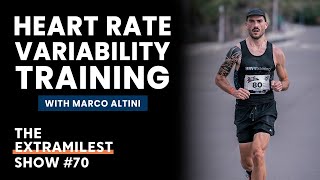
Marco Altini explains how heart-rate variability reflects stress and recovery. Measure it with your phone in the morning on an empty stomach, then adjust training intensity when your baseline drops. HRV dips from travel, work, and illness too, not just hard workouts.
Chapters
It's, it's always difficult also subjectively, right? How we feel is key, but at the same time in these sessions, one rep more, one rep less, it's difficult. Sometimes you feel like you have to power through, sometimes you're not sure. So getting some feedback through how your body responded and then seeing that maybe consistently over repeated workouts over time, then allows us maybe to make some changes and handle the load better.
Hi there, my name is Floris Geerman, and today we're taking a deep dive into heart rate variability with Marco Altini. He has 50+ publications around the intersection of technology, health, and performance. He is the founder of the HRV4Training app, and that is an app that I use daily. He is also a data science advisor at Oura. A wearable ring and app to optimize how you sleep, work out, and recover. This was a fascinating conversation, and we really tried to discuss the details about heart rate variability and how you can integrate this in training, racing, and in daily life as well. This episode is brought to you by PATH Projects. This is the only apparel that I use for training, racing, and daily life. More information can be found at pathprojects.com. This episode is also brought to you by LMNT, which is a delicious electrolyte drink that has everything you need and nothing that you don't. That means plenty of salt, potassium, and magnesium, and no sugar. Increasing my electrolyte intake has made a significant difference in my energy levels, in my quality of sleep, and no more brain fog or headaches. It really can make that much of a difference. I typically start my day with drinking a large glass of water of about 500 milliliters. That's half liter, and I mix in one package of LMNT. It helps rehydrate and allows me to maintain my focus and physical performance. And I actually really like their packaging. You can decide how much water you want to put in, and that's how salty it actually becomes. And you will notice you can make it quite salty, or you can dilute it, but it tastes delicious. Go to drinklmnt.com/flow to get a free sample pack of 8 flavors with any order. This offer can be used multiple times. That is drinkelementi.com/flow. F-L-O. See also the link in the description. I hope you enjoy my conversation with Marco. We have quite a few listeners on the podcast that hear me often talk about low heart rate training and about zone 2 training and also higher intensity training. Yet quite some people are not that familiar yet with heart rate variability. And I think that's where we can start out. Can you explain a little bit more What is heart rate variability and why is it important for athletes to start looking at this for their performance and for their overall health?
Yeah, for sure. So when we look at heart rate variability, technically speaking, we are looking at the exact timing between consecutive heartbeats. And we can think, for example, when we measure our heart rate, even if we are at rest, We might have, let's say, a heart rate of 60 beats per minute, and our beats are not coming in exactly every second. So there is always some variation between heartbeats. And when we talk about heart rate variability, it's techniques to quantify this variation over a certain amount of time. So if we measure our heart rate variability for a minute or 2 minutes or 5 minutes, then we quantify the variation that we have in these consecutive heartbeats. Over that timeframe. And that might sound something a bit convoluted, but why do we do that? Right? So what is the link between that and eventually training performance, health, or everything? Well, basically this variation is not random. It is associated to how the body responds to stress. And that's why we are interested in this parameter in particular, when we face a stressor. Any stressor actually, it could be physical, it could be psychological, it could be related to our lifestyle and behavior, any sort of things that we face will have an impact on our body in terms of how the body basically automatically responds, right? Even without our conscious control. And that is what happens in what we call the autonomous nervous system. So it's a part of the body that takes care of things that you don't have to think about. For example, even just breathing, right? You don't consciously breathe every time, but it just happens. And a lot of other things happen in the body so that we maintain a state of balance that is optimal for health and performance so that everything is tightly regulated within a certain range. And we can think about blood pressure or blood glucose or our heart rate and also our heart rate variability. As we face a stressor, this variability will change. So when we get more stressed, the variability will reduce. The influence of the autonomic nervous system on heart rhythm will change and the variability will reduce, will be reduced. So we cannot really measure this entity stress and we cannot really measure the autonomic nervous system, but we can measure its impact on heart rhythm. So it's several steps there that we are not really able to measure, but then we look at what is the effect at the end of the chain of a stressor on how our heart rhythm and in particular our heart rate variability changes. And that gives us some insights in the stress response, which can be then related to training or other stresses we might be interested in.
There's so much to unpack over here. This is a topic I'm super excited about. So let's dial it back a little bit because Heart rate itself is very easy to measure. You can just like put a timer for 1 minute and just feel what is the amount of beats per minute. What are the best ways if someone here is listening who wants to measure their heart rate variability? Like I know you have developed a tool for that, but can you explain a little bit more on what are some of the easier ways to start measuring this?
Yeah, yeah, for sure. So as you say, heart rate is easy. We just need to count the beats, right? We can do that. With our fingers and we count how many beats we have in a certain amount of time. That is actually also, let's say, maybe less accurate or less sensitive way to capture stress responses. But we also know that when we are stressed, for example, we feel our heart rate is a bit higher. So there is also something in there, right? Just a simpler way to capture this similar concept. When we go a bit more in the, um, let's say when I'm, when I'm with a technique like HRV, we just get a bit more sensitive so we can capture stressors that maybe with heart rate you cannot really capture, right? That would be part of the reason to use it. Um, sometimes we have more subtle stressors, uh, also related to training that may be built up slowly over the days, a bit more chronically, and heart rate might look like everything is normal, but maybe in HRV we see a change and that would be a reason to go there. And in terms of the technology, to answer your question, we have at this point many different options. There is something, you know, HRV is not new, right? It's been 50 years that we have all sorts of insights into these mechanisms. But what has changed dramatically is the technology in the past decade. So we have a tool that I developed at this point almost 10 years ago to measure your HRV using the phone cameras that, you know, you just don't need any sensor. You just place your finger on the camera and you can do it that way. Alternatively, now there are—
Let's talk about that a little bit more because this is really a powerful tool. And initially, when I first heard about this, this must have been probably 6, 7 years ago. I've previously downloaded the app as well. And at that point, so what you're talking about is you have your phone, you have a camera on there, you put your finger on the camera and the light goes on, so your flashlight goes on, and for 1 minute you just have to sit still and it basically calculates your heart rate and your heart rate variability, correct?
Exactly, exactly.
So what is the accuracy of that? Because I know that there's quite some people who were initially skeptical about the accuracy, but you guys have done a bunch of scientific studies on it.
Yeah, exactly. A lot of skepticism, and you know, you cannot blame anyone. It's something that we used to to do with more expensive machines in the lab and with electrodes. And it was before the wearables and everything. So it was really not something you could measure in many different ways. Maybe you had the Polar chest straps. That was always an alternative, but that was pretty much it. And the technique here, so basically some other companies and people had developed similar techniques just to measure heart rate using the phone cameras, right? That was already something that people were looking into. And our contribution was Hey, if we can do heart rate, maybe we can actually get more exact on the timing of the beats and actually get heart rate variability. And that is a bit more complex than it sounds, especially when using, when you don't have a dedicated sensor, but you basically repurpose the hardware of a phone to do this. The principle is the same that you have with every optical sensor these days. So every watch that has LEDs to measure your heart rate uses a technique which is very similar to what we do with the phone because basically I'm just flashing a light, in our case the flash instead of dedicated LEDs, and then you are measuring with another sensor typically how this light is reflected basically once it hits your skin. In the phone, that sensor would be the camera. You just take a clip of how the color changes basically in the skin due to the flesh being reflected. And that is a simple measurement of blood volume changes, right? We know that when the heart beats, blood flows in our body until it reaches, for example, the periphery at the finger. And you can capture these changes in this signal. It's called PPG. Basically, you see changes in blood volume at the finger when the heart beats, and you can reconstruct them heart rate variability from the data you have captured that way. So you can do it obviously non-invasively, but also without any dedicated sensors or with dedicated sensors that still are not chest straps. So you can wear a ring or you can wear a wristband. And obviously the technology needs to be developed with this application in mind. It's not that every sensor that can measure heart rate can also do this. It's a bit different. Sometimes the techniques used to measure heart rate reliably make it so that the data cannot be used for heart rate variability because there's an application where typically you need to be still while heart rate sensors are aiming at capturing the data while you are exercising. So they might use what we would call some heavy filtering, which means just that the signal becomes more robust to capture heart rate, but it loses the information you need to capture heart rate variability. So the technology always needs to be developed for this specific purpose. But we were able to do it with the phone and then we did, we validated it. So we published data with respect to chest straps and also ECGs, so electrocardiograms that you see typically in hospital settings, showing that for the short measurements at rest, they are equivalent. So you can use this method in the morning for a spot check measurement. And that is as good as using a different technology. There's not always the case in all settings, right? So if you move around, then the signals become very noisy. That's why typically either you use this technology for a morning spot check or even the wearables. HRV typically is provided in the night when you're sleeping. That's the ideal moment.
So this is— I will explain how I have been using it because I think this might make it a bit of an example. So what I typically do is I wake up in the morning. First thing I do is I do two things. One is I wake up, walk over to the restroom, actually use the restroom, and then I measure my body weight. That's one thing that, like, I just— I'm curious to see, like, in the morning after I've trained. Like, for example, yesterday I trained much more than I usually do. Like, I ran in the morning, ran at night, and had a tennis session, and it was very hot. So this morning I noticed I was 4 pounds lighter than I'm normally at, and which— which I really didn't hydrate enough. And so it was a good indicator, like, all right, I want to like get in some extra hydration early in the morning kind of thing. So that was one of my takeaways. But then the other one that I do was actually right away measure my HRV. And so the name of your app is HRV4Training, correct?
Exactly.
Yes. So I do that for 1 minute. And then the good thing is, is that you actually go through a few questions and those questions basically talk about the previous day. Can you explain a little bit more? Because we often talk about journaling on this podcast, but I think what you have developed over here, if you do this on a continuous basis, it is very eye-opening, not just from a data perspective, but even from a rate of perceived effort and from a fatigue level. So talk through that a little bit more.
Yeah, yeah, I agree. Actually, I have sometimes coaches telling me, you know, I don't even care about the HRV. It's just the questionnaire that I'm glad that, you know, my athletes are spending some time thinking about how they feel. I think they're For me, both in the data and the subjective data, let's say the objective and subjective, the important part is always awareness, right? And spending those, um, eventually seconds, not even minutes, just thinking a bit, um, about how you're feeling and how you're responding to training and, you know, your soreness, but also your other stressors in your life, because those play a big role. I think for all of us, sometimes maybe even more for people that are not professional athletes and are not only dedicated to the sport, even though They also have a lot of big stressors, but when you try to combine training with maybe a busy life and job, that can be also more challenging sometimes. So I think both the data and the subjective assessment can help in identifying potentially situations in which we might want to make some adjustments or simply accept sometimes the current situations and stressors that we are facing so that we don't put more on our plate and we can try to manage these stresses a bit better. In terms of your routine, I think that's also exactly what we recommend. The protocol in the morning, you wake up, if you need to go to the bathroom, go. That's basically the only thing that you should be doing before the measurement. And then before, you know, you have breakfast, before you exercise, before you have coffee, before you read, you know, anything that might annoy you, you just relax there for a second and you take your morning measurement. That's a good snapshot of your resting physiology. And once you do that every day, it'll start to inform you about how stress is changing.
Yes. And so can you explain, first of all, everyone's number is somewhat different, right? Like if you have a heart rate variability, like it's hard to compare it with someone else because everyone has a different baseline. And so it is important that we don't just look at one data point, but that we look over a bit of a longer period of time over there. What are some of the different ways that you can improve your heart rate variability and what are some of the things that actually bring it down? Like, yeah, it would be good to hear a bit more about that.
Yeah, for sure. In terms of the absolute values, I think We need to stress that even more because it's very difficult for people often not to do this kind of comparison, right? So you measure something and the first thought is always, you know, is this good? Is this bad? What is yours? And we all go through that a bit. And for HRV, I think it's one of those parameters where there is a bit of a useless exercise at the end of the day, because it doesn't really tell us anything when we measure once. We don't learn anything about a person. Um, we have, even if you consider people that are quite different from the rest of us, even top athletes, they might have what we consider a perfectly average heart rate variability, even top endurance athletes that maybe have some physiological signals that are clearly quite a bit different. Even if you think about heart rate, that, um, it's a bit easier for people to relate to or to measure resting heart rate in elite endurance athletes tend to be low. So it would be unusual to have an elite endurance athlete with a high resting heart rate, but HRV doesn't even have that strong of a link between, um, its value and cardiorespiratory fitness or elite endurance performance. So it is really more a metric that we should be using as feedback over time based on relative changes with respect to our own normal. As opposed to something that you might want to increase or optimize towards a certain value. And this is not to say that we cannot improve it, right? To answer the second part of your question, there's certainly ways to try to get things better, but I think we always need to understand that the absolute values do not matter that much and that there is always in all of these parameters, but maybe particularly in HRV, there is always a strong genetic component. So it could be that our values are wherever they are, and then still the data would be useful in managing stress, right? On a day-to-day basis, if we overdo it, we might have a dip. While if we are able to handle our stressors better, we might be more stable over time. So regardless of the absolute value, the way the data looks over time is informative of how we are responding to stress. If we train well, for example, let's say it's a case in which we manage well stress in our life, and then training remains the main stressor, the main thing we can manipulate and we care about in relation to performance. Ideally, a good response would be that our HRV almost never changes, is always within this normal range or optimal, we could even call it. Um, for, for us, um, it's a bit like, think about blood pressure. You don't want it too high. You don't want it too low. There is this range for HRV, it's the same, but this range is your own. So that can only be established when you have collected, let's say, a few weeks of data, and then you understand what is normal for you. So if everything goes well, you're always in this range, even if you train hard, because if you train hard, but that training is appropriate for your fitness level at that point in time, then you expect your HRV to renormalize quickly, just maybe a few hours after training so that when you measure it again, you are again within your normal range. While if you overdo it, maybe you weren't feeling great or you pushed, you know, one repetition too much or your easy training was not so easy for the last couple of weeks and things like that, then you might see suppressions and they do not typically mean that you did a good job and trained hard, but it means that your body did not recover in time because normally it's just a matter of hours for these signals to renormalize. Unless something was not matched properly for our skills at that time, or there are other stressors that have nothing to do with training but impact our physiology. So it's important for us to understand this, I think, this concept of, of stability. Then, um, in terms of how we can still work on our absolute values in a way, right? And see if we can make progress or not over time. I think that is still. An important part to consider, but that is also quite strongly linked to, I would say, our lifestyle and our behavior. For example, if we just picked up exercise, or maybe we have room for improvement in our diet or in other aspects of our life, sleep, or we have a very stressful job and things like that, then for sure, making some adjustments in the long term can bring our HRV also to improve a bit the same way our resting heart rate might reduce a bit, right? So these changes are possible. It's not that the first number you measure is always gonna be around that, right? You can make some changes. I just wanna stress that maybe for other people, maybe also many of the listeners here that already try to, you know, check all these boxes with, you know, their diet is good, they sleep well, they train well and all of that. I think sometimes it's unrealistic to think, okay, this is my HRV now and I want to take it there. It could be that it is, um, let's say we have a healthier relationship with the measurement and the tool. If we understand that we already are in our optimal range and then we want to keep it there. So we want to avoid dips and many changes over consecutive days because that is typically a sign of a poor response to stress., but it might not necessarily change in the long term. So I think there are a bit of these different two scenarios based on if we can change still our lifestyle and behavior in meaningful ways, or if you're already doing that quite well, and then we focus more about the stability of the same.
There's, there's definitely a lot of different factors that come into play, both on like increasing HRV and it going down. And one, one of the things that we often talk about has been sleep and the importance of sleep. And, and even when looking at my own trend data, sometimes it's not like— I do my, my weekend long runs or sometimes harder runs, and I would think like, ah, that's quite a bit of stress on the body. Yet when I look at my lower points in HRV it is often on a Thursday or on a Friday when I've had a busy week at work and I'm just starting to get worn down from the work week. And so there's the stress from training and then there's the stress from daily life as well. And those two have like different impacts, but they're both stresses on the body there too. And then at the other hand, you can, you can compromise or you can start aiming for good consistent quality sleep, which at least helps the recovery phase to some extent, or like even things like sauna use or cold exposure like this. There's so many different elements in the mix there. But yeah, it's, it's definitely an interesting puzzle there. I would like to hear from you because I've been following you on Strava for a while too, and I like that combination that you're a data nerd and you're like doing your own training over here too. So tell me, how do you integrate HRV in your training? Because I've seen sometimes on purpose you don't do that much high intensity or you make sure that you have quite a few days in between. So tell us a little bit more how you integrate that in training.
Yeah, for sure. I think the first step for me quite a few years ago was a realization of what you have just described, basically, that is Training stress was not really the main thing behind what I was seeing in the data. Um, as I'm not a professional athlete, but work is what I do, right? That's, that's why, uh, what stresses me out was the most in certain situations. I'm running a small business and things like that. There's always something to worry about. Um, and I could see in periods in which work stress was much higher that I would also get in situations of maybe chronically low values with respect to my normal. So not just a few dips here and there, but weeks, uh, of particularly low values and situations like that. And so it was maybe at the beginning, again, the awareness of, hey, these are the stressors that maybe I have to manage better. And it's always easy, let's say, to manage better training, or at least you have the possibility to change things quite easily, like modulate intensity or duration, and you could play with the stressor. It's not so easy sometimes with other stressors, like with work or family issues or sort of things that might be more difficult to modify. But I would say over the years, maybe I did make some progress in how I handle, let's say, my professional life. And I think that has been helpful for for sure. And then in terms of how I would use it for training, I think we were discussing a bit earlier, maybe offline, about low heart rate training and other topics you have discussed a lot in the past. And for me, it was also a similar process. I would say I was training a bit here and there and maybe unable to improve in performance for many years, and then unable also to train more because I was always maybe tired, a bit sore, and making that shift to really scaling down the intensity a lot, running very slow, allowed me then to run more, build volume, and then do better high-intensity sessions and improve performance dramatically with respect to what it was before. I mean, still as a recreational runner, but yeah, the difference in a few years was quite striking. And I think that all that process also of awareness of where your physiology is while you train and outside of training was also aided, I think, by the tools and looking at the data. As of today, I use the data sometimes simply as, I would say, a way to get some additional feedback on how I think things are going. I'm maybe in better tune also with myself to the point that it can be sometimes less necessary, but it can also flag maybe situations in which something is creeping in and you might not be aware yet, or even when you're getting a bit sick, sometimes your body is already impacted, right?
It's not that the signal comes before the sickness, the sickness is already there, but simply you are just not expressing maybe other symptoms and things, but your heart rate is elevated, your variability is suppressed, The one part I want to talk about a bit because I'm fascinated by this topic is breathwork and breathing in training, in racing, like whether it is nasal breathing during sleeping or breath patterns. Can you talk a little bit more about what you have noticed between HRV, stress levels, and breathing patterns? Like, I know you have done a a lot of different published studies on a variety of different topics. But yeah, any conclusions that you can draw about breathwork there?
Yeah, yeah, for sure. So this is a topic that I also approached a bit later. So we, let's, let's put it this way. When we talk about HRV in the context of resting measurements, we have, I would say, two main applications. One is we take a snapshot of your stress level and your physiology, right? So for example, this would be the morning measurement that we discussed as soon as you wake up or the night HRV with a wearable, which is something that has the same purpose. So resting physiology, you assess it and you don't try to influence it while you do it, right? The other way to look at this typically in terms of HRV would be what we call biofeedback, And that's a breathing exercise. And that is something that is very different because you don't take it to assess your physiology as much, but you take it, basically you do the exercise to try to influence your physiology. So we said earlier, when we look at HRV at rest, there is a parameter associated to your autonomic nervous system activity, and in particular, the autonomic nervous system is split into two branches, the sympathetic, which is the one that is active in, let's say, when you exercise and in situations in which you need to use resources, the fight or flight. That is what we do not really consider when we take resting measurements because we are at rest. And then there is the parasympathetic, which is the one that is in charge indeed in situations of rest and relaxation and that which activity might be suppressed when there is a lot of stress on the body. So that is what we quantify with the assessment and with the HRV biofeedback exercise. So when we do this deep breathing exercise, we try to basically stimulate the parasympathetic system so that it gets more active. So when we do that, typically we take deep breaths and we do that at a very specific frequency. Which is called the resonant frequency. That is something that is slightly different for everyone, but it's typically very close to 6 cycles, 6 breaths per minute. So basically you would inhale and exhale over 10 seconds. You do that 6 times in a minute, right? You can do that in slightly different ways. Typically either the inhale is as long as the exhale or the exhale is a bit longer. Because the parasympathetic system is more active during the exhale. So if you want to stimulate that, normally you take these deep breaths and then the exhale maybe is slightly more, slightly longer than the inhale. So you do that for a certain amount of time. The original protocols for this kind of activity were actually, well, are, I would say, a bit demanding, let's say, for other people. Willing to do these days, at least because you would need to exercise twice per day, each time 20 minutes. So it would be 40 minutes of breathing, of following this protocol for a number of weeks, basically every day. And the idea is that if you do that, you might have certain benefits. The literature shows typically in subjective metrics that things tend to trend better in terms of, for example, sleep quality, or there is quite some research in reduction of, for example, anxiety. Um, and, and this kind of aspects, I would say the other aspects that we looked into here from more of a data point of view was to see if this kind of exercise would also influence your resting physiology, right? So, because many people think, okay, is this a way also to improve my HRV? Because we know that while you do the exercise, your HRV is a lot higher, but that is an artifact of breathing, so to speak. It does— once you have stopped, you're basically back to normal completely. But then let's say that you do the practice and you keep it up for many weeks. Would that improve your HRV? And I think the jury is still out. So the, the, what we see is typically that there is clearly not an obvious change. So it could be that this practice is good for you, right? It makes you feel better in many different ways, but it does not impact your physiology in a way that with your morning measure or with your night data, you would be able to see a change. I think like most things, it's also highly individual. It's a bit like you change your diet or you exercise a bit differently and, you know, some people might experience changes and improvements, others might not. Yeah, I would say it's a bit challenging to determine, you know, at the population level, what are the changes there. But that is a bit how the exercise would work and the reason to do it would be basically to try to stimulate parasympathetic activity and improve HRV acutely, and then see if that also can have an effect for you more chronically in your baseline physiology.
Yeah. And I do think indeed it's, it's, there's one part to look at the improvements in the data where you might see a difference there, but then there's also the mental component of even you sitting down doing breathwork could help like get more alpha waves in the brain, gets to digest some of your thoughts and gets you in a more relaxed state that way. And so yeah, the part you just talked about, 10 seconds breathing, so 6 times in a minute, 2 times 20 minutes, I believe I've heard Josh Waitzkin talk about that part as well. Him and Tim Ferriss at one point had a conversation around that topic. And it is quite fascinating when you do the breathwork for longer periods of time, especially once you start doing it for 10 minutes, 20 minutes, or twice a day, 20 minutes like that. What's his name? Joe Dispenza. He does quite a bit of deep meditation with group work, and they often like focus on energy levels in the room, but heart rate variability is one of them as well. And yeah, I find there's a lot to it and some of it is measurable and some of it might not be measurable, but I'm still a true believer in it.
Yeah, yeah, I agree. I think, you know, when I keep up the practice, you know, we are for certain things like just the fact that you're practicing, it puts you— you see things in a different perspective outside of practice also, right? So you might be a calmer person when you go on your Twitter and you have to deal with people. So I think it can, it can act in many different ways, even without impacting your physiology. And HRV is used here as a form of feedback because for some people it is helpful to, yeah, just as an aid to keep up the practice, you would see, you know, your data, you see your heart rate increasing as you breathe in and then heart rate decreases as you breathe out. And basically you create this wave, which is just your heart rate following the breathing. And that can be helpful for some to keep up the practice, but you don't necessarily need to look at it through, you know, this lens. So you could just practice the deep breathing at that frequency, and that would be a very similar exercise at the end of the day. Yeah.
I was listening to your conversation with Jason Coop, um, on his podcast, and you guys talked about Heart rate variability guided versus dictated. Can you explain a little bit more with what, what the thought process is behind that?
Yeah. Yeah. I think that sometimes we like to oversimplify. Uh, and also in research studies, sometimes there is a necessity because you want to establish a certain protocol and then there is no room for interpretation, right? You follow the protocol. So if you decide that you have two groups of people and one is using HRV to adjust training, one is not, uh, that's how it's going to be. And then you decide exactly how HRV is used for this kind of changes. For example, typically in literature, the way it is done these days, it has changed a bit with respect to the past, but the way it is done now, we establish again, what is this optimal range, this normal range for you? And then we look at how your 7-day moving average, what you call your baseline, just basically not the daily values, but the average of the past week, how that is going with respect to your normal range. So let's say it's below your normal range. That means that there is higher stress and then you implement a change. The change would be you reduce training intensity. This comes from also the studies, the earlier studies of Steven Seiler, um, where he looked specifically at the impact of different types of training, high intensity, low intensity, let's say below the first lactate threshold or between thresholds or above the second on your HRV. So measure HRV before, then do the session, measure HRV after. And he showed that if you keep exercising below the first lactate threshold. So for example, what we call, you know, low heart rate training and just keep it easy. Don't want them to win a 5K model. Then your HRV goes back to normal within a few minutes from stopping exercise. While if you do something higher intensity, it can take a long time for that to renormalize. So that's the, what tells you is that, um, actually I wanna just add one thing. Even when you double the duration of the exercise, still the same applies. So from 1 hour to 2 hours, still, if the intensity is below the first threshold, you could see that the HRV was renormalizing really quickly. So that tells you if you wanna change something based on HRV, you should really play with intensity more than anything, because that is what has the biggest impact on your body and the needs for recovery from this angle. So this study is that are using HRV to modify training, they would scale down intensity when the baseline was below the normal range. So when there is high stress, that would mean, for example, that if you had a high-intensity session today and your baseline is below your normal range, then we say, okay, you don't do that high-intensity session. Maybe you do moderate intensity, or maybe you do an ease training. And that's how the training would be. In the past, instead of using the baseline, you would use the daily score. So every time you have a score on a day that is low, you would implement a change. So you can see that the new approach is a bit less reactive. So you don't do something when you have a suppression, but you wait basically for a couple of days in which you have a suppression so that the baseline also is brought down. You wait for a bit of a more chronic stress, so to speak, before you implement a change. I think that's a good idea, but it's also something that can only work in a study. Real life is different because let's say you're getting sick or you're sick today. Are you gonna train the same for the next 3 days to wait for your baseline to go low? Or are you already making a change? Right. So I think sometimes there are, uh, simplistic things that we need to implement to have a study. In real life, it's a bit different. And I think with Jason, we discussed a bit of this, not only in terms of HRV, but also how HRV should just be part of a much larger equation, right? It's not only HRV, but it's all the things we discussed before with the subjective questionnaires, how you are feeling, how you think things are going, what other stressors you have in your life. HRV is there to potentially flag issues or even just as confirmation that everything is going well. So you do not have to make always reactive changes based on your HRV, but it's just a parameter at this stage. One of the best parameters we have to capture stress responses, right? Because we cannot really look at much else non-invasively. Um, and therefore can be helpful in, I think, in a bigger context where you have, you know, your training load is what you did. It is subjectively how you feel. And then here is also your body's response. Those stressors, all of those plus others that maybe you are not even thinking about, because anyway HRV is not discriminating between stressors. Everything is in there. And then you see how you can use that information potentially to make some changes or just as confirmation that things are going well for you in any given moment.
Yeah, I want to mention two examples from my own training and a few of the things that I've noticed both with HRV HRV and with resting heart rate. One is I have two young kids, and sometimes they come back with the sniffles and they might get a cold, and I'm just surrounded by them. And as much as I don't get sick much, from time to time I notice my HRV like goes down or my resting heart rate goes up pretty significantly. And it's not until one or two days later that I start getting a stuffy nose or that I start feeling not well. And so just the indicator that some of this data can sometimes express itself before you even notice it yourself. I thought that was quite eye-opening to me. The other one is earlier you talked about when you do high intensity, like sometimes you might not want to do that extra last set because it might just push you a little bit further. And I've noticed that part as well, where let's say you do 6 sets of whatever, 3 minutes on, like 1 minute off or something. And like instead you like add 1 or 2 extra to it, and all of a sudden it might take you like 2 more days to recover. It's like sometimes even just pushing you a little bit harder, a little bit longer, can really set you back 1 or 2 extra days in training versus is actually like even Eliud Kipchoge, when he talks about finish a workout and still be able to smile or finish a workout and still have some energy left in the tank. I thought that it's interesting how it's all like, it's all coming together and it's all connected over there.
Yeah. Yeah, I agree. And I think sometimes it can be indeed eye-opening because it's, it's always difficult also subjectively, right? How we feel is key, but at the same time in these sessions, one rep more, one rep less. It's difficult. Sometimes you feel like you have to power through, sometimes you're not sure. So getting some feedback through how your body responded and then seeing that maybe consistently over repeated workouts over time, then allows us maybe to make some changes and, and handle the load better. Yes.
Can you explain or can you share some success stories from athletes or some examples of how athletes athletes have integrated HRV training into their own training and what sort of difference that made for them when they have done it or when they like versus before.
Yeah, for sure. I think some common themes I would say are a bit what you described in terms of maybe spotting things that are basically going to derail training. That could be sickness and trying to identify these sort of things in time and then maybe again, manipulate the other stressors so that you avoid basically putting yourself in even a worse situation. That would be, you know, if you do a hard session and you're getting sick, then it's going to take some time. Other situations, I'm thinking about the recent Olympics, right, in Tokyo. You had a situation where for many athletes you had both, a long trip to get there. And then the situation of the heat. So, athletes also of team teams that tend to have a similar schedule, right. And, and do more or less the same things in terms of when they fly and then how they behave once they're there with their trainings and everything. Using this kind of data allowed the coaches to make more individualized changes. For example, someone would suffer more jet lag and you would see in their data that it just takes longer for them to get back to normal. Um, others might struggle more or less with the heat and that also environmental stressors are also things that you see very well. Um, in the past they did some work also with the Dutch Triathlon Federation where they go to training camps at altitude and that is different from the heat, but still a stressor that you can spot in the data. And you can see also how the, um, individual response changes, meaning that some people might renormalize much quicker than others. Maybe someone needs a week, someone needs 2 weeks at altitude. And that, you know, is also reflected later in their data during exercise, but even the data at rest might spot earlier how that change is gonna play a role during exercise. So So all of these different situations, I think, um, keep popping up as ways in which the data could help, um, environmental stressors, um, sickness and other situations like that. For elite athletes, typically I would say also just positive confirmation that the process is going as intended. So you, in those cases, you don't expect much variation, um, as you were saying before, they already check all these boxes and stability is what you want to see. So when you get that kind of feedback, you also know that your body is responding well to your training. And that could be also powerful in that context, I think.
Yeah, absolutely. So before people have a big race, they go through a training cycle and let's say they have a half marathon coming up or a marathon or triathlon or anything, that's typically a reduction in training load. So training volume, training intensity to really like start getting or getting to the start line fresh. What, what is it that you typically would see in the signals from the body during that taper phase? Because I see quite a few athletes who are overdoing it in their taper phase still, and they don't get to the start line fresh. So can you talk a little bit more about the taper phase and what you have experienced there?
Yeah, I think this is also sometimes a bit of a misconception about HRV. So it's useful to address it both, I would say, the taper and also race day, which is another. These moments, we could almost consider them as outliers. They are not so frequent. We train for many months and then there this week in which we will make some changes. Um, well, my best tip I would say is regardless of what you see, do not stress too much about what you see that week because, um, the research basically shows that typically if we have done a very good training block and we have responded well to training, what you would see in the data is that it's stable or even increasing. So this is why HRV is really about the response. It's not the stressor itself. It's not as simple as I train more, HRV goes down because that is not what we are measuring. We are measuring the body's response. If that was the case, we wouldn't need to measure HRV. You already know the load, so, you know, you already know the response, but it's not like that. So if we respond well, we have a stable response or even HRV is even increasing a bit. If we don't, then there will be dips and other issues. But let's say everything went well, then we have a stable or increasing HRV. The moment we start the taper, a lot changes. Also, the stimulus is different. It could be that also maybe there is a reduction in plasma volume due to the fact that you're training less, and that is also associated a bit to changes in HRV. So it could be that your HRV starts decreasing. So you are getting fresher, but the data is actually showing, uh, downtrend. And that's definitely something not to stress about because It has been showed in, in literature also in elite athletes before, um, I think even before Olympics in the, in rowers, then winning multiple goals with the research of Daniel Pugh, which has done a lot of this. So definitely it was not something negative. Um, it was just probably a normal variation after you have had that stable and increasing data for the previous months. If on the other end, we've basically overdone it for months, uh, and then with this also what I see a lot. In my previous data, many years ago when I was training differently, then my data was always not be so good. And then I really needed that break and that taper, right? And then resting more of those days, I would see that maybe the data increases. So there is no optimal trend because it depends also on what happened before and how you were responding before. But ideally, if you always see stability and then increased HRV, um, in the main training blocks, then. A more downtrend towards the race when you change a bit training and scale down intensity and volume, that can be totally fine. It's not something to stress about. Similarly to race day, like race day, you might be excited. You measure your HRV, it's low. It's not that you are not recovered or that there is any issue with freshness or anything like that. It's just that probably you're just excited about it and that's that's also a good thing. So those days, if you want to measure just because you're curious and you want to keep track of how things have changed, by all means, but then don't let that get in your head because I think it's not necessarily informative about what your performance will be.
Yeah, spot on. Because we have a running coaching program, the PB program, and often in that week leading up up to race day, people mention, oh, I'm nervous, I'm having trouble sleeping, any of those kind of things. And yes, the recovery score might show like, oh yeah, you're not recovering well, but it's all part of that process at some point too. And I think some healthy race nerves are totally normal. And this is where often like I just don't even look at my data the day of race day or often even the day before a race, because it's, it's probably not going to be the most positive signal at that point anyway. So yeah, I use it daily and daily in training, and then during taper I take it with more of a grain of salt. And then on race day I don't even look at it because it's not going to make a difference anyways. I'm going to do the best I can on race day.
Exactly. Yeah, I think we need to be able to recognize also the limitations of what the data represents or what the tool we are using is able to tell us based on the data. The tool doesn't know that it's race day and that we are positively stressed, right? It's just a difference in our physiology that is picked up, but that has nothing to do with what we're going to do and how we can perform. Yeah.
Yes. I know you're an advisor for Oura Ring. I've been using Oura for quite a while myself. I use that one and I use the HRV for training, like both kind of like different data input, but there's still a lot of similarity over there as well. There's quite some innovation happening in the wearables industry right now. What is it that you're excited about in the next 5, 10 years over here? Are there any, any next-level things of measurements? Is there, is there more breakthrough coming with HRV?
Tell me a bit more. Yeah, I'd love to see some non-invasive ways to capture more about what happens in our body and our physiology during exercise. I'm thinking even something as, you know, let's say non-invasive lactate measurements and then see how those kind of things change, right? So I think even just using, um, we have now sensors to measure basically blood glucose, right? For many hours non-invasively. And I think those kind of things also, uh, can be eye-opening in many different settings with respect to different technologies that we had before, even in terms of meal and exercise timing in relation to training, but even just lifestyle and things like that. So I hope we are going to see some of these technologies get a bit better because it's not there yet. Measuring these signals non-invasively still, especially lactate, definitely not possible at the moment it seems, but I hope we can get there.
Actually, Abbott has a product in development right now for continuous lactate monitoring, which, which will be a super exciting one. Yeah, yeah. I think they're continuing— the continuous blood glucose meter has come a long way as well. I've played around with, with a few different ones from like Nutrisense recently, the one from Super Sapiens. You don't even have to scan it anymore. It automatically, within like for 2 weeks continuous measurements and whatnot. And just that part, even if you do it for 2 weeks or for 4 weeks, how eye-opening it is. Yeah. How different meal timing, um, responds to the body or what you do after a meal. And even there I could see like the more we get in tune with some of this, like how close to bedtime do you eat and what is the quality of your sleep? This morning I read an article about some of the Tour de France riders. They were measuring with that Whoop, they were measuring with a continuous glucose meter. And one of the guys drew the conclusion that if he eats red meat, that his body has a hard time, like, sleeping at night. And so he made some modifications based on what some of the data was, was coming back through as well. And I think the more you can dial that in, um, yeah, it, it's definitely interesting and to see what's going to be happening here in the, in the next 5 to 10 years, for sure. Yeah, for sure. Where can people find more about you, Marco?
Um, maybe on Twitter and Substack. At this point, I try to blog quite a bit, so that's, uh, yeah, that's where you can find more of the things, uh, most of the things I write about heart rate variability and how to use this data. And, um, you know, I try also to be responsive and help out if anyone has questions about these things from a technology point of view or how to interpret the data and things like that. So those are two channels. Twitter, I think the handle is @Altini_Marcos, so last name underscore first name. And then Substack should be marcoaltini.substack, but they're also all linked together. So I'm sure people can figure it out.
Yeah, great. I'll make sure to link to that. And to those listening, Marco has done an exceptional job with like not only writing articles, some of the different things that you have published, um, that are linked to there, but also you do a very good job analyzing your training and analyzing your racing. And I think just that tie-in between Strava and then what has been working, what have you been seeing in the data. And this is where I thought that you sometimes say in some weeks you only do one high-intensity session because you're not recovered well, and then some other times you might be doing two and you still have X amount of days in between. I thought it was very well written and very data-driven, yet you still listen to your own intuition on that too. I thought that was very well done. So thank you, thank you so much, um, for sure. Then one last question over here is to those listening, like I think we've discussed a lot of different things about heart rate variability over here. Do you have any closing thoughts for those looking to improve and become a healthier, happier, and stronger athlete?
Well, I think always start with a bit of awareness. That could be subjective. It could be thinking a bit more about how you feel and things like questionnaires, journaling, things we discussed before. It could be a way. For others, maybe the data can be more helpful in that case. A marker of stress like the ones we discussed could be part of the picture. I think starting to look at this kind of signals that bring you that extra layer of awareness can be very helpful in then making maybe some better choices whenever possible in terms of how we handle our training or other aspects of our life. Stress is a big word, is a big part of a bit everything that we do. And I think a bit of awareness and then some meaningful changes can help us.
Do better sometimes. So well said, Marco. Thank you very much. Next time I'm in Amsterdam, would love to go for a run with you out there and let me know as well.
Next time you're in LA, please let me know. I will as well.
Thank you. A few closing thoughts. Heart rate variability is such a fascinating topic, and I hope you enjoyed this conversation as much as I did. What was your favorite lesson, takeaway, or quote? Please let me know in the comments on YouTube. And also, the comments on YouTube often become a place that is quite a good summary of the video. You'll see different takeaways from different listeners and viewers. And yeah, sometimes I just go through the comments myself as well because you can really see a variety of different takeaways in there. For the 2023 Berlin Marathon, we have a shake out run the day before the marathon on Saturday, um, and that is at 10 o'clock in the morning. The details will be posted on my Strava, and there's going to be more future events coming up here in 2023, '24, and beyond, and they will be posted on my Strava as well. If you would like to learn more about my running coaching program, the Personal Best Program, check out pbprogram.com. And that is for runners of all levels, from beginner, intermediate, to advanced. More info available at pbprogram.com. Thanks so much for listening and watching, and have fun out there on your runs.
Bye now.
More from Floris


Ryan Hall 2.0 on Strength Training For Runners, Lifting Heavy & Trail Running




You’re Doing Zone 2 Wrong (Even If You Think You’re Not) | Scott Johnston Round 2


How to Build an Unstoppable Aerobic Engine (Even If Starting From Zero) | Scott Johnston


Stress Is Killing Your Running (The Relax Fix You’re Missing) with Dr Kasim Al-Mashat

When things get hard, say this, it (works in any race) #jeffpelletier #running #ultrarunning