How I train for the Berlin Marathon 2023
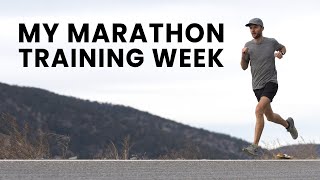
Floris Gierman breaks down his week training for the 2023 Berlin Marathon: 66 miles mixing low-intensity runs, hill work, a 20-mile long run, and cross-training. He tracks heart rate and HRV to manage effort, uses ice baths and sauna for recovery, and emphasizes consistency and sleep over hero workouts.
Chapters
In this video, I'll share an inside look at my recent marathon training week. This is a combination of low heart rate running, high-intensity sessions, training on the road, adventuring on the trails, and much more. Whether you're a seasoned runner or just getting started on your running journey, I'll share advice to improve in your training and racing. Don't forget to hit the like button, subscribe, and let's dive into Monday's first run of the week. Plan is just to go out, run for about 75 to 90 minutes, probably 130-ish heart rate, just keeping it chill. Hey, Coyote is doing about, uh, 8-minute miles over here. He's out for a run too, and there's a little hill over here. I definitely enjoy running hills, although you got to slow down quite a bit. I have to consciously make the decision not to do too many hills. I like trail running a lot, but Berlin Marathon is a very flat course. So typically I recommend try to run some of the same course profiles. If you're running Boston or a race that's quite hilly, of course get some hills in the mix. I think starting the week off with a run really sets the tone for the week. I'm often really trying to prioritize the Monday morning run. It's the same as the beginning of a new year. Typically try to do some sort of adventure run on January 1st, start the year off with a bang, start the week off, and then from there you can just keep that momentum going. Monday morning run done. 11 miles, 7:58 minute mile average. I actually felt I could and wanted to run much longer, but I've really decided not to do too many hero sessions. And with hero sessions, I mean going out much beyond your actual training plans, even when you're feeling good. Main goal for this week is overall training volume, uh, to increase that, increase my training load. And I really want to spread that out over enough days instead of too much in one day. You're pink. You're Peppa Pig. Yeah, that's cool. Quick little ice bath. Feels so good. Found it to wake you up more than a cup of coffee. Skateboard session. That's cross-training, right? That counts like cross-training? Yes, it is. Little skate evening session with my oldest daughter. Nice way to keep moving, keep those legs in rotation. I took a slam on my butt. Going to pick up a rental car because we're going on a little trip to Las Vegas with the family and not everyone fits in the car. So why the black hoodie? I like to normally wear a lighter color hoodie, but all of the other colors were in the laundry, so black it is. I do like to be a bit sun protected. As much as I like sun, I don't like to overdo it either. Recently, Mark Allen posted some stuff about his surgeries that he had for removing skin cancer. Some of my family members have had skin cancer as well, so definitely a bit cautious with that. Last night was in bed around 9:00, meditated a bit with the kids and fell asleep. Woke up at 5 this morning, just sync the data from my Oura Ring. I check out the HRV4 training app, it's an HRV measuring app, and it does a great job in not only looking at what is your HRV data but it also asks you some other questions about how are your fatigue levels today, how was your sleep, what was the intensity and feel of yesterday's workout. And so you basically get a score back, and that even includes how motivated are you to run today. And I use that as an indicator how much and how far I want to push it that day too. I don't follow it 100%. I do think it's a nice input. Hello. I do see quite some athletes under-eat. Endurance athletes burn a lot of calories. That comes up in our running coaching program quite a bit, where athletes wake up in the middle of the night. So actually eating a bit more, um, can sometimes help quite a bit with that. Legs feeling good. Excited to run, that's always a good sign. I think listening to how excited you are to run when you wake up, in particular when you head out the door— yeah, listen to that. We're almost 45 minutes in, and even these relative short training runs, they add a lot of value. It's the compounding of training load, not the one hero session. For the past 10 years, I've been sitting in the sauna probably about 2 to 4 times a week, sometimes a bit shorter, sometimes a bit longer. This is an infrared sauna, and I actually added a bunch of insulation on the window and on the top so that it heats up a bit warmer. This one gets to about 170-180 degrees. Sometimes I like to wear like a shirt with it as well. What was quite eye-opening to me is in 2014, I came across a blog from Tim Ferriss and it was written by Rhonda Patrick and it was titled "Are Saunas the Next Big Performance-Enhancing Drug?" And that article was super eye-opening to me and it actually made me decide to purchase a sauna on my own to have in my garage. Here are a few of the things that stood out from that article there. So both Tim and Rhonda talk about the importance of being careful with sauna training. Some people overdo it. It can be really dangerous. So do it under supervision by someone else. Don't do it where you've consumed alcohol or when you're pregnant. Like, really ease into hot exposure and cold exposure as well. Just a few of the physiological adaptations that occur with heat exposure, improved cardiovascular mechanism and lower heart rate, lower core body temperatures during workout—surprise—higher sweat rate and sweat sensitivity, increased blood flow to the skeletal muscle, reduced rate of glycogen depletion, increased red blood cell count, and then increased efficiency of oxygen transport to the muscles. So they talk about all sorts of different studies. I'm not going to go into much detail. I'll make sure to link to that article in the show notes below. And even just recently, many of the doctors— Dr. Peter Attia, Andrew Huberman, and others— have been talking about all of the benefits of sauna training, not just for running performance, but also for longevity. Typically, I jump in the sauna right after a run, so I'm already warmed up, so I'm already sweating, so my sweat rate just continues while I'm sitting in the sauna. What you might notice, or you might not notice, I'm sitting on a chair, so I'm sitting as high as I can over here in the top of the sauna. Because these infrared saunas don't get that very hot. I do still like to get it hot, but I also like to warm myself from the inside. I make sure I hydrate extra with additional electrolytes. So I take Element electrolyte drink mix that has 1,000 milligrams of sodium, 200 milligrams of potassium, and 60 milligrams of magnesium. And normally I take this once a day in the morning, and I feel well hydrated throughout the day. But then when I do a sauna session or I do a a longer, warmer run, I make sure that I take in some extra electrolytes as well. Some of the reasons and the benefits of taking LMNT: better energy— electrolytes contribute to your energy levels— better athletic performance. Yes, when you sweat, you lose both fluids and electrolytes, mostly sodium. No brain fog— I used to have Monday morning headaches, especially after a long run on Sunday. This no longer happens. I'm seriously craving sometimes some of these electrolyte drink mixes because the body just feels it needs some extra electrolytes. If you would like to try LMNT, go to drinklmnt.com/flow and you get a free sample package with any order. And you can use this link as many times as you like. Excited to get some hills in today. Probably end up running some faster, higher intensity. Let's do this. These are really not organized intervals. These are, let's push it for a bit, let's catch a breath. Sometimes it's only 15 seconds, sometimes it might be a minute or a bit longer. Definitely heart rate all over the place in a good way. Going to go find a way to get to there. Nice way to get the heart rate up a little. So fun to just explore Just finished my run, just under an hour and a half. That was some fart lacking since the terrain was quite technical. Um, definitely kept it relatively mellow on some of the sections as well, just to not get injured. Last thing I want to do right now before The Berlin Marathon is get injured, so, uh, taking a bit less risks on these adventures. Now off to Las Vegas with my family. Made it to some colorful rocks. We're going to see my friend Kyle Whalen perform. He's the bass player of Katy Perry. If you haven't watched his Extra Mile show on YouTube or on my podcast, I can highly recommend it. This was actually my daughter's first concert. And it was great to hang out with Carl after the show. We didn't get to bed until midnight, so Thursday I actually took a rest day because I was tired and it was super hot in Las Vegas. Totally unplanned over here, running into my friend Steve. How many marathons have you run now, Steve? Oh man, I'm up to 30 now. I started running in 2012. How many Bostons? This will be my 10th consecutive Boston. Yes! I'll be an official streaker after, uh, April 2024. So awesome. Just as I was starting my morning run, I run into Steve over here, and I was planning to run about 10 miles, and Steve was just telling me he was planning about 10 miles, so Bends up working out well. And we're talking about a lot of the mistakes you see in runners. You see some people have 30 miles, 40 miles, they shoot for 70 miles, 80 miles, then they go down to 20 miles. Yeah, then they go up to 80, 20 because they get hurt. Uh-huh. One of the important things about running is consistency, where it takes time to build musculoskeletal strength. Yeah, where you want to have a gradual buildup, consistency, where you stay healthy. It makes total sense. And I think Yes, it's one thing that you ramp up training volume when you get closer to race day, but at least being able to have a solid base, then it's much easier to get back to peak training. It was a really honor to run into you this morning, Forrest. Hey, man, it was awesome. Like, I didn't expect it to work out. You're looking really fit, man. It's like you're ready for a marathon. Berlin coming up. I'm excited. I'm excited to watch you and follow you on that. Uh, it will be fun. Are we going left, right? Okay. It's going to be fun. It's just going to be keeping the train on the rails now, not getting injured, and just having fun in the process. So, little morning swim. Nice way to, uh, finish the run over here. Ended up running about 12 miles, a little bit more than I expected, but the miles were flying by with Steve. Always fun when you're running with a friend. Going to get my second run in of the day. Don't want to overdo it because I already got 12 miles on the legs. Whenever possible, I do try to run commute sometimes. Running about 7:30 minutes per mile at a heart rate around 130. So nice and mellow, just cruising. Love a little bit of wind, keeps the temperatures down. I'm actually testing a new sun shirt for PATH. So it's a different fabric, Field Sensor fabric. Just seeing if we can come up with an ultra lightweight breathable shirt. Not in black, in different colors, but always good to put it out on the test as the temperatures are getting hotter and hotter. That was mellow, that was good. Ended up running 18 miles today, so that was a bit more than expected. Most mornings I do some mobility and strength exercises inspired by the Knees Over Toe Guy, Ben Patrick. I focus on keeping it simple and consistent, and it helps reduce my risk of injuries. It is Saturday morning, going for a mellow trail adventure with Sadie. The whole backwards walking, knees over toe guy, something I'm a big fan of, especially when you do it up a steep hill. The only thing over here is on this little section we have seen a bunch of snakes in the past, so definitely got to keep an eye out. So main purpose of this workout is just to go outside and have fun. There's no pace I need to hit, just going outside with my daughter and getting a few mellow miles in. Bit of walking, bit of hiking, bit of helping Sadie up the hills and down the hills. I found swimming to be a great way of cross-training. Limited wear and tear of the body. Still keep it pretty mellow. I'm still very much a beginner, but I'm enjoying the process. Plus, a nice way to play afterwards with the kids in the water as well. 1,600 yards, 31 minutes. Breakfast. Gotta be quiet because the family is still sleeping. Going for a long run. The plan for today is to run the first 15 miles, 24K, at a low intensity, keeping the heart rate aerobic. After that, going to pick up to potential marathon pace or faster. I'm basically just wearing exactly what I would want to wear on race day today. So it really is dress rehearsal. Brought all the nutrition that I was going to use on race day too. Excited for today, feeling good. Let's do this. I've really noticed starting out gradually helps with keeping the heart rate under control, especially at the beginning stages over here. About 2.5 miles in and I just realized And I forgot my water bottle. I was so excited that I wanted to get out of the door, got all my race day nutrition, yet totally forgot to bring my handheld water bottle. So going to have to do with fountains today. And I made it to the top of the hill. So far feeling good, really having to hold back on some of the uphills. Um, heart rate's starting to go up a bit, so, uh, trying to keep it below 140 for now. In a neighborhood trying to look for a water fountain. Score! Found one. Main thing is you don't want to wait too long. You don't want to wait until you get thirsty. Double aid station, just drink twice as much. Just want to drink pretty early on during a race, but also in your training. I'm about 13 miles in. Look. All right, I'm running over here on the bike path and I'm literally spiderweb whacking. I think I'm one of the first ones here. There are so many spider webs. What I'm doing is I am fueling pretty early on in these runs, these test runs. I want to make sure that I test nutrition too, so I'm running with quite a few gels. Precision Fuel and Hydration is what I'm using over here for the gels. 120 calories, uh, 30 grams of carbs. And so yeah, I start at the beginning without caffeine, and then later on I'm adding a few with caffeine. You want to make sure that you're training the body, the gut, to be able to digest calories and carbs. The main reason I start taking in gels pretty early on in the run is that I have enough energy left at the end when I'm going to start picking up the pace quite a bit. Even on race day, I don't want to wait until I run out of energy So yeah, I'm taking them pretty early on, and I will make sure to link in the show notes to, to the different items that I'm taking and using in my training and racing. Going to pick up the intensity a bit now. It's a bit tricky because there's been hills involved, so I've had some uphill, some downhill. So just going to go by effort level, not necessarily estimated my marathon time or anything. So yeah, definitely want to push it a bit though. Main thing I'm telling myself is to run relaxed, to not tense up. Running out of breath here. Just stay calm and just run relaxed. Focus on running form. Spider! Dodge the spiders and have fun. 18 miles in and the hat is backwards, which means go time! You— and even here at the end of the long run Focusing on controlled breathing instead of panic breathing. Running relaxed, controlled, still pushing the pace. There we go. 20 miles. You— I felt good. Definitely could have kept going if I want to, which is a good sign. Probably could have pushed it a bit harder. Let's have a look at a few stats over here for the week. At a total of 66 miles 9 hours of running, 4,200 feet gain. My training volume is really not that high, probably around 60 miles, 65 miles is the max that I feel comfortable with at this point recovery-wise, purely due to my other commitments and other priorities in life with family, with my full-time job, with the podcast, with the kids. Running is an important part of my life, but it's definitely not everything. Just like many other people, I'm just a non-elite athlete trying to have fun out there, pushing myself, see what's possible, really racing against myself, not racing against anyone else. More training is definitely not always better, and Dr. Phil Maffetone often talks about this. I know there's several athletes who truly stack all the miles and hours on top of each other. And I really see frequently athletes that should chill out in their training, that should do less training and focus more on recovery. For me, sleep is super important. For me also, things like sitting in a sauna and relaxing, or from time to time doing some of these other things like just going out there for a swim with my kids, or riding a skateboard, or going on a hike. These things are important for me as well. In 2015, I ran my personal best in 2:44 at the Boston Marathon. At that point, I had several weeks 75 miles, 80 miles, 85 miles, sometimes like definitely pushing that. At this point, I simply couldn't do it. If I would be running 80 miles a week right now, my wheels would be falling off. I would be super grumpy around my kids. I would not be performing well at work. I would only have leftover energy for the family. It's just not worth it. At that point, I had less in my life going on than I have now. And so 60, 60 miles a week, 8, 9 hours, that's about the max I can do. Maybe 10 if I'm doing some trail running and I'm really getting some longer runs in that low intensity. But yeah, more is not better. It's about the recovery. And yeah, I think right now that combination of mostly low-intensity running and then twice a week higher-intensity pushing and a step-back week every fourth week, that's truly what's working well for me. Might not work for everyone else, got to do what works well for you, what feels right. But yeah, just want to give you a bit of an overview of my training. And then one other thought: why am I doing quite a bit of trail running? I'm running a pancake-flat Berlin Marathon, yet I'm still— even this week I got 4,000 foot of elevation in, got plenty of trail runs in as well. Why am I doing that? Because I enjoy doing it. And at the end of the day, having fun in your workouts, having joy in your training is so important. It makes me excited to go out the door to go for a trail run. Yes, I like running on road as well. I like running away typically from the cars where it's not very busy. Even over here, nice mellow bike path. So yes, that is fun to do, but there's nothing that compares to the freedom of running on the trails, running in the hills. So mixing those things up has brought a lot of joy for me. And for those who have not tried much trail running or, or mountain running, give it a go. Even if you start out with some hikes and just mixing that in, just that variety and training is a very important one. Some runs solo, some runs with other people, some runs flat, some runs hills, a bit of trail running, a bit of road running. At the end of the day, it's all about getting the mind and the body in the right spot. So hope you enjoyed some of this training. Please let me know in the comments what other types of videos would you like to see. Do you these kind of training videos, training updates from me. There's definitely some more podcasts coming. If you have any podcast guest suggestions, let me know in the comments as well. To anyone else running a marathon or other race soon, have fun out there with your training. Have a good one, bye now.
More from Floris


Ryan Hall 2.0 on Strength Training For Runners, Lifting Heavy & Trail Running




You’re Doing Zone 2 Wrong (Even If You Think You’re Not) | Scott Johnston Round 2


How to Build an Unstoppable Aerobic Engine (Even If Starting From Zero) | Scott Johnston


Stress Is Killing Your Running (The Relax Fix You’re Missing) with Dr Kasim Al-Mashat

When things get hard, say this, it (works in any race) #jeffpelletier #running #ultrarunning