How to Qualify for the Boston Marathon with Bobby Barker | Extramilest
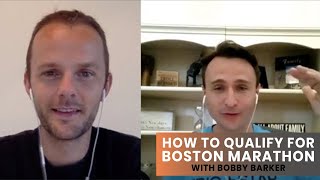
Bobby Barker qualified for Boston by using Dr. Phil Maffetone's MAF method, which trains at a specific heart rate based on age minus 180. He ran a 3:13 marathon after switching to low-carb eating and following a structured plan with coach Nick Carling that emphasized consistency over speed.
Chapters
If you get up every day and you do the same thing over and over, and you know that you're doing the right thing, you're going to see the improvement.
Hey, what's up guys? My name is Floris Gierman from the Extra Mile List podcast, and we are here to connect with athletes, rookies makers, and coaches from around the world to really help athletes reach their full potential. Today I'm going to connect with Bobby Parker. He recently ran a massive PR in a marathon and he qualified for Boston. He went from a 3:39 all the way to a 3:13, so he PR'd by 26 minutes. And in today's episode, we're going to dive into his training program, what he did every single day of the week, um, from the regular training to the cross-training to the strength training. We're also going to talk about motivation. He wakes up very early to train before work just like some of you guys do as well. So what motivates him every day to get out of bed? And then we talk about several tips and tricks for other athletes like yourself on how you can improve your running and how you can become a healthier, happier, and faster runner. And who knows, you might qualify for Boston as well, you run a PR in your own marathon. Also want to bring up, we recently launched a contest page, so we're doing weekly giveaways on my website. At extramilest.com/contest. And this week you can win 2 pairs of Stan socks. So check it out over there and I will announce a winner once a week for different prizes. Without further ado, I'm very excited to introduce you to my new friend Bobby Parker.
Cool, well, welcome on the show. Stoked to have you over here. I think it would be good for the listeners back home to get a bit of an understanding of what of your running background is. So maybe you can tell a little bit more about yourself, about where you're from, what your age is, and how long you've been running, just so people get a better, better understanding.
Absolutely. Well, my name is Bobby Barker. I live in Frisco, Texas. So Frisco is about 20 miles north of Dallas, downtown Dallas, Texas. It's a pretty large community. It's one of the fastest-growing communities in the US. It's really family-oriented, and we got a lot of weekend warriors, right? So a lot of those people like to get out, run, cycle. There's a lot of triathletes in this area as well. And basically, my journey has been, you know, pretty typical for someone my age. I'm 41 currently. I've been, I've been doing weekend stuff like P90X is really kind of what got me into working out, it's almost like a midlife crisis, right? So it's like, you know, I'm getting a little chubby, a little bit, can't get rid of the fat around my waist and that sort of thing. So you start finding things that seem to work with people, right? And you hear P90X is great. So you start that up, right? So I did that for a while. This was probably in 2012, 2013, right? I decided to get off the couch and get a little bit more active, right? So this has been about 5 years ago. And so I met some people down at the gym and they were doing P90X as well. And one guy says, "You know what, Bobby? I think you might do well at triathlon." And I'm like, "What, are you kidding me? I'm not a triathlete. I don't know how to swim. I don't have a bike or anything." And it's really, it's interesting. I'm going to get to how I got into running through this story, but he kind of challenged me. You know, he kind of was like, you know what, Bobby, you can actually do this. And I was like, well, sure, I'm going to do it. So we actually signed up to do the New York City Triathlon. And there was a lottery system. You didn't have to qualify or anything like that. And so me and two other buddies signed up and sure enough, they drew my name. Of course.
So there was no way out at that point.
No, no, absolutely not. And so luckily my buddies went along for the journey. And so I went out and bought a bike, went out and bought a wetsuit, and did all this stuff to actually go out and compete in a triathlon, right? So long story short, got into triathlon a little bit, loved it, loved the running aspect. I did my first half marathon. By the way, the New York City Triathlon was in '14, July 2014, okay? I did my first half marathon in September of 2014. And just to give you a little perspective, I'm not doing Maffetone or anything like that, right? This is strictly, you know, burning sugars and that sorts of things, right? But I did my first half marathon on a whim. It was a couple of other friends said, hey, you know what, we're running a half marathon this weekend, go ahead and get your shoes. Laced up, we're gonna run this thing. And I'm like, okay, I guess I can do this.
And this was 2014?
Yeah, this was September 2014. All right, was my first half marathon, and it was really hot. It's actually my birthday that day. And I said, you know what, let's just go out and have fun. And mile 10, mile 11, I realized that I hate this. I cannot stand running. I'll be honest, I hate it. I couldn't stand it. And finished, actually finished the race respectably. It was an hour and 55 minutes, right? So I felt like I was in great shape, but I felt like I really accomplished something. When I did my first half marathon, I was like, dude, I'm like a legit runner here. Okay, I'm like the man, right? And so after I finished, I said, I'm not doing this anymore. I'm done running. Okay, and what kind of—
was this, you feel, because you ran at a heart rate that was much too high, you used all of your energy that you had in you, or—
Absolutely. Uh, mile 10, I felt pretty good, and you know, honestly, I was eating, uh, Chomps and things like that. Nutrition was an afterthought. Okay, drink some water, whatever, uh, doing all that stuff, and I was like, you know what, I, I can run this, it's not, it's not a big deal. But mile 10, 11, I was breaking down mentally. I was in, I was in a fog. I couldn't see what I was doing. And I don't even remember crossing the finish line. It was just kind of like, and then I grabbed the bananas. I grabbed, they were having waffles and pancakes and I would just— Anything that you could get in your face at that point. Yeah.
Yeah.
I recognize that. Yeah. And so that was my first taste of, of actually racing a running race. Right. My friends decided to go ahead and do another half marathon in Dallas. Okay. So half marathon took place in Dallas and I did a— let's see here, I wrote that down— hour and 50 minutes. Okay. So it's pretty respected again. Not much improvement, but decided to do it. And then my friend says, hey, let's do a marathon, right? So I said, I'm not going to do it, but I'll train with you guys. So they were training for the San Francisco Marathon in, let's see here, that would be July 2015, okay?
That's a nice and hilly course as well.
Absolutely, it was. Yep. So I was training with these guys. We were, you know, doing the thing, still not doing Maffetone, right? And about a month before the race, I decided to put my name in the hat and I decided to run with them. All right, so I was like, guys, 'Cause it was one of my other friends' first marathon as well, and I thought, you know what, he's gonna experience the full, I wanna do it as well. So I decided to jump in as well. And I thought, if I could do a sub-4-hour marathon, I'm gonna be happy, right? And sure enough, I actually did finish that marathon in 3 hours and 55 minutes. Okay.
That's good for your first marathon in particular, especially.
Absolutely. Absolutely. And again, it was mile 20, 21, 22 where I started hitting the wall, right? That's what we all talk about. And mentally, I didn't know what the wall really felt like, but now I know. Yeah. But, you know, along the way, nutrition again wasn't a big thing for me. It was like, I'll eat some goo every once in a while and I'll drink water. I didn't drink anything.
But no strategy of let's set a timer or let's— yeah, it was more whenever you felt like it.
Yeah, exactly.
That seems to happen quite often for people doing the first marathon or initially, like, I think nutrition is such a big part of that for sure.
It's, it's huge, trust me. I mean, and, and the newbies out there, they need to realize that, um, uh, if you don't have the right nutrition along the way, you're going to hit a wall and things like that. So After that marathon, I realized I didn't have any electrolytes. The only, the only salt intake I was getting was maybe through the goo and things like that, which wasn't enough. Okay. And so I was getting loopy along the way. The last 20 or 3 or 4 miles, mile 20 or so, I just was in a fog. I couldn't— I just knew my body was running, but I went downhill from there and my pace just really fell off.
Okay.
And so then I said, after that marathon, I'm gonna get back into triathlon, just because I knew that was gonna be more fun for me. I liked running, it was fine, but, so I started training for a half Ironman. And in September of that year, 2015, I got hit by a car. And I won't go into big details, but it kind of woke me up. It was God like spanking me in the rear saying, hey, you need to figure out what you're doing with your life. Right? That's kind of what it felt like.
Was it that bad? Did you get physically really injured or?
You know, honestly I wasn't. And that's what's interesting. You know, the guy hit me directly from behind and we were on a straight road and I literally, my tailbone took the brunt of the impact and put a huge dent in the front of his car, on the hood of his car. And then when he slammed on the brakes, I rolled forward. So I got a bunch of road rash. From the incident, but I walked away. People were saying, you're gonna be sore for days. I didn't feel that, you know, so I, I think I was physically fit, you know, to take that. But I said, you know what, I'm gonna not do that at this point. And so I decided, you know what, I'm gonna run the Dallas Marathon, okay? I'm gonna just not do the triathlon because, you know, I didn't want to get on a bike at that point. So I ran my second marathon that December. So my first marathon was July, and then December of 2015, I said, you know what, I'm gonna focus these next 3 months, because this was September when I had the bike wreck, and December was the marathon. So I said, you know what, I'm gonna go out and try to do it my way. And my way was, I wanna run a sub-3:30 marathon, all right? So what do I do? Like anybody else, I go Google it, right?, right? I Google, "How do you run a sub-3:30?" Right? And what do you get? You get a bunch of stuff like, "Hey, let's run, do an easy run. Then you're gonna do, the next day you're gonna do some speed work at a 7-minute pace, and then do all this stuff." And I'm like, "All right, I'll try to do that." Well, when it comes down to easy run, what does that mean? Right? To the average person, it doesn't mean anything. It's an opinion.. I could run an easy run and have a conversation because they say, well, if you can talk and things like that, that's an easy run. But to me, I could talk easily at 165 beats a minute. I'm like, that's easy. Now if I'm really running fast at maybe 170, 175, maybe I'm out of breath.
That's how I gauged it. There's so many factors impacting that as well, right? Whether it's the temperature, if you're on elevation, if you're running in the hills, any of these things impacted. And that's where it's sometimes hard to gauge really.
Exactly. Of where you're at. Yeah, absolutely. And so that 2 and a half months of marathon training, which is not a whole lot in the grand scheme of things, but back then 2 and a half months was a long time for a newbie, right? Yeah. I ended up running a 3:39. Okay. So that was the best. I was trying to get sub 3:30. But I was like 3:39, it's okay. But I felt awful at the end of the run. I just was toast again, hitting walls, just, you know, walking the last few water stations, you know. But everyone else was doing it in the race too. Why can't I walk the water station? You know what I'm saying? I'm guessing that's normal, right? And so, I felt good. I felt like I accomplished something, but still it was like, man, there's— to get to the next level, what's it gonna take? And I had no idea what it was gonna take. So what did I do? I get back to triathlon, right? So I said, I'm gonna sign up for the next half Ironman in Galveston in April. I said, let's just do that again and then we'll see what happens. You would not believe this. One week prior to the Ironman Galveston, which is in April of 2016, a person in front, I went out the weekend before on a bike ride, just an easy bike ride with the team, the Frisco Tri Club team, and I fell off my bike and broke my radial head bone on my arm. And so it was out, it was done. Wow.
Yeah, I know. That was bad luck twice. Yes, yes. Something in the universe was saying you shouldn't be on a bike. Or at least not for that period of time.
Yes, exactly. And so, you know, I had to go into work the next day. And obviously they knew about my incident with being hit by a car prior to that. And I had to go in with a sling. And I was, you know, as on with my pride had me, you know, I was like, you know, this is kind of embarrassing. But I'm like, you know, how often do you have to get hit by a car or break an arm before you say, you know what, it's probably not for me right now. "This might not be the season." And so I said, "Forget it, I'm gonna rest." And so I rested for about 6 weeks and I said, "I'm gonna just start running, all right? I like running." Plus it's a little bit more safe, right? So this is how I got into Mathitone, all right? So I had a buddy that went to the San Francisco Marathon with me. He and I started running. His name's Jason Reeser. And he said, "You know what, Bobby? Let's go run, but let's do it a little different." And I said, I don't care, we can do whatever. He said, I'm going to send you a white paper. I want you to read this Dr. Phil Mathetone's white paper. And it's like, you've seen it, it's on the internet, right? So I read that thing and I'm like, okay, you got to run 180 minus your age. Okay, that seems simple enough, right?
So this is for those who are not familiar with Dr. Phil Mathetone. This is the 180 formula that he has developed over time, correct? It's 180B or 180 where you deduct your age and you adjust it by a few different factors, whether that is how long you have been training, whether you have recent colds and everything. So we'll put a link to the formula for those who want to find out more so they can calculate it on their own as well. So you did the formula for yourself?
Yes, absolutely. So I did the formula and so at the time I was 40 years old. So the formula's easy, right? It's 180 minus my age of 40. So I targeted running at 135 to 140, 135 to 140 beats a minute is kind of was my target, right? So he and I were about the same age. And so we were decided, let's just start running that way, right? Well, we did. And I was like, I said, are we actually running here? Because this is not what I'm used to. To seeing, right? So we were running, and let's go back to my marathons. We're doing 3:30 or 3:39 marathons. I mean, we're doing 8-something-minute miles, right? I'm going out and running like a high 11, low 12-minute miles, okay, at 140 beats a minute, right? And it was a huge wake-up call. I was like, dude, this is not, This is not running to me. This is kind of a big jog. And are we serious? And he's like, just give it a try. And I said, you know what? I have nothing to lose here, right? And so we tried it. We tried it for a few weeks. And he says, well, let's do this. Let's try to, I've read where you can do a test, right? Just to see where you're at, right? And so we ran 5 miles and we tried to find the same track and we would just do that., and I found that my time was improving at that low heart, at that same heart rate. I was like, okay, I haven't changed anything. I've just been running for the past month, you know, at a low heart rate, right?
So, so what you're referring— so initially when you started out, it was a high 11s, low 12s. So you did your— those are your initial miles, and then you did the meth test, right? So when you go to the track, you warm up for 15 to 20 minutes, and then you run 5 miles, and you time every single mile. Yes. And so what was your first math test like?
What was— Yes, okay. So let me— yeah, this is great. My first math test I did on July 6th, okay? And my time was— and my math test is a little bit different. I'm going to tell you how— explain how I do my math test, all right? It's very similar. I do a 15-minute warmup, okay? And it starts at 3 minutes, 80 to 90 beats a minute, and then 3 minutes, 90 to 100, 3 minutes, 100 to 110, and then up to 110, 120. And then at 15 minutes, I start my math test, and it's done on a track, okay? So I warm up around the track, and then after the 15 minutes, I run 3 miles, okay? And then I'll incorporate that with a long run or something like that, but I run 3 miles straight and I record that total time. Okay. And then we can do pace off that, but I run now on time only. I don't do, I don't do mileage or anything like that. So my time for 3 miles was 33 minutes and 39 seconds, which equates to 11 minutes and 10 seconds a mile. That was my first math test. Okay. Now mind you, I had been doing this heart rate training for about a month at that point, right? So I hadn't done a test before or anything like that. So technically, if I was first getting into it, I would do a test right at the beginning. But I would say I probably improved about 30 to 45 seconds a mile easily in that one month, okay? One month later on August 10th, it went from a 33:39 down to a 30 minute and 17 seconds. Total, which is a 10, a little north of a 10-minute mile. Okay, so in one month, uh, now two months in, at that point I went from a high 11 down to a 10-minute mile. Okay, those are huge improvements. Absolutely. And, and I was like, this thing's working, right? So I, I then started gathering information. At that point it was, okay, now I need to consume info. How do I improve on this? So what did I do? I go out to, I joined the Maffetone Method Facebook page, right? And I start getting on there and people are going through the same thing I'm going through. Just started math, I'm falling into these pitfalls. Anybody else doing that? Oh yes. And you start texting. This is what I did, right? And so it's all this consuming that information, but at the same time, it validated what I was doing, right? That I'm actually doing the right thing. And then I started, you know what, my diet wasn't there, right? And that's when I saw the 2-week test. And again, you might point to that link as well. Yeah. But I did the 2-week test. And I really think when I did the 2-week test, which was a couple of months into my MAF training or MAF method of running, That's when I saw the big improvements as far as more of a fat burning, it's taken over my body, right? So before it was still, you know, consuming a lot of carbs and things like that, but I decided, you know what, let's do the 2-week test. And just so you know, the 2-week test was a nightmare for me because after 3 days, the 3rd day, I don't know if you've ever experienced this, but if you're like me and you're 40 years old now, your whole life you've been consuming carbs and sugars and all that stuff, 'cause that's what's around, right? That's what's available. For your body to not have that for 3 days straight, it goes into shock, right? And so mentally I was like, something's wrong with me, right? But after 4 or 5 days on the 2-week test, I could feel my body transitioning because it now has no sugar at that point. For energy. So when I'm going out for a run during that 2-week test, it's saying, okay, there's nothing here to sustain me. I'm gonna have to pull energy from somewhere, and that came from fat, right?
And that is where the fat burning starts improving, right?
Yes, exactly. And I honestly think, um, for your followers, you know, if they're in the same boat as me when I was starting off, yeah, it's the— it's doing the 180 Formula and doing the low heart rate running But I really think when I, when I kicked in the 2-week test, that's when I started really seeing the change in my body physically. All right. Because then it became, you know, I was weighing about 160 pounds prior to the MAF test and all, or the MAF method. And then after that 2-week test, I went from 160 down to 147 pounds. Right.
So lost about 13 pounds in a 2-week window.
Yeah, no, it was about a month. Yeah, right. So I ended up losing about 7 pounds during the 2-week test. Wow. And then it just kept falling off. That is a lot. And so yeah, I lost a ton of weight, but I'm just thinking that's just all that excess weight that I've been carrying around unnecessarily, right? But I I was really structured. I wrote down everything I ate, when I consumed it, what my body felt like mentally, what I was thinking about. And so I went back through those notes and I realized, okay, this is my body actually changing and getting off of carbs and sugars. And you go to the, the Maffetone Facebook page and people are going through the 2-week test too, and you're you're, you're seeing them going through what you're going through, and it's validating.
Yes, absolutely. This is what's— yeah. So for you, some of the biggest changes were you cut out the carbs and you cut out probably like the majority of other sugary items, whether they're like the breads, the pizza, the bagels, the, the fruity drinks, the, the sodas. Absolutely. And then what, what— so what was it during that 2-week test that you did end up eating?
Yeah, so here's what my diet consumed of. I would go run. Oh, and let me kind of give you a background on how I do my workouts, okay? So obviously, I'm a typical, you know, I go to the office Monday through Friday. I don't have a real flexible schedule. So all my workouts are first thing in the morning. So I get up at 4:30 in the morning. Okay, I'm tired. Yeah, but that's the only way I can do it, right? And so I get up at 4:30. I'm typically out the door by 5:00. 5:00 AM, and I'm typically done by 6:00 in the morning. So I'll get about an hour workout. But during that time, what I was consuming for breakfast, for instance, I would come home right after the run, and I would make an omelet, an egg and cheese and spinach omelet, right? Or scrambled eggs with cheese. Also would get some avocado, get some— it's this typical stuff you would see on the 2-week test, right? And they have a big blog of, of things you can eat and can't eat, right? And I'm like, can you have this? Oh no, you can't eat that. Um, but I consumed that. I consumed a lot of fajitas without the tortillas, right? So I would get the big pan and it'd have all the vegetables and have all the, the meat in there and the sour cream and the guacamole, avocados and all that stuff. Just piled it on, ate a lot of that, um, during the 2-week test. I hit up Zoe's. I don't know if y'all have Zoe's in California, but Zoe's is kind of more of a Mediterranean style, right? But no rice or anything like that, but lots of vegetables, which I'm not used to consuming, right? But I did find this after the 2-week test. I could eat things after that that I typically couldn't eat and it not give me a problem like indigestion, indigestion and things like that. So for instance, bell peppers was a deal for me. Prior to the 2-week test, I couldn't eat bell peppers, but now I can consume them and it doesn't have an issue with my body. It doesn't fight it, right? And I think it's the fact that I had all those carbs in there just kind of counteract. And I don't know the, you know, the technical way this thing works, but it worked for me. I can now consume those vegetables and it not be a problem. But the whole point of going back to this was, was the fact that once I did the 2-week test and got on to that kind of that low, that low-carb, high-fat diet, that's when I really saw the fat kind of come off. And then I eventually got down to 145. Another thing that changed with me on my body, doing the MAF method and kind of doing that low-carb, high-fat diet was I noticed the veins in my calf muscles being more pronounced, okay? And I just attribute that just, I think my body at that time is becoming more efficient with getting oxygen to my lower extremities. That was another thing. And then obviously just the weight coming off my waist.
Yeah, that is one of the biggest things, right? It's probably you're just shrinking down everywhere in your body. Yes. Like, I've gone through similar things as well, where I have dropped in a few months after I changed my nutrition, just like you. Where I used to— I'm from Europe myself. I used to eat 8 slices of bread a day, and for me it was so normal to eat pizza, pasta, bagels, any of those kind of things. And even for me to switch that all the way around towards eating much more like real food, eating much more vegetables, eating like I eat quite a few nuts as well, like high fat, definitely. I saw that change happening in a short period of time. I also went from about 170 pounds to 145, like probably over, over a 3-4 month period. And it's even the smallest examples. I have a wedding ring from 2009. Yeah, that, like right now it keeps falling off and I still need to have it resized because it's just Everywhere in your body, you seem to have just shrunk some of your additional body fat.
Absolutely.
Even 1 pound less already makes running so much easier. Oh yeah, absolutely. And so if you over that period of time dropped 13 pounds, that alone already makes you a much faster runner.
Yeah, absolutely. Without even trying, really. Absolutely. Yeah, I mean, imagine carrying around a 15-pound dumbbell on a run, on a marathon. I mean, just like crazy. I want to drop that, right? —something you want to just carry along. Absolutely. But yeah, and so I just, you know, again, I have my hats off to Dr. Phil Maffetone and, you know, all his followers and those sorts of things. I mean, it was just trying to get that knowledge. I knew I was doing the right thing, but I was all in at that point. It's like, okay, this is what I want to do. And so after that 2-week test, my friend picked up a coach and he found him in the Maffetone Method Facebook page and his name's Nick Carling. I don't know if you heard of Nick Carling, but Nick Carling was— yeah, so he's out of Australia, but he's been interviewed by Dr. Phil Maffetone as well. And he was on the website and basically promoting what he does. And I called him up and said, hey, I'd like to get a coach. And, and I thought if I could find a coach that was, that was inspired by Dr. Phil Maffetone and that method, I felt like it would just reiterate what I'm doing, right? Because in the end, I'm a rule follower, okay? That's just my personality. And I need structure. And if someone says, hey, here's the plan you're gonna do, and this is the heart rate and all that sort of thing, I could follow that plan pretty much without anyone overseeing me, right? And so that kind of worked out that he's in Australia and I'm in Texas. So I said, "Hey, let— here's the deal, Nick. I want—" I'm telling my coach this. "Nick, I want to get to Boston. All right? This is my ultimate dream. Okay? So I want to run Boston in 2018 if possible. What do I got to do to get there?" And he said, "Well, we got to keep doing what you're doing, but it's just going to take some time. We're going to see how you progress. We're going to do these math tests and eventually it's going to chip away and you're going to get faster and faster." And I said, "All right, well, I'm in. Let's just make this happen." And that's what started this journey of really the MATH method for me. So it was literally about, it started June of 2016. So it's about, I'm about 15 months into this thing at this point, right? And we're gonna eventually get to kind of where I got to today, but just to kind of give you an idea on my math test, because again, If I'm a new person and I think I want to reach the people that are listening to this podcast, I really want to reach the people that are just now starting out because a year or 15 months sounds like a whole lot of time, but you need to realize this is not just a long-term play or a short-term play. This is a long-term play for me, right? This is a lifestyle change. This is what I want to do. This is what brings joy to me and to others around me. 'Cause when I'm a happy person, the people around me are happy, right? You know what I'm saying? So that's the approach I take. So if I'm a new person that's just now starting this long journey, just realize you might be taking some short-term setbacks or maybe, you know, just, you know, your pace is a lot slower than what you're typically used to running. Just realize that this is a, this is a test. I mean, this is, this is just a little, a little snapshot or just a little slice of the pie, so to speak, up to where you're eventually going, right? And so my, my purpose of this meeting or this, this interview is just, just kind of give people a little bit of encouragement that there are people that are just like me and just like you that are out there that are struggling to get going and to, to find that the next level for them, but just know we're all in this together, right? So, to me, I would start off with the math test because early on for me, that's where I found the joy was the little improvements, the 30 seconds a mile coming off the pace. But I could see that every month because I do a math test every month. And I was like, Wow, I'm getting some huge progress.
And that progress is what helps the motivation, right? Because exactly, that is the biggest thing that I see with people starting out training at low heart rate is the frustration levels are definitely there for some people when they're used to training 7, 8, 9-minute miles, and all of a sudden they have to slow down so significantly. And some people have to take walk breaks in as well, or quite a few people actually have to take walk breaks, especially after, after a little bit of time. And once you start seeing that progress, even for, for myself, once I was running and I saw, I believe, a 40-second progress from month to month per mile, I was like, wow, if that's 40 seconds per mile, look at what that does over the length of a marathon. The— exactly, at the same effort, you're going to be running so much faster.
So exactly, exactly. And so, you know, again, my math test started at, you know, high 11s. The next month, 11:10. The next month, 10-minute miles. The next month, I was at a 9-minute mile, right? And so I— over at September 4th, I ran a math test in 27 minutes and 4 seconds, which is a 9-minute mile. And because again, I'm doing a 3-mile test, right?
So why do you do 3 miles and not 5?
Yes. Yeah, so my coach recommend just doing 3 miles. You know, typically what— and, and, you know, I don't know if— I don't know the methodology, but— or the reasoning behind that, but that was just what my coach said. So it seemed to work and it was consistent with everything else. The way my math tests worked though was typically on the front end of a long run. Okay, so my structure is like this. So Mondays or Sundays are my long runs, okay? And they would average, you know, depends on what point of the marathon training I'm in. It could go anywhere from an hour and a half to upwards to a 2.5-hour run, okay? Mondays were 30-minute zone runs, okay? When I say a zone run, that means in my math zone of, call it 135 to 140, somewhere in that neighborhood, 30 minutes. But each day I would have a 15-minute warm-up and a 15-minute cool-down. Okay? And so a 30-minute zone run means I was running for 60 minutes. Okay? For 60 minutes of activity. That was Monday. Then Tuesday was typically hills for me. Which was about a 40-minute zone of hills.
Okay. Can you verify or explain a little bit more about that?
Yeah. So the whole idea is to get about 3 miles worth of hills in. All right. So what I do is I find a hill that I can't remember the percentage of grade, but it might be like a 10% grade or something like that. But I would warm up for 15 minutes, not on the hills, get to the base of the hill, and I'd run up. And this hill is about a a third of a mile, or quarter of a mile to get to the top. And during that, my coach said, it's okay if you go a little bit over your math, but try not to get much too over. So I might get up to like a 1:45, somewhere in that neighborhood, and then drop back down to, when I'm coming back down, my pace is a lot faster.
—but I try to— So yeah, you have that quick turnover still. Yeah, exactly. Exactly.
And then I get to the base of the hill and I do that 4 or 5 times, but just, it would equate to about 40 minutes, right? And then I would do a 15-minute cool down. And so that was the Tuesdays. Wednesdays were a 30-minute zone bike ride for me, all right? So my coach says, hey, let's try to do some things where you're not pounding the pavement with your joints. But still doing aerobic activity. So that's why I would do, again, 15-minute warmup on the bike. And this is a stationary bike. I'm not going outside and riding, 'cause I've learned my lesson. But it's basically getting in there and doing that cardio for the aerobic zone for about 30 minutes doing that. And then Thursdays were track work, okay? Track work didn't come, to me until earlier this year. Okay, so I didn't do any track work last year, hardly at all.
So you first built that full aerobic base until you almost hit a plateau or until you start seeing less progress?
Yes, yes, yes. So I didn't have any track work. What he did do though, early on last year, you know, last fall and winter, which we trained up to the Dallas Marathon again, that was my third marathon. You know, we had some freedom runs is what he called them. So Thursday would be a freedom run with no heart rate monitor. It's kind of a run-off feel type thing, right? Just however you feel, just run, run that, right? Fridays were my days off. And then Saturday I would have a long bike ride again, typically anywhere from 60 minutes to a 90-minute zone bike ride. And then back to Sunday would be a long, long run. So that's kind of how my schedule worked. 6 days of activity, 1 day off, and 2 of those days are bike rides, right? And so that, that last Dallas Marathon in December, that was my first really marathon. At that point, I'd done 6 months worth of MAF training, right? And it wasn't a PR, but let me just tell you how I felt, okay? I decided to run that marathon just strictly on heart rate, right? So I'm doing 140s, you know, low 140 heart rate, and I'm getting average 8.5 to 9-minute miles, right? I ran into some buddies at mile 19 because they took off first, and I said, well, y'all go ahead, I'm gonna just do this. I caught 'em at mile 19 and they were just struggling. It was funny, I love these guys. And I said, guys, I gotta keep going. I'm sorry, I can't run. With you guys anymore, but just took off, but felt amazing, right? So I had negative splits, and my last mile in December was a 7:16 mile. And, you know, I was like, this is how you're supposed to probably run these races and actually have energy left at the end. Yes, it was amazing. You know, the last 3 or 4 miles were sub-8, and like I said, the last mile was 7:16, and I was like I felt like on cloud nine. Now I ran a 3:45. Okay, so if you recall the prior year I did Dallas, I did 3:39. But I was trying to do a sub-3:30 and I felt terrible, right?
Yeah, so then— sorry to interrupt because this is interesting. You're saying you were racing at basically your MAF heart rate, whereas typically with a marathon, like, it's very frequent that you train at or below MAF. However, at an actual marathon race, you can race 10-15 beats-ish higher than that. Why did you decide 140 and not 150-155?
That's a great question because I knew this marathon wasn't going to get me into Boston. Okay. And I knew if I went out and ran a 155 average heart rate, somewhere in there, that my recovery is going to be a lot longer. So I was sacrificing this race for the long-term plan, which was to get into Boston. So I said, you know what, I'm just gonna run a decent race. I'm not gonna try to blow it out of the water or PR or anything like that. I just wanted to see how fast I could run at math. Yeah. And I could do 8:30 to 9s, right, at the time. But then I was like, you know what, there's 5 miles, 6 miles left in the race. I'm gonna— now my heart rate went up obviously to get to a 7:16. Yeah. And so But at that point, I was only running 5 or 6 miles at a higher heart rate. But it felt good to— because for 6, 7 months, I hadn't really gone out and run fast, right? So I had no idea how fast I could run, right? And that was an interesting thing because I was like, wow, I'm actually going fast and I can— I feel good and all that stuff, had a lot of energy. But I loved it. And so I said, you know what, now, now the focus is how do you get to Boston, right? And so that's when I signed up for Chicagoland, which is in Geneva, Illinois. They had a last chance Boston qualifier, which was actually last weekend. It was September 9th. And I said, all right, I've got basically 9 months now to really gear up and see what I can do, right? And so my coach, Nick, he put me on a great plan. Where it was some of the same stuff. It was, you know, the same structure, but the track work was a little bit more intensive. The mileage didn't really ramp up until, let's say, maybe May, in that neighborhood. And it was really methodical the way we ramped up, right? You know, we don't do anything based off mileage. It's all based off time. Okay, so the idea was every 3 weeks we would increase our long our long runs by about 10 minutes, okay, which is about, you know, a little over a mile. That's all, right? So you would do that every 3 weeks, and by the time we peaked on the long runs in, let's say, the middle of August, okay, again, the race was September 9th, uh, middle of August, we were peaking at a 3-hour run. But again, that 3-hour was— includes a 15-minute warm-up and a 15-minute cool-down. So I had a 2.5-hour zone run, okay? And I was peaking at about, when you add those warm-up and cool-down, about a 20-mile run, okay, at that heart rate, okay? So it wasn't over or anything like that. And let me also add, I was doing the 180 minus my age the whole time, but I started tweaking back up because if you recall, obviously, Dr. Phil Maffetone says depending on your condition, you can add 5. Right? Well, I had done 180 minus my age, which is 140. So I didn't tell my coach this, but mentally I said, you know what, I'm going to go up to like a 144, right? So I was like, 144 is now— because I was 41, I'm 41 now— was 139 was my 180 minus the age, which is 139, added 4 to 140 or 5 to 140 to get to 144. So—
Yep. And the 5 basically, once you train for 2 or more years consistently, 3 or 4 times a week, you're able to add 5 beats according to this formula, right?
So yes, and, and also another good gauge, like you say, I've heard you mention this as far as getting colds and things like that. My body's not, you know, subject to that anymore. I don't have any colds. I haven't been sick in a couple years as well. So, you know, I felt like I could add 5 comfortably and, and not feel like I was cheating myself.
And you listen to your body, and once your body says that it's the right thing to do. That's, that's why it's also sometimes I feel you have to watch out with some of these formulas as well, that if you follow it too strict with some of these things, of course it is a guideline. However, on some days you might not feel like running at this heart rate, or you might even have a hard time keeping up with that heart rate, or other times absolutely you might, might go a few beats over it. I think Sometimes I see certain people are so black and white about this thing where at the end of the day, listening to the body is most important.
Absolutely. Yep, absolutely. And I'm, I'm in the same boat. You know, I'm not a— when it came to this running in the long— early on, I was black and white. Let's just be honest. I was a rule follower. This is what I need to do. But as those long runs progressed and as I get to hills, yeah, I would get up to a 1:48 or 1:50 and then I just kind of slow, slow down a little bit, you know. And I'd have my watch, alarm would go off and say, "Hey, look, you're over your whatever." Sometimes I'd tell it to be quiet and just, I'd just do my own thing. But most of the time I'd slow down. But you know what was interesting? And I enjoy consuming information about people that have gone before me, right? So for instance, you, you're a person that now I follow, right? Because I'm like, "Well, this guy's done it. He's done it for several years now." He's probably 2 or 3 years ahead of me. And so I'm interested to hear what his feedback is. But along the way, you just, you find ways to, or people, you know, to get information, perhaps they've had the same pitfalls. So you actually asked, you know, the group, you said, hey, what are some interesting topics, right? Well, one of the topics for me, at the time it was really relevant, was now I'm getting into the summer months here and I live in Dallas, Texas and it's really hot and humid. And I was like, I'm not seeing any improvement on my math test. So at this point I'm averaging about, let's see here, an 8:10, 8:07 pace per mile. And I knew to get to Boston I need to probably be around a 7:35 because to me, I had to get to a sub-3:15 to get to Boston, right? For your age group, that is, right? For my age group, yes. And so mentally I was thinking, that means I gotta run about a 7:27 pace to qualify. But I was thinking, I gotta get to like a sub-7:40 at least on a math test before I know I have a legitimate shot at this, right? So, you know, I'm getting 820s, 807s, 810s on these math tests, and I was like, I know it's hot now, but what is— what does that play on my heart rate, you know, when it's, you know, 25 degrees hotter and it's humid here versus when I know in Geneva, Illinois on race day, I'm gonna be racing in like low 50s and—
Ideal race temperatures.
Yes. Yeah. Absolutely. And so, I didn't know. And so I'm like, what am I going to do when I get there? Am I going to be able to perform, right? Well, luck would have it, we had a cool spell here locally, right? And you're not going to believe this. A week before I went to Chicago for the race, so this is just a couple of weeks ago, I did a math test. Mind you, I was doing 8:07, 8:05, 8:04. The last, those were my 3 prior math tests. And then I did an 8-minute on August 19th math test. Well, September 3rd, I did a math test and averaged a 7:37 mile. Okay. And it was cool. What a difference that is. Yes. And I'm going to attribute that to training, but also the weather.
The weather had a huge impact, right? Temperature, I've noticed it myself. Temperature makes such a massive difference. Over here I live in Costa Mesa and I run in Irvine. It's a bit more inland. And during the week, even this week, it was 80, 85 degrees out. And so the difference right there, like in temperatures, that's, or like in Celsius, that's 28, 30 degrees sometimes. It made a massive difference This morning when I ran 15 miles at math, all of a sudden I saw my pace drop 45 seconds per mile or something. Just that temperature difference right there. I've even, I've even done it back-to-back days where one day I ran during the day and it was 100-something degrees. The next day I ran at 5 in the morning and it was 70 degrees. And the difference was, I believe it was more than a minute per mile. So absolutely, temperature makes a massive difference.
Yep, yep, yep. So we're all kind of getting to this, this last finale here on kind of, I guess, why you reached out to me, because I finally reached my dream. All right, and that happened last week, and it was an amazing feeling. Let me just tell you, my coach had a great plan for me. The nutrition, by the way, was excellent. Okay, so what I consumed was about 50 to 60 grams of carbs Okay, so now I'm talking in grams of carbs where 2 years ago I would say, okay, I'm gonna take a goo every 45 minutes or whatever. Now it's, okay, this is what it looks like. Okay, so I ate those blocks, those Clif blocks. I would do one of those blocks every 15 minutes and then I would consume Gatorade along the way, right? And so I would get that nutrition. Also consumed electrolyte tabs every 45 minutes, right? So I think there was 3 of them throughout that. But started the race off really strong. We had a pacer that was pacing us at average of 7:17 a mile, right? I didn't know what that really felt like, you know, training-wise. I kind of thought what it would, what it would feel like, but stayed with the pacer as long as I could. We were, you know, going anywhere from 7:08 to, you know, 7:20 pace miles, right? And that was too— honestly, that was probably a little faster than what I should be— should have been doing based off my math test and things like that. I probably should have been pacing around a 7:20, 7:25. What was your heart rate at? Yeah, so here, this is the great thing. My coach says, you know what, Bobby, I think we're going to go off pace alone. He says, this is what I want you to do. And mind you, I've been doing heart rate training at this point 15 months. He says, you know what, I want you to ditch your heart rate monitor, just not even wear it. And I said, are you sure? He said, yeah. He says, I'm a data guy. He said, but the last thing I need you to do is focus on heart rate. All right, because if you go off and your heart rate's at a high 150 or low 160s, you know, mentally you might not be prepared. So I said, fine, I'm not gonna wear it. Well, that was the first time I hadn't worn my heart rate monitor in 15 months. Okay, and it was weird, but I listened to my body, right? And I just went off how I felt. And honestly, if I was to be wearing a heart rate monitor during that race, I probably would have averaged mid-150s, I'm thinking, or high 150s throughout most of the race, maybe even a little higher. It might be low 160s. It's kind of hard to gauge. But, you know, I ran, I averaged about, you know, anywhere from 7:08 to 7:20s for like the first 16, 17 miles. And then my pace kind of started slipping a little bit. You know, I had like 7:25, 7:27. I knew at that point I was, I was really close, right? Because again, to get a sub 3:15, I needed 7:27 average is what I needed. And my last 3 miles, I ran a 7:45, a 7:50, and a 7:52. Okay, those are my last 3 miles. So I fell off obviously right there, but I think what happened was my— I had muscle fatigue. I think more than anything, my quads were just kind of shot. My calves were just kind of, you know, not there. But I really think I went out too hard based off my fitness level at the time. But I wanted to get there. And sure enough, after the race, I finished in 3 hours and 13 minutes. Wow.
16 seconds. That is so amazing. Yeah. So that was a massive PR for you right there.
Yes. Yes. Yep. So again, going back to my prior PR was a 3:39. And so basically I shaved off 26 minutes or a minute a mile is what I did. So average of 7:24. And felt great. You know, I was— I'll be honest, at the end of the race, I felt dead. I felt beat.
I felt, you know, exhausted.
And you gave it your all. I gave it my all. And here's the deal, you know, we all know, you know, people that are trying to get to Boston, it's not about qualifying, but it's getting to the start line, right? And I knew a minute 44 was going to be close. I don't know if it's going to be enough. I'm going to find out in the next couple of days because they're going to open up registration for for my group tomorrow. 3 and 4 years ago, it would be enough. The last 2 years, it wouldn't be enough. So the question is, what's it gonna be like? But here's the deal. I'm not gonna lose any sleep over it, because my goal a year and a half ago, and I'll be honest, this goal of mine to reach Boston has been longer than a year and a half. It's just been a kind of a dream, right? But to really start that dream and actually live it was about a year and a half ago. And I achieved my dream, right? And so I say it's a dream. I'm a dream killer, you know what I'm saying? And so it felt really good to just say, hey, I technically qualify for Boston. I can legitimately sign up and run Boston. All right. And so at the end of the day, I might not be there on 2018, but you know what? You even said this. I'm progressing and I'm getting faster.
And I know— That's the thing. If you've progressed 26 minutes right now and it is, A marathon, not a sprint, right? You said it really well. And that is the biggest thing with this thing. Month after month consistency and training. Yeah. Um, eventually is going to, yeah, you're going to continue improving. And obviously it also depends on how many hours a week are you willing and available to throw at this? Exactly. If you're able to increase your training volume significantly or keep even at what you've been doing at this point, Yes, you're going to continue progressing, most probably. For me, at one point, yes, it's great if I can run 70, 80 miles a week and like I would start seeing progressions. I just at some points go through training cycles and other priorities as well, whether it's with family or with work. So it's at some point you want to find where that balance is, but you still have so much progression ahead of you as well. So whatever it's going to happen, I'm super excited for you, just how much progress you have made already.
Thank you. It's been great. And again, it takes a village here. I mean, there's a lot of support, like you say, the family's got to be there, the stress has got to be out of your life. You know, honestly, we went through a lot this year. You know, we built the house, we've, you know, moved, done all that stuff in the middle of all this training and stuff. But at the end of the day, I do what I do because I love it, right? I love getting up in the morning and challenging myself. But it doesn't take a lot of volume. I mean, honestly, I'm doing mid-30s to low 40s average miles per week. Okay, and so, but I'm also doing the bike as well. So 6 days a week, I'm putting in an hour a day, you know, on the weekends a little longer. Yeah, but anyone can do this, you know, you just gotta be willing to do it.
I did, I, for my last marathon that I ran last month, actually ended up averaging only 31 miles in total, which was much, much less than I initially wanted. I planned on 35 to 50 miles. However, it's just had other priorities come in the way as well. I do want to look at one thing that you have mentioned earlier because you said I wake up between 4:30 and 5 to get my exercise in. How do you motivate yourself consistently to get that done?
Oh, that's a great question. You know, a lot of praying, a lot of meditating, a lot of surrounding yourself with people that are like-minded, right? So I have a buddy that, that's been to Boston before. He's, he's run, you know, 3:05 Boston. He's— it's, it's people that you, you find that have been there, right? It's you, you know, it's getting on Facebook, it's, it's finding the people that, that have, that are that are where you're at now, where you're at, I want to be in, in a year or two, right? It's that motivation. It's, it's, it's things like that. It's the little things. It's not about the running, all right? It's, it's ultimately to be the best version of you as you can possibly be, all right? And that's not so that I can benefit, right? But that's so people can see what I do and they can be inspired to become a better person for themselves, right? So I do the things that I do to help raise the denominator for everyone around me, right? And so how do I do that? I look to people like you, Floris, and people that have gone before me who's done the same thing and said, hey, this is, this is how I've gotten to where I've gotten, and I want to share my story with everyone else who, who's just starting off that, you know what, if you think of running as just a way to improve yourself, you're going to be so much better off as opposed to, well, I got to get a pace or a mile or whatever. But you know what, you're bettering yourself, right? And so people are going to benefit from that.
And so that's what I would implore other people to do. Absolutely. When I was thinking about that question for a bit as well, what— sometimes, even this morning, right? Like last night, I went to bed, didn't get that much sleep, but I still knew I wanted to get an early morning run in because once, once the Sunday starts and we're surrounded by the kids and there's a lot of activities happening, I just don't get my run in. So I set my alarm at 5 this morning and I already put my phone away. So I have my wristband. Yes, my Fitbit that first does the initial that wakes me up, so it's the vibration alarm. Then I have my phone, 3 minutes, I have an alarm on my phone 3 minutes later that's on the other side of the room, so I'm automatically getting out that way. And it's purely routine, I have everything ready by the door, I already like, I'm gonna be quiet not to wake up the family, and it's just going through the steps, and eventually like, as soon as you have your shoes out and you're outside of the door, You're gonna enjoy it. You're good. And sometimes even when you don't necessarily get your hours of sleep in, although sleep is very important, it just doesn't always happen. Yeah. I feel like once you're out of the door running, it's all good as well. Absolutely. But I do tend to look at what is my goal as well. Like, I know I have a race coming up in October, and I do know that I need to put in my miles. And although I might not always necessarily feel like doing that run at that point. I know once I'm running, I'm absolutely enjoying it and it's purely getting over that initial hump. So that's one for me that kind of helps as well. One more question I want to— I know we've already been talking for an hour, so I don't want to take up too much more of your time here, but I do want to ask you, what is your advice or your recommendation on people who want to improve their marathon times? People want to go to Boston. You've already touched on several good points, but maybe you can summarize over here and if you have any additional things to add.
Absolutely. The one thing I would say more than anything is consistency, right? Above, above everything that I could basically talk about is if you get up every day and you do the same thing over and over and you know that you're doing the right thing, you're going to see the improvement. And I think if you're just consistent over time, you know, stay with that heart rate, you know, the 180 formula. If you can continue to do that over time, you're going to see those progressions and do your MAPS test, you know, every 3 to 4 weeks. You're going to see those improvements and you're going to just build and build and you're going to get the momentum. So early on, it's consistency. I think after that, ultimately, I, I, my hat's off to my coach. I need structure, right? So you got to find someone who can put that structure in place that says on Monday you're doing this, Tuesday this, and, and go out the whole week. This is what your workout looks like. And at that point, I don't have to worry about when I wake up in the morning, what am I going to do? Well, I know what I'm going to do. It's right there. Uh, so I, I would implore somebody to find a great coach. Somebody that can put that structure in place for you that's going to have 75 to 80% of your routine is going to be in that aerobic zone. You want to make sure you stay in that. Those are some things that I would definitely take to heart. And then nutrition. Nutrition's— I'll be honest, I'm not a picture-perfect guy when it comes to nutrition. I mean, I have my downfalls. I like certain things, but definitely nutrition is definitely a plus. And also nutrition on the actual run itself. The marathon, I think there's a lot to learn with regards to that, and you can really mess up sometimes if you don't have the right nutrition plan in place.
And that's where some of the trial and error on the long runs comes into play as well, right? I enjoy doing the 20-mile runs purely exactly the same as what I'm going to be doing on race day. And that will right away tell you if your stomach is gonna get upset or not. And even train the night before with the same dinner as what you're gonna eat before a race and any of these kind of things. Absolutely. I do wanna go back to what you said earlier because you mentioned for you it worked really well to find a coach and to have the guidance and to go that route, right? So I think there's two trains of thought there. That some people, or quite a few people actually, do need that guidance or that consistency. For me personally, purely because I have a bit of a crazy schedule like many other people do, like there's quite a bit of modification of my training schedule. So although, although I pencil in, I make my own training schedules and I have certain guidelines that I follow there. So I do know a certain mileage that I want to get to, or a certain training time that I want to get to. Yes, I know I absolutely need at least one, if not two, rest days in my training schedule. Okay, I do know I can run more in the weekends. I have less time during the week, but at least I can get my lunch runs in. And then from there on, I typically do 3 weeks of building volume, 10% a week, and then the 4th week is step-back week of 30 to 30 to 40% less. And so for me, I pencil out my own training schedule and I try to hold myself accountable. That being said though, having someone else, especially once you pay them, or having someone that you feel you're like holding you accountable and checks back in with you and who gives you shit when you don't do certain things, or at least ask you questions about it, Yeah, I think puts another layer of, of a barrier of doing it versus not doing it, right? So yeah, it's just more the self-motivation for this versus the guided motivation over there. But I think you make several valid points over there.
Yep, yep. And then also Strava is another thing I use as well. Um, you know, I'm typically the— in my group, I'm typically the first one out the door, so I'm the first one to record the activity during the day. Honestly, I take it as a badge of honor, like I'm laying the foundation for everybody else that day. Maybe they're getting out of bed and they look at Strava and they're like, all right, Bobby's gone out and done 10 miles today. I need to get in shape. Strava is another great tool, motivation tool as well.
Yeah, I think Strava is a big one for me and it's a fun way to connect with other people as well and see what your friends and other runners are doing out there. Absolutely. I do think what you mentioned earlier, And the Maffetone Facebook group is really good. They've built up a solid community of, I think, 3,000 or 4,000 members at this point. They have really good conversations, in particular about heart rate training and nutrition going on. Then we started our own Extra Mile List Facebook group. There's a lot of good conversations happening over there as well, and people running into the same kind of things. Oh yeah. Then you have mentioned the importance of community as well, right? And running together with other people from time to time. And you also volunteer at some of the races. Can you tell a little bit more about one of the races that's coming up that you're volunteering?
Yeah, I appreciate you giving me the time to do this. So I'm wearing this shirt right here. It's the Texas Big Star Half Marathon and 5K, right? So this is our 3rd annual marathon, right? It's a local race. It's the first endurance race in the city of Frisco, Texas. And basically, it's my 2nd year to volunteer as on the race committee. So last year what I did for the first time was I helped do the aid stations, the water stations, right? So I helped, you know, put up the water coolers and, you know, tear them down and those sorts of things. But we had 8 or 9 water stations, right? We had a man, but it's kind of doing that, right? But the beauty of this particular race here is it benefits the North Texas Charity Committee Giving Foundation. And basically we raise money for local nonprofits through grants and things like that. So They've raised over $150,000 to local charities, which is wonderful, right? Incredible. Yeah. Yes, it's, it's great. And, and this year, actually, next year will be our third race. It'll be April 14th. So those people that, that didn't get into Boston, because Boston is that Monday, if they want to come out and run the race, we'd love to see you guys there. It's April 14th, so that, that Saturday. And I think it's the admission's like $65 for a half marathon and maybe $35 for the 5K. But ultimately, you know, I love doing this because it builds a sense of community in the running community, right? It's people that decide, you know what, I think I can do a 5K or I can do a half marathon. But it's kind of being that inspiration to them to say, hey, look, if you achieve a half marathon, just think what you've you can do now, right? And so after a half marathon, my first half marathon, I felt like I was on cloud nine, like, wow, I can really do something, right? And it's a great feeling. And I know that, you know, people will benefit, help, but, you know, their health will get better as well through these, the exercise and all that stuff. So again, I just, I love doing it. It's just a way for me to kind of give back, right? And it's, it's all about you know, like I said earlier, bringing the denominator up and everyone else around you can benefit.
So yeah, I think like one, one, like I want to wrap it up over here, but one thing that I thought was so interesting earlier, you said because you discovered the low heart rate training and the improved nutrition, you feel like an overall happier runner as well, or like a healthier runner. And I've experienced the absolute same thing. And that's why That's why I'm actually doing what I'm doing right now as well. It is purely feeling that there's so many other people who can benefit from this and the impact that it has made on my life by actually going out there and having so much more fun on my runs and it becomes so much more comfortable. But even in general, just because of the improved nutrition, how much better you end up feeling just 24/7. I think there's a lot— it's more of a holistic approach to running. Absolutely. And, and health than, than just the low heart rate training over there. So absolutely, that was very valid. Do you have any closing thoughts, anything else that you feel like sharing with the group they can benefit from?
Yeah, you know, I think I've kind of hit on most everything. Again, if I'm a new person here, which I want to reach those people, don't get discouraged would be my ultimate thing to say. Look for people like the Extra Mileless group, those, the Maffetone groups, those Facebook closed groups. Ask to be part of that. Reach out to those folks. There's a lot of blogs, there's things like that. Get with your local communities, get with the local runners. Like the Frisco Run Club, we've got one here. They're great to reach out to. But don't get discouraged and just be consistent. Again, I'm going to go back to this and this will be my closing thought, but at the end of the day, it's not about running, right? But it's about being the best version of you possible. Absolutely. Not so that I can benefit, but so that I can give it to others.
That's really the ultimate goal. Awesome. Thank you so much for your time. I really appreciate it. I think a lot of people are going to be benefiting from this. Awesome. Is there any place that people can find out more about you? Do you write anywhere?
Do you post any of your own running photos anywhere? No, I don't actually. I'm on Facebook. They can reach out to me, Bobby Barker. I'm in Frisco, Texas. That's probably a way they can find me. But I'm on the Extra Mile List group as well, and on the Maffetone group. I kind of frequent those sites as well.
Great. And please make sure to continue to share your progress. We'd love to hear from you. Absolutely. And it's really fun to follow your journey along the way.
So absolutely, I appreciate that. All right. I'm following, I'm following yours, by the way, just so you know.
Ah, good. Awesome. All right. You have a great rest of your day.
You too. Thank you. I appreciate you.
Thank you. Bye. Hey, what's up, guys? I hope you enjoyed this episode of the Extramileist podcast. I definitely had a lot of fun talking with Bobby and hope you guys learned a few things along the way as well. New episodes are coming up very soon again, so make sure to subscribe at extramileist.com. Www.extramilest.com/subscribe. Also, I put together a 30-page PDF with a lot of the marathon fundamentals to really help people reach their marathon PR, sub-3-hour marathon or Boston qualifying time. You can download this on my homepage. Also, last reminder, we're having a giveaway this week at extramilest.com/contest. And you can win 2 pairs of Stan socks. They're some of my favorite socks out there. Thought you might enjoy them as well. So check out the website and you can enter there. And every week I'm giving away different items over there. Hope you enjoyed this episode and I look forward to connecting with you again very soon.
Have a good one. Later.
More from Floris


Ryan Hall 2.0 on Strength Training For Runners, Lifting Heavy & Trail Running




You’re Doing Zone 2 Wrong (Even If You Think You’re Not) | Scott Johnston Round 2


How to Build an Unstoppable Aerobic Engine (Even If Starting From Zero) | Scott Johnston


Stress Is Killing Your Running (The Relax Fix You’re Missing) with Dr Kasim Al-Mashat

When things get hard, say this, it (works in any race) #jeffpelletier #running #ultrarunning