I Wish I Knew This About Running!
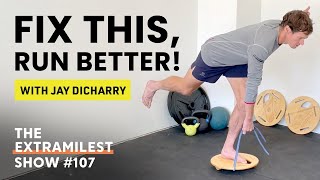
Biomechanist Jay Dicharry explains why running alone doesn't build enough bone, tendon, and muscle strength, leading to injuries. He prescribes 40 explosive curb jumps for bone, slow 3-second eccentric calf raises for tendons, and twice-weekly strength routines covering squats, hinges, and upper body. Track your load with a simple B-M-T system to stay injury-free.
Chapters
If you could go back and completely change your running training, would you?
I would do everything different. We didn't know what the hell we were doing 20 years ago, even 10 years ago. The science has advanced so far. The interesting thing is running isn't a rigorous enough activity to build muscle strength and power. The contact times in running are not slow enough to actually build tendon properly and they're not fast enough to build bone properly. I'm not saying running is a bad sport at all, but for those of you who've been told running is going to build strength and build— not really.
So what happens when runners don't realize this?
You know, tendon problems. I get bone stress injury problems. I get muscle strains. Like, let's work backwards from that and say, okay, there is a better way to build those parts up.
So what's the better way?
Plyometrics, so explosive jumping, is actually one of the best ways to improve bone health. Those 40 jumps will take you somewhere in the neighborhood of a minute to a minute and 15 seconds. That's bone. Tendon. Let's hit tendon. So it's gonna take 3 full seconds to go up on the right foot and then 3 full seconds to come down.
Jay Deshauries is a biomechanic expert who has revolutionized how we think about running performance and injury prevention. He's the author of Anatomy for Runners and Running Rewired. Today he reveals why much of what we've been told about training is wrong and how a few simple protocols can help transform you into an injury-resistant athlete. This episode is brought to you by Function Health. Recently in our coaching call, one of our athletes brought up that she was feeling low on energy, her running performance was not going well, and overall she was just feeling kind of blah. We dug into her blood work and we noticed that her iron levels and a few other things were out of whack. With supplementation and with some changes in nutrition, she was able to turn things around in just a matter of a few weeks. I've personally experienced the same thing in the past, and this is why I use Function Health. Most people think that if you have low iron, that you can just take an iron supplement. But it's not that simple, and sometimes it can even backfire. Iron works together with ferritin and with copper. Low ferritin levels means your reserves are running low, while high ferritin levels can mean stress or inflammation. Copper is essential for mobilizing iron from storage, so without enough copper, your iron can get stuck in the tissue and never be used. The only way to know what's going on is to test, not guess. Function Health makes this simple. They test over 100 biomarkers including iron, ferritin, and copper. Giving you a complete picture of your health so that you can make smarter decisions about training, nutrition, and recovery. Take control of your health today. The first 1,000 people who join get a $100 credit towards their membership. Visit functionhealth.com/floris or use gift code FLORIS100 at signup. Hope you enjoy my conversation with Jay Descheres. Jay, welcome to the Extra Mileage Show. I'm glad to talk about the topic of running injuries over here.
It's a pleasure to be here and not always fun to talk about injuries, but something we should do to help people out. So, yeah.
Yeah. We're, we're often talking about ways to improve in our running and to, like, set ourself up for long-term health and fitness. And, like, in one of your books, you have actually written very clearly that about 80% of runners experience injuries. And so this is why I think it's such an applicable topic of, like, there's several things we can do to prevent it, to reduce the risk. I want to take a small step back over here because you initially started out swimming, like high volume. From swimming, you transitioned to running, and then with running, you experienced quite a few injuries along the way. Knowing what you know now, what are some high-level advice you would give to your younger self?
Oh, man, I would do everything different. Yeah. Uh, you know, it's funny, man. Like, you look— I love that question, right? Because the, you know, I always laugh, like, the research on the biomechanics of sport, all sport, is so young, right? Like, it's in its infancy. Like, I mean, we talk about— people ask all the time, how are we pushing records? I'm like, we didn't know what the hell we were doing 20 years ago, even 10 years ago, right? Like, and so the science has advanced so far. The understanding, we have ways to measure things now, which didn't even exist back then. Right. And then like, and now, you know, I'm lucky. I'm a data dork. I have always, you know, fancy tools in a lab, but like, even if you have those tools, how do you use them? Right. So taking all this, I'm front loading my answer here. Right. Um, I would have paid much, much, much more attention to, um, not the heart rate side of things. Right. Like, we live in a world where everything's focused around how far do you run and what's your pace, right? Then what's your time? It's all people care about. I would eliminate that vocabulary from myself and from every other running athlete's vocabulary as well and put the emphasis on how are you preparing for your challenge, right? And I think it's that reframes things because you say, okay, well, I wanna run this far in this race. It has as much vert. The course is kinda like this. What do I have to do? I'm like, Okay, fine. Let's work backwards from there. Right? Then now you just told me you want— you need to run this far, which is gonna, yes, be a cardiovascular challenge. It's also gonna be a big biomechanical challenge. Right? And do you have the requisite stability, mobility, strength, and power to hold that position, not just for the first half a mile. Right? That's easy. Okay? But for a mile, you know, 10, 12, 100K, marathon, whatever. Right? Like, I don't— again, your goals are your goals, not mine. So I wanna help you think backwards from that and prepare better and I think that's the biggest thing that we've learned over the past few decades is like, what are you doing? Right? Like, let's, like, everybody's, but I'm putting time in. Great. Let's make sure that time's working for the, the deficits that you've got and, and also the positives that you bring to the table too as an athlete. Everybody has some different characteristics, right? So, um, how do we capitalize on that? And I, I, I mean, you know, I look at training right now, it's so different than it was, you know, 15, 20, 30 years ago. I'm old now. So yeah, 40 years ago.
So in, in what sort of way different do you feel like people are now starting to pay more attention to things outside of running or like just the, the amount of tools that are available? Yeah, I think, yeah, I, I see that as well. There's definitely more thought on things other than just running, it feels like.
Yeah. I mean, it's, it's a lot of things, right? So you look at the big picture of human physiology, right? How do we, how do we respond to stresses, whether it's just, you know, work stress or sleep stress, right? Like there's been a lot of focus on that the past few years because you're a human. You're not just an athlete, you're a human, right? And so you have life, you have sleep challenges and diet challenges and economic stress and, you know, social stress and what happens, right? So we have a lot more focus on that now and how that corresponds back to your general health. We have more understanding of just general health as, you know, what do blood markers mean and how do things, you know, we don't take values in isolation, right? When this value is up, it's fine. But when this one's up and these 3 are up, that's also a problem, right? So there's more understanding there. And then you get into a sports side. It's like, you know, how do we measure things? Well, all we had before was a stopwatch. Right? And, and now we've got, you know, better watches, but we have ways to look at not just, you know, again, quantity, but look at quality. Right? What does your form look like as you're fresh, fatigued? How are you building better parts? Right? I mentioned that aspect of, you know, you have to look at the, the cardiovascular piece, the heart and lung piece. Which I think people get pretty well, right? You have to train certain intensity volumes and intervals and all these things. But what are you doing for the body side, right? Are you really making sure you attack building better bodies, right? And just to kind of jump into this, I think, yeah, you hit the nail on the head is that, you know, runners get hurt at a rate much higher than we see in like rugby, right? Like much higher than we see in football, soccer, much higher than these contact sports. And so The question is why? And I think that running's a pretty approachable sport. You think, oh, I just have to sign up for a race and put these shoes on and go. And, and I wanna embrace your will to, you know, to, to hit your goals as well. But it's not that simple, right? Like that biomechanical piece requires that you show up with really strong bones, with really strong muscle and powerful muscle, strong robust tendons, right? The interesting thing is running isn't, um, a rigorous enough activity to build, uh, muscle strength and power. It's not, um, the contact times in running are not, um, slow enough to actually build tendon properly, and they're not fast enough to build bone properly. And so when you look at what do runners get, well, I get, you know, tendon problems, I get bone stress injury problems, I get muscle strains. Like, let's work backwards from that and say, okay, there is a better way to build those parts up and make you resistant to all the challenges that running's gonna give you so that when you wanna go run, you can go run. I, I want you to do what you wanna do too, right? Yeah. So it's just like looking at what we've learned from how the body adapts and how to optimize that better, I think is, is the big piece. And if I got a room of, you know, researchers and peers together and I said, hey, let's optimize bone health, tendon, muscle, cartilage, you know, all these things, right? Like, what do we do? Running wouldn't even be on that list. If it was, it'd be very near the bottom. I'm not saying running's a bad sport at all, but for those of you who've been told running's going to build strength and build— not really. It doesn't. Okay. It's a great cardiovascular exercise. But again, looking at that problem, why are so many people getting hurt running? Why are we still getting— you know, why are you listening to this podcast going, I've been having right side injuries for the past 3 years, right? Like, there's not one exercise that's going to fix that, right? There's, there's a strategy you have to learn to move better under control and build resilience and tissue capacity, and you'll do just great, right? But it's, it's getting that into your mindset.
So, so let's talk through that a little bit more because there's quite a few people listening that are anywhere in their 30s, 40s, 50s, 60s, or beyond. For those wanting to build stronger bones, ligaments, tendons, muscles, outside of running, what protocol or what advice would you give to those people?
For sure. And, and we can be pretty concrete about this now. Again, like it, before we'd said, okay, well just, you know, lift weights, right? And people say, okay, well how much do I have to lift and how hard do I lift? And, and, and again, like anytime something new comes around, well, let's try this. Okay, well let's try this in a certain way and try it this way and this way and this way. And so we've learned it's not just the go to the gym, it's Specifically, what are you doing outside of running that's gonna improve those 3 things, right? So let, let's talk each, each one of those head on. So bone, okay. I know there's lots of, you know, social media is fit filled with people walking around weighted vests right now. It's, it, that's fine, right? That's, you know, there's research to show that increasing load can actually improve bone health. But if you really wanna improve bone health, look at the studies done in the past 5 to 7 years that have shown plyometrics. So explosive jumping is actually one of the best ways to improve bone health. And so when I talk about explosive jumping, I mean really, really, really short time on ground. We live in a world where people love to look at people doing plyometrics on social media where they're jumping on, you know, hip-high or chest-high boxes, and that looks really cool. That's fine, but that's not the way to build strong bones because when you have to jump super high, you're in contact with the ground longer. So I need you to be off the ground in less than 0.1 seconds. So I use a curb. Everybody has a curb. It's in front of your house. Okay. And, um, I had people go and I have you call a staggered curb jump. So your right foot is going to be up on the curb. Your left foot's down on the street. Okay. And you're going to jump just one time with me, right? You're going to basically jump up. You're going to jump off both feet. So you're, the foot on the curb is pushing down and the foot on the ground is pushing down. You jump up as hard and explosively as you can. You switch feet in the air and you land with your left foot up on the curb and your right foot down on the street. Okay. And just get that sense of what that feels like. Okay. And then your goal now is to do 40 jumps total, not all together. Okay. I usually have people do 4 to 6 at a time, but I want you to jump as quickly and as hard off the ground as you possibly can for every single stride. Okay. Every single jump. Those 40 jumps will take you somewhere in the neighborhood of a minute to a minute and 15 seconds. Okay? You have to do them before you run. The research on using jumping for, for, um, for building bone health says if you do these after you run, you actually mute the response of the bone. You don't get benefit. So super simple. Put your shoes on, go outside, find a curb, do your 40 jumps. Okay? Go run. Like, that didn't take any more time. And that's been shown to be a, a, a very, very, very, um, good, uh, biomechanical stimulus for your bones to actually switch on and build better and build, build, build strong. Right. So that's number one. Everybody should be doing that. Um, caveat, you're listening, you have an active stress fracture right now. No, we're talking about people who are basically, we're doing kind of explain. Yeah. Um, if you're already, if you're running in some capacity right now, you should be adding these in for sure. Okay. Um, that's bone tendon. Let's say tendon. So people have lots of Achilles tendinopathy, patellar tendinopathy, hamstring tendinopathy. Those are the 3 big ones we hear in our runners, right? Remember, the key thing for bone is to get off the ground as fast as possible. Tendons are very interesting, right? Tendons, I have this little like strap right here, right? So, so tendons are basically elastic. Okay. They're big rubber bands. They basically just kind of pull and they basically just bounce, right? They bounce back and forth. And when they bounce back and forth, what happens is you can see these 2 kind of this little visual I'm using right now, the strap. And so there's these two bands of strap and they're kind of in parallel. Okay. And so when tendons kind of bounce, they just go back and forth and they go back and forth together. When you have a tendon work slowly, things are very different. Instead of just bouncing, the tendon walls actually slide against each other. Okay. And when they do that, you have these little proteins called integrins in the wall of the tendon cells. And there's kinda like a light switch. And as you glide the tendons slowly, you flip those switches back and forth, and you're literally creating a process where the mechanical movement of the tendon, cells gliding across each other cause your body to actually turn on a way to rebuild stronger tendons. And the interesting thing is on tendons is that every tissue in your body, if you kinda go for a run, you get punched by somebody in the hallway, an accident, whatever, like your body's gonna heal and initiate some type of repair process. Tendons won't heal on their own. So, if you're— somebody's been dealing with Achilles problems or patellar tendinopathy problems and people say rest, yeah, taking away the stress of running is going to decrease the tension on that tissue. It's not going to hurt. But when you start back again, you're going to go right back in the same problem because that tendon didn't become more dense, more developed, more able to respond to that load. So all that fancy stuff to say, when you're lifting for tendon health, you have to move slowly. 3 full seconds on the raising up and 3 full seconds on the lowering down. So if you're doing calf raises, we said before, do heavy calf raises. Sure. But again, I'm not doing this to strengthen you. I'm doing this to get the tendons to actually regenerate. So the most important thing is to go slowly. So, so many people doing, you know, calf raises, put a backpack on with 45 pounds, they go up and down, they use momentum. That's not gonna improve your tendon health. You have to move slowly. So, for dosage on those, remember we said 40 jumps, right? For tendons, we're looking for 24 repetitions. You can do 24 straight, you can do 3 sets of 8, whatever. Break it up however you want to, but you're looking for that total dosage done. Again, 3 full seconds concentric or the shortening variation, 3 full seconds in the eccentric, right? So if you're doing a, a, a lunge, it's a great exercise for your patellar tendon, right? So you don't need any equipment. Get into a nice wide stagger stance, you know, lunge. So basically as you drop down, that knee goes forward, right? And as we come back up, that knee comes back straight again. But take, take the full 3 seconds out, 3 seconds back up.
So for, for, for the calf raise, for anyone listening, in particular for the podcast, for those who are non-visual, can you briefly explain how to properly do a calf raise?
For sure. So, let's say you are, okay, lemme give you 2 variations. I'm gonna say if you're not symptomatic right now, Okay. If you're somebody listening, go, oh, I understand how I should put these in. So what you're going to do, you're going to set yourself up in a— I don't like going off a step because if you go off a step, people typically let their arch collapse and they can actually create more problems than they're actually helping. So it's better to use a slant board. If you don't have a slant board, just grab a 2x4. Okay. And put it under your toes. I mean, keep it simple. You don't have to go buy a bunch of stuff. But basically you're going to put your ankle in what we call a little bit of dorsiflexion. So your foot's cocked up slightly towards your shin at the bottom of the motion. Okay. And you don't have to go super deep on these. Like, think about when you run, you don't move more than about 30 degrees on this. You don't have to go super low. So we're basically gonna start at that kind of, again, heel lowered position. Okay? And ideally, you're doing these on single leg. If you— if that's too challenging, start on double leg. It's fine. Remember, the most important thing is going slow. So if we're healthy and we're gonna say, okay, we're gonna go off this little drop position, we're gonna take— go on our right leg. We're gonna take 3 full seconds to go up on the right foot and then 3 full seconds to come down. I'm looking for full height. I want you holding on to something for balance help because this is not a balance exercise. It's trying to load the, the tendon. Okay. And you're going to do them that way. So get my 24 reps. If that's easy, then sure, you can grab a weight in one hand, right? And, or maybe you have a weight in your backpack or you can add load. That's totally fine. Oh, I should mention too, your knee should stay softly bent during this. So not like flexed a lot, not locked out straight, a soft bend. And we do that to, to detension the gastroc a little bit and put a little bit more load on the soleus. So that's how I'd start. Now I have some tangents here. If you are symptomatic, okay, meaning your Achilles is sore, I would not stop, start from a lowered heel position. I'd actually go straight from a flat position on the ground. The reason why is strain. So length is what makes more of a difference in putting stress on your tendons. So if we actually have you start from a level position, there's way less strain. So you can get the same result in positive building, positivity and building a better tendon without irritating as much. Right? And again, the goal is to move slowly. It's not to load heavy. I know people love to say lift heavy. There's a time and a place to lift heavy. But if you're talking about building better tendon, Slow is the most important thing. So I'd rather you go on 2 feet and go slowly than go to 1 leg and, and, and go and, and, and just kind of lose control.
And so you would hold onto a table or a wall or something like that to balance?
Yeah. Yeah. Again, like keep it simple, right? Like if you use anything to hold onto, um, again, like adding the balance component on top of this is a different type of challenge. So when I, I try and keep things, we're doing stuff to work on bone health. Doing stuff to work on tendon, doing stuff to work on muscle. Then we gotta work on the skill piece too, right? And then we can hit that later. But, um, but yeah, this is not a fancy thing and I don't want you trying to do it without your hands.
And so that was, we talked about bones now, we talked about ligaments.
Well, uh, tendons. Yeah.
Oh, sorry. Yeah. Tendons.
Yeah. And then now we talk about muscle, right? So, you know, and here you get back into like, you know, how much do I have to lift? How many times a week should I lift? Like, I think again, we've got some pretty good answers now we didn't have even like, you know, 10 years ago, right? You look at like optimum dosage for the running athlete, you're looking for about 12 to 15 sets per workout done twice a week. That's it, right? Like, so this is not a, I'm in the gym for 2 hours. This is, I tell my runners like, you are in and out the door in 45 minutes. Like anything, we've got some caveats on this, right? So, If we said 12 to 15 sets, what are we talking about? Well, we're talking about 4 exercises. Okay. So 4 things and we're going to do 3 sets each. That's 12 sets total, right? That keep it real simple. What should I do? Well, you do some type of squat-based movement. Okay. So we're talking traditional squats. We're talking goblet squats, front squats, back squats, hack squats, split squat. I mean, there's so many variations, right? But. You need one squat exercise, you need a hinge exercise. So these are deadlifts, Romanian deadlifts, single leg deadlifts. Again, there's lots of variations here, right? But a deadlift variation, you need some type of rotational exercise. Okay. I'm really big on not just like teaching your nervous system to, to learn to twist, but teach your nervous system to twist under load. And, and speed because that's what happens when you run, right? I think that's the big thing I think a lot of people just miss out on. So, you know, we're talking about something like a— it could be a med ball kind of transverse plane twist. We're talking about things— I got a bunch of like weird little band hip bandage stuff I do, but not like little small bands, like power band, 120-pound power band working on hip rotation, right? Like these little archer press exercises I have where you're basically combining like kind of a pull and a twist with a with a torso rotation. Like, you need to put something there to challenge rotational stress, right? And then you need an upper body motion there, either a push or a pull, right? You know, so much of what runners use is their legs, obviously, but, you know, the number one thing we see when people get tired is postural collapse, right? People kind of slump forward or they lean backward, and that can be fixed by improving upper body strength. So, you know, I try and keep it real simple. 4 of those movements, okay? Um, you know, 3 sets each, looking for about 6 to 8 reps of each exercise is plenty, right? You don't have to live for 25 reps on these things. And the last thing I'd say is the weight needs to be challenging. Okay. This is one of the things that cracks me up when I watch runners at the track, they go to the track and they do their interval and they do a really hard solid effort. And when they do, well, they take a break because they know they've got a bunch more intervals coming up., right? And when they go to the gym, they grab a weight, they do a set, they wait like 5 seconds, they do a second set, and they wait 5 seconds, they do a second set. Like, you can't lift it very heavily if you're doing that, right? So, you know, I tell people, if you selected a weight that lets you do your second set before 2 minutes, you didn't go heavy enough. You need to— your body needs a rest between a hard effort, and you should go, wow, that was, you know, I hit my 6 to 8 reps, right? If you hit 6 or 7 or 8, whatever, it's fine., but that was really challenging. Okay. I need my 2 minutes rest. Okay. And so that's a way to kind of gauge, are you lifting heavy enough? 'Cause I think some people go to the gym and they grab just a bar and sit here and they're talking to their friends or listening to, you know, this podcast and zoning out. Like that's not really giving you much of a, of a stress, right?
So that, that, that 2 minutes though, like let's say you do an exercise for one part of your body for 2 minutes. It's not that you have to sit still and do nothing, right? You could still go do one of the other body parts, just not that muscle movement.
Yeah. So typically what I would do is if I'm going to do something in that realm where I'm like, let's say we're doing a squat, right? So if we're doing a heavy, heavy squat, I would never say, okay, let's go do super heavy squats and have you go straight into like pull-ups. Most—
Yeah, yeah, yeah.
No, that makes sense. Now what I will do sometimes is We'll do some squats and may have you do some kind of like a balance or stability exercise in the meantime. There's some, there's some fancier stuff you can do there for sure. Um, get more bang out of your buck, but I need you like resting because I need to have another heavy set, right? Again, this isn't reinventing the wheel. Think about what you do in the track, right? Like if, if you got in your pattern today, I'm doing 8 repeats, like number 1 needs to be good, but number 6, 7, and 8 also have to be good, right? So, um, it's a way to sort of help people Again, I can't tell you how heavy you should lift. Everybody's different, right?
Like some people, you know, it is so funny though, right? Like even, even I'm guilty of that myself sometimes. Like, all right, I'm going to go to the gym. I have 45 minutes available and I'm like, let's maximize this gym session. And then it really does sometimes become that that 2 minutes might become less or you end up like just going from the one machine to the other to the other. And even though it is different muscle groups, still you feel like you kind of never really taken that break to recover.
So yeah. And like, this is, okay, so I'm gonna go a little mini tangent here, but this is one of the things that drives me crazy. It's really trendy these days to see people doing, um, these little, uh, they put a kettlebell on top their knee, right? And they basically do calf raises with the weight of the kettlebell and they think, oh, I'm strengthening my calf with this resistance. Okay. If you've been in a boot, let's say you had a stress fracture and you're in a boot for, you know, 6 weeks or whatever and you're coming, you, you lost a lot of muscle strength that might be valid on day 1 or 2 to start out with. Right. But just, So everybody understands walking around puts more stress on your calf complex than putting a 20-pound kettlebell on your knee and just flexing your ankle back and forth. Like, let's make this stuff productive, right? Like, it cracks me up. Like, I'm like, okay, everybody's time is valuable and people think it needs to be simple. Yeah, it needs to be simple, but it also needs to be correct, right? Like, simple doesn't mean wrong. And so again, like, if I'm going to ask somebody to take time out of your busy schedule and your busy life and and do something else, it needs to be very constructive and very targeted or else I'm wasting your time and my time and there's no point in that.
Absolutely. So well said. I wanna talk for a little bit more about tools that people can use at home. You mentioned earlier there were some bands. Like I know previously in one, in your book Anatomy for Runners, you had spoken about those toe spreaders.
Yeah.
Would love to hear your thoughts a bit more on the toe spreaders and a few other tools that we can talk through.
Yeah. So, you know, I think it's about like, you know, tools are there to help enable you to do something. Right. And so I think when you look at like strengthening your cat, your, your hips and your core, it was like, we know we have Olympic barbells and Swiss balls and all these tools. Right. And so it's funny to me, you look at the feet, people think, oh, that's different. My shoes do all this stuff. It's like, your foot's just a body part. Right. Like it's, it's not any different than your hand or your thigh. It's just another body part. Right. And so, um, you know, your feet need attention too. And so, You know, one of the things traditionally we've been told as, as runners that we have to stay in these like tight-fitting narrow toe boxes and, and go run around. The shoe's gonna gimme stability and support and like shoes make a difference. They do. But like in single digits, not double-digit percentages, right? Like I always laugh, like, you know, people are freaking out about, oh, I can get, you know, 4% better in a pair of super shoes. Do you realize when you let your posture collapse, you actually hurt yourself by 8%? And that, and that costs nothing to fix. Like that's tools are out there to help draw your attention to certain things, right? So, Toe spreaders specifically came on the field. Ray McClanahan was a podiatrist. Actually, I'm in Oregon. He's in Oregon as well. He developed these a long time ago. And all they do is basically they put a little gap between your toes and they sort of just help you just get some awareness of like, oh, there's something down there and just kind of pay attention to some things, right? And so it's pretty simple. You think about if I stand up, you know, your phone on a table, just basically stand up straight up and it's going to fall over, right? If you had a wider base of support around that phone, it would keep it stable. So how does this go back to your foot? If you basically look at your hand right now, you pull all your fingers together, right? That's a certain width. And if you just basically let them widen out a little bit, it's much wider. Wider is always more stable, right? So when you put your foot in a position of splay, which should happen every single step, right? Then you actually allow you to use whatever amount of stability and control you've got much better. Okay. Toe spreaders, I would say right now they haven't been shown to strengthen your foot, but again, I would say they help you use the strength you have right now much better.
And it's a great way to sort of visualize that. I've personally experienced it as well. It definitely took me some easing into it because at the beginning I was like, oh yeah, let's just put these things on. And after a while you kind of realize like, gee, my toes are definitely like in a different position that they have been for a very long time.. And so, but over, over a matter of a few days and weeks, definitely become more used to it. And I did notice it felt quite comfortable actually.
Yeah, it's friction, right? Like there's, you know, there's, there's stresses. You never had things between your toes before and now you do, right? So, yeah. And there's, you know, again, like just to note on toe spreaders, like I found a lot of people, 'cause different discussion is footwear shape, right? But, but you, you know, we should be in a, in a shoe that allows your forefoot display and most shoes aren't, they're too narrow. And so, The number one complaint I get on people trying toe spreaders is it's just too much in my shoe. It's too tight. And your pinky toe doesn't do that much. So a simple correction you can make the average person is they're just the space between your 4th and your 5th toe, just cut that part of the toe spreader off. And it— because what's really important is widening out the 1st ray, the big toe space. And so if you can get that, that's like great, like kind of a gateway drug. Toe spreaders. If you have room, definitely keep all of them in there. But, you know, again, unless you've got like, you know, a foot-shaped toe box in your shoe, which there's definitely several of those out there, you're probably not going to be able to fit that in your regular trainer.
You also developed some of your own mobility and strength tools. Tell me more because one in particular that stands out is the Mobo Board to stabilize your stance from the ground up. Can you, can you share more about why you developed it and how it has been working for athletes?
I've been doing this for a long time, right? Like, you know, if we go back 20 years ago, you say runners should work their core and people are like, what the hell is that? Right? And everybody does core stuff now. Right? So, you know, it's, and then when we talk about the importance of hips, now we're talking about knees. And it's like, I was one of the first people kind of talking about foot health cuz I, I, you know, for a number of years I ran a research lab and I kept seeing all these foot and ankle issues. And I'm like, what are people doing? And they're like, oh, I'm doing, you know, towel curls and, you know, marble pickups. And, I'm like, that's not helpful. I'm like balancing on, you know, squishy unstable surfaces. That's not helpful. It's hard, but it's not helpful. So I started to go back and I just said, okay, well, what's the problem? Well, people aren't putting enough load through their levers they should be putting through, which is kind of your, the muscle, your arch go down and support your big toe. And they're putting it on the outside of the foot and that's causing a bunch of problems the way they run and stabilize and not just in the foot, but everything upstream. So I said, okay, well, let me actually provide a solid contact for the first ray. So I give you contact for your big toe. There's a hole under your toes 2 through 5. There's nothing there. So if you're somebody who likes to kind of curl and grip, you can curl and grip. It's just not going to do anything. The board's going to keep rocking around. And so it's going to cue you to get over to your big toe. And then that's one thing. The second thing I said was, okay, well, your foot and ankle don't move front to back. They actually pronate and supination happens in an oblique axis, more at 45 degrees across your body instead of straight ahead. And so the board tilts in that axis. And then we don't work feet in isolation. We have to work the full body. Right? So I don't want you sitting there just doing sweeps with a band back and forth. I wanna get you supporting your body weight and, yeah, doing some foot and ankle stuff, but most importantly, adding in squat patterns and hinge patterns in all this stuff. Right? So, yeah, I made the Mobo Board as a way to sort of help people do that. Right? There's no tools out there. It's really simple, but it's very powerful. You can move the fins in different spots. If you keep them in the even slots, they really work the muscles inside your feet. To keep them in the odd slots, they work the muscles up in your outer shin for people, especially folks who've had chronic ankle sprains. You can move them forward slots in your calf raises. You can work on the back slots to work more knee loading. And you can put them in the outer slots to work your foot in a really innovative way too. So, again, it's a lot of flexibility and design there. And again, it's not something I'm trying to say you have to do your stuff, this work, and add these 20 things in. Like, I'm trying to say, let's make it real simple and just help you use this tool and the stuff you're already doing and get more bang for your buck out of your time you're already spending and investing. So it's been, you know, it was weird to make a product because, you know, I'm the guy who's always been in the research lab calling BS at other people's stuff when they make claims. So, but it's been great to see it help so many. And yeah, I've been blown away by the kind of support's got in the community.
So yeah, several, several runners in our Personal Best Running Coaching program, they've, they've brought it up. And I personally haven't used it yet. I know I have one, one on the way and I'm, I'm super excited to try it and I'll definitely report back on that one as well.
So yeah, no, it's, it's just, it's the kinda thing where, you know, every, I laugh, every physical therapist who jumps in there who's never tried it and then, and then 5 seconds like, oh, I get it. It's just like, this is the thing I'm just sort of not You know, it's like the missing piece. So, but like anything, I tell people, like, if you have a treadmill and you hang your clothes on it, not gonna be very helpful. You know, but if you, you know, if you're consistent on it, and, you know, we, and let's quick little conversation on this. Whenever you look at anything stability training, whether it's, you know, for core or foot or hips or whatever, like, we're talking about a little amount of time done often, right? So 5 to 8, 10, maybe 15 minutes if you're, you know, really gonna be a little more stringent about things, but per session, you know, a number of days a week and keep it simple. You know, you can just say, I'll knock out 2 exercises today or whatever, 3, just rotate through them. Like, just be consistent with them and you'll see some huge gains. I think it's like, when you let people say this magic workout, like, there's nothing you're going to do today that's going to change the trajectory of your life, you know, a year from now. But when you look back a year from now and you say, what did I do? If you did one workout, probably nothing monumental's happened, right? But if you've done like all this other stuff and been consistent at it, you're like, wow, I feel different. I'm moving different. My times are dropping, right? Like, I'm like, you start to get some change.
So consistency is always key than anything. The word consistency comes up so frequently, not just in running, but even in these other areas. And you're spot on there. Where can people find the Mobo Board?
Oh, just yeah, moboboard.com is the website. And then if you go to Instagram or Mobo dot board. And I just try and put helpful stuff out there. We have a newsletter. We don't put any salesy stuff in there. I just put things to help people. I just like, there's so much noise. Being a runner is hard enough. I try and just put helpful stuff out there and call it good.
So there you go. One, I wanna mention a few injuries that come up frequently in conversations, and I would just love to hear, like, your high-level thoughts on best way best way to prevent it and best way to cope with it or to like work through it. I love it. One, one of the first one being plantar fasciitis.
So plantar fasciitis, what is your plantar fascia? Plantar fascia is a very thick band of connective tissue that is underneath your foot. And so I should mention this, I teach that, I teach gross anatomy, okay, in a PT program. So I'm constantly working with cadavers and I think that there's reality, and there's like what influencers like to say. The plantar fascia doesn't exist in isolation all by itself. Okay. When you look at the, at the body, the plantar fascia is continuous with what? The Achilles tendon, which has fascial connections over the muscle. It's all one big kind of sheath. And it's not this train, all these weird things people kind of come up with cute names for, but things are connected. Okay. And so when you look at plantar fascia, issues, we've been told roll your foot around. Well, you can do that. I mean, certainly there's times where people need more range of motion, but most of the time, the reason why your plantar fascia gets overloaded is because the stress to support and stabilize your foot should go where? To muscles, right? And then let that muscle control and then the tendons bounce, right? That's where the control should go. If you show up with a very poor, unstable foot, what happens is that stress doesn't go to the structures which should be supporting it. It goes to the end-range structures, which are the plantar fascia, right? So that plantar fascia is getting yanked and yanked and yanked every single step. So, again, I'm not saying don't roll your foot back and forth, and don't roll on ice bottles and all these things you see online, but do spend time improving the strength and stability of your foot. When the muscles in the foot, not the ones in the shin, not in your calf, when the muscles inside your feet, you have 4 layers of muscles in there, okay? When they actually do their job to control the, the motion of your foot, then the plantar fascia doesn't get loaded as much, and therefore it can actually calm down and actually heal. So, you know, what should we do there? It's a number of things to rebalance and stabilize, you know, controlling your forefoot and your rear foot, right? So you can use a Mobo Board or not use a Mobo Board, but you need to put some time in to develop a more strong and stable foot. That, that connection point to the ground is so critical to let you unload, um, the, the plantar fascia, the structure.
I think sometimes people forget that the foot has 20 muscles, and like, it seems like it's it's such a simple, yeah, part of your body, yet it's, it's quite complex of what it's able to do right there.
So totally. Yeah. We just look at like, oh, just put a sock on it and a shoe on it and call it good. I'm like, you know how much is in there? Yeah. You got more bones in your foot. You're doing your entire, like, you know, again, like think about it. Your, your hip is, you know, you have one bone in your thigh. You have two bones in your shin, right? You get 26 in your foot. Like, you know, and all those bones need control, right? So we have lots of pulleys and levers to stabilize them.
So yeah, it's interesting for sure. Next one, calf injury. So that would be calf strain, calf tear in a more aggressive way. But we see those often where it's, it's, I think Achilles and calves come up very often. You talked about Achilles already, but would love to hear your thoughts on calf, how to prevent and what to do about it.
Yeah. So the number one reason we see, let's say I'm glad you can put those together because mechanistically they are sort of tied. So a strain is the definition of length under load. I took it too far. It's not the problem that you that you did too much volume. Usually, it's I sprinted real quick, right? Or I stumbled on a rock on the trail, and therefore, I threw my calf into a strain. So this can happen two ways. One is the traumatic aspect. Again, I'm running on a wet rocky trail and my foot slipped, and it— life happens sometimes, right? But what happened is when you went way on the outside of your foot and kinda slipped, what happened is you put your— and then you your dorsiflexed up, your foot came up, your calf was in a much longer position than it usually is in, and therefore it tore. So those are the acute traumatic ones that can happen. But for the most part, when you see those chronic muscle strains in there, it's people who their only stability mechanism is to stay way on the outside of their foot. And typically these are people who have had chronic ankle sprains. So do you sprain your ankle? Yeah. Like how often? A handful of times a month, right? Man, I sprained, but I'm constantly rolling, right? And you have people who are listening, I was like, oh, I'm one of those people, right? So We've done research on this and shown that people with chronic ankle instability, even before your leg's in contact with the ground, so even the swing phase, your foot is more inclined. So the inside of your foot is up and the outside is down, and that makes it more likely to sprain again, right? But that also puts that calf in a longer position. So learning to— there's a bunch of— again, foot stability comes into play here too. But one of the things you can do if you're one of these people, as you run, again, I keep running cues I love running cues, but I give people one cue at a time only, right? Because running's hard enough. But what I want you to think about is pick up the outside of your foot, right? So what that's going to do is like twist the, the big toe side of your foot down a little bit and twist the pinky side of your foot up a little bit. And as you, and you can think about that just every step if you want to, right? And that what that's going to do is going to help you land a little more even across the ball of your foot, which is going to put less load in the calf complex. So. That's another one you can do. Again, it's more of a strategy to stop that chronic rolling out the outside. But yeah, I would say to fix that, one, don't run on wet rocks. And two, if you've got somebody— if you're somebody who has chronic ankle instability, right, you roll a lot, really work on recorrecting that foot strategy.
Between some of my world majors, I was running Tokyo and London and a few of these other ones, like, pretty close back to back. At some point, it was 5 marathons in a 16-month timeframe, and some there was quite little time in between. And at one point I started having some challenges with my calf. At some point, like in your book, you talk about some of the fascia and some of the muscles where they, like when they're in a healthy shape, they're like straw shape. And when they're not, they're like all over the place and they're kind of disorganized. One thing that really rung with me, and this came from your book, and I want to talk through this a little bit more. Was the self-massage and some of the things that you can do on your own, either in your calf or possibly in your foot or different areas. Can you talk through that a bit more? Because that was very helpful for me.
Again, I mentioned before, things change, right? And so I'd say that even my own sort of understanding of how this process works has changed a little bit since Anatomy for Runners was, was published. So a book came out in 2006, I believe. So let's talk to that a little bit. So in those of you who haven't familiar with that, analogy in there. I have, I have some straws, right? And I basically have a box of straws. You can imagine if you go to your local restaurant, whatever, there's a box of straws and you can put like some load on top that box of straws and all the straws are oriented vertically so it can support the load of your hand or kettlebell if you want to just fine. You take that box of straws, you throw it on a table, you put, you know, that same kettlebell or your hand on top, you're just gonna squish and flatten, right? And so try to make the analogy here that the The orientation of your tissues makes a huge difference in how they respond to stress. And, I actually have pictures in that book of showing from a study, Journal of Physiology, which actually showed healthy tissue looking very organized and chronically endurance-trained tissue which looks like a bird's nest. And, that was from a long time ago. And, there's again new research even by Carm Khan and others now showing the same thing. When you look at disorganized tissue, It can't support the load it needs to. So you go back and say, okay, well, how do we take that stuff that looks like a bird's nest and make it look healthy again? When we look at how do I remodel my tissue to reorient it to, to better support the, the loads of things I do when I run, there's a soft tissue piece and there's the, the, the strain, the, the, the stimulus piece. Okay. So we thought a long time ago that when you use a lacrosse ball, a mobilization stick, a Theragun, whatever, right, that you're mechanically breaking up scar tissue and scar adhesions. Well, collagen, which is the building blocks of all tissues in our body, is 10 times stronger than the tensile strength of steel, okay? Meaning your lacrosse ball and your massage gun are not that strong, okay? It's not. Your massage therapist's hands are not that strong. What you're doing with any type of tactile feedback stuff, okay, begin like applying pressure, is just applying pressure. That's all you're doing, right? Is pressure big if you're using something like a foam roller? If you're using lacrosse ball, it's a smaller application of pressure, but you're applying pressure, and that pressure can definitely be helpful. What it's doing is it's telling your nervous system, hey, calm down and relax and let this system move a little bit more fluidly, right? And so it's telling— it's playing a trick on your brain. Acupuncture, acupressure does the same thing, okay? It's just basically a neuromuscular modulation to tell your body Relax and let things move around a little bit more. And that's super helpful because when you've got chronic stiffnesses, people tend to kind of shift and they compensate and lean and do a bunch of weird things, right? And so part of it's just letting your body sort of just melt and become supple and move a little bit more easily. And that's super helpful. That's part of improving tissue quality. But the big thing is, again, how do we get the cells inside those different tissues to say, hey, Let's do a better job, right? Let's turn on. So again, when you look at, let's say tendon, right? You need to put that slow load. When you look at the calf strain aspect you're talking about, you know, again, running's putting a bunch of stress in your calf every single stride, right? But if you're not taking steps to actually build that calf complex up stronger than it was, it's, you're, you're, you're like, you're revving, you're, you're revving the engine up against its redline every time, right? What I'd say is your tissue needs a bigger a bigger engine, right? And so we do that not by just training more miles per week or adjusting mileage or doing too much too fast too soon. You say, wait a second, this is my schedule, right? How do I stay healthy across this? And we do need to put some calf work in to make sure those tissues can tolerate the loads you wanna put in, you know, hitting multiple marathons a year and so forth. And you can totally do this, but again, it comes from very targeted training. So, I'm gonna put this all in a study. A long time ago, we did a study with hamstring tendinopathy folks, and we actually had people come in and they got a baseline MRI. So, we saw if their tissues looked nice and healthy and organized or they looked like that bird's nest, right? And the people with the chronic hamstring strain had this bird's nest. And one group got basically an elbow, okay? So, we just mobilized their tissue for 6— I can't remember, 6 or 8 weeks, a long time ago. But we mobilized that tissue and then we got follow-up imaging. The other group got, got the elbow and eccentric strengthening, which is basically working on basically just hamstring work eccentric. So lengthening out your hamstrings to try and put strain on these tissues, get 'em to reorganize. And we got another group that got no treatment, right? And, and no surprise, the, the group that got the bird's nest, excuse me, got the, the elbow and the hamstring eccentric exercise had the best remodeling of that tissue. And so again, it takes, like, consistent, right? Keep hearing that word again. Consistent exposure to the right stimulus to get tissues to do what you want them to do. So part of it is that soft tissue piece, and part of, you know, again, using your lacrosse ball, massage gun, trigger point thing, whatever you like to use is fine. But the other part of it is, again, like, putting a deliberate stress on those tissues to get them to work right.
So well said. Now I do want to know though, what are those hamstring type of exercises you are talking about?
Yeah. So there's a lot. So again, let's meet you where you are, right? A lot of people think, oh, I have to do Nordic hamstring exercises, which those are in trend these days and they're awesome exercise, right? What you do is you basically put your feet under something stable. You can use these like fancy Nordic benches or you can just put them under a couch, right? And you basically keep your arms up like this and you lower yourself down on the ground very slowly. Okay. And then most people can't do that. And they say, I won't do work my hamstrings again. Everybody starts somewhere. Let's make this approachable. What I want you to do, grab that big yoga Swiss ball exercise that you already have in your house somewhere, right? Go grab that, put it on the ground, lie down. So all you need is a ball. Like 95% of runners have one of these lying around their house somewhere. Okay. So get a ball. What I want you to do is I want you to, um, bridge up in a way. So your feet are on the ball, your shoulders are on the ground. If you need more stability, you can put your arms out like a T. If you want less stability, you can put your arms up facing towards the sky. You can call the shots on that. But what I want you to do is I want you to bridge up in a way so that your entire body is straight. So if I draw one continuous line from your shoulder to your hip to your knee to your ankle, keep that position. What I want you to do now is just only bend your knees and you're going to curl the ball back in towards your hips and then let the ball go back out again, straight again. Okay. The reason why I'm picky about the position of your body, so many people when they bridge up, they, as they bring the ball towards them, they flex their hip and their knee. And so what happens is your hamstrings get in a shortened position. It doesn't work them very well. I want to keep you in that position where your thigh is basically parallel to your torso. And if you do that, if you, if you kind of freeze yourself and freeze frame in the, at the 90-degree point, that's literally push-off, right? So I'm not just giving you an exercise. I'm also thinking about anytime I can combine a skill with a tissue load, that's better, right? Because that way your brain's learning to do something well and you're loading tissues properly versus saying, let's just do this isolated exercise that doesn't transfer over to running. That's the waste of both of our time. So, we start with double leg. Okay. Looking for about, you know, again, 3 sets of maybe 8 or so. Okay. Once that gets easy, then what I say, okay, instead of just doing 3 sets of 8, do me a favor, 3 sets of 7 double leg, but then that last rep, of every one, right? So your 8th rep is gonna be single leg left, single leg right. Okay. And then work on that for a little bit. Then you say, okay, now I'm gonna do 2 single legs every set. And so 3 and 4, and eventually you can do all 24 reps or so on single leg only, right? So that's the way to kind of build things up. Once that's better, hmm, maybe now it's trying to, you know, maybe now I've got some confidence to try that Nordic exercise, right? So, there's lots of ways, you know, there's so many exercises and I'm not here to bash an exercise, but I just think about if you see something that looks cool and hard, you have to work up to it. And some people think, oh, I can't do that, so I just won't do it. Instead of having that mindset, let's think, what can I do and how can I get there? Right?
Like, it just, let's work backwards. I think one other side of the equation over here, when we talk about working through injuries and trying to get back to running again, is the things that we do outside of running, outside of mobility, outside of strength. One example is quite a few runners sit behind a desk for many hours a day and they get really tight hamstrings because of that. Even now, while recording this conversation with you, I'm behind a standing desk. And then after this, I'll sit down for a bit again, and then I'll move around again to the standing desk. And it's kind of like a back and forth and trying to at least move from time to time. Can you share a little bit more of your thoughts around movement throughout the days and, and what you've been seeing outside of just the running mobility and strength?
Do different stuff more and do more different stuff. I mean, like, let's, you know, again, so many of us, we, you know, you said we sit behind desk and then we, you know, put our shoes on or somebody sit behind a desk, they're on their phones, they're on their Peloton, right? They're in the sky. It's like they're, they're practicing that position even when they're training. Right? Like, let's get you out of here. Right? And I tell people all the time, it's like, look, it's people, I love to talk about running cues sometimes. Right? I may say, hey, like, think about this in your shoulder position. Like, if all you know how to do is to be scrunched up in a ball all day long and someone gives you a cue, no wonder you're gonna say running cues aren't helpful. Right? Like, I wanna teach you how to move well, and then I wanna teach you how to take that movement and put it into your running. That's it. Running should be very efficient and simple and bouncy, very elastic. Right? Doesn't need to break the wheel, but people have these issues where they slump and they overstride and all this weird stuff because they just don't know how to move well, right? Like, you tell a runner, oh, extend your hip, and all they know how to do is arch your back. Like, that's not ever going to work, right? Unless you teach them how to extend their hip properly. Let's go back to my example before, um, doing the, um, the lunges for, for knee loading, right? So think about it. If your left leg's in front of you and you're lunging down into your left leg, you're loading your left knee. You know what's also happening at the same time? Your right hip is in a ton of hip extension behind you, and your brain's going, oh, I didn't really know I could do this because all I do is spend time sitting all day long. So it's exposing your brain to positions, and some people may say, oh, it's stretching. It's not stretching. You just basically put it behind your body for a second, and your nervous system's going, huh, let me think about controlling this. Let me think about accessing this position a little bit more. So it's like, again, like, I try and give things that are like hidden, like People look at my programs and they're like, this is it? I'm like, yeah. Like, it's doing a lot. Trust me. Like, you know, so if you pick your poison well, you're getting a lot of benefit from, you know, a handful of things versus having to hit 85 exercises. Totally.
Yeah. What, what are some of your favorite cross-training sports or activities for runners? Like, personally, I've been, I've been swimming from time to time. I ride my bike. I play pickleball. I do climbing in the gym, like a variety of different things, but would love to hear what are you seeing works well.
Yeah. I mean, I think the best answer is it depends on what you like to do, right? I mean, I don't wanna sit here and say you have to take up this new sport, but so what are you drawn to? But I, but I would beg you to get out of the sagittal plane, right? That's why I'm moving forward. So, you know, for example, if you say, oh, I'm, I'm not running as much right now, I'll bike more. That's fine. It's great for your heart and lungs, but cycling is just all concentric. There's no elastic component to it. There's no eccentric. It's like, that's not gonna help your chassis at all. And it's great for maintaining fitness. 100%. Awesome. Right? But like mountain biking's much more dynamic than road biking, right? You've gotta handle a bike, move things around, move your body. That's more helpful. Skate skiing is wonderful. Those of you who live in a winter climate, because you've got this more diagonal motion from your hips. I really love skate skiing. I, I live in a place where it's, it's skate skiing mecca. So tons of runners default to that in the wintertime. But it's so much hip strength. Like every stride is like just strengthening your hips. So it's awesome. Um, swimming's great. Um, but again, it's not gonna put any bone load on you. Um, and it's not, it's more of that same thing as cycling, more cardiovascular. So, you know, try climbing, right? Like climbing's fun and like, it's, but you don't have to go summit El Capitan tomorrow, right? Like that's not, you don't have to do a free solo. You're not Alex Honnold. Like go to your climbing gym. It's an awesome place and go boulder around and like get like in different positions where your hands away from your foot and you're starting to get some coordination. Like That's the kind of stuff I want runners to get, right? I do like Pilates, not for strengthening, okay, but for some body awareness. I think they do some good job. Yoga can be a good thing too sometimes. Again, people— so again, like, whatever thing you love to do, but it's not just about, like, the, you know, become a long bendy wobbly noodle. It's, you know, control getting into other positions well. The more you can change things up, the better. I mean, you know, I love to go backcountry snowboarding. That's like my favorite thing in the world. And I surf a ton, right? So that's, that's what I do. Because I love to do that. That's so, you know, just try some new things out. I mean, I think running is a phenomenal sport, but it's like we said, do more different things. And if you're doing things where you're having to work on more rotation a bunch, like that's super helpful. Like those are people and look, it's, we live in kind of more outdoor cities, right? There's more access to things. If you, if you live in Chicago, right? Like, I mean, a, it's like a, like a, like taekwondo might be a great thing, right? It's like a lot of body awareness and movement. Like there's, there's resources you've got. Like just if you think about how can I get out of this going forward and what type of thing sounds fun to me, right? Like I, I would encourage you to sort of do that. I think once you get into something you enjoy and you're moving different ways, that's when all the stuff in your brain starts to explode and you become a totally different person the way you move.
It's so funny when you have joy in the activities, you don't even think about it as exercise anyways. Like you're literally either catching up with a friend or you're just there because you're so engaged in it. And yeah, and sometimes that changes over time too. And I think really listening to that internal voice of what brings you that excitement. Yeah, that's a, that's a big one.
Yeah. And you know, I'll echo that with something. So Frank Shorter, we brought him, I host this conference every year and Frank Shorter came in once and he was like, you know, One of the things that's been interesting for me is I get older, I'm getting slower, right? Like I, I'm not gonna run as fast at 65 what I did when I was 20. And he goes, that's frustrating cuz we wanna see progress. Everybody wants to see something move forward, right? Wanna push the needle, not have it collapse. And he's like, you know, the gym has been a, a place where I can go in a controlled environment. And he's like, I didn't lift much before and I'm seeing things get better right now. And like, so, you know, I think sometimes, especially for those of you who are like in that master's range where you're like, I'm just trying not to get hurt. Right. And a lot of masters runners, they say, oh, I'm, I'll just run longer. And I'm like, okay, well you're not gonna be as fast as you were when you're 20, but speed's still important. And I'd still beg you to still focus on your 5Ks and 10Ks. Don't just put everything into a marathon ultra. Um, but think about something you wanna get better at, right? Like embrace a beginner's mindset, have some fun, right? Like I started foiling. I dunno if you people know what that is. Oh yeah, yeah, yeah, yeah. Yeah. And like, It's the hardest thing I've ever learned to do in my entire life by factors of 50, right? But like, it's so fun. It's amazing. And like, I think that thing that, like you said, like find the thing which is kind of tickling you a little bit and going, I want to try this other thing out.
Like, man, it's a blast. I have a few last questions over here. Like, I literally had this list of 30 questions I want to ask you, and here we are, we're probably about 5 of them in. But there's— this is super helpful, and I think you have answered a lot of questions to people dealing with different things here. I feel like just zooming out a little bit, sometimes when injuries happen, it's overuse injuries of like how, like people just basically putting too much training load, either intensity or volume too soon. How can people identify like the optimal training stimulus for the current fitness level or their current body's abilities? Do you have any examples there? Oh man, that's really hard. It, it's something that comes up quite often though, because I see people coming into like from couch right away wanting to run 5, 6 hours a week versus some people going much more gradual at it.
Just any high-level thoughts? Yeah. I have a bunch of thoughts. This is probably more of just a brain dump, but I'll offer a few things here. Right? So the 2 most winning coaches ever in history are Joe B. Hill and Jack Daniels. Right? And if you ask them, how far does somebody have to run to get an Olympic medal or, a world championship medal, they'll tell you the same thing. As little as it takes to get the result. Okay. Again, runners have this badge of honor where, you know, unless you run 80 to 120 miles a week, you're never going anywhere. That's, I can tell you right now, that is wrong. It is categorically false. It is not disinformation. It's a lie. Okay. There are plenty of people who run 35 miles a week. I know personally who have Olympic medals. Okay. So take the focus off of, again, like how much I have to run and instead think about what do I need to do? Well, as a runner, it's really important that you do some level of basic aerobic volume. Okay? So that's your conversational pace. Loris, how you doing? Tell me about your weekend, right? Like we're just having a conversation as friends. Okay? That's the vast majority of your running. When I say vast majority, I'm talking 75 to 85% of your weekly volume is that. Then you need some tempo work. Okay? Tempo work needs to be done about 20 to 40 minutes of total on-tempo time per session, done 1 to 2 times a week. Okay? And then certain times of the season, pre-comp and competition season, you need some VO2 max efforts, which is, you know, it's a time where you go see God and drop in a bucket, right? So, you know, you need those, but we're talking like 12 minutes of total volume of on-time there, right? So, That's what the science sort of says. And if you look at any successful runner across any discipline, what you'll see is they kind of follow the same program. Okay? The difference becomes if I do that VO2 max session, how many days do I personally need to recover before I can put a tempo session in? Or can I do a long run the next day? Or do I have to wait 3 days? Those are all things which are a little more individual and variable. Right? So, you know, we always tell people, listen to your body. I hate that term because runners don't know what to listen to. Right? They listen to their, their Garmin saying exercise today. It's like, well, maybe, but you know, so what I would like you to do is to say, hey, let's put you in a situation where let's kind of make this a little regimented for a week and say, okay, let me just try to put a VO2 max workout on Tuesday, a tempo run on Thursday, and a long run on Saturday. Right? Nothing rocket science here. Kind of typical example of what people do. How do you feel? Right? Every time that Tuesday workout comes around, are you like, I can't wait to go to the track at my friends and crush some splits? Are you like, peeling yourself out the car going, I am a sloth and I can't run fast today, right? Like, if you're consistently noticing for those hard efforts that you're not ready for them, you need more time between those hard efforts. And there's research to back this up. It takes 11 to 14 days to recover from a workout. So if this Tuesday, if you do one of those VO2 max sessions, you are not recovered by next Tuesday. No one is. Typically what I would do is I have people working kind of blocks when I work with my athletes, right? So we do a, a an A, a B, and a C, and a D, right? So an A and a B and a C would have a VO2 max session in each one of those Tuesdays. But the D weeks, I take the VO2 session out. Okay? I let it be a relative recovery week. Okay? For them in that capacity. So the point is, like, you have to play around and find out how I can recover and deal with these things to make sure if, if you have a long easy run, you might be a little sore going to a long easy run, but if your form stays pretty on point, you're fine with that. Right? But, again, I'd ask you to just kinda pay attention to how you feel. And I usually, I usually use that, that key workout. Right? Like, 0 to 10, if we go in that, you know, how do you feel you should walk in that workout feeling like I'm gonna rip someone's head off, right? That's how you should walk into a key interval session. Not, oh my gosh, I gotta check my email. I'm stressed. I gotta pick up my kids up. Like, that's, you're not gonna get good work done in, right? So, I think it's paying attention to how you feel. And then the other side of this, I'll say it's like, I find the most valuable thing in the entire world for runners is a piece of paper. And all I want you to do is take a piece of paper and make, put some lines on it to make a little calendar grid, right? And I want you to write in there a B for bone, an M for muscle, and a T for tendon. And I want you every week, I want you to go back and I want you to write down, I did my plyos today. Those take a minute, okay, to do those, right? I did some tendon loading. If you do stuff for your calves and your knees, that probably takes, let's say, 8 minutes, okay? You spend more time scrolling on your Instagram than you do. I know you have time, 8 minutes, okay?, and then you say, okay, I'll put an M in for, or S, an M for muscle, S for strength, whatever you want, right? So did I go to the gym this week? Right? Like, do that because I would say for every person who does too much too fast too soon, we certainly see that. I see another person who is very calculated, very organized, had a great coach with a smart plan who still got hurt. And again, going back to what we opened with, running is a great exercise for your heart and lungs. It's not the best exercise for your pulleys and levers. And if you're not consistent about dealing with those. You wind up in this, you know, I've been dealing with the same injury for X number of years. Like, that's not just gonna go away, right? You have to— don't do the same thing and expect a different result, right? Like, let's be consistent. So after a few months, when you have all those sheets of paper in front of you, look back, wow, I did bone loading 4 times a week. I was consistent with my tendon strength. I was consistent. Like, that's how you create a mind shift and, and, and put yourself in a position of success.
Honestly, just listening to the different things you said here, it all makes so much sense. And you're right, when you break it down to what it comes down to on a daily basis, It's very minimal, but that little bit starts adding up over long enough time.
I was gonna say, I think anytime something new comes around, oh, I have to find some way to figure this in. Just little pieces, right? Yeah. Like little pieces. And I think again, a lot of people have been doing this stuff and they kind of, they add and they add, they add before you, you got 45 minutes of pre-run stuff. That's ridiculous. Like no one needs that, right? Like let's make it intentful, right? A lot of runners, older runners have been brought up stretching pre-run. We know stretching pre-run is the dumbest thing you can do., but you already put 5 to 10 minutes before, let's put some things that are gonna help you. Right? That's when you do your dynamic warmup piece. That's when you do your bone loading. Like, let's make it simple. So you don't always have to add. You can just think about, like, is what I'm doing smart?
Is it appropriate? Totally.
Jay, where can people find more about you? Yeah. My books are, yeah, Running Rewired, Anatomy for Runners. They're everywhere books are sold. You can follow me on Mobo Board. I, I typically put more things there. You can also follow me. It's Jay Deschari on Instagram. I put things in there too. And, yeah, just here to help and help people do what they wanna do.
So I'll, I'll make sure to link to all of those in the show notes as well. One closing thought over here for those listening who wanna become a stronger, healthier, happier athlete. Do you have any closing thoughts, any advice?
You know, don't be afraid to try something new. I, I think, again, like, we get so stuck in, This is what I've done for so long. I've worn the same shoe for the past 5 years. And this, we get so much stuck in a rut and like have some curiosity, right? Ted Lasso said it best, be curious, right? Like have some curiosity in the way I want to approach, um, some new element of running and try one thing, right? Maybe I said, okay, look, I'll try some bone loading for a little bit. Maybe it's the one thing you put in, right? Maybe you buy a medicine ball, start doing some plyos. Like find some way to put one new thing in, get comfortable with it and add something else new in. But again, just be curious and explore the way your body moves. And I think you'll find some, you'll find some results. I think you'll find some things that pay off and feel better. And like, I tell people, like, look, after working together, when 6 months from now you look back, I want you to say, I feel different. Like, I, I feel different. My runs are different. I'm relaxed. I'm running. I'm not getting hurt. I'm able to stay consistent. I know how to put things in. Like, that comes from trying different things out, your own little test lab. And and have fun with your body, right?
It's, it's, we're all here for, we're all on N of 1, the test lab, and, and it always continues the learning and the biofeedback and all of it. Jay, thank you so much. I really appreciate it. And I can't wait to try the Mobo board. Seriously, I'm really looking forward to that. So awesome. Good stuff. We'll talk more soon again.
Have a good one.
Thanks much. You too. Hope you enjoyed my conversation with Jay. Thanks so much for listening. That was eye-opening to me. I really like what he discussed over here. He speaks with so much authority. He's been a leader in the field for many years. I've read his books over the years and I can highly recommend them. They're really, really good. I would love to hear from you. What was your favorite lesson, takeaway, or quote? Please let me know in the comments below. And the reason I had Jane on the podcast today was I asked this week earlier on in one of the personal best coaching calls Hey, who do you guys want to hear on the podcast? And they brought up the topic specifically of injury experts, and this was one of the first people who came to mind. If there are any other guests that you would recommend me to get on the podcast in the coming months here, let me know in the comments below on YouTube as well. I'm always very open to hear. The input has come up several times to get more athletes on there, recreational athletes in particular, athletes that are 50s, 60s, 70s, even athletes who have overcome injury challenges, but Let me know if any people in particular come to mind. Also any experts in different areas, any topics you wanna learn more about, or possibly specific elite athletes. Let me know. Several different podcasts in the works. Can't wait to share more. And, um, yeah, would say have fun out there on your run.
More from Floris


Ryan Hall 2.0 on Strength Training For Runners, Lifting Heavy & Trail Running




You’re Doing Zone 2 Wrong (Even If You Think You’re Not) | Scott Johnston Round 2


How to Build an Unstoppable Aerobic Engine (Even If Starting From Zero) | Scott Johnston


Stress Is Killing Your Running (The Relax Fix You’re Missing) with Dr Kasim Al-Mashat

When things get hard, say this, it (works in any race) #jeffpelletier #running #ultrarunning