Improve Your Running | Best of The Extramilest Show
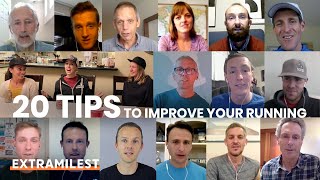
In this best‑of episode of the Extra Mileless Podcast, host Floris Gierman curates advice from 15 elite runners and coaches on how to become a stronger, healthier, and happier athlete. The discussion emphasizes that lasting performance gains come from patience, realistic timelines, and community support. Overtraining is warned against; rest, recovery, and listening to bodily signals are highlighted as essential. Consistency and high training volume—often through low‑heart‑rate, high‑volume “MAP” runs—are presented as the foundation for building an aerobic engine. The speakers stress the need for personalized, trial‑and‑error approaches to training, nutrition, and goal‑setting, noting that what works for one runner may not work for another. Mindful running, focusing on body sensations, proper hydration, shoe fit, and avoiding distractions like music are recommended. Race‑day strategies include pacing, preparation routines, flexibility for weather or unexpected conditions, and mental tactics to stay positive. Nutrition advice centers on cutting refined sugars and carbs while ensuring adequate fueling. Finally, the episode frames running as a recovery tool for stress, sleep, and overall mental health, urging runners to keep the activity enjoyable and sustainable.
Chapters
There are many different ways for athletes to improve their performance, and in today's video, I want to share the insight of 15 different athletes and running coaches when I asked them specifically this question on the Extra Mileless Podcast: what recommendations do you have for those runners looking to improve their performance and to become a stronger, healthier, and happier athlete? The insights that I shared have a lot of things in common, but there's a lot of different nuggets in there as well that I think are very useful for those looking to improve. I apologize in advance for some of the poor audio and video quality, but I still think the information is very valuable right there. All links to these episodes can be found in the show notes. Let's dive right in. Be patient, you know, give yourself a timeline that's realistic. Everything nowadays is happening at the speed of Twitter and, um, You know, our genetics were set up thousands of years ago, and so our bodies change gradually and slowly over time. But when we create those slow changes, those are the significant changes, whether it's fitness or how we approach the world or our mindset. And so, you know, be patient, enjoy the process, hook into a community of people who are trying to focus on the same things you are. It's great to do this kind of work, you know, training and changing yourself with other people. And if you need help, reach out. You know, there's a lot of people out there who have gone through the same things that you're trying to attempt to do and who can guide you.
Yeah, I think honestly the biggest thing I've learned through the years is don't overtrain, don't overdo it. If you go out and you are supposed to hit paces and your body feels like crap, just say that's it, call the run, you know, or run and remind yourself while you do it, slow down the pace, enjoy it, because your body needs, needs a rest day clearly. So I think when you can get into the overtraining trap of I have to hit this, pace on these intervals or this pace on the tempo and your body doesn't feel like it, you just do more harm than good. It's like I've also had days where I expected to go out 6 miles easy and find out, oh, I feel really great and being able to do an impromptu tempo run. So I think people get too into their training plans, too strict with it, and life happens. Some nights you're up all night with a sick baby and you don't sleep at all, and that might be a day that you need to adjust and say, okay, well, you know, I'm going to run easy today, but I'll try again Friday or Saturday.
Sometimes you might have a dip in your training. Say, for example, you're doing a marathon, you know, you run into your low heart rate. It doesn't always go up. You don't always improve. I've had, you know, it might be a couple of weeks where I've started to drop a bit, but I've stuck with it, and then it's, it's gone back up, and the improvements continued keeping that record, you know, so you can see your improvements. Don't make your goals too difficult. If you keep your goals quite easily achievable, you know, you've got more chance of achieving them. So small steps make big improvements. Stick to healthy sort of nutrition. Plan and what works for you. I'd say the main thing is, you know, trying out different things. What works for one person doesn't mean it's going to work for somebody else. So it's just trial and error as you go along. And if you find something that works for you, stick with it and then just tweak it. Having good instincts about training is the way to be successful, you know, and sometimes that means recognizing today's not the day for me to go out. Pound to 21. Overall rest and recovery is such an important underestimated part of training. That's really where the recovery happens. That's where the progress happens. And yeah, you can't be a slave to the schedule. I don't care even if you have a coach, and you've had some great coaches on here, but hopefully even they would say, okay, yeah, this is a guideline to what you're supposed to be doing. If you feel great, then yes, I expect you to be following this plan.. But be smart, be instinctive, make good decisions. And when I did that and finally let go, of course, you know, a year later or whatever it was, I finally broke 3 hours, and then I broke 3 hours like every time. Like, once I got that barrier out of the way— one thing's for sure, nobody gets any better without training, you know. So, you know, what I would say is that try and build in the consistency. Consistency first, um, you know, volume second, and maybe a little bit more specific stuff if, if necessary. That does get phenomenal results, um, you know, and because you're not stressing your body too much, the gains that you can get from building your aerobic engine are significant. You know, if somebody told me that I'd go on to run a 2:21 marathon when when I first started, I would have thought they were joking, and that's despite knowing that I had a little bit of natural talent at school. But I genuinely believe that people can be a lot better, a lot quicker than they ever dreamt was possible, you know, just by doing the consistency and the, you know, building the volume over time. That's a problem that many runners have is they are unaware of their body, and for too many athletes it's all about the workout and there's a big social component, and they don't realize that their body is hurting, and maybe they do, but they, they won't admit it. So, you know, being aware of your body, and that's why I don't like to see athletes listening to music or podcasts while they work out, I'd like people to focus on their brain, which is focusing on the body. So, you know, what is your body doing? How is your muscle functioning? How are your feet feeling? Are the shoes fitting just right? How is your hydration? Do you really need water, or are you just drinking it because you think maybe you need water? Do you need extra energy, or is your fat burning really doing fine? This is a, this is a very, very important part of training, and using the brain for it is really the way to go. You just don't need speed work, and I can think of numerous examples of very quick runners who do effectively almost no speed work. I'm a definitely definitely a believer in, in more running and slower running. They, for me, they really worked. And I hear a lot of people of my age sort of using age not quite as an excuse, but maybe it's in the back of their mind as a, as something that might hold them back. And honestly, it doesn't. It's, it really isn't a factor. You can still get the result. Maybe you have to put a few more kilometers in than somebody who's in their 20s, but you still get the result. Yeah, well, I mean, we've touched on— well, I've talked about volume and volume and consistency. Those are the big things that I would suggest. But more importantly than that, probably, is finding what works for you. We've talked a lot about— clearly Calvin and I, you are big believers in these in math and low heart rate and high volume and all of that. But if that's not your style, that's fine. There's more than one way to train for a marathon. Work out what works for you. Try things, find what works for you. There are many ways, many ways to train for a marathon, and each of them will have benefits and drawbacks. But find something that is enjoyable for you and results in a good time, and just keep doing more of that. You're not going to do it. You're never going to train for a marathon if you hate running. Yeah, it's not going to happen. You've got to find the running that you enjoy. The one thing I would say more than anything is consistency. If you get up every day and you do the same thing over and over, and you know that you're doing the right thing, you're going to see the improvement. You're going to see those improvements, and you're going to just build and build, and you're going to get the momentum. So early on, it's consistency. Get that diet right. Get that, get that sugar out of your diet. You know, it doesn't matter if you want to eat all the carbs in the world or try less carbs, but just Just cut out the sugar, cut out the refined carbs. Once you've got the nutrition on point, just trust in the math process. Don't get, don't feel like you have to add 5 or 10 beats. Just the lower the heart rate, the better. And patience is key. And just finding that, finding that, that time that works for you to train, that's, that's, that's one of the most important things. Keep the stress levels down. And I urge everyone just to set their alarm for an hour before they normally get up and just give it a go.
I think that's an interesting takeaway too. When you're at the end of a marathon and all you want to do, because your mind's telling you to stop, it's like try going faster. Because really what you need is just to change. Your legs need some kind of change. And so practicing that and just mentally wrapping your head around the fact that you're not going to die if you do, and if it backfires, then you, you know, you pull back. But It is, it's true, sometimes your legs just need something else and they mix it up. But what I did try to do is treat some of the, particularly like Saturday long runs, sort of as races. So I would get up instead of, you know, half an hour before going out the door, I'd get up an hour and a half to an hour and 45 minutes before the run and like make coffee, have breakfast. And do something that resembled what I was going to do on race day, just to kind of get into that prep of like knowing when you're going to go to the bathroom and like how is your stomach going to feel on that food. My biggest strategy going into a race is not going out too fast. So, you know, in 10 marathons, like, I've really learned how your body feels at the end and how you can finish if you don't go out too fast. So that's just kind of my number one thing. And then typically once I hit the half, I'll let myself kind of start engaging a little bit more. And then with 10 miles to go, I really can kind of start racing. So that's when I start looking at people in front of me and kind of start playing Frogger, you know, you just like keep moving up. And so that's something that I like to do, and it works. Like, I think both years I I don't think anyone passed me like the second half. If you can just hold back, like, because it does, it feels easy early on, but the same pace won't feel that way like 10 miles later. So just being really patient.
Yeah. Yeah. And not even have like a plan B and C, but have a plan like D, E, and F because just, just knowing that like, be ready for anything, you know, no matter what, like, you know, if you do the Boston Marathon, be ready for it to be terrible weather. 9 out of 10 years and things like that. And just, you know, if the race day isn't what you thought it would be, you know, still have fun with it. Yeah. You start at some place and then things go on, whether it be positive or negative, but we always think about the negatives. Don't let that deter you from anything that happens. So say you went out and I'll just give example. Say you ran out and you need a 3:05 to qualify for Boston and you ran a 3:20 and you start getting down on yourself, you know how many people would kill for a 3:20 just that are out there running? So think about all the good things. If 1% of the population runs a marathon, there's not that many people that can run a 3:20. So I think that's— always think about the good aspects that could happen, um, and just say like, that's a snapshot in time. What am I going to do from that snapshot in time? To get me prepped for the next one. When you look at a marathon or most endurance sports, the vast majority— in the marathon, it's 98%— the vast majority of your energy comes from the aerobic system. And so if 98% of your effort is going to be generated by the aerobic system, why would you want to spend so much time doing anaerobic training when it's gonna play a relatively minor role. I've seen so many athletes in all, all the endurance sports from 5K on up to the ultra marathon, the double Ironman, and you know, all these longer events. I've seen many, many who have only trained aerobically, did no speed work whatsoever, and would perform their best Yeah, I think consistency was a big role for me. I mean, looking back at all that I've done in the past and then, you know, how I think I was able to get there this time, I think being comfortable and committed to doing the math runs, you know, understanding that there's going to be certain days that you're going to be slower and that's okay. Stick with it. You know, trust the fact that if you keep doing your math training that it's going to get faster and it's going to get better because I had those days where I was like feeling like maybe I was even getting slower, but it was very short-lived. And then, you know, a day or two later I would get back out there and stay with my math runs and they would get faster. So I would say consistency. You probably need enough volume. I think, you know, being realistic about if you're going to have a goal like, you know, Boston Marathon qualifier or something, you're going to have to probably put in a pretty decent amount of miles, but for me, doing them the way that we did with MAP training was fun, and there was nothing that was exhausting or tiring about it. And so I would say expect that you're going to have to put in some miles and be consistent with your runs and just kind of trust that you're going to get faster over time and that it works. And before you know it, you're You're running at the same effort that you were 5 or 6 months ago, but you're just so much faster at that same effort. It's, uh, it's like magic. Yeah, I think between your ears is probably the biggest thing. So having fun, like if you're not having fun and you don't wake up looking forward to going outside, you know, then you got to sort that out. You know what's going on? Sleep deprivation, stress in your life, you know, because running should just give you time in your day, right? It shouldn't take time because If you go out and run and it's movement meditation and you're in sunlight— what we're understanding now about sleep, lack thereof, circadian rhythms, stress. Running shouldn't be another stress in your life. I think that's just going to backfire. I run to recover from life. Every day is a recovery run because days are super busy and crazy. I got kids. If running wasn't recovery— maybe just that's your takeaway. Running should be your recovery. Now some days you might feel like a million bucks and you run like super fast, right? You feel like a superhero and you're flying. And other days that recovery, and then you feel great, right? You could go out and do it again. The other day you're just out in your bare feet slogging along super slow, just breathing. But it's got to be fun. If the day you wake up and you don't feel like running, you got to kind of figure out what's going on and take a day off. Maybe you just need a day off. I have a lot of fun recording these conversations and I learn a lot from it myself as well. Links to all of these full-length episodes can be found in the show notes, and they're also available on iTunes, Stitcher, and all of the other platforms as well. Many more podcasts are in the works, so make sure to subscribe and hit the notification button to be the first to know when a new video launches. All right, have a good one.
More from Floris


Ryan Hall 2.0 on Strength Training For Runners, Lifting Heavy & Trail Running




You’re Doing Zone 2 Wrong (Even If You Think You’re Not) | Scott Johnston Round 2


How to Build an Unstoppable Aerobic Engine (Even If Starting From Zero) | Scott Johnston


Stress Is Killing Your Running (The Relax Fix You’re Missing) with Dr Kasim Al-Mashat

When things get hard, say this, it (works in any race) #jeffpelletier #running #ultrarunning