Kipchoge’s Top Running Tips for Athletes of All Levels
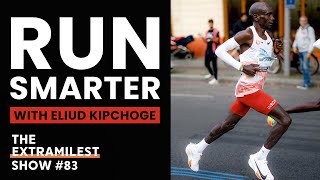
In this Extra Mile Show interview, host Floris Gierman sits down with marathon legend Eliud Kipchoge after the Tokyo Marathon to explore the habits, mindset, and tools that underpin his success. Kipchoge emphasizes consistency as the fastest path to improvement, describing it as a daily decision to run and a mental discipline that keeps him calm and confident. He shares how he teaches dedication and discipline to his three children, viewing family as the foundation for broader impact. Recovery routines such as ice‑baths, massage, sleep tracking, and low‑intensity runs are highlighted, along with his reliance on COROS technology – the Pace 3 watch, arm heart‑rate monitor, and pod – to monitor pace, cadence, stride balance, recovery scores, and training load. Kipchoge discusses data‑driven training, journaling his daily program, and using metrics to avoid overtraining and sustain longevity. He offers coaching advice for younger athletes: set realistic goals, progress step‑by‑step, and prioritize longevity. The conversation also reveals his interest in trail and ultra‑marathons (UTMB, Western States, Leadville) and his broader life philosophy that preparation, planning, and self‑confidence (likened to an umbrella) are more reliable than chasing “success.” He describes mental strategies for tough race moments, the importance of loving the sport, and the broader lesson that health is wealth. The interview concludes with excitement for his upcoming Olympic marathon and a call for listeners to embrace running for health and happiness.
Chapters
The more you are consistent, the more your improvement comes very fast. Try to create time for just going out for a run.
Do you have any habits or systems to help with that consistency?
It's about decision. You decide that you just wake up in the morning and go. If you don't feel like going, just try to control your mind. The more you go calmer, the more you can make nice decisions. I believe that when you are calm, you You can actually dig in a good way. You can control what's in your hand, and you can plan for the next move. Self-confidence is like an umbrella. If you have an umbrella and it's raining, an umbrella cannot chase away rain, but it can make you to stand in that rain. Having confidence is like having an umbrella to provide a solution, face a challenge.
Is Eliud ever going to run an ultramarathon? Is he ever going to do any trail races at all? Yeah, yeah, UTMB or Western States or Leadville.
Yeah.
You could give yourself, your younger version of yourself, one piece of advice. What piece of advice would that be?
Welcome to the Extra Mile Show. I have one favor to ask, and that is to hit the like and subscribe button. It really goes a long ways with supporting this channel. It helps get this video in front of more viewers, and it also helps me book great future guests. There's no greater runner and ambassador for the sport of running than Eliud Kipchoge. He is a visionary and a symbol of endurance, discipline, and excellence in the world of running. His achievements have set a towering standard, inspiring countless runners, including myself, in both training and in life. We take a deeper dive into Kipchoge's philosophies, his routines, and his future aspirations. He also shares a lot of great great advice for non-elite runners looking to improve. If you would like to download a PDF with the different lessons, takeaways, and quotes from my conversations with Elliot— this conversation, but also my first conversation from a few years ago— check out extramilers.com/kipchoge. You can download the PDF there. Hope you enjoy my conversation with Elliot Kipchoge.
Elliot, welcome back to the Extra Miles Show. It's very nice to sit down with you again.
Thank you.
I brought you a present. From my daughters. I have two daughters, Sadie and Zoe, in Los Angeles, and they made a drawing for you. This is us all going together on a run.
I will get it.
They are 7 and 10 years old. You are a big inspiration to them.
Thank you.
And we watch your videos at home, and they wanted me to say hi. And here's another drawing of you as well. And we're all running out there together. So yeah, I just want to say thank you for the big inspiration to the family there.
Thank you very much.
You have 3 children yourself as well, correct?
Yes, 3.
Do they also go on runs with you, or are they more into other sports?
You know, I'm running a little bit fast, so they are going a little bit sometimes. They go with the bike and I run myself.
Ah, okay, okay. And can they keep up with you when they're on the bike?
Yes.
Ah, good.
When you go out and you do sports with your children, do you also talk with them about dedication, about any of the goals, about some of the things that you teach to other people out there in the world?
I believe everything starts with the family, because if you don't start with the family, then we are doing nothing. As you say, charity begins at home. Then you start in your home. Will spread to other people. So I spread the values of dedication, hard work, discipline, consistency to my kids.
Yes, yes, absolutely. That's wonderful. Do you have any advice for my children and for the other kids and other adults out there as well who are looking to improve in their running, or we're looking to improve in any other sport?
My advice actually is that sport is life. It fits every— the graduates of kindergarten and those who are PhD in engineering, then all of them are going to have one. And above all is that running is where you are free. You know, if you are not running, you are in prison. The only way to be free in this world is to run. So it's to love running, you know. If you want to get a lot of energy, you run, especially the children. To fit the body and the mind, then they should have an early class.
And that's what I see with you too. You have a lot of fun when you're running, right? Like, I often see you smiling when you're running, and that is such an important part in the training and the racing as well.
Yes, that's love. That's loving what you do. You know, they say in science there is no affection. There is no work called affection, but if you love what you do, then that's next to the profession. Yeah.
You and I yesterday, we both ran the Tokyo Marathon, and it was a beautiful course, a beautiful day out. Sometimes our training runs go well, sometimes our races go well, and sometimes it doesn't go according to plan. What advice do you have for other runners out there when their training runs or their races are not going according to plan? Do you have any thoughts or any ways that they can deal with that?
I'll give you an example of a horse. You know, with horse racing, you can go to training with a horse every day and the horse will run very fast. But during the race, you can't know what will happen. A big random problem can come in and you can't perform. What I'm trying to say is that it's not the end of the world when you don't perform. It actually teaches you that life is about compliments, it's about criticism, that you can criticize yourself That's life. You gotta complement yourself, that's life.
How do you deal with that sometimes? When, when you experience challenges, when something comes up in the middle of a long run or in the middle of a race, you have to really dig deep, but sometimes it's challenging. Do you have any mantra that you tell yourself? Is there anything that you do to get through a tough spot?
I treat it as a challenge. And you know, when it's a challenge, it has happened. You have no control. So you need to retreat back, think outside the box, provide a solution, and move on. What has happened is like yesterday. You can't control yesterday, but you can control what you are doing today and plan for tomorrow.
Yeah. So yesterday I went out to run as well in Tokyo. My training was a little bit inconsistent, and so I wanted to really run under 3 hours, and luckily I was still able to get under 3 hours, but my legs were kind of hurting at the end, and it was pretty challenging too. And afterwards, I was pretty tired, and I was eating a lot of food and drinking quite a bit. What do you do after you're done with a marathon? What do you do for recovery? How does the next few hours and the day after look like for you?
For you? After a long run, after marathon, that time to rest, then have massage, get into ice bath.
You do ice bath after?
Yes, I do ice bath, especially after long runs. I mean, that's the fastest way to recover.
So even in the hotel room yesterday you did ice bath? Absolutely, yes. That's good, that's good to know.
Right on.
A few years ago, you and I We had a coffee with our friend Louis from COROS and also with Sifan Hassan, and we were talking about different running intensities. And when I asked you how low intensity are some of your slower runs, and you actually said, I do some of my runs at a quite low intensity, like 8 minutes per mile or 5 minutes per kilometer. How do you find out what is the right intensity for you to run at some of these lower intensity runs? Do you train with heart rate? How do you How do you go about these things?
Before technology came in, it used to just run in a random way, but we thank technology for now, especially the Coros and the heart rate. It gives you everything actually on your hand. If you want to detect, if you want to put an alert on heart rate or when the pace is high, then the watch can tell you. So we have everything now at our hands. You can do what you want. You can put the pace you want and it tells you it's low, it's high, it's low, it's high. That's the beauty of the watch.
I see that you're running with the COROS Arm Heart Rate Monitor as well, right?
Yes.
Have you been using that one for a little bit now?
Yes, I've been using that one for some months. I can say it's 99% correct. I've been using that heart rate monitor for the last 7 years. But it's actually, let us say, 99% positive.
That's good. I used to always run with a chest heart rate strap too, and then I switched to the armband, and it seems—
The heartband is good.
It's nice.
It's comfortable.
Yeah, I think that part in particular, that it feels a little bit less restrictive, and it's more comfortable that way. So that's good. What about the watch that you ran with yesterday and that you train with?
Oh, I run with the Pace 3, IK Pace 3. Oh yeah, yeah, yeah. Does a lot of things inside, you know. If you play with it, you learn a lot. You know, it monitors your recovery, monitors what you are doing, your steps. You sleep actually with the— I sleep with the watch to track my sleep, the hours actually I slept. The team slipped outside, it's just me. I try actually to wear my watch 99% because I don't only wear my watch when I'm taking part. All the time I wear my watch to monitor my stress, you know, it's everything.
Yeah, and that's a special limited edition Coros watch that you developed with the team, right?
Yes.
How did you guys go about?
The first edition actually was a little bit different, but this base tree is special. The color actually represents the color of Kenya. It has actually the mantra Aranyam 1 because it has my sign and it has a mantra Aranyam 1 which I'm spreading that together with Korus we are going actually to make every Buddha happy and to make every family to acquire top running as their lifestyle.
That's awesome. What are some of the additional data points that you look at? I know that you have a team of data people on your team that are helping you out, but I also understand that you use several of the available tools within the COROS app and within the ecosystem. Can you tell me a little bit more about some of the tools that you look at there?
We look at a lot. I look at the pace, I look at the fastest programs, the fastest kilometers. The first accolade you win inside there, you know, it sums up the training for the day, it sums up the training for the week, sums up the training for the whole month that you are hitting.
Your fitness level on the course must be off the chart.
Yeah.
Because I see mine like kind of going up and down, but with your amount of running, that must be quite up there.
Absolutely.
There you go. And then so now what? Now you've just ran the Tokyo Marathon, and now the next race up is going to be the Olympic Marathon for you, right?
Yeah.
So how does the recovery week look like for you now? I assume you take a little bit of time off and then you go back to like some low-intensity runs and then you start picking it up again?
Yes, I'm taking off and then come back slowly to recover with the indoor biking and then pick up slowly jogging So I see you cycling, I see you doing that as a recovery and also doing some of the training.
Do you do any other sports sometimes? Do you do swimming or aqua jogging or do you do any of the other sports?
No, I don't do other sports. No? Yeah.
Those are the main ones?
Yes, unless when I'm inside the forest, I can call that trail, then I'm running on trails.
Yeah, you like trail running? Yes. It's beautiful as it is. I asked my community from Extra Mile List, I asked them, do you have any questions to ask Elliot? And several people ask, is Elliot ever going to run an ultramarathon? Is he ever going to do any trail races at all?
Yes, I will do a trail marathon. Yeah? Yes.
That would be really beautiful to watch you. So would that also be like—
or a trail race. Either in Switzerland, in America.
Yeah, UTMB or Western States or Leadville.
Yeah.
So that would be really exciting to watch that. There's quite some people listening to the podcast who are non-elite runners, recreational runners. Do you have any advice for other people looking to improve in their running? Like any tips that you think could help people become a stronger, healthier, happier athlete?
The best tip actually is consistency. The more you are consistent, the more your improvement comes very fast. Try to create time for just going out there for hours, and you know, the more you're taking channels on what you are doing, although the phone, if you connect it with the work, can record actually everything. But being consistent is what makes you drive fast. It's what makes you to Go to another step.
Do you have any habits or systems that you set up to help with that consistency? Is there any way that you can help make that easier to be consistent?
Oh, it's about decision. You decide that from Monday to Sunday you want to run. You know, you create time. You just wake up in the morning and go. If you don't feel like going, just Just try to control your mind. You know, that's the only way to keep consistent.
Yeah. You talk about controlling the mind. Sometimes when I look from the outside at Elliot's world, I see a very Zen-like, calm person. How are you able to be so calm and controlled even when there's quite stressful situations sometimes?
I believe that this world is full of criticisms and compliments. That's what makes me to be calm. I believe that the more you got calmer, the more you can make nice decisions. I believe that when you are calm, you can live in a good way, you can control what's in your hand, and you can plan for the next move.
I see you do quite a bit of journaling as well, right?
I do a lot. Yeah? I really channel my trainings. I really channel what I am reading. I have 22 channels now for training, which represents 22 years.
What are some of the things that you write about? Is it a recap of your runs, or is it just some of your thoughts that come to mind?
Not really my thoughts, but the program of the day. What I'm doing for the whole day, that's exercises, morning run, evening run, biking, massage. That's what I'm recording. I don't want to miss anything actually. I record also what I'm— all the shoes that I'm using every day.
And journaling can give us a lot of information, and sometimes we start to recognize certain patterns as well. When we write down something, we notice it again the next day, we start to recognize some of these patterns, and I think it's a wonderful way.
Yeah, it's a wonderful way. So, you know, they say write it and you'll remember it. That's the only way to go.
Yes. You have a lot of experience in running and in training, and I was wondering if you could give yourself, your younger version of yourself, One piece of advice to a younger version, let's say Elliot at age 15 or Elliot at age 20, what piece of advice would that be?
The piece of advice is to be disciplined, follow the program, the story, discipline and dedication.
And so that's really showing up once again with the consistency and finding a way to make that happen. Yeah, I see that. When we sat down with Sifan Hassan a few years ago, she ended up saying, "Elliot, I would like you to help tell me how I can run marathon under 2 hours 10 minutes." And you said, "Ah, that's an exciting big project." When you are sometimes guiding younger athletes and you're giving them some advice, what are some of the guiding principles on that? Is there anything high level that you tell them? For them to improve? Because there's sometimes big pressure, big expectations for some of these athletes. Is there anything high level like that works towards helping them out?
The first is that I talk to young people, I tell them to set a goal. I tell them to, to be real professionals, and to know that everything is not actually a nightmare. It's step by step. I give them an example of going to the gymnasium, that if you go to the gymnasium for 10 hours and somebody else actually go to gymnasium for 6 months, then who will be fitter? The one who actually went for 10 months will be more fit. They will have lean muscles, good muscles, and, you know, become fit to run and perform any sport. But if you go for 10 hours, you cannot do anything. So it's step by step. It cannot happen in one night. And that's why you want young people to grow in a good way, go step by step to create that longevity. Longevity is what you want. Longevity is what makes people to get opportunities. Longevity is what makes people to get knowledge. Longevity is what makes people to be all-round and be responsible in their daily lives.
Talk about longevity in the sport, you have been active in the sport for a very long period of time, and there's quite some people listening to this that are athletes in their 50s, in their 60s, in their 70s. How do you go about longevity in the sport? Is there any thoughts about setting yourself up not to burn out or blow up or get injured? Are there any overarching thoughts about longevity in in the sport?
You know, if you do the right things, you cannot be injured. Although injury is a normal challenge in sport, like, you must come across. But the more you become more professional, the more you do the right thing, the more you chase away the injuries.
When you're talking about recovery and not getting injured or not getting overtrained, you're pushing yourself pretty hard in training. I've seen some of your training weeks have been 100 miles or 120 miles. How do you make sure that you're pushing it but you're not overdoing it? You're still allowing enough recovery in between. Are there any tools that you use? Is there any data points that you're looking at?
For now, it's the watch that guides us. We push to the right place and we push hard, provided we feel that it's comfortable for us, provided we know we'll get enough recovery. So we need to push. That's our way of training. But with the help of the technology now, you can even track your recovery, knowing that, no, today I pushed, but let me track my recovery. Maybe in the next 5 hours, we will be 100% recovered. And you know, it's good, then it gives you time to just relax, sit down, or do anything which cannot to keep him back to the Masters.
What is it that you do to relax? I heard Marlene was telling me that you like to watch sometimes Formula 1 driving.
Yes, I'm a fan of Formula 1. Yeah. The season started last weekend and, you know, every weekend I watch Formula 1. That helps me to recover. I read and, you know—
What do you enjoy to read?
I read all kinds of books. I read business books, I read personal development books.
You mentioned a while back that you don't believe in success, but you believe in preparation and planning. If you're well planned and well prepared, you're sure of success. Can you elaborate a little bit more on what this preparation involves and how you maintain the quality over time?
Preparation and planning actually are two values which I really respect and honor. I need to plan my season and plan myself day by day. I need to prepare myself for the whole season. So I don't see the end product, but I'm just working in that daily output that I need to plan to train tomorrow and in the evening. Make sure I rest well, make sure I complete the hard sessions in a good way, make sure that I really get enough training for 3 months, 4 months before I jump into a marathon. The moment I prepare well and plan well, then I'm ready to execute actually in a good way and in a positive way.
Running, especially long-distance running, can teach you many different lessons also about life. What have been some of the lessons that you have learned on like your longer training runs or about some of your races?
Running a long distance run is crucial to human life. First, it teaches us to be disciplined, what I'm doing, to be consistent, to dedicate the time and everything in life. Those are the 3 key teachings. When you run for long, or if you run a marathon, then you can actually solve any problem in this world. The moment you cross the line, I don't think there is any minor problem which you can provide a solution. Running actually makes you to think in a good way. And when you think and feel that pain, that sweetness of pain when you are running for long, then when you sit down, you have a lot of solutions in your mind. If anyone's problem actually is not about running, you can solve it in a good way and maybe think outside the box very fast.
Even yesterday when I was around mile 20, 21, it was starting to get pretty tough here at the Tokyo Marathon. And at that point, all I could think about was focus on this next step in front of me and really try to be in the moment. When you're running and like you get to the later stages of a race, Is there any cues that you give yourself? Is there any reminders or any things that you tell yourself to be able to keep digging deep, to keep moving forward at those stages?
Yes, at the end of the latest stage, actually, I really talked to myself, put myself in a training mode, and I was training and say, hey, if I have kilometers remaining, I've been running very well, I'm feeling in a good way, I don't training. That is what it's like to still push and, you know, hold back.
What is the best piece of advice that you have ever received as a runner?
The best advice I was given by my coach, long time coach, 21 years ago: treat yourself as the best one. That's the best advice still in my mind.
Can you explain that a little bit more?
Treat myself as the best one is It's really crucial because at the starting line you treat yourself that you are the best trained than everyone. You have trained every speed work, long runs, everything. I'm at the best. That's the only way to win. Because if you know that I'm the best than everyone, you know, you love yourself knowing that I have done all this work in a professional way, in a good way, in a positive way, in a healthy way, then you are ready to So it's just self-confidence that plays a big role here, right? Yes, it's self-confidence. No, self-confidence is like an umbrella. If you have an umbrella and it's raining, an umbrella cannot actually chase away rain, but it can make you to stand in that rain. So having confidence is like having an umbrella to move, to provide a solution. I'm going to have an umbrella to face a challenge. I'm going to have an umbrella to anything which comes your way. Yeah.
With your training, do you sometimes look at additional data like your cadence, your stride length, your running form? There's a lot of data available right now.
There is a lot, a lot, a lot, a lot. I use the pod which I put actually when I'm running and it shows even your strides. It shows that your legs, your both feet are parallel. So that's the things I'm seeing. If two of my feet are not balanced, maybe it's 52 and other one is 48, then there is something wrong with your legs. You need to see the visual therapist. But 49.8 and 51, it's good.
That's interesting because I have seen that myself too, that sometimes the balance is off.
It's hard to be 50-50.
Yeah. And so then you do work with a physical therapist.
Yes.
And you have your own personal, uh, personal assistant.
Yeah. Yeah.
That's a big part of your— Okay, good. In closing, last question here. There's a lot of athletes that look at you from over the years. They've seen you improve. They've seen you perform well, and they're doing their own version of training. They also have full-time jobs. They have kids. Do you have any closing thoughts for people to become a stronger, healthier, happier athlete out there?
They say health is your wealth. The only way to be wealthy is to make sure you are fit. You know, I'd like to really encourage them to really run, be consistent with runs. You know, the more they run, the more actually they improve their lives. If their children are going to school, if there are people working, actually the more you are fit, the more you can sit for long. The more you are fit, the more you can perform in your office. If you compare somebody who is not doing any fitness and somebody who is doing a sort of fitness, those are two people who can produce different results. So let us actually encourage running. Let us run and enjoy this world. The only way to enjoy your life is run. Feel that sweetness in running. Just come, take shower. Good to walk.
So next up, it's going to be the Olympics for you.
Yes.
Really excited to follow your training journey and to watch you at the Paris Olympics. So wishing you all the best for your upcoming race here.
Thank you very much.
Thank you. I appreciate you, Eliud.
Thank you.
As we wrap up another conversation with Eliud Kipchoge, I would like to share several of my lessons and takeaways from the things that he shared, not just about running, but also about life itself. Kipchoge isn't just a marathoner, he's a philosopher, he's a teacher and a mentor to many. Before we started recording this conversation in Tokyo, I noticed that Eliud seemed quite down. Low on energy, low tone of voice. This was much different compared to the previous few conversations that I've had with him, also in person. And so I knew that there had been several things going on in the background. He had received death threats around the whole passing away of Kiptum. There had been allegations that he was involved in this. There were all sorts of online trolling going on, and it was a horrible situation. BBC actually recently reported about this as well. And so in several of the days leading up to the Tokyo Marathon, Elliot was unable to sleep because of all of the stressful things that were happening in the background. They literally threatened to burn down his house, to hurt his family, and it was, it was horrific. Anyways, I could tell that something was going on beyond his performance that was disappointing for him in Tokyo itself. He had the worst performance of his entire career. Out of 19 marathons, he ended up placing 10th. So at the beginning of this conversation, I wanted to find a way to almost like cheer Elliot up, to find a way to connect with him on a deeper level. And this is why I started out the conversation by sharing a picture that my daughters had drawn for him. I knew that he had 3 kids himself. I have 2 daughters, and I knew that that would create some type of father bond that hopefully would just break the ice and leave some of the negativity behind, at least for the duration of that conversation. Elliot responded with stories of his own children who sometimes run with him or bike alongside him, and with his children, he actually shares those values of dedication and love and consistency. In our conversation, Elliot often emphasized the importance of loving what you do. That was both in this conversation and my previous conversation with him. He believes that this love brings you close to perfection. Watching him smile as he races, you see that joy isn't just part of his strategy; it is the core of his being. "That's love in what you do. That's next to perfection," he shared, a reminder that passion can elevate our pursuits to near perfection. When asked about dealing with challenges, Kipchoge's viewpoint was quite clear: treat them as opportunities. So seeing a challenge actually as an opportunity. And this reminds me of the book The Obstacle Is the Way by Ryan Holiday. Whether in a race or in life, his approach is to focus on the present, think creatively, and move forward. He linked unexpected problems in races to horse racing— unpredictable yet manageable. And this philosophy helps him navigate not just races but life's hurdles. What I'm personally super excited about is Elliot actually talking about trail running and ultra running. This is something I wasn't expecting at all, and him actually saying that he is considered, or he's excited to do a trail or ultra race, would be absolutely fantastic. I can only imagine seeing a race like UTMB, Leadville, Western States, and seeing Kilian Jornet, Jim Walmsley, Eliud Kipchoge, and others absolutely going at it. That would be so exciting to watch, and I think it would really open ultra and trail running to a much broader audience as well. His advice to runners, whether it is elite or recreational, is beautifully simple yet profound: the more you are consistent, the more your improvements will come very fast. This mantra is something that he consistently lives by, whether it is training for the next Olympics or just a morning jog. It is about making the decision to run, controlling your mind, and maintaining discipline. Self-confidence, he notes, is crucial. Similar to having an umbrella in the rain, self-confidence doesn't stop the challenge, but it allows you to face them. He carries this confidence not only while running but in everyday life, planning and preparing in detail, which he believes is the key to not just success in running but also in life. At the end of the conversation, Eliud reminded us of a simple truth: that health is wealth. This is the most important thing right there. He encourages everyone to embrace running, to find joy and health in the rhythm of their strides. Thank you, Elliot, for another fantastic conversation. In the show notes below, I'm gonna make sure to link to a few different resources available. One is a link to the first conversation that I had with Elliot. A lot of great takeaways over there. There's going to be a link to Elliot Kipchoge's Pace 3 watch that he just came out with, with Coros. There's also a link to the PDF that I put together, and this has a summary, a transcript, and a bunch of great resources from this episode and also from my first conversation with Elliot. I would love to hear from you. What was your favorite lesson, takeaway, or quote from this conversation? Please let me know in the comments below. If you haven't already, I would greatly appreciate it if you can like this video and subscribe to the channel. It would mean the world to me. Thanks so much for watching and have fun out there on your runs.
Bye now.
More from Floris


Ryan Hall 2.0 on Strength Training For Runners, Lifting Heavy & Trail Running




You’re Doing Zone 2 Wrong (Even If You Think You’re Not) | Scott Johnston Round 2


How to Build an Unstoppable Aerobic Engine (Even If Starting From Zero) | Scott Johnston


Stress Is Killing Your Running (The Relax Fix You’re Missing) with Dr Kasim Al-Mashat

When things get hard, say this, it (works in any race) #jeffpelletier #running #ultrarunning