MAF low heart rate training with 2:44 marathoner Wissam Kheir | Zone 2
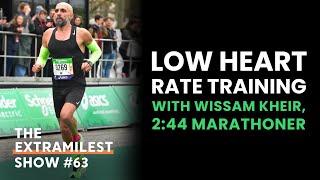
Wissam Kheir, a Lebanese psychologist and clinical assistant professor, ran a 2:44 marathon using Dr. Phil Maffetone's MAF low-heart-rate training method. He explains how to shift from high-intensity work to aerobic base building, shares mental tools like visualization and mindfulness, and discusses recovery through sleep, nutrition, and heat exposure.
Chapters
You know, here in Lebanon, we have this mentality of the no pain, no gain. So you have to put it all out in one session. The problem is that we always like cherish people who's going out all the time, like on all the sessions. And I didn't, I didn't know back in the time that what I was doing was wrong, but I understood that if they are doing that, so it must be working. So I must do it as well. I mean, I was used to the heart rate strap because I used to like the biofeedback, like the heart heart rate and all of that, but I didn't know how to use the parameters. I didn't know. I had the heart rate. I thought like in every run I would peak like at 170 heart rate, that was good. This is what I thought. But when I realized that I had to go, for example, for like below 135, I will tell you, it was like going through hell. The first 6 months, I couldn't believe that even if I walk, if I was walking, like I was having a heart rate of 135, even for For example, if I go for a 30-minute run, I had to walk for 25 and run for 5 minutes only. When I started MAF, it was in the summer, and I thought, was this my fitness level? I couldn't believe that it was my fitness level.
Welcome to another episode of The Extra Mileage Show. I'm your host, Floris Geurman, and today I have a conversation with Wissam Kheer. He is an inspiring endurance athlete from Lebanon. He has been part of my running coaching program, the Personal Bests program, for several years now, and it has been inspiring to see his journey in training and racing over the years. Even recently over here at the Paris Marathon, he ran another personal best in a time of 2 hours and 44 minutes. Wisam used to train with a no pain, no gain mentality, really hammering out many high-intensity miles. And when he discovered MAF low heart rate training about 5 years ago, It changed his entire approach to training. He ended up training at a much lower intensity, having to slow down significantly on his runs, on his swims, and on his bike rides. And that was challenging, that was frustrating. The fascinating part is, is that Wissam studied the mind for many years actually. He is a clinical psychologist, a physiotherapist, and an assistant professor at the Lebanese American University in Beirut, Lebanon. Wissam shares his training journey and several of his lessons learned along the ways. He also shares advice for runners looking to become a stronger, healthier, and happier athlete. This episode is brought to you by PATH Projects. This is the only clothing that I wear every single day. I use it on all of my runs and also outside of running, for traveling, for being an active dad with my kids, and for work meetings. PATH Projects makes shorts, pants, underwear, shirts, and headwear. It is the most comfortable gear, and that's why I replaced every item in my closet with Path Projects gear. Some of my favorite items are the Graves PX Shorts in 7-inch with 4 pockets to store my gels, keys, my phone, and more. The Cascade T-shirt— I have 10 of these and that is what I wear every single day. And then also the Mirror Cap, and that is this cap that you see me wear very frequently. It has 94 laser-cut holes in it. It keeps the sun and sweat out of my eyes and it doesn't overheat my head. This is also the that my wife Jennifer wears frequently. For a limited time only, you can get 10% off your order of Path Projects gear at pathprojects.com/flow. That is p-a-t-h-projects.com/f-l-o. See also the link in my description. This episode is also brought to you by LMNT, which is a delicious electrolyte drink that has everything you need and nothing that you don't. That means plenty of salt, potassium, and magnesium, and sugar. Increasing my electrolyte intake has made a significant difference in my energy levels, in my quality of sleep, and no more brain fog or headaches. It really can make that much of a difference. I typically start my day with drinking a large glass of water of about 500 milliliters— that's half a liter— and I mix in one package of LMNT. It helps rehydrate and allows me to maintain my focus and physical performance. And I actually really like their packaging. You can decide how much water you want put in, and that's how salty it actually becomes. And you will notice you can make it quite salty or you can dilute it, but it tastes delicious. Go to drinkelementi.com/flow to get a free sample pack of 8 flavors with your first box. That is drinkelementi.com/flow. F-L-O. See also the link in the description. Hope you enjoyed my conversation with Wissam.
Wissam, excited that you're here on the Extra Mile Show finally after several years that we have been talking.
Thank you for having me, Floris. Thank you so much.
For sure. Glad you're here. How was your morning run? I see you're running so much. Every time that I check in on Strava, Wissam has completed another 10 or 20-mile run. How was your run today?
It was good. Actually, I was tapering for tomorrow's run.
There you go. That's good. It's fascinating because when I look on average now, I always see you somewhere at the top of the leaderboard in the different groups that we share. And you're usually, or at least the last few months, I've seen you at 100-mile-plus pretty consistently over there. So definitely want to hear more about your running journey and the things that you've been up to lately. But maybe we can step back for a little bit just so people have an understanding of where it all started. How did you first get into running? What got you excited to start running and how were those early stages like for you?
So yeah, exactly. I started back in 2017, 2018. I wasn't a regular runner, but I was doing basketball back in the time in my teenage and youth. And then I shifted to running in 2017, but I started with, you know, here in Lebanon, we have this mentality of the no pain, no gain. So you have to put it all out in one session. And the problem is that we always like cherish people who's going out all the time, like on all the sessions. And I didn't know back in the time that what I was doing was wrong, but I understood that if they are doing that, so it must be working. So I must do it as well. And then I started like experimenting and searching and all of that., and, uh, Eureka, I just found a video on YouTube. It was you actually on YouTube. And the thing is that you were running very like graciously holding the cam talking and running a pace of 4:20 per K. So I asked myself how he is doing that and very easily without even like trying to catch his breath. So I said to myself, I want to do that. And I actually read more about you and I got in contact with you and I started the journey with math. And I will tell you the struggle with math.
So if you want to ask me, absolutely, let's dive into it. So what year was that?
It was in 2019, actually. 2019.
Yes.
So like 4, like 5 years ago, 4 years ago. Yeah.
Now I know, like we've, we've been talking for several years now. So, so tell me a little bit more about some of those challenges because going, especially in your culture, it is really that, that culture of no pain, no gain. And going from there to an approach of slowing down significantly in most of your training runs. Tell me, what was that like? How were those early stages for you?
I mean, I was used to the heart rate trap because I used to like the biofeedback, uh, like the heart rate and all of that, but I didn't know how to use the parameters. I didn't know. I had the heart rate. I thought like in every run I would peak like at 170 heart rate. That was good. This is what I thought. But when I realized that I had to go, for example, for, uh, like below 135, I, I will tell you, it was like going through hell. And it was, it was actually my experience because the first 6 months I couldn't believe that even if I walk, if I was walking, like I was having a heart rate of 135. And I didn't believe in what we call the cardiac drifting also, because I didn't, I didn't know that this is, I mean, basic biology. Even if you dehydrate, for example, your blood will get thicker. And once your blood gets thicker, your heart will have to deal with the pumping much, much and more blood into your muscles. So it will get like tired. So I was struggling a lot. Like I was even, for example, if I go for a 30 minutes run, I had to walk like for 25 and run for 5 minutes only. So, so yeah, this, this was in the first 6 months. And actually for, for, I mean, like anecdotally, um, when I started MAF, it was in the summer.. And I thought that it was, was this my fitness level? I couldn't believe that it was my fitness level because I thought it will take me a lot of time and I'm old. Yeah. So, so what, what is your current age or what was the age that you started out? I thought I started at 37, 38. Now I'm 42. And, uh, and yeah, actually I had to go for like below 1:40, between 1:30 and 1:40 at the start. Uh, and coming from a very tiring training programs and training sessions. I had to deal with that. I had to even, I realized that I had to let my body recover and like go slowly. So I started from scratch. Like I was, I used to, for example, while start, before started running, I used to walk for like 10, for 15 minutes just to give myself this leeway and give my body this chance just to adapt. And then I would start running. The thing is that with time and consistency and doing that, I'm doing that. Actually every day. I didn't skip like one day of running since my beginning. So actually I used to do that very consistently and this is what got me here. And I will tell you how I managed to do that also.
Yeah.
Just hearing you say the part about warming up or like the walking part, that is a very important component. And I've noticed that too. Sometimes when I run with a group,, and I see, like, not with my usual running group because with my friends, we pretty much have, like, we walk for a few minutes, we start a slow jog, and then we start running. But if I sometimes do a regular group run with, with other people that I'm not that familiar with, I noticed how quickly people start out. It's like this group run as if they're off to, like, a 5K sprint. And the pace of some of these group runs, it's just, right away out of the gate, no warm-up or anything, right away, like hard running. And it seems that the heart rate has a much harder time settling when it almost goes into this panic mode from zero to like, to like, exactly.
Pretty much. I mean, funny enough, I had to ditch the social aspect of running at first because I had to experiment and I had to understand because, you know, the peer pressure and the runner pressure all around you, like they're picking up the pace and you feel like, okay, so I don't want to pick up pick up the pace because I have this heart rate. And even just to tell you, here in Lebanon, I got bullied a lot about that. So, you know, you're going for a heart rate, how useful is that? So come on, don't take it too seriously, too diligently. But because of my, I mean, aspect of OCD-ish part, like obsessive, being obsessive about the heart rate. So I mean, I'm very orthodox about doing that. Like I go for If I want to go for a run in a MAF zone, I would never go, for example, higher than like 140, never ever. Even seeing 141 would piss me off, believe it or not.
That's classic. So how did you deal with those early stages? Like you just talked about, you did some walking. Exactly. Like mentally, how did you deal with that? And do you have any recommendations for other people going through those early stages of heart rate training?
You know, the key is being consistent. This is one. And two, being humble in front of, like, I mean, the training and trusting, also trusting the program, trusting, I mean, the aspect of progress. You need to let, like, let go your pride and your ego and to accept that you have some challenges that you need to face and let your body deal with that. But the issue is that sometimes psychologically and I mean, mentally, we can't face the truth about being, okay, so am I losing fitness? Am I not being like a fast runner? What's happening? What's going on with me? So, but, but, you know, getting the support from all the people believing in the system and just like seeing others and looking up to them and seeing how they're dealing with that and, and just compare, I mean, not comparing and for the sake of comparing, just for to take a benchmark to understand where are they from that And how they become, for example, because when I saw you running, I believed that you had the same. And I listened to your podcasts and listened to your interviews and the videos that you make. And I totally relate to what you're saying. So being humble is key also, just like letting go your ego, just accepting the fact and being in the moment. And the most important part is being mindful, like being present, not to let go, for example, okay, so I want to think about something else because because also, believe it or not, if you're running and you let your mind go or not focusing on the moment, you would affect your heart rate and your heart rate will spike without you knowing, like having all these stressors. And so I disagree with the part where, for example, there are a lot of runners that would say, okay, so I do that for like taking a break from things and just like solving my problems. This is not the case in running. If you want to run, just focus on the run, focus on what you're now on your body, on your breath, on what you're thinking. So this is the most important. We can talk about it later on if you want.
Yeah, that is very well said. Sometimes when I go out for a run, it is very often for me a recovery from the day. And it almost is that you have a lot of thoughts during the day and it's almost like your brain kind of recovers from what's all happening in you. And there's different ways to go about it, but I come back and I get a lot out of my runs that I come back from a run and I almost feel like, ah, had a little therapy session with myself, or it's just like this whole— yeah, you just feel re-energized again coming back, even though you just put an effort into it.
Agree. Agree. I totally agree with that. But I also focus on the part where while running, it's important to focus on the moment, just being mindful, focus on your— I mean, your body Even what it like, just try to observe your thoughts, not like to hang on them. Just try to let them flow and observe them. Because I mean, in psychology, it's very, very plain. I mean, let's say it's very obvious. Like you have to be mindful while doing something. You have to have insight and you have to have that trust while thinking about something. So while running, I do that a lot. I'm mindful. I like, I do trust the thoughts that I'm okay. I let them go. I don't grab the thoughts and just like hang on to them. So, and this is how it goes usually, especially if I have high intensity sessions and there will go the struggle because we will talk also about that.
Yeah. Well, tell me a little bit more because I find this fascinating to talk with you about the mental component because that is what you do for full-time work as well. Exactly. So tell me a little bit, what did you study and what do you do for daily life? And how do you feel that has impacted how you look at this entire training journey too?
Yeah, so I'm a psychologist by training. I'm a clinical psychologist and psychotherapist, and I'm an assistant professor at the Lebanese American University here in Beirut. And usually psychology has a large and huge impact in my life. It taught me a lot, and I use everything that I studied and I was taught in my daily life, and I translated that also into running. I find the combination with math is a very special, if you want, bond between the math training and the psychology aspect of running because they go hand in hand. Like while you're running with a very slow pace and very mild pace and a mellow pace, you have this also that your mind that is going, okay, everything is going to be all right, so calm down, don't panic, because when you go very fast and you have this high heart rate, so automatically your head and your brain will like enter into a panic mode. And so it will get conflicting ideas and conflicting thoughts. And so, so this is why, I mean, the psychology aspect of being like very calm, steady, mellow, and mindful also. So I have to like stress on that, that word and that concept with math is a very nice combination.
So well said. And I'm sure that you more than anyone also notices that direct correlation when your stress levels are higher, how that correlates in your actual running paces as well. All of a sudden, you start seeing elevated heart rates or slower running paces at the same heart rate and whatnot.
Exactly. And sometimes there is a bypass for that. I mean, if you train— this is very important because if you train yourself while having this high heart rate by being calm and focusing, I mean, on the moment, you will be able to handle that pace and just like to get these assurances for your body just not to panic. So it's, I mean, it's a phase, it's an endeavor. So don't worry, everything is going to be all right. So just, and this needs to be trained. I mean, your brain has to be trained on that just to like calm because sometimes when we go for a marathon pace, a half marathon pace or a 10K or a 5K pace, automatically we We think that our, our head should be at the same level or in my training. I mean, and how I approach this, I always try to like, try to calm myself, just like to remind myself, you know, it's, it's a phase and just try to concentrate and have these assurances for my brain. Okay. Everything is going to be all right. Don't worry. So it's going to pass and it's a phase.
Yes. What were some of the improvements you started noticing over time? What were some of those phases where you thought, 'Okay, there might be something about this. I'm starting to see gradual progress.' What was that?
What were some of those moments? Actually, I started noticing that after 6 or 8 months where I started seeing that correlation between the pace and my heart rate going lower. So it was a breakthrough. And actually, I was like, okay, relieved. I thought, I will never be there. But I started seeing that from one day to another. And I started also reading a lot, like educating myself also, like watching podcasts, hearing podcasts, listening to podcasts, I mean, reading books. And I started like playing on those like variables that I didn't believe that much into, for example, sleep, nutrition, like meditation, for example, all of these like tiny variables that would have a huge impact. And I started like being researcher on myself, like a scientist, self-science, like myself, like my body is a self-project. So I started experimenting with that. For example, if I go for sleep, for example, 10, and I woke up at 5, how would be my heart rate? If I walk, for example, for 10 minutes and then I start running, how would be my session? So if I like the things that I eat, uh, and usually, you know, I do this what we call the intermittent fasting. So the impact of intermittent fasting on my runs, if I tweak a bit my nutrition, uh, adding a little, a little, a little a little bit of carbs or eating a bit more or a bit less. So how would like all of these, all of these parameters would change my heart rate. So this is where I got this breakthrough and I started like seeing progress with that. But the most important thing, I really realized the impact of like sleep and nutrition. These two parameters had huge impact on, and the stress levels, of course, of the work, like just trying to handle work in a better way. I mean, time management, stress management, and all of that and all all of these techniques. So it helped a lot. So that was my breakthrough.
So that was 6 to 8 months. That's quite some time before you started having some of the— and so until then, were you still somewhat doubtful about this working?
Yeah, exactly. Like I told you, it was like facing my demons, actually. I thought I would never be able to run. No, really, I thought I would never be able to run because also one of my, believe it or not, also psychologically, one of my highest like achievement back in the time was I always wanted to do a sub-3 marathon. So now I brag about it. Like I do it every 2 weeks. And my next project, because you had once, I forgot her name actually. It was, it's my bad. She did a marathon, a sub-3 marathon at math level. So I'm aiming avoid that now.
I think that might have been Larissa Danish.
Yeah, exactly. Yes.
So this is my next project. There you go. Keep bringing that aerobic pace down. So when did you— there's a lot of different directions we can take this, but when did you run your first marathon? What year was that and what time did you finish that in?
Okay. So my first marathon was in 2014 without any training. I just decided to run a marathon. No. And if I look back at it, I say to myself, I am a bit crazy actually. How could I? How did I do that? Actually, how did I finish? I didn't know. So I went for 4 hours. I did the 4 hours marathon just like— I actually finished in 4 hours. Yes, yes, I finished in 4 hours. That was my first marathon. And what I did, what was the worst can, I mean, can happen. So I would run and then I would walk, I would run and I would walk. I looked back at it like 1 year or 2 years ago actually. And I realized that I was running at a pace of 4:20 and then like walking for 15, 10, 15, like 20 minutes and then running at a 4:20 for 15 and 10, 20 minutes. Minutes. So I said, I must be crazy.
I must be crazy.
Sometimes it's— And actually, I hated it. I hated it. I hated it a lot. And it took me like one week to recover. I still, till that day, till now, I remember what was my feeling. It was on a Sunday. It was in November. So I still know the feeling. I I'm sure I was dehydrated, I was carb depleted, my muscles were destroyed. So, and I still know the feeling and I hated it. And I told myself I would never run a marathon anymore. I don't want to run a marathon. This is self-torture. I don't want to do it anymore.
That is exactly what I told myself when I finished my first marathon. And indeed, same thing. Well, I didn't go out like at a sub-3-hour pace and then have to walk. And that, like, I just ran rather like above my fitness level until about whatever, 30K. And at that point, the wheels fell apart and it was a dead march to the finish. But it was a similar thing. And I think many listeners could relate to that as well, that yeah, after first marathon when things don't go according to plan, or any race really, it's very often, I will never do that again, until it kind kind of fades away, and then, ah, it wasn't that bad. And then before you know it, you sign up again for the next one, kind of thing. Exactly. So yeah. And then what was your— now that you know that running a marathon could be really hard, what was your second marathon like? How did you approach that differently?
It was a bit better. I trained for it, but, but not— I mean, not proper training, but it was like, uh, it was here in the club, uh, in, in Beirut in Lebanon. So what I did is it was a 3:18, and then I went for a sub-3 after it, like a 2:59, 56 or something like that in Berlin. And then I switched to the MAV training, and there was the magic.
So what, what ended up happening from there?
I was injured, actually. I was injured. I had, I had like a hip fracture after the, after the Berlin Marathon, and then I started like taking a break, and then I went for the MAF training.
Yeah. Was that fracture from running or was it from something else?
It was like, I mean, it was from running. It was from like high impact, high impact running. So this was the reason. And then I took a break like for like 6 months or something like that, and just I shifted to MAF and then—
Then a lot lower intensity. Exactly. Back into things. And then after you had gone through a period of low heart rate training, how many months of low heart rate training did you do? How did that transition go to adding in some speed work and then your next race?
How did that go? I mean, I never ditched the high intensity sessions. I kept doing high intensity sessions once or twice a week. I always did that and I enjoyed that actually. But in a very like short intervals, not that long and long tempo runs. And, uh, I was even, I was listening to your courses and the videos that you made. So what I had in mind, and also I always use that till now, I always aim to build a very huge aerobic base while I'm training all year long. Like if you look, for example, at my heart rate heart rate ratios or percentages, you would see like I have 80 or 85% of all my runnings are, or all my runs, running sessions are around like below 138, 137 heartbeat per minute for 85 of the, I mean, running sessions for a year, for a month, whether it be, I mean, for a week. And then I would like add these 15% of high intensity, medium intensity sessions, like going by pace and I feel, and this is it. This is how I do it. I always build a huge, a very huge aerobic base. And this actually what helped me to go for the 100 miles. And this is what helped me to go for the 600K with 1,200 meters elevation gain all around Lebanon. So I did the circle of Lebanon on the bike.
Yeah, I want to hear more about that in a little bit here. So after you did this kind of newer training approach for you, how did your races further improve in the marathon distance from there?
Hugely, actually. One year and a half further, I registered for Berlin Marathon in 2019, and I went for 2:50, 2 hours 50 minutes. And actually, I went one year ahead also. So I went for Valencia, and I went for 2:48. 48, and then I went for Rotterdam, the, the, and that was last April, and I went for 2:46. So, I mean, I mean, I, my approach also is very, I mean, I go this in a very diligent, and I am very careful while tackling my PBs. I don't go for huge PBs. If you look at them, they are always like between this 1 minute and 30 seconds, and just I go by feel. And for example, I would push like, but I always aim for a negative split, like you always do actually. So I learned that from you. So actually I would go like with my first 30, 35K very like mellow by feel and taking how my heart rate into account. And then I would push for the last 7K and see how it goes. So this is how usually I tackle my races. And this is usually how I saw my improvement. So actually with a very huge aerobic base, 15, 10, 12, 15% of high intensity, medium intensity sessions. And it comes naturally, actually, actually you have to believe in the system and it will come naturally. So this is important also.
How do you deal with the heat in Lebanon? Because I know several months out of the year, it's really hot out there. There? How do you deal with it?
What is your way of approaching that?
Actually, it's my candy store.
Tell me more. Yeah, because I mean, I learned that also from you, believe it or not. So I was introduced to sauna training because you mentioned it a lot in your videos. And I started experimenting and I understood because my gut, I mean, my instinct always pushed me to go on the treadmill in summer, like, okay, I want to avoid the heat because it's not that good. But I learned that while training in the heat, I mean, and not putting yourself in danger, of course, like hydrating, running in the morning, like when the temperature, for example, here in Lebanon, it goes even in the morning like 30 degrees Celsius. So So like being careful and not putting yourself in danger, but running in the heat is very beneficial. I mean, for the whole body. And while going from 30 degrees to 12 or 10 degrees, it would like have a huge impact on the performance. So I learned that. So to keep, to keep myself up to the level and in the performance, and in winter, usually I do the, I do the sauna also sessions just to keep myself in the game. Because if I would like not go to the sauna in winter and I introduce myself to training, for example, in the summer, it would take me a lot of time just to adapt and adjust. So what I usually do is in the winter, like when the temperatures are around 10 to 20 here in Lebanon, I would go to the sauna 3 times per week, like doing 15 to 20 minutes session 3 times to 4 times per week. And then in the summer, it would go naturally because if you go out, I mean, you are already in the sauna, so you're good. Yeah.
So this is what I do. The sauna is a big one. And I think if you have good thermoregulation, if your body is able to cool itself down, warm itself up, less energy is going to, like, keeping your body temperature under control and more energy can go to your body moving forward quicker.
And exactly.
It's this. Exactly. It's this fine line. And this is why often we notice even at the beginning of a season, if it's like when you go into spring after like a winter and you have like been able to run in the cold for quite some time, those first sessions, the first 4 weeks or 6 weeks when the weather gets warmer, it, there's totally that adjustment phase again. And so if we, if we experiment with taking some sauna and just in a way that you're doing that even during the winter months, doing that from time to time, you're definitely a bit more used to it by the time summer temperatures come around again.
Exactly. You know what I noticed also, because the thing is that sometimes when I— I didn't understand that, but with time I understood it more. Even with the cold, I mean exposure to the cold, it has the same effect with the heat. So basically if I go like not putting my, I mean like my winter gear on, I would notice my heart rate would spike for the first 10 minutes, like it goes to up like to 158, 160 beats per minute. So I would say, for example, is my strap is going like it's not working, or is my battery is depleted or something like that? I said, no, my body is adjusting. So how I would do it, and also I learned it the hard way, now I'm doing it a lot. So I start walking for 5 to 10 minutes just to get myself adapted and my body to adapt to the environment all around, and then I would start running. I don't I don't start running like, for example, I do that when I like kicking off the watch and just start running. I don't do that anymore. So just get myself adapted, get my body adapted, and then I would start running.
Yeah.
There you go. What about goal setting? How do you approach goal setting? What are your thoughts on failure? I would love to hear some thoughts there.
Yeah, so I mean, for me as a psychologist, goal setting goes with personality and with how disciplined the person can be. And discipline can be taught. I mean, putting motivation aside, if you put yourself in an environment where you have to go through pain or set a goal to go through that, through that environment, just to reach that goal. It's very important in a way. Okay. So if you look at people setting goals, you will see that they have the sense of accomplishment. You will be like, okay, so you have the sense of accomplishment. You will feel you'll have this better self-esteem. You will have what we call self-actualization. And I always search for that actually. So, but my personality drives me through, I mean, pain and all the challenges just to get to this point where I would like enhance my self-esteem and get this self-actualization. I always do that. So while setting my goal, I take this into a mindset where I know that the impact would be huge on myself and I would like respect myself more and I would cherish myself more. So this is important. To me because coming from, I mean, I grew up in a country where there are so much, so many challenges and so many hurdles and so many obstacles coming, whether it be like social, political, economy. So all of that. So I can't afford also like to look at myself and pity myself. So setting a goal, would push me and would let me understand that I have capabilities and have these resources that I can attain. And I found that through endurance sports, and especially in running and running marathons and ultramarathons. I found that, I found this in that. I don't know if my idea was clear, but—
Oh, no, no, no. It was. And just looking at some of the— like, you have grown a lot as an athlete over the last 5 years, and even training volume, racing distance, racing project adventures, not only while running but even on your bike. What was— what is one project that stands out to you that that you've been very excited about to train towards and that you were able to accomplish? Like, what is one of those projects for you and why was that an important project for you?
Okay, so I'm going to tell you a secret. I never planned for, I mean, for a project. I never planned for it. I mean, from the outside, it would show like I was planning a lot a lot. But I would give you an example. On the first, the 31st of December, like 2 years ago, I had this revelation that I wanted to do, because I saw you do it, 100 miles, 160.9 kilometers. It's not 160 kilometers. It's very important because here in Lebanon, we go by kilometers. We don't go by miles. So when I had my friends with me, like supporting me in the last like 3, 4 kilometers. They told me, so we saw you are at the 160. I told them, no, we still have 900 meters to go. And those 900 meters would matter. So I never, I never like planned for a project, but I had this like urge to do something. So once I had this urge, I would, the MAF training gave me this opportunity to be always ready. I mean, I'm always ready for that because I train consistently and I do that. I mean, like high mileage and, and letting my body recover and listening to my body, running, running in a way that would not affect, that would not put me in danger on an injury aspect, but also giving me benefits and pushing me forward. So I always felt that I'm always ready. And I wanted to test that, even psychologically, I mean. So I wanted to test that. So I decided, for example, on the 31st of December to go for 100 miles. But it wasn't a 100 miles like 100 miles, because I saw you also doing that, like running from point A to point B. So I decided to go to the south of Lebanon. It's the Naura. It's the Naura city, Naura village. It's in the south. It's at the border with Palestine. Palestine. So when I started running from there at 4 AM, I went from Beirut by car with a friend who put me on the border there. And I started running on the 31st of December. And I started running from there. I started at 4 AM. I finished at 8 PM in Batroun. Batroun, it was in the north. So I covered like 161 kilometers. And I never stopped in my, in my head, it was like I was doing 4 marathons in a row. So like doing 1 marathon, 1 marathon to go, 2 marathons, 3 marathons, and 4 marathons. And there you go. I finished. So, and then I was, I was, I was just like laughing. So now Strava, you can share my, my statistics because it was like the hype about sharing statistics and what you did and the longest runs. So, and I was, I was featured either, or even on the television here in Lebanon on, on a national broadcast television. Television. So telling this crazy PhD psychologist did on the 31st of December, 100 miles going from Naura to Batroun. So yeah, so I felt always ready. This is the takeaway message because I'm very grateful for MAF training because I mean, especially training at an aerobic like level because it gave me the opportunity to experiment and to go beyond my potential. Because I'm sure if I was like training like before, I couldn't, and I even didn't have a second thought about doing that and seeing my potential. But it has, it had, this is what we mentioned before, it had a lot of impact on myself and my self-esteem and how I see myself actually. I can do that. And it had a huge impact on everything else in my life. My life, like my work, my professional career, my friends, the family all around me.
So yeah. How do you, or what recommendations do you have for listeners when they're at any race distance, like you did a 100-mile adventure run and you're encountering challenges at some point. How do you deal with it and what recommendations do you have for other runners, whether it is on their first 5K, on a half marathon, marathon, any distance, when you encounter challenges?
Okay, so when we say challenges, it's getting out of your comfort zone. And when you say getting out of your— I always say it, when you say getting out of your comfort zone is like facing the pain. Usually people are afraid pain. So they do whatever it comes just to avoid pain. What I tell them and what I learned, for example, from the gurus, like, take for example, David Goggins. I mean, this is my role model in life. Like, if you want to get better, or like, I mean, even there is a ritual, even mentioned it. So if you want to get better, you have to face the pain. You can't like bypass and be be a very productive or, I mean, successful person without facing the pain. So while tackling races, it's important. This is what I told myself. Pain is inevitable. I know that. So I wouldn't like shy away or like hide from it. I want to face it. So I know that. And I know how it feels. And funny enough, I was addicted addict to it. So I always search for it now. Like I always search for it and I was like looking out, okay, how can I get pain? How can I get out of my comfort zone? And how can I face pain? And how can I deal with it? Because with every experience, I learn a lot and it would like getting me better by the day. So this, mentally, this is it.
I think it's important that last part that you say there mentally, because when we're talking about discomfort or pain, it is not necessarily physical pain in our body. It can be 100% discomfort of mentally having to do X, Y, or Z.
Exactly.
Sometimes that might even be, you know, you have to do X like this work project, but it's so easy and you get so much more gratification from grabbing your phone and doing social media, watching Netflix or eating cookies or whatever. Yet, you know, this is what you should be doing. And in some extent, that is mental pain as well. It's mental discomfort.
Exactly.
And so I think this is an important distinction here too, that even slowing down your pace, your running pace or your running intensity, when you know you could be running faster and it might be challenging at certain stages, that can be seen as like a mental pain or challenge as well.
100%. 100%. I totally agree with you. And this is actually, this is a revelation now. I actually, when I wake up, I don't feel like motivated.
Okay.
So I want to go for a run. I would like push myself and I know it's painful. Even if I know that it would be like a very easy mellow run. So this is what we call the mental pain. Okay. So I want to go through I want to face that. This is how I learn actually. And this is how I grew by like facing this every day and by getting used to it, actually the brain will like associate between physical pain and mental pain. And my tips aren't always like, if you want to race, if you want to have a good race, what would you do? Like my nutrition. Okay. So I would take carbs. It's not, it's not that, it's not the thing, or I would like go for a negative split, taking the first part as very slow and then pushing for the last last part. Okay. So those are all good. And they are the, like, the building blocks. But there is something more important is where you have to, like, hijack or trick your brain into pushing through the pain and getting used to it. Because you will not, you can't escape the pain, even in, it will translate. I mean, if you go for 100 miles, you would see it like going very slow. It's not like putting all your, all you, I mean, all speed out. Like you go very slow and I, for example, in the 100 miles, I always tried to keep my heart rate below 135 beats per minute. I was watching that. So at the last, I mean like 10, 20 kilometers, it was shooting up to 160, 165. I couldn't handle even like walking for 6 minutes per kilometer, but I knew it and it was very painful. It was very painful, but I was used to that. Yeah.
You played your cards more wisely than I did with keeping your heart rate under 135 because I somehow made the mistake of trying to keep it under 148. And that was the first, whatever, 50 or 60 miles. And at that point, I realized that I'd started too quick and it's hard to recover from that. And so once again, in some of those races, Sometimes here's the thing though, and I feel this applies to any race distance, whether you ran your first marathon here and you had never gone that far, like you go out at a certain pace and then you realize, ah, I have to dial it back a little bit, and then you have to— then you can run again. And then the more we race, the more we respect the distance, the more we become familiar with how to pace ourselves. And this is sometimes We get these questions of, okay, I'm training at a low heart rate and I'm starting to add in some high intensity. What should be my race pace? And that is the more we race, the more we get a better understanding of where we're gonna be at, what kind of marathon pace we will be able to hold. And, and exactly this, exactly this, this, this is the exciting part of that. But like you said earlier too, when you're going through some of these experiments, when you're like paying close attention to your body, paying close attention with some of the experiments you were doing with intermittent fasting or with nutrition or with sleep or with stress levels, paying close attention, writing that down in a journal, taking your learnings, and from there on adjusting again to seeing what, what you can optimize. And that's, that's how we keep learning. So yeah, yeah. Oh yeah, that's, that, that's a big one. What about, um, Um, like, any other recommendations that you have for other people who might come from a no pain, no gain mentality, or they might be new to low heart rate running altogether? Like, for some of these people to get started with this, do you have any thoughts or any recommendations about the journey that is ahead for them?
Uh, I think it's hard for them. I mean, it's hard to convince them, But I will repeat what I said before, like being humble and being consistent is key in MAF training. And the benefits that you can have from MAF are huge. But coming from a pain, no gain, I mean, it's a bit hard to convert because I saw that here in Lebanon, they started using the heart rate concept like lately because they were seeing that there are people people or myself, like adopting this philosophy and doing what we're doing. So they started seeing benefits. So this is why they shifted. But the issue, when they realized that with this shift, they need to slow down, they didn't like the system. So I don't know, it has no, it's not no benefits even. I'm not, I'm not, I'm not a fan. This is not for me as if math training is for people for special people, and it's, it's for a special group of people. So, so yeah, so convincing someone coming from a pain, no gain, I mean, for me also as a psychologist, I'm a true believer that MAF has its own, its own people and its own population and its own personalities. You have to be very Like, okay, you have— for me, it has two concepts, two components. The first component is you have to be obsessive, very obsessive about it, or it doesn't work. Two, you have to be— you have to let go your ego and be very humble. This is why I have a huge respect, huge, huge respect for people that would practice math but go— that have a very huge aerobic base, like 80-85% of their training training coming from, because for example, at the 5 or 6 minutes per kilometer. So, so yeah, those are the two components, being humble and being obsessive. So math has, and this is my theory, this is my own theory. I mean, there's no one who told me about it. So math has its own people.
I think you make a very valid point there that the whole approach of of like the whole MAF low heart rate training approach. And there's different ways to calculate a low heart rate training zone. But I think the whole part that got me excited about MAF training in general is how much emphasis is put on all the other elements outside of running as well. And you mentioned ego earlier, and ego is a big part of this big part in a way of Having to slow down, not, not like thinking longer term, not thinking so short term, and really not caring what other people would think about getting passed on the bike path, what you post on Strava, any of those kind of things. So let's face it, there's, there's a lot of people who pay attention to that or who care about that part. But I think the more we can drop any of our ego or how we see ourselves or how we think the world sees us, the more we can we can just live and be our true version of ourselves, the happier we can be, I feel. And that's not for everyone. That, that is not, and that is okay. But I feel the people who eventually experience some of the benefits that come with it, and whether that takes 6 or 8 months before you start noticing it, there's other people who start noticing it earlier than that. There's some people who might even have to go at it for a longer period of time. There's quite some people have such high stress levels in their life, who have been training at such high intensities for so long that they are gonna go backwards first. They have to de-stress first before they can start going forward. And I think, yeah, that is a humbling experience that, and, and yeah, there's a lot to that. So yeah, for sure. Um, let me see, what are, yeah, I want to talk to you briefly about a bike accident that you had because 2 years ago you had a near death experience. What exactly, what happened there exactly? Because that made a big impact in your life.
So, uh, I was actually, I was preparing for, for an Ironman, for the Ironman that I did in September, last September. So, uh, it was during COVID and I was on the highway with my friend and, uh, it was, uh, actually it is a bit stressful for me to talk about but I will tell you the long story short. We were at the side of the road and just waiting for another friend. Suddenly there was someone who was texting and driving without paying attention on the road. So he hit me from the back and he panicked actually. So I went under the vehicle and I passed behind the vehicle on the highway. Highway? Yes. So it was a bit of bruises and stitches on my back, and that was it. I had to stop for like 1 week and a half.
And I— It's crazy. So you were standing still while he hit you?
Yes. So actually, I was on the bike. I was on the bike. So he hit the bike first. I felt someone was like dragging me, and then he panicked. So he continued. He didn't stop, actually. I went through under the vehicle. I went literally under, I was under the vehicle. So I was, and he like, I was under the vehicle and then I stood in the middle of the highway. Like I was, there was cars all around and so, and then I threw myself on the side of the road. So, and that was it. I had to stop for one week, one week and a half and I had this very I couldn't believe that I would also bike anymore, but I was consisting and I was insisting that I want to do an Ironman. I want to go for an Ironman. I never swam, just to tell you. I prepared for that for 3 months actually, like swimming every day. And by the way, swimming had a huge impact on my running.
And I bike a lot.
In what sort of way? I mean, aerobically, because, because, yeah, I mean, while swimming, I was— because I am a data freak and I always measure like my heart rate and all of that. So I noticed like while swimming, I always keep my heart rate at like 110, 115 beats per minute while doing a lot of effort. Even I can get my heart rate very high. This is one. And two, this, the, I mean, the feeling of the water and putting yourself in the water and this, like, getting your, your core temperature up and there's something all around you lowering the temperature down. So this would cool, like, your body and taking your heart rate very low. So it had a huge impact on my running at max half. So I benefited a lot. And the bike also, add to that the bike. So actually the bike also had a huge impact, like, and I was experimenting. Actually, I was doing the Ironman for one reason, like I was experimenting the run. So how would my performance would be on the run? I was looking forward for the run while doing the Ironman. So now I finished my swim, I want to go for a bike, just let me finish 180 Okay, and let me see what I can do on the run. By the way, Duke was one of my role models also. I was aiming for— I thought I could go for a sub-3, but I couldn't. I went for a 3:15, but the temperature was like a killer for me. The temperature, and even, you know, funny enough, the people who practice the Ironman, they don't run. So I realized that while I was running, because they don't have the manners of the running or the non-runner. They can stand in the way, they walk. We have the loop, we have a loop that we go circles, like 10 kilometers loop. I thought I was doing a marathon, so it was like running in the backyard of the— I mean, in the backyard doing this.
That is quite an experience though, because you have more experience in the running component and then adding in swimming and then adding in the cycling as well. A few weeks ago, I bought one of the Wahoo bike trainers here that I have now in my office. And it's been really fun. I'm actually going on bike rides with my dad in Amsterdam, and we're riding remote on Zwift and just catching up on FaceTime while getting to ride for an hour, hour and a half. And I have noticed just doing that once or twice a week, it's some nice additional training that you're able to add in there with limited wear and tear on the bike.
Body.
And then I notice also from time to time I'm going swimming with Duke or some other friends here locally. And I'm not a swimmer. I never grew up swimming, but I started getting into it a little bit. And what a great way of even training there. Like, I come back and I really feel sore on the shoulders, but in a good way of like, all right, got to work out in there. Like, those muscles are not that well developed yet. But then just the addition of that to some of the other, yeah, the aerobic development that comes across in running again too is great.
So yeah, yeah, yeah, sure, sure. I mean, I mean, I mean, doing cross-training for, I mean, for the purpose of enhancing or getting better in running is crucial for me.
It's crucial. Yeah, absolutely. So would you do another Ironman or was this a one-time thing?
No, not likely. It was It wasn't just to prove myself that I can do one. And here in Lebanon, there are not— there aren't a lot of people who did the Ironman. So I had this like on my bucket list and I wanted to do that. So I just did it. Like I took the decision in one year and I prepared for that for 4 months. By the way, I kept my mileage like very high and running. I just like added, uh, uh, swim, swim sessions, not high intensity. All of them was a very low intensity and I finished my 4K in 1 20. So it was like 2 minutes per 100 meters. And the bike was also like doing very low heart rate training at the bike. So I finished that in 5 hours, 10 minutes or something like that. So it was, it was, I did. Yeah. But this is, this is the point. Like I was doing all of my training sessions for the Ironman at a very low heart rate. And I was a huge believer because I, I know that endurance sports need a very huge aerobic base.
It goes without saying. Yeah, it sounds like it worked out well for you there. How do you combine it all? You're a father, you work, and still you're able to train high volume.
What is your approach?
I wake up very early.
How early? I mean, 4:30, 4:15 AM, 4:15, 4:30. This is my— well, I mean, this is when I I wake up and usually I go early to bed. And I finish my sessions like at 9:00, 9:30, and then I go to work and this is it. And I start working from 9:00, 9:30 to like 6:00 or 5:00. And sometimes if I have like evening sessions or night sessions, I would do them, but it would be only for recovery, not like putting a high impact, just to get myself at ease and let my body recover. And this is it. But I'm a very early riser. Riser. And I do believe in that. And like, actually, Andrew Huberman, I don't know if you're familiar with Andrew Huberman. Oh, absolutely.
Yeah. Yeah.
So I love his podcast. Exactly. He's a big advocate of, I mean, early rising, like early light exposure and all of that. I'm a huge believer and it was game-changing, of course, for me. So this is how I managed to do that. Like, I always say that if you want something, you can always find a way. Like, you can't say, I don't have time to do that, or I don't have time to do this. So if you— I mean, you always have time if you put your head there.
It just comes down to being willing to make sacrifices, right? It's like, you can't do it all. So you have to identify what are the things that I want to do and what are the things I don't want to do. And that also means saying no to great opportunities. And I feel that is sometimes one of the harder parts where you might have some opportunities come up and you have to still say no to some of those as well. But as long as you know what is your priority, like that's—
Exactly. Having a priority also, I mean, and okay, so setting goals is one of them also, but I mean, having priorities and what we call like adaptive behaviors. So something that would help you to go through and to push forward. I mean, if you can't like have it all, or I mean, like putting something into your head and you want to set a goal and not doing all of the tiny and tiny bits of pieces all around you to help you to do that, like sleeping well, getting your nutrition right. I mean, like having supportive family, of course, this is crucial. Having supportive friends. So I mean, if you, if I, if I would like have one, one aspect taking out, or I have some negative comment from one of my friends, it would affect me. So I would choose my friends very wisely. I would choose my supportive, I mean, family very wisely. I would like have a focus on sleep, on nutrition, all of that.
So, so yeah. I'm so glad you brought that up. I think the people you surround yourself with indeed have a huge impact on how you feel, how you, like, whether it is energy draining or whether you get energy out of it. And that part alone is, yeah, I sometimes take inventory of that too, of like, where am I spending my time? And is this where I want to be spending my time too? Because I feel sometimes it is so easy to just say, yes to certain invitations that might come up instead of you thinking, what is it really that I want to do? And like, the whole art of saying no, it is hard. But I think as I've gotten older and as I have gotten busier as well with two young kids and different things going on, I've become a little bit more comfortable with saying no more quickly. And that has actually served me quite well because it also means that I can say yes Yes, to the things that I truly do care about or move more forward towards those areas.
Yeah, you're totally right. You're totally right. And this is important. This is very important. And I can relate. I mean, I can relate. Because having supportive people all around and around you is very important and they can help you get through it. Yeah.
One part that I've, one part that I've found that is a big part of my running. What do you call it? Like, I always have a bit of a running routine of like, I know what day of the week I'm gonna be running. Just like, it's, it's quite flexible, but I know, for example, every Tuesday night I run together with two of my friends and it's like, Duke and Joseph, they come by the house at 6 o'clock, we meet up. We go for an hour, hour and a half run. Afterwards, we chill in the sauna for a little bit. We have like, we catch up in the sauna and then like we go in the ice bath and then we walk over and we grab some food. And it's like every Tuesday night, it's like two friends that is just part of like the weekly routine. And I look forward to it. We're all busy dads. It's like this time of the week that we can catch up. And I feel that social component of being able to like surround yourself with good people over there is such an important part over there as well, because I feel everyone is busy these days, everyone has a lot going on. And yes, a lot of us are running individually, but sometimes doing that with some good reliable friends is an important one there too. Yeah, yeah, yeah, agree. What, what about recovery for you? Are there any recovery tools or any, anything being, like you mentioned, sleep earlier, but is there anything else that you're doing on the recovery?
When it comes to recovery, I'm very, I mean, like, I'm an obsessive freak. I'm a half physiotherapist if you want, because I invested a lot in recovery. And yeah, so for example, I bought the Normatec. I have the Marco Pro Plus, the electro recovery machine. I go into ice baths. Sauna is one of the, I mean, tools that I use also for recovery. Massage, going to a physiotherapist, all of that. I take it very diligently. And, and this is what I owe to my body because my body is giving me. So this is a mindset that I always tell myself. If you want to, if I need something from my body that is giving me, so I need, I need to pay back. So this is my payback. This is what I give back to my body. So this is important. And the nutrition aspect, I mean, I don't, I don't advocate for intermittent fasting. But the thing is that, and I read a lot of articles and evidence and research about it, and I saw that intermittent fasting has a huge impact on recovery. Okay. I know that eating after 30, like in a 30-minute window after workout is important, all of that. And I don't like push people or like give advice to people to do like I do. But I mean, my, my concept of nutrition is that I, I want to take control of my nutrition, not my nutrition taking control over me. This is important to me. So this is why I always like find a way to just go into huge like periods of time where I go into fasting like 20, sometimes 21 hours, and then I would eat like in 2 or 3 hours, and then I And I do that again. Sometimes when I have a high intensity, very high, it's like a very long session, like 3 hours or something like that. I would like, okay, if we get into some nutrition like fat or proteins and a little, very low, low carbs, but, and, and actually I learned that from Zach Bitter because I watched Zach Bitter. I don't know if you're familiar with Zach Bitter.
Yeah.
Yeah. We had him on the podcast. Yeah. Oh yeah, yeah, yeah, yeah, yeah, yeah, yeah. I remember. So, so Zach Bitter is a huge advocate for a low-carb, high-fat diet and intermittent fasting and all of that. So, and like the carb cycling and where he goes up and down depending on the sessions. So I'm now integrating that into, into my, into my routine.
I do have a question about this part though, because you're, you're quite extreme. Dream as far as for— Exactly. Exactly. No, no, no. I don't know. So I'm fascinated by this. So you're going high volume, you're running 100-mile-plus weeks, you're still doing sometimes cycling or swimming. That's a lot of training intensity or training load. You're at 15 hours of training a week.
Exactly.
So when you're having an eating— when you have an eating window of of like only 3 hours, how in the world are you able to get in enough calories and, and like feel that you're able to digest it well? And, and what, what, how, how does that look like?
What do you, I mean, what sort of oil? Exactly. I mean, if you wanna try fat, fat, it's easy. I mean, like you can consume a very, very small amount of fat, like in 2,000, 3,000 calories And that's it. I mean, people has them, has them, they have a misconception about like calorie deficit. Okay. So I would go, for example, for 3,000 calories per day. I would take that and like 4 avocados and 2 chicken breasts. And that's it, to be honest with you. And that's it. And this is very easy. I mean, you can, you can take 3,000 calories.
Are you at 3,000 calories with that already?
Uh, actually, no, not, not that much. But I mean, like, if you go, like, for, for one avocado, it's like 600 or 500 or something like that. Uh, you go for 2,000 to 2,500 or 2,800. So it would be like creating a balance between, uh, the ins and outs. And this is what I usually do. Uh, I would not— now I would like add some carbs into the mix But what helped me also is like doing weight training because I do weight training a lot. So this, it has a huge impact. And like while doing sports, you won't feel this hunger because even after I finish, for example, my session, I would feel, I wouldn't feel that hungry. And sometimes I would play on adding fibers into my diet, like a lot of greens salads. Mm-hmm. And this would help me a lot.
So yeah, there you go.
Yeah.
There is, yeah, you're, you're definitely, and I know we have, we have previously had some conversation about this part as well, but I've always found it interesting to see how you were able to do a lot of these nutritional experiments and, and just see what, like in an N of 1, what at least worked well for you. And some things work better than other things. Sounds like you've learned a lot there over the years.
Yeah, I mean, I noticed also my performance would be way better. For example, I did in my preparation for the next, for the coming marathon, so I did 2 training sessions where I ran 2 sub-3 marathons 2 weeks apart, like 2:58, 2:58. And I went like one without having breakfast and fasted all, all the whole run. And the other one, I just added some, two, actually two Morton gels, one at 30 minutes mark and the other one at the 2 hours 15 mark. So just like, just to experiment to see the impact of my performance. Believe it or not, it didn't change a lot.
Yeah. The only thing that I will say to that though is although some of these things you could, some people can get away with it. Some people could do it. Is it necessarily optimal for the best performance out there on race day and or afterwards for recovery? I don't think so.
I don't think so. Exactly. Me neither. I mean, me neither. I'm not, I told you, I started my with. I'm not an advocate. I'm not telling people to do that. I'm just experimenting. And I find actually, maybe it's a bit psychological, Floris. I like that. As I told you, I enjoy the pain. So I always face it. And sometimes doing that would get me into this zone of pain faster. So I would struggle like, what the heck, I'm doing that. So let me continue. Yeah, Actually, one of my marathons, I told you already that one of my marathons in Berlin, when I did the 250, it was fasted. I didn't take any carbs and just water.
That's right. That was right. Here's the thing though, as much as you go extreme with some of this stuff, I can relate because even I take quite frequent ice ice baths. And there's a discomfort factor in the early stages of an ice bath. But what I've also found though is when you put yourself in uncomfortable situations and you become more comfortable with it, it makes other uncomfortable situations during the day much easier. Like literally just before we started recording this podcast, I told you I just launched the Trail Runner Nation podcast. I needed a little bit of reset. I just jumped for a few minutes downstairs in the ice bath. There was so much ice in there, I literally had to like hammer it up to like kind of make some room. Got in there for just a few minutes, and you come out of it and you feel like you can conquer the world again. And so sometimes you're going through a bit of discomfort, like, can, can help feel you more alive too.
Spot on, spot on. This is it. This is— I mean, this is the key message. This is it. So everything would, it would feel like very very shallow and superficial and very easy. Spot on. And actually, if you get to live in Lebanon, you will understand because I would like raising the bar all the time because they, I mean, the politicians are always raising the bar. So I'm going to get there faster than them. So, okay. So when I raise the bar at that level, I'm going to raise it higher.
Absolutely. All right. I want to be respectful of your time over here. What is some or what are some of your future training and racing goals? Are there any other things that are on your list, on your bucket list you would like to accomplish?
I mean, I'm going to aim for— I want to retire at a 2:35 marathon. There are two objectives for me. Yeah. So one of them, and hopefully I will be able to do that, running a marathon, a sub-3 marathon at MAF. So this is one of my objectives and I want to get get there. And the other one is like running at between 2:35 and 2:40, and this is it. And I would like stop running and take it very easy from there. So those are my main, I mean, future projects that I'm looking forward to. I don't know if I will get— once I get there, I'm going to aim for, okay, so I'm going to go for the 2:30, but now I'm going to aim for that. So just experiment and just to see how it goes.
Yeah, I love that. So where were you at right now when you would be running at MAF? Like, how far are you at distance-wise?
Um, at, at, I mean, at 35, and then I would start my cardiac drifting. I would go like for, I would stay like below 138, 140 at the pace of 4:15, 4:10. This is it. And at 35K, I bet, uh, bear in mind that I would like for that, I would stay like without without eating, just hydrating with water. I want to experiment more, like adding some, some, some nutrition along the way.
Uh, I think it could, could really help. Like, yeah, I think it would be easier for you to have less cardiac drift, um, and just feel more energized for longer, um, towards the end in particular, because it's usually exactly 2 and a half, 2 and a half hours that you start seeing some of that too.
Yeah. But, but, but also, uh, the thing is is that what I noticed about MAF training is that the recovery would be much faster because this is my point. Like, I can experiment with that, for example, during a training, like a block for several times. Like, I did like 2 or 3 42Ks at sub-3, for example, in this month, in those 2 months, like in Jan and Feb. And each time I do that, like, I just try to experiment just to see how it goes. And now I pushed the bar up to 13. I'm going to aim for the 38, 39, maybe to add nutrition as, as you said. Uh, and the, the, the, the thing is that I can recover faster. So maybe, I don't know, we will experiment with that and I'll keep you in the loop for sure.
For sure. I think the other part would be electrolytes. That one can make a, make a decent difference as well. If you're, if you have a good amount of electrolytes, even the evening before or the morning of. Stuff, it, I would think even from a sweat rate, it would be less because the water retains more. Um, so yeah, that would be another one to, to look at.
Yeah.
So, yeah, yeah, sure.
Yeah.
Where, where, where can people find more about you, Wissam?
I know you're on Strava. Yes. Instagram mainly. And those are two. Yes.
I, I see the guitar set. I, I see the guitar sessions on Strava or on normal Strava on, on Instagram. Over there. Yeah, that's, that's awesome, man. Yeah, that's really cool. Thank you. Um, and then last but not least, when are you and I gonna run together? Because we have to figure out probably one of the world majors.
Exactly. What I realized that you're gonna run with Duke in Berlin. Maybe I'm gonna plan for that. Maybe we can run together.
So yeah, so sure, if, if things line up, uh, it would be Berlin this year, and then, um, if, if things work out, Tokyo, London, and New New York next year, 2024. So fingers crossed on that one, obviously. But it would be awesome to run some miles with you at one of these.
For sure. I'm going to aim for Berlin.
Hopefully we're going to meet there. Yeah, definitely. Any closing thoughts?
Anything else you want to share with the audience? Yeah. I mean, thank you, Floris, for being a real inspiration for me. I mean, was for me, the breakthrough was usually your video. So I would like tell people and give them this advice to watch this video. It was really inspirational breakthrough for me. It was like mind-shifting and life-changing for me. So thank you so much for that. I'm very grateful. I'm very grateful for the PB family for because the Personal Best Program family because they are very supportive. I mean, we can find all the levels we can talk and share ideas. So those were, I mean, for me, they were life-changing and what kept me going all the time. So thank you for that.
Thank you so much. Yeah, you've been such a big part of the whole Extra Mileage Community and Personal Best program. You've been— I was looking back too, it has been 4 or 5 years that we've been having frequent conversations or dialogues. And just seeing your athletic journey over the years has been super inspiring. And I know that there's going to be more running improvements down the line over here. It's just for you to keep the train on the rails, not get injured, and you'll keep plugging away and getting that running time down further.
I mean, I'm a true believer with math, I will be injury-free.
I'm a true believer of that.
Absolutely.
Wissam, thank you so much. I appreciate it. And I think we actually got to log off because you and I are going to jump on the PB Zoom call, which is literally just starting in 5 minutes right now. So we'll see you there in the other Zoom call.
Okay.
So thanks a lot.
Okay.
All right.
Thank you.
Thank you for watching. What was your favorite lesson, takeaway, or quote from this episode? Please let me know in the comments on YouTube. Also, if you would like to find out more about my running coaching program, the Personal Best Program, check out pbprogram.com. Program.com. This is also the program that Wissam has been an active member of, and we have plenty of different training schedules. There's a lot of training course materials. We have an awesome community as well of like-minded athletes from around the world. So yes, check out pbprogram.com for more information over there. I appreciate you tuning in today. Have fun out there on your runs, and we'll be back in 2 weeks again with another episode.
All right, bye now.
More from Floris


Ryan Hall 2.0 on Strength Training For Runners, Lifting Heavy & Trail Running




You’re Doing Zone 2 Wrong (Even If You Think You’re Not) | Scott Johnston Round 2


How to Build an Unstoppable Aerobic Engine (Even If Starting From Zero) | Scott Johnston


Stress Is Killing Your Running (The Relax Fix You’re Missing) with Dr Kasim Al-Mashat

When things get hard, say this, it (works in any race) #jeffpelletier #running #ultrarunning