Massive Running Improvements, 5:00 to 3:47 Marathon Todd Marentette | MAF Training
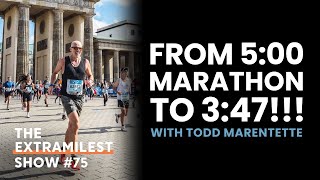
Ontario runner Todd Marentette dropped his marathon pace from 5:00 to 3:47 per kilometer using low-heart-rate MAF training. He credits consistent aerobic base work, foot strengthening, and mental shifts around easy running with his transformation from beginner to competitive marathoner.
Chapters
I think that's the beauty and the elegance of the low heart rate training, is that if you have any questions, any doubt, just go out for a nice, easy low heart rate run. Like, you don't have to overthink this. I think the most surprising thing is how much of running isn't running. So if you want to be your best, running is just one portion of it. It wasn't until I actually started to feel better after finding low heart rate training and slowing down and healing some of the injuries that then I had the confidence that You know what, I went out for a 30-minute run and I came back and it felt easy. But if you did that over time, it stacks up. Those daily runs, 3 days a week turns into 4, 4 turns into 5. And then where you'll end up, if you look back a few years, you won't even recognize yourself, but it takes time.
Hi there, Floris Giermanov here. Today I have a conversation with Todd Marantete. He's a 46-year-old athlete from Ontario, Canada, and he went from from 250 pounds, so about 113 kilos, being quite out of shape, to finishing 12 marathons. And he really learned a lot in the process. We have a conversation about the learnings from his training and racing journey and some of his experiences with low heart rate training too. He shared many different insights, and I hope you enjoy this conversation. This episode was brought to you by Element. This is a delicious electrolyte drink mix that I drink daily every morning. There are 4 of my favorite flavors over here: watermelon, orange, raspberry, and citrus. I'm often surprised how many athletes are not taking in any electrolytes in training or in racing. Electrolytes, particularly sodium and potassium, are the driving force behind energy production in our cells, nerves, and muscles. I've noticed a positive difference when taking in the right amount of electrolytes. No more brain fog, no more headaches post-runs, and much more even energy levels. If you would like to try LMNT, check out drinklmnt.com/flow to get a free sample pack with any order. I'm blown away by the positive feedback that I've received from several podcast listeners who have tried LMNT and have noticed a positive difference. And so yeah, check out drink lmnt.com/flow. See also the link in my description. Hope you enjoy my conversation with Todd Myrrentente. Hello, hello, Todd. Welcome to The Extra Mile Show. Glad we're finally here recording a conversation.
Happy to be here, Floris. Happy to be here.
Yeah, I think we have, uh, we've seen each other several times in person and we have probably been on about 50, 50 or 70 Zoom calls over the last several years over here as you are part part of the PB program. But, um, yeah, I've, I've seen your running journey over the years here and just want to have a fun conversation about some of the things that you've learned in training and in racing. Sometimes when things go according to plan, sometimes they don't go according to plan. I think what, what might be helpful if we just backtrack a little bit, like, how did you first get into running? Have you always been a runner? Like, a little bit more about your background, maybe even your age, would be helpful for those listening.
Absolutely. So I'm 45, soon to be 46, Floris. And you know what, my background to running— there is no background of running. Growing up here in Canada, played a lot of hockey growing up in the winter and some baseball in the summer. But I would say not an athlete by any means. You know, flash forward to high school, I would say I was a little bit chunkier, a little bit shorter. And then all of a sudden I had a growth spurt. And, you know, just stuck with my core of playing hockey on the weekends and whatnot and went to university, got a job, and started to pack on the pounds. And it didn't take long working lots of hours till I'm 6'1". I got up to almost 250 pounds at one point and just wasn't feeling good almost every day. And, you know what, I battled some health over the 2010 to 2015 timeframe. And my one friend Harvey was like, you know what, Todd, why don't you try running? He's a runner. And so after about 2 or 3 months of him coaxing me all the time at lunches or at dinners, and I said, okay, I'll give a run a try. And I think it was like September of 2015, I went out for my first run not knowing anything I was doing. I think I was running 7-minute, 30-minute kilometers in those for about a kilometer and a half, and it felt like, it felt like days I was out there. It was, but I enjoyed it. I came back, I felt a little better. So that was kind of like my, I would say, entry or my finding into running. I wanted to like be better, to get better, to feel better, to feel back like how I used to felt when I was younger. And I thought, well, let's give running a try. And it's been full steam ahead ever since.
Wow. So that was 2015. Is this the same Harvey as the Harvey that we saw in Chicago and Berlin?
That's right. That's right. I'm lucky to have a good running buddy like that where we travel the world together and we do big races and have friendly competition. He's a good runner, so most of the time he's kicking my butt, so I'm always catching up with him.
That's awesome. Well, I think it's so important to have running friends out there and to share some of that joy of running. I know sometimes a running journey can be quite lonely, but if you can share that with some other I think that definitely helps on the motivation front and keeping each other excited and accountable and whatnot.
Absolutely. Absolutely. A little friendly competition. It's motivational, right? To me, when it first started, that's what it was is like I didn't know any better. So I would see that Harvey would go for a run, I'd go for a run. So I just kind of mimicked everything that he was doing just to motivate me throughout the— to get out the door and keep on going.
There you go. And I know both you and Harvey have learned a lot of things over the last 8 years. If you would have to share some high-level advice to anyone kind of getting into the beginning of their running journey or maybe looking to get started with low heart rate training, because I know you've, you've definitely improved a lot using some of the fundamentals of low heart rate training too. So can you share some, some high-level thoughts here?
Yeah. You know, when I started the running journey, like I said, I had no base. I had no experience. I had no knowledge. Didn't even know really where to go. And if I could go back and what I learned from that was, first thing is be patient. Patience is everything. Everyone always wants to run further, do a little bit more, run a little bit faster, because that's just the healthy competition that's inside of us. And that works up until it doesn't work. And for me, I ran into an injury. So if I could go back, that was one thing I would tell myself. Be patient. There's no need to hurry up and train for a 16-week block to go run a marathon when you could train for 24 weeks or give it a year. There's no time frame to this because you want to have a long-term view of it. The second advice I would give my younger self is do not underestimate the contribution of your feet. Strong feet mean everything, and the root of all my running injuries seemed to be stemming from weak feet. And having, having the chance to meet Mark Cucuzella, Dr. Mark, he's fantastic. You know what, he gave me lots of advice, um, and it really was start to strengthen the feet. That was about 2018 or late 2018, early 2019. Since then, knock on wood, it's full steam ahead motoring, and, uh, I think it's all based off really strong feet. So that, those like kind of two key pieces of information I would offer to my younger self if I would listen. I don't know if I would listen though.
That's a whole lot of out of the conversation. As far as for strong feet, absolutely, like the patient part and thinking long-term, like what can you accomplish in 6 months, 12 months, 24 months? How do you set yourself up to run healthy long-term versus indeed looking for improvement next week or next month? That is such a spot-on one. As far as for healthy feet or strong feet, in what sort of way do you go about that? Because there's different ways that you can approach that through strength training, mobility, footwear? Like, share a few of the things that have worked well for you over there.
Yeah, absolutely. There was a few keys that really worked for me. The first thing is like diagnosing how are your feet are. And I remember there was some kind of foot exercise, and I remember it was trying to raise your big toe. So I had my feet on the ground, and I couldn't even raise my big toe. And I'm like, well, that doesn't make any sense. And there were some short foot exercises, they were called, and like, It took me months and months of like, not like spending 20 minutes a day, but 5 minutes here and there trying to force my big foot to actually move. And it slowly got better and better. So it was doing some short exercises, some training on the feet to like waken them up a little bit. And then the, the real, uh, aha moment was when I got out of the built-up heeled shoes in my daily life. I used to wear like dress shoes to work and, uh, decided to go take Dr. Mark's advice, and I bought some Lems wide shoes, flat. And I remember him saying something along the lines of, you know what, you should start to feel better in about, you know, 3 to 4 months if you're wearing these shoes 8 to 10 hours a day. And it was like clockwork. Maybe it was a little bit of wishful thinking and it willed it into existence. By that summer though, my feet felt a lot better. I banished that plantar fasciosis., and you could see the feet, you'd see them start to change, change their shape and actually look like they had muscles, if that makes sense, actually to look like a strong foot, almost like a muscle hand down there. And it was key, like having that big toe that was engaged means everything. And then I also would, I would also try the shoe inserts, there was like Correct Toes to help kind of nudge those toes along and probably over a course of a year, the foot really changed shape. If I look at them now, they don't look like they did in 2018.
Very, very often we're so jammed up in our shoes, right? And like that little toe like kind of goes under the second toe and it all gets squeezed together. When we have some more room to, to breathe, and not just in our running shoes in particular, even in the everyday shoes that you're wearing most of the hours of the day, typically even right now I'm barefoot myself and I just want to throw out one of the things that, that I've been doing in, in recent months is standing on top of either a golf ball or like a round ball like this. It's a pretty hard ball. Just standing on that for about a minute under your foot, not even rolling it, but just leaving it under there. And it's somewhat sensitive at the beginning, but after about a minute, the tension releases, and then you can put a little bit more pressure on it again for a minute.. And that has been quite helpful, like not just for the bottom of my feet, but even removing some of the tension from your calf, from your Achilles and whatnot. So yeah, it's, I think you're spot on over there with paying attention to your feet and yeah, everything is connected to that extent for sure.
Absolutely. You're bang on. Everything's connected and it's good. And that's, you just touched on something really cool too, is that It's working little things into your daily life. So we sit at desks, you have a standing desk, you know what, take your shoe off, use a golf ball, just constantly like working through stuff. I saw that when I went to a running camp at Dr. Merckx, and you saw a lot of great runners there. And one thing that surprised me was they were always doing something. Like, what I mean is, if we were sitting around, they were massaging their calf, or they were doing exercises.. And it's like, well, these are the best of the best and they're always doing something. Maybe we shouldn't just be sitting here hoping to get better on our 30-minute run. It's the 24 and a half hours that you can actually focus on too.
So that's key.
Yeah, totally.
Because that's the thing, right? Like, you are— you have a family life, you have a work life, you have a running life. How do you combine it all? Because I know there's a lot of people listening to this conversation too that We're not elite runners, we're non-elite runners just trying to do the best that we can, trying to combine it all. So how do you go about that? Do you have some fundamentals that, that make it work for you? When do you get your training runs in? How do you, how do you combine it all?
Yeah, that's a fantastic question. I'm, I'm so grateful and blessed. I have a great partner, my wife Jennifer. She takes care of so much stuff, takes care of the family ourselves. So that's having a great foundation that allows me to spend some time to take care of myself. And then the first thing I do is it's a non-negotiable for me. I like to move, run 7 days a week. Now, I'm not moving fast sometimes. Sometimes I'm moving fast. Most times at the low heart rate, but I make that a priority. So for me, that's about 45 minutes to an hour every day. Of the week. On Saturdays, I'll do my long run. It's 2 hours. So I've been doing that for, you know, 4 or 5 years now. It's just, it's, it's ingrained into me. It's, it's, it's me. It's a part of my core value. What it looks like mostly for me, it's, uh, when I get home from work, right before dinner, I'll go out for a 45-minute to an hour run, get back, have dinner, then we take the dog for a walk. So you get that little bit of cross-training there right after a run. And on Saturdays, I love Saturday morning runs. I like waking up around 6 AM. I try to get out and I'll try to get my hour to 2 hours in on Saturday mornings. But you got to make it a part of your day. And it starts off, it's hard, right? You don't really want to, but deep down inside it starts to feel good. And then, then you, then you just see yourself making your life fit around it and fitting it into your life. So you have to make it a priority.
Yeah, it is fascinating. And I think for some people indeed are morning runners. There's other people who are evening runners or like wherever it is, the flexibility of it. I have found when you have set habits and routines, for example, you wake up first thing in the morning, you do whatever you want to do and then go for a run. That becomes kind of a set standard.. And then, like, it can't be taken away from you. Like, at that point, like, whatever the day brings to you. Whereas for other people, sometimes work-wise, it works better of like, all right, let's do it later on in the day. But at least having some consistency of which days are you planning to run and for how long. And of course, that's gonna fluctuate throughout the year, throughout training cycles. But yeah. Yeah. I think that, that flexibility is key.
Yeah. And I, I think, uh, I remember listening to a podcast that you had Amelia on, and Amelia was saying along the lines of, you know, don't take it too seriously. Like, you know, you fit it into your day, but if you only— if you could only run first thing in the morning because you think that you're an early morning runner, it might be— it might do good for you to like spread it out through the day if you can. Just find the time. And then it's kind of like a little bit of everything. You know, it gets hot here in Southern Ontario in the summertime,. So if I am able to work from home at lunch hour in the heat of the day, I'll go out there and go for a nice long hot run or hopefully hoping that it has some aerobic benefit. But so far, I don't know, but it helps. So it's just like, it's like fitting those into your day and making it non-negotiable.
Yep. It can surely be humbling when you're trying to run with low heart rate and it's that warm out. And yeah, that, that can be challenging. The heart rate goes up quickly. It's your body trying to cool itself down. I'm curious to hear what were your initial experiences like starting out with low heart rate running? Because you didn't start out with it right away. Initially, you were running at different intensities, but what was it like? How did you come across it? How did you first start implementing it?
Tell us a bit more. Yeah, I would say that how I first came across it was yourself, Lars. Like, I came across your Extra Malice and your YouTube videos and your podcasts, and you had all these great guests on, and there were so many nuggets to take away that I'm like, well, okay, well, now I can go and research a little bit more into this Dr. Maffetone guy that Phil's talking about and this Dr. Kukizela guy that that Floris is talking about. And then you could dive deep into it. So before that, you know, 2015, 2016, and 2017, I just went out and ran a little bit faster every single day. That's it. A little bit faster. My paces were probably like a 5-minute a kilometer, so 8-minute miles. And then maybe I tried to do, you know, 4:55 and, you know, 4:50. And it was just constant working my way up from maybe 10 kilometers a week to 40 kilometers a week, all within a relatively short time frame. And that's when I ran myself into the ground. So I kind of got used to this 4:50, 5-minute-per-kilometer pace. And when I went to low heart rate training, I was at the time around 40. So my math would have been 180 minus 40, so 140. I went out there and did the proper warm-up, did the test. I'm running 7:30 a kilometer. So what's that, like 12-minute miles? And it was tough. It was tough because, you know, it felt like a walk. But what I layered on with the start of the math journey was to work on form as well. So when I started to move slower, I decided, you know what, I'm going to spend some time on form. And I had some investigation and did some couple of chi running courses. And I think what Danny Dreyer says is if you can learn to run slow, You can run fast with the right form, and that's, that's what I tried to do. So I was running 7:30. It felt slow, but I was mixing so much other stuff up with it. I tricked my mind into not paying attention to it because I'm going to be busy moving my arms this time, or I'm going to step at 180 beats per minute. That really helped. So I was never really thinking too much about my pace. I live in a small town. There's probably 4 or 5 runners in our town, so I never saw anybody in the road, so I didn't have that to overcome. And then, you know what, you would see the maybe comments on Strava or something like, oh, you're running pretty slow. But I just kind of put that aside and like, it doesn't really matter. The folks who are comparing your pace or paying attention to your pace and how fast and how far you're running, my advice is just don't pay attention to them because they're in it for the wrong reason. So yeah, so I had to slow right down. So 7:30, kilometer. And then probably over the course of a year, like a full training cycle, I whittled that down to about 6 minutes a kilometer. So a minute and 30-second kilometer benefited 140 beats per minute. And that was through summertime, through the fall, through the winter. And I see some seasonality, but that first year was a huge improvement. And that's not only my pace got better, I felt better. I could see my my body transform a little bit where I used to have a little bit more weight on me. All of a sudden I can see veins popping out and, you know, like all this meat I was probably carrying around with me for too many years starting to go. And that correlates to running slow, burning fat, and running easy, right?
Awesome. Yeah, it's fascinating once you start seeing that you, you not only aerobically start to notice some of these benefits, but you start to notice some of these benefits outside of just aerobic improvements too. And sometimes people don't even improve aerobically for several months, but you might start noticing whether it's some weight loss or your energy levels, or you don't feel tired and fatigued that much after a run, or you can run injury-free. There's like a lot of different things to that, even outside of just aerobic pace. We have seen some of the different things that you've experienced in your, your training, but let's go over to race day. Like, tell me, how did some of your first running races go and how have things improved over time?
Absolutely. I love looking back at races. I have 12 marathons under my belt, lots of halves, lots of 5Ks. And maybe I would start with the marathons side of it. My first one was, I think, 2018 Detroit Marathon. Thought I was training all summer. I was hurt, fooling myself, but I was training hard all summer. And in my mind, I could see myself breaking that 4-hour mark. So I went out and I died at 25 kilometers. I felt like something came up and just killed my right ankle. And I remember being outside of Detroit and I could see the downtown, the Renaissance Center off in the distance. And I'm like, man, if I drop out here, it's going to be— I don't know how I'm going to get back. So I just kept motoring through there. And it was tough. It was a tough race. Looking back, I did everything wrong. I went out too fast. I had no fueling strategy. I wasn't, you know, I just wasn't prepared for how tough it was. And I think I even commented on Strava that I needed to get tougher. And that's before I even came across some of the podcasts, Des, that you had on the mental fortitude that you need to actually be able to push through and battle through. I didn't have any of that. So that first one was a disaster. I finished up in about 4 hours and 55 minutes. And I remember my Jen and Jayden and Jennifer were waiting for me at the finish line with some friends, and they were following me on the tracker, and they're like, I got in there like, what happened? We saw you going backwards. And I'm like, I don't think I was going backwards. I think I was going forwards.
And so that was my first experience. It was so eye-opening to see the actual Strava because I'm always interested in someone's running journey. Like, how is their first marathon? What do they learn? Or not just first marathon, even first 5K, 10K, half marathon, marathon. What do they learn over the duration of a race like that? And it's quite common that you end up seeing Hold on. There's literally like a— that's literally like a garbage truck picking up garbage right under my window over here. So that always seems to happen whenever I'm recording a podcast, by the way. Anyway, when I looked back at your Strava, I saw you started at a pretty aggressive pace for like a first marathon.
Absolutely.
And after that, indeed, at that spot, 25K, 30K in where most people do start getting into challenges, you saw the pace drop dropping off, dropping off. It became a walk. It became a death march. It became a let's try to find a way to get to the finish line alive. But you can just sense through like even the breakdown of that, that it becomes challenging. And I think a lot of people underestimate how challenging it is to run a race, like whether it's a half marathon or you get to a marathon the first time. People have maybe been in training all the way up to 25K or 30K. Yet that last part of a race is where it can get really challenging. And you just have to go through that a few times in order to realize how tough it is. And yeah, you surely learn a lot along the way.
You will always remember your first marathon. Absolutely. You'll always remember it. And then you always stress this in the personal best calls and just answering the questions is that the race doesn't start till 20 miles. That, that last, uh, 10K is, is everything. Uh, it's going to be tough. It's supposed to be tough. If you get to, uh, 32 kilometers and it's super easy and you're able to pick up steam like there's no tomorrow, you probably went out way too slow. So you probably left a little bit on the table. But if you do it right, those last 10K should be a good battle to get you to the end, and you got to be ready for that. So that maybe it's the mental side of training that folks underestimate. You can't, you can't tell somebody it until they experience it firsthand, then they know. And you know what, for me, I just, you know, even 2 weeks ago, 3 weeks ago, we did Berlin, and I probably got to about kilometer 37, 38 and battled hard. And I started to slow down too, even with all the training I've been doing, I started to walk. The difference was I learned this probably halfway through my marathon was if you do have to walk, walk with a purpose. My first marathon, I was like down on myself. I'm shuffling my feet. And if I would have just walked with a purpose, I probably could have shaved 20 minutes off my time.
Well, that's a good tidbit too. Yeah, absolutely. How did some of those next training cycles and races unfold for you?
Yeah, you know what? I took about 2, 3 days right after the the 2018 one that signed right up for the 2019. And I was still battling the foot issues throughout that 2019, but I got a training plan in and I felt really good. And then magically I got worse in my marathon. So my second one was worse than my first from a time perspective only. From an enjoyment, that was my first full year of low heart rate training. I totally enjoyed that marathon. I went out a little bit less aggressive pace. I didn't walk as much. I slowed up a little bit because I was still hurt, but I had so much fun and I finished smiling where the first one I kind of finished downtrodden because I was putting everything on a finishing time. The second one, I didn't really care. I finished 5 minutes slower than the previous year, but then after that one, I turned the corner. And then, you know, from 2019 till today, The trend is in the right direction for pacing. It's not— that doesn't mean every single race goes according to plan. It goes up, it goes down. And I think it was Steve Magnus that kind of said, don't look at your race times, look at your average recent race times and try to beat your average instead of trying to beat your personal best all the time. And that flipped the switch in me. I don't need to actually set a PB every single race.
But as long as you're up to your, whatever you deem your personal best to be. Yeah. And even there, right, your personal best can be seen in so many different ways. It can be whether it's the actual running time, but it can also be you getting to the start line healthy and finding a way to finish healthy and strong and having a lot of joy in that. Race day. Like, even in the recent Chicago Marathon, I was just out there and we were— we had a meetup with several different Personal Best members beforehand. And one of the main messages that I just explained kind of before that race was also along the lines of, all right, we've all put a lot of time and effort into training. We have a race day strategy going into this. Some of us have specific time goals that we want to go after. Some of us might make those time goals, others would not make those time goals, but don't put all your emphasis on just that time goal. Just a whole part of that entire journey that you've gone through. And a lot of things can happen on race day. Like you can get an upset stomach the day before the race and it might derail your actual race plans, or you might experience a niggle here or there. You might, it might be a really hot race day or whatever. And so. Everyone experiences different challenges, but if all we focus on is like, I'm happy when I make that time goal, or I'm sad and I'm mad when I don't make that time goal, it's a very short-term thinking. And I think it really sets us up for a lot of frustration. Like, it's not often that a training plan goes completely according to plan and race day goes according to plan completely as well.
It's very often how do we navigate when some of these challenges come up there. So yeah, you, you're, you're bang on. I think when you had Killian on the podcast, he mentioned something about like, I, I believe it was like, you gotta find the joy in problem solving. Like, so like that's what race day is. That's what training is, is solving problems. So if you find more joy in solving problems, so that could be adjusting your pace, adjusting your race plan, adjusting your fueling strategy because the weather conditions or how you're feeling., then you're gonna finish happier and healthier. And then the key would be after a few days of recovery, do you feel like running again? Do you still feel like going on your running journey? Cause it comes down to like what your why is. There are some that want personal best times all the time. And there are some— I've shifted over my short running career to that. I just love this kind of what I call base building. And being able to, like, if, you know, you called up and say, hey, Todd, I mean, I'm in, uh, in Ontario, you want to go for a run? We'll go do a 30-kilometer trail run. Like, yeah, let's do it. And like, thinking like that, I could do that right now. 5 years ago, it would be unimaginable. So like, it's to be able to like be yourself in a position to like do some really big things and do it easy and healthy, and you can still continue on.
Yeah. Having that base fitness level. And, and that's the other thing too, right? Like, it all depends on how fast we're trying to run. We can, we can typically run quite far as long as we dial back the running intensity quite a bit and we're okay with taking walk breaks and we're okay to just enjoy the journey versus being so focused on hitting specific time, times or paces or anything like that. So, no, you're bang on. Yep. So, so you live in Ontario, Canada. You guys have sometimes quite hot summer months. You have quite dark, short, cold winter months. How do you deal, for example, on, on some of these extreme weather conditions? How do you deal with that? How do you deal with the motivation to still get out of the door?
How do you set yourself up for success to still train consistently throughout the year? Yeah, that's, uh, you know, our winter is long and dark and cold. So, you know, probably right when we're done with this podcast, the sun will be setting, they'll get dark pretty quick, and it's like that way till about April, May time frame where the days start to get a little bit longer. Um, it kind of goes down to like, to me, it's just a part of my foundation, it's part of my, my day-to-day. So I don't really have to find too much motivation to go out. I have a stressful life, uh, I got a job, it's stressful. I got family, there's stress there. It's good stress, all good stress. And I find running is the relief. So I look forward to the 45 minutes or an hour every day just to kind of forget about me, like to get out of— like I can stop thinking about Todd and stop thinking about life and just be in my surroundings and just go do something, listen to a podcast, listen to some music. So I don't really ever have to like motivate myself too much. And I think that's kind of a sign of a a healthy training balance. If you've got to push yourself out the door, you might be pushing yourself a little bit too hard. And then for weather, like, I may be the anomaly here. My most favorite runs are February. That month of February, it can be 15 Fahrenheit, you know, -20 Celsius on a Saturday morning, and I'm out running, having a great time. I got the good gear on. I don't get cold. And that's the best— the crisp, crisp air. The sound and the quietness. I love it. So I love running in the cold. Now in the summertime, I'm not a summer runner. I don't know. I think one of the benefits of the Personal Best program, you introduced us to like a lot of great stuff and, you know, Precision Fuel. I had a consultation with them, right? And kind of like estimated a sweat rate and whatnot. And I think I even texted you about this because I was in Arizona for March break and I went out for a 2-hour run. It wasn't even that hot. But I weighed myself before and after, and I think in 2 hours I lost like 6 pounds. And so I figured out my sweat rate would be— I always thought maybe I didn't have a high sweat rate. Oh no, it's, uh, an obscene sweat rate. So I sweat a lot. So if it's hot and humid, I can't evaporate, so I heat up pretty fast. So anytime you ever see me at my race day slow down, if there's a little bit of heat, I'm just not strong enough yet to, uh, to break through and to overcome that heat challenge with no evaporation.
Yeah, the heat is a challenging one for sure, and you see the opposite as well of what happens when the race day temperatures are nice and cool. We saw that the recent Chicago Marathon, at the recent Berlin Marathon, where the temperatures are under control, and you see left and right world records being broken and average race times being very positive. But at the other hand, we have some of our friends who live in Florida or in hot weather climates in Asia. And yeah, the humidity and heat can definitely be challenging over there.
Absolutely. I'm still dreaming of the perfect race morning. I don't think every runner can close their eyes and have that perfect race morning. My next marathon will be number 13. Maybe it'll be the perfect race morning. If not, well, We'll, we'll problem solve at that point.
Totally. What, what would the perfect race morning look like for you?
You know what, a perfect race morning, I love, like, if I had to vote, I would try to start a race as early as possible. So like Detroit starts at, I believe it's 7:00 AM. So a nice early morning start time. That means you gotta wake up a bit earlier, have a nice breakfast, small amount of coffee, get to the race. You know what? Get through, start line area, get into your corrals. And temperature-wise, I'd say if it's like 45 Fahrenheit and cloudy with a little wind, no wind, I don't really matter. Even if it drizzled a little bit, I wouldn't be too worried. But if it was 45 and cloudy, I think I would be able to set my personal best, no problem.
There you go. Yeah, it's kind of an interesting one. I think temperature plays into, in like plays a part here. For me, one big one on race day morning is always whenever I'm able to— I think the night before it's always challenging to sleep well, but then if you bank some sleep in the days leading into it, so at least, all right, you know you're gonna have some race day nerves typically the night before, but in a few days leading into it, that's, that's one part. Uh, temperatures is one thing, but for me even it's a big win if I'm able to use the bathroom well in the morning because I just feel it's one of the checks in the boxes. I'm like, all right, one less problem to solve. Get your breakfast in, get your coffee in, get done your business, and then you're able to get to the starting corral. And yeah, it's, it's this fine line. It's nice when you feel a little bit cold in the morning, and then once you start running, you're actually able to, um, to, to get the temperatures warmed up. But not too hot over there. So absolutely. Yeah. Talk to me a little bit more about— I'm curious to hear what running watch do you use? What heart rate monitor do you use? What has been working well for you? And what have you learned, like, heart rate monitor-wise over the years here?
Because there's definitely a bit of a learning curve that some people have to go through there. Yeah. You know, I got my first running watch, I think it was about 2016. It was my first birthday gift of being a runner, and I got a— I think it was a TomTom at the time. And, uh, so I used that for about maybe about 2 years, and it worked really well for me. Like, I was able to kind of— the heart rates made sense for the paces I was running. Um, but as I started to be a little bit, uh, I would say thinner, the optical heart rate, I would say, didn't work as well. And then I upgraded, um, because I remember the battery life for the TomTom was about 5 hours, and I was Figuring like, oh Jesus, that's my marathon time. I don't know how I'm going to charge this. So then I upgraded to a Garmin and now I got a, I have a Fenix and it's amazing. It's got every metric you can imagine, every bell and whistle you can imagine. But the heart rate monitor for me just doesn't work for me. So I just pair that with a Polar H10 chest strap. I've been using that combo for about 4 years now and it works really well. I got to change the strap out about once a year. I just buy a new strap. But the computer seems to work. I think I went through 2 in 4 years, so it's not too bad. And yeah, like, the heart rates are stable. You can see the reading, the readings, they make sense. And it's really helped me. It's helped me able to dial in pace, but then just not so much pace correlate to how I feel, how my breathing is with a certain heart rate. So rather than pay attention to pace, like, I'll set my watch, I'll put it on just time of the day. And I'm out for my run, and I'll, you know, how am I breathing? Am I breathing easy? Am I struggling a little bit? And then I'll look at my heart rate and I'm like, oh, okay, it's dialed in almost perfectly. So when I say almost perfectly, my math pace right now, let's say it's about 5:15 a kilometer. I could just tell that I can— it's easy nose breathing. I can breathe easy through my nose, no urge to breathe. And then If I get that sudden urge to breathe, then I can tell that, oh, my heart rate's up a little bit. I'll look down, maybe I'm at 150 or 147. So it's been invaluable. It's, it's been a great, uh, investment. On the other hand, it's got a lot of weird metrics about like your heart rate variability and your status. Are you ready? Are you detraining? And I think Albert from The Personal Best, I think I commented once on the Facebook group and he's like, don't even pay attention to that. Like, it's not, it's not even like doesn't know anything about you other than your height, weight, and like maybe how fast you're running. Because like you go out for a 2-hour run, you feel amazing, and to come back and it says detraining or something, some obscene thing to like really get you upset. So it's got some sort of like algorithm that it's looking for that it doesn't like this guy, and it doesn't like low heart rate training. But it's just at a grain of salt. I've seen like the sleep status and the HRV status It does correlate with how you feel and your race performance and running performance, but it doesn't mean everything. It's just like another piece of information to kind of to consider to put into your problem solving that we talked about. Totally.
And I think a lot of the running watches out there indeed have a tremendous amount of bells and whistles. Some are helpful, some like I personally don't use at all. And that part in particular, sometimes I also go out for a 2-hour low-intensity run and it might get the feedback of you are unproductive or any of those. I've, I've seen the same things even though I know that I put in a good, good exercise over here. Sometimes I feel a lot of, a lot of credit is given to high-intensity sessions and that will like, that will be rewarded in, in the fitness scale over there, even though I absolutely know I'm developing aerobically well and it's going to be very beneficial for the later stages of a race over there. One part sometimes I also, when, when for example, I use an Oura Ring or I use some other metrics to see how's my recovery going. For example, before I recently ran the Berlin Marathon, I on purpose didn't look at the sleep score the day before the race because purely I know I was a little bit nervous. I probably didn't sleep that good. Last thing I want my phone app to tell me in the morning is you didn't sleep good, hold back your running intensity because I was not going to hold back. You know what I mean? And so it's, it's one of those where you want to look at it, but you don't want— yeah, you want to, you want to be strategic at how you use it, I think, versus blindly following some of the recommendations you get from your watch here.
You're bang on, Flo. It's when you think about it, if you put too much into it, it'll psych you out. And like, it's the underestimated part of running. It's your mind. Like when you're running races, your mind is going to do everything it can to slow you down and get you to stop. So the— and it's always looking for an excuse. So if you know that if you woke up and you're on the wrong side of the bed, well, the brain's going to remember that. And, you know, you didn't go to the washroom exactly where you wanted to. It's going to remember that. And hey, my sleep status showed low.. So, like, eliminating all those, kind of like, don't let the brain figure out what it's doing until it's too late. You're like a kilometer from the finish line. Then the brain can figure out what you're doing and you can fight it for the last kilometer, but don't let it figure it out before you even show up to the starting line.
Totally. One question here is sometimes we have conversations about the importance of flexibility in training. As in, all right, we have a training schedule and that is outlined for whatever it might be, 18 weeks to get ready for a next race or 3 months for base building and then like a transition phase to get ready for your next race. That flexibility in training being important of, all right, some days we feel stronger, we can run a little bit longer, we can run a little bit faster possibly. And some days we just feel like the recovery is not there and we might have to dial it back a little bit or skip a workout. Has there been any other high-level things that you have come across that you have found interesting, like, just throughout your running journey over here? Like, I know it's a bit of a broad question, but just, just curious if, if anything stood out to you over the last few years here as you have continued to learn and improve.
Yeah, definitely a few areas that we can explore for sure. Like, that's the beauty and the elegance of the low heart rate training. Is that if you have any questions, any doubt, just go out for a nice, easy, low heart rate run. Like, you don't have to overthink this. And most of us who aren't running 2-hour and 35-minute marathons, we need to develop our aerobic system. So you can never go wrong. Like, if you have the mindset of, if in doubt, be in base building, you can't really go wrong. That's the beauty of low heart rate training. And then you, you stay motivated, you're engaged, you're seeing improvements not just in times but how you feel, like we talked about earlier. Then, then you juxtapose to the other side of the equation and you want to sharpen up, you want to get ready for a race. What I found that for me, and this is, you know, experimental one, that strictly base building or low heart rate training doesn't get me into the tip-top, uh, race conditions. And I think you, you, you, you spotted that originally. I think maybe 2 years ago I ran a spring marathon and, uh, I struggled a little bit. Then you helped me and you went back and looked at Strava. We talked about it and you're like, well, really all you did is low heart rate training. Let's, let's mix in some of these speed sessions. And I was nervous because I used to be hurt, right? And I'm like, if I run too fast, I'm gonna get hurt. Um, but I did it right. I followed the program. And they're fast, but they're not too fast like other ways that I got into trouble. And I found almost like 1 day a week, you know, 2 days a week if I did a long run finish fast, that really peaked, like it got me peaked ready for that race. And you don't actually have to do it for 18 weeks. I think, you know, your anaerobic system wakes up after 5 to 6 weeks of 1 to 2 days. That's really helped me. So I was able to keep that over the last, let's say, 16, 18 months. And since then, I'm setting all my personal bests, and it's really kind of sharpened my skill. So without that, I'd still be running my old times. So that was like something that I've really taken away, is that low heart rate training is great if you want to stay healthy and run a ton, build a giant base. And then if you really want to push personal bests on race day, for a guy like me, I needed to, to sharpen my skill a little bit without that speed work that you prescribed. And it's, you know, proof's in the pudding for, for me.
I think it's spot on what you describe over there because I do sometimes see people going into a low heart rate training journey and all they do is running at a low heart rate. And in particular, when we try to identify what is the reason why you haven't added in speed work is that a lot of athletes get injured quite frequently and they're almost afraid of doing speed work. And yes, if you are super injury prone and you have niggles left and right, the last thing you would want to be doing is adding in high-intensity running because it adds a lot of training load on the body. Obviously, I would say go find a physical therapist, identify what is, what is causing your issue, where is the muscle imbalance, is there anything that you can work on specifically with some mobility, strength, and, and Guidance with a, with a PT. But that being said, like once your body can handle it, there's absolutely a time and place for high intensity running because on race day we're gonna be running faster too. For most races, anything of like a marathon or 50K, you typically go above your low heart rate zone still, at least at some sections of it. And so if you have never trained at that pace, it's gonna be a bit of a surprise, but I still see quite a few people even running only low heart rate and still setting personal bests left and right. But what you're talking about too, if you really wanna reach that, that potential, adding in speed work at the right time in your training cycle, and then also dialing it back before race day so that you get to the start line healthy and well. It's, uh, that combination of things is definitely a big one.
Yeah, we're, we're all unique. So I would say that I, I, I see some folks who start off in the low heart rate training and that's all they'll do. They'll do low below their MAF for let's say a 10, 12, 16-week period and they'll go set their personal best and they'll, they'll have a great race. But then if you kind of see them beforehand, they were a type A fast runner. And I think that heart rate training period of time just kind of kept them back a little bit, let them recover, let them get strength. And it's, uh, so like they were maybe already a fast runner to begin with, So some folks will come in, might be discouraged to say, well, all I'm doing is low heart rate training. Why am I not getting as fast as these people? Don't compare yourself to others because you don't know their whole story. You know what, low heart rate training is not just about running. I think you started off, you asked the question like, what's the most surprising thing and about running in total? And I, I think the most surprising thing is how much of running isn't running. So if you want to be your best, running is just one portion of it. You have to address your stress, you have to address your diet, you have to address your gear, your shoes, your mobility, uh, you have to plan for the race, you have to run in all conditions, uh, you just got to make yourself be ready to endure. And that's what's really surprising. I would have thought to be a good runner, all I got to do is run. And now it's got nothing to do with running.
It's everything else. That's surprising to me. Totally. I see a lot of people putting most of the effort into the actual running training, yet not having any strategy going into race day about pacing, nutrition, any of these other things. There's a lot of thought that goes into, yeah, I just need to show up, run here, put in this workout there, and then everything will fall into place. But that indeed, we, we still see directly people who don't improve because they're not sleeping enough or they're like eating not the right amount of food or not the right type of food that work well for their body if they're training well. And so yeah, everything is connected there. And that, that's, I think the more we train even with a device like a heart rate monitor, we start to notice what is working and what is not working. And at the beginning, We might not have that good of an understanding of the signals of our body, but the more we train, the more we race, if we start to pay closer attention to, all right, maybe I'm more of a morning runner and it feels better if I've eaten at least 2 hours ahead of time, otherwise I might get a side ache, or this type of food works for me and this doesn't, or how does it impact if I've had a poor night's sleep or quality sleep, and any of those things, like it's, it's the combination of things that will set you up for success over there.
So, yeah.
That's right. So much truth in that. You're, you're so much truth. Yeah, totally. How do you recover well for, in, in your training? Like, you're, you're running 7 days a week, you're saying. Is there anything that works to, to make sure that you don't get injured to, to keep the excitement levels high there?
Yeah, I like, you know what, this is where your expertise has been invaluable, right? So you're a great running coach, and it's making sure that you're doing the right type of running at the right time of the day, at the time of the week. Don't combine your quality sessions with easy sessions, or, you know, separate a quality session with an easy session and don't run back to back. If you kind of just follow those basic premises, I found recovery quite easy. When I first started running, I was— I'd get back from a run, the legs were sore, the calves were tight. I needed a whole day just to recover from an hour jog on a Saturday morning. And foam rolled, you name it, I tried everything. And when I started the low heart rate training, I found that there was less and less recovery. And I thought maybe I was an anomaly. And when you had Kilian on the podcast last year and he said something about like he doesn't do any recovery, like no stretching, no foam rolling, I'm like, okay, this is not, not just me. Like if something gets tight, you know, because I'm pushing a little bit too hard, well, of course I'll do some foam rolling. But for most days, an easy jog at my math and a walk, that's, that's enough to keep me, keep me moving. Now I'm getting a bit older, I'll be 46 this year, so I got to start maybe doing a little bit more kind of flexibility and mobility. But so far I haven't had to do that as much, and I fully put that towards low heart rate training and keeping those cortisol levels low, keeping your body able to process the stress that it's going through. And the only time I would say that I can feel that I need recovery If I'm big into a training block and I'll wake up at 4 AM, for some reason I just like wake up at 4 AM, then I know I'm pushing a little bit too hard. And this last training block gearing up for my spring marathon and the Berlin one that we just did, I didn't wake up at 4 AM for the first time, and I was actually doing those speed sessions and putting in some harder work. So I think the base got built bigger and just be able to mix up the training, slow down on days, go for lots of walks. I did a lot of walks this summer.
Maybe that's the secret is walks are good cross-training. Totally. Walking is so underrated. And I often— I remember the first time for me to go on a trail run while doing low heart rate training, and I had to keep taking walk breaks in order to keep my heart rate under control because the hills were just steep and it was warm out.. And coming from road running, you're so used to like, all right, I go for a run, I start, and you just finish when you, and you stop running versus, all right, let's run for a little bit. Let's maybe take a walk break. Let's look at the view over here. And, and just kind of going with the flow versus, yeah, at, at this point it was just start and stop for, so, so that was, that was a big difference. The other part that I think you and I have talked about a few times is you, you work and you sit behind a desk, but even there, the part of getting up frequently, moving around, very often you jump on the Zoom calls and you are actually sitting on the floor. And typically when you have a Friday end of day, you're drinking like a non-alcohol beer while sitting on the floor doing your stretches and, and having a conversation. And I think that, that combination of whether it's some mobility or some self-massage while, while jumping on on some of these calls or conversations. It's a nice way to be able to combine it there.
You bet. You're on to that because like even when we talk with Ben and it's all about the mobility, I find like just sitting on the floor like that, if I'm having a hard time and it's hurting, then I know that I'm tight. But if I can get down to a squat, no problem, and I can hang out there for an hour, then you know that you're trending in the right direction. So it's a good test, uh, I would say that you're bang on. I sit, I, I sit a lot during the day at a desk. So what I'll do is, um, I make an effort this year to take the stairs at work. So I work on the 4th floor, so I can probably get in 30 flights of stairs up and down throughout a day. And I can see that on the Garmin. It's like, well, here's your old baseline, and all of a sudden this year you're up to all these stairs, so, uh, up these steps. So it's just a another little thing that you can actually do every single day to build in some strength training, a little bit of hills. Like Southern Ontario, I always tell you, it's flat here. There's no hill. So anything I can do to find a little bit of hills definitely helped me. And you touched on something that for new runners, not to underestimate the beauty of the trails. And we can all get caught up in road running, and road running does have a certain culture of pace and distance and running speed and building up. But when you get some time into the trails, everything is so much better. It's not about pace. You can walk. I think the old saying I think someone told me was, run until you're tired, walk until you're embarrassed., and you just keep repeating that over and over again, and you'll have a great time on the trail. So if you can spend as much time on a trail as possible, it'll make you a better runner for sure.
And the beauty is too, you can go on out on a trail for a 3-hour hike with some integrated running, and you just shift your whole mindset. It's not a run anymore for 3 hours. It's a hike with some running integrated, but you're still getting a lot of benefits from it. And when I go up to some of the local mountains over here and all I bring is a pack of water with some snacks, even some of the hiking is so steep that I have to slow down the walking pace because you already get your heart rate up sometimes. And it might be the altitude, it might be the grade. But yeah, it's such a, such a wonderful way to spend out there. To add to what you were saying earlier too, is it can take years to develop your aerobic system well. And so at the beginning, you might only be able to handle X amount until you feel tired or fatigued or sore. And yes, as you are building up volume over the years, and that, that can, can ebb and flow throughout a training cycle too, throughout the year, but you are able to build up more, more resistance. And, and I think this is also like, not everyone listening over here would be able to go out and run 7 days a week. Week right now for 45 minutes because it would be way too much for their body to handle. Even at a low intensity, you can still overdo it.
But then as you are gradually building up, it definitely becomes easier that your body can handle that. Yeah. Yeah. You know what, when you think about that, when I first started off, I would try to run 3 days a week. And then 3 turned into 4 days a week. And then I would stay 4 or 5 days a week for probably 2 or 3 years. It wasn't until I actually started to feel better after finding low heart rate training and slowing down and healing some of the injuries that then I had the confidence that, you know what, I went out for a 30-minute run and I came back and it felt easy. I think it was Dr. Mark that said, you know, you're doing it right is if when you get back, you could turn around and just go do it again. And if you can't do that, you ran too fast. And I took that to heart. And even on long runs, if you come back and you should be able to feel like you can turn around and do it again, not that you have to. But if you did that over time, it stacks up those daily runs. 3, 3 days a week turns into 4, 4 turns into 5. And then where you'll end up, you look back a few years, you won't even recognize yourself. But it takes time. Like for me, it was probably a good 3 to 4 years of aerobic base development. I'm still developing my aerobic base. To be able to do what I do right now. I cap out probably at about, on a training week, like 70 to 80 kilometers running. So that's about 8 hours for me, 7 to 8 hours. If I get up much more than that, I can feel it start to wear on me. So that's my sweet spot right now.
And, but it takes time to get there. Just curious to hear, when you say it's starting to wear on me, in what sort of way do you notice that that is about your cap? Because I think for those listening, Sometimes we might not be aware of what some of those signals from our bodies are. So tell me a bit more.
What do you notice and how do you go about it? You know what? It's funny because it's none of the metrics that the Garmin will pump out at you. It's all about like, I find myself hungry, snacking, getting a little bit hangry. I find myself just, I don't know, losing patience quicker, being shorter. It's all this like a feeling.. And so then you're like, okay, you, you know, you're pushing it too much. Sometimes maybe it'll be a twinge in the back, an old injury that I had and maybe will flare up. It's almost like the mind and the body is trying to tell you something, and new runners ignore that. I used to ignore that completely, and then you run yourself into injury. But if you can catch that early, there's so many little signs. You're waking up at 4 AM.. If I wake up at 4:00 AM, I know I'm pushing it too hard. If I'm, you know what, needing 4 cups of coffee a day, something going on. If I'm sneaking chocolate at 9:00 at night, something's going on.
So it's just knowing that. Totally. A few more to add to that. One good test for me is when I come out of bed in the morning and I stand up, how excited am I? How am I feeling internally? Do I generally feel like a happy sense, an energetic sense? I'm excited to get up, or do I feel very sluggish and I'm dreading to get up? I think that's one. How do my feet feel when I get up? Are my ankles sore? Is my foot tender? Like, I think that's one. I think sex drive can be an interesting one as well. Like, if you— if your sex drive goes tanks to the floor, that is a common signal from overtraining as well. How snappy do I get towards my kids? If I notice that I'm much more irritable around my kids, that might be a sign as well that you're overdoing it. All right, maybe there's something going on. And all it takes sometimes is one day off from training or two days off from training. You might feel like an entire different human again over there. So indeed, instead of following a training schedule so strict, it's like, let's dial back on what is that right running volume and running intensity for me, given all the other things that you have going on, like your other work commitments, your family commitments, the quality of your sleep, all of these different things.
So yeah, those are excellent. Those other like, uh, indications that for sure, absolutely, those, those ring true for me as well. And, uh, it's almost like you have to have that calm confidence that it's okay to take a day off, it's okay to like deviate from the plan. You know, they say plan on the plan not going according to plan, so the plan's not going to go according to plan, so be ready for that.
And, uh, A lot of it just listening to yourself, how you're feeling. Totally, totally. I have one more important question over here, but before we do, where can people find out more about you? What is the Instagram handle again with like a lot of hilarious Instagram running reels?
What is the link of that one again? You can find me on Instagram at Ultramarathonman with an A. It's kind of like a play on Dean Karnazes, Ultramarathon Man. And I love ultra running shoes, so just Ultra Running or Ultra Marathon Man, you can find me there. Just having fun with a little bit of running memes and just sharing my running journey. And you know what you touched on earlier when you asked, like, what did I learn throughout most of my races? Like, everything that can go wrong, I have experienced. So you're not alone. I think one day you teased with me, you're like, Todd, you just need a little bit of race luck. And I'm like, yeah, yeah, I need some race luck. And. But I think then I wouldn't have so many fun stories. I look back at all these races I have, like, some major things have happened, fun things have happened, and it's great stories. Like, I don't know, I think I've told you, like, if I actually went out and ran what I believe I could, would I still be motivated as much as I am right now? And maybe that's why it's good to have a target that's out in front of you that's a little bit far, that it keeps you chasing, because You said, but when you wake up in the morning, are you excited? I can honestly say excited to run. I can honestly say since 2019, there hasn't been a day that I haven't wanted to run. I'll run at 10:00 at night, in the morning, in the rain, in the snow. And it's like that feeling of every day. I just want to— I just want to do it. It's what I look forward to. That's the benefit of low heart rate training. If it would have been the no pain, no gain, bro mentality, I'd be done. I'd be just like everybody else who says, oh yeah, I started running, but my knee, I can't run anymore. It's— that could be, that could be for them, but it could be that they could have approached their whole life a little bit different and they'd still be doing something that maybe they love.
You never know. Spot on. Absolutely. And that, that, that joy in your training and racing is the most important part. That's why we're doing it. Long-term health, joy in the process. Do you have any closing thoughts here, Todd?
Do you have any other advice maybe for, for those listening looking to become a stronger, healthier, and happier athlete? Yeah, like some closing advice, I would say don't be afraid to ask for help. A lot of us can think we can go this alone. And as I mentioned earlier, when I came across you originally, probably back in 2017, early 2017, I saw you as like somebody who was aggregating all this great information out there and making it easy to understand and linking it. And, but even then I tried myself to like understand it and put it into practice. And it wasn't until I reached out to you and we developed a friendship and you're my coach that I didn't, that I saw the improvements that I'm seeing and not just race improvements. Just health and wellness and everything improving. But I don't think I would have had that if I wasn't strong enough to reach out. So if anybody's looking for help or looking to be better, there's people out there like Flores. He can help you. He can help you get better. The second thing is it takes time. Be patient and remember your why. Like, why are you running? Are you running to try to win your age category? Are you running just to lose some weight? Are you running like me, who was trying to outrun a little bit of anxiety and, and some extra pounds I was keeping on? And it just got to figure out what your why is and then align your day, your plan with that why. The PB Plan low heart rate training can help you accomplish all your running goals, and you just have to— the third part, I would say, make it specialized for you. And I think that's the key element. There's a lot of great folks you can ask questions to out there in the world, in the running world, but they'll all give you advice what works for them. That doesn't mean it's going to work for you because we're all unique. And you might have a stressful job, you might work midnights, you might have, I don't know, some— an injury from a childhood that you can't overcome and you just got to compensate for it. So we're all a little bit unique. So be patient with yourself, be easy on yourself. And I would say work towards the goal of running as much as you can easy.
And let's see what happens from there. Spot on. So well said, Todd. Thank you. Thank you very much. This was really good to hear your learnings over the years. And I still think that this is just the beginning. I know We— last time we hung out in Chicago, you had about 12 hours of train delays to actually make it to the start line, and that was like an interesting scenario. And then we recently just hung out in Berlin, which was a lot of fun at the, at the Shakeout Run with everyone. But yeah, looking forward to spending more time, um, on Zoom, but in particular at some of these world majors coming up over here.
But yeah, wishing, wishing you all the best on your running journey, and we'll We'll be in touch soon again. Awesome, Flores.
Thank you very much, and, uh, hope to see you at one of these majors too. Thank you. Absolutely. We'll talk more soon. Thanks, Todd. Thanks for listening. To learn more about our running coaching program, check out pbprogram.com. This is the program that Todd has been a part of for several years now, and you'll probably get to meet him as well on some of the future Zoom calls if you end up joining. More information available at pb program.com. I'm always curious, what was your favorite lesson, takeaway, or quote? What were some of the things that stood out to you from this conversation? Please let me know in the comments on YouTube. Many more podcast conversations in the works. I'm super excited that I'm able to go run again. And so yeah, I've been cleared by the physical therapist to go run, and I can't wait to get out there. We'll see you guys on Strava and at some of the future podcast conversations.
Have fun out there on your runs.
Bye now.
More from Floris


Ryan Hall 2.0 on Strength Training For Runners, Lifting Heavy & Trail Running




You’re Doing Zone 2 Wrong (Even If You Think You’re Not) | Scott Johnston Round 2


How to Build an Unstoppable Aerobic Engine (Even If Starting From Zero) | Scott Johnston


Stress Is Killing Your Running (The Relax Fix You’re Missing) with Dr Kasim Al-Mashat

When things get hard, say this, it (works in any race) #jeffpelletier #running #ultrarunning