Race Faster By Training Slower, with 2:49 Marathoner Astrid Feyer | MAF Training
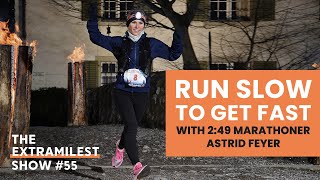
Astrid Freier, a 47-year-old marathoner, ran 2:49 at London by switching to low-heart-rate MAF training. She increased weekly mileage from 100 km to 140-150 km while dropping intensity, recovering from years of knee injuries caused by a no-pain-no-gain approach. She qualified for the World Championships and credits listening to her body over pushing harder.
Chapters
'Look, maybe you should just start cycling or just give up running,' or— and that was the last thing I wanted to hear because in my head I still wanted to be the runner. I still wanted to run. I looked up physios and then I thought, I just want to see if I can get a runner, someone who is running marathons, as a physio. So I found that guy. Then he said, 'Look, if you want to do it, just buy this big yellow book from Film-A-Thon,' because that was what the physio told me as well. He said, just adding these Ks but really run slow, that would make a huge difference. So before that, I was maybe on maximum 100K a week, but then when I started the MAF training, I went up to 140, 150Ks a week. Never I could have run that many kilometers training the way I trained before. Never. I saw that I got faster. So after these 3 months of only the low heart rate training, I think I got about 10 seconds faster per kilometer.
Hello, hello, welcome to another episode of The Extra Mileage Show. My name is Floris Geurman, and on this podcast I interview different guests about ways to become a stronger, healthier, and happier athlete. Today's guest is Astrid Freier. She's a 47-year-old mother of two who currently lives in Australia, and she's also an exceptional marathon runner. She experienced her fair share of injuries and she discovered MAF low heart rate training as a way to ease back into training again and to gradually increase training volume. In 2020, she joined my Personal Best Running coaching program, so it has been really exciting to follow her running journey over the last few years over here. At the recent London Marathon, she ran a 2:49 marathon finishing time, which was a personal best for her, and she was also able to get 3rd place.
3rd in her age category.
So she was actually on the podium right there. Super exciting. In our conversation, she shares her running journey, what it's like as a working busy mother to still get all of her training volume in. And I've really enjoyed this conversation. This episode is brought to you by LMNT, and this is a tasty sugar-free electrolyte drink mix that I take every day. It has 1,000 milligrams of sodium, 200 milligrams of potassium, and 60 milligrams of magnesium. LMNT can help prevent and eliminate headaches, muscle cramp, fatigue, sleeplessness, and other common symptoms of electrolyte deficiency. The drink has been formulated to help anyone with their electrolyte needs, and it's perfectly suited for folks following a ketogenic, low-carb, or paleo diet. Right now, LMNT is offering my listeners a free sample pack with any order. That is 8 single serving size package free with any LMNT order. And this is a great way to try their different flavors. Personally, I really like the orange flavor a lot. Get yours at drinklmnt.com/flow. That link is drinklmnt.com/flow. See also the link in my description. I hope you enjoy my conversation with Astrid Freier.
Excellent. Let's do this. Hello, Astrid. Welcome to the Extra Mile Show. It's very nice to see you here.
Hello, Floris. Thank you for having me. It's an honor to be here.
Yeah. Well, I've, I've been following your running journey for a while now, and I'm really looking forward to this conversation and to, um, yeah, just talking about some of the things you've learned along the way, because you have started running several years ago or many years ago. So maybe we can start there. Like, what is your background? Like a little bit more about yourself, about how you first got into running.
Well, I was, um, brought up in a small village in Switzerland, and in those days running was the only sports available for the girls in my village. So that's where I started running. To begin with, we just run relatively short races of a few kilometers, but as we got older, we were allowed to run longer distance. My family, my parents, they were dairy farmers. So the cows always had to be milked in the morning and in the afternoon. So as a schoolgirl, I couldn't own— I could only participate in races that were held nearby. I couldn't go far away, but I always enjoyed them, the races on the weekends. And then I knew when I turned 18, when I was allowed to have my own car, when I could buy my own car, I bought the car and I drove all over Switzerland to race in other places in Switzerland. And then also every summer holiday, that was my highlight. I drove up to St. Moritz and was training for 2 or 3 weeks in the high altitude training, and I really enjoyed that. And that's where I saw other people running and international people running, and that was always my highlight. Then slowly, say when I was 20 maybe, I graduated from the 10-15 kilometer races up to the half marathon distance. And I liked it. I really liked the long distance. And in 1998, I ran my first marathon. It was actually a friend, a running friend of mine. She was planning to run the Tenerife Marathon. That's in the Italian part of Switzerland. And she told me, oh, Astrid, why don't you join me and we run it together so we can train together? And straight away I said, yeah, why not? That's a good idea. So we had, you know, enough time to train. So once or twice a week I trained with her, the rest I did on myself. And she ran marathons before, so she gave me quite a few hints and explained me a bit. And yeah, then when it got closer to the marathon, she told me, now we need to calculate your time. And I was, oh wow, how do you calculate the time? And she said, that's easy. If you take your last half marathon, then you double the time up and you add 10 minutes. And I was like, all right, let's do that. And so we did. By then I was running about 1:20 and something half marathons.
So you were running really, you were running really fast, like half marathon times already at that time.
It was okay. Yeah. And then yeah, double that time plus 10 minutes. So it got about 2:51. I thought, all right. And at that time we had no GPS watches. It was such a different time because that's now 23 years ago.. And then the course was always marked very well, so every km there was a marker, and then I just had to do the calculation. And thanks God, that was an easy calculation. If you go with the 4-minute pace, you get close to 250, and then you just add 4, 12, 16, 20. I thought, okay, I think so I can do that much math during my race. And, um, oh yeah, and she also told me just be prepared because sometimes you get to a hard point, sometimes you can get really, really tired. And she was talking about hitting that wall, but she said, just take a little chocolate bar in your pocket and in case you start feeling you get tired, eat that chocolate, that gives you sugar and you will be fine again. So I thought, that's a good idea, I will do that. So I bought that little chocolate bar. I guess these days we carry the gel, and then it was that little chocolate bar in the pocket. And, um, yeah, I ran that race and, um, didn't have to eat the chocolate bar and I ran a 2:49. So I was, um, I was very happy with that time and it just seemed like, okay, everything worked out because I was going out for close to 2:50 and yeah, it didn't hit that wall and everything really went well.
What was your age at that time when you ran the 2:49 for your first marathon?
23. So half my age.
So when you, when you were training for before that, were you— because you were talking about altitude earlier as well— were you doing mostly road running or was there also some trail running involved?
No, I, I did a bit of everything. I really enjoyed a bit of everything. I also really enjoyed the mountain races. I always thought that was so, so much fun running from the bottom of a mountain. And then, you know, your, the finish line is actually on top of the mountain and Once you were up there and looking down the valley, just that feeling I got from that, I really enjoyed that as well. Yeah, I did lots of road running as well, and I did cross-country, and I was not very keen on track. Track, I did a few races, but I found that very hard for my— in my head, just to do these 400-meter laps, that was never something I really enjoyed. Yeah.
And it is important to do something that you truly enjoy.
Definitely.
That, that you get.
Yeah, absolutely.
Definitely. So, so how did it go from there? Like you, you ran your first marathon at 2:49 and what was kind of the next step after that?
Yeah. Well, after that I did many mistakes. First of all, after that, I was, I was so motivated and I booked my next holiday, but my next holiday was that was then wintertime, and then I couldn't go to St. Moritz. Well, I didn't want to go to St. Moritz for skiing. I wanted to go to St. Moritz only for running. So I am— I heard from other friends, like, South Africa, that's a great place to go training when it's winter in Switzerland. And then I said, yeah, okay, I go to South Africa. So I booked them a holiday— well, running holiday or running camp in Stellenbosch in South Africa. And that was just 4 or 5 weeks after the Tenerife Marathon, so I didn't recover enough from the marathon and getting already back into a training camp. And I went with another friend. She was a runner as well, but she was not very competitive, but she said, I don't mind, I come with you, but as long as you also do the sightseeing part and we go out as well. And I said, okay, that's a deal. 'You run a little bit with me and I do the sightseeing with you, and you know, that's going to work well.' So off we went, and we were renting an Airbnb house in Stellenbosch with some other people. We didn't know who is going to be there, and then it happened to be that there were Austrian triathletes in the house, and I thought, 'Oh great, so if my friend doesn't want to do all the running, I just join these guys.' And I did. And they always said, yeah, come with us. And I jumped in the pool with them, we went for a run, and, um, I just thought it— I just did too much. I did my stuff I have planned, then I added trainings with these guys, and then I had to do all the sightseeing with my friend because I promised her that as well. And you know, these other triathletes, then they usually, they had a rest during the daytime. They went for a nap or they did stretching sessions, but I had no time for that because then that's the time I went sightseeing and we went out. And so I had like really big days. And then when I got back to Switzerland, my knees started playing up. I could feel like something was not quite right. And yeah, instead of easing off and taking medical advice, I continued to train hard until my knee really gave up. In those days, there was the saying like, no pain, no gain. And I took these literally.
So, so tell me a little bit more about the no pain, no gain. Like, it really sounds like over the years you have made several mistakes in your training and in your racing. Like, can you, can you tell us a little bit more about some of the things you've learned there?
What went wrong? Well, just definitely, I just didn't listen to my body. You know, sometimes you you actually feel that you get a bit tired or maybe you should rest, and I, I just did not listen to that. I just thought, no, no, that the more I train, the, the harder I trained it, the faster I will get. And, um, it just broke me down kind of quite a few times. So I did end up with a, with a few knee operations actually, and after my knee operations I never got back to where I was before. It just stopped me when I was running, let's say, 10-15K, and then my knee started flaring up. And at that time, these doctors, they already told me, look, maybe you should just start cycling or just give up running. And that was the last thing I wanted to hear because in my head I still wanted to be the runner. I still wanted to run. So I always pushed to that limit and always got stopped again with like, yeah, 15, about 15Ks. And then after, I don't know, that's the time also then I moved to Australia. I migrated to Australia, I married my husband here, and we had children. And as soon as I, yeah, had the babies, I also bought a running pram. I thought, oh, I still want to run when I have the babies, so I bought a running pram and I live in South Perth, that's pretty flat near the river, so I was running around the river with the kids and was always able to run about 15Ks. And eventually I went up to a bit higher and I was able to run a half marathon again. But yeah, for me, I say I pushed, but I was not training 7 days a week, but I was always running, say, maybe 4 times a week. So it was still reasonable times I was able to run when I raced, but I was not at the top at all. And then this was actually later in about, yeah, 2019. I saw the kids were a bit older and I thought, oh, maybe it's time now I could, um, join, join a group and do some runs with some other people together. Because until then I did the runs on my own or with the kids in the pram, or then later on the kids were cycling around the river and I was running. And then I thought, I will, I will join a group. So I joined this group called Running Buddies, and they were great. They kept talking about their running experience they had, and they were running overseas and marathons and ultra marathons. And wow, that really touched me again. And I was thinking back on my marathon, on my times, and I was like, oh, I wish I could do more. And then they planned a weekend in Kalgoorlie. Kalgoorlie is a gold mining town about 600 kilometers away from Perth. And they said, we do a, we do a weekend there and there is a race on the Sunday, but we go on Friday and we can do some sightseeing, visit the gold mines, and on Sunday we race. And there was an option of a 10K, of a half marathon, or the marathon. And then I thought, okay, that's great, I will do the half marathon and I will take my son with me so I can show him the, the gold mines. And then, yeah, kept training with these guys, and one Sunday We were training together the long run, and I usually ran then 20-22K, and then I stopped. And the people who were running training for the marathon, they kept going. And that Sunday, I was just like, I really don't want to stop now. I don't really feel like tired, so I just want to see how far I can go. I will see if my knee starts flaring up. I will see if I suddenly get really tired. So I just kept running. And suddenly I ran 34 kilometers with the marathon people.
Wow, that was a big increase.
It was, but I was fine. I was really fine. And then they told me, I'm not sure if they joked or if they were serious, you should change your registration. You should change it to the marathon. And it was 6 weeks before the marathon. And then I was wondering, I'm wondering if I really could run still a marathon, if my knee would hold up and And then I thought, you know what, the only way to find out is to give it a go, to try it out. So the next day I rang the event organizer and I said, look, I would love to change my registration from the half to the marathon, and also with dropping off a bag at the start line, could I drop off my son at the start line and could he be, could he be transported to the finish line as well? And she was laughing on the phone and she said, 'No problem, I'm the event photographer. I will be at the start line anyway, so I take your son as well, and he can be with me on the course taking the pictures, and we will be able to see you a few times on the course, and we will be back at the finish line when the first marathoners is there too.' And I said, 'Great, that's sorted.' That worked out well. That worked out well. So yeah, so off I went with my friends. We had Fantastic weekend. We did some touristy things on Saturday, and then Sunday I went to that race. I was starting to get nervous again, but that's the good nervous feeling you have to have before a race. And then, yeah, off I went, and I ran with a big surprise, a 3:07. And that was, that was all on trail. So that, yeah, that was all on trail. That was a real trail run. And yeah, once I was at that finish line, I was thinking straight away, 3:07 on a trail. I really only started adding the long distance 6 weeks ago. I think I can go to 3 hours.
And so before we go into the 3 hours, I just have to ask you, did you bring the chocolate bar?
No, I brought a gel. That was 20 years after, so I brought a chair.
How things evolve.
There you go. Good question.
Right on. So then the goal became sub-3.
Yeah. Then the goal began sub-3. And then that race was in July and I already knew that for Christmas, I'm going to go and see my family in Switzerland for Christmas, New Year. Then I started looking up. I saw, oh, you never know. Maybe there is a marathon in Switzerland during the time I'm over there. And yes, what happened is there was the Zurich New Year's Marathon.
Oh, perfect.
That was perfect. So I looked into it and starting at midnight, exactly at midnight, and I thought, what a better way to start the new year with, you know, running a marathon. So, and I knew this time I can leave the kids, you know, with my mother or with my brother. That's going to be sorted as well.
That's good. How old, how old were you at that point? For that, for that, um, sub-3 attempt? 44. 44. Okay. So this was 2020 then, is that correct?
Yes. Correct. Yes. Yeah. Correct. Yeah. So then I knew, so, okay, now I have to train more. I really want that sub-3. And then I started training more and, um, my knee was holding up. Uh, it was okay. So I could train more and, um, went to Zurich and run that race in 2:59. So I was again, yes, yes, so happy. But after that, straight away, okay, what's next? Now I would love to run faster. But then straight after the Zurich Marathon, I did another little mistake. I went, um, up— we were still in Switzerland for another 2 weeks So we went up the mountains on a skiing holiday, and again, I didn't give my legs enough time to recover. And then we were like 7 days from the morning, 9 o'clock until 5 o'clock on the ski, skiing. So that was a bit too much again for my legs. I got just a little injury. I had an ITB issues. So after I returned to Australia again, middle of January, I thought, oh, I better go and see a physio to just make sure, you know, we get that again under control. And then I looked up physios, and then I thought, I just want to see if I can get a runner, someone who is running marathons, as a physio. So I found that guy, and I found out that he was actually a sub-2:40 marathoner. And then I thought, great, I will see him. You were in good hands. Yeah. Yes, because the last thing I want to hear someone telling me, oh, you better start cycling and, you know, don't think too much about running. So I went to see him and he was great and he was training Maff. He was training low heart rate training. So he asked me a lot about how I train, so I told him how I train and I told him all my knee history and he then said, look, I tell you now how I train and I think that would be the best option for you. Because that is just so safe and you can get really far. You can still improve a lot. And so I was listening to him and then because he was a sub-2:40 marathoner, I did believe. I think, you know, if maybe someone who ran, I don't know, whatever time, I would not have believed, but I did believe him. So he then saw that I was interested. I was listening to him. And then he said, look, if you want to do it, just buy this big yellow book from Phil Maffetone. And then he told me a few other books, and I said, okay, I will do that. And he said, look, and if you have any questions, just give me a call and, you know, we can catch up. I said, okay, great. Went home, and again, you know, straight away I went on the computer, Googled that big yellow book and ordered that and ordered a few other books and started reading. But I kept Googling, and that's when I actually found, um, found you because you were, you know, having all these podcasts about low heart rate training. And then I also found out about your Personal Best program. That's when I contacted you early 2020. And, um, yeah, then I started my MAF training.
What was that journey like for you coming from a no pain, no gain mentality in training and racing, all of a sudden starting to train with a heart rate monitor? What was, what were those early days training with a heart rate monitor like for you?
Well, the first experience with the chest heart rate monitor was like, I got chafed so badly. I was bleeding and the agony under the shower.
You're bleeding.
Wow. That's, that's rough. I probably attached it too, too hard, too tight. And I really didn't know. So I had to learn my lessons there, but I was able to work that out, you know, and now I put a little bit of tape underneath and I don't have these problems anymore. But yeah, I think I did ask you then, I got in contact with you and you did tell me, um, yeah, do now 2 or 3 months only low heart rate training, just cut out the intensity. At first I was like, oh, do I really have to? Because I am already a sub-3 runner. Do I still need to go back to that? And I think you did tell me, you will be surprised, you can still improve. And so I said, all right, I give it a go. And I did. So the first 3 months I did only low heart rate training. So that was then 140 beats or less. And it wasn't too bad because I was still on a pace of about 5:12 per kilometer. So I, you know, I could still run nicely. So that was not— I did not have to walk, like, you know, so it was okay.
Aerobically, you were already quite well-developed and your training volume had been quite high and that like you were building up. Yes. I was thinking of volume as well. Like what was your training volume like once you started ramping up with the low heart rate training?
Then I went really up. Yeah. Because that was what the physio told me as well. He said, just adding these Ks, but really run slow. That would make a huge difference. So before that, I was maybe on maximum 100 Ks. K a week. But then when I started the MAF training, I went up to 140, 150 Ks a week, and that was okay because when you run it so slow, it's okay.
So, so slow, you mean so low intensity? Because slow is all relative over there. Okay. Yeah, I totally know what you mean. Like, the intensity is much lower than—
yeah, yeah. Never I could have run that many kilometers training the way I trained before. Never.
Yeah. So, so what else did you notice? What were some of the other things that, that were happening throughout those first few months of, uh, low heart rate training?
So in the very beginning I was so excited. So of course I had to do that math test, um, every week, not only every month, every week, but yeah, funnily enough, um, I saw that I got faster. So after these 3 months of only the low heart rate training, I think I got about 10 seconds faster per kilometer. Which I thought, oh, that, that's good, I, I still have improved a lot. And then I used actually a program or looked up on a program you put on. I think I used the sub-3-hour program and took some of these intensity intervals or faster sessions as well. So, and I still improved so slowly, every month or every 2 months I was able to be again a second faster per km. Um, until maybe in 2021. That's also when I run— I run 3 marathons in 2021, and all the 3 marathons were between 2:50:03 and 2:50:55. So all in the same minute.
That was, that was crazy. So tell me a little bit more about how did those races go, because you went from, uh, like just sub-3, or like not just sub-3, but all of a sudden you started racing after an extended block of meth training, then adding in some speed work.
Yeah.
What were those next races like for you on race day? Because I've seen some funny updates that I want to later on talk about as well, but I want to hear your perspective from here.
Yeah. Yeah. So after the SUP 3, the 2:59, I think 6 months later I run my, um, first really road race, marathon road race here in Perth, in Western Australia. And I knew that's a flat one, and so by then my goal was, say, 2:55. And I ran that one in 2:54-something, and it was actually a very windy day, especially the second half. We had very strong winds, which made me really happy because I was able to run a 2:54, and I knew there were really strong winds. So I knew I can go a bit faster if I don't have that wind. And then I kept training that way, lots, you know, lots of, um, lots of kilometres but low intensity and just say maybe 2 faster sessions per week. And then in 2021, had my next marathon road race again, pretty flat as well. That's when I ran my 2:50:03. I think that's When you saw my picture at the finish line, I just, I just have to show this because this is such a funny one.
I'll mention it just for the people actually listening and who can't see this over here, but there was an update from Astrid in the PB Facebook group. All right. A little update. I ran my A goal marathon yesterday in 2:50:03, 10 seconds short from my PB from 23 years ago. Very happy as everything went just so perfect. Thanks Floris for your guidance. Here's a finish photo. Finish. Finish, best feeling ever. And it's basically you and a friend both laying on the floor completely, absolutely exhausted, having given your all. So yeah, how was that race day like for you?
Went really well. I wanted to run 2:50 or just under, and that end was so hard. I remember I had that friend just in front of me and I thought, oh, if I just can get him, maybe I can also get, you know, the sub-2:50. And I tried so hard, I just made it over that line, and then I then I was on the floor, but he, he as well, but I couldn't get him, so he was still in front of me. I think he did the 2:49:59, so, and I had the 2:50:03, but I was very happy. And then I thought, okay, next one. So the next one was again about 6 months later. That was the, the West Australian Marathon Championships in Perth. That was very flat marathon and quite a lot of— well, for a, for Perth, for original one, quite a lot of people. So that was my next goal there, and I was kind of hoping to break the 2:50. Then again, I gave everything up to that finish line, and it was 2:50:05. So again, just a few seconds over.
It was crazy how you were so close to each other.
Yes, yes, yes, so close. And by then I already knew that I would love to run a big major marathon. So I looked into that and I found out that the Abbott Marathons, so they had a championship this year in 2022, the age group world championships, and that was held in London. So I thought, oh, how can I get in there? How do I qualify? So I looked up and there were different ways to qualify for that marathon. But my only way was only running a virtual marathon on that certain weekend they have planned. So that was a weekend all over the world you could apply to run your own race, your virtual marathon. You had to upload it on Strava that they could actually check it was you. But that weekend was only 4 weeks after running the Perth Marathon. I knew it's going to be hard because I do need to recover and but I just thought, if I don't try that, there is no way I can make it to London. So I just give it a go. And again, because they said the 10 fastest women get an invitation, so I knew I'm under pressure. I cannot just jog it, I just need to race it. So I, um, organized that with a friend. He tried also to run the London Marathon, and we run laps around the lake Because this was virtual, right?
This was during COVID and a lot of races were correct. So you had to set it up on your own.
Yeah. So we set it up on our own. We had, you know, water tables and we actually had a few runners. They came and run maybe just 2 laps or 3 laps, but then me and my friend Adam, so we, we run the marathon.
And I remember, I actually remember before you started going into this, because I was looking before this conversation, I was looking through all of our past notes. And there was some communication between you and I even before that, where you were like, ah, the chances are very small of getting in and this and that. And then that we were also saying like, well, if you don't try it, if you don't give it your all, you're never going to know. And so, so how did that race day unfold for you?
Yeah. So yeah, so I took it as a race. I prepared well, prepared well. I didn't do too much between because it was only a 1 month between the first marathon. But say that week before, I just did a few kilometres again in the marathon pace I was aiming for, just to make sure to see are my legs okay, and made sure I was eating again enough carbs the last few days just to fill up these tanks as well. And then just thought, okay, I'm just gonna do it and I just try my best and we will see. So off we went and it went well, it went really well. So I ran 2:50, 55. But when I finished then, I had no idea because that went over the whole weekend all over the world because I did that here in Australia. We were one of the first ones starting, and then I could actually watch the results. So that whole weekend I was on my phone just watching, you know, because I started being first on the leaderboard, but I thought, of course I'm first because I'm probably the first one who started running, you know, and I was so scared, you know, people passing me, and I stayed on top of that list, and Saturday night I was still on top of that list, but then I knew now it's only Europe and then it's going to be the Americans, and kept watching, and yeah, and I stayed on top of that list and I got in, so I was so happy, I couldn't believe it, I was so happy.
I was— I remember the message I received from you that you were going there and you were so, so stoked.
Yeah.
And then, so you basically ran 3 marathons in 1 year in 2:50, and you were still a little bit removed from that sub-2:50 goal, yet you had the big world majors coming up ahead of you. So can you tell us a little bit more? You started changing your approach a bit more towards the London Marathon. So can you tell us a bit more about your training, your, your like leading up to race day? How did that go in preparation for the next marathon?
Yeah, well, definitely I just did feel that I'm stuck now with the 2:50. I— something I need to change, otherwise it's going to be again, you know, something 2:50 and a few seconds. And so I actually contacted, um, a coach here in Perth. He's the director of Frontrunner Sports, and, um, he has a swag of qualifications himself, was a very a good athlete, and he has a very scientific approach to training. So I thought, I will contact him just to see if he can tell me a few tweaks I may, should do. So I contacted him, we had a good chat, and, um, yeah, he took me under his program to, to train. And he knew, and he's also, I think he's also a big believer in that 80/20, you know, lots of slow running, and that suited me well. So mileage, I did not add too much more because I was already on 140-150K and I knew there is a limitation. I'm still, you know, I work, I've got the kids, and, and I cannot do much more than that. But with the intensity, I had to do a few different things. And when I did the speed work, I may have to run it a little bit faster. So in the beginning I thought, oh, I cannot run that fast, but at the end I actually could run them a bit faster. So the fast stuff I had to run a bit faster, but it was still a very small percentage of, of the fast stuff. Still a lot of slow, easy running. And yeah, I had another little injury early year actually. And yeah, I was devastated. I did get told from the doctor, but this time I really saw a very good doctor. He said, you just need to take 6 weeks fully off running. 'And you get a cortisone injection in your knee and you will be fine, but you, you really need to believe me now and don't run for 6 weeks.' So that was very hard because I knew I— that's the time now I would need to build up and train.
And then I said, 'Okay.' And especially going from running 140, 150K a week to zero, that's— that changes your whole routine and rhythm. And you're probably so antsy to go run and you have to hold yourself back and Oh yeah, oh yeah.
I, I did tell him I, I get crazy if I cannot run. And then he told me, all right, you do 3 weeks nothing, and after the 3 weeks you can go in the pool. And you have to put a pool buoy between your legs, not using your legs, because for 6 weeks you are really not allowed to use your legs. So I, every day I then went in the pool, and I got sore shoulders and sore back and from swimming. And, um, yeah, then after 6 weeks I was allowed to, um, go in the gym to do some stuff on the elliptical trainer, and I could also do some aqua jogging, aqua running. And soon after, my coach Raph, he gave me some intervals in the water I could do. So I started training in the water, not something I really enjoyed, but I still had that big goal ahead, London, and I thought I'm gonna do everything you know, to be able to get there and to be able to run well. So I did as much as I could, and then I think about 4 months before London, I could start running properly again. I didn't do any speed, but I could get the mileage slowly up to 100K. And then 3 months before London, I was ready. I got the all clear that I could start adding the speed now and getting mileage also up. So I had a short build of 3 months for the London Marathon, and then, yeah, and then I, I just lost a bit of confidence because of what happened again. And I was like, oh, I just knew I, I don't want to go to London if I cannot run a sub-3. That I had that in my head. But my coach always said, no, you're fine, you're fine, you can do it. And, and he told me, look, if you really want the the sub-2:50, you can do it. And then I thought, oh, I'm gonna do a math test. I haven't done a math test for such a long time, wondering what that, that will tell me. So that was 4 weeks before London. I went out and did the math test again, exactly the same way I've done it before, and it was the fastest math test I ever ran. And that really gave me confidence then. Then I knew, okay, I think I think I'm where I was before. And so it's just a thing of a few seconds or, you know, pushing even more or even a bit harder. So the confidence got back and, um, yeah, I went to London very nervous as usual.
And, uh, yeah. And yeah, I want to hear all about that, but before we do, I think it's fascinating that you ran your fastest MEF test even with that break involved. But I do think it comes to show that The base building doesn't disappear over, over a short period of time. Yes, you're gonna get dinged, but you can bounce back relative quick with the right training approach. And I think that's ex— you being patient and really holding off from running and, and not making the injury worse and allowing the body to recover. Yeah.
Yeah.
And then adding in some speed work once your body could handle it again. Exactly. Versus the other way around. See, exactly. It's, it's a razor fine edge at that point. You don't want to overdo it, but you do want to push it. It's—
yeah, exactly.
So, so before we talk about London, I just want to know, how do you as a busy mom end up finding a way to put in such training volume? Um, because I know you have two young children, you work, and you're still able to run a lot of training. So how do you go about that?
Well, I get up very early in the morning. I get up between 4 and 4:30. Then I have a coffee, then I feed some of my pets, of my animals, and often I do already a little task and then, say, put some washing over or already pre-cook something, or— and then I get out for my run maybe about 5, 5:30, and I always make sure I'm back on time again just before 7 to get the kids out of bed, to prepare them breakfast and bring them to school. So by 7 o'clock I have done already that much. So these 3 hours, getting up at 4 o'clock, these 3 hours, they give me a huge, huge amount of time to do things. And because it's quiet, no one is around, and you do double the amount.
You're such a morning bird, like that.
I know, but then don't talk to me after 8 o'clock at nighttime.
Yeah, so what time do you you go to bed, how much do you sleep?
Yeah. So I go to bed usually before my kids actually go to bed. So if it will be my choice, I would go to bed at 7 o'clock, but that can't happen because of, you know, kids and family and stuff. But I'm in bed by 8 o'clock. I, I do need my 8 hours sleep. Yeah. Yeah.
It's good to, it's good to hear you and I are on the same page there. Like I, I really often go to bed with my kids at 8, 8:30. Yeah, but then naturally the body wakes up 4:30, 5 o'clock, it's just ready to go at that point. And then you have a few hours before the kids are awake, which is very nice too.
Yeah, yeah. And then of course with that amount of running, I do have double sessions. So these double sessions I, um, do when the kids have after-school sports, because now they're a bit older, I don't really have to watch them when they play their sports. Say, as an example, my younger one, he has wrestling training on Monday and Friday nights. So I take my running shoes with me, bring it to the training, and during his training, I go for a jog. And, and similar again, say if they have a cricket game or soccer game, and I go with them, bring them, them, and they take my running gear with me, or just my shoes and I maybe do just some strength training or stretching session. Or that second session is always only low intensity, very easy. Yeah, but it's still an important session, I think. And it seems like I don't lose any time. It's just instead of waiting on my kids, I can actually use that time up and do something.
You're definitely efficient with your time management over there.
Yeah, yeah, yeah. That's good.
And then going into London, like, how did that go? Like, how many days in advance did you fly there? You obviously had a time difference with Australia. Like, lead us to those, those days leading up to the big London Marathon for you and, and how everything unfolded from evening dinner, morning, like, to, to the actual race.
Yeah. Yeah. So I am, I flew to Switzerland. I went to see my family. So I went 2 weeks prior to the London Marathon, which was great. I went with my kids and saw my family, and so I was into Europe time, um, well enough for when I was running the London Marathon. And again, I left my kids with my brother in Switzerland. And yeah, then I went to London on Thursday before the race, and I had an Airbnb very close to the start line. I like the idea of being able just to walk to the start line, taking that pressure off of getting onto public transport, so that was very easy. I was about 500 meters from the start line away. That was great.
That's a nice setup.
Yeah, it was fantastic. And yeah, I did my carb loading and I was ready to go. And again, you know, you never know running a race, running the marathon, until, until the gun goes off, until you run these first few k's. How your body really gonna feel. Because I knew I have to run 4-minute pace and it just needs to feel easy, because if it doesn't feel easy in the first few k's, then I have to change my plan, then it's not my day, then it just won't work. So I was really hoping that that pace would feel good, and luckily it did. So I went off, I was feeling great, and, um, yeah. Usual stuff, only about after 30, 32K, I felt like I had to work much harder to hold that same pace.
And you tried to pace it evenly throughout the race?
Was that the plan? Yeah. Yeah.
Yeah. So what finish time were you aiming for?
About 2:49. Yeah, about 2:49, something like that.
Right on. And then the 30K mark came around. 32K and it started getting more challenging. How did you get through that mentally?
Yeah. And then I, um, saw, oh, I still had my gel in my hand. I always have to remind me to take the gels. I'm not very good in taking them in, but I saw I hold it in my hand. So I hopefully see it. And then I was getting, then I was starting to breathe hard and then it's even harder to take a gel in if you are breathing hard. And I tried to swallow half of that coffee gel at kilometer 30, but oh, that was hard. And then it only got harder from then on. It only got harder. And the last 5Ks, I had to dig really, really deep. And I remember when I saw the finish line, I just looked on my watch and then I already saw 2:49, and I wasn't able anymore to make the calculation. How far is that? How long will that take me? I was like, ah, panic. And then I was like, I just have to sprint now. But of course I couldn't sprint anymore at that time. I just gave everything I could. And, um, yeah, I made it over that finish line.
What, what happened after the finish line?
Not too sure, because next time when I opened my eyes, I was in an emergency tent.
You really push hard.
I had to, to achieve my goal. Yeah, so I definitely got out of breath and they carried me away and then I was in that emergency tent. They gave me some oxygen and took a while, but then slowly I got better. And yeah, I still remember they told me to eat these jelly beans and I was just like spitting them out. I just couldn't have the thought of a jelly bean after eating that chill. I had to eat before. I was like, oh, just nothing sweet now. And yeah, and then actually, then they, um, they asked me my name and I remembered my name, so they looked me up and then they said, oh, you got third in your category. And I was like, ah, and yeah, I was very happy. And I saw that my time, and then I realized it is actually a PB, not by much, just by 12 seconds. But yeah, that cool to know that double age and I was able to get that PB.
So what was that? What was the final finishing time here? 2:49:24.
Incredible.
Third place and a 12-second PB. Well, you really, you really gave it your absolute everything on race day to make that happen. Yeah. And then the award ceremony started. Tell us more, because you got to meet one of your heroes there that day.
Yeah, that's right, that's right. Um, yeah, I got invited to the Abbot presentation, and then they had Eliud Kipchoge who came, and he was presenting us the trophies. So I was able to get up on stage, and he came to me and gave me the trophy, and I was even able to have a small chat with him and, oh, he's such a humble person. It was just such a thrill, such a thrill night. I had the best night ever. Yeah, it was really good.
That is incredible. Yeah, I loved seeing— at one point you posted in the Facebook group for an update and it was 3 things accomplished, like a goal of like running sub-2:50, and then it was like, uh, winning or like third, third place podium, and then like meeting your hero Elliot Kipchoge and taking a photo with him.
And that was— yeah, that's right.
That was so awesome to see everything falling into place.
Yeah.
Yeah. What an experience. And then I think you got to meet some other podcast guests over there as well. I think you met Jonathan Walton too at some point, right?
Yeah. I saw him at the start. At the start, we were all— everyone who ran the Abbott, or I think he was actually running the UK Championships, I think. And so we were in the same start area, so I straight away recognized him. So I went to him and, um, yeah, said hello to, hello to him. And it was nice having a small chat with him as well. And yeah, that was really cool.
That's, that's awesome. What an, what an incredible runner he is as well. Following his running journey over the years, he just keeps improving.
Yeah. And I think only I can't remember, was it like 2 weeks after he ran again a marathon? Oh my God. How does he do that? And he's even older than me.
Yeah. Like he's, he's running, running out there and he's, he's definitely putting in his low intensity, high volume mileage as well, which is interesting to follow. So, um, you've definitely learned a lot over, over the many years of of your training and definitely try the different training approaches as well and different race day executions and whatnot. Um, like on this podcast, we have quite a few different listeners, recreational runners, non-elites that are looking to improve in their running. So I'm just curious, do you have any advice for runners looking to become stronger, healthier, and happier athletes?
Yeah. Well, say if you wanna run a marathon, only run something like that if you really like running and if you are prepared to put the time I mean, find some like-minded running buddies to spur you on. I'm sure that, that will help a lot. Try to incorporate fitness training into your everyday activities and listen to and respect your body. I think that's very important. But most of all, have fun, enjoy the experience of running.
Yeah, definitely. And what are you, what are you looking for right now? Because you've, you've obviously You've now run this goal, which is a big goal on your, on your plate. Um, I heard some chit-chat about New York and now tell us more about that.
Yeah, that's correct. So I'm still waiting on the, on the email, the confirmation email, but one month after, um, London, I was running the New York Virtual Marathon, which was a qualification to get into the real New York for next year. But this time, that only had to be just, just, um, run the 42 kilometers. Time was not important. So I did that again one month after, but I really only jogged it. And I think I should be fine now to get the entry for next year's New York Marathon. So that's, that's my, my big goal. I know that at my age of 47 and with my history of knee problems, my time as a good runner may be very limited, So I aim to do whatever I can to run in a few of these world major marathons while I still can. I do not want to die wondering whether I could have done it and what I may have been able to achieve. I just want to give it a crack and see how far I get.
Yeah. Well, there's plenty of other world majors for you as well. And it doesn't always have to be aiming for the fastest time either. The good thing is at some point you're going to go up an age bracket too. Which, which will change all the dynamics again. Yeah, correct. I know Perth has got some, or like the, the area in Australia that you live in has some nice trail areas and stuff to run as well. So there might be some other trail opportunities too at some point.
Yeah, correct, correct. Yeah, then definitely much more to do.
Absolutely, absolutely. I have, um, two more last questions because I do think this is kind of interesting for For runners who have dealt with some running injuries in their journey, like, has there been anything that has helped for you as far as for strength or mobility? I know, like, when you experienced the knee pain, you actually really took a break for like 6 weeks, but throughout the process you talked about some aqua jogging or anything, but have there been anything else that has helped for you injury-wise?
Yeah, definitely strength training. I think that sometimes we often don't put enough time into that, and still something I, I'm learning to make sure I actually put that in my weekly program, that I take the time and I do strength training. Doesn't necessarily need to be in a gym. I mean, there is a lot you can actually do at home, a lot of exercises you don't even need any equipment, you can just do with your body weight. And then that's something I, I try to do now at least 2 times a week, and I think that's that does help my knees, my legs, and overall I think that makes you stronger. And I think doing a bit of other sports is good too, not only concentrating on running, running, but again, with the high mileage I run, sometimes it is hard to do something else, something different. In my case, I try to play some tennis with the kids, or we go for a swim, or we go for a cycle. But that's very low intensity, and, but I think it's good using some different muscles, some different part of your, of your body. So it's good if you can, if you have the time to do a bit of different sports as well.
Yeah, absolutely. It's nice mixing it up that way sometimes. Yeah, similar things too, like whether it's tennis or pickleball or swimming with the kids or, yeah, like cycling. Yeah, yeah, it's a nice way of mixing things up.
Exactly.
And what about, um, nutrition? That is one other part we haven't really touched on, but is there anything nutrition-wise, like when you're running such high training volume, like are you eating constantly throughout the day? Are you just eating bigger portions? Is that what, what has worked well for you throughout like these different training cycles?
Yeah, I definitely eat a lot. I'm hungry a lot and I, um, don't only eat like 3 meals a day. I snack in between as well. I try to eat healthy, and most of my meals I cook myself from scratch. I also have a garden, vegetables and herbs. I like to bake my own bread, so I like the healthy way. But I must say, I eat quite a lot of carbs. I think that's what I, what I need, what I use to, to, to run.
Yeah, and your body responds well too. That's good. Yeah. Astrid, thank you so much. I really hope that our paths cross in person sooner than later. Like, I'm actually thinking about going to the New York Marathon next year, so that would be really nice.
Then we have to catch up.
Yeah, for sure. So that would be a fun one. Yeah, uh, I'm trying to go either to Berlin or London next year as well, and Tokyo is on the list. So, so one of these days our paths are going to cross somewhere.
We will meet. Yeah, we will meet. Yeah.
Thank you so much for sharing your story. And I'm looking forward to following the rest of your running journey here.
Likewise. Thank you so much, Floris. And thank you for your help. You played a big part in my running journey as well.
Thank you so much. Absolutely. This is just the beginning. Keep going after these.
That's right.
All right. Have a good one.
Thanks a lot. You too. Bye, Floris. Thank you.
Thank you for listening. What was your favorite quote, lesson, or takeaway from this episode? Please let me know in the comments. Also, LMNT is offering my listeners a free sample pack with any order of their electrolyte drink mix that I've been drinking for several years now. That is 8 single serving packets free with any LMNT order. This is a great way to try all 8 flavors. Get yours at drinklmnt.com/flow, and this deal is only available through my link, and the link is drinklmnt.com/flow. See also the link in my description. Thank you for listening and have fun out there on your runs.
Bye now!
More from Floris


Ryan Hall 2.0 on Strength Training For Runners, Lifting Heavy & Trail Running




You’re Doing Zone 2 Wrong (Even If You Think You’re Not) | Scott Johnston Round 2


How to Build an Unstoppable Aerobic Engine (Even If Starting From Zero) | Scott Johnston


Stress Is Killing Your Running (The Relax Fix You’re Missing) with Dr Kasim Al-Mashat

When things get hard, say this, it (works in any race) #jeffpelletier #running #ultrarunning