Running Tips For Older Runners: Run Injury-Free, Stronger and Faster with Jennifer Kellett
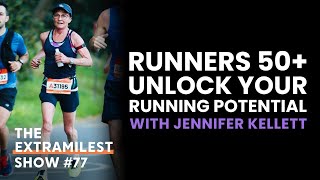
Jennifer Kellett set Australian age-group records in the half-marathon and marathon after starting serious running in her 60s. She trains 100 km a week using low-heart-rate methods, emphasizes recovery through sauna and swimming, and treats age as irrelevant to performance.
Chapters
Consistency is probably the biggest thing, but having said that, flexibility is also important. If you wake up and you don't feel great, if you have had a bad night's sleep, you don't have to stick to that schedule. You don't have to stick to what you were going to do that day. Your heart doesn't and your brain doesn't recognise where the stress is coming from. It just accumulates. You could have stress from family life, work life, physical stress from maybe trying to do too much. Our biggest limit is ourself. Age is not the real barrier that a lot of us I think it is.
Welcome to another episode of the Extramile Show. My name is Floris Geerman and we are already on episode number 77. Today's guest is Jennifer Kellett from Australia. She's a member of our Personal Best Running Coaching Program and she's a huge inspiration to me in a variety of different ways. She absolutely crushed the age group divisions. For example, she ran a half marathon in 1:37:31 and she broke the Australian 65-69 age category. Record, and it was only 2 seconds off from the world record at the time. In this conversation, we talk about her experiences with low heart rate training, how she is able to recover so quickly in between workouts, and also advice that she has for different people looking to improve in their training and racing journey. She also really wants to emphasize the importance of mindset and how we approach things when we want to go after big scary goals. If you would like to learn more about our running coaching program, the PB program, check out pbprogram.com. Those are the letters pbprogram.com. I want to run like Jennifer when I'm 68 years old, and I think you can understand why after this conversation. This episode was brought to you by LMNT, which is a delicious electrolyte drink mix that I drink daily. It contains a science-backed electrolyte ratio of 1,000 milligrams of sodium, 200 milligrams of potassium, and 60 milligrams of magnesium. Electrolytes really facilitate hundreds of different functions in the body, including hormonal regulation, fluid balance, nutrient absorption, and the conduction of nerve impulses. Element is used by everyone from the NBA, the NFL, Olympic athletes, Navy SEALs, to everyday moms and dads and exercise enthusiasts. Right now, Element is offering my listeners a free sample pack with any order. That is 8 single serving packets free with any Element order. This is a great way to try all 8 flavors or to share Element with a salty friend. Get yours at drinklmnt.com/flow. That is drinklmnt.com/flow. I hope you enjoy my episode with Jennifer Kellett. Jennifer, good morning. How are you doing?
Good morning. I'm very well, thank you.
Good. Did you get your morning run in today yet?
I did. I did. Yes. I normally do a park run on Saturday morning, but I didn't do that today.
There you go. Where are you located exactly?
Right now I'm in my office upstairs in our distillery, which is probably a bit embarrassing being a runner and being a distiller. But, um, yeah, so I was in a nice quiet space. So I'm in a little place called Wee Jasper, which is about an hour and 20 minutes out of, um, Canberra.
And this is, this is in Australia, correct?
Oh, sorry, yes, in Australia.
Yeah, there you go. Good. I, I've been following your running journey for a while. Now, and I'm often amazed by the, the positive updates that are coming through in the Facebook groups, both the Extra Mile Facebook group and the Personal Best Facebook group. And it's always like you're out there running a lot, improving a lot, and, and just having a lot of fun in the process. And the part that I found interesting, that some of the running also didn't start until later in life. So there's a lot that we're gonna uncover in this conversation, but I think it might be good like to just kind of talk through some of the basics over here because I want talk for a little bit more about running smarter and not harder, because this is one of your key aspects in your training that you have talked about too.
Yeah.
So can you, can you talk about a few different examples of how you applied some of that philosophy in your own training and racing?
Yeah, well, I didn't always run smarter, so, um, I actually did, I did do some running in my 30s. I actually did some triathlons in my 30s. My, when my daughter started swimming, I started swimming so I didn't have to sit on the sideline. So I'd, you know, get in the pool when she was getting in the pool. And I had been a reasonable swimmer as a youngster, so I picked up swimming quite, quite well. And then someone said, why don't you do triathlon? So I started doing some triathlons and I was a reasonably good swimmer and I was a reasonably good cyclist, but I was a hopeless runner. I remember one triathlon I went in, it was two waves. One was under 30. One was over 30, and I was first out of the water in the over 30s, and I lost one place in the cycling. And then in the run, boom, boom, boom, everyone just passed me in the run. And I just thought, I'm not cut out for running. And, and as it turns out, to be a good triathlete, you have to be a pretty good runner. That's just, that's the really strong leg that you have to be good at. So anyway, I thought, no, I'm not, I'm not cut out for this. Um, and then for— I actually gave up running when I was about 40. I gave up triathlons when I was about 40, and and, um, just sort of walk the dog, little bit of jogging, nothing much. Then when I got older, it was actually my sister-in-law decided that she was going to do this run in Melbourne called the Arthur C Challenge, which was almost 7K from Rosebud Ramp, uh, right up to a mountain.
That sounds like an awesome route.
It, it was. Um, but, and I said to her, I'll be, I'll be your, uh, cheer squad. So, you know, I went, I went, I was actually visiting my mum. My mum was very sick. And I used to visit her very regularly in Melbourne, so I'd go down and stay with her. Anyway, on the way home I thought, gee, maybe I should think about doing it with her. So I did. I got off the phone and said, Sarah, I'm going to do this run with you. So I got out, got off the plane, changed, went for my first jog run, and then I did it. It was a few months later and I did it and I came third. Now when I, when I say I came third, people that the first two, the girl that came first and second were way ahead. I came third, but they were way ahead. I don't know, something happened. I thought, oh, I actually quite enjoyed this and quite enjoyed the training. Someone said to me, oh, why don't you start doing parkrun? So I started doing parkrun and, and then one of my, I, I had my physiotherapy practice at the time. One of my junior physios, new graduates. Her mum was a very good runner, Maria, and she introduced me to her mum and her mum was quite a good runner. She was my— the same— she's the same age as me and she came third in the— when she turned 60 in the Paris Marathon. So to me, she was a really great runner. And so she— so I met Maria and then Maria introduced me to a group called the Wednesday Westers, who I still run with. At that time, my mindset was You know, try to, to be a fast runner, you have to run fast. And that also stemmed back from my exercise physiology days when I did my Bachelor of Human Movement Studies. Per-Olof Astrand was one of the exercise physiologists that, you know, we had this little book that we read.
Yeah, yeah, yeah.
And he talked about the SAID principles, specific adaptation to imposed demand. All through my physio career, you know, I always thought, you know, to be good at something, you have to practice being good at that. If you tried to train your biceps and you trained out here, it wouldn't make you strong in here. So I really followed that specific, specific adaptation to imposed demand, and that followed through to thinking I have to run fast if I'm going to be a fast runner. And big, big, big mistake. So I remember the first time I ran with Wednesday Westers, I did a PB for my 10K.
Wow.
And, um, that was crazy. After a while, I realized that this I was starting to get lots of injuries, like a lot of people, you know. I would get injury after injury.
And so where was that pivot moment for you to start going from that training approach to like a different training approach?
So it was about 2 years ago. I realized that I needed to strengthen more. I realized there was something wrong with the way I was training, that— and also I plateaued, you know. I did get— I did improve, and I did really, you know, quite well for someone who started running that late. And then I just realized that I had to do something. So I started researching and I came across the TED Talk by Steven Seiler.
That is such a good TED Talk. Yes, I love that one. Yeah, and I will make sure to link to that as well. Like, we had, we had Dr. Steven Seiler on the Extra Mileage Show too, and he shared several insights. But that was such a fantastic, highly recommended TED Talk.
Well, it basically changed my running life. I It just made so much sense. And then I researched everything on Google about Steven Seiler and looked up every single interview that he ever did. I think I know some of them off by heart. And that's how I found you. And then I had been sort of dabbling in Facebook groups like over 60s, over 50s, and a lot of them were a bit disheartening because a lot of people would talk about, you know, I'm 60, what do you expect at my age? And a lot of negative feelings about running and what what your expectations should be. But when I started listening to your Extra Mile List, and then since then, the Personal Best Program, everything's positive. And, you know, I just find that such a really nice atmosphere. And I don't think so much about age anymore. I just— Kipchoge used to say, or still says, you know, no limits. And of course there are limits, but our biggest limit is ourself. You know, we, you know, to say, look, what do you expect? I'm 68. I'm not going to get much better than this. When I did start improving, you know, when I was in my early 60s, people would say, oh, you'll probably improve for about 6 years and then you'll plateau and that's it. But there was no research to show that. And then I also realized there was not much research in older athletes either. There's really only been some research coming out now. So age is not, you know, the real barrier that a lot of us think it is. And so I try not to think so much about age. And then I, um, I also discovered athletes like Jeannie Rice. You've probably heard of Jeannie Rice.
Oh, absolutely.
Instead of being intimidated by these people, I just keep thinking they're amazing. Like they haven't been limited by their age or, you know, what people say, you know, you shouldn't be running that far when you're that old or whatever. So those people really inspire me.
Unbelievable. The power of the mind. It is. And when we get an understanding that our thoughts create our beliefs and our beliefs create our reality, that, that is everything. Once we can get our mindset in the right place, like, then, then everything is possible.
Yeah.
I mean, to, to certain extents.
Yeah.
I mean, the most, the most, the biggest part in life is that people just undershoot what is possible and underthink that they're able to do it.
Yeah. Yeah.
And, and I think you're a perfect example of that. Like, just seeing how you're like, like running so strong and like just going on, like even right now going after different records and just having so much fun in the process. So I just want to go back for one second though here is how was that transition for you from a higher intensity training approach to like slowing down quite a bit in your training?
So I had to do a lot more running on my own. Fortunately, one of my running buddies, in fact, she was probably one of my first inspirations. Claire, when I did my first half marathon, she won the marathon in half marathon in a time of 1:44. I think I was 61 or something. And she, she's just, we're almost exactly the same age. And she did it in 1:44 and I did it in 1:58, which, which when I look back was not bad for my first half marathon.
Oh, absolutely.
And, um, went almost 1:59, just under 1:59. And anyway, I looked at Claire and I just thought, oh, I really want to be like her. She's so modest and she's totally unlike me. She's modest. When I do something, well, I tell everybody. She does. She's really quiet. I have to tell everyone about her.
You are modest in your approach. You're very humble like that.
It's really just that I shock myself so much, you know, the life. But yeah, anyway, Claire's very modest. But so it's good that she actually runs by feel and has always run by feel. Started doing a lot more running with her. I can't even remember how we got together. It was before the Tokyo Marathon 2020, which got cancelled. But she runs, you know, she just runs by feel. So most of the time it was good just to run with her twice a week. But even then I noticed my heart rate was often quite high. So then I started doing a lot more running on my own and much slower, 8.5-minute kilometre pace, you know, to stay under 1:40 even. And The transition's been quite gradual. I haven't been, I haven't been rigid as in the MAF formula. I've never even done a MAF test.
Let's talk through that for a little bit.
I think I've tended to use the guard— what Stephen Seiler refers to as the guardrails, the 80/20 approach. I think my, my approach is more 90/10, but having those guardrails and not having a strict regime or regimen to follow, but stay within those guardrails. Um, has really helped me.
So are you at this point running more by feel, or are you using a heart rate monitor?
I, I do use a heart rate monitor, but mostly by feel. And, um, and I agree with Stephen Seiler with breathing is, is the truth teller. When I run now, if I cannot, cannot hear myself breathing, I do not feel any effort in the run. I know I'm in the easy zone, and most times these days that's zone 1. You know, very— I may creep up into low zone 2, but most of my easy runs are zone 1, low zone 2. I hardly ever get up to the high zone.
And here's an interesting one though, because you're 68 years old and your max heart rate is 190.
Yeah, well, that 190, it's probably about 182 now. That, that's, that's the highest it's been this year. Uh, last year it was 190, and that was a really hot long run. So the highest I've been is this year is 182.
Yeah, but, but still, like, if you would— this is, this is why I think the math formula is nice as a ballpark number, and it works reasonably well for most people. But you're a perfect example where 180 minus 68, 112, like running in— and then yes, that's the adjustments of age, plus 5, plus 10, but still That would be way different when you're with the age component, but also with the max heart rate component. Max heart rate of 182 at age 68 is definitely higher than most people your age. And so further personalization is needed. And this is where the talk test is a good input. Like you can do like the, the lactate threshold tests on like a lab test.
I had that lab test and he said that my LT1 is very high, 80% of my, my heart rate max. And he actually said to me, you, you should be able to run marathon mainly in zone 2. And when I went back and had a look at my Tokyo marathon, it was mostly in zone 2. And at the heart rate, even though it's like this, but it's, uh, I think I peaked early when I was very nervous and then there was no heart rate drift at the end. Um, it was pretty constant and I think it was 83%. Was in zone 2.
What advice do you have to people starting out with low heart rate training?
Just be patient and not expect to change immediately. Like, it really probably took 6 months for me to see regularly my heart rate coming down to much lower levels, and then probably another 6 months until now. You know, if I'm, if I'm over 123 beats per minute, you know, I sort of feel very comfortable there. And I may, I may— the other thing I like about Stephen Silos is, you know, he doesn't have a set heart rate. He doesn't say, you know, you have to be within this heart rate and this heart rate. It's fine for you to be a few beats over or under on either side. Your heart's not gonna, um, or your brain's not gonna notice that much difference. But I just know that most of my running feels very comfortable about 123 beats per minute. If I go up a hill, it might get to 129. And then it's only until I start doing a bit of interval training or parkrun. Um, parkrun is part of my, um, the higher end training, uh, that I'll even approach zone 3.
There you go. And the good part is that you can run quite high training volume with the low intensity that you're doing, right? So what, what volume are you at right now?
And during like peaks of training weeks for you, it's roughly about 100K a week. Yeah.
So about 62 miles. Yeah.
Yeah.
Yeah.
Yeah.
There you go. So you live in Australia and I know from certain other members like, who live in the Australia area, that sometimes it can get quite hot, as in, like, especially during— yeah, exactly. So how do you deal with running in the heat? Like, when you're training in some of these summer months, you still want to get your, like, your training runs in. How do you go about that?
I have to go earlier. Yeah, basically just try and run a lot earlier. I've got a 50K road race coming up. I've got a 50K mountain race. This Next weekend, and then 2 weeks later, a 50K road race. The mountain race is training, but they'll both be in the heat. So I do have to get used to running in the heat a little bit. So I have been running a little bit later in the day just to get used to that. But I have a sauna several times a week, and I think that just helps, allows your body to adapt to that increased heat. Yeah, it's just, it's just practice training in the heat. But, but if I do wanna do long mileage and I'm not training for anything in particular, then it will be much earlier in the morning. Wednesday West runs are always at 6 o'clock, or not always, sometimes at 7 if you wanna do a shorter run. But if you wanna do a long run, they start at 6 and then we meet up with other people at 7.
I think you touch on something really good, like the, the sauna, the sauna training one. I think it's very valuable for like not just hot races, but even when a race is cooler, like just you being able to thermoregulate your body well. Such an important one over there and beneficial in a variety of different ways. So yeah, that's a good one. One part that I've noticed is like you have done certain races and then like you've done a certain marathon and then the next day you were still able to race like a half marathon. Right now you're talking about I'm going to run a half marathon. Oh, sorry, half marathon and then marathon. But now even you're talking about I'm going to run a 50K, 2 weeks later I'm going to run another 50K. What is your recovery strategy over here? Tell us, tell us the secret, because that, that, that is a quick recovery to be able to pull that off and not, not get injured or overtrained. Yeah.
Um, I, I didn't tell very many people I was, that I was going to do the half marathon and then the marathon the next day. I actually decided that one month before because I, Claire and I, my running buddy, decided that we were going to do Comrades next year. And as part of the training, I've been researching the training, you have to do some back-to-back runs. So I thought Well, it's about a year from then. I should start this back-to-back training. And so I decided that I was going to do the half marathon and make that my A race, and then just do the marathon as a training, you know, just think of it as a training run, not expecting anything out of it. In fact, I said to Claire, I think I'll probably, you know, do 4:30 or something like that. And after the half marathon, I got in the pool. It was a cool pool and I just swam breaststroke a few laps and then, um, got in the spa, got in the pool, got in the spa, hot spa. So I did that about 5 times and then did that again in the evening. Woke up the next day, ran on the spot, went, oh yeah, I don't feel too bad. So I just, I had no expectations for the next day and started off and I just, you know, looked at my pace and I'm like, right, just don't go any faster than that. Every now and again I'd look and go, I was under 5-minute kilometre pace. I was, oh, slow down, slow down. 'Cause I just didn't wanna die somewhere. Um, yeah, quite, quite fair enough. I felt quite good right to the end and got the age Australian single age record for the, for the marathon in 39:05 or something, 3:39:05. Won. So I won that race and I won the one before. I actually broke my own record for the half marathon and broke the Australian half marathon record. That has— that world record has just been demolished with Rosa someone or other from Portugal. She's just done the half marathon in October in 1:25-something. Wow.
And, and at what, what age category was this?
65 to 69 age group. She was a previous— she was a marathon— she was an Olympic marathon runner. I think she— I think she might have even won the Olympic marathon in 1988. I'm not sure. Rosarito Mata, I think her name is. But, um, I mean, when I looked at that, I was like, wow, again, you know, like, it's possible. Like, she's got a big running background. I'll probably never achieve that. But, you know, it's, it's—
well, and you often also see though that people who have ran at a very high competitive level in their 20s or 30s, that they don't run healthy and well in their 40s, 50s, and 60s. You see a lot of people that are simply not able to maintain that. Yeah. Yet you have other people who sometimes start a little bit later. Yeah. Who do have many years of healthy running. Yeah.
Jeannie Rice started when she was 40. It's a funny story because she— I looked up everything about Jeannie. In fact, I met her after the Tokyo Marathon, which I didn't realize I'd won, um, in my age group, but she still beat me. She was 75 at the time. I think she beat me by a minute, but I I was so excited to meet Jeannie. I called out and I had no shame whatsoever and had photos taken with her. And yeah, she's just amazing. But she started when she was 40. She went to Korea, back to Korea where her family come from, and I think it might have been for her 40th and packed on all this weight and then went home and thought, got to do something. And so she started running and look at her, 76, and she's running 3:30 pace marathons. She's amazing. Isn't it incredible?
I love those parts, though, that age is just a number and you could pick it up at any time. Even if that means in your 20s or 30s or 40s, you are not a runner, and in your 50s or 60s or 70s, you get inspired. And that doesn't only apply to running. I think it applies to other areas as well. Yeah, it does. Just having an open mind, having a beginner's mind, not being afraid to—
That's one of the things Kipchoge always says, be curious. Just go out there and see what you can do. Yeah.
And not comparing ourselves to other people, like just being on our own journey over there. And it can be humbling at the beginning, especially when you're new to something like that. Yeah.
I used to always chase the squirrel. In Australia, we'd call chase the rabbit because we don't have squirrels. Yeah, I thought that was quite funny the way Stephen Siler described that, you know, you've got to learn to let your ego go and not chase the squirrel. But, you know, I remember, you know, my early 60s, I would always chase a squirrel. Someone passed me, I'd think, I can pass you. But now these days, I have no ego when I'm training. And even when I go out with like the Wednesday Westers, or even on a day I don't feel great, I'll just back off. The other thing, watching my heart rate, I remember One Wednesday West running morning, I started my warmup run and my heart rate went up to 163. I thought, oh, something's not right here. In the old days, I wouldn't have even noticed, looked, would've just kept running and not sure what would've happened. But, um, I knew something was wrong. So then I just decided to walk and even walking, my heart rate was, you know, getting up. So I was walking slowly in the freezing cold. Then I, and I couldn't work out why, why, what's going on? And then I realized I'd had my last COVID shot the day before. Of course, you know, that was— and then I looked it up and they said, yes, your heart rate increased with COVID and with other vaccinations as well. So, uh, it just makes— I'm able to respond more, um, to how I feel and to be observant about my heart rate and know when something's not quite right.
And that's what— that's what I think is one of the other things I like about this training approach a lot, of not just looking at the running component, but all of these other areas in your life. And you do become a little bit more in tune of your body. You do start to notice things, whether that's your breathing pattern that you're keeping an eye on, or your resting heart rate, or your running heart rate. And I think a lot of people are running and not being that present, that well connected to their inner self. And I feel the more that we are doing this, like, I've been running at a low heart rate mostly for 10, 12 years now, and I'm still, like, observing certain things in the body, and I'm still discovering things about just the movement. And yeah, the more we run, the more we get in tune with our body. But we do have to pay attention to that. There's a lot of people who don't pay attention to it either. And I think even running with music or with listening to a lot of, like, whatever, podcasts or other things versus running sometimes just without any earpieces in and just running to run. Yep.
Yeah.
Yeah.
It's, we're out at We Jasper, our rural property out here. It's just so beautiful. I think last week on Zoom, you heard the birds in the background. Totally.
That was so fun.
And it's just like that. It's just, you know, and the kangaroos across the road and the sheep will stand there and look at you, you know, you think you're going to pass and then suddenly they take off. It's just being, you know, at one with nature out here. It's just You know, it's really lovely. And, um, yeah, I, I love, I, I certainly don't listen to music when I'm, when I'm out here. There's just music going on all around. And, and also you do need to be alert cuz there are snakes. And, um, and also suddenly you hear a car, you know, and then they're usually speeding cuz it's, uh, you know, on a, on an outback road and lots of people, you know, don't worry about speed limits. So you have to be mindful about that sort of thing.
To, yeah, you guys surely have some wildlife in Australia and I can imagine that you gotta keep your eye out for, uh, for some of that for sure. Yeah.
No, no vicious bears or anything like that though. Snakes, snakes are usually more afraid of us than we are of them. So they usually react to the vibration of your feet. So they usually get out of your way pretty quickly. Yeah. We, we've got a big snake season this year.
There you go. There you go. So last time I was in Chicago. You were in Chicago for the marathon. Yep. And, and I wanna, I wanna just talk through for a little bit because this is, this is one of those things. And the main reason I wanna bring this up is that we all have certain plans and it doesn't always go according to plan. Can you maybe just describe what your intention was for the Chicago Marathon 2023 and, and just how, like, what ended up happening and what were some of your learnings from that?
As you know, I got there, had a great few days, 5 days, was feeling quite good, feeling optimistic, really thought I could do a sub-3:30. On the Friday, I'm pretty sure it was the rice. I bought some rice that was at the bottom of a big container in one of the supermarkets over there. And I thought to myself at the time, I should wait for a fresh lot, but I didn't. I scraped the barrel with a few others, so I wasn't the only one. And then Saturday, Saturday I did the 5K run, the Chicago 5K run, and through it, every now and again I got this real wave of nausea, uh, and thought, this is not good. Um, and then in the afternoon I was going to meet you, and I was starting to feel a bit, little bit sicker, and little bit of diarrhea. I did manage to come and meet you, thank goodness. That was That was a great treat. And to meet some of the other personal best runners, that was really lovely. It was so nice. Andrea, um, Hudson, Baldwin Hudson, she came up and gave me a big cuddle and I just thought it was lovely to be able to meet people who I'd—
that was such a special meetup and like just seeing people from all around the world sharing their stories, how they got to the start line and celebrating that we're, we're there and pre-discussing race day strategies and, and like nutrition and all of those. And yeah, and then hearing that you were feeling a bit off. I was like, oh no, what's going on over here?
Yeah. So there was one point there I was like, oh, I think I'm gonna have to go. I'm gonna have to go. I was looking around for a toilet. Anyway, that settled and I managed to stay almost till the end. So that was good. But, um, as you know, then overnight I just got really sick. I was up all night, very, very ill. I was on the phone to my husband. He's a, he's a retired sports physician. You know, what am I gonna do? What am I gonna do? And he just kept saying, saying take small, you know, small sips of Gatorade, don't try and eat anything, which I did. And I was just— I just thought I have to try, I'm here, I have to, I have to go to the start line.
So, and this is also just to back up for a little bit, you flew in for Australia. Yeah, to complete your 6th star in the World Majors.
That's right.
So this is not just one race, this is like—
this is my 6th star. Yeah. And, um, yeah, so I was very excited. I thought I was going to do quite well, felt really good up until that point, and then really sick overnight. Dragged myself to the start line, not even interested enough to take photos or be involved in anything, just thinking, hoping a miracle would happen, you know, that I'd start running and I'd start feeling okay. And, uh, started and was just not feeling very good. I thought about 5K, I should try and take it at least half a gel. So I, um, tried to take— I think it was a Precision, Precision, half a Precision gel. And then I really wanted to throw up. I just couldn't continue. I got to— managed to get to the 8K aid station, and they said, oh, we've got a bed, you can lie down, and then we'll take you back to the hotel in a bus at the end. And I thought, I can't wait, you know. There were toilets there, but I I thought, no, I've got to get back. And fortunately, a lot of the beginning is in the city centre, and so I wasn't that far from the hotel. It was about 2.5k. So I took a very long, slow, sad walk back to the hotel, just collapsed in bed, and then for the next couple of days was still quite unwell. And everyone says, oh, you must have been so disappointed, but honestly, I was so sick, I, I didn't feel anything except I just needed to get back and rest and get better.
Well, all of, all of us felt so bad for you because we just knew how much you wanted it, how much— like, you had flown from across the world to get there. It was your 6th World. So, like, there were— there was a lot of things, and this was the last thing. And even if you would have been able to run it at a much slower pace just to, like, experience—
that's what I thought. At least I— maybe I'm a 6-star, but, you know, in the back of my mind was, I'm going to collapse and I'll end up in hospital.
And yeah, and like, this is where you listen to your body, and you did so well pulling out of that race. But the question I want to ask you is, what were some of your mindsets in this process? Because you still kept a positive mind. And I just want to make it across to people that not every race goes according to plan, even if you've trained very well for it. So I would love to hear a little bit more of your thoughts about your thought process there.
One of my biggest fears with all marathons has been toilet problems. And, you know, obviously that was going to be a real problem on the day. But I just, you know, I just thought, well, you know, it happens. It's happened to the best. You know, some of the elite runners have suffered the same sort of thing. It happens. You just have to deal with it. And as I said, I was so sick, it didn't— I didn't— I couldn't feel disappointed. I was just too sick even to worry about it. Yeah. And then when I started to get over it, of course, I, you know, I felt a little bit disappointed, but I thought, you know, I had a great I've, you know, my— had great— my first 5 days in Chicago were great. I got to meet you and some other PB runners, and I thought, that's okay, I'll go back next year. It's just another year. And I wasn't really expecting to do another big marathon not too far after Comrades, but, um, yeah, it'll happen. And, um, and I'm— I, I sort of think I'm disaster-proofed. I'm liking trying to feel like I'm disaster-proofed.
Do you have any advice for other people when their training or their race doesn't go according to plan?
Yeah, I think you just have to look at the long picture and not, you know, this is just a part of a whole journey. You're running, you know, you're not running for each— I mean, you are running, you're training for different events, but it's a complete running journey and it's a way of life. And things happen in everyday life every way, not just your running life. You kind of expect everything to be perfect all the time and So you just have to go with the flow and try and learn as much as you can from it. I will never eat one of the, the, uh, the remains of rice again, and I'll be very careful where I eat rice in future. I had taken it away as a container because the 24 hours before my marathon, I usually just had small bits of rice, not much. I don't take any fiber or anything and just try and eat, you know, things that are high carbohydrate but, um, and no fiber. Uh, but yeah, I'll be very careful. So I've learned that, um, just to be very careful where you do get your food from. But I did read that when you do travel and you, you lose some control of what you normally eat and your normal conditions. And, um, so it's not completely unusual for this sort of thing to happen. And I did notice on Facebook that there were a lot of other people who had the same problem.
You know what's, you know what's funny? When I travel to to the Boston Marathon one year, I ended up bringing my Vitamix blender actually in my suitcase with me because that always worked very well for me in the days leading up to a race to take some veggies. I've got a little blender.
I'm going to take it.
Yeah, it was one of those. I'm like, well, I do it at home quite frequently and I could just go to his place and buy the ingredients and then I know exactly what I'm putting into it. And I Yeah, it's kind of like everything I do at home, I would be able to do over there too.
That is a great idea. Yeah. Thank you.
That worked out. That worked out well. I showed up at my friend's house with a freaking full-on Vitamix blender and he looked at me like— and funny enough, he liked it a lot too. So he ended up buying one himself too.
Well, you can get little portable ones. So they're about this big. But like, yeah. Yeah. So I'm going to take it next time. Good.
Good. Good. Can you talk a little bit more about your training routine? Like how you balance your running with your work schedule? Schedule, like with your daily life? How does that look for you?
So my work schedule at the moment, Monday and Tuesday I still teach Pilates at the physio practice. I sold my physio practice in 2018, and then my daughter and I embarked on this great journey of building a distillery, which has taken up a lot of our time and life. Live in Canberra, also have a property in Wee Jasper, and the distillery's in Wee Jasper, not on the property. It's quite hard, but I sort of have got into a bit of a routine. So I just basically run where I am, if I'm in Canberra or if I'm in Wijasper, much hillier in Wijasper. So a lot of hill training in, in Wijasper. And Mondays I sometimes have a rest day if I've had a really long or double-upped, you know, very hard weekend. But not always, it just depends on how I feel. And then Tuesday, if I'm feeling okay, I'll do some intervals, and I also do my strength training on Tuesday. So hard, that's my hard day. So when I have a hard day, I do intervals, and I also do my strength training. And then my other strength training session is usually Saturday after parkrun, again fairly hard run. And then also hard— so hard days hard, and then easy days pretty easy. Wednesday morning, um, meet up with my Wednesday West, the Wednesday West group. They're all ultra runner, ultra marathon runners. So, you know, what I do is nothing compared to them. One of them, Pam Austin, she runs— she's about— or she was about to run, she's injured at the moment, but she She runs a thing called Coast to Kosciuszko, which is 246 kilometers. Wow.
That's a long one.
She runs it in about 35 hours. She's amazing. That is crazy. And I've never known her to be injured, but she's just recently got an injury, so she may be walking a lot of it. But the other runners, you know, they, the other ones, many of them do 100K, 100 mile. Um, and so I'm, you know, when people say, oh, you know, you run a lot, I think, no, not really, not compared to these guys. So Wednesday morning is that group. But again, and if Claire— Claire will often join that group too. So often if we feel like they're going too fast for us, we'll back off. Sometimes I'll feel fine and I just feel like right in the zone and can keep up to what their easy pace is. But you know, and they're fine, you know, if I feel like, you know, I don't want to keep up, then they'll just go off. So that's fairly regular, the Wednesday morning. Thursdays I usually meet Claire and run with Claire, and again, we do by feel. If we feel okay, we'll do some short intervals. If we don't, we'll just run slow. If I'm in Canberra, I'll run with Claire on a Sunday. Again, a nice long slow run. If we're feeling really good, we might pick up the pace towards the end. I've noticed that that often happens. But if we don't, we just stick to a comfortable pace. But basically I don't get up and say, I have to do this today. And I don't like routines that say you have to do this today. I get up and go, how do I feel?
I love that part. I really do. Because I think there's something to be said about having a general idea of like, where's the training volume, the amount of hours or the amount of like distance that I roughly want to be covering in my training. But then the day-to-day adjustments, the day-to-day based on how you feel like, and yeah, I think you're going about it the right way because it's not just like less injury prone at that point, but also feeling what your body is telling you, what your mind is telling you, and being much more of an intuitive runner. Yeah. And, and that takes time too. I think sometimes at the beginning, people often train much too high at an intensity that they don't know how to gauge themselves. They only have one level over there.
Well, I've had no injuries in the last 2 years since I've been— actually, nearly 3. I think my last major injury was after Tokyo, was around Tokyo. I overdid some, it was a gym thing. I overdid that, some tummy exercises. But since then, so, so actually since 2020, I don't think I've had an injury at all. Excellent. And, um, and, and I'm sure I would if I'd kept the, you know, no pain, no gain, or no gain. Yeah. Um, Yeah.
And the other thing you talked about earlier was now starting to train a bit more for ultras and ultra distance and doing back-to-back runs. And this is another one too, where for ultras, you do want to run on tired legs sometimes and want to get used to that again. Whereas you want to be very cautious with doing back-to-back long or back-to-back hard runs. Like, I do hear quite often about double threshold runs, and we recently talked about it, that the chance of injuries of doing multiple double threshold runs per week, is that worth the additional injury risk in the long term? If we're talking longer instead of just very short term, like, yeah, in the short term it will increase your fitness level, but at what potential cost, right? Exactly. Like you not getting injured for 3 years, like, that's— and being able to run very well at, at like age 68, that's incredible.
It's been a long journey, but I keep learning. I've learned a lot from your podcast. You know, you've had some great speakers on. And as I said, I found you through Stephen, looking up every— researching everything about Stephen Seiler. And his interview with you is really— or your interview with him was really good. Really good. Yeah.
No, that worked out very well. And I think like the research that he has done in the area really back things up scientifically. Yeah. It's been really awesome over there. So, so you're Planning to run Comrades, to those who don't know, what is Comrades and what attracts you to running that race? Because it is such an iconic race.
It is. Yeah. Well, it's, it was the very first ultra marathon. Hmm. It was the very first ultra marathon. It's in South Africa. Uh, you can't really call yourself a Comrade until you've done the up and the down. So one year it will be from Durban to St. Pieter— or Pietermaritzburg. I can never say it properly. And then the other year it will be from there down and this coming— next year it will be up. So we have to do it. Claire and I have to do a lot of uphill running, and I think there's about 1,700 meters of elevation. I never thought I would do— I mean, the most I've done is 56 so far. Done the, uh, what's called the Two Bays Marathon in, um, or ultra marathon in, in Victoria. And I'm going to do that again in January. One of, one of the, you know, Pam I mentioned earlier who, who does those amazing ultra marathons, she's been saying to me for ages, you should do 100, you know, do 100. And I kept saying, I'm not doing 100 unless unless it's iconic, unless it's somewhere special, you know, I'm not going to put myself through that, through that unless it's really special. And then I just thought, what can be more special than the very first ultramarathon that there was? And, um, go to South Africa and do a safari tour after. Uh, so that was very appealing. I also think now I can do it.
It's great to see how you're trying to tie in all of these races with all these international adventures on these trips as well.
Yeah. Now that I'm supposed to be retired, which is, you know, that's not true, but one of the things I want to do is be able to travel, and combining running and travel is just the best way to do it. And going for runs everywhere, you know, whenever, wherever you go, you don't just see the tourist route. You go out and explore and, and see so much more when you go running. And, um, so it's just a great way to see the world and meet new people. You know, the running community everywhere is just amazing. In Canberra, like in Canberra, we have a very, very strong running community. And but, you know, like the way we all met up in Chicago, that was just amazing. And watching your video of your get-together in Berlin, you know, that was really fabulous. And yeah, yeah, there were, there were like 60 people out there or something.
That was—
yeah, yeah. But I mean, to share something like this share the joy. Totally.
Totally. Earlier you said, so yes, you're getting into ultra distances. Do you have any advice for people looking to go further in distance than they have before? This can mean anyone who has never ran a 10K before to go from 5K to 10K, for someone half marathon to a marathon, or from marathon to ultra. Do you have any advice to people looking to go beyond their current current boundaries?
The biggest advice is, my best advice would be to do it slowly. Allow your body time to adapt to the new load that you're placing on your body. There seems to be a 10% rule, but I think that's probably even a bit too much if you're just starting out. I would probably even go less than that, you know, a few weeks at a certain level, like 3K, 4K, 5K, and then maybe start increasing. And don't worry about pace at all, just worry about the distance to start with and the frequency. I think you need, I think your body needs to to be able to adapt, not just run once or twice a week and not skip a week. And then, you know, I think, I think you've got to start with the frequency 3 times a week, keep that consistent, and then gradually increase. And then, um, when you've reached the number of times a week you want to run, then maybe start some of those runs increasing the pace a little bit, but, but staying within the, the heart rate parameters that are ideal for you. And, uh, no matter what system, whether you use Maffetone method or, or what they call max— maximal aerobic function or the Stephen Seiler 80/20. But, you know, stay low. Don't, don't just allow you, allow your body time to adapt to the load. I think that's the biggest thing.
There, there's quite some people indeed who try to pick the amount of days they're gonna be running per week, and they overestimate where their current fitness level is, or they overestimate what training load, so intensity and volume they can handle.. And based on that, they can do it for a few weeks and then they start missing workouts and then they might hit it again and then they might miss it again. And I think indeed picking a number, even if that's 2 times a week or 3 times a week that you can consistently hit based on your schedule versus right away going for the 5 or 6 days a week and then just feeling demotivated once you start missing workouts versus getting a few wins under your belt. And like those winds, they will gain positive momentum. And from there on, the snowball starts rolling faster down the hill again. So, yeah, for any of the listeners over here, there's quite some people still looking to improve on their running and health journey. Do you have any closing thoughts that you would like to share? Any advice? Anything that you would like to get across?
Consistency is probably the the biggest thing. But, but having said that, flexibility is also important. As I said before, if you wake up and you don't feel great, if you have had a bad night's sleep, you don't have to stick to that schedule. You don't have to stick to what you were going to do that day. Be flexible enough to change what your schedule is, but be consistent. And I think be patient and, and eat well. I think eating well is really important. I watched one of your talks. I can't remember the person who it was now, but on nutrition. And that really helped me before the Tokyo marathon. In fact, the Tokyo marathon was the first time I actually took something every half hour.
I think this was the conversation with Andy Blow, the founder and CEO of Precision Hydration. And I'll make sure to link to that one as well. And we talk about nutritional mistakes that are being made there sometimes.
Yeah. So getting that, getting that right is really important. And sleep, and that's something that I'm not getting at the moment. So yeah, my last couple of days of running haven't been great, but, um, because, because of sleep. But I think the stress level, and, and, you know, Stephen Seiler and other sports scientists talk about it too, you know, your heart doesn't, your brain doesn't recognize where the stress is coming from. It just accumulates. And, you know, you could have stress from family life, work life, physical stress from maybe trying to do too much. It all just registers as stress that can affect you. So just be mindful of not trying to do too much when you are under a lot of stress. So that's, I think that's a big thing. And that can be a bit hard if you have got an event coming up and you really want to be good for that event and then suddenly something happened, you know, something, a bad incident at work or, you know, for some reason having a few bad nights' sleep that can really interrupt that training. A little bit. So yeah, just trying to get into good habits, I think, and with eating, um, and eating lots of vegetables. And my husband's been a vegetarian for 25 years, so I'm mainly vegetarian, um, and we eat pretty healthily. And I think that probably helps quite a bit.
Yeah, glad you found what is working for you. And, and to go back to the stress component, even when I look at some of the guys like Kipchoge or some other runners out there, yes, they do a lot of running, but they also do a lot of serious relaxing. They do doing, doing nothing. And I feel this is sometimes what a non-elite runner, it's challenging when we run and we don't have that ability or luxury of being able to fully relax for many hours a day. And, and we have to keep that in mind with how much training load our bodies can handle at that point. And, and people underestimate that part sometimes, I think.
Yeah. I think, I think for the old runners, especially women, well, and men too, men over 60. So, you know, postmenopause women, we get loss of everything, sarcopenia, loss of muscle mass, loss of bone density. And that's partly what's related to the decline in performance over as you get older. And some of those changes can be reversed with strength training. And I think strength training is really, really important. And, um, not just, you know, trying to lift light dumbbells 20 or 30 reps. That's not going to do much at all. But, you know, really getting a good program and strengthening your bones and building muscle. A lot of runners I know are afraid of putting on bulk, but in actual fact, runners don't put bulk on. They burn up so much energy that they can't bulk on, but they can re— they can have retained muscle fibers and not lose muscle fibers, which is really important. And I think that's the big thing for people who are getting older and running, combine it with strength training. I don't think, I don't think you have to do it. If you want to stay healthy and run well, you have to strengthen.
Strength training keeps coming up even in books like Peter Attia or Andrew Huberman or any of them about healthy aging, longevity, optimizing like many elements of your body. Strength training is key. And as runners, sometimes focus too much on the running component and forget about the strength. And that, that one, yeah, goes far, far beyond running.
Yeah. Strength training relevant to, I mean, I, I remember, was it Josh Sandbrook? Um, talked about strength training and he was saying, you know, runners should mainly concentrate on running for their legs and not worry about so much for your arms, which, which I, um, barked at a bit. Uh, I think, I think strength training for your upper body is just as important.
100%.
100%. You use your arms., and you, you need strength all over, not just for your, for your lower limbs.
And, yeah, no, I, I agree. And, and there's a variety of different ways to, to go about that. And once again, also seeing what works well for you, for your, for your schedule, for your environment. And, but yeah, doing it on a consistent basis is definitely, definitely key there. Jennifer, where can people find more about you?
I recently started a, an Instagram called, Running from Old Age.
Awesome.
Love that. So that's fairly new. Um, it's supposed to be a bit of a running diary or journal, but, uh, you know, you know, in a fun way. I'm not as consistent with that as I am with my running. Um, otherwise it's just Jenny Kellett on Instagram and on Facebook, but for mainly for running stuff, it's Running from Old Age, which is what I'm trying to do.
Great. Well, I'll make sure to link to that. Thank you so much for sharing this. Thank you, Danny. I still feel there's so many more exciting journeys. I still feel this is just the beginning of your running journey. And that's what I love. I think there's so many more awesome races and training cycles ahead, and I'm just very happy to follow your journey here.
So thank you for— Thank you. Thank you very much.
All right. You have a good rest of your day, and we'll talk more soon.
Thank you. Bye now.
Bye. Hope you enjoyed this conversation with Jennifer Kellott. If you would like to learn more about our running coaching program that Jennifer is a part of, the PB Program, check out pbprogram.com. This is a super supportive group of athletes from around the world and several different running coaches from around the world, and we're all learning from each other. And yeah, it's a really inspiring community to be a part of. We communicate through Strava, through Facebook, and through our Zoom coaching calls that we have, and we would love for you to connect over there. If you have any questions at all about the PB program, just check out the website, and there's a big FAQ section in there as well to see if it's right for you. And if any questions, just shoot us a message and we'll happily respond over there. Would love to hear from you. What was one lesson takeaway or quote from this episode. Would love to hear from you. What were your thoughts and takeaways over here? Please let me know in the comments below. Have fun out there on your runs, guys. Have a good one.
Bye now.
More from Floris


Ryan Hall 2.0 on Strength Training For Runners, Lifting Heavy & Trail Running




You’re Doing Zone 2 Wrong (Even If You Think You’re Not) | Scott Johnston Round 2


How to Build an Unstoppable Aerobic Engine (Even If Starting From Zero) | Scott Johnston


Stress Is Killing Your Running (The Relax Fix You’re Missing) with Dr Kasim Al-Mashat

When things get hard, say this, it (works in any race) #jeffpelletier #running #ultrarunning