She Started With Couch to 5K and Ran a 3:52 Marathon at 56
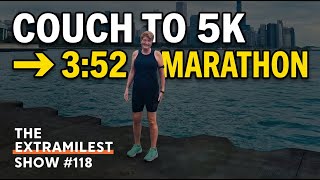
Sue Baze ran a 3:52 marathon at 56, starting from couch to 5K. She credits low-heart-rate training, a local running club, and mental tactics like positive self-talk. She's a vegetarian who uses cold-water swimming and sauna for recovery.
Chapters
You know, I'm not special. I've just, I've just turned up time after time after time. And you know, I'm not an elite athlete by any means.
This is Susan, 56 years old, a mother of 3 and member of our Personal Best Programme.
I'm just like a normal person that, you know, started off doing a couch to 5K. I find running is my help for life. You know, whenever I'm happy or I've had traumas, I just run and it, it just goes through my body and it, it just really helps. I put my trainers on every day and out I went in the rain and everything and carried on. I figure if I can do it, anyone can do it.
Quick reminder that my new book, Running Breakthroughs, is available now. So underneath here it says, transform your running and life. Proven lessons from world-class athletes, experts, and recreational runners. I truly believe that this was the book that I wish I would have read at the earlier stages of my running journey. It really was developed from 10+ years of taking down all of the notes that I've written in the backend, in, like, all of my notebooks after I prepared some of these podcast conversations, after I had some of these breakthrough conversations with different Personal Best members that I've coached over the years. So all of these notes combined, I put them all together in this book, and I truly hope that it will help a lot of people improve in their running and in their life as well. Quick break to thank LMNT for sponsoring this episode. LMNT is a zero-sugar electrolyte drink mix with sodium, potassium, and magnesium formulated specifically to support hydration, performance, and recovery. When you're running, training hard, or just busy and stressed, you are losing electrolytes. And most sports drinks either don't have enough sodium or they're loaded with sugar. LMNT gives you what your body needs without the junk. I use LMNT on my long runs, on my workouts in the gym, but even every morning just after I wake up. It helps me stay hydrated, focused, and feeling good without relying on sugar or caffeine. No artificial ingredients, just clean electrolytes that work. If you want better hydration for training, racing, and everyday life, check out drinklmnt.com/flow and get a free sample pack with any order. You can also find the link in my description. Hope you enjoy my conversation with Sue Baze. Sue, welcome to The Extra Mile Show. I'm glad you're here.
It's an absolute pleasure, Floris. I'm really, really delighted to be here.
It is so awesome to watch your progress over the years over here. And before we started recording here, you mentioned, I'm actually quite a normal person who got the running bug, who really got into it, and who went from not doing many races or any races to like starting to get really on a consistent basis out there racing. So maybe back up a little bit. What got you into running and, and how did things progress over time for you?
Okay, so I'm 56, I'm a little bit older. And I've got 3 sons and when my sons were younger, I used to go to the— I wasn't very sporty at school, but as soon as I left school, I discovered aerobics and the gym and, you know, just loved being fit. And then as my sons got older, I found it, uh, more challenging to be able to get to the gym and to fit everything in. And, um, so I started running. And because you could just nip out of the house for half an hour and then nip back again, you know, while they're still asleep. And I always find I'm a much better human being to be around if I've gone for a run because I'm you know, I've had my bit of exercise, then I'm a bit more chilled and, you know, zen with the world. And, uh, and I just found it, it fitted in with family life so much easier. And, um, uh, and it— but it, it just— you're outside and I feel free when, when I ran. And then I used to run up over on the moors because we've— I've moved since then And I can remember just running along the moors and just feeling completely free. And just, you know, you've got this amazing body that you can, you can train to do things. So, you know, I've never been particularly fast, but I've always just, um, just enjoyed being outside and, you know, getting some exercise with running. And I, my first, my first proper run was one of my friends in the UK. We have this thing called, um, a 5K for cancer relief. And she wanted to do it. And so I said, well, I'll, I'll run with you. Um, but my goal was to be able to run the whole way. So, you know, I didn't want to walk, I wanted to run the whole way. And I found with a little bit of training, I actually, I did it and I was able to do it quite easily. And then, and then you get the bug, don't you?
And so when was this? How, how long ago was that? Or what was your age?
Oh gosh, that must be over 20 years ago. Okay. Yeah. So, um, and then I, I didn't— I never went to a running club or anything because it was always trying to fit it in with, with family life. So it was just something I could do. And I built up to a 10K, and then I started doing some halves. And, uh, and oh, just so much pain. And I remember running a half. I wanted to get a sub 2, and I remember running Bristol Mar— half marathon, and I came in at 2:03, and I just had this despair that, oh God, that means I'm gonna have to do it again. I'm gonna have to do another one to try and get this sub-2. And I, I eventually got the sub-2 at Plymouth, where, where I live. And, uh, and I thought, right, that's it then. I like an hour. An hour will do for me. Half an hour to an hour is it's perfect for me. And I, you know, and that sort of fitted in with family life really. So that's how I got started. And you know, it's only the last couple of years that I've really, um, expanded my repertoire and joined.
So let's dive into that a bit more because you were talking about the half marathon was so much pain and like that was pushing hard, that was pushing through discomfort and whatnot. Yet, a few different things changed in your approach to training, in your approach to racing. So what changed and what advice do you have to other runners listening?
I think I kept fit because I would, you know, constantly did a little bit of running. And, um, a couple of things. I got my dog, so I've got a dog. So I was out walking with my dog a lot and I wanted to be able to run with him. And, um, I, I started cold water swimming, and I did, um, there's another charity called Teenage Cancer Trust, and basically you, you swim in the winter and you raise money for them because it's, it's not warm in the winter like where you are. It's cold here. So, um, I raised some money for them, and then they had another challenge which was to raise to run 100 miles in March. I thought, oh good, that, you know, it's a— I like incentives to keep me fit. So I was running, um, it's about 5K a day-ish in, in March. And, uh, uh, sort of about halfway through March, I had a, you know, a relationship, you know, my relationship broke down, which, which we can all relate to. And, um, and, you know, it was really traumatic. And what I found was that just going out every day and running, I was thinking, these people, you know, okay, I'm going through what I'm going through, but, you know, these people have got children with cancer, or they've got, you know, that's so much harder. Um, you know, I'll, I'll recover, but, you know, they won't necessarily. So I put my trainers on every day and out I went in the rain and everything and, and carried on. And it just helped, you know. I've, I find running is, um, is my help for life, you know. Whenever I'm happy or I've had traumas, I just run and it, it just goes through my body and it just really helps. So I got to the end of March and running 5K every day, you start to feel you know, healthy and good. I thought, I need another challenge. And we had Plymouth Half Marathon coming up in about 6 weeks, and I thought, well, if I'm going to go from 5K to a half marathon, I better join a running club. So, um, I joined the running club, the Falconers, which is my local running club. And it's a lovely small little running club, and there are a few people in there that were doing the half marathon. And so I, I trained for the half marathon and I ran the half marathon and, um, I skipped round Floris. I just had such a lovely time. I ran with some friends and, you know, we, it was sunny and it was just a really wonderful race. And I got round in 2:10 and, and I was really comfortable and I just thought, oh, loving this, you know, compared to the experience I had before. Um, and so I thought, right, I've always wanted to do a marathon. So I thought, I'm going to do a marathon. And, um, with a running club, and the one of the coaches in our running club, he's run 500.
So 500 marathons.
500 marathons.
That's a lot of marathons.
That is a lot of marathons. But if you're going to start marathon training, that is someone who you want to run with. So, uh, and, uh, I found you. So, um, my son's friend who's in the Army had said to him, because my son's, you know, quite a very fast runner, he's a good runner, and he'd mentioned about this guy that had run a sub-3-hour marathon talking and filming himself whilst he he was doing it and talking about low heart rate training. And, uh, I, I watched, I watched your video and it's so emotional but so inspiring. Um, and I thought, well, that's what I want. I just want to be able to run forever, you know, whether, you know, obviously I have my goals that I want to achieve, but actually the real goal is to be fit and healthy and, and run until I die., is, is really my goal because it's just, it makes, I feel free and happy. So I found you and I started doing low heart rate training. So I'd go out with my dog and we'd go for a run. And then when my heart rate got too high, I thought, it's all right, I can walk. So I don't have to push myself. So I walked a bit and then I ran and then, um, you know, walked a bit and then I ran and then walked a bit and then I ran and You know, I just really enjoyed running and I applied for, uh, Florence Marathon, which was November 2023. And, um, some friends were also going to Munich in October '23, and I'd applied to do Munich Half Marathon. And some, some of the, some of the others were doing, uh, the full marathon. And in between sort of just running and enjoying the summer, I, I did it, my first backyard challenge. Um, and, uh, I, I kept, I kept having to ring up and say, I'm just doing another hour because I'd only gone to do 4.
I'm going to be able to do 8. What might be helpful, Sue, for those who are listening who are not familiar with backyard challenges or backyard ultras, can you explain briefly what it is?
Oh, they're such a fun, fun thing to do. Um, So you— they're 4.1 kilometers, 4.1 miles, and you have to do it in an hour. Um, and the aim is to do as many as you can. So it's, you know, you just keep going and you keep going and you keep going. And I'd, I'd sort of thought, I want to do about 4, you know, I'm training for Munich, I want to do about 4. But the wonderful thing about the Backyard Challenge is you all run-ish together because you're not, you're not at a race, you're running. And the aim is you get back about maybe in 50 minutes, and then you've got time for, you know, your basic comfort breaks, have something to eat, and, you know, just have a little chat, a little stretch, and then you go again. And, um, and we're just looking at each other's packed lunch. Well, if you've got— oh, that's a good idea, you know. And then off you go again. And, uh, and, uh, one of the guys, I said, oh, my legs sore. And I think we'd done about— we were just about going on our 5th, and he said, you've run 17 miles, what do you expect with your legs? I said, oh yeah, I guess, you know. So it was that, of course they're going to feel sore, it's that— that's normal. And so we went off again, and I ended up doing, um, doing 7, I think, 7 laps, which was over a marathon distance.
And that was your first ultra?
That was my first ultra. And, um, oh, and it was just such a wonderful feeling. And it's in a beautiful woods where we have it in, uh, in Plymouth. So anyone listening in the UK, highly recommend. It's, um, a little bit hilly, so it's, you know, it's terrain, um, but it's in some beautiful woodland, so it's really pretty and it's a lovely atmosphere.
So, so the main, the main thing of what I'm hearing here is that during this newer stage of your training, you were okay with taking walk breaks. You were okay with slowing down. You were not so focused on your pace anymore and it became more time on feet.
Is that right? Yeah. Yeah. It was no, no clue about my pace at all. No idea. I just really, was enjoying running. I was enjoying being outside. I was enjoying the freedom of running and I was just enjoying how it made me feel.
And what, what ended up evolving in your racing then? Were you still hating the races like you were when you were doing your half marathon or did things change there too?
Yeah, it changed. So, um, I, I put in to do Munich Half. And I meet friends to walk the dog every morning. So we walk the dog about 6, so there's a whole group of us. And I was talking to one of the guys and I was saying I'm doing Munich Half, and I said, but I've done an ultra with the Backyard, and you know, I could change it to a marathon because some of the people out there are running a marathon. And I know what I'm like, I'll be like, well, why can't I do that? And he said to me, he said, if you're going to be a bear, be a grizzly. I was like, okay. So, so I changed, I changed my booking from a half to a full. And Neil, the guy that's done the 500, he went, why are you doing that? You know, Florence is your A-game, you know. And I went, I promise I'm going to go out and I'm going to treat it as a long run. I'm, I'm not going to go hardcore. I'm just going to have fun and run it. And I did. I took pictures of people in their Lederhosen. You run through the English Gardens. I had some little— some beer on the way round and took a picture. I just had such fun running round it, and it was brilliant. I thoroughly enjoyed it. And I think I got 4:10, so it wasn't, it wasn't too bad a time. And then, um, 3 weeks later, 3 or 4 weeks later, I went to Florence with my, my middle son. And, um, oh, it's such a beautiful city. And, uh, I, I ran it and I thought, I wonder if I— because I'd got the 4:10, I thought, I'm just gonna see if I can get sub-4. Um, and so I looked at the pacing just to know that I needed to get— I think it was under 9-minute miles to get a sub-4.
9:09 is sub-4.
Yeah. And, um, and I thought, I'll keep an eye on my heart rate. And so my heart rate was about 150-something, and I thought, well, I'm feeling okay. So I kept pulling it back and pulling it back a little bit and thinking, we got a long way to go here.. And, um, and I got to about 22, 23 miles, and then it really hurt. But I just thought, how are you going to feel if you leave this knowing you had more to give? And I, I just went for it, and it really, it did hurt, but I really just thought, I've just, I'm gonna go for it. And, um, And, uh, I did. And in Florence, that you go through the Duomo, which is like the most beautiful part, at mile 24, and then they send you out to come back into it again, which is so cruel. And, um, across the line in 3:52:53, and I, I just burst out crying. And there was this lovely man, Italian man, on the floor who was sat there sobbing as well. And he looked at me and I looked at him and he just got up and we both held each other and sobbed our hearts out. And then we both went our different ways. And it was just, it was such an iconic marathon moment of, you know, what you've given over the months to, to get that time. And, um, and it's so Yeah, it was just such an amazing feeling.
So this was in 2023 when you were, you were 53 years old at the time, is that correct?
Yeah. Yeah.
53, 54. Yeah. Incredible. And I wanna, I wanna take one step back for a little bit because I think this will be an interesting topic to explore for a little bit over here. You mentioned earlier you got to mile 23 and it really did start to hurt.
Yeah.
And there's this, there's this fine balance, right? There's different kind of pains that you can experience in training or in a race. Yeah. And there's certain discomforts that you experience that it is okay to lean into that discomfort.
Yeah.
After the, in the later stages of a race, your body has gone through the wringer. Like, there is going to be discomfort in the body. Yeah. Yet at some point, There's also people who are at the border of like an injury. And at that point, you have to be very cautious. If it's a sharp, dull pain, you have to be very cautious and you might wanna be very careful not to overdo something for permanent long-term damage or longer injuries or anything like that. Yeah. But this is a, some of this comes with more training and racing experience, but some of this also comes with not letting yourself off the hook too easy when it becomes hard. Like this fine, fine balance. But maybe you can share some thoughts from your end about that as well.
And, and I think that was with running the backyard challenge when I, when I said to the, there's a guy, I went, my legs are hurting. I saw, and he said, you've run 18 miles. What did you, what do you expect? And you're like, ah, yes, that. So you, you learn to distinguish and all. And, um, and because I trained quite a bit before it, I hadn't— I, I learned to distinguish what is pain and what is discomfort. What, what is, um, and, and you find, or I find, and I'm sure you've talked about it and I've heard, is you scan your body, don't you? You, you know, you— I go through and I scan my body and I think, okay, is this, is this normal? Is this what I'm feeling? You know, my legs are feeling tired, of course they're going to feel tired. You've run 20-odd miles, they're gonna feel tired. Is it sharp? Is it hurting? Is it, you know, and you think, no, it's not. It's, I'm not injured, I'm not in pain, I'm uncomfortable and I don't like it. But I know that I will, you know, 5, 10 minutes after the race, I'm going to be okay. I'll, and I talk to my legs as well. I said, come on, just give me another half hour. It's a, it's a park run. Um, you know, I will take you to yoga afterwards. You don't have to do anything else afterwards. I will take you to yoga. I will take you swimming. Just do this bit for me. And, you know, so you almost— I'm almost bargaining with them and saying, you know, I know you've done really well, just just a little bit more and then I'll take you to yoga.
That's something so powerful though about positive self-talk, right? Like the way you get positive vibes in you versus beating yourself up really hard. It really is at that stage in a race, the mind that's going to make the difference. It's not the body anymore. Like your body, you can only change so much about how hard you push it. It, it really is the mindset and how you deal with the discomfort, how you deal with cutting up the races in small parts, the positive self-talk, whatever you need to do, like slapping a high five to a stranger or taking up the energy from the crowd, whatever you can do to kind of get through those, through those moments, really.
Yeah. And it's, you know, just relax your shoulders and, you know, just, and this is what I find. You know, listening to Lawrence van Lingen, he's, you know, just relax, you know, relax your shoulders, stand tall, you know, just breathe and, you know, try and just flow with it and look around and, you know, really take in your surroundings. And, um, and there are different, you know, I'm on our Zoom calls, I've gone and asked, what do you think of what you know, what strategies can I use? And Andy, Andy Weetkoff said, you know, count to 200 and count backwards. So that's, that's one thing that I do when it starts to get a bit tough. I start counting backwards from 200. Um, and then, you know, once you get to 20 miles, 2 parkruns. You can do 2 parkruns, you know, can do 2 parkruns, do a parkrun, or, you know, I just, well, I work with computers, so I'll try and solve a problem in my head, or I think of all the people that have supported me, or just go through a list of people in my head and just think nice things about them, or just say, you can do hard things, you can do this. So really positively.
Yeah. It's pretty awesome actually how often on the weekly PB calls that mental component comes up as well. How do you deal with those challenges of the later stages? And the counting, the counting and the focusing on breath and the relaxing are very, very common themes over there for sure. So when you, when you have done some of these races, like you started really getting into it, meaning from there on it became more marathons. You ended up doing several ultra challenges. Yeah. What were some of the challenges that you encountered at that point and how did you overcome some of the challenges?
That's, it's a really good point. It's, um, it's trying to, trying to still live your life and enjoy your life. And one of the first things that I did, um, after, because I'm part of your Personal Best program, which I find so incredibly helpful because it goes in, you know, when you have a baby, you're with a, parent-baby group and you talk about, you know, they slept for 2 minutes, or, you know, you go into the minutiae, and that's what I like about the group. You can go into the minutiae with people that are as interested in diving into that. And so one of the first things I did is I have a sleep alarm on my phone. So it reminds me to get ready to go to bed so that I get good sleep. Because I think that was one of the things that I picked up straight away. I need to sleep more. If I'm, if I'm going to be putting my body through these things, I need to allow my body to recover. So I try to get a good amount of sleep, and I recognize that, you know, getting off the sofa or whatever I'm doing at 10, it can take me an hour to get, to get to bed. So I try and, and try and do that. Um, the other thing that's quite challenging is nutrition. And this is something I'm still, I'm still not quite sure I've got it right, is it's not only the nutrition on the runs, but it's, you know, when you're building up, it's given— because I don't— I'm a vegetarian, so I don't eat meat or fish. Um, so it's how do I get the right things to allow my body to do what I want it to do, and um, build up so that you're not— you don't get bigger, but you give yourself enough to fuel your body, but you're not under-fueling. And, you know, because I've done quite a few marathons, you're sort of building up to it and then coming out of it and then building up to it and coming out. So it's, um, the nutrition I find is, is something you need to really think about and, and be kind to yourself.
It, and, and even there, sometimes the seasons change too. What responded well to you at this point in your training cycle might be different post-race or, or anything like this. And you are not alone. And some of the topics that sometimes even come up in the PB group, which I found interesting, it's like, I'm training for an ultra and I notice I'm actually gaining weight. I'm not losing weight or the other way around, or like I'm feeling constantly hungry and One thing that, that we sometimes talk about is calorie tracking and not over-obsessing about it, but sometimes just taking an inventory for 1 or 2 days. Actually write down what are you putting in your body and how many calories are you really getting in there and what are the micronutrients within that? Yeah. And sometimes we've realized people are underfueling by 1,000 calories given how much running they're doing or the other way around. Yeah. And so I think just journaling and tracking from time to time, I think people can get over-obsessed with it as well. But it's a bit of a fine balance, but at least having a rough idea of what you're putting in the body and balancing.
And I'm, what I'm trying to do is make sure that everything has, you know, cuz you listen to lots of podcasts and such like, there was one that just said, what can I add to this? You sort of like fiber-wise, what vegetables can I add to this? Or so every meal you think, okay, if I'm having, you know, yogurt and granola or something, I make my own granola flour and I say it's Very nice. Um, but I always make sure there's plenty of fruit that goes in with, you know, so it's trying to, if I'm eating eggs, can I add some mushrooms into it? So I can, and spinach into it so that I can, you know, get that balance, try and, try and be as healthy as you can, but also you've got to have a bit of fun as well. But yeah, it's that balance.
Absolutely. If you look right now, you're training and racing over the years. And if you look at some of the biggest breakthroughs that you have experienced, what were some of those key changes that you made in your training that you feel really moved the needle?
The low heart rate, because that meant that I can, I can run for a long time. And also, not everything is about, not everything is about speed. You know, I've done lots of races. I've done some races., where the challenge has been to complete the race. So, you know, some of the, um, you know, the trail runs, it's not necessarily about what time it is, it's the experience of, of doing them. Yeah. Um, but I've also going to my running club, so I run typically with, um, 5 other guys You know, it's quite a nice little cohort. And with the exception of one, maybe two, they're younger than I am and they're strong. They're really strong runners. So when I run with them, it challenges me. So I have to go a little bit faster than I would probably go on my own. If I go on my own, I'll probably go a bit slower because I quite enjoy it. So I like to go out for a toodle around. Um, so running with people that push me, and they, and they're lovely and they push me. And, um, you know, I've got a couple of challenges coming up and they, you know, one of them, Chris, he said, said, I feel like I'm reflected in your challenge. I've got, you know, he said, because they're, they're going to join in and help me train. Um, so I think running, finding people, finding your crew that you, your tribe, that get what you get and, you know, and we go out and we chat things over and it's just wonderful. So I've got a whole group of people, different types of people. I just saw one of my friends and, uh, I've got London in the spring and I said, you know, I've got London. Yeah, I said Wednesday mornings, Wednesday mornings. Yeah, so it's the people, um, and I, I've added a little bit more strength in to support that and parkrun.
Parkrun.
Yeah.
So how have the parkruns progressed for you over the last 3 years?
Uh, I've only, I think I've done 21 now, but I now, and it's a hilly one, it's a couple of hilly ones. So my commitment to myself was I need to, um, I need to go every week. Because I dread it. And people go, yeah, but it's fun. It is, it is. But if you're competitive, there is nowhere to hide with a 5K. There just really is not, is there? And, um, I've frequently come top of my age group, which I'm absolutely delighted about. And someone beat me the other week, and I was just, ah, which is, you know, she She really went fast, but you just think, so, um, so I'm, because I'm quite competitive.
Oh yeah, I know, I know that part. I know the competitiveness inside you.
I love that. I go there and I go, I'm not feeling it today. And then the whistle goes, oh, I'm off. So red flag came down. Yeah. And you think, where does this woman come from? Because, uh, and we were laughing, um, that, you know, cuz you do laugh a lot when you run, don't you? So I was with one of my friends and I said, I'm 2% cavewoman and 98% yoga. And he went, not quite sure about that percentage.
Classic. I love what you touched on earlier though, when you talked about community or the run group or, or like just your people to hold you accountable and to be out there. I've been somewhat inconsistent with strength training. And so what is one of my ways? It's like tonight, it's Thursday night. It's going over to my friend's place and he's got a little gym at his office and we're working out together with a group of friends. And I think it's finding ways to make it interesting to connect with others, to not always go about things solo, but really to lean into that part because it's so much harder to cancel on like a group activity that you have committed to than like giving yourself some slack, like some slack sometimes. It's like, I'll do it tomorrow and all these things.
Anyway, yeah, totally agree. Strength training is not my thing, but, um, there are— there's— in yoga we do hot yoga, and so it's, um, it's— it— there's a lot of strength in it. However, um, it's— I don't think it's enough. I think I need to get in the gym a little bit. So, um, I'm gonna have to do a bit of gym work, but Lawrence does a Friday a Friday strength training class. So I might have to join that. And I saw in the local YMCA, they've got a spinning class. So I thought that might be quite a good thing to do as well.
Excellent. Excellent. What advice would you give your younger self when it comes down to training or racing?
To be kind to yourself. You know, you just, you push, don't you? Push, push, push. And, um, because I used to do a lot of martial arts, so in my early 20s I did martial arts and I got— I ended up getting my black belt in jiu-jitsu. Oh wow. I don't think you appreciate how good you are at something when you're younger because you're just moving forward, aren't you? You're, you're like, next thing, next thing, next thing. It's almost just stop, breathe, look around you, and just, you know, really appreciate where you are and what you're doing, whether, you know. And that's why one of the really fabulous things about parkrun is, um, I haven't been able to run for a couple of weeks, so I've walked and I've supported. And you just see some amazing people that, you know, walk, running, crutches, wheelchairs, just out there doing it. So just to my younger self, I would just say, just enjoy, enjoy the moment and enjoy having your body and the fact that it recovers quickly when you're younger.
So well said. It's interesting you're talking about that realization of not knowing what you accomplished and not appreciating in that moment. Recently I was with my physical therapist. Dan, and I was laying on the table and it was a very relaxing body, like, like we were working through a few different things and we do a lot of slow movements and whatnot. And it wasn't until there that I laid on that table. My book has been out for 4 weeks now that I realized, holy smack, I wrote a book and it's actually out now. It was not until there Yes, I've done a celebration party. My wife did a surprise party. There were all sorts of different things. It wasn't until I was laying there that I slowed down enough to let it fully sink in and actually appreciate it. And indeed, we don't do that enough. We move on from the one to the next and we don't stand still with it. And yeah, I think it's very important to do that, to slow down.
Definitely. Thanks. I mean, the book is just amazing. It's, it's, um, it's a phenomenal book. And the way that you've captured, you know, the, the gems of wisdom from all the different people. I mean, Courtney DeWalter talking about the pain cave, I take that with me. And, uh, I ran, um, Chicago in October, and, uh, I think I'd said on the podcast all the things that I was doing before, and I said, yeah, yeah, I'll be fine. Be fine. And I'd, I'd gone the week before for a conference, and I went into Chicago absolutely exhausted. And, um, I, I, we went, I went with pacers, and we went off really, really quickly. And, um, and I got to mile 6, and I just thought, I'm really not enjoying this. I'm not enjoying this at all. And I thought, what do I want out of this? Do I want a time? And I thought, well, no, I've got the time. I've got, um, I ran Napa Valley earlier in the year and I got 3:49, which has got me into Boston. And I've just— Teddy's just got me into London.
Incredible. 6 days apart. You're literally racing 6 days apart next year.
How lucky am I? Um, so, and I, and I thought, um, no, I don't need the time. And I thought Okay, so the experience. And I thought, am I going to be really fed up if I don't get this experience? If I don't— if I come home and I look at Strava, I thought, no, I'm not. I'm gonna suck it up and I'm really just going to enjoy it. And I think that has come— so having that maturity as a runner to say, no, I'm, you know, today is not the day. Today is to enjoy it. And I think the, the PB program and, and talking to people there gives you the strength. And, and with your book, um, there are so many things that, you know, like Courtney DeWalt's pain cave. I thought, I'm not ready to go into the pain cave today. I'm tired. I don't want to go into the pain cave. I don't need to go into the pain cave. I'm going to go into the party cave. I love that. Yeah. And in, in the book as well, you talked about going into Berlin and you had a sore ankle.
Was it a sore ankle?
Yeah, the Achilles started acting up. Yes. Yeah. And, um, recently I've had a— it's very, it's very minor, a very small minor skin cancer removed from my back. Um, and I, I thought I might not be able to run for a couple of weeks, and, uh, they sort of said, you, well, you can't walk and you can't— and what about yoga? You can't do yoga. Well, what about swimming? Well, no swimming stuff in it. Well, what about going to the gym? No, you can't go to the gym. I said, well, what am I supposed to do? Nothing. Nothing. And, uh, and I was reading the book, and when you said about Berlin and your injury, and you think, yeah, okay, and you mentioned there were different things that you could do with with when you're dealing with pain is, is it to get angry or to get fed up or to get this? And you decided to move straight into acceptance. So I thought, I'm going to do that. There's nothing I can do about it. I can't change anything. I need it to heal quickly. The sooner it heals quickly, the sooner I can run. So let's skip all these stages and just go straight to acceptance. So there's quite often things like within your book and within the podcast and listening to other people, your tribe, that give you— that help you deal with the traumas or life's, life's challenges. And I think Andy's— while in the PB, he fell off his, his horse or something, so he, he couldn't train. And so you see other people when, when people are real about when things don't go right, that helps you when things don't go right with you. So, um, yeah, yeah, the pod, the YouTube video you shared this week about not getting a sub-3 and you thought you might, the fact that you shared it, I think, was so— gave— was such a strong message because marathons or running can be unpredictable. That's why we love them, because, you know, you can do everything right and, um, and something will happen and the day will go, will go wrong. And you have to be mentally strong enough to realize what is in your control and what isn't in your control. And, and actually, there will, there will be another one. So if it doesn't go right, you know, there will be one next year.
Spot on. And having that grace with yourself to be okay with that, to not always keep pushing through because like you were saying in Chicago, you didn't have your day and being okay with that, not every day being your day. And I think it's really fascinating to me how sometimes telling other people to be gentle and kind is easy for me, but then to hold that up to yourself, and that is being really real. It's like, as if you're the exception yourself, where, yeah, it's this fine line. But no, like, the more we can live to our truth, the better, for sure.
So, yeah, and probably lying in a safe place having your physical therapist there as someone that, you know, is in your personal space and you feel safe with and able to relax, you could just, just let it all sink in.
Yeah.
So, uh, yeah.
Oh, absolutely. If you would zoom out right now, what do you think has been your favorite race that you have ever done? Like, and it doesn't have to be the fastest time. It can just be what was one race that stood out to you? And why do you think that race was so special for you?
I'm gonna say it's the Grizzly. So, uh, it, the, um, I mean, the, you know, they, I love them all, but when I was, uh, before I'd started properly running, you know, not properly, uh, when I was sort of, you know, 5K, 10K people, people would do this Grizzly. It's called the Grizzly in the UK. And, uh, I was doing the Grizzly and, um, I've run it twice now. So the first time I ran it, I ran it with Neil, the guy that, that's done the 500 marathons. And it was so muddy for us. Our boot, our, our, our trainers were covered in mud. So you were running with blocks of mud on your feet.
Oh, that's so hard.
Like, yeah, I know the feeling. 20 miles of it. And, um, at mile 9, I thought, this is, this is like mile 20 of a marathon. This is, this is hard. And I've got another 11 to go. And they say it usually takes about your marathon time to do it. Um, but the atmosphere is just absolutely amazing. And there's just people cheering you on and the drums, and you're running along sea, and it's— and then when you get to the end, you get hosed down by the firemen. So they're there with their fire trucks hosing you down. So, and then I, I— so I was fortunate enough, I got another ballot place and I ran it last year, and it was the week after I'd run Napa Valley. And so Napa Valley, I'd got my 3:49, and, uh, I had the Grizzly 6 days later, 7 days later. I thought, I'm just going to enjoy this. And I was fit enough that I could, you know, just run the 20 miles. And I got chatting to a chap wandering around as we were running around about running, yoga, business, books, the whole, the whole thing. And he was same as me, same fitness, but was quite happy just chatting. We, we spoke for 3 hours all the way around, just non-stop. Up the hills, down the hills, and it was a beautiful sunny day. So I would say the Grizzly is, um, is my friendly— it is my favorite one so far. What stands out to me? Yeah, closely by Dartmoor Discovery. I can't not talk about Dartmoor. It's DD. DD.
So, uh, what was special about that one, the Dartmoor one?
Um, so that's, uh, Uh, that's one. So it's just a route, it's road, but it's all around Dartmoor, which is a beautiful moor, but it's very up and down. It's DD, it's iconic. Um, and I ran it, I've run it twice now. I'm running it again this year or next year. Um, the first time it was brilliant. I ran with, um, Neil, who, um, had got the 500 marathons and made a really good run. Really hot, and it was just such a fabulous experience. And then I ran it this year and we had torrential biblical floods for 6 hours. And I ran with 2 of my, 2 of my other friends, and, um, and we're just running through the puddles and rain coming down. And, um, but it was just, it was just a challenge, and I got second female for, or I think I was second female in my age group.
So I was, I was really pleased. Nice. One thing that stands out to me with both of those races when you're describing it is that the race conditions were not optimal, but you were present and you were accepting, accepting of those conditions. Like there's, there's quite some runners out there who might complain about, oh, it was windy, it was rainy, it was hilly, it was this or that. But that is what's given. You can't change those things, right? Everyone has those same circumstances. Once again, going back to the acceptance phase, like avoiding— or not avoiding, but sometimes you have feelings of frustrations or disbelief or anger or any of those negative emotions come up. But once you can get to that acceptance phase, even in this part of the racing, you signed up for this. You have a body that's healthy, that's able to move from A to B. And yes, it is, the race conditions are not easy, but, and I also think in line with this, you briefly mentioned it and we didn't touch on it yet. You do cold water exposure in nature.
Yes.
And I do think, yes, there's all sorts of thought processes about, uh, ice baths and cold showers and nature plunges and any of those kind of things. I feel one of the main benefits is that you get used to discomfort a bit more, both on the cold front, but also if you do some hot yoga, which you're doing, you get comfortable with discomfort on the hot front. And I think the bigger of a range of comfort you can have, because sometimes I joke with my wife that the temperature range of my kids is very small because they complain it's too hot over here and too cold over there. And, I think the more wider you can make that, the more of a pleasant race day and training day experience you're going to have. And that is somewhat trainable though.
Yeah, I, I completely agree. We had, um, I, I went to, uh, I, I go cold water swimming, so this'll be my 4th winter of cold water swimming and I'm, I'm actually going off to Poland in February for a Wim Hof week, uh, where we're gonna climb the mountain and, and do the ice. You know, the ice mountains, etc. Um, but we— I was in, um, so I swim in the sea in the UK, which is just fabulous. It's really grounding, and you get in there, I'm gonna die, I'm gonna die, and then you go, no, I'm not, and then you're like, oh, I'm alive, and then you get all the happy clappy hormones. So that's quite nice. But I was, um, where I live, there's a little place where you can do cold ice bath, not quite ice bath, it's about 5 degrees the bath, and then you go into the sauna. So you can go in, you can flip in between. And, uh, I was chatting to one of my friends who's a psychiatrist by trade, I think I've got the right word, um, and, uh, she said, but you're used to the pain. Someone said you're used to the pain because I find it very comfortable in the water. I said, I'm not used to pain, but I'm used to feeling uncomfortable. And I can differentiate between pain and discomfort. And I don't think it does us any harm to have that experience of not being completely comfortable. And, you know, going into cold sea is not comfortable. But when you're down there, all you hear is laughing. Everyone is just laughing and looking out for each other. Making sure that if you're the last one in there, that someone's there to make sure you get out. And, um, so it's a real community feeling.
And why is it that you're all laughing? Is, or why is it that there's that sense of community? I really feel you're stripped raw from any other emotions, meaning there's no thinking about the past or the future or what you'd be going to do for lunch. You're literally right there in that moment. And so, I want to— for anyone listening right now who might be thinking, oh yeah, cold exposure, jumping in the ocean, that sounds wild, that sounds out there. I would want to challenge anyone listening, start experimenting with occasional cold showers. And what could be an easy way to start implementing that? That could be you having a normal regular shower and the last 15 seconds, You make it medium cold. You don't have to go crazy and start straight out with a cold shower. Start making the last 15 seconds medium cold. The next day when you shower, do it the last 30 seconds, but make it slightly colder.
Slightly.
Don't go all the way to coldest. It depends on where you live as well. If you live in a cold climate, it's going to feel much colder than if you live over here in California. The cold showers here are simply a bit warmer, even in the winter. But then over the next, let's say, 7 to 10 days, start adding 10, 15 seconds longer cold showers and make it a little bit colder each time. And when you're doing that, focus on your breathing. Try to control your breathing because you would often notice once you start going into cold exposure, you're not used to it, that people start panic breathing, like, which the moment you can stay present, stay connected to your breathing, you're in charge. You're safe, you're fine, you're not overdoing it. You're gently introducing your body and mind to cold exposure. You would be surprised how much your body and mind can adapt in a 7 to 10 day period, meaning you're gonna become okay. It's not gonna be super comfortable at the beginning, but you're gonna be okay and you realize that you'll be fine. And it is such a gentle way of introducing that versus let me dump myself into an ice cold plunge, get a heart attack, and just feel like I'm going to die. I think sometimes people go too aggressive with it, but it's almost like you callous your mind a little bit to become gently tougher over time versus too aggressive and starting to—
Yeah, absolutely. And I would say as well, if you do that, you'll be surprised at how much your body is asking for it. Once you start getting used to it,, then your body likes it and it craves it. And it, because it, you know, it makes you feel good. It doesn't feel good to start with. It's like running. When you first start running, it doesn't make you feel good. That's, and I always say to people when they say, I've started running, or, you know, there was a lady that said I'd inspired her and she'd started. And I say, don't go fast. Don't go fast. You know, if you feel uncomfortable, walk for a bit and then run. Just really, really be kind to yourself. Because if you're kind to yourself, you'll go out the next day, and then you'll go out the next day. And, and that gentle— the same way with it with a cold water shower— that gentleness to yourself will mean that you'll do it. And, um, consistency will, will— it is so much better than, you know, the hard, hard, hard, just Gently, gently, gently do it, and then you'll be surprised how quickly your speed builds up or how much you can, you know, how much longer you can stay in the cold.
Totally. And I think once you experience the feeling afterwards, like you're describing, the happiness hormones are just racing through your body and you almost want more of it because you like that. Yes, there's some short-term discomfort, but the feeling afterwards is so amazing. I like a habit. Tracker where I literally just write down Monday through Sunday and it's like, I have a few different things on there and one of them could be cold exposure.
Yeah.
And I can literally tell myself, did I do it for today? And like sometimes you start realizing that there's patterns where you do it or you don't do it, but at least you become aware of it. And it could include meditation or it could include journaling or whatever it is that brings you joy and calmness and connection to self.
But I found cold exposure and enough sleep, those two make such a big positive impact. Absolutely. Huge, huge. Definitely cold and sleep. And it's that joy, it's that element of joy with having the, these bodies that are ours and that we can train and we can enjoy. And, you know, all you need to do is to get a slight injury or, you know, kick your boot off and hurt your foot to realize that, you know, it's really nice when your foot doesn't hurt. Um, so, you know, that joy is— and, uh, you know, and I, you know, I'm not special. I've just, I've just turned up time after time after time, and I've, um, consistently, you know, matched in running with yoga and a little bit of— and lots of walking. I walk a lot with my dog, and that really just gently moves everything. And, um, and like you mentioned, Lawrence, I've got London, uh, but before London I've got Boston. I've got time qualifying places for both Boston and London, and I'm not, you know, I'm not an elite athlete and by any means. I'm just like a normal person that, you know, started off doing a couch to 5K.
So I figure if any, you know, if I can do it, anyone can do it. Yeah, it is, it is really inspiring to see. And I feel all of these different races are bringing challenges again with it. So now it's like, how do you recover? Yes. When you're doing two races and who's, what's gonna be your A race and what's gonna be your B race? And are you gonna try to save your legs a little bit in the first marathon? Or are you gonna like, it's, it's this whole strategy, right? I think sometimes you spend a lot of time on the actual training part. But the race day strategy and the recovery strategy is going to be really important for those races too.
I'm going to put— I hadn't thought, I haven't thought really. I'm going to go hardcore for Boston. I've got to go hardcore for Boston. It's just, you just got to really, isn't it? It's, it's, you know, and, and the crowds in London will carry me through London though, you know, it's home and I've got people, lots of people coming to support. So, and I think there's quite a few of our PB runners going to Boston. Yeah. Yeah.
That's gonna be, that'd be brilliant. Gonna be a special one for sure. The one advice I would give to you and to anyone who is gonna run Boston, who is able to qualify, and there's this, this, it's almost like I see it as a pressure race where it's such a prestigious race to get into and then you finally get to run the Boston. It's, I think a lot of runners. There's, there's a lot of serious runners who are approaching that race very serious, which is good. Like you wanna do the best you can on race day, but I would always sink it back to try to be present and enjoy that full experience as well. Because running through those streets, you can still run a phenomenal race, but taking it all in as well, realizing you are running this prestigious race and there's, like the crowd support that's there, the hills that are there, the iconic Heartbreak Hills and whatnot, and, and just taking it fully in and being present. And I think you're already doing a phenomenal job with that, but just not overstressing or overtaking it too serious, but truly enjoying the race day experience of, of Boston as well.
Yeah, I, I'd really, I'm, I'm going out a couple of days earlier and staying a couple of days. Later so I can do the shakeout runs and I can go around and do Middle Monday, um, and, you know, just really just soak it all up. So yeah, but I want to be as fit as I possibly can to, to, you know, pay almost homage to the race and so that I can really enjoy the race. Um, it's, is, you know, it's sort of the overall goal. No, totally. It's fabulous, isn't it? Being alive and being able to run.
It's just wonderful. Absolutely. Absolutely. If anyone here is listening and they're feeling somewhat stuck in their running journey, they might have hit a plateau or they injured a lot or discouraged. What would you suggest as a reset or like a fresh starting point?
Is there anything you would share with them? I would say parkrun. So if, um, If they're injured, it's really humbling to, to go to parkrun and to see everyone that is trying to run regardless of, of their physical strength or not. Because you have people there that are, you know, we've got a 5K Your Way, which are people that have struggling, you know, fighting cancer or fought cancer. So, and they, you know, lots of people walk. So, you know, if you're injured, you can go and help and not move, or you can go and walk, or, um, just find, find a group, find, find someone to run with if you're struggling to get out the door. As you, you said so rightly, it's if you're going to meet someone, you're less likely to bail on it. Find an event that you want to do and that, and then think of that. So when I, when I'm running, I was thinking before I got into Boston or London, I was thinking, uh, visualizing crossing the finish line or visualizing being there. Um, and, uh, and what I find some people do is they look back and they think, well, I was doing this, and you think, yeah, but look forward, think Think about where you are now, because it could be a lot worse. So just enjoy what you've got. Find people to run with. New shoes always helps. Buy some new shoes if you can. That's quite nice. Um, a good playlist. So if you're feeling a bit blur, um, find a playlist that works for you. So, um, and go somewhere pretty to run if you can. If you can, if you're in a city, go and run around the park. Or if you're outside in the country, go and run around the country. And if you feel, oh, I don't want to go because I'm going to go up a hill, just give yourself permission to walk up the hill. So sometimes I do that and think, well, I'm going to go out, and if I don't— because I don't feel like it, I'm going to go anyway. And if I don't want to run the hill, I don't have to run the hill, I'll walk the hill. 99% of the time you run the hill, but if you don't, it doesn't matter. Just put your shoes on and get out the door. You never get a bad run.
You never regret it. Love that. And for those in the UK, there's parkruns in most of the cities every weekend. For those outside of the UK, there's a lot of listeners in other parts of the world, where parkruns might not be as popular. You might be surprised how many local community runs there are, even on a weekly basis. And there's websites like meetup.com or different Facebook groups that you can, or local running stores that you can ask, and you might be surprised how many group runs there are. And to your point, just being a part of a community can really help. And it's not about running the fastest every week.
This is just a part of showing up and being a part of one of those communities. So yeah, definitely. It's finding your tribe. That's what I find with you have your yoga tribe, swimming tribe, the lap club at 6 AM, you know, running tribes. It's just finding people. And if you, you know, people won't come and knock on your door if you're sat in on your own. But if you go out and you're brave and you go along to whatever it is you enjoy, then if you enjoy it, then other people there are going to be enjoying it. And so you'll have something in common.
And it's just getting started. Absolutely.
Where can people find out more about you? Strava. I've got an Instagram, but I don't post on it very much. Yeah. Strava is probably where, Strava is where I live, Floris.
There you go. There you go.
Yeah.
I see you on there. Right on. Do you have any closing thoughts for any advice for runners looking to become a stronger, healthier, or happier athlete?
Find the joy. So be kind to yourself. Speed will come, um, and, uh, just give yourself a break. And if you don't feel like it, go out anyway because you'll never regret a run. You'll always regret not doing one, but you'll never regret it. And if you're tired, walk. Um, and if you're feeling like you're, you're full of energy, then run. But just listen to your body and surround yourself by like-minded people, podcasts, books, um, just things, people. We only have one life. You want to fill it with as much joy as you possibly can.
Absolutely. Sue, thank you so much for sharing your experiences. Really appreciate it. And I look forward to going for a run together next time at one of the world majors that you're going to be running or any of the other events.
I'm sure our paths will cross.
Super excited. All right. Well, you have a good rest of your running week ahead here.
Thank you.
Take care, Floris. You as well. Bye. Sue is awesome, and I'm very excited for the next few years of our running journey over here. If you would like to find out more about our running coaching program that Sue is a part of, check out pbprogram.com. What was your favorite lesson, takeaway, or quote from this episode? Please let me know in the comments below. I would like to thank the thousands of listeners of this podcast for purchasing a copy of my book, Running Breakthroughs. I've seen orders come in, like some people have bought 1 copy, some others have bought 3, 10, or even 25, including books for everyone in their running crew. Super awesome, and really want to say thank you to each and every one of you. The book is available worldwide through my website, floresgiermann.com. For a limited time, we also have some autographed copies available over there. You can also find it on Amazons around the world through my website if you need the link to that as well. Thanks so much for listening and have fun out there on your runs.
Bye now!
More from Floris


Ryan Hall 2.0 on Strength Training For Runners, Lifting Heavy & Trail Running




You’re Doing Zone 2 Wrong (Even If You Think You’re Not) | Scott Johnston Round 2


How to Build an Unstoppable Aerobic Engine (Even If Starting From Zero) | Scott Johnston


Stress Is Killing Your Running (The Relax Fix You’re Missing) with Dr Kasim Al-Mashat

When things get hard, say this, it (works in any race) #jeffpelletier #running #ultrarunning