The Raw Truth of Running with Brendan Leonard
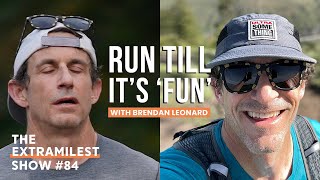
Brendan Leonard went from hating exercise to ultrarunning, discovering the sport through Born to Run after a nine-year break from marathons. His book Ultra Something argues that extreme endurance reflects everyday human resilience, and he shares how local adventures like his 52-marathon-in-52-weeks challenge and neighborhood peak summits prove adventure doesn't require expensive races.
Chapters
It was a t-shirt logo. I made a t-shirt that said, "I hate running." Wore it at the beginning of this film we made about 100-mile ultramarathon. You know, so many people don't find a way to exercise or do sort of fitness things in adulthood. When we're kids, we play games, you know, and like I played basketball, football, baseball, everything growing up. And then you get to college and you're like, well, I'm not on the football team anymore. I guess nobody's going to make me lift weights or run around in weird patterns after school. And also my metabolism is going to slow. So you kind of, in my opinion, you have to kind of trick yourself and find a way to exercise that you think is quote-unquote fun. People do all sorts of different things— jiu-jitsu, CrossFit, weightlifting. I don't like any of those things. I don't like running. I don't like a lot of this stuff, but I like running probably the most out of all those things.
Welcome to the Extra Mile Show. My name is Floris Geerman, and on this podcast I interview different guests about ways to become a stronger, healthier, and happier athlete. Today's guest is Brandon Leonard. He's the creative force behind SemiRad adventurehat.com, a website dedicated to the joy of adventure for runners of all levels. Brandon loves to explore, he loves to laugh, and occasionally he likes to get tired, cold, and a little bit scared on all of the different ultra adventures that he goes on. He has biked across America, ran several ultra marathons, and spent 3 years living out of his converted van. Brandon is the author of more than a dozen books, including his latest one, Ultra Something. His unique voice and perspective reminds us that adventure is for everyone, no at a level of expertise. This episode is brought to you by LMNT. LMNT is a delicious electrolyte drink mix that helps anyone stay hydrated without the sugar or other dodgy ingredients. I've been using LMNT for several years now, and so have many of the members of our Personal Best Running coaching program, and I'm noticing a significant difference. Electrolyte deficiencies or imbalances can cause headaches, cramps, fatigue, brain fog, and weaknesses. I'm noticing a significant difference after taking LMNT on a consistent basis. I'm really excited about the introduction of Element Sparkling. So now they're making sparkling water, and it's a delicious electrolyte drink mix, also with no sugar and no caffeine. It's available in a bunch of different flavors, and I will tell you, tastes delicious. Get your free sample pack with any drink mix purchase at drinkelemente.com/flow. And if you're an Element Insider, you have first access to Element Sparkling, the 16 ounce can of sparkling electrolyte water. Hope you enjoy my episode with Brandon Leonard. I'm glad we can finally record this conversation. Brandon, welcome to the Extra Mileage Show.
Yeah, thanks for having me.
Yeah, let's start out with— I kind of want to backtrack a little bit because I know you're all into ultra adventures, but I think before we get there, it's very natural for people to sometimes have a bit of a stepping stone to get there. And so tell me a little bit more about your first marathon experience, like not just the day itself, but even the, the expectations you had going into it. Because I think we sometimes go into some of these events having certain expectations, and then like everything just goes way different on race day because we can be naive or we, we are just underprepared. But curious to hear your story here.
Yeah, boy, I think I was just like, I would, you know, I ran track in high school, like sprints, you know, not The longest I ran was 200 meters and occasionally my coach would put me in the 400 and I'd be like, this is not good for anyone. You know, also it's very painful for me. Um, and I got kicked out of that and I would do, I would do 4x1, 4x2 relays and then like the open 200 and, uh, did okay at that, but never, it was never a candidate to, to run like, you know, the mile or the 2-mile. Um, and then, you know, Graduated high school, went to college, started drinking a lot, started smoking, and then, God, I was 26 trying to quit smoking. And I tried to quit, tried to quit smoking dozens of times, and finally I just said, I'm going to sign up for a marathon, and there's no way I'll be able to train for and complete a marathon while smoking.
And, um, you're not going to be like, you're not going to be like that Chinese guy who got disqualified recently?
Who is— I think that— isn't that a Japanese dude who like smoked a pack? Well, yeah, that's crazy. Anyway, yeah.
Smoked a pack while running the marathon. Yeah.
Yeah. Well, his, his marathons are faster than mine, which makes me feel terrible, but, but like probably faster than a lot of people. Um, but yeah, so I just was like, I'm just gonna do this and train for it and run. But I was starting at a pretty low fitness level. I had done a lot of hiking and, um, sort of basic mountain climbing and a little bit of rock climbing and running was a, it was, um, it was very instructive. So I just ran 5 miles 3 times a week and then on the weekend I would do my long run. Um, and I just went up from 5 miles to 6 miles to 7 to 8 till I got to like 20 or 21. And, um, I, my goal was to survive, man. That was like, which I think is a good goal for first-time marathoner, right? Like I just wanna, I just wanna not have to do this ever again. You know, to me it was like this thing that you, it was like building a house, you know, it was like a life goal. Okay, I'll run a marathon, you know, or I'll, I'll climb a mountain or I'll do this. So. I think it was like 4:50 something, you know, made it, got done. Pretty sure I was never gonna do that again. Felt like garbage the next day. And I was, you know, if somebody had told me like after that event that people run longer than that, I would've been like, impossible. That's absolutely impossible for human beings to do. But it was fine.
Let's talk through that for a little bit because it's a funny perception when you think about it. Training for a race and you have X distance for that race, at some point you really think that's the finish line and you cannot possibly go anywhere further. When I would finish my first marathon, I was in a similar boat of like, how can people run a mile extra or 5 miles extra? Or like, you just don't even think that's humanly possible. But what was your thought process about eventually you decided like, Oh, maybe there is more than a marathon. How did that unfold?
Yeah, I think I was like sort of vaguely aware of it in the next few years. You know, that first marathon was 2006, and I took a solid 9 years off of running. Like, really, I'm just like— I would run every once in a while, just be like, oh, I should try to, you know, get in shape and somewhat. But I was mostly rock climbing, which was— you don't have to run, you carry a backpack full of gear, you know. Maybe a half mile, maybe 10 or 15 miles in, and then you climb a thing and then you walk out, you know? Um, I, I don't know if I ran on trail. I did a few trail runs, you know, to just like, that was a thing people did. Um, was not aware that you could walk uphills, you know, it was like, no, if you don't run 100% of the trail run, you're not running. Um, but then, you know, like at some point I understood that people did ultra marathons and then I read, um, I read Born to Run in like 2010, I think. And I was like curious and I was like, oh, that's a thing people do, you know? But it never really hit me that I should try it. And then I met somebody who was an ultra runner. And then this friend of mine who was a climber who I was interviewing for a podcast about the idea of being hardcore, I said, you know, like, Kelly, you're pretty hardcore. Look at all the stuff you've done where you like ran out of water on some peak in Pakistan and then, you know, spent 72 hours like trying to get back to camp so you could survive. And, you know, that's hardcore. And he said, oh, that's not hardcore, man. You know who's hardcore? My friends who are ultra runners. And he said, I wish I had the exact quote in front of me, but it's something to the effect of, you know, when you're on top of a mountain and you have no choice but to get back to survive, it's pretty easy choice to make. So you just keep going. But when you're in an ultramarathon and you're at like mile 50 and you start not feeling so great and you get to an aid station and they got like food and maybe a fire going and chairs, he said like to just keep going after that, that is hardcore. And I think that just stuck in my head for years. Like, I wonder what that's like, you know? And anybody who's run an ultra, you know, knows what it's like, um, to, to not go sit down at the fire and tell yourself, I'm gonna keep running cuz this is important. You know, you're not gonna die, you know, it's fine. Like you'll, they would just give you a ride home if you quit there. So it was interesting. And then, you know, I guess 2015 was my first ultra. Um, but it was, that was in my head for several years after that. I wanna say, I wanna say 5 or 6 years before it finally, finally was like, maybe I should go investigate this idea a little bit.
How did that unfold? As in, there's such a difference in mentality between marathon, road running, and then going into ultra. Like, was it— did you feel like a little bit more prepared going into this, or what were some of the, some of the differences that you noticed there?
You know, it was a friend of mine who was, um, he was kind of like circling around it, like, maybe I should do one of these someday. And I would do a trail run with him now and then, but he kept upping his mileage and, um, You know, he got to the point where he had signed up for a 50K race near Denver, and he had done like a 20-something mile training run. And he was telling me about it over pizza and just how everything had sort of gone wrong for him. And he was just kind of laughing about how he had to ask like some people hiking by if they had any water they could spare and all sorts of other stuff. And, you know, he was overheating or just lucky to make it back to the car that day. And something in my head was, that was just, that sounded really kind of fun in that way that you think things that aren't fun are fun. The, the Ultra was like 23 or 24 days away at that point. And I, I thought, oh, maybe I could do it. And, uh, you know, I had never run, I'd run that marathon, which is about 5 hours, right? For me, it was like just under 5 hours of movement. But I had done things like, like climb the Grand Teton in a day, which if you're fast, you can. A lot of people could do it in like 5 or 6 hours. Maybe not a lot. Some people can do it in like 5 or 6 hours. I think it took us like 12, something like that, 12 hours or something, or 14. But it was a whole long day of constant movement with a, with a pretty heavy backpack with a rope and gear in it. And I thought, well, I kept moving for like 12, 14 hours or whatever, and the time limit for this ultramarathon is like 12 hours. Worst case, I could walk, you know, if I run half of it, I could walk the rest of it and still finish. So I thought maybe I'll, maybe I'll just sign up too, um, because, you know, it's okay to hike a lot of it. And, uh, yeah, the first one I survived it again. I don't remember my time, but I got the, got the belt buckle or the medal or whatever, whatever it is they give you. And then I was just like, oh, now you're really curious about the next distance or something harder or whatever.
And, and that's, that's, I think, how it naturally kind of evolves, We, we do one thing and then at one point it's either you get, you improve your running time, like you see if there's a way that you can do it faster on a different course, or at some point you start to explore into other, other distances over there. I want to like, I had a blast actually reading your new book, Ultra Something. I want to talk a little bit more about the concept of Ultra Something because it goes much beyond ultra running. Can you share a little bit about the philosophy and how this actually applies to other aspects in life as well.
To me, it's more how do other aspects of life apply to ultra running? Um, and sort of make me— I don't know if you got this out of the book, my intent was kind of to show that we really shouldn't be that surprised that people are out there running 100 miles because of other things that we do as humans. Not like athletically necessarily, but other things like carrying, uh, you know, carrying a child to term in pregnancy, or working, you know, 8-hour, 12-hour shifts in a factory, or these things that are boring or tedious or difficult that we've done for, you know, a really long time. And this is just a way of applying it to present-day things that we do. Um, and as I was writing that book, trying to find all these weird things, like diving down all these rabbit holes of, like, you know, research on rats and mice and benign masochism is one of the terms that I've discovered, which is just like, why do we eat spicy food? Why do we watch scary movies? Why do we do things that are physically hard? It's because we, it's cuz we get something out of it. And finding all these things that were to me sort of evidence that I'm not crazy, I guess. And the people who do ultramarathons and marathons too, aren't crazy. Um, despite the fact that there's absolutely no reason any one of us should have to run a marathon nowadays, you know? Um, but we do it. So that's sort of the concept to me. And it's like hand in hand with that is like, well, if we're capable of this, what else are we capable of as individually, you know, in our lives? And I hope that comes out in the book.
No, absolutely. I thought one of the examples that you mentioned in the book at one point was about a hot dog eating competition where like one of the guys, I forgot the name, but he was actually was actually training for the hot dog eating competition and just had like, there was a certain barrier that hadn't been passed and all of a sudden this person was able to pass it and then other people saw what was possible. So even that whole story about like the 4-minute mile barrier, once that one gets crossed. And so I think the fascinating part even with ultra running is a lot of times we limit our mind with with what is possible, right? And, and I'm sure that you've come across that as well in your own journeys from adventuring.
Yeah, for sure. And, and like, I wrote it, I made a chart in a, in a previous book, um, and it's kind of like the chart just keeps going up. And it's like, if you're a person who can run 1 mile, it doesn't seem so crazy that people would run a 5K. And if you can run a 5K, maybe you don't think it's so crazy that people can run a 10K. And it, it just goes on and on and on until like 100 miles actually seems like it's not that crazy to a lot of people. And now, now I would say 200 or 250 miles, you know, but to most people, you know, you go and run a marathon and there's, you can, I've run marathon with 54,000 other people, you know, New York City Marathon. So have you. And, uh, you're like, well, you don't feel that unique doing it cuz you're just this huge mass of people. But, you know, and even when you get on the plane home, you might be on the plane with 10 other people who ran the marathon, but. You get on a plane 3 weeks later, you're probably the only one on the plane who ran a marathon, you know, in their life, you know, or, or maybe 4 or 5 people total. Um, but it's pretty rare. I don't know. I think it's just like sort of that you, if you see it, you can be it mentality. When, when you hang around with all your running friends, you talk about stuff that's just completely bizarre to, to regular people, or even when you get home to your family, you know, and you have to really explain things well. Dad's gotta go to London. Why? Well, to run 26 miles at 285 yards, um, in this course that was created by somebody. And like, well, why do you have to go to London to do it? Isn't there a marathon here? Yeah, there is. You're right. Um, but, but this one's important. Why is it important? You know, and you just go down that rabbit hole, um, of explaining things. But I, I think it's, you know, it's who you hang out with sometimes, but it makes such a bigger difference.
Yeah. Like when I, when I joined a trail running and ultra running group, all of a sudden it became the norm. And I was the one showing up with the shorts, with the road, road, little water bottles on the side on my first group run. And I was that guy where you're like completely somewhat out of place at the beginning and you slowly but surely get exposed to this whole new world. And then running a 50K or 50 miles, not that strange anymore, purely by who you're hanging out with.
Right, right. You know, it's funny, I just saw Kofuzi, uh, the YouTuber, ran, ran this race, the Tiger Claw 50K in Seattle. Mm-hmm. And I don't, I don't know him that well. I've never met him. We've just interacted a little bit on social media, but I was like, oh my God, how did that go? Cuz he lives in Chicago and he runs, I mean, to me he's a fast marathoner. Yeah.
Yeah. I just had breakfast with him in London a few weeks ago.
Right. He was out there too. He did great in this, this race that is like extremely steep. You go to the top of this mountain 3 different times. And, uh, I was like, oh my God, he's, he's hardcore for being able to do that and jump between those two things within however many weeks he just ran the London Marathon.
That was like 3 weeks ago.
Yeah. So he's in these two very weird groups, right? That are like, that are like very disparate. Um, but I'm sure there's some things in common that he'll probably, he'll probably find and put in a YouTube video.
For sure. For sure. I actually see quite a bit of commonalities between some of the content that that you create and that he's creating, because I think the whole non-elite component like comes through in all of your books as well. Like, I think this is one of the best book titles out there, I Hate Running and You Can Too. Tell me a bit more. How did that come about? Where did that come from?
Some guy wrote an essay about I hate climbing like 10 years ago, and it was sort of structured in this way where he was like, here's all the dumb things about it. And then the end of it, it was like, he's like, I love it. You know, you know, I hate it. You should, you should too. I'm not sure if he took it quite that far. And I was like, oh yeah, I, I feel the exact same way about running and a lot of things I do really. Um, and putting, putting the heart in there was like just a funny, it was a t-shirt logo. I made a t-shirt that said I hate running and, um, wore it at the beginning of this, um, film we made about, uh, 100-mile ultra marathon. Um, but I think, you know, so many people don't find a way to exercise or, you know, do sort of, sort of fitness things in adulthood. You know, like when we're kids, we play games, you know, and like I played basketball, football, baseball, everything growing up, you know. And then you get to college and you're like, well, I'm not on the football team anymore. I guess nobody's going to make me lift weights or run around in weird patterns after school. And also my metabolism is going to slow. So you kind of In my opinion, you have to kind of trick yourself and find a way to exercise that you think is quote unquote fun. And, you know, people do all sorts of different things— jiu-jitsu, you know, CrossFit, weightlifting— and I don't like any of those things. I don't like running. I don't like a lot of this stuff. But, but I like running probably the most out of all those things and what it provides for me, you know. So I think it's just a joke on that sort of like, I hate exercise because like If I could just sit around and eat pizza for the rest of my life and not die from it, I would do that because that's fun, you know? Um, but I chose running. So it's like this, it's like a joke on that, I guess. It's like, yeah, you probably hate it too, you know, think about it. But there's a lot of my friends who are like, no, I don't even, I don't understand that. I love running. I'm like, well, okay, I guess we're gonna have to agree to disagree there.
One of my adventures that stands out from you is the Seven Summits. So I want you to explain briefly, like the Seven Summits of my neighborhood. Where did the concept come from and how did that adventure unfold for you?
Yeah, so I'm lucky enough to live in a mountain— mountainous town, right? We don't have huge jagged peaks like right outside of town. It's not Chamonix, but Missoula, Montana. And so you can look out from my neighborhood and see peaks that are like, I think the highest one's like 9,000 feet. So that's a pretty big jump from 3,200 feet where I live. And I would just be out walking my dog and, you know, I'd look straight down the street and be like, oh, I wonder what that is. You know, like, that's— oh, that's, that's Black Mountain. Okay, maybe I'll go see what's up there someday. And I just kind of picked out 7 mountains that I knew were doable from the house. Like, if I could ride my bike there, or some of them I can run to and be on the top of, you know, pretty shortly. You know, I think the closest one's like, I think it's like just under 10 miles round trip to the summit and back. They're not like these big jagged peaks, like I said, like they kind of, some of them kind of look like Napa Valley on steroids where it's like, it's like a big grassy hill, but it's 2,000 feet tall from the valley. And I thought, oh, this would be fun, you know, to do this because people do the Seven Summits, but the Seven Summits cost like I forget what the figure is. It's like in the hundreds of thousands of dollars, which is not, not accessible to most of us.
Even Everest alone from an acclimation standpoint, everything.
Yeah. Oh, and like, it's like $70 grand and you need like a month and a half off work minimum to do it, you know? And it's just not— it's a, it's a cool thing. It's aspirational. I'm sure people love it. And if somebody— if you said to me tomorrow, hey, my company will, you know, sponsor you if you want to go climb Everest, here's a check, I'd be like, okay, I'll go, you know? Actually, I don't know if that's true now that I have a kid, but like, you know, I wouldn't turn it down. But would I work and save my money for a long time in order to be able to climb Everest? Like, probably not. So the concept to me was just like, that's just some dude's list, you know? It's like these guys who were pretty wealthy came up with this idea and then, you know, however many people have done it, you know, thought, hey, that's a good idea, I'll do that too. And this whole industry was born out of it. And I think probably a few hundred people have climbed climbed the Seven Summits at this point. And, um, I hope it was great for them, but like, I'm gonna do my own thing. So, uh, not that any of these mountains around my town are anywhere near Everest, or even— what's the lowest one, you know, uh, anything like those mountains— but it's like, it's a thing that I could do that took me a solid— I think it took me a solid 2 weeks to do it, you know, not including the planning. Um, but every one of them was like 1 day, you know. Yeah, the longest one was like a 20— I think it was like a 25-mile bike ride and then a 13-mile run/hike and then 25 miles home. That's a solid day for, for a couple of, couple of guys in their 40s or whatever. Um, so I, I think it's just you can find fun wherever, an adventure wherever you, wherever you look, if you, if you're looking the right way.
And I think that part in particular, at one point I had a conversation with with Ryan Hall in Flagstaff, and he's gone from one extreme to the other, from road running fast marathons to lifting heavy. And now he's doing a lot of adventures as well in the mountains where we're talking about finding something that really excites you. And that doesn't have to be signing up for another marathon or signing up for this race, but sometimes it can be an adventure like that, right?
Yeah.
And so even myself last year, we decided to swim in the ocean, ride a bike to Mount Baldy, and then run up Mount Baldy, or at that point, I was walking or surviving up Mount Baldy and back. But it makes memories like that. There's no competition in any sort of way. It's purely you, sometimes with a friend or without a friend, just doing some of these adventures that truly excite you, that kind of break up the routine of another road marathon or something.
And totally crush your soul, as I remember you saying from that about that triathlon. But, but yeah, like the Ironman triathlon, that's just some dude's contrived idea of what would be hard, you know, right? It's like, sure, and everybody else is like, yeah, that would be hard, I'll do it, I'll get the tattoo or whatever. So I know. Yeah.
Do you have any advice for, for people wanting to go after some of their own adventures or after some of their own ultra, ultra adventures?
Yeah, I mean, well I make sure it's safe for one thing, you know, like don't, don't be that person who's, you know, doesn't take a space blanket or a headlamp or, uh, you know, gets, gets lost and benighted and, you know, maybe freezes to death from exposure, runs out of water or whatever. Um, but yeah, I think, I think like, I just don't think you have to— it doesn't have to be acceptable or, you know, worthy to anybody else but you. If you think it sounds good to like you know, run a 50K between several different Taco Bell restaurants like, like these folks in Denver do. That's cool, man. That's fun. Just do it. Or, you know, summit 3 peaks in a day or, or 1 or whatever, or float the river for, you know, 10 miles, you know, between towns or something like that. That's cool. You know, whatever. I don't think it needs to be— you definitely don't need to be able to make a YouTube video about it. You don't need to prove anything to anybody or even convince your friends that it'd be fun. You know, it's just a thing you do. So I don't know if that qualifies as advice, but I think a lot of people like yourself included, we get a kick out of the creativity part too, where we like to look at a map or consider how to, you know, play on somebody else's idea and make it our own or whatever that is. But I think there's a lot of people out there who like to do that. Um, but some people are also like, you know, when the weekend comes or whatever, they just want to like do something that's established and like sick of making decisions. I don't have time to sit around with the map and plan for hours and hours. I just want to like go do something people say is cool. And that's cool. And yeah, nothing wrong with that either. I've done tons of that.
So even for that, um, ocean swim to Mount Baldy, we're like, ah, should we turn this into like an annual thing and get a bunch of other people to do it? And I was like, ah, too much work. Like, let's just see if we ever want to do this again. And sure enough, we decided not to do it again this year because, yeah, still got to edit that video. There's still like 5 hours of raw footage somewhere on the hard drive, right?
Yeah, I know, man. So it's— yeah, and like to make an event out of it is a whole another thing, you know. I mean, our mutual friend Josh Sun, who like, he just, he's really good at that sort of convincing people that his idea will be fun and It's evident. And one of the races he created is the, it's called the Caves of Convenience and it's a 50K essentially road run, but you do loops in, um, Davenport, Iowa, I think. And you get a, you get a gift card at the beginning to a convenience store and you have to, the, the convenience store itself is your checkpoint and aid station. So you have to run to this convenience store and it's halfway through the loop or whatever. And you have to buy something, keep the receipt as proof that you made it there to do your loop. And I forget how many loops they do, but you're not even— the convenience store doesn't even know there's a race going on. So you just have to get in line behind people who are buying cigarettes and paying for gas and like get your bag of Doritos or whatever. Um, and it's a ridiculous idea, but like, like 30, 40 people do it every year and it's fun, you know? So I think that community is really grateful that somebody like that lives there or maybe is there. Maybe that community exists because of him and people like him, which is super cool. But as to your point, yeah, I don't know if I need to be planning fun stuff for like 30 other people.
Yeah, but it is rad to see more of those— what do they call them— fat ass events or whatever, like those backyard like adventures. I think it's, it's pretty rad to see. I don't think— probably the whole COVID period amplified that as well when all the races were canceled. Everyone was going either FKTs or everyone was going on different adventures. And yeah, it was cool to that kind of evolved.
Yeah, it was like forced creativity or forced— yeah, some guy ran an ultramarathon around a tree, I think, right?
Like, they're mounting around one single tree on a balcony. I remember someone ran a marathon on a balcony.
Yeah, that was wild. Yeah, desperate times.
You, you've, you've done some, some other rad stuff as well. The, the one that I remember last time when you and I were running was at, at the Strava event in LA, and you were telling me about the 52 marathons in 52 weeks. It was in one year.
Yeah.
What, what inspired that, and what were some of the things that went horribly wrong on that one?
Uh, I was turning 40, and I was like, well, I gotta do something interesting. Um, and it, you know, like, lots of people have done that. I mean, people— there's people who've done 365 marathons in a year, you know. And I think what I ran into most often was people would do, um, 52 marathons, but they would do the races. So they would travel to a different place every weekend or You know, and that's just a logistical and financial nightmare. So I just started out and I was like, maybe I'll try to bank a few of them earlier in the year and see if, see how it goes that way. In case I have a minor injury, I can like take a couple weeks off or whatever. So I think I ran 2 in like 5 days and I was literally just at my parents' place in Iowa and I just ran down a dirt road until I was, until I got to like 13 miles and turned around and went home. And, um, I kept doing that the whole year and ran. I think I ran 2 or 3 actual marathons, or maybe, you know, that were road races. And then a couple, I know I did a 50K trail race that counted. And then I did a 100K trail race and I think 2 100-milers. And I talked to a friend and I was like, yeah, I think the 100-miler only counts as 1 marathon. He goes, no way, dude, that counts as 3. You need to like, So I would start and stop my watch in the middle of an ultramarathon and be like, that's 26 point. Beep. I would just restart it, which is ridiculous. Um, and then you think to yourself, maybe I could get 4 marathons out of this and you get 105 miles and you're just like, no, absolutely not. No way. Um, so nothing went horribly wrong. I would say I did, I did, um, in order to sort of convince myself that I was not— like, how do I explain this? I didn't want to be like flopped down on the couch every time I ran a marathon and be like, okay, God, I can't do anything for the rest of the day or the rest of the week or whatever it was. I wanted to like sort of teach my body that this was just going to be something we did. So I was, you know, I would do these old— these marathons, come home, like make a smoothie or whatever, drink a bunch of water, and I would like we were— I was like, I, I built a flagstone patio one day, you know, I take the dog for a walk, I did my standup desk. And one day, I think it was the day after I'd run one of these marathons, Hillary, my wife, had gotten like— it was like a truckload of mulch delivered to our house to like basically mulch almost all our landscaping. And this was— I can't remember the actual amount of this stuff, but when they dumped it like on the street in front of our house, And it like went into the traffic lane. So we were like, oh no, we have to, we gotta move this stuff, you know? And I'm like not feeling it. And it's like June, it's hot. Maybe it was August, I don't know. It was hot. And these guys from the city of Denver stopped by and like literally gave us traffic cones. They're like, somebody's gonna hit this if you don't just keep these traffic cones. So, and we just slayed this whole pile of mulch over the course of like 10 hours. It was ridiculous. Um, but that was— it was a big year, and I didn't have any major injuries. But I do remember being, um, I think it was my first New York City Marathon. I ran with my friend Sid, and I was— by that point in the year, I was kind of like, uh, another marathon, you know, it was like number 45 or something like that. Yeah, because it was November. And I remember kind of thinking, bah, whatever, you know. And then I got in the marathon and started running with people, and, you know, Marathon, as you know, there's so many people totally doing it for a friend or doing it for like somebody fighting cancer or, you know, pushing someone in a, in a wheelchair who's disabled or like all this crazy stuff. And it's very meaningful for so many people and you just get swept up in it and you're like, wow, just the energy. Yeah, this is not just another marathon. I gotta, I gotta bring it for this. And it's so fun. So, um, Yeah, I wouldn't do that again though. It's fun.
You touched on an interesting point though earlier where you mentioned like, oh yeah, I turned 40 and then this kind of came to mind. And in your book over here, you talk about the statistics of ultra runners. And I believe it was somewhere like 42-year-old was like the average age. We had a conversation afterwards with the guys at PATH because I sent them a screenshot of that. I'm like, yep, this kind of seems right about what we're thinking as well. Kind of that full-blown midlife crisis kind of experimenting phase of like, all right, what else is there and what can you push or explore or like, yeah, I've had similar thoughts and even for myself at some point I'm like, all right, let's get some of these road runs. Like for me it was I want to finish the world majors and right now I'm like, all right, 41, got that one off the list and it's kind of like What is the next thing or what excites me? And, but then it's also some of these things of, all right, once you're in your 40s, you really should be doing more strength training because as a runner, you're like developed with strong legs and then the upper body is not. So there's so many of these things that I think 40 is one of those thresholds indeed that people are starting to explore a little bit more into some of these other areas.
So yeah, you sort of age into it, or I did anyway, where it was like, it was also for me, it was, um, Um, like the point that I started into, it was like 2015, and where we'd all had— I think I'd had a smartphone for 4 or 5 years at that point. And, you know, it's the only time I don't have like 20 browser tabs open, you know. Like, I don't have— nobody can text me, nobody can— I mean, they can email me or whatever. I do have my phone on me, but I never look at it, and it doesn't vibrate when I run. Um, you know, I don't have to do stuff around the house. It's like the only time I'm completely free of distractions. So it becomes this sort of like meditation for me or this time offline, uh, no matter what, even if I'm just going for like a 5-mile flat run. Um, and I'm not training so much as a lot of people are. I'm just like, this is actually the most important part that I'm out here doing this. And if I, if I end up running like close to 10-minute miles, cuz I'm dehydrated and tired, that's fine. I just got out there and did it. And if I, if I go fast and feel really good, that's great too. But it was age plus that sort of like, I need to get away from media, you know, and notifications and all that stuff. So that's where it works for me. I also think, you know, as a man, you have less testosterone when you're in your 40s. So like things like rock climbing become a little less worth it for me. Like maybe I don't need that adventure so much. Maybe I just need to go for a run.
So there you go. I think that's a valid point. Even when I go out, sometimes I just crave going out on the trails for a bit or going out even whether it's a road run or on the trails and purely being— you just notice you're very much there or you're doing that part. And that can be a good feeling. Sometimes it's even when it's challenging or when you're suffering, but when you're challenging on your run, it's not that you're going to be thinking about a whole lot of other things going on. You probably want to use most of your energy moving forward on that one.
So yeah, yeah, it's the worst case is like solve work problems while I'm running. Like, oh yeah, that's, that's the headline. Or maybe no, that's where I can take that next paragraph or whatever. Or here's an idea, you know, like it's good, it's good to have that like as a to get work done a little bit while you're running and like, okay, I have creative ideas because I'm finally stepping away from the computer and letting myself think.
Totally. That only works for me if I, if I do a relative low heart rate run. Whenever I'm doing like hard work, Whenever I'm like zone 4 or 5 or whatever up there, it's like survival mode. Whereas on the low end, it's like the shovel and then it's good to get the creative juices going.
Where does running a sub-3-hour marathon while recording YouTube footage, where does that fall in that spectrum for you?
It depends. If we start on a downhill, it will probably be like— I'm still fortunate if it's high zone 2 into zone 3, but then towards the end, it's pure totally survival mode zone 4 at that point.
So, man, I watched your, I watched your London Marathon video and then I saw like Casey Neistat's, I had just seen Casey Neistat's like whole sub-3-hour video. That was epic. Oh, it was so great. And then I was like, uh, he and Flo are definitely on, on different, uh, different planets here. You're just like, it felt good. Like, here's, here's some points to remember while you're running, you know, the major world major marathons. Like, Jesus, what an animal. Okay.
Yeah, it's nice when things work out sometimes. Trust me, that's definitely not always the case.
But yeah, got that. Okay, man. Okay.
Yeah. Wind in the back on that one. What, like, when you, especially during the end of an ultra, sometimes it can be a bit of a sufferfest. Is there any way that you deal with that? Is there anything that you, because I think this applies not only to ultra running, I think it can apply to running a race of any distance, but How do you kind of keep yourself moving forward instead of sitting down in that chair or, or calling it quits?
I mean, quitting is just like not really an option for me. I've never— I have not DNF'd an ultramarathon yet.
Really?
Yeah. And I think it's like a sort of like I don't run very fast, so, and I'm like, I'm terrible at self-care in my real life, but during running and ultras, I'm pretty okay. I'm getting okay at self-care, you know? And like, you know, the last race I ran was the, um, 100K Ultra Trail Cape Town. Mm-hmm. And honestly, one of the, like the, probably the hardest course I've ever been on. It was just loose, loose trails and like extremely vertical and really humid. But I knew enough at that point to just kind of like know where the threshold was and like, I'm gonna move fast for me, you know, but I'm also gonna like like not just blow myself up before halfway. And I ran into a lot of people in the second half after, I guess it was after 35 miles, after that Mike mark where they were just like, they were done, you know? And I would be like hiking or running by them and be like, hey, how's it going, man? You doing okay? And they'd be like, oh man, I'm so screwed. And I'd be like, geez, can I help with anything? You know? Um, so it's like, I want to have the whole experience so I don't have to go back and do it again, go back and try it again, you know? Um, but at the same time, I'm like, I'm in Cape Town. I'm like having this incredibly scenic run. I'm take— I took like 100-some photos during that race, you know? It's not like I'm like racing. I'm like, oh man, this is so cool. This is beautiful. Look at the ocean, you know, whatever. But yeah, quitting, I think it's just like a muscle you flex. And, you know, you know, if you don't, if that's in your mind that that's the goal of the whole thing, you're not going to, you're not going to do it. And I just don't. The editor who worked on the book, Kevin, highlighted some line about, I think, I think the exact verbiage was, I didn't have the strength to quit. And it's like, that'd be a good title for the book. I'm like, nah, I like Ultra something. But, but it kind of is true, right? It's like, well, if I quit, then there's all these other things that happen, you know? And like, in my mind, I got to go back and run that race again. And it's like a $2,000 plane ticket and like, you know, 2 weeks or whatever. And it's like, I can't do that again. I just gotta— it's going to be easier if I just keep going, you know, in, in the twisted way that that may make any sense. Um, but yeah, that's— that powers me through it a lot. That last one, I was like, I'm not gonna get any sort of goal time. I just want to get finished in enough time that I can get a solid chunk of sleep before and be able to get up and eat this hotel breakfast buffet, which was actually pretty good. So I was like, that's my goal, you know, I just want to finish by like, like 2 AM and then I'll be able to get like 7 hours of sleep and still be able to— before they close the buffet, you know. So that was what kept me going in those last dark hours of the night.
Um, whatever it takes to finish, man. Whatever it takes to finish.
Yeah.
Plus, plus I also feel sometimes We're in a dark moment in a race and you get a second or third or fourth round of energy again. And it doesn't always come from a cup of coffee or from a power nap. Sometimes you just overcome this wall and you're like, oh, I'm feeling good again. And you're like, where did that come from? I didn't see that coming.
Yeah. And the more you do those sorts of things, the more you know that might be coming, right? And you're like, it's okay. You know, I'm in a low point. If I can get through the next 2 minutes or whatever, it'll probably pass or it'll get slightly better or I'll forget and I'll start thinking about something else.
I've actually thought about recording a voice note to myself when I'm in a clear state of mind to listen back when I'm highly doubting myself because I've had it one time during like a 100-mile adventure that I had to call my friend Jimmy Dean. And he was like, oh yeah, just go get some coffee or Red Bull or what. Like, he kind of just talked me through some of this stuff. So I'm like, all right, now I kind of— if I know in advance the advice that I would give someone in a situation like that, like when you're not drunk or 80 miles into like a, uh, an adventure like that, it's like, all right, that might actually be good.
So yeah, and there's also— I think you probably read the book Endure by Is it Christopher Hutchinson? Is that the guy's name? Alex Hutchinson?
Yeah, Alex. I have it somewhere here.
I mean, there's a chapter— I don't know if it's the whole chapter, but he talks about the power of positive self-talk. And like, even if you're just lying to yourself, it helps. So it's like, I just lie to myself a lot. Like, hey, you're doing great, you know. Thankfully nobody's standing there with a mirror, you know, like, oh my God, you're doing great, you look like you're going to die.
But yeah, it's It's that part. It's like try to force yourself to smile, like at a, at a race or like slap a high five to a kid. I saw a TED Talk recently about slapping the mirror a high five. I was like, oh, that's an interesting concept. And she said it was proven that it would like lift your spirit in one way or another. I was like, oh, there you go.
So I do a lot of, I talk to aid station volunteers, you know, like we're supposed to be in a hurry and you're just like, they're like, can I fill up your water bottles? What do you need? What do you need? And I'm like, I Did you grow up around here? You like, like getting, getting into somebody's life story. I'm like, all right, I gotta go. Uh, thanks. You know, like, come on, man, I'm not going that fast. I got a couple minutes here, you know? So, uh, classic.
What's your, uh, what's your favorite aid station food? Your go-tos?
Um, any type, any types of cookies, like especially, and, and like new candy I think is also like, cause I don't buy candy, but like I'm during a race, I'm like, whatever, man, we just need to put this stuff away and Yeah, Oreos. Um, sometimes they have different flavors of Oreos and like, I don't buy Oreos cuz I'm like, I would, I would not do well with Oreos in my house. Um, so, but yeah, that's pretty great. Um, just whatever, man. It's so fun to just eat whatever you want cuz you're like, I'm burning 8,000 calories today. I don't care.
I love how you throw the rule, never try anything new on race day, completely out of the window and just go for Russian roulette at the aid stations. That's the best.
Well, to, to a certain point, right? Um, I know my body. Can handle some cookies, you know, and like basically that sugary stuff. But if somebody was like, hey, we have, you know, bean and cheese enchiladas, do you want some? I'd be like, nah, I'm good, you know, or whatever. So yeah, generally it's okay.
My friend Ash and I, like, we're at the London Marathon and we're trying to come up with non-traditional running advice. And one of them would be to, when you're at the start line, eat all of your gels at once. We call it pre, pre-carb loading. And so you basically just, I don't know why we thought that was so funny.
You'll feel good. Just feel good about 6 miles in, then you're done. Yeah, I know.
Yeah.
So, I mean, there, there is some, there's advice that's in that book, you know, and it was a lady who gave me advice before my first 100 and I paraphrased it to, um, if you feel bad, if you feel good, slow down. If you feel bad, eat something. Like that's it. You know? And for ultramarathons, that's exactly what you need to do. And like, so yeah, throwing the nutrition rules out the window. Sometimes you have to because you're like, I don't want to eat any of this stuff, I feel terrible. You know, it's your friend like forcing food on you, like you have to eat or you're gonna bonk, you know, in 10 miles. And you're like, whatever, what do they got? You know, quesadillas, great.
Um, so at that point it becomes everything. Sometimes towards— I would never start a race with a Coke, like, but drinking like Coke or eating Skittles or what, whatever it is, kind of to it, to it's the later, like throw the kitchen sink at it at that point. For sure.
Yeah.
Yeah.
Oh, I know. Like in the caffeine, like you underestimate how much caffeine will actually help. Yeah. Um, in like some of those super long races, it's like I've drunk coffee, you know, like at 10:00 PM and been like, yeah, I'll just have a little, you know, and incredible. So there, there you go.
You, how many books have you written by now, Brandon?
I have like 11 or 12, but, um, I self-publish a few of them, so it's like not really— yeah, you know, if you don't write a New York Times bestseller, you got to write a lot of books, and, you know, maybe, maybe someday they'll hit.
But, uh, they're like freaking hilarious, and, and they're quite different as well. Which, which one would you say is your favorite one that you've written?
I, you know, honestly, I like— I'm, I'm really interested to see what this one, what Alter Something, does, um, and see how it Works because I think it's the first one where I've been like really comfortable and interested in trying to make it, letting it be weird. Um, like I think ultra runners are, you know, and I self-published it because I thought about, I sort of halfway pitched it to a few people or like talked to a few people about it who was editors or publishers or agents. And their job is to create something to help you create something that'll sell really well. And I was like, I don't know if I actually want to do that. I think I want to make something that's like really true, you know, that's sort of a weird piece of art. Um, because everybody's— Born to Run, nobody's going to beat— well, somebody could write a book that's better than Born to Run, but that's the book that even non-runners want to read. And I think rightly so, it's a fantastic book. But I don't want to like make a— make something like that. I wanted to make something really out there where people were like, you know, I hope a solid chunk of people are like, what the hell did I just read? You know, or what does this mean? Why did I like— I don't get this at all. Am I, you know, and I hope other people are like, this felt unique, you know.
Um, so that's why I like that quote by Mario so much about, about this book.
It's all over the place.
Yeah, but it's true that there's a lot— it goes in a lot of different directions, but in, in a good way though. And it still has the, the ultra running component and into it, so.
Yeah, and also like, I think there's some fun in giving people the dots to connect themselves if they want to, or find the connections themselves. And like, not everything in there is like some sort of gospel. It's like, here's another interesting thing, you know, and maybe this makes sense to you or maybe it doesn't apply to your life or running career, but this is something I found. And I had a lot of fun doing that, honestly.
Here's Mario's quote. I don't know how to describe Ultra something other to say that it's the most Brennett Leonard thing I've ever read. Odd and a little bit all over the place, but creatively told, relatable, and funny as hell. It's really something.
It's really dot, dot, dot something. Yeah.
Yeah. Well, it's 290 pages and I'm used to like some of the other books that were definitely a bit shorter. So it was quite a, quite a read for sure. Have you, have you read, um, Rick Rubin's The Creative Act?
Yeah. Yeah, I actually listened to it, which is even more, uh, what would I say this, like Malibu Buddhist hippie. It's more— they like ring some sort of, uh, bell or gong in between the chapters, so you're like— it's a real full-on experience with him reading it.
Um, but yeah, he's the actual narrator as well.
Yeah, yep. Yeah, there you go. Yeah, no, there's a lot of great stuff in there. Um, it like at times is a little far out on the woo-woo spectrum for me. I was like, I don't know, I don't know about the universe, Rick, I'm just writing this dumb shit book about rats and ultra running, but yeah, sure, you know, um, it was good.
Yeah, but that— the part that I liked about that one was putting creative stuff out there that you're excited about, not what you think the reader or the viewer is gonna enjoy, but actually truly is something that you're excited about. And it's, it's kind of interesting because sometimes even with the podcast or with the YouTube channel We were having a conversation before this. I'm the most inconsistent podcaster. Some weeks I'm really inspired to make new videos and there's that. And some weeks it gets really busy and it's just not the time and place to be creative for me. And I think when I'm really married to that schedule of having to do this, this, this and putting it out, it kind of almost takes away from the creative process. And so, yeah, doing content that you excite or excited about. I think it's a really big one there.
So yeah, for sure. And in your case, definitely, I think like the benefit of having a really established audience where you're not gonna take a break for, you know, a few months and then drop an episode and it's gonna land on no one, it'll like— like people are actually still paying attention. But yeah, I think that's great. Like especially, I don't know, I feel like albums probably work that way for musicians, you know. As opposed to those of us who are trying to create to please the algorithm or whatever. But it's tough, you know, treading both creativity and capitalism like same time. Like, yeah, trying to please the algorithm is just like a nightmare for everybody. But I don't know, I think I feel like your channels are sort of proof that like if you just keep doing the thing on a consistent quality basis and you have something to say, it like the audience will find you, you know? And I think I still believe in that. I don't know if I believe in that on Instagram, but definitely in a lot of other channels for sure, you know?
Yeah. Do you, do you have any other adventures on your mind? Is there anything as far as, well, I would, I would like to go do that at some point here, man?
You know, I'm trying to like, we're, my wife and I are both signed up for the RUT, which is our, um, 50K here. And the largest trail race in North America in Montana. Um, you should totally come up sometime.
That will be epic. Yes, it is.
It's incredible. Um, you know, they do, it's that large because they do, I think, 5 different events. Um, so vertical kilometer, 11K, 20K, 28K, and a 50K. Um, but it's, it's fantastic. It's an incredible event. So that's in September. And I need to, I need to do some things to fill up that time, but I'm trying to, trying to figure out what something I can do that will like make a good story, will probably kind of take a long time, but will also be something I can make progress at close to home. And I'm not sure what that is. I think there's, um, I think there's something like 99 named mountains in our county. So that might be a list I start tackling cuz I probably have, I don't know, 8 or 10 of them already and figure out how to do that and like just keep chipping away at that. But yeah, I'm not sure, man. I like, you know, I've gone from doing things that take 10 days or 7 days or a month, you know, and I don't really like— I love doing that stuff, but I don't really want to miss my kids' life, you know? Like, you know, this is a dad that like, totally leave for 5 days and you feel like you missed their whole life and you're just like, this is stupid, you know?
I will say though, like you were mentioning earlier, 50K and your wife is doing it too. That, that's really special that you can share that together, that experience. Well, we haven't, we haven't actually talked about if we're gonna run together or not, but no, but at, at least you can, you can maybe get some training runs in together or maybe like, yeah, drive up to the race start together and the finish maybe, or for sure.
Yeah. And we have a friend watching, watching our little guy. Um, but we, you know, we did the Rim to Rim to Rim last fall together and that's like closer to 50 miles and um, if you go the long way like we did. And that was, that was pushing it for, well, for everybody involved. But, uh, she was running fast later in the day, or I ended up like hiking fast. I remember thinking like, wow, I'm about to bonk at like mile 44. And I was like, why is she going so fast? And it was because it's the first time we'd left Jay alone for like, what was that, like 12 or 14 hours? And he was asleep with our friends who like Elizabeth is like the best person to leave Jay with, you know. And he was fine, but we were in a hurry. And, you know, we're just like in the dark headed up the South Rim of the Grand Canyon.
You can't—
you know, it's all dark. You can see one headlamp like, you know, 2 miles back. And, you know, Hillary's just like leaning over her trekking poles dry heaving, like, yeah, love it, man, we're in it, you know.
That is a long uphill as well, trying to get out of the Grand Canyon back again. That never stops.
No. And I've done it like like, God, I've been up that trail at least 10 times, you know, and I know what's coming, but you know, it never gets closer. You're just like, do we take a— maybe, maybe it's like another mile and you can look at your watch and figure out the mileage. But yeah, it takes forever, man.
Last time we went into the Grand Canyon, we had a, we had a photo shoot for Path. We did the Cowboy Loop, which was, uh, South Kaibab. Um, and we ended up going to the river, swimming the river, and we ended up going up again. But what I forgot, like, I was shooting some photos as well, and I was just telling some of the models like, oh yeah, just run back and forth and back and forth. And I kind of forgot that it's kind of steep and we had already run whatever, 6,000-foot downhill and you still have to go uphill. So we just crossed and like turned around at the river to go back up again. And sure enough, one of our guys started bonking and we still had to go 5,000-foot back up again. That was like 5 minutes of walking, 1 minute of slowdown. Like that was the longest way way to that. Like, eventually we got a little bit more energy again, but that was, um, yeah, that's some long, long adventures for sure. It's beautiful out there though.
Oh, I know. I like— I could keep going back and doing that every year and not be, not be mad about it.
For sure, for sure. Two last questions here. Where can people find out more about you? Where can they find your new book?
I have a website called semirad.com. Um, if you want to get a free chapter of the book, you just have to subscribe to the newsletter. Um, that'll— the, the— it's the first chapter of the book that I'm going to email out on May 23rd. Um, and there's— yeah, I'm social media, I'm SemiRad, um, and I'll put stuff on, on there too. And if the almighty algorithm decides you need to see it, it will happen. Um, but yeah, my newsletter is the most direct way. Um, if it's, you know, 70% open rate. So I know people are actually reading it versus whatever happens on the other channels. Um, but yeah, YouTube, YouTube, Instagram, I'll have stuff on all of those.
Um, perfect.
It'll all be about the book for the next couple weeks, and then I'll go back to our regularly scheduled programming.
There you go. Well, we'll, we'll make sure to link to that as well in the show notes and in the blog post too. Um, and also So yeah, you're freaking doing a great job on the, on the Instagram front as well. I love seeing all the different sliders and illustrators. There's a lot of good stuff on there.
So yeah, thanks. Oh, you know where they can find my stuff? We're going to do a hat. Path Projects hat.
That's right. We're doing a collab hat that's, that actually is called Ultra Something as well. So that one pathprojects.com/something, maybe, maybe Ultra Something. We'll do that. So yeah. Last but not least, do you have any closing thoughts here for runners looking to improve, to become a stronger, happier, healthier athlete out there?
Yeah. Boy, I don't know if I'm the right person to ask for that. I always think about, at my age, I'm 45, you know, and I'm like, how can I improve at running without necessarily getting faster? You know, I think if you— are definitely like, you're super focused on road running and maybe a marathon or half marathon. Like that's the one metric you are focusing on a lot. But I, I am always like, I need to keep myself interested in this or I'm gonna not do it. Um, so, you know, a couple years ago I started a Strava club called, uh, Hundred Grand and it's just try to get 100,000 feet of elevation gain across whatever sports you do. Um, And some people— I have a friend in town here who's going for a million. I did, I did $300,000 last year, which was like, seemed like enormous, which it was.
Wow, that is.
Yeah, I'm setting my sights a little more realistically this year. But, but we had a person in Indiana do $100,000. A lady in like Birmingham, Alabama did $100,000, like really flat places, and they managed to do it. And it was, it's just kind of a non-speed or it's like a non-speed goal or a non-distance goal. Like, yeah, maybe it's just something interesting for you to shoot for and like change it up a little bit. Um, so just things like that, you know, like keep it interesting, I guess, would be my, my advice if, if I was talking to myself.
No, I, I think that's spot on. I think that right there, whatever it is, and, and even that goes through different cycles too, right? Sometimes it's just— I, I was mentioning to you earlier before this call, like, I literally just did a bunch of different road marathons. Do not feel like drawn to road marathons in the last few weeks. I've been playing pickleball many times a week together with my wife and the kids, and it's all right. Grew up playing tennis. Now pickleball is a very natural extension for a few weeks. It's not that I'm not going to run anymore. It's just like, all right, I'm excited about this for a bit now. Not being so married to an identity of like, I'm a runner and I have to do 6 times a week this one. I sometimes see the whole identity being married to versus just trying different things and see what excites you at that point.
Yeah, yeah. And maybe not that many people care that you're a runner, you know, like, like, sure you do, like, they definitely don't care as much as you do, but, uh, but yeah, and yeah, that's good.
Awesome. Well, next time I'm in Montana, I would love to go for a run out there again, or, uh, hit me up as well if you're, uh, down in the LA area.
So come and do Or just come and see it. It's fun. I'll send you the, I'll send you the dates. I know a guy can get you in.
For sure. Sounds like a plan. Would love to. So, all right. Later, Brandon. We'll talk again soon.
All right.
All right. Bye. Thank you for watching. I'd love to hear from you. What was your favorite lesson, takeaway, or quote from this episode? Let us know in the comments below on YouTube. Several more episodes coming up. Make sure to like and subscribe this video and you'll be the first to know when the next video drops. Cops. All right, have fun out there on your run. Bye now.
More from Floris


Ryan Hall 2.0 on Strength Training For Runners, Lifting Heavy & Trail Running




You’re Doing Zone 2 Wrong (Even If You Think You’re Not) | Scott Johnston Round 2


How to Build an Unstoppable Aerobic Engine (Even If Starting From Zero) | Scott Johnston


Stress Is Killing Your Running (The Relax Fix You’re Missing) with Dr Kasim Al-Mashat

When things get hard, say this, it (works in any race) #jeffpelletier #running #ultrarunning