Transform your runs, join a running crew, with Liam Lonsdale
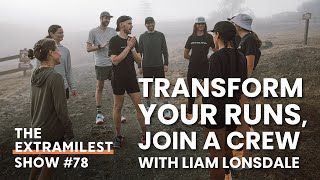
Liam Lonsdale, a photographer and runner, talks about the Bay Bandits trail crew in Oakland and why running groups matter. They cover gear for technical terrain, injury recovery through small wins, and practical tips like downhill posture and layering for winter runs.
Chapters
Yeah, finding joy in the process, in the crew, in running, is so special, man. Trails are such good cross-training even if you're just a road runner. Stability, climbs, you know, you're building up different muscles. It's generally lower impact than running on the road. Just factor in at least one trail session a week and you will get stronger. I think it's possible to really overcomplicate all running equipment. Ultimately, it's about finding the thing that works for you. I think this is like life, period.
Welcome to another episode of The Extra Mileage Show. My name is Flores Gehrman, and One thing I really enjoy about running is the community aspect. Yes, you can run on your own. However, I think there's something special about sharing some miles and kilometers with other runners. Community, a sense of belonging, friendships, and sharing outdoor activities together are all important for both our body and our mind. Today, a conversation with Liam Lonsdale. He's a professional photographer, a trail runner, and a father of two young kids. He's sponsored by brands like Speedland Footwear and Path Projects, and we have been on several different photo shoots and video shoots together over the past few years. He's an awesome guy to be around, a lot of energy, and he definitely brings the vibe. He's one of the guys behind the Bandits, a running crew in Oakland, California. We talk about advice for runners looking to connect more with other runners, how to find a running crew around you, or how to start one if there's not one nearby. We also talk about running equipment and overcoming challenges in training, racing, and daily life. This episode was brought to you by LMNT. LMNT helps anyone stay hydrated without the sugar and other dodgy ingredients found in popular electrolyte and sport drinks. On the Extra Mile Show, I often talk about electrolyte deficiencies that athletes also experience, not just in the summer months but also in the winter months. Electrolyte deficiencies or imbalances can cause headaches, cramps, fatigue, brain fog, and weakness. I'm excited about the newest LMNT flavors that I'm to create different holiday drinks myself. Chocolate mint, chocolate chai, and chocolate raspberries. Yes, you drink these hot and they actually taste delicious. Chocolate mint is my favorite flavor. Right now, Element is offering my listeners a free sample pack with any order. That is 8 single serving packets free with any Element order. This is a great way to try all 8 flavors or to share Element with a salty friend. Get yours at drinkelementtea.com/flow. That is D-R-I-N-K lmnt.com/flow. I hope you enjoy my conversation with Liam Lonsdale. Welcome to the Extra Mile Show. Glad you're here.
Thank you so much. Yeah, delighted to be here. Finally.
This is, well, like we've been talking about this for a while now. And yeah, let's start out because you're one of our ambassadors for PATH Projects. We have had a friendship for several years right now. You're a photographer. You've shot a lot of photos for PATH. So we've been on a bunch of different adventures together. One thing that I want to— that stood out to me last time that I visited you was in the Bay Area in Oakland, and we went out to go for a group run with your friends. Can you tell us a little bit more? Because I thought it was so powerful to see the community that you guys have built up there. Can you share a little bit more about what you guys are doing over there and how that has come about and, yeah, what you're getting out of those running groups?
Yeah, of course. I mean, massive shout out to the Bay Bandits. So, you know, that's the friends that you're talking about. We're a trail crew first and foremost. You know, we believe in trying to be on the trails as much as possible. You know, only trails. Um, yeah, it's a group of people that started off really, really small. Um, you know, maybe 5 to 8 people showing up every week that over the past 10, 11 months, we've grown now to like 40 people every week, maybe even more. And, and like lighter days, longer days, or, or events, you know, we get a big crew of folks out there who are also feeling this, this trail love. And in terms of like, you know, the mission or what it really is, it— we just want to spread the love of the trails. It's really that simple. There's so many people that are out there running daily, you know, training for the next half marathon or marathon, and they're pounding the roads, and we're like, yo, but what about the trails? The kind of submission is not submission. The submission is, you know, really to show people how good the East Bay trails are. We don't just run in the East Bay, but we kind of, our weekly runs are all out here in Oakland and they're so underrated, the trails here. You know, people always head kind of north to Marin and we're like, yo, have you seen the East Bay trails? They're phenomenal. You know, the East Bay Regional Park District is actually the biggest regional park district in the entire USA. It's massive. Yeah. And we just want to showcase that, you know, people don't even realize the, the quality of trails they've got on their doorstep. So yeah, that's kind of our, our side goal is to show people what's going on out there.
It is, it is interesting. So we had a few podcast episodes ago was Scott and Don from Trail Runner Nation, and we were also talking about introducing new people to the trail because sometimes indeed, like you're saying, people are training for a half marathon or for a marathon. They're going out on the daily for a 5K or 10K or whatever they might be doing. But a lot of people are unknown to trail running. And yeah, I think there's that angle of, like, having some expertise, having some guidance, having some other people around you that can show you the way, and it makes it a little bit more comfortable. And so for anyone listening over here, like, and I think we can take this two ways because your group is a trail running group, but there's a lot of road running groups as well. For sure. For those who are listening who might have never ran with a group before, like, do you have any advice? Because sometimes it might be a bit intimidating. Like, how do you first of all find a group? How do you go about joining a group? Like, can you tell a little bit more about the fundamentals? Because I think a lot of people have never experienced the joy of an actual running group.
First thing is to say, just do it, you know? Like, oh my goodness, um, finding the right crew or club is really important. And I differentiate the two very intentionally. Club is something that generally people apply to join, pay to join, et cetera. There's organized meets and uniform, and there's just kind of like a whole culture around club, especially around athletics clubs, track clubs. That whole vibe tends to be a little bit more competitive, but I think certainly they're growing more welcoming as they realize, you know, how they can grow just in numbers and reach and impact. I think they're becoming more welcoming. But crew culture, which is where my heart is and where the Bandits, you know, really is rooted in, crew culture is no dues, you know, no fees. Like, anyone is welcome. And just creating this atmosphere of like, these are your people. Like, we, we're just there to be for each other. Sure, we, you know, we have our agenda, you know, we want to get out, we're going to be on the trails. But whereas at a club, often, you know, you're on a track with a coach, or, you know, you're heading out with a very specific, like, tonight we're going to run a 5K and we're going to do 2K at race pace. And what— like, no, like, the crew is like, we're gonna meet at this spot, we're gonna run. Like, that's the vibe, you know. Those are like differentiators. In terms of finding a crew that's right for you, there's so many ways to do it. Social media, I think, is like a really simple one. Strava or Instagram Instagram, you know, search Run Crew and then the name of your city or town. They exist for sure. And Strava as well, you know. We on— with the Bay Bandits, like, those are our two main outreach places, is putting everything on Strava, putting everything on Instagram, and hoping that folks find it. We also speak with a lot of like local running stores, which is another great place. I think if you can just find one spot, you know, one group, it all kind of stems out from there. 80% of the people that find us are either through Instagram or Strava or one of the local running stores. They're like, oh, I ran with this crew, and they were like, there's a trail crew that meets every Monday, and I found you here. Then we have folks that find us organically. We have people literally that are— we had one guy just a few weeks ago, he was on his bike and he was like, you guys all going for a run? Yeah, man. He's like, give me 5 minutes, can you wait?
I'm like, yeah.
He ran to his car, dumped his bike, put his running stuff on, and came and joined us. And he runs with us every week now, you know. Like, don't be afraid, basically. Like, especially with the crew, like, they exist to run together. That's literally it.
And the running community is so open-arm welcoming. If you show that you're interested in a run, like, it— like, that fear of, ah, rejection or not being accepted or anything like that, if you show up, they have respect for other people who are active. We're all in this together, we're all on this journey together, right? And whether that is trail running, road running, or whatever, like when you show up with a positive attitude, you will get the love right back over there. But I think that sometimes that initial fear a little bit— I will be honest, first time I joined a running— I literally had the SoCal Coyotes with Coach Jimmy Dean, who I also had on the podcast. First time I saw, like, all right, this group every Thursday morning, they're meeting at 6:00 in the Santa Monica Mountains. And I would go over there and I had no clue what to expect. Literally, I was scared. I was nervous to walk up there. And I I walked up there and there was a group of 10 people that were already talking. And all I said was, hello, I'm here for the run. And just the positive vibes of like, where are you from? And from there on, you start running together, you start sharing stories together, you start building up friendships, and you feel like you're surrounded by your people all of a sudden.
100%. I mean, we've literally had people join us that have never run on trails before. And we've had people that are like really accomplished, roadrunners that have never run trails before. We literally have the full spectrum. I think one of the things that we've tried to do at the Bandits is, you know, we say all runners welcome, all paces welcome, but truly, like, you have to show that with action in terms of, like, is anyone getting left behind? You know, we're really strictly a no-drop crew. We have 3 distances. Like, we don't split by pace. We have a longer group, a shorter group, and then a social group now. And so it's like 6 to 9 miles, 5 to 7 miles, and then under 4 miles and under 1,000 feet of gain. I mean, one of the things that the Bandits is known for being on the trails is gain. You know, we like to get further, and that's definitely intimidating for some people. But yeah, nobody gets left behind. And like, dude, I have so much respect, like almost more respect for the people that just show up and they're like, yo, I've never run trails before. Like, on our team, we have people that are on the US national team, on the crew, in the crew, you know. We have people that are winning big races, coming top 10 in like global standard races. And to show up and be like, yo, I want to get involved, I'm like, hell yeah. Like, it's so rad. And they kick it with us, you know. Like, nobody's, nobody's out there trying to put other people down or make them feel like, yo, you're not fast enough. It's like, yeah, rally the crew, get everybody together. And we actually— we even plan our routes so that everybody finishes around the same time, and then we bust out drinks and snacks in the parking lot afterwards, you know, to really make sure that everyone feels that sense of connectedness. So that even if you are running the social group and you're running 12-minute miles and you like just basically taking it like what other people would be hiking, you know, you're still finishing at the same time and still kicking it with those in the parking lot, you know. It's— everyone's together.
For sure. I have Martinez Evans on the podcast, and he is like a 300-pound runner, and he talked about his experience, his negative experiences with some running groups where he felt like, all right, they say they were an all-pace running crew, and he just couldn't keep up with the pace, and he felt left behind. And he felt like— and I can see how some people feel intimidated by that part as well. And I do think sometimes finding that right group for you and finding who you flow with and whatnot. And here's the other thing I want to say though. Personally, right now, I don't run with a running crew or whatever. Like, I have two friends. Every Tuesday night we meet and either we're going to go for a run and for dinner after, or we're going to go for a swim and dinner after. And often we throw in some ice bath or sauna and some of these other things. But it's almost like a non-negotiable. Every Tuesday night, 6 o'clock, we know we're going to meet. And so even if you don't have a crew next to you, just finding one other person from an accountability perspective, and sometimes that might become two, might become three or some other people. But I've also sometimes found as long as you stick to that date and time and make that almost like a non-negotiable, that's when the habits, the routines, the consistency starts happening. And even if several people can't make it that week, at least it kind of keeps going. Like, I think that's a, that's a good one there.
I mean, even on that accountability, I've dealt with so many injuries the past couple of years, and we can talk about those later, but like, the accountability, it's like not quite the right word, but it's the right concept. Like, I've wanted to be back to running so that I could be with the crew, you know. The vibes are so exquisite that I'm like, dude, I want to run just so I can be back with that crew on the trails. Like, get me healed up so I can do that. You know, there was so many times where I could not run. You know, I was in like a really low space and I would get a text or a call from someone in the crew like, yo, I know you're still injured, but are you gonna come for parking lot beers afterwards? Right? And I would take a case of non-alcoholic beer. Like, I don't drink. Non-alcoholic beers taken up there and we would sit in the parking lot anyway and people would be like, dude, how are you doing? Like, how's the ankle? Like, when are we gonna have you back? You know, you just have this sense of like belonging, support, and then accountability. Because you're like, yeah, I definitely need to be doing my rehab. Like, I skipped it this morning and I need to get back on that because my goodness, like, running with these people is medicine.
Well, and, and that's the thing, right? For me, the Tuesday night runs are not about the runs even. They are for me about catching up with friends, almost like Yeah, like not just the catching up part. It's almost like a therapy session on a continuous basis. And whether you see that as therapy or whether you see that just as catching up, I think we're currently living in a mental health crisis. I see so much depression around us. I see so many unhappy people. Like, there's a lot of different things happening in the world, like, but inside people as well. And this is where I feel the importance of community. Even if we look at the blue zones, at the Harvard longevity studies, all of it indicates communicates the importance of community and friendships. And even in our Personal Best Running coaching program, that, that we often talk about, this is an important component. Like, the whole low heart rate running, it's all good and well, but you have to have fun in the process. And from time to time, make sure you run with other people too, even if you're running at a higher intensity. That's totally fine. Like, just a mental component of it alone, if you're mentally in a good spot, that makes you run better anyways. And so yeah, it's all connected there.
Yeah, I think for me, like, the underlining essence of why the band is just— is such a potent medium for, for me is joy, you know. It's like collective joy. Being with those people brings me so much joy. Being on the trails brings me so much joy. But then seeing that joy reflected back, you know, seeing people like, you know, I plan a lot of the routes and someone's saying, dude, that route was so sick, I never would have thought linking those two trails or whatever— not the ego that's like, yeah, that was a great route, just like that somebody dug that and found joy in this thing. It's like, yes, you know, it like lights me up. So yeah, finding joy in the process, in the crew, in running, it's so special, man.
Yeah, it's so special. Yeah. Then recently we were also in Oakland for for a photo and video shoot. Yes. Because you came out with your own trail running shoe. Yeah. This is kind of an interesting one. I want to talk a little bit more about this part in particular. Like, trail running equipment is very important. Running equipment is very important. And so eventually, at some point, you had several different thoughts around, like, all right, there's Speedlandt as a company, there's Path as a company. Like, let's do some creative projects over here and develop like a running shoe that you were really hyped on. Talk a little bit more about like that whole project, how it evolved, and, and yeah, what's going on with it.
Yeah, for sure. I mean, to like take a step back, one of the things talking about what lights me up, like joy is obviously there, but the spirit of collaboration is something that's been a through line, like, basically my entire career, you know, especially from when I kind of left corporate world aside and did my own thing in 2015. Like, collaboration was just— I immediately realized that that was the thing that was going to make me successful and, like, bring me joy in what I was doing. So then to, like, fast forward and come back to present day. And, you know, partnering with Speedland, partnering with Path Projects, having these two awesome relationships with small indie brands that are doing cool stuff, like, a little bit differently. When Speedland approached me about a shoe, like, it was kind of a no-brainer to bring Path Projects into that. So Speedland is this running shoe manufacturer. They small. They started just a couple of years ago, and the whole premise is that they do commissions with their athletes for the shoes. You know, they have these two silhouettes or models, the SL and the GS, and then the models that attach to it— so PDX, HSV, Oak, Tam, PGH— like, they are all the athlete kind of driven parts. And yeah, they'd never done a collab, and it just made so much sense that I would be the person to do the collab because collaboration is so important to me and and yeah, this kind of rad relationship with Path Project. So here we all are, we kind of have this idea of bringing it all together. We do this Run With The Land collection, Run With The Land being the Speedland motto but being something that's super resonant for me just as like a mantra. And yeah, the GS Oak came into existence.
Oak, you know, being Oakland and the shirt, which is so dope, which sold out in 2 hours.
Yeah, crazy. I mean, not surprising. Again, not to like blow my own trumpet, but it's just such a dope shirt. It's like, it's so inoffensive and cool.
Like, of course it's sold out. No, that worked out well. So for you, what was it like that when we're looking at a trail running shoe in particular? Yeah. What is it that you're looking for in a shoe? Because I want to talk about trail running equipment, but also about running equipment in general for like the winter months. I want to talk through headlamps for a bit. I want to talk through a few different things. But let's talk let's pour it out about the trail running shoe in particular. What, what is important there for you?
So many things. Comfortable, it's got to be comfortable. But like, me personally, like, I love to rip the trails, you know. I love to go full send. Any of those little video clips that have been floating around from that GS Oak shoot, like, I think it's pretty obvious, like, just going full send is something that makes me very happy. And so having a shoe that I can feel like 100% confidence in, that like when I set my foot down, wherever the heck it's being set, like it's going to stick, it's going to like spring me off in the exact direction that I want, like it's so critical. And that's something that both of the Speedland models, the SL and the GS, do really well because of this BOA dial system. A lot of people think it's kind of gimmicky to put these dials on there, but you just get such a precise fit And then when the rest of the shoe around this, like, fit is dope and functional and, you know, super high spec, like, it all just comes together. So truly, like, obviously it has to be comfortable, but then I have to feel confident in what's on my feet. And I've run in so many shoes where you're second-guessing what, what's going to happen next, and you can't go 100% full send if you don't trust what's on your feet.
And the grip part plays a big role in there too, like, and I think this is for both trail running as for road running, especially even, even when you're road running in the winter months and it's slippery out or there's leaves on the ground or there's like even there, the importance of having sufficient grip instead of just no grip at all. Like, I sometimes even run on my trail running shoe on the road if there's a lot of debris on there just from a grip perspective too.
For sure. I mean, you've seen the roads in the Oakland Hills. It's basically trails. I'd make a joke that the fire roads in Marin are in better condition than the roads around here. I actually run, especially like post-injury, I did all of my road miles in a pair of Tem GS10 prototypes. That's the, the commission that Dylan Bowman did, because it's just such a stable platform and you have that grip. And I basically, I just wanted to feel like solid. I didn't want to have any question about my footing, about my gait. And so yeah, I, I put hundreds of miles on the road in trail shoes.
Have you Have you run ever with snow spikes on?
Yeah, yeah, yeah, I have. And I've run in crampons as well, like actual crampons. And I've run in the little kind of chains and the little spring things. I've run in all the different things.
This is another one, like, I didn't even know it existed until like probably whatever, 5 years ago or something. I was like, oh yeah, it's actually really nice when it's snowy out that you can actually just grab one of those. Yeah, basically rubber things you pull over your shoes and it has a bunch of spikes underneath, and you could just buy them on Amazon or at a local running store, and all of a sudden you have a significant amount— yeah, significant amount more traction.
100%. And the technology has come on a long way. Like, I remember when those first, like, Yaktrax or whatever they were called came out. They're good, but they pack up with snow pretty quick, especially if the snow's, like, you know, wet, and then you've got icy shoes and you— it's a whole different ball game. But yeah, the tech now, like, so much time and effort has gone into making like proper running crampons or spikes or, you know, all these different variations that you can flip and get out and run a really long good run without even thinking about it, like in the snow. Like, I've— I remember years ago I would just get the, like, the biggest tread that I could find on a trail shoe and running, you know, I was running in the Alps, ski resorts, up and down, flipping at the side of the piste, and I would just have to keep stopping and like banging it, banging the snow out of the shoe. But it was fine because I had the, you know, these big grips. Now it's like easy, man.
Yeah, yeah, easy.
Yeah.
What about socks? Are there any go-to socks that you find very comfortable?
I mean, socks-wise, like, a huge shout out to our mutual friend Ryan Kingman. And, you know, Stance. He's one of the co-founders of Stance. I, I've run in Stance socks for a really long time now, and touch wood, like, I've never had a blister running in Stance socks. I also kind of stumbled across a new company recently called Near Earth, a little indie company out of Germany, and I got a pair and I'm super into them. They're actually like very similar to Stance socks. But yeah, like, I, I think it's possible to really overcomplicate all running equipment. Ultimately, it's about finding the thing that works for you. I think this is like life, period. But, you know, just because toe socks work for one person doesn't mean they're going to work for you. I tried toe socks. Yeah, that wasn't mine.
Like, just so funny. Same here. Absolutely same here. I tried them, I wanted to like them, and they just didn't work for me.
I mean, I heard so many people like, yeah, the best, man. Like, like, would never go back. I'm like, cool, let's get them on. Nope, just not my jam. And Stan socks just really work, you know. They don't slip down, they fit well, they look dope. I mean, like, I love— if you look better, you run better. That's gotta be it. Come on. Like, I know I'm kidding, obviously, but I really love pairing sock and shoe in a way that, like, is aesthetically intentional. So Stan's also does that really well. They have a bajillion different colors and styles that you can match with whatever.
Even there, indeed, like there's that component, the style component. But I think also a lot of sock companies make different fabrics.
Yeah.
And just find what works well for you. Some people like the wool version, some people like more of a very thin crew sock or like— so just, just try different things, whatever feels, feels right for you.
Sure. Stan's actually made I don't know if they manufactured it, but I got a prototype from them years ago of a thick merino wool sock, and I like look after that like it's flipping the crown jewels. Like, because it's such— for winter, you know, especially if I'm running in the snow, merino wool is— I don't think you can beat it, honestly. Everything else, like, it's never something I would wear, but anytime I'm going somewhere cold, those are the socks that I like find and pull out because they are so killer. Especially, you know, when the snow gets like inside your shoes and starts freezing around your ankles. Or yeah, merino for the win. So yeah, I have one pair of Stans merino that I like take very good care of.
There you go. What are some other winter running items that you, that you find helpful? Like I briefly mentioned headlamp earlier, but yeah, anything that stands out.
So I really suffer with circulation. Like my hands and toes get real cold real quick. Even, you know, out here it's like 50 degrees and I get numb hands. So I found wrist gaiters. It's essentially a sleeve, you know, from about here, kind of 4 or 5 inches up from your wrist, that comes down over to the kind of first knuckle in your hands. And it's Power Stretch fabric, and that makes such a difference. Wear a full glove, like, can be sweaty or you lose dexterity, or it's just not cold enough for a full glove, the wrist gaiters are so clutch. Keeping that lower part of your extremities insulated really helps with circulation, so that just makes the experience way more enjoyable.
Do you buy that as a buff and you put the buff around that? Do you buy that as like—
the one that I have is from a company called Houdini. It's a Swedish company, but a bunch of, a bunch of brands make them.
You know, any company that has a power stretch, like, they're not the full arm sleeves, right? They're the—
no, no, no. It's literally like the whole thing is probably not more than 6 inches long. Maybe it's 6 inches. It has a little cutout for the thumb. It's, it's a lot like the sleeve of a Pyrenees hoodie, you know, the Path Project Pyrenees, but thicker because it's Power Stretch Pro or whatever it is. And it just sits tight on there. And then when it gets super cold, I actually oversize my gloves by one size so that I can put them over that. And you just— yeah, I mean, it's a game changer if you have bad circulation. But yeah, that kind of bridges the gap between a full glove and no glove. The Pyrenees hoodie needs a shout out, man. Like, I have run— I was running in like -20 a couple years ago in one of those and a light windbreaker, and it was like perfect. So that always gets a shout out. Headlamp— there's so many headlamps out there. I'm not going to go too much into headlamps because I'm actually like super dissatisfied with the headlamp that I've got right now.
I'll take that one then. Yeah, yeah, exactly. I got like the one of the Petzl headlamps, and that one I've, I've had it. I first heard the Trail Runner Nation guys talk about Petzl like frequently, and then I ended up buying one, and that one worked out so well. Like, one of the things that I like about a headlamp is when you have multiple, like, you can put it bright, brighter, brightest, and that one actually adjusts too based on distance. And so it has the difference of if you're looking at something close up or like a map, you're looking at something like it dims it. And then when it gets to the distance, it gets wider. And as much as it seems crazy to spend $100 on a headlamp, I find that if you have good visibility during all the winter months or evening runs or anything like that, just the chances of you not falling over a crack in the road or on the trail or anything like that, it just makes the experience so much better. So I think one of the most underestimated items that people can buy for the, yeah, the colder winter months would be like a proper, proper headlamp for sure.
100%. I mean, interestingly, like that reactive lighting system, fun fact. So when they were first developing that, a really good friend of mine was working with Petzl. And so I tested one of the first reactive lighting prototypes. You know, and we kind of were basically testing it to failure to figure out what it did and didn't do well. And this is back in the UK, in the Lake District. And, you know, we've been running through— we found its weakness, which is running through trees, because it, you know, when you've got all these branches around, it detects them close and so dims the light, even though actually you just need like the big beam. But the reactive lighting is dope, especially to not blind people, because it cuts off when it detects you know, that reflection back. I completely agree, like, having a, a good headlamp is so clutch, especially through winter. It's the same thing as the shoe, you know. If you feel 100% confident in your ability to see what's coming up, you can go harder, you can enjoy it more. There's, um, a brand, I think it's called Moonlight or something like that. It's the brand that Kilian Jornet, um, wears. It's a Norwegian company, and I will be purchasing one of their headlamps. They're like car headlights for your head, you know, like a bajillion lumens, like lights up everything. Um, you know, you put the battery pack in a pack because it's so heavy, but that, that literally will be what I get next. And they're like €300 or something.
Wow.
But yeah, and they're not cheap, but it's like, what's the price that you put on going full send? I, I flipping want to get out there. I don't want some like dark trails to be the reason I don't get after it. I was running last night and, you know, we, we ran like 20 miles in the dark on 10 of the miles. I'd never run on those trails before and my like 200 lumens just didn't cut it, man.
Well, then, then you realize once again, I think the layering component in the winter months It's another important one over there. Like, when you— sometimes you start a run and you're quite cold, and then later on, you might start getting warmer again. Just ease over there. I think the gloves you talked about earlier, I think even there, sometimes I'm going to double glove it because when it starts getting cold, even if it's only around the freezing point and you have a very thin glove, my fingers often get quite cold. And so when I go out with my kids to the snow, I sometimes put those little hand warmers in. In. Like, I personally, I personally don't use them, but for the kids it seems to work really well. And I know other runners are using those hand warmers as well.
Yeah, tuck those in like on the underside, on the palm. Clutch.
I think anything to stay comfortable, like anything.
Layering's clutch. Like the— I think especially when you're doing high aerobic activities, you overheat so quickly once you've got those layers on. So being selective about the layers that you choose focusing on extremities because those are the things that get cold first and make you the most miserable. So if you can keep those warm, be it with gloves or mitts or, you know, wrist gaiters, and then for the core, like a vest or a gilet, like so clutch, super light, but that keeps those kind of core, the vital organs, a little bit insulated without overheating. That is, that is a game changer. It's like as little layering as possible for maximum effect, and then you avoid overheating. Because once you overheat, you get sweaty AF, and then you get cold because you're sweaty. So yeah, it's like, it's a— it's fine-tuning. You gotta test it, you gotta experience and experiment. And the one piece of advice I would give is like, figure out what works before you commit to doing some crazy winter adventure, because there's nothing worse than being like 10 miles into a 20-mile loop and then realizing you're cold, like too cold, miserable, and you're on the sufferfest struggle bus.
Yeah, totally, totally. I want to talk about little wins for a little bit instead of focusing on big crazy goals. I know you have dealt with bouts of injuries and you've dealt with like not just the injury component, but there's often a mental component attached to that as well. And I know there's quite some people listening over here who have experienced injuries or who are in the middle of an injury. Can you talk a little bit more through the little wins concept that you and I have talked about previously at some point?
The little wins idea is just finding the small successes in that rehab process, in, in anything. You know, I was couched for months, you know, unable to run, and it can be so depressing to put those shoes on run for that first time. And that easy 5-mile loop that, you know, I would be ripping, I'm like walking, you know, because I'm just so exhausted. So that reframe of it being a little win— because, yo dude, you, you just did the 5-mile loop— like, rather than, wow, I've like really set— I'm so far back from where I was— like, very intentionally acknowledging those little wins made such a difference. So like, the backstory is for basically over the past 2 years, I've really suffered with a recurring ankle injury. And so it— like, every time that I rehabbed it, I thought I was done. And then to go back to square zero was truly, like, heartbreaking. And multiple times I was just like, you know what, like, I might just be done. Like, I cannot keep doing this to myself. But then going out, you know, running 4 miles and walk-jogging for 3 of them and just feeling total joy. Like, I mean, back to that kind of trail only— like, I really only really like to run on trails. Like, roads just doesn't get me that fired up. And there was a few road runs in the rehab process that I was just like so grateful, like so grateful to be even out at all. Little wins is really like a gratitude practice, you know. It's like a mindful gratitude practice of just being super present in the moment and finding gratitude. That's truly what it is. And if you can find gratitude, you know, if one can find gratitude in a moment that could otherwise be framed really differently, then mental, mental health is gonna, gonna be much better, you know, much more robust.
100%. I sometimes see people, in particular those who train with low heart rate frequently, to do. Yeah. That get back into training after they have been injured or have taken a break or whatnot. They're getting back into it again and realize, oh, I'm really out of shape. Oh, it's like I've lost all this fitness. Oh, all this work was for nothing. Da da da da da. You've still gained the experience of the training. You've still— it will come back again. But it's like, indeed, instead of comparing ourselves to our peak performance is like, let's, let's do what we can do now. And for, for me, you were talking about 4-mile run with 3-mile jogging. I'm thinking 1 mile, like, walking with, like, 10 seconds of slow jogging. Like, it, it can really be— you can break it down to, like, today's goal for me is to go outside and walk for 5 minutes. Yeah. And if I feel like picking up the pace and go for a very slow jog or shuffle for 10 seconds, that's a win. Yeah, but don't put like— and so it's one of those things, right? I think for everyone, the small wins can be defined in different ways, but I sometimes even have to break it down further and further and further. And even for anyone listening over here, yeah, make it so that it is achievable, doable, get some of that positive momentum again, and it will start becoming easier after that.
Yeah, to go back to crew for a minute, you know, I think about like that first time that I rejoined the Bandits after the injury, and it was such a happy moment. I was so delighted to be back with them. And then we like, you know, head off on the trails that I would normally just rip, you know, like I know them, I can probably run them with my eyes closed. I know them that well and that intricately, you know. These are like, they're less than a mile from my door, they're right there. Taking them so conservatively, and then, you know, coming up the climb on the other side and being totally gassed, you know, passed by people that should not have ever passed me, you know. And, and I say that truly, like, you know, that's ego. That, that is pure ego, you know. And I, I remember very distinctly catching myself and being like, dude, you're out here. Like, you are out here. And like, more power to them for passing you. Like, one foot in front of the other, find your breath, find the joy. Like, you are out here. And I think it's, it's essential that if you, you know, are recovering from an injury, that you give yourself that grace of like, it will come back, like it will happen. And when you're in that mindset, it comes back way easier and way quicker than when you're banging your head against the wall because you aren't as fast as you were, or you, you know, it doesn't feel as smooth, or whatever, you know, it comes back. You— but you have to be good.
You have to be kind to yourself. 100%. 100%. We can be so harsh on ourselves. We can be kind to others yet harsh on ourselves.
And yeah, it's a choice. You got to choose. You have to choose you truly. Yeah. You know, like, you want to choose beating yourself That's a choice. You wanna choose like figuring out the way to do it and feel good about it. That's a choice too. We, we all have the choice.
Yeah. Do you have, have any advice for runners looking to improve? Do you have any high-level thoughts for those who are either just getting into running or even, even people who have been running for quite a while? But any high-level thoughts for improvements?
I mean, specifically on trails. Because that's where I would say that is my expertise. Like, do more of it, number one. You know, if you are like a once-a-month trail runner, double it, triple it, quadruple it. You know, if you can get trails in once a week— I think like, just as a side note, trails are such good cross-training even if you're just a road runner. Like, stability, the climbs, you know, you're building up different muscles. Like, generally lower impact than running on the road. Like, like, just factor in at least one trail session a week and you will get stronger. But, you know, to improve on the trails, like, identify your weaknesses. You know, if you are that person that finds yourself backing off on the downhill, like, that's cool. Do hill reps down. Like, walk down it, turn around, walk back up. Like, identify the points that are trickier, the cruxes on that down, you know. Where's the big boulder? Where is the log? Where is the step down? Where is the drop? Like, where does the corner bend round? Figure that out and then jog down and then walk back up and then, you know, and just like build up, build up, and you will find that your confidence like improves. I mean, there's like form improvements that lots of people could make on downhill. Like, so many people lean back— lean forward. It's like such a weird thing. And you, like, when I tell people and you see it kind of click for them, it's magic. But it, like, finding—
That is such a good one. Like, you start to run faster but also more relaxed. And yeah, you have to find that right angle.
Like, when you lean back, you've basically got the brakes on the whole time. And even if you just think of point of friction, which is where your feet are, when you put your weight backwards, you are literally allowing your feet to slide out from underneath you. When you put your weight forwards, you have your mass over the point of friction, and so you are able to get more friction through your feet. Like, I nerded out on this. Like, I'm a climber as well, so, you know, points of friction are really important. Like, I literally have gone over and over and figured out that, like, perfect gait, perfect posture, and forward is the way. Like, downhill, you will feel much more secure, much more loose, and therefore faster when you, you go downhill. I don't know, man. I think just spending time on the trails, period. Like, the more you do of it, the better you get at it. And if you can identify those little— the areas where you realize that, especially with a crew, you can easily see where you're weaker and stronger because you can see who's passing you. You know, if it's the climbs, like, cool. Like, you've got to figure out how to get better at climbs.
Do some hill reps. Spot on. I think that the part about the lean forward and backwards I see that on trails. I see that on road quite a bit as well, that people are almost afraid of running fast. Like, uphill, you automatically slow down often just because it becomes harder to run. Right? Your heart rate goes up. It becomes— on the downhill though, very often people feel it's faster than that they're comfortable with. But you're 100% right. The more we practice that, the more we become familiar with that. And it's so nice because your heart rate actually stays relatively under control. It's not your heart rate often holding you back. Yeah. But, yeah, running, leaning forward, running, running relaxed. I think a lot of people tense up on the downhills too. The more that we can almost see it as a dance down the hill or a dance down a mountain or, like, instead of so tight, and all of a sudden, it starts flowing. The more tight you are—
I don't know the way some of that footage from the GS Oak shoot, like, I mean, I, it's like, you know, I look like I'm slacklining or something. When I'm running downhill, my arms are out to the side or up high and they're so loose, they're like a monkey's tail, really flying down the hill. It's tricky to explain. I'm going to try and explain this as best I can because I know this isn't necessarily a visual medium, but a really good way to find that balance point of leaning forward is to stand at the top of a hill or basically where the flat becomes the down. Stand at the top of it with your toes right on the edge. Like, stand up as straight and like good posture as you can. Put your arms out to the side like airplane wings and look ahead, and then just lean forwards. Keep your body as straight as you can and lean forwards over your toes, you know, like the Michael Jackson lean. And at the point where you feel like you're about to fall, that's where you start running, and don't change from there., and it's like, that is the perfect balance point.
You might, yeah, you might want to bring in the arms slightly, right?
Yeah, but, but like, I mean, once, once you start running, then your arms start moving, but like that feeling in the T-spot of like where you hit it, then you start running.
Yeah, and for a lot of people that's uncomfortable. They might not have been there before. Yeah, um, but yeah, on a little hill to start. Yeah, exactly. Exactly, exactly. Yeah. What about, what about uphills? Any thoughts on uphills?
Yeah, man, they suck. No, I'm joking, I'm joking. Like, uphill has long been a weakness of mine, and it is a weakness because I send the downs so much. Like, you know, I am like sometimes max heart rate on downs, and when I get to the ups, I'm so gassed. So that's something, you know, that I like analyzed and have been working on, like holding back a little bit on the downs to give it the ups. I think uphill, the easy simple top tip that I always offer up is when you are at the bottom and you look up, you know, you don't always necessarily see where the top is, but if you have a rough idea of the climb, pick a pace that you think is sustainable the entire way.. It's super easy to get sucked into thinking about, okay, I'm gonna like smash this hill, and then a third of the way up like gas out. And that's super demoralizing, and it kind of takes your rhythm and takes your stride, and you know, before you know it, you're like dying. If you can have a rough idea of the length of the hill, the gradient, etc., and pick that pace at the bottom that you can sustain, even if that's hands on knees hiking, like if you can sustain it the entire way your rhythm's better, your heart rate's more regular. And then in your head you're like, dude, I just did that whole hill without stopping or resting. So tapping into that— and again, that only really comes with practice and just being out and figuring out what each hill feels like— but finding a pace that's sustainable for the entire, the entire way.
And be— and being okay to walk. Indeed, being okay with like walk breaks or like—
yeah, trail running is like absolutely mainly hiking, but like It really— like, unless you're in that very top percent, you know, or a few percent of elite trail runners, like, most of those hills you are doing a little bit of hiking at some point. Like, and then a certain gradient— I mean, Kilian Jornet did— twice I've name-dropped this guy now. He is a genius. He did a whole thing on like the, um, the economy of hiking on a hill. You can actually be faster and more efficient with a power hike, hands on knees, than someone that's like trying to run up a hill. Because you, again, your heart rate's a little bit lower, you can drive through the knees with your hands, and you can power up a hill where somebody else is like knitting needles, you know, with the feet.
One of the biggest differences I've seen is when— if a road runner transitions to trail running, or a road runner starts going more hills, not being used to the stopping and going part.
Yeah.
With road, with road running, we're so conditioned to often start. Yeah. And stop at the end. Yeah. And then whereas here, it's more like a, well, you go for a little bit, you catch your breath, you slow down a bit, you walk break, and like that, that part I found interesting. But once you accept that part, it's totally fine. I think at the beginning it's almost a frustrating part for people like this when you're not used to that. But when you just surrender and you're just like totally fine with whatever pace, just focus on time on feet, don't focus on pace, and all of a sudden the whole concept just changes.
Dude, I like— I never stop my watch. Yeah, the big road running thing, people like to stop the watches when they stop. Yeah, and I kind of get it, but for me on the trails, like, it's totally pointless, you know, like pace is pace. Like, if you stood still, you're not running. Like, that goes in your pace, you know. Sure, you ran 3/4 of a mile at 8-minute pace, but if you stood still and like that pace comes down to 11 minutes even though you carried on, like, it is what it is. That, like, to go back to that run with the land mentality, why that catchphrase is resonant for me is because again it's this like mantra of mindfulness. It's being intentional about when you're out on the trails, like running with the land. You are not fighting it, you know. It is not a battle against a climb. Like, you are out with it. Be with it. Like, take it. So many times, you know, on a run, I will like just stop and take it in. I really like to stop and meditate on runs, but even if it's just for a minute, just like look around. It's so powerful, man. It's so beautiful. And giving yourself that minute can, like, again, it's like a gratitude practice of like, look at this, like, here we are. Even if it's urban trails, like, I was out running the other week, on last week, on a trail that I'd never run before that basically runs into downtown Oakland. I like took a pause. There's this like creek, these beautiful trees, the light was coming through, and I was just like, this is so rad, you know? Like, this is so rad. Like, I I'm in downtown Oakland, basically, in the middle of all of this suburban urban buildup, and I'm out here on a trail. This is amazing. So yeah, it is a nice thing to be able to give yourself a short pause just to look, just to take it in. Yeah.
What advice do you have to people for meditation, for those who might not have meditated before, for those who are inconsistent meditating, or for those who wanna, like, why do you do it and what advice do you have for others? Because I've personally found it exceptionally helpful.
Yeah, it's a deep one, man. I mean, I think, like I've said pretty much for everything else, like, it's about finding what works for you. You know, some people use apps, some people don't, some people have teachers, some, like, meditation can be so many things. For me, there's like a few different forms of meditation that really work. Like, running can really feel meditative. Like, I love the concept of running as meditation. Breathwork is something that I find really powerful. There's this dope app that I found, like, I'm gonna shout it out, it's called Othership, all one word. It's this Canadian company and their breathworks are so awesome.
In what sort of way? Talk to us about it. Is it guided breathwork?
Is it? Yeah, it's guided breathwork. There's so many different breathworks on there that can be as simple as like firing up the body, you know, the system before a run. Like, I will often do a breathwork which is literally just like getting your nervous system ready to go, to like a gratitude and mindfulness breathwork, to like an hour-long like guided meditation where you are going so deep, like you don't even know what's going on, but your body, your central nervous system, your mind is just focused entirely on breath. That's super potent. Like how breathwork and running interface, I mean, literally your running is so reliant on breath. If you have more of a deeper understanding on like the system of diaphragm, system, lungs, how all of that comes together, you know, how that plays into how you feel. And you're able to harness that mid-climb where your lungs literally feel like they're busting, and you can take that slightly deeper breath or slightly more forceful exhale to optimize what's going in and coming out. Like, it's a game changer. So like, that, you know, in a way is meditation, you know, it's definitely meditation. And then it's like, dude, I'm like literally improving performance for running here. Like, other forms of meditation it's almost like prayer, you know. Like, it gets pretty woo-woo, and some people think it's hippie-dippy, but like, taking moments to, yeah, meditate, pray, whatever it is, to whoever it is, or whatever it is— like, again, bring in mind, body, and spirit in alignment. Like, you just feel— everything feels better. You talked earlier about, you know, this— like, we're living in a world of mental health crisis, right? Like, what does mental health mean? You know, does it mean taking antidepressants, or does it mean like figuring out what's going on in there and addressing it? Like, it can mean so many things. But for me, my meditation practice has really, really helped, like, take me out of the darkest, deepest lows and bring me to this place of like grounded, collected centered. And yes, means I'm a better human, means I'm a better parent, it means I'm a better athlete, better friend. So yeah, the advice for people wanting to find meditation or, you know, wanting to explore it, like, look for different things. Start with an app. If that doesn't feel resonant, look for a meditation teacher. Like, Google it, you know, there's so many different ways out there. But Othership, this breathwork app, is my go-to when I don't feel like I can just sit down and like find meditation, then putting that on 4 minutes, 7 minutes, 40 minutes, like yeah, gets every wins every time.
100%. There's something so powerful about that and not overthinking it either. Sometimes it can, like Dr. Phil Maffetone has talked about a 5-minute power break. Andrew Huberman has shown like several different scientific papers on how you can impact your autonomous nervous system in a short matter of time through the breathwork. Wim Hof, there's so much evidence behind it at this point. And for me, one that sometimes works quite well, and this one I've recently been practicing, is Andrew Huberman talked about a deep breath in, and then when you almost feel full, you still sneak in one more breath breath, like, yeah, deeper, and then like a hard exhale. Yeah. So, yeah, even just doing that 10 times, I start yawning. I almost have to watch out right now that I'm not starting yawning because you start to feel this sense of calm over you. And yeah, even us doing that a few times throughout the day will just get our body into a more relaxed state.
So yeah, yeah, I mean, I think just the concept of like figuring out what your body is doing, you know. Like, that's one of the things that I've really learned over this past 2 years with injury, you know, is listening to my body, like really tuning in to what is going on, be it like sleep or tension or soreness or whatever. Like noticing it, sitting with it, like analyzing it, like in a somatic sense. And it's made an incredible difference. Feel like I've unlocked so much, like, potential in my performance just by virtue of, like, understanding where my body is at. Yeah, giving myself permission to, like, not run like, you know, like, dude, you are not feeling it today. Like, you literally— like, I can sit there, like, I feel it in my heart, I feel it in my head, whatever, feel it in my body, and it's like running is just not the right choice, you know. If I think back to this, the, the most recent injury, like, I knew when I woke up that morning that I didn't feel 100. I could just, like, feel it. Yeah. But there was a race the, the Sunday that I'd signed up for. It was a race that I'd, like, put a lot of mental, like, value on. Like, it was like gonna be a validator. I had this shoe coming out, I needed to perform, I needed to do all these things, you know. And I could just like feel in my body that I didn't want to run, but I forced myself out. And I like, honestly, for the first 3 or 4 miles— and I was like, okay, well, you're not feeling 100, so do you maybe just take it easy? And I, yeah, first 3 or 4 miles took it super easy. I actually took poles out. It was like an 8-mile I took poles out just to like really like intentionally slow myself down a little bit and be more mindful about what I was doing with all parts of my body. Yeah, like 5 miles in, I was like, yeah, okay, cool, like maybe, maybe it's not so bad. Mile 6, like completely crushed my ankle again. And yeah, and I was just like, dude, you knew, like you knew that you shouldn't have run today. Day. Like, I was so frustrated with myself that I hadn't listened. And now, you know, I've learned that lesson the hard way. But yeah, I've had those like inclinations a few times where I've been planning something and it's just not felt like— I, I can just feel it. I'm like, dude, today's not the day. Like, change the plan. And yeah, it's a really— it's a powerful thing to be able to be like that, tapped into your the, the body's experience and yeah, look after it in that way.
Being flexible in our training and not following that schedule so tightly is so important right there.
I want to be respectful—
train when you're injured. Yeah, that, that's the thing. Absolutely. I want to be respectful of your time over here. I have one more question, an important ender question, but before we do, where can people find more about you?
More about me? I mean, honestly, Instagram is probably the best place. Like, there's all the channels, but @liamlonsdale on Instagram, that's where I tend to post the most things. People are interested in my photography, liamlonsdale.com. Best place to find out more about me is just come join me on the trails.
Open invite, open invite. Yeah, yeah, yeah, for sure. Um, That's the band that's in Oakland on Monday, and you guys have an Instagram.
I'll run with anyone. I don't need— you don't need to be a bandit's room, but we run— Bay Bandits run every Monday evening and Thursday morning.
And that's on the Instagram as well?
Yeah, we have our own Instagram, @baybandits.
Exquisite vibes guaranteed, lots of work guaranteed, um, you know, the rest is all to play for. Good, good. We, we've talked a lot about like a variety of topics from from running community, running groups, mental health, injury recovery. Do you have any closing thoughts you want to share with the listeners?
If people can hear the message of like figuring out what feels good to them, you know, through their running, if they can find, you know, if people can find that like pure joy in running— Debo says it, you know, trail running saves the— can change the world, can save the world. Like, I truly believe it. You know, when people are in a good way with themselves, like, the world's a better place. So yeah, I mean, get out on the trails, find out what feels good, and do more of it.
Do more of what feels good. 100%. 100%. So well said, Liam. Thank you very much. Appreciate it. Looking forward to many more trail adventures with you soon. So, oh, you're going to be down here, next month as well.
So we'll, uh, we'll catch up. Yeah, LA, we're going to be hitting up the trails down there.
Yep, perfect. Thanks so much, we'll talk more soon. All right, later. Thanks so much for listening. If you are looking for any additional guidance in your running, in your training, and in your racing, check out our running coaching program at pbprogram.com. Those are the letters pbprogram.com. I would love to hear from you about this episode you just listened to. What was your favorite lesson takeaway, or quote? Please let us know in the comments on YouTube. Have fun out there on your runs. Bye now.
More from Floris


Ryan Hall 2.0 on Strength Training For Runners, Lifting Heavy & Trail Running




You’re Doing Zone 2 Wrong (Even If You Think You’re Not) | Scott Johnston Round 2


How to Build an Unstoppable Aerobic Engine (Even If Starting From Zero) | Scott Johnston


Stress Is Killing Your Running (The Relax Fix You’re Missing) with Dr Kasim Al-Mashat

When things get hard, say this, it (works in any race) #jeffpelletier #running #ultrarunning