What 10 Years of Running Taught Me!
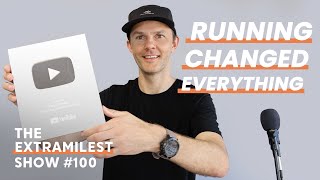
In this reflective YouTube video, Floris Gierman shares the most important lessons he has learned from a decade of creating running‑focused content, interviewing elite athletes, and building a large online community. He walks through eight core lessons: (1) Lean into discomfort – embracing fear and practice to grow as a podcaster, runner, and person; (2) Show up authentically – allowing emotions and vulnerability during marathons and content creation; (3) Recognize that everyone struggles – highlighting elite guests (Kipchoge, Dauwalter, etc.) and the pressure of social comparison; (4) Balance low‑heart‑rate training with speed work – emphasizing the 180‑formula, the danger of “too much too soon,” and the role of low‑HR as a foundation; (5) Prioritize progress over perfection – personal stories of suicidal viewers whose lives improved through his content, and the value of kindness; (6) Practice active listening – evolving interviews into conversations and listening to one’s own body signals; (7) Aim high and accept failure – recounting a 100‑mile night run experiment and encouraging bold goal‑setting; (8) Surround yourself with supportive people – the power of community, coaching programs, and group runs. Throughout, Floris intersperses clips from past interviews (Phil Maffetone, Courtney Dauwalter), viewer comments, and channel statistics (243 videos, 11 M views, 20 k comments). He ends by thanking his audience, family, and guests, and invites further engagement.
Chapters
In this video, I'm going to share my lessons learned from more than 10 years making YouTube videos. These are some of my favorite memories from my own running adventures. I'm running again! 2, 1, go! 10 years ago was the first time I heard the concept of training slower to race faster, and also from my conversation with different elite athletes, different coaches, and health experts, and also from my conversations with recreational runners. I'll share key lessons learned to improve in running, in your health, and in daily life. Let's dive right in. Lesson number 1 is lean into discomfort, repeat, and keep going. I started my YouTube channel because I had several positive breakthroughs in my running and in my life, and I want to share this so that other people could experience the same thing. When I first started out, I was very nervous when I would interview people. I would whisper the question. I would ask a question and not even hear what the other person was saying. I would literally read the question from the screen, and I could just tell that I was very uncomfortable. Here's one of the examples of one of those videos. It's kind of hard for me to see, but I just want to share some of the journey that I went through. And so this is a conversation with Dr. Phil Maffetone. She came up with the 180 formula to calculate an athlete's maximum Aerobic Heart Rate. Can you explain what you noticed when athletes first started training this way and their improvements that they've made over a longer period of time?
Sure, the first thing I noticed is that in many cases the training that they were doing and the training I was doing coming from track and field was not a healthy form of training. There were high injury rates, fatigue, Many athletes would drift into overtraining, which can lead to depression and, you know, just, you know, one health problem after another.
And I'm not going to lie, like, some of these first interviews are really hard for me to watch. However, I wanted other people to at least understand some of the things that I was experiencing, and maybe, just maybe, a few people might experience a positive change as well. And to my biggest surprise, there were a lot of positive feedback, a lot of positive comments on that initial that I put out there. Here's just a few of them. Someone wrote, this interview completely changed my mindset on running and in many ways on life. Everything worth a lot in life is a long game. And then Amanda, she actually wrote, I ran 12 miles today with an average heart rate of 139, and it felt phenomenal. During the run, I was just like, hmm, this feels so easy and so nice. Just me, my breath, and my thoughts. Ready for another 10 tomorrow. And this is exactly what I experienced. So I was so happy to see that resonate with people. Then Iris Mexican, he wrote, I wish I would have known this 15 years ago. It would have saved me a lot of headaches and injuries. I blame the Rocky movies. The video now has 228,000 views and 290 comments. So for me, the real lesson here is lean into something that is scary and that's uncomfortable. The more we do something, the more experience we gain, the easier it becomes. And this applies to everything in life. This is with podcasting. This is with learning an interview skill. This is with running or with strength training or any other areas in life as well. Lesson number 2 is keep showing up as your true, authentic self. Another moment that really stands out to me is when I ran the world's major marathons, and the last one was at the London Marathon. And I just want to share a short clip over here with a few lessons along the way about mantras, about digging deep, and also letting some of those emotions happen naturally. Let's go, let's finish strong. You got this, Flo. You got this. Almost there. What a journey. Hold it together, man. Almost there. Why is it that after running probably about 50 marathons, I still get emotional? That was so raw. I had to dig so deep for that one. Once again, what an incredible, incredible journey that was. Congratulations, well done. Fantastic. Congratulations. Thank you very much. Great teacher for many. I'm a pretty emotional person, and so there are absolutely highs and lows during some of these races, during different parts of life. And I feel it's so easy to cut all of those things out, to only show the good parts, like the parts where you're strong. Yet many people experience emotions, experience challenges, and that is totally fine. Not everything goes according to plan. And I think the more we can be real, the more authentic we can come from our true self. And that's somewhat of the lesson that I've learned to accept over time as well. So lean into some of that discomfort, lean into being your true authentic self there. Lesson number 3 is you're not the only one who is struggling. I have a tremendous amount of respect for the different guests that I've had on the podcast. Several of the greatest athletes of all time: Eliud Kipchoge, Courtney Dauwalter, Kilian Jornet, Mark Allen, Taylor Knipp. I've interviewed several different health and fitness experts, many different recreational runners, and the one thing I've come to realize: everyone around us is experiencing struggles and challenges in one way or another. As much as it might feel that, oh, we're struggling so much and other people, like, it seems so easy. This is often what you might see on social media, kind of going back to the previous point here. Everyone experiences challenges, and it's very often the pressure we put on ourselves. We are the ones who are deciding, I want to run this race under that time, or I want to accomplish A, B, or C. Yet once we actually start focusing on the entire process and not just the outcome of what that finish time would be, it takes a lot of pressure off. Because whether you make or break that running goal of running a sub-4-hour marathon or running a sub-2-hour half marathon or whatever that may be, you're the only one who really cares about that. No one cares about your Strava time, really. And so take some of that pressure off. Realize that you are enough the way you are. So yeah, do realize like everyone around you is struggling in one way or another too. Be kind, be patient, and just enjoy that journey in the long term. Lesson number 4: don't overdo it with speed work. I've recorded several different videos while running, such as the low heart rate training guide or my experiences with 10 years of low heart rate training. Just these two videos combined already have more than 2 million views, which is crazy to me, but I'm glad that some of these videos resonated. Here's one of those clips. So yeah, the biggest mistake I see with speed work is too much too soon. Once people start adding in speed work, it just becomes too many times. You really don't need to stimulate that higher intensity zone that much and that frequent. It is the low heart rate training that builds that basis, and the speed work is icing on the cake. I do truly believe that these two videos do have quite a bit of helpful information in there, so I'll make sure to link to all of these videos in the show notes as well if you want to watch or rewatch any of them. Another lesson that I want to talk about is progress over perfection. Recently, two different people reached out to me mentioning that they were suicidal. And that my content, my YouTube videos, podcast, and the running coaching program that they enrolled in had changed their life. They were now healthier, happier, they were running stronger. My content had made a small positive difference in their life, and that means everything to me. If I can make a positive difference in this way by just sharing some of my thoughts, some of my insights, it just made me realize how powerful words can be. And that's what I want to share with you too, that different people are in different stages of life, and just kindness to others— besides kindness to self— kindness to others and coming from a positive, supportive place can go such a long way. We don't realize what other people are going through. Yeah, to me this is very touching. If I had been focusing on making my videos perfect with the perfect audio, the perfect lighting, and all of that, I would have never been able to launch any of these videos. So many of my videos I felt cringed about putting on YouTube, and yet here it was. Like, getting some of this feedback is— that's what I live for. This is what, like, encouraged me to keep making more of these videos. And so yes, I do think it can go a long way to not overthink things. Like, when something feels right, share that message with another person and like reach out from time to time to check in with people. I think it goes a very long way and just that part of like making a small positive difference can turn someone's life around. And so that is what some of the YouTube learnings have been for me over time as well. Lesson number 6 is really listening. After hundreds of conversations, I tried to become better at actively listening. And this is where my conversations changed from being interviews, me just asking a question and getting an answer, to a back and forth conversation. And I want to share an example of that from one of my recent conversations with Courtney Dauwalter. She's the GOAT of ultra running. You can be like doing some squats or whatever, and it's so helpful. Totally. Is there any activation work in particular that you find helpful?
Mine is really focused on like my glutes and my hips for activation, and then, um, my strength is like working leg stuff and core mostly.
I know you probably thought I did arm work, but I was gonna say, what about, what about those deadlifts and squats? Yeah. No, maybe in the future I'll add in some arms. You're totally Ryan Hall next time I see you. Oh my God. There we go. I will have to ask you, have you heard of the flow rope? So the lesson for me here is practice, practice, practice. The more experience we gain, the better we become at listening. And this doesn't only apply to a conversation, this even applies to listening to our bodies. I found that over the years I've become more in tune with my body, and I've noticed that with other people as well experiencing breakthroughs in their running. All of a sudden you realize, like, what your breathing is doing, your cadence is doing, what the, the positive feedback in your body and mind is doing. And so I think practice that. Don't always listen to music when you're out there running, but listening to the feedback from your body. Is very important there too. So really listening to the body and mind there. Lesson number 7 is aim high and just go for it. I want to share one of my first running videos on my YouTube channel. This was in 2014 when I wanted to see if I could run 100 miles from my house in Long Beach down to San Diego. And this is at 2 o'clock in the morning when I had no idea what to expect. I really don't know how to I don't know what today is going to be, and I think that's the exciting part of this journey. I might fail, but at least I'm attempting it. It is okay to fail. At least you tried. And this can apply to any goal, from running your first 5K to running your first marathon, to starting a podcast or launching a new business. Don't care what other people think. Many people aim quite low in life because they're afraid to fail. They're afraid to be judged by other people. You can accomplish so so much more than you think when you actually aim high and you just go for it. And even if you failed, you've learned so much from that in the process. So the lesson here is: aim high and just go for it. Here it is, the YouTube 100K subscriber button. I want to share a few of my YouTube stats so far: 243 videos, 11 million views, 168 million impressions— that's just wild— 1.8 million hours watch time and more than 20,000 comments. From the bottom of my heart, thank you. Seriously, like, the YouTube channel has changed my life in many ways that I'd never expected. From meeting very inspiring guests to traveling around the world and meeting many of you, many different community members. A massive thanks to all of the different podcast guests who shared their time and wisdom so openly. Thank you to my wife Jen, for all the support in the backend of the YouTube channel, and to my kids Sadie and Zoe for all of our adventures. Over the years, I've done a lot of running on my own. However, I found a tremendous amount of benefit connecting with other people in person at events, at different group runs, or also connecting with other like-minded people online. The power of community cannot be underestimated here. Learning from others goes a long way. Lesson number 8 is I encourage you to surround yourself with the right people and ask for help if needed. There are tremendous amount of running groups available that you can join. There's a lot of different coaching programs. If you want to check out our coaching program, you can find out more at pbprogram.com. In closing, here are 5 more YouTube videos that stood out to me.
Normally you stick to the plan because the plan is like the dream, no? Like you, you think, okay, that's what it will make me good from plan to reality, it's, it's very different. We need to, to be able to adapt the plan. Uh, if you look to the heart rate variability and then you see like how is your mood, how is your, your feeling, like your tiredness on the muscles or in the body, uh, the, the quality of sleep— if you think about this, all these things together, then you can understand how ready you are for a session. And that's, that's very important for the day-to-day, many times like, okay, no, I cannot miss that session. And it's like adaptations, they never come from one session. Like, the body like will tend always to go to, to balance, to, to osmosis. So that means that if you do only one session, it will happen nothing. The thing is like, if you do one hard session and then like after a few days after you do the same session, and after a few days the same session, then the body will say, okay, my stability will be in another level. 30, 40, 50 sessions hard during the year, that's what makes adaptations. It's not one hard session.
So backwards walking is basically increasing the range of motion of your Achilles, preparing yourself to run with your whole foot, which means at some stage your heel is going to be on the ground and you kind of trust your heel. So walking backwards prepares you for all of that, but it also teaches you that because the exact shape of backwards walking is probably the the movement patterns that you want to introduce into your running. So walking backwards will create forefoot to rearfoot mobility, it'll soften your toes, it'll lengthen out your plantar fascia, it'll lengthen out your Achilles and your hamstrings, it will soften the front of your hips. But it's also giving your brain permission to put your heel on the ground and to trust all your weight in your leg. You'll see when you walk backwards, you put all the weight on your leg, and you have this sort of sense of, I don't have tension in my leg, and then I take the next step. We want to introduce that element into running forward. So it's just one of the most incredible ways of improving your running.
Push it. Like, don't decide you can't do something. Like, keep trying, you know, like whether it's a workout or a new distance or whatever it is. It's, it's fun to go after something a little scary, but then don't hold back. Like, go for it. Don't be afraid to push and then keep pushing. But don't get so wrapped up in your mind. Like, I've seen so many people, they're in the middle of it and they're obsessing over what already happened.
Don't—
no, be here in this moment. What can you do right now? And then just decide you're going to keep trying for that thing because like, that's where, that's where it all is, you know, that's where all that magic is, where you're like, you can look back and it doesn't really matter what happened then because as long as you gave it what you had and you gave it your best, you're going to be stoked on that, you know.
But the fit soul is more what's going on in your internal landscape with your internal character. Are you, uh, are you focused on fear or doubt or, or anger or jealousy even? Or are you focused on positive qualities like, um, you know, just feeling peaceful in the midst of whatever's going on? Or are you able to quiet your mind when the challenges get tough and that voice starts to go off in your head that's telling you, "No, it's not worth it. I can't do it. I should have never started this sport," or whatever it is. To be able to quiet your mind in those moments is what enables you to get past them and to move through them quicker. That's having a fit soul. Also, having a fit soul is really starting with a real trust in life itself. I saw that The real starting point is to have a true trust in life, that things are always going to work out the way they're supposed to, that it may not necessarily always be easy, but if you stay connected to that sense that everything really is in the right place at the right time, even if in the moment you don't understand it, then you have this amazing trusting power that enables you to work at your best level It was a new way of, like, kind of falling in love with running for the first time and not seeing it as, like, a chore or a punishment.
It was being there with myself and learning more about myself in a way that I never thought was, like, accessible to me. And I think that once I started to let go of this impatientness of, "Oh, it's gonna give me this," or, like, what it owes me in a way, I— started to enjoy it because you get a lot more out of it when you start to realize like it calms your mind. You're more like you're in tune with yourself.
On YouTube, I've received more than 20,000 comments on the different videos, and this is a great compilation from the community, a summary with the favorite lesson takeaways and quotes from different perspectives there. I want to thank you, the subscribers to this YouTube channel, all of the positive feedback, the input, the ways that we can make this channel better. It was literally because of some of the input from the surveys that I realized that you guys want to hear more interviews with recreational runners. So we really encourage some more of those conversations as well on the podcast. So from the bottom of my heart, thank you for all of the positive vibes over there. I really enjoyed making these videos and will continue to make more in the coming months and years. My one question to you is, out of all of the videos that I've made, what was one video that you remember that stood out to you, and one of the lessons over there? I would love to hear from you in the comments below on YouTube. Thanks so much for watching, and have fun out there on your runs. Bye now.
More from Floris


Ryan Hall 2.0 on Strength Training For Runners, Lifting Heavy & Trail Running




You’re Doing Zone 2 Wrong (Even If You Think You’re Not) | Scott Johnston Round 2


How to Build an Unstoppable Aerobic Engine (Even If Starting From Zero) | Scott Johnston


Stress Is Killing Your Running (The Relax Fix You’re Missing) with Dr Kasim Al-Mashat

When things get hard, say this, it (works in any race) #jeffpelletier #running #ultrarunning