Anthony Geisler: UFC, Pilates, $8T Longevity & ULC | TUH #273
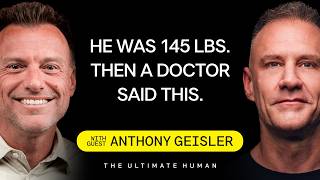
Anthony Geisler built UFC Gym and scaled Club Pilates to over 1,000 locations before co-founding Ultimate Longevity Centers. He discusses the $8 trillion longevity market, bringing affordable wellness tech like hyperbaric chambers and red-light therapy to retail, and how recognizing your entrepreneurial drive and embracing fear are key to scaling businesses.
Chapters
If you're somebody that goes to work every day and says like, hmm, I don't want to be at this desk, there's something out there that is more for me than this, then you already have the bug. Then it just becomes, do you die with the bug or do you do something about it before you die?
You've had a lot of success in the franchise industry. I kind of look at the franchise industry as like it's a very esoteric formula that makes it successful or just makes it fall flat on its face.
Not every franchisee is successful. They have a partner to do it with, but you still have to follow the model, still have to work hard. None of this stuff. In businesses, just add water, right? It is all risk.
To build a culture that has scaled so many businesses in so many different verticals and to keep the same team together, that's more what I'm driving at.
I've always been very passionate about entrepreneurship. And so the thing that I love about the world of franchising is that we see people all day long that come in and this is the catalyst to get them to finally do what they want to do and start a business.
So someone at any stage of their life right now, it's actually getting ready to start a business. What advice would you give to them?
I think it's very important to, in that type type of business if you are franchising versus corporate.
Hey guys, welcome back to the Ultimate Human Podcast. I'm your host, human biologist Gary Brecka, where we go down the road of everything anti-aging, biohacking, longevity, and everything in between. And today I decided to bring a special guest on the podcast. He is a partner of mine in the Ultimate Longevity Centers, our vision for bringing, uh, social wellness to the masses. I've felt for a long time like our industry has just been chasing that top 1 or 2% and came up with an idea birthed by Anthony to bring social wellness to the masses. But this isn't just about our Ultimate Longevity Centers and what we can do to keep tens of millions of people out of the broken, bloated healthcare system, but it's more a story about resilience, entrepreneurship, and things you could apply to every single part of your daily life about resilience, tenacity, and sticking to your dream until it comes true, because Anthony is the embodiment of all of those things. So Anthony, welcome to the Ultimate Human Podcast, man.
Thanks for having me, man.
Yeah. And full disclosure, we're partners in the Ultimate Longevity Center, you know, along with Life Force, which is one of Tony Robbins' companies that does the corporate practice of medicine in there. And I couldn't be more excited to go on this journey with you. Um, but I want to back your story up because I think it's so applicable to so much of my audience because I have a lot of entrepreneurs. Um, I have a kind of an even mix of entrepreneurs and, and folks that are just all on this healthcare journey, but so many of them are on their own business journey. And I find that the most impactful people that come on the podcast are the people that solve the big problem in their life. These become the most passionate, driven, purposeful impactful people that come on here, and sometimes they're not the most credentialed, right? They're not the PhD, the MD, the researcher, the, you know, you know, the biohacker. They're, they're like a soccer mom that had a kid with autism, you know, I mean, or they had chronic Lyme disease or drug and alcohol addiction. But what, what was the problem that you solved in your life, or was there a problem that really led to such a successful career in the franchise space?
Look, I think growing up I had an interesting view. I had my best friend who's still my best friend to this day, and his family, just simply put, had a lot of money, but not necessarily a lot of home life, you know? And I had the polar opposite. I had a great family who, you know, showed up to everything, was really supportive, but no money.
Yeah, right.
So I got to—
I think I'd take the latter though, man.
You know, I got to see the two family first. Right? And so it was very interesting. We had, you know, there's one night we went to his house and we showed up and he was so excited to bring me to his house for dinner, right? Because he'd always gone to my house for dinner. And so we showed up, the house was dark, and there was a $100 bill. And this is, you know, 40 years ago, you know, 35 years ago. There's a $100 bill on the kitchen table with a note that said, hey, sorry, not gonna do dinner tonight, uh, but take Anthony. And, you know, go wherever you want to go for dinner. Yeah, well, he's literally—
it kind of like that at 14 though.
He's literally almost in tears, right? I would say in tears, but he's almost in tears at the counter because he was so excited for us to go and have dinner there. I can't believe there's $100 on the counter. I don't know what he's pissed about. I, I want to go, like, we're gonna go out to eat because I didn't get to go out to eat, right? And he was like, hey, I'd rather go to your house for dinner tonight, right, than to go out and eat. And so I saw the two And I think the problem I wanted to solve early on was kind of how do you have it all right? How do you create a good family life, right? And at the same time create a good career that still allows you to raise a family, be there, have some financial viability, but really, you know, really get to do both. And so I've always tried to find a way to, to balance that, right? And then through the world of franchising has been able to help other entrepreneurs that, that want to get into, you know, that type of business.
But I feel like franchising is— I want to say it's random, but I don't think anybody like wakes up one day as an entrepreneur and is like, I want to start a franchise. So it couldn't have— or maybe it did, but I mean, um, did it start with, I want to start a franchise, or did you find a business? Because I know you've had some unbelievable LA Boxing, which you exited to UFC. Yeah. Today, um, And which is why you and Dana are such buddies. Exponential Club Pilates. I mean, you've had a lot of success in the franchise industry. I kind of look at the franchise industry as like the hospitality space. You know, I watched Dave Grutman go from being like a VIP host to one of the most dominant forces in hospitality in one of the most difficult industries. And I kind of look at franchising as the same way, you know, it's, it's a very sort of esoteric formula that makes it successful or just makes it fall flat on its face. So yeah, how did that journey begin?
Yeah, I think franchisees, as you know, it's kind of a quasi-entrepreneurial journey, right? And that's why I like it. It's not somebody going that's just gonna create Bob's Boxing on the corner and say, okay, I know nothing about this, I'm gonna go at it, right? They have a partner to do it with, really. So, so that makes a big difference, right? But, you know, obviously even in that, not every franchisee is successful, right? So you still have to follow the model, still have to work hard. It's not just add water. And for me, how I got into it, I actually was having some health issues. I went to a doctor, traditional doctor, and I was still 6-foot like I am today, but I was 145 pounds. So I was like, 30 pounds lighter, 20, 30 pounds.
Wow. And you're lean now, man.
Yeah. And, um, and so, and basically it was because I, I wasn't sleeping, I wasn't eating, you know, properly, uh, and I was just working, you know, a lot at that point. And so the doctor literally said, he was like, look, why don't you try eating? Why don't you try sleeping? And why don't you try working out and come back to me in 30 days? And it seemed like novel advice.
Uh, that is the best advice I've ever heard a doctor give, dude. It was great, especially at the time frame he was giving it to you, right? Years ago.
Yeah. Right.
And he was Maha before Maha was ever born.
He was. And so on my way home, I literally drove past a boxing gym, a one-off boxing gym, and I pulled in and I went in and I signed up because I was like, I don't necessarily want to go lift something heavier than my body off my chest over and over again as a workout. Like, you know, traditional workouts. I wanted to go do something. And so I went and joined LA Boxing where it had one location. And a long story short, I trained there. I fought in these, you know, way less than amateur smoker fights. Yeah, it was like, you know, two angry people at a, you know, I still see that on TikTok.
What do they call it? Backyard boxing or something? They got the little fence and not even dudes.
Yeah, I know it was good enough to be backyard boxing. I think it was like two angry women in a bar fight. I don't know what it was, but it was, it was bad. But, um, but you know, I did that and I actually really enjoyed it and I ended up buying that business in that location from the founders. I opened a second one in a suburban neighborhood, opened a third one in kind of a blue-collar neighborhood. And they were all corporate at that point. And at that point, I was, I was out of capital to go forward, right? I didn't come from a family that had money and I didn't have enough to— enough assets to get an SBA loan or do any of those kinds of things. And so once I got to 3, I ended up meeting a franchise salesperson and he said, you should be franchising this. And I knew as much about franchising as like McDonald's existed or whatever at that point, but I, I didn't know anything about it. Um, and you know, just kind of began my, my journey of franchising, uh, LA Boxing. And I think that first one was 2004, I think is when I sold that, and I think we opened that 2005.
She changed its name, or was it called—
that was LA Boxing?
It was called LA Boxing.
It was LA Boxing, and we had sold— the numbers get away from me now, but I believe it was close to 200, and we had close to 100 open, maybe, you know, 60, 70, 80, you know, something like that open. Um, and the Fertittas came along, uh, from UFC. They had created UFC Gym at that point. I think they maybe had 5 locations. They were really big boxes, you know, $3.5 million and 40,000 square feet. They were really massive. But those are hard to build and they're hard to franchise, right? And so, um, they came to me and said, hey, can you know, can we change the name and will you stick around and run it? And I said, yeah, let's, let's do it. So, um, they ended up buying LA Boxing. We changed all the brand to UFC Gym, and I ran UFC Gym as its president until I think it was 2014.
Wow, that's, that's awesome. So you had a partial exit? Yep. And then went on the ride with the guys from the, from the—
I did, yeah. I went on, uh, I think it was, I think it was 85% if I remember right that I sold. And so I had a, I had a small piece going forward, and then you know, they bought the rest of that back for me when I exited. And, and I had a few stores myself, uh, that they bought along the way. I, you know, I had some stores that I had either set up or bought or whatever it was along the way. And so we sold those to them, and, and that was it. And then I was, uh, I was home on the couch, uh, for a little bit. My wife was pregnant, um, you know, with our first daughter. And, and then, um, you know, some guys came along in the— in Newport Beach and said, hey, there's this lady struggling with the a brand called Club Pilates, and she's put it up for sale in San Diego. I think there was 18 stores or something like that.
5 were like corporate all around San Diego.
Yeah, San Diego, Orange County, it's kind of SoCal mostly. And, um, I went out to meet her, and, um, when I went to meet her, you know, the conversation evolved into, hey, why don't you, you know, why don't you just buy this? I, I want to teach. I don't really want to run a business. And, um, And so that was, that's what we did.
And then how did Club Pilates go? Was that another exit for you?
Yeah. So Club Pilates, we took that from, you know, those stores were doing about $250,000 a year. And over time, and I said, I think there was like 18 of them open. And over time, you know, we were able to open over 1,000 stores and over 1,000.
Yeah.
And take the average to $1 million.
Wow.
So we're able to drive that, you know, 4x, you know, and I just Ended up taking that business and then exited that to TPG, private equity firm. I think they were like an $85 billion firm at that point, but ended up exiting to them.
Can I ask you what you exited for?
I don't know if I'm allowed to say, but it was, it was, it was a lot more than a little and less than all you need.
Yes. Okay.
Yeah.
I mean, I thought it's like whenever somebody asked Dana White if he's a billionaire, he's like, I'm doing just fine.
Yeah, we're doing okay. We're doing okay. I mean, for me personally, because you know, the way I grew up, we didn't, you know, we didn't have a ton of money. And so when I, when I exited to the UFC, both, both at closing and then again at the end, um, that was enough for me to, to not work, um, you know, the way I wanted to live and way the way life looked. And then, um, you know, I ended up selling to TPG for 4 times what I sold to, to UFC for. So, um, so for me, I was I mean, I was really happy with, with where that was at that point. And then TPG, you know, wanted to continue that relationship and add other brands kind of to that portfolio. So I still— when I exited the TPG, I still retained 30% of the business. So I sold 70% of it. And then we created this portfolio company and added another 9 brands to it. So we ended up with 10 brands in the portfolio company.
And are you still a part of that? Are you?
I'm still— I took the company public. So I still, I think I'm still one of the larger shareholders of that. It's always hard to keep up with kind of who's who at what point, but yeah, I'm still a large shareholder of the business.
And you know, you and I have an interesting story to tell too, which I'll tell here in a second. But I mean, you made a comment, I wrote it down, you made a quote that, and it had to do with the importance of data. And you said for an operator, the research that matters is industry data, the numbers that frame what Anthony is building in ULC now and probably why my audience should care. But what is it about industry data that matters? I mean, what, what, you know, when, when, when an entrepreneur is looking to scale a business, you know, how important is industry data? Where do you get it? And then how do you utilize it to craft your your, your plan. Yeah.
So if you look at kind of what you and I are doing, for instance, at Ultimate Longevity Center, UBS has pegged that to be $8 trillion over the next 48 months, right?
And so 48 months. Yeah. Well, I'm feeling pretty good about this. Yeah.
Over the next 48 months.
I didn't get into it for the money, money trajectory. I got into it for the impact. But yeah, but it's a—
yeah. So when you look at it, you say, okay, there's a massive— right, whatever piece of that you're gonna own, right? But there's a, there's a massive go-get Right. So obviously you want to start a business where there's demand for people and, you know, there's demand and then you, you know, do your best to go out and fill that demand. Yeah. It was even— and I looked at that in the boxing space, right? There was nobody out there. There's no brand name in boxing, right? Boxing gyms were not a new concept. Pilates gyms were not a new concept. There was Pilates everywhere. And when we created Club Pilates, we created that at scale because there was no one at scale. Right, right. And now today, you know, I think the second largest business that I, that I can think of behind Club Pilates is probably Solidcore, and they're probably 90% smaller. Yeah. Wow. By locations. I think last time I checked, they were, you know, at about 100.
That popular? I mean, yeah, I mean, you know, it's interesting because now that I think about it, my daughter, my wife, my daughter-in-law, my podcast manager who just, by the way, became Pilates certified. She is an official Pilates coach.
Very nice. Congratulations.
They all do Pilates. Yeah. And there's a Pilates studio in my building, so actually you're probably right.
Yeah. And even after us building, you know, 1,000+ stores with Club Pilates, you know, we came back with Sequel and we just launched Pilates Addiction, which is a, you know, a high-intensity Pilates workout on a Gold Machine. So pretty cool LED lights. And, you know, kind of think of what SoulCycle did to cycling is what Pilates Addiction is doing to Pilates. and we've sold 300 of those, um, in the last several months, just kind of out of the gate. So there's still massive demand. Um, and then we're seeing those stores open really well, really strong. Wow. So, you know, that's the great thing. And yeah, you're not necessarily getting into a business just to make money, but you also, if you don't have high enough demand and high enough, you know, ability to go and make money, then you're not going to be in business either. Right, right. So, um, it's at least knowing that there's a big go-get to go after out there. And we're still seeing that. Pilates, we're obviously seeing it in the longevity space. So same is true where, you know, with their Ultimate Longevity Center is not the, the first longevity center on planet Earth.
Right.
But there is not at scale a brand name that is out there. Right. Has done it. Right. And for us, you know, we've sold well over 100 Ultimate Longevity Centers in the first month. Yeah, which is great.
And, you know, I was astounded at the adoption rate, and I didn't want to turn it to a commercial for the Ultimate Longevity Centers, but I, I just really felt that need to not just go after that top 2%, to really get down into the masses and, and not, you know, just try to find the people that can afford a $20,000 stem cell IV or these expensive $15,000 blood filtration technologies. But how do we go out there, reach the message, do do, you know, testing on a mass scale, hormone balance, peptides, but also give people what you call the playground, you know, which is where you can create community and connection around something other than drugs and alcohol and nightclubs, but around like real, real connection. Sauna, you know, red light therapy, cold plunging, you know, lymphatic changes, hyperbarics. Like, so when you leave, you're better off than when you arrived, and, and do it over and over and And you're seeing that in the pop-up we built, right?
When these people come in, you're, you're seeing 25, 30 people in there. And it, it is— it reminds me of kids in a playground where it's like they, they get off the cold plunge like it's a slide.
Yeah, yeah, yeah.
Go talk to their buddy or their partner or their spouse, and they're like, hey, did you, did you try that? Well, did you try this? Well, I'm gonna go try that while you go over there. And it's kind of like seeing the people on the slides and the monkey bars and whatever it is. And so, um, I think we're definitely going to see that, that community base out of it too.
So what's the, you know, for For people that are watching this, and I've got a very strong base of entrepreneurs, they're obviously also health and wellness focused, but what are some of the secrets to scaling a business, maintaining a culture? Because there's zero chance that you go from 18 locations to over 1,000 locations. I mean, you think about 1,000 locations, that's like 20 locations in every state in America. You know, that is a massive undertaking. I at one time had 3 clinic locations in my, in my previous clinic. We were acquired, we had 1, we grew to 3 or 4. And just the infinite complexity of 4 versus 1. And what I noticed was as we added clinics, we made more money overall but less money per clinic because there was this dilution right? And, and when we originally started, we thought, well, if you have one clinic and, you know, it's earning a certain amount of money, and when you have another one, you'll double your revenue, right? And then what happens is this one drops by 30% and this one only does 70% of what you— of your first one.
It's like having children. You can't go from 1 to 4 and they all get the same attention. Yeah, it doesn't work.
My way to 4, you know, I had 3, waited about the 10 years, and then picked another one up. But, and I had them 3 years apart, so which was great spacing. But, um, what, what is the secret to, to scale, um, uh, in, in a business like that and maintaining a culture?
Well, I think different than what you did on the corporate side, in the franchising side, right, you're partnering with somebody who's local, right? And so for them, they are building their— our average franchisee at the time had 3, and so they are out building their 1, 2, and 3. But there's a lot of people out building their 1, 2, and 3s, right? And so you, you get a lot of that. And So if you sell 300 franchises, let's say you're selling, you know, 3 to 100 different people.
Yeah.
And so, you know, you can open 100 stores in year 1, 100 stores in year 2, 100 stores in year 3, when really that's 100 people out opening one and another one, another one, kind of year over year over year. So, um, I think it's very important to, in that type of business, if you are franchising versus corporate, of course pick really good partners, uh, and then support them to the best of your ability, you know?
Yeah, just be a really good partner.
Yeah, the tough part about franchising is that, you know, you're franchising with partners, right? And so they have lives. Yeah, people pass away, people get divorced, they need to move, they have different financial things that happen, they lose a job, they— whatever it might be. So you're, you're dealing with a lot of, you know, you and a partner and then the partner's life, right? And kind of how do you, how do you go about that?
Yeah, you know, and then more so even in, in Sequel, your parent company, because I I noticed that you have a real culture, um, you know, uh, profound work ethic. When I went to the headquarters, I was really, really just impressed. A lot of these people have been with you for 20-plus years. Yeah, yeah, you, you find very little, um, legacy companies right now. Just think, just in general, our, our attention span is shorter, um, people feel undervalued, you know, their feelings get hurt so easily, um, you know. So to build a culture that has scaled you know, so many businesses in so many different verticals and to keep the same team together. Yeah, that's more what I'm driving at. How, how, how does someone create that culture, um, and sustain it over time?
Yeah, and it's, you know, it's been interesting, that particular team, and we've literally opened, you know, 3,000 stores.
That's what I mean, that's minor.
And it's, um, but all of us were single without kids basically even when we started, you know. And then you've got the trick, you're single without kids, you start But then, uh, we ended up married with kids, so we literally all grew up together. And I think what's so important is, you know, you can put together a great team with great people as individuals, but can they play well together on the team? And do they know each other well enough to know, you know, what everyone's flavor is, you know, where they're strong, where they're weak? You know, um, I think in general you have, you know, salespeople— you typically can push salespeople And one of my very first salespeople, when we pushed him, he just— he turtled. He was like, well, look, if I'm not a great, you know, a good salesperson, then you should just get somebody who is, because maybe this job isn't for me, right?
No.
Yeah, you're actually a good salesperson. Yeah, we're just— we're pushing salespeople. But, you know, on the membership sales side, right? And so, you know, you're trying to drive franchisees and their teams to do well. But, you know, sometimes you got to know you know, who, who gets pushed which way, right? And so for us as a, as a culture, we are— I mean, for the size business we are and the size business we were in the, in the past company, um, you know, we really operate like a family business, you know? And that means when, when someone's down, you pick them up, right? And you treat people like humans, uh, and, and like adults. Yeah. And I think people respect that too.
Yeah.
Like, look, you know, you're an adult, you'll figure it out, right? We're here to support you, as opposed to just, you know, leaving people on their own island.
But yeah, yeah, I agree with that. You know, when, when you first approached me, I was highly skeptical. Not skeptical of you, just skeptical. I had a lot of, you know, framework around franchising. Not all of it bad, not all of it good. You know, it's a big unknown for me. I knew that I wanted to make an impact, and I knew that I wanted my message to reach the masses, and I wanted to touch as many lives as, as we could. But what was it that you made you, uh, I think it was Callie Means from HHS, Health and Human Services, that actually first introduced us the first night?
So it was interesting. So, you know, I start on my own health journey, right? I've been, I've been doing, you know, kind of the Gary protocol before I was finding Gary. Yeah. And, uh, I found, um, this little angry Marine in my neighborhood, uh, who had a gym. And, you know, 9 years ago I went to work out with them, right? And I spent first 15 minutes, I thought I was gonna die. And I was up against a wall, and he came and gave me a red Solo cup with salt in it and told me to drink it. And, and I knew, like every other human, you don't drink salt, you don't drink ocean water, you die, you know. But at that point I was willing to do whatever to feel better than where I was. And I did. And I came back and he came over to me and he was like, you're back. And I'm like, yeah. And I thought this was the part where he sends me home and I get to be done for the day. And he's like, now go finish the workout.
Yeah.
And I was actually able to finish and push through that. And so, um, originally when I saw what you were doing, the message you were spreading, um, I'm like, you're, you're on the exact right path and a right, right track. And I actually had a couple of friends that knew Sage, and so I was texting with Sage, and then, um, I saw the UFC fight, and that's right, Dana was there, and I was talking to Dana, and you came up, and then we talked, and I said, I actually know Sage, or I've been talking to Sage, and we went over, and then Callie was there, and yeah, you, me, and Callie took a picture together, and you know, that kind of kicked, uh, kicked everything off.
Yeah, well, I mean, do you have like, uh, I find like that you have this childlike fascination with longevity and wellness, and, and I think that intellectual curiosity, it's— first of all, it's one of the most attractive things to me and any human being, being intellectually curious, being passionate about something, whether it's health and wellness or artwork. You know, I used to go to Art Basel here in Miami every year, and I knew nothing about art. I still knew nothing about art. You know, I don't profess to be contemporary art collector. But every year that I would go, I would be so impressed by listening to an artist talk about, like, the passion that went into a certain piece. And I would even get this, like, momentary sense of jealousy where I was like, man, I wish I could get that jacked over something, over something I care about. Yeah, I was super not that excited about your painting when I walked up, but now I think it's the coolest thing in the world because the way you described to me, you know, it took you on the journey. Yeah. So I feel like you had that kind of childlike fascination with the human body and performance and, you know, fitness. I mean, you, you seem to have scaled in that, in that sort of wide vertical, you know.
And I like to compete. You know, you sent me Cole's InBody and I said, that's it, I'm coming. Yeah, yeah, no, I'm coming for him. Here we go.
You got like 4.6%.
Yeah, I got like 3.5 at one point.
That's actually getting too low, man.
Yeah. It's that InBody scanner. I don't know.
It's good. The, the 50th birthday took you back to 10%, just that one night.
Again, 11 pounds over the weekend.
Yeah, I don't think you remember, uh, uh, FaceTiming me during that, but you definitely gained the 7 pounds of body fat. But, um, you know, is that kind of the driver too? Because I, I, I— it can't just be a monetary obstacle to, to work that hard and to deal with all the headaches you have in the franchise industry. I mean, is that what the golden goose is, to find something you're either passionate about or, you know, intellectually curious about and turn it into a business?
Yeah, and I don't think I've— yes, I'm passionate about fitness and health and wellness, but on the franchise side of it, that's the product, right, that we sell on the franchise side of the business. You know, I went to USC, I graduated from their entrepreneur program. I've always been very passionate about entrepreneurship. And so the thing that I love about the world of franchising is that we see people all day long that come in, and this is the catalyst to get them to finally do what they want to do and start a business. And we had one of the franchisees in the other day who was looking at buying a franchise, and he said, hey, you know, I open up for questions, and he's like, hey, how do you get over the fear? And I said, you don't. You never do. I said, I, you know, I started this back up and I'm scared.
Yeah, right.
And so it doesn't matter how much money you have, it doesn't matter what your resume is, it doesn't matter any of that. I said every time a Navy SEAL goes on a mission, they should be scared, right?
Right.
Like, I feel like— I don't know, you've had these guys on here, I'd have to ask them which ones are, right? But I've, I've heard these stories where on the way to missions and some guys are sleeping, some guys are freaked out, right? But, um, but I feel like even if you've done 100 missions or whatever, uh, whatever a large number is of missions and You go to do another one, like you should still— you should still be tentative. You're going to jump out of a helicopter, right? Go somewhere in the dark or swim underwater for 30 minutes or whatever it might be like. That should freak you out. Yeah. And that was my answer to him was like, hey, look, you, you don't get over it, right? You manage it. Yeah, you manage it. You get through it. You do your best to de-risk as much as you possibly can. But none of this stuff in business is just add water, right? It is. It is all risk. I think so.
So someone at any stage of their life right now, Gen Zer, that's actually getting ready to start a business, someone who's actually comfortable right now in a, in a long-term career but is inspired by either by something you, you said or, or, uh, by something that they, you know, a trend that they've seen and they want to actually break out of that comfort zone, um, and, and go out and do something on, on their own. What, what advice would you give to them?
I mean, depending on the size of the business, and I, you know, I always hate to say you should, you know, don't just quit your job and uproot your family. Yeah, I've seen people do it, and sometimes it works, sometimes it doesn't. But, uh, yeah, I'm always very careful not to say that. But, um, I think just getting involved in an industry that you're in and also knowing that it's not too late. Like, I don't know if you know who Gary Vee is, but I do. Yeah, I saw him this morning at breakfast. Oh, did you really?
Yeah, here in Miami. Yeah.
Oh, right, at the hotel this morning. And, um, you know, he always talks about, hey, it's not too late. Also, right? All the people— because you think, well, I'm married, I have kids, or I'm in—
that's what I mean—
here for 20 years, I'm in this career for 30 years. It, it's not too late, you know. I would say the average age of a franchisee we even see come in is probably mid-40s to mid-50s, you know. These are people that have been in a career 20, 30 years. But what I always tell them is, look, if, if you've ever thought about starting your own business, then you already have the bug. Yeah, right, because there's plenty of people that just haven't even thought about it, doesn't appeal to them, right? They're very happy to get up, go do the job that they do, come home, they've got this guaranteed income with promotions and increases and bonuses, and they're, they're 1,000% complete with that, which is great. Yeah, but if you're somebody that goes to work every day and says like, I don't want to be at this desk, I don't want to be in this cubicle, I want to be in this office, there's something out there that is more for me than this. Then you already have the bug. Then it just becomes, do you die with the bug or do you do something about it before you die?
Yeah. Wow. It's a really refreshing way to look at it. What, what excites you so much about Ultimate Longevity Centers? It is what we're doing together.
Yeah, it's a couple of things, right? It's the, the ability that we're going to have to go make a massive impact. Right. Because there— I don't think there's ever been another time. And you know better than me, but in, you know, in the longevity space, I felt like no one was listening even 3 years ago, 4 years ago. I mean, 9 years ago when I was eating clean, I had to go to so many different grocery stores just to try and make a meal.
No doubt. Yeah.
I remember when I think it was Primal Kitchen came out with like ketchup or something and that was crazy.
Yeah, yeah, yeah. Exactly.
There's like 900 flavors and 10 different people like that or whatever it might be. And so now you can go to a basic grocery store and still shop and get good food. You know, you can eat a whole food diet. You don't have to go to any of these specialty markets. They're great when you do, but, but you don't necessarily have to anymore. So I feel like people are starting to listen the last few years. I feel like in whatever you feel on politics, I feel like there's an administration that is listening to this, that is open to the change, which is great. Yeah. And whether that's the timing of the conversation, if it's the Maha Moms and the Maha Movement, you know, whatever, like, like anything great, it's probably all of it. Yeah, it's a recipe of a lot of great things that are all happening at the same time. You know, UBS looking at this marketplace to say that this is here says that it can be a viable business to help people a really long time. And I love what you do. I love the work that you do. But you're also one guy.
Yeah, right.
And I've seen your schedule and I've seen the people that are trying to get on it and have a minute of it or 8 minutes of it or whatever it might be. Yeah. Um, and so really, how do we take what you're doing, take the side of the business that Life Force is doing, right, and put those together and have the ability for somebody who is, you know, getting a Starbucks and walking back to their car to finally say, okay, this is where the journey starts. Because that's one of the things that you've said that, that really impacted me in the business was the number one question you get is everyone's like, where do I start?
Yeah, right.
Because, you know, you can listen to your podcast, you can, you know, see the things online that, that you do, and then when it's done, it's almost like getting on the phone with Gary, and then when he hangs up, you're like, all right, now what? Yeah, what do I do tomorrow? What do I do today? How do I start this journey? And, and I think it is so much much easier done at scale in brick and mortar, where people can park in their grocery center and they can walk in, someone can say, well, yeah, this is where it starts, right? It starts right here. And we measure baseline protocols, right? We look at where you're, you know, you're deficient, we supplement where you're deficient, and we have the playground, right, where you have hyperbaric chambers and red light and lymphatic drainage and cryoguns and all these things that that are there. And I think I always tell everybody the second most confronting thing outside of, you know, getting your blood work up done is, you know, these InBody scanners.
Oh yeah, yeah.
Right. Where you very revealing for the first time because everybody may know their scale weight within 5 or 10 pounds, right? But scale weight doesn't really matter as much as the other kind of pieces of it, right? And so people find out for the first time someone who doesn't appear to— you would never call them fat or say they were overweight, but all of a sudden finds out they got a lot of visceral fat, right? And they could have just gone their whole life not knowing it. And so, you know, people getting on that machine kind of in a physical world, right, the outside physicality of like, okay, what's going on in my body, or a DEXA scanner or any of these things, um, and then matching that up with what's going on inside.
Yeah, right.
And then how do I supplement for that? I just think it's— I think it is a crossroads of, of something that is truly perfect, right, with the people you have in your platform how longevity is going and our busy— our ability to scale. I think those are the 3 pieces that, that put this in shopping centers.
Yeah, I mean, I really agree with that. And for me it was about, you know, sometimes the pendulum swings so far and, and then takes a while to swing back. And I think they, you know, in a way the pandemic did us all kind of a favor because it put everybody's wellness in right in their own face. And I think it woke up a generation of citizen scientists that said, I want to take my healthcare choices into my own hands. Maybe that I'm not as trusting as I was of governmental elites or what have you. I'm not going to outsource my healthcare choices to the extent that I don't have to, and I'm going to take matters into my own hands. And I also think that because I know Gen Z, because I have 4 kids and they're all Gen Z, I've got a 17-year-old, a 20, 2-year-old, 25-year-old, and 28-year-old. So I run the whole gamut. And what I see happening in that generation is very promising to me. You know, the alcohol consumption is down 34% in that generation, lost a third of the alcohol consumption. I mean, the last thing you want to be is like a vodka brand, you know.
I don't know how true this is, but I heard online that at Coachella, which they had, um, which is that Gen Z, that they sold more at Stagecoach in the first night, which is an older demographic, right?
Really?
They did all at Coachella.
Really?
Yeah, because no one drinks there anymore, right? There's, uh, pretty wild lines, less to no lines and things like that, which is just amazing.
And I think too that people are craving real human connection again, like community and connection again, like the number of run clubs and social wellness clubs. And, and, uh, each of my kids has been in different run clubs here. I mean, some of their biggest DJs like Diplo and, and some of the biggest rap artists are having run clubs now. And I think it's, it's a sign of the times and a shift in people's, you know, attention going towards community and connection. So having an environment where they can connect and create a sense of community with, with people that are on a like-minded journey with them, it's one of the foundational underpinnings of longevity. We don't talk about it a lot. We don't talk about faith. Community connection as being medicine, but they are, right? And to do that at scale, you know, as I got involved with Secretary Kennedy and the Maha movement, I realized it's going to be decades before we fix the bloated, broken healthcare system. There's too much entrenched worth there, you know, Big Food, Big Pharma, and other entrenched corporate interests, including chemical companies. They just have too much of a stranglehold on it. But what we could do to make an impact is keep people out of that system en masse.
Yep.
Right. And knowing that 85% of all chronic disease right now is preventable through things like what we're building, you know, it's really exciting.
And as you talked about with COVID I think everyone pre-COVID thought somebody else, whether it was the FDA, the government, whoever it might have been, was, you know, yeah, was in charge of their healthcare.
Yeah, right.
And so they're just kind of like, hey, they're in, they're in charge of my healthcare. I just kind of muddle along and do whatever the doctor says. And somebody out there, like this, you know, overlord or something of health, is out there looking at it. And when COVID happened, you know, I remember people sitting there, I was sitting there, you're like, well, now what? How do I do? Now you're locked in your house, you've got something you can't see that's out there. Um, you know, you got parents, you got kids, you got all that stuff. And like you said, then people figured out, wait, like I'm in charge.
Yeah. Right?
Like I'm in charge of my home protection, right? And I need to make sure I'm making those choices. And so I feel like people, you know, getting out of their houses, you know, really realize that that community connection was taken from them.
Yep.
Right? You weren't having Christmas with family. You weren't doing those kinds of things. You know, so many parts of the world, you know, your neighbors called the police when you went outside.
Yeah.
And so, you know.
Yeah. That pendulum swung a little far in some instances for sure.
But now people realize realize that, that they're in charge and, you know, they want to get back out and be with people and, and really be in charge of, of their own health.
Yeah, well, Anthony, this is great, man. I'm, uh, you know, I'll be the first one to say I'm proud to be your partner and, and really excited about what the work that we're doing together and the opportunity we're going to create for the masses, you know, to create community and connection around wellness and longevity and anti-aging and bring the best of evidence-based therapies into Middle America so that we can, we can really move the needle for people. We're going to go into my VIP room now because my VIPs have a lot of, a lot of questions for you. But dude, thank you so much for coming on The Ultimate Human, and I'm excited about this journey. Sure. Until next time, guys, that's just science.
More from Gary







Perimenopause Symptoms Can Start in Your Late 30s - Dr. Remina Panjwani | TUH 312

