Brandon Sawalich: Dementia Prevention, Hearing Loss & AI Hearing Technology | TUH #275
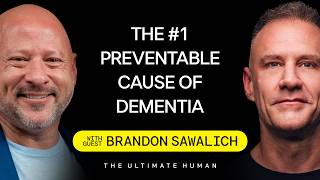
In this episode of the Ultimate Human Podcast, host Gary Brecka interviews Brandon Sawalich, President and CEO of Starkey Hearing Technologies, to discuss the hidden public‑health crisis of hearing loss and its far‑reaching consequences. They cite a recent Lancet double‑blind randomized trial that identified untreated hearing loss as the single largest modifiable risk factor for dementia, emphasizing the physiological link between auditory decline, social isolation, and cognitive deterioration. The conversation explores the pervasive stigma surrounding hearing aids, the startling statistic that 1 in 6 teenagers already exhibit hearing loss, and the broader global burden (44 million in the U.S., ~½ billion worldwide). Sawalich outlines Starkey’s AI‑driven hearing solutions—first introduced in 2017—including the Omega AI platform with 310 integrated components, real‑time language translation in 78 languages, adaptive noise‑cancellation, tinnitus masking, and health‑monitoring sensors (fall detection, heart‑rate, temperature, step‑count, voice‑mood analysis). He describes ancillary products such as SoundGear protective gear for military, hunters, and industrial workers. Practical prevention advice is offered: annual audiograms, use of appropriate ear protection, awareness of medication‑induced ototoxicity, and early testing especially for high‑frequency loss (e.g., from shooting). The dialogue also touches on the mental‑health impact of hearing loss—personality changes, social withdrawal, and the importance of early intervention—while highlighting real‑world endorsements from celebrities, veterans, and the VA. The episode concludes with resources (Starkey.com, personal social media) and a reflection on being an “ultimate human” through purpose‑driven service. Key take‑aways: 1. Hearing loss is a silent, modifiable risk factor for dementia. 2. AI‑enabled hearing aids can personalize sound, translate languages, and serve as health‑monitoring devices. 3. Early detection (annual tests) and proper protection are essential, especially for younger populations. 4. Reducing stigma and framing hearing health as a performance enhancer can drive adoption.
Chapters
You have 1 in 6 teenagers right now have hearing loss. It's a quiet pandemic because they're blowing out their ears, whether it's headphones and, you know, just loud music and a lot of reasons.
Once you damage them, they don't come back.
It's a health issue, but it's not one that's alarming people because it's quiet and it's invisible.
When you have this kind of hearing loss and you don't get an explanation for it, it makes people feel hopeless.
Hearing connects you with people. It connects you with your environment, your day job, your kids, and it's the fitness for the brain.
It makes sense to me from the standpoint of isolation. I mean, as you lose your hearing, you become increasingly more isolated from your family, from your environment.
Hearing is essential. If you want everything to be balanced and work, you got to feed that brain and exercise the brain, and that's how you do it.
Let's say that you go in and you get a hearing assessment and you start to notice that certain frequencies are beginning to degrade. What are the things to mitigate to stop that slide?
They talk about the solutions to treat the hearing loss, and it's the two words that always gets everybody because of the stigma associated with it, and that's Ultimate Human.
Hey guys, welcome back to the Ultimate Human Podcast. I'm your host, human biologist Gary Brecka, where we go down the road of everything anti-aging, biohacking, longevity, and everything in between. And, and today's a particularly interesting topic to me because having been in the space for so long and run with so many of my peers on all of the different biohacking modalities that we use. We measure our VO2 max, we do clearly heart scans, full body Prenovo, we, we eat a whole food diet, we monitor our BMIs, we monitor our heart rate variability. We have so many measurement tools to see if we're on track, but we rarely talk about today's topic. And there is a very interesting study recently published in The Lancet that I want to bring up on the podcast that really shifted my entire mindset around hearing loss and the impact it has on longevity, isolation, neurocognitive decline, even dementia. And so today's guest is Brandon Sawalich—
Sawalich—
Sawalich— Brandon Sawalich from Starkey Hearing Technologies. And he's here to talk about this study, amongst other things, what you can do about it, when you should start testing. I'm really excited to run this topic with you because rarely do I get a fresh, new, unexplored area of, of, you know, biohacking and bio-optimization that could potentially be so impactful. And so I wonder if you might just give my audience a little bit of background, what you do and what's going on over at Starkey.
Sure.
Thank you, Gary.
Honored to be here. This is exciting because you're right, it's hearing and healthy hearing, and there's so many stigmas around it. And, you know, hearing aids and today's technology And let's clear some of these myths up. Yeah. We've been in business, Starkey, outside of Minneapolis for 59 years. I've been president and CEO for the last 7. Okay. And been at Starkey for 31 years. Started as an intern in college.
What do most people, in your opinion, fundamentally misunderstand about the relationship between hearing and brain health?
Well, they don't connect it. I mean, that's the number one. When people think I have a hearing loss, if I say, ask anybody about it, the first thing they say is I'm old, age. And then there's due to whether it's movies, media, it could be now, of course, social media. Sure. The stigmas that associated with hearing aids and hearing loss. Right. I always think of the movie Up or a movie or TV show, hearing aids squealing because it's feeding back and it's big and it looks like you're And people have—
it's the social stigma. If you're wearing a hearing aid, then you must be old.
Yes, it's a stigma around that. And if I have hearing loss, well, I'm not going to die from it. I don't need to do anything about it. So it's a disadvantage that is out there more than people think. But 44 million in the US, estimated 500— half a billion.
44 million have hearing loss. Hearing loss. Like clinical-grade hearing loss.
Wow. And half a billion around the world. So it is a— it's a health issue.
Yeah.
But it's not one that's alarming people because it's— like I said, it's quiet and it's invisible.
You know, in preparing for the podcast, I started going down some of the rabbit hole and the science behind hearing loss and its connectivity to brain health, early onset cognitive decline. And I stumbled onto a study in The Lancet, very well done. This was a— peer-reviewed, double-blind, randomized controlled trial. Um, it was, it was a large control group, and essentially what they surmised was that hearing loss is the most preventable. Um, it is, it is the single most— the intervention is the single most preventable way, uh, to mitigate the risks of dementia. I found that pretty fascinating.
Yeah, we've been waiting for that, the results of that study, for over 3 years, I believe.
Yeah, and I want to be specific about it in the conclusion section. They named untreated hearing loss as the single largest modifiable risk factor for dementia. So can you kind of walk us through the physiology? You know, it makes sense to me from the standpoint of isolation, right? I mean, as you lose your hearing, you become increasingly more isolated from your family, from your environment. It's obviously the way that we all interact, the way my whole audience is listening to this podcast. But can you walk us through the physiology behind that?
Yeah. If you look at how the human brain works, I mean, we hear with our brains. And if you look at all the 5 senses, hearing is— you could argue they're all important, of course, but hearing connects you with people. It connects you with your environment, your day job, your kids, go down the list. And it's the fitness for the brain. And so again, it's not something that's been talked about because it's always talked about when you're maybe older in life. Again, it's not as important. And with today's discussions around mental health, if you start having a hearing loss, let's say 35, 40, could be noise-induced, many, many reasons, you start withdrawing from your day-to-day activities. And so what we've been doing is educating people on this because again, it's not something that's been above the radar. And if you think about the mental health discussions, somebody that does start having it at 35 or 45, they don't do anything about their hearing loss until about 7 years. That's about the average, because it's never—
it starts to decline.
Yeah.
You're talking a little louder to them, they're turning the ear towards you or something.
Spouse usually is the one that forces something. Go get your hearing checked. So 7 years to do something about it, depending on when it came on. And then the mental aspect of— think of, you do start withdrawing, you isolate yourself, you start putting yourself in positions where you don't have to interrupt or say, excuse me, can you say that again? Because people start becoming embarrassed about it and at a point where they really don't notice it.
Wow.
And you start forgetting sounds.
I remember when my mom's father, Barry Blake, you know, in his early 80s, his, his hearing had significantly declined. Uh, now he had been in World War II and he had had some, some pretty serious concussive injuries and probably accumulated that over time, my grandfather. And, um, and I remember that we would sit around the table and we would literally have to shout at him, right? Um, and he was very reclusive, uh, because of that. And when you would sit in a quiet room and speak loudly to me. He wasn't unintelligent. He didn't become dumber, right? He just became more reclusive, right? And, you know, I remember even to this day, you know, some of my aunts and uncles would almost talk to him like a child, kind of like baby talk, just because he couldn't hear, right? And I knew that that irritated him, right? You know, because again, he wasn't becoming an invalid. He was just hard of hearing, you know, and he was probably insulted by it now that I think back about it. Um, but you know, a lot of the physiology around hearing that I, that I am familiar with is, you know, some, uh, some measures of, uh, damage to your hearing, especially those, uh, in the cochlea, the cilia, the hairs in there, once you damage them, they don't come back, right?
That's the one thing people don't recognize is once you lose it, you're not getting it back. And it could continue, obviously, to get worse, whether it's genetic or more noise-induced. But you have 1 in 6 teenagers right now have hearing loss. Really? It's a quiet pandemic, no pun intended, that 1 in 6 teenagers, because they're blowing out their ears, whether it's headphones and just loud music and loud music.
I'd love to talk about that too. I mean, what are your opinions on some of these earbuds and things like that? I use a corded headset sometimes when I go to the gym, but I keep the noise at a modifiable level. I don't blast myself. I've got a lot of friends that are DJs that are around really loud, noisy environments consistently. Most of them are either dealing with mild tinnitus or they're also dealing with measurable hearing loss. But once you discover— let's say that you do a hearing test and you discover that you have certain pitches that are missing or certain pitches that are that are frequencies that are not audible to you, or they're diminishing in your ability to hear them. I mean, what can be done about that?
Well, you could obviously, you're going to go see an audiologist or a hearing healthcare professional that could do the test, look inside the ear, make sure it's healthy, functional. Sometimes earwax is the problem or gets in the way.
That's a good one. I mean, that makes it easy though, right?
It's rare, but it does happen. And then they talk about the solutions to treat the hearing loss. And it's the two words that always gets everybody because of the stigma associated with it. And that's the hearing aid. Yeah. And it's not what it was. It wasn't your grandfather's hearing aid.
It's like the size of a coffee bean what's going in your ear.
There's 310 components in here that has to work all at once and withstand sweat, hairspray, you name it. And with the 310 components, you're dealing with an AI processor. Bluetooth radio and many, many other components just to get the sound at the right levels. And you're talking high-tech sound and sleep.
So it's— but it's more than just sound amplification. It's more than just that hearing aid receiving the sound and amplifying the signal.
That's what they used to do. Yeah. Because it amplified everything.
Right.
So now what we're doing with AI, we were the first to bring in AI into hearing technology in 2017. So what we're doing with that is we're personalizing the sound to the listener. So I mean, AI is the perfect listening tool that's adjusting and adjusting their sounds and what their daily life needs to be so they could do it, I would say, with hearing ease.
Because I see a lot of these commercials for hearing aids. And one of the big hallmarks that they're trying to address, at least from these commercials I see, is not picking up the ambient noise because the scenario is always like you're sitting in a restaurant, you know, with 2, 3, 4 people at a table. You're having a conversation, but the hearing aid is picking up all the clanking of the dishes at other tables and amplifying that sound. And that seems to me like it would actually be— that would give me anxiety if you amplified all that sound.
And that's what you were discussing just a minute ago, the amplifying sound. That's the old technology, what it would do. And what we're doing now is, again, if I'm sitting here, we were at an event and you and I were talking, it's quieting, knowing the environment that I'm in, in a noisy environment, it's quieting the sounds around me and know that I'm talking to you or having a conversation and I want to focus on speech. It's not going to bring in everything else at the same levels.
Yeah. Now, what was wild, which is not related to its ability to improve your hearing at all, was I did a demo with this late last year. One of your docs came over, I think, with Damon, fitted me for them. And I have a Portuguese-speaking housekeeper that's been with me for a long time. She also speaks English. I don't speak a lick of Portuguese. Yeah. So what we turned on the language translation and it was pretty wild, like in almost real time, she would speak fluent Portuguese to me and it was translating it into English. I thought that's like a That's like some spy-level shit. I mean, that was like, you know, like James Bond. So, you know, because like no longer can like the people at the table that, you know, speak Russian or German or whatever and you're only an English speaker, no longer can they have that quiet conversation.
Yeah, that's what Starkey is doing different. I mean, that's what we're doing since 2017 is turning it from a multipurpose— a single-purpose to multipurpose device.
So, you know, There's a whole lot of reasons, I'm sure, that people can lose their hearing. Trauma, head injury, age, decline, stiffening of the tympanic membrane, all of it. Medication. Medication. What kind of medications actually run risk?
Well, I mean, pain medication. You go down the list, there's other— you get the warning now, but there's quite a bit that are promoted on TV and other places that if you take too much of it, you're going to tinnitus, or it can, you know, lose some hearing. Pain medication, as I mentioned, that's one of the top— if you take too much.
And, and what about tinnitus, or tinnitus as you call it? Um, is that the right way to say it? Okay, I'll take it from you since you're in the industry. But, um, I always said tinnitus, but, uh, you know, that has been, uh, an issue for an increasing number of clients of mine. Um, I've found a number of things. One, when they're nervous system is in, in a heightened state of alert and they're trapped in the sympathetic state. Um, they can't calm down. I mean, it's well known that if you go into a state of fight or flight or you have a panic attack or you experience a traumatic moment, very often you can have ringing in the ears without, uh, a traumatic event. You know, gunshot didn't go off next to your ear or anything like that. Uh, what, if anything, can you do for chronic tinnitus? Do you match the frequency?
Sometimes with the hearing, with our hearing technology, yes, we can mask it and give it that white noise effect where just you kind of forget about it. It just calms it. I've seen it so bad on people where it's— I won't compare it to chronic pain, but it's at that level where it just drives them crazy, where it just debilitates them.
Actually, no, there's some very interesting data on that. I mean, complex regional pain syndrome, I think, is the leading is right up there with the highest suicide rates. Um, but, uh, chronic unrelenting tinnitus is not, not far behind. I mean, and I've actually had clients of mine that suffered from unrelenting tinnitus, um, and it, it just destroyed their life. And people that have struggled with that, I have so much empathy for because it's not something you can get away from, right? You know, I mean, you know, if your wrist is bothering you, you know, it's kind of distant and you can compartmentalize it, but your hearing is inside your head. And if it doesn't shut off 24 hours a day, 7 days a week, it's like Chinese water torture.
And no one knows you're suffering but you. I mean, because you can't explain it except the way we just did very plainly. But there's so many things that go into it. And in today's world, we're more exposed to sound, loud sounds than ever. Think about, yes, there's your nightclubs, your musics. Sporting events, they're promoting pump up the volume. They want it loud in there. And you're getting it up to jet engine loud. I mean, it's some of that. That's where the ringing can come from, of course, with hearing loss. But the ringing can come from constant exposure from loud sounds.
And I've been reading that even a single event like that where that noise is that loud can cause some measure of permanent hearing loss at the UFC event on Saturday. I was thinking about it myself.
122. I pulled out my—
you have a decimal.
We do. So we also do— we also work with—
I guess you're in the space, you travel with your own meter.
So our SoundGear technology and product that protects healthy hearing. So we work with the Department of Defense, hunters, other device that gives you situational awareness. You have the hearing, because it's not like plugs or putting cotton in here, because then you lose— you can't hear.
You muffle everything.
What's going on around you. And at a certain dB level, it'll instantly, within milliseconds, shut it down and protect our soldiers serving, along with hunters, industrial workers, go down the line.
So if there's some kind of concussive sound, it would mitigate that.
Yeah.
Like a noise-canceling. Noise-canceling.
Yes. It shuts it down and protects the hearing.
That's great.
Absolutely protects it because one of the largest channels that we serve, Starkey works with, is the VA veterans. And I've been and I've talked to senators and others when we're talking about veterans hearing health and just having discussions. They are our number one customer. I said, I hope in 5 to 10 years that's not the case because there's more education, more technology. There can be things done about it upfront.
Are they starting to be proactive?
Yes, they are. Okay.
Yes. And, and, you know, I've got to think that, you know, I'm going to go back to tinnitus again for a second, um, because there's a large group of sufferers. One of, one of the best, uh, most popular podcast shorts that I've done, and, you know, recently was on tinnitus. Um, tinnitus, what do you do to, to mitigate that? Um, and I know it's multifactorial. You can have anatomical damage, you can be in a high stress state, your nervous system can trapped in a sympathetic state and could be actually causing the perception of sound when there is no sound. But do you see anatomical anomalies that lead to this? I mean, there's classic Meniere's, right? Yeah.
But there's so many paths to get there. It really depends on the person's awareness of their environment day in and day out. What are they doing? Just like our eyes, what are we doing exposing ourselves to the ears? And then that person's, of course, their genetic makeup. Are they going to get the hearing loss and tinnitus, or how bad? I mean, there's so many paths to it. I wish there was one answer. There's a lot of things that are advertised or marketed as whether it's drops or pills to help with tinnitus. And I don't have any solution or have found anything there that cures it. But I do know that masking and using hearing aids, if you have hearing loss or hearing technology, can mask it and suppress it where you're not thinking about it.
So this is like a similar Similar to how noise canceling would work, it would match the frequency because destructive interference says that if two frequencies of opposite wavelength meet, they cancel out. Yes. So you're, you're, you're trying to tune that to match that frequency or frequencies that they're hearing and then provide that as a constant on to snip that band.
Because what I could do with the hearing aids I just showed you is, you know, have them on. Yes, I'm using them the way I want to use them, but I could have the masker on because I have tinnitus, but I just remembered it sitting here talking to you.
You do have it? Yeah. Yeah. So you're masking right now with these dual hearing aids.
It gives it a little— like in an office.
And I got to tell you, had you not brought it up, I would not notice that you're wearing hearing aids. I can't see a thing.
They're very sleek.
That's the thing.
People don't— the vanity is the part of that stigma. They don't want to be seen because they don't want to be labeled or feel like I'm disabled or old. We're changing that conversation. This is a superpower. Yeah, because think about everything that hearing affects your life, your job. I mean, people that even have a mild hearing loss today and with the technology we're using, it gives you that edge. You can actually hear better than normal in some situations.
So I know that some of the technology that you have now with this new AI generation, it mitigates fall risk, or at least it can detect fall risk. There's a number of things that it does. It tracks biometrics. What is it tracking? What kind of feedback? And where does that information go? How is it actionable?
So you have to make, number one, people get hearing aids, they want to hear better in noise. One channel, and I'll say path that we took, is how do we, again, make it a multipurpose device? And I view it, kind of started thinking about it as Jarvis at Iron Man. That's where it's going to go. I mean, this is going to be your personal assistant. It's going to be about productivity, helping you to be the best that you can each and every day. So we look at better hearing. We want the best sound, best hearing quality for the person. And then Starkey has been the pioneer in driving healthable features.
But when it says it's the biometrics, what kind of biometrics are you getting from it? Are you measuring temperature? Are you measuring— so you have to be doing some kind of gait analysis. Estimating their fall risk.
Yeah, 6 embedded sensors and fall risks. So if somebody was wearing our product, falls, it detects a fall, it sends a text to 3 of their family members.
I like the old, I've fallen and I can't get up.
Yeah. Think about the ears, the new wrist. It's got to work. What we could do with it, because if you look at the ear canal, we can do heart rate, you can do temperature. We talk about we could do the step counting. So, I mean, there's the features there that, uh, uh, you know, we purposely put there for the demographic, per se. Um, and if just one of them say, you know, one of, like, the fall detection saves somebody's life, which I've had many letters thanking us for what we've done because it saves somebody's life, it's worth it. Yeah. Now think about the next round, what we could do or what we're working on, because we're pushing it as far as the technology can right now. But Each year we're getting more and more opportunity. But going back to mental health, if you have your mom, your dad, or whoever concerned about one of the features, kind of looking at your overall mental health, it could detect by the tone of your voice throughout the day, am I sad? Am I down? Am I depressed? Am I active? And it could give the feedback to the patient through our app, through the app which could control the hearing aid. But also you could give it permission through our HearShare app the family— mom, dad, who are the caretakers— can get the information as well.
Um, just out of curiosity, how many languages do you translate?
78. 78?
78. I didn't even know there were 78 languages. I thought Melania Trump was killing it speaking like 9.
We were at 74 a year ago. That— I— they updated me because I was gonna—
you added just some random island off of another island just because you can. So this, this, uh, Genesis AI, I mean, when, when we talk about who needs it and when we should start hearing tests, I mean, is, is this like a, a biometric that we should be tracking? I have a baseline from when I did the test with, with you guys, um, and is this a, is this a baseline, a biomarker that we should start paying attention to? And if so, why? And how do we track it? Do we get this data and then do it twice a year, once a year to see if we have frequencies that are degrading?
I think— well, I know once a year you should get your hearing tested at least once a year. And it takes— it's 30 minutes. I mean, not even that, maximum 30 minutes. And then you're baselining your audiogram, especially if you're working in high noise or if there's a lot of genetic hearing loss in the family. So it's just something. There's so many things you want to test for nowadays to make sure you're tuned right. Yeah, hearing's usually one of the last.
Dude, I'm telling you, I think that this is like a major hole in our—
in it—
is in our industry.
Nobody's talking about it.
Yeah, I— you're the first guest I've ever had come on and talk about hearing loss. I've had people talk about, um, tinnitus, mainly related to— I had a, uh, viral pathologist on that talks about, you know, uh, certain viruses and pathologies in the brain that actually caused tinnitus. And, and how it's, you know, that, that very often went undiagnosed, that people weren't doing like viral pathogen testing, you know, long, long-term chronic Lyme sufferers and, and others that actually have damage that, that when they have an anatomical exam, an ENT says your ears are fine, right?
Right.
All the bones look good, the cochlea looks good, there's no damage to your tympanic membrane, your eustachian tubes are clear, you know, all of the anatomy is working. So there's— there's— it goes back to, well, now it's just all in your head, um, and which literally it is, but no patient likes to hear that.
And no patient hears the same. Yeah, we don't have the same ears. There's— everybody's ears are different. They're like a thumbprint. Everybody's unique hearing, unique ears.
Yeah, I mean, I know you used to drive my wife crazy when she— you know, after she had her L5-S1 fusion and she had this back pain, um, you know, she would meet so many of these healers and they were like, well, the pain is all in your head. And she's like, no, no, I'm pretty sure it's in my back, um, because I feel it and I'm not making this up. And that used to just drive her nuts when people would say that. She's like, all these people telling me that I'm like making it up and I can sort of think it to make it go away. And we've mitigated with like meditation and other things. But, um, you know, when you have this kind of hearing loss and you don't get an explanation for it, especially tinnitus, that You know, it makes people feel hopeless. And I've met people on their journey, clients of mine, that have really hit that rock bottom state where they, they are grappling with the exception that this may be permanent. Now, by the grace of God, in most of these folks, in fact, all of them, we were able to walk them out of it. But I never really thought about hearing aids as a medication tool. Yeah.
Well, think about what you just said about your wife's chronic back pain. Most people, if your wife was telling you or mine was telling me, you have a hearing loss, you're going to deny it. Nobody's going around saying, hey, I have a hearing loss. Yeah, I can't—
what? Right.
No, exactly. It's usually reversed because, again, to that stigma and not understanding the importance of healthy hearing or being connected each and every day, what it could do for you.
Yeah. So what age should we start? I mean, and what age And what are classic risk factors where you say if you work in this environment, I mean, obviously if you're a nightclub DJ, I get it. But right, right. But, but I also don't think we, we, we have enough respect for, you know, short mitigated, you know, concussive forces to our brain. Like, I love to shoot, right? When whenever I'm shooting, I actually put earplugs in and then I have noise-canceling headsets that go above that. I wear them very, very tight. They have a volume knob that allows me to hear, you know, ambient noise or bubble technology or whatever they call it. Um, since I was a young, young boy, uh, my father was a Navy captain and I grew up shooting. I bird hunt. But even, even when I would hunt or target, uh, shoot skeet, um, or just shoot targets, my father was absolutely, uh, on our ass about wearing hearing aids. I have pictures of me 7 years old with a little tiny .22, right? Um, and, and I'm— and now looking back, I'm like, I'm really happy that he's back then, but all the guys that I hunted with, you know, we would bird hunt, we would deer hunt, we never wore hearing protection, right? Um, so it was kind of unique. In fact, I used to get teased for it because I would put the, uh— but it— but a bolt-action .30-06, yeah, makes a lot of noise.
We see a lot of— that's where you get the high-frequency hearing loss with— yeah, from shooting. That's really my hearing loss. So from shooting? Yeah, shooting. Okay. And you start at that high frequency, you start your wife's voices, right?
Usually females. Your wife's voice.
You start losing.
That's why you just lose the wife's voice.
That's your wife's voice. You're listening and you lose that frequency of voice because most females have the higher frequency voice and you start missing You just liberated millions and millions of men, right?
We're not listening to you, ladies. We were shooting and now we can't hear you.
I have a high-frequency hearing loss, right? And that's usually why it is the wife that gets her husband in there for a hearing test.
It's like, you better start listening to me. And if you're not, you're going to get a hearing aid. Yeah, that's amazing.
And that's why Damon was one of the reasons we talked, is he's wearing—
He loves you guys, man. I mean, he's like, yeah, I can't wait for you guys to meet. And I think this is a big missing area.
He was, you know, he turns his TV up too loud at night. That's what he noticed. He's like, I can do something about this because, you know, you stream right into his hearing aids and there's no sound. Yeah. But with him, you know, he, you know, it's, you know, he's working with him has been great because he gives a different perspective of outside of, you know, what I work with. You know, it's productivity device for him. And Kevin O'Leary, Kevin.
Yeah, I knew Kevin.
Kevin wears them. He was telling me all about it, like, I'm sitting and waiting for an interview and all these people are just sitting in chairs. He goes, but I'm working because I've got this in and I'm texting and I'm telling it what to text. And so, I mean, it is a productivity device for active.
Yeah. And I mean, it's good to have spokespeople like that because the one thing I appreciate about Damon is he's very vulnerable, he's very transparent. He just posted his whole journey with this biologic dentist taking all these posts out of his mouth. And as gnarly as that was, I think it drew a lot of attention to, you know, like a subject that people are unaware of. It's just that, I mean, the reason why you're sitting here is because Damon really encouraged me to do this. He got, you know, I had my hearing tested last year and spoke Portuguese for about 15 minutes, which was actually really, really cool. The problem was it only translated one direction. I was like, I still— I needed to get her a set so I could talk to her. That's actually kind of cool. I could talk to her in English. She could talk to me in Portuguese.
That's the ultimate goal. And we're, we're getting there where it's just simultaneous, where you can hear, you know, just instant translation and something for somebody else that could understand you. Because that's the biggest barrier is language, right? If you're especially traveling and people just understanding people.
Yeah. When I was young, uh, I, uh, and I still speak rusty French, I, I used to speak it very fluently, but I was in this cultural exchange program, uh, called NACEL, this North Atlantic Cultural Exchange League. And so I would spend a semester in France and then exchange student come spend a semester with us and started in high school. It was amazing experience. But I do remember being like 14, 15 years old and I was with the family, had 3 boys that were my age, young boys. And when everybody was like speaking French, I felt so isolated. And it dawned on me the amount of idle time that we spend in conversation.
Right.
Like right now, if somebody was sitting in this room watching this podcast, not only would be boring, but there'd be no way for them to participate. Right. And we— so much of what we do is around conversation and communication. And, you know, we would ride our bikes somewhere and we would just go get sandwiches at a sandwich shop. And I would sit there and those guys are just chatting and then they would burst out laughing. They're high-fiving. And I felt completely outside of that conversation. Yeah. And I imagine for people that have progressive hearing loss, I mean, this is how they feel all the time, right? And then they just develop a defensive personality around it.
It changes people. It changes your personality. Yeah. I mean, I know we have helped many celebrities, movie stars, global leaders, entertainers. And if they're starting to change in their personality because of the hearing loss, they're very self-aware because they have to perform. They want to do something about it. If their hearing aid is is not working, they're calling us right away because they get in a panic because it disconnects them from the most important job, and that's working with people or entertaining people. It doesn't matter if you're a world-known entertainer or somebody in the community, you still need to be connected. And they just don't understand what that means and what's the first step.
Yeah. So for people that do want to take the next step or they want to know more about you or more about Starkey, where can they find you?
Starkey.com.
And that's S-T-A-R-K-E-Y.
Yes. And we have information about our current Omega AI product.
Is that what you're wearing?
Yes. Okay. And we have a locator on there that will send them to their local healthcare professional for a test and assessment.
Okay. And that takes about 30 minutes?
Yeah. Most of them are free. They don't charge.
And people that do this, let's say that you go in and you get a hearing assessment and hearing test and your hearing is fine. Perfect hearing. Let's call it 20/20 vision, the hearing version of that. Um, but, uh, or you go in and you start to test once a year and you start to notice that certain frequencies are, are beginning to degrade. What are the, what are the things to mitigate to, to stop that slide?
Uh, be self-awareness of your day-to-day or weekly, uh, hobbies or work. I mean, because we talked again, whether you're a hunter or maybe work in a loud construction zone, whatever it might be. It's that ear hearing protection.
And do you wear— do you think that the foam ones that you put in are enough?
It depends on the brand.
I mean, you're not going to show up to a UFC fight with headphones on.
No, no, no.
But I actually— it's funny because we were at the fights together Saturday. I was thinking about that because there was a few times on those walkout songs that I was like, This is obnoxious. Like, I could feel that. I mean, it was very loud. Yeah. And I don't know how Bruce Buffer still hears anything. I mean, his voice is still so loud.
Really? But there's product. I mean, we have our SoundGear products, inexpensive SoundGear Shield where they just go in and it allows you to hear. I mean, with the microphone and good hearing technology so you're not being overamplified by anything. But again, then it shuts it off in the loud environment.
So Starkey.com is where they can find you. And what about you personally? Are you crawling around social media anywhere? You got any books that I need to know about?
Brandon Sawalich, S-A-W-A-L-I-C-H. So if I be on LinkedIn and Instagram and— okay. And brandonswalich.com.
All right, beautiful. You know, I, I'll link all these. I'm also going to link the Lancet study because I found that fascinating. And it's proof positive that there is a direct— and they called this a causal link, not a correlated link. And this amplifies the importance of that. It's not just like a trend analysis. This was a direct causal link, which I found pretty fascinating. And I, you know, hope to get that message out, you know, alongside of you so that, because it's not hopeless. I mean, people, there's a lot people can do about it. So I wind down all of my podcasts by asking my guests the same question.
Okay.
So what does it mean to you to be an ultimate human?
Oh, to be an ultimate—
if you're watching the podcast, Brandon, you would have known this was coming. Now you're caught off guard. So let the pressure sink in.
Ultimate human to me is about purpose, life that's giving back and helping others. That's amazing for me because I'm not an expert in a lot of things, but I'm an expert in what I do and what I can do for others. And so, yes, we're the the business of being in business, but we're in the people business too. And I think what you're doing is inspiring because there's some things I need to get on top of. I mean, I could sit here and talk about hearing, but I need to be doing some things, other things for myself. And keep doing that because you're inspiring more than you realize. And I know you get a lot of fan mail, but more and more somebody like me that has been in this biohacking area now for about a year, thanks to Damon, kind of introduced me. To it. And it's fascinating. And I remember thinking that was like, what do they do for hearing? Like, nobody's doing anything. And there's important things. I know there's priorities, but hearing is essential. And if you want everything to be balanced and work, you got to feed that brain and exercise the brain. And that's how you do it.
I appreciate that, man. Well, Brandon, we're going to follow this journey. I hope to have you back on again sometime. Ladies and gentlemen, until next time, that's just science.
More from Gary







Perimenopause Symptoms Can Start in Your Late 30s - Dr. Remina Panjwani | TUH 312

