Dr. Darshan Shah: How to Reverse Aging with Plasma Exchange and Stem Cell Therapy | TUH #191
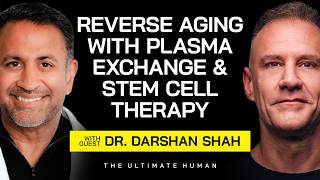
Gary Brecka talks with longevity doctor Darshan Shah about plasma exchange and stem cell therapy for reversing aging. They discuss early detection of Alzheimer's and cancer, immune system optimization, and Shah's clinical approach to preventing chronic disease.
Your genetics are never your destiny. Right? Even if you have two copies, you can still prevent Alzheimer's disease with preventative medicine. There's incredible diagnostics right now that we can detect heart disease, Alzheimer's and other brain cognitive diseases and also cancer very early.
The possible early signs of shrinkage in the hippocampus being the leading indicator for things like Alzheimer's, dementia, early onset cognitive decline. We're detecting cancers now at what they're calling stage zero.
And that's why we're seeing this massive resurgence of cancer, especially in, like, young people right now.
I think a lot of us think of the immune system as something that protects us from foreign invaders, which it does. But the majority of the immune system's role is to police ourselves.
Our immune system is overburdened, overtaxed, and can't do everything all at once. And that's what leads to the acceleration of aging over time and also chronic disease.
But talk a little bit about where the science of longevity and aging medicine is going.
The emerging thought process in longevity medicine right now is one of the key reasons that we age is.
Ultimate human. Hey, guys, welcome back to the Ultimate Human podcast. I'm your host, human biologist Gary Brea, where we go down the road of everything anti aging, longevity, biohacking, and everything in between. And today's guest is not just a personal friend of mine, but I have been a client of his clinic. I have availed myself of many of his services, which are absolutely on the cutting edge of anti aging and longevity medicine. I truly believe that the market and the science is 25 years ahead of where modern medicine is right now. And Dr. Darshan Shaw is on the forefront of all of that. So you're in for a treat in today's episode. Welcome to the episode.
Wow, that's an awesome intro. Thank you, man. Can you just go everywhere with me? And everywhere I go, you know? Thank you, man. Thank you.
So, you know, there. There's so many things that I want to. I want to talk to you about and I want to get away from the conventional podcasting that I do and, and really talk about where the science of longevity and anti aging bio optimization is. And. And we might as well start with my journey because I've had a personal journey with you and your clinic. Next health, your one in out in la. The last time that I flew to Dubai, I had some time in, in Los Angeles, and I am an enormous fan of Dr. Mark Hyman, and I saw a post in an article where he had done this therapeutic plasma Exchange with you. So of course, I start going down the rabbit hole. I'm pulling all of the PubMed articles on it. And this was a mechanism to take the plasma out of your body. Right, right. And replace it with sterile albumin.
Right.
And I'll say it was. It was a, you know, two needle sticks, but it was a painless procedure. I was chilling the whole time, just chatting it up with you. My wife was there. My pre and post labs were amazing. Happy to share those and put them into the show notes. I'm an open book on those things. But talk a little bit about therapeutic plasma exchange and then I want to really start picking your brain about where the science of longevity and aging medicine is going.
Yeah, absolutely. And I think therapeutic plasma exchange is a perfect example of where the science is going. Because what's really cool about therapeutic plasma exchange is this is a technology. This was actually FDA approved in 1970 to be used in the hospital. So. Yeah, when I.
Was it for sepsis or.
No, it was actually for people that had a condition called wallam storms disease. Yeah, exactly. I think that's how you're supposed to say it. And it's where the blood gets really thick. And so when you do this, use this machine, you can remove the thick portion of the blood, the plasma, and then re infuse the red blood cells, because obviously we need our red blood cells to carry oxygen. Now, this machine that does this has basically a giant centrifuge. Okay. It's super complicated, but it's a giant centrifuge that, you know, when you take a vial of blood and you put in a centrifuge and you spin it down, it separates into the red cells at the bottom. And the top part, the 45% is plasma. That's a liquid portion. So this just does this on a mass scale for your entire blood volume. Okay. So then they started using it for other diseases that built up something toxic inside your plasma. So they're autoimmune diseases that build up immune complexes. And for years I remember training as a resident, people will come in even with like, overdose of certain medications, and they would be in the plasma and they would die unless they got the apheresis done. Apheresis and plasma exchange are two kind of interchangeable terms. Okay, Right. So we used to call it apheresis.
Yeah, they call it plasma pheresis too.
Right. Total plasma phoresis.
Total plasma exchange.
Exactly. Yep. And so we would use this machine in the emergency room when someone would come in, like a digoxin Toxicity. And so that would completely detoxify that. Because basically anything that's living in your plasma that is toxic to your system can be removed with this machine. Wow. And what's cool about it is you're not adding something to your body. We're not giving you a drug or a chemical. You're just removing the bad stuff that's circulating in your plasma.
I mean, there's good stuff in the plasma too, right. Growth factors and platelets and all kinds of things in there that are doing a lot of good. So it does it. Is there any detriment to take taking those things out of circulation? And how do they get replaced?
Yeah, great question. So absolutely. You know, we need the things that are in our plasma as well. But your body is so incredibly good at regenerating Those mostly within 24 hours. Your growth.
24 hours.
Yeah. Regenerate everything. The only thing that takes a little bit longer is immune globulins. Immune globulins are, you know, the, the infection fighting mechanism of a part of our immune system. Those take a little bit longer. So we give people that are at risk IVIg, IV immunoglobulin after the treatment if you're at risk for infection. So. But otherwise most of the other things that circulate in our plasma, like hormones and growth factors, those are replenished within sometimes even less than 24 hours. Wow.
You know, I noticed that after I had it done, luckily I was, I was actually boarding a, a flight a few hours later and it was a non stop flight to, to Dubai on Emirates, which is actually nicer than spending the night.
My house pretty awesome.
I'm trying to fast on the airplane. Food service is so good. They got showers. So I had like the best airplane sleep I've ever had.
Yeah.
And because I felt, you know, just a, a good kind of tired. And then when Lee landed, it was like the light bulb went on and I felt like I'd taken a limitless pill. I was, you know, I was solving multinational crises in my head. It was like, you know, I just felt like I was really just alert and, and just oriented and cognizant. I felt very Zen, just kind of clean from the inside out. It's a really hard thing to describe.
Right.
My wife was like, babe, your skin and your, like the whites of your eyes, you know, looks great. And it like, like I just took in a, taking a fresh shower or something and I felt it for a few days and then, you know, I went back to just feeling great because I feel Pretty good all the time. But I think that these kinds of therapeutic applications really dovetail with a theory that I've been embracing a lot lately. You know, I've talked to Dr. Peter Diamantes and a lot of leading minds in longevity medicine and anti aging, bio optimization, whatever you want to call it. And there's, there's this, I, I think general theory emerging about aging called immuno fatigue and the, the sort of progressive overloading of our immune system.
Absolutely.
You know, and, and it's multifactorial. It's not like one thing. It's not like just glyphosate or just a vaccine or just poor sleep, but it's, you know, thinking of it like a bucket. It's kind of these just consistent ways that we are just over, you know, burdening our immune system.
Right, Absolutely.
And I wonder if you would talk about that a little bit or if you agree with that kind of concept.
Oh, not only do I agree, but I think the emerging thought process in longevity medicine right now is one of the key reasons that we age is immunosenescence and immune aging, as you called it. Because you're right, we are constantly throwing stuff at our immune system, more than we ever have in human civilization. You know, there's 150,000 toxins in our environment that were never there. Just eight 50,000, 150,000 that we know of that were never there.
Let them all go in our food supplies.
Food, air, water, they're everywhere. Right. And so what's helping us take care of that? Eliminate that. So our immune system then. Our immune system is constantly fighting off more and more infections. We're seeing more and more infectious disease. Our immune system is also responsible for fighting off cancer. Right. And that's why we're seeing this massive resurgence of cancer, especially in, like, young people right now. So many more people are getting cancer, and people are wondering why. Well, it's because our immune system is overburdened, over taxed, and it's can't do everything all at once. And that's what leads to the acceleration of aging over time and also chronic disease. So you're absolutely right.
Yeah. I mean, I think a lot of us think of the immune system as something that protects us from foreign invaders, which it does one job, and bacteria, viruses, what have you. But the majority of the immune system's role is to police ourselves.
Absolutely right.
I mean, it keeps order in the body and cellular senescent. These cells that are also called zombie cells, whatever you want to call them, these Are those cells that are kind of hanging around, they're still living, but they can no longer perform their function. Maybe they're a red blood cell that's not carrying oxygen, or a platelet that's not capable of transporting growth factors, or, you know, an immune cell or a, you know, white blood cells that can't really mount an infection, a response. And I think the idea of, you know, cleaning these out, getting rid of the lazy employees in our company and putting people back in those seats that are going to really work hard and do their job, it's kind of a great analogy for how we can bolster the immune system and maybe fight back. Father time.
Absolutely. I mean, you know, senescent cells too. The other thing they do, besides just not work well is they actually secrete toxic substances, neighboring cells, which cause the neighboring cells to then also become senescent or more not as functional as they could be. And so it's imperative to remove senescent cells from our system. Our immune system does that, but it needs a break from fighting infections, fighting toxins to do that. Right. And so what the plasma exchange does is it gives our immune system that break. It's like an oil change for our body. It completely removes all the toxins from the plasma. So our immune system can now be like, I can take a breather and I can do my job right.
And you know, there are other technologies that are out there. I've also done EBO2 ozone, which I'm also a big fan of. You know, my daughter and I, and my wife actually recently had. I had mild mold exposure, but I also had pretty significant metal toxicity. I, I had this water machine. A doctor that I trusted because he was very well credentialed. Thankfully, I didn't tell anybody about it on social media or anything. So I had this water machine and, and it was, it was a modified welder from China. And he convinced me that it was restructuring my water. And, and basically, you know, there were a lot of, there's a lot of heavy metal toxicity coming out of it. And my son and I, my daughter, to a lesser extent, my wife, I was drinking 2 to 4 liters of this water a day.
Structured water?
Yeah, structured water. And, and you know, I, I noticed that I started having some of the symptoms of heavy metal toxicity. Lo and behold, I did this provoked metal test, you know, chelation, and then an eight hour urine test.
Dmsa?
Yeah, yeah, dmsa. Which by the way, if you, if you, if you really think that you have heavy metal poisoning, you Know, sometimes it's difficult to find the metals. Yeah, right. Not like a lot of time, you urine test and they, they don't really show up.
Right. Well, the problem is, cause the heavy metals and these toxins, they end up in your organ tissues. And so when you're doing a urine test, for example, or even a blood test, if you're not doing a provoked test, you're not going to get an accurate representation of what's really living in your tissues. So we actually do the same thing before a plasma exchange.
Oh, wow.
We provoke it out of the tissues, get it into your plasma, and then get rid of all of it. Oh, wow.
So you'll do like, like a chelation.
Exactly.
And then a plasma exchange.
Right. Immediately after. Wow, that's, that's. So if you're suffering for heavy metal toxicity, this is like, you know, chelation on steroids.
Wow, that's. That's really good. I did an oral chelation protocol, and then I did some EBO2. Talk to me a little about the differences maybe between therapeutic plasma exchange and EBO2, because there's also a filtration system there and they add ozone. So what are the main differences there?
Absolutely. Yeah. So they're two different treatments. And even though there's some overlap in what they're useful for, we use do both of them in our clinic, and some patients get both of them. And so EBO2, the main effect is exerted through exposure of the blood through ozone, which creates an oxidative stress that causes cells to renew and also can kill bacteria, viruses, fungi that live in your system. Okay. Now the filter that they also put on the machine can also filter your blood as well. What plasma exchange does is it does a complete removal. Okay. And so there's no oxidative stress that's really put on to your cells. It's just removing whatever's in the plasma.
Right.
And so there's different applications for both. A lot of times if someone comes with like, mold or Lyme toxicity, we recommend EBO2. If they come in with heavy metals, we'll do the provoked plasma exchange. And if someone's just doing it for longevity purposes, we'll kind of talk about both of them. But I, I'm a big believer in plasma exchange being one of the keys, I think, to longevity. And we can talk about some of the science behind that too.
Yeah, I'd love for you to go into the science behind it and maybe even talk about how, I mean, right now these are not inexpensive treatments because, you know, the the machine is very sophisticated. A practitioner has to be on site the entire time. Um, lots of sterile vials of albumin because, I mean, I got, I think about 2 liters of, I mean, it was a big.
You had almost 3 liters of plasma that we removed.
Yeah, I was, I was really surprised that all of that came, came out of my body. But I think as time goes on, you know, these therapies will become more accessible, more affordable. Obviously, that's what we're going for. As, as in everything in modern medicine, you know, the, the science kind of leads. You know, it stays maybe a decade, decade and a half ahead of where, you know, the actual mainstream is. But it's, it's nice for people to know that we're not stuck in the state that we're in. You know, there are things that we can do to extend our health span, potentially even extend our, extend our lifespan. And I think, sadly, when you look at aging, one of the things I talked to Peter Diamantes about was, you know, he said, you know, right now, you know, before we even open the discussion about life extension, sure, we should really open up the discussion about health. Extension health.
Absolutely. That's what I talk about all the.
Time, you know, because people are dying, let's say, at 82. But you really began to die in your 70s. Right. And your quality of life went down so bad. And I think most of the people that are listening to this podcast would say, hey, rather than extend me another 10 miserable years, I'd rather slide into the grave, you know, like margarita in one hand, jukebox on my shoulder, you know.
Right. Yeah. I mean, to me, people ask me, like, what kind of doctor are you? And I say, you know, I'm a longevity and health optimization doctor. But I want to redefine the term longevity. To me, longevity means adding healthy, productive, vibrant years to your life up until the very end. Because you can add 30 years to a 80 year old's life and get them to live 30 more miserable years. Or like you said, you can live up to 85 and feel incredible, like the blue zones. And there's this guy Arrington who works out of Gold's Gym in Venice beach, and he's 91 years old. He's buff like you, and he is super sharp. Yeah, he's a. He's, he's, he can lift more weight, and he can also think faster than people half his age. And I've talked to this guy.
Wow.
And so I look at that guy, I'm like, it's Absolutely possible for people living right now to achieve this. It's just getting into the right routines and habits and it doesn't even need to take expensive procedure which we are trying to bring down the cost exponentially. Just like, you know, you just had a full body MRI. You're telling me that used to cost $20,000?
Yeah.
To do it now it's like 2,000 bucks, right?
Yeah, yeah.
Everything goes down. Yeah, right, exactly.
And I think, you know, for, for right now, it's such an exciting time to be like, I wake up every day like a little kid. Like I get like giddy excited about it. You know, we were walking around looking at all my biohacking devices before the podcast, which is of fun. But you know, the, this is such an exciting time in, in, in medicine and, and functional medicine and longevity research because you know, you've got artificial intelligence coming together with big data.
Right.
With things like early detection and, and you put these three components together and you know, we're can't, we're, we're detecting cancers now at what they're calling stage zero.
Right, right.
Circulating tumor cells before they become a nodular tumor. And I think the old, you know, a lot of the old diagnostic mechanisms waited until you actually had a disease process. But it's exciting with AI to think that, you know, you're on the pre path to this and we can nip it in the bud now. You know, I remember when we first started our clinic. Initially we started in a, an urgent care center and we had a doctor that was an urgent care doctor. And so we tried to go the traditional like insurance route, which was brutal.
Brutal. I lived in that world for 20 years. So difficult.
And for a board certified physician to spend the majority of their time, you know, negotiating with an insurance company about whether or not they have the authority to order a biopsy or set a test is amazing because I remember how frustrated this physician was because he's like, man, I just literally spent two hours on the phone with a, you know, 20 year old non college graduate debating about whether or not I had the authority.
Yeah, it's crazy.
And so that administrative burden and, and one of the things we saw over and over again was there, there was no attention to the predisposition of disease. We have, we would have hundreds and hundreds of, you know, patients come through this clinic and they would be pre diabetic, for example, and the insurance company would say, we don't do anything for them.
Yeah, exactly.
And, and, and sometimes they would even say, well, he's really close to being insulin dependent. And as soon as he becomes insulin dependent, you know, we'll take care of him.
Right?
And I was like, man, it's just so amazing. It's just so incredible, that mentality. If you want protein to build lean muscle, but without the caloric impact or need to cut, you need perfect amino. It's pure essential amino acids, the building blocks of proteins in a precise form and ratio that allows for near 100% utilization in building lean muscle and no caloric impact. So we build protein six times as much as whey, but without the excess body fat we normally get during bulking. This is the new era of protein supplementation and it's real. If you want to build lean muscle without having to cut, you need perfect amino. Now let's get back to the ultimate human podcast.
Well, I mean, that's, that's why I left traditional medicine, right? Because with traditional medicine, you can't get anything paid for. And you know where the financial incentives are. That's where the business goes. You can't get anything paid for until there's a diagnosis of a disease. So there has to be either a numerical one, like you said, you have to be diagnosed with diabetes, or an anatomical one that you need to have a surgery done. Everything else before that, that system was not built for that. Right. It was built to, you know, thank God we have the western medical system. If you get hit by a bus, if you get a heart attack, you get diagnosed with stage four cancer. Thank God we have that system. But we really need to focus on creating a new system, which is what you did and what I'm doing at Next Health. That is a health focused system and this prevents you from going into that western medical system.
Right.
So I feel that, you know, I think there's a lot of frustration with the western medical system and I totally get it. Right. But I think just people need to get their heads wrapped around. That's there for a reason. Another reason is taking your health into your own hands and focusing on your health and clinics like, you know, what you had. And next health, we're going to keep you away from the disease management system because there's. That never built to reverse chronic disease in the first place.
Right. Yeah, it's so true. So I would love to talk more about, you know, this, the additional science behind longevity.
Yes.
Behind aging. Because, you know, in addition to this theory on immuno fatigue, there's a lot of research now around mitochondria mitochondrial health, you know, the powerhouse of our cell. I Think we, we ignored these 110 trillion little organelles for decades and now we're realizing that, you know, as the powerhouse of our cell becomes metabolically sick, the cell follows. And as the cell follows the organ system and the organism follows. And it's so fascinating now that we're, we're down to this little organelle, this little battery house and trying to find ways to service this and maybe even increase, you know, its density, proliferate these as a way of, you know, helping the body function better. And it, it reminds me of, of the fact that you, most of the really good anti aging medicine is really just trying to get back to what God gave us and less of what man makes us.
Right.
Because the greatest pharmacy is, is right here.
I always say, you know, we're all born with a hundred billion dollar pharmacy. It's living in your gut.
25 million right now.
Yeah, exactly. We're all born, born with it. We just have to use it. Right. And give it the, the substrates and the tools and the environment it needs to give us what we need back. And then you can avoid all the pharmaceuticals, you know.
Yeah. So, so somebody that's beginning this journey, you know, it's, it sadly can be really confusing. I mean if you get online right now and start googling around, you will get paralysis of analysis. Right. It's like trying to buy a stock chart with 50 different charts one time. You buy, sell hold. And I think people get paralysis of analysis. They don't know what works, what doesn't. So somebody that has the basics covered, and by the basics, I mean they're paying attention to their sleep, they're eating a whole food diet, they're getting decent amount of exercise. Right. And it may be a psycho biohacker. They got a, you know, good handle on basic biomarkers or taking some supplementations. Where do they start this next level of their journey?
So we have this entire program laid out for our patients and I put it together when I first started my clinics and it's worked extremely well for thousands of our patients right now. And we call it the wellness wheel. Basically a wheel of 12 aspects of your health divided up into four categories. Okay, what you just mentioned was lifestyle medicine. Right? That's.
Love that word.
Yep. Nutrition, metabolic health, exercise and movement and sleep and recovery. Those all come first. If you don't do those three things first, everything else is harder to make any gains on. Right. Second aspect of our program is preventative medicine. That's where we focus on heart health, brain health, and your immune System which prevents you from cancer. With preventative medicine, there's incredible diagnostics right now that we can detect heart disease, Alzheimer's and other brain cognitive diseases, and also cancer very early. So then we check those three boxes for all of our patients. Then we move on to my favorite topic, which is functional medicine, Right?
Yeah.
Functional medicine is focusing on gut health and optimizing that. Optimizing your hormone health, detoxifying your system, and getting your mental health and stress management. Right. And so that's what Dr. Hyman talks a lot about in his books, and he and I work very closely together. Once you get to that functional medicine part of it, I say it's my favorite because not only does it help you reverse and prevent chronic disease, but getting those right, you start feeling great.
Right.
You feel vital again. You know, I try to set that.
Hook for my clients early on. Like, you know, dietary and lifestyle and supplement changes. You know, I try to give them a win out of the gate so that they really subscribe to that journey. Right. I mean, that's what we did with Dana White. You know, we had a fascinating conversation before we came on the podcast. And you were talking about the new Pronovo scan, or. It was Pronovo, Right? Yes. That is. Is scanning the brain and. And looking at the hippocampus and the possible early signs of shrinkage in the hippocampus being the leading indicator for things like Alzheimer's, dementia, early onset cognitive decline. Because, you know, I feel like the majority of these diseases we don't start to address until not only do we have them, but we're pretty far progressed.
That's the problem. Right.
In the. In the. In in the disease pathway because, you know, you. You can't find your keys in your wallet. And then. And then you find your keys and. But they're in the refrigerator. Then you start parking in the neighbor's driveway. And then finally, a spouse or a loved one goes, we need to get this checked out. And then, bang, you've got early onset dementia or Parkinson's or Alzheimer's or what have you. And now that that process has taken hold.
Yeah. Then it's hard to right the ship. Right, right.
And. And now you're on the hamster wheel, too. You're on the pharmaceutical hamster wheel. A lot of that is disease maintenance and symptom management. But I was really fascinated by it. So. So, you know, in stage two, when you look at some of these diagnostics. Talk to me a little bit about the shrinking hippocampus.
Yeah, absolutely. Okay, so what you're referring to there. I'm mind checked next, is preemptive diagnosis of Alzheimer's disease before it's too late. And there's a couple of incredible innovations in that field right now. One is we can use artificial intelligence to look at the hippocampal volume. The hippocampus is the memory center of your brain. And before you start losing your memories, your hippocampus starts shrinking. And then we can compare that volume through an MRI of the brain to people that have normal cognitive powers in your same age group. Right. So then we know that your hippocampus is maybe a little bit smaller than somebody else. And then we can start taking proactive steps to reverse that tie, to right the ship. Because like you said, the earlier you write that ship, the easier it is to sail it in the right direction. Right. It gets too hard when you've already been diagnosed with full blown Alzheimer's. Now, there's another test. I don't know if you know about this one. The P Tau 217 test. Have you heard of this?
No. Is this a genetic test, though?
This is an incredible blood test test that measures a protein biomarker of Alzheimer's disease. Wow.
And actually markers for Alzheimer's.
There's apoe, which is a genetic marker.
Right, Right.
And that gives you some indication of your risk of Alzheimer's. If you have 2 copies is 16x and 1 copies 4x. Your genetics are never your destiny. Right. You can still, even if you have two copies, you can still prevent Alzheimer's disease.
You start to be intentional, and intentional.
You need to look at all the root causes of why we age and. And don't have longevity and work on all of them. But P Tau 217 is incredible because this is actually a blood biomarker that's highly correlated to the scans of the brain that tell us whether or not you have Alzheimer's. So this and actually has a level. It goes from like zero all the way up to, you know, hundreds. And so the higher your level, the more likely you are to have Alzheimer's disease. But what's really great about this biomarker, it can tell us decades before you have Alzheimer's. If you're in granted decades. Decades. And you can track your interventions and see if they're working because you could see the biomarker actually come down. So Dr. Dale Bredesen, he wrote the book End of Alzheimer's. Incredible guy. He's one of the main scientists talking about this, and it's truly an incredible world we live in right now.
So somebody has this protein. Let's say they have the APOE gene, and they have a predisposition, one or two copies. And obviously that raises a level of concern. And then they do this protein test. What are they gonna get from this protein?
So Dr. Dale Bredesen, he wrote the book End of Alzheimer's. Incredible guy. He's one of the main scientists talking about this. And it's truly an incredible world we live in right now.
So somebody has this protein. Let's say they have the APO APOE gene, then they have a predisposition, one or two copies, and obviously that raises a level of concern. And then they do this protein test. What are they going to get from this protein test? And, like, what are kind of some of the actual steps they would take?
Yeah, so they're going to get a number or a level. It'll tell them how are they. How far along you are in the disease progression towards Alzheimer's. And what you want to start doing then is putting into place lifestyle changes. A lot of the ones, you know, we talk about eating whole foods and staying away from seed oils and processed food and getting better sleep and exercising more and having less sedentary time, obviously. But then there's additional things that you need to do to reverse this. And one of the biggest reasons people develop Alzheimer's disease is a massive amount of toxic exposure as well. So you want to test for heavy metals, mold, Lyme disease, et cetera. Those can also increase your risk of Alzheimer's. Plasma exchange has been shown in a really great research study called the AMBAR study that Dr. Kiprov did to actually slow down the progression of Alzheimer's disease by removing a lot of these toxic substances from your blood as well. So there's a lot of things you can do that are free, and a lot of things that you can do that might cost a little bit of money, but can absolutely arrest the process and turn it around.
Wow. You know, I. I've. I've met people in my travels, you know, from. From all over the world that have had all kinds of conditions that have now gone into remission. And what. What's amazing about a lot of these conversations is I had a woman, for example. I. I spoke at a conference. She was not a client of mine, for the record, but I had seen her at the same conference almost two years earlier, and she had just begun to lose sight almost completely in one eye because of multiple sclerosis. And we were having a conversation. She found A great functional medicine doctor. And this functional medicine doctor didn't believe that she actually had multiple sclerosis. He said, I'm not going to accept the diagnosis until I do. Mold, mycotoxin, heavy metal virus, and some parasite testing. And lo and behold, she had severe heavy metal toxicity and. Which had flown under the radar for years. Probably why she was unresponsive to therapy. And she had a. I wanna say it was chronic Lyme, either chronic Lyme or chronic West Nile. And she got those addressed. And within six months, her eyesight was fully restored. And now they've recanted this diagnosis of Ms. Diagnosis. And I think a lot of time, you know, and I'm not a physician. You are. I'm not licensed practice medicine, but I think a lot of time just looking from the outside in and watching, you know, 150,000 clients come through our clinic system and just reading medical records for so many years. I think what happens very often in medicine is someone is diagnosed with a condition and call it whatever you want, an anchor diagnosis, once that's in the medical record as they get passed from doctor to doctor or specialist to specialist, no one ever really goes back and says, I wonder if, you know, Dr. Shaw did. He says, she has rheumatoid arthritis. I want to look at the sed rates and, you know, the. The rheumatoid factors and all these other things. And so once you are diagnosed as that patient, you are kind of always that patient.
Absolutely. And.
And there tends to be this kind of continuity of care where we take whatever disease we're told the client or the patient has and we just sort of continue along that path.
So true.
And this is purely observational, and I don't have a clinical study to back this up, but I would say if. If you were diagnosed with any kind of severe condition, I would first go look for these kinds of pathogenic invaders. Your toxicity level, your heavy metals, your mold, mycotoxins, viruses. You know, where do you fall on that?
Right, absolutely. I'm 100 believer in that. And, you know, when I trained in medicine, this was 30 years ago now making myself, but it's a while ago.
Well, you look great, man.
Thank you, man. But 30 years ago, and it's a story still true today. Medicine is trained in silos. Right. And so the problem with that entire model is it doesn't take into account the effect of all these systems working together and pathogens affecting multiple systems at the same time. Right. So no one's really looking at what could be Affecting the brain and the joints and the gut. No one's looking at that.
Yeah, you've got a GI for this, you got a rheumatologist for that, you got a therapist or a neurologist for that.
But 30 years ago, and this is still true today, medicine is trained in silos. Right. And so the problem, that's exactly what happens.
Super bifurcated.
Right, right, right. So there are certain categories of diagnostics that people need to do when they have something that's bad or they're not recovering from. And the with that entire model is it doesn't take into account the effect of all these frustrated and these indolent infections, you know, molds, Lyme disease, systems working together and pathogens affecting multiple systems at the same time. Right. So no one's really looking at what could be affecting the brain and the joints and the gut. No one's look, heavy metal toxicity, gut health issues, leaky gut. These are all diagnoses that were never considered until we got to root cause medicine, functional medicine, where we're like, wait a minute, all these systems function together and there's these root causes of disease that could be leading to all of this. Let's look for that stuff.
Yeah.
And so, you know, thank goodness for Jeffrey Bland, Mark Hyman and these guys really looking at that.
Yeah, you've got a GI for this, you got a rheumatologist for that, you got a therapist or a neurologist for.
That, Bringing that to the consciousness of medicine. The problem is functional medicine is that's exactly what happens.
Super bifurcated.
Right, right, right. So there are certain categories of diagnostics that people need to do when they have something that's bad or they're not recovering from and they're just frustrated. And these indolent infections, you know, molds, Lyme disease, not taught medical school. So once again, the western medical system has its role. Right. You have, you have people, thank God they're rheumatologists and there's neurologists, very good.
At interventional medicine, crisis medicine. I mean, we're probably the best in the world.
Best in the world. Right. The stuff we do for people save lives.
Yeah.
But if you are frustrated with the typical, you know, referral to multiple doctors and you're not getting anywhere, you're getting worse. Absolutely. One needs to see a functional medicine doctor, bring it all. Heavy metal toxicity, gut health issues, leaky gut, These are all diagnosed together and just press the reset button and see what else could be going on that were never considered until we got to root cause medicine, functional medicine, where we're like, wait a minute, all these systems function together and there's these root causes of disease that could be leading to all of them. Yeah.
And I think when you look at human physiology and the effect on methylation and all of these other, you know, multifaceted systems, very often.
So let's look for that stuff.
Yeah.
And so, you know, thank goodness for Jeffrey Bland, Mark Hyman and these guys.
Really, you know, it looks like if you think about all these spokes on a wheel and they all have a hub, you know, very often we're out there chasing the spokes of the wheel. This person has a mental issue, they have an autoimmune issue, they have an inflammatory issue, they have a gut issue, they have cardiac issue. And it's not like the whole world went to hell in a hand basket at one time.
Right.
You know, very often bringing that to.
The consciousness of medicine. The problem is functional medicine is not taught in medical school. So once again, the western medical system has its role. Right. You have. You have people, thank God, they're rheumatologists.
And there's neurologists, very good at interventional medicine, crisis medicine. I mean, we're probably the best in the world. One thing goes wrong that causes everything.
Yeah.
And if we can find that thing, that underlying chronic viral, that, that severe heavy metal toxicity, that, that undiscovered, you know, mold toxicity, which, which I hear a lot of folks on online talking about how that's the world, right.
The stuff we do for people, save lives. Yeah. But if you are frustrated with the typical, you know, this is completely made.
Up, and I'm telling you, it's not. Everybody has mold. And, you know, human beings have had mold for centuries, and we've never gotten sick from it. I find that to be patently false. And so, you know, getting back to, you know, the one thing that could have potentially caused everything, I think such a message of hope for a lot of people. Hey, guys, let me tell you about one of my favorite new hydration drinks. Now, this is for distance athletes, hits, cardio exercisers, people that sweat a lot or exercise intensely. And AAME is a hydration drink. It has eight essential vitamins. It has all of the electrolytes, the entire suite of B vitamins. Before you freak out and read that as 21 grams of sugar, which it does. The sugar is coming from natural cane sugar and honey. My preferred mechanisms for getting glucose into.
The blood, referral to multiple doctors. And you're not getting anywhere. You're getting worse. Absolutely. One needs to see a functional medicine doctor, bring it all together and just press the reset button and see what else could be going on.
Yeah. And I think when you look at human physiology and the effect on methylation during intense exercise, it also has natural flavors. But these natural flavors don't come from bacterial fermentation. They actually come from real citrus fruits. And the color is from vegetable juice, not artificial dyes. So next time you're looking for a glitch and all of these other, you know, multifaceted systems, very often great hydration, drink, and you're exercising intensely. A game is your choice. Now let's get back to the ultimate human podcast. You know, it looks like if you think about all these spokes on a wheel and they all have a hub, you know, very often we're out there chasing the spokes of the wheel. This person has a mental issue, they have an autoimmune issue, they have an inflammatory issue, they have a gut issue, they have cardiac issue. And it's not like the whole.
It really is. And, you know, we. I could tell you at our clinics and, you know, just from patients I've talked to, when you completely figure something.
World went to hell in a hand basket at one time.
Right.
You know, very often out for someone.
And reverse the entire destiny of their health and their. And some of these people, they. They are so sad and depressed over what they're going through that they just don't want to live anymore. And you find out that one thing and you treat it within six months. I mean, it's a. It's a game changer for people.
So, you know, like, one thing goes wrong that causes everything.
Yeah.
And if we can find that thing, that underlying chronic viral, that, that severe heavy metal toxicity that. That undiscovered, you know, mold toxicity, I.
Always say, you know, if you're frustrated with what's going on, which I hear.
A lot of folks on online talking about how that mold right now, you.
Have to take your health into your own hands, become the CEO of your own health, learn about your biomarkers is.
Just completely made up. And I'm telling you, it's not. Everybody has mold. And, you know, human beings have had mold for centuries, and we've never gotten sick from it. I. I find that to be patently false.
Learn about your disease and start getting a team together of people to figure this out.
Yeah. You know, I think the pandemic, if it did have any favors, and it's hard to think about the pandemic Doing its favors. But I think if it did, it sort of woke people up and, and so you know, getting back to, you know, the one thing that could have potentially caused everything I think to their own wellness and said, you know, I need to become a little bit of a citizen scientist, take this kind of into my own hands and, and go on this journey on my own behalf.
Right.
So I want to, I want to move on to the next level. You know, there's such a message of hope for a lot of people. Hey guys, let me tell you about one of my favorite new hydration drinks. Now there's a lot of talk and I think a lot of misconceptions, misunderstanding about stem cells exosomes, what I would call these biologics that can have phenomenal impacts in, in the human body. This is for distance athletes, hits cardio exercisers, people that sweat a lot or exercise intensely and is a hydration drink. It has eight essential vitamins, it has all of the electrolytes, the entire suite of B vitamins. Before you freak out and read that as 21 grams of sugar, which it does. And you know, I for a while was the health services director for the NFL Alumni association athletica. So we saw lots of repetitive use injuries, you know like knees, hips, shoulders, rotator cuffs and our, our phys. The sugar is coming from natural cane sugar and honey. My preferred mechanisms for getting glucose into the blood. Did a lot intra articular injections with a lot of stem cells, exosomes other biologics and saw some phenomenal results. The one thing that we did notice was that when you put even great biologics into during intense exercise, it also has natural flavors. But these natural flavors don't come from bacterial, a, an unhealthy biome, people that had severe insulin resistance, fermentation. They actually come from real citrus fruits and the color is from vegetable juice, not artificial dyes. So next time you're looking for a great hydration drink and you're exercising intensely, a game is your choice really elevated the hemoglobin A1C high fasting glucose, super high inflammatory markers like C reactive protein or their liver was under stress or their kidney function was low, low egfr. On some of these other conditions they had demonstratively worse outcomes or, or by worse outcomes, I mean they just didn't have any, no resolution, you know, resolution or the benefit. So I wonder. Now let's get back to the ultimate human podcast if you might just talk a little bit about stem cells to my audience. And what is the difference Between. I mean not all stem cells are created equally.
No.
Right. They come from amnion, chorion, umbilical cord, warden's jelly, you know, blood, cord blood. They come from all kinds of places. First of all, do you guys use stem cells?
We do. Okay. And it really is. And you know, I could tell you at our clinics and you know, just.
So you're a believer.
Yes, absolutely.
And what type of stem cell. And. And why, where do they come from?
Right. So, you know, the whole stem cell world, because of the FDA has severe restriction on the United States. It is not allowed the stem cell science to really proliferate as it should have. Right. And you can get all, you know.
You can think it might change, you know, under Bobby Kennedy. I think, I think a lot of these. I think it's changing ceiling might get raised a little bit.
Well, we should do what Japan did. Japan, you know, they recognize the value of stem cells and they just created a new body to deal with regenerative medicine. A new governing body to deal with regenerative medical science that was separate from the FDA because the FDA is graded, you know, evaluation patients I've talked to. When you completely figure something out for someone and reverse the entire destiny of their health and their. And some of these people, they, they are so sad and depressed over what they're going through that they just don't want to live anymore. And you find out that one thing and you treat it within six months. I mean it's a, it's a game changer for people. So you know, like I, I always say, you know, if you're frustrated with what's going on right now, you have to take your health into your own hands, become the CEO of your own health. Learn about your biomarkers leading chemical compounds for drugs. But they're not great at looking at regenerative therapies. And you could argue is, you know, not to get conspiracy theory theory on it. But stem cells can put a lot of these pharmaceutical companies out of business. Right. Learn about your disease and start getting a team together of people to figure this out.
Yeah. You know, I think the pandemic because.
They have so many varied applications and so. Yes. You know, I was just talking to your people here about stem cells. You have to be extremely careful. Where do you get your stem cells from? We know some common friends that have had lots of problems with stem. Yeah.
That have had very. I know people that have had you call it miracles happen and I know people that have had debilitating even it has any favors it's hard to think about the pandemic doing its favors, but I think if it did, it sort of woke people up, life threatening types of infection. So it's, and they, and these were very well credentialed clients to their own wellness and said, you know, I need to become a little bit of a citizen scientist, take this kind of into my own hands and, and go on this journey on my own behalf.
Right.
So I want to, I want to move on to the next level. You know, they're in among themselves, some of them icons in our, in our industry. Two of them that come to mind readily. So talk a little bit about the stem cells. Where do they come from? Where are they harvested? What are some of the applications that you find that they're a really good thing for?
So there's a couple different places you can get stem cells from in general terms. One is from your own body, right?
Yeah. Host derived.
Yep, exactly. And so you can get either your, your blood stem cells live in your blood, they live in your bone marrow, they live in your fat. And you could take those stem cells and then you can.
There's a lot of talk and I think a lot of misconceptions, misunderstanding about stem cells.
More from Gary







Perimenopause Symptoms Can Start in Your Late 30s - Dr. Remina Panjwani | TUH 312

