Dr. Phil Reveals The Exercise That Rewires Your Brain in Minutes | TUH #281
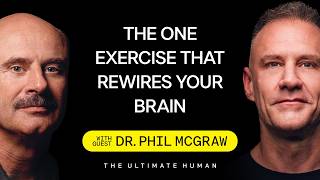
Dr. Phil attributes the youth mental-health crisis to fatalistic internal dialogue and lack of intentional living. He outlines four key questions to uncover personal purpose and describes his disciplined routine: competitive tennis six to seven days a week, treating exercise as a non-negotiable appointment, and managing type-2 diabetes through habit and accountability.
Chapters
Anxiety, depression, and loneliness are the highest they've ever been since records started being kept among our young people. If people are having anxiety in the absence of genuine threat, then they're obviously telling themselves something that isn't true.
You said in the past that the internal dialogue of anxiety is fatalistic.
You have to live with intention, because if you get up and you're just reactive to what happens in your life instead of choosing what you do, then you're just living reactively.
I think the fear of failure, you know, grips a lot of people and keeps them from taking that step forward.
You've got to find that thing that really fills you up, and the way to do that is you have to start asking yourself questions. What matters to me? There will never be another you. What are you going to do with it?
For someone that's watching this podcast, how do they go about figuring out what their purpose is?
If you're looking for an answer, you've got to start asking the right questions, and some of those right questions are—
Hey guys, welcome back to The Ultimate Human Podcast. I'm your host, human biologist Gary Brecka, where we go down the road of everything anti-aging, biohacking, longevity, and everything in between. And today is definitely one of those in-between podcasts. Um, today's guest is arguably the most recognized figure in mental health in all of modern American media. You know who he is, but what you may not know is the backstory. So welcome to the podcast, Dr. Phil.
Been waiting on this, looking forward to it.
Have you really?
I have.
I've been waiting on this too. So I don't know what, maybe we gotta talk to our teams about what took 'em so long.
Exactly.
But it's an absolute honor to be sitting on the stage with you.
Well, same here.
And, you know, I would argue that the vast majority of my audience is very familiar with you and your work. 4-time New York Times bestselling author, 21-season show. As I said, without a doubt, the most recognized face in mental health in all of modern American media.
I've been at it a long time.
Yes, you have. But you know, what fascinated me in preparing for this podcast was I went deep down a rabbit hole on the backstory because I find on my podcast that there's a common theme that runs through my podcast. And that is that the most impactful, passionate, purpose-driven people aren't necessarily the most credentialed, but they've solved a problem in their life. And in solving that problem, they became really passionate about their purpose. And I feel like you fall neatly into that category because I was unaware of your childhood background. And you grew up in the presence of an alcoholic father, which probably shaped your narrative around drug and alcohol addiction. Been sober for 55 years, haven't had a drink in 55 years.
No, I have not.
But could you walk us through that? Because you describe your childhood as very chaotic, sometimes violent, and there were periods of homelessness even. And I think when people look at the icon, iconic figure today that's doling out usable advice, they don't realize where that empathy comes from.
Well, you know, I feel really blessed in many respects because I feel like every life experience I've ever had has prepared me for what I'm now doing. I mean, I do. I think everything I've ever done has prepared me for that next level of what I was going to do. And because I've had a lot of different life experiences, I think it's put me in a position where I can relate to people from all walks of life. If, you know, I've got a bachelor's, master's, PhD, a postdoctoral degree, all in, psychology, clinical psychology, behavioral medicine, forensic psychology, and all, but what really I think has been a differentiator for me is I have been poor. I have been without a home, living on the streets. I have been in business. I have been in a lot of different walks of life, so when I encounter people from those different walks of life, I have some commonality with them. I can understand what their experiences have been. I've never been involved with drugs or alcohol, but I've lived with it. So when I meet people and I hear the excuses, I hear the justifications, I see the self-destructiveness, I recognize it because I lived with it, you know, growing up. I've lived with the chaos. I know what it does to their kids because I've been one of those kids. So I think that being through a lot of different experiences have really prepared me to help a lot of people from different experiences. And You know, when I was growing up, we moved every 3 years for one thing, so you're always the new kid. Yeah. And when you live with an alcoholic father, you know, there are just certain things that other people don't even think about. Like you never bring friends home, ever, never. You don't ever bring a friend home from school because you don't know what you're gonna find. You don't know if it's gonna be chaotic, violent, all the windows are gonna be kicked out, if the car's gonna be in the front room or in the garage. You have no idea what you're gonna find 'cause you found all of those things in the past. So you don't bring friends home 'cause you're gonna be embarrassed if you do. So you just live a completely different life and you learn to depend on yourself really early on. And I had 3 sisters, 2 older and 1 younger, The two older were married 11 times between them. Wow. Yeah. You think, how is that possible? Well, you start really early.
And make a lot of mistakes.
And both of them wound up married 30, 40 years in the end. But early on they were getting married every time you turned around. So there was chaos and unpredictability. So you learn. I can remember as early as the 5th or 6th grade, sitting on the curb thinking, I can't possibly be related to these people. I mean, even at that young age, I thought, these people are crazy. I can't possibly be related to these people.
How far apart are you from your sisters?
4 years. I had one 8 years older, 4 years older, and one 4 years younger. And we, my little sister, we're the only two still alive. We always said they had us in pairs, the two crazy ones and then the two normal ones.
Well, you win, man, you're still here making an impact.
I'm still here, she's still here, and we both had very productive lives. The other two, not so much, so.
So I mean, that ultimately wasn't what shaped you to go into mental health. I mean, that really began after your— college football career as you?
You know, I got really focused on this when I was actually 12 years old, which is an odd time to kind of take a direction. But at 12 years old, I got focused on figuring out why people do what they do and don't do what they don't do. Because I was playing on a football team in Oklahoma City And we were really good, not nearly as good as we thought we were, but we were really good. And we had really flashy uniforms and great helmets. And we had a game that rained out. And so on a Saturday. And so on Monday, the coach said, we got a call from the Salvation Army. And they have a team. They want to know if they can come over and scrimmage with us today on Monday. And so he said, I told them sure. So they're going to be here any minute now. And about that time, 2 or 3 pickup trucks pulled up at the curb. Back then, you know, you could throw kids in the back of a pickup and drive around. Apparently we didn't value children as much as we do now. Yeah, we didn't value kids as much as we do now. You just throw them back in the truck A few fall out, that's no problem. But they fell out of those trucks, it looked like the Grapes of Wrath. I remember the kid lined up across from me, he had blue jeans on and he rolled them up to the knee so they looked like football pants.
Wow.
And he had on loafers instead of football shoes. And he had the number 4 on his shirt, which was a button-up shirt over his shoulder pads. And he had the number 4 on in masking tape. And we're snickering in the huddle like, why wouldn't he use Magic Marker? That's gonna come off. And we were so stupid. I mean, he didn't put it on in Magic Marker 'cause that was his shirt. He had to wear that to school the next day, you know? So he did it in tape. And you know, we're laughing and snickering and we didn't have a kickoff 'cause it was just a scrimmage. They snapped that ball and that number 4 was lined up across from me. And Gary, that kid hit me so hard, it still hurts when it rains. Wow. I mean, that was 60 years ago. They beat us like they were clapping for a barn dance.
It was 100 to 6, right?
Oh my God, no, no, that was in college. Oh, okay. I have lots of failure. But they beat us something terrible. And I remember stumbling off that field and my dad was there to pick me up and I said, "What the hell happened?" And he said, "Well, they just handed you your ass on a platter is what happened." And I remember being so envious of those kids, these Salvation Army kids, because I thought, if they can do so much with so little, They had no equipment, they had no nothing. I wanted what they had. They were hungry. They were motivated. They got a chance to play on grass. I was talking to one of them afterwards and he said, "You don't know what it's like to play where there's not a manhole cover on the field." And I thought, that's when it really got to me. I thought, I really want to understand what makes people do what they do. And don't do what they don't do. And I got really focused on motivation and what made people tick. And that's when I really bought in to human functioning, psychology, and emotion. That's when it really triggered. And I started reading stuff from that time forward. And that's what led me to where I am today.
Well, first of all, thank God there was no social media back then, or that game would have been forever documented in the record.
Yeah, I did lose. 100 to 6 in college when I was playing for University of Tulsa. Houston beat us 100 to 6. I was actually in the infirmary during that game, but I was on that team. So yeah, I've been beat a lot.
And at some point in that career, you sustained a pretty traumatic brain injury.
Yeah, I got a pretty good head injury playing football. It ended my career. So I took up tennis.
And you're still playing tennis today? Yeah.
I started college on a football scholarship and finished on a tennis scholarship.
Yeah, well, I want to kind of drag this into, into where we are today because I think, you know, from the outside looking in at such a storied career, um, you behave more like a startup company than somebody who's had a decades-long successful career. And I want to drill into that a little bit because I, I think, you know, there's some fascinating things about the human emotion and motivation and in psychology that, that really empower people to do things far beyond the norm. Like, I'm always fascinated by athletes, not that just broke a record, but that sustain a level of performance over the duration of their entire career, like the Michael Jordans, you know, or Tiger Woods, or, you know, Lance Armstrong, 7 back-to-back Tour de France. I look at you the same way, and I wonder how having the childhood that you did and then achieving what I think by any means would be the epitome of career success. How is it that now in your 70s, managing type 2 diabetes, which you also do with your wife— she was diagnosed in 2001 alongside you, so I really want to hear what the kitchen's like because that's what my audience is going to want to hear. But after having such a successful career as an author, as a TV personality, the level of impact. Now in your 70s, maybe busier than you've ever been with a media company and a book a year and starting a new show. What is it that keeps that North Star for you?
Well, you know, I feel like if, if you don't If you don't have passion in your life, if there's not something you're really excited about, that to me would be the worst possible existence. I can't even imagine waking up in a day and having no purpose, no passion, not having something that you feel like you need to do. And I just, I don't think I measure my self-worth as a function of what I achieve, but I definitely feel like I live my life with intention. And I'm a strong believer that you need to be who you are on purpose and you need to own it. And there are things that I'm passionate about and I see them happening and I know that I have something to contribute. I don't think I'm the be-all end-all. I'm not the repository of all knowledge in psychology or psychosocial functioning, but I do think I have something to contribute. And to see a problem and not do anything about it, to me is just unthinkable. I can't imagine that. And I think one of the keys to my success has been I try to solve problems nobody else is even working on. There are things that people ignore, deny, overlook, or whatever that will jump out to me and I will see those things and I, I try to grab them by the horns and address those. Like, you know, right now anxiety, depression, and loneliness are the highest they've ever been since records started being kept among our young people, school-age people. That has to be dealt with. Somebody has to deal with that. Our educational system is not on the verge of collapse, it is collapsing.
Mm-hmm. I would agree with that.
I mean, a third of our high school graduates can't read at the most functional level, but yet they're graduating from high school. How is that possible? Mm-hmm. I see these things happening, and I think somebody has to call these things out and deal with them. Yeah. I see things that, like, I couldn't possibly have these awarenesses and sit home watching the drapes fade. It's just not, that's not who I am.
Yeah. You said in the past that the internal dialogue of anxiety is fatalistic.
Yeah.
And first of all, what do you mean by that? And how do you grapple with that in your own life?
Well, you know, look, we don't react to what happens in the world. We don't react to what happens in our life. We react to what we say to ourselves about what happens in life. Mm. It is purely a matter of what representations we make to ourselves about what happens. If something happens, we go, "Oh, it's the worst thing ever in the world has happened." then we're going to have a really oversized reaction to it. If we're in complete denial, then we're going to run over the cliff, over the edge of the cliff. We really have to listen and check ourselves to see if we're telling ourselves the truth and if what we're saying is rational. Is it true? Is it based on fact? Is it in our best interest? Does it get us what we want? Does it protect and prolong our lives? If we're not being rational with ourselves, then we're our own worst enemy. So I think we have to monitor what we're telling ourselves because that's what we're reacting to. And anxiety is a really exaggerated fear reaction in the absence of a clear and present danger. So if people are having anxiety, in the absence of genuine threat, then they're obviously telling themselves something that isn't true. And I try to get people to challenge what they're saying so they can react in a rational way.
And how do people begin to reframe their environment on their own independently? So as these things come up during their day, how do you reframe? What you're perceiving is happening to you? Are there any exercises that you could go through?
Yeah, I think those, I think the 4 things about testing your own thinking is really important. And that's what I mean by saying you have to live with intention. Because if you get up and you're just reactive to what happens in your life, instead of choosing what you do. If you're doing what you're doing on Wednesday primarily because it's what you were doing on Tuesday.
Mm-hmm.
And you do on Thursday what you do on Thursday primarily because it's what you did on Tuesday and Wednesday, as opposed to it being what you want to do on Thursday because you intentionally made the choice, this is who I wanna be and what I wanna do. Then you're just living reactively. You're in the river, you're just going with the flow. And I ask people to stop and think, am I really being who I want to be, doing what I really want to do, or am I just living an assigned life, what everybody else expects me to do? Because I think it's— I challenge everybody to, to star in their own life. If you don't star in your own life, who's going to? I mean, and I don't care if you're a plumber or a schoolteacher or you have your own television show or whatever, you gotta star in your own life, which means it needs to focus on what you have to contribute. Because think about this, you're Gary Brecka. Now there may be other people that share that name. There may be a Gary Brecka up in Idaho or somewhere else. Somewhere else, I don't know. But you— there will never be another you in the history of the world up until now and after you're gone. There will never be another you. What are you going to do with it? And I challenge people to ask themselves that. There will never be another you. This is it, one shot. What are you going to do with it? And if people don't ask themselves that question, then, you know, this is not a dress rehearsal.
Mm-hmm.
This is it. And so you've got to decide, I'm going to be who I am on purpose. I'm going to do the things that I truly believe are important. And that gets a lot easier if you have children that you love and are passionate about, or you have a career or something that you think is really meaningful. Sometimes if you're a bit lost and you don't know what you care about, then that's a steeper hill to climb. You need to find out what that is.
Right. You know, I feel very blessed because I believe that God's revealed his true purpose to me, and my purpose and my passion have greatly aligned. My family is on the journey with me. I love the team that's on the journey with me. We get daily reminders of the impact that we're making, and But I get the question all the time about, I see what you mean about purpose and passion, but how do I know what my purpose is? How do I go out and find my purpose? What are some ways that I can internalize or review my own dialogue and figure out what my purpose is? Because for people that do uncover what that is, it reminds me of those signs you're supposed to hang on your office wall that says, find something you love to do, you'll never work a day in your life. I thought that was horseshit for 28 years until my purpose was revealed to me. And now I know how truly meaningful that is. But for someone that's watching this podcast that identifies with what you're saying, how do they go about figuring out what their purpose is?
I think you have to really start asking yourself what matters to you. It really is kind of interviewing yourself like we're doing right now with you talking to me. I think you have to start asking yourself, and I think it's important to write things down, not type 'em up on an iPad, write them down. Because let me tell you, these things right here are crippling us.
They are.
They're really crippling us. It changes your brain when you actually write things down. But I think you have to, if you're looking for an answer, you've got to start asking the right questions. And some of those right questions are, what really matters to me? What am I willing to invest time, effort, energy in? What makes me feel fulfilled. We have lots of different— when you think about currency, most people think about money, but there are lots of different kinds of currency. There's monetary currency, psychological currency, spiritual currency, social currency.
Relationships.
Yeah, there's all kinds of currency, and you have to ask yourself, what is your currency and what pays you off? What do you do? What do you work on? What do you achieve that gives you currency that matters to you? Makes you feel good, makes you feel fulfilled. And it, how tragic it would be to spend your life and become the best accountant that ever existed, only to discover that isn't what you wanted to do.
Mm-hmm.
That what you wanted to do was be a farmer or a singer or a dancer or whatever, but you became the best accountant that ever was. You just didn't care about accounting. Mm-hmm. You've got to find that thing that really fills you up, and the way to do that is you have to start asking yourself questions. What matters to me? Mm-hmm. What do I feel good when I do? What do I feel fulfilled when I read about or address or participate in in some way? And if you don't start asking those questions, you're never gonna get to the answers. If you just assume that what you're doing is just your lot in life and you don't ask the questions, you're not ever, ever going to get to any kind of real meaningful passion unless you just happen to be lucky. Unless you just happen to, maybe your dad was a fisherman and you fish and you just love it, then great, you hit the jackpot.
You hit the jackpot.
But if you aren't feeling fulfilled, you need to start asking yourself a lot of questions. What could I do? And you're gonna kiss some frogs along the way. You are, you're gonna try some things, yeah, that didn't work. But what does? You will find what does.
Yeah, I think the fear of failure grips a lot of people and keeps them from taking that step forward. We do it on our team all the time. We talk about failing fast and getting back on mission.
Yeah, but if you fail, is that really failure or have you just crossed one thing off that you don't have to worry about anymore? That wasn't it. So did you fail or did you eliminate one thing?
Yeah, this reframing, I find that you do that. You do that a lot. You just sort of reframe the narrative so that you don't, you don't receive it the same way that, that most people would. Let me, let me, um, uh, back up for a second and talk about what a, what a day in the life of Dr. Phil looks like. Um, exercise, nutrition. I will say, without revealing any of your medical information, you have managed your type 2 diabetes extraordinarily well based on what I see in the record. And there are long-term manifestations that show, that prove— and we'll talk about this on, on your podcast— but that prove that you have done a good job over a very long period of time. Markers that you can't fake, like telomeres and hemoglobin A1c. Um, so what it tells me is that you have some way of, uh, of discipline that you apply to a daily routine, because we are, we are culmination of our daily habits. So I already know that those daily habits are somewhat regimented and they're somewhat disciplined, um, by your level of conditioning, your level of output, uh, what I see in your labs, what I see in some of your other DNA testing. So what does that— what does that look like for you? What is it?
Well, I'm a— I'm kind of a, uh, a creature of habit in that I make an appointment with myself every day for intentional exercise. I don't, you know, the easiest person to break an appointment with is yourself.
Oh, no question.
'Cause you don't disappoint anybody else except yourself.
But you record that though, you remember that.
Yeah, you do.
And you start to not trust yourself.
But I've made a commitment and I play tennis probably 6 or 7 days a week at a really competitive level. I mean, the people, it's not hit and giggle tennis and it's not sit around and shoot the breeze. I mean, it's, I come off the tennis court—
Crush the enemy.
And I can wring my socks out. I mean, it's hard workout. Probably on average 6 days a week, sometimes it's 7, sometimes I play twice a day. And that's been really important to me because everybody in my family, everybody else in my family was morbidly obese. I've got 2 nephews that are now dead that passed in their 50s that were over 500 pounds. My dad was obese, my mother was obese, my sisters were, everybody. I had triplets that were 5'4" by 5'2". They were, I mean, they were almost perfect squares. Everybody in my family. And I just, I grew up in athletics and so I've always worked out and that was a, great thing for me. I got in that habit real early and I just kept it up because that's one of my currencies. I enjoy it. It's my social life, it's my exercise, it's my decompression. It serves multiple purposes for me.
I love how you say work out with intention. You set an appointment to work out with intention. There's a lot to unpack there because I think it's the way that we frame things to ourselves, right? You don't let yourself out of that commitment.
Yeah, and I gotta tell you, there are some days that it's time to play and I just so don't feel like it. I mean, I just so don't feel like it. And I just make myself do it. And 10 minutes in, 15 minutes in, I feel good and I'm glad I'm there and I'm going.
Yeah, no, that happens to me all the time.
It's like a cold plunge. I can barely get there. I can barely get out to the court. And in the warmup, I'm like, oh my God, kill me now. But then your blood gets flowing and you stretch out and everything, and then you get going and you feel great. But I've learned that I have to, I don't do it when I feel like it, I just do it. 'Cause if I only did it when I felt like it, I'd probably do it, a third of the time because I tape all day. And yeah, I've taped in LA from like 2 hours in the morning, then fly here and then tape an interview here and then race and go to the court. And I've got jet lag and I've been on camera 4 hours and all that.
Never regret it.
And I think, oh God, I still feel like it. But I do it anyway. And I've made that commitment to myself and I keep it.
Yeah, and it's paid dividends for you.
Yeah, and even if I've been out of town, Robin will meet me at the door with my tennis stuff and say, you know, because she knows it's gonna go—
go play tennis—
and she's gonna go a lot better if you get a workout in.
I love that. My wife is the same way. So, um, Dr. Phil, I wind down all of my podcasts by asking my guests the same question, and, um, I'm really excited to hear your answer to this. There's no right or wrong answer to this question, but what does it mean to you to be an ultimate human?
Yeah. I probably have a different answer because I'm in front of millions of people every day, and I am a type 2 diabetic. Mm-hmm. And I think that if— If I can set a good example, I don't hold myself out to be a paragon of mental health or whatever, but I think if I can set a good example as a husband, as a father, as a Christian, as a contributor to society in some way, then I think I'm doing a good thing. And I'm not perfect at any of those things, but I do them all with intention. I consciously think about what I'm doing and how I do it. Some days I do better than others in one area versus another. Mm-hmm. But I do live with intention, and I think that's important. I don't like being reactive. I like being proactive. So I try to set a good example for, you know, whoever may be watching, because I think I'm very fortunate to have a huge platform. Yeah. And I think it's important to be a good steward of that. And I think as long as I'm a good steward of it, then I'm entitled to keep it.
Dr. Phil, it's been an honor to have you on the Ultimate Human Podcast. I feel blessed to be a part of your wellness journey, and I hope you'll come back again so we can follow up.
Well, I certainly hope we'll have a great follow-up. Yeah, no, we will.
I promise you that.
All right, thank you so much. Thank you. Thanks for having me.
Woo!
More from Gary







Perimenopause Symptoms Can Start in Your Late 30s - Dr. Remina Panjwani | TUH 312

