How to Build Muscle After 50: Protein, Leucine & Amino Acid Timing - Jim Stoppani | TUH #300
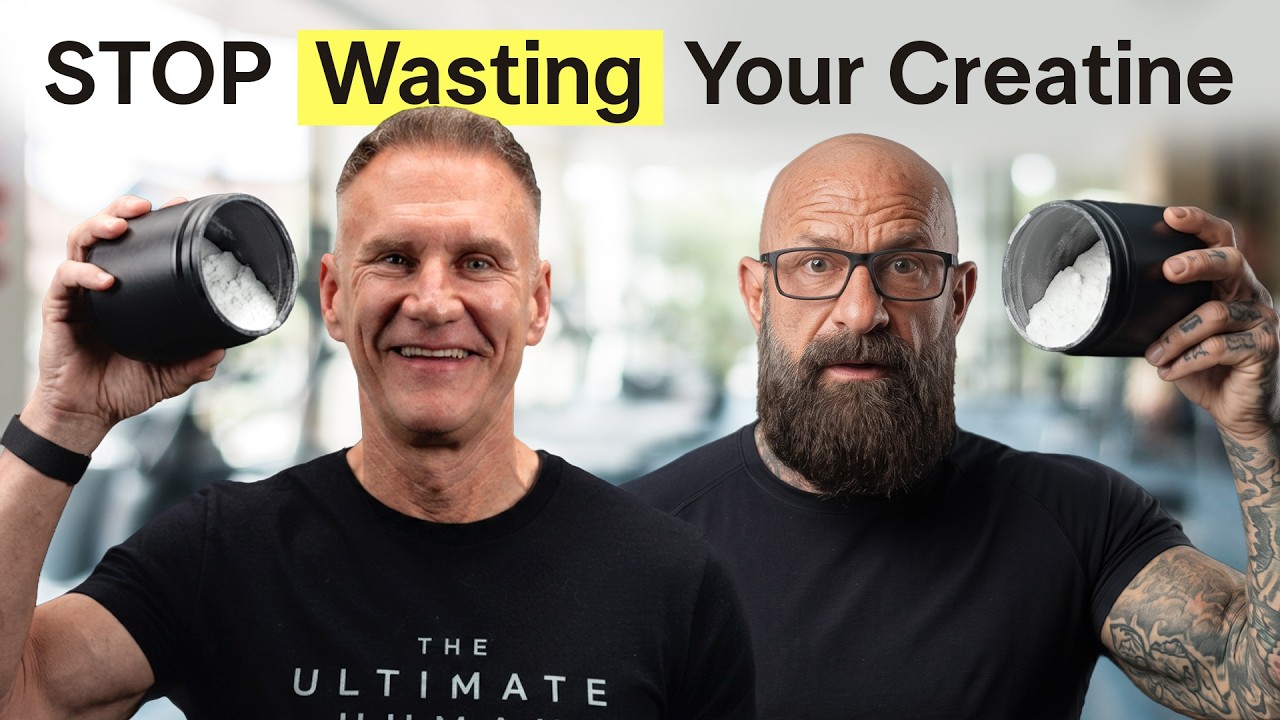
This content was created by Gary Brecka. This content was uploaded by Gary Brecka. This is a YouTube podcast episode titled "How to Build Muscle After 50: Protein, Leucine & Amino Acid Timing - Jim Stoppani | TUH #300" (uploaded 2026-09-01T13:00:06Z). The excerpt is an interview-style conversation on the Ultimate Human Podcast featuring host Gary Brecka (human biologist) and guest Dr. Jim Stoppani (PhD in exercise physiology). They discuss supplementation (creatine forms, dosing, tolerability, cognitive benefits), protein and leucine for older adults (anabolic resistance, timing, BCAAs vs. whole protein), practical training advice for middle-aged listeners, the supplement industry (proprietary blends, dosing transparency), and related biohacking topics. The audio also contains ad-read segments and references to the guest's background and supplement product development.
Chapters
So many companies were taking advantage of consumers who just read creatine, beta-alanine, that don't understand you need a certain dose of each one of those ingredients for them to be effective.
Supplement manufacturers just throwing things on the label like creatine, but putting it in dosages that someone that wasn't— didn't have the background that you had saw it on a label. They're like, okay, then this must be a good supplement.
But what's the dose? Every ingredient is only going to be effective at a certain dose.
Your background in the supplement industry, your background as a writer, an educator, and having a biochemistry background means that You can take the practical application, muscle building, fitness, exercise, and bring it all the way down to the cellular level.
As you're aging, what is important? Mobility, maintaining muscle, metabolic health. I would say for the middle-aged and older, you want a more well-balanced fitness routine. In fact, there's research suggesting that those who work out with more variety have more longevity.
What is the secret to maintaining a muscular physique and not getting injured? When you get into your 50s, the secret to building muscle after 50 is—
Ultimate Human.
Hey guys, welcome back to the Ultimate Human Podcast. I'm your host, human biologist Gary Brecka, and today we're settling the score on one of the most debated topics in health and fitness. Supplementation. My guest is Dr. Jim Stoppani, a PhD in exercise physiology, Yale-trained researcher, and the man who's built training and nutrition programs for The Rock, Dr. Dre, and LL Cool J. Jim is going to break down creatine and why up to 30% of people can't even tolerate the standard dose and what to take instead. We're going to dive into protein, leucine, and exactly what happens to your body's ability to build muscle after 50, a phenomenon called anabolic resistance. And what you can do about it starting now, no matter what your age. We'll even get into the cutting-edge myostatin gene therapy and the future of muscle growth. Whether you lift or you just want to still be strong and independent decades from now, this episode is required listening. Let's get into it. Hey guys, welcome back to the Ultimate Human Podcast. I'm your host, human biologist Gary Brecka, where we go down the road of everything anti-aging, biohacking, longevity, and everything in between. And today's guest is actually going to answer a lot of questions that are all over the media right now. We're going to settle the score on supplementation, creatine, cognitive function, what you need to do now, even if you're in your 20s, to reach older age and still be healthy, strong, and thriving. And before the podcast even started, we started a mini podcast in the kitchen. I'll share that with you guys, um, uh, in just a moment. But Dr. Stepani, Jim Stoppani, welcome to the Ultimate Human Podcast.
Thank you, Gary. Pleasure to be here.
Yeah, I'm really excited to have you on because you see people that are walking the walk and talking the talk, and then you see people that really have their arms wrapped around the science. And I think you're that rare breed hybrid that has both.
Thanks. I think I would— background is the same. Yeah, that's my passions are the science, but also the The real-world application of it.
Yeah, I mean, clearly it's working. I, I, for the record, he is substantially older than I am. He's 2 years older than I am. Um, I wanna, I wanna get that outta the way early. When he was like, I graduated high school in 1986, I was like, yes, graduated in 1988. So I was a sophomore, you were a senior. You're so far ahead of me. But, um, you know, you can live your carefree younger years through my eyes. But I, I feel like if I had a sleeve, I might look more jacked. Um, um, but it appears that those are real muscles and Not, not tattooed. But I'm so excited for this podcast because there, you know, your background in the supplement industry, your background as a, as a writer, an educator, um, obviously getting your doctorate and, and having a biochemistry background means that you can take the practical application of muscle building, fitness, exercise, and bring it all the way down to the cellular level.
Right.
So I would love to start with what I think is the hottest topic in supplementation right now. Which is creatine, of course. And creatine's been around forever.
Forever.
I think it felt you know when I was in like college, it was like the bodybuilding mid-nineties is when it really yeah mid-nineties took off. Yeah, it was the you know all of the bodybuilding rage, I assume because it helped to retain some water in the muscle. But now it's starting to emerge with cognitive benefits.
Yes, and that's why we're hearing people talk about it.
And that's why we're hearing people talk about it. So could you first of all, what is creatine? How does the body make it? And then let's go down this debate between monohydrate and hydrochloride. Um, why is one better than the other? Are they about the same? I know we have more data on one than the other. Um, but you know, I, I, I have my parents on it now for cognitive function. They're in their 80s.
I recommend everyone literally should supplement with creatine.
So creatine is a what in the human body?
It's an energy molecule. You know, everybody thinks it's this muscle-building supplement.
And we make it in our bodies, right? Yeah.
And it's one of the most critical energy molecules in the body. And the reason why is because it provides what's known as a high-energy phosphate. And if you know what ATP is, right, or adenosine triphosphate, a little, maybe a little too technical, but that's our energy currency, right? And so To contract muscle, to run. We need ATP to fuel all that, every process in the body.
Even to think.
And creatine helps to make ATP, and it helps to make it very quickly, which is why it's so important for like when you're lifting weights.
Do we naturally, like a lot of things in aging, does our capacity to produce creatine decline over age?
Possibly. It's not really one of those You know, even though we do make it, it's not like, say, DHEA, where as we get older, it starts decreasing, right? But what we do know is that to really maximize the benefits it can provide, what we get in our daily diet and what we make is not enough.
Where would we get creatine from in our diet?
So you get it from meats like Animal, beef, fish.
I assume you're a meat eater.
I am.
Great. I am too. So sorry. Complete protein. Sorry. It's a complete protein. Mom, it's a complete protein.
I worry about my leucine intake.
Yeah. So why is it now crossing the boundaries into being no longer just a bodybuilding supplement? I mean, where does the data fall on cognitive function? neuroinflammatory conditions.
Yeah, there's a lot of interesting, a lot of interesting data on creatine, not for muscle building. And one of the most discussed is the brain benefits. And so there's research, you know, single studies, meta-analysis studies where they take a bunch of studies and sort of look at them all and see that all the results kind of come out the same. That's what a meta-analysis is. It's a study of the studies. And what the studies of the studies show is that taking creatine can provide some cognitive benefit, improving memory, right? Recall. And there was a recent study showing that if you're sleep deprived, a high— a large dose— and again, this was almost 30 grams of creatine, 25 to 30 grams.
In one shot or over an entire day?
In one shot. Decreased the sort of cognitive hit that you get from sleep deprivation.
So mitigated the effects of sleep deprivation. And is something—
In an acute— but now, what we know about creatine in muscle is a lot. What we know about creatine in the brain is very little. It's early. But so we know it takes about 3 to 5 grams of creatine per day to provide benefits to the muscle. For the brain, it may— we may require a little more, maybe closer to 10 grams, because it's harder to get past that, you know, blood-brain barrier.
Right. And, and what about the forms of creatine? You know, there's a big debate of monohydrate versus hydrochloride. My understanding is that the HCl version is a little more water-soluble, but the monohydrate is where there's a lot more data.
Yeah. So let's talk about the form. So if you're— if you thought about creatine in a lab somewhere, let's say a scientist studying creatine and he's got a jar of it right in his lab, right? What would that form be? It would be creatine monohydrate. It's just its default form.
Got it.
Okay. And so, so the very first study was done using creatine monohydrate. And so when scientists want to replicate something to see if, oh, that study showed results, will it now show results in Women, will it show results at this dose? Right? They want to go back and use the same form that was used in the original one. So since it's its default form, okay, that's the form that's been studied in thousands and thousands of studies. What is creatine hydrochloride? It's the same thing. It's providing creatine, right? And you're attaching something to it. Okay? With creatine monohydrate, there's actually a water molecule attached to it. Even though it's dry, there's a water molecule attached. With the hydrochloride, what's attached to it is not a water molecule, but a molecule of hydrochloric acid.
Salt.
Exactly, it's a salt, right? And so what does the hydrochloric acid do to the creatine? It increases its solubility. So have you ever seen someone or mixed a glass of creatine monohydrate in water?
Chunky.
And it's, you know, you've got all those particles in the bottom. You drink it, It's kind of gritty. So creatine goes into solution very poorly, even though it's hygroscopic, which means it pulls water to it. It takes a while. Okay. So when you drink a glass of creatine, because creatine pulls water to it, that's why you hear about water weight, right? It goes into the muscle.
Which is the bloating that especially women want to avoid.
Yeah, but it pulls it mainly into the muscle. So it's not really like you know, extracellular.
Okay.
It just makes the muscle look bigger, right? It's more volume. However, if the creatine has not pulled water to it while it's in your glass and you drink it and it sits in your intestines, those particles are going to draw water to them while they're in your intestines. And that's the explosive diarrhea you hear so much about with creatine monohydrate.
You're going to look great, but you're going to have explosive diarrhea.
And so there's some around, I think, 20% to 30% of people can't tolerate 5 grams of monohydrate.
Wow. 20% to 30%. Yeah, 20%.
And then if you go up to a 10-gram dose, it's something like a single 10-gram dose. It's something like 50% to 60% of people cannot tolerate that.
Wow.
And so that's the benefit of the hydrochloride. It's for those people. I can't tolerate 5 grams of creatine monohydrate.
Really?
Yeah.
So you take the HCL?
So I take the HCL version too. And that's the only— that's the only difference is that it goes in— when you mix creatine hydrochloride in water, it instantly goes in the solution. And so it's not—
Do you notice that?
It's not pulling any water while it's in your intestines. And so not only do you get fewer stomach issues, but you absorb more of it. So It takes a smaller—
So you're not taking a bioavailability hit. You're not taking—
No.
So it's not that one crosses the blood-brain barrier, one doesn't. One is more bioavailable, one's not. It's just that one has more clinical data than the other one. But at the end of the day, it's creatine. Creatine is creatine. Creatine is creatine.
It gets into the muscle as creatine and it gains that high-energy phosphate. And that's what it does.
And where do we suppose that some of the cognitive benefits are coming from? From what I've read, If you don't have enough creatine, because it's also like a methyl donor, if you don't have enough creatine to donate methyl groups, then the body's going to grab methyl groups from somewhere. So it's going to grab them maybe from SAMe, acid denatured thiamine. And so when the body is deficient in anything, it doesn't go without, it just takes it from somewhere else. Right? I mean, like, when we're fasting, we, we're not eating, but our body is. It's just eating us. And hopefully it's eating you from the weakest point forward, the senescent cells, breaking those into energy or breaking them into amino acids so it can still build structures in the body, which I find just so insanely innately intelligent. Um, that's why I always say, man, the more I study the human body, the more I believe in God. We don't have to go down that road, but You know, it's— our body's just so intelligent. And so from what I can gather, the line that I draw for creatine and, you know, neurocognitive decline and the memory studies and also the sleep deprivation is that if you don't have enough of these methyl donors or creatine, the body's still going to get it from somewhere. So it's stealing it from places that you might not want it to steal from.
Yes.
Is that a fair assessment?
For sure. There's so many So many ways that it's working, you know, and at the end of the day, it's providing energy to the nerve cells. So just like a muscle now can do more work, right? So can a nerve cell.
If you know me, you know I'm a huge believer in the benefits of hydrogen water. H2Tab delivers cost-effective portable tablets that generate ultra-clean molecular hydrogen at 12 parts per million, One of the highest concentrations on the market, with over 1,300 published studies showing benefits of oxidative stress, energy recovery, brain function, and so much more. Taking charge of your health has never been easier or more cost effective. Just drop a tablet in water, let it dissolve, and drink it back. It's less than a dollar a day, science-backed, and part of my daily routine. I never travel without this, and it is my favorite biohack. Visit drinkh2tab. That's drinkh2tab.com and upgrade your hydration today. Now let's get back to the Ultimate Human Podcast. Sure. And I mean, and at the end of the day, all of these, um, you know, advanced memory decline, you know, diagnoses— Alzheimer's, dementia, early onset cognitive decline, memory loss, um, cognition issues— these are all at their root neuroinflammatory issues or circulation, trapped, uh, histamines or cytokines or what have you in the brain. And I guess the evidence is that creatine can cross this blood-brain barrier in high doses and maybe mitigate some of those effects. So would you, um, make the blanket statement that at a certain age everybody should be on a certain dosage of creatine, or not quite yet?
I, I would.
I mean, I would too. I mean, I would totally agree with that.
I would, I would, I think most people should consider at least a 5-gram dose per day.
Yeah. And I'd love to talk about, you know, when we were in the kitchen, we were talking about your transition from pure academia, you know, into the practical world. And it started with, which a lot of our listeners are not gonna know who this is, with like Joe Weider and, you know, back in the day when bodybuilding magazines were, like the only access that, you know, young athletes or young bodybuilders had to any real information.
That's a good point.
On how to build muscle and recover.
Yeah. Where else would you learn about metabolism or macronutrients or?
So what was your departure from academia like into, let's just call it the real world, right? The practical real world?
It took a while to get, you know, to get used to, to be, you know, going from—
But where did you land out of academia?
Yeah, so I left, I was at Yale School of Medicine, and I landed at Weider Publications in Los Angeles, which, you know, Los Angeles was the mecca of bodybuilding at the time. And I worked for, you know, Joe Weider's Muscle Fitness. Shape magazine, many people may remember.
I remember that one too.
For women. Um, we had Men's Fitness, um, and then we had this hardcore one called Flex, which was like IFBB bodybuilding. It covered all the contests, uh, and whatnot. And so I would write for all those, you know, different audiences. You know, some were more hardcore, um, some of them were just fitness-oriented.
Yeah, but you know, at the time You know, bodybuilders were kind of leading the charge on hormone therapy, supplementation, nutrition, because, you know, these guys shared a lot of data. They were very open about their, you know, their stacks and their cycles and what was working and what wasn't. And even then, you know, they were checking biomarkers long before people were even doing annual blood work. Most people got their blood work done every maybe 5 years and then something was wrong.
Isn't that crazy to think about?
I mean, now it's sort of become the norm, but, but bodybuilders back then were not just flying blind. I mean, no, they were experimenting on themselves. Like, is this hurting my liver? Is this hurting my kidneys? Is this causing my inflammation to go up? And, and I remember, you know, even back then reading before I even knew what biomarkers was, it was even before I had my first biology degree. Um, but there was a lot of good information in there.
Yeah.
Um, that was coming from that. Yeah, you know, coming from the bodybuilding community. So you're—
you—
so then you gravitated towards actually creating a supplement line. I think it was born out of need when we, when we talked about your, your background, because here you are as an editor for these magazines trying to provide quality information to the reader, and, and you seem to get very frustrated by the lack of disclosure. That was going on in the supplement space, or what we call proprietary blends. Right, right. And also, you know, supplement manufacturers just throwing things on a label like creatine, but putting it in dosages that yeah, what I call buzzwords. Yeah, buzzwords.
Yeah, you know, and creatine, beta alanine.
Yeah, yeah, sounds great. Like I want both of those, you know. And if you know, if if if someone that wasn't didn't have the background that you had saw it on a label, they're like okay, that's great. Yeah, supplement.
But But what's the dose? You know, every ingredient is only going to be effective at a certain dose. And the problem—
Creatine is one of those, right?
Yes. Like I said, I'm recommending about 5 grams per day for most people. And I was reviewing supplements that had 250 milligrams of creatine or 500 milligrams.
So 1/20th of the dose.
Yeah, like 500 milligrams is half of a gram. and I'm telling you, you should have 5 grams. They're giving you half of a gram. And, you know, that's what was so irritating to me, that so many companies were taking advantage of consumers who just read creatine, beta-alanine, that don't understand you need a certain dose of each one of those ingredients for them to be effective.
You know, I feel the same thing going on in the biohacking space. You know, I told you I have a graveyard of, like, red light beds in my in my garage downstairs, was very astounding to me how some of the leading brands, you know, $100,000 red light beds, for example, very often did not have the nanometer wavelengths, the milliwatts of irradiance, were not creating a therapeutic dose. Um, and you, if you accepted the manufacturer's published, you know, data, then, you know, and of course, if you're paying $100,000 for a you know, red light bed, you expect that it's going to work. And what I found was a lot of these were just red light bulbs. Like, you might as well stand next to a Christmas tree. And it was frustrating for me too. And I feel like as someone who has a large audience in the space, we, we have an obligation.
Yes, exactly.
Stand in between the consumer and a lot of these manufacturers and say this is valid and this is not. Um, and the same thing in the supplement space. And, and so for you, that led to you formulating Your own supplement.
Yeah. You know, I had a, you know, like I would be telling people what to look for and it was almost impossible to find, you know, which was, you know, ingredients that, you know, have studies behind them and it lists the actual dosing and that trying to find supplements like that was very difficult.
Yeah. Things like natural flavors, proprietary blends. Those are Sort of buzzwords for we're not telling you.
Yeah, right, exactly.
Yeah, we're not going to disclose.
And so instead of just telling people this is what you should look for, I provided the example.
And then how did that go for you?
Went very well because you know I had been you know I had already been teaching people how to use these ingredients and and how to build their own you know before you work out. what you want to take after your workout, whatnot. And so the formulas already existed. So when I manufactured them, those same formulas were still there. And so the consumer already knew they were taking it, just making it on their own. This was going to work because they're already taking it, right? Just mixing it themselves. And now this is actually flavored once again, all in one spot. Yeah.
So it ended up being a really good Very successful journey for you, and it ended up in GNC.
And yeah, it was a very popular brand again, because this was in 2013, and at the time, most supplement companies were not telling people how many grams of creatine or whatever was in there. And so, you know, this was somewhat groundbreaking in the supplement industry.
And I think you find this, you know, not just in the supplement industry, but also in like You know, equipment industry, and you you see a lot of or like I see a lot of good data provided by a certain clinical study, and then everyone just borrowing that data, but not really following the threshold doses. Or you know, we talked about this in shake plates, for example. Not all shake plates are created the same. I mean, there's certain concussive forces you have to create to improve bone mineral density and. Drain lymphatics, but the consumer doesn't know that you know one vibration plate is different from another vibration plate. They just think all vibration plates are the same, and they can cite you know the outcomes from a different product and just sort of borrow that data and allow the consumer to assume that that data is valid in their product when it yeah when it's not. You know you have to meet certain threshold standards. What do you think is the biggest hole in the supplement industry right now for the consumer? Like, where are they going wrong? I mean, what's— how does a consumer, in other words, pick something up off the shelf, you know, a supplement, and kind of ensure that they're getting what they're expecting to get?
Yeah, well, you know, I created this sort of paradigm that I call the 5 Pillars of Supplementation. And so, It's based on a solid nutrition foundation because you can't supplement a bad diet, right? First thing you need to do is create a stable, proper diet, whatever that's going to be for you, right? We could debate—
Whole food-based.
Exactly, right? But a whole food-based, right? Once you have a solid nutrition plan, then you can start looking at supplements to help take your performance or your body composition further, right? And so the first pillar is the ingredients. And that is, do they have clinical research supporting the effectiveness, right? The second one is the form. What's the best form of that ingredient? Is it going to be the creatine monohydrate or the hydrochloride, right? The third is, what is the dose?
Minimum effective dose.
Of that ingredient, right? Is the dose on the bottle, at least the daily dose you're getting, similar to the daily doses in the literature, in the published studies?
Mm-hmm.
Fourth is, are there any synergies in that formula? Ingredients that may work together, right? And support one another. For example, if you had branched-chains and creatine together, leucine can increase insulin. to some degree, and creatine requires insulin to get into the muscle. That would be a good synergy, right?
Right.
Are there any synergies that are going to promote the ingredients themselves even further than they can by themselves? And then the 5th pillar is timing. When do you take it, right? When is the best time to take the creatine?
And is that— yeah, that's— so when is the best time to take creatine?
Well, With food.
With food.
Yes. Because like I said, to get into the muscle, at least, right? Brains is a little different. We're still confused about brain, but at least we know about muscle, right? And it requires insulin. Insulin helps to shuttle creatine into the muscle.
Okay.
So if you have creatine with a meal, yeah, right, protein and carbohydrates, you're going to have an increase in insulin. That's going to help to drive that creatine to the muscle.
So creatine isn't something you should take fasted?
Creatine with a meal, you could, but with a meal, you'll take up about, it's estimated around 30% or 40% more creatine you'll take up.
Oh, wow. Okay. So you could take it fasted, but you're just getting less of a dose. Because I work out fasted, I take something called Perfect Amino, which is just all 9 essential amino acids. I don't like the full feeling, but I eat right after I'm done working out.
Right, yeah.
You know, working out, I mean, eating before I work out for me is just not something that works for my body. And I don't get the blood sugar crashes. You know, sometimes we work with these guys at my son's house and there's guys passing out and throwing up all the time 'cause their blood sugar's tanking. So they probably should eat before they work out. But let's actually talk about a good, Because rarely do I speak directly to, like, the middle-aged men my age. We're both in our 50s.
Right.
Yeah. You're clearly holding a lot of muscle for a guy in your 50s. So what is the secret to maintaining a muscular physique and not getting injured when you get into your 50s? Because I think you're so smart by the time you get in your 50s because you realize you can actually get hurt. Yeah, my son doesn't think he can be killed by a bullet. Neither one of my sons, um, just because they haven't been really hurt yet. Um, and, uh, like, you know, they haven't blown discs back squatting or anything.
I used to race motocross.
Oh, did you?
Now when I race—
so you know you can get hurt.
Now when I watch motocross, I'm like, what? How? What? I did— why was I— why would I do that? Like, yeah, you know, so many ways to get hurt, you know.
Now we're like, bungee jump?
Hell no. What was I doing?
Yeah.
How am I still alive today?
Yeah.
I have no idea. But yes, you know, you think you're— nothing's going to hurt you, you know, until you get older. But the secret to building muscle after 50 is protein and leucine. So, so as, as once you hit 50, you're in anabolic resistance.
Sarcopenia, right?
Well, not even just sarcopenia. What anabolic resistance is, it means if— how old are you?
Sorry, Max over there.
Yeah, Max. How old are you? 27.
Little youngin'.
If Max eats a steak and let's say provides 30 grams of protein and I eat that same steak, right? We sit down in your kitchen together.
I offered you a steak. You turned it down, for the record. Yes, this is correct. He's fasting right now.
If we both ate that steak, you know, muscle protein synthesis is right after, after you consume protein, right? Muscle protein synthesis spikes up. Well, the muscle protein synthesis that Max will get is going to spike up probably about 40 to 50% higher than mine will spike with the same meal.
Why?
Leucine. So Our intestines steal more leucine.
They do. Okay.
And leucine is the key that turns on the muscle building.
Because I've always seen in branched-chain amino acids leucine, isoleucine, valine. And leucine is usually in a 2:1:1 ratio. So leucine is, is double isoleucine and valine. And I assume that that's because there's good research behind that.
Yeah. And it's what sort of— it's how it is in the muscle. It's typically at a 2:1:1. 1 ratio as well.
Okay, so that's where that ratio comes from. And then, but I've also heard that branched-chain amino acids on their own is sugar water.
Well, yes and no.
Okay.
Right. And so when you do a study, you can bias a study before you even do the study. And so the studies on branched-chains saying it's basically flavored water is comparing branched-chains to essential amino acids, right? Branched chains are essential amino acids. Yeah, but it's only 3 of them. 3 of them. Yeah. Right. So they compare, they take people and put them, have them fast, and then they consume either branched chains or essential amino acids. Right. And then they see muscle protein synthesis. Well, it goes up more with essential amino acids because the essential amino acids are also providing the branched chains. but it's also providing the 17 other amino acids, right? But that's not how you would use branched— nobody would wake up in the morning fasted and go, I'm going to take some branched-chains and call it a day. Right.
Right?
So here's how I use branched-chains. So I was saying the leucine, right? So leucine gets stolen by your intestines. The older you are, the more leucine it sequesters. And that's why the muscle protein synthesis isn't going up as high. So, why not take more leucine with your meal, right? And, when you want to take leucine, you want to take branched-chains because of that 2:1:1 ratio. Okay? The leucine works best when the isoleucine and the valine are there, okay? Because they do other things. Well, leucine turns on this process called mTOR, right?
Mm-hmm.
The valine and the isoleucine do other things that help with the muscle protein synthesis. So, they work better together. So, what I do is I take the branched-chains not with the meal, because research has shown— and get this, it's a little complicated—
Mm-hmm.
The research has shown that when you take the branched-chains with the meal, the branched-chains never show up into the blood for some reason. They still get sequestered. So, what I do is I take branched-chains about 30 minutes before I eat.
Ah.
So that the branched-chains can get through.
Right.
They turn on the muscle protein synthesis. Then you have the whole food providing the rest of those essential amino acids that the, the, the leucine is now going to use, right? Because it turned on muscle to build the protein.
Guys, early access is finally here, and I could not be more excited to launch the ultimate filtered showerhead. From Cold Life. You've heard me say it before, your skin is the largest organ in your body and it is not a barrier, it is a gateway. Every single day it absorbs chlorine, fluoride, PFAS, and heavy metals straight from your tap. This showerhead eliminates those toxins instantly, and it's the simplest way to protect your health doing something you're already doing every single day. It installs in 60 seconds, it has incredible water pressure, and it's finally live. Go check it out now and use my code ULTIMATE10. For 10% off. Be one of the first to experience the ultimate showerhead. Now let's get back to the Ultimate Human Podcast. So are you still a big proponent of get the majority of your protein from whole foods, or—
Yes and no.
Okay.
What's interesting, what's interesting is, right, and we all say, I even said with the, with the, with the 5 pillars of supplementation, you want a solid nutrition foundation, right? And that's typically whole foods. But what's interesting about whole foods and muscle protein synthesis is that when you consume a steak and let's say it has 2 grams of leucine in it, and then you consume just 2 grams of leucine by themselves. Okay.
Mm-hmm.
Not only does the leucine by itself get into the blood faster than the steak, For obvious reasons.
Right, because it's coupled.
But twice as much leucine shows up in the blood from the amino acids as it does from the food.
Wow.
Twice as much. And so it's estimated that a whole food, say a steak, will only provide you somewhere around 50% of those amino acids. A protein shake may provide closer to 70%, Percent of those amino acids.
Like a whey protein.
Good whey protein. Free-form amino acids will provide probably about 90% to 100% of the amino. Wow.
We just took the amino acids themselves, right?
Okay. So looking at that, right, you would, you would say, well, it'd be better to just take the leucine or a protein shake than the whole— but remember, what else is in the steak that you're not getting?
B vitamins, all kinds of—
Right, right. So it's complicated.
It's not an answer.
For me, both are important, you know, and it's using both properly. And like I said, I'm going to take the branched-chains right before my whole food meal. Like I said, 30, 20 minutes before your whole food meal. And then I'm going to have my whole food.
So what does a typical day in the life of Jim Stavani look like? I mean, clearly you're You're doing resistance training, and would you say that especially for middle-aged men, if I only have 30 minutes or 60 minutes to work out every day, cardio or weight training, or is it important to do cardio and weight training? Because I have actually seen some very prominent folks that I have a high level of respect for, well credentialed, say if you only have 30 to 60 minutes, weight training beats cardiovascular training hands down. in every clinical study that they had ever read.
Yes.
Yeah. And so if you only had a certain amount of time— and also people that don't think that weight training can actually give you a cardiovascular benefit are not weight training right.
Right.
Just like you're just lollygagging around the gym.
Yes.
Sometimes I want to take a nap.
You're doing like 5 reps on the bench press and then sitting on your phone for 5 minutes.
Right, right. If you keep a pace—
Try, you know, supersetting or keep your rest periods shorter. To get your heart rate up. Depends on the goal. But you can. And like you said, if you had one or the other, I would pick resistance training because you're going to get the resistance for the muscles, which are critical with sarcopenia as you're aging, right? Quality of life. But you're still getting cardiovascular.
Right.
It's not like there's no cardio. And again, depending on, on how— now I'm very fast-paced. I superset. Oh, you do all the time? Yeah. So I'll do a chest and a back, you know.
So push-pull?
Yeah.
Okay.
Pretty much.
Is that so? So how are your— you like some takeaways for my audience? Um, you know, how are your workouts structured? Are they work— are they structured push-pull? Is it one body part per day? Um, so many different regimens out there. Um, is it— do you go almost to failure, stop one rep shy of failure? That seems to be a lot of evidence around That, um, do you do drop sets, try to fatigue the muscle through the full range? Because there seems to be evidence around that.
Yeah.
Um, there's progressive resistance. I do all of it. You're not helping me, Jim. I want the one best way, dude.
There's no one. There is no one. That's the great thing about resistance training. There's a million ways to do it. You know, there's a million different modalities. You can use free weights, bands, pneumatics, you know, what have you, right? Still going to provide similar benefits. You could train heavy, you could train light, you could train fast, you could train— you know what I'm saying? Depending on your goal, it's going to provide benefits, right? You know, for overall, for me right now, like you said, I change up which muscle groups I'm doing in a workout. Right now, I split my body into 2 different workouts. I have a leg and shoulder day, and then I have an everything else, basically chest, back, arms.
Okay. And you're doing all of those on the same day?
No. Okay. Well, one— so 2 workouts, 2 different days. And then I typically train Either four times a week with resistance training, or sometimes even more.
Five times a week.
Yeah.
And are you are you intentionally doing cardiovascular training, or are you getting that through your weight training?
I get a bit of it through my weight training, but I also do. You know, I like hiking. I do.
Well, that's the best way to get it. Yeah.
Interval training. I you know, I mix it up.
For the greatest hypertrophic effect in the least amount of time, where does the research say the greatest benefit is from? Training to within 1 rep max?
Drop sets?
What does it say?
Yeah, I would, and again, it's gonna depend on the individual, right? Somebody who's advanced is gonna wanna do drop sets and go to failure. Somebody who's got a year or less under their belt, Close to failure is okay, is plenty.
And and and you're a big fan of consistency over time versus high intensity for short periods of time. And you talk about programming for the middle-aged lifter is way different than programming for the 22-year-old.
For sure.
So how do those differ?
So I I would say for the middle-aged and older, you want a more well-balanced fitness routine, right? Like when you're young, you might have like oh I want to be. you know, stronger or faster because I play pickup basketball or, you know, whatever it is. Right. I skateboard. I do some of this. As you're— as you get older, I'm 50, right? Will I be able to get my biceps any bigger? Probably not. Right.
Yeah. At this stage. Right.
Will I be able to bench press anymore? Probably not. Will I be able to run any faster than I can right now? Probably not. Right. So instead of trying to focus on like one goal and maximize that, whatever it is, whether it's the strength, right, as you're aging, right, what is important? Mobility, right? Maintaining muscle, metabolic health.
Not getting hurt.
Right.
That's a big one. Yes.
Right. And so The older person, I think, needs more variety. And in fact, there's research suggesting that those who work out with more variety versus I just lift weights or I just run have more longevity.
So it's actually the variety. You know, another, I think, really hot area is gene regulation research. And I know you have some core competency in this, myostatin inhibitors and some follistatin gene therapy. And these seem very promising to me. I don't know where you fall on that, but follistatin, for example, inhibiting, you know, myostatin, which is what sort of stops our muscles from growing, for lack of better words.
It's a governor.
Yeah, governor.
It's like a governor on muscle growth.
Yeah, so taking the governor off of muscle growth. Where do you fall in some of these gene therapies, and, and do you see those becoming a little more mainstream?
I think it's very exciting. I don't know about it becoming mainstream anytime soon, but who knows.
But what are you excited about?
What the future— well, you know, when I was a teenager, I used to eat fertilized eggs. Do you know why? Because of the follistatin, which reduces myostatin, right? And so all these bodybuilders, because no one else knew, right, swore you had to buy fertilized eggs.
What is a fertilized egg?
An egg that's been fertilized, that's, you know, that can grow a chicken versus the ones you get at—
right, okay—
at the grocery store, right?
Okay.
Because of the folic acid.
So how do you buy fertilized eggs?
So I'm very exciting. In fact, There was a company that came out with a myostatin inhibitor from egg yolk. Right. That's where they got the follistatin. However, was it effective? Right. There's research that shows if you take a myostatin inhibitor like follistatin, like this one supplement company, the exact, the exact product, It dropped myostatin by about 40%. Hmm.
Okay.
In middle-aged men, right?
Wow.
Impressive, right?
Yes.
However, the product didn't sell that well. I tried it. Didn't do much for me either. Why? Well, I'll tell you why. Do you know how to lower myostatin?
Working out lowers myostatin.
And creatine by about 30 to 40%.
Wow.
So if you take a person who's already working out, already taking creatine, they've already lowered their myostatin levels by 30 to 40%. Will this ingredient lower it anymore? No, it doesn't appear to. Will gene therapy? Yes. Okay. That's different, right? Right.
Because that's a direct shut-off of the gene.
Right. Turning on and off.
Right.
Versus trying to, because I you know turn it off. So I'm very excited. Yeah, I'm very excited about you know, and you've seen the the the case studies of these infants that have you know both myostatin genes have been turned off.
Mm-hmm.
You know, and they're like muscular.
Yeah, yeah. Little infants. You're right. Yes.
Yeah. So I'm you know very excited. I wish I had that.
Access to it. So are there any good follistatin gene therapies that are really available today? When I went down the rabbit hole of it, it's like you got to go to Nicaragua or like— it's just one place in the world where you can actually do these because they're not approved.
It's just too early in the game, you know what I mean, to really pinpoint where. Um, but it's exciting, you know, it's, it's exciting.
What else on the gene front are you excited about, if anything? Because I've heard Dr. Mike talk about, um, some of these new gene therapies. And I, uh, don't profess to remember the names of some of these, but, um, about how these could potentially replace, uh, a lot of these anabolic steroids that—
Sure. Yeah.
Yeah. Like, gain this kind of muscle mass.
Uh, insulin-like growth factor. Yeah.
Instead of the old school, just Anavar.
Yeah.
Tren and—
Yes.
Testosterone and—
Right.
Deca and all of these other things which have Clear side effects, um, especially long term.
Yeah, but we don't know what, you know, changing this gene could also—
Yeah, that always freaks me out a little bit too. Like, CRISPR kind of freaks me out a little bit. It's got a lot of promise to like delete genetic mutations, but then how far do we take it when we start like designing the genome?
Yeah.
And, you know, against our, you know, the natural intention for this replicatory cycle.
Yeah.
You know, we And it seems like every time we really mess with Mother Nature, something really bad happens. I remember growing up, I grew up on the Chesapeake Bay, and there was, you know, they wanted to add, get more oxygen into this estuary, which is a mixture of like saltwater and freshwater. And so it used to be fertile for like oysters and crabs and, you know, Maryland crabs. I mean, I grew up on Maryland crabs. And so a bunch of scientists put this algae into the bay, coated the whole bottom of the bay, blasted the oxygen content up in the water, and then dead fish were floating everywhere for years. I mean, it just jacked up the whole ecosystem. And I feel like we might be going down that road as human beings if we, if we jump on the bandwagon too soon.
Yeah. You know, that's why I, you know, I always have concerns anytime there's something promising. It's like, well, what else is it going to do? Is, is What I always think, you know.
So, so in general, let's get back to the middle-aged male versus the 22-year-old male, because I'm middle-aged and I work out with both of my sons who are in their early to mid-20s, um, and I love working out with them. I actually feel great. My joints don't hurt, and I perform in these workouts.
I love it. I say the same thing. I feel very lucky that I very—
amen—
joint issues.
Yeah, because I've had them in the past, you know. I've had an ACL injury, I've had low back injuries. I mean, that is the worst. Right. So I mean, for me, number one is like, don't get hurt.
Yeah.
Um, because that— and then that sets you back. I mean, if you get an injury, it sets you back 6 months, it's a year before you really get back to where you were, especially at this age. Yeah. Um, so what are the big hallmark milestones of, you know, middle age, let's call it 45 years and older, versus early 20s for workouts? Is it volume? Is it weights? Is the complexity of movements? You know, I owned a CrossFit gym for a while, and I So a lot of people getting hurt doing complex, you know, Olympic lifts. I mean, those are not necessary either.
No, not in, you know, not in that scenario, you know what I mean?
It's like, you know, I'm all about optimizing performance, and lately I've been using the ION Weighted Vest during my workouts, and it's been a game changer. It isn't your average weighted vest. It's designed to fit like a second skin, activating your core, improving blood flow, and even helping you with recovery While you train. What I love most is that the weight is perfectly distributed. It doesn't pull on your shoulders or throw off your alignment. Whether I'm doing strength training or cardio or just taking a walk, I'm burning more calories, building muscle, and pushing my endurance even further. If you're serious about leveling up your training and unlocking your full potential, check out the Aion weighted vest at aiongear.com. That's aiongear.com. And you can use code ULTIMATE for 10% off. And start training smarter today. Now let's get back to the Ultimate Human Podcast.
That's, you know, that as an exercise scientist, you know, you— those are the things that are frustrating. It's like, I have many CrossFit friends, you know, and it's like, I, I, I love the value of CrossFit. What, what I think CrossFit did well is it opened up Olympic weightlifting to everyone. Now, on the flip side, Do we want to really open up Olympic lifting to everyone? Because you have to be very proficient at it to— you can't just—
Yeah. Form is so critical.
You can't just go in there and whip out 30 reps while you're— after you've run a mile around the gym, you know, like, yeah, that's not how Olympic lifters train, you know, because you can get injured that way.
Right.
Yeah.
And I saw it.
You know, there's a better way to do it. But anyway, but yeah, so on the middle-aged, you know, like I said, I'm more about being more proficient in all levels of fitness, your flexibility, your mobility, right? Your strength, muscle mass, because we want to avoid as much sarcopenia as possible.
Which is age-related muscle wasting.
Yeah. And so I'm, you know, as far as the actual workout design, Obviously, it's not just about age. It's also where is this person? Are they just starting? Have they been working out for a year? Have they been working out for 5 years? Have they been working out all their life?
Right.
Those are different, even though they're all 50. Right. These are all different. They would require different workouts because it's more about, about the individual. But on a, you know, on a Basic breakdown, I would say a variety of repetitions. You want to do some heavy stuff, right? Because that's going to activate those fast-twitch fibers. I think you want to do some lighter stuff as well for more endurance-based, right?
Okay.
And lighter weight now is finding to be more hypertrophic, better for building muscle, right? But then I would also include yoga. Into your routine. I would also include cardio as well so that you're getting all those areas. You're getting mobility, flexibility, cardiovascular, muscle building, strengthening, et cetera.
Where do you fall into post-workout nutrition? 'Cause that's, that's, talk about an area where people get paralysis of analysis. The anabolic window, right? Which I've heard has totally been thrown out.
And so Brad Schoenfeld, is the, is the one. And Brad is a friend of mine. You probably know the name.
I do.
Who, who published that study. Now, it's, it's a study of studies, as we talked about, right? To conclude that maybe the post-workout window isn't as important as we once thought. Right. But the studies are only as good— the study can only be as good as the studies. And the problem with sports nutrition research and bodybuilding research is there just hasn't been enough of it done. You know, most of the research that's done, like with carbohydrates and post-workout, is for endurance athletes and looking at if they have carbohydrates immediately after, how do they perform the next day? And so we've taken all this indirect data and tried to apply it to how a bodybuilder should train and eat, right?
Mm-hmm.
And so Brad did this meta-analysis on all these studies on post-workout nutrition, finding that maybe it doesn't really matter. However, in the same note, he will say, I would never tell a professional athlete to not eat immediately after they work out. I would never. This is— this just means the average Joe and Jane who want to go to the gym Do not need to down a protein shake as soon as they're done working out. Okay.
Yeah. To catch the metabolic window.
As long as they eat within, you know, an hour, it's fine. Right?
Right.
An NFL lineman, would I say the same thing to him? Brad would say no. I would tell him to eat as soon as he could, you know? And so the, The, the whole the post-anabolic window is dead thing has been overplayed because it's really— look, if you just want to be fit and healthy, you don't need to run home and get your protein shake ASAP. Does a professional athlete want to do that? Probably. Right.
Okay. That makes a lot of— that makes a lot of sense to me.
And that's Brad's own That's Brad's own words. Yeah. And then— And I parrot that. Would I tell somebody who wants to gain an extra quarter inch on their biceps, is that important to them, to not eat right after? No, I would suggest eat. And the other way to look at that is to build muscle, right? You need so many times in the day where you spike muscle protein synthesis, right? And what the research is showing is 3 meals is better than 2. Okay. 4 might not be better than 3, but 3 appears to be better than 2. Right. So you need to get at least 3 good high-protein meals in a day to maximize. So if you work out and then wait 3 or 4 hours to eat, that's going to lessen the number of windows you can have.
Mm-hmm.
So my Take is eat right out as soon as you can.
Right. As soon as you can.
You know what I mean?
So what are the— from a supplementation perspective, what are the important ones to get the timing right on?
The, the timing right would be— and again, it, you know, it depends on the goal for all these, because like you can argue with creatine, right? I would take it with a meal. However, many people take it on an empty stomach and And it serves them well. Like I said, there's a difference of about 30% or 40% more uptake into the muscle when you have it with a meal. Okay.
Okay. However, maybe increase your dose if you're taking it fasted.
Yes, you could still— right. You could still get benefits from it. Something like beta-alanine, for example. Right. Which helps— it helps buffer acidity in the muscle to help Prevent fatigue, right? That one I would take before you work out, okay? Because of what it does.
Beta-alanine?
Yes, beta-alanine, I like taking before. Because—
And what's the dosage for that?
You want to get about around 3 to 4 grams per day.
Okay.
And it's kind of like creatine where you want to take it repeatedly because you need to reach a certain level. But the—
so not the 3 or 4 grams first thing in the morning? No, saying gram, gram, gram.
Yes.
Okay.
But it also, um, is a bit like caffeine where it gives you a little bit of a pick-me-up, a slight one. And so people who take it at night may notice they can't go to sleep. And so I'll typically recommend that one either earlier in the day or before they work out.
Okay. Beta-alanine, things like this. So If the FDA were to outlaw all but 3 to 5 supplements tomorrow, which would be the, which would be the 3 to 5 that you'd say these are kind of must-haves if you're on this strength training journey? I think that the data is very clear now. Muscles are metabolic currency. Leg strength, grip strength, VO2 max clearly correlated to longevity. Decreasing cardiovascular risk, you know, mitigating a lot of the major risks of older age, falls being probably the greatest. So what would be those 3 or 4 must-haves to sift through the noise? Sounds like creatine's one of those.
Definitely. Okay. Top of the list.
Okay.
Definitely creatine. Beta-alanine.
Safety and effectiveness.
Beta-alanine for an athlete. I would probably say yes. For average, someone who's just looking for health and fitness, I don't think it's that critical.
Okay.
Something like fish oil, right? I would say that's not as critical because you can get that from whole foods. Right. Something like that.
Yeah. I'm a big fan of omega-3.
I would say branched-chains or essential amino acids, I would put on that list because as we talked about, you're only getting You know, maybe 50 to 60% of the amino acids from your whole food meals. Right. And so for somebody who's older, who just wants to spike your muscle protein synthesis more, okay, being able to take those, like I said, branched-chains are the essentials, which are providing the branched-chains as well, is going to be important. What else do I have on that list?
I also want to— well, I'll let you finish that list and then I want to Got one, one final question for you on one particular nutrient.
Yeah, it's hard to come up with a list because like you said, supplements are more goal-oriented, right? So it would depend on the person, you know, like it would be different for an athlete versus a 60-year-old who just wants, you know, to maintain longevity. So then, however, creatine would be the one.
Yeah, creatine. Don't let them outlaw that one.
You know, is really the, the list, you know, that the one that everybody should really—
Must have. Um, where do you fall on, uh, or do you have an opinion on NAD, NAD+?
Uh, yeah, I think it can be very effective.
Do you take it?
As NMR, right?
As oral nicotinamide mononucleotide.
Yeah.
Uh, or nicotinamide riboside.
And if you're infusing or orally.
Well, let's take like an oral. I would do it in your supplement stack, right?
I would do the NMR versus NAD.
Nicotinamide mono nicotinamide riboside.
Yes.
Nicotinamide mononucleotide. The NMN.
Yes.
NMN. Okay. So NMN. I think I would absolutely agree with you. I think Dr. David Sinclair would agree with you too. Like increasing our body's ability to make it naturally rather than just. Yes, taking it in. Um, and I think there's—
and that's, as you were talking about, as we get older, that's one of the things that will decrease.
Yeah, yeah. The liposomal versions I see from like Symbiotica and some are phenomenal. Those are the ones that I notice. And they actually— I think the liposomal deliveries for, for nutrients like that are critical because a lot of those are just denatured in first-pass metabolism. I think you'd probably agree with that too. Um, so I, there's, you know, I appeal to so many audiences, but I rarely talk to the guys that are like my age. Um, and I actually want to look more like you look than what I look. So I'm going to follow your advice. Maybe I'll even start taking some of your supplements. But I wind down all my podcasts by asking my guests the same question, and there's no right or wrong answer to this. Um, but what does it mean to you to be an ultimate human?
What it means to me to be ultimate human is to perform at my best that I can at that time. Right. Whether, you know, I may have certain injuries or limitations. Right. It's the performance, but it's also about how I treat other people. I think it's just being kinder to people is important to me.
You know, we could use a lot of kindness in this world right now.
Right.
For sure. Well, I've got a lot of VIPs waiting for you in the other room, uh, that got a bunch of questions for you. If you're interested in becoming a VIP and joining my VIP community, getting one-on-ones with me and getting into some of our private chats and using the Gary Ask Gary Anything AI, which I can look at your blood work and look at your gene testing, evaluate your supplement stack, you can head over to theultimatehuman.com/vip and join my VIP community. I would love to see you in there. Jim, this has been Amazing, because you're clearly walking the walk and talking the talk. I think your background is very unique in the industry.
Thank you.
And, you know, your grasp of supplements and what's effective, what's not. I definitely want to continue to follow your journey. I hope you'll come back on the Ultimate Healing Podcast at some point in the future. And until next time, guys, that's just science.
More from Gary







Perimenopause Symptoms Can Start in Your Late 30s - Dr. Remina Panjwani | TUH 312

