Matt Johnson: Jelly Roll’s Weight Loss, Running 842 Miles & Escaping Addiction | TUH #247
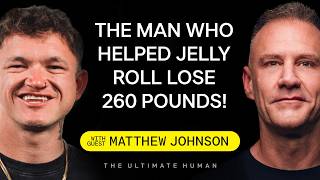
Ultra-endurance runner Matt Johnson crossed Texas twice on foot, 842 miles each way. He estimates ultra-running is 95 percent mental, 5 percent physical. Johnson credits his transformation from addiction and incarceration to community, accountability, and serving others.
Chapters
I truly believe any fit person can run 100 miles, but I don't believe that. The reason why they don't is because you can't beat this right here.
I think we subconsciously don't want to set ourselves up for failure. We either don't try or we do things that we know we can complete.
I have, like, official 100 mile races. I think I've done five, and I think I finished two. Did Texas in 24. I did east to west. I just did it this October, north to south. I'm the only man to cross Texas both ways. Fastest man to do it both ways and the only man to do it both ways.
It doesn't cost you anything to just get off your couch and sit. Goal and just start.
If you want to get into fitness, have someone with you. When you are doing something and you're suffering, when you know that the person next to you is suffering, it changes everything.
For somebody that is coming from a similar place to where you were, where do they start?
I'm not afraid to fail. I truly believe, like, that's why I'm different. And if you want to be different, you have to not be. Ultimate human.
Hey, guys, welcome back to the Ultimate Human podcast. I'm your host, human biologist Gary Brecker, where we go down the road of everything. Anti aging, biohacking, longevity, and everything in between. And today's podcast is going to be a really, really special one because I just followed and, and spent the last 48 hours with this podcast guest. Really got to know him, see his heart, see, see, like, how he thinks and operates. His story is absolutely phenomenal. Get ready to be inspired. Get ready to have the limits of what you think you can accomplish in your life just absolutely blown. And when you hear this man talk about his pain to purpose, I think it's going to be very, very inspiring for you. So welcome to the podcast. Matt Johnson. Yeah, brother, this is. This is awesome, man. We've. We've had a pretty incredible 48 hours. Yeah.
Yeah, it's cool to. You know, usually when you walk into a podcast. Right. Like, you just nobody know somebody by, like a sheet of paper.
Yeah.
Or know somebody by videos you've seen or, you know, but like, being able to meet you, you meet. You know, us being together for 48 hours is really cool to. Because now I. I'm sitting here and I just, I feel like I know you.
Yeah, dude. I felt like I spent my whole life and for my audience purposes, I'm going to talk a lot about your Background. But this is the fastest man to ever run across a stage state of Texas. And, and when people think like, okay, we ran across the state of Texas, realize that's 842 miles that he did in a little over 17 days. And I want to sort of back the story up because, you know, there's a theme that runs through a lot of my podcast guests. Like some of the most impactful, purpose driven people, passionate people I've ever had on this podcast have solved a problem in their life. And they've either taken the pain in their life and turned it into their purpose and made a big impact, or they solved the major problem. And they're not always the most credentialed. Like, you know, my podcast is about longevity and anti aging and biohacking and, and you would think it's like all these great PhDs or MDs or researchers, but the truth is I've had, I've had soccer moms sit in that chair that have had more impact on humanity than, than the smartest, most qualified PhD. And I think that you fit that category. And I'd love for you to talk a little bit about your background in the military. Not everything was roses. Right. A little bit of time in the popo. Yeah.
You've been in jail a couple times.
A couple of times. But who hasn't?
I mean, jail. Yeah.
And you know, I would love for you to talk about that. And then I definitely want to get into our journey with Jelly Roll because, you know, I was working with Jelly early on in his weight loss journey. But when you parachuted in and moved in with him, everything changed for Jelly. Like, and his accountability changed, his mindset changed. I mean, you had a demonstrative impact on this man and his capacity to drop £260. You know, we were talking before the podcast about all of the demons he was struggling with.
Yeah.
But first I want to tell, you know, your story for, for my audience from military to 842 miles across the state of Texas.
Yeah, yeah, it was very friggin mind numbing. Yeah, it was very unplanned and sorry if I have a raspy voice or my lips are chapped.
And you did a lot of yelling.
I did a lot of yelling.
I heard a lot of. Matt yelled for 24 and a half straight.
Yeah, yeah, yeah, yeah. We, yeah, the boys at 100 yesterday and 100 miles. And we're, we're a little cook too.
Both of us. Both. Yeah. But dude, but I got to tell you, man, you got my son And Kyle and the Nelk boys and those runners, six of them, safely across a hundred miles. And, dude, it's semi trucks going six feet away from us, 80 miles an hour. I mean, the wind would almost blow us over.
And I. I mean, a lot of people don't know. I mean, I would say the entire. The entire operation doesn't know that. The crew that made this possible is. The Texas crew had.
Oh, really?
Yeah. I mean, it was just me, Drew, who was out there shooting.
Yeah.
Crew chief Rob.
Yeah.
And Amanda. I mean, we're missing one. One of my crew members from Texas. And, yeah, as soon as Kyle hit me up and was like, yo, like, I want to do this. And then I heard about how the operation was going to be, I was like. I was like, I need to bring a couple of people in.
Yeah.
And, you know, just, you know, obviously make this part quick. But, yeah, I mean, it was very, you know, Crew chief Rob crewed me across America. He's crewed Paul Johnson or crewed me across Texas.
Okay.
He crewed Paul Johnson across America.
Okay.
He holds his own hundred mile records, you know, and he. So he knows how to do that. I'm like, I need to bring Robin. Amanda, you know, my fiance, Amanda. I'm like, I need to bring her in because she's crewed me. You know, she can help crew the boys as well, knowing what they need. Drew, you know, he's obviously the filmer, but he's done. You know, he has so many documentaries on YouTube about running.
Okay.
But I knew having him there know Kyle has his own filmers, but I'm like, hey, if you bring Drew on to film, you're going to have a second. You know, you're going to have somebody else that knows what's going on.
Yeah.
And, you know, so, yeah, the amount
of logistics, dude was mind numbing to me. I mean, I was in Cole's chase van. So my. My every. Every athlete had their own assigned band, so I was in the one assigned to my son.
Yeah.
And there were five of us in there. You know, Andy, who's like the. The. The absolute guru of endurance running was blessing to have him. Yeah. But Cole's sister, you know, myself, his fiance Megan, you know, we were all in that van for. For 24 hours. I got in 20 miles on my accidentally. Yeah.
Yeah, that's how it happens. Yeah, that's exactly how it happens. Like I. I told Amanda when we wrapped up, I'm like, holy. I'm like, that was 54 miles.
Yeah.
And there was Times where I wasn't, you know, I was running back. Like that was just running.
Yeah.
You know, when I would be running, when I would stay up there, I would start my watch.
Yeah.
And so like that doesn't even count. Back to the van, to the front of the van, to the back of, you know, when I would come back to talk to you guys and I'm like, didn't stop. No.
The gun went off and we moved for 100 straight miles. And I was watching the comments on, on YouTube because they live streamed it and I was watching the comments on YouTube and I would say 70% of the people in the comments gave them a zero percent chance of finishing.
100%. They.
100% of the people said there's no way six that started are going to come across the finish line together.
So the beat the odds for sure. 100.
Really.
No one, no one believed in them from the start. Like, like from the time that I got attached to it in November, you know, I was going through comments on Instagram and, and people were like, there's no way you're going to run 100 miles.
Yeah. Like Kyle Forgard.
And. But that's the thing is like, you know, which, I mean, we'll probably dive into this later too. But like there's a lot of people out there that don't really actually know what you're. What they're capable of.
Yeah.
You know, because running 100 miles is pretty easy. You know, I mean, and when I say that, I mean, when. I don't know, when I say that, I, you know, so I called this. What I told all the boys is I'm like, I truly believe any fit person can run 100 miles. But I don't believe that, that the reason why they don't is because you can't beat this right here. Like, that's why the.001% that do finish the ultramarathon, the 100 mile distance, they're able to conquer this.
Yeah.
And that's the problem with everybody else is that they can't conquer this. So they're never gonna know.
Yeah. You know, I, I remember when we crossed the, the 32 mile mark, in the back of my mind, I was like, okay, every single one of these guys is in uncharted territory, including my son. They have. None of them have been further than this point. So up till now, up to 32 miles, they're like, okay, I've done that before.
Yeah.
But now I need to go more than double.
Yeah.
And I have no Idea if my body is going to break down and be able to carry this. And, and they were all in that uncharted water. So I mean basically not, not, not knowing if they could finish or not. But I want to circle back to your background, you know, because I, I want to delve into that pain into purpose journey for you. Because a lot of people listening to this, you know, there's another common theme that runs through my podcast. A lot of people are like, well, how do I find my purpose? I mean I, the, the thought of completing a hundred mile race and doing something that epic and that difficult just to prove to no one other than myself that I can do it is not something that I can wrap my arms around.
Yeah.
And maybe starting with goal that lofty is, you know, way out of bounds. But how did this journey start with you? From the military to ultra endurance, ultra endurance competition. I mean you've got, you, you, you, you, you've won multiple races in the 5K 100, 100K, 100 mile distance. You know, you covered 840 some miles across the state of Texas. Like go back to the beginning of what did that journey look like?
Yeah. And it's been a process for me of, of doing that on my own now as an adult. Right. Because there's times where I'm living this life and I kind of sit back and I'm like, how the hell am I here? You know, you know, so you know, I think, I think reflection is very important, you know, starting to. How, how did you get to the military? Right. Like why? Because that's not a choice that a lot of people make.
Right.
And you know, I was born in a small town. We didn't have stoplights, like it was that small. The nearest Walmart was 15 minutes away.
Okay.
So we had a gas station and like a convenience store.
Yeah.
And was born and taken back to a double wide trailer. And my mom got pregnant with me when she was 17. My dad was, you know, was out of the picture from the very beginning and it was me, my mom.
Yeah.
And you know, my grandparents, you know, were around and my mom was working two jobs all the way, you know, I mean, shoot, until as far as I can remember, you know, she was working two jobs, she was driving, she was commuting an hour to work a 9 to 5 and driving an hour back and then working overnights at the gas station. Wow. And then, and so I was rotating a lot through my grandparents house and you know, fast forwarding. My mom got married when I was probably 10. And that was where. That was where all of the trauma really, like, where it started. And at that point, I had a little brother who was probably three. So actually I was probably 12. My little brother was about four or five. Because, like, we would have same dad. No.
Okay.
No. No. So my brother and I. My brother and I both have. We have different dads. And then my mom was engaged to his dad. And then that broke off, and then she. She got married. She's been married once. And, you know, she was married to this man who was. He was a really good guy at first. And then, you know, about six months in, shit started just really getting bad. There was a lot of. Started with, you know, emotional abuse. Like, I remember a time that I tell a lot where my mom went to work and my little brother and I were locked in a bedroom the entire time that she was gone. Like, just like you, like. Like, like chair to the door. And we were locked in a bedroom for 10 hours. Wow. And trying to comfort my brother through that as I'm 13.
Yeah.
You know, and I'm not understanding, like, why the hell am I locked in a bedroom? You know, And I'm trying to figure out, and I can't get out. And then, you know, then it turned into physical abuse. And, you know, he was. You know, we. We moved around a lot. We were moving around to different. She was a government contractor. And. Yeah. You know, it got to the point where, you know, I remember a time where my mom was drug by her hair to her bedroom, and I watched that happen. My little brother watched that happen. And it got to the point where my mom started. My mom became addicted to pills because she was trying to exit that life.
Right. Or.
Or at least numb it.
Yeah.
And unfortunately, in the pill addiction, you know, she. She got so far deep, she tried to commit suicide.
Wow. And.
And I tell the story of me coming home and finding her face down on the floor in the kitchen.
How old were you at that time?
I was in high school at that point, so probably 16.
Okay.
And she was taken away for, like, three days. Like. Like, if you. If you. I guess if you, like, try to commit suicide, they take you and they, like, lock you up, like, in a facility.
Yeah.
Especially if it's. Yeah. And so I remember, like, she was gone for, like, three or four days. She came back and she, like, sat me down and, you know, because I was old enough, she's like. She's like, I didn't want to. Like, this isn't me.
Yeah.
Like, I just We. I have to get. We have to get out of here. Yeah. And. But. But she was scared. And, you know, that process led to. That conversation led to. He smashed her face off of the front of a car and knocked her teeth out. And it became a big debacle. And he left. Like. Like, we might. It was a big ordeal that doesn't need to be talked about, but he left and. And at that point, you know, there was a. He put us in a situation where my. Like, he didn't want my mom to work, you know, the controlling or. He had access to everything, the bank accounts, the cars, the. And when he left, he took everything. We had nothing. He drained the bank accounts. We had no car. Like, it was. It was. I remember it was just. It was bad.
Yeah. If you want protein to build lean muscle, but without the caloric impact or need to cut, you need perfect amino. It's pure essential amino acids, the building blocks of proteins in a precise form and ratio that allows for near 100% utilization in building lean muscle and no caloric. Caloric impact. So we build protein six times as much as whey, but without the excess body fat we normally get during bulking. This is the new era of protein supplementation, and it's real. If you want to build lean muscle without having to cut, you need perfect amino. Now let's get back to the ultimate human podcast.
And from that point on, you know, obviously everything started to get better, but then I had to watch my mom, like, battle, you know, kind of like I did when I was a kid, right? Like, where she did everything she could to put food in and. And give us shelter, you know, just, you know, back to working two jobs, right? And she was working overnights. I was taking my brother to school. She was, you know, she was grinding. And that is where I get my endurance from. I know that. I know that. I get my endurance and my drive and my will. And why I am here is because of. Because of who I watch my mother being.
Yeah.
And, you know, so. But I think in that process that led me to, like, you know, 17, as I turned 18 and I was a senior, I was like, I need to get out of here.
Yeah.
Like, I've been like, I didn't. Like where, like, Amanda and I talk all the time. She's like, I want to. I haven't. We've been together three years, and I haven't taken her back home because I. I don't think I want to go.
Right.
And I haven't been back to that town since I. Since I left.
Yeah. And you know, now is your brother still in pictures?
Yeah. Yeah. So he actually, he just moved to Austin.
Did he.
Okay. Yeah. So he, you know, he. He went through. Actually the. He went through a big trauma that led. That ended up me is. That's why I'm here. But yeah, so he. He lives in Austin now. But you know, so I, I joined the military and what age?
18.
Yeah, 18. And I left for basic training at 19.
Okay.
So I had like a seven month waiting period until I left for basic training. And yeah, it was, you know, I actually we were talking about this. I think I was talking to Kyle or somebody yesterday while you're running. I was like, there was no. Like I was a child. Like, I can't.
We were talking about 18.
You're baby. I had no clue. Like, I didn't even know. I didn't know how to do like, you know, I mean, I knew how to do laundry, but you know what I mean? Like, like, like I. I don't how to wake up on my own, you know, like when you're 18, you.
You can't find your ass with both hands.
No. And like when I got there and that was my first time ever, mom. And obviously through the single motherhood to my brother, to all that trauma, like that, like that got me.
Yeah.
Being away and like that was hard. And you know, basic training, they just, you know, they break you down. And it took me, it probably took me a little bit over a month to really adapt and be like, oh, like I'm not leaving. Like, like, like I made out of this. I made this choice. And like, I, like, I'm here, like, this is it. But so what I did is I joined the National Guard because I was nervous going active duty and leaving my mother like that. Because National Guard, you come back home, right? And it's like, oh, two weeks, two weeks in the summer. You know, one week in a month. So I go, I leave basic training, I come back home, right back to that toxic environment that I left and that turned into. I lived with four dudes. We were partying, drinking, doing drugs every night. I went to jail twice. I was fighting, you know, like, I'm so surprised those couple. I was not kicked out of the military. Like, I was a. I was not a good person. Like, I came back and I just, I got swept into this toxic environment of. Of where I grew up. But now as an adult and now I can make my own decisions around here. Like, you know, like just in. And I just, I Look at that timeframe. And I'm like, holy shit. Like, how did I not really implode?
Yeah. Yeah.
And I mean, because I. When I first got in the military, I, like, I have a picture of myself from like, 2014 of just, like, man boobs. Like, Like I was this body, and I was almost £180.
Oh, my God.
From drinking, smoking weed every day. Just like, just horrible. I mean, I'm talking every single day. I was drunk every night. Like, just. Just all the time.
Yeah.
And it was, I think, because I just never. I never faced those demons that I had. I tried. I left.
Right.
But then I came right back to that same environment. It's what happened. That's why people end up failing at things they try.
Yeah.
And what led me to the ultra running. Right. I think is where we're going with this.
That's what I want to hear.
Transition. Yeah. So to 2021. In that. In that time frame, I moved out of that town. I got out of that partying phase. I actually, I went act. I got an active duty job in the military.
Okay.
Such a blessing. So I was in the National Guard, but I did almost five years active duty where I worked full time at Camp Dodge, which is Iowa's largest National Guard base. So I worked at. Crazy enough, right. Like, during those days of me doing drugs, I got a job at Midwest Counter Drug.
Yeah.
Where I was. I'm not even kidding. Like, I'm pretty sure I was still, like, smoking weed and. And I was going to work at Counter Drug, where we were training law enforcement to, like.
Yeah.
To, like, kick indoors and find drugs. It was. It was crazy. But got an active duty job, moved up to Des Moines, the capital, you know, was making. I made E5 sergeant. Was making probably, you know, four grand a month. Got married very young, probably 20, 22, 23, to someone who was 19, 20. And it was, you know, it was a. It was a. It was a great marriage, but we were babies and I was. And I was still a very shitty person.
Yeah.
And, you know, that. You know, that led me to. When I moved to Austin, you know, there's more. I'll cover in the middle. But, you know, went through a divorce, moved to Austin. But what got me into the ultra sport was Marcus, my little brother in 2021, had two friends that were murdered, and he was. Marcus was 16. And then those two boys. The two brothers were 7, were 16 and 18.
They were brothers.
Yeah. And they were his best friends. And to try to kind of just be completely Transparent and tell you the bond that they had. My little brother's mixed in his dark, like dark skin. And we lived in, in rural Iowa. Right. Where that is not that he was the only dark kid in this town.
Right.
And these two kids, I have their names tattooed right here. Devonte and Malachi, they moved into town and they were also mixed. And so there was a bond between them because, you know, there was a lot of racism towards them and hatred. And they bonded because they were all, you know, when they, when they became friends, they were, I don't know, seven, eight, nine years old.
Yeah.
You know, and then they grew up together. Unfortunately, they, you know, they were murdered. Not in this small town up in the city, in Des Moines when they were splitting time with their moms. I think they just got caught up
in the wrong crowd.
In the wrong crowd as they were getting older and they were splitting time between mom and dad. So I started looking for ways, self help. I'm like, because my brother dropped out of high school. He just, he locked himself in his room, said, I'm not, I'm not going to school. He gained over 150 pounds.
Oh my God.
And, and like, like at one point he was, I'm pretty sure he was three hundred and some pounds at, at five foot five. I mean, and he just locked himself in his room, wouldn't leave, wouldn't, like, wouldn't do anything but just eat. And so I'm like, I like, he's going to die.
Yeah.
You know, and I'm like, I need to. And this was seven, eight months that this happened like that, you know, because this was January. They were killed. And I didn't, I didn't get to this point until fall.
Right.
So I got on Google and I'm like, self help books.
Yeah.
And sure enough, first thing that pops up is Can't Hurt Me by David Goggins. And I, and, and the only reason, the only reason I was attracted to this book is because it was wrote by a Navy seal. I had no idea. And I'm like, oh, like this guy's in the military, writes a book, you know, like, cool, let's read it. Reading that book, you know, I was like, Marcus, like, we're going to read this book together. Reading that book flipped my entire perspective on everything. And it wasn't the fact of like the stay hard, woo woo bullshit is not what drew me to Goggins. It was the. If you go and you read those first three chapters, he was abused. His father was an abuser. His mother like, they were poor. Yeah, they were. It was him and his brother I related to. I'm like, how in the hell did this guy write a book and go through this?
Yeah.
And I'm like, who am I? I'm like. I'm like, that was me. Like, like, I, I. That happened to me. I'm like. And this guy's writing books and is one of the most well known runners of all time. I'm like. And at that point in my life, I hated the military. I was making excuses. I was still drinking. It was post Covid.
Yeah.
And I was in. Like, at that point, I was still drinking. I was, you know, just. I still just wasn't a good person and I wasn't where I wanted to be. So what I did is I am not a great reader or writer.
Mm.
I started listening to the book, and three times a week I would go out to the track on Camp Dodge, and it was a two mile, like, loop, and I would run four loops, eight miles, and in, like, Walmart shoes. You know, Like, I just, I. And I didn't, you know, in hoodie and a sweat, like, no. Yeah. No clue what I was doing. And I just would. And I would listen his book. And I'm. I'm not kidding. I probably listened to that book since 2021. I probably listen to that book 15 times.
Wow.
And to just remind myself, like, who I can be. Because he did it.
Yeah.
You know, not the stay hard. You know, no rest days. Like, no, no. That's not me at all. It's just like, if. If this guy can do it, why can I not do it?
Yeah.
And that's what I'm trying to preach to my audience.
So that was the early days of you just starting to run. Yeah.
Yeah.
Like, even. Even.
And I. I didn't start running until I didn't start actually running full time. Like running 30, 40 miles a week until April of 2021.
Wow.
And now we're here.
Texas was 2022, right?
No, Texas was 2024 and 2025. I've done it twice.
Right.
Yeah.
Wow. So, I mean, would you say that you just fell in love with that or it was an escape? Because, I mean, that's like, really hard shit for me.
I think the reason I fell into the love of running is because it was the only time in my life that I was able to control the pain that I was in. No one else had any control over me.
Right.
And I controlled the pain. I controlled, like, if you want to quit, you can Quit.
Yeah.
And, and, and I've been through a lot of things in life and a lot of situations where I was unable to have control over what was happening to me.
So you, you sort of start to fall in love with this. Maybe not for the reasons that most people think, like conditioning and.
No. I was running early on. I was running away from everything.
Yeah.
I was using that time of running as long as I could.
Yeah.
70, 80, 90 miles a week. And I had no idea what I was doing. I wasn't even eating food while I was doing it. Yeah. But I was using that time because I was able to. In that moment, I was able to exit the fact that I hated my marriage, I hated the military, I wasn't who I wanted to be. And I just, and when I ran, I was. I found out that I, I like that person.
And so then this morphs into you reconnecting with your faith. Yeah. You kind of really dedicating yourself to the sport. I mean, because you're, you're an iconic figure in the sport and eventually it morphs into you moving in and, and living with Jelly Roll.
Yeah.
Which is, I mean, you know, the, the, the, the 16 year old you looking at, you know, the 28 year old, you would have to be like, wow, I never thought that I would be here, you know, literally earning and gaining the trust of one of the most iconic, you know, musicians, maybe, maybe in all time. Certainly in the, in that crossover rap country.
Yeah.
Right now.
Sure.
Yeah. So, so you start running. Did you set this goal for yourself? That said, I'm just going to do something really, really epic because, you know, Jesse Itzler talks about this all the time. The Musogi.
Yeah. Yeah.
Right. That one thing you should do every year that, that you know, you only have a 50. 50 shot.
Yeah.
completing. And I think most of us don't. I think we subconsciously don't want to set ourselves up for failure. So we either don't try or we do things that we know we can complete. So we set our goal so low. So for you, when was the, when was that big, bold, audacious goal set where you were like, okay, I'm gonna run 842 miles across the state of freaking Texas.
Yeah. Okay, you wanna, you wanna fast forward to Texas?
Yeah, yeah.
So what happened was, you know, just to, to quickly get, to quickly get caught up. Yeah. February 2023. You know, I had, I had been travel, like I had been traveling, I'd been racing, you know, Ironmans and I was in the military. And the military's like, you know, we don't want you doing this. And at that point, I was a recruiter and I was like, hey, like, I can. Like, that's what Goggins did. I was like, I can recruit kids by using this Instagram platform. If I can build it, like, can you guys help me? And they're like, no. Like, we don't fucking. We don't. We don't like this. Like, we don't want you doing this.
Why you think?
I don't know. I think, you know, I. I don't think that's the military in general. I had horrific leadership.
Yeah.
Like, everyone on my team was fat. Everyone was out of shape. Like, it was the small town Iowa. It was the small town Iowa vibe within the Iowa boys in the Iowa National Guard. Like, like, you know, well, that's not normal. We don't do that, you know? And. And, like, they didn't. They didn't. I didn't have any type of support from me saying, I want to do hard things and post about it on Instagram so people can see it. But I never even had. Like, I didn't even think. I never once in my life was like, I'm going to be an influencer.
Right?
Or, you know, like, I was just like, hey, people are loving. Like, people are telling me that I'm just inspiring him to run. And, you know, like, this is cool. Really. Like, the biggest moment of my entire life, the turning point moment was I came home from Austin and my ex wife met me in the kitchen and was like, I want a divorce as soon as I walked in the door.
Yeah.
And I. We had been having horrific problems. I was. I was a horrible person. I was a liar. I was a manipulator. I was. I was horrific. And. But I never. I knew that I didn't. I knew I needed to get out of that, but I, as a man, couldn't make that choice.
Right.
Because I felt like it was my job to, like, I don't be a shitty person, but I was in this, you know, I'm like, I can't say no. Like, I mean, you know, and she met me in the kitchen. She's like, I want a divorce. And that was. I got home from Austin on Monday. That was Monday. On Friday night, I was sitting in my upstairs bedroom. She immediately left. My mom had come over. My brother was there, and I was sitting my upstairs bedroom, and I loaded a shotgun and put it right to my jaw. And I was sitting and I was going I, I was going to take my life sitting on the floor in my bedroom, and by the grace of, like, God calling me to Austin. I, I, I'm not even joking. I, I get a text message from a friend, this text message, phone call, I don't know. And, and it pops up and I see his name, Harrison Zacher. And he was in Austin because he, he, When I, when I was leaving Austin on that Monday, he was like, oh, because he lives in the Midwest and it's cold, and that's why we bonded. And he's like, I'm not, He's like, I'm not leaving Austin. He's like, I'm gonna stay here for, like, a month. He goes, he's online coach. And he's like, I'm just gonna chill down here. As soon as he texted me something in me, I saw his name, and it said, go. Like, within me. It was like, go to Austin. And I, I picked up my phone, I texted him, I was like, are you still in Austin? And he's like, yeah, dude. And I go, I'm coming tomorrow. I'll. I'll explain more.
Yeah.
And he's like, okay. And I, I packed a duffel bag. Yeah, actually, it wasn't a duffel bag to be completely real. It was a, like, broken hamper that I'm pretty sure we still have that, that black hamper that's, like, missing a handle. This hamper means so much to me. I like what this hamper means to me. I, like, packed up this, this black hamper, just all my clothes and stuffed them in there and grabbed my dog, and I drove to Austin.
Over the last 20 years, in human biology, one compound I've trusted again and again is nad. Plus, it's critical for energy focus and cellular repair, but your levels drop around age 30. I used to administer NAD via IVs in my clinics, but now I take Row Nutrition's liposomal NAD, the first oral formula that actually, their advanced Delivery tech gets nad straight into your bloodstream. I take 1 teaspoon daily, and the results are real clean energy, sharper focus, and better recovery. You can try it risk free with the Ultimate 15 code at checkout for 15% off. Just put in Ultimate 15 at checkout, you'll receive 15% off and your cells will thank you. Now let's get back to the ultimate human podcast kind of dog. I love dogs.
Blue heeler.
Okay.
And he is. He is incredible. I drove to Austin and I called my mom on the way down to Austin, and I was like, I Don't a. What is about to happen. I'm going to figure it out. I had $3,000 in my bank account, and I was like, I'm like, I'll be an online coach. Like, I don't care. I was like, all like, I'm. My. My idea was that I was going to use. At that point, I had about 25,000 followers. I was going to be an online fitness coach.
Cool.
And okay, to make that story, quick, got down to Austin, lived in an Airbnb, lived in 5 Airbnbs over 61 days. Ran out of all of my money. I had just won a marathon and did an Ironman within the same week. And right after the Ironman, I had a friend that gave me this bike. I sold that bike to put a deposit down on a duplex, and I slept on the floor of that duplex for two weeks.
Wow.
And I just started grinding of, like, people like, you want. I'll coach you a hundred dollars a month. And I just slowly, like, next thing you know, I got a couch for 100 from the market right down the road.
Yeah.
I got a mattress pad. Like, I have a picture of the mattress pad with a blanket and a pillow. Yeah, it was laying on the floor.
Damn.
And then I got a tv.
Not a mattress. A mattress pad.
Mattress pad.
Yeah.
Yeah, the little. The little pad.
Yeah.
Fast forward there. Just started. Just kept going. Just kept. I just kept going.
Yeah.
And the Instagram following started to grow. Very first brand ever. Ketone iq.
Oh, yeah.
Yeah.
I love those guys.
Michael Brandt. And they sent me a message and like, yo, we'd love to pay you 500amonth to promote our product. I know. I was like. I was like, are you kidding? I was like, I will give you my. My right arm for 500. Yeah. And, you know, over the next two or three months, I signed another deal. The second deal was an alcohol deal, which was like, at that point, you'll take whatever. I probably shouldn't have done that one, but, you know, I signed the alcohol deal. I started blowing, like, it was like, all of a sudden, everything started changing. And I met Amanda, and this amazing woman was like, she is amazing. Like, first. First day we're together, she's like, well, she's like, it was Saturday night. We're going to date. She's like, what, do you want to go to church with me tomorrow?
Yeah.
And I'm like, I'll go wherever the hell you want me to go.
Yeah.
Like, take me. Take me wherever she amazing. Yeah.
Started going Back to church, 24 hours.
Yeah. Started going back to church. The ball started rolling, the followers started skyrocketing. And you know, that led me, that led me to my, my Masaki. Right. Like, like the big, the big one. And late 2020, all in that time frame when I, when I went back to church. Right. Like, like. And I, I had met. I think I met Amanda after the leg injury. So I was running. I spent 20, 23 running from every. Everything. Yeah, run. Just run, run, run. And I, I was like, oh, my leg hurts. I kept running, my leg hurts. I kept running. I did 100 mile race on a broken leg and I had no idea my leg was broken and I just thought it hurt. Couldn't finish this race. Go to the doctor. They're like, you, you have three fractures. Like, like, I have the X ray of like, like you could see that it fractured in the calcium deposits. Like, I can feel the calcium deposit right here because it's trying to heal itself stuff. And she's like, you're done for six months
and that's your identity at that point.
Yes, that's, that's everything I have.
Yeah.
And it was in that moment where I had to like, sit with myself. I had to sit with God. I had to, you know, where I'm like, what do I do?
Yeah.
And one day, just one day, I went to the gym and I remember exactly where I was sitting outside the gym. I still couldn't run. I still was walking with a limp. And I texted one of my best friends and I was like, I want. I don't know how it came. I don't know. I have no clue. I said, I just popped in my head, I want to run across the whole state of Texas.
Yeah.
And I texted my friend and I was like, I want to across Texas. And he's like, you're a logistical nightmare, but I think you can do it.
That's a good friend.
Yeah. Yeah.
You're out of your fucking mind. But I think you get. Yeah, yeah.
So that's. That. That was kind of, you know, obviously it took a little bit there, you know, but that's, that's how we got there.
Yeah.
And, and, and it was, it was 20, 20, 24 is what changed my life forever.
But the, the money and the logistics, I mean, you know, for 17 days to just be absent, obviously you're not coaching during that time frame. You're not earning money during that time frame. Did you get sponsors and. Yeah. And you just lived in a van.
Yeah. Yeah. So what happened is you Know, Yeah, just like. Yeah, the operation that we had was the exact operation. You know, we had an RV scale down. Yeah. Yeah, we had an. We had an RV and a sprinter version van.
Yeah.
But, yeah, I just, you know, I. I overworked my team at that point. You know, I didn't have a lot of, you know, I mean, I had 200,000 followers. I had a little bit of Paul on the social media side from brands, but I just started hitting him up. I was like, yo, like, how much money can you give me to use your product while I do this event? And, you know, I feel like it was so good to do that because now I know so much about business, and I had to teach myself all of these things because I didn't go to college. I just went to the military area, right. And, like, oh, like, we'll give you five grand for three reels and a thousand stories. You know, like, it was just. They were just getting me, and I'm, like, done.
Yeah, yeah.
And, you know, like. And we accumulated $60,000 the first year.
Wow.
Through 40 brands. Like, it was. It was. It was.
I. I tie my shoes with these laces.
Yeah, yeah, yeah. Drew, who you met. Drew, is now total prostitute now. One of my best friends, and he was. He was the lead content guy out there, and I just put him through the ringer with things he had to do. But, yeah, we got. We got $60,000 in. In the operation was the. We. We. We cleared. We had a. I had a thousand dollars left when we were done. Like, like, we were. And then we don't. And then I donated it to Valor Fix. I was doing it to raise. Raise money for charity. But.
Yeah.
Yeah, that was.
That's awesome, man.
Yeah.
And now, you know, so I saw none of that side of you in the last 48 hours. I mean, the precision with which you ran this operation to get these guys 100 miles, like I say, including my son, across the desert in the middle of the night, because I don't think most people realize running for 24 and a half hours like these guys did, just the sheer grind and the. I mean, we got pulled over three times by the police.
Right off the bat.
Yeah, right off the bat, dude, we were barely in it. I see the popo come by, and he bangs a U turn, throws his lights on and parks and parks in
front of the con, front of the convoy, facing the convoy. That was the great. Like, that was, like, facing. Felt malicious.
Like.
Like, I was like. I was like, you're gonna turn and Face.
You're so nice too. He's like, how are you, officer?
Yeah. And I'm like, just keep your own shift.
Small talk. But, but you know, the, the, I was impressed with like your unrelenting commitment to the safety of the runners. I think none of them understood the task that they were, they were getting ready to do. Like I said, there's semis blown by a six feet off the, you know, side of the road. Half the shoulder was not wide enough for the vehicles to get off the road. And the first thing that cop said was, you need to be on the other side of this white line. Yeah. The entire, entire time you're down. So half the time we're driving on all that like, gravel is pretty crazy.
Yeah.
I was pissed off because I couldn't sleep. I wasn't, I wasn't going to complain about old sister sacked out in the back, but, you know, so you, you, you do this iconic race in, in, in, in Texas. But how, how does that jump to you moving in with Jelly Roll? Because I do remember during my journey with Jelly Roll, this dude Matt, and I didn't know who you were, you know, like, was moving in with them to train him. And I was like, who, who, who's Matt?
Literally everyone, every like, like stations, we're like, who is this random.
Yeah.
Person. It was super with Jelly.
Random. Yeah. I didn't have any, you know, necessarily a problem with it. I'm like, well, look, man, he's got a, he's got a chef, he's got a, you know, he's got a coach. I mean, it sounds like a great idea, but dude, when you parachuted in and, and we're with him 24, 7, you were traveling with him, everything, right?
Yeah, yeah. So we went to Hawaii like in April.
Yeah.
And he was landing in LA for like a west coast stint of like, he had things that were, you know, so they got a, they had a house up in Beverly Hills and when I was flying back from Hawaii, Amanda was going to fly home and I was staying and I ubered to this 30 million dollar Beverly Hills mansion that like. Yeah, yeah. And I'm like, all right. And it was, yeah, it was the entire month that I was out there. We were traveling and.
Yeah.
You know, training together.
Yeah. And I mean, because at that point Jelly hadn't even walk to 5K.
Yeah. Yeah. I think, I think the first, you know, my connection to him was Ian. Larry is his Coach. So crazy enough. 20, 23, when I was grinding when I first moved to Austin, And I was grinding for, you know, selling coaching to people. I get a call and this guy's like, yeah, like, I'm on tour, you know, I want to run on that. I want to run around the island of Bali. And I'm like, oh, like you're like a musician.
Yeah.
And he's like, no, he's like, I'm. I'm Jelly Rolls Chef. And I was like, holy shit. Like, that's crazy.
Yeah.
And then come to find out, he's like, he won Chef of the Year for the ufc.
Yeah.
And like, and I'm coaching this guy. So that's how I got the in with Jelly is I, I gained the trust of, of Ian.
Yeah.
And Ian was like, oh, like, you know, Matt's personality, who he is, like, you know, and he pitched it to Jelly where he's like. Because Ian wasn't there the whole time. And the problem was, and you probably saw this with Jelly, Jelly and Ian are like side by side at all times.
Yeah.
And Ian was going to be gone and Jelly wasn't going to have anyone to train with.
Yeah, yeah. And so it was lack of accountability, is it?
Yeah, yeah, yeah. So they, so they brought in a secondary chef, but then they wanted to bring me in to kind of play that in role to help him, you know, to have somebody there to train with.
Yeah.
But, yeah, I remember my first workout. I wish I could, I could pull it up on my phone, but my, the first workout was like a five minute walk and like ten seconds of like. And we use the term run very loosely. Yeah, yeah, 10. 10 seconds of as fast as you can.
Yeah.
You know, and then, and then, and that was done. Yeah. And then we got in. By the time, by the time that I got done right before the 2 bears 5k, he had ran 1 mile without stopping.
Yeah, dude. And for, for him at that time, I mean, that's even, even when I
was out there, he was still three. He was still right at three. Three, three, three. Thirty, maybe.
Yeah, yeah. And that's, you know, big boy.
Because when I look, when I look back at him now when we were out there, like I look at photos and I thought he was skinny then.
Yeah.
Now he's like, he's, It's a game now. You look at them and you're like, this guy's skinny.
So many people.
Yeah.
So I, I, I love how to me, this is like two store. This is like a story of two, like, misfits, like, with very kind of similar backgrounds, you know, doing something really Iconic. Because if, you know, even if you've never done a 5K, I mean, to think that you're going to take a 350, 60 pound man and move that mass over, you know, 3.2 miles is a major feat. I mean, getting to the mailbox is a major feat. I, I remember one of my first conversations with Jelly and he was like, where do I start? And I said, you just start by walking to the mailbox. Like literally. Yeah, just, you know, bite size, bite sized goals. And it sounds like when you parachuted in, like, you, you just started chipping away with this with these little bite size goals. I love how you say we use the term running loosely.
We use the term running very loosely. That is a, that is a folder, whole sentence quote from Jelly himself.
Really?
Yeah. Y' all know we use the term running very loosely around here.
Yeah, yeah, yeah. But you had a major impact on him. And then, you know, finishing this 100 mile race with these guys. I know that it had a major impact. They raised almost $400,000.
And the documentary, it'll, it'll go well over 500K.
Yeah.
With the documentary coming out and. Yeah.
And I think for the people that are listening, so, you know, what is all of this mean? They're like, okay, he had a rough life, Jelly's had a rough life. But look at them now. I mean, there's somebody sitting on their couch right now, maybe listening to this podcast that in a similar situation to you, and they have to take that first step. Like, literally just take that first step. What I like about what you did and what I like about what you do is that it doesn't cost you anything to just get off your couch and set a goal and just start. So where does it, for somebody that is coming from a similar place to where you were, where did they start? How does it start tomorrow morning? What do they get up and do?
Yeah. You know, I think that, you know, I've said this multiple times. You know, if you, you, you, you have to set a goal. And I feel like the problem with people is, is that you're, you're scared to fail and you can't, you, you truly can't be scared to fail. What a lot of people don't know about me is I've actually DNF'd more ultramarathons than I finished.
Wow.
Yeah, it's true. Like, like, I, I have, I like official hundred mile races. I think I've done five and I think I finished two. Wow.
Yeah. Yeah.
And you know I. I'm not afraid to fail. That's why That I truly believe. Like, that's why I'm different. And if you want to be different, you have to not be afraid to fail either. And what. What is a failure? You have to define what a failure is. Right.
You know, failure's not trying.
Yeah. Yeah. You know, but if you're sitting on the couch right now and you're like, well, where do I start? What do I do? Well, you know, tomorrow, if you're fit enough, like, go run, you know, set a goal. Hey, I'm gonna run a mile. I'm gonna run a mile Monday through Friday.
Yeah.
You know, and like. Like, set a goal. And here's what happens. Monday, you run a mile. Tuesday, you run a mile. Wednesday, you wake up and you're like, I'm sore. I don't want to do this anymore. And then you quit.
Right. Right.
What do you do the next day? Because what you do the next day defines who you really want to be.
Yeah.
And you have to be okay with that failure because. Because what you do the next day, if you want to. If you want to sit in chairs like this. The people that are here, guess what? They woke up the next day and they started over.
Yeah.
And then you start on Thursday. All right, I'm gonna go Thursday, Friday, Saturday, Sunday, Monday, I'm running a mile. And then, you know, next up, the last time, you got two days. Next up, you're gonna get four, and you're gonna fail again. And that's okay.
Yeah.
You know, you'll get it. Just. You have to be okay with failing. And. And. And that's it. Like, people. Why don't you start? Well, because it's hard. And. And. And I might. I might not be able to do it.
Yeah. Well. And, you know, I noticed, too, like, you're. You're very present also. Like, you're not somewhere else when you're doing these things. I. I'm. I'll never forget. We had just left the 93.5 mile aid station, and my son was in really pretty good shape. But I pulled up next to him, and I was. I got about a mile in with him, and my mind was, like, wandering around somewhere else. And you pulled up right behind Cole and I, and you put your hand on our back and started running with us. And you're like, hey, guys, never forget that this is. This is. There will never be a first time for you to be in this. In this situation. This is the last time that it will be the first Time. So just be present. Just take this all in, because it's an amazing moment. You know, you'll wish that you were right back here.
Yeah.
At some point, you sort of just. And then you backed off. And it was just such a cool moment for Cole and I, because I've been in that situation with Cole before, you know, in Antarctica and when he did the great world race. And there's nothing to me, like, no place I'd rather be than in one of those situations with one of. One of my kids. And I was like, you know what? He's so right. This is. This is the last time that it will ever be the first time that you've run 100 miles in. In Vegas. And my mind just instantly cleared, and I was like, I'm just not going to do anything but be present right in this moment. And what was so cool was the sun was starting to rise, and that sun was like caffeine for these guys. I saw the mood change.
Even you. Even you, because you came up, you're like, the sun's up. It's caffeine. Yeah. Because it was so cold. It was so dark, and.
And it just sucked for them. Not. Not for me. And I look over, and I could see the sphere, and they had the sphere that was like a. Like a sunrise. I've never seen that before. And. And it was just that. That. That cold, bright morning. And at that moment, I was like, these guys are actually all going to finish this.
And you.
You could feel, like, the energy of the group starting to pick up a little bit.
Yeah.
And so thank you for that, by the way, because it was like that I needed that reframing of. Of. Of that moment just so I could be present. I think a lot of times we just go through life and we never stop to realize it's not the destination, it's the journey.
Yes. Yeah.
Like, you want to enjoy the journey.
And that's the biggest thing is, like, even downstairs this morning. Right. What were the boys talking about? All of the painful times. Yeah. You know, like. Like, they're like, oh, the finish line. Right. Because that's probably about damn near the only good time that they had.
Yeah.
But. But they're just. They're taught. They're talking about those horrible, painful moments.
Cave.
Yeah.
I remember, you know, some of them couldn't even move their hips. They were doing this, like, sidewalk. I. And I didn't know, you know, exactly
what I'm talking about.
It's like they had braces on their legs and couldn't bend their knees or their hips and they were doing this sort of weird because they weren't waddle.
They weren't supposed to do that. Yeah, you know, they, they trained for 71 days.
What are the top three reasons why I prefer a vertical cold plunge versus a lay down tub? Well, I've used both. When you're in a vertical position, your body naturally regulates your breathing better. So if you're holding on to the sides and you're in a vertical position, you can just focus on your breath work and you can stay calm. A lot of people feel more calm when they're in a vertical position than when they're laying down in the water and think they might slip under the water. So when you're vertical plunging, you're fully immersed faster. You can focus on recovery, inflammation reduction and you're not struggling to just stay in a lie down position. Your body floats in an awkward way sometimes. So it's just a more efficient, comfortable experience. In my opinion. It takes up way less space too. It has a smaller footprint. So you can put these on your patio, your garage, your bathroom, your locker room. You can really put it anywhere. I've got one on my balcony. I've got two in my bathroom. So this is why cold life is my favorite cold punch on the market. So click the link below and you can order yours today. Make sure you get the ultimate human version. Now let's get back to the ultimate human podcast. So how do you deal with the mental side of, of ultra endurance racing? I mean, what, how, what percentage of it is, is actually mental versus physical?
You know, it depends on where you're at in the process. Right. Like I would say, honestly at this point with me, I would say 95 of it is all mental.
Yeah.
And 5% of it is, is physical. Once you're in shape to run that distance, like, you know, just like, just like you saw, you know the reason why Cole feels so good today.
Yeah. I was shocked.
Is because he's already done this type of stuff before. The seven marathons in seven days. His body is already like, oh, I remember this. You know, so once that you kind of build that base. Yeah, it's all, it's all here. And I even told, you know, right at the very beginning, even after looking at those guys, I, I told, I don't know somebody, Amanda. I was like, if Cole was doing this on his own, he would go under 20 hours.
Yeah.
Like, you know, he's just cold. Cole was probably number, I call it one, Kyle at two, Brad at Three. And, you know, the rest of them, I mean, that was actually pretty much how it was.
Yeah, you know, that's exactly.
And yeah, but, you know, once you get there, it's all mental. Just like I said earlier. Any. I truly believe anyone can move that distance if you are a fit human. But not everybody can. Can. Can do that. And that's what. That's what. That's what sets people apart.
Yeah. When we were on the great world race, it was. We were six marathons in, and Cole had gotten a really bad stomach bug on. On the flight from. From Istanbul to Cartagena. And, I mean, just throwing up, diarrhea. Probably lost four or five pounds on the flight. He was still sick as a dog. He was fully fasted, had no fluids.
Oh, boy.
And I remember telling my. Telling Max, the head of our production team who went with us before the race, I was like, there's no chance he's finishing this marathon. And Cartagena was so hot. And it was such a hot, humid, sunny, long, unforgiving course. And like, just the dehydration alone is going to. Is he's going to DNF it. I actually ended up running the entire marathon. And I'd never run a marathon, and I didn't train at all. But I ended up doing that just because I was so worried about my son. And. And he just went to this place he locked in because he was in the pain cave from, like, mile six. Just so dehydrated every two and a half miles. Or these rest stations. And it's Cartagena. Right. It's a Third World country. So the rest stations were like Third World rest stations. They just basically had a porta Potty and a little table with some bananas and. And he would go into the porta potty and he'd throw up. And I could hear him. He had diarrhea. He would sit on the little porta Potty toilet and throw up into the urinal. And then he would get back out and start running again. And I was. At the end of the race, I was filling little bottle caps full of coconut water, and he would sip on a bottle cap while he was running. It was like the only nutrition you could take. And to this day, I don't know where he got the fortitude to go through that because, you know, my level of concern for him was, like, at a 10 out of 10, especially when
you're in a third world country.
Yeah.
And you're like, we don't have a lot of access as a medical facilities.
And I'll never forget. Like, I start to get a little delirious. Like, I was all full of vigor at the. At the. You know, the. At the start line, I pull up next to Cole, and I'm like, listen, if you don't give up on this race, I won't give up on you. You know, I'm gonna stay with you this whole race. And then, like, mile 18, I was like, you want to throw in a towel? Dude, I'm all in. I mean, there's a lot of quitters in this world. The quitting's not as.
You know, people quit all the time.
People quit all the time. Thomas Edison Quit 35, 000 times. Invented the light bulb. I didn't say it. And then I would start to get, like, sentimental, and I was like. Because I was half delirious, and I was like, you know what, Cole? It's no place I'd rather be than right here with you right now. Someday we're gonna wish we were right back here. And he looks at me, he goes, dad, shut the up.
Yeah.
I was like, pull a letter.
Yeah.
Because he was just.
Yeah, yeah.
He apologized to me.
Oh, no. For sure. I give. I give Amanda that same thing all the time, where she's just. Because that's it. That's when you're in there.
Yeah.
You know, when you're in there and it's just like you're. You're trying to battle yourself, and you just can't have anything from the outside world come in.
Yeah. Yeah. So I think. I think that's the big takeaway from these. Is such a metaphor for life. If. You know, if you're sitting, listening to this podcast, you're like, I'm never going to run 100 miles, and maybe you never will.
But about that.
But it's not about that. It's. It's literally about accomplishing something that you never, ever thought you could. Every single one of those guys broke down in tears at the end.
Yeah.
Of the. You just saw every emotion. Even as we were coming up to the finish line. Brad, Brad, Brad, just.
Brad was going through it.
He was, man. And I don't think most people never find that place in themselves. It's such a beautiful thing.
Yeah.
You know, and it's not just the pain. It's that overwhelming sense of accomplishing something really, really hard. Yeah. Yeah, yeah.
And that's. You know, I've heard that. You know, it's. I said that after Texas, where I was like, I hope. I hope that anyone out There in an Instagram store is like, anyone out there can feel this type of happiness within my body.
Amen.
Like, it is the most incredible thing in the world. It's not about. Just like we said, it's not about running.
Yeah.
You know, it's not even about fitness.
Yeah.
Like, you know, if, if you changing your life looks like you're scared to just leave your job and go to a new one like that, and then. Oh, no. Like, what happens if I don't like that one? Then find another one. Yeah, then find another one. Then find another one. That's the same thing as run one more mile. One more mile. You know, like, that's. You have to figure out where you can apply. You know, this type of intelligence of like, of like, you can't be afraid to fail.
Yeah.
It doesn't need to be fitness.
Yeah. So what's. What's next for you? Like, what are you. What is, what's your next big, bold, audacious goal?
Yeah. July. The fourth of July this year. Yeah, yeah, we're. Yeah. I haven't announced this yet at all. It's not a.
Drop it, dude.
Drop it. Don't hold back. All right. This is a. This is 90% confirmed.
Okay.
All right. So that's why I haven't really dropped it yet.
We'll keep it between you, me, and 20 million people that watch.
Yeah. Yeah. I'm going to run 250 miles from times Square to the front lawn of the White House on the Fourth of July. And my goal is one of our Iowa National Guard units was deployed in Syria and two of our boys were killed about a month ago, though you probably saw that.
I did see that. That was the Iowa National Guard.
Yes, that was. Wow. Yeah. And my goal is to get a hold of them and get their deployment flag and I want to carry their deployment flag to the White House in honor of them while raising money for a veterans charity.
So. Cool.
So that's, that's my, that's my goal this year. It'll be part of the White House. So, you know, the 200. You know, this is our. This is America's 250th birthday.
Yeah.
This year. So happy birthday, America.
Yeah.
So, you know, 250 miles for 250th birthday. And then, you know, hopefully I can get a hold of that deployment flag and, you know, carry.
I'm sure families will do that for you.
Yeah. Carry that the way. So, yeah, I'm, I'm excited about that. And, you know, there's Some. There's. There's some partners involved. I'm just going to leave that. I'm going to leave them out of it for now. Yeah, yeah. I'm very. I'm very excited to do that. And then, you know, the next one is getting married, I guess.
Yeah. It's beautiful. Gotta get that thing going right off camera. Bruised up from the fall that she took on the side of the road. I was following her, and I saw her eat it outside of the road, but she bounced right back up.
Yeah.
And so getting married, accomplishments, Skull. That's. That is phenomenal. I'll also put in a shameless plug for, you know, Jelly and your Run Club, which is now one of the biggest run clubs.
Yeah, yeah. The Losers Run Club. Yes. A large Strava group. A Facebook group. Yeah.
Yeah. So we're gonna try to break the Guinness Book of worlds record on April 19th in Vegas with Dana White. Yesterday, I was in Dana's office, and. And I got him to commit to running the 5K. He's like, I haven't run a mile in 15 years.
That's crazy. When I think of Dana White, I'm like, yo. Like that. Like, that's wild.
Yeah. That's why. And I know Dana because Dana is one of those guys if he. He's either kind of all in or all out. Like, when I first started working with him, and he was like, I'll do whatever you say for 10 weeks. I can do anything for 10 weeks. And then six weeks in, he was like, I'm never giving this up. But he committed. And so I brought his assistant in. I brought his, like, right hand, Elliott in. I. I got as many witnesses. I took a video of sending Jelly Roll, and I was like, jelly, Dana's in, so he's going to run it. And. And the whole idea is not to set a land speed record, but just to inspire a lot of people.
For sure.
We want to carry the weight that. That Jelly lost over that, you know, over that 5K.
Yeah.
To just show people that it's just, like, what you've overcome, what he's overcome, and. And. And just inspire people to. To maybe choose movement and exercise as an outlet.
Yeah.
Rather than drugs or alcohol or.
Or.
Or just isolation. And. And what I find that happens every time I'm around one of these groups, like the Great World race or the 100 miles that you guys just did. The unity, the community that comes out of accomplishing something like that is absolutely palpable.
Yeah.
Like, you guys love each other like you guys.
Yeah. Brotherhood. Yeah. I told Kyle, I said, yo, like, after this run.
Yeah.
Like, like the six of you will
have a bond that.
Yeah.
Different than any other.
You guys think that your friends now, like, you will, like, these will be the greatest friends that you have for the rest of your life.
Yeah.
Because you suffered together.
Yeah.
That's the type of camaraderie that you see in the military.
Yeah.
You know, and.
Yeah. And that's why I've interviewed a lot of. A lot of seals and.
Yeah.
DJ Shipley and, you know, Sean Ryan. Other guys, like, talk about how that, that, that. That, you know, that pain is a unifier.
Yes.
You know, that's.
Yeah. Because. Because when you're, you know, and that's something to the audience as well, you know, like. Like, if you want to get into, you know, fitness, have someone. Have someone with you, you know, you know, if you're just trying to get off the couch, call up one of your friends. Maybe they're just waiting for you to call.
Yeah.
And. Because maybe they need the same thing. Yeah. Because when you are doing something and you're suffering, when you know that the person next to you is suffering, it changes everything.
Anything.
Because. Because then you can, you know, in your own head, you're like, well, you know, if. If I'm suffering, if Gary's suffering next to me, then, you know, if he's doing it, then I can do it.
Yeah.
So. Yeah, so.
So the last thing I want to touch on is, is you. You talked about suffering some depression after your Texas race.
Yeah.
And like, post race depression, post accomplishment depression, however, whatever you want to call it, how did you. How did you grapple with that? Because now you accomplished this insanely bold, audacious goal, and. And you fell into depression. And. And I've had. I've had a lot of athletes talk about that, that I. That I know, including, like, Jon Jones and Michael Chandler. You know, they've always talked about how your identity becomes this iconic figure. DJ Dillashaw talked about the same thing. You know, three time UFC champion, and then you're no longer a UFC champion, and like, your accomplishments are yesterday's accomplishments. And now you're. You're. You find yourself in this really strange identity crisis. Like, well, who am I now?
What's next?
Do I have to keep doing this to. To. To get validation? And how did you crawl out of that?
Yeah, well, you know, I want to be completely transparent right off the bat is that, you know, the. The depression was, you know, imagine. Imagine going for 17 days and having people tell you all day long, you're the greatest. You're so good. Like, you're the best. You're inspiring me. No other people can do this. You're the go. Like, you know, and then. And then, unfortunately, when that ends, whether it's running or, you know, carrying a, you know, UFC world title or anything like that, when it ends, no one cares.
Right?
They don't. Like, you know, in, like. Yeah, okay, maybe you have fans out there that care. Yeah, sure. But, like, the noise stops and when you fade from the ufc, right, like, if you're not fighting,
somebody else is somebody else.
The world just always continues to move on.
Yeah.
And so what I found is, you know, just like what you said, it's an. It's identity. You know, I don't like Matt Johnson, the ultra runner. You know, the. The Matt Johnson underscore. Underscore. The Instagram guy. Right. Like, that's. That's not who I want to be.
Right.
I want to be Matthew. Like, I want to be me.
Yeah.
And, you know, what does that mean? And you know, for me, it's like, even this year, right? Like. Like, for me, it was. It was so big. I told Amanda after the Texas run, you know, because I did Texas in 24. I did east to west. I just did it this October, north to south.
Okay.
And so I'm the only man to cross Texas both ways.
Wow.
Yeah. So fastest man to do it. Fastest man to do it both ways. And the only man to do it both ways.
Wow, that's cool.
But I told her, I was like, I don't want to do anything next year. Like, I don't. I don't want to do this again. I don't want to. Like, I don't. I don't. I will. I don't think I will ever do a 20 day event ever again.
Yeah.
It's just too hard on the body. Yeah. And. But I told him, like, that's when I became, you know, and then. And then I had the opportunity with Kyle in November, you know, October, November or. Yeah, October. To become Matt Johnson. Coach Matt.
Yeah.
You know, so then it's like, okay, like, now I'm Coach Matt. Like, now I have something. So then it was November, December, January. I was wearing the coaching hat and I'm just training, you know, I got. Just training on my own, running 50 miles a week. I'm lifting in the gym, you know, but, like, I know that, like, this big event yesterday is coming, and, you know, so it's just. It's not putting your identity. Yeah. You have to.
Yeah. So it doesn't become who you are. So I. I wind down all of my podcasts. I can't wait to hear your answer here by asking my guests the same question. There's no right or wrong answer.
Yeah.
To this question, but what does it mean to you to be an ultimate human?
It's easy to me. Like, being the ultimate human is. Is. Is helping others. Like, I. I believe that we. We are put on this earth to, you know, to not just be for. For us, but to be for others. I get my most fulfillment when I am. When I am helping others. I never had anyone there for me.
Yeah.
I never had a dad there for me. I never had anyone telling me how to run, how to lift. Like, I had to go to the gym and just watch people doing, you know, tricep. You know, tricep push downs. And I'm like, okay, like, I'm gonna copy that. Right, Right. I never had anyone there for me. Like, if you know something, share it with somebody. Be there for somebody. And that, like, to me, like, that is the ultimate human. Like, just showing. Just showing love to others is just like, that is.
That's amazing, man.
That's it.
It's helping, I gotta say. Like, John Maxwell, one of the greatest success authors of. Of all time, he talks about the difference between living a life of significance and living a life of service and, like, being in service to other people and, like, how much more fulfilling it is, brother. Mad respect for you, man. Thank you for getting my son 100 miles through the desert safely. Appreciate you. We're going to follow your story. Absolutely. How does my audience find you if they want to know more about you?
Yeah, Instagram. You know, I have an Instagram page at Matt Johnson, Google Matt Johnson Runner. You'll find all the crazy stuff. And then.
YouTube.
Yeah. On the YouTube. You know, we're trying to. I'm trying to. My. One of my goals this year is I want to hammer down on the YouTube, just doing. Doing cool stuff and documenting. You know, I. I built the Instagram following through all the funny, you know, bs. But, like, now, like, I want to really show people, like, the life I'm living.
Yeah.
And, you know, hopefully they can figure out how to, you know, get there for themselves as well.
Sounds great, man. Matt, I hope you come back on the Ultimate.
Yeah, brother. Thank you so much for having me.
And until next time, that's just science.
More from Gary







Perimenopause Symptoms Can Start in Your Late 30s - Dr. Remina Panjwani | TUH 312

