Max Lugavere: The 16 Year Alzheimer's Research Scandal Exposed | TUH #101
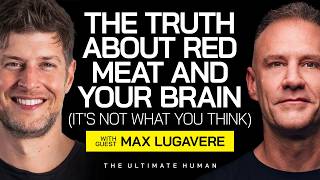
Max Lugavere discusses his mother's Lewy Body Dementia diagnosis and a 16-year scandal in Alzheimer's research involving flawed studies and failed pharmaceutical treatments. He argues that whole food diets and lifestyle changes offer better protection for brain health than current medical approaches.
My mom got sick, and she started to display the earliest symptoms of Lewy Body Dementia, which is akin to having both Parkinson's disease and Alzheimer's disease at the same time.
So this really honed your interest.
The most important person in my life, I was seeing cognitively decay right before my very eye. And that was the call for me to learn everything that I possibly could about these conditions so that I could help her. My mom, in many ways, was victimized by a lot of the misinformation that continues to be perpetuated.
One of the comments that I've heard you say is that 99.6% of the Alzheimer's research was actually fraudulent.
A paper was published in 2006. Thousands of papers have referenced this one. 2006 paper. 16 years worth of research was built on this fraudulent paper. They fail because Alzheimer's disease research looking in the wrong place.
You're into the brain boosting foods. What is an Alzheimer's preventative diet?
I like to focus on what I call the genius foods. These are foods that provide the brain the nutrients that we know help the brain not just survive, but thrive.
Were there any takeaways for you from the documentary that you did that we didn't cover?
One thing that really shocked me was the risk that.
Hey, guys. Welcome back to the Ultimate Human Podcast. I'm your host, human biologist Gary Breca, where we go down the road of everything anti aging, biohacking, longevity, and everything in between. And today's guest. I'm a huge fan of. Of today's guest, Max Lugavir. I've been on Max's podcast, so it's high time that he came and was on my podcast. We see eye to eye on so many things. We're actually talking about the corruption, our food supply right before we started filming this podcast. So I can't get in. I can't wait to just get into this and let it roll. Max, welcome to the podcast, brother.
Thanks so much, Gary, for having me. It's an honor.
It's good to see you again. I actually got three boxes of really good, healthy cereal out of the last five. His. His house is like my house. When I. When I walked in, it was just like stacks of all these sponsors. He's like, you want some prot Powder? You want an electrolyte? You, dude, I love it.
I mean, you could pretty much build sebum from the ground up from the amount of protein that's in my house. It's amazing.
No, that is so. That is so true. We had a Great podcast. And you know, I, I love the journey that you've been on because you, I mean, your background's in journalism.
Yeah.
Right. I mean, you didn't really have a health and wellness, you know, formal training background, but really I've had so many influential, impactful guests on my podcast and I find there's like a common theme to all of them, and I think it's common to you too, Germaine. To you too is. And that's that at some point in their life, they solved the problem and, or they were presented with a problem and in solving it, this became a part of their purpose and passion and, and for the, that, you know, for you, I know it was your, your mom's journey with, with, with Alzheimer's, and I don't know that a lot of people know about that journey. So I'd love if you would share that and maybe even talk about how that led to your documentary. You actually using your journalism skills and self funding and eventually crowdfunding and, and, and bringing documentary to, to light. I, I had the fortune of watching the July 8th podcast you did with Dr. Perlmutter, and man, it just really opened my eyes, you know, to the paucity of understanding of the mental health crisis that we're in and how research maybe even has gone in the wrong direction.
Yeah, totally. Well, yeah, so I, I mean, I love to be hyper transparent about my background. I never want to misrepresent myself. I started my career as a generalist journalist. I got really lucky. I had a dream job out of college that I landed as host, producer, and, and ultimately a journalist for a TV network in the United States called Current TV.
So is that in L. A?
It was based in LA. It was a national TV network in 100 million homes. So from jump, like, as soon as I graduated college, I rolled into this dream job on television where I got to talk about, you know, really interesting stories, stories that I thought were being under, discussed in the culture at large. And it was a really amazing platform. And I got to work with actually some of the best journalists in the field, like in the field of journalism, which, you know, has, I think today take on a bit of a different hue that, that, you know, that career path because mainstream media has become so polarized.
Right.
But, but back when I started, you know, at a naive 22, 23 years old, it was an incredible job opportunity. And there I got to kind of feel out my passions and explore the topics that I thought were interesting and, and important and communicate those topics to a massive audience. It was just an incredible, incredible gift. And I did that for six years and prior to that in college. I actually began college on a pre med track, so I'd always been.
Oh, wow. Okay.
Yeah, I always been super passionate about health and nutrition and fitness, but it was a private passion. It was something that I was, you know, growing up, I think I was, you know, a lot of people will relate to it. I felt really kind of introverted and out of place and insecure as a. As a high schooler, and I discovered bodybuilding and fitness, and I just became fascinated by that world and this and the science underpinning muscle hypertrophy. Hypertrophy and all that stuff.
Dude, I'm going to dig up some of your old bodybuilding videos and roll them over this.
Well, no, I was. I was never. I was never a bodybuilder. Like, I don't think I ever had the genes for it. I was never an athlete. But I was just fascinated by the applied science of, you know, you eat a certain way, you take a few potions, powders, supplements, whatever, and it manifests in terms of, like, a. A bigger, stronger, better body. And I just thought that was, like, the coolest thing ever, particularly for somebody that was, like, kind of shy growing up, you know?
Yeah.
But ultimately I realized that I was a storyteller, and I had certain talents in that regard, and that led to me, you know, becoming a journalist and. And. And so I did that for six years, learning from the best of the best in the industry. And then in my late 20s, after that job had kind of run its course, my mom got sick, and she started to display the earliest symptoms of what would ultimately ultimately be diagnosed as a rare form of dementia called Lewy Body dementia, which is akin to having both Parkinson's disease and Alzheimer's disease.
Right, but it's not either. Right?
Yeah, it's not either of those conditions, although it actually has more in common with Parkinson's disease than it does Alzheimer's disease. It's a. It's a condition that, unlike Alzheimer's disease, which is primarily a neurocognitive disorder, and Parkinson's disease, which is a movement disorder, somebody with Lewy Body dementia typically presents with both movement symptoms and cognitive symptoms.
Oh, wow.
Yeah. So that's why they say it's like having Alzheimer's disease and Parkinson's disease at the same time.
Yikes.
But from, you know, the. The pathophysiology of it is actually more similar to Parkinson's disease in that there's dysfunction in what's called the substantia nigra region of the brain, which is, you know, becomes dysfunctional. In Parkinson's disease, the dopamine producing neurons in that part of the brain start to die and there's misfolding of a protein called alpha synuclein. And so unlike. It's unlike Alzheimer's disease, where, you know, Alzheimer's disease is, it's a related condition, but it has more to do with amyloid beta and reduced glucose metabolism in the brain and all of these conditions.
Yeah, type 3 diabetes.
Yeah, type 3 diabetes, exactly. So, but, you know, I'm not a, I didn't, I didn't go to medical school and become a neurologist. Like, I learned everything that I now know and I've written books about, and even academic literature about on the job because I, the most important person in my life, I was seeing cognitively decay right before my very eyes.
Yeah. And I think, sadly, you know, a lot of times, by the time the diagnosis is made, it's because of the expression of the disease. It's already really set in. You know, you hard to go back in time, maybe, maybe to slow or stop the progression. But very often, especially dopaminergic conditions, it's, it's, it's very hard to go backwards.
Yeah. I mean, these are, these are essentially diseases of midlife with symptoms that appear in late life, but by the time you catch it, it's already a condition that's decades, you know, set set into motion by decades.
Right.
Similar to so many other conditions that are now saddling society. Whether we're talking cardiovascular disease, cancer.
For.
Example, Pancreatic cancer is a great analogy. Most of the time, the vast majority of the time pancreatic cancer is diagnosed, it's already too late because there are no routine screening processes for pancreatic cancer. So by the time it's caught, so to speak, and I can somewhat speak to this because my mom actually passed due to pancreatic cancer.
Wow.
By the time it's diagnosed, it's already typically metastasized and inoperable. And similarly with Alzheimer's disease, Parkinson's disease, Alzheimer's disease, by the time you're diagnosed, this is a 30, 40 year disease process that you're now starting to see this.
I totally agree with you. And I mean, that's why the genesis of, of type 3 diabetes, you know, insulin resistance in the brain, you know, I believe blood sugar is the root of all evil. You know, we have a pandemic of, of overeating and processed foods and high glycemic diets, and we are not genetically predisposed to consume those forms of, of calories and, and, and to filter out the cellular waste that comes and, and, and the metabolic insult that comes from having a diet rich in highly processed foods and, and, and very, very, very high glycemic profiles. I think one of the worst things that ever happened to mental health crisis was the big war on fat. Right.
I think it's a big problem. Yeah, I think that was a massive public health mistake because, I mean, you demonize natural fat containing foods like red meat, eggs, dairy fat. What do you replace those foods with on the plate? It just, all that did was serve.
To open the door for red dye number 40.
Yeah, the proliferation of like, yeah, red dye number 40. The prolife proliferation of these ultra processed foods which now dominate our diets. Depending on which demographic you look at, our, our diets are consumed by either 60% ultra processed foods or up to 80% or more, you know, depending on which age bracket you look at. And so, and I think that is largely the result of the fact that we've demonized for so many years these otherwise perfectly healthful foods.
Right. You know, and, but going back to your mom's condition, she wasn't, you know, I think, I think very often we think of Alzheimer's and dementia as diseases on the very elderly. We think it's an, it's a condition that you catch later in life, you know, in your, in your very advanced years. And much to your point, I happen to very much agree with you, these are diseases of midlife that progress to later in life. So this really honed your interest in this condition.
Yeah, well, I think most of it, as you so eloquently said, you know, most people, most people's interaction with these conditions are through a grandparent. But my mom was young. My mom was in her mid-50s and she still had all the pigment in her hair. And she was very much somebody who anybody would describe as being in the prime of her life. And so I couldn't write off what I was seeing to old age. I couldn't. It was a massive tragedy in my family to watch the matriarch decline every day get worse and worse and worse. And at a certain point I decided that I had to accompany her to doctor's offices because when you have, anybody who's ever suffered from a chronic condition knows it, you know, it's a scary and frustrating and confusing place to be. And so I started accompanying my mom to doctor's appointments and I experienced in every situation, in every instance, what I've come to call diagnose and adios.
Yeah.
And that was the call for me to learn everything that I possibly could about these conditions. Not even to, I mean, not, not to write books or to, to do all the things that I now am, I think, known for. It was, it was initially so that I could help her. Right, of course. I mean, that was it. And over the course of that journey, I've learned all of these, like, I think, really important principles about how to.
Yeah, yeah. And, and one of those core principles. Well, first of all, you know, one of the things that you highlighted, and I would encourage everybody to check out the documentary, little empty boxes. You can just go to littleemptyboxes.com and actually see the documentary you put together. But I think your message, very similar to my message, is actually a message of hope. And by that I mean that I think very often people think that disease and pathology is something that happens to us rather than something that happens within us. And we don't really think that there's much that we can do to prevent disease. You know, we're predisposed to the notion that disease is genetically inherited. And while I do believe that some diseases, you know, have a genetic predisposition, it's not, it's not your destiny. Your epigenetic factors make a huge difference in the progression of that disease. And listening to you talk about the journey that you went on with your mother was very inspiring to me, and I think it's inspiring to other people because you talk about the basics, you know, the, the, the absolute basics that people need to be doing, like whole food diets and avoiding processed foods. And, and, and you even highlight some of the corruption in, are institutions of research that are funded by the companies that have outcomes, you know, that predetermined outcomes. And I'm very much on the same page with that too. I don't think that, you know, everybody in big pharma is out to kill us, but I do think that, you know, a lot of these corporations are out to make a profit. And the way that you make a profit is you script the narrative to lead you to your pharmaceutical, your synthetic, your chemical or what have you that you happen to have a patent on.
Yeah.
And one of the, one of the comments that I've heard you say, say is that 99.6% of the Alzheimer's research was actually fraudulent.
Well, the drugs, yeah, they, the, those, the.
Or failures. I'm sorry, there was, Sorry, there was a Big research study that was fraught with fraud.
Well, yeah, 16 years worth of research was built on this fraudulent paper. But. But that is. Yeah. So, I mean, what you're. What you said is not inaccurate in the sense that it's par for the. It's. It's part of the, the milieu that has led to this figure that 99.6% of Alzheimer's drug trials fail. They fail because we've been, particularly for the past 16 years of Alzheimer's disease research, looking in the wrong place.
One of my favorite biohacks outside of Breathwork by far, is mineral salts. Baja gold sea salt. It's got all of the trace minerals that the body needs. Most of us are not just protein deficient, meaning amino acid deficient or fatty acid deficient. We are mineral deficient. So a quarter teaspoon of this in water, first thing in the morning, we'll make sure that you get all of the essential minerals that you need. It tastes amazing. In fact, I made a steak today. I actually made a grass fed steak with grass fed butter. And I put just mushrooms and a little bit of rosemary, and I sprinkled Baja gold sea salt all over the top. Try it. It'll be your new favorite for cooking too. It's the cheapest and one of my favorite biohacks. I don't know, a 15 or $20 bag of this will probably last you five years. This is literally the world's best biohacking secret. Now let's get back to the ultimate human podcast. And, and what do you attribute that to? If you go back to the paper, for the people that are not familiar with that. Go back to that paper and how did it come out that it was, you know, I, I even took a deep dive. And, and, and you know, they, they found out that even some of the images were photoshopped. I mean, it was, it was a pretty cognizant. Yeah, like, it wasn't like we just took the data and sort of omitted a few things, so it leaned in this direction. But this was like a cognizant, you know, attempt or success.
Yeah.
In covering up the truth.
Yeah, in maligning the research. So basically, the way that this all happened, and, you know, for anybody who's unfamiliar with the story, I mean, it's a fairly complicated story, but I'll try to do my best to synthesize it. So since Alzheimer's disease was first coined in 1906 by Austrian physician Alois Alzheimer, the guiding premise for what the pathophysiology of the disease is that it's a condition caused by an aggregation of certain proteins in the brain that misfold the neurofibrillary tangles.
Right.
Yes. Those tau, this. This protein called tau, and the aggregation of another protein called amyloid beta into these plaques that accumulate in the extracellular space around. Around neurons. And, you know, you have to imagine that in 1906, our tools were fairly rudimentary in terms of medicine. Imaging. Imaging, things like that. Right. So when somebody passed from Alzheimer's back then, what they would do. And this is. Makes intuitive sense. Right. You would open up the brain of the cadaver that had passed from it to observe what's different. Well, in the brain of somebody who's passed from Alzheimer's disease, you see global shrinkage. So the brain neurons die at an accelerated pace. You see global shrinkage in terms of the total brain volume, as well as more intricate structures like the hippocampus. And then you see these plaques, these hallmark characteristics of the disease. And so essentially, since then, the guiding sort of pharmaceutical approach is how can we develop a drug that can essentially remove these plaques and in so doing will have cured the condition, Alzheimer's disease? And that makes logical sense. Right, Right. But the issue is that drugs have actually succeeded at reducing the plaque in the brain. There are a few reasons why it actually doesn't hold up to biological scrutiny. One is that we've engineered drugs that have succeeded at reducing the plaque in the brains of people with Alzheimer's disease, and that hasn't actually improved cognition.
Yeah, I've heard you talk about that.
Right. So that's great if we can remove the plaque, I think. But if it's not actually improving the clinical features, the symptomology of the disease, who. Who cares?
Right.
Particularly when those drugs are associated with horrible side effects.
Right, right.
So, like, if you're not actually improving the cognition of a patient with one of these drugs. Right. And you're putting them at risk for brain swelling, brain bleeding, and even possibly accelerated death. Accelerated brain atrophy, which actually. Meta analysis have shown that a lot of these drugs actually cause.
Wow. Accelerated brain atrophy.
Yeah.
Wow.
Yeah. There was a meta analysis that found that.
Which would actually make cognition worse. Yeah, yeah.
Of course. You don't want your brain to atrophy. That doesn't sound good. You want it to grow. I mean, exercise causes your brain to grow. Eating DHA fat, you know, from wild salmon, caused your brain, you know, is associated with brain growth. So, yeah, that's a really bad thing. And then the Set. And then the second feature is that cognitively healthy people do have amyloid in their brains. So it's not, you know, there, there doesn't seem to be. And there hasn't seemed to be a very clear correlation between amyloid, this protein, which for decades we've thought to be causal, with, with regards to Alzheimer's disease and the condition. And that is until a paper was published in 2006 that seemed to renew faith in this so called amyloid hypothesis, that amyloid, again, is the defining, you know, and causal feature of the, of the disease. What they were able to do is isolate a subtype of amyloid beta, inject it into the, into the body of a cognitively healthy rat, and what they saw was that rat then exhibited profound cognitive dysfunction. So that basically renewed faith down this drug pipeline. Because this paper seemed to assert like, look, here's the, this is the missing link. Here's how amyloid directly causes cognitive dysfunction in this amyloid model. Right. And that was what was published in Nature, which is like, if you're a scientist and you get to publish in Nature, it's like winning an Academy Award.
Right.
For scientists. Right. So it was published, the lead author was this guy Sylvain Lesney at University of Minnesota. And, and that basically, you know, continued to foment this, like, amyloid hypothesis as the sole guiding, you know, mission for pharmaceutical research for, for Alzheimer's disease. And subsequently, thousands of papers have referenced this one 2006 paper.
Wow.
And what came just two years ago was that that paper was essentially completely fraudulent.
No. Yeah, and when you say completely fraudulent, like, it's a pretty big statement. That means it was cognitively designed to mislead. So what, what portions of it were fraudulent? How did they, how do you create a fraudulent study like that for the people listening to the podcast?
Yeah, right. There's like peer review. Right?
Exactly. You made it to Nature. Somebody looked at this.
Yeah, well, so the way that they presented this data was via what's called a Western blot analysis. And you know, without getting into the weeds, essentially it's a way of visually representing the concentration of certain proteins and phenomena, observable phenomena, not with numbers like on a spreadsheet, but visually.
Right.
And the paper nonetheless was published. But there's a researcher at Vanderbilt University named Matthew Schrag who's kind of like a sleuth. I mean, he himself is a scientist. But, you know, there are all these kind of like niche message boards online of scientists that perform what's called basically post publication peer review. Where they go back into the papers and they crunch the numbers and they.
Find meta analysis or.
Yeah. Mistakes and fraud and things like that. And you know, I mean, these are like scientists, so that's what they enjoy doing. You know, I can't relate. But like, they're like, yeah, but there are, there are people that are, that are deep in the, in the trenches and like, and for good reason, you know, because there is, there, there is evidence showing that, you know, a lot of these, a lot of our, you know, publications are actually fraudulent.
No question.
There's a very significant proportion of research that gets published in our most trusted peer reviewed journals that are fraudulent. And so, and again, continually, I think part of the reason for this paper being flagged specifically, one was that it was very influential and two, that very recently certain monoclonal antibody drugs like Aducanumab and Lecanemab were both given accelerated approval by the fda, despite experts essentially speaking against this approval for these drugs because they didn't work from a cognitive standpoint. They again were very successful at reducing plaque in the brains of patients, but they coincided with really dramatic and scary side effects, again like accelerated brain atrophy and brain bleeds and swelling. And there was actually a panel of 11 experts, including neurologists, who pushed back against the FDA's decision to greenlight this drug. Aducanumab. I believe it was.
Wow.
Specifically, and nonetheless the FDA greenlit it. It's an incredibly expensive injectable drug that basically turns your, your brain's immune system, you know, on itself to essentially dissolve and make soluble these proteins so that they can be flushed away. But they didn't actually succeed. They very, very modestly improved cognition in certain patients.
Wow.
But essentially the benefits weren't worth the risks. This was very clear to see. And so the fact that this all happened within a really short timeline, my speculation. And make soluble these proteins so that they can be flushed away. But they didn't actually succeed. They very, very modestly improved cognition in certain patients.
Wow.
But essentially the benefits weren't worth the risks. This was very clear to see. And so the fact that this all happened within a really short timeline. My, my speculation is that it tipped this, this researcher, Matthew Schrag, off to go and investigate this seminal 2006 Nature paper, which he did. And he went in and as part of the peer review process, they don't look at images like these western blot images and look for artifacts, you know, to see if they were perhaps Photoshopped. That's not part of the peer review. Process?
Yeah.
I mean, be. Now, I don't know. But essentially what he found was that it was very clear that these were just cheap cut and paste jobs. Really, that entire paper was basically built on nothing. Air wow. And that was that it tipped this, this researcher, Matthew Schrag, off to go and investigate this seminal 2006 Nature paper, which he did. And he went in and as part of the peer review process, they don't look at images like these Western blot images and look for artifacts, you know, to see if they were perhaps photoshopped. That's not part of the peer review process. I mean, it might be now, I don't know. But essentially what he found was that it was very clear that these were just cheap cut and paste jobs. Really, that entire paper was basically built on nothing. Air wow. And that was the paper again that seemed to connect amyloid with the cognitive dysfunction that we see in patients.
And who was behind the paper? I mean, what's the rationale? Because I think if somebody has a predetermined destination they're trying to get to, there's got to be some benefit for them down the road. Was there a pharmaceutical or chemical company behind it? Was there?
Well, I think it's probably the pressure, you know, from patients and their families and, and also these advocacy organizations that, that, that continue to foment this funding pipeline and have a lot to gain from a drug getting approved. Like some of these, I'm not even gonna name them, but some of the biggest, like Alzheimer's organizations, for example.
Wow.
Like, they, their funding pipeline is, you know, all about, like, we need to, we need to find a drug to, you know, to. It's basically like a fear based narrative, like Alzheimer, you know, there's not much that we can do to prevent or slow the condition. We've got to continue to find, you know, pharmaceutical pharmacologic solutions to the, you know, to the condition.
Yeah.
The fact that these drug, you know, the drug trials have been such a failure and I think like there's, it's big money. I mean, agicanimab and lecanumab, despite the fact that they, you know, don't work.
And, and in fact the fact that.
They don't work, they're extremely expensive.
Yeah.
So you can imagine that if you're a desperate patient and you have the means to afford it.
I mean, this is the same thing that's happening with the. I'm not saying the GLP1s are as dangerous as something like that, but, you know, we, we have a Tendency, I think, you know, we have such a disease based society. We have, we have an industry that is built upon symptom maintenance and disease management and you know, like any other industry, I mean, if you're an airline, you got to fill seats. If you're a hotel, you got to fill rooms. If you're in the chemical, pharmaceutical, the synthetic industry, you, you have to sell product. And the best way to sell product is, well, number one, don't kill the host, just manage the host condition. And number two, don't cure the host because they're no longer a client. So, you know, it'd be like if, you know, every car buyer only bought one car in their lifetime. You know, the car dealerships would be out of business. Right. And, and so I, I think that I'm certainly of the mindset that there's not one big, bad, nasty, sinister plan going on at the top to keep, keep us all sick. But what's happened is we just become such an industry of disease, you know, spending four and a half trillion dollars a year on health care and leading the world in the six worst statistics and, you know, including the lowest life expectancy of birth, maternal mortality, infant mortality, you know, type 2 diabetes, morbid obesity, multiple chronic diseases in the same single biome. You would think as medical advancement progressed that disease incidents would be going down, but it's actually not, it's getting worse. Life expectancy is going backwards. And I think the same thing is happening with like these, these GLPs. It's like, well, everybody's fat, so what do we do? Give them something to make them skinny. But maybe it was the, you know, toxic soup they've been bathing their, their cellular biology in for the last 25 years that actually led to this, this pandemic. And so now taking a step back, now that you have a very good grasp of this industry and some of the malfeasance that went on, you've, you've really sort of championed the narrative surrounding whole food diets, brain healthy foods. I think. You, you, you partnered with, is it Solis Health?
Yes. Not a, not a partnership. Okay. But yeah, that, that's just a, an emergent care, like concierge practice.
No.
Okay, that profiled me.
Yeah, yeah, they profiled. Yeah, yeah. Well, I mean, you're, you're, you're into the brain boosting foods.
Yeah.
And so talk a little bit about that because I think when people think of brain boosting things, they think they go right to neurotropics or, you know, other chemicals and synthetics like they would think a brain boosting supplement is Adderall, not really a brain booster. Mean. But, but so where do you fall in, in, in, in that narrative? And how does that relate back to your mother's condition? I mean, what, you know, after, after producing this documentary and seeing some of the corruption in, in our research institutions, what is the next wave? What is the solution?
Yeah, well, I mean, I've definitely, you know, I feel really humbled in the sense that I do feel that I've played a part over the past decade to help usher in the conversation around prevention, which, you know, again, if this.
Is a case, you definitely have. Yeah.
Thank you. Yeah, I mean, I, I got started really early. I mean, as soon as my mom started to develop these symptoms and I would start learning, you know, all these things that I've subsequently learned, I felt compelled to share. And, you know, I've seen the tide turn in the sense that, you know, back when I started, you couldn't mention Alzheimer's disease or dementia in the same sentence as prevention without being called a charlatan or a quack, you know, and now I feel like it's gained much broader acceptance. We even now have, it seems every four years, the Lancet Commission now meeting on dementia prevention and dementia prevention.
Wow.
Yeah. All the so called modifiable risk factors. And so it really is kind of a whole new world. And there's still so many unanswered questions. But, you know, as somebody who's, who's long loved nutrition, I definitely take a food forward approach. Although I'll concede that food is not the only thing that matters. I mean, there are a lot actually in fact, of, of, of so called modifiable risk factors for these conditions that range from hearing loss to vision loss to air pollution to. So the paper again, that seemed to connect amyloid with the cognitive dysfunction that we see in patients.
And who was behind the paper? I mean, what, what's the rationale? Because I think if somebody has a predetermined destination they're trying to get to.
There'S got to be some social isolation.
Social isolation is a big one.
That's a big one. Yeah, yeah, but, but, you know, I love talking about food because we all eat and, and there certainly is a ton of corruption, you know, very observable, clear, clearly apparent corruption within, you know, the food industry and the food industry's relationship with. Yeah, you know, the I said podcast.
With Kelly Means and he, he lays it out better than anyone I've ever.
He does seen. Yeah, yeah. Yeah, he's great. I mean, so without stepping on his toes, I mean, you know, everything that he says is dead on. And, and this is something that I try in my work to also, you know, do my part to expose as well. Because, I mean, in so many ways a scam. And, and, and I feel that like my mom, in many ways was, was victimized by a lot of the misinformation that continues to be perpetuated. But certainly, you know, she was of a generation that, you know, didn't really have access to the Internet. And so, and she was unique in the sense that, you know, even once the Internet came about, she just wasn't on it. And so she was very much in the dark, like so many people today continue to be about what it actually means to eat healthily. She was fed a narrative about, you know, for example, animal products, animal source foods being really bad for you, being bad for the cardiovascular system and all this stuff, and the alternative grain based products being something that you have to base your diet around. I mean, it literally was of the food pyramid.
It still is. I mean, it needs to be. Yeah, flipped on the tip. Yeah, yeah.
And, and you know, to be fair, the food pyramid's been retired. We now we've replaced it with the. My plate. And there's debate whether or not Americans have ever fully followed the, the dietary guidelines that have been put out. But nonetheless they're not, you know, they're, they're dietary guidelines, in my view are an economic instrument to sell commodity food products, subsidized grains and, and things like that. There's no ascent, there's no such thing as an essential grain.
Right.
Or an essential carbohydrate for that as an essential carbohydrate. Which, which is not to say that we shouldn't eat them.
Yeah, no, I, I agree with you.
But, but we've just gotten it backwards for so many years about what, what it looks like to eat a nutrient dense diet.
Which, what's odd is the things that are essential, like essential fatty acids, essential amino acids, those are what get attacked. Yeah, right. Is the proteins and the fats and those are what are, you know, truly essential to life. You know, minerals, amino acids, fatty acids. But, but in any case, get, you know, getting back to that, you know, there's, there's, there's a, certainly a narrative that is a big industry narrative that benefits, you know, the food industry, the chemical industry, the pharmaceutical industry, which are the most well funded institutions in the world, and they also have the, the greatest amount of Pressure they can apply to our congressmen and policymakers. They can really shape public policy because they have that much of an influence. And, you know, I often use the term I believe more in what God gave us than what man makes us. And I say that not as a religious statement, but, you know, I feel like optimal health is found in the world all around us. Sunlight, grounding, breathwork, you know, exercise, you know, the things that you can't supplement your way out of. Even, even looking at the Blue zone research, you know, there wasn't continuity in diets, but there was continuity in a sense of purpose. There was continuity and the sense of community. There was continuity and mobility into later in life. You know, and, you know, I talk about it all the time. Sardinia, the life expectancy was directly related to the slope of the hill they walked up and down. Right. And. And you don't want it to be that simple. But, but it is that simple. And the further we've gotten away from mother Nature and the further we've gotten away from the basics, the sicker we become.
Yeah.
And so on your journey, you know, what are, what do you consider a whole food diet and what are some of the, let's call them, brain boosting foods that you're a big advocate of.
Yeah, well, I like, I think it's really important to not major in the minors. And so I, I've sort of hierarch. Hierarchicized. I don't know if that's a word.
We'll make it a word.
We'll make it a word.
Yeah, yeah, it's just voted in as a word.
I've created a bit of a food pyramid of, of my own. And I think the base of that is just prioritize whole foods. We live in a time today.
Yeah, we're so on board with you for that.
Yeah, I mean, that's, that's really it. I mean, I, you know, anybody who's spent any time on Nutrition X or Instagram can attest to the fact that, well, everything societally has become so polarized and the diet wars in particular can be particularly egregious in that, in that sense. But, but you just want to prioritize whole foods. If you do that, I mean, you're, you're way ahead of the game in terms of your average.
And there's a study out there to prove both sides. I mean, I could argue carnivore, keto, paleo.
Yeah.
Pescatarian, whole food, vegan, vegetarian, I mean, you name it. And I could get dogmatic. By about it and I could find my little narrow sliver of research to support it. I could ignore the other research that is out there and I could put forward that, that, that very dogmatic, you know, position.
Yeah. And, but also that is the commonality among the world's, you know, top lived populations is that they're eating whole foods. But if you actually get granular, I mean that's, that's a very low resolution sort of dietary framework.
Right.
But once you get, once you start to get granular, you realize that people actually have adopted and can adhere successfully to, you know, all different kinds of dietary patterns. Some that are more animal based, some that are more plant based. But I think, you know, if you're primarily like the big rocks are focusing on whole foods. Right. Again, 60% of the calories if not more. Today most people are consuming from packaged, processed, vending machine foods. Essentially.
Unbelievable.
Food like products. And so the, the food like products.
Yeah, they're not, they're not actually food.
No, they're food like. Right. They provide energy.
Yeah.
But you'd be hard pressed to find somebody who's energy deficient today, particularly in the, in the western world.
I mean, in fact, globally overeating issue.
Yeah. This is the first time in human history where we have more overweight people walking the earth and underweight. For the vast majority of our history it was more underweight. You know, food scarcity was a real problem.
Right.
You had a greater risk of starving to death than dying from any of one of these non, you know, four or five non communicable conditions that seem to be, you know, outweighing everything else today. But today actually obesity is the major and chronic disease.
Yeah.
And chronic disease. Yeah. And so moving up the up the up my so called food pyramid, so to speak, I think you really want to prioritize both animal source and plant based foods. I think it's really important to have both. I butt heads with carnivores, I butt heads with vegans because my, I think that there's value from both sides of the aisle.
Yeah.
So to speak. It's actually like politics these days. Right, right, right.
But it's sad that you gotta be so dogmatic. I've never been dogmatic about a diet and I'm a human biologist and, and I was a mortality researcher for, for a living. And in the truth is, you use the term modifiable risk factors earlier in the podcast and the truth is most of the reason why people are not living healthier, happier, longer lives are modifiable. Risk factors. And one of them is a whole. Whole food diet.
Yeah. Most of the conditions that people are suffering from today are the heritability is very low. You know, the heritability for obesity, for cancer, for cardiovascular disease, very low. I mean, it's primarily an epigenetic phenomena. It's an interaction between your genes and your environment, or your exposome, which is another term that I love. And your exposome or your environment encapsulates all of your very many exposures from, you know, what it is that you're eating.
I like that one, too.
Yeah.
I've learned two words today. Hierarchalize. The jury's still out on that one. Expose. Them's a great one. Dude, I'm gonna make sure I weave that in, babe.
Yeah.
Okay.
And so. And that's it. You know, that for. I mean, in my world, like, I'm, you know, obviously super passionate about helping people prevent conditions like Alzheimer's and Parkinson's disease. Most of the money goes actually into studying the genetics, the heritability of the disease. But they're very seldom, seldomly inherited. You know, Parkinson's disease heritability is incredibly low. For Alzheimer's disease, it's somewhat higher, but it's still. The vast majority of cases are due to, again, non heritable.
Yeah, they don't have the Alzheimer's gene.
Yeah, yeah, yeah, yeah.
And. And so what is a. An Alzheimer's preventative diet. What does that look like?
So, generally, I like to focus on what I call the genius foods. That's the title of my first book, actually, which is essentially a. The. An unofficial owner's manual to the human brain. And these are foods that provide the brain the nutrients that we know help the brain not just survive, but thrive. Nutrients like creatine, carnitine, carnosine, protein. I mean, proteins, dietary proteins get broken down into their constituent amino acids, which serve as the backbone precursors to your neuro. Neurotransmitters. Like serotonin, like dopamine.
Yeah. Your natural killer cells. I mean, I don't think people realize how, you know, they think protein, muscle. Right. Which is also true. But we don't think protein, nervous system, protein, you know, essentially amino acids, protein, red blood cells, protein, natural killer cells, white blood cells, the immune system, the immune defense. You know, connective tissue, collagen, elastin, fibrin. You know, it just. It's just so critical.
Yeah. And I think protein is really valuable for myriad reasons. I mean, it's. It's important for so many reasons. But I think with regards to the brain, I think it's very important in terms of, I mean, you alluded to this earlier, but in terms of fostering metabolic health, which we're seeing now, is intricately related to the health of the brain. In fact, as insulin resistance in the body increases, the brain's ability to generate energy from glucose decreases. So increased insulin resistance in the body, insulin resistance resistance essentially causes your cells to starve because they can't get access to the fuel that they need to generate ATP, which is the energetic currency of cells. And we see that essentially as insulin resistance in the, in the body increases, it also correlates very strongly with a brain that is essentially starving. So you want to make sure that you're as insulin sensitive as possible. And there are, there's a bounty of evidence showing us that higher protein diets seems to relate to, increased to, to better metabolic health because it's the most satiating micronutrient. So it, you know, when you prioritize protein in your diet, you tend to consume less energy from carbohydrates and fat. So I think it's really important from that standpoint. And it's also the macronutrient that is most supportive of your musculature of your skeletal muscle, which is really important from a metabolic health standpoint. Yeah, so I think that's really important from a, from a brain health perspective is making sure that you're in the best metabolic health possible.
And what do you, what do you prefer as protein sources? I mean, obvious sources, Grass fed meats, pasture raised eggs, free range chicken.
Yeah, so I'm the evidence. You know, obviously wild fatty fish, oily fish, that's the least controversial protein from a, from a brain health standpoint. Like wild salmon, sardines, herring, mackerel, anchovies, those are all great. But you know, I've, I've certainly planted a flag because I believe that red meat is a, is a very helpful food from the standpoint of the brain as well. And it doesn't, you know, I think there's this, you know, with the rise and the proliferation of popularity of keto diets, a lot of people, you know, will take that to me to, we'll take that to represent fatty meat. I actually think there's an argument to be made for opting for leaner meat. You know, first of all, to me it's very obvious when you feed a cow its biologically appropriate diet, it's a leaner animal. So to me, you know, these, these, these ultra fattened products of the, in the factory farm system. A modern cow, to me, that's a biologically, they're, they're fed biologically aberrant diets which give them a biologically aberrant fatty acid profile. They're fattier, their fat isn't as healthy.
And so for me, omega 6 to omega 3 ratios.
Yeah. They, A grass fed, grass finished cut of red meat is higher levels of omega 3s, higher levels of certain tocopherol, tocopherols, which is a form of vitamin E. There's actually a much higher level of antioxidant phytochemicals in grass fed grass finished beef.
Wow.
Which is super interesting.
We don't think about phytochemicals in meats. I think, I think mainly we think about phytonutrients from plant based. Yeah.
But cows that are fattened up on grass, you know, they accumulate and store more of these antioxidant phytochemicals.
Wow.
And as well as carotenoids, which are really beneficial to eye health and brain health, like lutein and zeaxanthin and beta, beta carotene and you know, there are all these other nutrients like iron that are in their most bioavailable form in red meat. So I, I see no argument, no valid, no scientifically valid argument to avoid lean red meat. I think certain people with certain genetic backgrounds might, you know, might see an exaggerated response to saturated, certain saturated fatty acids. And so I think the, the safest recommendation to make is, is for lean meat. And I think like, from, from that standpoint, it's a total health food. And there's actually, there was a, a study that was recently published that found that, you know, just sort of putting a bow on the value of animal protein that found that animal protein compared to plant protein actually led to a slower rate of hippocampal atrophy. So, so shrinkage of the brain's memory center.
Okay.
And the effect was particularly strong for seafood, but I think that.
Meaning in favor of seafood.
In favor of seafood. Yeah. So. But I think there could be some healthy user bias there because fish eaters tend to be more health conscious. Like pescatarians are very health conscious.
Right.
Typically, you know, so they do other things. It's called healthy user bias. But it did find, you know, a reduced rate of shrinkage of the memory center for all animal proteins.
Wow.
Yeah.
Beef, poultry, we, we gotta dig that up and throw that study on the.
Yeah.
I'll figure out what it is after the podcast and I'll throw it Throw it into the, the show notes.
Yeah, so I'm a, I'm a big advocate of grass fed grass finished beef, fish, poultry I think is great free range, ideally eggs. An egg is a cognitive multivitamin.
Oh my gosh. I know, man. I say this all the time. I'm so happy you're here because we're, we're so on the same page with that. I mean, I think because it has, you know, a little bit of cholesterol in it, of which only 15%, you know, your blood cholesterol even comes from your diet. The majority of it's manufactured by the liver. I think that, and I, I think that a lot of people don't realize that the influence on the liver's production of cholesterol is way more important than the dietary cholesterol that you eat. They think, well, I'll just get my dietary cholesterol to zero because I know that cholesterol is bad. And if my cholesterol is high, I have an increased risk of cardiovascular disease. Dietary cholesterol to zero because I know that cholesterol is bad. And if my cholesterol is high, I have an increased risk of cardiovascular disease, which I would also argue is not, not necessarily the case. And so there, you know, there's a war on cholesterol too. That's still, I think, sticking around from even the 90s. My parents are that way, you know, which I would also argue is not, not necessarily the case. And so there, you know, there's a war on cholesterol too, that still to this, to this day, that the cholesterol, you know, is, is to be avoided at all costs. Yeah, but I think I, I totally agree with you. I think eggs are nature's multivitamin. They have perfect protein. Want direct access to me so I can personally answer your most pressing health questions. Then I'm excited to offer you free access to my premium membership, the rule BRCAs. As a rule BRCA, you'll be able to join me for monthly q and A sessions, VIP access to all the challenges I host, and advanced access to my most exclusive content. To get your free 30 day trial of Rule BRCAS, head over to joinrulebrecas.com that's joinrulebrecas.com right now. Now let's get back to the ultimate human podcast.
Yeah, you, you absorb minimal. I mean, dietary cholesterol is actually not all that bioavailable. And as, as you mentioned, yeah, most of the cholesterol in your body is produced by the liver, but every cell Produces cholesterol. It's a vitally important nutrient. And from a, from a blood lipid standpoint, for most people, it's of minimal concern. And you can actually, I mean, there are tests that you can do because phytosterols and cholesterol compete for the same absorption in the gut. And so you can actually, there are certain tests that you can do that you, that can look at the presence of certain phytosterols in, in your blood, which are xenobiotic for us humans. Like, we don't produce them. We only get them from our diet. And so that can be used as an, as an indicator of cholesterol absorption. So some people are hyper absorbers, but it's a minority.
Right.
People. Dietary. Certain dietary saturated fatty acids do raise cholesterol. The degree to which they do, you know, it's genetically mediated. And, and you know, I think this whole idea of, of demonizing nutrients in isolation is nonsensical.
Right. I do too.
Yeah. I think if, you know, when we're talking about whole foods and, and particularly foods that are properly grown or raised, I think that they're, they shouldn't, there shouldn't be a concern.
Yeah, I agree with you. And, and I, you know, remember too, that cholesterol, which is not really not a fuel source, you know, it's more of a construction material, if you will, like building cell walls and cell membranes and hormones and vitamin D3, you know, several. But it doesn't show up to cause the damage. It shows up because of the damage. Right. I mean, it's called to the site. Right. Of, of of damage. And I think just much like the Alzheimer's analogy, you know, these, these amyloid plaques and neurofibrillary tang, not the cause of the process. And I think, you know, cholesterol is very often at the scene of the crime, but it's not who pulled the trigger. Right. I mean, it's, it's like if, you know, if this house caught on fire, the firemen would show up, but they were called to this location to put the fire out. You know, I sort of look at cholesterol in the same light. You know, it gets called to a lot of locations in the body to help heal and repair actually, you know, damage. And then we blame it for the atherosclerotic conditions that a lot of, you know, the narrowing of the arteries.
Yeah. I mean, you know, there's debate, as I think there should be, like, is, does cholesterol accumulate and form these fatty streaks as a result purely of Just the concentration of cholesterol in the blood or is it a result of, you know, oxidation, you know, the oxidation of these lipoproteins or inflammation or heightened blood sugar, metabolic distress, endothelial injury? I think, you know, these are all this, is this an important conversation to have? And you know, all, all I know is, you know, if you take a food focused approach and you avoid, you know, ultra processed foods, this idea that lipoproteins are inherently athro atherogenic to me doesn't really stand to reason in the sense that our bodies produce it, you know, similar to like blood glucose. Like we do need a certain amount of sugar in our blood and it's.
Okay for your sugar to rise and fall.
Yeah, sure, yeah, yeah. At what point does that become pathologic? You know, it's like our brains produce amyloid beta, you know, is there, what's the reason for it? Well, it turns out if, if you, if you have a certain viruses in your brain, you know, we can actually see amyloid beta accumulate around these viruses which, you know, are doing so to, to perform a protective response. So everything in the body, I think is, has probably, you know, past millennia of natural selection for a reason. I don't think our livers are necessarily trying to kill us.
Right.
And you know, that would be weird.
Right? Right, yeah, that would be a bad design by our creator.
Yeah, yeah. So, so I, you know, I don't know. On the other hand, you know, you do get, to be fair, you do get people in the carnivore community that are walking around with extremely high levels of, of you know, total cholesterol, apob, ldl and we don't have the data to say that that's safe. I know that there are certain people in that community who are also scientists who are looking to confirm, you know, this, this notion of the lean mass hyper responder and all that stuff. And I think that, that, that's all really important research and I'm happy to see it. You know, but everybody today on, of course on social media is very polarized. It's like either, you know, it's like either our cholesterol needs to be like, it's something that we shouldn't think about at all. And it's fine if it's like up in the 500s.
Right.
Or that we should be like vegans, you know, and aspire to have the, the total cholesterol of a newborn, which I think is BS as well.
Right.
You know, so the truth is, obviously as it, as it usually is somewhere in the middle, I'm sure. And, and I hope that, that within my lifetime we could, we could finally settle the score. Yeah.
Where do you fall on things like fasting for brain health?
I think there was a lot of excitement about that, you know, 10, 15 years ago. And I think a lot of that interest was spurred by Mark Matson at the nih or. Yeah, he's at the nih, who did a lot of these early basic science studies with mice and he found that fasting led to increased neurogenesis and BDNF expression. But I think newer studies in humans have kind of have shown that, well, there are no really long term studies. So it's, it's a lot of, it's like mechanistic speculation. So I don't think that, you know, if you, if you enjoy fasting, I think there are certain benefits to it. I think there are definitely benefits to heating our own natural circadian rhythms with regards to food, you know, meal timing and the like. So I think there's, there's certainly value there, but I don't necessarily think it's like the silver bullet against brain aging that a lot of people.
Right.
Make it out to be. You know. Yeah, there, there was a study that actually, I don't know, I didn't, I don't remember the details of the study, but you know, I don't think that it found as strong of a, of an upregulation of BDNF as a response to fasting in humans that most would, would have expected based on the, the kind of pop.
Yeah. You know, in intermittent fasting and fasting in general.
Yeah, I think fasting is, is good in the sense that when you're not, when you're, when you're fasting, you're not eating. And so many of us today struggle with weight. I think eating earlier meals, you know, time restricted eating, I think makes sense from a circadian standpoint.
I agree with that.
There's cardio metabolic benefits to that. Lower blood, you know, better blood pressure management, blood sugar management, all that stuff. But if you don't, if you don't enjoy it, if it's not feasible to your lifestyle, I don't think it's something that you have to feel like, yeah, you're missing out on.
So, so whole foods diet, which I wholly agree with you, not particularly avoiding, you know, grass fed, grass finished meats and pasture raised eggs, fatty fish, you know, free range chicken. You know, I often say it's not the food, it's the distance from the food to the table. So I'm curious where you fall on the, you know, the seed oil debate. And then I want to get into some supplementation with you as well.
Yeah. Oh, man. You really, you really want to go there?
Yeah.
Okay.
Okay.
Well, yeah, so I don't bring them into my house. I think that there is, there is a reasonable cause for concern around their consumption. Much of the conversation seems to focus on, you know, these proximal biomarkers that are related to chronic disease. But, but the evidence is kind of all over the place.
Pro inflammatory markers, like.
Yeah. Like how they affect blood lipids, for example, like LDL cholesterol. You know, they're, they're sort of given this universal green light because relative to saturated fats, seed oils tend to lower LDL cholesterol. So the medical nutritional orthodoxy basically gives them a green light for that reason. They seem to be perfectly healthy because they lower ldl. But I think questions still remain about what do they do, the quality of the ldl. You know, an LDL particle isn't an LDL particle. You have small dents, you have big and fluffy. You've got, you know, LDL particles that are tugging around these, you know, oxidized fatty acids. Does that make them more atherogenic? I mean, there's some evidence that suggests that they, that they might be. The observational data on seed oils is confounded, I think.
I agree.
You know, but I think a lot.
Of that is biased too. I mean, probably very much like these Alzheimer's.
Yeah. Like funded by the industry. Yeah. Well, you know, and I, I think that, I think a lot of influencers and whatever on social media today will, will make them out to be the sole smoking gun and, and do everything from like, you know, I don't think that they, they drive obesity independent of the calories that they, that they offer, for example. But I do think there's still some concern about, you know, their, their vulnerability to oxidation and the generation of these byproducts of, of oxidation, like certain aldehydes and things like that when they're heated and reheated. And I also think from a long term, like brain health standpoint, from tissues and organs outside of the field of lipidology, like from a brain health standpoint.
Right.
There's still lots of questions about how the overconsumption of these oils over a lifetime, what those, what those, you know, those oils are doing to our brain health. And there was a paper published by Taha, he's a UC Davis researcher, single author, paper but it presented some. The title of the paper is linoleic acid good or bad for the Brain? And it presents, I think, some really important questions about what the chronic overconsumption of these fats is doing from a brain health standpoint. There was one randomized controlled trial that found that when people reduce their consumption of these oils, they saw reduced migraine frequency, which is a neurovascular neuroinflammatory event. And do I freak out when I consume them, when I'm eating out at restaurants?
Yeah, because they are everywhere.
They are everywhere. Yeah. But I make an effort not to bring them into my house.
I do the same.
Yeah. I do think that it's reasonable to be skeptical about them. They're highly marketed. They have only been in. On the, in the human food supply for the past 50 or so years. They're, they're, they're, they've been heavily marketed as healthy. So there's healthy user bias. Like the observational research tends to show that people who consume them have better health. Counterintuitively. Right. But polyunsaturated fats and lin and even linoleic acid are present in some of the healthiest foods that we have access to. Nuts and seeds and things like that.
Right.
Fish. I don't think polyunsaturated fats are bad. I think they're great. It's when extracted from the food matrix that normally protects those fats, those vulnerable fatty acids from, from oxidation and damage that then those oils. I think those fats become a concern.
Yeah.
But observational research, I mean, you know, even grain and seed oils, they're marketed as healthy. You go to the supermarket, they have.
The red baby formulas. I think it's actually a requirement, if I'm not mistaken, in the United States to actually have seed oils in baby formulas.
Right. So people who use them and who avoid meat, they might be, they might be more likely to take a multivitamin. They might be eating fish and nuts and seeds more regularly. So I think the observational data is confounded. I think the randomized controlled trials are typically too short term and they're a little all over the place. I mean, there's debate about, you know, for example, this, the Minnesota coronary survey.
And that's the big one.
Yeah, that's a big one. People will say that while they were consuming seed oils and they had a higher incidence of, of mortality, but back then, the seed oils, you know, they would use trend, they had trans fats in the mix as well. And we know that those are now poisonous.
Yeah.
But I just think from a precautionary standpoint, principle, you're better off reducing your consumption. And, and there's way more evidence anyway for extra virgin olive oil.
Yeah.
Like the Mediterranean dietary pattern. It's extra virgin.
Oh yeah.
It's a primary fat. The mind diet only makes a recommendation for extra virgin olive oil. And so this idea that seed oils are beneficial, I just think it doesn't make any sense. Now there's like, certain, certain seed oils I think are healthy, like sesame seed oil, which are basically the result of pressed sesame seeds. Right. They don't go through the refining, the bleaching, the deodorization, all these steps.
Hexane, sodium hydroxide. Yeah, yeah, all of those steps. And what about, you know, where do you fall on the supplementation bandwagon? Is there any, in your opinion, must haves? I mean, what do you supplement with, if anything? I, I believe that people should supplement for deficiency, not just sort of the sake of supplementing, throwing in, you know, a lot of great named things.
Yeah.
But I become a believer in NMN and resveratrol and you know, and, and other supplements over the years because in our clinic system we've been able to see the impact that those have had directly on certain markers in the blood. And for me, even though that in. Is in is a large data set, you know, some could argue it's anecdotal. I, we've still seen enough of it that, you know, I'm a fan of certain supplementation. But I'm curious where you fall on the supplementation bandwagon, if there's any like, must haves for the brain, for sure.
I mean, I, I, you know, I supplement regularly with protein powder. I love creatine. I think, you know, there's a lot of evidence now, creatine from a, from both a physical performance standpoint, metabolic health standpoint, cognitive health, it's very much worth your while, I think generally to supplement with creatine. I mean, if you have a medical condition, check with your doctor.
But it's, it's very safe and, and inexpensive. I mean, it's not like one of the things that's going to break your budget.
I'm a huge fan of astaxanthin, which is a marine carotenoid, which is actually one of the few compounds that showed efficacy in the National Institutes of Health Health's interventions testing program. So it actually led to an increase in lifespan for mice. But it's a mammalian aging model and a very heterogeneous Group of mice by about 10%. Really great for brain health, cardiovascular health, joint health, some advantage. Huge fan of astaxanthin. I've been taking that for the past 15 years. Magnesium, I think is great.
Huge fan of that too.
Yeah.
Magnesium deficient. Yeah, it's like D3 deficiency. It's, it's a, I mean, you want to talk about a pandemic, I mean those are, yeah, those are two that we are pandemically low end.
Yeah, exactly. Trying to think. I'm not like a, I'm not, I don't like over supplement, but I, but those are kind of like the basics. Fish oil. I'm a big believer in fish oil.
Yeah.
Not taking too high a dose, but taking, you know, I take about a gram to a gram and a half a day.
Good. Epa, dha, fish oil. You know, I'm a huge fan of that too. I mean again, if you get back to the essentials, essential amino acids, essential fatty acids, there are certain ones if you don't get you a die. The problem is most of us are not getting enough of the right ones and then we're getting them out of ratio. And I completely agree with you that nature has a way of presenting foods in the community in which they should exist. You know, like fructose gets a really, really bad rap and people are like, well there's fructose in blueberries. You shouldn't eat blueberries. But there's flu coast, there's glucose. But you know, there seems to be some evidence of when they're consumed together, they have a different impact on the insulinogenic response than just if you were to take fructose or high fructose corn syrup, which is a non naturally highly concentrated product. And we, we, we know what happens when you have, yeah, high amounts of high fructose corn syrup. Yeah. And I, and, and, and so I, I'm, I'm, I'm in full agreement with you on the, on that diet. And then what is, what is a, a day in the life of. You look like, like a, you know, diet, exercise. Are you, do you use any modalities? Are you, would you consider yourself a biohacker? Are you using any red lights or.
I mean, I guess, kind of, but maybe a more low tech biohacker.
Yeah, I like that.
Yeah.
A bit lower mini biohacker. Yeah. Yeah.
I'll tell you, actually, I've actually become.
A lot more low tech as time's gone on. It's funny you say that just like, I mean like when I say low Tech, sunlight, grounding, breath work. You know, we don't have a cold punch here. I jumped in the pool out there.
I'll give you my top three biohacking tools I have in my house.
Here we go. Here they come, guys.
Here they come.
Three biohackers.
Yeah. So number one is a mattress cooling pad that actually has dramatically improved my sleep. I'm a huge fan of having a mattress cooling pad sleep.
I use an eight sleep.
That's what I have. Yes.
I'm a huge fan of that too.
I wake up up sweaty without one typically. And, and it's just great.
I find that both my deep end REM is elongated, like the amount of time that I spend in bed and I post my sleep scores all the time and just wanted to park on that subject for a second because there's so many sleep hacks. Right. That one has seemed to really work for me.
Yeah.
Too.
It also reduces your like, air conditioning costs, I think.
So there's an answer Larry benefit.
Yeah, yeah, yeah, yeah.
Mine are bigger in Miami than yours are in la, so I have a little less sympathy for you.
The second would be that I got recently an under desk treadmill. So like an under desk, like a standing desk treadmill.
Really?
Yeah.
That's a Ben GREENFIELD Move right there.
300 on Amazon. That thing will get you shredded. I mean, because, you know, walking on a treadmill, first of all, walking is the ultimate fat burning exercise. It doesn't increase hunger. Very low impact, torches calories and easy to walk while doing other things.
Right.
Unlike other cardio.
I think it's the most underrated exercise in the world, I tell you. Great.
Yeah. It's incredible. And so. But you know, like walking on a treadmill at the gym or even walking around like outside. First of all, in la, it's kind of hard to do, but it's, it, it can be boring. But when I'm work, sitting, working at my standing desk or even, you know, watching a podcast or what have you, I can pass 30 minutes in easy on it with, with the under desk treadmill. It's such a small monetary investment for what I think is a really big win. I've, I've like been shocked to look down at my walking treadmill and see that 45 minutes has passed. Because 45 minutes in, in the gym environment, which is, which is prior to owning.
Oh, it's. You feel every minute of it.
You feel every minute.
Yeah, yeah, yeah.
This is gonna be over.
Yeah.
So I think that's great. And then my third top Biohacking tool. This is really low tech. Is a digital kitchen food scale. I think that is. Everybody should have a digital kitchen food scale.
Really?
Yeah. It's the best way to audit, like portion sizes, both in terms of, like, making sure that you're getting the amount of protein. You're hitting your protein target every day. I think it's incredible.
So you throw a little cellophane on it, pop your meats, whatever on there.
Yeah. Or, or, or anything. Just making sure it's a. Establishing portion control where that might otherwise be difficult. It just provides a little bit of a mental barrier. For, for example, I'll give you like a perfect, like real world practical application. I went to Costco the other day and I bought one of my favorite indulgences, a huge bag. Because, you know, at Costco everything's like massive, huge bag of dried mango.
Okay.
Right.
Yeah, you're right. After my wife's heart. She loves it.
I could eat that entire bag. I could sit in one sitting, eat 5,000 calories of dry mango if I pulled out all the stops and just let myself go. But, but you know, there are no, they're not, they're not portioned out.
Right. Right.
So for me, and it's shocking actually, when you realize when you do an audit, when you, and you can only do this with a digital food scale, it's way more accurate than measuring, you know, portions by volume. A 40 gram serving of dried mango is 140 calories. I can eat a 40 gram serving of dried mango in one mouthful.
Right.
So it just, it kind of opens your eyes to the fact that like, you know how, how rapidly and how calorie dense certain foods can be. And it's just, it's just one, it's just a little bit more friction sometimes to going back for that second portion, you know, so I'll portion out 40 grams of dried mango.
And that's. That actually seems pretty, it's low tech, but I mean, it's, it's pretty quick too. Right. You know, this isn't like super advanced meal prep and planning. This is like, hey, you know, as I pull it out of the fridge, I just, just can, it can tap the scale and I get an idea of my portion size. I kind of like that guardrail.
Yeah. If you want to indulge in like, you know, the occasional ice cream here and there, you want to measure it by the. It's the, it's, it's the most accurate way of measuring your portion size. But I'll even do it with protein powder. If I know that I, if I have a bit, if I buy protein powder in bulk, which I do to economize, you know and I want to get ingest 25 grams of protein. Well, 25 grams of protein is 30 grams of this protein powder. So it's great to be able to have a way to just measure that out. And you know, I would have scoffed prior to actually owning one.
Right.
It's such a simple, stupid little tool. You know, it's $10 on Amazon but it's actually I use it multiple times a day, every single day.
Yeah. It's funny, I mean I have some really low tech devices that I use for sleep that I can't live without now. You know, just a soft sleep mask and I don't know if it's that sort of cocoon feeling that I have like but you know, blocking the light out and my sleep scores are demonstratively better when I block all the light you. Because sometimes we're in Airbnb and the curtains don't close all the way, you know, in a hotel and the light comes in and how photosensitive we are to light. You know, in the mornings when it, you know, hits your lids it start. It's starting to wake you up. I find that I sleep a lot better with some of these.
Those are great.
Yeah. Masks, low tech devices. You know, I, even when I remember will do mouth tape. I noticed my HRV does improve when I use, when I, when I do mouth tape. But I also don't have any breathing issues. If you got nasal issues it's gonna be the worst thing. But, but if you have clear nasal passages, I do notice a little uptick in my. Above my baseline. My HRV does improve when I, when I mouth tape. So I'm. I'm with you on a lot of these lower tech device. I also have like the big fancy red light bag and everything and I, and I sort of sabotaged myself the other day because I, you know we have a little spot out in Colorado, very very humble, one bedroom log cabin and it's completely off the grid. You know like solar fed electricity, glacier fed spring water. And when I go out there, I go for these ruck walks in the morning and I get back and every single time I get back to the house it's. It strikes me how amazing I feel. I'm like, I feel like I like I took a limitless bill or like I just won the lottery. And so like I like this more than any of the fancy stuff. I have in Miami. You know, I just sort of blew up my line of business. But, but you know, I feel better doing that than I do the, you know, the daily red light beds and, and you know, even the cold plunging and all that, which I'm a huge fan of. You know, just like a ruck walk in the woods.
Oh yeah.
At 10,000ft on a cold day and I'm a little uncomfortable on the walk and I'm a little bit cold and, and I'm winded because I'm at 10,500ft. But I get back, I'm like, I feel amazing.
Yeah.
You know.
Yeah.
So I, I think, you know, I, I really identify with your message because a lot of it is getting us back to the basics, you know, and not chasing the so exotic things. And were there any takeaways for you from the documentary that you did on, on the journey with your mom that we didn't cover? Like what were some of the big takeaways for you besides corruption in our food supply in our research?
Yeah, there's, I mean, you know, for one, one thing that, that really shocked me was the risk that excessive surgeries actually can have on, on brain health. My, my co director in the project, Chris Newhard, who was the editor of the film, he actually, his mother in law was cognitively normal and went into a surgery to fix something with her hip, I think, and came out essentially with dementia requiring, requiring around the clock care.
Wow.
So you just want to be careful with unnecessary surgeries. Yeah, yeah.
Wow.
And anything that really.
Do you think that's anesthesia related?
I think possibly, yeah. I'm not 100 sure. You know, it's also interesting and this is, this is another thing that, that is surprising is that, but there's still a lot of, there are a lot of aspects of modern life that threaten the brain that have not yet been acknowledged.
Emfs.
Yeah, I mean, possibly, I don't know, but I know that for example, the latest Lancet commission on dementia prevention identified 14 modifiable risk factors. Right. And that's up from 12 in 2020. And so you just have to think about the fact that four years from now we might have 16. Eight years from now we might have 20. You know, so there's still. And just because something is, has been identified as a modifiable risk factor today doesn't mean that it wasn't putting your brain at risk yesterday.
Right.
So that's why I think it's always smart to practice the precautionary principle which they've adopted in Europe. You know, they'll put a product on the market and consider it essentially guilty, or they'll. They'll consider a new chemical or a new fangled product guilty until proven innocent. It's got to go through way more hoops than it does here in this country. That's why you actually see, you know, a lot of products that are approved here in the United States or have ingredients here in the United States, where you'll find the exact same product over in Europe that has a much cleaner. Seemingly a much cleaner ingredient.
Yeah. Yeah.
Because they practice their. What's called the precautionary principle. Their. Their regulatory bodies don't seem to be as in bed as ours do with, you know, the latest Lancet commission on dementia prevention identified 14 modifiable risk factors. Right. And that's up from 12 in 2020. And so, you know, you just have to think about the fact that for the food industry and the pharmaceutical industry. And so I think it's always smart to, you know, you have four years from now, we might have 16. Eight years from now, we might have 20. You know, so there's still. And just to. We have to get back to trusting our instincts.
Yeah.
And practicing this precautionary principle and using common sense, you know, because science doesn't have all the answers.
Yeah.
It's really important to. Yeah. Because something is. Has been identified as a modifiable risk factor today doesn't mean that it wasn't putting your brain at risk yesterday. So just, I think, be mindful of that.
Yeah.
Like, there's still. There's a huge category of drugs called anticholinergics, which we know increase risk for dementia. Like a lot of these antihistamine drugs over the counter.
Well, they speed cognitive decline.
They speed.
Yes. Yeah.
Yeah.
Mean. And how oxymoronic is it that Alzheimer's patients on anticholinergic drugs are having accelerated cognitive decline? I mean, that seems like the most oxymoronic outcome of a drug choice. It's like, you know, the SSRIs link to increased suicidal ideation. Ideation.
Ideation.
Ideation.
Yeah.
You made up two words during the podcast, so I deserve one, but I'll give you license, you know, but, but. And, you know, a lot of. A lot of very heinous crimes, even violent crimes are done, you know, on. By people are on SSRIs, because it sort of takes away their. Their ability. Right.
So that's why I think it's always smart to practice the precautionary principle, which They've adopted in Europe. You know, they'll put a product on the market and consider it essentially guilty or they'll, they'll consider you feel empathy.
In you know, even this recent school shooting in Atlanta. They said this, this kid, 14 year old kid was you know, a pump full of SSRIs. But, but you know, here a new.
Chemical or a new fangled product, guilty until proven innocent.
Got to go through where we are with selective serotonin reuptake inhibitors to try.
To manage way more hoops than it does here in this country. That's why you actually see, you know, a lot of products that are approved here in the United States a depressive.
State and you get an outcome of, you know, a side effect of crushing depression and increased suicidal ideation. I mean that, that seems of, of all of the drugs to have that side effect. It would be a different drug with that side effect, but not the drug that's actually targeting depression. You know, it's like obesity being caused by Ozempic. You know, it's kind of so oxymoronic.
Obesity being caused by Ozempic deficiency.
Yeah, Ozemic deficiency. You know, that's one that I use a lot. A lot. I'm like, you know, listen, if you have adhd, you're not deficient in Adderall. You know, if you're obese, you weren't deficient in.
No, I think it's, I think it's a very fair way of, of looking about these kinds of conditions. I mean I'm not anti drugs, like neither, you know, I have a family member who takes Ozempic because his, you.
Know, the, we use it in our clinical practice.
We had thousands or have ingredients here in the United States where you'll find the exact same product over in Europe that has a much cleaner, seemingly a much cleaner ingredient.
Yeah, yeah.
Because they practice their, what's called the precautionary principle. Their, their regulatory bodies don't seem to be as in bed as ours do with you know, the food industry and the pharmaceutical industry. And so I think it's always smart to, you know, you have to. Yeah.
Patient successfully on it.
I'm not, I'm not anti. But they, they should always be a last line of defense. You know, like I, I'm very drug like conservative, like conservative when it comes to drugs. But like I, I have like low back, back issues. You know and I'll occasionally take like. I'm grateful that I have a non steroidal anti inflammatory as a get out of jail free. Card.
Yeah.
When I need it, you know, like, the turmeric and curcumin can only take me so far sometimes, you know, but. But they should be a last line of defense.
I agree with you. Well, Max, this has been amazing. You know, I'm. I'm definitely going to continue to follow your journey. I. I would encourage everybody to. To check out your. Your documentary for my audience that wants to know more about you or get a hold of your book. I mean, how did they find you? Your podcast. Yeah.
Thank you, Gary. So I host a podcast called the Genius Life, which I've been on.
Yeah.
Great episode. We put up episodes twice a week, and I've written three books. Genius Foods is my first one. It's really like a care manual for the human brain. So if you want to do a deep dive into any of these topics, grab that. And then little empty boxes@littleemptyboxes.com. it's my. Why. So anybody who's ever had a loved one with dementia will find, I think, incredible solace in. In the film. Well, they'll. They'll find some answers. They'll feel less alone. And we've gotten incredible reviews. We have to get back to trusting our instincts.
Yeah.
And practicing this precautionary principle and. And using common sense, you know, because science doesn't have all the answers.
Answers. Yeah.
It's really important to. Yeah, it's Ford. And Very grateful. And it's a very personal film. So make sure you have your tissue box close by.
You know, I. I end every podcast.
By asking to just, I think, be mindful of that.
Yeah.
Like, there's still. There's a huge category of drugs called anticholinergics, which we know increase risk for dementia. Like a lot of these antihistamine drugs over the counter.
I guess the same question. There's no question, right or wrong answer to this question. And that is, you know, what does it mean to you to be an ultimate human?
Well, I like that.
Yeah.
It's similar. On my podcast, I ask, what does living a genius life means?
Yeah, I remember when you asked me that, and I was like, damn it, why didn't I actually prepare for this? So you didn't prepare either. So here we go.
No. What is living being an ultimate human? I think it's somebody who lives with integrity, an open mind, curiosity, who does the best they can to use their tools, their skills, their gifts. Because everybody has gifts. Everybody was given, you know, was given a handful of gifts to reduce suffering in the world. I think that's I think that's important. I think life is suffering in many ways. Nobody escapes it. And, and yeah, I think doing your part to, you know, that doesn't mean that you're not going to piss some people off along the way.
Well, they speed cognitive decline.
They speak. Yes.
Yeah. I mean and, and, and how.
Because sometimes you have to make difficult decisions. But, but to do your best to reduce suffering in the world, you know.
Wow. To do your best to reduce suffering world. That's amazing. Max, we're definitely going to have you back. Thank you for coming on the ultimate.
Thank you.
Appreciate you so much. Oxymoronic. Is it that, that Alzheimer's patients on anticholinergic drugs are having accelerated cognitive decline? I mean that's, that seems like the, the most oxymoronic outcome of a drug choice. It's like, and as always guys, that's just science. You know, the, the, the SSRIs link to increased suicidal AD. Ideation. Ideation.
Ideation.
IDEATION.
Yeah.
You made up two words during the podcast, so I deserve one. I'll give you license, you know. But, but, and you know, a lot of, a lot of very heinous crimes, even violent crimes are done, you know, on, by people are on SSRIs because it sort of takes away their, their ability to feel empathy. And you know, even this recent school shooting in Atlanta, they said this, this kid, 14 year old kid was, you know, a pump full of SSRIs. But, but you know, here we are with selective serotonin reuptake inhibitors to. You try to manage a depressive state and you get an outcome of, you know, a side effect of crushing depression and increased suicidal ideation. I mean that, that it seems of, of all of the drugs to have that side effect. It would be a different drug with that side effect, but not the drug that's actually targeting depression. You know, it's like obesity being caused by Ozempic. You know, it's kind of so oxymoronic.
Obesity being caused by a Ozempic deficiency.
Yeah, Ozemic deficiency. You know, that's one that I use of a lot lot. I'm like, you know, listen, if you have adhd, you're not deficient in Adderall. You know, if you're obese, you weren't deficient in.
No, I think it's, I think it's a very fair way of looking about these kinds of conditions. I mean, I'm not anti drugs, like I said, you know, I have a family member who takes Ozempic. Because his, you know, we use it.
In our clinical practice. We had thousands of patients successfully on it.
I'm not, I'm not anti, but they should always be a last line of defense. You know, like I, I, I'm very drug like conservative, like conservative when it comes to drugs. But like I, I have like low back issues, you know, and I'll occasionally take like I'm grateful that I have a non steroidal anti inflammatory as a get out of jail free card.
Yeah.
When I need it, you know, like the turmeric and curcumin can only take me so far sometimes, you know, but, but they should be a last line of defendants.
I agree with you. Well, Max, this has been amazing. You know, I'm, I'm definitely going to continue to follow your journey. I, I would encourage everybody to, to check out your, your documentary for my audience that wants to know more about you or get a hold of your book. I mean, how did they find you? Your podcast. Yeah.
Thank you, Gary. So my, I have, I host a podcast called the Genius Life, which I've been on. Yeah. Great episode. We put up episodes twice a week and I've written three books. Genius Foods is my first one. It's really like a care manual for the human brain. So if you want to do a deep dive into any of these topics, grab that, that and then little empty boxes@littleemptyboxes.com. it's my why. So anybody who's ever had a loved one with dementia will find, I think, incredible solace in, in the film. Well, they'll, they'll find some answers. They'll feel less alone. And we've gotten incredible reviews for it. I'm very grateful. And it's a very personal film, so maybe make sure you have your tissue box close by.
You know, I, I, I end every podcast by asking all my guests the same question. There's no right or wrong answer to this question. And that is, you know, what does it mean to you to be an ultimate human?
Well, I like that.
Yeah.
It's similar. On my podcast I ask, what does living a genius life means?
I remember when you asked me that and I was like, damn it, why didn't I actually prepare for this? So you didn't prepare either. So here we go.
No, what is living being an ultimate human? I think.
More from Gary







Perimenopause Symptoms Can Start in Your Late 30s - Dr. Remina Panjwani | TUH 312

