Seed Oils, The Dirty 8 That Are Destroying Your Health | TUH #028
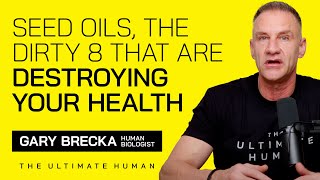
Gary Brecka breaks down why eight seed oils are linked to chronic disease, focusing on their omega-6 content. He explains how these oils damage your body and recommends specific alternatives for cooking and supplements.
Hey guys, I'm Gary Breca, and this week let's talk about seed oils. Hey guys, welcome back to the Ultimate Human Podcast. I'm your host, Gary Breca, human biologist, and we go down the road of everything anti aging, longevity, biohacking, and everything in between. Today's podcast, Short, is going to be one of my favorites because it is one in a series of things that I think every human being should permanently remove from their life. Today's podcast is about seed oils. Lots of confusion on this topic, so.
I'm going to try to clear up.
Some of the confusion, give you some of the research on seed oils and the detriments thereof so that you can make a decision on how to get these questionable oils, these industrial processed oils, permanently out of your life. And then I'm going to give you some suggestions on what you can put.
In your kitchen to change the health.
Trajectory of how you are cooking and preparing your foods.
There's no question that we have a.
Chronic disease crisis in this country and that the reasons for this are multifactorial. But you've heard me speak before about things that I think every human should remove from our diets. These are things that are destroying our health, our longevity and our lifespan, as well as our health span. By way of background, there are two basic types of fatty acids that we find in the human body based on.
How their carbon bonds are paired with hydrogen.
We have saturated fats, which are usually solid at room temperature, and we have unsaturated fats, which are liquid at room temperature. Unsaturated fats are further divided into monounsaturated fats and polyunsaturated fats. The PUFAs, depending on how many pairs of hydrogen atoms they're missing. Most of the tissues in our body are made up of saturated and monounsaturated fats. This is why we have an increased intake need for saturated and monounsaturated fats. However, we need to significantly reduce the polyunsaturated fats because these are not as highly required in human beings. Human beings need relatively little of these PUFAs or polyunsaturated fatty acids. PUFAs are commonly known as the omega 3 and omega 6 fats. But now evidence is emerging that it's the high consumption of the omega 6 version of these PUFAs and specifically, specifically the omega 6 fatty acid linoleic acid that may be the main contributor to the endemic of chronic disease and should dramatically be limited in our diets. These omega 6 fatty acids, and specifically the Linoleic acids are the ones that I'm going to target and talk about today as we discuss the topic of seed oils. It's important to point out that all seed oils are high in PUFAs and low in saturated fats, while animal fats are high in saturated fats. Um, so these omega 6 fatty acids are easily oxidized, meaning they can cause free radical damage to cell membranes and even more importantly, can damage your mitochondria, which is the powerhouse of our cells. These oxidized fats literally get trapped in your healthy cell membranes, and they cause inflammation and they cause poor cellular function. The majority of vegetable and seed oils did not even exist prior to the late 1800s, when machine lubricants were were hydrogenated into synthetic seed oils like Crisco. Processed foods contain abnormally high percentages of these damaging seed oils, especially high concentrations of the omega 6 fatty acid linoleic acid. Human beings were not meant to consume this level of processed foods and certainly not this level of polyunsaturated fatty acids. Oxidized PUFAs damage our cell membranes. They cause damage and inflammation in the lining of our blood vessels and even reduce the liver's production of glutathione. Now, as you may or may not know, glutathione is the major antioxidant in the human body. It's called the mother of all antioxidants. In fact, every single cell in the human body contains glutathione.
So anything that will reduce the liver's.
Production of this vital antioxidant will reduce the ability for human beings to eliminate waste, reduce, repair, detoxify, and regenerate at a cellular level. Seed oil oxidation has also been linked to poor immune system function and even increased insulin resistance. I will put those links to the studies below. Remember that cardiovascular disease is the leading killer in the Western world. And although it may in many cases, we blame increased cardiovascular disease on cholesterol, the science does not support a straight linear connection between increased cholesterol alone and the incidence of cardiovascular disease. While LDL cholesterol may be at the scene of some of these crimes, it is not pulling the trigger. Seed oils cause this LDL cholesterol to oxidize, which causes the formation of something called a foam cell. So the LDL cholesterol is not itself the danger. It's the oxidized LDL cholesterol, which may be directly linked to linoleic acid and polyunsaturated fatty acids found in sea oils. Most Americans should be getting about 2% of their daily intake of calories from seed oils, and yet the average is close to 25%. A recent clinical studies that was published in the Journal of Photochemistry and Photobiology linked seed oil consumption in the diet to increased ultraviolet radiation damage and hence an increased risk of skin cancer. A story published in the Oncology Advisor also summarized the links between high polyunsaturated fatty acid intake or high intake of seed oils, and the increased links link to skin cancers. So seed oils often contain harmful additives. They're processed with hexane chemicals. They're heated to industrial high temperatures, which turns them rancid. They sometimes are even de gummed or deodorized with sodium hydroxide, a known carcinogen. Hexane, which is a known neurotoxin, heated to make them rancid, and they're often derived from GMO or genetically modified crops. When industrial seed oils are repeatedly heated, these toxic byproducts are created and they become trans and hydrogen fats and they release oxidizing free radicals into our system. Hey guys, if you've been watching the.
Ultimate Human Podcast for any length of time, you know that one thing I do not do is push products. I do not just let any advertiser into this space because I believe that the products that appear on the Ultimate Human Podcast should be things that I use every day in my life to improve my own physiology. One of them is something called the Echo Go Plus. The Echo Go plus is a hydrogen water generator that you can take on the go. You essentially take the top off of this bottle. You pour bottled water in this and repeatedly it will make high part per million hydrogen water. You press this little button, you'll see these bubbles going up in the water. That's hydrogen being created in the water. There are all kinds of peer reviewed published clinical studies on the benefits of hydrogen water, including reduced inflammation, better absorption of your supplements, better absorption of your foods, better balance of the stomach acid, and it feeds an entire class of bacteria in your gut. Hydrogen water, in my opinion, is the most beneficial water that you can drink and now you can take it wherever you go. You can go to echo echo h2o.com that's echo echo h2o.com Enter the code ultimate10 for a discount echo h2o Enter the code ultimate ultimate10 for a discount. Most of us have a very difficult time meeting our protein needs, and certain protein sources like whey protein and others can be as little as 20% absorbable. This is 99% absorbable and it has all of the essential amino acids that.
The body needs to build lean muscle.
To recover, to improve our exercise performance and most importantly, to repair after we have intense exercise. So this is called perfect amino by Body Health and it's like I said, 99% absorbable. It only has two calories. Eventually the caloric intake has virtually no caloric intake. It will not break a fast. It tastes amazing. You mix it in water. I take this literally every single morning. If you're working out in a fasted state, you have to take a full spectrum amino acid prior to your workout to preserve your lean muscle and make sure that you're recovering properly. And again, it will not break your fast. So, so the caloric impact is virtually zero. You get all of the full spectrum amino acids. It tastes wonderful. I use it every single day. You can go to body health.com ultimate that's body health.com ultimate. And look for the perfect aminos. They actually come in capsules if you're on the go or it becomes in several flavors that they make in a.
Powder, which I love.
It's flavored with natural means of flavoring. So there's no artificial sweeteners in here. So this is one of my absolute favorite products. Give it a try. If you're working out at all, you need a full spectrum amino acid. Go to body health.com ultimate that's bodyhealth.com forward slash ultimate. I love their lab tested products.
You can actually see the absorption rate.
For all of their products. They've got great electrolyte protein combinations. My favorite is the Perfect Aminos. Body health.com ultimate and now back to the ultimate human podcast. There's something called the Dirty eight.
I didn't come up with this Dirty eight. I'm going to call it Gary's Dirty eight. I think it was the the EPA that came up with these. But I suggest limiting these Dirty eight seed oils or severely limiting these seed oils from your diet. They are eight of the most unhealthy vegetable oils. They include the following. Get out a pen and write these down. Corn oil, canola, also called rapeseed oil, cottonseed oil, soy oils, sunflower oil, safflower oil, grapeseed oil and rice bran oil. So I don't just want to sit on this podcast and fear monger. I want to give you some ideas of what could you put into your kitchen to do cooking without seed oils? What kind of oils could you use at room temperature? And how can you navigate the maze of getting these highly processed seed oils out of your diet? Well, first of all, you can try to dramatically limit the amount of processed foods that you eat. Processed food contains abnormally high amounts of of seed oils. Also try to avoid dressings that contain these seed oils. Commit the Dirty eight to memory. Spin the bottle around, look at the back of your labels and if it contains one of those or any of those eight seed oils that I mentioned above, just put it right back on the shelf. There are lots of really good organic brands that are emerging now. I will try to find some of these brands and put them on the ultimate human website and they do not contain these industrial processed seed oils. Here's what you need in your kitchen. A grass fed butter, a ghee butter or grass fed tallow or coconut oil for cooking. I am not saying that these are by any means only things that you can use for cooking, but these four do not denature at high temperatures. They have excellent ratios of omega 3 to omega 6 fatty acids, they contain very, very limited amounts of linoleic acid, and at high temperatures they're not going to oxidize or become putrid. At room temperature. I suggest that you use an extra virgin olive oil, but a word of caution, spin your extra virgin olive oils around. I prefer that you get a brand that's actually from Italy that's cold pressed, but spin your olive oils around, look at the back of the label and make sure that it is not actually infused or diluted with some of these seed oils. There's large percentage of seed oils that is allowed to be put into these olive oils and even the extra virgin olive oils that are not extra virgin olive oil, they are fillers and they are seed oils but they are usually listed on the back of the label. I eat a lot of nuts. The nuts that are the lowest in linoleic acid are macadamias, cashews and pistachios. Also hazelnuts. They happen to be my favorites. So if you are also a nut eater, try to stick to those four nuts. Also, the difference between wild caught and farm raised fish is night and day. So if you're a fish eater, go for the wild caught fish. If you do eat meats, make sure that you have grass fed grass finished meats. Check the back of your dressing labels. Start looking at the labels for these highly processed seed oils and do your best to get these out of your life for you and your family. You will be on your way to a low inflammatory lifestyle, a longer, healthier, happier life. I hope you enjoyed this podcast and as always like and subscribe below. Please forward and share this with your loved ones. I try to make them short, insightful, punchy, and give you some things that you can take away from these podcasts and put to work in your daily life. That will not change how much money you're spending on your food, but it will dramatically change its nutritional content. And as always, that's just science. If you haven't had a chance to connect with me on the ultimatehuman.com head over there now and sign up for.
My free newsletter and all of the exclusive content.
More from Gary







Perimenopause Symptoms Can Start in Your Late 30s - Dr. Remina Panjwani | TUH 312

