Complete Health Study Club- August 2021 "Team Driven Dentistry"
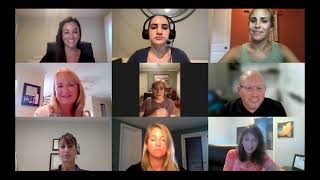
Dr. Michelle and Dr. Jason Lewis host a panel of myofunctional therapists, functional medicine providers, and mental-health clinicians discussing how their services complement dental care, especially for sleep issues. The discussion covers PEMF therapy, EMDR, nutrition resets, and upper-cervical chiropractic as part of an interdisciplinary approach to patient health.
Questions this video answers
About 50% (speaker cited meta-analysis outcomes).
Over 60% (speaker reported for pediatric populations).
Approximately one third of adults in America report insomnia symptoms.
10–15% report daytime problems (less severe); 6–10% meet criteria with severe symptoms that impede life.
Chapters
I want to thank all of you for joining us tonight. I know it takes a lot of effort to take some time, take a break and spend time with us, time away from your family. I'm a general dentist in Jacksonville beach and I am in a small group practice that is focused on complete Health. So that is why I come to you tonight with our Brady Bunch panel here and with my most amazing Partner in crime, Dr. Jason Lewis. Complete Health has always been an incredible passion of mine. I've always felt like the health of your mouth is what is the function of the health of the rest of your body. So that's why we're all here tonight. And Complete Health, I was inspired to treat all of my patients, every patient, every time, every day with Complete Health when I met Gary Katie with Next level practice. And Jason and I are partners in crime in that together. So he's going to introduce himself also, and then you get to meet the rest of these lovely ladies. We're all ladies except for Jason.
I know I feel left out. I'm the only guy here. Well, I'm Dr. Jason Lewis and thanks, Michelle, for the introduction. Dr. Michelle and I have been part of the Complete Health initiative for several years now, and it's definitely been a passion of mine as well. Over the years, I always felt like there was something missing in my practice and I just couldn't quite put my finger on it. And then I met Gary and then it all kind of was clear. And so we'll talk more about how Gary got involved in and our practices a little bit later. But my practice, I'm a general dentist as well. We just moved into a new prac. New building. So we've been in our new building for three months now. So we're very excited about the new space. And we also have a dental assistant school that we do also. But definitely our passion and our focus tonight is on complete health and. And working, collaborating with other medical professionals. And I'll have Michelle give you a little insight on what we're going to be discussing tonight.
Awesome. Our panelists are people that help us in our general dental practices, keep our patients healthy and also help them to be healthy. That's basically what we're going to talk about tonight. We're blessed in the Jacksonville area to have people that are really committed to and understand that we can't just work alone, especially with things like sleep, dentistry and medicine. I feel like, because it's such a complicated thing, so many people nowadays complain about being tired and it's way different to not be able to get to sleep than it is to just not have high quality sleep and also have your sleep interrupted by reflux or hormones or all different things. So we are going to be talking a lot about sleep just because it's so complex. But we're mostly going to be talking about how all these great panelists help support us. They've also helped support me as I have more and more birthdays to stay healthy personally. So I admire them and appreciate them for that reason, too. And so we're going to move on just to introduce the different panelists and also have them to talk about different aspects of what they do that really complement a dental practice. And that will allow. I know a lot of people listening tonight are dentists. So that will allow you as a dentist to see how you can not just stand alone. If you stand alone and you stay in your little corner and if you're treating sleep and you make an appliance, it's amazing because you're helping somebody hold their airway open or grow their airway. But if they're still tongue tied or if they have a spinal issue or if they aren't eating properly or if they really need support for insomnia, then they're not really getting completely healthy because you need other people helping you with that complex issue especially. We're going to start by introducing some of our panelists and I'm going to introduce Caitlin Shrum. She's an amazing myofunctional therapist in the Jacksonville beach area, but she also can work with people online. It's very common with myofunctional therapy. And so what I wanted to have her talk about tonight is how essential myofunctional therapy is when treating sleep patients, which I don't think many. I certainly didn't know about it until I met her. And, and then the other thing that she's been helping me with recently is I have multiple patients and I know the dentists out there listening, know what I'm talking about, that have really severe gag reflexes. So, you know, from a selfish standpoint, that affects us as dentists when we're trying to work in their mouths. But it also affects them. Cause they can't really keep their mouth healthy. They can't brush their teeth properly. They end up losing teeth sometimes because of that. And so that's also another adjunctive thing that Caitlin helps us with. That's awesome. So take it away, Caitlin.
Thank you, Dr. Michelle. So I'm Caitlin Shrum. I'm a speech language pathologist and for the past five or six years or so, I've focused on myofunctional therapy. And what myotherapy addresses is the maladaptive habits and patterns of the teeth, the lips, the tongue, and the jaw. So it's actually a great adjunct therapy for anyone who has sleep apnea or anyone who has TMJD or any kind of oral dysfunction. And the goal is to normalize the resting postures while awake, and then that translates to sleep as well. So we are working on strengthening and coordination, range of motion, and then habituating those functional neuromuscular patterns. And especially with sleep apnea, we're working on strengthening those tissues and the oral pharynx because we're finding that they're weak and they're disrupting the airflow with the tissues falling into the airway. So through therapy, we do exercises to start, and then we work on habituating those patterns and getting the tongue. Ideally, the tongue should rest up in the palate, and as we know that not always the case, and there's not always room. So a lot of times when I see patients, we'll have to send them back to you to the dentist to make sure that the structure allows the proper function. So the tongue's up in the palate, we want the lips closed and breathing through the nose. And sometimes during therapy, we do have to work on nasal breathing. I'm also in the process of becoming Buteyko Breathing certified so that our clients can really get the best for their health. We don't want to work on all these things, but if nasal breathing is not there, it's not going to matter. So if we can habituate that proper resting posture and improve strength during the day, it will help during the night. The current literature has shown really great outcomes. It's decreasing AHI by about 50% in adults and over 60% in our pediatric populations. The oxygen saturation, the snoring, and sleepiness have also improved. From the meta analysis that they've been doing on using myofunctional therapy as an adjunct to. Obviously, we still want them on CPAP and they're still working with you, but it's a great adjunct therapy. So the process with myofunctional therapy, sometimes patients find their way up to me independently, but most of the time they're seeing you as dentists, and you're the front line of introducing the patients to me and making the referrals. So when they come to me, the evaluation process is pretty in depth. I start by looking at posture, how they're standing, how they're walking, how they're sitting. We do a full oral functional exam, make sure that there's no tethered oral tissues in there. And then I watch them eating, and I also observe breathing to see where they are with that. And then we come up with a treatment plan that's individualized to each patient. Dr. Michelle touched on the hyper gag reflex. So a lot of times I found that there's. There's often a structural issue. A lot of times with the hypergag, you'll notice that their range of motion isn't great. So definitely checking for those tethered oral tissues. So we rule out any kind of structural issue and then work on desensitizing because oftentimes that sensory response is because of the structure. But by working on the different exercises and becoming used to different stimuli in the mouth, that will reduce the gag reflex. So we're working on slowly backing up that gag reflex so that you can do your work in the mouth, and the patient can then carry that over into the home. And if anyone. I can put my information in the chat. And if anyone has any other questions.
Thank you so much. Appreciate it. The great thing that Caitlin does, too, is we reinforce with our patients with each other to keep the momentum going. Sometimes I'll send people to Caitlin because they're not really buying into the whole they need a sleep test, even though I can tell that they have apnea. Then she treats them for a while, and then she can kick them back to me so that they stay in the loop and stay in the health triangle. I also just wanted to remind everybody the chat is. I know sometimes in webinars the chat is disabled. Our chat is not disabled. So if you have any questions for the panelists as we're going along, we'll answer those at the end, but go ahead while they pop into your head and put them in the chat.
Yeah, and it's interesting about nasal breathing because I started doing mouth tape. Why. While I sleep over the last few months. And it's amazing. And I wear a sleep appliance as well for my apnea. But it's amazing how much better I feel when I wear my mouth tape at night. My wife really likes it when I wear my mouth tape, you know, because she doesn't like.
Don't wear it during the day, though.
Right.
I was going to say she doesn't like me having conversations with her at the. You know, right before going to bed, but. But the mouth tape just has really helped me with my nasal breathing. And I feel so much more refreshed during the day. That's awesome. Our Next panelist is Dr. Ellen Duke, and she's going to be talking to us about how functional medicine applies to the and bemer applied to the Complete Health initiative that we're doing. And, you know, it's one of the things that Michelle and I have been learning about through Complete Health is treating root cause medicine or practicing root cause medicine. And Dr. Duke is going to talk to us about how finding the root cause of some of these issues, rather than just prescribing medication, can help our patients live a better life.
Hi. Thanks.
I am Dr. Ellen, and I'm a chiropractor, a nutritionist, and a certified sports physician. And in the last 10 years, I rolled all that under one umbrella and now practice functional medicine for disease prevention and anti aging. But let me begin by saying how proud I am of this dental group that is championing the whole health movement. I think you guys are perfectly positioned for this. And sadly, most of the allopathic world doesn't have enough time or energy for this idea. I mean, first off, what they learned in school was a pill for every ill. Many continued with this tunnel vision and stayed in that box. In addition, many know not much about all alternative health care. However, I'm certain that most of them mean well. But it's a kind of a vicious cycle we've gotten ourselves into. And the insurance world further promotes this because a physician now has only like, five minutes per patient is not really long enough to ponder how all your body parts are working. And thirdly, most of the patients have now become conditioned to anticipate this mode of operation. And so if they don't leave their doctor's appointment with a prescription, they sort of feel ripped off. So obviously, everybody in this presence here knows that beginning with preventative health care is in everyone's best interest, then researching more natural solutions before relying on drugs and surgery. So I really feel strongly that beginning with the dentist is a perfect option. Oral health has so many direct ties to systemic health that my hat's off to you guys, and I'm really delighted to participate and facilitate anything that you're doing, because it seems like it was perfect for such a time as this. In my practice, one of the tools we use is bioenergetic testing to determine areas of inflammation or dysfunction. This is a computerized full body scan that measures the frequency of how your brain is communicating with your body parts. Then we correlate this information with specific therapies and diet and lifestyle options to improve the patient's energy and sleep and digestion and mental health and decrease their need for prescription medications. In addition, what applies to the dentistry world is that we train our patients to chart their health stats at home. This might include how to take your vital signs, how to check your bmi, how to check your ph and measure your respiration and your muscle strength and your flexibility and your endurance and your posture and your mental acuity and your memory. But by training people to chart this for themselves, they're better able to stay on track with their health and fitness goals and they're more empowered to seek that higher health standard. One of the most popular therapies that we offer to improve patients energy, sleep, digestion and mental health is Bemer PEMF frequency therapy. There are a handful of doctor's offices around town that offer Beamer therapy, but it is best designed to have in your home to be able to utilize daily. And it is probably one of the best investments that people can make in their longevity and their vitality. So simply a PEMF mat that increases your circulation. And compared to a hyperbaric oxygen chamber, Beamer therapy has twice the benefits of improving oxygen circulation. Of course, more oxygen and better circulation helps everything. So if you want to know anything about that, that's an amazing therapy that we have. But in the end, what I want to share is that the message of whole health is so simple and yet so powerful. Even if we just all remind our patients that good sleep and good diet and good exercise solves 90% of the patient's problems, that message can be shared by anyone. So you guys keep up the good work.
Wow. Yeah, that was, that was great. That was great. I mean, I'm inspired to see all these wonderful ladies. I've been talking with them for a while just to I feel like I could benefit from myself going through treatment with you all to definitely be able to educate my patients even better. So that's great information, Dr. Michelle.
Thank you so much. Dr. Ellen. She's a really amazing resource, especially to my patients that want to get off of multiple medications and also for me with my reflux issues. She's incredible, a superstar. Next, I want to introduce Rachel Marcus Hendry Mitchell. She is in the mental health program Realm. She has helped me a lot and she's going to talk a little bit about how, I mean, a lot of times when we're asleep, when we're treating patients especially for sleep, we're focused on their airway and whether it's obstructed And I'm sending people to Caitlin, but some people. And Rachel, because I am not in the mental health realm, Rachel's going to talk to us about how sometimes over the top of that, there's also inside, which is a completely separate condition. So she's going to talk about that. And also a really cool kind of edgy thing called EMDR that helps us with our past issues that we're holding onto. Take it away, Rachel.
I'm delighted to be here. I'm the proud owner of New Connections Counseling Consulting. I've been in private practice for over 25 years, cumulatively. So let's talk for a moment about sleep disorders. This is in reference to the DSM 5, authored by the American Psychiatric Association. We're talking about sleep wake, and we look at the quality, the time, the amount, and the results that it has for us or for people in daytime, if it manifests in impairment or distress, and how we function. We're looking at medical and we're looking at mental health, the mental health conditions. You know, I think about how relaxed people are when they first approach the dentist, how comfortable they are. And so that anxiety piece is something that's real, whether we talk about it or we internalize it, or we are in denial or we just avoid going. So the first thing that I'm so pleased to be a part of is just recognizing how our mind has interaction with all parts of our health. And I'm delighted to be a part of this. In terms of insomnia, insomnia is one of a number of sleep disorders. Sleep disorder would be like your umbrella, and insomnia is one of them. It's the most common form of sleep disorder. And approximately one third of adults here in America suff from insomnia. 10 to 15% report that they have problems functioning during the day with some of these symptoms, but not too significantly. Six to 10%, however, have symptoms that are severe enough to where they meet the insomnia diagnosis, and it impedes how they live their life, even in terms of how they deal with their health, how they interact with people. Sleep definitely has an impact on us and how we relate how we feel physically and how we feel emotionally. We all have a circadian rhythm. And one of the things that occurs when we're sleeping is we go into that REM sleep, that rapid eye movement. That's when dreaming occurs. One of my favorite areas is talking about a very unique technique called emdr. It's a great acronym, eye movement like rem. It occurs, though, when we're Asleep. Using this technique, we use it consciously so you don't have to be asleep. We don't want you asleep during that time. And we look at maybe a disturbance or a trauma that someone has experienced. All of us in our odyssey in life, hopefully everything's wonderful. But for some people, even now with the recent onset of the delta variant, these are traumatic for folks, and they're not certain how to process it. And for children, these can impede our own health, and it can impede how we move forward in terms of our own healing process. EMDR is a very effective, benign way of helping people resolve unresolved problems. In addition to emdr, we can also look at behavioral techniques that help folks as they approach the dentist and want to look at why they're not sleeping well. And nothing like grabbing that chair and holding on so tightly and the jaws clenched. Of course, that never happens to me, but I know you're laughing. Behavioral techniques can help. In addition to that, there's mindfulness, which I'm sure all of us have heard, but using approaches that help us relax, center, focus and create a sense of calm, being in the present, but also moving away outside of what is happening so that we can deal with those things that are important to us. Those are the things that mental health brings to this wonderful, extraordinary group of professionals. And I'm pleased to be a part of it. Thank you.
Thank you, Rachel. That is great information. And. And can I just have you come to my practice and sedate my patients right before I do treatment? I mean, that would be perfect.
That would be neat to do. Hypnosis is also another technique that could work.
Yes, just some relaxation technique. Just Rachel comes in and they're good to go. I love it. Thank you very much. And also, I just for those of you who are on the call tonight, if you are liking what you've heard so far, definitely stick around at the end. We have an opportunity for you to be a part of this complete health movement. So stick around. Don't go anywhere after we're finished. We definitely have some information for you, but I would like to introduce the next panelist, Katie Giotto. And her specialty is, all our favorites is diet. And, you know, she is a, you know, independent health and wellness consultant. But, you know, certainly one of her main focuses is, is eating. Well. We all know it's like once I hit. Gosh, once I hit 40, it's like my. If I had something bad to eat, it's like I felt it. You know, I felt it when I went to sleep. I felt it the next day. It's like now diet is just so, so important. I still need to work on it. But Katie is going to give us some insight on her 30 day healthy living program as far as how that helps with inflammation and overall health. Take it away, Katie.
Awesome. Thank you so much for having me in this impressive panel that we have here of other health and wellness enthusiasts. So it's great to be in good company. And yes, so I am partnered with a company called Arbonne International and a lot of people know of Arbonne for individual products. Certainly if you go onto the website, you can see a lot of different plant based products that are going to be truly healthy and safe. But the thing that I feel most passionate about and the thing that I really feel like I can help people in the biggest way is through a nutrition reset program we have. It's called a 30 day nutrition reset or 30 days to healthy Living. Really the names can be interchanged and I love when I'm able to partner with other health professionals like Dr. Hucky and Dr. Lewis here because I can just be another resource for them to offer their patients. And as you can tell from this panel, there are a lot of options out there. And so I am just another option here. So like I mentioned, although we do have wonderful individual products and that is again, what most people know Arbonne for. It is this 30 day healthy living program how I can help people in the biggest way. And really this program, what it is doing is it is starting to help to teach people how to eat healthy food, right? Like such a crazy concept, right? And most importantly, it is really helping people to make the connection between what they're eating and how they feel. And that is different for everyone. And there's definitely a lot of different ways that you can go down that path to figure that out. But this program, in short, one of the aspects of it is that it is kind of, it is an elimination diet. And although I don't love that term, right, even just the word diet alone can trigger people. But really what the elimination diet is, is it's temporarily taking a break from foods that are commonly allergenic, right? So it's kind of starting with the things that are most commonly going to cause inflammation in your body. And a lot of times it's amazing that people have never taken a moment to pause and try to figure out why they're feeling a certain way. You know, why is it that every time after they have their lunch and they're having digestive issues, or why is it that they always have low energy? A lot of people just feel like that's normal. It's normal to be tired all the time. It's normal to have digestive issues. And they kind of accept that without doing a little bit of detective work to figure out what that is. So, for example, if someone is eating a certain type of food every day and it is causing digestive issues, if they take a break from that food and they start to feel better, they now know what was part of the problem. And a lot of times, just having someone understand that connection can be life changing for them. And in doing this, when people are taking a break from those foods that they're sensitive to, they're starting to reduce the inflammation in their body. And I will say we're not just giving people a list of foods that they can't have or shouldn't have for this 30 day program. We're also giving them a list of, you know, a much longer list of foods that they can have. And we're sharing healthy recipes. We really want people to see that it can be enjoyable to eat healthy. It doesn't just have to be this deprivation, this terrible, awful thing that they're, you know, barely dealing with for 30 days. It can be enjoyable. And so in this program, because it is a really simple system to follow, we're helping people really pay attention to how they're feeling in relation to the food that they're eating. And in doing that, we're helping people figure out causes, maybe for their frequent headaches or for their chronic low energy. And we're helping them remove those issues instead of just masking the symptoms with another pill. I love Dr. Ellen Duke, but you said about a pill for every ill, right? We want to try to avoid and move away from that. And in doing that, taking a break from these foods, we're reducing the inflammation. And some foods, even though you might not necessarily be sensitive or allergic to it, although some people could argue there are some foods that are just generally inflammatory. Sugar is probably the most commonly known one. I know no one wants to think about giving up sugar, but you give up something like that, again, you're giving your body a chance to reduce the inflammation. And in doing that, your body can start to function the way it's designed to. One way that it was described to me is that your immune system, for example, if it recognizes that there's this chronic inflammation somewhere in your body, it's working to try to fix that. And it's getting almost distracted, if you will from doing the main function function of the immune system, which is why we really want to help our body function the way that it's designed to. So that's just a little bit about inflammation and how this program can help. But really, if you just start to look at overall health, a program like this can really do so much more than inflammation. It can really help to heal your gut and really improve your gut health, which I know that's a whole other conversation we could talk about for a really long time. It can also help to manage your weight in a healthy way. It can help you have a more restful night's sleep. And of course, when you have optimal gut health, when you're at a healthy weight, when you're getting a good night's sleep, that is when your body can just function optimally and really work the way that it's intended to. So that's just a little bit about why I'm excited to offer what I have.
Thank you so much, Katie. That was awesome. I've done the 30 day healthy living program about, I don't know, eight or nine times. The first time Katie brought it to my attention, I said, I am not going to be that person at lunch saying, I can't have this and I can't have that. I can't have the other thing. But within six or seven days of doing it, every single time, my headaches go away, my neck aches go away, my GI problems go away. So I highly recommend it. Our Next panelist is Dr. Susie McGuffin. She is my most favorite chiropractor. And as a dentist, I've met many, so that's saying something. She's going to talk a little bit about just how chiropractic care obviously helps with our overall health, especially when it comes to inflammation, but then also those of us that do a lot of sleep dentistry, it's good for everybody to keep in mind that the back of the airway is the front of the spine. If you don't have a healthy spine, you don't have a healthy airway.
Thank you guys so much for having me tonight. Like Dr. Michelle said, I'm Dr. Susie McGuffin and I'm a chiropractor. I've been in practice for 10 years. Chiropractors, we deal with correcting vertebral subluxations. So kind of a fancy term for bones in your spine, misaligned. Either not moving correctly or they're out of place, causing interference with the nerve messages from the brain to the body or vice versa. Those messages carry sensory and motor function, specifically in the upper cervical region, the nerves coming out right in the upper part of the neck. You're dealing with a lot of motor function to the head, neck, jaw, limbs, or upper part of the limbs and diaphragms and sensory as well. But in particular, we're talking and thinking about C1, which is the nerve that comes directly right below the ear. That nerve gives rise to the geniohyoid nerve and also the thyrohyoid nerves, pardon me, which innervates the oropharynx region. So that consists of part, you know, back of the tongue, soft palate, sides of the throat, and much more. So if the joints in the neck or in that upper cervical region are not moving correctly or misaligned, subluxated, that's what we, our terminology is, then you have that interference to the communication from the brain to the, to that particular area. So if that's not, you know, working well, that motor output is not going.
To be.
Functioning, you know, well, evenly.
To the back of the tongue, let's just say.
So those messages won't be fired correctly. And then you just have imbalance to motor function in that area, which is not good. So with all that kind of said, you might not even feel these misalignments right away. That's why chiropractors, we check spines regularly for prevention reasons. Only a small part of the nerves really deal with pain. It's tip of the iceberg. Why wait till crisis or painful? I think a lot of dentists can relate to that, but in our office, we use tech, some technology to scan the whole spine and getting that upper cervical region to check for inflammation right around the spine. We correct those areas where there's inflammation to help not only lower inflammation right around the spine to get things working properly to all the muscles, joints, things like that. We improve health naturally from within by making sure your spine is corrected and, and making sure things are functioning more balanced. And that also can, we can do adjustments to the jaw as well, which helps with your patients dealing with issues coming to the dentist or things like that. So that's kind of us in a nutshell.
Yeah. Thank you, Dr. Susie. That's great. Over the last. I used to, I'll admit, I, I used to be kind of afraid to go to the chiropractor years ago. I had a back surgery, you know, 10 or 15 years ago, and I, and I ended up having to. I was just afraid to go back to a chiropractor after the surgery. And then recently I've gone to see one within the last year, and oh, my gosh, I feel so much better. Like, I don't have backaches anymore, and. And I feel like my whole body is balanced. I mean, I still have a long ways to go, but I. Seeing a chiropractor is huge, especially for airway. So thank you for that information, and it's great to have you on the panel. Our next panelist. When I was going through dental school, my best friend was going to become an osteopathic doctor. So he's becoming a do. And one of the things that, you know, we talked quite a bit about what he was learning, and one of the things he mentioned was acupuncture. And, you know, I started asking him questions like, well, how does. How can that help the body? And. And he was telling me, even for his wife, when he got married, we still had conversations about, you know, helping when she was pregnant. You know, he did acupuncture for then just anytime he was having some. Some back issues, it seemed like he. He was very. He felt very strong about how acupuncture can. Can help inflammation. So our next guest, our Next panelist is Dr. Andrea, and she's going to kind of specifically talk about TMD issues and how she can help with that and certainly identification of sleep issues and how to treat those.
Hey, everyone. Thank you for having me on this panel as well. It's very exciting to talk to other health professionals and know that we're all trying to help everyone to the best of our abilities. And then to that combined factor is we're trying to get everybody, everybody. Well, I appreciate you having me and recognizing acupuncture as a valuable asset in your complete health initiative and definitely in sleep disorders. As Dr. Jason said, too, we're kind of GPs until we specialize, just like Western medicine. But we go from head to toe, soup to nuts. Everything. I do see a lot of jaw pain, a lot of tmj, because I'll explain to you how that. That is classified for us and what we work on and have gotten referrals from dentists and nutritionists and health care professionals and massage therapists. So sometimes, sometimes we're the last resort of things that maybe people can't figure out. And that's fine, I'll do cleanup. But more and more people are recognizing that it's. I think Dr. Allen mentioned, like, root cause. Acupuncture and Chinese medicine is thousands of years old. And so root cause was everything like, where did this come from? And we didn't have The Google to look up everything. They just had to figure it out. So they figured out where everything started and how it built from there. Acupuncture is very much based on circulation and movement in the body. When there is stagnation, there's issues in that sense. Acupuncture, we move things generally the fluid portion of the body, but also nerves and nerve signals to tell the body when to relax, when to release. As in tmj, all functions of the body need proper blood flow. And that's where we see the issue. Certain areas not being fed with proper blood flow. TMJ or TMD or TMJD for us looks like disassociation between liver function and blood flow and gallbladder tension in the tendons and ligaments. When there is stress and tension, the body tends to tighten and tense. Therefore blood flow doesn't flow to whatever area is weak or blocked, previously injured or just historically problematic. We've all got those. This tightness and tension doesn't stop or stay in one place. Occipital, trapezius splenii and all the internal organs all start to tense up and disallow normal blood flow. This leads to a myriad of secondary and tertiary events. And sleeplessness is definitely one thing that most acupuncturists work on on a daily basis. Sleep for us and acupuncture is about proper blood flow. To relax and release and filter at night is the body's way of rebooting. When this doesn't happen for some years on end, we see a cascade of other issues. To answer the question, I think we would help the dental community with these jaw and sleep issues by releasing liver blood flow. Acupuncture is one of the only and best ways to do that. This is done in acupuncture treatment with a few needles and a handful of sessions, sometimes more, sometimes less. Most patients get very relaxed and look forward to follow up visits because it's one of the only times they feel release and relief. And this leads to better sleep practices and more relaxation and et cetera, et cetera. I also in my practice do massage and lymphatic drainage. So sometimes this is part of that, part of you guys, part of me, part of both of us and clearing everything out of this cervical region. There's also a cranial sacral practitioner in my office and she works a lot on TMJ patients with great results. Sleep issues in women tend to be lack of and more often snoring is in the male category, or so I'm told. Again, the Approach would be blood flow. And for snoring, largely focus on digestion and eliminating inflammation. Just as Katie was saying, in the gut, which is mostly from diet, and in the mouth, which is the extension of that. Dentists and oral surgeons do refer to us when there is an unresolvable issue sometimes and see if we can fill in the cracks. Sometimes the TMJ issues, they work and work and work and can't get there. The emotional aspect of that, that we're able to release through acupuncture through the body is kind of the key in the lock. Co treatment would generally look like what I believe referral out for a patient whose job, pain, lack of mobility, and tightness are not being resolved the traditional way. There are so many herbal formulas, I can't even name all of them that help with food stagnation. They move the gut, which helps also move blood flow, which clears out phlegm, which is the lungs, which permeates everything. And I could go into it for about the next five days. Improper digestion, elimination resulting in inflammation, snoring, apnea, sweating at night, restlessness. All those go together. All of us know how important food and nutrition is and the overall health of an individual. And you guys see it daily. I'm sure all of us see it daily, you guys, especially in your practice. And knowing that nutrition and food, mouth health and snoring are all together is where I come in. So anybody with any questions. I love to talk about acupuncture ad nauseam, so please, I'll put my information in the chat, and anybody can pepper me with questions all day long. Thank you.
Thank you, Andrea. That was great. And I'd say for the record, women, you're right. Women don't snore, they purr. So anytime I hear my wife snoring, she's really purring.
Oh, I see.
Okay. Well, I must say, I'm just, like, overwhelmed with all the information in a great way, of course, with all the information that has been presented this evening. If it's so invaluable to have a team or so valuable to have a team, and we can't do it alone. And to get people healthy, we got to have all these medical professionals on board to get to the root cause of these problems that people are having. As Dr. Ellen said earlier, people are either living really a long life or they're dying sooner than they should. It's because they have so much chronic inflammation that they just don't know where to go. I feel like Dr. Michelle and I, as dentists we see people regularly, at least twice a year. We feel an obligation to. To send them to the right people, you know, that can treat the root cause, rather than just going to their medical doctor and getting a pill. So we're excited about this movement.
It's.
No one's stopping us, so we're going to get people healthy. One of the things, too, that, that Michelle and I kind of. Our mantra, if you. If you will, or mantra photograph is this. Choose. Choose wisely. I like to share my screen if I can. I think I can do that. Let me see. Can everybody see my screen? Okay, perfect. So this is. This was developed by Dr. Chip Whitney. He's a physician that's part of the complete health movement. You working with dentists. And there's two paths that we can take. You know, we can either take, you know, the path A, which seems easier than it is to follow, or we go path B. And I don't know about y', all, but I certainly want to be the. My wife and I want to be the older couple that's, you know, playing golf at 80, 85 years old versus, you know, being on oxygen in a wheelchair. So. And, you know, it all starts. I was having conversations with. With my team the other day just that it all starts now, you know, because how we eat and how we exercise and how we sleep, we're not really going to see the effects of it until 20 years from now. So, like, if you're in your 40s, you know, you're going to start seeing effects when you're in your 60s. So that's why it's so important that we educate our patients about being preventative. But we, Michelle and I love this picture. We think it gives a lot of meaning to our complete health movement.
Dr. Jason, can I say something real quick? I think they need to redo that to choose C H E W S wisely.
Yes. Yes.
Would that be perfect for you guys?
That would be. You know what. That's what happens when a physician puts it together. You know, dentist would have put this together. You know, we would have. We would have thought of that. So I am going to mention that to him. Sure. All right, so lastly, let me stop sharing my screen here. Okay. So Gary, Katie, he. He's the man who. Michelle and I, we went to see him at a. At a meeting when we had, you know, real meetings in person. It looks like we're starting to get back to that. But when we did have meetings in person a few years ago, he was here in Jacksonville. I know Michelle, she saw the value right off the bat. You know, she's like, I love this guy. This is what I want to do. I'm signing up with him. And, you know, here's where she is today. Great practice. She's, she's working with other medical professionals. We're getting people healthy. Me, on the other hand, I was a little like, gun shy. I was like, okay, you know, I, I need to probably go see him a second time and, and see what he's all about. You know, it takes a little bit for me to build trust. And then by the third time, you know, I was sold. And again, that's just the type of person I am. But I wish I would have done it when Michelle did. And because once I met with Gary and I had my 30 minutes call with him, I was, you know, he, we talked about our goals for the practice personally, professional goals, where I saw my practice in five years, you know, what three things I wanted. You know, he's asking me questions I didn't really think about before, and I was like, I don't know what I want. I want a healthy. I want a great practice. You know. But then he started talking to me about taking more time off and spending time with my family. So he, and then, of course, the complete health stuff was, was kind of his. I wouldn't say on the side, but that's, that's what he's all about. But he helps you, you know, have a healthy practice as well. So if you're interested in having a 30 minute conversation with him virtually.
You.
Can scan the code here and then it'll take you. Ava, does it take, take, take them to a website to sign up. Okay. And then go ahead.
Yeah.
So it will take you to a calendar. And that calendar is actually with Gary's assistant, Joanna, and she will go through, ask you some questions, kind of do the screening process real quick, and she will give you the times that are on Gary's calendar. They're changing calendars. Crazy. So we try to set aside about 10 times a month for Gary to meet with people. So you'll go there and see what time works where you can get a call scheduled?
Yeah, and he's, he's amazing. He's super passionate about complete health and helping you have a great practice. And so I'm, I'm, so, I'm so happy that I did that, you know, three or four years ago. And Michelle, do you want to, you know, answer some questions that we've had?
Well, it looks like everybody that's Attending, and there are quite a few of you out there, are very quiet tonight and don't have a lot of questions. I think it's because our panelists are so amazing. They spoke about their topic so clearly. So I think this is a good time to wrap up the meeting tonight. I really appreciate everybody for attending. The other thing that I wanted to point out, other than getting people involved in complete health, I also wanted to let everybody know that one of the things that Jason and I are spearheading with some other dentists across the country is people, other dentists in the US Creating groups like this that we have in Jacksonville. These types of groups are going to be created all across the country. And the idea being, obviously, that we don't want to send our patients back off to get another pill for their next ill. We want to create a community of people that are really wellness focused in each city, all across the land. We can just imagine how much, how much better for people in general that that would be. So if you are interested in that, please feel free to reach out to Jason or I. You're going to get a recording because you signed up for this webinar. You're going to get a recording of this webinar and you'll get all of our information, including our cell phone numbers and our email addresses. So make sure that you look out for that. Tomorrow, Ms. Ava will be sending that out or Ryan, one or the other. And that's really it. I mean, I have. I'm so blessed to have you guys all with me on my journey every day to get people healthy. And I appreciate all of your participation tonight. Thank you, Jason, for being an amazing sidekick. Also, thank you to the next level practice team. Ava and Ryan are incredible. And I'm just, you know, I'm so happy as Jason knows that this is the point of the night when I usually cry. So I'm going to try not to do that. I'm just going to tell everybody how much I appreciate you and I appreciate everyone that's listening, and let's do what we can to get America more healthy.
Absolutely. We hope everyone has a great night and we'll talk to you all soon.
Thank you.
Thank you.
Good night, guys.
Good night.
More from Gary

The Smallest Room With the Biggest Payoff in Dentistry #DentalPractice #DentalBusiness









Dental Cancellations Are Contagious: How one bad habit can infect your whole practice
