Dumping Your PPO's Made Simple Webinar: Featuring Gary Kadi & the Comstock Brothers
Gary Kadi and the Comstock Brothers show how dental practices can drop PPO networks and switch to membership plans instead. Membership plans create predictable monthly revenue, increase case acceptance, and raise practice value, though practices typically lose about 10% of patients during the transition. The webinar covers plan design, marketing strategies, and scripts for talking to patients about the change.
Chapters
You were one of the new dentists, born every hour. You worked hard to get through dental school. You learned all that you could about dentistry. And upon graduation, you saw the life of your dreams ahead of you. Getting people healthy, making a great living, never having to take phone calls. Plenty of time to spend with your family. But here's the reality.
We have a reservation under Dr. Price.
Okay, let me look that up for you.
Dr. Price.
Stu, you're a dentist. Hey, don't try and get fancy. I hate him. I love him, but I hate him. I told him that many, many times.
I love him personally, his profession.
No.
Do you mind if I take a look at my. The doctors? Yeah, you said that several times last night. But really, you're just a dentist. You like the dentist.
Sam?
Oh, my gosh. It cut us off. Comstock Bros, what's up? Good to see you, man.
How's it going, Gary?
So good. Good to see you guys. So grateful to be here with you for dumping your PPOs. Made simple. Come on. That was a fun video to kick us off, right? Yeah. And it's really what we stand for and why we came together. You know, I've known you guys for 10 years now. Can't believe it. I mean, you guys were just. You guys were just getting out of high school at the time.
Yeah, close, close. Around that time.
Hey, I know. I know the right millennials to hang out with that know how to build something really special. And it's really great to see your career over the last 10 years and just see you really make a difference for dentistry. And that's what we're here to do tonight for everybody. It's really about how do we dump these PPOs? How do we come together and give everybody a system that they could just follow and just move through the system, you know, seamlessly? And that's the game tonight, you know?
Yeah, no, I'm super pumped to be helping our fellow friends in the dental industry and helping them get rid of those nasty PPOs, man.
You bet. You bet. And, you know, I just want to. Why don't you guys introduce yourselves just so people can get a. Get a sense of who you are, and then we'll go from there.
Yeah. So my name is Jordan Comstock. I'm the founder and CEO of Boom Cloud. And this is my twin brother, Justin Comstock, and he's the VP of Customer Success. He helps all of our customers become successful. And I just. I just show up on the videos, I guess. No, Justin's been. We've both been in the dental industry for a long time. Both started our careers managing a dental lab together, family dental lab. So we've been on the clinical and the business side of dentistry and can't get enough of this industry. Love it, love the people in it. And excited to share some valuable information with everyone out there today.
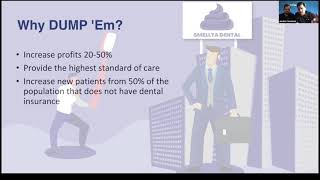
Yeah, thank you. And I'm Gary. Katie. I'm the founder and CEO of Next Level Practice. And what I found very early on is that dentists were not really set up to run a business when they left dental school. And my background is in business and team development. And I developed a business model that takes all the effort out of running the business side of the practice and allows doctors and practice owners to focus in on the side they love, which is the clinical side. And really automating everything else, from training to analytics to systems to all of the processes that, you know, a dental practice needs, but a doctor doesn't usually like dealing with. So we've taken all that, all of that off their hands and we implement a simple process that we're going to unfold today. So I'm super excited to do it with you guys and let's, let's dive right in. Let's set some context here. So why should we dump them? And, you know, first is you're going to increase profit. Now there's obviously risks and stuff, and that's why we're here. We're going to mitigate your risks. The other thing is you're going to raise your standard of care. I mean, if you're the type of dentist that is trying to, you know, do quality dentistry, but you're getting paid, you know, 50% of what you should be getting paid, you can't provide the best labs. You guys are in the lab business. You can't, you can't provide good labs. It's like what I always call guys, it's the quality, service and price Triangle. Qsp. Triangle. In my book, Million Dollar Dentistry, the you can't be all three. You can't offer high quality, high serve. What's that?
Oh, I just said at a cheap discount.
Yeah. You can't deliver high quality. You can't have the A team players and then, you know, do it at 50%. It's like, you know, there's. In the world of strategy, Banana Republic, Gap and Old Navy are all owned by the same company, but they all have their own positions. Banana Republic is quality and service. Gap is quality and price and Old Navy is service and price. You know, but when you, when you wash those Shirts after, I always buy my Fourth of July shirt from Old Navy. But July 5th, I'm trashing it. It cost me 599. The guys had a headset on. They were giving me service. But the quality of the piece is just horrible. Most dentists want to position themselves as quality and service and get a higher price. And that's why we're here and that's why we're talking about dumping them, right?
Absolutely.
This is what I really am excited about, guys. You know, this better, you know, than anybody, that 50% of the population doesn't have dental insurance. Now, how, adding, you know, your, your product, and when we combine the membership plan with dumping programs, what, what happens to, to attraction of new patients that you wouldn't have gotten before?
Yes. Yeah, you're absolutely right. You're able to attract those new patients and those patients end up spending more money. So in addition to attracting the other half of the market, you're attracting the other half that will actually start spending more, which is a good thing.
Yeah, especially, especially under the concept of a subscription model, because people are so used to, you know, buying from a subscription model. Now this, I really want you to highlight this because a lot of our dentists went through a furlough program. No cash flow. What happened for your clients?
Yeah, so a lot of our clients that had successful membership programs, you know, during the shutdowns and everything, were able to still have cash flow coming in, whether they did dentistry or not, or I guess whether there's a pandemic or not, the cash still came in. And I mean, we had seen practices that started their membership program in the midst of the shutdowns, and they were able to call their patients and email them and text them and get them to sign up for their membership plan. So it's a way to generate recurring revenue, which is the holy grail of business revenue, is what I usually say.
No doubt, no doubt about it. And like, when I think about this, when you add recurring revenue, which gives you peace of mind, so you have revenue coming in, but also the dignity for your self respect that people get from this. Because now you're going to start really, like, your net worth is directly related to your self worth. Your fee schedule is directly, excuse me, related to your self worth. And consider that maybe you've been compromising your self worth and like, just caught in the bureaucracy of dentistry and we're going to break free from that today, which is, which is super cool. So I love this. Like, you know, how, how often do you feel like you're pushing a boulder up a mountain, and it's, like, really important to acknowledge, like, this whole thing. You know, empathy is part of what I love about you guys. You really understand what it's like to live in the shoes of a dental dentist, a dental practice owner. You know, first of all, you're like, anytime you're about to do something you've never done, like, I remember furloughing, helping people to furlough their team members, like, that was, like, groundbreaking. It was overwhelming. It was uncertain. You've never had to do that before. It's like. And, you know, the same is true here. You're going to be overwhelmed. You're going to be uncertain. But when you walk through this with somebody that's walked over, I call it the Tony Robbins coals. It's like, you know, the firewalk, right, guys? It's like. It's like cool moss. Cool moss. Cool moss. It's like, you know, and you walk to the other side, but then you're, like, exhilarated, right? But I. You couldn't get across those alone if you just said, hey, walk across these coals. You know, it's not a natural phenomenon. You know, it's okay to be frustrated. I always like frustrated as an emotion because that means, you know, you deserve better. But you're not there. You just don't know how to get it. Insurance companies are the enemy. And, like, excuse me.
Bless you.
Thank you.
Dad sneeze. I'm always the loudest guy in the house. Dad jokes. Dad sneeze. You know, it's there, baby, you got it all. I go loud. I go loud, and I go, insurance companies are the enemy here, man. It's just like, you know, they're the beast. They're the thing that we're taking on. Because, you know, one of the key things is that the. The patient thinks they're their advocate, and they're. And, like, we know that they're not. They're not sitting there going, hey, I can't wait to spend more money on this patient to get them healthy. They're trying to knock down what they have to pay. But if you say that to a patient, when you go through this, oh, my gosh, you're speaking to the wrong enemy, to the patient, right? And the patient goes sideways there. So, you know, and look, I get it. I mean, if you have to schlep, if you're in, like, three rooms and three hygienists, like, you're tired, you're fried, and it's like, you want to make a difference and be profitable. You know, we don't believe in starving artists. We believe in, you get to make a difference and help people, and you get to get paid for that and allow yourself to have that. And so my second book called Raise your Healthy Deserve Level, Guys is all about that. It's like, how do you have contribution and profitability? Patients only want to do what insurance covers. That's like, been a reoccurring problem and we're going to fix that. And then you're a great clinician and you're just like, oh, man. You wake up into a world of feeling like you're getting ripped off. I mean, anything else that you guys want to add here?
Oh, man. I think, I mean, I think that's a big one. You know, most practices that I practice, owners that I speak to every day and Justin speaks to, you know, they definitely feel like they're getting ripped off. And if you think about what insurance does to the dental practice, it attacks cash flow, profit margins and patient experience. And I think that's a big thing. It's a, it's a bad partnership, bottom line, and it needs to be fixed and we need to dump them.
Yeah, it's time to get divorced.
Yeah.
All right, so. But the thing is, we know how to help. One of the key things that we're committed to at next level and what makes us unique is we're not about. We're not in the information and handing you binders of stuff. We know that that doesn't work. You're not going to sit there and implement that. We believe information without implementation has no value. So what are we going to do about that? We're going to show you the steps to actually implement. You're going to leave with the game plan, we take the complexity out of it, make it simple, and then, boom, get it done together. We've, we've, I, you know, we've helped 30 million people get healthier through this process together. And you have 100,000 people in the membership plan, and together we've worked with over 7,000 practices. So we've learned, you know, when you're in the business, I've been 20, 25 years, you've been in the business 10 years. You know, when you look at, like, the journey of, you know, what it takes to be successful, that's the key element. And, you know, you're going to, you're going to have a transformation here. You're going to feel, like, overwhelmed, stuck, maybe uncertain, and you're going to Be like liberated the go to provider in your marketplace. That's what's possible here. So anything else that you want to highlight from, you know, the work that we're going to do about how we're going to help them?
No, I think just bottom line, it's, it's a done for you type program that we're doing here and we're gonna help you guys. We know that, you know, offices can be spread thin and, and we're gonna help you guys make it easy to drop the PPOs and create membership plans and be have a successful practice. So that's all I have to say there.
Gary.
Oh, very nice, very nice. I mean, I mean sometimes it's just the simplest things. You know, I'm more verbose and I love that you guys just boil it down to C spot, run. We get it done.
That's how I like to operate.
And then at the end you're going to have an opportunity. What Jordan, Justin and I did in preparation for this, to make it really turnkey, we've combined a package at the end just it's a getting started launch package. It's 50% off and you just dive right in. So we'll get to that at the end. And then by the way, if you're sitting there and you have questions, we want you to chat. I see, I start seeing the chat happening here and whether you're seeing this live, some of you will see it recorded. Please chat because we will get your questions answered, your thoughts. Have fun with us too. Plop into the chat and I see people coming in here chatting away. So the three step process that we're going to give you tonight, really simple. You're going to find we do a lot of things in threes here. Plug in a membership plan. You got to have the membership plan. Plug it in, just think. And then you're going to implement the care system. Care system. I'm going to review for you. You do not want to make this move without getting your care system in place. And then once you have your foundation in, you just go, bye, bye, bye, bye. Thanks for coming. So here's the three things. These are the three essentials. Do not make a change to your plan if you don't have the fundamentals in place. This is so key. And first we're going to do is we're going to unpack these things and Jordan and Justin are going to go first. I'm going to drop out here and I'm going to have you guys pull your PowerPoint up to go over the membership plan. So let's do that now. I'm going to stop my share and then have you guys come right in. And if you guys can really give. All right, we need to get our membership plan in place. What does that mean? So enlighten us.
Yeah, so we'll talk About Membership Plan 101s, what the basics are, and talk about the benefits of implementing one of these as well as how to scale it, how to grow it, because that's the most important parts of volume based business model if you want it to really work. So what is a membership program? For those that may not know, this is our definition here at BoomCloud, a membership program is an alternative to dental insurance managed by your practice, where patients pay an automated monthly or yearly fee to get access to benefits and savings to your office. And you, the cool thing is your office designs it, not a third party entity. You know, obviously we can help out and give you some feedback, but it's ultimately up to you. A great example of this is Amazon prime outside of dentistry. Gary, I'm guessing you've got Amazon Prime.
Yes, and we boycott them. We're boycotting Amazon because, you know, I love it. My wife is like a tree hugger, so she's like old school. But let me tell you something.
I.
Don'T want to buy anywhere else because I could just press a button and they have my information. They have my information. They did that on the one click methodology. That's why we need to bring this methodology into the practice, because it needs to be one click. It's the same concept. And that's what I love about what you did.
Yeah, so the beautiful thing about, you know, Amazon is that you see that there's more loyalty with the prime members. I get a package on the porch every day. I'm sure Justin does too. I got two today. He got two today.
Okay.
So the beautiful thing about that is it's the membership mindset. We'll talk about that here in a little bit about what that does to the practice. But we also have to consider that we actually live in what I call a subscription economy, where we pay for Netflix, Amazon Prime, Costco, I pay for a car wash. Membership, doordash, especially during pandemics, you can order food to your house. Right. But I pay a subscription to doordash. I pay a subscription to all these services and more because it's convenient and, and for a consumer, it's budget friendly. And that's why I think most patients love dental membership plans, is because it's a budget friendly option, but it's also a win win option for both the practice and the patient. So speaking of plans, this is an example of what a membership program looks like on average. Obviously the pricing may vary depending on where you're from, but this is good template, a good starting point where patients are going to get exams and cleanings and bitewings. I won't have to read all everything on this because I'll let you guys snap a picture of it and take it to your office and your team and share it with them. But the cool thing is you can put benefits in, take benefits out, increase the price, decrease the price. It's all up to you and to your office. And the beautiful thing is that patients, this is a clear package that patients understand and will easily buy, you know, with one click. So that's what it looks like. I'm a huge fan of both monthly subscriptions and yearly subscriptions. I think they both are very powerful tools to the practice. If you think about it, if you get enough monthly subscriptions that that recurring revenue is going to come in whether you do dentistry or not, every month, automatically, if you set up the membership plan correctly. And you know, it's also under the radar type payments where patients aren't going to realize a $30, you know, payment coming out every month. That's why I like monthly year. These are awesome for the, for the practice, obviously because you get to collect all that cash flow up front throughout the year. And they're both wonderful strategies. I always recommend doing, doing, offering both to your, your patient base. So that's what that looks like.
Hey, Jordan, before you go forward, I got a question here I wanted to get answered that was appropriate. Totally one of our viewers, by the way. We had over 300 people register this thing, so this is odd topics, man. This is like, you know, it started out, I think we had like 200 right away and then all of a sudden like we're knocking at the door over 200, closing on to three. It's big. And the chat, the chat's pretty awesome too. And I'm going to aggregate these. But this, this is what happens if someone signs up and then they want to cancel. How do you deal with that?
Yeah, great. So that's super common question that I think we get asked every day here at Boom Cloud and I think it happens less than, you know, people think. But typically, how to avoid that when in a membership program, especially when you're charging, you know, a monthly subscription is number one, you've got to have a retainer or membership agreement that the patient pays for or signs for. And it basically states that it's a year agreement, but they're paying monthly. So that's the first step. The second step to kind of, you know, minimize your risk is using ACH or bank withdrawal methods to collect that. That. That income or the payments from the patients.
Right.
Because if you think about it, bank accounts don't get closed down as much as, like, credit cards. So that's a. That's a way to kind of reduce the risk of that happening. But bottom line, we look at this every day across the United States, and it's pretty rare that that happens. Not saying it doesn't happen, but it's rare. But there's easy ways to kind of reduce that risk. And that's just having an agreement and then collecting properly so that you can always withdraw from the patient's bank account on monthly. Monthly subscriptions there. So. Awesome question. Yep. Cool. So some of the benefits of creating a membership program is that you create a loyalty system. And I think. I think Justin knows this more than. More than I do. In the. In any business, you need some type of loyalty program. When with the dental lab, we initially didn't have a loyalty program. Justin created a loyalty program there, and it locked in our clients there at the dental lab. Right. Locked in a lot of people.
Just.
And it was just such a simple, tiny thing that we did, and it created so much loyalty, and they were sending us their work, and it just created more consistency with. It was just a simple rewards program. Right. Very kind of similar to a membership, but not exactly a membership, you know, And I think every business needs that. I mean, even here at boomcloud, we're thinking about how do we increase our loyalty with our customers? And I think every business that's just a good component of every business. The second thing that I think is really important, and my favorite topic when I talk about these things, is that you're able to generate predictable recurring revenue. It's like magic almost. Right? Recurring revenue comes in whether you do dentistry or not. And the beautiful thing about having a membership program is that you can control when that revenue comes in or not.
Right.
Because we know in any business, you got payroll, you got expenses. We have practices that actually structure their membership program to have cash infusions from the membership fees that come on the 1st and the 15th to cover payroll and other costs. So it's not only a great thing to have the recurring revenue, but you can organize it. However your business operates in regards to payroll and things like that. And then in regards to pandemics or even personal recessions or economic recessions, when you have a recurring revenue stream, you know it's going to give you peace of mind, you're going to sleep well at night and knowing that that revenue is coming in because no matter what, you've got expenses that you got to.
Cover in your business.
So I think it's really important to understand that with recurring revenue. And then, well, let's make it more positive too. When you go to Hawaii, you can still have revenue coming in. It's really important business model, right? You know, and then the smooth out the feast and famine months. We know that in dentistry there's suck timber. I'm sure you've heard of that. Gary Suctember, right. Every September, at least here in Utah, all the dentists say suck timber, right? So we know that there's months that do that are, that are, that are lower than other months. And we saw that at the dental lab all the time, all the time. Where, you know, the restorative care would slow down because of school starting or it speed up because of end of the year, you know, trying to get their benefits. So you want to smooth out those feasts and famine months. And recurring revenue does that. And another beautiful thing it does is it increases the valuation of your practice, meaning the more recurring revenue you generate, the higher value you will be able to sell it at a future date. And I have some more topics on that and some case studies on that. And then obviously it gives you a path to reduce dependence on PPOs. You can dump those PPOs, right? And then it helps to reduce patient cancellations because I often say when a patient signs up for a membership program, they're committing with their wallet. So I think that's important to understand. So I have a homework assignment for you. This is a book, it's called the Automatic Customer. It's a book about creating subscription revenue in any type of business. And as I often say, recurring revenue is the holy grail of business revenue. And, and in this book, John Warlow, the author, he talks about how valuations for a business can be between 24 times to 60 times the monthly recurring revenue that is being generated. So in my bold example below, you got $45,000 in monthly recurring revenue and that the value of that revenue stream would be a little over a million to 2.7 million, according to John Warlow. So very powerful stuff here, especially if you're thinking on exiting at a future date, which I think most everyone is so, so think about that. So a huge benefit. This is a quote from the book. I love this quote because I've lived through multiple recessions and it is so true because I've managed a dental lab and I've managed a business that does generate recurring revenue. And one of the best parts about creating automatic customers or automatic patients through subscriptions is that you insulate yourself from the worst of the potential recession. And we saw that during the COVID recession and the COVID crash with a lot of our practices that had successful membership programs. So huge benefit. So now we're going to shift gears and we're going to talk about the opportunity out there because I think it's important to understand the opportunity that you have as a practice owner. According to the US Surgeon General, several years ago, over 180 million Americans lack dental insurance. That's a lot of Americans. It's over half the United States now. And I think that's increase because of COVID 19 and the past recession. So if you think about that, you know, over half the United States is uninsured. And most practices don't have some type of offering to attract them and to retain them. And that's where a membership program comes in. So huge opportunity for you to grow your membership program right now. And then we also found, looking across the nation of practices that created membership programs and they were successful with them, we found that they had a certain mindset, you know, and with that mindset, they, they thought of their membership program as a marketing tool or a patient attraction tool, a retention strategy or tool and a case acceptance. And the core of it was using it as predictable to generate predictable recurring revenue. If you're missing any one of these components, it kind of crumbles. If you're not using your membership program to attract new potential patients to your practice, you're gonna cap, right? You're not gonna be able to grow, you're gonna plateau with it. And if you're not using it as, using it as a case acceptance tool, you know, you're not gonna really expand that revenue that you, that you can from your existing uninsured patient base. And then lastly, you know, if you're missing recurring revenue, you're missing out on all the benefits of the cash flow that it generates with a correctly set up membership program. I know lots of practices will say they have their own membership programs, but then it's essentially just a cash discount plan. When the patient comes in, they just pay cash one time and, and they, there's no renewal. There's no automation, there's no subscription. It's just you're missing out on a lot of benefits there on a business standpoint. So that's the mindset that you need to have when you generate or create a membership program.
And.
Whenever I teach this predictable reoccurring revenue is at the heart.
Right? Yeah.
But the membership program is also. It's a tool for the business side of dentistry, and it's also a tool for the patient experience as well, which is really important to understand. The membership program gives both sides of the coin here for in your practice and the business side. Yeah, I love that.
Thank you. Yeah.
So question that I always ask is, can you give quality dentistry and stay afloat when your profits are deeply cut?
No.
You know, I. Justin recently was at the lab several years ago. He was. He was working there. He has a lot fresher memory than I do of those days. But I remember him sending me a picture of a lab slip. You remember this? A lab that told the lab to make the cheapest. The cheapest crown. Cheapest crown. And we knew that this particular dental office was signed up with every PPO under the sun. And that's the mindset that PPOs are creating in our industry, which I think is not cool. I don't think that's cool. If I were a patient and I saw that my dentist wrote that about the cheapest thing possible, I don't think I'd be too happy as a patient. So, you know, that's one reason to dump them, because, you know, we want to offer quality dentistry to the patient, our patients. Well. And it prevented the lab from. From providing excellent care and service for that patient.
Yeah, absolutely.
Totally.
It just trickled down to that level. So, yeah, I think that's something to think about. So when you set up a membership program, we're gonna. We're gonna do some creative thinking here. Imagine if you signed up members at 35 bucks a month. What would that generate in terms of cash flow? Right? That's over 10 grand a month in predictable recurring revenue. What about a thousand? You know, that's 35 grand a month coming in whether you do dentistry or not.
Right.
And if you have multiple locations, you know, think about that at scale, right? It can be large and really beneficial for both your patients and your practice. Right. And then we found that when patients became members, they bought three times more. Right. In some offices, it ranges. Right. Depending on how good they are with their verbal skills, which Gary will help with. But it's really important to understand that members buy more. So if you're maybe a fee for service office and implement a membership program, you may think that you're giving a discount, you're going to lose money. But in fact the trends say that members start to buy more and that's a good thing for, for your office. So shifting gears, we're going to talk about how to scale. Justin's going to give some quick tips on what he's seeing working out there in the dental industry, working with all the clients across the nation. So I'll turn it over to you here on this. Yeah. First of all, we care a lot about our patients and want to see their success because we know that recurring revenue helps them stabilize their practice, stabilize their lives, make it so it's, it's a great work environment for their business and it helps their patients. So we have helped develop some internal marketing tools to help them kickstart their membership program. And I, I, there's always, there's two sides. There's internal and external marketing for your membership program. And I always consult with practices, start with internal marketing first. Start with your existing patients and spark your membership program first. That way that's how you're going to do it the fastest and you're going to spend less money doing that. Well, you're going to get, you're going to get momentum. You want to get momentum and use that motivation and momentum to keep going. Right?
Yeah.
So, and then on the external marketing end, I think, you know, you could use social media ads like Facebook ads. We have a practice, several practices that have been really successful with direct mail marketing. They target to 55 and up communities where they're losing their dental benefits and their teeth are wearing out. Right. And then you got like live presentations. We've got some offices, you know, practice owners that will go to like an HOA community to the event center and talk about oral health care and what they should be doing, you know, to help their teeth and at the end educate the audience on membership plans. So those are some examples that could work outside of this. Here we're seeing lots of practices reach out to small business owners locally like restaurant owners and other type of small businesses and offering them and their employees to join their membership program. So those are some ideas to help you scale it. Truly it's going to take time, but it's time worth the effort because you're going to reduce dependence on PPOs and you're going to create that recurring revenue.
Stream and patient loyalty.
So we're going to talk about A few case studies and then Gary, we're going to shift gears and we're going to talk about what you do to help the practice be successful on the business side and the verbal side. So this first screenshot here, this is their dashboard and boom. Cloud. This particular practice has just under 20 or around $26,000 in monthly recurring revenue coming in whether they're doing dentistry or not. Over a thousand active members. You know, how would that affect your practice? How would that change things? Would you sleep better at night, you know, knowing that you're number one serving this many patients that are uninsured but also having this type of cash flow coming into your, your practice? Right. And this particular practice, they, they, number one, they, they targeted their, their existing uninsured patients and used Facebook marketing to then get the, spread the word out and, and, and sign up more patients. Their membership program through the online channels. This next case study we have here, these guys use direct mail marketing and both these offices are solo practitioners. So it can be done like this, this can be done with, with any type of practice. You know, these guys have slightly under, under 2000 active membership patients. They're actually more now and just under $50,000 in monthly recurring revenue. And this is just from membership fees. This is not counting any revenue from treatment, which is obviously great. You can, from what we've seen out there, it's, it's anywhere from two to three and a half times more spend on treatment with these types of patients. So when you have a few thousand of them, it can really add up. But $50,000 a month direct mail marketing targeting to 55 and up communities, attracting them to their off their office and saying hey, you don't have dental insurance, no worries, we can help.
Right?
That's kind of their messaging, what they, what they do and this could be replicated, you know, in your area. So those are a few case studies that we see out there. A lot of practices has success, but big thing I think is making sure your team is on board and you're rowing together, meaning you're on the same page and you're trained on the verbal skill set to talk to patients about this. So that's what we have Gary. Hopefully that was valuable to our audience here. But for those of you that are anxious to learn more about membership plans, we have a free ebook that you can get just go to boomcloudapps.com book and that will give you a, it's about a 50, 60 page book that goes in depth on membership plans. We also have Tons of videos and other free resources on our website that you can go and take advantage of. So I would head there and get that ebook.
So, Gary, thanks, guys.
I'm going to switch over to you, man.
That sounds good. Thanks, guys. That was great. You know, the questions are still coming in and I wanted to. The one question is, as we move toward the care system. So you just went over the membership plan, and the main question is, people ask me very often, they go, how many patients am I going to lose? And I'll tell you, if this is not done right, it's up to over half your patient base you can lose. The ideal is somewhere around 10% because no matter what you do, no matter what you say, no matter having a membership plan or not, like as an option for somebody to jump into, there are some people that just anytime you make a change, you're going to lose. So if you lose 10% of your patients, but you gain 25% or 30% in profit, and then you have a membership plan that are attracting people that you wouldn't get, obviously you're in a good spot. Right. But we have to mitigate. You don't just want to do this on the fly, get an itch and go do it. You know, it's not definitely don't want to do that. So just wanted to answer that question, you know, how many people were you going to lose? I've seen it anywhere from 10%, which is our ideal max. And then I see it all the way down to below. I had a guy, he had 1200 patients, went to 300 patients. And then he came to me for a marketing problem and it was just devastation because he was trying to recover. The people he dropped and they just, they were gone. They just went somewhere else. So you can, you can kill a career here. So this is like, you gotta be very careful. You gotta be very, very careful.
Very strategic and careful. And plan it and. Yep, yeah, just don't do it off the whim.
And it's the, it's really the power of the right tool. You know, there's three elements to the game. It's finding the money, getting the money and keeping the money. You know, we believe and we see it that the average practice is operating at 50% its capacity. And I'm gonna show you that next in the care system, 50 to 75% below their natural capacity if they just focused in and approach their practice differently. The other thing is so, so many dentists. I was talking to a dentist in Rupert, Idaho today, right. Just between Salt Lake and Twin, right? God's country up there, right? And he's like, I'm a two doctor practice. Bought this practice. My doc's retiring. I got three hygienists. He's like, I want to drop PPOs, but like, he can't even get through his day. So slam. So it's like freeing you up so that you can work on your business, not just in it. Because if you're only working in it, it's very difficult unless you have a smaller practice. Right? And then really no one wins alone. You have to have the growth of your team and the people around you. And that's really what we're going to unpack here. So this is usually a paradigm, major paradigm shift for most doctors in that they, If I, you know, guys, if I, if I, you know, asked in a, in a seminar, we did a seminar together, there's 100 docs in there. And I said, how do you grow your practice? 99 would say, what? I need new patients. I need new patients.
Say new patients. Right? Which is the most expensive way to go?
Well, it's the most expensive, but especially if you're going PPOs, like, before you go, you might. I. I've had some people, guys that actually didn't drop PPOs. Maybe they dropped one or two, but because they dealt with this, they were like, oh, my gosh, I, I had a machine that was, was totally not efficient. So I built this care system. The A stands for case acceptance. R stands for retention. E stands for the experience that a person has and how many people come in, right? So this is the big deal. 28%. We're plugged into 10 million treatment plans. 28% is the conversion rate. So think about this inefficiency of this business model. 20% of patients come back twice. A lot of them come back once. If you ask a doctor, I go, what is your case acceptance? They'll say 80%. And I go, what is your patient retention? They go, 80%. Meanwhile, it's 28 and 20. So think about it. They're dropping new patients into the top of the funnel. They come in, they buy. They buy only 28% of time. And by the way, case presented, that's like, I call it wallet biopsy. You scrape the patient's wallet. You look at if it's green, you present it. If it's not, and you don't think they have money, you don't present the case. That creates a wallet biopsy, low case presentation. I'm going to show you practice Here, before and after the pandemic, applying this system and what, what happened, you're going to be blown away. And you can do this too. I'm going to give you the secret to success is no secret at all. It's. It's all right here. So I'm going to take this inefficient system. Let's quantify it. So let me run through some numbers. Let's just say you stay at PPO fees. Case acceptance is the value of a crown and a buildup with your PPO fees. So you could take out a pen and paper and walk through this with me. In fact, I might just do this. Live off of a. I have a quiz on my website and I'll show you how to do it. It takes a minute, but it's like a crown of buildup. Let's just say it's 900 and 100. The value of your case acceptance is the value of $1,000. That's if you put a systematic process, a total team process into your case acceptance system. 9 out of 10 practices do not have a case acceptance system. If you can't methodically and systematically close a case, then you're not going to be able to close the patient on accepting a new payment terms option called the reimbursement going to you. And we're going to charge you in full amount. The same muscle that it takes to close a case is the same muscle that it takes to present a new system. And a lot of docs are relying upon the verbal skills, but it's really like your enrollment skills for this. So you definitely want a system for that. Retention is two profis, two exams. Set of bitewings. Again, PPO fees at $90 a piece, $40 a piece. 40 bitewings. I spelled bite wrong. Pardon me there. I just noticed that I'm an eagle eye too, but I just. I wanted to redo this for our session tonight just so it looked good and I didn't. I didn't. Anyway, you get it. Mistakes are cool. They happen. So 1300 is the average value of a patient coming back twice through hygiene. With a good system, you'll be able to do that. Some will come back three and four times. If you have advanced perio programs plus your case acceptance. By the way, if they don't retain, you can't present the case because if they're not in your office, you can't do this education process. So let's say I have 2,000 patients. That's 2.6 million. This practice is doing about 8,900max before we put. And by the way, there's no new patients in this model. Let me just do a quick, let me just do a quick. If you don't mind, I'm going to go right to my site. Can you guys see, can you see what do you see up on my screen right now? Do you see my website?
No, not yet.
All right, hold on, let me put that up. I'm gonna walk you through. Check this out. If you go to the site, it says right here, take the revenue quiz. Right? So let me, let me walk you through it, all right?
Look at that handsome guy on the screen there.
Not bad, right? My wife's. Hey, my wife still has a crush on me, guys. So, you know, you know, gotta be looking good. So it's like how many locations you have? I got one. Right. How many associates? I got one. How many chairs do you have? Three. How many years were you in practice? Ten. Right. Then how much, you know, how much, how much was your gross annual? Let's just call it a million. Right, and then what happens is how many patients do you have? Let's call it 2000. And then you just plop your name in. I'm Gary. And then I'll just do my personal email so you guys can personally email me. So you see it up there.
I already got it. So we're good.
All right, cool. And then here it tells you what capacity you're at. This is a game changer. Most people don't know guys what capacity they're at before they make the move and it really throws them for a loop. So do you see my screen again? Back, back where I was. I thought I'd do that. That actually worked out. I wasn't sure if that was. So I want to give you a person who actually did this. They found the money to get the money to keep the money. It's the care system. This is Josh and Natasha. The only problem with them is they root for the wrong baseball team. Guys, we're Yankee fans over here. Just good hearted people. New London, Ohio, 2500 people. A town of 2500. So if you're wondering if this works in rural places or cities, I got Jonathan Levine right down the street on 923 Fifth. Like amazing, big, beautiful practice. It works there. It works in, you know, a small practice like this, you know, and it goes like this. Here's July. And by the way, we're pulling data from Dental intel. We're partners with them. They schedule 449 patients and with a $77,000 revenue. And this is direct pulled from their dentrix in 2017. In July I was like, pre and post pandemic. I'm sorry, look, 728 scheduled visits. Again, they're focused on the retention and the visits now. Look what happens to their production. I mean it just, it boom. Clouds. It's just like, you know what I mean? It's like, bam. This is another one again. They put a case acceptance system in pre pandemic 2017. I'm doing July to July and 51,000 accepted. Now watch this. 221 and 121. These are irrefutable numbers. This is a small town in the middle of nowhere. 70,000 more per month. They do not have a membership plan yet. These guys, when they add it, I mean you can add run the numbers of what this actually does. This is a big one. So many people say when I ask them what their pre appoints are leaving hygiene, they'll always say 90 or whatever, 77. The difference between 77 and 90 is like monster. That 20% is trajectory. You end up having a shrinking patient base and you don't realize it. And so a lot of docs are like, hey, you know the first thing I want to do is get rid of these insurance plans. Well, don't do that until you fix your retention and your case acceptance. Then you do that. That's the step after. And then you put a membership plan in and now you got all your bases covered. New capacity. This is a brand new office. And Josh and Natasha told me they go, when you come up here, and I actually went up there, they go, our building is like a double wide. If you threw wheels on it, like that's how bad it is. Like it's a double wide. Right, guys? This is their new building in New London next to the center town. And they're building it out this year. It's so exciting. So, you know, dreams actually come true when you know what to do. So let's look at the verbal skills real quick. Very important as we wrap through this. You got to introduce this to your, your existing patient base. Go slow. Do it over a cycle of six months. Don't send out a letter. Do not send out a letter. I'm going to say that again. Did I, did you hear me say that?
What did you say?
Guys, don't send the freaking letter one way. Communication causes chaos and confusion. They immediately go, I'm out of here. You don't even have a chance to communicate the value proposition. The game's over. You're done. Introduce a new arrangement prior to seating the patient so you have an intimate relationship with the person. You can actually have a dialogue. You know, here's one of the key things when you're doing verbal skills. Context versus content. Most people want the words to say, by the way, that's only 3% of the communication. You have to get your team set up into the confidence of delivering that message. I'm going to give you the language and the script, but if you don't shift your context, your why behind what you do, it's going to fall flat. You know, it's like a script delivered from a memorized head is a certain vibration. The vibration, when it comes from the heart and you believe in it, is an authentic, transparent vibration. So context is how you get that vibration. Here are the three communications that you need. A context of your practice, the context of the position, and the relationship to your patient. Those are the three things you want to. You're going to have to do to move from a drill fill and PPO mill to a complete health practice. Let me unpack this a little bit. The first thing is, is that if you don't shift your practice into a meaningful entity. A question, question that just keeps coming up. They're going, gary, what do I do if I can't. I cannot hire good people. I cannot find good people. Like, this system sounds great, but I cannot hire people. Do you guys. Do you guys bump into that? Are people saying, like all across the nation and can't find good people? Right?
Oh, yeah. That's a huge problem that we always hear.
Yeah. And Josh and Natasha shifted their practice. On a good day, they save a smile, and on a great day, they save a life. Meaning that their purpose is bigger than a drill fill, transactional PPO mill. It means something to them in the practice. And by the way, they're just outside Cleveland about 45 minutes. He got so big, and you saw his building, he had to hire an associate. For those in rural places that are having a hard time attracting an associate, the associate comes in. We package the practice into a meaningful entity. It's all about serving and being transformational in the health of the patient. The associate comes in, guys, and says, I am so mad right now. He goes, why are you mad? She's graduating in June. Because my husband is. We're moving to Cleveland Clinic. He's the doctor in Cleveland Clinic. I did not want to have your practice be the one I love most because I have to travel 45 minutes each way I pass 150 dental offices to get to your practice. This is why. Because we package the practice to have a meaningful point of difference where people can express their purpose inside the business. If you're selling transactionally to your patients and trading time and money for your team, the game's over. Like especially post pandemic. So how do you do this? We make it fun. You know, you guys are laughing and I love doing this with you. So we don't have front desk people. If you have people called front desk people, they're pieces of furniture. And you give a piece of furniture, you get a piece of furniture. Verbal skills, you get, you get. It's going to fall as flat as that table that you're calling them. We call them. We shift the context. Their directors of first impressions. Remember that that glass of water, that glass is the context. It gives what the person should be doing day in and day out. So if you give them a glass, the context tells them to drink it. If I give somebody a bathtub with water in it, they know to take a bath in it. When we change pieces of furniture to. We call DofI's director of first impressions. The context gives them the behaviors and the ways of operating. And I don't have to teach them everything. They start speaking a different way automatically by. By moving from the bathtub to the glass, if that makes sense. Right? We don't have dental assistants there. They feel like they're less than. They don't matter. We have ninjas. No, I am not just an assistant, guys. Ninja nation, baby. They feel a part of something. They belong. They feel like they matter. Then when you ask them to use an intro all camera, they know they matter. They're not hiding out, isolating in the back corner. They elevate their self esteem. They make a difference. We don't have hygienists. We have hygieniuses. And hygieniuses. There's different kinds of hygienists. They scrape teeth. They're gum gardeners. They polish teeth. I love gum gardeners, right? I sit up at night, guys, and make this stuff up, right? And it's like, and, and the deal is when somebody steps into being a hygienist. And by the way, I trademarked that because it was so good. They know because they are the catalyst to transform the life of the patient. They come in not relating to health. That hygienist gets in there, starts educating on whole body health. All of a sudden the game changes dramatically. You know, we have this thing called the healthy Mouth baseline. This is what's healthy in the practice, and here's how it connects to the body. When you have a solid patient education system, the patient understands why you're recommending the treatment. This is why you don't want to go to PPOs. Because the reason is PPOs are a bureaucracy, because the dental practice does not know how to create the value in the patient's mind. And then they say, do whatever my insurance covers, because what they're really saying is, it's no skin off my back, it doesn't cost me anything, so let's just do whatever it covers. The hygienist is the catalyst in this. And then we don't have Helga sitting in the principal's office presenting money. You know, like, you feel like you're in a, like, you know, used car lot. You know, you get in the booth and they start slamming you with like, you know, buy this, I'll give you that, I'll throw in this. No. We have financial freedom fighters, and it means that you are fighting for the financial freedom of that patient. And this person is the person that's the concierge and quarterback for educating the patient on the payment terms, because that's what's changing. The value proposition is being elevated. And if you know how to create that value in the mind of the patients, called known value, then this person can explain the payment terms, because that's really what you're doing. You're changing the payment terms. And this person is a trained expert. And a lot of dental practices don't have dedicated people proactively waiting for the patient. And that's why we call them a financial freedom fighter. And then we turn our dentists, drill, drilling, filling, billing, molar jockeys into complete health doctors of the head, neck. They're doing airway, they're doing implants, they're doing smile makeovers. They're doing. They're doing great, great work, and they're getting paid for it now. But if they don't re relate to themselves, guys, as a complete health doctor, as a doctor of, you know, the whole body that impacts the whole body, because the mouth is the gateway for whole body health, then you know that. Miss, that's missed, right? So here's the verbal skills on three things. You have to explain why the transition is necessary. Because people listen from a place of, why is he telling me this? Then you have to speak it in terms of how it's going to work for them. And then number three is you have to know how to handle questions and Objections. All right, so let's just. Here's what you do not want to do. You know, your insurance sucks. Really Just straight up the ivory tower. Insurance companies only think about making money, not for the quality of your care. How do you think they can afford those big buildings downtown?
Right.
So this is some. Yes, but here's why you don't say it. They think that their insurance is their ally. So then what happens is you're going against them and the insurance, the belief of their relationship. So now you're triangulated and the game is over before you start. So how do we get around that? So I love this language here. I wrote it out. You can take a picture of it. It's a little long here, but I wanted to give you the whole language. We wanted to let you know of a few changes with some guidelines with your insurance. As you know, insurance is like a scholarship to college. Again, re benchmarking the relationship. If you don't re. Benchmark here, you're dead. They cover a portion of tuition and you're still responsible for the balance. This is what I love about this. This language here.
They said.
Say that again.
I said you're framing it right in this example here.
Yeah. So I'm setting them up why they should listen. I wanted to let you know of a few changes with some of the guidelines. With your insurance guidelines. Right. Similarly, insurance companies don't cover at 100%, your insurance will help you with a portion of the cost of your dental care. We're going to continue to work to help you maximize your benefit. Again, we're not taking anything away here and complete all the forms necessary to get your best reimbursement. You see how not your insurance only covers. We're saying we're fighting for you and with you to get the best reimbursement. Because delta or insert, any other insurance company has compromised some of the language in contracting with us, and it hinders our ability to continue to provide you the care you have been accustomed to. Now what we're saying is we can't do what we've been doing if we keep doing it under their language and they're contracting with us so people can understand that, so that we can continue to deliver. We are now considered. And I love this language and I want to thank Terry Mcevany for giving me this. An unrestricted provider. Bam, boom, cloud.
Beautiful boom.
You're now considered an unrestricted provider. What that means to you is we accept patients that have insurance. We accept them. That patient has insurance. You pay us and we help submit all the forms. So a check will come to you directly from your insurance company. Boom. Clap. Thank you for being a valued patient. We look forward to continuing to serve you. If you need anything in this transition, don't hesitate to contact me and I will help you.
That's fantastic.
Okay. All right, so now you're all set. And now you have language and this, you do want to, you know, really have bullet points on. But if you come from a place of a financial freedom fighter, you're helping them, but you're also a financial freedom fighter for what we call the triple win. The patient wins, the team wins, and. And the practice, and then the practice wins, the practice owner triple win. If you don't have a triple win, it doesn't work. So how do you handle objections? There's 3 responses to this yes, yes, but, and no. And by the way, this is. We use this for every team member. So you use this if you're presenting and getting objection to coming in for an appointment and you're a dofi. If you're a ninja and they resist, you know, wanting X rays, you have to know how to handle that objection. If you're a hygienist and the patient says, well, I don't want to. I don't want that treatment. If you're a. A doctor, your team members are resisting you, you need to know how to handle the objections. If you're a treatment coordinator and they. They can't pay, you have to know how to overcome that. And there's just three things. First is people say yes, and you just take the lid off and celebrate with them because they have buyer's remorse. You got a lid off, you got to go. Congratulations. You made the right decision. Yes. But do not hear it as a no. Get clear about the person's commitment, their personal motivator. So why do you come here? Because you can trust us. We show you we're here on time. We let you know what you need before you need it, and we've built that level of trust, and we want to continue that. You know, it is my understanding that, you know, you're committed to really having that type of an experience, and you really trust that. See, adults are creatures of habit. They don't like making changes. But you have to maybe work them through, and then they might have some questions. Get always permission. Statements are great when you're handling objections. When you say, may I have your permission to have a conversation so that we can figure this out together, you're putting your arm around Them coming around to the other side of the table and not fighting, them saying, you should. You should be able to afford this, or like, why can't you do it? This is where the membership plan can come in, too. If somebody doesn't have insurance or they're concerned, you can add the membership plan as. As when the objection comes up as another added value. And then when they say no, just say, I get it, you're a no. You don't want to continue. We're sad about that. We just want you to know, you know, that we'll. We'll be sad that we're losing you. We want you to know that you'll always have a place in our family. You know, can we talk about what you're really committed to here? Are you open to talking about that? So when you validate the no or validate the yes, but. And then you ask permission, then you can have a new conversation to help them overcome what gets in the way. And it's just such a powerful, simple tool that really changes everything. So, guys, I mean, the combo is bad to the bone here. Membership plans, the care system, and then we're talking about the verbal skills, but, like, still, we did it in like an hour. But it's like a lot, right, for people who just, like, blaze through it. So I love this patent quote. It's like a good plan well executed today is better than a perfect plan executed in some indefinite point in the future. If you just added these three things and you didn't reduce your PPOs, I showed you what happened in Josh's practice, you're going to blow up. I mean, these are fundamental tools to have, whether you're going to drop PPOs or not. Let's talk about what the next steps are. So let's talk about our launch program that we created as a package where together, our two companies came together on the launch program. By the way, I will be the ones working with anybody that responds to this opportunity. The first, I have room for about 20 people to do a month. This is what I love to do. I do it on zoom. We set goals and set dates. I plug into your dentrix, your Eagle soft, your open. I get that data that I showed you from Josh's practice, and it shows all the opportunities. And then I can let you know, like, where your gaps are before you make the move. And then we also get a culture analysis. You know, we talked about context. Where's your team coming from? And it's like a cone beam scan for, you know, the vibe or the energy and the soul of your practice, the beliefs, the energy. And we take a call. An anonymous culture survey. It's a Gallup survey that comes directly to us. And then I can know what's going on with your team. And then you guys are going to add coaching for onboarding a membership plan, right? So, yeah, let's talk about that.
Let's do it.
So you're going to get the launch program. I'm going to do 20. We'll do 20 of these. Not everybody's going to be ready to go, so I can handle 20 over the next month. We have one month of boom Cloud. What does that mean for. For you guys? Like, what is that normal? And what are we doing for everybody tonight?
So with that one month of Boom Cloud, they get access to our whole platform to set up plans, automate the plans, our dashboard that analyzes all the numbers and metrics. And then, you know, Boom Cloud, typically we charge, you know, $1,000 setup fee, plus 3 to $500 a month, depending on what package you choose, you know, and you're going to get our team, we've got the Boom Cloud Pro team is what we call it, and their main objective is to help you grow your membership program within the first month to three months of signing up with Boom Cloud. So you're going to get a whole platform and then you get our team that consists of people in the dental industry, from former office managers to treatment coordinators that can help call, text and email your, your patients and help them sign up for your membership program once you're done working with, with Gary here.
So, yeah, so, I mean, that's a, that's a great offer. And like, you know, people are chatting in. It's like they're saying, like, how do we, how do we pull it all together? Well, one of the things that we can do is when we schedule it, Joanna's on my team. If you click the link below Joanna, you'll be able to get right on my calendar. And if you have questions, I'll just answer those for you. But if you're ready to register, you just click the link below. People are chatting in. They're like, how do we schedule it? Joanna's set up to schedule it where, you know, we gather all the information and I spend an hour with you via Zoom. And then on the back of that, you could do it in an hour and a half where I do the hour and then you guys jump in and get everybody set up on the new system. So we have it really systematized and simplified for you to do that. I'm super excited. What are your final thoughts on today's session? What do you want to leave with the people that are watching it live? And for those that are not watching it live, don't forget, you can be chatting in, because we will get your questions answered even if you didn't get a chance to watch it live. Guys, what are your final thoughts on today's session?
Yeah, I think, you know, often I hear practices when we educate, you know, people with you, Gary, I've heard people always say, I wish I would have done things sooner. And I think that's really important to talk about at this point because often practices want to get.
I mean, it's been a problem for.
Years, the PPOs, right? And the low profit margins that they cause in the practice. So the sooner you start, you know, having a solid strategy with cutting out these PPOs and setting up a membership program, the better you will feel by the end of this year or the end of next year. I think every time I hear practices, they say, I wish I would have started earlier. And it's much like, you know, the quote. Have you ever heard when the best time to plant a tree is 10 years ago? The best time to plant a tree was 10 years ago because you'll be enjoying the shade or the fruit, whatever, today, right? So the best. The best thing you can do for your practice is start to cut out these PPOs and start a membership program and do that now. So in a few years or a year from now, you're going to be a lot happier practicing dentistry. So that's my final thoughts there, Gary.
Nice, nice. Thanks, guys. And I'll leave you with mine. Dr. Kevin Allred said it best. He's out in the western mountains of Virginia, and he has this amazing practice. And I love how he thinks. And he says, gary, you know, my beautiful pottery crashed. I mean, he was a guy that was on roller skates. He was like, you know, had, you know, 4,000 patients, and he couldn't do the type of dentistry he wanted to do. He was like. He wanted to do airway, but he was just, like, churning and burning on roller skates all day, right? And he's like, we got this breathing room, and now I can take my pottery and I can glue it back the way I want it to work. And this window of gluing things back is about to close because everything's going to start opening up. We're going to get crazy busy, and then you're going to go Back to the same old, same old. And I'm, you know, if you're the type of person that is the someday when, maybe never person, like someday, someday when, when I lose weight, then I'm going to look sexy, and then I'm going to attract a beautiful woman, then I'm going to get married or someday when, when I have the right team. And then I'm going to, you know, then I'll drop insurances, and then, you know, then 30 turns into 40, 40 turns into 50, 50 turns into 60, and then you're like, gary, can you help me get transition? And I want to retire. It's like, now is the time, and the window is closing on reinventing yourself. The new new, you get to be the new new. And now is the time if you want to make that move. You ever see the Friends movie and the guy's carrying the couch up and he goes, pivot, pivot, pivot.
That's what you got to do.
You got to pivot. So click the link below, hook up with us. If not, I hope you had some laughs. I love the Comstock bros. My bros, my boomers. You know, I got you and I love you and I respect you and I thank you for your wisdom and the gift that you guys give dentistry, for changing the way it works and elevating dentistry. You guys rock and I really appreciate you so much.
You rock. Scary.
Thanks, guys. And their guitarist, too, man. You could tell by the fingers up, man. Have a good night, everybody. Lots of love to you all, everybody.
More from Gary

The Smallest Room With the Biggest Payoff in Dentistry #DentalPractice #DentalBusiness









Dental Cancellations Are Contagious: How one bad habit can infect your whole practice
