The Implications of AI on Entrepreneurship and Innovation — Grand Challenge @ Colgate University
The panel, part of Colgate University's TIA incubator kickoff, explored generative AI’s transformative role for entrepreneurs, educators, and society. After framing AI as a general‑purpose technology comparable to electricity, the discussion moved through several themes. Panelists highlighted AI’s ability to accelerate idea generation, rapid prototyping, and data distillation for student ventures, while emphasizing that AI primarily recombines existing human creativity rather than inventing truly novel concepts. They debated whether AI can be considered creative, concluding that it serves as a powerful medium that reorganizes human‑generated data. Practical examples included furniture and interior‑design ideation with tools like Midjourney, and the use of AI for grading, civic‑reasoning assignments, and rapid design iterations. The conversation turned to ethical and technical challenges: model hallucination, bias from training data, and the difficulty of verifying AI outputs. Panelists shared heuristics for spotting false answers and stressed the need for pre‑defined ground‑truth expectations before prompting. Prompt engineering was described as a black‑box, trial‑and‑error process likened to SEO, with no clear objective guidelines. The panel examined the broader impact on the creative ecosystem, invoking Danny Morozov’s local‑vs‑global optimization concept: widespread AI use could diminish the production of new human art, creating a feedback loop that feeds models with their own outputs. Concerns about AI trust in high‑stakes domains—self‑driving cars, medical advice, legal citations—were raised, along with the idea of fine‑tuning models on personal text data to emulate a doctor’s or a friend’s personality, but participants noted the inability of current systems to perform emotional labor such as delivering grief. Gaurav Ragta cited AlphaGo’s unexpected strategies as an illustration that AI can discover novel solutions beyond human intuition, prompting a re‑examination of what counts as creativity. The panel also discussed the future of work, noting potential job displacement in creative and service occupations, the need for upskilling, and speculative ideas about universal basic income, ikigai, and new career paths emerging from AI‑augmented productivity. The session concluded with audience questions about AI‑driven personality uploads, the societal shift in labor, and a call for responsible, human‑centered adoption of AI technologies.
Chapters
Good morning, everyone.
Morning.
So I see a lot of familiar faces. For those of you who I haven't had the chance to meet yet, I'm Carolyn Strobel Larsen, Director of Entrepreneurship and Innovation here at Colgate. This weekend we kick off the 15th year of the TIA incubator. As many of you know, TIA was established by a group of passionate passionate alumni to provide students with opportunities to create real products, services, and solutions to the issues and challenges that they feel passionately about. This ethos has very much remained to this day. TIA is an experiential, hands-on program. Students work closely with alumni mentors who have deep experience and expertise as early-stage founders and funders to create products, solutions and other, uh, and product services and other solutions that really address real-world challenges. Now in its 15th year, TIA is part of the Office of Entrepreneurship and Innovation within the Division of the Provost and Dean of the Faculty. E&I supports innovation and entrepreneurship more broadly on Colgate's campus, and we're part of the Middle Campus for Arts, Creativity, and Innovation. In addition to TIA, which remains our signature student program, we house the Clinton Global Initiative University Program for student social entrepreneurs, the Campus Venture Initiative, which certifies student-run businesses to operate on campus. And we also run and collaborate on additional projects, events, and programs supporting social entrepreneurship, arts innovation and entrepreneurship, campus intrapreneurship, and much more. This year we have 90 entrepreneurs participating in TIA. I'd like to welcome you, those of you who are here today, um, and this includes both students and recent alumni. In addition to those who are here in the room, we also have a number of participants and mentors who've joined us, uh, over Zoom for this session as well as two others this weekend. We have 35 ventures in this year, this year's program, about a third of which are returning for their subsequent year. And in addition, we also have a handful of participants who've joined TIA without a specific idea. The framework that we've developed for TIA this year creates opportunities for students to come into the program without an idea to be able to either develop an idea of their own or to connect in with an existing venture. I'd also like to welcome and thank our mentors and other supporters who make this work possible. This year, over 71 alumni, parents, and friends of the university have raised their hand to serve as mentors with TIA. This includes 58 lead and supporting mentors, as well as numerous other subject matter experts. And finally, I'd like to thank the other members of the ENI team. Travis Millman, our entrepreneur in residence. Travis has designed a fabulous program for TIA for this year. And Christian Vichy, who has spearheaded participant and mentor recruitment and is pivotal to the smooth runnings of this program. Now I'd like to hand it over to Travis, but before I do so, just share just a little bit more about his background and the program that he's created for this year. Travis joined Colgate in February as the university's first full-time on-campus entrepreneur in residence. He brings decades of entrepreneurial and business experience, having been involved with no less than 10 founding teams, the most notable of which many of you will recognize— audible.com. Travis has coached and mentored dozens of startups in both university and industry settings. He spent the past several months here at Colgate digging into the traditions and the foundations of TIA while also visioning an ambitious program that builds upon the best of the past 15 years while increasing the program's scope, rigor, and support for student entrepreneurs. I'm really excited for this weekend to see the culmination of months of hard work by Travis and all members of our team and to kick things off for a really fabulous year ahead. And so with that, I'm going to hand it over to Travis.
Thank you so much, Carolyn. Good morning, everybody, and good morning to the many folks who are online. Christian, do we have a count?
Nice.
So really delighted to welcome you here and so psyched to be starting off our 2023-2024 TIA Incubator. It's great to see some teams from previous years, so great to see some new teams and entrepreneurs who are here to figure out their next big idea or join with another group. So really super to welcome you all here. I think this is a very special moment. It's the first time that we're doing what we're calling a Grand Challenge session. And we decided to put together several of these sessions over the course of the year to tackle big topics that we think have relevance to everyone in this room and, and beyond. And we're so lucky to have a terrific panel that's going to have a conversation with you and in front of you today. And I'm going to be introducing them in just a moment. But before we get started, I wanted to share a little bit about why we're doing this and why AI. So, you know, first, I think it's important to recognize, you know, there are technologies that are constantly popping up. I've seen in my own career hype cycles, you know, for dozens of technologies that were supposed to be the next big thing.
But there's something different about, about AI and generative AI, as we're going to talk about, that seems to already be operating at a level of impact that is very unusual.
And it does seem in many ways we're just at the beginning. So this is something we think we should be taking seriously.
You know, this program—
and there's a lot being talked about with AI these days— is really intended to focus on issues relating to entrepreneurship and innovation, really across two different dimensions. First, there are so many opportunities to do new things and to do old things, if I could put it that way, in new ways. And so the opportunities themselves that AI enables are worth paying attention to as entrepreneurs, including folks who have ideas about, you know, particular approaches to their business that might be influenced by AI. And that gets us to the second point. Point, which is the way we work is in the process of being profoundly changed. Uh, the idea of doing certain things manually, writing certain things, uh, manually from scratch is starting to fade a little bit. People are utilizing these tools to increase their efficiency, to even help them be more creative. So, uh, these are really the two reasons we wanted to focus on AI as our first Grand Challenge session. And then the last thing I wanted to say really has to do with you, the students primarily, alumni who are involved in this program, and the mentors as well. You guys are entering a world that's in the process of changing very rapidly, and taking serious some of the drivers of this change— and AI, I, I, I believe strongly, is going to be a fundamental one. You know, I think is going to be really important to your future well beyond the work we do together here at TIA. So hopefully some of this discussion will provoke you, will stimulate you to think about everything from the ventures you want to tackle to your own careers and how you're going to survive and thrive in a world that is— this technology is changing. So I wanted to share a quote before I introduce the panel. This is from a very well-known person in the AI world, Andrew Ng, who's a professor at Stanford and the founder of, of deeplearning.ai and also running a new fund called the AI Fund where they're a studio spinning up lots of different startups. But this is how he characterizes this topic. He called AI the new electricity. And so here's the quote: Electricity revolutionized all industries and changed our way of life, and AI is doing the same. It's reaching into every industry and discipline, and it's yielding advances that help multitudes of people. AI, like electricity, is a general-purpose technology. Many innovations such as medical treatments, rockets, or batteries, uh, are fit for one purpose, In contrast, AI is useful for generating art, for serving web pages that are relevant to, to searches, for optimizing shipping routes to save fuel, to helping cars avoid collisions, and so much more. So the advance of AI creates opportunities for everyone in all parts, all corners of the economy. And to the importance of exploring this topic to see how it affects you is, is really what this panel is all about. So even as we recognize opportunity, it's so important to recognize that there are downsides and dangers and biases. We need to look at this technology with a critical eye, and this wonderful panel we've got assembled this morning is perfectly suited to do this. So we're ready to go. Let's introduce the panel. I'm going to start on the far left. Side here. Ashley Casimir Stanfield— I hope I pronounced that right— is an assistant professor here, brand new to Colgate, in the Film and Media Studies. They come to Colgate from CUNY in New York City and the University of Chicago, and their primary research interests are AI, Blackness, queerness, and media theory. So Ashley, I'm sure, will provide a really interesting angle on the topic today. Next to Ashley is Forrest Davis. He's also an assistant professor here at Colgate in the computer science department. He studied at Cornell and MIT before joining us at Colgate. His primary area of academic interest is computational psycholinguistics.
I'm gonna let him explain what that means.
Nick Diana next. He's an assistant professor as well of computer science. He did his PhD at Carnegie Mellon. His primary focus is AI-driven instructional systems that teach students how to engage in productive civil discourse and to recognize their own biases. In the advanced CS classes he teaches, he helps students to build technology that's meaningful. And last but definitely not least, we have Gaurav Ragta, 13. So he graduated after sitting in your seat back 10 years ago, and he is the CEO and co-founder of CatalyzeX, an aggregator of AI models being developed all over the world and a fantastic resource, resource, excuse me, for machine learning and AI developers. So I want to also ask, I want to ask for a round of applause for everyone, but especially Gaurav, because he joined us from San Francisco, had a hellacious day of travel, and got to his hotel this morning at 5:00 AM. So a special round of applause for Gaurav and all of us. All right, super. So I'm going to get this panel started by inviting each of our panelists to give a little bit more of an introduction to themselves and their work. We'll start with Ashley and come down in this direction, and then we'll start our conversation. So Ashley, please take it away.
Hi.
Hi.
All good?
Okay.
Hey. Okay, awesome. So I'm Ashley, um, and as you know, I'm an assistant professor here in film and media. I come to AI via the humanities, and as a result, I understand artificial intelligence to encompass both the concrete tools that we call AI, as well as the histories, practices, and theories of self, world, and community that have guided and continue to guide the development and deployment of these tools. To put that another way, I understand artificial intelligence to include far more than the set of real objects that are given that label, and to be, in truth, a set of stories we tell ourselves about subjectivity and about thought and action. Sometimes we tell ourselves these stories through novels, video games, films, et cetera. And sometimes we tell ourselves these stories through the deployment of, say, predictive policing algorithms that reproduce the movements of slave patrols under a veneer of objectivity, or financial algorithms that increase the risk of widespread economic shock while making those shocks less and less scrutable to the communities living in their wake. In all of these stories, we are articulating theories of the subject and compelling or persuading certain bodies to enact those theories one way or another. By doing this work, by excavating this imaginary, I aim to produce space for renewed interventions into these stories, these tools, and into how we understand ourselves in relation to them. To put this another way, I aim to produce productive estrangements that allow us to reconceptualize our tools, ourselves, and our world. This is why I work at the intersection of several fields, because by thinking through the resonances between AI, Blackness, and queerness, AI becomes productively odd and we become productively and sometimes thrillingly odd in relation to it. So, to connect all of this to you and to show you how it might support you, I'm going to say a quick word about my teaching. In my courses, I challenge my students to do the same kind of work that I do for themselves, and I do this so that we can collectively start to imagine better worlds than this one. I'm preparing them to do this work by training them to think laterally and make connections across diverse texts and theoretical lenses. And by text, I mean that capacious-ly. So representations of AI as text, but also the tools themselves as text. So for example, right now I'm teaching a course on AI and race in contemporary media. This weekend my students are playing a video game called Soma, and this is a horror video game about the, the death of humanity and our rebirth as creepy cyborgs. And I assigned this game because Soma's representations of AI theorize it as a product— as productive of a kind of categorical crisis. That is similar to some of the enforced categorical crises that have made the Black body Black. So by working— by all of us working through it together, it will help to scaffold them for a later assignment in which we're going to close read Kendrick Lamar's The Heart Part 5 video. So this video was created using generative AI software, and so— and Lamar, he used deepfake software to assume the faces of other famous and infamous Black men. By doing this, he's commenting on and repurposing otherwise problematic the otherwise problematic interchangeability of Black people. Students will then respond by creating their own deepfakes and integrating course texts like Soma into these deepfakes. And this will allow them space to investigate how their own identities are becoming newly open and translatable in potentially useful and not great ways. And via these assignments and the course as a whole, they'll come to understand AI as parts of a larger whole that they participate in and are very much shaped by, and most importantly, have real agency to shape in service of a world that actually suits them.
Thank you so much. Boris. Can you hear me? I can use Ashley's.
Okay, thank you.
It's nice to see you all. I, I'm just starting here at Colgate this fall as well, so it's been a real trip to meet all these new people and be in a new environment. And it's my pleasure today to be on the panel and engage in this conversation with you all. I'm really excited to see where we go. I'd like to begin by thanking the organizers, Carolyn for spearheading this whole office, and for Travis for leading discussions prior to today's panel and also facilitating the discussion we'll touch on in the next hour or so. I'd say I'd also like to thank you all for coming. I know it's Saturday and there's many other things you could do, and maybe not that many in Hamilton, but some of them. As Travis mentioned, I'm a computational psycholinguist, psycholinguist, which is a bunch of gibberish sounding words. To tell you that I'm interested in the intersection of linguistics, which is the scientific study of language, human language in particular, and natural language processing, which I don't even need to introduce. We all know about large language models. So I'm fundamentally interested in what is it about people that gives us the capacity to learn languages. Any human child in the suitable environment can learn any of the world's languages.
This is remarkable.
They're all so different when we look at them, but they seem to be acquirable under the same conditions by all of us. When we try to articulate this capacity, we often talk about human nature. What is it about us that is unique? What is it in our biology that facilitates this? There's been a long debate, which I'm sure we all learned in school, between nature and nurture. What is it that we bring and what is it that we get from our environment? When we look at AI, we get a new way of approaching these questions. It's what I find exciting. We have an algorithm which is generally— general purpose to some degree, though there are limitations on that, but that doesn't look like us and doesn't have the structures we think we need to learn language. And when we investigate this kind of— these kind of models, I try to find systematic mismatches. Models do not know all of language. They know parts of it well, and we see that sometimes when we interact with them, they produce fluent speech. That looks like it could be English. But if you investigate it carefully, you'll notice gaps, especially when you look beyond Standard American English, the dialect that I'm speaking, and even to other languages. There are gonna be problems, and I think those are exciting. They show us the way forward with our technologies and highlight those things about us that are unique, that allow us to transcend just mimicking our experience. I guess stand on positive note of sorts. Uh, I think there's many reasons to be excited by AI. One of them that I want to highlight is with the development of all new technologies, and especially those with wide adoption, those are opportunities, I think, for us to consider the futures we want, the kind of future we want to build. It's in these moments that we can try to bring forth new ideals and new values and try to build tools that facilitate that. So I think AI is exciting for these possibilities, and when we think about how to use them, we should also be thinking about what we should we should be using them for. What do we want to do with these things beyond the particulars of our endeavor? So I hope we can touch on these in today's conversation.
This one seems to be on.
Is this on?
So, hey everybody, my name is Nick Diana. Like Travis said, I'm an assistant professor also in the computer science department. My sort of training is in a realm of computer science called HCI, which stands for Human-Computer Interaction, which is this very sort of interdisciplinary field that combines psychology and design and computer science. So the sort of human part is psychology, sociology, um, the computer parts obviously computer science, and this interaction is sort of, uh, design of this interface between these two agents essentially, or an agent, an artifact, depending on your sort of disposition. So the particular area of research that I'm interested in is instructional technology, in particular how we can use tools like artificial intelligence to create educational tools that adapt to our students, that meet different resource needs, right, that are currently not being met, that augment our ability as instructors in the classroom, things like that. The specific domain that I work in, so kneeling down even further, is civic reasoning, civil discourse. How can we make civil discourse more productive? Productive here meaning not necessarily play, but progressing democratic goals. And civic reasoning, you know, how can we consume media in a more sort of responsible way, things like that. So I use AI in this work to analyze language, right? I use natural language processing to characterize certain texts, the values latent in certain texts, how those values relate to our own values, and how we can use that sort of dynamic relationship between our own values and the values latent in the media we're consuming to better understand the media we're consuming. It's often the case that when you consume media that aligns with your own values, you're less critical of it than maybe you should be, right? Sort of confirmation bias idea. So I really see AI, one of the sort of potential benefits of AI is this, as a partner in reasoning. Right, and so we as human beings are really, really good at reasoning in many, many ways, right? But there are certain contexts in which we don't really engage in reasoning readily, right? When we are agreeing with whatever we're hearing, we're not really engaging in critical reasoning a lot. So in these moments, we might be able to use AI to identify when we're not sort of engaged in, in, um, what cognitive psychologists call like system 2 thinking, right? This sort of deep critical thought and might be able to identify those moments and say, "Hey, you might wanna think more critically about this." So that's the sort of general kind of crux of what I do is a sort of reasoning partnership idea with the majority of the work still being put on the human being who, again, we are expert reasoners. I approach this work through a framework called human-centered design, which we'll probably talk more about today. It's a framework that I teach in the courses that I teach at Colgate. I teach an HCI course, which is all about sort of user research, making technology that isn't frustrating, but technology that's meaningful and useful and good for people, not sort of bad for people. And an ethics course, which has a similar theme, but sort of maybe applied more broadly. I see some students from my ethics course here. Thanks for coming. Travis asked us to sort of relate this back to how we see AI fitting into this. One way that I think AI fits into this is, I think we'll talk about, is this idea of bias sort of being latent into AI. Something we should be sort of cognizant of are these biases that are latent in AI considering the training data it's given. I think coming back to this idea of human-centered design, we are sort of maybe under a false impression that because it's trained on lots and lots of human data, it is going to be sort of human-centered. And maybe that's something we should interrogate a little bit more.
Thank you.
Gaurav.
Hey, can you all hear me?
Yeah, cool.
So I'm Gaurav, class of 2013. Just to add some context, I got into computers and AI Got access to an old computer my dad got back in Delhi. He allowed me to kind of just like break it apart and, you know, do a bunch of things with it. Got playing like Prince of Persia and pool and all those good things with MS-DOS. And just out of curiosity, I kind of copy-pasted some BASIC code to get like a game of ping pong going. And that blew me away that this is a tool tool, you know, that can basically show some sort of intelligence, however rudimentary it might be. The way I think about AI and tools in general is like, you know, like Steve Jobs talked about how a computer is a bicycle for the human mind. Humans are not much different from any animals except it's pretty incredible we can manipulate our environment and basically build all these tools that augment us to, you know, get infinite, near infinite amounts of leverage from just things around us. I think that's pretty incredible. Fast forward when I got to Colgate, my professor here, Professor Nakimovski, you know, I grew up speaking several languages in India, was interested in languages, took a linguistics class here, 'cause I always saw patterns across randomly unrelated languages. From that, I got into computational linguistics, how can computers make sense of it, you know, initially through translation, but seemed pretty intelligent. And the same professor also taught AI. And got deeper into, okay, this is pretty incredible stuff that computers can think for us. It's debatable whether they really think or not, but that is just fascinating. Phones now that we have have more processing power than what sent humans to the moon, and we take that for granted, and they're extension of ourselves. So I'm just fascinated by what kind of things we can accomplish further in these coming years. Like Travis mentioned, I'm the founder of CatalyzeX. We help engineers, researchers in various fields easily find open source code for all these AI developments and apply them across agriculture, improving crop yield, cancer detection, fashion, autonomous transfer, whatever you might have. And I think the possibilities are endless. And, you know, everyone talked about interesting concepts as well in terms of like what is hype versus not hype, how to keep in mind, you know, what's ethical and not, and I also want to touch more about the exciting possibilities and bring that perspective as an entrepreneur and what I see people in Silicon Valley and, you know, the rest of the world do as well.
Fantastic. What an interesting and wonderfully complementary set of perspectives on the topics this morning. So we're going to pick up the pace and just to make sure that we're all on the same page here. And I think it might be worth talking a little bit about what exactly this technology is. Gaurav mentioned that he had a professor who taught AI in 2013. Guess what? AI was around in 2013. AI has been around for a very long time, but it's really hitting a different pace and making a different impact, I think, in terms of the media and the awareness and the capabilities as well.
Big, big changes.
So to start us off, Forrest, maybe you can give us a little perspective on what generative AI is, how it differs from other types of AI, just as a kind of level set to get the conversation really rolling.
Yeah, and if I mischaracterize things, please jump in, guys. I do my best to pitch this. As one story about AI is a path from what we call good old-fashioned AI to where we are now. At the beginning of endeavors in this direction, there was a lot of attention paid to carefully curating data, carefully curating systems that have behavior we can fully understand, and then it's chaining those together like a giant logic sequence to get something we want, a behavior we want. And there is hope that that path would lead towards models which behave like we do. And that reached some limitations. Things about brittleness and about the diversity of experience in real life. There was a small lull. Then there was a period of development where we started having computers learn aspects of this for us. Like inside some representation they took— the aim was to have less work done on hand curating rules and instead have models learn those rules. There were limitations in this. We had another winter in the '80s. We had some surgence of ideas and then a lull. And then now we're back here again with a new form of connectionism or this rule learning by a computer and it seems that we're at the peak of this wave as well. I think if we try to abstract from this there's always these cycles where new technology is introduced, there's excitement around its development and new ideas are generated and then we reach some set of behaviors that are difficult and those can cause some concern about what we're doing and maybe the approach is not fully correct and that engenders new innovation and I think It's difficult to know where we are in that particular path, but if history is some guide, there'll be a push and pull between finding the space that our technologies work and finding the parts where we are not quite there yet.
Terrific, thank you. So we've talked about kind of what it is and the historical context a little bit. One of the things I'm very interested in as, as someone who's interested in applying this technology, not developing it, is, you know, what are some of generative AI's greatest strengths? You know, what can this latest generation of AI do that's way better, let's say, than what a human being can do? Nick, maybe you can address this, and Gaurav, if you want to chime in too, that'd be great.
Yeah, so generative sort of refers to the generation of something, right? Generally, that's text or images, things in a digital format, right, might be another way to put that. So I think some things that AI are good at doing are distilling large amounts of data into sort of essential properties or features of that data. It's important to note that a human being might do that in a sort of intentional and meaningful way. The AI is going to do it in a data-driven way. So it's going to take the mean, not necessarily like the median, I guess. I don't know what the right metaphor is there, but it is good at distilling data. It is good at processing large amounts of data. It's good at doing it very, very quickly. I think something that we're seeing student in the classroom, we're seeing students use it for sort of brainstorming, right? It's a good first draft generator. I think the human piece of this is then in the editing process, right? It's never gonna generate your final draft. And so having that human eye on it is gonna be better. Other things, so like AI, I would argue, I think it is debatable depending on your definition of think. I would argue it doesn't think, right? And so it can't be intentional. It's not an agent. So it doesn't have sort of agency or intentionality. So, you know, it can generate art per se, but to the extent that we characterize art as capturing a piece of the human experience, it's not really something that AI can do, right? Because it's not an agent that has a lived experience. Um, yeah, do you want to chip in?
Yeah, I think, uh, you captured it pretty well. Uh, in general, yeah, it's like good to think of LLMs and, you know, generative AI in general as like kind of reasoning agents or reasoning tools and kind of brainstorming partners, almost like a junior professional or an intern that you can't really— you shouldn't really trust for like important final decisions, but like good to play off of and make sure you do the final edits. But just having that, when you have a writer's block or you're thinking of getting hundreds of ideas really quickly, it's super powerful. That's really what I've seen people do, whether it's figure out different ways to handle certain situations in the real world or generate copy or design for websites, or just come up with what are potential areas to dig into in a certain large amounts of data that your company has. There are many such things that people experiment with that we'll talk about more, but that's where it becomes super helpful to have, like, not just limit your own capacity, but have someone generate potential areas you can dig into further.
Cool.
So before we get into some more current applications of how people are using this and, you know, starting to think about ways that you all in the audience might think about using this, I was hoping that Ashley might be able to give us a little bit of perspective kind of from the history of other technologies or media that might shed some light on this journey we're going to embark on.
Sure thing. Before that, can I just— yes, man, Nick.
Oh, please. So consider this a general purpose.
Go for it.
Okay, awesome. So yes, man. So it very much cannot capture a human— like the essence of human experience because because the essence of human experience and the essence of, like, humanistic inquiry is to produce problems. So I think what you're getting at in, um, all the things that it can do well is these are things where we need, like, kind of immediate solutions. But in terms of, like, imagining a different world or just trying to make sense of this one, we need to produce different problems around which we can organize new communities and ways of thinking.
So yeah, and I would just add, so AI necessarily cannot imagine a new world, right, because it is trained on data from the status Yes.
Okay, um, so for history, um, I think the biggest lesson to learn would be to just really remember that, um, these tools have perspectives embedded in them, and it's like it is— they are a perspective, and they are perspectives all the way down. Um, the way they're used involves choices, the way their data is collected. The data itself is already a schematization of the world. That those are choices. It doesn't have to be divided that way. And so for an ex— this is important to remember because many of— much of the ways that these tools are marketed is as potentially objective ways of interacting with the world, and they are not. And, um, so a previous tool that has— that had that same marketing hype was photography. And, um, it went— its birth was to— it was just— it was desired to be a way for nature to write itself, a way for the objective to just like exist in the tool and be free of, of human intervention. And that obviously wasn't what it was. And, um, we were able to have more complicated and interesting and artistic uses for it once we like began to re-embrace that it is perspective.
That's terrific. Yeah, it's, um It's really interesting how, you know, how this technology is in some ways a reflection of us and quite literally in terms of how these models are built. So it is important to keep this nuance in mind even as we embrace some of the really exciting and world-changing ways the technology can be used. So let's turn to some of those. Gaurav, in your work at CatalyzeX, you get to see and are actively trying to curate a ton of what's happening in the world now. So from your perspective, what are some of the exciting, game-changing uses of AI that you're seeing out there on the landscape?
Yeah, there's tons of things. So for example, people that may not fully know how to code or anything like that, right? Oftentimes what's stopping someone from starting out a business or putting something out there is, oh, I can't find someone technical or I can't find an engineer. It has gotten to a point where it's pretty helpful to generate like a bare bones app or website and just, you know, get something rolling and have LLMs like ChatGPT explain to you what the next steps might be and, you know, just walk you through that. Otherwise, the status quo would be you just Google around and get frustrated and, you know, just stop there. It helps you generate email drafts really quickly. It helps you figure out certain situations, how to navigate them in the real world. Helps you design media content and stuff really fast.
What else?
It helps you get sense of, get insights from large amounts of data super quickly with the caveat that you gotta verify those things yourself. You can't really fully trust anything like that. But anything that involves some amount of creativity or you kind of interacting with the computer is fair game. An interesting use case that I saw, and this is This is again gonna be controversial, but there have been already cases where, you know how people look up WebMD when they, they're not satisfied by what their doctors told them? There are already instances where people kind of use ChatGPT-based tools and discovered a diagnosis that was actually right and many doctors had missed. Now, you know, there's downsides of that. You don't want people self-medicating and self-diagnosing all the time, but I'll come out there and say, you know, we're soon gonna start outperforming the median doctor in terms of like diagnosing patients and stuff like that. On the flip side, you have this famous case. I don't know if everyone heard about this, but a lawyer didn't realize that ChatGPT is not a research tool. It's like a tool that's under research. And so this person started talking to them about an ongoing case and ChatGPT just hallucinated, meaning like, you know, made up a bunch of cases that it thought would make their argument stronger. And this lawyer just like straight up presented that as fact. And eventually the judge had to like point it out and say, this is clearly not ethical, I don't know what you're doing. But in between that, this person kept asking ChatGPT to generate more and more and just completely hallucinated a whole bunch of things until they found out. So there's huge downside if you don't, if you're not aware of how you're using it, but if you're careful, you can do incredible things. My take on it is like, it's like nuclear energy. It can either change the world for really good things or, you know, You can be concerned about the downside and handle that appropriately as well.
Thank you. This, this notion of hallucination, you know, is, is something that certainly is, is getting a lot of attention now. And I was wondering, Forrest, if you could just give us a little background on what do we mean by hallucination and how should we, you know, maybe as, as users, potential users of this technology, how should we mitigate some of this hallucination?
Yeah, that's a really good point. And I think one thing to first unpack about the term hallucination is the type of metaphor it engenders, as if the model is choosing at times to speak truthfully and other times to speak false. And that is not really what's happening. Hallucinations are not a bug, they're like a feature of the way that these models are trained and the way that they work. This is how it happens when we train a generative AI. The aim of that model model at some high level is to recapitulate what it's been trained on in the most optimal way. Give me all the sentences that you've seen, and there's a lot of sentences. Language is infinite. When we have language, we can generate infinite sentences. It's amazing capacity. A model is trained on finite data, it has to make some interpolations in order to smooth out this space. This is a feature of how you learn probability distributions over this kind of data. And so hallucinations are just the same thing as generation. It's output triggered by some context and things spill out, and then the user is the one that has to assign whether the thing we're looking at is veridical or not. I think this is where there's a level of collaboration or thinking about how we want to approach these tools. If anything, hallucinations are kind of like a user interface problem. The way that the technology is presented to us is that we get these sentences out. Sometimes they are true, sometimes they're false. We might design technologies that tell us confidence intervals. Tell me, what is the probability of the sentence I'm actually looking at? Is there some sense that this is really— the model is very confident that it saw this or not? And that could be a way that we design models or think about it. And I think maybe another element that drives the sense of hallucinations is when people first interact with these models, they go in wanting to see that it's good. So they say, I, I know something. Does this model know what I know? And you play with it until it gives you your answer, and you think, oh yeah, it got there. But there's some process you're engaging in, this conversation of sorts, where you're facilitating getting to a space where the model gets the right behavior. And then you think, oh, I can extend that to things I don't necessarily know. And it's that case where we see the real truth of the behavior. It's kind of stochastic and messy, and there has to be some filtering that happens.
Right on.
Hey, I want to quickly do a quick poll of our audience. Uh, Christian, maybe you can check out our online folks, what they have to say too, if that's possible. But I just want to see by a raise of hands how many folks in the room have tried an AI technology like ChatGPT. Oh, that's most people. Next question. How many people consistently use AI to do, you know, some set of activities consistently, meaning, you know, day in or week in and week out? Aha, much smaller number. So a lot of tire kicking and less people that have gone into it. We're gonna shift at some point in the not-too-far future to a more open dialogue where we're gonna have Q&A. I know we're gonna have a way of having people get access to a mic to ask questions so that those who are joined online can here as well. So those of you who said that you're using it consistently, I'd love to hear more about that. So please hold that in mind.
James, can I jump in for just one second?
Remember, you got a blanket yes.
Forrest mentioned user interface, and I assume we're doing like presidential debate rules, so I get to respond. Ah, okay, fine. No, so I think there's actually a really interesting— I think it is a user interface problem to some extent. And if we think about the— lots of times ChatGPT is likened to Google, right? You— I have heard students say, I'm going to ChatGPT it, like use it as a verb like you would use Google, right? But there are some really interesting differences in the interaction that's actually happening between looking up an answer, uh, in the biggest scare quotes as possible, um, on ChatGPT and, and looking something up on Google, right? Which is that TypeGPT will give you an answer, right? And then you have to figure out if it's valid, right? The veracity of the answer. But that assumes you already know the answer, right?
And so there's this sort of problem, like a foundational problem.
And that's different than Googling something, where if you Google something, you're getting several people's sort of takes on this problem, and you can say, well, it looks like a plurality of people think that this is the right solution. I'm going to trust these actual human beings who generated these prompts. And so there's a little bit of a distinction to be made there, which, right, increasingly, unfortunately.
Yeah, I will add that there is, uh, there's work being done actively and still, you know, a lot to be figured out, but, uh, kind of augmenting whatever the chat, you know, models tell you, uh, along with citations, so you can start to build some confidence around is this based in something real that's out there. And, you know, maybe companies that are already doing well in the search space and working with large amounts of information can kind of help us figure out, you know, is like when the model is making things up versus it's a bit more helpful because like you correctly pointed out, it's kind of not apparent to people when they're working with this that this will just tell you what you want to hear and then you have to figure it out, not just completely delegate your cognitive thinking to such a tool.
Great. So please, Ashley, go ahead. And actually, I'll just, you know, throw into this the idea that, you know, I was asking the audience, but I'd love to hear from you and the other panelists as to kind of how you're using this technology in your kind of life and in your workflows. So please.
Excellent. That was my sound. So just on this point, think that you have to already know the answer to check the answer. And, um, just what is, what is happening there? Um, one potentially useful— I'm hoping useful because this is the next assignment one of my classes have, um, application— is that, um, I'm having them, uh, for 2 weeks now they've been given one exam question a week. They get 24 hours to answer it. I've warned them that they need to do this because the next step is going to be harder. The next step, they're going to ask ChatGPT for the answer, and they have to grade it the way I graded them, with very detailed comments. And so it can be very useful, hopefully, for really checking if students know the material enough to correct someone else.
Super.
Anyone else want to talk about maybe, Gaurav, some of the ways you're using AI on a daily basis?
Of course. I was also going to add, I'd be interested if— yeah, there might be tendency that people use ChatGPT itself to kind of self-grade. And so that's like levels of— thinking to it. In terms of how we as a software engineering company often use it, I have 10 years of experience coding, working at startups, cloud, slideshows, working at Google and Yelp, and still there are bugs or there are ways I want to approach a problem. I look at the documentation, I look at Q&A sites like Stack Overflow, and still it's a gnarly issue and I can't figure it out. It is helpful to get quick pointers to what might be something that someone else has tried out that has worked, because otherwise it depends on my ability to keep curating the keyword search, keep modifying my search query on these search engines versus just writing plain English and kind of get helpful areas. And it speeds up the process a lot. And that's the helpful aspect of it having been trained on the entire open web and all the knowledge of information that humans have put out there. But constantly being aware that you've got to check it yourself. That's how it's been useful. Other people have found it useful in our company when they're reaching out for important partnerships and you have to be careful about how you're talking through company politics and all those things like, "Oh, help me craft this email in a certain manner that comes out really nicely." And it's really helpful for people in that manner, how to navigate certain negotiation situations, how to navigate Um, yeah, like what might be— I think Midjourney is pretty useful for this. Like how might you generate like different visuals for interesting problem? A close friend of mine is an architect, already uses Midjourney and a few others to kind of generate possible renditions of, uh, you know, homes and how some interior area might look like. And, uh, you know, there are companies that are actively, actively being used by, uh, such company like architectural companies out there today.
Very cool. You know, one of the themes I'm picking up, and panel, please keep me grounded if I'm misconstruing this, but I think one of the patterns here is that rather than think about this technology as doing stuff on its own, a better way to think about it is human-AI collaboration. And the AI is good at certain things, humans are good at certain things. And I think as entrepreneurs, we should be thinking about ways of literally building teams that involve humans and AIs to do things, you know, better or faster, you know, the typical things we look for when we're trying to add value. So I'd be curious if people have any comments about, you know, ways to think about human and AI collaboration in a productive fashion. How would you— what advice would you give the folks in the audience on this topic? And I'll say one last thing. I did hear something recently, which, a quote, and I wasn't able to find who said it, but they said, "You're less likely to lose your job to AI than you are to lose your job to a human being who's using AI effectively." So maybe that's a prompt for the human-AI collaboration. Anyone?
Yeah, I think that's right. You know, a lot of people are concerned about AI taking jobs, and of course there's going to be an upskilling issue, and you know, there should be certain governmental steps to, you know, help transition. But AI is going to be really effective at taking away the grunt work of your job, things that you don't really enjoy doing regularly. And like, you know, a lot of us talked about, AI can't really imagine a new world, and that's where you can't beat human creativity. And so see it as a way to augment your abilities 10x up, if you will?
Yeah, so I think there is— when people ask me about what am I most optimistic about AI— about— are you about— what fills me with the most optimism about AI, I say that it is this reduction of sort of menial labor. Right now we live in an economy where there's lots of labor that's done that maybe could be automated with a slightly more intelligent sort of agent. And that work is being done by human beings who have full lives and maybe should be doing more meaningful work that's more beneficial to them or perhaps no work at all. If we could use AI to eliminate this menial work from humans having to do it, right? That would be great. Um, I think, uh, it's sort of an idealistic vision, um, given the sort of capitalistic lens that, that we all sort of have to view the world. Um, but that would be like the ideal. Um, I think maybe it's more likely that human work is done in collaboration. I think, um, my bet if I was as a betting person, I would put it on what's going to happen is maybe your job is replaced by someone who says they can use AI and then eventually they realize that the AI is really not useful for the kind of job that you do because there's all these edge cases and you need all this sort of human flexibility. So they end up going back to a primarily human model. But yeah, that's my hot take.
Interesting.
Interesting.
Anyone else?
Um, I would add to that just to, uh, I would add two things. So, um, for losing one's job to AI, I would, I would— AI doesn't have hiring and firing power, so I'm not gonna lose my teaching position. Yeah, to AI, I'm going to— if I were to lose it, it would be because someone with the power to hire and fire makes a specific choice about what a teacher is and should be. And I think that's important to keep in mind because that too is a form of collaboration between that person who has power and the machine. And just— and also just the second point on thinking about work, thinking of these machines as collaborators. Yes, and we can, via thinking of them as collaborators and taking seriously that there, there are so many perspectives embedded in them and that they are deeply human, we can open up collaboration. So it's not By collaborating with machine, it's really human-AI-human and human-AI collectivity and human-AI history. And like that, that's an interesting way to do collaboration.
Yes, a great perspective. Hey, I want to share on a personal note a conversation I had very recently with my younger brother. My brother's been a very successful voiceover talent and audio engineer for many, many years. He's seen the industry start to change, you know, over time. It used to be you had to be in a big fancy studio to make high-quality media. Now that can be done often in a little home studio. So the edges of that industry started to get chipped away. But, and my brother, who's been very successful, in fact, some of you may have grown up playing with the Nintendo Wii. The sports titles on Nintendo Wii are all my brother's voice. Yeah. When I talk to kids, often I young kids, I often get really a lot of credit for, for that connection. But he's really lamenting the fact that right now a lot of work is drying up for him. And you can buy for less than $100 a software package that can create very human-sounding voices. And so for the low end of stuff out there, commercials, little YouTube voiceovers. That part of the market is, is moving from human to AI very quickly, according to my brother who's on the front lines. You know, there are not that many voiceover talents out there, or audio engineers for that matter. But what about customer service agents? What about a lot of the jobs that are out there in the millions? What's going to happen to them? Gaurav, you mentioned kind of in passing that the government should do something to kind of mitigate this up. I, I want to just hit that a little harder. I think it's gonna be extremely necessary. And again, the world that the folks in this room will be graduating into is gonna look very different from the world certainly that many of us graduated into, whether it's 10 years ago or 30 years ago. So that's why I think paying attention to this topic is so really important. So any kind of thoughts or predictions about the impact on on jobs, on companies, on society that anyone would care to share? I realize these are very big questions, so feel free to dig in or take a pass, whatever you like.
So I think the customer service example is a great example of the point I was trying to make, which is like, generally, in my experience at least, if I'm calling a customer service line It means that I've already done a little bit of work. You know, the answer isn't on their website, it's on the internet anywhere. So I need to talk to a human being, right? And so if I call this customer service line and then I'm hit with an AI that was trained on all of the information that I've already looked at, who doesn't have the flexibility to solve the problem that I have, then it doesn't meet sort of my needs, right? I need that sort of human flexibility.
That's interesting. I'm gonna share a little perspective that really surprised me. So when we think about what kind of jobs or what kind of functions AI will take and what we think humans will reliably, you know, continue to do, for example, like teaching, there was a study done where patients were asked to kind of rate the bedside manner of entities they weren't aware whether they were human human or AI. And when it came to explaining their diagnosis, talking about medication, a range of things, you know, the prediction was that, oh, people will prefer the human. I mean, hey, you know, I would rather talk to my doctor than to me. Turns out that by not a small margin, people preferred ChatGPT's, uh, answers to a lot of the questions they asked about stuff. And I found that to be shocking. And I think we're going to see more and more of this. So I'm sure Nick is right that there are going to be lots of edge cases and lots of need to kind of escalate to a human in different contexts. But I also suspect that the AI is going to do a pretty good job at a lot of stuff. And I'll push back on one thing, which is I don't think everyone out there is quite as diligent or thoughtful as you are. And often people miss the stuff that's right there on the website. I'm familiar with many companies now that are doing big business by automating a lot of this stuff using AI.
And I would, I would also push back and say that probably if your— if the doctor agent was delivering a particularly important diagnosis, you might want the human being, right?
Listen, I, I was just referring to the study. I, I think the, the takeaway here is that context is very important, and there's going to be different takes on these things. Anyone else want to go over Yeah, go ahead, Gaurav.
Yeah, to probably come on this for the bit more philosophical perspective, but there's a tendency to think of the world as like a zero-sum kind of situation where someone's going to win with AI, someone else is going to lose. If you think of this from like a creation of wealth for the world and just abundance mindset, any single person will be able to do a lot more. So even in the case of customer agents, one person that was just talking to customers roughly all the time, can suddenly be in charge and handle a lot more and just intervene at like key points where things need to happen, but handling refunds, handling interesting, weird edge cases, all of that, you suddenly have a lot more you can do as a single person. And so we'll see that happen across the world. The reason I often talk about governmental involvement too is already coming from India, for example, I see even simple things that, for example, here for any one job, there are almost like 3 or 4 fake jobs people doing what should take one person to do a job just because that's the nature of things. So the more, in the more developing nations especially, there's gonna be, it's not that we won't have a meaningful future, but the transition is crazy. I don't think humans can easily contextualize the sharp change in how the way the world would work. That is where upskilling or training programs or just even more technical awareness and like, it's good that many people here already use these tools, You know, I was surprised and impressed when my mom asked me about ChatGPT. I'm like, that's cool. And I have to tell my dad to try it out too. But I think that's where, if you think of it, there's a really optimistic perspective in the way the world will go, which is transition is going to be perhaps a bit messy, but you know, that's where great things come out of too. Cool.
Any other thoughts?
I don't have very cogent thoughts, but I, I have a little anecdote. I'm getting old, it seems. When I was in college, my graduation speech, they, in the middle of it, said there will be no truck drivers in 5 years. And it's been 10 years at least, I think. That hasn't happened. So I don't know what to make of that. But I think we, just like you were saying, we don't understand what's gonna happen. We also don't understand what parts of the system need people. And if I take the doctor one, I don't know, like when I talk to my doctor, which is rarely, he's very busy, doesn't want to talk to me or doesn't have time, right? So if I was faced with that decision or some chatbot, I might favor that, but that doesn't get the whole context. But I guess we're talking about a paper that I have not seen, so I'd like to see it. But I think these kind of— we have predictions like this all the time, but I don't think we understand what human labor looks like and what we want things to look like or even what our technology can do. We can dream about certain capacities, but them in practice is a totally different story. And my truck driver is still a truck driver.
I'll say one thing about the truck driver. I'll use an analogy from film photography. In the advent of digital photography, having lived through this, I remember it well. There was all the talk that digital photography was going to take over and it would be the dominant thing. For years and it just didn't, uh, take off. Uh, maybe a few very high-end users like newspaper photographers who needed to get that photo in quickly would invest in the incredibly expensive technology required to do that. So it was always this technology of tomorrow for like 15 years, 20 years, and then something happened, a big inflection point change. And in a very small number of years there is almost no film photography happening now. It's a tiny drop in the bucket. So I can't help but wonder whether, whether it's the truck driver, which is, you know, maybe a pretty tough, a high bar in some ways, you know, having AIs on the road is a little bit different from the kind of hallucination. I better check to see if that response was, you know, it's higher risk. But yeah, I think we all would be well served not to not to assume that the world will look the same as it does today tomorrow, and that those changes can often be unexpected and come in big inflection points.
Yeah.
Yeah, to add on anecdotally as well, you know, I often ride in self-driving cars in the San Francisco Bay Area by Cruise and Google, and they have all that going on. And generally speaking, those cars tend to drive way safer than the average Uber or Lyft driver. Just because they actually follow the recommended guidelines and err on the side of caution when someone's entering the crosswalk and all that. And so I was very hesitant the first time, but eventually I was like, this is pretty impressive, right? It's like, as a human, you don't wanna trust technology completely, but it was interesting. On the flip side, for example, Tesla makes a claim about fully self-driving, and it may do a bit of disservice because it's not actually fully self-driving. I think there are tons of edge cases whether in the US city like San Francisco or just driving environments in India, that there's always going to be some human perspective and inside involvement needed, whether it's remotely or through person in the car. With trucking, there are successful things going on in the Bay Area and, you know, in Arizona and elsewhere where like for straight up stretches of roads, self-driving truck will do fine, but you entering a city or you're entering like, you know, any anything that has more complex situations going on, you can't fully delegate that just yet, just because there will always be some novel situation that might arise and you can't fully delegate that, you know, because a human at the end of the day is gonna be responsible for any decision that goes wrong.
[Speaker:DAVID] So I want to wrap up the panel discussion piece and move to an open dialogue with questions from the audience, both here and online, but I wanted to cover two last things before we do. One, I wanted to make sure we at least had a discussion about ethics and what some people refer to as ethical AI. So Nick, Ashley, I know you, you've been both thinking a lot about this. Maybe you can shed some light on this topic.
Um, so, uh, yeah, so ethical AI, just to sort of put a definition on it, is essentially just a group of thinkers who are sort of pondering how can we use this new technology in a sort of ethical way. Doesn't have a whole lot of parameters beyond that. I think my own sort of approach to this would be to approach the problem in a human-centered way and think carefully about the communities that you're serving, communities we're not serving, the sort of options we're giving, the options we're not giving, how to design the tools in collaboration and participation with the communities that we're designing for. And I think in my experience, that's the— it's not perfect, but it's probably the best way to ensure that you're making something that's meaningful and useful for people, um, and not sort of destructive. Um, but beyond that, uh, I think the ethical AI movement is sort of, um, focused on lots of important issues, uh, but there's still lots of work to be done in terms of nailing down what does it actually mean. Like, um, in, uh, in my ethics course last week, I think we, we debated, you know, is The creation of something like ChatGPT, is that good for humanity, right? I mean, that's something that we should grapple with as a society. Um, we shouldn't treat it as an inevitability even if everyone in Silicon Valley is saying that it is inevitable, you know.
Um, so, uh, yes, and, um, I think, okay, so I, I come to this through I'll start with an example. So their facial recognition software is notoriously flawed, and it has lots of false positives.
Lots of—
it's just problematic all the way down. And one of the frequently proposed solutions to this problem in order to make it more ethical is to just improve the datasets, make sure we have more diverse faces in there so that these, these software can recognize people with greater accuracy. And that is, that is useful in a way, insofar as it will prevent, um, it will reduce the number of, of people being arrested who are not— didn't do anything. However, it doesn't do anything to address the underlying problems with policing and with the way these tools are deployed in big ways. And so I would say for me, ethical AI in that case would be something more like imagining a use for the tool that's actually trying to break that system. And so one potential way, um, and this is just for an example, but something like a semi-regime, semi-cataclysmic for the, for the, for the system would be what if instead of using— what if instead of, uh, improving facial recognition software, it's instead used to identify police officers who hide their insignia during, during protests? That would actually break the system in a meaningful way, and that would be far more ethical than making it easier for police to police.
So that sounds like a clear, you know, example of taking the societal and human context into consideration and not thinking about the technology kind of in a vacuum, which seems like awfully good advice. So I have one last question for the panel, and then we're going to open it up. And I hope and trust that all of you, having heard this discussion so far, will have questions, whether it's about about your own endeavors or your perspective on this stuff, but I don't think a panel can, uh, can, can feel like we've done our work if we didn't do a little prognosticating. So I just wanted to ask folks, you know, here we are, uh, 2023, uh, in here in Hamilton. What if we were to return here 3 years from now, or maybe 5 years from now? What do we think will be different in AI and the technology and the use of the technology. Just have a go at anything that grabs your fancy or you think, you know, has some likelihood of being meaningfully different as a result of this technology. Stumped.
As a—
What we want to happen or what we think will happen?
Ah, I think I'm going more for thinking, but since you asked, ask, why not tackle want-to as well?
As a lark, we'll all be in like very thick sweaters because we'll be in winter 3.0.
I'm ready.
I'm not a future teller. I'll probably be here, God willing, still employed, uh, in Hamilton. So I'll be here. Good one. Let's see, for AI, I don't know. I think we will have a better understanding, I hope and— but I believe we will have a better understanding of the failure modes of AI. And as we use it more, I think hopefully we come to a collective understanding of its limitations. And that's what I hope we have achieved in 5 years, that we know here's some use cases that make sense, here's some that don't, and there's a space of possibility and human freedom.
Yeah.
Uh, the one thing I can say for sure is there won't be truck drivers. Um, no, I, I sort of agree with forces, uh, prognostication, um, that, uh, you know, I, I enabled, um, I don't know if anyone else has enabled, uh, Google Bard, which is their sort of ChatGPT, um, in your Google search. So it will give you search results below the sort of, um, generative AI results, right? And, um, a feature of that design that I'm coming to appreciate as I use it is I'm starting to develop an intuition about what are the kinds of questions that generative models like this are good at answering and what kinds of questions aren't, right? Because you can compare the results, right, with human— presumably human responses. So I think probably in the short term we're going to look at this sort of— there's going to be a moment of refining our sort of intuitions about how we can use AI and what it's actually useful for.
Awesome.
Yeah, definitely recommend checking out Google Bard if you haven't already. And it's also helpful because it, where possible, it will add links for you to kind of further dig in and, you know, even add like follow-on questions. So that's an example of a good implementation of an interface where it's not claiming to have everything, but it's like, this is something you can kind of build off on. I think self-driving cars are going to keep getting better. I'm hoping that, you know, already you can see in Google products and many others, where going beyond just simple autocomplete, it's helpful in like generating things, whether it's through templates. All the creative fields, I suspect, will get a lot more productive in terms of like brainstorming and doing things faster. My personal perspective also is, and this is why my company CatalyzeX does, you know, the open source approach, which is I don't think it's a good idea for just Google, Microsoft, you know, OpenAI, a few companies to just have this proprietary AI and not let it out. I think the more people you can empower to kind of build tools easily, customize them, the less prone it makes us to any, you know, bad decisions at a higher scale. That's the perspective that I have.
Great. I very much hesitate to prognosticate. I don't have the depth that that the fellow panelists do, but I sadly do predict that we will see a lot of unethical AI and we'll see it in the next year around politics and the election. And I think it's really important that everyone be aware of this and not be caught by surprise because, yeah, this is the first major election that we've had where some of the tools that we've talked about and the possibilities are gonna be available bad actors as well as folks who aspire to the ethical use of AI. So I hate to end our panel on a negative note like that. So I'm going to turn it to the audience now to bring questions and answers. I heard that someone is asking on— oh, has a question online. Kristen, are you going to monitor the online questions?
I am.
Kind of the online question that was asked asked by Cheryl is very similar to the question that you were just talking about. But Jen can probably bring it up on the screen. It says, will AI— and they won't be able to hear me online, but they can all see the question that appears online— will AI make humans obsolete? There are predictions that will happen in the near future.
What do you think?
And you all somewhat addressed that.
All right, cool. Anything more to say on that, or have we— I think we've kind of covered that. Yeah, go ahead.
No, we can unplug them. Like, I don't— people are people.
We're all here.
Why would we go away?
And just because we built some tools, we built images, I'm still here.
Just get to work a different way.
Yeah, no, that, that's really important. Um, I don't know if folks have heard about Joseph Schumpeter's theory of creative destruction, but for over 100 years we've, we've seen technologies change the way people work. And in some cases take away stuff that people were doing. As some of our panelists have mentioned, you know, in many ways this is a positive thing to take away the grind, the, you know, really mind-numbing work that often people are stuck with. But it does beg the question of what else can they do? And that's really the transition that Gaurav was talking about. So I see we have a microphone that we can hand around the room. So if we have a raise of hands, it looks like Steve's up.
So my mother is a genealogist and we got into a conversation while she was ill.
My grandmother grew up without a radio. My mother grew up without a TV.
My kids grew up—
I grew up without Google and my kids have grown up without AI.
And when a baby's born today, who knows what we'll be saying then? But I heard something, and maybe it's in my ability to process language, that I'd like to explore, which is I hear you say AI can't imagine a new world, but I also heard you say it's useful in creativity and brainstorming and it hallucinates. Well, some of the greatest creative people in the world started with a hallucination. So there's a contrast there. And will my grandchild grow up with a, with an AI that can imagine? Is that the, is that the next generation?
Um, so I, I don't know what your grandchild will grow up with, but, um, I know when, uh, when I said that AI can't imagine, um, I mean that in the sense that, um, what imagining is, is it's more than just vomiting words. It's, it's the ability to, uh, complicate a context. It's the ability to surf different context, to think laterally, the ability to take oneself as a context and take others as a similar one and to theorize on the fly. It's the ability to create a problem that no one can answer or has thought to even try to answer before and to organize a community around trying to find that impossible answer. It's all of these It's, yeah, it's, it's all of this that doesn't have an easy solution. So, uh, AI is good at, uh, narrowly defined, uh, finding narrowly defined solutions, and it's good with an asterisk, but it can't do that complicated work.
I think it's a bit—
oh, please, no, I think it's a bit more, uh, gray area as well.
Uh, you know, people, uh, in the pharmaceutical industry are also being surprised by like new drugs or new chemicals that are getting discovered just by going through large amounts of literature. And humans, you know, miss something, whether you want to call it obvious or not. Uh, so what do we call intelligence? What do we call imagination? I think, you know, that those definitions, I would argue, might even start changing as we want to preserve, you know, what makes us special as humans. And some might say we're not really that special. Some might say, you know, you can't really ever become, uh, what it means to be human. But AI is already often doing things like, you know, things that to most people would seem beyond their imagination. I think the limitations come from it's basically just trained on whatever information we've already created. But sometimes really interesting things can come out of just connecting the dots and, you know, things that we wouldn't think to because of our own limitation and biases. But a computer is not going to think that way. It's just going to Yeah, it sees two dots, they're going to try and join it.
So I would— I agree with all that, and, um, and this idea that you sort of, uh, imagination is a function of agency, right?
I would agree with that.
I think actually something you said earlier, um, might be another way to answer this question of— because I think it's a great question, like, if we can use it in creative endeavors, doesn't that mean that it's sort of being creative? But something that was said earlier was that really you're interacting with a pool of data, right? And the data that you're interacting with for something like Midjourney, um, was created by artists, like human artists who are creative, right? And so really the AI is a medium through which you're interacting with other human data, right? And so the AI itself really isn't being I would argue not really being creative or imagining, um, as much as it is, uh, reorganizing the imaginations of human beings.
Really interesting way to put it. And just to bring a little, like, pragmatic context to this, uh, I— they're linked in today's session on Notion for all of you who hopefully have gotten invitations and are starting to get up and running on our TIA Notion site. There is a Harvard Business Review article. It was the feature article in the most recent issue about how AI can support human creativity. And so they, they give an example where let's say a furniture designer, you know, wants to come up with a new line of furniture and they want to kind of do kids' rooms, right? So hey, what would furniture look like that's various animal-themed. Now you could do that creative exercise yourself, you could get a group of people together, but in 10 seconds you get wildly interesting and useful— some of them kind of too crazy to actually produce, but some of them very provocative in terms of good ideas, creative approaches to how you might make this furniture in animal themes for a kid's bedroom. Now, is the AI being creative? I think our panelists have made it clear that, you know, based on a number of thoughtful ways of describing true creativity, the answer is no. But are they, to Gorav's point, reorganizing previously existing human creativity in ways that are useful and support the creative process? I would argue emphatically yes. So for those of you interested in going deeper, check out that article. There's a bunch of other readings and YouTube videos. I know how busy everyone is in school, but I hope you'll find a little time to check some of this out as well. Hey, let's go on to the next question. Any questions from—
oh yeah, please, someone online.
From Cooper. Will he ask it?
Yep. Hello everyone, can you hear me?
Yep.
Yep.
All right. So this is kind of a question for the whole panel. I use it. I use AI every single day. I've spoken to it. I've gone down rabbit holes with it, and I've come to understand a lot about it and how it kind of works. And I've noticed there are a lot of, I mean, biased training data or algorithms that are just wrong. I'll ask it sometimes. I'll double, triple check my schoolwork, which we're allowed to use online. So I'm not cheating, but I'm checking my work over after doing it. I know what's right. I'm looking at math and science that I can confirm with other sources online. That's right. That's correct. And I sometimes, actually oftentimes, I'll ask the AI the same exact question and it will give me the wrong answer.
It.
And then I'll say, that's incorrect. And it'll say, oops, my mistake. That's exactly what it says every time. Oops, my mistake. This is the correct answer. And it will then tell me. So there's clearly issues with the coding or there's issues with the way that it's gaining the data online because you've got a whole system of data that's collecting. And I'm guessing that it might have something to do with maybe website visits or most viewed or something within those algorithms that just is off. And when I think of AI and advancing the human race, I think it's a great thing and I'm not scared of it at all. But I, I do believe that if we're going to have self-driving cars, these sorts of more, more developed, more advanced AI, that we're going to eventually trust to kind of implement into all of society. And that's kind of what we've been talking about a bit, like saying no truck drivers.
I know it's kind of a bit of a joke, but it really isn't.
Like, in the future, that could be the case. But if we're going to trust these systems, uh, with our lives in several cases, which we already kind of do with certain things like airplanes, but I mean, if we're trust them with our lives.
I mean, it can—
it's just absolutely unacceptable in my mind to ever get a wrong answer from an AI. And it can correct itself and all that, but that all that's doing is actually it doesn't correct itself, I correct it, and then it'll correct itself.
So there's a question.
What's the question?
The question is, how do we think we can fix Like, is it—
how—
what do you—
for the panelists, do you guys have any sort of idea of how this could be solved?
Because it—
that would be a big problem.
Uh, so, so Cooper, I think you're engaging with, um, these tools in exactly the right manner, which is like being sort of critical of the answers that they're giving you. I think the danger danger here is, um, an even worse potential danger is when AI gives you an answer that isn't readily verifiable, like, like a, like an equation would be, right? A well-defined answer is what we call this in the learning science. Um, and in particular, I'm thinking of, uh, you know, this data that, that these models are trained on. Um, it is trained on the internet, right? And the internet has has, you know, lots of wonderful things on it. It also has lots of really terrible things on it. Um, there's lots and lots of really dark corners of the internet, and these corners shine through, right? This, this bad data shines through. It especially did in the early days of ChatGPT. Lots of academics, um, went probing, right? And, uh, so, uh, something just for example, um, Something ChatGPT can do is generate code. And if you ask it in the early days, generate code that checks if someone is going to be a good programmer, it would say something like, if male equals true, return true. So if they're male, then they're going to be a good programmer. If you ask it, what are the top 10 jobs for men and women? It'll tell you a man should be an engineer. A woman should be a nurse. Something like this. And so like there are all these cultural biases that are baked into the data by virtue of it being trained on the internet, right? And so if you ask a question and then it gives you an answer, we're not really sure how these biases are impacting the answer that it gives you, especially an ill-defined answer, right, in an ill-defined domain.
Cool.
Uh, other questions?
We'll take one more from online. Uh, Daryl asks— and they can all see this, they don't have to hear me— uh, can you discuss in more detail the use of prompts to more effectively target use of AI?
Prompt engineering. Anyone?
Um, so, uh, there are better uses for this. There are more serious uses for this. Um, uh, I— when I, um, I have an assignment for my students to generate prompts that I want to break the tool, and in order for them to use it as a creative springboard. And so they're going to turn what were some wicked problems they developed earlier in the term into impossible questions for Midjourney, into— because when you ask Midjourney, um, uh, things it doesn't know how to answer, it gives you very strange images. And then They're going to form descriptions of these, feed it into ChatGPT, see what happens, rinse repeat until something weird happens. Um, and so, um, my approach to, to, uh, uh, prompt generation is to, um, use it as a tool for breaking the object so that it can break my frames of reference just a little bit.
Yeah, I think, you know, even seeing it in practice, I, I haven't found like a very objective good way to improve your prompts. It's like always these Twitter threads or people talking informally of like, you know, this is what you can tell the generative model to do and this might work well. It's a bit of the wild west out there currently. I don't think the creators of these AI models also fully know like how come prompting does what it does. Like if you tell it to think it through carefully and explain step by step, suddenly the model gives you a different, more thoughtful answer. Why that is the case, you know, can't really fully explain. Becoming a bit of a black box there. And then it goes back to like, these generative models will sound and appear like what someone that knows the subject matter would say or do, but that doesn't necessarily mean that it actually is. That's—
yeah.
Yeah. And it may be an indication that we're at kind of peak hype cycle because I'm— my various feeds, I'm getting like 100 prompts for a small business owner and crazy stuff like that. So, you know, caveat, mTOR out there. But, you know, we also can know that as we experiment with our own prompts, you learn, you know, at least within the context of what you're trying to do, how to make it, you know, incrementally more productive for yourself.
It's a bit reminiscent of like SEO and people just kind of gaming their website to appear at the top of Google search results, you know.
Yeah, I agree. Okay, uh, other questions?
Anyone?
Oh yeah, Mike, you got the mic.
Yeah, so it's— I find this really fascinating because I think we're used to, um, historically looking at automation threatening what we always considered to be traditional labor. Um, you know, you got the Luddites and the loom, right? And it feels like AI is now a threat to what people originally, you know, traditionally think of as sort of almost an unapproachable level of creativity, um, that lives sort of above the API. And what I've experienced is a lot of sort of mid-tier, if you will, creative in quote jobs, right? Furniture designer, industrial designer. So I've done a lot of product design. I spent 2 hours on the couch on a Sunday afternoon with DALL-E 2 doing some— going down the rabbit hole and came up with some really interesting industrial design options that would've normally taken 3 months and cost $50,000 with IDEO. And it just wiped out that whole process. Reimaginehome.ai. Take a picture of a room, show me what this looks like in French country. Show me what this looks like in coastal grandma. How many interior designers does that affect? Landscape designers does that affect? Architects? So these positions that I think are now sort of in—
under threat.
So we have hundreds of billions of dollars being spent in Silicon Valley, and I would say by the world's smartest people. Targeting jobs, targeting labor reduction, cost savings. So the question is, is there and should there be some sort of mechanism to throttle this, and where does that come from? Because it's asymmetric warfare.
Fantastic question.
So, um, yeah, that is a great question, uh, and I think there should be. And the reason why is is, in my ethics class, we talk about this idea. Danny Morozov, I think, came up with this of local versus global optimization. And so locally, if you're trying to be creative, if you're a furniture designer and you're trying to be creative, you can solve this local problem with AI. You can go on to DALL-E and come up with something. But if everybody does this, then you have a much bigger global problem. Which is that no one is creating new art to be fed into the models that everyone is using, right? And so you suddenly have this huge dearth of actual human creativity to draw on, right? Because the models that, uh, that are being trained on this creativity would then be trained on themselves, right? And so we get into this sort of cyclical loop. Another sort of global problem is if everybody's using DALL-E, maybe it is a lot cheaper to use that than to hire an artist, to pay a full-time artist. So artists maybe doesn't have a sort of means to generate new art. So you have this sort of like supply chain problem, to come back to a COVID term. I see you're shaking your head.
Yeah, I think there's very few fundamentally new ideas in the world. And most of the things that we consider— like, if your 18-year-old came up with those animal furniture designs, you would turn to them and say, wow, that's really creative. So it's almost like a Turing test, right?
Yeah.
Is it not creative just because it's recycling existing concepts?
So I think to to challenge that a little bit. Imagine if ChatGPT, or if DALL-E came out in the '60s, right? And so all of the data to train on it was, you know, styles '60s and before, right? Then you might say like, well, um, what does it, you know, like it might have a hard time imagining the sort of stylistic features of this room, right, which are not sort of the sort of '60s. Does that make sense?
Yeah, I think it actually creates an opportunity. I think there's lots of people churning existing ideas. The true artists say, this doesn't work for me, I have a bigger vision.
Sure.
Yeah, how about that?
They don't create that future, but most of them work work, right, that most people do is not that, right? It's churning, you know, it's not this, it's the 14th floor of some office building, right?
Yeah, I actually agree with that perspective. It's like people that actually feel strongly about creating something new, whether they're artistic, they're, they're gonna enjoy not having to do stuff that they, you know, don't like, but they're gonna do it off their own passion, create something new and do all of that, but kind of analogous to the creation of the camera and maybe the artists at the time thinking that it was beneath them and not something cool, but hey, it took art and everything in the world to a whole new level. Yeah, I find it fascinating as well.
I would gently disagree. Disagree, don't gently disagree. I would agree with Nick. So, and just for various ways of approaching it. So just in terms of what everyone is doing, and whether or not that's creative. I— my grounding assumption is that all activity is evidence of thought. All activity is a way of apprehending the world and trying to, um, trying to understand one's place in it, trying to understand what it is and what it could be, what it has been. And so it's a matter of whether or not you find what that, what that thought is in the object, and you can read it anywhere. It's a matter of the attention you bring to the object. And so if we want to get very media theory. We could sit here and just like discuss this microphone, and there will be interesting things to be thought about it, even if it looks like a very mundane object. And then, um, the other approaches to this would be, um, and these are kind of linked, um, because it's, it's, it's fed onto what's already been and it cannot imagine what's yet to come. Um, two examples of it can't imagine are— if I see— you can ask the software you're using to say, show me this room in French country. But can you ask it to say, show me this room in the sound of— show me a room that looks like the sound of my heart breaking? Like, that, that, that's an interesting revision, and that will produce something we haven't seen before. And I don't— like, a very skilled artist will be more able to do that, but an ordinary person might be able to do something interesting on a, like, a less sophisticated level as well, or less ornate level as well. And that's worth paying attention to. And then another example of this would be if you say, ask ChatGPT, write me a horror story, it's going to write you a horror story based on, like, what's common to the genre, but it's not going to look you in the eye and, like, just give you a factual reading of American history. Like, that's, that's creativity. That's what it can't do, what we need.
Yeah, I'm struck by, we're in a situation of like both and where, you know, it's clear that there's a pinnacle of creativity that would be inappropriate to expect the technology to generate, but down the stack, if you will, and I think this was your point, Mike, there's a lot of stuff that involves moderate amounts of creativity, including recycled creativity that this technology is actually very well suited for. And because so much of that is such a big part of the economy, all of a sudden things that used to cost a lot of money or take a lot of time or require very specialized expertise is now available for college students to— hint, hint— use and implement and do stuff that is, you know, remarkable and was never possible before. So Online.
Yeah. On that creativity front, I don't know if everyone can see it, so I'll have you read it from the top one.
The top one.
Yep.
Uh, on that subject of AI creativity versus human creativity, weren't the artists whose work formed the dataset and created their art pre-AI subject to similar limitations, biases, uh, similar to limitations that large language models have? The artists are informed by their own dataset comprised mainly of things that came before, true or untrue. Which they have learned about or know about such as their education exposure or lack of exposure to different perspectives. How is this different?
Yeah, I was going to actually add to that related to the previous question that nicely plays in. I think iteratively over centuries and history, the human history, we have gotten more knowledgeable, more creative through our interaction with the real world and through other humans. So having human-in-the-loop AI systems also lets them do similar things. Through the advancement of robotics, they can literally interact with the physical world and, you know, figure out laws of physics that we haven't fully figured out yet, including, you know, traveling in space. And with humans interacting with them, right, maybe to your point about horror stories, maybe if it experiments a bit, you can kind of see that actually talking about these interesting stories is actually, induces horror in some people that, you know, someone else wouldn't have thought of. There's a famous game called Go, and when OpenAI launched, you know, AlphaGo, it beat the world's top grandmaster in that game, and it played through a set of rules that the existing players at the time, the commentators were confused by the strategy. And because the game has such a huge space of possibilities, it played in ways that seem so absurd, but it absolutely, you know, showed to humans as a completely new way of playing the game. Game and it just beat the grandmaster surprisingly. So I think, you know, I will emphasize that I think we will have to understand what creativity and imagination actually means, that that will change the more we can have AI interacting with humans and exposed to real-world data and not limited to just stuff that we are creating and training it on.
Cool.
I know, Brian, you have the mic.
Yeah.
It's obvious that the application of this for things like prototyping and creating graphs and all that kind of stuff is a real game changer.
On the other hand, there's an inherent truthiness to LLMs and what they produce.
And so my question is, what heuristics have you all developed to help try to ferret out the things that look good but aren't actually true? Do you have a matrix of problem sets that it seems well adapted to and those that where it's just a waste of time, the validation effort is overwhelmed with whatever research savings, time savings that you might generate?
So I think when I approach technologies like this or I think about building a system, I want to have in mind like those some ground truth before I enter it and use it. I want to know, here's my aim with what I'm trying to do, here's a set of things I want to see as output under different conditions, and parallel to that I have ones I don't want to see. And then I would— I do that before I approach these things. Then when you look at them, you can have some objective thing you've determined before you've entered the conversation that helps you understand what you're going to see. I think that's part of prompt engineering, which came up before. Like, you can tweak it and play with it, but the real thing you should do before that is come up with a set of behaviors you want to see and have a ground truth that motivates how you interact with the system. For myself, I mean, I'm interested in like human capacities, and I think they transcend what you've been describing, but set that aside. Like, when we approach these models, they have some capacities, but they're not the full one. And it's fun to try to come up with those cases beforehand where we think there's something interesting. I think that is part of the work of evaluating them is doing this pre-step to know what you want.
Yeah. Cool.
So we are coming to the end of our time here. I would like to offer the last question to a TIA participant, a student entrepreneur, alumni entrepreneur, either here in the room or online. Last question. Porter in the back. Karen, did you have one too? You know what, we'll go for two last questions.
Go ahead, Porter.
Yeah, so you guys were mentioning that I think there was some dispute about, oh, I prefer information from my doctor in person, or I prefer information from an AI-based doctor. What does the future look like about like uploading a doctor's personality, right, to an AI model? So you have the credibility, right, or the perceived credibility of your doctor, right, but under the accessibility and convenience of an AI model. And I feel like that would be even convenient for a professor who doesn't want to respond to 30 emails in a night. Instead, they just upload all the materials and whatever else they would like to upload to this AI model that then helps them respond to these emails more conveniently. So what does the future look like about uploading personalities to AI models?
So I think the limitation, um, I think you could do this, right? And, um, there are AI models that, uh, for example, have been trained on, um, text message chains, right, that have that sort of are fine-tuned in a way that they sort of adopt the characteristics of how people talk, right? There's a really interesting project being done where you can train an AI chat, a chat model essentially, on a text chain of maybe a friend that you've lost, right? And, and then you can sort of continue to have conversations with this person in the style of of that dialogue, right? That's great. But at the end of the day, like, for me, if I'm having the doctor deliver some terrible news, then I would want an agent that's capable of understanding grief, right? And the model just can't do that because it's not an agent.
Terrific. So we'll go to our very last— oh no, please answer.
Yeah.
Sorry, um, just to yes and, um, so the model can't understand grief because the model can't do emotional labor. And so, um, when we're thinking about how it's— how AI is going to be so disruptive, or whatever we, um, we're saying it's going to be, like, we have to remember these jobs are especially intellectual labor jobs are much more complicated than they appear. And so yes, I would love to not answer 30 emails asking the same question but much of what I'm doing as a teacher is emotional labor. I'm reflecting the very best of my students back to them, and I'm catching them when they're having a moment. I'm showing them, and I'm modeling a way to exist in the world and a way to, um, to make sense of the chaos of everything. And so, like, a machine can't do that because the machine just can't have that. It's too complicated, and it's not going to have a set of values that's guiding that behavior.
Thank you so much. I'm glad you, uh, you chipped in there.
So the very last question of the session goes to Kira.
[FOREIGN] Um, 100 years ago, 30% of Americans were farmers. A few decades after that, it's 15. Now it's 2, right? As technology progresses, careers change. A few questions ago, you mentioned, uh, the average American on the 14th floor, right? You replace the hoe with a keyboard. With the onset of AI, do the panelists have any predictions for what the general workforce will do, right, if a lot of these sort of menial tasks are entirely be replaced, what will people do? Hopefully less.
Say that again?
Hopefully less, right? That's the ideal.
I think this question puts us straight into that, what do we want to see happen, uh, kind of mode, because I think we've established that there's going to be massive disruption and that there's going to be a significant change in what people do. So how do you, I guess, how do you want things to wind up when it comes to what people do and how the new kind of labor gets allocated across this human-AI continuum?
So to touch on the earlier question that as well about the people losing their jobs, I guess the thing that causes anxiety there is we live in a world in which people have to work work and have to do that to survive. You can imagine a world in which the job that you lose doesn't mean that you die. Maybe that's a world in which change would be welcome and be freeing. And I guess all discussions of what labor will look like are a conversation, a dialectic, a struggle between people who work and those who don't work. So I think these are going to unfold and we'll see what happens. They're always an area of active struggle where you bring your ideals and you seek to make a world that matches what you want to see. And I think there's no way to predict it.
We'll see what people do.
They have free will.
We choose.
We struggle to make a world a better place.
Yeah, I think human desire is not going away, so we'll see interesting things emerge in new ways, uh, demand for new kinds of things. Like, many years ago, we didn't have thought that, you know, being a YouTube influencer— not to make a funny example— but would be a real thing that people make full careers out of. Uh, there's gonna be lots of interesting things that, uh, come out of this, you know, unless we all become Buddhist and completely step away from the whole thing of desire. The Japanese concept of ikigai is pretty interesting too. You know, maybe we get the chance to, one, not worry about income to survive. And I know the Silicon Valley companies that are working on it are also looking at universal basic income, however controversial that might be. But a world would be great where we enjoy what we're actually doing, we're doing it for people that we care about, and it provides economic value to the folks that we interact with. I, I will obviously concede that the transition, no one fully knows what's the best way to do that, and that's, that's the messy thing that we'll have to figure out.
Well, folks, I think we've gone from the pedestrian to the sublime there. A lot of philosophical questions are deeply embedded in this conversation. So I'm gonna ask that you stay for a moment because I have a little bit of housekeeping housekeeping to take care of. But before that, I would just like to ask the audience online and in person for a round of applause for this panel.
More from Gaurav

#Time #travel to 1600s Taj Mahal #sora #ai #India #history #trending #funny #adventure #desi #scifi

Native American ICE officers arresting Christopher Columbus #sora #ai #history #america
Apparently Werner Heisenberg was in Breaking Bad #sora #ai #physics #police #footage
Oh buoy. Archimedes spills all in a stand-up comedy set about his eureka moment. #sora #ai

Krishna doing a stand-up comedy set about a funny incident from his childhood #sora #ai #india

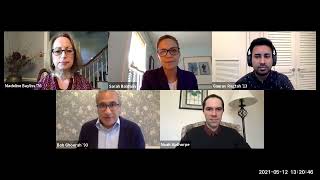
Artificial, but Intelligent? Colgate University panel on AI and human/machine collaboration