Exploring Smart Entry Solutions: BearBox | Self Storage Explained #1
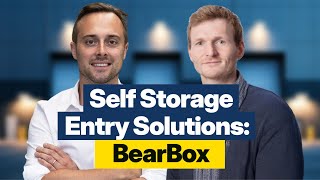
James from Bearbox explains their smart entry system for self-storage: hardware and cloud software that control gates, doors, and shutters with two-factor keypad access, ANPR, and geofenced customer apps. The system integrates with rental software so bookings automatically create access codes, enabling unmanned move-ins. Small setups start around £4-5k plus £50 monthly.
Chapters
Hi, I'm Gavin Shields and this is Self Storage Explained, Expert advice on how to set up and scale your self storage business. Hi James.
Hi Kevin. Hello.
Thanks very much for joining.
No problem, no problem at all.
So this is James from Barebox. And so James invited you on to talk about Bearbox and go through kind of help anyone who's listening to understand what Bearbox is and why it's a good option for their self storage facility. So we're going to try and get into some of the detail there. And we've lots of store customers use Bearbox. Tons, tons. So you know something we know pretty well. Yeah, but before we get into that, there was a. You won an award of Fidester and I was sitting in the audience and the person next to me, Michael Fogelberg, would not stop talking so I didn't quite catch what it was for. Can you explain what it was that you won?
Yeah, so it was, we won the innovation prize or Award 2023. It was for two factor authentication on our keypads. So it's a very good security feature. It's quite easy to implement and most customers, they use it in conjunction with, with a single factor in the day. So you might in the day or like you know, 9 to 5 allow people to just use their PIN codes because it's low risk and then come 5pm or 6pm or whenever you want you switch to two factor. So you require QR code is normally what it is with a PIN code. So you get your phone out, you show the QR code to the keypad and only then can you type in your number and open the door. And it's, it's proved very effective for people who have been hit by, you know, break ins. So like they have one or two break ins and, and then they introduce, you know, we upgrade the system and you know, they go away probably just down the road to someone who doesn't have it. But it's very good. Yeah.
So the customer experience there, James. So they, so they turn up a new gate and they've got, is it an app that they have like an image on their phone somewhere?
Yes, yeah, yeah. I mean you can, you can, you can manually add it into your, your phone wallet. So for example, like I, I manually did that in the, in the wallet or you can, you can have it in your email or wherever you want. Some people have it as they take a screen grab of that and that.
Code there gets you into any self storage business in the world that uses Bear box. Is that correct?
No, no, it's unique to the customer. So in fact. And in fact, the QR code and the PIN have to match. They are linked.
Okay, Okay.
A master key.
Yeah, no, no, just.
I just.
You might have a master key for yourself, but.
No, oh, no, no, we don't. We haven't got that implemented. Dangerous.
Yeah. Okay, so the customer would like. Let's say they're using QR codes, they'll scan it on the thing and then will they receive like a. A message to their phone? Is that what it is?
No, no, it's. It's not like that.
It's.
It's. It's that you have to. It's your PIN number that you use in the day combined with the qr, because normally what happens is that someone on toward would just park a van next to your gate and just watch a customer enter their PIN number in.
I see. Okay.
And then come back later to use it and of course they find that it doesn't work. Okay.
All right. Yeah. So. Okay. So that's why a lot of people would use it at night whenever it.
Yeah.
Nobody may be around to check, but you can have it on 24 hours a day if you wish.
Yes, yeah, yeah, you can. And you might. You could also just have it in one area if you wanted. So. Yeah, that's. It's very effective. Cool.
Okay. Right, well, well done. Nice one. That's only a good. A good feature, actually. Cool. So the first thing I kind of wanted to ask about or just understand, and I'm asking these questions as. So as somebody with a couple of sites can understand if I'm opening up a new site, how might Bearbox play a role in that site? So just at a very high level, could you explain what does Barebox do?
Yeah.
Why would an operator want to install Barebox at their facility?
Well, let's roll it back just slightly and say why would you know if they have. What if they have Storer or another tool? But here we are. Yeah, let's say they have Storer. It kind of. We integrate with you guys and it creates a really nice and easy solution for going unmanned if you're not already. Or just, just, just lowering your admin. Because let's say, you know, you have a site and you have your website. With Storer, the customer like goes online, they rent a unit. They like. They'll get an email automatically just with a web saying, welcome, welcome. Here. These are opening hours. Here is your PIN number or your credentials to get into site. You can download the app, you know Blah, blah. That information, that same number is automatically synced to our system and onto their site with their start contract start date and contract end date if they've got one. And then the moment they roll up on day one, they'll be able to go into the facility. And in theory you'll have had you, the owner of the site will have had no interaction at that point with the customer. So it's a huge burden removed. So that is, that is a great advantage. Yeah. And then of course, and likewise if they stop paying or when the contract ends, that PIN code is, or the QR code is removed from the system all automatically so they can no longer go in. And so it just prevents a lot of people who have like a low tech solution, you know, they just got fed up of having to check who's paid, who's not paid and then go and enter the system, delete that number or add that number in. Yeah, we get a lot of customers like that who say opened up on a budget and a screw string and just installed the cheapest thing they could and then proved their site works and now want to go pro. Yeah.
Okay, so would you often be installing Bearbox at an existing site then? So would you have that a lot or you've got a customer who has them? Look, I can't manage this anymore because we would get that with the software quite a bit. You know where somebody's like, I've got 60 or 70 containers or have an indoor facility with 100 units. Yeah, I feel now I can't manage. Yeah, I'm doing all the invoicing manually and stuff. I need something to do. So that would happen. Would that happen to Bear Box too?
Yeah, definitely. But you do also get new sites, people who obviously decided to just do it properly from the, from the word go. But you also do get people. Yeah, you've got old, old equipment. Yeah.
Okay, so so am I right then? So, so if, if you're going to install Barebox, so as the smart Apple system you. So it's, it's a hardware that's installed at the git. So the gate, let's say the gate that closes, you might have a roller shutter door that opens and closes.
Yeah, hiding doors. Any door really. In any door you can generally put access control onto it with a maglock. So a swing door, sliding door, electric gates.
So you and your team will come to the site, will come to the site and install like install some hardware. Yeah, these, these doors. And then you also have the software that talks to the talks to the doors going forward. So do the doors, does the hardware have to be connected to presumably WI FI network then? Is that, is that or some sort of Internet network on the side.
We generally do it all hardwired.
Okay.
And to be clear, also we don't actually install the gates or the, or the doors, but we do connect into them. So there'll always be like a little box on every automatic door. We can install a maglock onto a door. That's not too difficult. But we wouldn't install a gate. Yeah. And we would come along and we would install all our hardware and we would do all our wiring as well. We do ask that people provide us with places to run the cable, especially if it's going to a gate. We need to go from wherever the kind of comms room or, you know, there's got to be an 8th place even on a container site where the power comes in and the broadband comes in. And we would then need like a pipe reduct going from that place to the gate and then any. And then just places we can run cables out to roll the doors and whatnot. We could do a little bit, but you know, we can't. We don't have a jcb. Yeah. So we don't go around digging up trenches. Yeah. Yeah. Okay.
One of the things I get asked quite a bit is how do you throw at my own sites, how do you close the door? And so generally, yeah, a gate or a roller shutter door, how do you close them? And on my site, the way the gate opens, like it's just presumed. Bare box is the same. It's what you do is you say open the gate and that's it. And then you generally will have at your gates separately whoever installs the gate. You know, maybe it's a one minute timer that closes it or 30 seconds.
Yeah.
Is that the same?
Is that the same? Yeah. So you have to have your gate or your roller or any of those all have a timer for how long they will stay open once they've stopped receiving an open signal and that is what closes it. So you know we send like a little signal for about five seconds to open it. If it's just a one time thing, you can also hold open a gate or. Yeah. Or a roller, which people do if they, they're confident about it or they're on site. So they just set up a schedule so that the gate opens at 9am and closes at 5. Pin codes will work outside of that or whatever credentials you've got. But yeah, the closing Part is done basically by the door itself. Yeah, yeah, yeah. Okay. Yeah. Or if it's a swing door, you've got to put a closer on that door. Like one of those things you see at the top which just pulls it slowly closed. Right, that's that. Yeah, Yes.
I have one of those at one of my sites as well where it's, it's just actually a steel kind of git. Because my sights on manned. I put a secondary into door on the way in.
Yes, very good idea.
I looked at getting like. Well, so I looked at getting, you know, the electric sliding doors, you know, like you see in a shop, like five or five or £7,000.
Yeah.
I find a company that did just like a steel door swing. Yes. Like it's, it's just mesh, like a, you know, still, still mesh. And in it, there's a door in it and it has a closer. So it closes itself. Yeah, and. And I have that on there. So that's how that works.
Yeah. People, you can also get, they called either hold open or hold backs, which are the kind of inverse of the maglock or they're the maglock in the open position. So you like say you, you authorize yourself the maglock releases so you can open the door and then you push it against the magnet in the open position and that. And we can set it up so that, that's held for 10 minutes or whatever you want so that door stays open. And that's a very nice low cost having a door held open for 10 minutes or something. If that's what people want.
Yeah. Then one of the things we see a lot at the conferences is, you know, smart entry systems like yourselves. Yes. You know, can I, can I put, you know, I want to have an indoor facility and I want locks on the gate and the roller shutter. But can I also put a lock on every single unit door?
Yeah.
So we started with this a couple weeks ago, so we tried to give a solution for that. Now that you've installed in your first facility recently, can you tell us a little bit more about that?
Yeah, yeah. So I mean, you're right. And in summary, what you're just saying is basically you want to secure the kind of perimeter which might be your entry gate, if you have one, or your roller door. And then you might try and secure the corridors internally, as in all like you can do that. And then finally you get down to the granular of either monitoring and in every single individual box or electronically controlling them. So like everyone has an app to open a door so, yeah, we've just released this, our own electronic locking product. It's a. It's quite nice. It's. It's installed on the inside of the door, which means that the door is completely blank, as it were. There's no door handles. When you press the button on your app, which is a. Communicates via Bluetooth with the door, it just pings open about, you know, so much an inch or something. Either the carry on swinging out or you can put your hand in and, and pull it away. Yeah.
And how does the customer close the door then? Is it just a matter of pushing it shut?
Yeah, it's just a matter of closing it a bit like a. Don't quite know actually what it'd be like, but. Like a kitchen door that stays locked. Yeah, yeah, yeah, yeah.
So is it a magnet?
No, it's a. It's a physical, well, latch. I've got one here, actually.
Okay.
I don't have the. This is the lock itself that we install inside. And then there's a. I don't know what I've got to show. That's gonna be too big, I think. But, you know, there's a, this, this component which is just a screw, but the. That just comes. That's attached to the door and as it goes around it like locks. It goes into there.
Okay.
And that goes down and it's locked.
Gotcha. So it's a latch. It's a latch.
Yeah, it is a latch solution. It's hardwired so there's no batteries and it works. Connects to the phone via Bluetooth. And so you open it when you're, you know, in, in range. You can't just open it from, from your home, car park or wherever.
Yeah, yeah, yeah. And so what's the customer experience then? So if, if, you know, if, if you've got a facility that has that installed.
Yeah.
And you know, you have, you have your gates with, you know, a bare box gate, a barebox roller shutter, and then a unit door with barebox as well. What's the customer experience there for how they get into the, like they rise, they drive up. How do they get in? What are the different ways they can get in?
Yeah, you know what I mean? I could try. I'm going to just try and open in the background the app user experience, if I can. But basically you drive up. Most people still use PIN codes. It's still very popular. I think a lot of people like the, they do like the use of apps, but they always think about this kind of like tiny Percentage, you know, I don't Even know what 1% who don't have a smartphone or, you know, they've. If it's an existing site, they've had someone there for 20 years who they don't think would download an app and they don't want to rock the boat. So they always, always have, generally have pin codes anyway, or keypads, four PIN codes just for those customers.
Okay.
You know, and, but you can, you can obviously use an app to open a gate so you can drive up once you're inside, like a, like a virtual fence that you set around the site, you can open the gate. So you drive up, you can open the gate and you go drive in, you can open the roller door, then you walk up to your unit and you can open that.
And so that can all be with one app that they've downloaded to open up all of those doors.
Yes. Yeah, yeah. And obviously you'd try and include instructions on downloading that app with the login details on the, on the welcome email. Right. So when that thing. That's template from Storer. Right. You can say this is where you download the app. Include any instructions. Am I able to do this? Trying to open it just for everyone's peace of mind. But sometimes I think obviously you can't really use a phone while you're driving particularly easily. So people do just drive up to the keypads even though they have the app.
Yeah.
Type in their codes like that.
Okay.
Yeah.
Okay. Okay. So a customer can. What would happen if, you know, if there's a customer then who doesn't have a smartphone and they turn up, they use a code on the gate for the first time. How would they get into their unit?
Well, they, if they were. It wouldn't. If they didn't have a smartphone, it would. At the moment, it would be tricky for them to open one of these electronic locks.
Yeah. So have to meet somebody or arrange to meet somebody on site. Well, get in.
Or they might not. I mean, if it's a brand new site and they were all electronic locks, it would be. At the moment, we don't have a solution for that. Yeah. But I'm not 100 sure that all sites will go 100 electric locks. They'll keep them as a premium is what I.
Okay.
So as part of the kind of like trying to differentiate, like, you know, upsell to a customer, you keep, keep, keep like some, some manual and some.
Okay.
Yeah.
Okay. Okay. Nice one. Okay. So the. And then there's a couple different ways that.
Yeah.
No, just from knowing some of the customers we have, we use Barebox. There are different customer experiences. So, you know, it can be a pin. So, you know, this simple one that I understand is when you drive up, type a PIN in and the gate opens. End of story.
Yes. And sometimes it's as simple as that.
Yeah, yeah, yeah, yeah. And we've loads of customers and that's the way they do it. And then for container side, a lot of people just might leave the containers unlocked and a padlock sitting inside or there might be a little box for padlocks, whatever it might be. And there's different ways people manage that, but that's separate to what? To Bearbox. That's kind of. Well, in that example, you're controlling the gate. Opening the gate.
Yeah.
So from a customer experience. So there's a PIN number and then there's also a QR code. So that's something else that can be used as well.
Yes.
What other ways? Because there's also automatic number plate recognition as well, we support as well, along with Barebox. So how does that work?
Well, so it reads the number plate of your car as you approach. And again, if you've entered that into the. Into storer, which is. If you're using that or your rental tool, which is your kind of like source of truth where you manage your customers, then, yeah, you can open a gate. You have to be careful with ampr. There aren't many sites where it's suitable because you need to get the approach angle correct. So you often see AMPR is used a lot in car parks, but they all. And you'll know like, that they really control where you drive up. Like, you know there's concrete on both sides and you kind of do this.
Yeah.
I mean, most sites kind of aren't suitable for ampl because you can approach from a wide. You can really approach from like a wide angle. So.
Okay.
But you can. In certain sites, they do. They have a nice little drive and cars can approach in the correction. Yeah.
Okay. Okay. And so. So is there any other way that from a customer experience, when they turn up. Are there any other ways. So there's.
What have you got ampr PIN numbers? Oh, you've got fobs, of course.
Okay.
People still like fobs. QR codes. Is there another one? The app as well.
You can use the. That's the bare box, apparently.
Yeah. And the bear box app. Yeah. And. And we actually have two apps. So there's one for the admins and there's one for customers. So if you as the site owner have the app, you're able to open the gates and the roller doors from anywhere, as in your app from. Because that means that say somebody or delivery driver or whoever is approached, get gate and you're not there. You can check them out on CCTV and decide whether or not you're going to open them. Whereas the customer app is geofenced. So you have to be within range to try and open that gate.
So you could, you could, for example, somebody, you know, if it is an online site or if it's a Sunday afternoon, somebody turns up and they phone your phone number, you could open up the gate and kind of talk to them on the phone and turn around, go and look at unit number six, does that suit? And say yes and you can go ahead and take the booking and they can get a code, they can move in straight away.
Yeah. And if you use our camera system, you can also see the camera feeds in the app.
So can you tell us a bit more about the camera system?
Yeah, well, we use a Samsung product which is quite secure sort of and most people use hikvision which is. But it has security issues. Okay. But this. So Samsung make a good camera and we, we can do all the usual things such as motion sensing, recording and we can also link into VSOC or any other monitoring station. So that, and I mean that's, that's a really great feature. I always tell people to consider that it's good value. I think great value. And means that, you know, out of hours, if a camera picks up some movement inside your facility or. Yeah. In. You can obviously mask out on the cameras as well. They will jump straight onto the live feed, see what's going on and follow a list of instructions that you set out. So obviously if someone's breaking in, they'll get straight onto 999. But if it's unclear whether somebody's. I don't know, you know what I mean? If it's not, they can then ring you or ring this number or that. So that's really excellent. And we can. Or your. You would be. Are able to view the live feeds within the app as well.
Okay. Okay.
Yeah.
Okay. Nice one. That does sound like a good, a good benefit. I know desoc is very popular.
Yeah. And solution, there are others and some people go for a local one as well. Yeah, sometimes I think there's a local mafia in certain places. So you go with them and then you don't get hit.
That's like protection money.
Yes, it does sound like that? Yeah.
Is that what I'm.
Well, if he is, he's doing it very subtly.
Cool. Okay. I was going to ask about. You mentioned earlier a little bit about securing like a corridor perimeter. Is that the zone? You have a zone feature, haven't you? So you could have like a zone. Ground floor zone for first floor zone.
Yeah.
And so that way you can limit access by customer to different zones. Is that correct?
Yeah. Well, so there's two. There's two sort of ways you could do it. You can either use access control on doors and lifts and stairwells to control who can go on what floor or even within the building.
Right.
There's no reason why you can't. Or many buildings do have firestop doors. No reason why you can't zone that all. You can zone by floor. You can split the floors. Some customers also have offices, like, on the side, and you can go between them. So there's like multiple. All these combinations of things. And you can put access control on, which should stop people getting into the wrong places. But you can also add motion sensors on the corridors, which means that. And then monitor them. Right. So if one goes off, you get a notification in your email. And then one of our customers use this very effectively to. Because they'll. They'll say they'll see that six went off on several floors and they're like, well, that's very suspicious. It's like. I mean, you might get one or two because someone's trying to find the toilets or something, but when you got loads, they then see those emails. I mean, they have. They have a whole rigmarole with email rules and things. They then, like, look at the cameras. Who was it? Oh, they signed up recently, they give them a call, they get spooked and, you know, they generally get foiled. Or they, you know, they can. They take actions following that because they've been scouting out the building.
Yeah.
So, yeah, and that's not too expensive either. You know, putting corridors in. Sorry, putting motion sensors into corridors, if you can. It depends on the size of facility. You know, there's. There's one we're doing which is like six floors with offices. You know, it's a prime candidate. Whereas someone. Some of them are very small. They're only like 50 units as small as that. And you really can't do any kind of. You can't do anything there because it's just off that size. Yeah.
Okay. And so that's all, all of that stuff there. So the motion center stuff, that's stuff that you will come and physically install. Is that all part of what you can, your services, you can do that?
Yeah, I think everything we're mentioning, stuff that we install and commission and sort of monitor. I shouldn't say no, we don't monitor like Destock. But you know, when a piece of equipment, because it's cloud based, when something goes offline, we can, we'll get notified about it.
Okay.
In our system and sort of be able to have a look at it. Yeah.
Okay. Okay.
Yeah.
I was going to ask. Sorry, no, I don't know.
I was going to say we haven't talked about the sort of much more about the integrations because I know that you were asking about how it works, the integration and my answer was I don't know. Yeah.
And I also don't. I'm not entirely sure.
So.
So what we're talking about here is that if you're using, if you're going to install Barebox, you'll often want to, you know, use a software product alongside it. So as an option, we have a lot of customers use Stora and Barebox. We have a lot of. Yeah, vice versa. With a lot of mutual customers.
Yeah.
And so my, at a high level, my understanding is, you know, you'll, the operators will get, get the system installed and then there is, there is a step then where you get Bearbox installed. You set up a store account and then there's. There's a time whenever it's installed that we need to connect Bearbox to store. Yeah. And that's, you know, in Stora there's a little area where you can basically add in. There's a couple of different codes that we need to get from you provide to the operator or you can provide directly to us. It's put in the system the connect and then from then on store a. You know, if a customer books through your store system, it will talk to Bearbox. We create the codes and send them all out. Yeah, that's the integration stage.
Exactly. Yeah. And it works very well, I think.
Yeah.
Yeah.
Because it gives you like it allows you to. And the reason it's so popular, Barebox is so popular is it works with it. And you know, it does things like we have this, we have this kind of concept of one minute move inside where we have this idea. We want our operators who are using storage to be able to let their customers drive up to the gate. Let's say It's Sunday night, 10pm and if you have a Barebox installed or any smart system that the customer could in theory, book online, put their payment details in, pass an ID check, sign the contract and just get the Barebox code and just move themselves in.
Yeah.
And let's say the payment fails, then the code won't work, they won't get the code. So all of that stuff is kind of managed and Barebox is a really important part of making that all work.
Yeah, I think they described it perfectly. I'm not sure how many of our actual customers would let someone, a new customer walk in on Sunday at 10pm but yeah the principle is there you could if you really wanted. Most people would say no, you can only have you know, 9 to 5, Monday to Friday access for like the first X number of months or until you know, they've met you and seen you and seen the whites of your eyes. They want to be sure before they go around offering 24 hour access generally.
Yes. And actually so at my sites I close at 11pm so people can't open doors after 11pm yeah. Apart from if they're trying to get out.
Yes.
And if somebody drove up on a Sunday night at 10 o' clock like there's, there's nobody there. But we have this in store. We have this bank, bank level ID check.
Yeah.
It requires somebody to, to take a selfie picture, a picture of the id it matches the pictures up and goes sends away for a third party check. So because we have that, I allow that to happen.
Yeah.
I made a decision, I don't need to see the whites of their eyes because sort out for me like it's hard to get past that. So but that's, that is a business decision. Some people might prefer not to do that and yeah it doesn't matter, it's there if they want it. Bear box enables it. Store enables it but doesn't mean. And some people might like I say Monday to Friday nine to five, that's it, no problem. But and some people might say well we're there Monday to Friday 9 to 5 if it's a Sunday night. Yeah, we'll have the software. We'll actually allow that at that time of the day.
Yeah. And some people live in very, a very, they probably do live in very low risk areas and have a very high tolerance to risk. So you know we've got customers who only have an in keypad so they, to allow people in so they don't have the, they have no way of knowing when people have left. Yeah. And so we can't activate any systems which is quite a basic kind of you, you know when if you're trying to fight crime, it's not knowing when people have gone is a difficult one.
Certainly that's a good point. So you're so barebox with Bearbox. You can just have it in, but you could also have it so that it's set to get out. So that would. That means that you're logging. You always know who's on site.
Yeah. Yes. And so obviously that's all saved in the logs and then you can go through it or you know, you might just as an operator want to see who's. If anyone is logged in because you might not be able to see them on the cameras if. Unless you've got like this 100% coverage or whatever, you just want to know who's on site. I mean, obviously people can still ignore. They can sort of tailgate someone else.
Yeah.
And so, you know, you. I always say that the importance of signage and saying, you know, make sure that people know what they've got to do. If they don't, then send them emails, remind them, you know, find them, etc. Etc. Yeah.
Okay, so what's the. What's your biggest site that you spare Box. And what's the smallest site? What's the rule you would typically be definitively have.
I mean in small sites we've got. What is our small. I probably just described it as this one keypad. In terms of like what we've done is going to be the one keypad that gets you on site. That would be the smallest situation.
That might be somebody, 30, 50 units, something that sort of size.
Yeah. Although even, maybe even larger. I mean we just did one in. In Watford. I don't know how many units that was. It was two stories. I was going to be just over 100 units, but they are manned, so they haven't. They're going to be there all the time. Okay, not really an issue. I mean we go up to sites that have over a thousand units, I don't know how many, and then like multiple offices, multiple buildings, multiple floors. Yeah, all of. All of it, really. Yeah.
So you sort of suitable for any, any size site and what's the reason? So, you know, obviously we've talked a little bit about Barebox and store working together to create, you know, the, the ability to let people move in and not necessarily have to talk to members of staff. Lots of people still have staff on site. Our data suggests that in many cases it can be helpful. It can help the seal if you're members of staff and have people talk to customers. So Some of our operators do that and some of them just let people book online. It's a whole mix and works for different customers. So my question is going to be why you've got staff on site. You've lots of people with Barebox and staff on site. What's the big benefit of having Barebox while having staff on site as well?
Well, you. You mean you can't. Even if you have staff on site, you can't be everywhere in that building and if you've got a. You can't be security guard and salesman all the time. So. And again, I suppose what could you do? You could, you could. You could theoretically operate a container site which is without bare box. Obviously people do, but it's again, it's that manual process of having to remove people and if you just leave your gate open and people stop paying, then they can just come in anytime they want and get their stuff and you can overlock it and then they can cut it off like you can. Whereas if you've got the bare box, you're able to control when they come in.
Yeah, yeah, so you mentioned. So if you've got staff there, it's a big psych. You can't be everywhere all at once. So it's. It's helpful to have the zones would be helpful, you know, if you've got three floors, people coming and going all day, you know that it does secure the building a lot more. And then presumably, I imagine there's a lot. There are a lot of operators who maybe, you know, when you're. You, maybe you move in month, you move in during our opening hours the first time you move in, but after you're moving, you know, you can, you can use Barebox to kind of come and go. Maybe, maybe they close at 5pm, but from 5pm until 9pm you can get access using Verbox. Yeah, that's. And, and that can. That can often like I just for myself, if I move house, which I've done quite a bit recently, just because we're renovating a house. But yeah, Sunday I want to move my stuff for the weekend and yeah, I was calling someone like, we're only Monday to Friday, I wouldn't be able to use it. So presumably that. That's often the benefit as well.
Yeah, yeah, exactly. So you can, you, you can leave early basically, if you wanted to, if it's your own site or your staff who are going to leave it at 5, 6 o', clock, but you need. But you think it's fair to offer it till 89 o' clock exactly. It works. And yeah some, some of your customers will probably ask for 24 hour access and you'd be able to offer it as well with the system. Yeah, as long as you trust them. You know that people don't advertise 24 hour access but they do do it for customers who've been with them for a while or you know, they know again you've got that capability to keep your, your, your site secure.
Yeah. From what I understand there are sometimes people do is maybe you can get 24 access but it's only available after maybe two or three months or maybe something like that and then it might be an extra charge for it if you want it. But yeah, I've seen that before.
Yeah, definitely, yeah. Other people doing lots of clever pricing.
Yeah, yeah, yeah, yeah. Definitely be a little upsell and actually it fits in well with we released just last week unit type groupings on store. So you can, you can have premium units so you know, you could have a, you know, 50 square foot ground floor, different price to the first floor, potentially even access a different price again. So you know, then you can manage all that with Barebox.
So.
Okay. All right, final couple of questions. Sorry.
Oh yeah, no, I think I've also heard people doing time of day pricing which sounds very sophisticated like is they've worked out they can charge more for I don't know is it must be a business customer during these hours versus at the weekends and late nights will be a domestic customer.
Do you mean that they.
The price goes up at sort of 9:00am and and then drops down at. I mean I actually haven't seen it but this is what I've heard pricing which I think they use in airlines and hotel bookings and things like that.
Yeah, yeah, yeah. I sometimes wonder if hotel prices go up on a Monday morning.
Yeah.
And flight prices because that's when I tend to go on to book.
Yeah. And I mean also they can also do it geographically. So this is very. Anyway, this is not what. This is the kind of complicated stuff. If you run your own website you can do that, can't you? But yes, it doesn't make a difference to us. Yeah, it doesn't make a difference to you, I don't think.
Yeah, well, yeah, actually dynamic pricing is a really interesting topic where dynamic pricing coming out from store very soon. We, we aren't releasing the different prices during the day but there's a good argument for doing that because we have this. Every operator who use a store can see like a little Heat map of what time of day, but it's like Monday to Monday to Sunday by hour. When are you getting most bookings? And so you could argue demand's higher those times. Maybe you could pop the price up a little bit, but. So it's interesting. We have. We haven't done that, but you could easily.
Yeah, I've also, I mean, I've heard. I mean, this is off topic, but when people use automatic number plate recognition and obviously they get the plates, they then run the plates through some sort of website to work out the value of the vehicle and then decide on what their price hike will be at the, you know, third quarter. Lots of sneaky dark arts, dark art stuff. Yeah.
Apply the same to the type of car they're using. You know, maybe if someone's using an Amex or a corporate card. You know, if you're paying with a corporate.
Yeah.
So far your fees are higher. Like I think, you know, 1.9% maybe might be the fees on corporate cars, but potentially a customer is not price sensitive. Rather than giving a 6% price increase, you could give them a 12% price increase and more than make up for the. For the card, the extra card charge. Anyway, totally off topic, but it is very interesting.
Yeah, well, yeah. Do you say you had any more questions?
Yes, I was going to ask, what countries do you. Do you serve?
Yeah. So at the moment it's Europe and the uk, if you. Yeah. Geographical Europe. And the main reason for that is that our support team is all based in Europe and so we offer, you know, office hours kind of support Monday to Friday. If you're outside of that in the States, then you won't get very much support. Yeah. And we don't get many. Yeah, we can't. We. Yeah, we also, we have had inquiries from like further afield, but in the same time zone. But it's still.
Yeah.
A long way to go if something goes wrong.
Nordics. Do you serve the Nordics?
Yes. Yeah.
Geographic Europe, I don't know.
That is. Yeah, that's geographic Europe. I think we've got sites in Sweden and Norway. Lots. Yeah. I think 16 countries, I think. Yeah.
And then language support. Is. Is that something that's an issue? Do people often need that? Do you.
No, it's. I mean, if we can. What do we support? We've got French, English, Spanish, some. Some German and some Italian, I think, and Portuguese. But I mean, that's not what the speakers. But obviously we do. We do most of our support on email and then we just. We just Google Translate it.
Yeah. And it's not, it's not an ongoing thing. Generally, you know, somebody installs bare bones. There may be some questions back and forth a year or two, but generally it's not something that you're going to have staff and touch every day because generally we would often maybe have that people are using Stora every day to run the business that's talking to Barebox on their behalf and managing everything. So it's more likely you'd be talking to your software provider at Stora than maybe Barebox, I imagine. What about cost? Like if somebody's listening to this and thinking, oh that sounds great, like what's. Can you give us a ballpark estimate?
Yeah.
Where does it start? I know there's lots of options, so it all depends obviously, but give us some background on that.
Well, so your sort of most simple system really would be, we see this with a lot of container sites is two keypads. Yeah. And that would typically be 4 to 5k plus that and then the support. So this hope is a cloud based system and hosting and support would be. It's about £50amonth. We do a lot of those two keypads. Sometimes, sometimes they have a gate and a roller. But then of course, I mean the sky's the limit.
We've got, we've got, sorry, two keybuds. There's a two. Two keypads you mean? Or, or. Oh, there's an out. Okay.
Yeah. So you've got in and out.
Yeah.
And I mean it's actually, it's an, it's the most expensive way of doing it because you have to have our control box. So which is like a chunk of money, about half the cost initially. And that doesn't change in size whether you have two keypads or 100 or you know, X, Y and Z. So but yeah, so 45 keypad, 45k for two and then you know, for the next two keypads there are, I mean keypads are about a thousand pounds each. So you could have another door.
And.
You know, the cost quickly kind of reduces. Right. Yes. So yeah, it's tricky to say. I mean we do. So we haven't already mentioned it, but before this electronic locking business came along or even now, like I say, maybe people will do 30% of the units with electronic locks and the rest they'll do with door contacts or in unit PIR motion sensors, which I haven't mentioned. But basically that's a door contact on every door on your building. And again that's so you can get notifications and if a door opens, it shouldn't be opening. You can get a sounder and a notification for that. Likewise with the. The motion sensors that you put in units, which I think are even better.
You do both.
You can do. Well, no, you probably wouldn't do both. You can, but I mean, you better. Yeah, yeah, we offer both. Yeah. My favorite is the inmotion in. In. In. I'm trying to say in Unit pirate. Yes. There is a trend called tunneling. Have you heard of that?
No.
So it's. I mean, I haven't heard much of it recently, but. But last year there's quite a lot of it. People would rent a unit legitimately, a small one. Okay. And then they would go in legitimately, wait for the site to close, and then they would actually break into the. All the site, all the units next door, like tunnel, basically, they cut a hole in, go through all of them in like both directions, go through all the stuff that find what they want, and then leave in the morning when it slightly opens. And the thing is, unless someone, someone who owns those units goes to one in good time, you won't even know when it happened. Yeah. Unless you have the motion sensors inside the units and they're about half the price of an electronic lock. So there are sort of arguably. Well, it depends. And you can also do both in theory.
So let's say you have motion sensors.
In all the units.
So let's say a customer from unit number 10 drives up, types in their code at the gate, their PIN code opens up. Does it then automatically deactivate?
Yes. Yeah. Okay, just that one. Exactly.
And then as they leave and put their PIN number and again reactivates it for them.
Exactly. Yeah.
Okay. Yeah, that's interesting. So there's the entry. Barebox is the entry. You also have in the motion sensors in the units, you have the ability to track when a door opens. So I don't know what you call that door contacts. You also have then actual locks for every door. So that's another option as well.
Yeah.
And you can also, you can zone everything and you also can install CCTV cameras.
Yeah.
As well.
And then monitor them. Well, we, I mean, basically we, with desoc, we sort of control that end because we install the cameras. We then set up the DESOC integration so that if there's a problem, they will, you can, they can just come to us as the kind of one point of contact rather than saying why having to ring D stock and then ring us and. Okay, that's It. Yeah, I think you've got it.
Great. Okay. And I think that was, that was it from me. Is there anything else that you think anybody listening should know about Barebox? They're thinking about it. Anything else we haven't covered?
Not particular. I mean obviously if you want a quote, give us a, or send us an email or give us a ring if you have building plans, they're always great. Or site plans, whatever. So we can then advise on. On what's. What. Yeah.
And how do they email what's, what's your website? Is it barebox.co.uk it is, I think.
Barebox.Co.Uk and barebox.eu I think it defaults now to the EU site. Okay. And that's where you can. Yeah. Log in and whatnot. And I think our email address is salesairbox.co.uk okay. Okay.
So anybody listening, just get in touch.
Yeah.
Get a quote and you know, find it more that way.
Yeah, exactly. And that is often the best because you know, we're often out and about looking at sites as well. Yeah. So yeah.
Okay, great. James, thanks very much. That was really helpful and yeah, I'm sure if anyone has any more questions, we'll get in touch. But yeah, thanks for your time.
No worries.
All right, thanks.
Thank you.
Thank you for listening to Self Storage Explained where we aim to provide expert advice on how to set up and scale your self storage business. For more resources including financial models and in depth guides for setting up or growing your business, visit our Self Storage Academy at Stora Cora Co Academy. And if you would like to find out more about how Stora can help your business grow sales and save time, set up a demo or contact us.
At Stora Cora Co. Thank you.
More from Gavin





Wie Space4You Einzüge von einer Stunde auf wenige Minuten verkürzt | Kundenbericht





