Exploring Smart Entry Solutions: OpenTech Alliance | Self Storage Explained #8
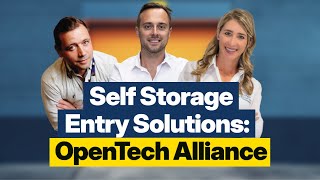
Will Corbett and Christy Adams from OpenTech Alliance discuss their smart entry systems for self-storage. OpenTech has spent 20 years building kiosks, access-control platforms, and SmartLock models that work with keypads, Bluetooth apps, and RFID. They cover how facilities retrofit existing gates and locks, battery choices, and global deployment.
Questions this video answers
20 years (company just celebrated its 20th year).
942,512 storage transactions (2022).
Over 26 million gate openings via the mobile app (aggregate).
About 39% of tenants visit on average every month (aggregate).
StorageTreasures.com (largest storage auction platform, run by OpenTech).
Chapters
Hi, I'm Gavin Shields and this is Self Storage Explained, expert advice on how to set up and scale your self storage business. Hello and welcome to our latest recording. This time we have Will Corbett and Christy Adams joining us from Opentech. Welcome to you both. Thanks very much for joining. That'd be great to maybe introduce yourselves briefly. Will, most people I'm sure listening to this will know you anyway, but brief introductions and then it'd be great to hear a bit more about Opentech just as a way of kicking things off.
Okay. Yeah. So I'm Will Corbett, the director of operations for everything international or outside the States for Opentech and I've worked for in the industry now for four or five years, predominantly before Opentech with one of the main construction companies in the industry. Yeah.
And Kristi, you're in the U.S. yes.
So hello everyone, I'm Christy Adams. I'm the vice president of marketing here at Opentech and this will be my 20th year in self Storage. So got a little tenure on you guys. But I've worked both in the international markets as well as mainly here in the US for both owner operator side as well as vendor. So I've been in all of your shoes before working with Cube Smart reit here in the in the US so managed all their marketing. So again really well versed. Worked in Oxford and in St. John's Wood on the international side. And so excited to join Gavin here today.
Great. Well thank you very much. Thanks for being here. So obviously we've met at lots of shows and we integrate from store into a lot of OpenText entry solutions. But I know that you do more than just entry. So could you tell us just what does Opentech do? Maybe a little bit of the history of the company and like what your products are.
Great. Well, I'll take that one. So Opentech just celebrated its 20th year exclusively in the self storage industry. So that's a pretty big deal. There's not many exclusive vendors to self storage in the US and so we're really proud to be celebrating our 20th year and so we really span multiple technologies to help support owner operators. Really kicking off with kiosks here in the US and then we've launched a call center, we've got many additional kind of plugins from that for Express Pay, Express Collect, and then we've launched Access Control, that really being a very big product. And that's the one I know Will is going to speak about that we have brought to the international market. We do security, we have A product called SmartEye uses AI and machine learning to really help proactively stop security incidents. And then we are looking to launch this year actually we launched it last year, Smart lock. So we have many different models of that and we do run here in the US the largest auction storage auction platform called storage treasures.com so very wide spans as you can, you can hear from me of different technology and I'm, I keep looking over here because we launch a white paper every year. This is the 2023 white paper. I even see like a coffee, coffee ring here. It's very used, I use it. But I'd encourage all of your customers that we have a free download. Maybe Gavin, you can include in the link of the podcast. And in April we're launching the 2024 white paper. And this is really where you can learn all about open tech. You can see in 2022 we did 942,512 storage transactions. So this really is a good playbook for anyone in the self storage industry to understand how technology is working. And I will share with you this is both international and us an aggregate, an aggregate of all the data. So this will share with you kind of anything that your customers are looking. I think the, the product that will is going to be talking about is our access control. And so we've had and this was in this is 2022 data. Over 26 million tenants open the gate with our mobile app. So I know we'll speak to that more but that's the product available now and it really shows the adoption of technology in, in self storage and we're seeing a really vast, well very quick adoption here in the US the system is very new and to see that, that, that many times that the app has been open. There's other really great things that you can learn through your access control system. And again it's all highlighted on here data that we never really knew. About 39% of tenants visit on average every month. Like so there's a lot of data from that that you can learn about your system but then you can also look at kind of the trends that are happening across the entire industry.
So that's really interesting. So it you say there that you know, technology is, you know it really is changing the self storage industry. It's one of the things that we see a lot. You know the past three years has been a really big change I think in the UK market and the European market just with people, operators getting into unmanned sites, even man sites. But you know, having access control in there, it really can Those, the access control is a really key component of building, you know, a really efficient self storage business. So, you know, I totally agree that sounds like a great thing for customers to read. So we'll definitely include notes. I'll link to that in the, in the notes. So thank you for that. So, just to talk then a little bit about initially your smart entry solution. So can you tell us about the different ways that works? So some people, sometimes it's just a shared gate system, sometimes you have stuff on doors, some operators. Your solution might work better for indoor sites versus container sites, which are very popular in the uk. Can you tell us a little bit about the different types of solutions you have for the different operators and how they work?
Yeah, so I mean, it all starts with the insomniac CIA access control system that we, we implement. You know, the platform that we use there, the control center, is what everything feeds into. So if I'm honest, there hasn't been something we can't do, at least in theory, whether you want to use the, the app and the Bluetooth connection, whether you want to use the keypad, whether you want to, you want us to integrate with other systems, you know, maybe a FOB or an RFID system, we can, we can integrate with all those different things. And what Kristi was talking about earlier with Opentech is, you know, we are open to integrate with everything, you know, whether it be a software, whether it be a new bit of hardware and future proofing the sites is very important for us. We don't know what's around the corner. Technology moves so quickly that it's important that we allow for what's coming. So yeah, there's lots of different ways to enter. You can use one keypad and one gateway and it could be as simple as that. Now you're not going to get the data, all of the data that you want by doing that, but it will give you the access control and give you the, at the control center. Or you can take it completely to the other, the other end. You know, you could have several keypads, you could have lasers going across the top of your site. You could have, you know, we can talk to different security systems, we could, we can do all sorts of different things. You know, in fact, it's really a nice challenge for us for people to say, what can you do this? You know, if we were to do that, would you be able to do it? Now, some things we might not be able to do or be ready for straight away, but it's really helpful for us to know what the customer could want in the future. And we can start to think about that before it comes. But yeah, so, you know, the ideal simple solution is a system that you almost don't realize how complicated and how well it works because it's almost in the background. But it gives your customer a great journey through their life. You could drive up to a gate, you don't have to take your phone out of your pocket. It would read, depending on how far you are away, if you're maybe a high street site or something like that, you can control how far that can pick up the phone so you don't accidentally open indoors when you're walking past something or something like that. Um, yeah, and then it's, it's always a bit of a trade off, really. Investment, you know, what's the return on the investment? What's the customer journey? How much security do you want to put in? You could, you know, you could have the most secure site in the world. But are you interrupting the customer journey or are you taking it too far or are you not going far enough? It depends what your clientele are. It depends what you're doing. So that's, that's the very, very basics of it. You know, we, we can, as a, a store operator, you can, you can see exactly what's going on. You can get alerts to help with your security. You know, if someone comes in but doesn't open their unit or comes in and doesn't leave for quite a while, you can get loitering alerts and. Yeah, and you can control how people. One of the, one of the, one of the security concerns at the moment is people will rent a small unit and then come in effectively legally, you know, everything's fine. But then they might use that to break into another, another unit, or it would be a different person that used that code to come in elsewhere. So you can do things like you can prevent access in the evenings. You could, you could limit the access for the first month to office hours or you could, you could have trade customers come 24 hours and residential come in office hours. Depending on whether you've got manned people in the site or not. You know, you can, you can really play around with it. You might have. There's a site in France at the moment who is right in the center of Paris, and there's, there is an underground car park. Only one car can go down at a time, so that's linked to a sign. So that if someone drives up, you know there's a car down there. So it won't let anyone else in. So there's, there's lots and lots of different things. You can control temperature, you can, you can link into a Tannoy system. So you can, you can speak to customers, you can link into the cctv. So if you do get a trigger, you can actually speak to the person or it could trigger a, a remote monitoring center. You know there's the, the possibilities are, are endless really. But it's, it's a case of how much, how much investment do you put in. Yeah. Gives you more data back. Yeah. So it's about what you're actually looking to achieve.
And the beauty of all this to kind of echo and piggyback off of will is that this data is all stored in the cloud. So from anywhere you really have eyes on your property, those prevent those preventative maintenance triggers or like he said, some of the alerts that you're looking for that can be a text or really customized to your need. So that's really, we say it's really the linchpin. This, this type of visibility was never really available with other systems. And so we've been in R and D for years building this system and just so pleased we have landed the largest customer in, in, in, in the international markets. You probably know who that is and they've replaced all of their locations with this, this CIA system. So we're, we're really pleased with our international footprint and the growth and obviously the integration that we have with Stora. So.
Yeah, great. So that's a lot of thank you. Well, thank you Chris. Lots of information there. So I just have a couple of follow up questions about that. So you mentioned that you know the, and I totally agree that you want to make sure, well you said about the customer experience, you want to make sure you're not getting in the customer's way. So what's the tip? So let's say somebody's listening to this and they want to, you know, they just want a gate system, a smart editor system, let people in and out and they could put a code, presumably they can put a code on. What are the different customer experiences? It sounds like the customer experience could be 42 code, put the code in or it could be download an app, open up, open up things with an app. What are the different, am I right about that or what are the different customer experiences?
Yeah, absolutely right, yeah. I mean everything we do, all of the keypads are Bluetooth enabled. You know, you get the app, it's all part of the package. Whether you use it or not, it's entirely up to you. But most people will and it will continue to go that way. But you know you can override it. Everything's got a keypad on so you can just put the code in if you want. So you can do it. You can do it either way. You really can.
Yeah. We know that storage is used by multi generations so my mom would not put this app on her phone. She just won't. And I could show her, but she still wants the comfort of being able to type in the keypad. So that's really where we want to meet that customer wherever they are if they prefer the Bluetooth app versus the keypad. And that's the same as our smart locks as well. We've learned that same understanding is that not every customer wants to use an app. So. And we know that depending upon where that location is there might be Internet issues. Right. We don't, we don't know exactly the, the, the makeup of each property. So giving that kind of multi option is what we have found is really the most successful route.
Yeah, you can, we've got release coming soon as well which allows you to do both. So you can we. Not yet, but it will be released soon where you can disable the keypad out of hours. So you can only come in, I mean it could be whenever, whichever hours you want. But you can prevent the keypad being used when there's no staff on site and then the person has to have the app.
Right.
So there's a security feature set like the cameras looking, picking up codes. Yeah, it's quite a common thing that. A quite common security concern and that generally happens late or early when there isn't staff around. So you can disable the keypad entirely. So they have to have them, they have to have the app.
Nice one. Yeah, yeah, I've heard of, I've heard of that is a very common break in method. Mentioned their smart entry and. Sorry. Actually, sorry, smart locks. So are you talking there about the. On door locks?
Yes.
Can you tell us a little bit more about that product? Because that's quite a, quite a new product I believe in Europe.
Yes, we're very smart, Gavin. Lots of smarts and one there what we didn't really cover and again would encourage all of your customers to access Opentech alliance. We got co.ukeu and on there you'll see all of the integrations. So we have smart gate, smart door. I mean we can be very, very smart people in all of those kind of plugins. Again, once you have the gateway, the smart door would be able to detect if anyone opens the door. So you can kind of understand the demand for foot traffic. Smart gate sensor on your gate. Right. If the gate should slow down. So I wanted to mention that briefly. I know Will mentioned H vac water sensors like we've got them all and again meeting our customer needs. But the smart lock again we've been in R and D for years with the current solutions on the market. Our team knew that this is something very, very important to that kind of full automated journey. That model that we see many of the international markets adopting, which is amazing but the US is slow to that. But I will tell you that's something we're constantly hearing from a payroll perspective is owner operators are really wanting to go unmanned remote. There's so many different words demand driven. And so the smart locks are that kind of last piece. And so we have many different models that we're kind of meeting each customer in the R and D stage. We have a smart lock S O and R and they again you visit our website you can learn more about each of the kind of different model types. It could be an existing facility that you're adding them to and you don't want to disrupt that that that unit door. You can have an installation with the tenant currently occupying that space or the smart lock S and will will speak to those because he. He's in the middle of kind of our all of our international launch. But we are, we will be having if customers come to the UK FSA show, we'll have those locks available as well as at the FIDESA show. So we would love to have anyone stop by our booth ask any questions and obviously we'll will has all the specifics on the differentiators that we've very, very feel strongly are going to set you up as an operator for success over the current models available on the market.
Yeah, it certainly sounds a very flexible solution. I love having the idea of a code as well because I have my own sites and one of the things in the first year I did meet lots of my customers on site when they're moving in to try and learn. One of the things that one of the blockers that happened occasionally was people not having their itunes password so they couldn't get an app on their phone. And that was often something I had to spend half an hour from trying to, you know, talking to their nephew on the phone asking if they could remind me of the password, having a backup code. I think that is a Great, great thing to have.
Yeah. Just like CIA we talked about you can access the storage location via app or keypad. That same journey. Right. It's frictionless. And we've heard of cell phones getting locked behind us. A door and then what you're. You. You cannot access that unit without your cell phone. And we just know moving is stressful and so being able to meet the customers with another option for entry is crucial.
So I have a question there and I just wanted to see if I caught this. Right. You mentioned about different types of locks and one of them that can be attached to a unit that there's somebody in. And so I just want to ask about that. So one of the issues of sort of retrofitting a building where you've got customers in there is always. There's a padlock on the door. So can you explain how that works? Because I've never heard of that before.
Yeah, I mean, it's, it's a little bit different in, in Europe to how it is in the States from. From what I gather. But yeah, so you need to. There's quite a few different types of doors. In fact, there's quite a lot of different types of doors that we have in Europe compared to, compared to the States. So it's really a question of understanding your, your site, looking at the doors you've got. And we have an option where you simply don't need to. You can bolt it on from the outside straight onto the unit. We put hasp on the, on the, on the, on the frame of the door and that's it. You don't need to open the unit at all. And the next time the person comes in, your PMS system so Store, for instance, would push it out to them, you know, so the next time they come, they've already got the app, it's already got their code on and, you know, it'd be quite exciting for them really, you know, for them to come to the unit for the first time. And there's this new, new lock on there and it can sit behind the existing lock or the latch. So it just actually activates that. So you don't have to remove that because quite often the. It's within the frame that locks. Locks into the door. So, you know, we, there's. There's quite a few different versions. So we can do it. It's just, we just. I need to have a look at what you've got. We make it happen.
Okay. I'm also interested. One of the things I've been looking at recently is automation and whether automation of self storage and how it doesn't necessarily mean unstaffed or unmanned. And so are there examples in the US or even in Europe that you're seeing where you have a staffed site but they're also installing unit door locks or, or are you just really seeing that where it's kind of an on staffed site?
I mean what I would say is that the European market is a lot younger than the American market. So the retrofit version is probably more aimed at the American market because you're not going to want to. If you've only had a site open for a few years, you've already put the investment in, you're probably not going to want to change the smart straight away. Yeah, but you know the sites are coming up that need refurbishment, maybe need new doors. That's a good opportunity to do it. So, so, but it's entirely down, down to the operator. I mean there is a, there is a payback on having the, the, the smart locks. You know you, you can charge higher rent. You get a slightly different clientele quite often with, if you, if you're advertising that you've got a smart site, people will pay a little bit more per square foot and they, you know, you get a different category of customer if you like. So the younger generation are quite interested in it, you know and would like, would like they would be really attracted to them to have that and you know, so it does pay back quite quickly.
Yeah. And I'll just add to that. In the US our operators are looking for operational efficiency and so that lock is going to be really critical for them in an especially unmanned location for an overlock situation. If that customer has defaulted that, that, that can happen from anywhere that overlock without anybody needing to be on the site. So that's really how, I mean that's, that's the value of the locks is as Will mentioned, you know, a more secure unit. The customer can, can see that. Right. They can understand that their belongings are going to be more secure. But then there's the benefits to the operator for kind of that seamless you rent online, you're given your access code, that access code at the keypad then at the unit. I mean there, there doesn't need to be anybody there. They can really self serve themselves. And that's the way we see the. I know will use the word future proof. I love that. That's what we're, we're seeing that model proven in operators that are in, in beta of it now. It's, it's very, very seamless customer journey. So.
Yeah, so, and just to add to that as well, this when we put in smart locks to a site, we also put in open net which is, you know, I think is a, it's a standalone product as well, but we do need to put it in for smart locks and that's an open mesh network for the whole building. You can give your, I think there's four, four networks that actually come with that. So you can give your customers WI fi throughout the building. You can, we, we use one network for, for the locks to talk to each other and then you know, you could piggyback other services on that, that mesh network because it's an open, an open network. You're not, you're not confined to, you know, some of the other companies out there. You can't share that network. And also, you know, if you, if you're in a big concrete car park, you've converted the chances of getting you know, WI fi signal or 4G signal down in the basement, it's not going to happen. But you know, with this, it's, it's, it's all there, part of the service and as well as a lot of people are using, using their facilities for different things. So you've got offices in some of them now. You know, people use temporary offices. So, so you know, you can provide the WI fi for that. Yeah. And you know, future proof. And again, we don't know what's, we don't know what's down the road. You know, if you, you might want to have a robot in your, in your, in your facility in coming years, you know, and that will work off the stuff we've already put in. So you don't need to add infrastructure.
And I have seen this robot, they're testing them here in the States so it's not too far away.
One of the things I, I haven't, this isn't really a question, more of a, kind of wondering if you've seen it. You know, I know tons of sites here in the uk. I know there are probably thousands in the US where you've got a couple of hundred units and so you know, smart entry, smart locks on every door is a, is a real, it's a no brainer almost. You know, it might cost you 30, 50,000 pounds at the time they fit out, but it's going to save you having a member staff there for the next 20 years. Whereas, you know, I think it'll be really interesting or it would be interesting to hear about people who've got a thousand units or 2000 unit facilities who are also putting the smart lock systems in place because I imagine because of the benefits of it, Christie, I think especially the one you call out there, which is the overlocking. If you do have a 2,000 door facility with staff, three staff, for example, could it be one and a half staff if you no longer have that overlocking procedure every day? So I don't know if you've seen that in the us. I suppose that's, it's kind of a question, but I haven't really seen it or heard of it happening yet here in this market. But I think once that starts to happen, once the payback becomes clear and even on the bigger sites, it's worth it. You know, I'd expect you might expect it might go across, really across every very widespread adoption. Is that something you've seen in the US or is that not at that stage yet?
I think that's really where we've, we've learned every operator has a different goal and that's why we're trying to, with our locks, meet them where they're at. So it could be that they want to go completely, no manager on site and I want to just save on that overlock process. There's so many different use cases that we're finding and it's really like Will said, it depends on your property and each one of them looks different. Every site visit I've made here in the States, each one has a different challenge. So is it that they want the WI FI network? I would say that the priority levels of the, all of the feature benefits of the locks, talking to each different operator, they're going to, they're going to come back with a different reason why. So we're, we're very, very pleased, very excited for, to bring this to the international market. Like I said, Will will have it at the UK show as well as we'll have a big stand at the Fidesta show. We'd love to have them all the.
Time so, you know, you don't have to wait for the show.
Please give us a shout because we, we do know that there's a different value. The one thing we didn't bring up and was a big thing our, our engineering team needed to solve was the battery life. We know that other solutions on the market have a lithium battery and expensive, difficult to dispose of and the decline rate is rapid. And so we really, really focused on that as another value proposition because certainly we want them to work, but we want them to last and not have a tenant get to the door and find out that the battery is dead and they can't access their unit. So we have a double A battery that you can purchase at any. I know you have Costcos there as well. And we've in our testing have found that it will be one of the longest. Well, we're, we're claiming value of claim is it's the longest lasting battery life of all the smart locks. So we're, we're really pleased to offer that solution because that, that's where we. Right. We can offer this great piece of technology but if it doesn't work then it becomes a hindrance to, to the operations staff. So will you, you look like you had.
Yeah, I'll add a few points to that. So the, the way AA batteries degrade is a lot more uniform, you know, so you, so you know when you're going to need to change the batteries and again you can change them within seconds without opening the unit. So. And they're a lot safer. You know, there's been a lot of, a lot of news noise around lithium ion batteries catching fire. You know, why you would put a little fire starter on every door in the building would concern me a little.
Bit, but we've had many of those recently in the, in the States here. So it's actually a very valid point. Well, I'm not sure about the international market, but we've had multiple fires tied down to a lithium battery.
And then tying with what we were talking about with the, the CIA access control, we have the keypad on the lock as well. So unlike the others out there which are entirely Bluetooth or app enabled, we have the keypad on the door as well. So we bring that all the way through from the front gate all the way through to the actual lock on the door. So at no point are we ever leaving anyone out that wants to use the facility. Whether you've got a phone, whether you haven't got a phone, doesn't matter. The keypad's still there.
Yeah. Yeah, that's great. Okay, so a couple of quick fire questions just to finish things up. A few things because we've covered a lot. There's a few things quite, we touched on a little bit. So when it comes to unit alarms, what are the options with open tech?
Yes. So unit alarms, if you, it depends what you're doing. If it's a new build, then yep. Unit alarms, as, as normal. You know, the contacts.
And the doors, sorry, are they like on the door locks or inside Locks, movement.
Yeah. So if you're not putting the smart locks in, you can put the contacts on the doors as you would at the moment, and then run, run the cables back to the MUX ports. If you're replacing a system that already exists with, with unit alarms, you can just change the board. So you keep all the wiring, all the contacts, you just change the board. So it's very easy swap over. And then if you have got the smart locks, then, yes, that's got a movement detector on it as well. So if someone got an angle grinder and tried to cut the lock, it would, it would alert, you know, and where that trigger goes is up to you, you know, so you could, if it's, if it's, if it's cut or the movement's gone off, then that trigger could go to a monitoring station, it could go to your manager who could talk to them over a tannoy system, or you could set up the building alarm if you want. You know, it's entirely up to you what the trigger does. And, and also if, say you've got a roller shutter and the roller shutter goes up, the lock will know it's going up, but if that person hasn't come on site, it will set off an alarm again. So, so yeah, lots, lots of different options. And also there's one we're doing in France at the moment where instead of unit alarms, they're actually putting lasers in across the top of the units. And it works in the same way, so as if they were contacts. So it's a very similar route of working but with lasers instead of contacts.
Okay, okay, brilliant, thank you. And what companies are your solutions available in?
It's probably easier to say which ones they aren't available in, but. Yeah, so we're, we're expanding into, into Europe quite rapidly. You know, we were already in, We've done the whole Shergard project. Switch them over. And I'm very pleased to say that it's gone fantastically. I was over there with the guys a few weeks back with our, with our directors and it was a great meeting. You know, it was all about what's next? What can we do to improve your service without, without it, you know, costing a ridiculous amount of money. Because that's always the, the, you know, the balance. And so that was that, you know, that was a great way for us to come into Europe. And we're spreading quite quickly. France, Sweden, Denmark, uk, Germany, every, everywhere in Europe, you know, and we're also moving into Asia. We've got Australia, New Zealand, we have sites there, so we're really. And South America as well. So we're pretty much everywhere that there's a good market.
Okay. And is there anything else that we haven't covered that listeners should know about Open tech, your system? When looking at different options, the only.
Thing I would add is our service. You know, I think that's something for me especially, you know, I've been in the industry, I've seen lots of different suppliers and operators and I've seen them from different angles because I've had a few different hats on over my career. And one thing that I've. I really like about OpenSec is the quality of service that you get. There's for one, the heart. The hardware is very robust. And so the key for me, really, fairly simple, very robust hardware so you don't get damaged. And very clever software, you know, those two combined is a great partnership. And whenever there is an issue, even if someone's backed into a keypad, we have different phone lines to ring. We've got, you know, all the guys in the States, you know, and there's a lot of them who are there to help support. We've also got support in Europe as well as a separate entity. And, you know, the bigger we grow, the faster we grow, the more specific we can be with those support lines. But I've had, I'm pleased to report we've had no, no issues at all with our support.
I would agree. That's really one of the differentiators between us and other providers is we just, we knew if there was a problem. The last thing an owner operator. It's such a critical aspect of your business, you want to be available to you, so. Yeah, good point, Will.
Okay, cool. So. So if you want to find out more, Will will be at the UK conference and fidesa and you'll have your different locks. I think I saw your lock at the last Fidest issue, the smart lock. So you can look at that stuff. You can also find it more on your website. So can you just repeat the website again? The domain?
Yeah, so. OpenTechAlliance.com OpenTechAlliance.com okay, brilliant.
And then in the show notes, then we'll also. I'll get a link for the 2023 report and 2024, the white paper, and we'll put those in the show notes so you can download them. Other than that, thank you so much. Both your time has been really interesting. Great to hear, you know, always learn lots of these myself, so thanks very much.
It's been a pleasure. Soon.
Thanks a lot.
Thank you, Gavin.
Thanks, Kevin.
More from Gavin





Wie Space4You Einzüge von einer Stunde auf wenige Minuten verkürzt | Kundenbericht





