Introducing Timelines: Advanced Visibility Across Your Self Storage Operation
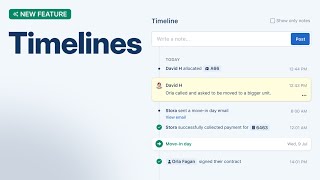
Stora's new Timelines feature shows a chronological activity feed for customers, subscriptions, and units. It consolidates bookings, payments, contract signatures, and notes in one place so operators can quickly see who did what and when, and it's live now.
Chapters
One of our key ideas behind Stora is that automation is important and give you more time to do more important things. But sometimes you just need to dig into what happened when and by whom.
Giving your time back not just for automation, but for usability. This is a feature that I think it's best to see it in action, to really explain the value of it.
Hello, everyone. So today we're here to dive into something that's new inside Stora, something we're really excited about. And it's something that's quietly been making the lives of operators easier in the background for a few weeks now. And it's one of those features that just makes sense when you see it. And we wanted to build it for ages and now it's here. So I'm here with Steven.
Hello.
To break it down, why we built it, what problems it solves and how it's going to make your life easier. We're here to talk about timelines.
Yeah, timelines. So this is a feature that I think it's best to see it in action, to really explain the value of it. So I'm going to do a quick demonstration here. I've got a store booking form open here and filled in already, just so you don't have to watch me fill in the form. And yeah, I'm just going to submit this form. Yeah. So I'm just going to submit this payment here. What's happening in the background? The subscription's been created in storeup. If you restore, you'll well used to this happening and from here you get the confirmation. I can set a password. This is just quickly to get into my customer portal so I can complete the last steps, which are an identity check and a contract being signed. But before I do that, I'm going to jump back and we're going to go into Stora and I'm going to pull up that customer. So let's go ahead and see. So here we have the customer view in Stora. You can see already the usual activity you see here. So this customer has a subscription, multiple invoices, deposit and a actual subscription payment that have both come out. Because my booking was for the same day, so it's been taken instantly. But then if we scroll down to the bottom here, what you're going to see for the first time is our new timeline view. And what that is really is it's essentially a sequence of events that have happened in the process of me placing that booking. So you can see the first event here. The contact's been created, the next one, the 50 foot container, it was booked online via the checkout. And then even we have a special event called the move in day event which starts grouping the sequence of events that follow the move in.
So this is super clean, real time feed of everything that's been happening with the customer in store. Is it just the customer or is there more?
No, there's more. So if I go in now and just say customer phoned and we directed them to the website to book, so I'm going to leave a note there. So what's interesting here is we've had notes in store for a long time and they get used lots by our customers, a lot more than we ever really thought they would. And what this does is it moves those notes into like a new context. So before there was just a big feed of notes, but now the notes will appear when they happened in relation to the events that we're now displaying. So if you were to go in, say and change the customer's subscription for a different payment method or like a different unit type that would show here and then you'd see the interaction with the customer or the note from another staff member that led to that change.
Yeah, I think that's what takes this up a level. I think that's the thinking that makes this from a basic activity feed to something that's a lot more focused on teams. So I think the whole reason store exists is to make your, your life easier. And not everybody's running a one man shop.
Right.
We're getting more and more teams that are more staff members and you know, automation is amazing. It's great. That's the whole reason. It's one of our key ideas behind stories that automation is important and give you more time to do more important things. But sometimes you just need to dig into what happened when and by whom. And this really helps with that, especially in that wider team context.
And we see this because obviously we're constantly in contact with hundreds of operators telling us what they're doing and sometimes they'll be asking, so do you have the content of this email or can you tell me what happened at this point in time? And we do answer those queries for people, but we don't want to have to. We want to put that power in their hands to discover it themselves and actually find the relevant like email or whatever it might be. So that's why in Pardolist feed here you see there's the actual. This is something we released a few months ago, was the start of this work, which is Sent emails timeline, which has now evolved into this global activity timeline. So you can see what was the content of an email. It just gives you full visibility really of the customer's journey with you.
So it's not just the event, it's the content of the event too. So in that example, you're talking about emails. So sometimes someone will say, did the customer get this email now we'll be able to say, yes, they did, or yes, we sent it and what the content of it was. You can see it right there in the timeline.
You can see it right there. And then it's in context obviously of the payment events and things like that that go around it. So if it's an email about a payment, it'll tell you if the payment's been taken in context, then you'll be able to see the things get kicked off the back of it. So actually go back. The timeline appears on a few places. So the contact view is one and then the subscription view is another. So if I go into the subscription here and if I say I was to just overlook sets, let's say this customer hasn't paid by overlock them, that's going to appear directly in the timeline as well. So if that customer was then to go into the portal, add a new payment method, pay that missed invoice, this will automatically remove the overlock when you see that happening. So you see, you can see the time between events. Yes. There's loads of ways this can kind of be useful. And then it's just the beginning, obviously, as well as the starting point, which we're going to evolve this as. As we grow it.
Yeah. So more events. So at the minute we do bookings, payments, contract signatures, bunch of things, but there'll be more coming over time as well. So you talked about customer and subscription there. Do we show all the way. And you talk about allocation. Do we show this down to the unit type as well?
Not the unit type, but the unit. Yeah. So we show on the unit the feed. So that's. I'll show you, I suppose, over time, who was in the unit. But like when did they. When were they allocated the unit, when did they leave the unit? And then obviously the journey of a unit doesn't just begin and end with one customer. So then the next customer comes in, you'll see that happening, you'll see the notes that led between those, like say you're leaving a note to say this unit was left in a mess and needed tidied or whatever it is. And now you'll Just all those things will appear in one sort of growing sequence over the journey of that unit.
I honestly think this is going to be one of those features that operators will go hard. I live without this.
Yeah.
Once they see it and start using it and very excited for people to start using it. Yeah we have given to a few people already and feedback's been pretty positive. Right.
Yeah, people are excited by. It's a sort of. The sort of feature people don't think to ask for but as you say when they have it it's sort of. It becomes very, very useful for your day to day. I think it's. It's one of those ones. Well we obviously we want to automate y lots of things. We appreciate that running a self storage business is very rarely completely hands off and automated. So there's things that you do need to know about or at least we want to make sure that when you need to figure something out, you spend as little time possible having to figure it out. Giving your time back not just for automation but through usability, just experience generally like that's kind of one of the key things obviously we want to do at Stora.
It's going to save them time having to email us, get contact as well.
We want our time back as well by giving you your time back selfishly.
But genuinely instead of having to go oh I have to go on email store and find out what happens. It's all there now. Do you think this is going to change how teams work in Stora like communicate back and forth because there's some kind of note stuff in there like what are your views on that?
Yeah, it's a good question. I think it'll just bring clarity to the communications. So who left a note? For example, who changed this unit type price? There might have been questions internally that were happening when did this try to figure out why something happened which will just go away. It'll certainly become the place you go to look. I think when you want to figure something out which I think does change was before you might been trying to think where do you go to do is it here or is it a subscription to contact? Whatever it might be. It'll just become a lot more obvious that in the, in the timeline you'll find the kind of activity you need to know about. Yep.
Is there a particular part of this or detail that you're particularly proud of or find interesting?
It's a good question. So we're big believers in design at Stora. I think that the design of this feature has been A great collaboration between not just the actual designers in the team, but also the engineers. I think it's a nice design achievement that kind of brings a nice experience to people, but I think it's really usable as well. Like we have here the like a show only notes filter. So like we know that people can have. I've seen hundreds of notes on a customer before and we want to make sure that obviously if you have hundreds of notes and then hundreds of events, things could get lost. So we're trying to make sure we surface the kind of key, give you the way, the tools to surface the stuff you actually need to find. And also just generally where this goes from here, how we evolve it. I think it's just a good building block to build out the rest of the system over the next few years.
So can you give us a practical example how an operator would use this on a day to day basis?
So I think a good example would be when a customer maybe phones you up and you have them on the phone, they're asking you something like, what happened to my payment? Why didn't it get taken for example? And you want to figure out while you're on the phone with them what to say. And a lot of the time in the moment it can be hard to have the data and the insight in front of you to truly give them an answer. So I think that what you might find is you'd be on the computer obviously while on the phone with them, pull up your computer into STORA and like just look like, for example, I've clicked into another subscription here with a bit more activity and I can see probably 20 different events here, a couple of different notes that show me that this, this specific customer I'm looking at was overlocked because they didn't provide a valid ID document, then it got removed when they did. And then in this example the subscription's been cancelled and you can see why. And they might be phoning about getting access to move or you know, removing access or whatever it might be down the line.
So instead of having to jump around, different tools, different tabs, digging in your email inbox, digging in stripe, digging in store, it's not all there in one place.
Yeah, hopefully that over time that becomes the place that you go to like just manage and learn about a subscription or a customer. Whatever's been happening, I have a funny.
Feeling a lot of people are just going to be hanging out on these feeds and, and you know, on these activity feeds and watching what's happening.
If they become something super useful. We'll keep evolving them, obviously. And you know, there's different places we can introduce feeds in the future as well. So maybe there's other places in the app we're not thinking about that our customers will tell us about that we can introduce later.
Absolutely. I'm very excited to hear on a broader scale what people think of this so we can move this on. Everyone's going to have this in their account pretty soon, right?
It'll be live in your account right now. Yeah.
Okay.
Well, that's it for today.
We're really looking forward to seeing what you do with this feature and of course we can't wait to hear your feedback. And yeah, we'll see you again soon.
At Stora, our mission is to help our customers build the best self storage businesses. Self Storage Explained is here to try and bring you the best from inside and outside industry to help you grow your business. If you want to find out a bit more resources, go to Stora Code to sign up for a demo or find out more. Or you can go to Stora Co Academy for lots more resources including our financial model and other in depth guides to setting up and growing your business.
More from Gavin





Wie Space4You Einzüge von einer Stunde auf wenige Minuten verkürzt | Kundenbericht





