Stora Live - Preparing for the Future of Self Storage
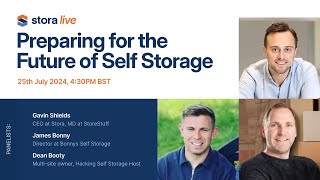
Gavin Shields, James Bonnie, and Dean Boody discuss how UK self storage operators can compete as the market grows. They outline three fill-up stages from initial occupancy to revenue optimization, and argue that technology like online bookings and smart entry systems is essential for running lean, unmanned facilities. Success comes down to tracking conversion metrics and unit economics.
Chapters
Okay, so now, right, so this is about the future of self storage and we want to just, we're just going to have a bit of a chat and a bit of a Q and A really. And we're joined by, well there's obviously myself and we've got James, Bonnie from Bonnie Self Storage and Dean Boody of course who I'm sure everyone knows. So I will just do a bit of introductions. I'll start with myself. So my name is Gavin Shields. I have a small self storage business here in Northern Ireland. Two sites and also set up Stora which is a self storage software platform focused on helping lean growth driven operators grow their business. And yeah, and we've got about 350 customers in the 350 sites in the UK using Stora. And yeah, we're love the self storage industry and I love talking about self storage. So I'm really looking forward to having a chat with you guys. James, can you introduce yourself please briefly and maybe tell us what in the self storage.
Yep, sure, yeah. So hi everyone, my name is James Bonnie, I own Bonnie Self Storage. So we've been running for just over 10 years now and we've got five sites in total, four in southeast London, super small sites but obviously it's a very dense area and we get a good rate around there. So they total about 15,000 square foot combined. So one is literally smaller than a thousand square foot believe it or not. And then we've just opened a new site or fifth one in Great Yarmouth which in Norfolk up on the east coast. That's about three hours away for us and that is an unmanned site, that's 35,000 square foot building. We've just done 10,000 for now trying to fill that up and then hopefully get some more money and expand from there.
Very good, thanks James and Dean, I'm sure most people don't need to hear your intro but for those who don't haven't listened to your podcast and everything else you do and all the great content you create. Give us a brief introduction. What brought you into self storage?
Yeah James, actually I forgot you was one of the principal reasons why we did a satellite site, Clough Road because of what you told me on the podcast years and years and years ago. So thank you buddy. Yeah, so my name is Dean, I've got six sites, we put two more offers in for two existing sites at the minute and I run the Hacking Self Storage podcast. I've got a daily newsletter called Mr. Self Storage.com and how I got into Self Storage. I sold my betting shop, I used to have a betting shop and I didn't know what to do. I got married, I went on honeymoon to America and me being me, I was hiring a car and I got to the front of a queue and realized that I forgot my driving license so that meant I couldn't hire a car. And we had this massive big SUV so my wife had to drive it and we was going down the freeways and I was on Tiger Woods Golf. I was getting really, really good, just scrolling and all I could see was these self storage facilities pop up and at the time I didn't have a job. I sold, I sold my betting shop for 345,000 which back then to me it was, it was like a million pound. It was amazing but I didn't know what to do the rest of my life and so I just started googling self storage, the industry, what was happening in America. And then I googled self storage in Beverly, there wasn't one. And then within four months I opened my first self storage facility. And ever since then I've, I genuinely love the industry. I think it can do so much for so many of us and yeah, it's a, it's just a great industry to be in.
Brilliant, thanks. Thanks a lot, Dean. Thanks James. Great to hear both of your backgrounds. So I've got some questions so I'm going to start with you Dean. You spend a lot of time speaking to operators and interviewing people. What trends are you seeing in the self storage industry that our listeners, anyone looking on, need to be aware of?
Yeah, so when I saw this question I thought, right, you know what, I've got a list of things that I think are important so I'll just run through them really, really quickly. Competition is increasing. First of all there's going to be more and more competitors because the secrets out the bag now everybody knows what a great industry this is. So I, I think you really need to know what makes you different. Are you the premium product or are you going to the cheaper realms of self storage? What, what do you offer that's different to your competitors? So number one, competition is definitely, definitely increasing. However, that doesn't mean you shouldn't come in self storage because in five years time you'll look back at this point and think, oh my God, self storage was so easy. There was no competition, it's et cetera. So I, I genuinely think that it's still a great industry to come into, but as long as you know that it is increasing, I also think there's three stages to your fill up. How you act when you're less than 50% full is differently to how you act when you're 70% full is completely different to how you are when you're 90% full. So you need to know what stage of development you're in. Are you in the fill up stage? Are you in the revenue stage? And so they're completely different. And do you know what, I've only just learned this these last couple of years because my sites are becoming more and more mature now and I've got this off some industry leaders who have got some massive self storage. And so it's not something I've come up with. I'm just copying what they've done and modeling how to maximize revenue. So I think people should be aware of the three stages of fill up. So when you full, you act differently and then you do when you're in lease up, lease up is all about occupancy. We, when you're in, when you're 85%, 90% full, then it's all about revenue making sure you're driving that yield. Google Ads are becoming more expensive so you need to know your numbers. I know there's another question later so I'll come on to that. But yeah, they are becoming more and more expensive because it's becoming more and more competitive. So why wouldn't it be? Manless facilities are absolutely brilliant. Previously, without this tech that we've got now, you couldn't make the numbers work for a smaller manless facility. Now you can open up. I was looking at a 4,000 square foot facility and I was like, oh my God, we're gonna, we're gonna net 80 grand a year from this, from this small site. And so yeah, I think manless facilities are brilliant. Container storage, I genuinely love this model at the minute I've been speaking to more and more people in the container industry and I cannot believe the amount of revenue that they are getting from this. At the minute I'm like, shoot, I've been doing this completely wrong. I don't think I have. But I just feel like I'm gonna lean into that side more to just to give you one example, we've got a self storage site in Beverly. It's a container site, really, really small, but it takes the revenue was around about 212,000 pound a year. My rent is 15,000 and my rates are 6,000 and there's very, very few other costs associated to it. So it's an unbelievable business model. As long as you get the right site. Location matters for me. Self storage facilities will work anywhere right now. But will this keep working in five years time? Because you're going to get more and more competition in America. Ten years ago every single self storage operator because by the way we're ten years behind America or five years behind America. So every single site worked in America 10 years ago but they don't work now. Most successful operators are in class A locations and all we've got to do is look at safe store and big yellow. Where are their facilities. They go into prime A class location. So yeah, I do think that matters. Find an underserviced area and you will win at the minute. Like for example Mansfield, it's got 100000 population. There was, there was two indoor sites that were relatively small and straight away within nine months where. Well, I think it was in six months we was turning over 250000 pound a year which is mind blowing. I couldn't believe how quickly Mansfield work and the only reason it worked so quickly was because it was a really underserviced area. Looking at my notes now, that's, that's all I've got so I'll shut up.
Okay, thanks Dean. Just before we move on, I'm just interested. You mentioned three fill up stages. So you've got kind of up to 50% or so, up to 70%. You're saying that you're focused on occupancy and then what are the three? So occupancy is the first focus.
Yeah, so it's a hybrid. So number one is occupancy. Just get people in straight away because then you can do your revenue management, you can do your price increase, etc. And I try not to talk about it too much on public platforms anymore. Not here because we're all in self storage storage but on LinkedIn I get a lot of blowback from it about you're just increasing prices. Well no, that's not the case because your insurance company, when you buy it, when you go for insurance for a car, they don't want you to come in on the first year's cost. They want you to come in on year two and year three because they're banking on you guys not being bothered and, and trying to get a cheaper quote. And so that's what we're doing in, in essence we're trying to get people in straight away. First of all an occupancy matters and then once we get to a certain level of occupancy and revenue Then we go to stage two where we crank up the prices, the street rates a it and then we also do our price increases. But we're not massively aggressive. We, we're kind of like a hybrid between stage one and stage two. Stage three. Sorry. And then when it. Stage three, when we're, when we're 85 full, we've got a couple of our sites at the minute where we are capitalists. Well, I, I want to be and ultimately I want to make money out of this. And it's supply and demand. If the demand's there, but we can't offer the supply, then we need to increase the prices. And so that's what we do and that's what we're doing. Two of our sites now were increasing the prices by 25% and we did that during COVID as well by the way. Cars on the table. We, we increased everyone's prices because we was full at our Willoughby branch and it made £14,000amonth in revenue difference. And that went straight to the bottom line because all the, all the costs are fixed. And I don't understand why people don't do that. And I think it's, people think, well, it's not a right thing to do or correct things to do. But ultimately that's how the world works. It's supply and demand. And I'm all about being there for the customers and making sure. But I also want to make sure that we can pay our bills and pay the, pay the, the interest pay, you know, pay the staff, etc. So yeah, I, I don't think people do that enough when they are, when they've got a chance to maximize the revenue. We really should grab hold of that. Especially during the summer months. I always teach everyone like when it's students, 25 square foot units are going to go. So why the heck have we got 8, 8 weeks half price on or 12 weeks half price? I just think it's madness and we should increase the price because we know the supply and demands there. The supply is limited.
Great. Thanks, Dean. Okay, so it's occupant, fill up, get occupancy up and then move into kind of phase two which is start to crank the prices a bit and then once you're at 80, 90% full, you start to really try and optimize the revenue.
Yeah, we're testing the waters basically. Testing the waters, seeing what the market can take and then we want to really maximize the price per square foot. Okay.
All right. Thanks Dean. So a lot of the stuff you've mentioned there is actually linked to competition. So you mentioned competition is increasing, Google Ads are becoming more expensive, you know, location becomes more, more important. James, how have you. So you've been in the business for 10 years, like what sort of changes have you seen over that period of time in competition? Maybe a little bit, but also just like customer expectations. Have you seen change in customer behavior and expectations as well?
Yeah, sure. So I think the biggest change really if I look back to 10 years ago when I was working in the office signing up customers, it was so paper based. So you hand write a customer details form, I then type it into the computer whilst the customer waits at the desk. We then print out the contract, we sign it, we photocopy the id. It was a huge faff really. And when I look back now, I kind of cringe a little bit just at thinking how long I took to do these processes. Whilst the customer's waiting there, all they want to do is just pay, pay for their unit, take their unit, get their key. Lovely. And it was such a drawn out process But I think 10 years ago you could get away with that because people didn't really know what to expect and you know, sometimes you have to do that stuff. Whereas definitely nowadays it's a case of basically time is more important than money to a certain degree now. So I think if someone can go onto your website, book a unit or even call you and do it quickly over the phone without this whole back and forth of the emails or coming into the physical office, then they'll happily pay a little bit more just for that convenience so that they can take the unit, sign up, move in, job done. So I think basically the world's lost its patience to a certain degree and we want stuff instantly and that's what, you know, we're willing to pay a bit more for. And which is really, I mean, I know, I think we're going to talk about this later, but that's a big reason I had to find another way of doing things because I was sitting in the office and I just started to think if that was myself or my fiance or someone like that trying to take a storage unit and would be painful standing there just trying to sign up for it. So that's when I started to look into different things and try and find a solution.
Yeah, and, and so when you look at your bookings at the moment, so you let people book online but you presumably you still get phone calls, do you still get walk ins? How do you see that happening at the moment? Do you still get a bit of that from your customers?
Yeah, 100%. That's still the amount of customers that sign up without ever speaking to you. No phone calls, no emails is I'd say probably below 10% which you know, is tiny. But in, in two years time that'll be 20, 25%. In six to eight years that might be 50, 50. And I'm sure, I'm sure you can relate Gavin, and especially you Dean. If you ever get a customer who goes on your website, signs up, you never hear from them, you never speak to them, when that booking comes through and you receive the email, it's like the best thing in the world. You can't literally have a smile on my face and I can't hide it. So that is full automation. Amazing. That's what we want. But when are we going to be there, you know, and when we like the US in maybe 10, 15 years time. So for now, whether it's yourself or your team, you do have to have well trained people who can help the customer answer their questions. There's still loads of people aren't familiar with self storage. I think it's maybe 1 in 10 have used self storage before. So you've got to assume that most people need these questions answered in this assistance. However, when it comes to the actual book inside of it, if they are a more tech savvy person and they want to do the process online, we just send them a link to our store booking page or we, you know, they're already on the website, they go in, plug in their details, add their cards, job done, excellent. The ID and contracts done after. If they aren't that sort of person, which obviously the normal self storage customer tends to be maybe 45 to 65, maybe not tech savvy in that scenario, it's fine, we can do it on the phone, take their name, number, email, take their card details, authorize the payment and then either guide them through the rest of it or assist them to do the rest of it our end. And either way you're completing the booking there and then, which is a mistake I was making before sending them away. They're never actually completing the booking. But this way, either way you can complete the booking your end or their end and it's just, it's got rid of that whole 15, 20 minute process in the office or three or four emails back and forth. Now it's just done there and then five minutes later they're booked, you know you've got a customer.
Yeah, yeah, yeah, interesting. And then what Didn't. Do you see any, have you noticed any customer behavioral changes or expectations over the past few years? Maybe like we've always talked a little bit about what Covid's done to expectations and you know, maybe driven some stuff online, help people get online. But is there anything that you've you noticed in your business?
Yeah, I saw this question. I was like, right, okay, let's think about it. And I genuinely don't know the answer I'm going to get. I've got an answer because I've only asked my team because I'm, I'm not on the front line anymore. I don't actually talk to that many customers. And I did hear it was Ben Holmes saying on another podcast saying that you should, as a CEO, you should actually be on the front line for a week at least to talk to your customers to know exactly the pain points and what they're going through. Because otherw, how can you relate and how can you do your marketing? I was like, oh yeah, I've definitely fallen short of that because I do talk to my team a lot but I don't really know what their expectations are. So I had a meeting with a team today about this and said look, what has the changes been? And the biggest change that anybody has said is that basically the customers now since COVID they don't want to talk to you as much. They would rather book online. And I thought of myself as well. And when I go to ASDA and I'm quite a personable person, I like talking to people. But when I go to asda, I got me earphones in, listen to a podcast, listen to something and I don't actually want that interaction. And I go to self service checkout. And then if you look at that with self storage, why wouldn't we have that with self storage? So I think making sure you can book online and do everything at your own speed whenever you want then I think is so, so important. And I started looking at our stats today and looking how many people actually book online without talking to us. And I know that one of your customers, Gavin has a 95. 95 of his move ins don't actually talk to him. And I was talking to another big business owner and they were saying that they are around about 45. And like James said, we're, we're around about just under 10, 7 or 8%. But then I spoke to team bought it.
Right.
Why do you think is it the website? Are we doing something wrong? What are we doing? And I think it's because we are, as soon as someone does a website quote with us, we are on them straight away with a phone call. If we can do it in a minute, we'll do it in a minute. If we can do it in two. But the rule is we've got to do it within 10 minutes. Unless somebody's right in front of us and we're dealing with a moving, we're dealing with a customer, then we obviously can't do it there and then. And so I think that's the reason that our percentages are so high, because we normally jump on a quote straight away, someone gives us our details and says they're interested, then we're pretty hot on getting in touch with them. So, yeah, the biggest change for me I would definitely say is, according to the team, that people don't want to talk as much as it used to before.
Yeah, yeah, I'm very similar. When I go to Tesco, I'm always listening to something, just want to go straight to the checkouts. But I also think I'm relatively social generally. So, James, outside of kind of some of this process stuff we've talked about in customers, have you seen any, has technology impacted your business in any other way recently? So, for example like smart entry systems, security systems, anything else around, even acquiring customers, selling to customers, is there anything else that you've been using, implementing recently that has had a big impact?
Yeah, 100%, I think, a bit of everything. So, for example, so with this new site in Great Yarmouth where it's a three hour drive for us to get there, it's, you know, if something goes wrong, we're not gonna get there basically. So I've got a local guy and I think, you know, as Dean says in his podcast, nothing's fully unmanned. You need someone available somewhere when stuff goes wrong. And luckily I've got that guy, he lives next door. Perfect. But in terms of, so security wise, so I've got the NOKI system and I know there's loads of other companies coming in with similar products and having that system. There is just, you know, if you looked at it on the cost of it compared to the return, you might say, oh, it doesn't make sense. But I'm trying to think of it, of the view of I plan to be in storage for, you know, 20, 30 years, you know, as long as it's good to me. And I'm trying to think how are things going to be in 10 years time? And Nokia is one of those things which is great for that. So for example, we had a customer who turned up at the gates a couple of weeks ago, called up, wanted to be a view unit. So we took him through the gates, through the app, through the shutters, open different unit sizes, talked him through the prices and he was with his friend and we could hear him in the background and he was going, wow, this is the future. This is like a spaceship. This is like a spaceship. It was, it was unbelievable. But no matter what age you are, when you see that stuff happen, even though we'll know it's possible, it just seems great to you. So it is, it's one way of. When people do come to site, we're giving them these virtual tours and straight away they're impressed. And then you know that very likely you've got that customer.
Yeah.
But the other side of it is obviously, I know you could do it with padlocks and not have staff there and just leave the padlocks off, but it just makes the whole process easier. They get their app, all that sort of stuff, like I say is future proofing, but then in terms of me being able to sleep well at night, because I think, oh, it's this big site, you know, it's an acre and a quarter of land. I think, oh, I'm three hours away. And sometimes little doubts into your mind, but I actually got CCTV monitoring with DSOC as well. And just having them, they're, they're better than, you know, one of us watching the screens because they know what to look for, anything that pops up, phone call, great. I've got my local guy if I need him. You know, we haven't had any issues so far, luckily, but just knowing that's there gives you the confidence there and it just gives you that whole belief. I mean, it's like in reverse to you, Dean. You're opening your Clough Road site and making that a success. And me listening to it on your podcast, etc, that made me realize, you know, it's possible to do this. And I know that was a close one for you and now you've done one, you know, up in Scotland. But all this stuff, if we copy America, that stuff doesn't matter to them. They're all doing it. And why, why should a storage unit not be able to run unmanned for like one of the sort, sort of light bulb moment in my head was I went to the storage meetup in Birmingham and I think I stayed in the hotel there. I think this was last year and I don't think I've got a room key. I got A text to my phone, downloaded my pass, entered the hotel room and it just clicked. If hotels can do this, which are a lot more technical and there's more moving parts and say storage unit then surely it's got work for self storage. So just over time these things have sort of clicked and, and yeah and it's been a success and you know, I want to continue doing it. Really.
Great. Yeah. So same sort of system I have James and my, my site as well and I totally agree, I just, I've had, I remember four years ago or so I met a 70 year old couple on site. This was when I was doing it all myself and they were, they were blown away. They couldn't, they actually said I can't believe this exists in our town. Couldn't believe that the doors opening and stuff. They just couldn't believe it. So yeah, and so Dean, what about yourself? Have you seen any outside of software, any other technology that's impacted your business recently?
Yes, so we've, we've just gone to the CCTV monitoring as well because we've had a couple of issues recently. Obviously the more sites you get then the more chances you're going to have of coming across some problems and exactly what James said, the peace of mind when you're asleep to have your site monitored. And I genuinely, when I had my first sight I used to sit there, television on with a wife and I used to sit there actually having the monitors on my screen as well. I was like this is ridiculous. And then we got broken into and to be honest it was a. Containers that got broken into and they didn't take anything because another man's treasure is another man's junk and they never ever took anything. We got. I think it was 14 or 19 containers broken into but it was just a mess because I pulled all the stuff out. Everybody's stuff was everywhere and even down to a little thing like a microphone that the operator can see there's a problem and say, you know, excuse me, what are you doing? We're calling the police. And just something like that will stop them doing any, any more damage, any more problems and I think that's really, really valuable. But just going taken away from technology as well because I think people, we often look about the technology and the sexy stuff and, and we think about the future and how amazing it is. But I really do think, because I'm going back to competition again, I think knowing your numbers it's not sexy but it's, I think it's really, really important and we need to know the cost to get a quote. For example, at the minute we're getting a cost quote around about 17 pound. So let's say it's 20 quid. We know that we are definitely converting over 25%. So if the cost to quote is 20 quid, we know a moving is going to be 80 quid. And then if you know your lifetime value of a, of a customer is like 900, then crack on, do that all day. And it's these basics I think are really, really important as well. And knowing your website as well, knowing your website numbers, if you're getting a hundred website visitors, I always say 20% of those should be getting a quote. So that means you should be getting 20 quotes. If you're getting 20 quotes, you should be getting five of those to reserve. If you're not getting 20 quotes from 100 website visitors and you can get this in Google Analytics, it's dead easy. If you're not getting them 20 quotes, then you know you've got a website problem, the information there is incorrect, there's something wrong. And so therefore we know exactly, I call it in my course, Doctor, doctor. We know exactly where to look, where the problem is. And then if we're not getting five reservations, you're thinking, okay, we've got a problem with our sales team, we've got a problem with our conversions. What, what are we doing wrong there? And so I, I think that knowing your numbers is really, really crucial. But going back to the biggest difference for us, it's the ability to be mindless. I mean Clough Road is just a fantastic site. This year we'll take half a million pound on Clough Road and the, the rent is around about 100,000 pound, the rates are just under 20,000. And yes, there is the occasional problems and like James said, it's, it's literally a 20 minute drive for me. But it was nice to dip our toe in the water to make sure that it was possible. And then we bought a site in Wrexham And Wrexham, the reason why I knew it was so valuable was because we, we knew we could make it manless. And it wasn't me making people redundant, it was retiring, they didn't want to work anymore and I knew straight away that we could utilize their wages to, to make the site manless. And fast forward 18 months now, we've more than doubled the revenue with 10 times the profit. And by the way, there wasn't making much profit, there was only making like a 12,000 pound a year profit. And then we've decreased the expenses as well and it's just been a massive win. So the technology out there is incredible because we can leverage the technology to, to make our cost less and make something that didn't add up before. Add up and for previously for like Beverly I had set we've got Paxton fobs which are good to serve a purpose but the problem is every single moving. I had to meet them there personally when I was there and then when they moved out I had to meet them as well before we got a drop off box. But now with Nokia or sensor bag or other technologies out there you don't have to meet them. You can just literally send them a code, send them an app and that's it. It's massively saving so much time for people.
I think it's interesting how much you've spoken Dean and James a bit as well. Competition because that's one of the things that I also when I was thinking about what we're, what we're going to talk about and what's going to change self storage over the next five or ten years I'm not thinking about kind of you know, robots on wheels showing you to your unit. I actually think that one of the biggest, the biggest change is going to be driven by increased competition in the UK and across Europe and I think you know the knock on effects there. I think the important things to think about are your cost structure. So like it's the sort of stuff we're talking about here, you know, being able to run a lean business that gives you no matter what way you're put your, no matter who you're targeting. So like Dean you said you're targeting and you know you talk about a five star hotel for some of your sites and you know, no matter what way you're talking, whether it's that or it's a low cost container storage, having a low cost structure for your business is a huge competitive advantage too. So you know implementing technology and software it's as competition grows it's going to be such a key thing to be, to be thinking about. And then the other things I was noting down about competition are that you really have to think more and more about you know, conversion rates, converting the website, selling better, marketing better, trying to drive efficiencies because the more efficient, the better you get at all those things, the better you can compete. And all of that stuff then drives down to if you're. One of the challenges we all have is finding new sites. It's always the challenge, isn't it and whether you're buying a bit of land or trying to buy an existing business that you're doing now, Dean, if you know how to run the business and run it lean, you know, like it's, you know, it sounds like you, you remember staff wanted to retire and, you know, you were able to run that business so lean and so efficiently that you're able to buy that if, you know, if you're looking to buy that business, you can probably pay a lot more than anybody else who's bidding on it because, you know, I can turn 12,000 pound of profit into 120 or whatever it might be, you know how to do it. And I think as competition heats up, it's all those advantages I think that are going to help people who are testing things out and you know, really trying to push that, you know, innovate in those areas. So it's going to be an interesting thing. I think also we've mentioned this before when we've been chatting about consolidation. You know, in the US people raising big funds and going ban 50 sites and the UK is not, I know there's a little bit of that happening, but it's not happening to the same extent. The US is full of people doing this. And it'll be interesting whenever we get to that stage where there are 50 or 100 sites to buy in the UK per month or whatever, it's going to be interesting because it'll be the people who know how to run their business really efficiently who will be able to go and buy and grow. And the advantage then is multiplied. It's like if you can run an efficient self storage business, you're going to do three or four times better with your site. But if you can do that, then you're buying more sites, you're 10xing the sort of growth you can achieve. So it's interesting we've spoken so much with competition because I completely agree.
Yeah, something you said, Gavin, you articulated perfect on my podcast before and you said at the minute there's different phases of growth, self storage operators and number one is at the minute I still think that what we should do is find new sites. I think that's my primary way of expanding is finding new sites. Because at the minute I think there's so many opportunities like Mansfield, 100,000 population and two self storage facilities. I know of a town and I'm not telling you all 40 something thousand population. And there's one, one container site. The container site has no website and they've got 127 containers, all of them are full that don't take anything other than cash every single week, cash. And, and the phone lines don't work. The only way you can't book online, you can't do anything. There's presence. The only way you can go and get in there is actually physically drive down there and they've got an eight months waiting list because I pretended to be a customer. He said, look, I'll be honest, I don't even want to put you down on here because you'll never ever, you probably won't ever get a unit. It's like, oh my God, this. And there's areas like this all, all over the uk. And so number one at the minute, I think growth is to find these pockets. And yes, you do have to. I mean it's been on my hit list for ages is this, this location and there is a part of thingy that I can do there and I'm purposely trying to be a little bit vague because I don't want to give too much away so people can beat me to it. And yes, I've been looking for two years at this one area. And then there's another area that I know in the Midlands that again has a very. There's these areas all over. So I think we should set sites up from scratch now. But like you said, in five years time that might not be the area for growth. The area for growth might be to buy existing sites and add value to them. What can you do differently? How can you operate? Because at the minute I don't think that any self storage operators are struggling out there. I think that everybody's doing well and the problem is we don't, I don't even know if I'm a good operator or whoever, who's good operator because it's everybody's, everybody's making money, everybody's doing well and the only time when you know you're good operator or not is when things get slightly harder. I, I listen, I'm in the mastermind in America for self storage and I listen to all the American podcasts in 2023. They've been through a hell of a year and they're exactly the same. Nobody knew who was a good operator until it got a lot tougher. And then what do you do? How do you start marketing your web, your, your website, your company? Do you just stick to pay per clicks or can you do something else? Can you do leaflets? Can you be more of a pillar in the community? What, what can you do differently? And I think we've got to be always. There's a problem is we sell stories is we heavily rely on pay per clicks. I definitely rely on paper clicks too much. And if that went away tomorrow then what would I do? How would I get customers? And so I think you need to start asking them questions all the time because what happens if that went away tomorrow? What happens if all of a sudden the cost per click went up ridiculous amounts that it just wasn't viable. And so just asking them questions I think is very, very fruitful and helpful for people.
Yeah, yeah. Thanks Ian. So James, you joined Store recently. So as somebody who's recently thought about what's important when you look at self storage software and what features you're looking at whenever you think about software for self storage, what features and functionality do you find important?
So the big reason that attracted me to Storer which now and then there's a million of million great things there but the big thing is I basically there was, there was a. No, I wasn't told to say that but honestly there, there was, I think it was probably three maybe four years ago in the annual Self storage report it said something like 80 of operators can accept online bookings and I couldn't, I just had a form where you'd put in your details and we'd have to contact you back. And I thought I'm, you know, I'm meant to be young in this industry and I'm so far behind an old fashioned that there must be a solution. And basically so the software I was with before done everything I needed to do was really good except for me to offer the online functionality that I wanted to. I'd have to have a separate web developer build something on the website, it would have to be integrated, stuff like that. And it, it just seemed like a huge headache and it still wouldn't give the full online booking process without needing us to go and do something and you know, other bits like that. Whereas the store of package is so simple to use, clear, quick and it's just seamless the process when customers sign up. So that was a big thing where I was like right, I've got to switch over, I've got to do this. So I done that and then the other thing that you know pushed me at the same time because I was different for a little bit as you do because you think oh, I've got to switch softwares and it's a big headache but we had about 200 odds, maybe 230 customers at the time but actually making the switch. I was opening the new site in Great Yarmouth and I thought, I, I don't want to employ someone three hours away who I'm not going to be there to manage necessarily and who isn't really going to have much work to do. You know, a few customers are going to show around, everything else is going to be done automatically or online or I've got the staff already who are capable of doing it. So I thought, why don't I want to pay someone, say 25 grand a year to, to sit there and then two, they're going to be sick sometimes they're going to have holidays. So now I need two people. And I was like, it just that that was a big thing where I was like, there's got to be another way and unmanned was definitely that way. So that was the things that sort of pushed me to make the switch. And then once I was there, I remember, I think yourself or Brian who, who helped me massively. So a big thanks to him with any questions I had, super responsive, any problems always helped me out. And as one of you guys said, like, push to get your customers onto the auto card payment system because I had everyone on direct debit anyway, I thought it's the same thing pretty much, but once I switched, I did push to get them on the auto card payments. And it's unbelievable the amount of time we've saved now in terms of debt chasing, in terms of just general management of customers, bad debts in general are a lot lower and it's all just because, you know, with the direct debit it takes say two, three days to process, then it fails, takes another three, four days to retry, then it fails again, suddenly you end up 10 days behind and you're trying to chase a customer for this debt, whereas the car's just instant bing. Does it go through or not? It seems to be more successful anyway at going through and you can just be on top of things so much quicker and, and store and stripes doing all that work for you, chasing the customer, sending the emails. So stuff like certain things I didn't expect to do, which I've now done from only being restorer for say four months or so, is I've now got unmanned on the weekends at our London stores because we was getting zero to one phone calls on a Sunday, maybe two on a Saturday, three tops. So now suddenly I'm saving 12 to 13, 000 a year by unmanning those weekends and then on top of that, my team in the week just have more time to do Everything else so it's, it's been great and that, that's only touching the service service there, there's a CRM on there now so we're getting inquiries, we're moving along them them along a proper funnel whereas before it was just a oh let's call them or we weren't even following up to be honest. So it's been so many benefits and the plus side is, you know every two months or three months I'll get an email from store saying oh we've released this, this and this so you know that every year, every few months something new is coming that is improving the software. So yeah, overall online functionality started it but then everything else that's come with it has been great.
Thanks James, you've qualified for your six months free of store.
That was brilliant James.
That was honest.
We'll have to Harry in the seals. Yeah thank you James. Thank you for all that. I suppose I know we're coming kind of closest to the end here of our time that we've scheduled and I want to leave a bit of time for questions and I can hang around a bit longer but just in case you guys have things to do sort of rapid ish fire then like James, if you'd one piece of advice for anyone listening who's running a self storage business, whether they're thinking of getting started or already, you know, have open sites, what would you say? One piece of advice to avoid getting kind of left behind with the changes that we've been chatting about.
I think keep it simple. If you was an existing operator transferring like me then you know, over 10 years we'd over complicated so many systems. Our deposit process, our sign up process since moving to store it's helped us really simplify things and just say look this person wants to rent space, we're going to give it to them, get the ID you need which is you know, done through stripe, get the contract done, take the payment, job done. And that's really changed, given us so much time back and just change the way that we run the business.
Brilliant. Okay Dean, would you have one piece of advice similar to James, One piece of advice for people who are getting started or running their business to avoid getting left behind in a more competitive environment.
Yeah, a couple of things. I've just come back from holiday and so the wife's doing loads of washing at the minute so I can stay all night so I can see, keep walking back there, see if I'm done so I can stay all the time you guys want. Gavin it was something you said to me years and years and years ago. And all of a sudden it just it and I didn't ever think of it like this. And if you're looking to open a site, it's just find under service places. So at the minute, whatever it's not, say it's 0.8 square foot per capita. So if there's a hundred thousand population, then the one that wants to be 80,000 square foot of self storage. And if there isn't, it's under serviced. If there is, then it's over serviced. And you've got to make sure that you add on your square foot that you're bringing into, into the community, into the area as well. So something as little as that. That's why people, I got a phone call today from somebody saying I don't understand why you do this podcast. Why do you give everything away? And I said that I'm not scared of educated competition because if you come into an area that's unservice under service, then you can thrive. I can thrive. I'm scared of uneducated people coming in. I just think, for example, Clifford, it's. There's so many people around Clifford now, it's really, really tough. But then there's other areas that I wouldn't mind people opening up because it's under serviced. And so that's probably number one. But also just going really, really back to basics. I've been geeking out on Alex Harmozy on my whole day. I've literally listened to everything he's ever put out again and again and again. And it comes back to knowing your numbers, knowing your numbers, knowing the fundamentals. And if you know your fundamentals, you know if you can scale, it knows if your ads are working, it knows if you can put more money into your ads. And so yeah, I would say quick fire and know your numbers. I realized you said quick fire. I was like, oh, stop talking, you'll swear.
Cool. Okay, well look, we have some time for questions then. Like I can, I can hang around a little bit. James, if you have to go, no problem.
No, no. Good.
So if anyone's got any questions, you can type them into the comments area. So feel free to type any questions there.
And.
So I see one question. Is that right, Isaac? Is there more than is there a difficult question?
Okay.
Okay. So we're still learning how to use this tool. Okay, a question from Roger. So this is a Stora question. So maybe you know, Dean, I know you, you have Stora in your business. And James, you've always got the Stora. So what upgrades on store would make the biggest difference to you? Maybe James, you could.
Sure. So yeah. So I think for me, like I was saying earlier is the time you're going to save. It's a huge time saver because so many processes are being automated and the other plus side is for the team in the office there's less things you can do wrong. You know, on my previous software there's so many different things you click on that you could end up messing something up or forgetting to do something and then it bites you in the bum basically three weeks later when they're invoice renews. Whereas Storer is all about the automation side of it. Which is why I'd say, you know, when I switched over I changed certain processes of what we were doing. So just because I thought I'm not going to try and fight against the software where when it can give me the automated process. So there was things like deposits before we was taken in a certain way and now it's just, you know, we take a 20 pound reservation and then when they move in we take another deposit and it's all this manual work. Whereas now customer pays one week deposit, job done. When you want to refund them, click of a button. We was refunded by bank transfer before so there's, there's so many little tweaks that will definitely save you time. And obviously the big thing is the customers who don't want to talk to you, whether that's you know, 10 or 90%, they can do what they want online and they don't have to talk to you. Like us when we go in the supermarket we can just deal with it and then be happy.
And is there anything specific that we could do at Stora to make your life easier?
Oh, sorry, got you. I probably misunderstood that question but. So the biggest thing for me is probably one is, sounds silly but sending out invoices prior to their due date only for business customers really. But I don't think we have that ability right now. But definitely being able to send them out would be useful. And there's, you know, perhaps some of the reports, it's great the dashboard to look through it and find out info and I'm not huge, you know, I, I need to get better at reports. I'm not on Dean's level where he's really analyzing them and understanding them. But you know, that's, I, I know that's the right way to be because Dean's been so Successful. So I think there's definitely more to come in the report department department. So that'd be another thing to focus on.
Great. Thanks, Dean. How about yourself? Any?
Yeah, I think that one of the biggest things that you guys have done is CRM system because before I know that you was going down the route of trying to make people book by not. You don't have to talk to your customers as such and it's more manless. But unfortunately, this day and age with competition, you do have to have a sales process and you've got to, you've got to follow up many, many times. And so I think the biggest change that you guys have done is the CRM system. What I would like in the future, and I know you're getting there all the time, is reports. Because I love, I love my reports and I get, if you see on the newsletter, I put all the reports that I get. So as soon as somebody logs down, because we've got two systems running side by side, as soon as somebody logs down another software, we get an A report sent direct to me. So automatically. So nobody has to ever send them the reports. I know what reports I need on a, on a daily basis. And then that just keeps me understanding because obviously I'm away from a business. I'm not actually in the business every single day. And then on a weekly, on a weekly report as well, as soon as on a Sunday it closes down at 4pm Then I get this massive report sent that I know how many overall, how many quotes, conversions, move ins, the insurance amount, et cetera, et cetera, et cetera. What's coming in square foot next week, what's the occupancy now? What's the revenue? And, but I know it's, I, I know it's coming because you guys are just literally improving all the time. So it's only, it's only a matter of time. And I said to you that you can't please everybody and you've just gotta do one bit at a time and just continuously improve like you're doing over, over a period of time.
Thank you. Thank you both. We've got lots of other questions here. Oh, okay. Here's a question for Philip Matthews. I've just opened a facility for container storage which is 1.2 acres but currently does not have power apart from the office. Would you Recommend Continuing with 100 containers or should I be looking at a mix of different types of storage? I'll send this to you, Dean, because you, you do so much of both. What do you Think.
Yeah, I, I, I feel you're saying.
Here, Philip, sorry, quick fire answer. So no more.
Oh, sorry. I feel you pain here, really, really do. Because this, because I've opened, I haven't opened the container site for 12 years and then we opened one in Glasgow and I never even thought to ask about services. I just presumed like a building you'd have electric. And then we got there and the gates weren't open, like, where's the electric? I was like, I don't know, I'll ask the agent. I rang up the agent, there's no electric. I'm like, what do you mean there's no electric? And I was like, ah. And it's, it's caused us no ends of problems but luckily we've, we've figured a way around it. And to answer your question, it would depend, it would depend on the area. What if it's a good location, great location or not? You can get away with solar panels for lights. There's so many things and you can actually do solo. It's very, very expensive. You can actually get solar panels for gates, but there is ways around it. And if you want to send us an email, Philip, I can definitely talk you through exactly what we've done, buddy, because we've had an absolute nightmare with it and it's something that I should have known better with and I didn't.
Okay. There's a couple of, a couple of people asking about price increases. So I'm just going to ask James, how often do you do price increases?
So I, I'm not as aggressive as perhaps I should be, but for the past, say four years or so, every year on the anniversary of that person's moving, we do a price increase. Now, you know, originally was doing sort of 6%, then you gave it braver, do 8, now we do 12%. Unless they're really below the street rate, we might do 15, 20 to bring them up closer to it. So that's how we operate. But I'm probably going to switch to doing it nine monthly because, you know, all the big guys are doing it and it's just, it's all profit basing. I've been having a bit of, a bit of mentoring from a guy, Tim Bryant Coles actually. And he's sort of been good because it's hearing people like Dean and him where they are being aggressive with it and it's absolutely fine and it works and it's super successful. So then suddenly I get a little braver and keep going like that. But I think absolute Minimum has got to be every year and then you need to work up from there and find where you're comfortable.
Yeah, okay, thanks James. If we've got a couple more minutes we can just. There's a whole lot of other ones, so let us pick.
Do you want me to answer what I do on that really, really quickly? Yes, I, I do every, I do something called 399999. So every, so when you first move in, in three months I give you a 20% increase and then every nine months after that I give you a 20 increase. And then we have a structure what we do if people complain. And you've got to remember that people don't move out because of price increases. I always, always thought they did. And one of my mentors in America called Jim Ross, I was talking to him, he goes Dean, people do not move out. Less than 5% of your move outs will be because of price increases. And we found it's 4%. And so yes you will lose customers but equally you will be better off overall. If you people come back to you and complain about it. Then we say we, we have a whole system where we. I'll tell you what, if it's a sales, if it's a salesperson, then they'll ring up, they'll say I tell you what, I'll speak to the manager. If it's a manager who gets a call, they say I tell you what, I'll speak to the owner. And then we, then we have this sort of like role play where we say ring you back in an hour, we'll see what we can do for you. And then we say because you've been a good customer, you paid on time. Or we always find a positive way to react to the, to the, to them as a customer. And then we say we can half it. So. And will always get a 10 increase. Ruin. They're always really, really happy because it was a 20 increase and it goes down to 10. And ultimately like I always say, the, the price you come in at isn't the real price that you charge. Now there has been somebody who in the industry have said with a market and they've got told off because they've said that we'll never charge anymore or something. I can't remember the where. So whatever effect and they've got told off for that. But as long as you don't guarantee that's the price or anything like that there will be price increases. We have that in our contract people. So we're not hiding anything. To the Customers.
Okay, There's a question about ID checks, James. How do you do? You mentioned ID checks, actually. Are you using. How do you do ID checks? The moment, James. And how are you finding that?
Yeah, so we're doing it through the through store through the stripe ID verification system. And it's actually been better than expected because I was a bit hesitant because you think, oh, do those things work where you, you know, take a picture of your passport, scan your face? But we haven't had anyone so far in, in the four or five months that we've been doing it, have any issues with it. So it's been great in that sense.
And what.
So previously we take a photo id, a photocopy of it, and we take a utility bill, proof of address. What I decided is we're going to drop off the utility bill and just go with the photo id. Reason being, for starters, stripes bank verification is a lot more accurate and, you know, I can't think of the term, but better quality than one of us scanning over, looking at a passport. And we don't know if it's real or not. Anyway, so for starters, we know we've got a top quality actual inspection on the id. And then part of the process. What I was saying about simplifying the business and trying to make it a nice, easy process for the customer meant dropping off the utility bill. We don't ever send customers letters, very rarely anyway. And it's a case of if we ever get to that stage with the card payment system, the debts are less anyway. We've got a verified email, we've got their number and we deal with it from there. So we haven't missed not doing it, really.
Okay. So I'm just going to. I could get another answer for you. I'm just going to ask Dean, I'm going to ask you a different question and then we'll probably wrap things up. Can you share any strategies that have been particularly effective in helping your facility stand out and in the local market?
Yeah. So it's just, it's just a normal ones. We always go back to what we was doing at Mansfield because Mansfield was so successful. We got 10,000 square foot let in in less than three months. And what we did there was. We did. We sent a leaflet out to every single person in, in the town. And yes, it was, it was costly, but it was worth it. And what we did was we had a separate landing page to, to know exactly what the conversions was. So we had a QR code for scan that and they went to a separate landing page which wasn't in Google. So it was unlisted. And so we knew every single person who went to that page was coming through that method. We also did three months half price as well. And then as. And when the rooms got filled up because the big headline was up to. So that's important. Up to 3 months half price rent. And then what say we was coming short supply of 50 square foots, would change them to either eight weeks or four weeks and would always have some at 12 weeks. So the big headline was still up to 12 weeks. Something that we are going to change because I think leaflets are the digital version of leaflets is Facebook ads. Now I've never ever liked Facebook ads unless you retarget in full self storage retargeting. So unless you're pixeling that customer, you can follow them around on Facebook for however long, long you want to. But now I just think that it's probably a good branding exercise because the more people see you and by the way, Facebook, if, if there's an intent you go into YouTube to, to Google. So if you want something right there and then you're going to go to Google self storage near me or whatever it may be, then you're going to Google. You're not going to Facebook or YouTube. YouTube, yes. It's the biggest, it's the second biggest search engine. But it's how to. It's not self storage near me. And so Google is so, so important. But we are trying other things like Facebook ads and I think that could be really, really interesting. And all you got to do is Google Facebook ads ads library and you can see that every other self storage company, what ads have been running, how long they've been running and you know that if they've been running a long time, they're successful. And so I think that's a really good strategy at the minute. You can use your tips with.
So to see that thing, you go to Facebook, you Google Facebook ads library and you can just look them up.
Yeah, yeah. Facebook ad library. And you can have a look at big yellow. You can have a look at sales store. You can have a look at. And there's my Walmart.
Sorry, can you look up Storemore?
Yeah, we haven't done any yet. We haven't done any. We're currently trying to find a good person to do it. The biggest tip that I would do is call out your particular market. So I've done a little training on it saying look, this is a good ad because Storebox do this Very, very well. Starbucks will say, customers in Nottingham. Are you a. A tradesman in Nottingham or something in a call out of a town? Because if you're, if you're scrolling, all of a sudden it's Nottingham and you're in Nottingham, you're more likely to stop because it's meant for you rather than generic tradesmen, you know, whatever. And so there's. You can see what's a good Facebook ad and what's a bad Facebook ad by seeing how long it's been. It's been running. I just had it up a second ago because there's another company who aren't well known, but they've done. They must spend a hell of a lot of money on Facebook ads and it must work for them because their Facebook ads have been going for nine months, 12 months on this one particular content, the one particular way of doing things. So you can tell that it must be working for them. So just, just have your eyes open and just try to think, okay, how can we, how can we do something different and test it? And ultimately you can test it and see if it works. If it does, if it does work, do more of it. If it don't, scrap it and do something else.
Brilliant. Thank you, Dean and James. Well, James and Dean, thank you both for coming on. I think we'll, we'll finish up now because we've run a little bit over time. But, Dean, I know you said you want to get back to the washing.
I've got. I've got emails to do now. I'm just going to pretend to keep talking and she thinks I'm still on here, so I'll just be talking to myself. Nobody tell her.
So.
Thank you very much, Dean. Thank you so much, James. Been great to hear from both of you. You know, really interesting stories and I hope the people, people listening have found it interesting and helpful too. So. And thank you to everybody who's. Who's tuned in, or whatever the right phrase is on LinkedIn Live. Tuning in. Probably not the right thing, but thanks for everyone for listening as well. So, yeah, thanks, guys.
Cheers, everybody.
Thank you. Cheers.
Have a nice evening.
More from Gavin





Wie Space4You Einzüge von einer Stunde auf wenige Minuten verkürzt | Kundenbericht





