Leading by Choice vs. Default / Dr. Nancy Haller / Center for Creative Leadership
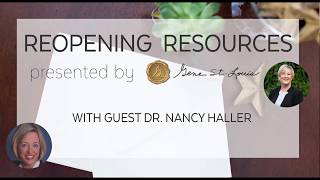
Dr. Nancy Haller from the Center for Creative Leadership talks about leading intentionally instead of on autopilot. She covers self-care across mental, physical, social, and spiritual health, how to align your team around a clear direction, and practical reopening decisions like staffing and patient communication.
Questions this video answers
May 1, 2020.
Seven and a half to nine hours per night.
Direction, alignment, and commitment.
Primal Leadership (Daniel Goleman) and The Power of Full Engagement (authors: Jim Loehr & Tony Schwartz).
https://www.genestlouisconsulting.com (COVID Toolkit page).
Chapters
Welcome, everyone. For those of you that just have gotten on in the last few minutes, I'd like to, you know, really connect with you on social media. And our handle is in the chat box as well. But please let us know what you're doing, give us your handles so we can go ahead and share things with what's going on in our world and you can do the same with what's going on in your life. Since we're not in the dentistry world as we'd like to be before we get going, I'd like to share with you a little bit about why I find it's important to really title this series Reopening Resources for you before you open your doors. There's been lots of webinars going on, and we're really honored to be able to host some dynamic speakers and feel very proud to be associated with them. Just some housekeeping issues, all of you will be muted. We do ask that if you have any questions, please put them into the Q and A question area. And when Dr. Haller is done, I will happily read all those questions and we'll make sure we get all the answers for you as well. In addition to that, I'd like to I know you're here to hear a dynamic speaker, and we're really, really grateful that we were able to secure Dr. She's very busy during these times. As you can imagine her. As you can see on the screen, her title of her lecture today is Leading by Choice versus Default. How well are you aligning with your resources, working through others to achieve your success, and factors for productive teamwork? I found that the reason I really sought out Dr. Haller and we've known each other for about 10 years now and is I was having more and more dentists say to me, you know, I really would like some topics on becoming a better leader. I feel like right now more than ever I'm not as good of a leader as I could be and should be. And so I thought, well, this is a great, great way to help you with that. So. Dr. Nancy Haller. With over 25 years of diverse experience in people development, Dr. Haller knows that leading an effective team is probably one of the biggest challenges you face as a dentist. She holds a doctorate degree in psychology and served as a commissioned officer in the United States Navy where she provided personal screening, team building and leadership effectiveness training. She also has been a sports psychologist, assisting athletes and teams to maximize their talents for optimum performance. Currently, Nancy works with Fortune 500 managers and executives at the center for Creative Leadership, where she is a Leadership Solutions partner. So without further delay, I'd like to go ahead and welcome Nancy to our group and say thank you for coming and let you go ahead and take it over from here.
Thank you, Jean. I'm pleased to be here and hope that our time together will give you some information about leading, especially leading in today's world, in today's crisis.
First, I hope that everybody who's attending that you're healthy, that you're safe, that your families and your teams are as well. And given what we're all experiencing, perhaps the title of my presentation today might have been Survive or Thrive. I'm hoping you chose the latter and again hoping that today the material that I share with you will give you some insights into how you might do that.
Jean mentioned that I've been in the human development business for about 25 years. I started as a clinical psychologist, but for a part of that time I simultaneously began a faculty position at an organization called the center for Creative leadership. They're a 50 year old.
Research based organization, but they take the research and they turn it into development programs. All exclusively for leaders and executives.
And so for the past 25 years, I've had the privilege, while I've been at CCL, of working with many leaders, from the CEO of a billion dollar global corporation to military flag officers, to Fortune 500 managers and executives in a variety of industries. And although your.
Work.
Arena is different from theirs, your challenges are remarkably similar. So want to share those with you. Everyone is experiencing a time of unprecedented disruption. And leading a team of people has always been hard work. But now more than ever, we need strong and effective leadership.
The army has an acronym called vuca and we were talking about VUCA for probably the last 10 years. Since about 2005. No, maybe it was 2007. It was actually when the iPhone hit the market. We did not need to be tethered to our desks anymore. We became a 724 world. It became a global world, truly. And it caused a lot of disruption. Now, clearly we're under different kinds of disruption now, probably akin to whitewater rafting. And when we're in that situation, we don't feel in control. The status quo has been pulled from us and there is no going back. So VUCA has got new meaning now and it will be the way of the future. Things are not crystal clear. They will be unpredictable, they're complex. Nobody knows the answers. And more and more you'll find yourself in situations that are ambiguous, that I've Never done this before. This is different from the last time. What we know is that it's akin to building a bicycle as you ride it. That's really what the new world of leadership is going to be about.
There's a woman named Carol Dweck from Stanford. She's a psychologist at Stanford, and she has really had much more visibility in these last few years with her growth versus fixed mindset. It's about what we call learning agility. Taking what you already know and applying it to make sense of a situation that seems so ambiguous to you. The difference between a growth mindset and a fixed mindset has to do with curiosity, your willingness to admit you don't know anything and to really be comfortable with that, that that is the opportunity for you to learn. It's not that your intelligence is fixed. It's that hopefully we're all learning and that the best leaders are lifelong learners. So what do you need to learn and how can you go about learning that? What we know is that it means stepping outside your comfort zone. And one of the things that we have sometimes said is if you're going to lead people, there's no. There's no comfort zone. And there's also no growth in the comfort zone. So I'd like you to think about disruption from a new perspective. It's a mindset shift, and that disruption is an opportunity to change. I was talking with a periodontist over the weekend, a client of mine, and she's having some trouble with a couple of her, actually one staff member. She's worked with this woman for probably a year, trying to grow her, and she's just not cut out to be in the office. And what she said is, I think this is an opportunity for me to let her go. And so, as you thrive in this new world, be thinking about change maybe being a good thing.
You might have not really felt like you ever wanted to be a leader, though. Rather than seizing the opportunity, you may say, you know, it was never my intention. I went to dental school to be a dentist. And you may have not given much thought to hiring an assistant or a hygienist or even somebody to do your billing. Before you knew it, you had a staff of people on your payroll, and they're all looking to you for leadership.
If you have employees, you lead. If not by choice, by default. And those employees are watching you. They watch what you do, they watch what you don't do. And all of that has an impact on your bottom line. Therefore, even if you don't want to Lead. It's in your best interest to be intentional and to lead by choice.
As you think about reopening your offices, you are going to have people who are coming and they're feeling like they're in a room of fear. Your staff, your patients. And they want you to lead them into a room called safe.
And that is going to be your ultimate goal. How can you help ease that fear and bring calm into your office?
Grace Murray Hopper was a rear admiral in the Navy. She's actually American scientist. She was one of the first programmers in the Harvard Mark 1 computer, the pioneer of computer programming. And she said you manage things and you lead people. There's sometimes been some confusion about what's the difference between being a manager and being a leader. My experience in the dental world is that dentists are usually pretty good at tasks to get stuff done. I'm probably in that camp with you to be transparent. What we know though is that you are likely leading a team of people who are caring, compassionate, service oriented, much like those on the front line these days. The medical doctors, the physicians, the nurses. Therein is a little bit of a formula for conflict.
So one of the things I would encourage you to do as you manage all the tasks that need to be done to reopen is to remember to prioritize your relationships with people. Nothing will go farther than your being kind, compassionate and understanding.
So how do you do that? What's your greatest resource to do that? Some people might say money, capital or time. I have a different answer. My answer is it's you and it's only you. You. You are your greatest resource. How do you lead yourself? How are you showing up in the office when you enter the operatory? What's the energy you're exuding? And even if you're not metaphysical, what's the expression on your face? What's the movements in your body? How can you exhibit calm groundedness?
So I want to spend a little bit of time helping you to think about how do I show up. Because self awareness is the foundation of all levels of leadership. If I can't lead myself, how can I lead others?
Do other people see you the way you see yourself? Is your intention.
Matching the impact you're having? Or as in this slide, you may have seen this, it's been around the Internet for a while. You may be thinking that your impact is far different than what you mean.
How are you going to find that out? The first is some self reflection.
We won't have time to do this all today, but I hope that you set aside some time in your schedule to really do some reflection.
Time. When you can be calm, maybe you're out with nature or relaxed. Like you to be thinking about your zone, your leadership zone. What zone are you in? And the first, always the first, is where are your strengths? When you are at your best, what is it that's contributing? Is it a good night's sleep? Is it that you felt very successful with a complex procedure? Did you hear some good news about something in the future? Whatever it is, what are you doing when you're at your best? How are you showing up? What would other people be seeing when you're at the top of your game?
Spend some time on that and then turn that page to the other side. When you're at your worst, what are people seeing and what's contributing to that?
How is it that you are in that red zone, the zone where maybe it's the evil twin, you don't like being there.
It's usually a time when people are pretty drained.
Then.
In thinking about what zone you're in. What are those warning signals or triggers? This is really important. What we know about effective leadership is the most successful leaders. That is, effective leaders are those who not only continue to learn, but they also are able to pay attention to what they're experiencing. And they do reflection. Whether that's. Maybe you do this on a walk, maybe you do this in a dialogue with somebody who knows you well. Maybe you are courageous enough that you're willing to ask people, what do you see that you think is my best side? What do you see when it's my worst side? And then how is that matching up with what your intention is?
That takes a lot of work. And so the balance factor has to come in. We can do almost anything within reality. We are very versatile creatures. We just happen to get into our little comfort zone and we think that's the be all, end all. But in truth, we can stretch. We can grow. To do that though, requires energy. And so resiliency has become a huge topic of interest. People are.
I read something about one of the most sought after topics on Google is mindfulness and meditation. And that's really under this realm of mental resiliency. These are artificially compartmentalized, but really.
They have a lot of overlap. One of my favorites, I guess they're all my favorites, but I think my personal is mental. We are the only living creatures on the planet that can think about what we're thinking about, think about that. We can be aware of our cognitions and our thoughts, our previews of coming attractions, or they're ruminations about things over which we have no control any longer because that ship has sailed. And so what are your thoughts doing to you? Are they buoying you up? Are they tearing you down? Are you being compassionate to yourself and to others? My experience is if you're not compassionate to yourself, you're not doing it with others. If that mental framework and that mindset isn't well taken care of, problems in decision making, judgment reactivity. Certainly you know a lot about the physical components of resiliency. Are you taking care of your physicality? Are you eating well? Are you giving yourself enough opportunity to recover from a difficult procedure? I just saw something on the Internet the other day with it's actually with a dentist showing some stretching exercises between one operatory and the next. You're bending over. Are you giving your body a chance to stretch in between patients? Are you working out in some way, shape or form? Are you taking care of the body Social There's a fellow who was appearing a lot on the talk shows lately or on the interview circuit, Vivek Murthy. He was actually the surgeon general from 2014 to 2017 under the Obama administration. As you might know, every surgeon General has a platform or something they really believe in, and Dr. Murthy's was loneliness. Said we have an epidemic of loneliness, and this was way before we were quarantined. Obviously we are social animals. Part of resiliency is reaching out to your support network, whether that might be a colleague, a peer, a family member, a rabbi, a minister, somebody in your community, a friend.
The old Barbra Streisand song was people who need people are the luckiest people in the world. I obviously dated myself on that one. But we all do need people to different degrees. Are you tapping into that need to get some social resiliency? And then spiritual.
Doesn'T necessarily mean religious, although for those of you who might be inclined, faith can be a very strong resiliency modality.
Spirituality is about the whole of your life, the meaning of your life. Why are you on this planet? What's your purpose? What are you here to achieve? We're going to talk about purpose and core values a little bit later in my presentation.
These are four of the many ways of providing resiliency to balance when you need to stretch outside your comfort zone. One that also is frequently ignored is the importance of sleep.
If you're not getting seven and a half to nine hours of sleep a night, I would really challenge you to think about how you can expand that, not by huge amounts, but even if you can go to sleep 30 minutes earlier, get 30 minutes more sleep, it's phenomenal what the neuroscience field is teaching us about the power of sleep and what happens when we sleep. We order our brain. Things that are happening to us during the day need that time to be filed and for us to really process them.
And we know that when people are sleep deprived, a whole myriad of problems ensue and frequently one of them is you will go back into your red zone. It is not boding well for you, staying at your best and showing up at your best.
Being able to pause rather than being reactive. And again, if your resiliency is very low, if you have not fueled your tank and filled up all that energy that you're expending, just taking a pause, just sitting down and thinking about it. And by the way, humor is now considered a leadership competency. This week, in fact, I am in a seven day challenge with the Stanford School of Business, Stanford University. They have.
Found through all their research that the more people can laugh appropriately, to have fun, to have levity, that that really does enable people to problem solve faster, more effectively. People like being together more. And some research shows that when we laugh together, not laugh at each other, but laugh together, we actually produce oxytocin, which is a bonding chemical. So think about how can you bring levity into your office in this very serious time? There's been lots of funny parabols going around and people have reworded famous songs. They're wonderful. What can you do? I know when I've stepped into a dental office, whether it's my own dentists or if I'm doing any consulting, I can tell within a few minutes. How does that staff get along? Frequently it's whether there is some light heartedness or whether there's this real constrained seriousness. Obviously, if you have an adult practice, you don't want it to be silliness, not like a pediatric practice, but appropriate humor. I would challenge you to find things to make work fun.
It is effective to have fun. So let's switch. We've talked a bit about you and the foundation of your self awareness and self management. So what about others? How do you create a bigger us, the team? Now I've been a consultant pretty much my whole career in one shape or another. And I'm in a field, or at least I started in a field as a clinician where I didn't need a team of people. As a psychologist, I'm a one man show or one woman show. Yes, I did subcontract for somebody to do my insurance building, but they weren't in my office. If I needed something done, some kind of a document, I could actually find a vendor to help me with that, my computer vendor or supplier. Dentistry is not that easy. I've yet to go into a dental office where there isn't at least one employee.
It's hard because the work you do requires you to have a chairside assistant or at least a front desk person. And so we're going to talk about how do you create that bigger us? Being a leader is a contact sport. You have to interact with your staff. I think there's a sense that dentists, especially those who have introverted preferences, can do really well with their patients. Some maybe not so well even with the patients. Very quiet. What we know about introverts and extroverts is one isn't better than the other. It's a different way of responding to stimuli in the external world. Introverts need some time to think about it, to process it. Extroverts think out loud. So one of the worst.
Situations that I consulted in was a dentist who came into the office. He had an exit from the back or the rear part of his office. He came in, went right in to his own private office, closed the door, would come out, see a patient and would go back in. The staff rarely saw him other than when they were chairside or if he were walking in the hallway.
As you might imagine, things were not going well in that office. You have to be able to interact with staff. So let's go back to can you do it? Absolutely. It will require energy.
And by the way, those of you and I have worked in those offices where the dental leader is very extroverted, fun, lively, sometimes almost too much so. So it's. How do you find that sweet spot where the interaction is just enough?
You are the CEO of your practice and you need to get into the mindset of that authority. And authority is not a bad thing. Authority is being a parent. Authority is giving direction. Authority is creating that calm demeanor. Authority is about influence. How do you move something forward and you do that? My guess is you do it more with patients, perhaps, than you think about doing it with your staff. At least that's been a bit of my experience.
One situation is, you've got a patient who's insisting, I want a filling. No, I don't want the crown, I want the filling. And in your expertise, you know that that feeling is going to fall apart in Six months or less, and she'll be back, or he'll be back for the crown. How do you use your authority, your expertise, to move that patient to a different mindset, that you're just wasting your money? You may not say it that way, but that this is what's going to happen. That's the kind of authority. You can be very diplomatic, you can be very kind. What I found, though, is sometimes dental leaders will hire a practice manager, maybe not even vet that person's style or experience very much, and think, okay, that person is going to take care of my practice. You cannot delegate this. It is your practice. So step into that role. I want to give you permission and encouragement to step into that role. So as the leader, you only have so many hours in a day.
And you need to learn how to delegate. Another area where I think leaders are challenged. Why? Because you probably can do it better than anybody else, and you probably can do it faster, too. You can do it more efficiently.
But unless you can get other people to do the work that you can't possibly do all yourself, you're in this teeter totter. And it is standing in the way of you having more financial success. But it requires you to trust others. So how do you develop that trust of your staff?
Well, the good news is you don't have to do it all. I think this is a big myth that leaders have in all industries, whether they're running a global Fortune 500 company or. Or they're a small entrepreneurial practice. You can't possibly know everything. The world's too complicated. Go back to Vuca. Volatile, uncertain, complex and ambiguous. We know more than ever the idea of the solo leader, the maverick, flying in and being able to be the hero that left us decades ago. And so, through my work at the center for Creative Leadership, I want to share this model with you. Because for years people would say, well, what is leadership? And the center, being a research organization, said, we better step up and answer that question. And so what we identified was that you can get to these three outcomes many different ways. But when successful or effective leadership happens, these three components are always there. Not two of the three. Three of the three. So if you want to get people to work together, you need to have direction. Why do we exist? Why are we in this office? What's our collective goal? What are we striving for? Now you do that to some degree with the morning huddles. That's a real mini direction. I'm talking about big direction. Now. Got to identify why do we exist? Is it to.
Help people, to have a better smile, to help people have a better life? What we know is so much happens with us physically if we don't have proper dental care. So direction. Why do we exist? And there's agreement. We're all going to Timbuktu. This is our mission alignment. What does alignment mean? It's the coordination of all the different factors that go on in your office. I've done some team building with fire departments, with teamed police agencies, or I should say law enforcement, hospitals, and dental offices. When I first did some consulting many years ago, I thought, wow, I think you're right up there in the top four of having things needing to work according to systems and to be beautifully orchestrated. So is the front talking to the back?
Is there clarity in terms of how people are communicating? Or are they like an octopus with arms flailing all over the place? And then the third component of effective leadership outcomes is commitment that people are willing to do it not only for themselves, but for the greater good. And here's a very curious dynamic about human behavior. We all have a pull. This pull inside of us is on one hand, we want to be special, we want to be unique. We want to be recognized for who we are as an individual. And at the same time, we want to be part of something that's bigger than ourselves, to be part of something that. That can impact the world in a more.
Broader way. So how do you get people not just to come to work because they get a paycheck or there's something in it for them, but that they can rise above that and simultaneously pay attention to the team and to the practice and do what's good. So these are the three outcomes. There's many ways to get here, but if you're going to be an effective leader, people have to agree on the direction. They have to be aligned so they're all rowing together and that they're committed and sustained. The best example I can share with you of this colleague of mine at the center was doing some consulting at a health care or a large health care organization. He was there early for a meeting. Very friendly janitor started cleaning up the area where he was seated in this waiting room and chatting with him. And my colleague turned the questions over to him and said, what do you do here? And without a hesitation, this janitor said, me and the docs, we save lives.
Me and the docs, we save lives. The lowest entry level on the org chart saw the value of being part of this mission. He was aligned with it. He Saw the necessity. And this is again before all these sanitation processes were in place now. So I always share that as an example, if that's what you want your people to be able to do and say, why are they there? What do they do there?
So let's talk a little bit about that. You don't have to know it all because you can't know it all. So if you feel like I'm floundering, gosh, I've never been here before, well, welcome to the club. That's where we all are now. And so be kind, be gentle to yourself, do some compassion counseling with yourself.
So you will need to do another little reflection exercise. What are your values? What's your mission? What's your vision?
Those are big concepts. And so this may not come very quickly. And if it doesn't, that's pretty normal. It may be a process of you identifying, if you haven't already, if you already have a mission statement. I hope it's more than just a plaque on the front wall of your office. I hope it's something that you live, that you breathe, that your staff also embellish, that they show it in the ways that they act towards you, towards your patients, toward one another.
One of the ways that you can start to dive into this, this idea about what is my purpose? The Japanese call it ikigai. Ikigai is how it's pronounced right there in the middle of the screen.
What are you good at? What do you love? What does the world need? What can you be paid for? And you can see if you only have two out of the four, there's something that's not quite right. So if you're good at dentistry and you're paid for it, yeah, you may be comfortable, but maybe there's a sense something's missing from your life, it doesn't feel rich enough or if you're good at something and you're doing what you love, you might feel satisfied. But once again, are you very useful? Might be a little self serving.
You can figure the others out. The issue is you want to identify that sweet spot where these all come together. I've been blessed.
I've always done my purpose and that is I love to have people grow a bigger mind. It's exciting to watch people think about something that they can do that they didn't think they could do before and make their lives better and be able to help those around them live a better life. If you don't know what your purpose is, spend some time finding that out because that is Going to be the driver of getting your staff to coalesce that everybody comes around. The purpose.
To help you to do that, you need to make expectations clear in addition to the mission and the values you want your staff to profess and to exhibit. And setting expectations is not a one time thing. It is an ongoing process. Not only what needs to be done, but how it needs to be done. I want the phone to be answered the first three rings. I want your voice to be calm, soft, inviting.
Whatever it is, revisit those periodically to ensure that your staff is following through with the expectations, making sure they're clear. It reminds me of a story. You may have heard this. It's actually kind of a joke, but I tell this story because I think it really happens. I think it's really true.
Couple were celebrating their 25th anniversary and she turned to him and said, you never tell me you love me anymore. And he said, I told you on the day we were married and if it changes, I'll let you know.
I find sometimes that that's what leaders think, that I've already given them the job description, they have the policy and procedure manual. What else do they need from me? Oh, remember, prioritize relationships. You're the CEO. Step into your role. Your job is to make sure that they're doing it. Now, that doesn't mean that you're constantly redoing what they've done or you're micromanaging. I hate the term, but you all know what that means, because that can split a staff apart. But you're following through on what happened.
You also need to set up roles, responsibilities, rules of engagement and rights of decision making. Let's talk about those for a minute. Boundaries are really important and particularly in a dental practice. Now, you don't want the boundaries to be concrete walls, but these are lines of division about what everybody is doing. If you don't have job descriptions, you need them. And not just the what of the job, but again, the how. And that may not be something that can just be done in paper. It may be something. Something that you need to have lots of conversations about. One of the things about leadership is bringing out the best in people, seeing the potential around you and growing them just like you would seeds in a garden or flowers in your flower bed. They need attention. What are the responsibilities in each of the roles in your office? Have those been outlined clearly? How will we work with each other? What are our rules of engagement?
And then what kind of decision making authority do people have? Where can they make a decision without consulting with you or somebody else in the office. Where is that a requirement? When you have roles, responsibilities, rules of engagement, and rights of decision making in place, people are going to have clarity and they'll be more respectful of one another.
Emotional leadership matters. So if you're very task oriented, this is going to be a stretch and you can do it. Remember to practice resiliency. If you want to lead people somewhere new, you have to start with where they are. If you've got children, maybe they're just starting reading. You don't show them a book on Shakespeare. You meet them where they are. We used to have a rule called the Golden Rule. Do unto others as you would have others do unto you. That one isn't extinct, but it's a bit passe. The new rule is called the Platinum Rule. Do unto others as they would have done unto them. What do people need from you? How can you determine if they're having a bad day or they're lacking some skill, they need some development, or there's something happening outside of work, or they're just a misfit for your office and they should have never been there in the beginning. You're not going to know that until you meet them where they are and see if you can bring them up, if you can grow them.
An important part of growing your people is giving them feedback. Remember, I showed you the slide in the beginning with the kitten and the lion. Getting feedback on yourself is one thing, giving feedback is another. And that is to create that awareness in your employee about how what they're doing is impacting you, the team, your patients, or the practice. And this is again, an ongoing process. You're creating a learning organization. We're learning together. And I can't help but tell you that when people feel they're deeply valued and that they're contributing to something, extraordinary things can happen. It requires you, though, to hold the mirror up to them. And so you have to be courageous. How do you do that? Well, think about how do you build them up? Because effective feedback doesn't criticize.
It identifies what you saw or what you heard. It's not your judgment on what you saw or heard. It's not your conclusion or an assumption, though. How can you translate what you experienced and observed? By identifying concrete behaviors and what that impact was. And so you think of feedback. Much like we talked about your zone. What zone are you in? Think about a traffic signal light for your staff. What do you want to continue to do? It's green light. Keep doing it. It is effective. What do I want you to start doing it? Maybe I haven't seen you do a certain behavior, but I want you to do it more frequently. Or what do I need you to stop? Because it is really an obstacle and it's hindering our practice or our relationship or our patient service.
Do people want feedback? Absolutely. Now, I've heard over, especially the last several years, about folks I'll say, complaining about millennials.
The fact is, millennials are really no different than other generations. They grew up in a time that allowed them immediacy and immediate gratification. But this came out of the Harvard Business Review a couple years ago. And what you can see from here is how frequently people want feedback. And of course, millennials, being in the blue, they want it more, more often. They want it weekly, a little bit daily, weekly, monthly. But when we get to the quarterly, look what happens. The non millennials, the other generations, they expect to have some kind of feedback. And look at the last column to the right annually, if you were doing annual performance reviews, I beg you to give that up. It is not effective to tell somebody in December that they did something in January. In fact, it's insulting and disrespectful, and it becomes a miserable task for you to do. So think about, again, that learning organization. How can you give feedback more regularly?
One of the ways that you can do that is catch people doing things right. Now, I know you're not all skeptics. My experience, though, over the years is that people who are in science professions like dentistry tend to have a bit of skepticism. And so that sense of, can I really trust my staff? Are they really doing it right? Let's face it, you're sometimes called cash business, and you collect money from people. And I know there are things like embezzlement. There are a lot of factors that play into that sense of skepticism.
But if you can focus instead on catching people when they do things that are aligned with your expectations, more than just saying, good job, though, you're missing an opportunity because good job. You were very helpful today.
You provided a great summary of the insurance claims that came in today. That's all fine, but if you can maximize that by helping them see the connection between what they're doing and, and how it impacts the team, the patient, the practice, link their behavior to your mission. That's when you can really leverage catching people doing things right.
I want to go back, though, and just explain something about the focusing on behaviors, not on your conclusions of the behaviors. So you wanted Sally to call the insurance company to question why the claim was denied. And it's the end of the day. And you ask Sally, did you do that? And you find out, no, I didn't. Sometimes our mental model, because we think at the speed of light, is we very quickly jump into a conclusion. She's lazy as opposed to having a conversation about, well, what happened, what got in the way. So watch that tendency you have to jump to the bottom line that you have a conclusion of why that happens. And again, in this time of uncertainty, more than ever, we want to have certainty. Be careful that you're not assuming things about people that you don't know. In fact, the most important thing that you can ask yourself is, what do I not know that I don't know?
What do I not know that I don't know? Because there are big holes or gaps.
In the way we live our lives because of the complexity and speed at which things happen. Advocacy versus inquiry. Two different ways of leading, and you need to do both, but you need to do them for different times and for different reasons. And so you might even ask yourself, what's your ratio in conversations with your staff? You need to be a telling leader if you're onboarding a new employee, if someone lacks skill, if they have a performance deficiency. Otherwise, move yourself into the inquiry column. Start being more collaborative. Ask questions, seek people's opinions, share, you know, with staff meetings, share things with one another, even share the leadership of the staff meeting. That's when you're going to get maximum buy in.
So as we close out, I want to leave a little time for questions. One of my favorite motivational speakers, Zig Ziglar, had this saying that if you want to reach the reaching, you must first reach the reaching in your own mind to achieve at that goal.
We know motivational speakers can be very energizing, but it takes more than just visualizing. It means you have to rehearse your future and then really practice one or two things every day. We know visualization works for athletes, for stage performers, for anybody who's an elite contributor. So you have some time. Now, another homework assignment is what does it look like when you are in the green, when you are coaching your staff effectively and they're delivering to your expectations? What is it like walking into your office? What might patients be feeling as they sit in your operatory? Think about those things, visualize them.
And keep learning. Always stay. It's always important to keep learning. So I'm going to stop there and see what kind of questions came up, if any.
Dr. Well, Nancy, that was absolutely fantastic. You did a phenomenal job. You've shared so much great information with us. It was really, really great. So thank you so much. Okay. One question that we have is what advice when you have a partner dentist that doesn't have the same vision?
We didn't touch on that. I'm glad that came up because.
I've worked in partnership dental practices or consulted with them sometimes in practices where there were three partners. It's a challenge. It's hard to lead yourself, never mind to have that directional alignment and commitment with your partner. That's really the time for the two of you to have a very serious conversation.
Those are the tough times where you have to really muscle up your courage. Talk about what's working for you, what's not working, and what ideas. Always staying open. Ultimatums do not work, but talking about the impact it has if someone else's value is in disagreement with yours, that's generally a deal breaker.
Whether that's in a business partnership, whether that's in a personal relationship. When we don't share the same values, there's nothing to build on.
If the partner has different vision. You need to find some way of coming together and to be able to get aligned and to really determine what will we do going forward.
Great question. Thank you. Any other questions? And great answer.
Thank you.
Any other questions? We have a great opportunity here with someone that has a tremendous amount of experience and can definitely help you. So if you have any additional questions, please feel free to put them in the Q and A. I'll happily read them off.
I'll share something since I wanted to share this because I wanted to end on a good note. Two weeks ago, when I was really in the thick of this quarantine and.
Feeling a bit stressed, I went for a walk that morning. And in my neighborhood, there was this rock that was right there, sitting right off the sidewalk. Somebody had painted it and left it there, and I was just so pleased. It said, be happy. I don't know if you can see it in the photo. There's a big yellow smile. When I got home that same morning, I went onto the computer and I was about to delete what I thought was a spam email. And instead I caught a couple of the words. And these were the words that were sent to me that same morning by somebody I didn't know. Because of the experience you are facing now, you will be stronger. Because of this experience, you will be able to handle much more in your life with ease. You will not be so easily frightened. You will appreciate the smallest and the simplest things in life. You will cherish your freedom. You will cherish your friends and your family even more. You will find that the things that used to bother you don't seem to bother you as much anymore. And you will know that you overcame a huge challenge that was thrown at you and you were triumphant over it. Perhaps you will finally see that you are far greater than you ever knew. So enjoy the little things. It's part of the resiliency of being an effective leader, of stopping and realizing how fortunate we are to be in the country we're living in and to have the blessings that we do. So I hope you all stay safe, stay healthy physically and psychologically. And if I can be of any assistance, if a question should come up later, you will have my LinkedIn.
Connection as well as my direct email and my cell phone number. Be happy to chat with you.
Okay, we've got a couple of more questions that popped up and comments. One was thank you for sharing that. They loved it. Also, how would I remove fear of my employee coming back to work in COVID 19? How would I remove fear of my employee coming back to work in COVID 19?
Meaning the employee is fearful?
I think that's what he or she means. I think yeah, that's what they're. I think that's how it was worded a little differently. But I believe what the question really is is how do I help my employee not be fearful about coming back to work with COVID 19?
Yeah, it's a great question and it's.
My first response is you can't be responsible for their emotions. What you can do is, is to talk with them. Remember, prioritize relationships. What are you most afraid of? Ask a lot of open ended questions. Stay with the open ended questions until you can exhaust the person. I don't mean that literally, but until no more could be answered. That whole notion of what can you find out what they're afraid of and then to provide any kind of reassurance, realistic reassurance, that you are going to try to eliminate the things that they're afraid of or reduce them, I think it's also we're all afraid sometimes. I think leaders are the strongest when they admit their own vulnerabilities. And if you haven't heard of Brene Brown, she's kind of a phenomenon. She's kind of a cult hero now because she began talking about vulnerability years ago. And when we're willing to say I don't know and I'm afraid to in an appropriate way that provides a lot of reassurance to people that I'm not in this alone. Now. It depends. You've got to judge the person and what that person's makeup is like and what you know and have experienced with them before. But sometimes saying, you know, I'm afraid too, and we'll get through it together can be very comforting.
Okay. How would I assure patients to schedule appointments are safe when we are allowed to open?
Yeah, that is a $64,000 question. I know there are lots of guidelines coming out. There probably be more, I don't know, depending on what state you're in, when you're going to be allowed to open. Reassuring patients, perhaps with a letter, you know, you want to reconnect with them. Sure. The idea of saying, hope you've been healthy and your families are well and we're going to be accepting appointments again and here's what we've done. I know, I the last open program, the face to face program that I did at the center for Creative Leadership was the week of March 9th. And then we went on quarantine and we weren't sure that people were going to show up for the program. And so we did, we did send out and then provided on the first day of the training all the things we were doing to make our environment as virus safe as possible. I would encourage you to think about how can you let your patients know that in advance?
Yes. And also that, Jean St. Louis Consulting has a COVID 19 toolkit. In that toolkit, if you were not able to make my seminar on sterilization and really helping you with opening. Yes. Many of the guidelines are not there yet, but we do know there are some things that we could be doing. And there's a CDC checklist that I've customized and that is on. I've just posted onto the Q and A the site, it'll be www.jeansainconsulting.com.
And you'll click on Covid Toolkit. And in that toolkit we have letters and in the CDC guidelines there's a letter to the patient that we recommend that you send along with a plethora of really some good, valuable, valuable tools. So please be my guest and help yourself to that. There's no charge or anything like that. And the next question is some employees may need to stay home to do childcare and take advantage of, of the 12 week paid sick leave with the CARES Act. There are a few that I feel may take advantage of that. What can we do, if anything, to Discuss with them with decreased workforce.
We want to care for our patients.
Yeah, I think there's going to be some of those kinds of constraints for the obvious reasons. I would encourage you to be in contact with your staff during this time if you haven't already. And one of the questions you might ask is as we think about reopening and we plan for it.
Not only ask them what ideas do they have, get them involved, but what constraints might you have returning to the office on this set schedule? I talked the periodontist I talked with over the weekend was telling me that she's probably going to be open from 7am to 7pm because of the need to really do the social distancing. They're going to be doing staggered shifts. Would there be an opportunity to stagger your staff that way? But I think really finding out who's going to be able to come back and in what time blocks will they be available to you and your patients?
Yes, absolutely. And again, I did do a seminar, a webinar on this last week. I will be re running that webinar where we discuss you really should be have you should have been communicating with your team on at least a weekly basis since this began. If you've not, don't beat yourself up. There's no time like the present. But Dr. Haller's absolutely right. One of the things that we discussed is, you know, finding out from them are they going to be coming back at what capacity do they envision that there are going to be some that you have, you know, laid off or furloughed and they're on unemployment. I do have an HR attorney that's going to be speaking on Thursday. I highly, highly recommend if you're on the line now that you plan on attending. He is endorsed by the CDA doctor His name is Ali Aramchian and he is from HR for Health and he's going to be addressing some of these issues specifically regarding the staff and coming back and what is your obligation? You obviously are right. You do need to treat patients and you need to care for them. I do know that if the employee is not involved in the CARES act with the 12 week sick leave that once you are open for and you say, hey, we're ready to go back to work. As you're aware, many of you have accepted the ppp and so with that you also only have eight weeks to pay those employees when they come back to use that money if it is going to be forgivable. But either way, I know that once you open and again, you're having conversations. None of us want to lose staff. But if you're having conversations with staff and there's no circumstance that would cause them to not come back.
I believe in what you are going to hear on Thursday is what is your legal right as an employer so that you are not in a situation that can get yourself in trouble. But I can tell you that if you are offering your employee who you have laid off full time employment to come back and they are denying or saying I don't want it, then you do have more of a legal right than you probably think. But I would urge you to join in on Thursdays as well. That is going to be a great, great session. So I hope that helped you with that. Next question is do you see time as being optimal for hiring new staff? Is it better to wait until the office reopens? Is there, in this case, there are good candidates that have not been hired back. So the reality of it is. I can answer this, Nancy, feel free to chime in. I've had quite a few of my clients that have placed ads. We are getting inundated with a lot of resumes and in the ad we are saying, you know, when we reopen. So it's not like we're open now, come and hire and we'll take you in. It's, you know, when we reopen we are looking for and then we go into the description and recommendations of what we're doing looking for. So I don't think this is a bad time. If you know that you do need to be hiring staff. I think it's probably a good time get the interviewing out of the way with Zoom doing any, any testing that you want to do prior to them coming. I think it's absolutely a good time. So I hope that answered your question. Next week we also are going to be one of the days will be we are getting the schedule together but one of the days we're going to be going over how to properly schedule patients. If you are a solo dentist with two hygienists, if you're a solo dentist with one hygienist, if you're a multi practice with two doctors and four hygienists, we're going to be sharing templates of what that would look like. We're going to be guiding you on how to specifically schedule what makes sense. We all know that we don't want to put anyone in harm's way and we want to do this in the proper manner. And right now most states have a recommendation that you only treat emergency patients. We obviously are finding that most of the dentists out there are following that recommendation. However.
They are going to be opening that up. At some point you are going to be able to see patients other than emergency patients. And at that time you are going to want to make sure that, that you have gone through the training with your staff as to how are you going, what is the new world in your office going to look like? And that training is not going to take a half a, you know, half a day. I have doctors that have begun that training this week with their teams. So I would urge you to hop on some of the webinars next week as well. And we'll, we'll gladly send them out to you if you're on our list. So next question. Do you recommend any specific book books to read on leadership from among all that are out there?
Yes, two of my favorites. One is called Primal Leadership. It's not a new book, but it's one of my favorite. Primal Leadership by Daniel Goleman. G O L E M A N He really introduced emotional intelligence to the business world, gosh, probably 20, 25 years ago. And I really think that that Primal Leadership talks about self awareness, self management, social awareness and relationship management. So a lot of what I started today's presentation about, the other one that is my favorite, among my favorites is called the Power of Full Engagement. And I believe that's by.
Tony, Jim Lore or Tony Schwartz, one of the two. Both of them were sports psychologists. And what their premise is is don't manage your time, manage your energy. So it goes back to the idea about when you're at your best, when you're in the green, when you're at your worst, it has to do with energy. And so those are two off the top of my head that I think are probably in my top 10.
Great. Thank you. I have a question in the chat and that is is it the same time next Thursday? So let's be clear. We're in this week, Wednesday, Thursday and Friday of this week. Every day at one o' clock we will have webinars. It is this Thursday that we will be having the HR.
Certain Measures for Uncertain Times. A Guide to reopening after COVID 19. That will be this Thursday. This tomorrow we will have COVID 19 and the real estate impact that being with your leases and how do you handle your leases in this current market? What should you do if you can't pay your lease and that type of thing. And that will be tomorrow. And Then Friday we have a great, excellent presenter as well. And that will be on social media and what you should be paying attention to on your social media accounts during this time. So hopefully you've signed up already and you'll be getting those invites and if not, you can always look on our site for that. Next question is, what is your daily practice for maintaining psychological well being?
Ooh, put me on the spot.
I've actually had to develop one because I must admit that first week was so jarring and I have been an independent consultant for a number of years. It's just that I've been full time at CCL for about the last five. But I'd get up and I'd find it. Sometimes it was 4 o' clock and I had not even changed out of my pajamas. So a morning routine is as if I'm going to go to work. I find that that really helps me. So I'll get up, I, you know, read the paper, have my coffee, but then take a shower, get dressed. Now I'm not putting on the clothes I would normally put on. I do put on jeans and a sweater.
Sometimes I'll even put on makeup. Obviously I haven't had my. I haven't gone to the hairdresser for.
A while, but trying.
Trying to maintain some semblance of sanity. I try to walk every day. I try to do some stretching and yoga every day.
As much as possible. Make it normal.
Okay, great. And let's see. Can you please repeat the link for the COVID19 toolkit? Absolutely. I posted it in the questions and answers and I've also posted it in the chat. But let me do it one more time. It's www.jeannessaintlouisconsulting. that's G E N E S T L O U I S Consulting, all1word.com.
Resources.
And the COVID 19 toolkit is there. I also, Dr. You had mentioned about vision and mission and I've also created a document on how to write your own vision. And now's the time to really either revisit your vision if you haven't, if you have one already, or to really create one if you've not had one and share it with your team. And that would be the start of those team meetings is to say, hey, I've had time to reflect and I want to share with you my vision and I hope you all understand where I'm coming from and whatnot.
So yeah, I'll just add to that. Jean, if the doctors can start with something foundational or Perhaps some kind of a draft. I would encourage you to ask your staff, what is our vision and see what they say. They may send you some very good meaty material. You want your vision to be simple so people remember it, but getting them involved in the process improves the likelihood that they'll buy in. And that's that commitment part of the direction, Alignment and commitment.
Absolutely. Well, I think we've answered all the questions in the chats as well, so thank you so much, Dr. Haller. Greatly appreciate it. You did a phenomenal job. I'm absolutely so certain. If any of you want to connect with Dr. Haller, there's her information on the screen. I know that you were. For those that attended. I had a couple of texts from people saying I ran late with my emergency patients. Have you recorded it? And I did record it, so I'm grateful for that. And we'll definitely be sharing your gift with everyone that asks. So thank you so much.
Thank you, Jean. It's been a pleasure. And again, to everyone listening, stay healthy, be well, stay happy. Show compassion to yourself and others.
Thank you.