Marketing & Outreach for a Successful Reopening / Gene St. Louis & Michael Anderson Wonderist Agency
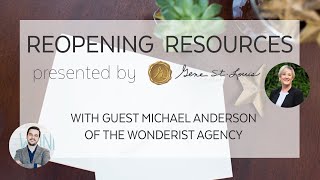
This is a recorded webinar (May 2, 2020) hosted by Gene St. Louis with Michael Anderson (Wonderist Agency) presenting. The session provides a step-by-step playbook for dental practices to prepare messaging and outreach for reopening after COVID-19 restrictions: craft a comeback story, anticipate and address objections (PPE, aerosols, financial concerns, office safety), and execute outreach (phone calls, email/letters, website banners, videos, social posts, paid social ads). Michael offers tactical templates (emails, social posts, ad copy), recommends tools (Canva, Modento, YourVirtualConsult.com, Boom Cloud), and emphasizes authentic photography, Facebook (business) vs Instagram (brand), remarketing funnels, and simple video/story content. The chunk ends with live Q&A on chatbots/HIPAA and a short Instagram Stories demo.
Chapters
Responses initially and really clamping down. So they kind of seem to come both sides of the spectrum there, which is interesting.
Yeah, yeah. And I've been communicating. Yeah, I've been communicating a lot with some clients in Michigan and the anxiety is building there. So, yeah, it's interesting. Okay, so.
So we're at 1:00 o'clock now, so I'm going to go ahead and kind of do a little bit of my intro and I'll make you the host so we can. Or you can pull yours up now if you want. Michael.
Okay. So welcome everyone.
Thank you so much for coming. I'd like to introduce you to Jeanne St. Louis Consulting, who is hosting this. I'm Jean. We're hosting this whole week has been reopening resources and I'd like to ask you that if you have any questions, if you would please be so kind to put them in the Q and A question part and we will address those at the end. In addition, all of you will be muted throughout the presentation. You may just see my face. I like to just let the presenter see, you know, just themselves on the screen so they can kind of focus and do what they need to do. If you haven't connected with us on any social media, we'd love to follow you. So please put your handle in so we can link and follow your practice and what your journey is doing. That way, if we want to communicate back and forth, that's an easy venue for us to do that as well. And also, I've been really fortunate to have met Laura Maley and Michael Anderson of Wonderous, their co founders. And I met them probably three or four years ago and just kind of fell in love with both of them and really found that they have a great deal to offer practices. They've done a lot of great things for some clients. And so I have worked with Michael and Laura over the years. I also, throughout this pandemic, have started a mastermind group that some of you have heard me refer to earlier in the week. And Michael and Laura are a part of that group as well. And that mastermind group meets every Tuesday. And we have an attorney, an accountant, a dentist, a hygienist, a marketing firm, a insurance credentialing firm, insurance specialists. So, you know, it's really just a great way to kind of. We started it in week one, so we're staying ahead of everyone, if you will, and the dentists and their teams and coming up with ideas and what we can be bringing to the table to help you all. So Michael is a Midwest guy, just like I'm a Midwest girl. So that also helped us to connect on the front end right away. And without further delay, I want to introduce Michael Anderson from Wonderist.
Awesome. Well, hey, thanks again for having me, Gene. And I'm excited to talk about, I think, something that's a little bit more positive than where we've been in the last few weeks. So it's exciting. I know. As people are probably joining, Gene and I were talking about when are we going to reopen? It's the question we've all had. And I think we all are feeling the sense that there is traction and movement. We're seeing other states open up. We're starting to learn more about protocols and what's successful and what's working. And so we're gonna start to shift our mindset today. We're gonna talk about what should you all be thinking about as inevitably you go back to work. And so today, talk about marketing and outreach for successfully reopening your practice again. My name is Michael Anderson, and there is my better half, no question about it. My wife and business partner, Laura, we've been working with dentists since 2011, and our office is in San Diego here. So we're neighbors with Gene just briefly. And I put some information in the chat here. But I'm going to say this one more time. If you guys are at all interested in getting the slides from today and I'm going to be sharing a bunch of resources, I'll spoil the presentation here and say that we're actually going to give you stuff to do. So that's going to be tough. Templates for ads, templates for social posts, templates for emails. If you want any of that stuff, my email is in this slide or it's also in the chat. Just send me an email. Just say, hey.
Please send the slides, please send the resources and I'll make sure to get those to you.
Michael, not to interrupt you, but we also will be posting. We're recording this, so we'll be posting it on our YouTube channel. Jean St. Louis ConsultingTube so it'll be up there. Give us a couple of hours, but we'll get it there.
This will live forever then. Fantastic.
That's right.
I better make it count. So I just again want to introduce the people that really make me look smart and kind of help get everything done. This is our team at Wonderist. We're super proud of them. I think that's one of the things that makes us different and special is we're powered by Actual people. And a lot of times when you're talking about marketing, there's a bunch of freelancers, there's people spread all over basements and got a team of people that really care about our dentists. And that's how we've learned what we've learned. So I want to share a little bit of that with you. Just one more sneak peek into our world. We are a full service marketing agency. We do everything from building websites.
Doing branding and logos and design, all the way to generating traffic and leads for people through Google AdWords, social media, content marketing, social media, paid ads, SEO.
And then also local marketing. So that's what we do. We've been around for eight years. We have about 30 people, people that work in our office. Obviously not right now. We love our 10 plus office dogs. Depending on the day, there's between three and 10 dogs in the office. And yeah, we've got a super fun space. So if any of you guys are local and you want to come check it out, come say hi, grab a beer, grab a coffee, we're always, always open to it. So like I said, there's an ebook that has a lot of this information and it's not just general information, it's literally got templates. So if anything on this list looks interesting to you, email templates, social content bundles, social ad templates, checklists for reopening events. I'm not going to read through all of it. If any of that's interesting to you, send me an email. You don't have to take notes. I'll send you the presentation and I'll also send you the ebook. Okay, so here's where I wanted to start today.
I saw this image, I think yesterday, and it's from Pittsburgh. And I think it's a great way for us to open with optimism, you know, to say, okay, what direction are we going and what should we plan on? So the Pittsburgh Action News 4 did a poll and I'm sure it's not perfectly scientific, but I think it's interesting. So they asked people, how likely are you to do these things? And so you can see that people, 9% of people would go to a concert, 12 would go to the movies, 13% would go to the mall, 34% would go to church. And I think here's the good news for Dennis. We're outperforming churches. 54% would go to the dentist, and then 55, we're just neck and neck with haircuts here. Would go to get a haircut. So there's Two things I take away from this. One is that people have some pent up demand. People know they need to take care of their oral health just like they know they need to get a haircut. I've got my Covid cut in fine form. At this point, I've kind of given up. I'm also overdue on my hygiene cleaning, which I'm anxious to get back to. The other thing we should read into this though is that those numbers normally would be much higher, right? People would say, well, I have no concern about going to the dentist. I have no concern about going getting my hair cut. And so while I hope you all see the optimism here in that people are seeing this as a service that they want to return to, there's also 46% of people that have caution. And we need to figure out what are we going to do about that, how do we continue to move this bar and, and make people feel comfortable. So that's we're going to talk about today. So I want to talk about this in four different chunks. I want to talk about finding a story and a narrative that's going to help lead your recovery. This is super important. If you guys just jump back into practice and say business as usual and you don't have your story right with your team and yourself, you're not going to do as well. And so we want to talk about finding that story. Want to talk about overcoming objections, right. We just started talking about this. We know there are people that are cautious. They're going to say, listen, I'm not sure if I'm ready to come back to the dentist. I'm not sure if I'm ready to touch a doorknob yet. How do we talk about and overcome people's objections that are both fear based and financial based? And then once we have a story and we've got some strategies to overcome objections, how do we get the word out? We need to be able to tell that story. And we're going to talk about that and then connected to it, but we're going to talk about it slightly separately is we're going to talk about how we can use social media better. I think that's something that Gene and I have been talking a lot and I know a lot of dentists have kind of been paying attention to social. Maybe you use it privately, but a lot of dentists aren't using it effectively for their businesses yet. And I think during this COVID 19 moment in our history, a lot of dentists are looking for better ways to do that. So we're going to jump into that as well. So let's jump into our story here. For those of you again that are local, this is Dr. Coleman Meadows from La Jolla, one of our wonderful, wonderful clients. And he got a chance to kind of talk about some work they were doing with PPE locally. And so, you know, he's literally telling his story right here. So we want to start to jump into that for you guys. So I'm going to start out here and I'm going to kind of share my starting point. And I'll be honest with you, I might lose some of you at this point. I think there's room to disagree with what I'm about to say. And so if some of you don't share my feelings, that's okay. But I hope you'll see the intention here. So for me, as I've watched the last couple weeks unfold, I feel that dentists in general have lost control of the overall narrative around dental health. With respect to COVID 19, there have been. There's a lot of fear. There's a lot of fear in the dental community. There's a lot of objections, a lot of concerns. And at the end of the day, the thing I keep returning to is our world is going to reopen, and we see businesses every day that are doing that. You know, I went to Chipotle yesterday and I got lunch and someone made me a burrito there. This weekend we're going to go Home Depot. We're working on a garden project outside. And I am convinced that dentists are better trained and in a stronger position to understand how to use PPE correctly, to work through infectious disease control and sterilization protocols. Much more uniquely situated than many of the businesses, like, let's say, a Chipotle, a Home Depot, the list goes on for a long time that are reopening now. And I say all that with all sensitivity to the fact that personally, I believe the period of quarantining was necessary.
This is not a common cold or flu. New protocols need to be developed. But I think that dentists need to step forward and say, we are uniquely situated to handle this. We have training in this. Lest anybody think that we have not been successfully managing AIDS in our office or herpes or the cold or flu that come through every year, or more serious communicable diseases. Those are things that have existed for a long time. Our office is set up to deal with them, and we have protocols in place that we use, we're experts in. And so I want you guys, some of you may agree with that. Some of you say you don't know what you're talking about. You're not clinical. That's fair. But I think that for those of you that. Do you want to embrace this part of the narrative and say, we're leaders in this and we should be at the forefront of this conversation. So I'm asking you all to focus on taking credit for what you know, the expertise you have, and then be educators for your patients. Because if you think about what is the great antidote to fear? We're talking about vaccines. What's the great vaccine for fear? It's education. And you guys have that ability to educate. And so we're going to start to step into how we can do that. So to find your story, I almost have a little workbook here for you. And I know you don't have a pen and paper and you can't sort of write on the screen, but I'd encourage you to think through it. And again, if you want to download this afterwards, maybe this is an exercise that you fill out. So to find your story, I'd like you to start with answering this question. What diseases do you successfully manage? There's a longer list that you have than I know about. And so I think it's worth you recognizing the experience that you already have. Then I'd like you to look at what are the protocols that you have been practicing that you do have in place that manage infectious disease, and kind of, again, write those out, whether it's a mental inventory, whether it's something you physically do. A lot of times we take, you know, we don't take credit for the things we take for granted. And you say, yeah, you know, using pp, that's just part of my everyday job. Look at the rest of the country, though. This is something everybody is taking credit for. You know, one thing that I thought of, and we'll probably talk about this again later, I thought it was really interesting to see the businesses that jumped on protocols early. Costco, some of the grocery stores. And, you know, I don't know how effective they were, but it made me feel better. It made me feel better to see that they were doing something proactive and they had a system behind it. There was some guy standing out there, looked official. He was spraying down the carts, moving people along. You know, there was a line, there were dots on the ground. It made me feel better. So, you know, what are those old protocols you have and what are the new protocols? You know, hopefully you should have some New things you're doing. And, you know, there's smarter people than me that can suggest what those are. That's not my job today. Gene is certainly the person that I would talk to to start to say, what are those protocols that we should have in the office? But. But what are those new ones? You should have an inventory of those again, so you can take credit for that and say, all right, this is part of how. How we're going to reopen. This is what the story we're going to tell. We're going to tell people about this. And then I want to close with this. You need to ask, do I feel confident that my team and I have a good plan in place to treat patients and keep them safe? And, you know, again, I think reasonable minds can go two ways here. I think some of you are looking at this saying, yes, I do. Put me in coach. I'm trained for this. And others of you are saying, no, I have questions. And so I think that for this story to work, you have to attack those insecurities and those questions and say, okay, well, what can I do to feel more confident? And then that's going to put you in a much stronger position as you go back to speak truth to your patients and to your team and say, this is why we're in a great position to move forward. So the other thing I want to do here is I want you guys to make it personal, right? It's not just a transactional business. You guys are community builders. One of the things I always hear Dennis says, I love that I built a community. And you have your own personal stories. And so, you know, for any story to work, you have to make it personal. You have to connect with patients, and that involves a little bit of emotion, vulnerability and honesty. And so in the interest of going through kind of another exercise, I want you to go back to the beginning and sort of say, what was the dream for your business when you. When you first signed your lease and you first got that business loan and you first walked in the door or even going back to dental school, what was your dream for the business? And reconnect with that, because that is important. I think a lot of people have gone through. And Gene, you talked about this last time. We were on stages of grief. You know, it's like a baby. It's like a part of our family. There's other people affected by this. So go back to that first thing that you really were able to sort of plant in the ground and say, what was my dream for this Practice and then recognize. What have you sacrificed and overcome to get here? And I know maybe this sounds hokey to some of you, say, okay, Mike, let's get to the good stuff. I want to get to those templates. That's fine. But if you don't connect to these things and you don't have this story to tell, then you're not going to. You're not going to need any of the other stuff we talk about today. You need to make sure it's personal. So think about what you've sacrificed and overcome, and make sure you have at least a mental inventory of that. And then, you know, what did it actually feel like when this first started, when you closed the door on normal practice? Maybe you're still doing emergencies, but it has not been normal. Maybe you had to lay people off. What was that like? And I think that's something that may be worth sharing. Because, you know, again, vulnerability and honesty is something that we're all attracted to whether we recognize it or not. And if someone just says, everything's great, we just go back to normal, then people treat you like an appliance. You know, that's what you are. We look for people that are inspirational, interesting, connectable. Those are the things we look for. So make that part of your comeback story. And then what about your team? I think your teams have all been affected. How do they fit into this story, and how are you going to tell that part of it? Because that's important. Why do we ask all that? This is going to start to give us a foundation to build on. When we think about how we educate and how we deal with objections and how we lead and move forward, and then finally, what is it going to feel like to reopen? That's something that I think is worth sharing. And we're going to talk about when we can do that. But when the key goes back in the door and the door opens up and you get a step back in and you're like, okay, we've got some hygiene appointments today. We're seeing some cosmetic cases. What is that going to feel like again, to be able to do that? And then what is your hope for the future? What do you think the future holds for you? And that kind of brings us to. I know we could say one year from now, two years from now. I want to go five years from now, five years from now. Do you think you will practice in a thriving practice, thriving office? Nobody knows. I think it's worth pausing and saying, if I go that far forward, do I think that I will be in a position to thrive because of decisions I've made. And I hope that you all get to say yes here. And if you're not saying yes to that, then again, you should be attacking those questions that are lingering for you and trying to understand them. And maybe there are no answers to them. But I think that's. That's where you need to spend time so you have a better foundation to move forward. Okay, so let's get into it. Overcoming objections. So there's some obvious things here, right? There's no new objections I'm going to share with you today, but I'm going to hopefully give you a little bit of a structure to deal with them. So PPE concerns. I think it's safe to say that patients are more educated about PPE than ever before. Most people didn't even know what PPE meant. It's like, there's the PPP loan and there's the ppe, you know, shortage. What. What does all of this mean? But patients have learned more about this, and so you need to prepare for that. You need to know that there's going to be people coming in with new questions with more critical eyes. They're going to watch what you're touching, they're going to look at your masks differently, they're going to look at face shields. And they'll probably also have educated themselves about the most extreme expectations for PPE and may ask you, why aren't you doing some of these things? So prepare for that and make sure that your team is prepared. You need to review your policies and procedures and make sure there's no confusion so you have a unified message. And then you need to be prepared to educate. You need to take that extra time to explain any new changes in PPE to patients. That's important. I think, again, it goes back to sort of standing in line. I remember being at Costco and being wrapped around the side of Costco, but seeing that they were doing something and having someone talk about what they were doing, I felt better. I'm like, okay, you guys are thinking through this for me. Thank you. So don't be afraid to address the elephant in the room and talk to patients about why things are different, and then be affirmative. Let them know that this is not anything new for your team. Right. Taking care of their health and safety and making sure you're using sterilization, those are not new things. And make sure that you really lean into your experience. Now, here's a pro tip. When we start thinking about photography and marketing, one Thing. If any of you guys have heard my wife Laura and I speak about marketing before, you know that we are just dogmatic about not having stock images. And we'll talk about that a little bit later. But, you know, hopefully I'll convince you today that you should be taking some more photos, at the very least with your smartphone. And the one thing I'll say is, don't let this new wave of PPE make you hide. You still have it present, acknowledge that it's part of the practice, but don't hide your face. So you know, as long as you're not in a clinical moment where you're actually treating someone, pull that mask down. Don't feel like you always have to be, you know, totally covered. Make sure that we're still connecting with the person. So really important as you think about taking photos in the practice in a post Covid world. Okay, man, that photo is a little terrifying. I'm sure a lot of dentists just cringe looking at that. I know this is kind of like the other conversation that all dentists are having. What about aerosols? And again, I don't claim to have the answer for this, and reasonable minds can disagree about whether this is a bigger or smaller risk, but you need to prepare and have your thoughts on it. Right? Some of you are going to feel differently than others, but you need to make sure that you have a firm position and your team understands that position and then again, educate about this. Right? It's super important to do that. Now, this is one of those that I think some of you might be shaking your head and saying, I can't believe a marketing guy is telling us to talk about this. That's a bad idea. Let's not. And I think one thing I've learned through this moment in time and certainly throughout my whole life is the people that talk about the elephant in the room, the people that are willing to be leaders out in front, even if it's slightly uncomfortable, often end up being the ones that are more trusted. So I would encourage you, even though it's a little scary, you're like, well, I don't want to put that idea in anyone's head. I think that you should have some way of helping your team and yourself talk about this, because it's going to get out. And if it's not something that's talked about in the media, then other dentists are going to do it for you and they'll use it as a way to.
Drive doubt. They'll say, well, we do, we do Worry about aerosol. Your dentist doesn't. Oh, man. And so it's important for you to have a strategy to do that. I think one of the best ways to do this is to create a video, talk about it, just tackle it head on, explain your specific response and then make sure that that lives on your website. It's something that's part of your social media strategy and it's something that you consider emailing out to patients as part of your reopening communication. Okay. And then financial concerns. Right. I mean, look at this graph. It's just, let's hope it's one of those crazy blips in our history. 30 million Americans are filing for unemployment. And you know, there's a lot of instability in our financial future. All of us feel it, we're all there. And so your patients are not going to be any different as they come back or think about coming back. Some of them have lost insurance, some of them are uncertain about their jobs, some of them have lost their jobs. So what can you do to help with that? There's a lot of things. I didn't put them all on here. Our guide has some more, but I think membership plans are going to be a big deal. We've already seen an increase in membership plans over the last couple of years and I think the offices that have them fared a little bit better through this moment in time because they have reoccurring revenue baked in. Wouldn't that be nice if you had that too? I think membership plans are something you should strongly consider for your practice. Now it could be something you self manage or as you can see with our pro tip here, there are some really great companies out there. My favorite one is Boom Cloud. Jordan Comstock, who's the founder, is just a great guy, super smart, grew up in a dental lab. His parents still run a really, really well dental lab. And so if you want to learn more about that, I'm not the expert. Go talk to Jordan, check out their website and then new patient specials. Nothing new here. However, I hope some of you maybe go and re examine your new patient specials. And here's the deal.
You know, some marketing agencies are going to say, what's the cheapest you can do? Can we do a $35 new patient special? Oh my God. You know, what's the point? I guess you get as many people in as you can and you hope you keep some. We've never been advocates of that. I think what you do is you come up with a fair special offer. You look at how much it actually costs you to bring a new patient in or how much you would bill for it and then discount it. Maybe 20%, maybe 30. Depends on how much you can go. And you also have to look at your competitive landscape. But the reason I think you might want to do this is as people are losing insurance, they're going to pay out of pocket. I'll tell you when we chose our dentist. So we have wonderful dentists, the Strummers New Image Dental. It was between them and one other dentist, one other dental office. And we looked at both and they had a new patient special offer. And we said, that seems fair. And we went with. We said, we're going to try New Image Dental. And we've been there for, I don't know, five years now. So it does make a difference. You can get new patients from it. It's not just all tire kickers. And I would encourage you to make sure you have a good special offer.
Okay, so let's talk about just this other sort of concern. What about just general office safety, right? What about touching the doorknob or.
Sitting in the waiting room? There's all these objections people are going to have about just coming back into the office. You need to again, prepare for this. Outline some procedures that your patients will actually get to see so they know what you're doing and then educate them about it. How should you do that? Put a sign on the door. I'm going to talk about the one we have here in a minute. Create an instructional video, one that walks them through what you do. Email out your protocols. We're going to literally give you a template to do that later and then talk about them on your website. We're going to go through all of that in detail. Now there's a video I saw and again, I will take no credit for this. I'm totally stealing this from someone else here. It's from Bracelin Smile Studio and they have a great video. Again, this is where if you want to email me and you want to get this presentation, there's all of these resources you can watch. They basically walk you through their whole office. They have a sign on the outside and they use this cool tool, Modento, to basically let people check in remotely. They can just use the QR code and then they're able to kind of communicate in the car and know when they're. When their appointments ready. So you don't have to do that, but it's a good video to watch. And there's another one we'll reference later to give you an idea of how, you know, how you can educate people through video, which I think is super important.
Okay, so hopefully we've got a little bit of a strategy here, you know, as far as what our story is going to be, what are we going to talk about, what are we going to educate people on now? How do we start to actually get the word out? The first one, I'm not going to spend a lot of time on phone outreach. I don't think I need you to tell. You don't need me to tell this. Gene has been telling you this, everyone else has been telling you this, and you didn't need any of us to tell you about it. You need to start calling patients and rescheduling them. Now, I know there's a little chicken and the egg dance here. It's like, well, when should we do it? Hopefully we're going to get more clarity, certainly for California and for other states that don't have dates yet. But as you get that clarity, you need to start rescheduling patients. One thing we have here, another resource is just a really quick response guide for people that are manning the phones for you or for yourself that will help you deal with people's objections if they say, oh, I'm a little concerned about, you know, whether it's safe to come back. We've got some outlined responses that you can use and print for your front desk. So again, I'm not going to go into that specifically. I know Jean, I think has even better resources than we do, so I trust that she'll follow up and make it even, even more robust.
The other thing too, you need to find a way to communicate all of the stuff we outlined in the story, how you're feeling, what you're doing, you know, how you want to educate patients. You need to get that out to people. And email and potentially sending a letter is a great way to do it. It's far from old fashioned. It's still, it's cheap or free to do and it's a great way to get consolidated information out. And I'll tell you, I think people are reading more email right now than at any other point. People are both at home and they have questions and they're interested. So this is the time to do it.
So make sure that you have a nice welcome letter. You know, you want to welcome them back, you want to share your story and then you want to talk about your procedures. If you do live in a sort of older skewing market, you might want to consider a letter and honestly, this may be one of those moments where even though you don't want to spend the extra money, spending just a little bit more and doing both is worth it, because your number one focus right now is to keep the patience that you have and to reactivate them and make them feel like you are all over this. So, you know, I think it makes sense to send multiple emails and it may make sense for you all to send a letter out. So we've already talked about video a little bit, but it's such a powerful way to do things. And here's another one, Dr. Packard, for any of you that have seen me talk before, I love to lean into this guy. I love to learn from him. If you just want to. If you just want to honestly, just go follow Precision Dental on Facebook. They have such good content. It's just such a good way for you to get an idea of what you should do in your practice. But Dr. Packard made this great video. You can see it says, we have exciting news. We're opening back up tomorrow. And then if you were to click see more, he walks through all of the procedures that someone's going to go through. So basically, like, you drive up to our office, now what? And so again, this is alleviating any concerns for someone that's like, is it safe to go back? He's like, yeah, we thought about it. Here's every step. So in that video, you want to welcome people back, you want to share your story, how you're feeling, what the impact is, talk about new procedures, and you want to let them know your team is ready and show them, right? People connect with people. I want to see your team and see that they're ready and excited to have patients back. So we're getting past that fear, right?
And then your website, you can't forget about this. It's your digital storefront. And listen, guys, if you don't know how many people are visiting your website on average in a month, use the time you have left to talk to your marketing agency, your webmaster, your cousin who runs the website, whoever it is, and say, hey, how many people come to our website? It's going to be a couple hundred. The smallest dental websites have two or three hundred people coming to them. You know, a lot of them are going to have five, six, 1,000 or more people coming. And so, you know, it's true. People find information everywhere. They might go on your Google business, they might go on social media, but they're doing their research and they're looking information on your Website, So you need to make updates there. Here are three things that I would encourage you to do. Have a reopening alert. Why is this important? I think about right now as I've ordered some takeout food. There's restaurants and I'm like, I'm not sure if they're opened. I don't know. And so I have to do some hunting around, right. Sometimes you call and it goes to voicemail. Like, should I call back? And I find myself going to their website and if they have a banner somewhere that says open during COVID 19 taking or I know I can follow up. So you want to make sure there's no confusion for people that you are in fact open. So put a reopening alert. You can kind of see over here, there's this banner right here. That's where it could go. Now I've got an example. Again, this is Precision Dental, Bowling Green. If you want this presentation, you want to say, I want to see what Mike's talking about and I want to copy it, get the presentation, click those links and you can, you can take that exact concept and use it for your practice. Another local practice here, Harbor Family Dental. And again, not taking any credit for this either.
Really great page that was added by the document and it's basically got a visual list of all the new things that they, that they're doing in the office to respond to COVID19. So it's talking about new procedures that are in place. Really, really great. So that's Dr. Walrich, awesome guy, great marketer, really good mind. So another guy to pay attention to. And then no stock content. I can't talk about websites and not tell you guys not to do this. It's a way for people to connect with you. Use the last week or two or a couple weeks, you have to go back, look at your websites and say, okay, people are going to start coming back. They're going to look for an office that's a good fit. They're going to have new concerns and questions. I'm going to show off my space. I want to show them what I've done here. It's clean, it's beautiful. I've got great technology. I've got a team that is ready and excited to treat patients in a way that's going to make them feel comfortable. I'm going to show that off. That's what's going to make you feel different. So we've got another sort of local San Diego office here, Seaside Dental. And one of the practices, we built a website for beautiful, beautiful website. You can see all the photos and the videos in there. Really help you connect. Pro tip here for websites, if you really want to go the extra mile and meet patients where they're at, add live chat. That way they're on your website. Boom, they can ask a question. You just have to make sure that you have someone that is able to man that you can create rules around it. So it's active during certain hours, but. But live chat's a great way to connect with people. We have it on our website and we chat with dentists every day through that. Okay, getting social. So.
So. So I just want to kind of like paint the picture for some of you guys. And some of you can say, listen, I get it. I'm on social media. Michael, you don't have to tell me. But for those of you that maybe have always said, well, I got kids that are on social, or, you know, I do it personally, but I don't really think it's a business thing for me personally. I just want to set the stage for you. There's 3.8 billion social media users on the world, and that's basically half of the world's population is on social media. It's pretty amazing. And the average user has about eight different social media platforms, right? So it's not just Facebook. It's not just Instagram. For those of you that got hooked on TikTok over this sort of pause in our life, it's not just TikTok. There's a bunch of different platforms, and most people have more than one. And most people are spending about two and a half hours on social media each day. That's a lot of time. So we've seen people's eyeballs shift from watching tv, from reading newspapers and magazines. They're shifting to social media, right? That's where people's attention is. So what do we do? What do we do about that?
So when you think about it, you say, okay, well, people have eight platforms. I don't have time to post on eight platforms. What should I be doing? I don't think it's gonna be a huge surprise to you when I say that Facebook and Instagram are the two platforms that you should focus on. And they're different now. They are. They have a similarity, though. Facebook purchase, Instagram, and they are connected. They're connected companies, which is nice, because there's some efficiencies that you can gain, but they're two very different platforms. So those are the two we're gonna talk about today. There's a couple of things you can take note of here. YouTube, second largest search engine in the world, second largest social platform in the world. Definitely one of those areas that I think if you want to really go the extra mile, you want to start getting more active, create videos. YouTube is another great place for you to look. I'm just going to again, answer the question because I know it's coming. What about TikTok? It's a sort of viral sensation, a lot like vine, where people are creating these fun videos. I think that it's going to be less helpful for helping most local businesses grow because it's not as localized, it's not built for businesses. There's one or two dentists that have created a big following there. That's what's going to happen. You're going to have a couple big influencer dentists that get on there. But for the rest, the rest of us, most dentists aren't going to find success on TikTok. I may live to regret that in Gene. I'll be very sorry that this is recorded and on YouTube forever, but at least right now, TikTok is not a place that I would be spending a lot of time. Facebook and Instagram is where you want to spend your time. Okay, let's talk about Facebook first. So.
Why should you care about Facebook? Well, one unique thing that's interesting about Facebook that I don't know if you guys have thought of, it's the largest social platform. We know that, but it's also kind of the only social platform, the only major social platform that asks users to sign up with their full names. Think about that. Every time I think about it, I have to go back. I'm like, wait a second, that can't be true. I think LinkedIn is the other big one. But Instagram, you have a handle. TikTok, you have a handle. Snapchat, you have a handle, all of those. You have these usernames. And so Facebook actually links people up to people. And I think that changes the way the platform is used. The other big reason that you should care about Facebook is as a company, they've shown strong initiative to really care about messaging. That's a big part of their future plan. And if you haven't noticed that, start paying attention. You'll see they're making strategic moves. They already have Facebook messenger, which a lot of you have probably used at some point and maybe even for your business. They recently purchased WhatsApp, so the largest global messaging platform in the world, and they're merging those Two. And then they've also been running a lot of these commercials. In fact, my wife and I have one of these for a portal, which is this video conferencing that you can basically kind of do through Facebook Messenger. So they're really, really going to push heavily into messaging, which is important for businesses. Right? How do you interact with patients in the future? I think messaging platforms are going to be part of that. Now here's the other big thing. Facebook is built for businesses. And that's one of the other very unique things about Facebook that other platforms can't really claim. It's got tools built just for businesses and it also is kind of recognized as a business listing. So if we think about, we switch from social and we talk about SEO, hopefully some of you are familiar that you've got multiple listings, right? You've got your Google listing, your Bing listing, your Yahoo listing, you've got your Facebook listing, you've got. Then there's a bunch of just. There's like Foursquare. And you may say, well, why do I care? These are big data aggregators that other software and other platforms pull data from. They will literally pay Facebook for their API and say, can I pull data from you so they don't have to manually enter it? And so you want to make sure that all of that information is filled out. Because the more filled out it is, the better all of these platforms are going to. They're going to say this is a good business. They're using all of our features well.
And it's going to create more consistency on the Internet. So that's another big one. And then reviews. 47% of people have written a Facebook review that have been surveyed and that's just in a 12 month period. And only 25% of people have written a Google review and 16% of people had written a Yelp review. Now, I didn't include this in these numbers, but the Yelp had not increased from the last couple years. And there are more people now leaving Google reviews and more people leaving Facebook reviews now. You know, personally, even with that information, I'll tell you, I still think the most important place for dentists to get reviews is Google. I think Google's number one. But don't forget about Facebook. Facebook is a super important place for you to be generating reviews because we know people are looking there to vet businesses. Now the photo that I have on the side here, I know I kind of jumped over this. Tools built for business. What does that mean? There's these tools built for business. Look look at the image that we have on the side and you'll notice that there's some very specific stuff. You can put your services on your Facebook page. Did you know that that's something that you should be doing. You can again, have reviews, you can put offers on here, you can build a community, you can have events, you can even look for jobs. There's all of this stuff that you can do on your business Facebook page. So it's way more than just a place where you can post some photos and read some news articles.
Okay, let's talk about the demographics. Well, you know, what is the community of Facebook like? It's pretty broad. You know, it's not just a kids platform anymore. You can see that, you know, basically 88% of, we'll call them teens are on the platform. You know, 18 to 29 year old, 84%, 30 to 49, 72. And jump up here, 65 plus 62% of people on Facebook. So if you're saying, well, I skew older, my demographic is an older demographic, 62% of those people are probably on Facebook.
So, you know, I won't read all these other stats, but you'll see it's pretty flat across income levels. They're basically, everybody has a similar adoption and education levels. Everybody is on Facebook.
Okay, so here's what I want you to take away from this. Facebook. Facebook. If you say, well, what Mike said, there's a difference between Facebook and Instagram. What's the difference? Facebook equals business. This is your business platform. This is where you do all of the business stuff. You're going to update all of those different categories we looked at. You're going to have more of a business mind for how you're using it.
And here's specifically what I'm going to recommend you do. This is kind of your to do list. I want you to make sure you have a professional looking page by having a logo in your profile. Look how clean this is. You've got precision dental. And honestly, if your logo doesn't fit into a circle, find a version that does. You don't want to just, you know, have the corners cut off. It looks unprofessional. This is again, a virtual storefront for you. And then if you don't like the idea of having a logo, then make sure it's a headshot of you so that it sort of blends in with the platform a bit more. And it's, it's, you know, you're celebrating you as the practitioner.
And then there's that sort of, that cover image, that banner, it's your billboard. Use that space. Well, I think putting a video back there is one of the best things you can do. So if you have a practice intro video, throw it there. If you don't, there's no excuse. Later today, tomorrow, this weekend, pull your phone out, please. Please make sure that you hold it horizontally. Don't do this. You want to hold it horizontally and record a one minute welcome video. Just say, hey, this is who I am. Welcome to my practice. Thanks for checking me out. There you go. You've got a nice awesome billboard for when people are doing a little bit of research on you.
Okay. And then there's all this business info, right? I said we have to treat it more like the business side. Make sure it's filled out. If you don't have it filled out, it's not going to work for you as well. So you can see on the side here, you know, there's category, username, business details, price range. I know that could be scary, but maybe this is a good way for you to tell people how they can, how they can think about you, all sorts of information that you want to fill out. So make sure you update your description hours, any missing contact information, and then build out your story. See this section that's cut off here? You can actually talk about different things that have happened when the business opened, when you got new technology, different parts of your story. That's a really great way for people to get to know you. And it's one of those new features that you may have missed when it rolled out.
Office photos, guys, I can't tell you, for me, when I'm looking at a new business, I want to see it. I want to see what it's going to be like. That's one of the most calming things for me personally is to visualize myself there. Make sure you have a gallery of office photos, and it's something you're posting on the regular so that people can see themselves in your office and then get active on messenger. So remember when I said, you know, one of the big reasons you should pay attention to Facebook is they're investing in their ability to be a communication platform. Don't wait for everyone to force you onto it. Go and make this something you can do now. So here's the easiest thing that I'd recommend. Activate Greetings. And if you say, what is that? That's a technical term that you basically, if you notice, sometimes you go on a Facebook page and it's like someone chats back to you and says, hey, can I help you? That it makes it so much more likely that someone is going to start a conversation with you. And so you want to activate that. And you can go to this little feature on the back and it says, start a messenger conversation, show a greeting, turn that on. And that's going to increase. People that start to reach out to you, make sure you have someone on your team ready to respond. And then you want to respond quickly so that I don't know if you've seen Facebook will say this person responds within one minute or one day. If you can make that response time shorter, more people are going to want to reach out to you. And then if you really want to be the A plus student, there's messenger bots out there. Again, that's a whole nother conversation for a different PowerPoint. But I of course want to acknowledge that for those of you that are interested in this stuff, do some automation and have some prompted questions that people can click answers to that start to get them closer to the information they need. Okay. And then, you know, reviews, such a big part of practices, you need to be asking for these.
There are tools you can use to automate this, like Swell cx, Bird Eye Revenue well, and Solution Reach. I hope you guys have those in your practice. I really do. It makes such a big difference if you're getting one or two reviews a month that there's something wrong. Either you're not doing your job well or you're not asking for reviews. And I promise you, you'll have a better practice if you spend that little extra money and you automate it. But here's the trick. If you do have one of those and you say, well, I don't get that many reviews. I don't know what's going on. Try this when you go back to work. I promise you this will make all the difference. Your front desk needs to have a system, a script, and a goal. And what you need to do is they need to. When someone comes up at the end, they say, how was your visit today? And most of the time people are going to say, it was good, it was great. I love my hygienist. I love Doc. Really good. And then you respond by saying, we love to hear that. Getting feedback like that is fantastic. We're working on getting more Facebook reviews. It's one of our goals right now. And you're going to get a text after you leave here and it's going to ask you what you thought and your opinion means so much to us. If you could take a minute to leave that review, Our whole team reads that. We get together. It makes us feel good. Do you think you could do it? I know it sounds cheesy that I'm saying this, I realize it. But think about this. What is your favorite restaurant? Have you left a review for that restaurant? And if the waiter, next time you were there said, we're really trying to work on getting reviews, would you leave a review? And by the way, I'm going to send something to your phone, would you do it? I think most of you would say, yeah, I would. And so make sure you're asking.
And then don't forget about some of these sort of extra little things. You can add services and special offers to your page and that's just going to give people more information to know how they can interact with you. So maybe you want to highlight Invisalign, same day crowns, pinhole treatment, sleep apnea, Some of the more special things you do, add those as services. And if special offers are something you want to use to grow your practice, promote it on Facebook. It's a good way to get people to start to reach out and say, I'm interested in this. And then you've got some leads to follow up with. Okay, so we're going to be done talking about Facebook for a little bit and we're going to shift over to Instagram. So why should you care about Instagram? It's simple engagement. Instagram is a better engagement platform than Facebook. It gets about 23% more engagement. Brands on Instagram see about 4% of engagement from their followers and Facebook sees 0.1. Oh, organically. Right. That's. It's frustrating. Anyone that's tried to market on Facebook knows this. You can get a bunch of people to follow you, but nobody sees your content unless you pay Instagram. You can see content go further. So, and one more fun fact for you, brands see engagement rate 10 times higher on Instagram than you on Facebook. So you should be focused on Instagram as a way to get more people to see you and your brand.
Stories. Now, stories exist on both Facebook and Instagram. And I believe if we look at the numbers, there are more people that watch stories on Facebook because it's a bigger platform, but the engagement on Instagram stories is better. And so, you know, just to take a step back, for those of you that may not know, you're saying, michael, what's a story? We're going to see an example of one in a couple minutes, but you can scroll Your feed in Instagram, and you can see all the different posts. I think we all kind of know what that looks like. But there's this new thing. It lives at the top. There's a bunch of little circles up there, and it basically lets people and businesses create sort of snapshots into their day. You can record a video, you can post information, and it's there for about 24 hours, and then it goes away. And so I like to look at it as sort of a local TV feed of just what is going on in everybody's brain. And that is increasingly where more and more people are spending their time. Now, here's some good things to know. About 59% of millennials, that's me. And 70% of Gen Zers, those are the people older than me, watch Instagram Stories. So people are doing this. Actually, I'm sorry, I was running on the Gen Z thing there. But yet more and more people are engaging with Instagram stories. And one in four millennials and Gen Zers look for products and stories. This is not just about us connecting with friends. We also look for products. I've definitely made purchases from Instagram stories, and then 70% of users are engaging with brands and looking brands up to vet them on Instagram. So, in brief, what's the deal with Instagram's demographics? You'll see pretty quickly that it skews a lot younger. So, for example, people 50 and over, you know, 50 to 64, 21% are Instagram, 65 plus 10%. So it's a much younger platform. It's probably where the future's going, right? You look at that 18 to 29 and 13 to 17 range, way more adoption there. Which means as those people get older, Instagram is going to become more and more of an influential platform.
Okay, so Facebook equals business, Instagram equals brand. This is the platform you want to use to drive your brand. So what should you do? You want to. Ultimately, you want to think about what are your strengths, right? What are the things that I want to celebrate about myself? Do you have a beautiful new office? Do you do great before and after work? Are you someone who really loves getting in front of video? Are you a dog person? Is that the thing you want to do? Are pets in your life going to be the thing that you want to do? Or are you just someone that has great chemistry with your team? You do funny photos. Any of those can work. There's no right answers, but you need one or two strengths to be sort of who you are. That's Important. If you haven't thought of this already, do that. Don't do everything. Don't post dental jokes, dental memes, the occasional photo of a fore and after photo. Here you need to have a strategy. You need to know what it is that you post. And really, I think picking two or three different things. So, for example, posts of the office.
Fun facts about services, and before and after photos. Those are three strategies. That's what my strength is. Service our office. And before and after. Okay, Those are the three types of posts you have. That's the kind of strategy you want to develop for yourself. Next, you want to talk about your audience, right? You want to say, okay, well, who am I trying to talk to? You know, is this going to be an audience that's going to be younger, older? What are they interested in? You need to know what your audience is, and then what's your aesthetic ultimately you really want to have? We've all seen those curated, you know, photo grids where they all look perfect. One of the big things that helps with that is filters. So you want to have kind of almost a color type. You can imagine if all of your photos were in black and white, they would kind of look the same. That might be too extreme. But you want to make sure that you find an aesthetic that you can stick with. And that's going to ultimately make your Instagram brand a lot stronger, because people are going to see that and associate it with you. And then you want to plan this out. Don't just wing it. Build a content calendar, right? You've got to start to take those buckets that we talked about before and after photos, photos of the office, talking about services, and start to map that out. Now here's some tools for you. Airtable is such a cool tool. It's basically like a spreadsheet on steroids where you can upload photos, you can do all this great stuff. It's free, which is why I like recommending it. Unfold is another great tool. It's an app that goes on your phone. It lets you organize your Instagram feed so you can kind of see it before you post it. Really beautiful tool. And then Buffer is more of a professional tool. It's what we use on our team to post for our clients and lets you schedule posts out so that you can actually think ahead. So, you know, more advanced. But it's another good way for you to be able to plan ahead. Okay, so why am I talking about consistent brands? It doesn't matter. We're dentists. We don't need to worry about brands. 23%.
Brands that are consistent see a revenue increase of 22%. That's not chump change. That is not a small amount of money. And if you think, oh, that's probably just E Commerce or, no, that's just restaurants, start to think about your own purchasing decisions. What are the brands that you support, local and otherwise? They're ones that have consistent brand presence. And so that's something you need to make part of your practice. And I promise you, we work with too many dentists that do this well, too many dentists that don't to know that this number is absolutely true. And then again, I know I warned you guys, I'm on a mission. Laura and I are on a mission. We're going to try to get all the stock imagery out of dentistry. At some point here, when stock images are replaced with real photos, you see an increase of 161% in conversion. If that number. And I know there's, there's. What's the famous quote from Mark Twain? There's facts, statistics, and then there's. There's lies. I totally screwed it up. But, but, you know, this is one of those things that you can take to the bank. Look at your website, look at your marketing, look at your social media. If you've got stock images that. What are you saying? You're not connecting with anyone. Find a way to breathe some life into the marketing that you're going to be doing after COVID 19, when we've all been cooped up, we're sitting in our homes, we want. I'm craving connecting with other people. I don't want to see another stock image. I want to see a person that I'm excited to go meet. Please, please, please, please, please ditch the stock imagery and start focusing on what's real. Okay, so that's a great segue into creating effective content. I think you see where this is going to go. So we've already talked about social media being an effective way to get the word out. You know, I love this analogy of 20 years ago. We were all reading newspapers, and it's transitioned. We're still doing the same thing, but just in a different format. Now we're on our phones. And so you really go where the eyeballs are at. Guys, if you're not taking it seriously, I hope you start doing that, because this is where people are at. And just because you may have tried in the past and you didn't get results, I would ask you to consider what did you have to say There are plenty of people that ran ads in newspapers that never saw results back in the day when that's all people read. And then there were ads that worked great. It's what they had to say that mattered. So here's a good example. I love giving examples because hopefully it gives you guys some stuff to think about. Dr. Altamos at Mansfield Orthodontics, again, just. God, I learned so much from her. She's fantastic. She's been posting through this break. And look at this. You can see the post that's kind of in the back there. She's saying, I'm so excited to share what we've been working on. Let's just say a lot of planning, measuring, and cutting, you know, went into this. It's getting me excited. I don't know what it is yet. And then she's saying, I'm so excited to finally share this. She's giving you these little updates of what she's working on, and it's something I can connect with personally. If you don't feel like this is something you're doing, I would ask you to pause for a second, say, well, is that something that.
I'm interested in? Look, not that numbers really matter in this case, but, you know, 34 people liked that post she made with four comments. She's getting engagement because she's talking about real stuff. I promise you, you can do that. Don't think dentistry can't do that. But you need to have a good strategy. Part of that strategy is embracing good company culture. I think in one of our sort of breakout sessions that we do that Gene was talking about, we talked about this a bit. I think people overlook this all the time. They say, well, how can I have good marketing? And if you don't have your culture right, it's a lot harder because you need your team bought in. And Dr. Packard, again, one of those guys that just nails it with his company culture. He's got a give that he does in his local community, and it's on his wall. He just wears it on his sleeve. He's like, I'm so excited to give to this. Cause he gets his team involved in it. They have fun, they make photos and video, all this stuff. Your culture is one of your best ways to shape your brand. And so I know this can be a tough one. And I know you hearing some random guy on a webinar is not going to go magically have you change your culture, because all of us want to have a good culture at work. But I would ask you to maybe, maybe use this as a springboard to recommit to making it closer to what you wanted it to be when you started. And I promise you, that's going to pay dividends in the long run in your marketing. Okay, here we go. I think it's the last time I'm going to say it. Please, guys, no stock images. How many of you have one of these actual photos on your website? I bet some of you do. And the joke I always like to make, it's like a Cialis commercial that I've seen a hundred times, right? And just look at the difference between this and Dr. Packard and his team. And you know, what Dr. Altimos is showing us here, it's just. It's totally, totally different. So please consider, you know, ditching the stock images. Authentic imagery is so core. Professional photos, I think, are something you should be considering for your practice. How much did you spend building out your practice? What's your technology investment?
Do you think it's worth a couple thousand bucks to get some professional photos and videos done? You know, it's just like that's. That's the thing that launches all of your marketing in your emails and your social media and your website. All of that stuff, it needs to be fed by authentic photo and video and then candid content. If you don't want to invest in working with a photographer, videographer, or a marketing agency like us, take some of your own photos. I know you guys can. Most of you have really great cameras in your offices that you do before and after photos with. I think someone on your team has figured out how to take cute photos of their kids. I promise you they have. Why don't you see if you can use that skill and take some great photos of your team? But promise me that you're not going to just do yearbook photos where everyone's standing against the wall, or you take the photo of the empty office. No, get. Get your family and friends over for a couple hours and do. Just go through a mock appointment. That's the best way to do it. Start at the front desk, work your way to the chair, and then work your way out the door. And if you get all those photos, I promise you, you're going to have different marketing on the other side. And then once you have all this content, stay active on social media. Try to post two to three times a week. People will come and they'll say a bunch of different things about this. Well, I heard I'm supposed to post every day. I heard I'm supposed to Post multiple times a day. For most of our dentists, if you guys are managing this, two to three times a week is more than enough. And at the very least, once a week is something I think all of you can strive to do. Okay, so here. If you heard me talk before, I say it almost every time. This is the secret that marketing agencies don't want you to know. They, you know, nobody wants you to know this secret. I'm just giving it to you guys. This tool, canva, C A, N, V, A. Last time I did this, someone messaged me like, how do you spell it? What was that tool? It's C A N V A. And there's the website here. If you don't know about this, strap in because you're gonna have a fun weekend. It's basically going to turn you into professional graphic designer. You're gonna have some thoughts about maybe not going back to the dental office and starting graphic design company. But the reality is it has plug and play templates where you can search for just about anything. Facebook ad, Instagram ad. I just had a date night with my wife a couple weekends ago and I went and searched menu and boom, menu popped up. And then you can just type different text in, add different graphics, and before you know it, you've created something that you would swear up and down you paid $1,000 for. Canva is your tool to doing beautiful social media on your own and not paying a company like us a dime. And I would love to have you all do it and love to have you all embrace this as a new hobby or skill. And if you don't want to do it, then encourage someone on your team to do it. It's a lot of fun.
Okay, what specific types of things can we do on social media? Social videos are so, so key. They get better engagement, they go further. My challenge for you today is that you should look at the list we have here and pick one of these videos and do it. So hopefully you guys are learning a little bit. You're sitting here, we've got about 50 or so people that are listening right now live. I would love to have 50 videos come out of this. I think you guys can do it. You all have smartphones. You've got someone in your life that can help you with this. So here are the topics. Reopening, you can again, like we've been talking about, get people excited. I'm tell them your story, tell them what procedures you're doing, and then welcome them back into the practice. Do your reopening video you could talk about updated procedures and safety measures. That's just helpful for your team, right? You can. Anyone that calls, say, I want you to go on our website or go on our social page. Watch this video. As I talk to you about this, you're going to see why it's okay to come in, pick a service, talk about same day. Sarah Crowns.
Virtual consults. Hopefully some of you heard me talk about this. I'm not going to talk about it a lot today, but virtual consults are a great way to help you differentiate. And if you guys want to learn more about virtual consults, email me and I will be happy to jump on a phone call or hook you up with the software that we're using for two months free. But virtual consults are a great way to stand out. Do team intros. Just introduce people on the team. Do short little videos. If you don't want to do the video, outsource it to your team. Like Dr. Altamos office projects. What things are you working on in the office? And then again, the easiest one is FAQs. You know, find those frequently asked questions. I'm going to share a fun little thing for those of you that are pediatric dentists. I was right before this call. You know, we try to find different blogs that we can write in SEO and we work with enough dentists that we can find kind of like the super blogs, the questions that people ask. One of those questions is, is the tooth fairy real? And we have a site that's a pediatric website, and we just like launched a blog a month or two ago and it got, I kid you not, like 5,000 views in a month. It's just, like, mind blowing. I say that because people want their questions answered right? And you know what questions people have? Why are my gums bleeding? Why is there blood in the apple? Okay, those are corny, but, like, you guys know better than I do and so answer those questions. Okay? And then there's our classic post, right? This is just our normal post. We get a, you know, post a photo and you can see this is one. It's during COVID We miss you. We can't wait for the day when we're able to open our doors and see our patients and their smiles again. But for now, please stay home and stay safe. So we're engaging with the community. Look at that number down at the bottom there. About 500 people reached. 50 people engaged. How many, how many of your practices are seeing that kind of connection with your community?
It can happen and it should be happening. And so please, please find a way to do that. Now, here's the cool thing. One other resource we're giving out. See this button here? If you email me for the presentation, I'm going to send it to you. You can go in here and click that. And we have some pre made posts. Now they're going to have stock images in them because we don't have photos of your office. But it's a way to get started. And they're very focused on getting the message out there about you staying, keeping offices safe, being experts in clean. Those are the type of posts that we're making. So if you want that bundle, you can just click that link and you're able to get some posts that will get you going. And then stories. I know we talked about this a bit. Here's an example of what a story looks like. It's basically a vertical video. And think about this. 45% of Instagram's ad revenue comes from stories. This is where marketers want to be because it's where people's eyeballs are at. So without spending any money at all, you can start doing stories to update people on your practice, how you're coming back, new procedures, and all the other stuff that we've been talking about. Okay, so money is something we need to discuss. If you want to be active on social media, you really should think about paying a little bit of money. And if you're going to spend money on Facebook, your organic reach again, we've kind of discussed, it's like 0.01%, but over the course of a campaign, maybe we'll get up to 2%. Maybe. Here's a screenshot I have of a video campaign that we did. And you'll see that we spent $450 over the course of one, two, three, about three and a half months. So close to $100 a month. And we reached 52,000 people.
And I wish I could click in here more. You know, we got a bunch of people to click to the website.
So what I'm saying is if you have good content, if you create a video, don't let it die, don't let it have 5 views. Spend $10, $50, $100 and push it out there and you can get a lot of traction. Now there's something we're going to talk about that's really cool. This is like a pro secret to marketing because some of you may say, well, I don't care if people watch a video. Who cares? Whatever. They didn't do anything. They didn't call me. Well, hold on a second. This is something you may not have thought about. One of the big games in social media marketing is basically targeting different people. So think about this. If you guys create a video today and it doesn't ask anyone to be a new patient, it doesn't talk about a new patient special, none of that. You just tell your story, talk about new procedures and welcome people back. And you put $50 behind that video and it goes out and it reaches 20,000 people. Well, you can take that audience. So see, I have this. Create a custom audience. You can see how it says use a source. Look at that video right here. You can say, I want to now create a new ad that targets people that watched one of my videos. This is how we start to create a funnel. This is super powerful. I want to make sure you guys understand what I'm saying. You can start with something that's not aggressive, just a video where.
You'Re talking about your weekend and people like it, they watch it. You get 20,000 people to watch that video.
And then you can take that audience and you can create another ad that's a little bit more on point and you can say, well, now I'm going to tell you about Same day Sarah Crowns. And then the next ad is going to say, and I've got a free console for people that want to come in. And then the next ad is going to say, actually, I want to let you know about a deal I have about placing an implant. And you're going to be able to find people that are kind of interested and you nurture them and get them closer to a point where they say, okay, okay, you know what, I'm going to come in. How many of you have recognized that you've been brought into a company that way? You start by watching one video and next thing you know, there's a bunch more ads. That's how good social media marketing works. So make sure that you know how to do social targeting if you want to do this. Well, I could talk about this for an hour. Most of your eyes will glaze over. But this is an important part of doing social media well. And if you're not doing it, don't be surprised if your social media ads aren't working. And then social placement, I know this is a little bit tough to see, but there's a bunch of places that your ads can go. And please don't make the mistake if you're spending money of putting them in all of them. It's not a good idea. There's places that you don't want to show up. So, for example, Facebook and Instagram will take an ad and they'll put it in different apps that they have relationship. Don't do that. You don't need to do that. What I would recommend you focus on is the feed. So Facebook's news feed and Instagram's feed and stories, those are your best spots to do this. So all these boxes that are checked here, you don't want to have all those checked. Make sure you only focus on specific spots. And this is where you can kind of. You don't have to be a marketer. To do is just kind of use your best judgment. Say, where would I look? Or think about your audience and say, where are they looking? And I think for most people, the feed and the stories for a. For a local business is the best spot. Okay. And then there's this idea of remarketing, similar to what we talked about with the video, but different. You can put a pixel on your website. And all of us have had this happen, right? Every time I go, you know, I see. I start shopping for some items. I'm gonna look for a new tent, and then that tent follows me around. How do they know? Well, they have a pixel on their website that it tags you, it kind of paints you and says, gotcha. And now you can keep showing ads to people for a period of time, not forever, but you can do it for a while. So you want to make sure that if you're working with an agency or company that they have a remarketing pixel on your website. If that's a service they offer and you're paying them for it, you might not be doing that. Right. So don't be mad at them if they're not. But it's also something you can do, and you can have an ad that follows them around. The best way to do this is if someone, let's say, goes, I'm going to talk about Sarek Same day crowns. Again. They're doing research, but they're not ready to come in. Well, if they see a specific video that pops back up and it says, hey, I know you're interested in Same day Sarah Crowns, I want to tell you a little bit more. I want to invite you to come in. That's the sort of thing that will pull people into the practice. And then the last thing I want to do here is I want to go through some potential Facebook ad campaigns with you. We're literally going to give you what we're working with. Wondrous clients on. So these are ads that we're going to run for our clients this next month and I'm just going to share it with you guys. So this is a brand awareness campaign and this is for our practices that are remaining closed. A lot of you maybe are remaining closed. And this works well, exactly the way I just talked about. You can post a video, you're not asking people to come in, but by getting views where everybody is on their phones right now, they're at home, they're quarantined, you can build an audience to retarget later. And I'm not going to read all of this ad copy, but again, in the ebook that we're able to send out, there is all of this copy and you're able to use it. This is the copy that we're using for our clients.
Open for emergencies only. Some of you are going to be doing this. We've got an example video so you can watch what a good video looks like. And the important thing here, if you read these, you can see the expected outcome is to increase emergency dental visits to the practice. So we're basically asking people to call now. That's our action.
Here's another one. These are for practices that are totally open for service. This is more of a new patient focused ad. So we've got our offer up here, $99 new patient exam. People can learn more about this or claim the offer. And we're giving them a direct next step. They can also call to reserve their appointment.
They're reopening soon. You want to start to refill the schedule, you know, get out in front of that early, right? Call now to reserve your spot because I know a bunch of you are going to have some pretty full schedules. We hope you want to make sure that you fill all those spots. And so this is a good way to do that if you're concerned about it. Extended hours, let people know if you have extended hours. That's a big draw for a lot of people. Now, right now you may be extending your hours because you just don't have room to put people. But after this, it's still a really good thing to advertise. A lot of people are going to say, well, that's great. And you can run ads during the times that you're open. So people are like, I'm open. Call me right now. Great thing to do.
Okay. For those of you that are not scratch practices, cover your ears, close your eyes. I'm going to tell you, marketing agencies like us are going to come after you guys a little bit. We know that you're going to be. You're going to have schedules that are jammed full. You're going to have patients calling you saying, can I get in? You're going to say, it's going to be two months. We're going to exploit that. And for those of you that are in a position where you have more open schedules, you. You're a scratch practice and you're worried. This is a great time for you to say, I'm available today. I'm ready right now. Don't wait. Put that thought in a patient's head. Say, don't wait two months. You don't need to do that. I'll see you right now. And that can be really effective.
And then virtual consults again, one of those things that our team is really proud of. We spent two years building out software to support virtual consults. I know everybody and their brother is now interested in this. We've really spent time building virtual consults out. So if you want to learn more about that, you can check us out@yourvirtualconsult.com I can put that in the chat after this. Or maybe, Gene, you can Type it in YourVirtualConsult.com and you can sign up and use the software for free for two months. And then what you can do is you can run ads. I love this, because if you talk about standing out, how can I be different? Right now, not a lot of dentists are offering virtual consults, and a lot of people are interested in what they can do virtually to be more efficient. And frankly, there's no other way to do it. Virtual consults are crazy. I should have. I wish I should have put in here a screenshot. We had a campaign that we ran for virtual consults before COVID It was for cosmetics, which we'll talk about in a minute. We spent $80 on Facebook and we got 80 leads. Now, I hate when marketers do this because it sounds like, oh, it's too good to be true. Not 80 patients, 80 leads. And in a situation like that, and if you ever see marketers doing this, $80 for 80 leads, or whatever crazy thing it is, you should expect a small percentage of those to be qualified leads. And so then you need to have a good system to qualify. That's the real deal. I'd love to sit here and tell you that for 80 bucks, we drove 80 new patients that all wanted dental implants. I would probably be sitting on a big boat right now if that was the case, but it's still really valuable. $80 for, for one lead would be fantastic if that lead converts into a full mouth restoration case. And I know all of you would agree with me on that. Okay, so cosmetic consult, same idea here. This is what virtual consult is built around. The idea that there are people sitting on their couch on Instagram looking at other beautiful people at 10 o' clock at night, wishing they had a better smile, but they're not ready to come into the office yet. They don't trust dentistry, they don't want to take off of work. And if you can give them an easier way to raise their hand and say, I would like to hear my options, that's powerful and that's what virtual console does. So if you're interested in that again, you can go to YourVirtualConsult.com you can sign up for free for two months. And I cannot recommend enough how powerful these ads are if you run them on social media, because it really is a way to be different than and for virtual consults separately. We have a whole resource guide that we send you that's got ad copy and social posts that you can make. So we're taking that, we're taking that off your plate. Okay, so that's it. I wanted to close with this image again because I think it's a hopeful image and it's one that reminds us of two things. And I just want to close where we started. It reminds us that offices will reopen. It reminds us that people trust Dennis. People trust Dennis more than they trust the church. I don't know if that's good or bad, but good for you guys. And then the other thing is there is going to be a hill to climb. People are. There are. There's the other side of that bar graph, people that are cautious. And you need to have a plan in place and you need to have a story in place and you need to have a way to tell your story. And I hope, I hope I helped you a little bit today in doing that. One more reminder for those of you that have heard me say it. And he said, I wish I had written his email down. Here it is again. If you want the ebook, if you want the presentation, shoot me an email. If you don't, totally fine. Hope there was something in here that was helpful. And then if we have a minute or two, I'm happy to take any questions that you guys have. And if not, have a wonderful weekend. Go check out the bioluminescence. If you guys are in California, enjoy Some sunshine. And I hope at the very least, you will all do me the honor of recording one video that you're gonna put on social media. All right, thank you guys so much.
There are some chats. Hold on. Something here. How about chatbots? Like many chat, do they need to be HIPAA compliant, or are we protected by Facebook's terms of service, etc?
Great question. Two answers to that right now. You know, HIPAA compliance has been waived for pretty much every platform. So you can use Facebook messenger, you could use text message, email. All the stuff you've been told not to do in this moment, you can do. I don't think that's really that smart, because then you're building something that doesn't work later. Facebook messenger itself is not HIPAA compliant platform today. And you can still use a Facebook Messenger. You just want to avoid having people share their information that way. Right. So. And actually, a chatbot, in many ways is probably more safe because the way chatbots work is you kind of put in predefined questions, so you can't really let people go too far. A lot of those questions, people just click the answer. It's a tree. You'll say, are you having a good day or a bad day? Yes or no? I'm having a good day. Yes. Okay, here's the next question. So, but I think that, you know, if you really, really want to.
Be cautious, you can put a disclaimer. The other thing that you have to keep in mind is it really depends on who's messaging you. If it's an existing patient, I hope that most of your existing patients aren't using Facebook to message with you. That would be PI, right? That's. That's patient information. If it's not a patient of record and they're reaching out to you, it's not PI. They're not a patient of record at that point. And so I think, you know, this is where there's a lot of gray area when it comes to HIPAA compliance. And I'm. I'm no lawyer, but we do have a HIPAA compliance lawyer for our team. And I'm amazed at how people still don't have answers to these questions. And I choose to say it's a pretty gray area. If someone's not a patient of record and they want to start sending you healthcare information, you know, you're not liable. It's on them to do that. I guarantee there's someone somewhere that will disagree with me on that. That's my opinion.
Okay, question. Can you briefly Describe how to post a story.
Yeah, let's see if we can use our.
Camera here to do it. So if I'm in Instagram, can you. I can't see myself. Jean. Yeah, go ahead.
Hold it closer.
Okay, There we go, guys. All right, we're trying to do this. If you're in Instagram, you see that there's this little button up here. It says your story. It's got my face on it right there. If I click that, it's going to go in and there's going to be this camera view. Now, at this point, if I were to hold something down. In fact, here's what I'm going to do. I'm going to do a story right now. I'm going to take a picture of the screen, and for all of you that want to follow me, you can go to Michael James and on Instagram, and I'm going to just say I can. So here's the other thing you can do. Once you take the image, you can tap on the screen and you can type something. So I'm going to type. Just wrapped up a webinar.
And you can see that text is right on the screen there. And then what you do is you can. You can add it to your story. There's the little button down in the corner that says your story. If you click that, it'll add it to your story. Or you can send it to specific people. So this is where you have to be really careful. If you start sending, you could say, I want to just send. Jean and I are friends outside of this. I want to send her a cute story of our son Wilder. And maybe, you know, it's bath time. Well, I want just Gene to see that. It's not public. That's where you've got to be very careful. You don't want to send private things and put that on your story. So I'm not trying to freak any of you out, but I just want you to make sure. So I'm going to add that by clicking on your story right here, and it's posted. So now at the top, you can see other people's stories. And if you want to watch stories on Instagram, when you load it, you can just click on Hope. These are all good here. Here's Shane Simmons. He's another dental marketer. Great guy. Check him out. And so he's got a story. So look at that. It's kind of cool his story popped up. You guys all learned about Shane because he has an Instagram story. And I just saw it and I talked about it. Here's an ad right after that. So that's how Instagram stories work. Hopefully that's a little. Little crash course for you guys. Great.
Thank you. All right, let's see. I think that's it. But, Michael, you have gone beyond. Beyond the amount of information you shared and all the tips and tricks you gave. I am so appreciative. I'm sure everyone on the site has been appreciative as well. I would urge you, if you have not had a conversation with Laura or Michael about your social. About your website, anything. They're a great, great company, great couple. Absolutely. Will take the time to talk with you and explore what maybe you could be doing differently in your practice. I believe, and I have been telling my clients, now is the time to really ramp it up with your. With what you're doing out there for your patients and really making sure that you are connecting at a high level. And I think you know that it will show and it will pay off for you. So thanks so much, Michael. Greatly appreciate it. Have a good day, everyone. Have a great weekend. Bye.