Selling Your Dental Practice
Gene St. Louis and CPA Fazelle Monstashari walk through selling a dental practice during COVID-19, covering valuation methods like multiples and percentage-of-collections, what lenders expect, due diligence on finances and leases, and tax considerations. They explain how to preserve goodwill through operational systems and what contingencies matter at closing.
Questions this video answers
About 67% of pre-COVID total (presenter cited ADA member average).
~96% (goal that patients leave scheduled for their next hygiene visit).
Between about 1,800 and 2,200 active patients to support a seller staying on; 1,500–1,800 supports one full-time dentist (presenters' rule-of-thumb).
Accounts receivable ideally one month of production or less (presenter guidance).
Approximately 1% (presenter: 'deposit 1%, no more than 1%').
Chapters
Started a broadcast.
And we will have more attendees. Okay. We just need to wait a couple more minutes until everybody's on board. Okay.
Good morning.
Since you're waiting one more minute or so, I just want to ask you, when I do this, are you able to see just my slide, or are you able to see my next slide, too?
I see your next slide as well. Yeah, that's what I thought.
Okay, no worries.
Okay. It's 28. We wait another three minutes, and then we're going to be starting.
Okay, sounds good.
Yeah. Hello, Gene. Happy Friday. It's 11:30. We're going to be waiting another minute, and then hopefully more people are going to join. We already have.
A good number, but we had many RSVPs, so maybe the timing, you're gonna need a minute or two more.
And we are live streaming on.
Facebook.
Which is very interesting as well. Okay. Good morning, everybody. It's 11:31. We're gonna be starting that. I think everybod these days knows how to do these webinars. Master in it after doing like, 50 public and maybe another 50 for my own clients only within four months. Amazing, amazing, amazing. So pretty much today, it's all about selling an office. I'm working today with Gene. Gene is a friend, is one of the consultants that I work with, pretty much. We thought today's specifically because it's a very, very hot topic, selling offices and doing it properly. So we wanted to provide a little bit more information to you guys. I think everybody knows the drill. Please use Q and A for questions and also use chat for, you know, talking to us or, you know, talking to everybody. And I don't want to waste any more time. Jean, please.
Take it away.
All right. Good morning, everyone. Thank you for attending. And as Fazell said, I, too, have been inundated with doing webinars, which has been great as of the last probably two months now. I've been out in the field every week, so on site with clients. So I'll be able to share some of that with you as well once we get going here. So for starters, just want to acknowledge all of you for taking the time. Some of you are actually sellers. Some of you are maybe potentially buyers, and some of you are just in the industry, and that's great. Knowledge is power. As they say. The more you can learn about things, the better. So really want to go into the pros and cons of COVID and the effect on practice, sales and evaluations that I'm seeing in the industry from a consultative standpoint. So.
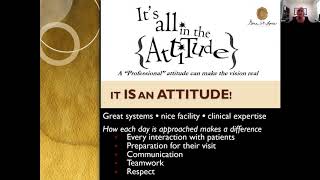
With that. Let's just click through here. The first thing I wanted to address, and I've been addressing this on many of my webinars, and that is really the stages of grief. And believe it or not, I'm still experiencing this in the field. So when Covid first hit the first week, as Fazelle had mentioned, I put together a group of masterminds in the industry. And one of the things that we did was we met every week to try to stay ahead of what was happening as best as we could to educate our clients and everyone in the industry. Really, what were the best approaches with this Covid? And so on every slide in the beginning, I was throwing up, this slide being the stages of. Of grief. And I have found that now that I've gotten back out into the field and have seen what is going on in every office, with every staff, with the patients, this is still a very relevant slide. And I want to address that because I want all of us on the line to be thinking, everyone you deal with, regardless if it's the dentist, if it's the staff, if it's the patients, are on various stages of this Kubler Ross curve. And that is that at first, you begin with shock, surprise, you can't believe this event is happening. Then you get into disbelief where you're looking for evidence to say it isn't true. Then you get into frustration where you're saying, you know what? I need to recognize that things are going to be different. Oh, my goodness. And sometimes you're angry about it, right? It's like you're trying to find the proper PPE and you're confused with the PPP and all the facts that are happening in our businesses, and it causes a sense of frustration. And so one of the things that we know is that as part of that, that frustration has still not gone away for some people. Some people are stuck in frustration. I believe that most are out of denial, but they are very stuck in frustration, some of them. And then that leads to depression, where you have low mood, lack of energy. People were saying, this is going to be over quickly. And we're seeing it's not. We're in for the long haul. And so then we kind of hit a stage of experiment where you're getting into your new situation, your new world, with your ppe, your staff. I was doing webinars where I had, because I go across the country, I was doing webinars and getting into practices earlier on than some areas, like LA as an example, was even open. And so I was Hearing the rumblings of teams and doctors regarding the PPE and the doming and doffing and how extensive it was and what was happening with the patients coming in and the temperatures and the oximeter readings and all of that kind of played into a lot of experimenting, right? And doctors saying, you know, there's no validity to the air purification. There's no validity. This and that, you know, may as well be true. But at the end of the day, sometimes, you know, they've had. They have incorporated these things. The other thing is, you know, the decision needed to be made for how to work in a new situation and feeling more positive. And I think most people have adopted this and adapted to it. There are still practices that, you know, as of today, now, hopefully the job market, we're going to see more people, you know, applying because the $600 is no longer going to be available to them on unemployment. But I will tell you that in the course of this COVID pandemic, I have seen that, you know, in many offices, we place ads and we're actually hiring very talented people who are either frustrated with the fact that the doctor that they work for has not made the appropriate changes or the fact that they just feel that they could be in an environment that maybe is safer. And then lastly, just full integration. And I think in all of these, if you look at the far right side of the slide, you'll see creative alignment, maximize communication. I'm going to talk a lot about how to maximize the communication with your patients and with your staff, and that we need to be positive, exhibit hope. This isn't the end of the world. This is a period of time that kind of is really, really inconvenient and not fun. But we have to develop the capability to deal with that. And lastly, we have to really share the knowledge. So I love this. And that is fud, fear of uncertainty and doubt. And a lot of us live in this fun world in that you're feeling, you know, well, but what if. But what if the practice doesn't get to where it needs to be? What if the patients haven't come back to where they should be? What if the production and the collection isn't where it needs to be? And while those are, you know, realistic questions to ask yourself, again, some states I've gone into actually closed down for a period of two weeks in Kansas. Other states, obviously much longer, and then everything in between. But one of the things I noticed across the board is that fud fear of uncertainty and doubt can actually cause paralysis of Us, in other words, we get so filled with so much angst and so much paranoia that. That it blinds us from what are the opportunities that are really good ahead of us. So I wanna kinda go through that. I always, always have touted and do this with my clients and my family, and I try to do this myself. Is I really, really believe it's all in the attitude. It's how we as a professional look at things and how we look at that vision to make it real. And so, yes, right now more than ever, your practice has to have good systems in place. And it just baffles me. It blew me away going into the practices that I have, great systems are in place, and I come back in, and I'd say, okay, so how are we doing on unscheduled treatment? Oh, well, we stop that treatment. We stop that system. Okay, why did you stop it? Well, I don't know. We got back from COVID and we kind of just. It was just too much. Okay, well, do you understand that now we need to track treatment even more than ever? How are we doing with the recall system? Well, you know, we're just so far behind that. Why should we even work on it? Are you sending notices to patients? Are you communicating with patients? Are you sending out postcards, letters, anything? No, we're just letting them call us. That's just a really poor attitude to have. And because there's not proper leadership with the dentist even paying attention to this, you know, I'm coming in and the dentist is like, well, I didn't know they stopped it. I didn't know they stopped it. And what ends up happening is where we could be hitting the ground without any speed bumps. We're hitting the ground with a couple of more speed bumps. Thank goodness. I've only run into that in two of my 29 clients that have really kind of said, oh, well, they blame Covid, essentially. And I tease them and I say, well, you know what we call that is Covid brain. And it's okay, we're just gonna hit the restart button, and we're gonna get right back into the swing of things. So I think by kind of exhibiting that attitude of like, it's okay, you're allowed. I always call it a mulligan. For those of you that play golf, it's like, hey, you got a mulligan. But that's it. We're not giving you any more mulligans. So the systems have to remain in place. So great systems are really important when you're looking at purchasing a practice or selling your practice. I can't express enough how important it is for these systems to be in place because the banks that are lending, at least the ones that I've spoken to, the criteria that they're looking for is what is the practice, at what level are the practices back to in functionality? And the ADA and another large bank in the industry shared some industry standards. And out of 20,000 customers, slash.
ADA members, they are seeing on average that the total is 67% of what you were doing. You're back to now, thank goodness. In the practices I'm going into, I'm seeing they are far greater than that. Most of them are at 100% or greater than what they were doing. And what I'm hearing from my clients is, you know, most of that we feel is that the patients have been sitting idle, they've been at home, they're either working from home or not. They're coming back to the practice and they're just saying, yeah, let's do it, let's do that. Invisalign, let's do that. Bridge. Either they have more money now or they, because they haven't been out spending it on entertainment and whatnot.
They.
So regardless, that is what some of the banks are looking at. And I think it's more important than ever that you pay particular attention to what you need to be doing. So I'm going to go into that in a little bit. Exactly what do you need to be doing to make it be better for a purchase and be better for a sale? So when we're talking about the days in your practice, I think it's really important to approach the day with how to make a difference in the day. And it's every interaction with every patient. And what I mean by that is think of that first slide I put up. Just because you're at a point where you're feeling really great and you've resolved the little speed bump of depression and you've gone up and you're now at the high end where you've adopted the change. It's all okay. Realize that patients coming in may be in a far different place. That's why I'm helping the clients that I'm hearing where they're saying, patients are saying, I'm going to wait till it's over. Well, they need languaging skills to be taught to the team to help make the patient understand what are you doing differently that makes your practice a step above the rest to help them come in. Obviously, immune compromised patients are not going to Come in. That's the best thing that they can do. But by the grace of God, and thank goodness there's been no documented case.
That has been given to a patient in a dental practice. However, as you may or may not have experienced, I have in several practices, the staff, because some of the staff is not obeying necessary the guidelines of the CDC outside of work, they are catching COVID and coming in and sometimes passing that on to other employees. But in general.
No documentation on any patient that has gotten it from a practice, which is good. The other thing is preparing for that patient's visit and making sure that the communication is really comprehensive, that you're very, very clear on how you're communicating with those patients.
And we're going to go into letters and things of that nature and then obviously teamwork and respect. So great leaders communicate with their staff. Bottom line, that's a must. One of the things that I'm finding over and over, and it's gotten a little bit better now that the practices are open again, but I'm still having unclearity or not clear communication with the staff in regards to what are your expectations of their role going forward. In other words, if you were a practice that works three days a week or four days a week, you may need to increase your days. And I have often heard, and we'll go over this a little bit later, but I'm hearing from doctors and staff. Well, you know, in March we were closed. So of course October is going to be slow. And I'm like, guys, you're forgetting that all your March patients, all your April patients, and most of your May patients didn't come in doesn't mean that just because they didn't pre appoint, you're going to have a slow, you know, a slow month. You have to work at it. So I believe, again, that part of that communication needs to be communicated with them. Most of them are at work now. I do have a few practices where the hygienist kind of dug their heels in and stuck it out for, you know, I'm waiting until July 15th or July 31st. I just don't feel comfortable when we knew for a while that it likely had to do with the $600.
And so again, I think you have to look at your new normal and say, listen, what are we going to do as a team to accommodate? You cannot keep operating the way that you had and expect to facilitate change. So the other piece is you need to communicate with your patients. If you've not communicated at this point at all with Your patients.
I would say to you, shame on you, to be honest. But it's not too late. You get a mulligan, let's go ahead and get a letter out, an email or a letter. If you don't have everyone's email address in the computer, then yeah, you might need to print letters and get them out the old fashioned way by snail mail. But at the end of the day, it's so important that you communicate with those patients what you're doing to ease their tension, to ease their feeling of like, wow, I don't want to go back to the dental office. It's just like name, whatever. So I think in that communication you need to be clear that you're abiding by the ADA, osha, CDC guidelines and your local authorities. In addition, that you know, the standards that we use are hospital grade standards. That's why there's been no claims of dental practices that have been giving Covid to patients. Because we know what we're doing in a crisis pandemic state.
And always remember to express hope and excitement to your patients. That's an important thing, really important thing. So as part of that communication, I'm assuming all of you on the line are using the ADA patient screening form. Very, very important. In addition, you know, I mean, I could share stories with you of multiple practices that have been called by the Department of Health in their city because a patient has tested positive and they traced it back to the practice. Not that they traced it back to the practice that they gave it to, the the practice gave it to the patient, but more so that the patient was aware had gotten tested, knew that they were waiting for the test, had all the symptoms and lied to the practice. And then the Department of Public Health called to say, are you aware this patient has been tested positive? They came to your practice the day before they got the results. And so again, things like that you might start encountering if you haven't already. So there are obviously a whole plethora of guidelines that I'm not going to go through today. That's not the purpose of this webinar. However, there are some guidelines that I think in regards to communication that would be hugely important. And for those of you that are on the line at the end, I will give you a link, you can email me. You are all going to be able to have access to my COVID19 toolkit. Within there are a great deal of information for you. So let me just pop into that really quick to kind of show you what I'm talking about. So within that toolkit we've got, under each folder, there's a plethora of information.
This is a great one right here. This is a flowchart for if there is an exposure in your practice with your staff. What is your plan and what's the flowchart for the staff? So they're aware. So that's another great thing to do. I'm not going to open each and every one of these, but health posters, PowerPoint presentation on sterilization. The one that I do want to draw your attention to, though, is this sample letter that I'm having my clients send out as of now. And that is, and I don't know, can you all see this? Fazell, if you could just unmute and let me know if you're seeing everything okay.
I can see everything fine.
Okay. Thank you. So this is basically saying, hey, we hope this letter finds you well. Our community has been through a lot of. Infection control is always our top priority. Again, using this ada, CDC and osha. And then many patients have expressed concern having dental procedures done at this time. Therefore, we have felt it important to share with you how serious we take this pandemic. You will see some changes when it is time for your next appointment. We made these changes to help protect our patients and team. All staff will be wearing masks at all time at all. Front desk area has plexiglass barriers to protect our patients and ourselves. Our office will communicate with you beforehand to ask some screening questions throughout the office. We have implemented HEPA and UV filtration in every room. When you arrive, text call the office and let us know you have arrived. We will text call when we are ready for you. We are practicing social distancing between patients. Upon entry, we ask that you hand sanitize. Then you will complete a questionnaire and we will be taking infrared temperature reading before being seated in the dental chair. Once you are seated in the dental chair, you will be asked to rinse with hydrogen peroxide for one minute prior to any procedure. After your procedure, we will ask you to wash your hands before being dismissed to the front office. Our entire facility, throughout your office are disinfected after our strictest infection protocol. We use hypochlorous acid fogger to eliminate any possible bacteria or virus in the air. If you request any special accommodations, we will assist you with either the first appointment in the morning or the first appointment after lunch. We will do our very best to accommodate your preferred day and time of your appointment. So again, someone that's high risk may say, yeah, I do feel okay. Coming in, first appointment of the morning. That's great. And you use all those precautions. So within every software, you can have the software pre populate the last hygiene visit was on and the dates. We look forward to seeing you again. Happy to answer any questions you have. And then there's your website. So again, I think this is a great way to communicate with your patients about what's happening in the practice.
Excuse me, Jean. Okay, very good. You're back. Good.
Yep, yep. Most, most offices communicated initially. Some were really good and communicated every week for like 10 weeks. And then for whatever reason, they just stopped. And so I think it's really important that you consider doing something like this. The other thing is, if you're going to sell your practice, picture this, a buyer's coming to you and you could literally lay out the plan of what you've done, what communication you've had with your team, what communication you've had with your patients. How impressed is the lender going to be for the buyer when the buyer says, oh, yeah, they've done this, this and this, and this is where how they're handling it, it will go over, I assure you, in very good light. So now into the transition. So the first and most important thing is in every transition, buying, selling a practice, you have to have a team of advisors. So the doctor is really the nucleus of that team. And you know, you have the practice broker, the consultant, maybe a real estate broker, an attorney, an accountant, insurance, and the banker. So all of those individuals help you to plan and make sure that this process is going to go smoothly. So there's many components that need to be looked at, especially during this time. I want you to be able to understand the process of a transition. I want you to understand the importance of how transition planning occurs and what needs to be done prior to you actually listing it or selling it or buying it, understanding what the brokers and the advisors and important cash flow and the due diligence, and then a timeline of the steps in an acquisition sale. So the first thing is, have you found a practice yet? So there are more and more practices coming on the market, and I would suspect that that is going to even get to be much greater. And the reason being is that if you think about dentists that, you know, in 2008 that lost their money in the stock market, they stayed on much longer in their career to be able to build back up their retirement. Now this pandemic has pushed some of them just over the edge. They're like, you know, What? I just don't need it, I'm going to sell. And so there are practices out there. Now, you do have to be cautious about what those practices look like and what they're doing. Just because someone didn't do all the communication with the staff and all the communication with the patients does not mean that it's a bad practice and you shouldn't buy it. There's so many other factors. The other thing is making sure that you've been kind of pre approved, if you will, from the bank. Now no bank is going to say, I'm going to pre approve you to buy a million dollar practice. Don't give me any financials, I don't care. Of course they want to, you know, they want to essentially see are you solid as a buyer, number one, to be able to buy a practice. And yes, that variable is going to come in with the cash flow of each individual practice that you look at. So what are banks looking at again? I had an opportunity to speak to several banks and CEOs at those banks in particular with regards to the changing of financing and what has taken place. So some of those banks are looking for a 10% down, some are still okay with, you know, nothing down and some are at 25% down. They are definitely looking at the historical data of the practice to see where that practice is actually what they've done and how they've recovered. Believe it or not. I've talked to several, I'm working on several evaluations now, but in addition have talked to several doctors who are looking at practices where the seller has said, I'm not ready to come back yet, or I'm only seeing emergency patients. Even now, July 31, when most practices got back into the swing of things much earlier, there are some that are still doing emergency only now. The downside to that is that that particular practice is going to, I believe, have a difficult time with the bank because the bank is looking for at least some historical data that you're picking back up. They don't expect you to be at 100%, but they really are looking. We want to see some trend that you're beyond like just treating emergencies. So if you are a doctor on the line that is still doing that, I would urge you to get an associate in there to start seeing your patients on a regular basis because your base will dwindle, there's no doubt. What are some of the big banks lending criteria? Again, I kind of touched base on that. There's a lot of banks out there. Obviously everyone has their Own criteria. My recommendation is you discuss it with them specifically. Have you signed the LOI yet? So the LOI is the letter of intent. So where are you at with the actual amount that you are going to offer? So different than an offer letter, a letter of intent is saying, I intend to buy your practice for X amount of dollars, but I need due diligence and bank approval. So if you're a buyer on the line, that's what the LOI is. If you're a seller, don't freak out that the buyer wants to put in an LOI first before an offer letter. It doesn't mean that they generally are going to come back and change the offer that they put in the loi, although they could. If the bank is saying the practice is priced too high and we're not going to lend on it, then that could affect it. So did your attorney look at the ROI before you signed it? And is the sale confidential? So how do you choose a practice to know if it's ideal? There's two things. So I'm addressing it from both ends, right? I'm addressing it from the seller's perspective and I'm addressing it from the buyer's perspective. So if you're a seller, you best understand your weaknesses in your practice so that you can either begin to change them or you can hit it head on. If you're a buyer, weaknesses are many times opportunities. So while the seller may not recognize that the weakness is an opportunity, it is. The other thing is having a clear vision that your staff is aware of of what you want to do. Now, many practices obviously go to sell and they're 100%, you know, confidential. Don't say a word to anyone. They don't want their staff to mass exodus or what have you. However, it is very appropriate at this time to be having conversations about, you know, hey, my new vision is I need you all to work another day a week. I need you to really help me to get this recall back to, to where we need it to be with these patients.
Also, you're looking at healthy patient retention numbers. So a patient retention is the patients that are rebooking for their hygiene visit. So your patient retention number, in most practices, the goal is to get that to be 96%, meaning that every patient that leaves the practice for a hygiene visit is scheduled for their next one. And of course, understanding the practice philosophy and identifying treatment planning and acceptance. So many offices that I'm doing evaluations on that are for sale. When I say, what is your treatment planning process and case acceptance, they'll say, when we print it, we give it to the patient. And on the bottom it says the fa, the FA being financial arrangement printed out of the software. And I say, that's not a payment option. That's just saying, here's what it is, and they're letting them walk out the door with it. So that, too needs to be addressed and be looked after. Okay. Assessing your staffing volume. So as a dentist, you know, I've had some dentists who are clients that are calling or have called earlier on and said, I'm just not going to bring back the whole staff. I'm just not busy enough. And my point was, well, I understand you want to ramp up, but now we're already two months into it. You need to have full staff capacity if you're going to continue to get your recall back to where it needs and your unscheduled treatment scheduled. You have to get people doing those jobs. If you're not, you're going to sit there and pray to God that the phone rings and that's not the way you want to go into selling your practice, or that's not the way you want to go into purchasing a practice. So the other big component is, you know, while a lot of people and I totally agreed in February and March and April, you know, even into a beginning of May, maybe put the brakes a little bit, pump the brakes on any marketing efforts.
I'm not 100% convinced that, you know, in offices that I have that are doing Facebook advertising and Instagram advertising and things of that nature, they are getting new patients in the door. So while you may say, I'm not gonna do any of that or I'm gonna hold on that because the community isn't ready to come back to the office, I'm here to tell you that there's plenty of offices, and I get their stats every single month. I can tell you, out of the 29 practices, they are getting new patients in daily. And it's not necessarily at the level that it was prior to Covid, but it's definitely creeping up. And it's because they just pumped the brakes as opposed to putting on the brakes and stopping altogether. Understanding your PPO plans. So really, really important more than ever to make sure that you are understanding your PPO plans. If you're a seller and you have not renegotiated your PPO fees in over, say, two years, I would urge you to do that and get your fees raised, because that is going to also look better on a purchaser's you know, line item when they look at that, and then making sure that your fees, your fee for service fees match your demographics in your area. So by zip code. So with all of this, what do you face with the sale? So one of the things that we know, if you are a buyer or a seller, you should make sure that your historical data is in good order. What do I mean by that? I mean I am amazed. During COVID I did five practice evaluations and all five closed. I now am working on three practice evaluations. It shocks me when I see that the profit and loss statement does not match what they're saying. The income is on the tax return or concurrently, you could look at the production and collection and accounts receivables and that is not matching another report within the software. So again, I would urge you to make sure that you're looking at your historical data. What is that? All those items I just listed to see how exactly are they looking clean? Do they look the correct way? I'll go over some industry standards so you can take some. You'll have that as well. And how do you communicate with your patients and staff when the stay at a home order, you know, are still in place now with some people, some states. So you need to be discussing with your staff, how are they to handle the stay at home order? Patients that call up and say, I'm just gonna, I'm just gonna, you know, there's still a stay at home order, I'm not gonna come in until it's lifted. Now, I'm not saying you should. High pressure, high, settle down, like, come on, just come in, we need you. Blah, blah. No, of course not. But I do believe that that paragraph in that letter is great languaging skills for the team to be able to say, Mrs. Jones, I absolutely understand your concern and Dr. Smith is absolutely concerned, as you are. However, in our practice, let me go over what exactly we're doing because we are seeing a fair amount of our patients when they come in, they're simply surprised at how really comprehensive we are taking this and to what level and then go into what you're actually doing. So the other thing is what is happening since they are back in the office, post returning to the office, how are your staff and patients handling that? And that's an important thing to be able to share. I mean, I've had offices say to me over and over, it's amazing. Our patients are so happy with what we're doing. They're shocked at the level of comprehensiveness we Have. So I think from that perspective, you have to share those things. How many of your staff returned? Are there any new hires? I can tell you there's a lot of people that are looking for jobs, and these are people with experience and some really good experience. Like, I'm shocked at some of these resumes. I'm looking at someone's been in a practice 20 years, 13 years, 15 years. When I ask, can I ask, why are you leaving? What's facilitated you to leave? You know, I thought about it for a while, but with this pandemic, it just seems like the doctor really doesn't care or the doctor really isn't taking this serious. I literally had one hygienist say to me, you know, we're doing that one thing different. I had to go out and buy my own lab coats and I bought 16 of them so I could bring them home, ate a day and washed them because the doctor is not doing anything different. And so she said, I just feel that I know there's a better practice out there for me. And she was right.
There is.
So the other thing when you're looking to purchase or you're looking to sell is you should be looking at your practice, with the exception of March through May, and saying, has your practice had historical steady growth between 10 to 25% without a fee increase. So the best way to do this, there's a couple of ways. One, you can run a report from your software, like from let's say, January.
Of 19 to January of 20, or, you know, February of 19 to February of 20 to get a good idea as to were you up, down or sideways, and do a comparison to, to see same thing with your P and L. Run a year over year comparison in a date range. We all can explain the March, April, May, beyond May, into June, July, August, September. That's where the rubber hits the road. Either you're going to start doing what you need to do in the practice, or it's going to start showing. And obviously, some patients, I get it, I'm not foolish enough to think that you're going to get every single patient back. But I am smart enough to know that you have to change what you're doing. If you're doing the same old thing, the same old way, you're gonna get the same old results. So does your practice get enough new patients? And what types of procedures were referred out that could be incorporated into the practice? So as a seller, while you may not do endo and you may not do perio or oral surgery, and you refer that out. Those could be opportunities for someone that's coming into the practice that does that invisalign. However, what I have found in most practices is all softwares allow you to track what you're referring out, but you don't do it. You simply tear a piece of paper, a referral pad, give it to the patient, they walk out the door, and you're not really properly tracking what's going out the door. If you were, that would be a great thing to be able to present to the bank to say, hey, I've referred out 50 patients for lower endo or 50 patients to endo and, you know, 100 patients for ortho. Think about that as a seller. To be able to present that to the buyer, who then can present that to the lender to say, there's a huge opportunity here, lender. So it's not always just cut and dry the numbers from a lender's perspective, but realize they're also not looking at it from like pie in the sky, fluffy in the clouds, and their underwriters are looking at it from a number standpoint. But the more of a story you have, that works with you, I have found banks, they're absolutely willing to hear that and have evidence of that. So let's look at some positives of an acquisition. One, if you are a buyer on the line.
You'Re buying an established patient base, which is great. The seller has an established patient base. The other thing is, many times the seller has a trained staff.
Sometimes they have, you know, good, most of the times established patient relationships and they have good insurance relationships. They have increased prevention for the virus. There's assistance from the selling doctor. So in other words, sometimes the selling doctor says, you know what? I, I understand the bank's only willing to lend you 75%. I'm willing to carry a note for 25% or whatever. So the mature patient base of the seller could be a very good positive, mature patient base, generally have more dentistry to be done and generally have more money to spend on it. And in addition, how does the practice market for new patients? They may have a really good system for that. And seller referred procedures. So, so what are some negatives? Some negatives is you're buying someone else's practice with their philosophy. There could be some patients that are lost in the transition. And again, if you're a seller on the line, I would urge you to pay attention to the fact that you wanna make sure those patients are coming back and there could be conflicts with the new owner. And the staff, if you're a buyer. The other thing is within a practice that being buyer or seller, there could be establish some bad habits with the patients and the staff. So what could those bad habits be? Well, they don't really pay their accounts on time. There's a high accounts receivable, there's a high outstanding number of insurance dollars. So when you're looking at your practice doctor seller, you should be looking at what does that look like? How is my AR and how is my insurance outstanding? Number of active patients is unclear or inaccurate. So when you go to your computer and you just pull up the number of patients in the software, that's not your active patients, and we'll go through what are active patients and the revenue could be inaccurate. The other big thing that I'm seeing is long, long paid, you know, overpaid, long time staff. I just had a practice that I'm doing an evaluation on and the front desk was making 79,000. Been there 30 years, 37 years. The seller, I mean the seller is literally taking not much more than that home himself at the cost of giving it to his staff. So that is, that is usually not a good thing. Resentment of the new owner from the staff and outdated equipment and the office. So if you are thinking of selling your practice, you know what, a coat of paint goes a long way. Some good elbow grease with a bucket of Spic and Spam. That goes so far with just getting the office looking good, cleaning good, get the floors, you know, professionally cleaned, even if they're acrylic or they're, you know, tile or it's carpet. Make sure you get everything looking good. Okay, so how do you know that you're ready for an acquisition? So one of the things is that I will answer the Q&As at the end of my session, if that's okay. When we're looking at active patients, sometimes the seller will say, I really want to stay on. And while that sounds really great in theory, you have to have enough patience to support a seller to stay on at the same time as the buyer coming in. Now, I'm not talking about a transition where the seller. Excuse me.
Thank you. I'm not talking about where a seller is staying on to help with the transition. I'm referring to a seller that says, well, I kind of really want to work a day or two a week for another three years. What happens is typically.
Enough for a seller to stay on in active patients, you need somewhere between 1800 and 2200 charts. So if you have somewhere between 1500 and 1800 active patients. That's enough for one full time dentist. If you expect to have the seller stay on, you have to have, and I don't mean, when I say charts, I don't physically mean physical piece of paper charts in the cubbies. I mean active patients. So when we're looking at that, you have to factor in how many active patients are in the patient base for 12 months. And for 18 months and 24 months, every broker, every banker, every, everyone consultant factors in different criteria for say, an active patient.
I'm not trying to be braggadocious, but I'm saying I've been in dentistry for 38 years. I can tell you logically why I say one 12 month period is what makes sense for an active patient. And this is why. If you owned an ice cream store, a shoe store, a gardening center, you are going to get your return business based on customers coming back and your new customers. In a dental practice, it's very simple. Our active patients are anyone that is coming in from today's date out one year with a cleaning that's either been scheduled or they're due for a cleaning. So that's active patients, patients that are today out one year with an appointment schedule for cleaning or they are due for a cleaning. So while you may think I have 30, 500 patients in my computer, they're not coming back to have their cleanings twice a year. They're not active. So when we look at hygiene, we're looking, you know, okay, assuming that you have a hygienist and she's working, you know, seeing patients 60 minutes and those are two oyster and maybe for a child, 30 minutes. So 120 minutes per year or two hours of time that the hygienist spends with that patient. So realistically, if you're looking at a practice and you're saying, okay, they say they have two hygienists, if you look down on the bottom of my screen, you'll see if they say they have eight days of hygiene and they're working 48 weeks a year, that's 3,072 hours in a year. That means they likely have about 1536 active patients. So this is kind of just a down and dirty to help you kind of see how the active patients are. So now we look at getting ready for the practice evaluation. I think of a practice evaluation, not valuation. So two different things.
Val.
Valuation, determining the price of a practice. That is what Fazell does. Evaluation, determining all the information within the business operational systems of the Practice that pertain to the dentistry end. That is what I do. So a practice evaluation. Think of it like a home inspection. It's where you literally are inspecting. You're turning over every rock in the garden, you're looking at every piece of landscaping, you're looking at the roof, you're looking at the insulation, you're looking at the plumbing, the electrical, everything. So in a dental practice evaluation, there's lots that I look at or that you should be looking at, or if you are a seller, there is a lot that you need to understand is going to be looked at. So doesn't it make sense that we get our house in order before we have the home inspector come? And that being that an evaluation is the what is. So it's the current what is happening in the practice? And why would you not have, you know, while you may connect with the seller as a buyer, you may say, oh my God, I love this seller. Like, we're just, we jive together. We're really of the same philosophy. You still owe it to yourself, in my humble opinion, to make sure you look at this with a fresh set of eyes. Okay. And so that practice data that needs to be gathered is a starting point. It doesn't mean that it's the be all, end all, but it means that it's a starting point. So part of what takes place or what should take place is, yes, as a seller, you want to interview that buyer. You want to know, this is your baby. You built it from the ground up or you acquired it and you, you grew this. And you have a fondness for your patients and a fondness for your staff. And with all due respect, you need. That's your legacy that you're leaving to someone else. So of course you want to interview that person that you're going to be that's going to be buying the practice, but you also want to be able to share with them everything that you see in the practice that's been a success. And then also some opportunities that you may or may not even know exist. So when I look at a practice, I'm looking at really, what is that? I believe that a practice, if it's patient centered, that being that a patient will pay with value, they accept with value, they appoint with value, and they speak with value, meaning they invite others. So let's look at an active patient base. I kind of already explained to you how you would get the number of how many active patients. So, so it's what are due for recall. And I mentioned in a given period of time. Why is that number important? Well, it's important if you're a seller and you don't know what your number is. How in God's name are you possibly able to tell your hygienist how many days of hygiene you need per week, per month? The other thing you need to know, how many chairs you need to accommodate those patients, how many assistants you need, how many administrative staff, how many supplies, instruments, et cetera. So your active patient number is very important. So ideally, one of the things with being appointed ahead in hygiene is again, I give the practices a leeway between 80 to 90%.
Of your patients that are walking out the door are pre appointed. So what happens is you don't want to have a sense of saturation when you really don't have saturation. So we know that when you have a full appointment book, there's less frustration. There's patients who really want to be there show up, which is, by the way, what I'm seeing in Covid. Cancellations are way down, especially if they're calling two days before. In addition, it's amazing to me when I'm talking with the patient relationship coordinator who is in charge of recall, when I say, well, how. Let's go on to the computer, let's go on and look at the appointment book. How far out is hygiene booked? And they're like, oh, we're really booked out. And I'm like, oh, okay. Well, how far we look? And in one office Yesterday, there were 96 units of time open in the hygienist schedule. From now till the end of August, a unit of time is 10 minutes. So don't sit here and say, oh, we're really booked. We're really booked. When your whole month of September is open and your whole month of October is open, like, you're really not, you're not doing the doctor any good by saying that or by projecting that. And then we look at maximizing the schedule, limiting open time. So at this point, I can honestly tell you I am not seeing practices with a tremendous amount of open time in the hygiene schedule or the doctor's schedule. Cancellations are just, if they get a cancellation, it's two days before when they're calling, and all of a sudden the patient says, hey, I'm double thinking this. I think it's a little too soon for me to come back. They're going over the languaging skills. They sometimes convert them to coming in, and sometimes they say, yeah, of course, no problem. So really, really important in regards to open time we want to make sure that the schedule is utilized 90% or greater, meaning every unit of time that you have open as a clinician and as a hygienist, that costs the practice dollars, dollars that are going towards how are you doing once you've opened the door during this pandemic. So the other thing is, you should know if you don't, what is your production and your schedule, your dollar time, your production per hour. So every practice is different. But if you're really producing very low numbers, even now, you need to start looking at your unscheduled treatment plan report, because production becomes collections. As most of you, I'm assuming on the line as sellers, had at least a team member come in during the pandemic to post checks, to maybe work on insurance and clear up your ar, your accounts receivable. So you shouldn't have many AR issues right now, meaning accounts receivable and what you're being owed issues, because most of your insurances would have been cleared up, I would suspect in offices where I'm looking at their reports now, I'm finding that very few dollars are outstanding in 90 days or more for obvious reasons. So really, really important. So on the accounts receivable, it should be one month of production or less. In other words, if you're producing 50,000amonth, your accounts receivable, which your accounts receivable is all money is due to the business by either an insurance company or a patient. That's your total accounts receivable. When you run your accounts receivable report as a seller, depending upon what software, but almost all you have to back out your negative balances or your credit balances. If you don't do that, your accounts receivable report will not be accurate. In other words, the total at the bottom.
Will not be accurate because it's taking off the credit balances and reducing the ar. So if you need help, depending upon what software, just, you know, email me, text me, whatever to help you get that number and make sure you're getting the correct number. But a buyer is going to be looking to see what is your accounts receivable. If your accounts receivable is greater than one month's average production, what that tells the buyer is that you likely do not. You just do a lot of dentistry and you don't necessarily have good financial arrangements in place. What that also tells the buyer is the person at the front desk is terrible at collecting cash, collecting over the counter, collecting co pays, not cash per se, but collecting, you know, over the counter. So positive Cash flow is needed to meet the practice expenses, including payroll. Bottom line, if you're not having positive cash flow, we know in March, April, May, some of you got ppp, some of you did not, some of you got idle, some of you did not. But it was very difficult to have positive cash flow. Some of the banks allowed you, you know, hey, you can defer the payment. Some of the student loans, you can defer the payment. But the time of reckoning is back. Banks are saying, no, no, no, you got to start paying now. We gave you a break. And so you can't just sit back and hope that things are going to happen. You have to take the bull by the horns and you have to make sure you're looking at these systems. If you're planning to sell your practice, you also have to look at your D0150, your ADA comprehensive exam code. That is going to help you to understand what the buyer's going to be looking at when they're looking at your practice. It represents the future growth of your practice. If your staff is not putting in the referral source, so they drove by, that's from the insurance, another patient referred them, that's going to, you know, you're still going to be able to capture that amount. But it's important that you really identify that. The other question that comes up in an evaluation is if you're billing D0150, which you are able to do that billing per the ADA on an existing patient or a new patient, an existing patient, you can do that every three to five years, depending on the insurance on a patient of that's new to the practice. Obviously you want to code that out differently in your service code so that you can identify who's an existing versus a true new. Okay. The next is again, I 100%, a thousand percent believe in a patient centered practice. When we know we are focused on being a patient centered practice, we offer the best dentistry that we can. We create an environment where the patient believes us, likes us, trusts us. We create a relationship that can sustain change like a pandemic. We create an environment where patients can and do participate in their choices for their health. So if you've created this practice, that's great. You don't have to hard sell anyone. I'm not about selling more dentistry, but I am about making sure that the patients understand that you care about them and that we've done things that are going to make their experience better, safer, more comfortable. So this is just a timeline of what takes place. If you're a buyer, I'll happily, you know, we can go over that privately for a seller. I've gone over what you need to be paying attention to.
Now.
When we look at the.
Hope isn't a strategy. There's some action plans that I would urge you to do. The one thing is, I would urge you to make sure that you're really getting an action plan together if you're a seller about who's accountable for what and what action item are they going to do regarding your business. Operational systems recall, accounts receivable, collections, Unscheduled treatment. If you don't believe me in regards to what opportunities are in your practice, just run a report of unscheduled treatment from January to July 31. You will be shocked. The other thing is by changing some of these behaviors and putting action plans in place for your team, you don't have to say, hey, I'm selling the practice. You have to say, hey, we need to step it up a bit. I can't continue to operate in this manner. We have to change our behaviors, we have to change our communications so that we get ideal patient care. So guide the patients to the appointment times each day that you want them to come in and practice the languaging skills. So I love this saying by Henry Ford. Whether you think you can or you think you can't, you're right. The first step is believing in the possibilities. So understanding that you can replace negative ones with positive ones. And you have to sometimes believe it before it's true.
Everyone is either a starter or a finisher. Starters need help sometimes finishing. They can't just get to the finish line as quickly. Finishers are sometimes procrastinators. They can't get started, but they have the endurance to finish all the way to the end. In your practice you've got a little bit of both of them, I guarantee you. And support is needed by both types. So what the message I would say to deliver to your team is, guys, I need us to be self starters. I need us to be going and doing what we need to do. This is the COVID toolkit. It will be on my website under resources. You can take a picture of this. So it's my website and then resources. I will happily offer anyone till the end of August any complimentary consultations, just let me know what you and when just email me. My email is there. Again, you can take a picture of this with your phone. These slides are going to be, I believe on my YouTube channel as well.
And then any final thoughts, any questions at this point, I don't see anything in the Q and A. I do not see anything in the chat. So I think unless anyone has a question, I can go ahead and turn it over to.
Thank you. Thank you so much, Jean. Thank you. That was excellent. So let's go lunch and I don't need to speak. Okay, well, thank you very much. We just spent about an hour. I think I'm gonna be able to speak another 30 minutes to 45 minutes. So pretty much what I do is a little bit different than what Gene does. I'm gonna be, I'm going to be trying to be respectful to everybody's time and pretty much make sure that we can finish as soon as possible. This is going to be recorded. So in case you're leaving, just know that you're going to receive an email with the complete, complete information. Okay, so pretty much let me start my presentation. About me. Well, I've earned my master's degree in business taxation. Also I have a graduate certificate in financial planning. I'm a cpa. I have a couple other designations as an, as a forensic accountant. I did go to law school. I have training as for business valuation and financial analysis. I started this firm actually in 2008. But I've been doing pretty much helping people for 25 years. I'm involved in transitions a lot in different kinds of, you know, capacities. Startups, practice sales. I'm not a broker. I'm going to tell you guys what I do. Acquisitions, valuations specifically and due diligence. Also. We are pretty straightforward dental CPA firm. We just do taxes, accounting consulting and business.
Business consulting. We don't accept any commissions, no kickbacks, no referral fees. And also we look for our best clients only and we try to have no conflicts of interest.
Why are we here today? So pretty much because I want, I mean Gene and I need differently. Her differently. We want to try to provide a lot of information to you so you guys know what's going to expect you. Because as the more familiar you are, the easier this transaction is or this process is going to be. This is no lecture in accounting, valuation, tax, legal, whatever. And you do need to consult your own advisors and we're just discussing some direction and pointing out some directions so you know what needs to to be done. Also we tried a lot of the stuff that we talk about. These are mistakes that everybody can easily avoid because at the end of the day, you know, avoidable mistakes can be very costly. Also in a transaction, no matter if it's buying or selling, there is a lot of anxiety. So you know what is, if you know what is expecting you, if you know how it's done. So pretty much I would say piece of cake. I am discussing these issues on a daily basis with my clients, buyers, sellers, brokers, lenders and the. Today I'm going to provide you with an update about all of the conversations and observations, especially in the past three, four, five, six months. Before that that was a different story. Also I'm a realist, I'm a scientist. Everything that I base is on numbers. But still it's my opinion, my observation, the most important takeaway that sellers should have today is pretty much it's, you know, not easy, but it's important to retain and transfer goodwill of the practices. So not just let go, not just, you know, do as it used to be. We need to be proactive before we do selling. I don't know if you, some of you have seen any of my webinars for buyers. So I'm very, very, very biased, biased toward buyers when I, when I talk about buyers. But today I'm going to be specific, specifically talk about sellers and there's a difference and you're gonna, you're gonna see the differences. Also I'm a business cpa. I'm involved in dentistry. My wife is a dentist, my brother, my mother in law, the majority of my clients and I don't recommend anyone to, you know, right now concentrate specifically on selling except you have to and a good day in a real process and that's, that takes you like three years. So a lot of the stuff that Jean mentioned, a lot of the stu stuff that I usually speak about to sellers, it takes years to clean it up and make sure that you're ready to sell. Also I've been a consultant for over 25 years, financial consultant. So I've survived the failing of new economy 2008, 2020 now. And also just know that even if I sometimes work for a buyer, if I find valuable practices and I always recommend the buyers to overpay for the practices. And again today, one more time I believe no matter what happens with pandemic, with whatever, whatever, you know, I've seen dentistry through my brother for at least 30 years. I can tell you dentistry is not going, not going to go anywhere. We might have some, you know, issues, short term closures, first wave, second wave, third wave, but doesn't matter because it's going to come back. But it's always important to have the right fundamentals, business fundamentals in your business and retain the goodwill and always, always, always plan well ahead. So some of the questions Has COVID 19 impacted practice sales? We're going to respond to all of that valuation.
What's going on with sellers, what's going on with lenders and how do we finish, how do we close? And again, I want to keep going back to this point or take away of mine. We are here to learn a little bit how to, how to retain the goodwill of the practices. And as a seller again, sell at the highest and best possible price. We're going to talk about price and value. A little bit later we're going to be talking about how it's priced for the buyer. For the seller it's different. And we're going to talk about all of this stuff. Okay, so what's the transition process? And this is from the point of view of a seller today. So first of all, seller has to prepare how I'm going to explain some of that. Jean already explained. Then very important as a seller, do you want to sell with a broker or do you want to sell it yourself? And also that's not a problem to sell with a broker, but please take the right broker. We have two kinds of brokers if we just want to say good and bad. So we have the good ones, you have the bad ones. So it's very important that you know who do you work with? Also after pretty much you, it's you or is the broker. It's important that the, that the practice is marketed advertised sufficiently and well. And it's important to find the right buyer. Who's the right buyer. I'm going to explain it to you later. Then obviously there is an offer. So and also know as a seller that the offeror, the buyer is the master of his offer. So usually a letter of intent is pretty straightforward, not very difficult. I'm going to explain what that is as well. But just know that this, that the buyer initiates the process. So pretty much that's the first step. And then once the letter of intent is accepted, we have to complete some contingencies, both sides. And once the contingencies are satisfied, we.
Talk about lease, we talk about the other contract, then we sign the documents. Before that we have some pre closing obligations. Then we have the closing post closing obligations, redo accounts receivable, completion of the work and covenants. And these days very important due diligence. So why due diligence? Because pretty much there is double work now. So we have to do some historical due diligence, we have to do some COVID 19 due diligence and see what's going on today. And I'm going to say what the importance of all of that is. So let's see where the market was when Covid hit and pretty much what was happening after that. Well, everybody's saying it was a seller's market. I slightly disagree with that. I think it's always mostly 80, 90% buyer's market because buyers have to money and they have the contingencies but that's fine. So pretty much good practices, you know, they have 5, 10, 15 offers sometimes and we have about 1000 to 1500 transactions a year but we have 6, 7000 of graduates each year. So there is always a shortage. But that's why there is always a good, good decision to make a startup. So what is going on now? Is it going to be a buyer's market? Well, we don't know. So obviously there are some of the buyers, some of the sellers are walking away and also.
Some of the buyers want to buy right away because, well, because of fear, because of they don't know what's happening right now. I apologize. I have a new computer and I have to get used to that a little bit. Okay. Also some of the sellers might not sell and stay for another one to three, four, five years because of pretty much what's going on with the 401ks. Also it's usually what I usually, you know, try to advise is that buying and selling is a long term decision. So even if you're a seller because of COVID I think it's not going to be easier, it's going to be more long term issue and same for the buyer. So buyers need to understand pretty much what the consequences are going to be if they buy. And usually a transition is a shock already to the office. And now add what's going on with COVID also we don't know really what's going to happen with the practice sales because we just had the first wave, we're going to have the.
We'Re going to have the second wave and also we don't have much historical data to be able to clearly tell you what's going on on. So the main point pretty much is, you know, depending on how sellers or practice owners react these days, they can really either retain the goodwill of the practices or some of the practices that the price can go to zero or the vat, not the value, the price because pretty much there is no more action, there is no more cash flow and how all of that works, we talk about that a little bit Later. Okay, what happened in March, April, May, because we had to shut down. I could tell you that I was working on 2025 active transitions. It went back to five. And I can tell you that I recommended to my sellers to slow down to concentrate on the preservation of the goodwills and pretty much not, you know, continue some of the sales if it didn't work out for them. Also with my buyers, I told them to pretty much go case by case, case and you know, look for the right fundamentals. Now in the past three months, last two months and this month, this month, everything is a little bit easier. So this month, I mean August, some of the practices are back to 100%. So pretty much banks are funding.
But still we have some limited financing for startups especially because one of the larger banks right away said that they're not really funding some of the startups anymore. So limited financing, we have limited financing for acquisitions I have not seen except for one full financing for the majority of the deals. Also the transitions take time. Usually we would close 45 days to 60. Now I've seen 90 days or longer. There are also some more practices in the market, but not very good practices. A lot of it. Some of the sellers are really, honestly and literally are walking away from the practices. They just let it go, don't pay rent. Very, very weird. Also I can tell you that I've seen very, very unique and weird deals. So I have some of them here. So the practice I would value at 500,000 was sold for 101 was valued for 250, was sold for 80,000. I've seen a short sale and I had not seen that since 2008. Some walked away. And also the majority of the practices that sold, they had some C19 COVID19 discount. So pretty much the first question before you ever consider to sell is well, can you sell? Is it the right timing? Well, can you sell financially? Do you have enough money? Okay, let's say it is a rule of thumb, you know, plus minus 1 to 3%, you need about. When you have, when you compute your, your expenses, just compute like between 4 and 7% of your total net worth to as your annual expenses. And if, let's say you have $2 million and your expenses are like 150, 125,000. So this pretty much would be a number if you can realize that number. So that would be okay, you would be able to retire. And I'm talking about some liquid and investable assets. I'm not talking about your house, I'm not talking about your car. So the best source for that is actually your financial planner. So physically, some of the doctors, they just sell too late and then pretty much they have a nice cash flow in practice and then it goes down because of injury production. So the price might even go, I don't want to say, but even sometimes to zero mentally. So do you, can you sell mentally? What are you going to be doing? I can tell you what my father, what my dad did, he was working, I don't know, 40 years, and then he retired. Then he didn't do anything else, and then he was not really happy with his retirement. So I think he retired too early. And I do see that some of my clients, I can tell you I won't ever retire because I love what I do. Also, these days you have to be very careful with predatory buyers. You have to be very careful with predatory brokers and consultants. And it's very important for you to know that, you know, some of the people believe just because it's Covid, they can just, you know, lowball and that's incorrect. And also very, very important for everyone to know that. Okay, as I said, seller, do not sell too late. I'm going to explain what's going to happen if you sell too late in numbers later and also do not sell for the wrong reasons. Good.
Now the question was first of all, a couple of slides ago, do you want to sell? If you want to sell, sell with the right broker. So who's the right broker? Because there are many bad apples. I cannot name them for you, but it's important that you educate it, that you get educated about a process that you say that you go see, check their website, check the available listings, see if the listings that they have fits the profile of your office. Ask for second opinion, especially ask people that don't charge commission or don't live from commissions. And these people are pretty much a CPA and attorney. The reason for that is CPA attorney doesn't care for how much something is going to get sold because we charge fees. It means per hour per project, and that's important. So. And also by law, a CPA attorney is obligated to pretty much look for your best interest. Also, if you have a broker make sure that he, she does not overprice it, because if the practice is overpriced and it doesn't sell within three, four months, then pretty much you have a big problem. And the reason for that is it's, it's difficult to sell it. So everything was not right. It was not advertised correctly. Also, just know what a broker is doing for you. So is he doing some showings in person? For instance, what else is he doing for you? Very important that you get proper Service for like 10% if you pay them brokerage fee. And also you want to know how all of this, how you practice is advertised. Is he just.
Putting it on his website and just waiting for phone calls? Well, pretty much that's what some of the brokers do. And that's incorrect. Some others do great, great, great job.
One more time. There are some really predatory consultants, brokers. They don't even have a license. They're trying to, you know, steal, you know, convince sellers that they can do a better job. And pretty much they hurt the sellers, they hurt the buyers, they hurt the practice, the hurt the employees. I think they hurt, you know, the patient. So it's important that you do due diligence and you select the right broker. Also, I want to make sure that you guys read the.
You know, the letters, the offers that they provide to buyers sometimes and make sure pretty much that that's, you know, legit. I mean, consult some, you know, maybe a CPA attorney, somebody who can really help you and, you know, have a second.
Second view. And some of the bad apples, some of the bad brokers looking only for themselves, you know, some of them I've seen not even submitting the offers to the seller because they think that's not the right offer because they don't profit properly. So and a lot of these people, a lot of the bad apples, they're primarily looking for their own interest. So they're not looking for the seller, even if they're supposed to present, present the seller. So there is one broker who wants to sell the office, who wants to sell buyer alone and also renegotiate the lease. So triple dip, so to say. And that's how pretty much a lot of these people function. So you want to make sure that you work with the right broker and also that your practice is not oversold. Okay, then maybe you want to decide to buy to sell your practice yourself. So how do you find a buyer? Well, pretty much your network. And that's like 50% of the practices that I help. Buyers, seller, they found themselves somehow. So how Network local cda. There's CDA websites and publications that you can put you at Dental town, dental trader, dental shop, or Facebook groups, events. And yeah, maybe you have a practice, you can email me and maybe I have the right buyer for you and I just connect you. So again, one More time. I'm not a salesperson. I don't get commissions and stuff like that. Okay. Jean talked about the support team, so she named almost everybody. I just want to add the equipment replacement and the IT guy. Very, very important. But she pretty much talked about everybody else. I want to talk about dental cta. Who that is? Well, somebody like me. What is he providing? Well, somebody like me knows the business and knows the industry. Again, that's why dental CDA. So 70%, 80% of my clients are dental. That's why I know what's going on in the business, you know, and also in the industry.
Again, one more time. For sale by owner. For sure you need a CPA and attorney. So you do need consultants for fee. It doesn't mean that you just can do it by yourself. You can save 10% commission. Sure. Don't do it just by yourself. By yourself because you can for sure, you know, accumulate some liability. It's very important that it's by the book and that's something that you, that a good attorney, that a good CPA can provide to you. It's important to have a non disclosure agreement. It's important that you have the right package for the buyer, that you know the process, that you know what to what to provide. And also it's very important that you review your lease before with your attorney or a healthcare real estate broker. Also very important if you really want to sell, you know, by yourself, no broker, no problem. But also you would need a practice consultant to clean up your accounts receivable, your credit balances. And very important is that you pretty much, you know, just know the process, know the steps, know the contingencies and everything. Because this is a step by step process. And usually the broker takes care of, you know, keeping everybody.
On the timeline to make sure that we close. Otherwise we won't close. Okay. So very, very important for you to know is pretty much that the practice value can decrease. So it could this month be, you know, highest and best use, meaning producing cash flow in six months. If it doesn't produce any cash flow, it can go down because you know, that's something that it doesn't matter. Practice that has no client and no patience, no cash flow.
It's going to be sold at the lowest VAT price. Again, the difference between price and value is different. And then maybe if some of the people that sell too late that they cannot produce anymore. As a matter of fact, I'm buying a practice like this that was for one of my clients that was producing $800,000, $350,000 in net income. Now it produces $300,000 within four years and has zero income. So pretty much from, you know, costing like they could have sold it three years ago for $700,000. And right now, well, almost zero, maybe some equipment. So it's very important for you to know so how the price of a practice can change from highest and best use cash Flow Inc. To zero, which or just with the price for the equipment if it doesn't produce cash flow. Okay, so who is a good, good buyer? So we want to make sure, if we receive an offer, we also want to vet the buyer. It's not that we just accept any, any offer. So sometimes we just. I can tell you there are some serial buyers, there's some people that are not serious. You don't want to waste your time with somebody for three months, two months that is not, you know, serious and not vetted and not somebody who, who I would want to be stuck with in a letter of intent. Because usually at the end of the day.
You have a contract with them. So number one, I want to know when they graduated, what skills they have, what experience they have. I want to make sure that they have a good credit. So usual conversation. But sometimes you also ask them to provide this information to us. We want to make sure that how much student loans are there, if they're on top of it, we go. Sometimes we do ask for liquidity. We do ask for personal financial statement. We want to make sure that they have no revolving debt, no judgments. We just ask them, this is just a conversation. How much time after graduation if they're able to produce, if they can. Let's say I'm a, you know, if I want to sell my CPA firm to somebody, so I'm not going to sell it to anyone. I'm going to sell it to somebody in dental industry because pretty much.
He. She would be able to match my experience and my performance. Same for dentistry. So do their experience fit the practice? Do they have the budget? So at the end of the day, sometimes we do ask for financial statements and tax returns before we accept the letter of intent. Very important. And a lot of that is not done by the book, by the brokers because at the end of the day, so they just, you know, don't have sometimes a lot of offers. But if we have valuable practices, we do that.
Just for you guys to know. What.
So how the, how some of the buyers have been impacted by Covid A lot of the buyers, current buyers that lost the job because they had, they had been furloughed. Some of them have a little bit less liquidity. A lot of them are very frustrated because of lack of control and really want to buy an office. Some just don't know what to do or just waiting reconsidering plan. So there are some very, very good buyers out there that are really ready if they find the right practice. So if you are able to, you know, clean up the practice, you will have some of the good buyers there. Good. So what do we sometimes want to review sometimes with our very good practices? So we want to take a look at their CV at a minimum. So whatever makes sure that pretty much they can do, they can have, they can buy our office. Also sellers can get ready before and I'm telling you this is a very long term process. It's not just happening. So getting ready takes time. So you have to clean up the credits balances, you have to clean up the accounts receivable. You do need certain consultants. We're going to talk about lease a little bit later. And this is even before you involve a broker or decide to go on your own. Also very important for everybody every practice that they have evaluation once a year, unfortunately, once a year, once a month. I work with somebody who just passed away with a family. The reason for that is the person passed away, the office is still active. They don't know anything, they don't have the documents. CPA doesn't know anything. And I can tell you 60, 70% of the dentists are not correctly advised because they just work with some people that don't know dentists. And then they approach us and then we have to help them. We have to do the valuation for estate taxes, we have to do that for inheritances, we have to do do that for IRS and sometimes for sale. But it's very important that everybody, you know does some kind of valuation once a year. Very important. Then get your 1099 from insurance companies together. Very, very important. Excuse me. It's very important that pretty much nobody, never you don't sell too late because once you sell late, pretty much you won't be able to realize the, the right amount of what you could have realized a few years ago. Also the last six months have shown how important good paperwork is. So we have seen it by ppp. We see it every time we go through a practice.
Transition. Okay, let's talk about valuation a little bit. So valuation is price money. It has nothing to do with value. So valuation has only something to do with the price. It's A range. So Gene was talking about evaluation that actually takes care more of the value. It just is a little bit more intangible. What I do is a little bit more tangible. So it just depends what we are valuing. How do we put a price on something? For instance, before we do something, we want to make sure what we receive. So what we sell. So in a leasehold we have some build out, some equipment, some lease. That's pretty much the assembly that's assemblage. How to we put a price on it. Then there is some modified startup. So there are some cash flow, there are some patients. Then you have the startup. So everything is new. The partner buy in, you know, is a little bit cheaper than a total acquisition. It's based on cash flow. Acquisition is based on cash flow. How this is done, I explained a little bit later. And also expansion could be any of that. So every time we want to put a price on something, we want to know what we are receiving on what we are selling. There are some. So pretty much if we want to sell cash flow, if that's a cash flow in practice. And I'm going to talk about how to compute cash flow, what is cash flow later. So Usually we have two main approaches. Either percentage of gross receipt or collection. 80% of last year's collection, for instance 70% or the multiplier of net income or adjusted net income. So what is net income? Last year the practice what is adjusted net income? I'm going to explain data as well did $100,000. So the price of the practice is 200,000. If we just do a multiplier of two or less or more, depending on the range, depending on premiums and discounts and premiums and discounts. Every time we see something good. So if you say value opportunity, so pretty much that's a premium. Everything we see something bad, it's a liability risk. So that's a discount. And it's very important for you who is valuing this practice? Is it a.
Broker who wants to sell the practice? Is it somebody who benefits? How he she benefits? What is the background? Just being a CPA is not enough. So sometimes so you just need to know what's the training for business valuation. So accredited in business valuation, certified valuation analyst, chartered financial analyst. I have the training of all of those three. So pretty much it's important that you know everything is based on science, it's based on numbers and it's based on reality. Okay, again, what is a practice valuation and what are some of the methods I explained It a little bit. This one is a little bit more technical. Just know that pretty much the value and the price, there are two different things. And at the end of the day we want to make sure that we keep it very simple. This is no lecture, so that's why I'm going to forego this one. So what's going on after COVID 19 or during COVID 19, what are we doing to put a price on it this day on a practice? So pretty much usually, you know, practice valuation is a science. So how am I going to approach COVID 19 valuation if I have no historical data? I don't know. Nobody knows it, but we are learning it. You know what's going on right now and I'm going to tell you later what happened with some of these valuations. But I can tell you that valuation is time specific. So if you have cash flow now, if you don't have it in six months, the same practice is going to be different. There is pretty much no big negotiation because that's a fair market value, because that's how pretty much a price is put on a price. Negotiations later happen with all of those, you know, after the due diligence, after we find, you know, stuff that we can add or deduct from the price.
And also one more time, once we cash flow to practice, we apply some discounts going down or some premiums. And again, I'm talking about the science of valuation, but I'm going to keep it very, very simple and just know that again, it's based on historical data and it's based on later is on due diligence and based on fundamentals. Good. We need some basic information to do a practice valuation. Again, we're not talking about due diligence and evaluation. I'm going to talk about that a little bit as well. So what we need is pretty much want to make sure for how much the practice can be sold. What now? So we need the tax returns, profit and loss statement, balance sheet, depreciation schedules, because we want to see what was going on in the past years. We want to see the production and collection report. We're going to see specifically after COVID 19 we have some due diligence. We want to know how they opened, how much are they producing and we want to pull some. If there is some practice reports, we're going to be very happy as well. There is a standard of value. So what is the standards of value? So again, I'm sorry because this is a little bit technical, but I have no choice but to mention it because I'm. But I'm going to try to do my best to explain it. So as a seller, we want to sell as highest and best price. And that's the fair market value. That's something that a practice gets sold these days in a fair market. In a market. So there are, you know, knowledgeable buyer, knowledgeable seller, available financing. So pretty much we want to find somebody who's going to buy our practice the highest and best price. So fair market value as a buyer. So what we consider is pretty much the investment value. And the investment value could be more or less or equal to fair market value. Just depends how much it's worth it for the buyer. And that's pretty much the difference. And also the purpose of valuation differs. Sometimes I do this for, you know, gift and estate for IRS. So that's 200 pages maybe. And then sometimes I do just do that for buy and sell. It's just five pages. Sometimes we do that for, you know, divorce. I'm also divorced financial planner. So pretty much it just depends what for we are doing it. So that's why the standard of value changes. That's why the price of the price, price range does change. Okay, what's going on these days? Again, we don't know much, but because of the past three, four, five months, we know a little bit more. But just know we're missing two or three months of production. We are missing two or three months of net income. We have some issues with.
Financing that I'm going to be talking about a little bit later. Definitely every buyer is going to look at the financials and every average consultant cpa, because there's also a lot of, I would say.
Sloppy work performed out there. So everybody is going to look at what's happening after reopening. So that's very important. So if the practice didn't reopen, didn't have any patients in the past two, three, four, five months, no cash flow, the price is going to go down. Don't remember. Please remember. It's time specific. Six months ago it was worth maybe 500,000. Today, just the price of the equipment and some charts and very, very difficult to put a price on it. So that's why it's very important that pretty much the practices that want to sell, you know, reopen properly, start producing and pretty much make sure that they still can sell at the fair market value. Okay, before we do, I mean, I just explained to you what documents we take a look at. I just want to explain one or two steps. It's not a complete valuation but we're going to be doing something some valuation here together. So what is before we do evaluation we do a very straightforward assessment we profit and loss or a tax return. And the process that is happening is called normalization of profit and loss statement. So it's adding back every benefit that the seller actually received but he she was able to deduct it for tax purposes or for expenses. So these are discretionary, extraordinary non cash and personal expenses and benefits. I'm going to go to the next page and explain some of these. But just depreciation, amortization except expense, excessive expenses, continuing education, salary and auto. Then still we're going to benchmark it. So pretty much every expense divided by or every class of expenses divided by total collection. And what buyers also do with this benchmarking is they're going to identify areas of risk and concern. We as a sellers and please don't forget today I'm just talking for sellers mainly. So we as sellers want to make sure that pretty much we have time and make sure that we do the right thing on our books before we want to sell it. It doesn't matter.
It doesn't mean that we want to cheat that you know, that we do something wrong. No, everything is legal we but at the end of the day we want to make sure that our practice is represented by the proper profit and loss and tax return. Sometimes I go to an office, I know this practice makes money but I'm sorry we cannot show it because pretty much the tax return and the profit and loss they're just messed up because they're, I don't know, everything is deducted and that's incorrect. And also something that buyers want to know after doing some assessment is will I profit? And the banker wants to know does this cash flow? So everybody has a different agenda. If you want me to say it this way, some of the income, some of the add backs are you know here car depreciation, pension owners and doctors income seminars, subscriptions, entertainment, interest, charitable contribution, equipment, lease, excess legal and accounting fees, practice management, consulting fees and also just be careful anytime there is a non earned income of your books. So if you're a seller you want to make sure to point out okay that's my wife that I was paying but she was not really working here or my child spouse. And that's very important. Okay. Okay, what is this? Okay.
I think I spoke about that. Okay, so pretty much this is a sample profit and loss statement that I'm going to base my valuation based on this. So you see that the net income is 40,000. Then you see that all of the add backs equal to $200,000. So we see that the net income, excuse me, that the net income is 240 and the practice collections 600. Again, this is not a full valuation report. This is just to come up with some ranges to be able to talk to price the practice and also talk to the buyers and make sure that we, you know, get it to financing. So these are the two main important numbers. So the 600,000 is the collection and the 240 is the net income. I'm putting this into a very simple straight spreadsheet and that's honestly very much complicated at that. But I want to make it as easy as possible. And I have done a lot of these, you know, webinars and sometimes, you know, the stuff that I presented was too difficult. It's supposed to be very easy. So we have average production collection is 600 and potential projected profits or sellers adjusted net income is 240. So we know based on multiplier that something between 1.75 and 2.25 is, you know, a range where the net income is going to get multiplied to get to price. Because again, fair market value. Because we know that's the range how practices get sold, also based on percentage of collection of production. We know that pretty much we can look, you know, what is, I mean, we know that banks provide like 80, 85% of last year's collection, but the buyer needs to buy equipment and also get, have some working capital. So we know that 80 ish, 75 ish is about the price for good practice that we can ask for. So I have those marketed areas and we see that the lowest is 444 and the 4 and the highest is 4, 40, 80 ish. So, and that's something that I also want to talk about and point out one more time. You don't want your broker to overprice the practice because let's say he says, okay, make 600, let's price it as 580 and see what's going to happen. No, I can tell you if I see something like that, I would tell my buyer, oh, don't even bother. That broker always overprices. So we don't, we don't want to go through that one. Don't waste your time. So we want to make sure that the practice are properly priced. These days, available financing is somewhere between 70 and 80 ish. Percentage of last year's collections subject to at least two or three months of fresh production after COVID 19. So we want to make sure that pretty much the practice produced 40:45,000 the last 23 months. Because that's like 80% of the 50,000. And also we want to make sure that pretty much we don't price the practice over 80% or because there is no money, there is no financing or if your practice is very, very valuable, then you have to we talk about the options later. Some hold back, some carry back or ask the buyer for.
Some cash additionally extra. Now talk about cash flow. Again all of that has very specific. Let me see what time it is. Okay, I'm gonna try to be a little bit faster. So cash flow pretty much deals with amount of the money that the buyer is going to have available to pay for all the expenses loan and also pretty much for his own income. Let's keep it that. And why, why do we need to cash flow? The reason for that is that this gentleman underwriters pretty much they are looking for a product of 1.25. And I'm going to explain how this 1.25 works. So pretty much we have a nominator. So that's a practice cash flow. And then we have a denominator that's buyer's debt. So again we don't want to go through every, all of these expenses. Let's say that's a, that's a practice that has the cash flow of 270,000 and then the total debt and living expenses service is 169. So this is the calculation that is that the, that everybody is pretty much using consistently. So we see that this one cash flows well because the product is 1.38 and usually we're looking for 1.25 and above between 1.1 and 1.2. There are some exceptions. It depends which bank, it depends what program. But I mean I've done this one a little bit too nice to show pretty much the ranges. But pretty much that's how a practice cash flows good. Every lender is different.
So right now these days we do every time not just these days. We need lenders for the, for the transaction. I have not seen many cash deals in the past I don't know how many years because money is cheap. Everybody is lending money to dental and pretty much I can pretty much tell you that if, if there is no money.
If there is no financing, there is, there is no transaction. So because not, not many people have have like a lot of cash to buy. This practices differently. Every lender is different, they have different programs, they have different structure. Sometimes I have two loans, same amount, different structure. But you know, the expenses are so different. So not every lender is, you know, provides you the same.
Offer. So it's important to know what kind of a practice you're selling to to pretty much go to the right lender. And also these days the majority of the lenders are asking for the practices to come back at 80% of last year's average collection to.
Fund the practice. Also these days practices have to buyers, they're required to have more liquidity and that's important that buyers have, you know, are very careful with expenses these days as well. Financing again is lower than it used to be. The percentage, the rates are between 3 and 4, some 4.5 depending on credit. Banks are more conservative and also there is more limited funding for startups. We still have the Life Oak, Huntington, bank of America, a little bit lower, Wells Fargo, all of that. These people, all of these banks, not very easy. And all of these banks are asking for more liquidity. And also it's very important that sellers for acquisition deals do a good job after reopening. So but how? Because sellers have so many limitations. More PPE expenses.
A lot of the accounts receivable, but Gene mentioned is collected and a lot of people it's like restarting because they don't have this money. Cash flow financials don't look very good. So and also some of the buyers of the sellers are under some more pressure because in 2021 probably it doesn't matter, Republican, Democrat, they're going to increase the taxes. I mean we are talking right now 3 trillion, 5 trillion, whatever, you know, who, who's supposed to pay that? Well, taxpayers and actually you, me, because we are pretty much those people that generate most of the taxes for government. So and then a lot of the sellers, the 401k is decreased, the net is less, cash flow is less. Not, not very easy these days. It doesn't matter.
It doesn't matter. I think somebody saying that my audio has been cutting in and out. Please let me know if it's okay and I can continue.
I've heard you fine. No on my side.
Thank you so much. Okay, let's talk about letter of intent again. I don't want to waste too much time of these because for sure when you are writing a letter of intent you need professional help. Just know basic, basic terms. So price, deposit, 1%, no more than 1%. Close date, due diligence, contract, lease, these are the contingencies. Covenants confidentiality and exclusivity. Also know that again, if you're a buyer, buyer is the master of his offer. And also I have seen some COVID 19 language in letters of intent as well and something like that. So let's say, okay, you guys need to reopen, get 80%. It depends. That's why, I mean, I don't want to tell you that that's exclusively the language. So make sure that you review that with your consultants. Buyer, seller, doesn't matter as a seller. Just know that usually we close within 45 days. There are contingencies. So this, the buyer needs to make sure within specific time up to apply for a loan. 28 days for due diligence, 45 days for lease and asset purchase agreement. And somebody needs to be on top of this. That's why you have a broker. If you decide to sell without the broker. Well. And without consultants, good luck. And I see that sometimes and just it takes years. So sometimes if you do not, if you do not know how to be on top of it, maybe it's better if you just, you know, get a broker. And so either broker and pay 10% or consultants and make sure that pretty much they explain to you what needs to be done. Specifically attorney, CPA practice consultant. Due diligence. There is just know there is due diligence. As a seller. Don't be, you know.
You know, insulted if somebody's asking for your financial statement. Let's say somebody like Gene shows up in the practice and wants to reports there is, well, it goes obviously to the bank if that's a good buyer. Pretty much they make sure that they review the IT equipment for hopefully you took care of the lease before. I'm going to explain how. So they're going to be a chart audit and.
It'S not required by law. But sometimes it's maybe not bad. If you do engage an escrow company as well, just for the buyers, just for you just to know. Okay. Just know sellers sometimes spend 10% to sell an office. So it's important that buyers also, you know, spend some money, invest some money for due diligence to make sure that they're getting a good deal. Limitations of operations. I don't want to talk about that today because already Gene talked about about that so much. Just know there is a quantitative analysis. It's about money, numbers, financial documents. That's. That's me. So that needs to be. That's some of the documents. That is a qualitative analysis. Again, Gene talked about it. So it's it's inside. It's in the software chart audit. So pretty much your charts need to be in order because.
So the buyer is going to review the chart, make sure. They want to make sure that everything is in order. So that needs to be cleaned up. So before a buyer takes a look, you want to take a look. It's like, you know, inviting guests. So it's very interesting because Jean and I met today at 11. I did take a look at her office today. She did take a look at my office. And both of us were laughing, but because we started to clean up. So just know we clean up as well. Jean, am I right?
Okay, I think absolutely. Did you clean up?
I did.
Okay, so now sort of some due diligence after reopening. So primarily banks are looking for.
Production, not for collection production. They want the.
Collection for two months to hit around 80% of average monthly production. Excuse me. Collection production is supposed to be at 80% of last year's average production. So that's what they want. But what do consultants, CPAs, you know, buyers do? Well, they do take a look at appointment book. They do take a look at, you know, so how far hygiene is booked and a little bit more stuff that pretty much. Also we want to make sure that we on top of it.
Again, that's the COVID 19 due diligence that I do sometimes for my buyers. We are, you know, we just want to know what they. What they did within the past two, three, four months during the lockdown was the communicate. I mean, Gene talked about all of that. So I don't need to talk about it. But it's important that the practice did the right thing and that they pretty much retained the value. That's we want to make sure. And that's what we want to help you as sellers today to understand if you want to sell, retain the goodwill of your practices. How I explained a little bit. Jean explained a little bit. Okay. There are some concerns. Primarily, these are the largest concerns. A lot of are not returning to work. We have the FFCRA. I don't think that's the right time to explain FFCRA. We have had over 10 webinars about that. So we have more regulation. And a lot of people are talking about this second wave and the third wave. But it is what it is. If you're a seller, you want to make sure that before you even consider selling, you want to make sure you, you know, your lease issues, the big one recapture clause and relocation clause. And you want to make sure that this is Taken care of. So I've seen recently a deal with recapture clause. It means that pretty much if the seller is trying to sell they're going to lose the business. So the practice was supposed to self esteem 700,000 it sold for 500,000 and 200,000 did the landlord receive to remove this from the new lease. So I want to make sure that everybody knows what's going on. Also again, if you get, if you write the letter of intent, just know you're selling everything except the accounts receivable except personal items. And also you have claims to refund and personal digital accounts, but not to business digital accounts. Tax allocation. I'm going to talk about that a little bit later. And also covenants 10 years. Excuse me, five years between 10 and 15% miles. And that's pretty much otherwise. Otherwise there won't be any financing.
Good. So these are. Okay, I don't. This again maybe that's not appropriate to talk about the contract but tax. So that's pretty much again my area. As a seller you sell tangible assets, equipment, personal tangible personal property, something equipment and intangible assets, goodwill. So as apologize. So as a seller you want more intangible assets because that's capital gain 15%. Unless you want to sell less tangible assets. Ordinary income 30% tax.
I want to keep it but usually that's a little bit negotiable. And for that you need pretty much a cpa. Also very important that you have that you involve a CPA before and make sure what consequences there are. But again not any CPA. And I'm telling you 60, 70, 80% of the dentists are not properly advertised. So good depreciation recapture.
Again, not very easy to explain but if you had some.
Aggressive tax deductions, bonus depreciation deposit, accelerated depreciation within the past years in excess of standard or regular depreciation, that amount is going to be added back to your gross receipt and you're going to be paying more taxes. Sometimes that's very, very substantial. And again that's something that uneducated CPAs not knowing the business CPAs are not familiar with. That's why you know, I told you what we review is balance sheet and depreciation schedules. Very important. That costs a lot of money. Also sales tax, very important. You want to make sure that the practice that you sell does or does not need to file sales tax returns. Again, what is sales tax is not just selling tangible personal property. Sometimes it's just filing for use taxes. Very important. Very important. We've had a lot of audits on that. And unfortunately a lot of people are not familiar with that. So if you buy some supplies out of state and you are not charged sales tax, you need to file use tax returns, otherwise you're in trouble. Why in trouble? This is trust money. Every time you deal with trust money, you're in trouble. It's like EDD money. Employment development, I mean employment taxes or sales taxes is different than income taxes. Unprepared sellers has no financial.
Unfortunately I see that so often, especially if I do, if I'm doing due diligence on for a buyer. So unprepared seller who is it, has no financial records, has no lease information, has no tax planning and sells too late. And the most, the worst sellers, I mean those that hurt themselves the most is they have bad brokers, they don't involve attorneys, they involve consultants. Too late. And that's going to hurt them hundreds of thousands of dollars.
Some of the practices that are difficult to sell or you know, practices that are too small, that don't practice cash, that don't have cash flows, practices that have too much refunds, too much adjustments, too much write offs, too low lab deals and supplies because pretty much the buyer assumes that pretty much, you know, work is not good. Newer practices are not easy to sell, not retiring sellers are not easy to sell. Every time there is some excessive operation, too much cosmetic, too much specialty, too much implant, too much dentical, too much whatever, Excessive, except the net is so good and except the buyer is able to reproduce what's going on. Very difficult excess marketing. These practices don't seem sell easily. Practices with newer members, very difficult to sell. And also practices where pretty much the patient base is coming from, you know, farther than five, five miles. Also not easy to sell. Practices that you know, don't sell within three, four, five months, the seller is in trouble. Also decreasing nets, decreasing cash flow, decreasing revenues. Nobody likes to, to see that. Okay.
So actually Gene talked about all of this stuff. The only thing I want to talk about right now is employee handbook. So you want to make sure as a seller that you have an employee handbook, that you have some policies that you have that you, that you can show the buyer that you're on top of your business if, because if you're not sure you're on top of your business. So chaos. So very difficult. Some closing options these days. So what I have seen is pretty much some of the sellers were able to close at asking price.
Some of the buyers ask for significant reduction, sometimes with cost, sometimes without cost. I've seen More sellers do work back. I've seen more sellers carry a note and hold back is becoming a little bit more popular these days. It means we pay 80% now, 20% in a year too if we hit certain limits. But it's different from case, you know, it's different just, just. I just want to let you know that, that those bankers that I talk to, they want the sellers have a little bit more liability. We did talk about that except one point I didn't talk about deferred sales sale. That was very interesting. One thing that I've seen that specifically because of COVID you know, we agreed with a buyer that he, that she comes on board with my seller and pretty much that what we do is that she buys in a year about, you know, when everything improves and she's going to be helping that everything is the back. Okay. How can we, I mean what is the right way to buy sell these days? Primarily honesty.
If you're a buyer. Don't try to lowball if you're a seller. You know, you have to be a little bit more flexible these days. If you're selling. You have to be careful with predatory buyers and brokers. So they just, you know, we don't want to go with anyone that offers something and just know even if you have a signed letter of intent, the buyer might do the due diligence, come back and ask for price renegotiation for or with no cost. So we need to know our, we need to stay stand our ground sometimes because. And we need to have again it goes back to vetting a buyer. We don't want to sell to a serial buyer because what they do is they're wasting sellers time. And you know, and I know how to recognize some of people so flexibility, creativity, mutual respect, very important these days. Every seller. So I would, you know again, my wife is a practice owner so the protection of the goodwill, that's very, very important these days. Planning due diligence, make sure that right fundamentals are there. And also.
Maximizing the value of the practice is going to help you maximize the, the price of the practice. Good. A few other things that some sellers are considering. So are we going to sell now? Are we going to sell until. I'm going to wait until 20, 20, 21. So what are, you know, these are things we just don't know. There are too many things we don't know. Every sale is different. So but you know, with more time we're going to have a little bit more data. We're going to know how Everybody's reacting to this Covid and also just know that some of the buyers, it's very difficult for them because they have no ppp, they have no Eidl, they have no HHS.
Grants, they don't know how to run business. So it's not going to be very easy for some of them as well. So that's my final, final.
Slide. So again, I provide everybody with initial consult. I assist people with reviewing an office starting buying and selling. We do financial analysis also we are just tax accounting and consulting firm. And email me if you're a seller. I'm going to provide you with a sample practice profile so you can start do some work on your practice. So I'm going to stop share.
Exactly an hour, Gene. Wow. Okay. Well, do we have any questions? I did not even see. Okay. No Q&As. I think Gene took care of them.
Yeah, a couple of them. They were kind of benign. Not specific to either one of us really, but some comments on insurances and.
Yeah, okay. Robert, thank you for your. For your.
Thanks, everyone.
Thanks everyone. Thank you, Archin. Thank you. Thank you, Howard. Oh, Howard, great. Thank you so much.
Thank you, Jean. Thank you, Howard, everybody. Thank you. That was a great day. Have a great weekend. Take care. Thank you.
There was one question. Are you going to be posting this? Are you sending this to me to post on YouTube and then are you both slides?
Yes. First of all, we are live on Facebook, so everybody can go back to Facebook and watch it. Just, just run me Fazelle Monstashari, cpa. That's there, number one. Number two, once this is processed by Zoom, I'm gonna post a link and I am also going to email a copy to Jean. So Jean is going to post it on YouTube as well.
Thank you. Thanks everyone.
Thanks everyone. Take care. Bye bye for now. Bye, Gene.
Bye bye. Have a great weekend.