Podcast UN SDG 18 - Respect and Goodwill for Humanity with Dr. Ghislaine Bouillet
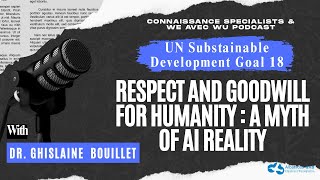
In this Connaissance Specialists podcast, host Kritika interviews Dr. Ghislaine Bouillet Cordonnier, PhD, attorney and president of the Albert Ross Foundation, about a speculative UN Sustainable Development Goal 18 – Respect and Goodwill for Humanity, framed as “AI for Humanity.” Dr. Bouillet critiques the current 17‑goal framework, noting that only about 18% of the 169 underlying principles are likely to be met by 2030, and argues for a simplified, grassroots‑up approach. She introduces the concept of SDG 18, emphasizing the need to train AI with empathy to avoid physical, cognitive, and social harms to youth caused by excessive screen time. The conversation details several proof‑of‑concept projects: the multilingual, accessible children’s book “Finding Happy,” which integrates a QR‑linked digital twin of Professor Ellen Langer’s lifelong teachings; the Gaia Voice system that pairs AI with tangible items (books, puzzles, games) to foster human interaction; and the “Smiley Ball” game showcased at UNESCO. Dr. Bouillet explains the Create‑to‑Donate (C2D) commerce model, where one‑third of sales go to creators and two‑thirds fund NGOs aligned with the 17 SDGs, leveraging collective intelligence and minimal overhead. She stresses the importance of robust, multi‑dimensional impact metrics that combine education, biodiversity, carbon, and other SDG indicators. Throughout, she highlights collaborations with volunteers, UNESCO, and other experts, and calls for broader adoption of empathy‑driven AI and free youth education on sustainable development.
Chapters
Hello and welcome to another thought-provoking episode brought to you by Connaissance Specialists. I am your host Kritika, and today we are diving into a fascinating and futuristic theme: UN Sustainable Development Goal 18: Respect and Goodwill for Humanity and Beyond. We know the United Nations has 17 official Sustainable Development Goals focusing on issues like poverty, education, and climate change. But imagine a world where we added a new one, Goal 18: Respect and Goodwill for Humanity. What would it mean for our global society? How would artificial intelligence influence this vision as a force for unity or division? To explore this intriguing thought, we have with us truly accomplished guest Dr. Gillian Boylott, attorney, member of the Paris and New York Bars, Master of Laws from Harvard and president of the Albert Ross Foundation. Welcome to this podcast, ma'am.
Well, thanks a lot for inviting me to express, uh, what has been the fruit of the thinking of our foundation. Albert Ross Foundation, very briefly, has for object the free education of youth on sustainable development. And sustainable development was meant at large with the 17 Sustainable Development Goals of United Nations, as you rightly pointed out. These 17 goals are supposed to be achieved by 2030, and most of the economists are basically making the following conclusion, I will say. First, 17 Development Goals has been derived in 169 principles. Out of these 169 principles, only 18% will be reached by 2030. That means that the approach which has been used is not possibly the most efficient or the most convincing for most of the stakeholders, maybe because too broad, too rich, or maybe because it was not coming from a grassroots approach. Then based on this, I would say, facts, we start having some brainstorming. And the first one was, first, we don't want to be adding another layer of complexity because it is complex enough, and what we want is simplification. Second of all, we don't want to have another one coming from the top to the bottom, but just the other way around. Then we came with the help of someone extremely brilliant because he has been really helping to mature our thinking. His name is Dr. James Hong, he's based in Singapore. Actually, he's the head of a think tank which is called AI for Intelligence, AI, and he has been proposing us Sustainable Development Goal 18, which is called AI for Humanity. This AI for Humanity is really part, very important part, of the thinking that will lead to a better understanding, I would say, what could be sustainable development in the future, of course, with the big changes coming up. And which has already happened with AI. But what we have been coming up is that AI for humanity is only touching one part of our own thinking. In other words, AI, especially for youth, if we take it as a standalone, has physical damages. First, the fingers goes like that, the back goes like that. The eyes are going very, very badly because the youth— and we have adopted with my husband 4 children, then I have seen that under my own roof— the children are becoming very much addictive. And also from a neuroscience standpoint, children have their brain evolving and neurons moving up to age of 25. That means, and until that age, the screen and digital access is damaging the brain. That's, that's fact, that's medical, that's neuroscience. But more importantly, what we have noticed in our survey with the children working with Albatros is that using digital AI only breach their social life, then they have more and more difficulties to communicate with each other. They just do it via a screen, and the human interaction is getting sometimes lost. Then what has been done for our own AI, which is called Gaia Voice, is— and it is actually IP-protected— is to have always AI linked to something, a real-life item. In other words, it can be a book, but it can be also ancillary tools such as puzzle, family games, 7 family games activities. Then therefore there is a human interaction coming up, and that's what we call the SGD 18, which is not another one but more something coming on the top of this, the 18, as a way to approach, um, the sustainable development in a human way.
That's great. I mean, thank you so much for explaining this in a very better way for our audience. I hope they will definitely understand that what is your experience and what, uh, your Albatross Foundation is doing. So according— I mean, uh, by while going ahead with this, uh, podcast, we wanted to know that, as you said, The UN currently has 17 Sustainable Development Goals, and if we were to imagine Goal 18 as respect and goodwill for humanity, how do you see this fitting into today's global challenges?
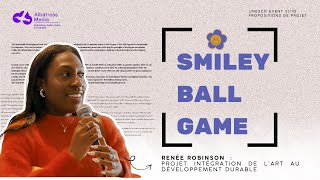
Well, global challenges is something sort of too big for us, and especially for me. Then that's why we decided to, to do it in a different way. We did it as a, as a POC, as a proof of concept. And actually, initially when we started Finding Happy, we didn't know it will work. We were doing it as a proof of concept and then we tested it. And what is Finding Happy and what is basically our first example of what could be an illustration of SGD 18 which could work. About less than a year ago, we were at Harvard with Professor Ellen Langer, and she had prepared some illustrations based on her mindfulness courses for grandchildren. And basically, it was to teach their grandchildren how to be GLADO: Generous, Loving, Authentic, Direct, and Open. And of course, Professor Langer has been a very known psychologist and publishing a lot of books, but for adults and students. But she had never done that for children. Then, since she knew that Albatros was having its own integrated humanist publication house for children, which is actually based in Singapore, it's called Create to Donate, she proposed to us to publish this book. And then we say, okay, let's, let's have a look at it. But a book, a children's book, was not a breakthrough because, well, especially since COVID many people have been publishing or preparing children's books. And then it was like not something really new and proven as being very creative. Then we put together a group of volunteers, only volunteers, and at the end, right now we have more than 30, more than 30 people who have worked on this proof of concept. And then, uh, what is this proof of concept? First, we started with a grassroots approach. We are just like a little bit of, um, of an illustrated book. And then we decided that we make it beautiful. Then we had people helping with their own skills to make it beautiful. Namely Sarah Marinac worked on it a lot. We had another person, CJ Meadow, who is a very well-known person with digital thinking, and she put together the strategy. And well, I'm not going to be naming all the volunteers who have been involved, but at the end of the day, what happened last month, namely on October 21st, we have been able to launch at UNESCO Less than a year after the first meeting we had, where nothing was existing, Finding Happy, which is now a book in 8 languages, Braille, plus audio, plus sign language. And at the back of the book, we have an embedded QR code leading to Professor Langer's digital twin, a PLM. And in this very twin, we have included all her knowledge that she has been teaching for 48 years. And then via this QR code, the reader, and if it is he or she is a young reader with parents, can access the contents of the digital twin, not only discussing the book. It's not a digital book, it's a book talking about what's in the book, but what's above the book and what's the knowledge of the expert, Professor Langer. And this is the first proof of concept of Gaia Voice that We have done something with no budget, no employee, no subordination link, just 100% collective intelligence, and basically we made it happen, and we will be starting to distribute it very shortly. Just the other way, it's just a grassroots approach, and I may add something. At UNESCO, we decided to push the initiative a little bit further. Since it worked and since we had a large audience with various experts and youth and, well, you know, one of these UNESCO events, then we developed, thanks to another professor, her name is Mara Asli, she gave us the idea to do a game called the Smiley Ball Game. Then we had one of our volunteers explaining the game. Okay, we will be throwing the smiley in the assistance, and whoever was picking up the game will come on stage and propose a proof of concept. Then what is the dream of their life, what they can achieve very quickly? And some came with training in Peru about people to protect their natural resources. Another came with a Corsican micro biodiversity reserve, and another one came for a Cameroon modular habitat. And basically these people, these young people, most of the time from around the world, will be just coming on stage and were enthusiastic of having their little book just reachable, that they don't have to go by a very big crowdfunding, they don't have to be going by a big administrative layers and burdens. They just saw that it worked for Finding Happy, then there is no reason that they cannot work, it cannot work for them. That's the business model that we have been trying to develop.
That's great, Dr. Gillin. That's such a refreshing perspective. So you have beautifully connected the emotional and ethical fabric of society with the existing SDGs. So do you think artificial intelligence can genuinely foster respect and goodwill among people? Or will it widen the divide by amplifying biases and inequalities?
Well, this is a big question, and we need to remain humble because I believe with the speed AI is going and the GenAI, well, we never know how it will develop. But what we do know is that if we train AI with empathy, with respect, and humanity, it will grow nicely with the human touch and eventually will not be fostering only return on capital. This is very much the way the AI is trained. It's like a kid. If you train a kid of being I would say jealous, greedy. I mean, well, obviously this is not so valid example, but if the education of the children is not suitable with the core value that should be respected with humanity, well, then basically the kid may not have the right reaction. And we do believe that if AI is trained with human touch, it will be reacting in a way suitable with respect and goodwill. And in terms of goodwill, we are just like being inspired, which is being done by UNESCO itself. They have a large number of goodwill ambassadors for UNESCO, and these goodwill ambassadors are just reflecting with their day-to-day life or their day-to-day action what could be brought in terms of goodwill for humanity.
That's great, Dr. Jalane. I mean, I should say that, um, that's such an important point that should be discussed. So I mean, you explain it very in a very better way. So in a world increasingly driven by, driven by technology, how can we ensure that human empathy and values are not overshadowed by algorithms and automations?
Well, this is part of the equation to make sure we are successful in building this proof of concept into something bigger, viral, and applicable elsewhere. We need to have very strong metrics, and these metrics should be applied with the very existing 17 Development Goal, because all these proof of concepts proposed as grassroots initiatives, they need to be proven successful with metrics. We cannot be remaining in the thin air. For example, if we have a proof of concept type of project on education, then we need to assess with metrics how inclusive the access to education was, How many hours of education were given? What about family learning hours? If we go nature, well, nature is more like easy to assess because we can measure the number of acres protected, the number of biodiversity agreements signed, even carbon credits issued, because there's a lot of carbon credits. There is even one which is being right now initiated by World Wildlife Fund in this country, which does not exist yet. With the Kyoto Protocol, we had, under United Nations, we had carbon credits issued with, well, basically when the carbon was alleviated. This one is a two-layer one. It will be giving access to carbon credits for biodiversity, for nature. In other words, First layer is carbon, carbon emission and remediation, and then biodiversity. It's sort of additional layer where we can encompass several, I mean, at least two elements of sustainable development. In other words, in the future, our goal will be to be able to develop metrics which amalgamate in a very sustainable and coherent way as many Sustainable Development Goals as possible in a given project as a 360 type of approach.
Yes, and that makes perfect sense. So I should say, Dr. Bouillet, that your insights on this one actually have been eye-opening. So looking ahead, Do you believe AI could ever be a moral force that encourages compassion and goodwill across borders, or will this remain more of a mythical aspiration than a reality?
Well, to be real, it has to be on the market, traded in a way it is used, and that's where we have developed a new business model. I mentioned that in Singapore we do have a legal entity called Create to Donate. This Create to Donate has a license as a humanist publishing license. Then when authors are basically, or filmmakers, well, when they fit the Sustainable Development Goals and the mission of Albatros, then we help them as much as we can. But more, we also have a commerce and e-commerce where we distribute not only books, but we also distribute sustainable development items, items being developed by minorities. Well, basically we are trying to help the best we can with our little level, this sustainable development commercial activities. And then we have jewelry, we have the sculpture, and you can find us on creatodonate.org. But what is a novel aspect of this create-to-donate business model is whenever we do a C2D transaction, one-third goes to the creator of value, i.e., to the traditional commercial economy, And two-thirds goes to, uh, the financing of one of the 17 Development Gold projects. And there is a list already of NGOs where the money of whatever items has been bought can be rechanneled. And we have to identify the said NGO. We have been using for the moment two channels. Albatros doesn't aim to be a big NGO. We are running for 15 years with zero employees and almost no fixed cost, project by project, and we have delivered approximately 20,000 children trained in China, France, Brazil, and we are recognized at the United Nations portal of NGOs We have a pedagogic garden. Basically, all that has been done with no employees, just 100% collective intelligence. And Create2Donate is the same. And then we have developed a methodology, and Albatros aim is to be an incubator of incubators, because it took us 15 years to reach this level of understanding of what we can do with little, and we can do a lot with little, basically. But we need to have a sort of a reversal, uh, paradigm to approach, and we need to basically, uh, develop the empathy and the understanding of the people that it is not only by having like a 100% profit rate of return on a given transaction that they will be feeling the best. They can get out of a transaction. Because as someone told me, everyone has its poor. And at the time of Christmas, at the time of Deepavali, at the time of Chinese New Year, people are giving gifts because this is part of the custom, the tradition, their life. And, and this very gift can be feeding not only a profit-making engine but also feeding a goal or an association or school which is dear to the heart of the buyer and therefore the receiver of the gift. And that's this Create2Donate business model, and it's very simple: one-third for the creator valued, just the regular type of transaction, and two-thirds allocated to Sustainable Development Goal NGO. And as I say, we have NGOs selected by the Alliance of Attorneys of Human Rights and also the NGOs listed under the United Nations, because that means that these NGOs and institutions have already been cleared for us so that we don't have to go into any due diligence, because once again, we have no employees and we are based on trust and we rely on people who have done this clearing, this clearance for us, and have selected suitable recipients for the money we will be trying our best to raise.
Uh, Dr. Boulay, it's been an absolute honor, uh, having you on this episode. And that's a deeply inspiring thought— AI could become a moral amplifier if humans set the right tone. So your insights on the intersection of law, technology, and humanity have been eye-opening. Thank you so much for joining us. And to our amazing listeners, thank you for being part of today's discussion on respect and goodwill for humanity. Perhaps this is the conversation that nudges all of us to turn this imaginary Goal 18 into a real movement, uh, starting within ourselves. So before we wrap up today's episode, I want to share something truly exciting with all for our listeners. Have you ever wondered how students can go beyond textbooks and really stand out in their academic and career journey? Well, that's exactly where Connaissance Specialists make possible through its professor-led profile building program. This isn't just another after-school activity, it's a transformative experience. Students work on real research projects with university professors, take up exclusive internships with members of parliament, and gain hands-on exposures across diverse fields. So what excites me, uh, with the most is our special module on legal education for school students, along with structured extracurriculars, volunteering, and personal branding guidance. So dear listeners, this isn't just about building a profile for admissions, it's about creating a powerful personal identity that reflects leadership, responsibility, and global readiness. If you would like to know more, stay connected with Connaissance Specialists on our all-over channels like YouTube, LinkedIn, Instagram, and as well as on our contact numbers, and give your child the edge they truly deserve. Until next time, stay thoughtful, stay kind, and thank you.
Thank you, Dr. Jillian, uh, for a wonderful session. Uh, in fact, I would like to tell you that along with the legal awareness program, what we are giving as a profile building for students, school students from class 8 till class 12, We are also offering something called a sustainability module for the students. And I feel it's like brilliant to be connected to someone who is working at an international level, at UN level, about making people aware about the concept of sustainability, which is the ultimate for the survival of humanity. I'll say, because we can do anything, but we cannot ignore the nature, Mother Earth, because ultimately, for generations to survive, we need to be in tune with the nature and the environment. And very soon, I think we can collaborate with each other because this Sustainability program, as you rightly said, is a must and essential, especially the the SDGs, Sustainable Development Goals, they can only be fulfilled if the coming generations are in tune, are aligned, are aware that this is where we are going ahead. And like talking about pollution in countries, it's like really killing. But unless they say that, unless you are aware, you don't act. Fine. So awareness is most important. That is why we say, uh, catch them young. So make them aware at a very young age so that at the time they grow as adult, they are— the sustainability and the conservation for the environment comes into their blood. Because good things, they say, they take a hell lot of time to develop, but bad things are very easy to catch. So let's start on with good things as early as possible. So thank you, thank you very much.
And when I started to say the mission of Albatros is education of youth on sustainable development, and we are trying to make it free because education is what we owe to the youth of the planet. Because if they are educated at the youngest age about how to behave, um, on the environment, on how to behave with each other, how to fight inequality, basically to attend the 17, then we will consider that we have been paving the way to a better environment, to a better world. And your two projects, the legal, on the legal side as well as the training side you just mentioned, Krypka, We are just like all yours, and as we say, we are all pro bono. Then please tap our resources and we'll be happy to do it graciously.
More from Ghislaine
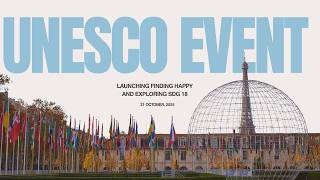
UNESCO Event : Launch of Finding Happy and proposal for a new Sustainable Development Goal (SDG 18)
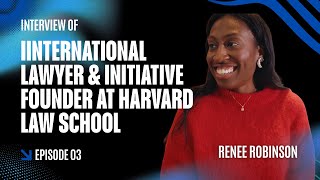
Interview of Renee Robinson, International Lawyer & Founder of initiatives at Harvard Law School
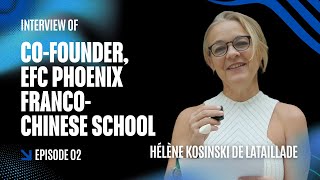
Interview of Hélène Kosinski de Lataillade, Co-Founder, EFC Phoenix Franco-Chinese School, Shanghai
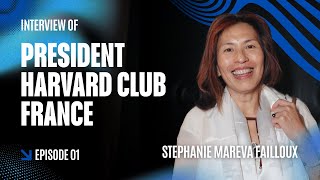

Remerciements aux avocats probono pour l’IA GaiaVoice d'Albatross par Ghislaine Bouillet Cordonnier
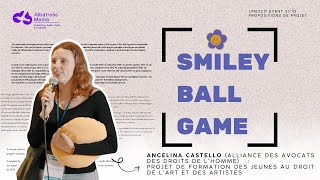
Projet de formation des jeunes au droit de l’art et des artistes par Angelina Castello
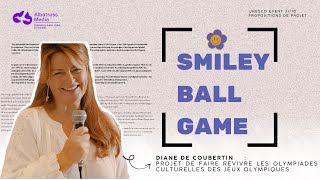
Projet de faire revivre les olympiades culturelles des jeux olympiques par Diane de Coubertin
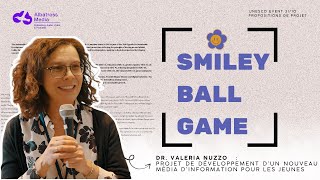
Projet de développement d’un nouveau média d’information pour les jeunes par Dr. Valeria Nuzzo
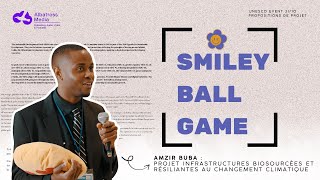
Projet infrastructures biosourcees et résiliantes au changement climatique par Amzir Buba