Exposing Mortgage Fockery with Gianna & Joe

In this hour‑long YouTube episode, host Gianna Miceli interviews private investigator and forensic mortgage auditor Joe about the hidden mechanics of modern mortgage financing and the systematic legal abuses that allow banks and servicers to foreclose on homeowners without proper ownership of the debt. They trace the origins of the CODA (Chain of Title Analysis) methodology, explain how promissory notes and security instruments are created, transferred, and often mishandled under the Uniform Commercial Code. The conversation covers the distinction between legal and equitable title, the differences between lien‑theory and title‑theory states, and how entities like MERS, GSEs, REMICs, and RMBS operate in the background. Joe details the forensic audit process—collecting loan‑level data, cross‑referencing notes, mortgages, and assignments—to uncover missing endorsements, blank endorsements, and illegal assignments. They cite case law (e.g., Carpenter v. Longen, Hibernia Bank v. USA) and statutory provisions (Florida Statutes 673‑2031, UCC §§2‑302, 2‑309, 2‑313) to illustrate why many foreclosures are legally invalid. The episode also promotes Legal Focker University’s free‑trial class, which teaches homeowners how to obtain audits, file legal challenges, and potentially secure lien releases or discharge unsecured debt. Throughout, Gianna and Joe emphasize that banks often lie, that the true owners of the debt are obscured, and that homeowners can take proactive legal action.
Chapters
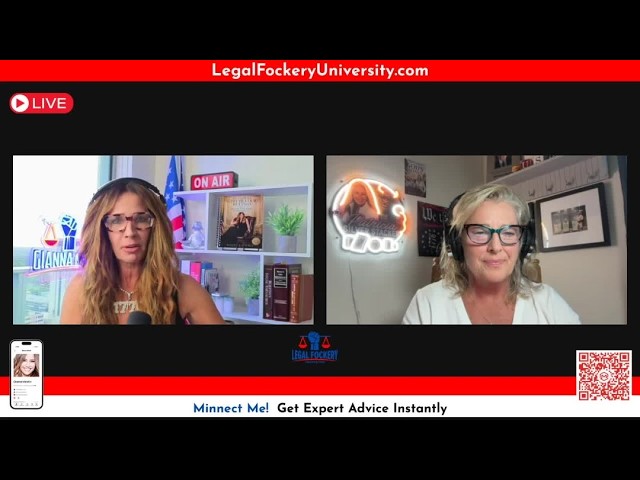
Hello everybody, welcome to Gianna Miceli's Thursday show. I'm doing a show tonight with our private investigator Joe. Joe does our mortgage, our forensic mortgage audit, and he invented the mortgage audit about 25 to 30 years ago, right Joe?
15 years ago.
15. Okay, what is the origin of even coming up with this concept?
Well, the acronym CODA, Chain of Title Analysis, right? My buddy and I came up with that because, uh, we were fighting foreclosures and we were assisting, and it just hasn't morphed in, it's just evolved. So now it's not just, you know, chain of title. Now, I mean, we're deep diving into everything. So now with the loan level data, now with the affidavits from the bank expert, they really are left grasping at straws on the other side. So it's— we've come quite a ways. It's, you know, everything that we're talking about all relates to title. And it's interesting because when you ask people about title, you get all these different, um, answers as to what is title. So, um, if you want to be specific about title, let's talk about it. So what is—
we're going to go to the beginning. Let's go to the beginning. So most people think— and we're going to talk tonight about a real case going on inside the Legal Focker University, okay? Because people don't understand. It is very hard for people to wrap their head around the fact that the banks lie, the bank attorneys lie, and the state judges and prosecutors lie. So most people think when they sign a mortgage that the story is very simple. We borrowed money from the bank, actual tangible money, and you pay it back and you're done. So when did you first realize the story the bank tells you and the legal reality are not the same thing? Like, when did you discover they don't really lend you money?
Well, you're gonna have to go back to, you know, back to 2008 when I started doing this, you know, because when you start looking at all the different, you know, getting into banking, all right, as to what can banks do, what can banks not do, okay? So if you just look at the basics, it says the banks cannot lend you their money, right? The banks cannot lend you depositors' money. So whose money do they lend? That's the very first question, right? Because then you have to ask yourself, okay, when I read my document, all right? And again, very few people do, because what happens when you show a closing? Usually it's a rushed event. And when I say rushed, right, you show up, they're going to allow you an hour, 40 minutes, and they'll say, oh, come on, we're really busy. Come on, we're really busy, Gianna. And then you show up and when you start looking at the documents and they tell you, ah, don't worry about it, we've already been through them. And when you get to signing and you're like, um, then we agree to a 5% interest rate, this is saying 6.5%. Well, at closing, that's when a lot of little nuances start taking place, because many times what happens is you don't get what you thought you were getting and you don't read what you're signing. Exactly.
Because being attorneys—
well, trusting anyone. Because if you read the doc, go to the very first paragraph. Again, over 90% of the documents, right? If you look to your promissory note, again, the average note, very first paragraph is going to say something to the effect of, for a loan I have received, I promise to pay. Well, think about that, all right? Because when you read that, what are you saying, right? The word have, H-A-V-E, is possessory. So that means that you already possess this, when in fact, before you showed up at the signing, you don't— you didn't own anything. You didn't own a house. But yet on this document, you're saying, for a loan I have received I promise to pay. And that's what's given value to that instrument, that promise, okay? Because what you are doing is you are pledging your future earnings, and that's exactly what it is. So even though there's only one set of signatures, whether it's yours or you and your wife or spouse or whomever, okay, it's called a unilateral adhesion contract, which means this is—
sure.
Exactly, it's a unilateral adhesion contract. So this is a contract that is written by Party A and signed by Party B, and it's legal. All right, and the borrower, through an innocence of consciousness, assumes that everything that this guy in front of him told him is true and correct, right?
But may I interrupt? It's not lawful because it lacks full disclosure of the terms.
They tell you it's full disclosure, but how many people sit and read their docs?
Nobody. Nobody.
You know, I mean, looking at the interest rate, something— understand, half a basis point off, a point off, I mean, you're talking hundreds of dollars a month in payments changes. And multiply this by 30 years.
And so what has been created is not a loan but a negotiable instrument, a financial instrument.
Correct. And understand, um, when you, when you have an understanding, all right, so the most— again, the majority of the loans are amortized at 30 years, 360 months. So what that means is this: In a nutshell, Gianna, if you had taken loan out for $200,000 and over the next 30 years you've paid it faithfully every month, at the end of 30 years you would have paid in approximately $500,000. But yet you took a loan out, Gianna, for $200,000.
So I rent, right?
So you can understand now why as an investor of course they're going to want to invest in it, right? These are mortgage-backed securities. That's what they're supposed to be. That's what everyone is told.
All right, but no one knows what that means.
No, they don't have a clue, right?
What does it mean? Do you know what does it mean?
So let's talk. You're in the state of Louisiana or Florida, correct? Yeah, one of those states. All right. All right, so in the state of Florida, you go to closing, you go, 'Hi, I'm here,' okay? And then you're gonna sign between 80 and 100 documents, okay? And among those documents you're gonna sign is a note and a mortgage. So out of the 50 states that we have, let's talk about this because this is really important, right? We have lien theory and we have title theory. Okay, so we have 31 states that are title theory, and we have 17 states that are lien theory, and one which is state of Georgia which has security deed. But the difference is all about equity. Okay, so understand the difference between legal title versus equitable title, right? Because on a mortgage, right, everything is attached through a lien, but on a deed of trust, there's a trustee named So that trustee already has legal title. You've got equitable title. So legal title gives a party the right to sell. Equitable title gives a party the right to use and possess the property. So in title theory, the lender holds legal title to real estate and the borrower can retain equitable title. So the lender can easily foreclose, like in the state of Texas, California, Nevada. Why? Well, because the lender already owns a home.
Those would be places that conduct non-judicial foreclosures.
Correct.
Now I witnessed one myself and it is the bank's attorney. I videotaped it too. It is the bank's attorney partnering with a third-party auction business and it's conducted on the steps of the courthouse. To give the appearance of a sheriff's sale, but it's not really. And when I was there, there's only 3 people. There was a guy who looked like he was working with the banker guy, and there was a lady who looked like she was bidding for someone on the phone, like maybe a realtor, or people buy, you know, foreclosed homes. And the guy started the bidding at— it was a $360,000 loan. He started the bidding at $100. Of course, the 2 people bid. But then it goes up to $101,000 and the two people bid, and then the third bid is $360,000 and this lady doesn't have a chance to bid. The guy bids and it goes back to the bank. So if the bank claims to own it with the— what was it, the title? The— not the equitable, the other one.
Legal title.
The legal title. If the bank has the legal title to sell it Why are they only taking it back? They're not actually buying it. And that, ladies and gentlemen, is why we call it legal fuckery. Go ahead, Joe, pick up.
All right, now in addition to what you just said, right, here's what's really messed up. All right, if you or I show up at that sale, we need to have a cashier's check. So why the hell doesn't the bank have to have a cashier's check? They They're saying— I know what they say. They say we already own it. Bullshit. You're not on title, you're not on the note, and you don't own the debt.
But, but that had already been through court. The judge declared it foreclosed, and the sheriff is going to carry out the orders of the court order. And they're all in on it together. They are stealing homes. Yeah, they're all in that together. Okay, now let's set up that we do not help people in foreclosure. This is a preemptive process, the forensic audit class and the process. You take my class, you go, we teach you everything about it, and you get your audit from Joe. And then there's a team that will present the challenge to the banks in a legal manner where you will challenge their true ownership. So we're going to talk about an actual case to show you what they really do. So, uh, if a borrower has never missed a payment, not even once, and they're questioning whether the party collecting the money has the legal right to do so— because many people, I'll put this on X, and many people say, yeah, I got a letter and my note was sold— they don't really know what's happening. So tell them what's happening when that happens, right?
Well, you have to— it's not your physical documents that are sold. All right, so when they say your loan has been sold, people understand your loan consists of multiple documents.
Now, components—
has components.
Yeah.
Okay, so the main component is the negotiable instrument being the promissory note, and then the security instrument being the deed of trust or mortgage or security deed in the state of Georgia. But what you under— what everyone needs to understand is when you're talking about title, right? So title is a union of all elements constituting the legal right to control and dispose of property. Title is a legal link between a person who owns property and the property itself. Title is a legal evidence of a person's ownership rights or interest in the property. Title is a manner in which the right to real property is acquired, the conditions necessary to acquire a valid claim to land. Title is the right itself, the legal consequences of such conditions. And this is why the Uniform Commercial Code comes into play. What is the Uniform Commercial Code? Great question, Gianna Miceli. The Uniform Commercial Code is is a list of codified statutes and codes pertaining to commercial transactions.
We have a campus called the Uniform Commercial Code Campus.
So when transactions are to take place, the first thing you're going to do is say, hey, what was to take place? What did take place? What did not take place? All right, that's what I want to look at. All right, so when you're talking about rights, how do you acquire rights? You know, do I acquire rights to the note? Do I acquire rights to the mortgage? Are they separate? Of course they're separate. Why? Well, because rights to the note do not extend to the mortgage or the deed of trust or the security deed. And again, it's, it's very simple, but very few people are going to look at it and understand it. All right, let's talk about Florida. All right, okay, because Florida is pretty simple. And so in the state of Florida, understand, Florida does have assignment statutes that say there must be an assignment of mortgage, right? But now let's get into what was to be done, what was done, right? Because if there's only statutes pertaining to acquiring rights, and that should be pretty easy. So in state of Florida, we're going to go to 673-2031. Why? Because that's the only statute that you go to for acquiring rights to a negotiable instrument. So it's under transfer of instrument rights by— rights acquired by transfer. So when you go to subsection 1, it says an instrument is transferred when it is delivered by a person other than its issuer for the purpose of giving to the person receiving delivery the right to enforce the instrument. So now we've defined what is to be done, okay? So now 2, 3, and 4 place restrictions on how rights are transferred, okay? So when we look at 2, 2 says transfer of an instrument, whether or not the transfer is a negotiation, vests in the transferee any right of the transferor to enforce the instrument, including any right as a holder in due course. But the transferee cannot acquire rights of a holder in due course by a transfer directly or indirectly from a holder in due course if the transferee engaged in fraud or illegality affecting the instrument. So it's pretty simple. So subsection 2 says if there's anything fraudulent, if there's anything illegal that has transpired, no rights have been acquired, period. Okay, now let's jump down to subsection 3. Because this is really important. It says, unless otherwise agreed, if an instrument is transferred for value and the transferee does not become a holder because of lack of endorsement by the transferor, the transferee has a specifically enforceable right to the unqualified endorsement of the transferor, but negotiation of the instrument does not occur until the endorsement is made.
Now, so if there's no endorsement— in layman's terms, what's no endorsement?
No rights. Okay, now when you get down to number 4, which is a heavy hitter and very powerful, because it says if a transferor purports to transfer less than the entire instrument, negotiation of the instrument does not occur. The transferee obtains no rights under this chapter and has only the rights of a partial assignee. And you're saying, what the heck is the entire instrument? Great question. So your entire instrument— think about this— is your document being both tangible, which you can touch and feel, and the document being the intangible, the debt. Because understand, what did you do on that document? You pledged your future earnings. I promise to pay for the next 360 months X number of dollars. So you're pledging your future earnings. Okay, so now what does the bank do?
They're going to take a chance on you.
Exactly. Now understand, I don't know anybody that has gotten a check, even though when you sign that, okay, it says, for a loan I have received, I promise to pay. So again, that is what has given value to the instrument, right? Your promise. Right, one signature doesn't matter as long as you signed it. All right, now when you signed your mortgage or deed of trust or security deed in the state of Georgia, again, those documents all contain specific verbiage. All right, now if you look, let's go back 10 years. In the last 10 years, the majority of the loans that are sold are sold to GSEs. A GSE is a government-sponsored enterprise such as Fannie Mae, Freddie Mac, Ginnie Mae, Farmer Mac. Okay, those are GSEs. They've been around for a while. Fannie Mae was chartered 1938, Ginnie Mae was chartered 1968, Freddie Mac was chartered 1970, Farmer Mac chartered 1984. Okay, but out of all of these, the only true government-sponsored, government-backed entities are Ginnie Mae and Farmer Mac, because Fannie Mae and Freddie Mac, they both have gone private, and their goal is to provide profits for their investors, and they do that very well. So Fannie Mae guarantees all of their payments to their investors. Freddie Mac guarantees all their payments to the investors. But Ginnie Mae and Farmer Mac are guaranteed by the government. So for example, I've had a few loans from Farmer Mac and it says paid to the order of U.S. Department of Agriculture as trustee. So again, we know the debt is sold, but very seldom do they transfer the note proper through endorsement, negotiation, transfer, and delivery.
Enter the legal fuckery. Now, is that where MERS comes in?
Well, MERS is strictly operating in the electronic registry. That's all they are, okay? And again, if they're only in the electronic world, they're not in the tangible world. So they've got nothing to do with the note. They've got nothing to do with your payments. So fast forward years later, you've been making payments and for some reason you've fallen behind, okay, and all of a sudden they filed this assignment of mortgage into public record. Everybody freaks out. Oh my God, they filed an assignment! Well, what is an assignment, right? When you're asking what is an assignment of mortgage, what is an assignment of deed of trust, what is the purpose? The purpose of an assignment of mortgage is to memorialize transactions pertaining to the sale of the tangible promissory note in the acquiring of rights. It does not cause the sale, nor does it cause the acquiring of rights, as those are done pursuant to statutory requirements of law which haven't taken place yet. Why do you know that? Well, we look at the note— there were no endorsements, right?
Now, right, let's pause for a moment, because in our true story that we're referencing tonight, this couple that's working this process with you inside the Legal Fauquier University Once they acquired your forensic audit, it was discovered that there was no assignment. There was no recorded assignment connecting this loan to the bank that was collecting payments. After this couple used our process to make the challenge, because you're challenging who actually owns the loan, then they retroactively made an assignment as a retaliation for being questioned. How dare you question that we committed legal fuckery? Now they're going to be totally busted on that. It's in the process right now, right? Not an overnight— it takes like 6 to 9 months for this, right?
But understand, all right, so now, um, certain states, for example, state of Maryland and a few other states, while they do not have statutes for assignments there are consequences should you fail to record an assignment.
Like what?
Okay, I, I don't know all the consequences, but Maryland is the one state that I know of particular because that's in Maryland, this particular case. So there are, again, there are no recording or assignment statutes. However, there are consequences. But understand Right, if the purpose of that assignment was to memorialize transactions pertaining to the sale of the note, well, first thing, what are you going to do? I'm going to ask for a copy of the note as it exists today. So on this note you're talking about, there's an incomplete stamping. Now they're going to say that this is a blank endorsement, right? Well, but understand, get all normal.
It's all normal to them.
Well, let's talk about that a little bit, all right? Because what, what they're talking about is normal— it really isn't normal, right? Because you're talking about paid to the order of, and then there's a blank line, and then it says without recourse. So let's take this blank endorsement apart, okay? So an endorsement pursuant to 3204, right, consists of words or letters. But now on this one, no one is named. So if no one is named, let's say this were a check and no one was named, could you collect payment on it? No. Why not? Because no one is named. But yet they're going to say that this is a blank endorsement. And if it's not a blank endorsement, right, if it's not a special— it must be a blank endorsement. And that's what everybody hangs their head on, 32025, right, or 3205B, right? And I would say, well, go to 3205C or 32053.
Why?
Well, because when they cite 3205B, right, for example, in the state of Florida, it says if an endorsement is made by the holder of an instrument and it is not a special endorsement, it is a blank endorsement. When endorsed in blank, an instrument becomes payable to bearer and may be negotiated by transfer of possession alone until specially endorsed. That's what they hang their hat upon. But listen to what the word said, okay? Yes, it becomes payable to bearer and it may be negotiated by transfer of possession alone. Possession does not give you rights of enforcement. You simply possess it. Okay, now if you were to jump down to the next subsection, subsection C, or subsection 3, it says this, quote, the holder may convert a blank endorsement that consists only of a signature— everybody hear that? Only of a signature— into a special endorsement. By writing above the signature of the endorser words identifying to whom the instrument is made payable. So if that were me, a blank endorsement would be my name, first name, last name. That's a blank endorsement. Okay, now when you add the words without recourse— okay, Google the words without recourse. Everybody can go to Google. When you Google the words without recourse, right, you're going to get without warranty, without representation, used in real estate transactions. So what does it mean? It means that they have released rights to the note without naming a payee. And that's very important, because if this were a check and no one is named to the check, could you cash the check, Gianna?
No. Now, there were 9 years of the bank cashing this people's checks with no paper trail. There's no— again, that they were the true holder of the note.
Again, holder of the note. Anybody can be a holder of the note. Look, I'm holding the note. I'm the holder. I'm the holder. And that's what it amounts to, right? Holder, right, is— has not acquired rights through endorsement and negotiation, transfer and delivery. You simply possess it. All right, now let's say you're in the state of Florida. What happens? Well, if they file a complaint in the state of Florida, what are they supposed to do? They're supposed to— the courts— the bank takes their original note and they give it to whom? The court to hold. Okay, they file it with the court.
Hey, Your Honor, foreclosure.
Yes. Okay, so I'm just gonna— just, I gotta put this out there because what happens now is they no longer possess the note. The court possesses the note.
What meaning does that have?
Nobody's acquired rights. You simply possess a piece of paper.
Well, how about the people who live in the house? Isn't possession 9/10 of the law?
Again, in the state of Florida, Louisiana, again, you have mortgages. Why? Because it's a lien theory, and if there is not a lien proper, that is their main— that is how you get enforcement, right? So what is needed in order to acquire a valid lien? You must own the debt. So let's just say for shits and giggles that There is an assignment, and they assigned it to Due Achievement and Howe Loan Servicing. So now Due Achievement and Howe Loan Servicing is named in an assignment, but Due Achievement Loan Servicing is not named to the note. Okay, there's an as-of-yet unnamed payee to the note, but we have a named mortgagee in public record. Guess what happens? Nothing. Why? Basic contract law, there is a lack of agent-principal relationship. We have a name mortgagee in public record acting as a fiduciary, right, for an investor who has assented consent. But yet, if you really understand, the purpose of that mortgage was to attach itself to the debt evidenced by the note. And we go and look at the note and there's no one named to the note. So if no one is named to the note, there is a lack of agent-principal relationship because the party being the agent in public record cannot take instructions from an as-of-yet unnamed payee to the note, right? Basic contract law.
So now neither— no one can effectuate a foreclosure because they don't have all the components of the debt. Oh, not even the debt. They don't have all the components of the home, the mortgage and the contract. And let's talk about the 1872 Carpenter v. Longen ruling.
Oh, that's simple.
'72. Tell us.
It was opined in 1872. Okay. However, understand, okay, it was an 1871 case and it was— again, it goes back to Again, it was about grain. And the interesting thing is everyone cites this case all the time, all right? And what they're citing is this, quote: the U.S. Supreme Court stated the note mortgage are inseparable, the former as essential, the latter as an incident. An assignment of the note carries a mortgage with it, while an assignment of the latter alone is a nullity. The mortgage can have no separate existence. The mortgage, when the note is paid, expires. It cannot survive for a moment the debt which the note represents. This dependent and incidental relation is a controlling consideration. So let's talk about this, because many times people say, well, Joe, if the note was endorsed properly, you wouldn't need an assignment. And you're correct, you can do it without an assignment if done proper. Okay, so when it's talking about the note and mortgage are inseparable, the former as essential— the former is a note, so the note is essential, the mortgage is an incident. So an assignment of the note would be an endorsement of the note. Again, we're talking 1872, right? So an assignment of the note would carry the mortgage with it. Well, an assignment of the mortgage alone is a nullity, right? So when they're doing an assignment right, from MERS to Mickey Mouse. All right, they've never transferred the debt. They transferred their beneficial interest in the deed of trust or in the mortgage or in the security deed if you're in the state of Georgia. And that's all they have transferred. That's all they can transfer because that is all that they have— their personal interest. So understand, the only way— and MERS even says in its manual You know, if you're going to transfer the note, right, you have to transfer the debt through endorsement, negotiation, transfer, and delivery, 7501. Okay, now many times you're having these loan servicers act as a servicer, right? Right. And again, it's crazy because if you understand that, okay, very, very, very Very few times do they ever acquire anything other than just servicing the loan. And understand, what is it they do when they service loan? They just shuffle paperwork around. That's all they do. They're just shoving paperwork around. Now I'm going to read you— here we go. So here's a cool sighting. And this is very, very important. All right, so here it is. We are going to cite this.
I think we might have to break it down.
15 USC, okay, Chapter 41, 1641, subsection F, Treatment of Servicer. Subsection 1: In general, a servicer of a consumer obligation arising from a consumer credit transaction shall not be treated as an assignee of such obligation for purposes of this section unless the servicer is or was the owner of the obligation. So when they sell your debt to Fannie Mae, the servicer isn't the owner. When they transfer your debt to Freddie Mac, the servicer isn't the owner. They're only servicing it.
They're just collecting the check.
That's it.
How does it get from the servicer to the REMIC trust?
Understand, the servicer gets paid half a basis point. That is their fee, right, for you sending them your payment. They take their cut off the top and then they send the rest to the trust. Okay, now if you actually read 15 USC Chapter 41, 1641F, and go to Section 2, right, where it says servicer not treated as owner on basis of assignment for administrative convenience, which says a servicer of a consumer obligation arising from a consumer credit transaction shall not be treated as the owner of the obligation for purpose of this section on the basis of an assignment of the obligation from the creditor or another assignee to the servicer solely for the administrative convenience of the servicer in servicing the obligation. Upon written request by the obligor— the homeowner— the servicer shall provide the obligor, to the best knowledge of the servicer, with the name, address, and telephone number of the owner of the obligation or the master servicer of the obligation. So if you were to ask your servicer, hey, who are you acting on behalf of? Right, by law they're supposed to tell you.
Well, they, they do sometimes send letters, as we have people that challenge this. And one time they'll say, oh, Fannie Mae, we are, are acting on behalf of Fannie Mae. So then we had a member— I have this recorded— this member called Fannie Mae and gives the loan number, and the Fannie Mae lady's like, no, we don't have this loan at all. They lie, they lie, they lie.
So that's just funny.
What does this mean? Let's see, why do people need to know this information and what can they do with it? We have to talk like for the lay people, you know. It's— Joe has a 90-minute video in our university that he breaks down and he shows you where the legal fuckery happens, like on the paperwork and anything. So, you know, this is a service for people. It's called Forensic Mortgage Audit, where you will find the broken, uh, what do we call the broken chain of trust? Broken, yeah, chain of title. Yeah, the chain of title is broken. And tell the people what that means.
Well, understand, when you look at your records, everything should match, right? It's like balancing your checkbook. Okay, well, I've seen some checkbooks out there, but anyway, okay, when we— you look at your public record, all right, and look at the latest and greatest version of the note, right? Because— and how am I going to get that? Great question. So the easiest way to get this is pick up the phone. Hi, this is Joe. I had a copy of my note. I lost it. Can you email or fax me a copy? Sure, Joe, why do you need a copy of your note? Oh, for my personal records, of course. And that is it. That is how easy it is to get a copy of the note. Again, it's a 3 to 7 minute call. You pick up the phone, you call your loan servicer, and understand, when you call your loan servicer, you're already in the system. So you're gonna have to produce last 4 digits of your social, your date of birth, your property address, and they're gonna ask you all these funny questions. Are you still in the house? Are you still living there? And you're gonna say, yes, I'm never leaving, this is my favorite place in the world, you know. And then again, you get a live person on the phone, just keep it simple.
Hey, the goal here is— I think, you know, we have a lot of new people watching this— the goal here is that that you should challenge who actually holds the chain of title, because it's not the people you are sending your money to. And the end game is that you can obtain a release of the lien. Now, there's a lot of people who are like, well, you took out the loan, you should pay it back. Well, if I lent my— my brother borrowed $100 from me and our other brother paid me back the $100, Should the first brother still pay me back the $100, or haven't I been made whole?
Depends what the documents say.
There you go, right? So you're paying to an agreement that had no assignment. Remember, it's a blank check paid to the order of whom? Nobody. Nobody's been assigned that. They sold it, it goes into a REMIC trust on the bond market, right, Joe?
Yeah, it goes in a REMIC, or it'll go into an RMBS, or go into an MBS.
And what are those for the laypeople, please?
Um, all right, so RMBS is a residential— res— residential mortgage-backed security. A REMIC is a real estate investment mortgage pass-through conduit. An MBS is a mortgage-backed security. An ABS is an asset-backed security. They're all securities. All right, that's—
well, they're all of them pulling the money to make more and more money, correct? They're counting on you paying for your 15, 25, 30 years, or you're going to sell the house and pay off. They're still making tons of money even if it's 1 year.
Oh, hundreds of money.
They're making tons of money and they don't deserve your payments. And so you can obtain a release of the lien through a legal process challenging this. And so what Joe does is get a forensic audit, and he gets that through a very high level banker, and that is going to tell where your note is today, not where it was however the day that you—
it's going to show the debt, not the note.
The debt. I'm sorry, where the debt is today, and that, that's separate from the contract. And so if you're paying the wrong people, which you are, you most likely are. Now, if Joe does an audit and it doesn't show that your loan was sold, Joe refunds your money, as do I.
You know, yes, and understand, in 15 years, yeah, we have not given back any money. We've located every single loan that we have gone out looking for. So whether you say, Joe, I've got a WAMU 2003 loan, no problem. Joe, I've got an '05 World Savings Bank loan, no problem. It doesn't matter. Whether you have an '04 fleet bank loan, okay? Again, even though the bank is out of business, they were in business when you signed the documents, okay? And what most people don't have the understanding of is once you sign those docs, shortly after, they sold that debt. So even if that bank goes out of business, understand they sold the debt before you went out of business. Look at Washington Mutual, okay? We'll take them for example. All right, Washington Mutual was selling a lot of neg-AM deals, all right? These deals, they were disgusting, right? They were negative amortization. They were selling loans that were more than 125% of value, okay? I mean, it was crazy. Um, they would give these little teaser rates of like 1% and then a jump up to 15% or some ridiculous number. Um, when you look at some of these pooling and servicing agreements, even the pooling and servicing agreements, the verbiage that was in there was just crazy verbiage. Why? Well, because it didn't list the parties proper, right? It said other parties can come forward and make claims on your loan. Okay, so when Washington Mutual went out of business, understand, all of their deals, every single loan that they had, was sold and got put into a trust. Every single one. Okay, now we've gone through, uh, for example, um, I've got the original purchase agreement that was signed, okay? With WAMU. Okay, so I've gone through it again. There are no mortgage loan schedules. So even though JPMorgan Chase says, hey, we've taken over all the old WAMU loans, they haven't. They're still in an old WAMU trust that we can track down. Okay, because there is nothing that JPMorgan Chase has been able to show showing how they've acquired any of these loans. Because the only way that you acquire something is through endorsement, negotiation, transfer, and delivery. Okay, because if the debt is in, say, a WAMU 2003 trust, well then that means a note should be there, and there should be an assignment of mortgage or assignment of deed of trust or assignment of security deed. And there isn't. There's just crickets. That's all you hear, just crickets.
And they lie, they lie. Like, it's mind-blowing to see how much they lie. So there's a process where, uh, you acquire from the banker loan level data. What is loan level data? What does that look like? A regular person cannot decipher and read it.
All right, all right. So loan level data is actual data points on your instrument. So for example, when you look at your note All right, um, so on, you know, you'd have a loan number, a dollar amount, a date you signed it, an interest rate, maturity date, date of first payment, amount of the payment. So all of these are data point indicators, and a large number of time all of this information is included within the data. So let's say you had a Fannie Mae loan, okay? So go into the Fannie Mae Pull Talk online portal and we pull your raw data. Okay, and we get 5 lines of data. Okay, then we take that data and we extrapolate it, meaning that we have the data and it's combined like this, and then we open it and we go— and now we open it up, right? So now it's in a vertical column running north and south. Then we take your note mortgage and we cross-index those 2 documents, data points, and say, oh, look at this, bam, that matches here. Oh, this, that matches here. Oh, this matches here. Right? Because the first thing I'd expect you to ask me, Gianna Miceli, when we got done is, Joe, where is the evidence that you've located my debt, right? It has to be my debt, nobody else's. And understand, let's say that you have an FHA loan or a VA loan, right? So in addition to your normal indicators on VA loans and FHA loans, you've got FHA and VA case numbers, and it follows all of your documents around so they all match. And when we get the data, understand the data is very explicit because this data is the information that was put in when your loan was boarded wherever it was. So if it was boarded into Fannie Mae, again, went to the Fannie Mae Pool Talk online portal. It was a Freddie Mac loan, it went to the Freddie Mac Single-Family Loan Level Dataset. Ginnie Mae went to the Ginnie Mae Enterprise Online Portal, etc., etc. So we acquire this information and lay it out so that, you know, any person can look at it and have this clean and concise understanding of it. And that is the beauty of it, right? Because The purpose of putting that information out there is, again, we're being transparent as glass. Hey, look, we've located this information. Here's where we got it from. This is what it pertains to. And then all you hear after that is just crickets, right?
So you take that raw data and you compose it into a court-style and court-level affidavit of truth.
Correct.
And the banker gives— if you people enter this process, they also get a second affidavit, correct, the banker that he acquired this information. And you guys have the licenses to do all this kind of stuff, right? So then when it goes to the legal challenge, you don't just give up the affidavit and the information. There's a professional way to challenge this in that you compose questions The bank doesn't know that you know the answers to. So you're sending them questions to qualify their claim, and they lie, they lie, they lie, they lie, because they all do it. And is it unlawful or illegal? They'll say it's just what's done, it's just the policy, you know. But you know, that's like— it's like when the banks tell you one thing, right?
Yeah, they say, Gianna, we followed all of our procedures, which has nothing to do with answering the question about the law. Correct. But understand, right, if you go to Hibernia Bank versus USA, all right, and, and that's very important because in that case it was the case where the Army was going against Hibernia Bank, um, but what the bank was saying was we do certain things a certain way. Mhm. And the court said, oh no, you can't do things a certain way just because that's what you're saying. No. And so here's what they said. Let's see, one second. Oh, here it is. One sec.
Yes, sir.
Let's see.
Well, they're all in on it, and they are— you really have to know what you're doing to bring forth this legal challenge. So, uh, inside the Legal Focker University, we have a class called How to Get a Forensic Mortgage Audit. And so you'll learn this information in more detail through— Joe has a 90-minute class in there where he shows you on the actual papers and where the chain goes. This was, um This was demonstrated in a movie called The Big Short.
And I watched it like— Oh, great movie.
Yeah, I've watched it like 5 times. It's very technical and high level. That's about the 2008 bank crash with the mortgage-backed securities and things like that. You know, this just started like 2000, right? This sort of shenanigans.
Well, no, actually securitization has been around since the early '70s. It was started by the Salomon Brothers, which was a small investment bank. Smith.
Yeah, they're from Chicago. Yeah, but you know, over say 125 years ago, this did not exist. No, this just comes from the sophistication of the system.
Greed and greed and greed.
I'm never signing those papers. And so then when you go through this challenge, we have the community and the university, and you have access to Joe. Of course, Joe is wonderful. You can reach Joe anytime, you know, after he gets your documents He helps explain things, but we like you to take the class because obviously, you see, this is very high level. The class helps you understand. It's very— it's laid out in great detail, but everyone's accessible. And all the people who are going through this right now, you can ask them questions. We have a community, and that's how you get access to Joe and what you do, and access to the banker as well. And you get these really strong documents. So, so you get your information, you get your information, you get it to Joe. Joe gives you back two affidavits. Then you present the legal challenge to the bank for them to prove that they— what was the terminology we want to use— that they own the, the debt to be the people that you paid.
That's only thing that they— the only thing that they do is the debt, period. Um, own, own, own, right? If you only own the debt, okay, must hold all the components. Correct.
Which there's 4, right?
No, it's the note and the mortgage, or the note and the deed of trust and the debt. 3 components.
3. Okay, 3. I've been over Joe's papers a lot. It's hard. It's, it's very technical, but the class breaks it down and Joe does a great job. And so in one sentence for the laypeople, you know, why does somebody want to do this?
To find out who the real party in interest is. Bar none. You will know who the real party in interest is. You will know who paid value for your debt. You will have proof that even though you owe this debt that they claim is secured, this debt is actually an unsecured debt.
Unsecured debt.
Unsecured debt. And we give you evidence of that, and it is that simple. Um, and unsecured debt can be discharged just like medical or credit card debt, right?
Student loans. We do all of that. We take care of all unsecured debt. People just don't know it's unsecured debt. So we're coming up to about almost an hour. Um, only one person answered the poll question, and she does not know if her loan was sold, which most people don't know. So that's why we offer this as a service. This is very advanced in our freedom world, but a lot of people do pretty easily. We have over 100 people doing this and that have done it. Well, Joe, any parting words, sir?
Um, let me see something.
Are you looking for something?
Yes, I am.
More Uniform Commercial Code quotes?
Um, no, actually, I, I had a specific case I wanted to get here. Hold on, let's see if this is it. One second.
Yes, sir.
Oh, I'm gonna have to look it up.
Yeah, well, Joe's gonna come back on about once a month to rehash this and— yes, the advancements in it, um, because it is very technical. We didn't decide to produce a show. We talked about a couple hours ago, we're like, hey, free tonight, why don't we go on and talk about this? So yeah, we'll do that. And, um, you know, we'll try to keep people abreast of all the developments.
And we've got case law to support what we say as well.
Oh yeah, we should— we'll have that document next time. You know, we should have that.
Yes.
Um, so if you're interested, go to legalfockeryuniversity.com. That's where you can join the university. It's a 3-day free trial. Come see what we are about. We're a community. There's, uh, like 1,000 people in there. And I like to say, come in the community and get proactive instead of just being on social media complaining and complaining and complaining like it just goes on forever. Stop waiting for politicians to do for you what you can do for yourself. You're already free. Joe, thank you. Don't say anything because I don't yet know how to turn this off of, uh, the end stream should end the stream, but it doesn't go off Rumble for a couple of minutes. So we'll stay and talk afterwards, but just, you know, don't say anything. Okay, we'll see you next Thursday, everyone. Thank you.
Thanks everybody for showing up. Thank